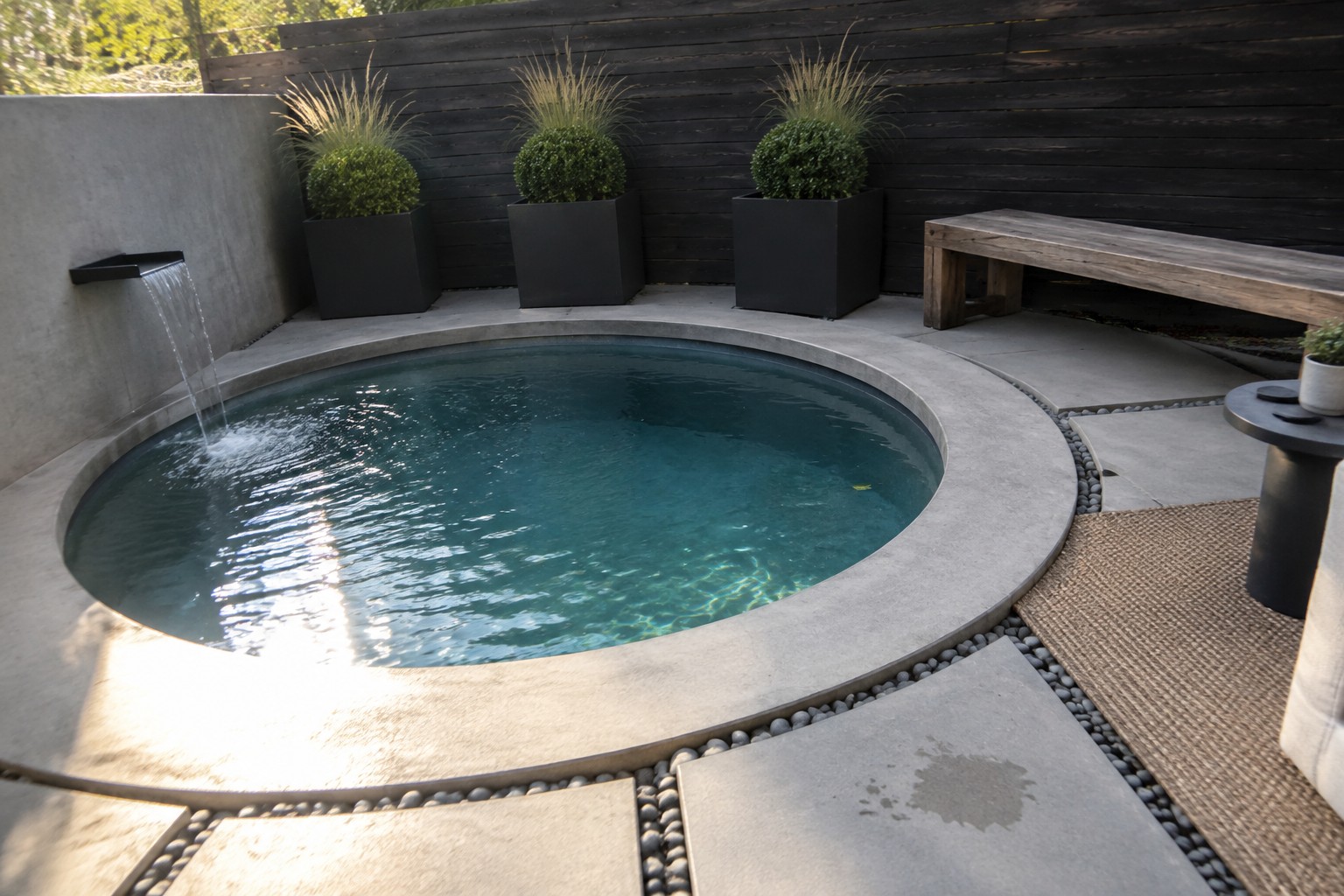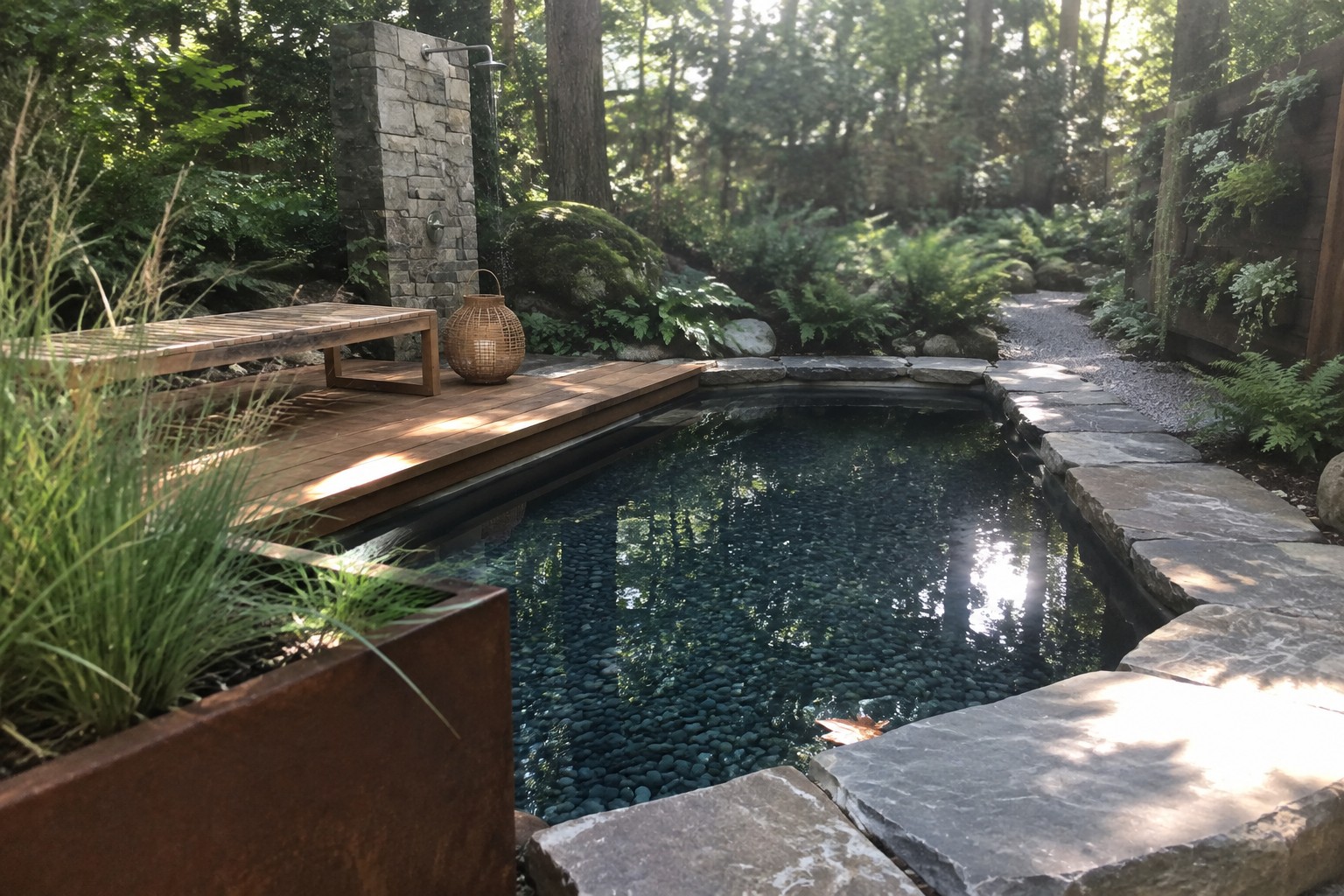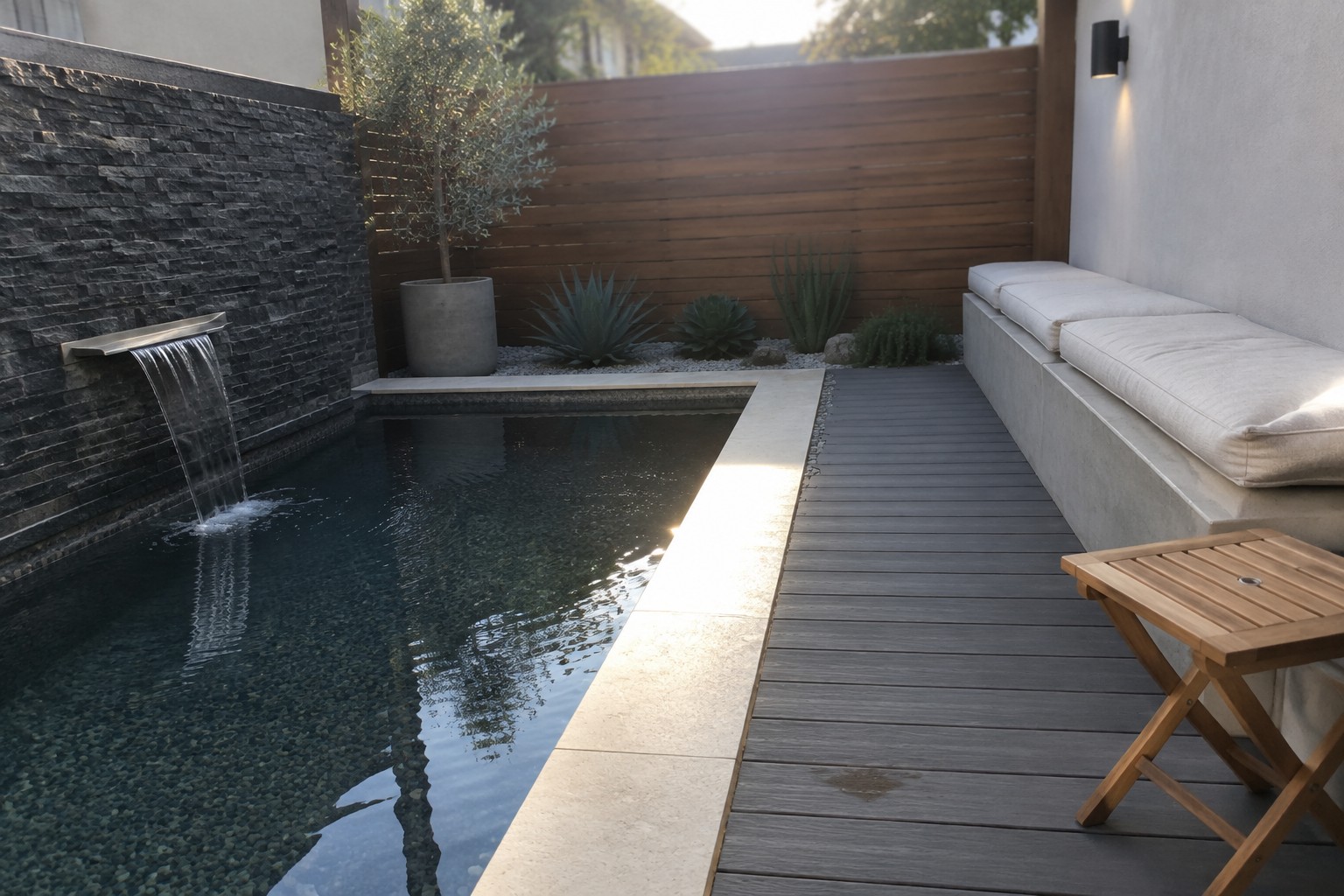
When I think about adding a plunge pool to the backyard, the part that always trips me up is figuring out how to add water features without making the whole area feel cluttered or hard to use on a daily basis.
The designs that seem to hold up over time are usually the ones that work with the natural flow of the space instead of trying to stand out too much.
Usability comes first.
I have seen plenty of setups where the fountain or cascade looks great in photos but ends up splashing everywhere or requiring constant adjustments.
That is why I tend to look for ideas that keep things simple and adaptable to whatever backyard shape I am actually dealing with.
Built-In Waterfalls Along Pool Walls
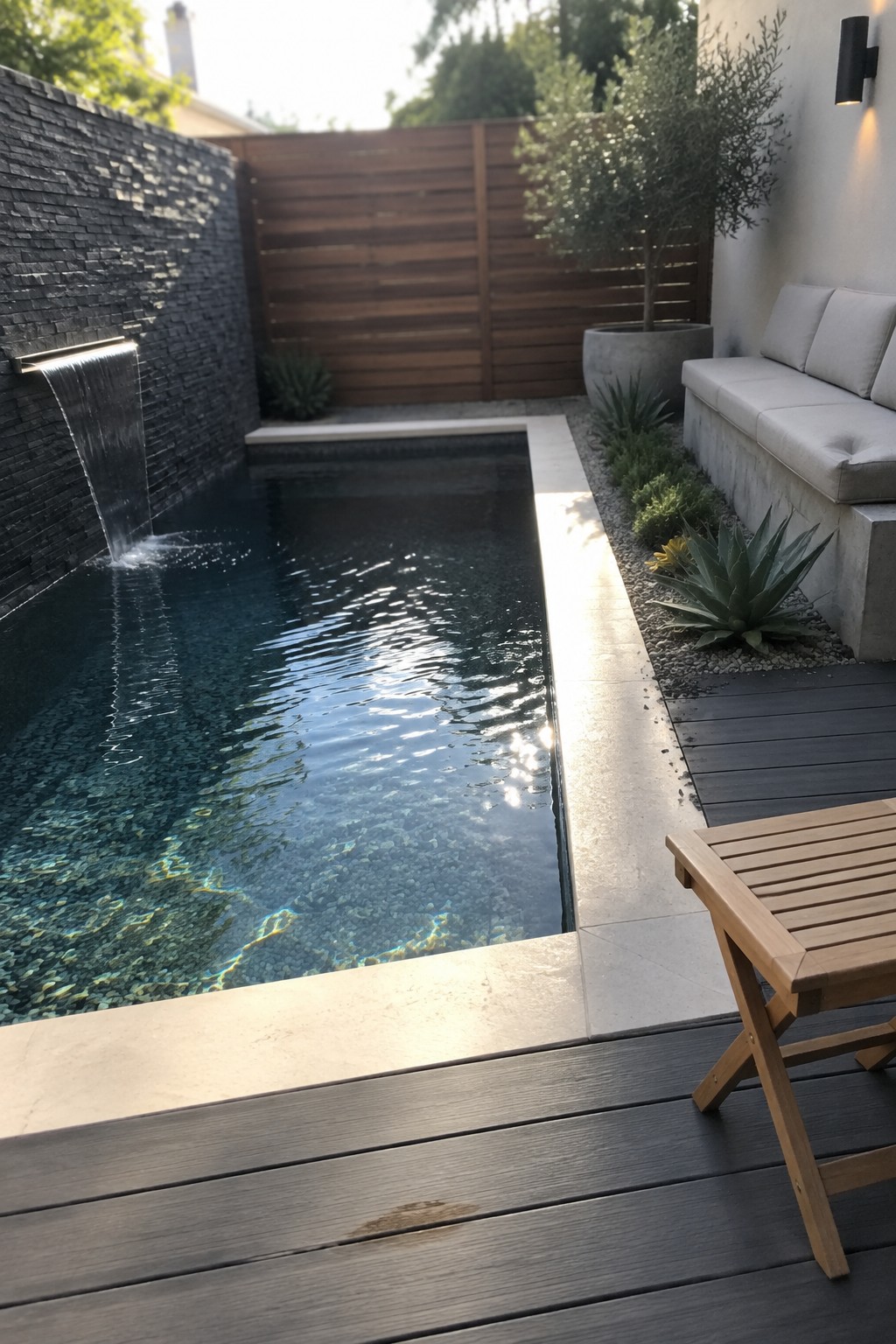
Running a water feature straight off the pool wall is one of the simplest ways to add interest to a small plunge pool. The water spills from a spout set into the stone and drops straight into the basin, so you get movement and sound without taking up any extra deck space. It keeps the whole area feeling open even when the pool sits in a tight corner.
This approach works best in narrow yards where there is no room for a separate fountain or spa. The wall itself becomes the feature, and the pump can tuck behind the stone or under the deck. Just plan the plumbing before the shell goes in so the lines stay hidden.
Wall Spouts Add Gentle Movement To Plunge Pools

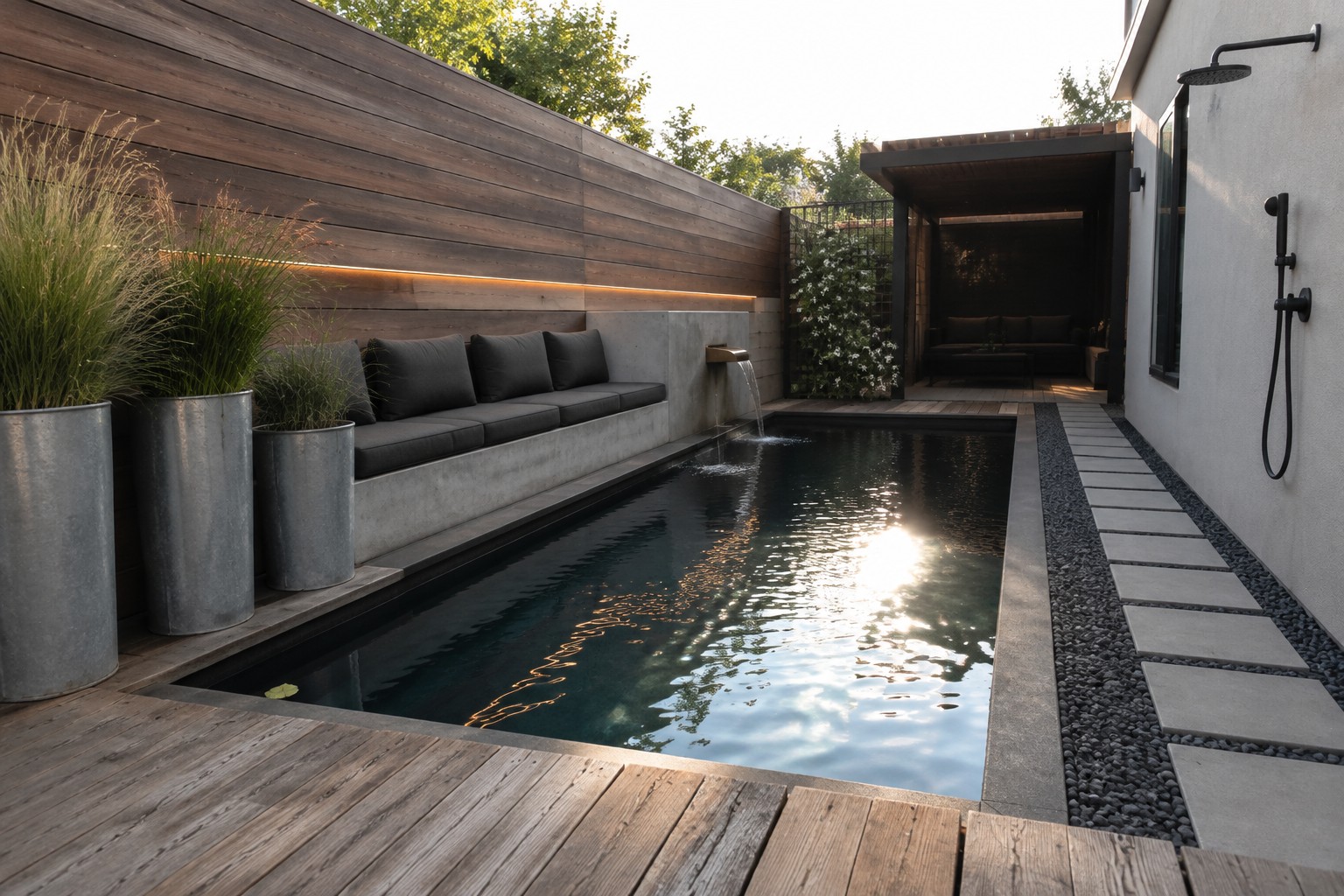
A wall spout gives a small plunge pool a bit of life without crowding the space or adding extra fixtures. The steady flow creates soft sound and a focal point along the edge, which works nicely when the pool sits right up against a wall.
This setup suits compact yards or courtyard gardens where you want water movement but not a full fountain. Mount the spout at a comfortable height so the water drops cleanly into the pool, and keep the surrounding wall simple so the feature stays understated rather than busy.
Built-In Waterfalls for Plunge Pools

A built-in waterfall gives a plunge pool a sense of movement and quiet sound without needing much extra room. It works especially well in smaller yards where the pool already takes up most of the space and you want one feature to do more than just look nice.
Place the waterfall along a raised edge or wall so the water spills cleanly into the pool. Keep the surrounding deck simple and add low lighting along the lip so the feature stays usable after dark. This setup fits homes with tropical or modern plantings and works best when the rest of the yard stays uncluttered.
Add A Waterfall Feature To Your Plunge Pool
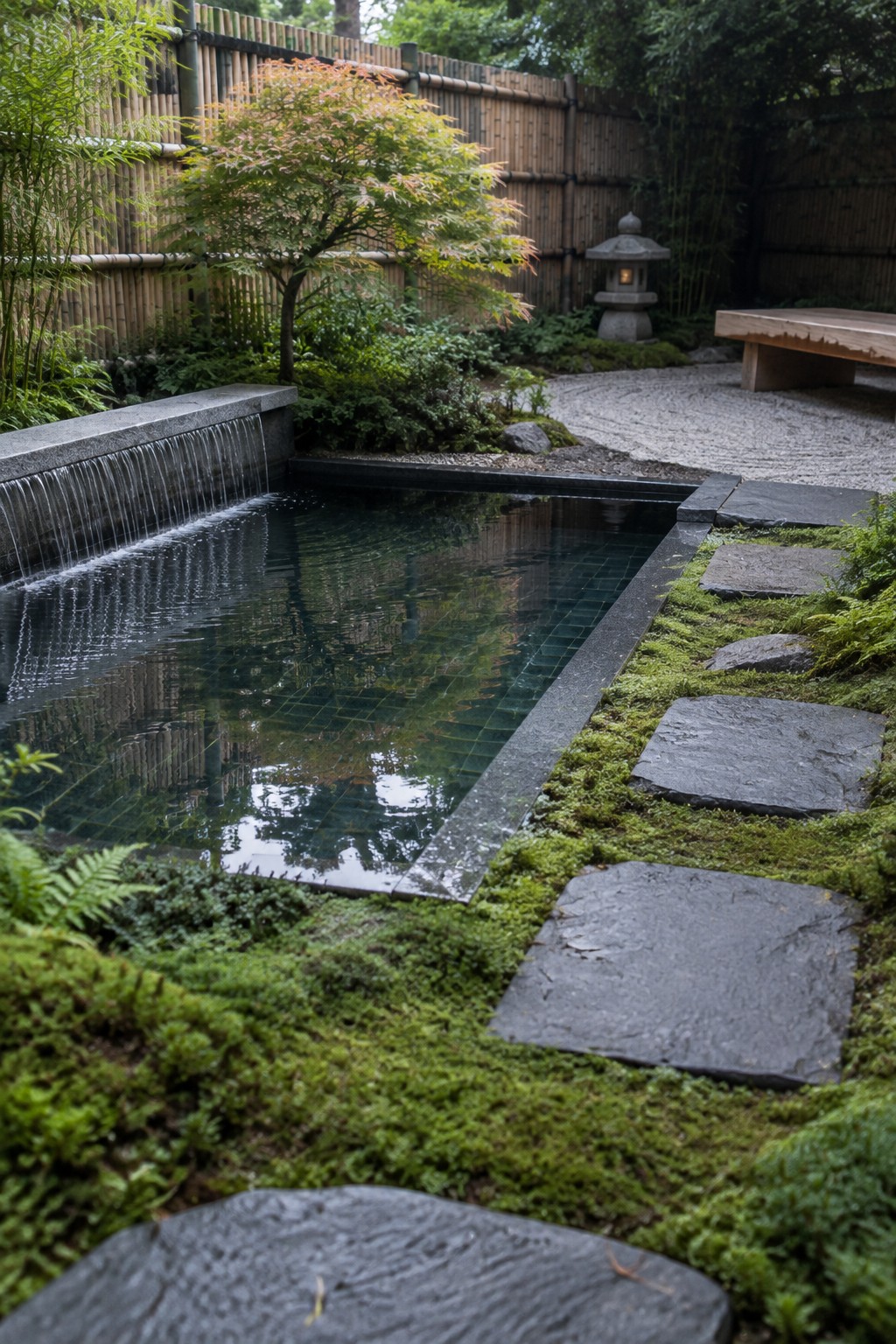
A small waterfall along the edge of a plunge pool adds movement and sound without needing much extra space. It turns the pool into something you can enjoy even when you are not swimming, and the running water helps mask outside noise in a compact yard.
This idea works best in gardens that already have some planting and stonework around the edges. Keep the pool shape simple and let the water spill over a low stone lip so the feature blends into the surrounding moss and paths rather than standing out as a separate element.
Built-In Seating Along The Pool Edge
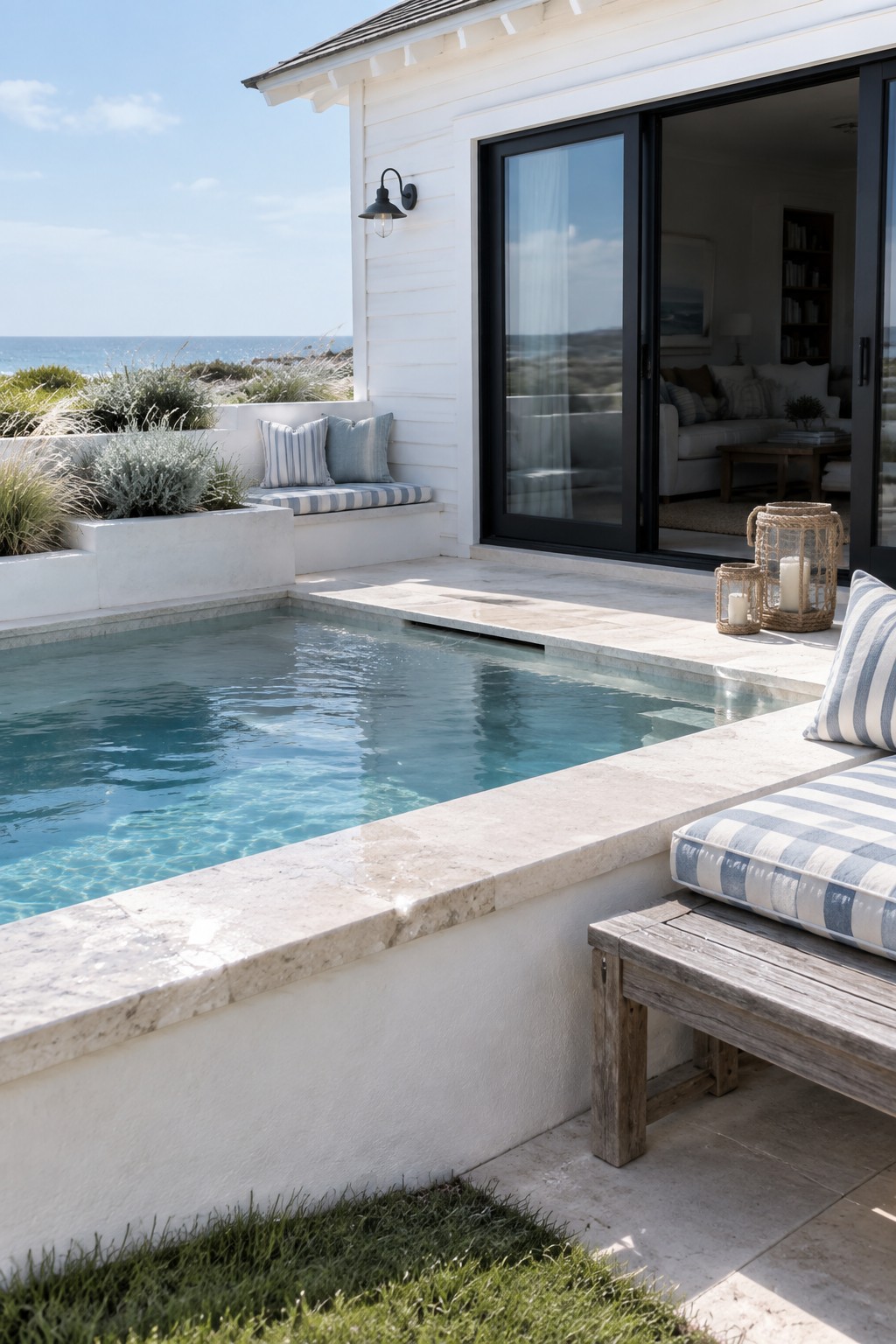
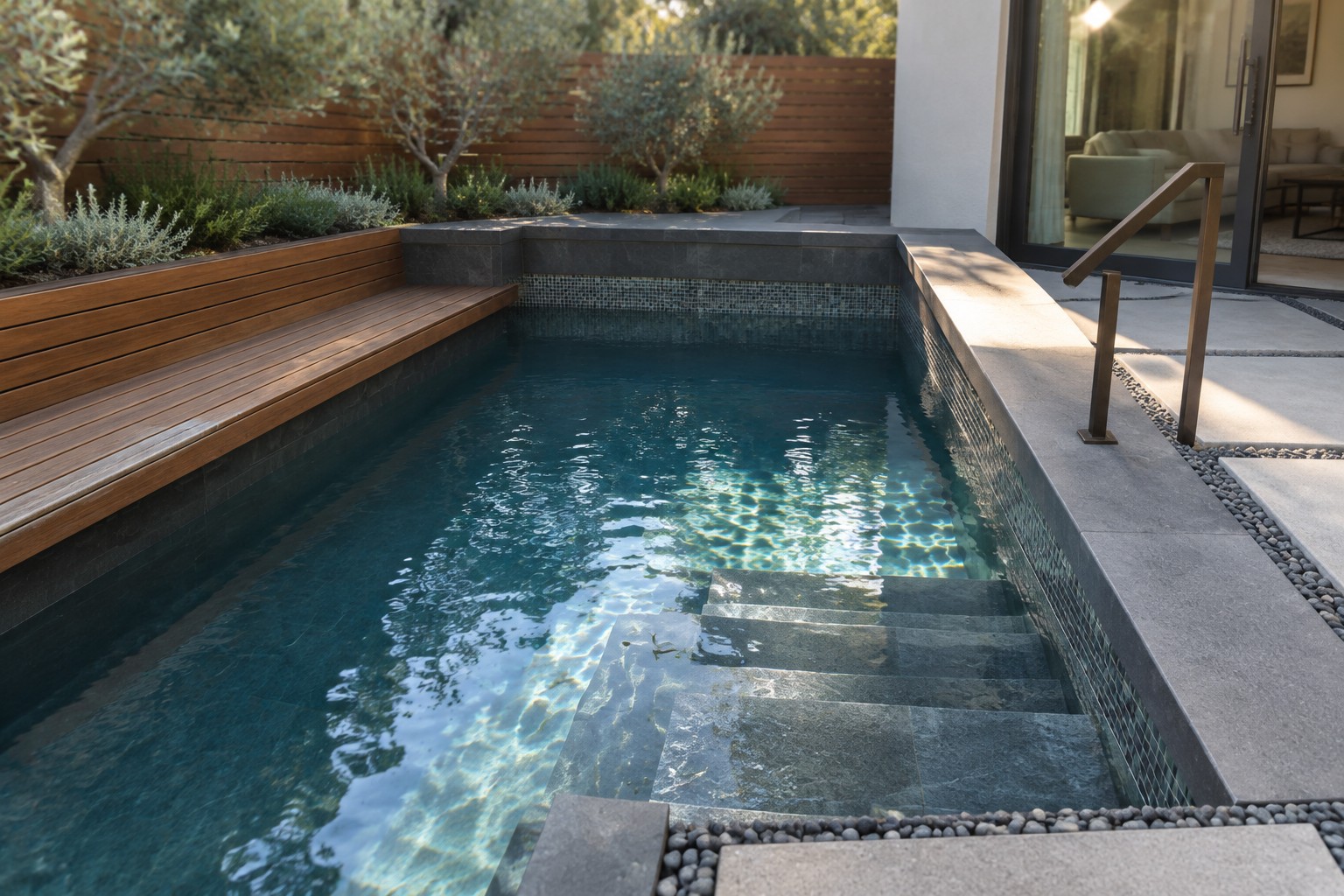
A wide stone coping around a plunge pool creates natural seating without adding extra furniture or crowding the patio. It lets the pool edge work as part of the living space, especially useful when the pool sits close to the house.
This setup suits compact yards or homes where you want the pool to feel connected to daily outdoor time. Keep the coping height comfortable for sitting and choose a material that does not get too hot in the sun.
Include a Waterfall in Your Plunge Pool Design
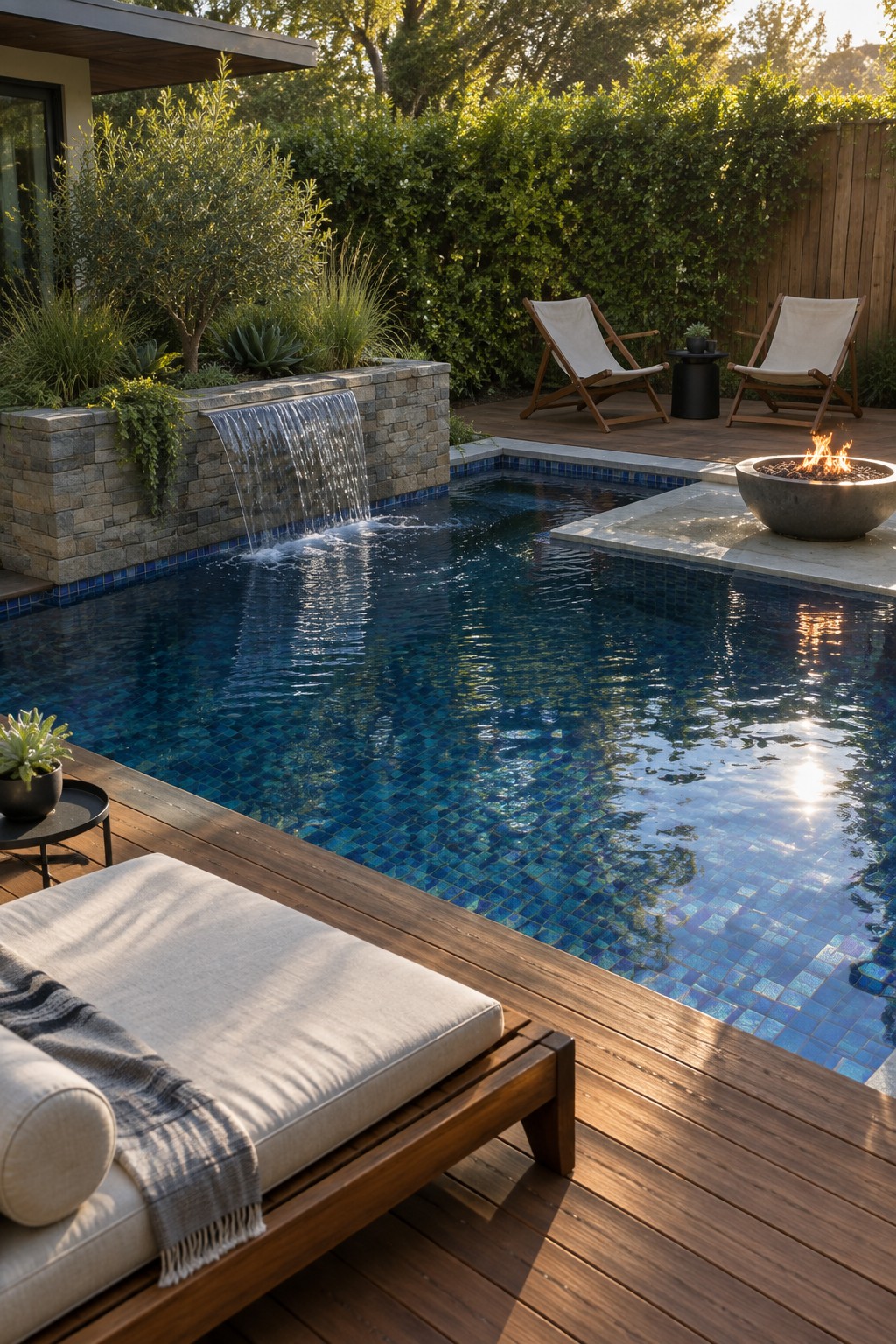
A built-in waterfall gives a small plunge pool more presence without needing extra room. The water feature turns the pool into a focal point and adds the sound of moving water, which helps the space feel calmer even when the yard sits close to neighbors.
This approach works best when the waterfall drops from a low stone wall that lines up with the pool edge. It suits compact backyards and homes that already use natural materials on the deck or patio. Keep the pump flow moderate so the sound stays pleasant rather than loud.
Plunge Pools With Built-In Waterfalls
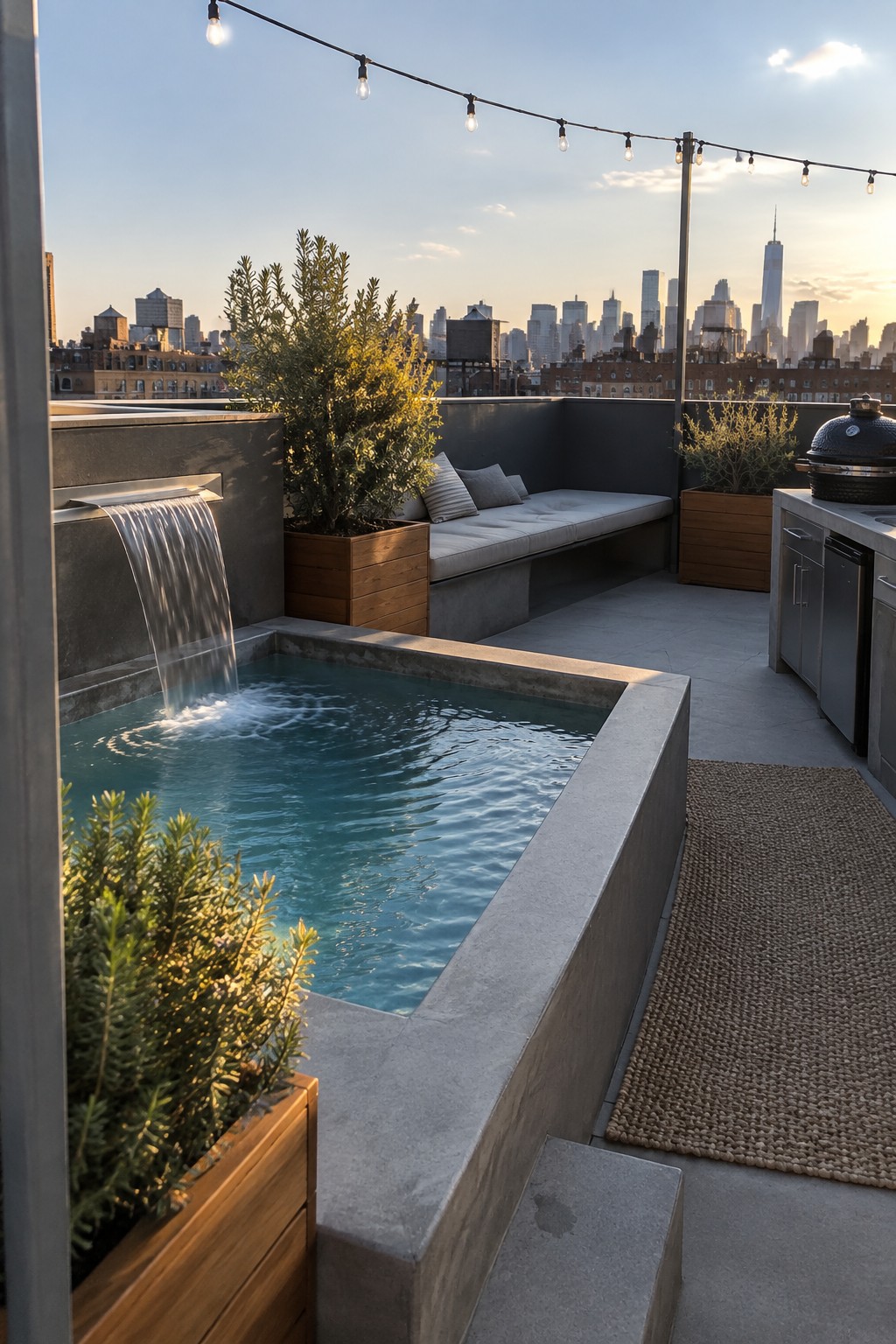
A built-in waterfall gives a small plunge pool more presence without needing extra equipment or space. The water spills directly from the pool wall, creating movement and sound that makes the area feel more complete, especially on rooftops or tight patios where separate features would crowd things.
This setup works best in urban outdoor spaces where the pool already serves as the main gathering spot. Match the material of the water feature to the pool surround so it reads as one clean structure, and keep surrounding planters low so the water remains the focus.
Build a Water Wall Into the Pool Edge
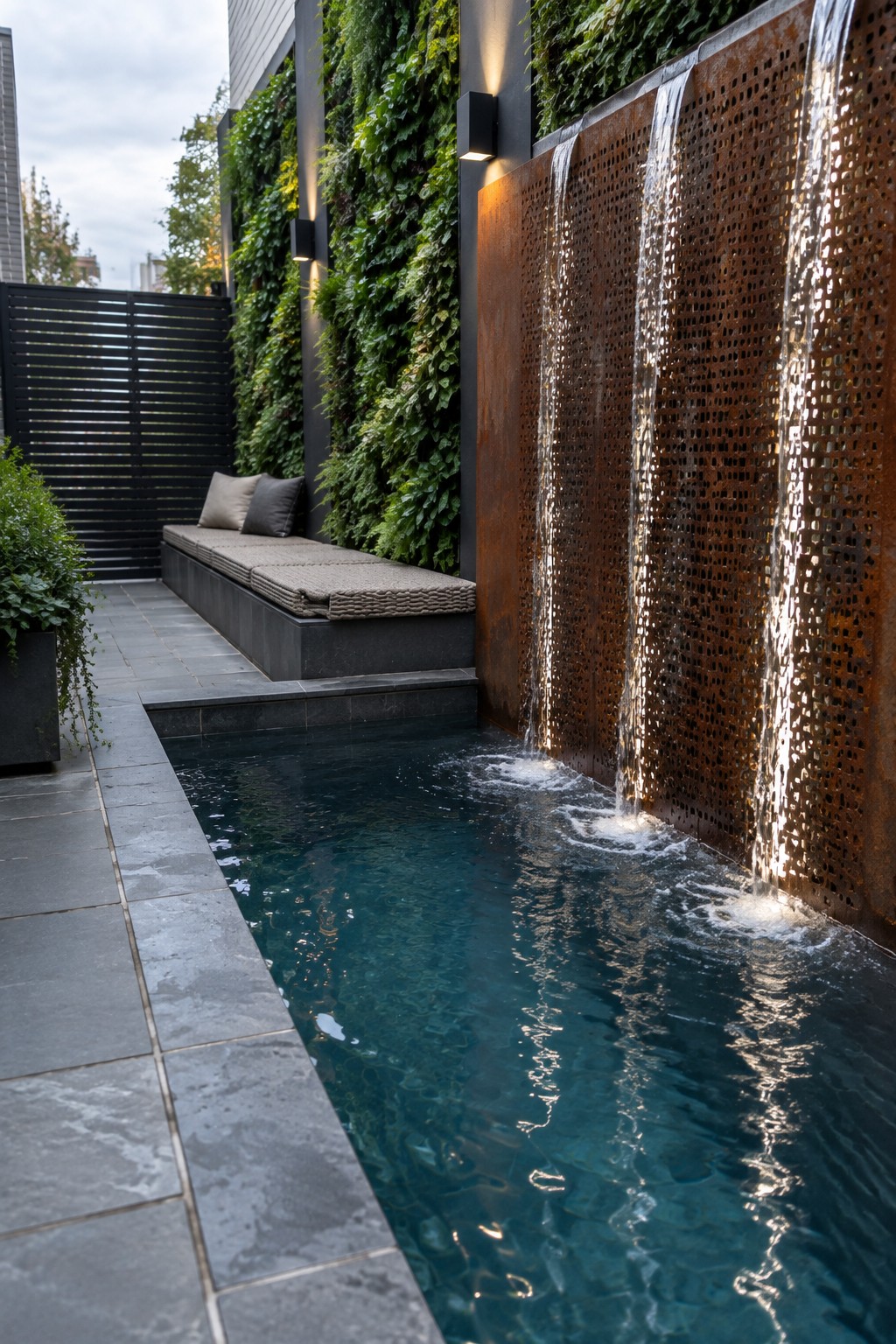
A water wall built right into the side of a plunge pool gives the space movement and a steady sound without needing extra room. The water flows over a perforated panel so it spreads out in thin streams instead of one heavy sheet. This keeps the feature feeling light even in a tight backyard layout.
It works best along one long side of a narrow pool where the wall can double as both a backdrop and a water source. Dark pool tiles help the reflections stand out, and the setup pairs well with simple seating nearby. Just make sure the metal panel is properly sealed so it holds up over time in wet conditions.
Built-In Wall Spouts For Plunge Pools
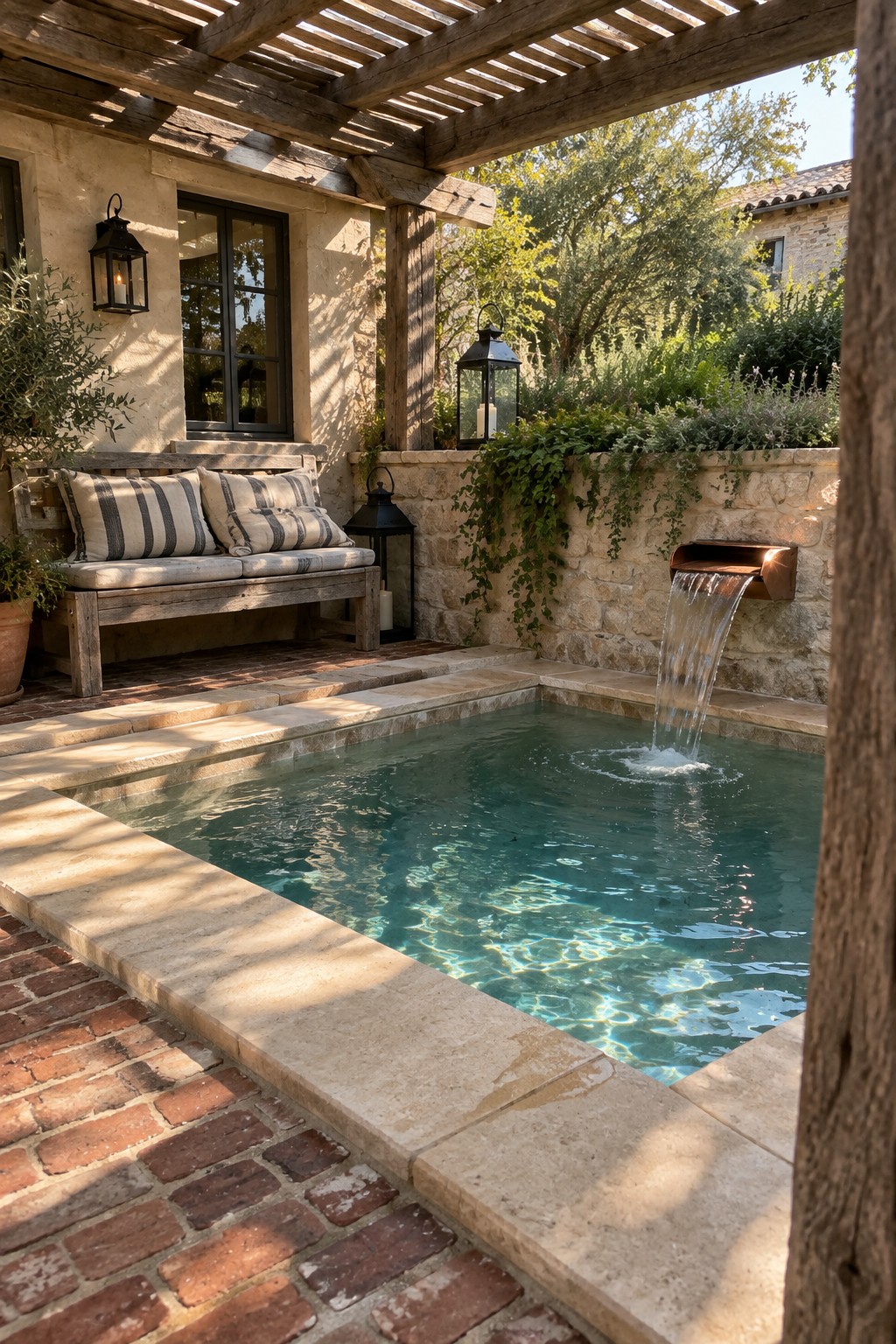
A wall spout keeps the water feature simple and contained. It sits right in the pool wall instead of adding a separate fountain or basin, so the edges stay clean and the space feels less crowded.
This works best on smaller lots where you want the sound of water without extra clutter around the deck. Stone or concrete walls make the installation straightforward, and the spout can run off the same pump system as the pool filter.
Add a Wall Fountain to Your Plunge Pool
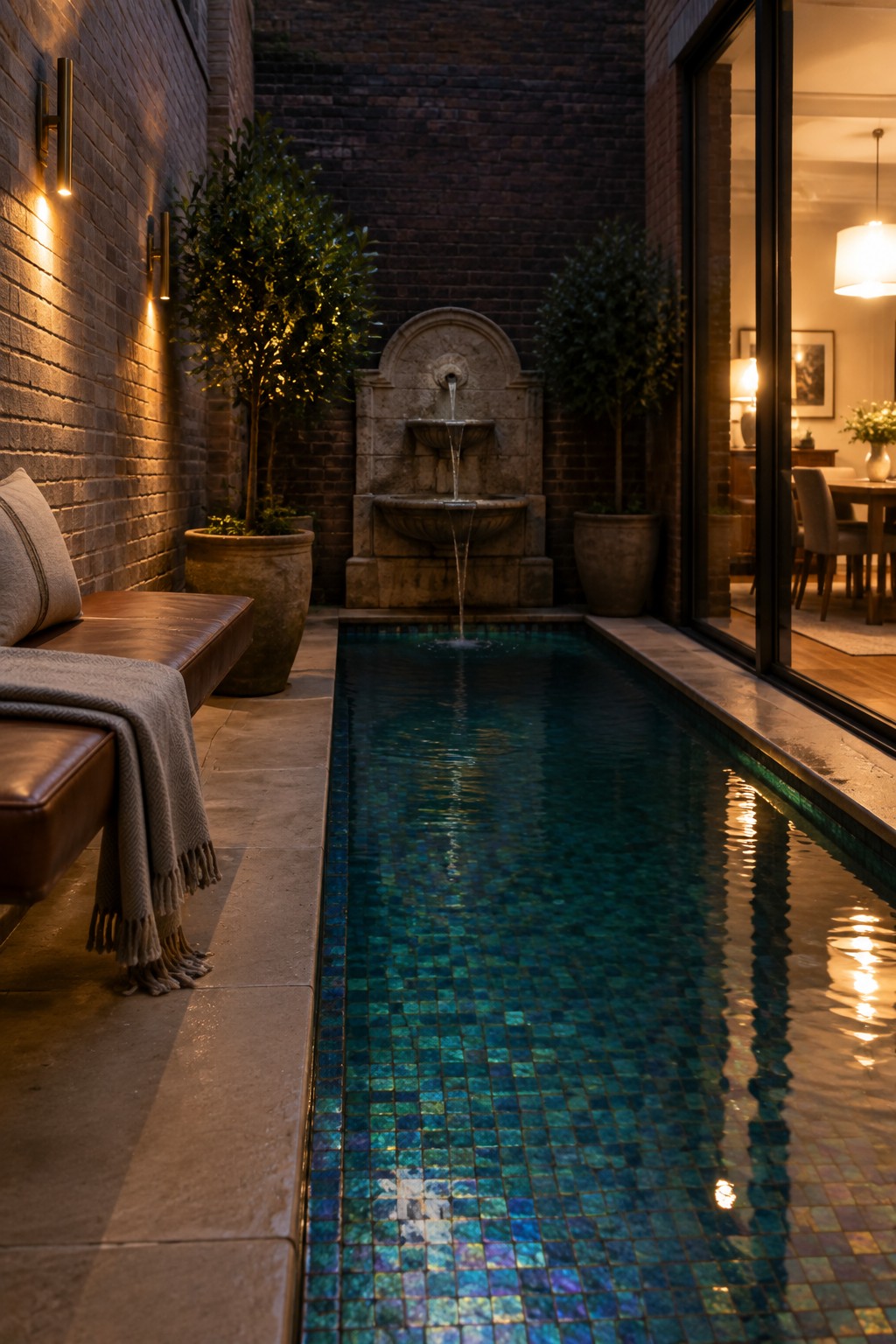
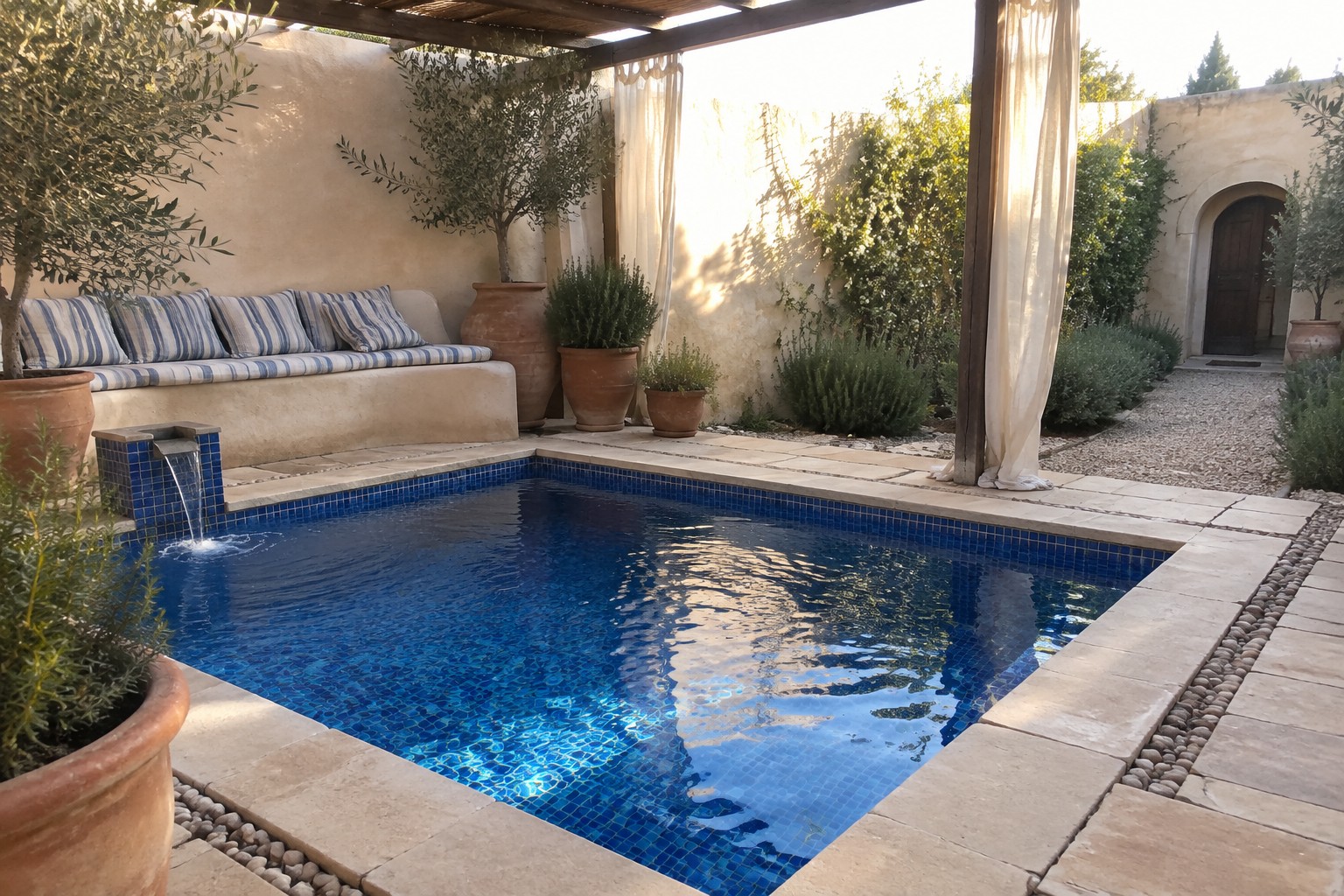
A wall fountain built right into the end of the pool gives the water feature a clear job without taking up extra room. The water spills from the fountain into the pool itself, which keeps the whole setup compact and makes the sound of moving water feel like part of the pool rather than something added on later. This works especially well in tight courtyards or narrow side yards where you do not have space for a separate fountain basin.
This idea suits homes with existing brick or stone walls along the pool edge. Keep the fountain scaled to the wall so it does not overwhelm the space, and make sure the pump and plumbing stay hidden behind the stonework. It pairs best with simple pool surrounds so the fountain stays the main point of interest.
Add a Built-In Waterfall to Your Plunge Pool
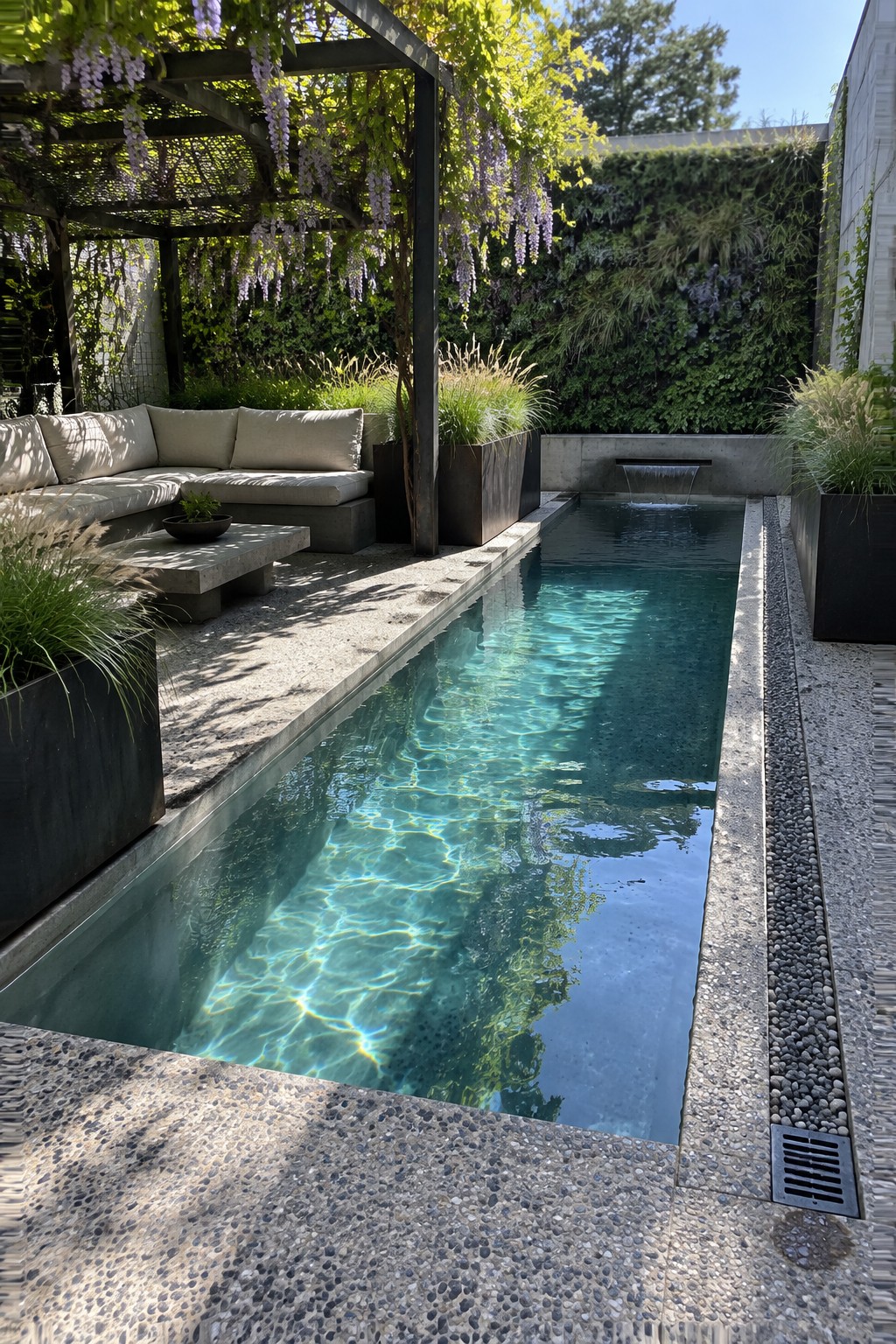
A small cascade built right into the end of a plunge pool gives you moving water and a soft sound without crowding the space or adding separate structures. It turns the pool itself into the main feature, which works especially well when the yard is tight and you still want both cooling off and a bit of atmosphere nearby.
This setup suits homes where the pool sits close to seating or dining areas. Keep the pool narrow so the waterfall stays visible from the main chairs, and let the surrounding planters and paving help frame it rather than compete with it. Just make sure the pump and catch basin are easy to reach for cleaning.
Add A Fountain To Your Plunge Pool
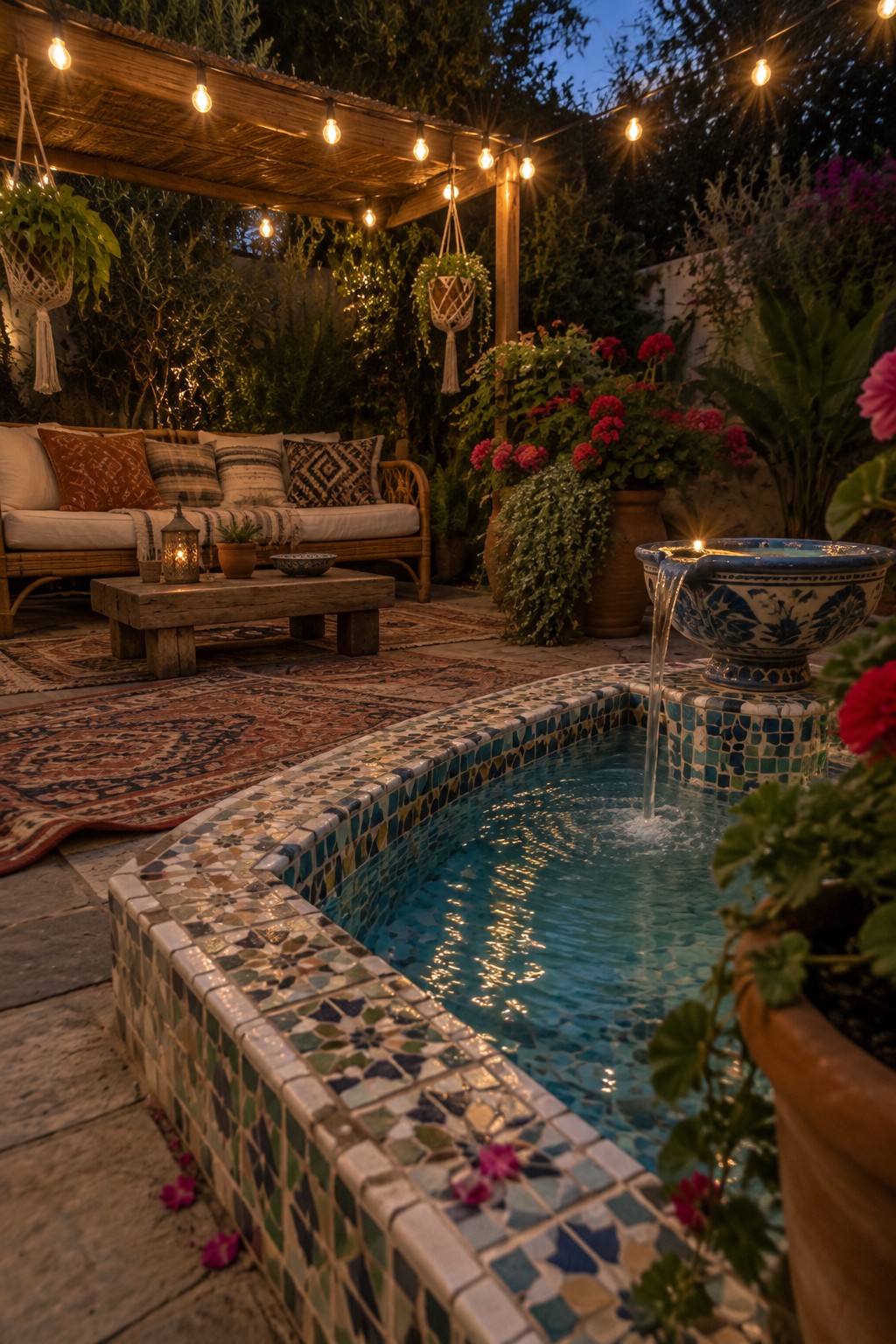
A small fountain built right into the pool edge brings steady movement and soft sound without needing extra space or equipment. The water spills from a raised bowl into the pool, which helps the area feel more alive even when no one is swimming.
This setup works best in compact patios or courtyard gardens where you want a focal point that also serves a practical purpose. Match the tile around the fountain to the pool surround so the whole feature feels like one piece rather than an add-on.
Linear Water Channels Beside Plunge Pools
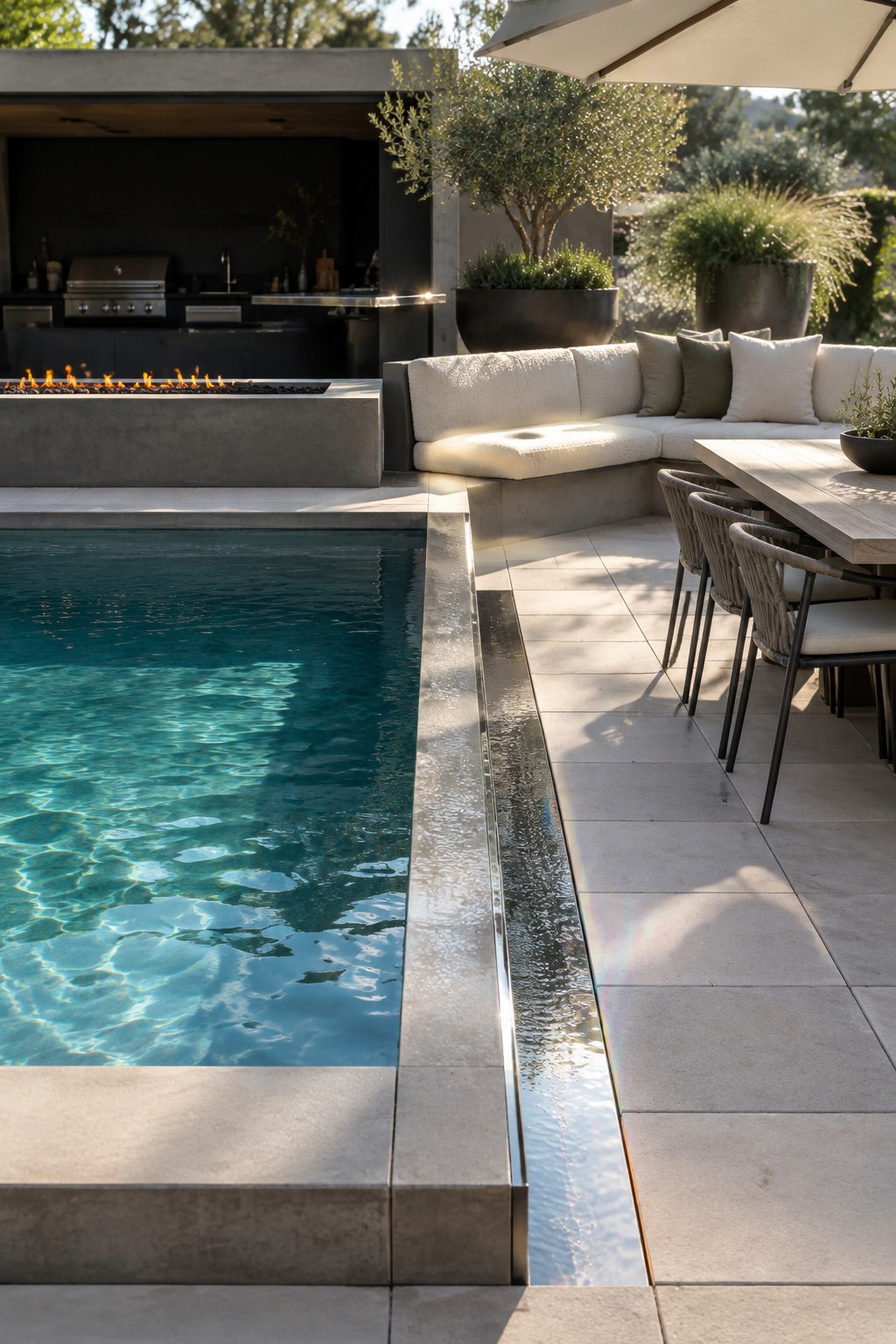
A narrow channel of moving water running right along the edge of a plunge pool adds gentle sound and motion without crowding the space. It turns the pool into more than just a square of water by creating a simple built-in feature that feels connected to the surrounding patio.
This setup works best on flat paved areas where seating and dining sit close to the pool. Keep the channel narrow and use the same material as the deck so it reads as part of the hardscape rather than a separate element.
Add A Waterfall To Your Plunge Pool
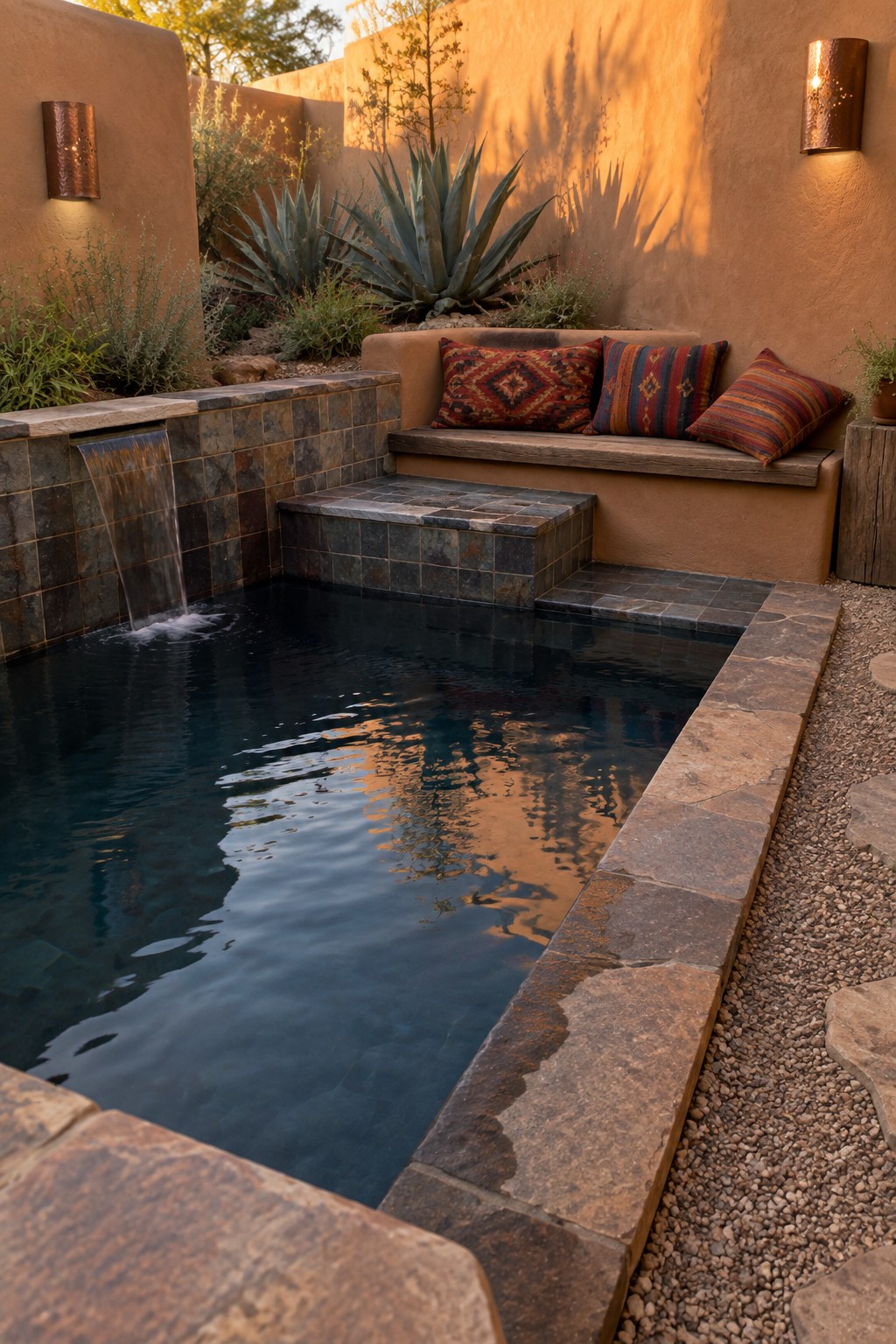
A small waterfall feature gives a plunge pool real presence without needing a big footprint. The sound of water moving and the way light catches the flow make the space feel more alive, especially in a tight courtyard or side yard where there is not much room for extra elements.
This setup works well when the pool sits against a wall or raised edge, since the water can spill from a built-in ledge or tile section. It suits homes with limited outdoor space, but keep the scale modest so the feature stays proportional to the pool itself and does not overpower the seating area right beside it.
A Stone Waterfall Built Right Into The Pool Edge

Many plunge pools feel more complete when a small water feature is added along one side. A low stone wall with water spilling over the edge gives the space movement and a steady sound without taking up extra room. The material choice helps the feature feel like part of the pool rather than something added later.
This works best in smaller yards where the pool already sits close to the house or deck. Keep the stone simple and match it to other hard surfaces nearby so the whole area stays cohesive. Avoid tall or ornate designs that can make a compact pool feel crowded.
Add Multiple Spouts For A Gentle Cascade
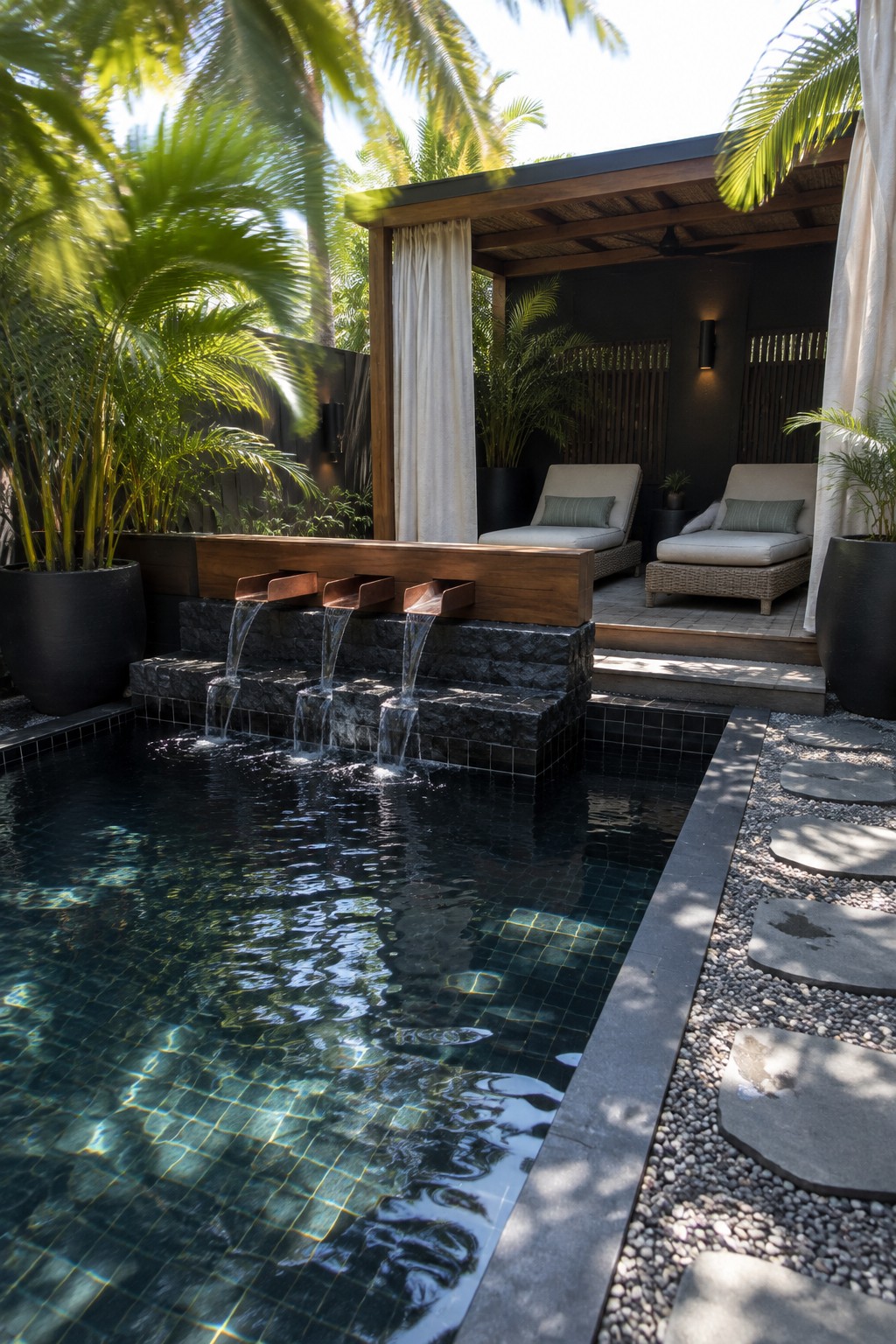
A row of small spouts along the pool edge gives steady movement and a soft sound without taking up much space. This works especially well in smaller plunge pools where a single large feature would feel too big. The water stays visible as it drops, which adds interest even when the pool is not in use.
This approach suits compact yards that already have a deck or coping in place. Match the spout material and the stone surround so everything reads as one built element. Keep the flow rate low so the sound stays pleasant rather than loud.
Add a Wall Spout to Your Plunge Pool
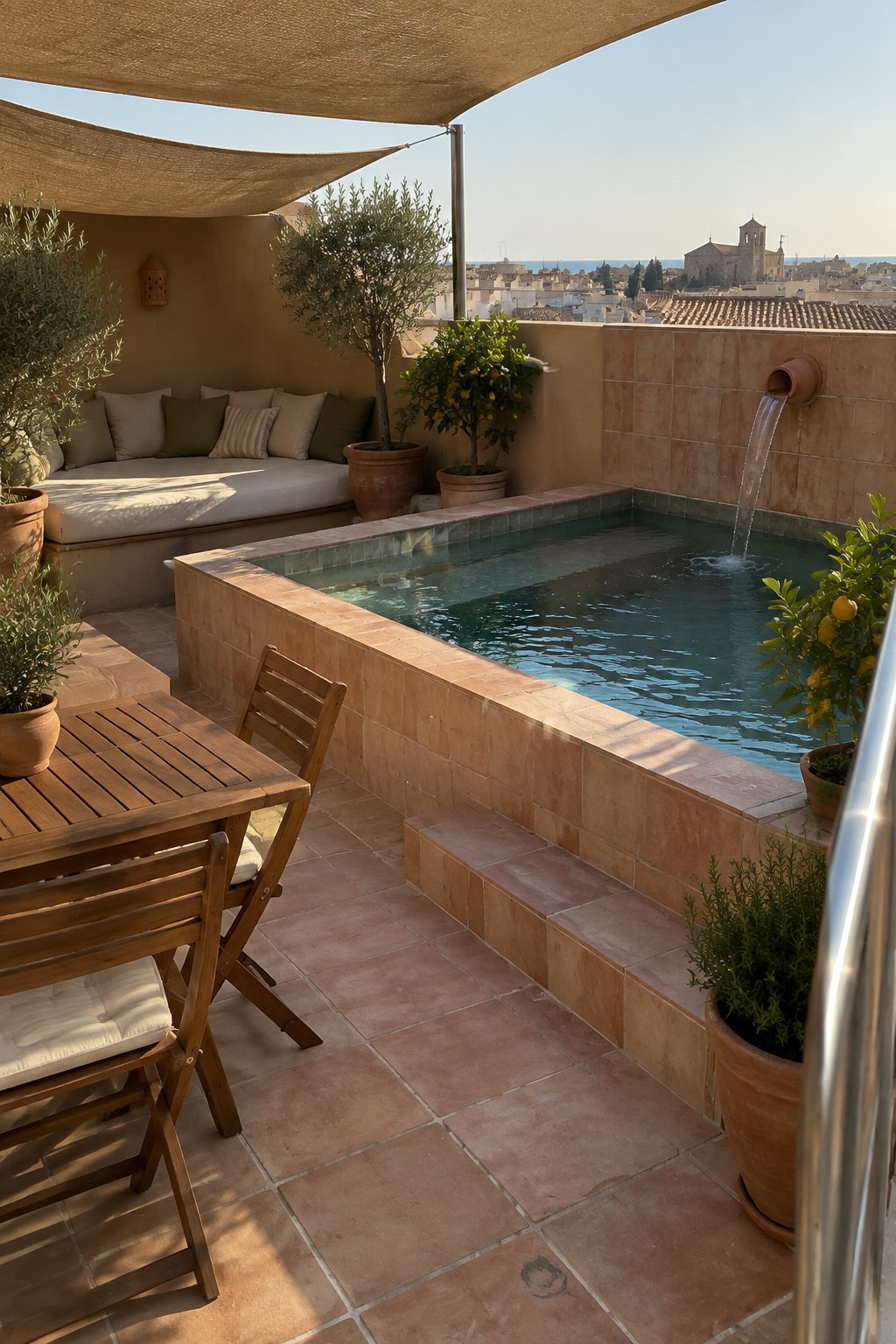
A wall spout gives the pool a steady, quiet flow without needing extra equipment or room. The sound of moving water makes the space feel calmer, and the feature stays contained right at the edge so it does not crowd the deck.
This works best on small terraces or rooftops where a full fountain would feel too large. Match the spout material to the pool tiles or wall, and keep the water flow gentle so it stays contained and easy to maintain.
Adding A Rock Waterfall To A Plunge Pool
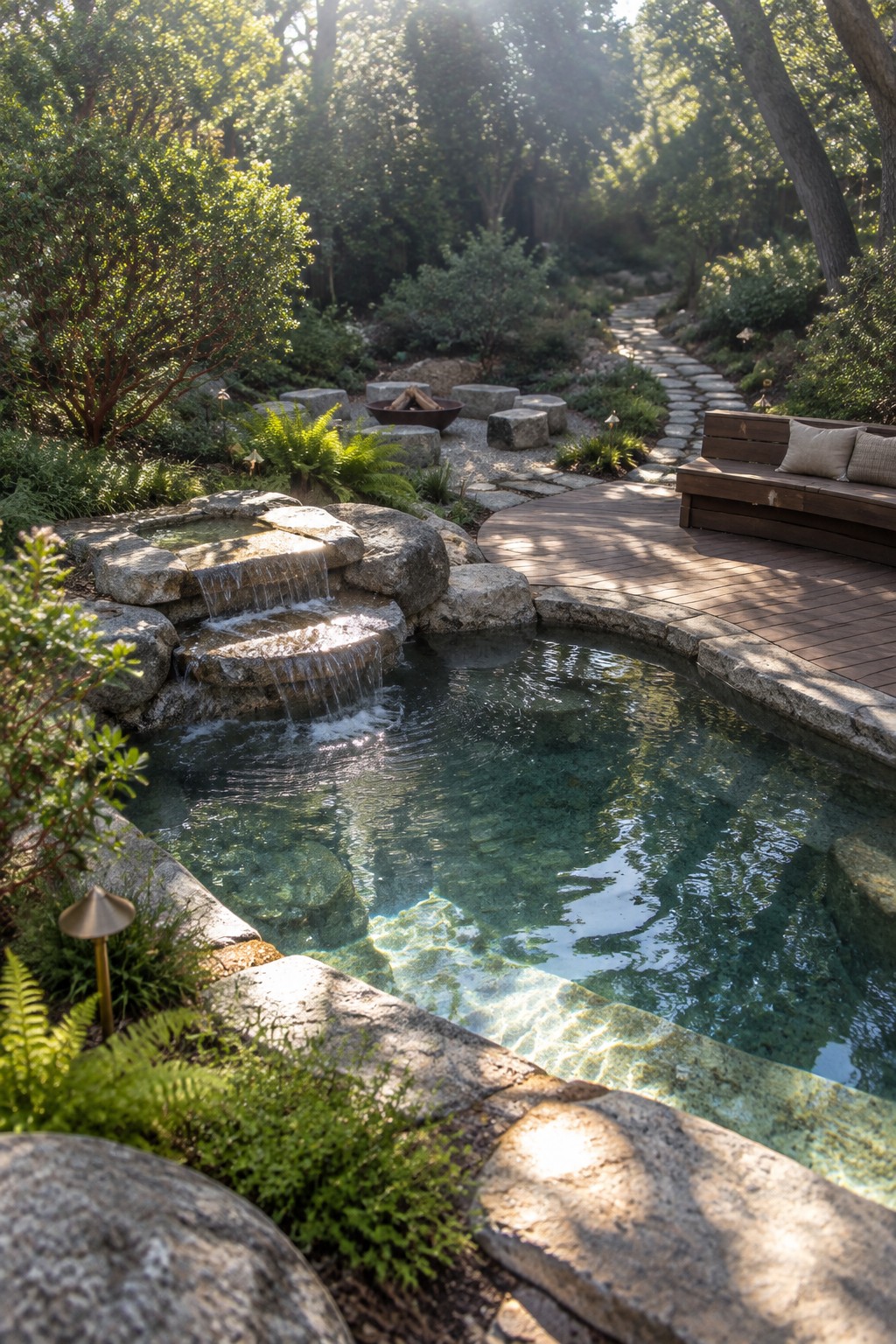
A rock waterfall gives a plunge pool a natural feel without needing much extra space. Stacking stones to create a short cascade keeps the water moving and adds sound, which makes the whole area feel more like a garden feature than a simple tub. The stone edging helps the pool blend into the surrounding plants and hardscape instead of standing out as a separate structure.
This works best in smaller yards where a full pool would feel too big. Keep the waterfall height modest so it does not overwhelm the space, and match the rock color to any nearby paths or walls. It suits homes with existing garden beds or stonework already in place.
Vertical Cup Fountains for Plunge Pools

A vertical cup fountain gives a plunge pool sound and movement without eating into the usable water space. The cups stack in a straight line so water travels down the chain and drops into the pool at the edge. This works well when the pool sits in a narrow yard or against a fence because the feature runs upward instead of outward.
Mount the fountain on the long side of the pool so it becomes a quiet focal point. Pair it with simple concrete coping and low planting so the metal cups stay the main detail. Keep the pump tucked away and use soft lighting at the base so the water catches the light without glare.
Stone Spouts Bring Soft Movement to Plunge Pools

A stone spout that pours directly into the pool edge gives the water a steady, quiet flow without needing separate fountains or loud pumps. It turns the pool into something that feels more like a garden feature than a simple rectangle of water, and the sound carries nicely through the space.
This works best in smaller yards or gardens where you want the pool to blend with planting beds and stone walls. Keep the spout low and the basin simple so the water stays the main focus. Natural stone that matches the pool edging helps everything feel connected rather than added on later.
Wall Spouts Add Quiet Movement To A Small Pool
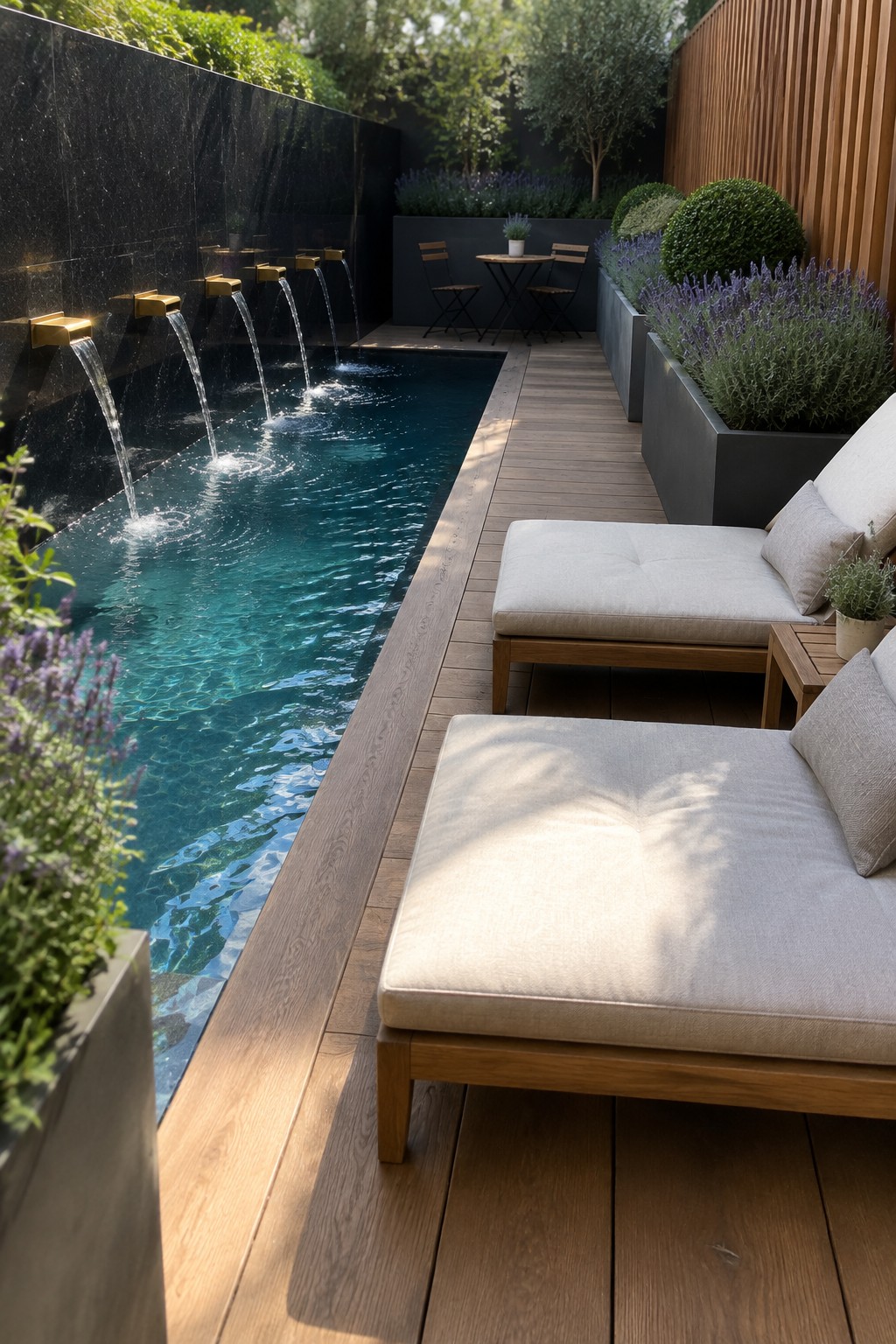
One simple way to make a plunge pool feel more alive is to run a row of wall spouts along one side. The steady streams catch the light and give the water a gentle sound that makes the space feel calmer and more inviting without any extra equipment.
This approach works well in narrow yards or small patios where you want something beyond a flat water surface. Keep the spouts modest in size and finish so they sit cleanly against the wall and do not compete with the rest of the pool edge.
Frequently Asked Questions
Q: How do I keep the water clear with a built-in feature running all the time?
A: Run the filter system longer each day to handle the extra movement. Add a skimmer if your feature splashes a lot. Test the chemicals weekly and adjust as needed.
Q: Is it worth putting a bubbler in a plunge pool that sees little use?
A: A bubbler keeps the water moving so it stays fresh. You can turn it off when you are away. Most people find it adds enough fun to justify the small extra cost.
Q: What size pump works best for a small waterfall in a plunge pool?
A: Start with a pump rated for your pool’s volume. Test the flow and adjust the valve until the water looks right. A pro can help match it on the first try.
Q: Do I need special plumbing for multiple features?
A: One main line often handles two features at once. Split it with a simple valve.