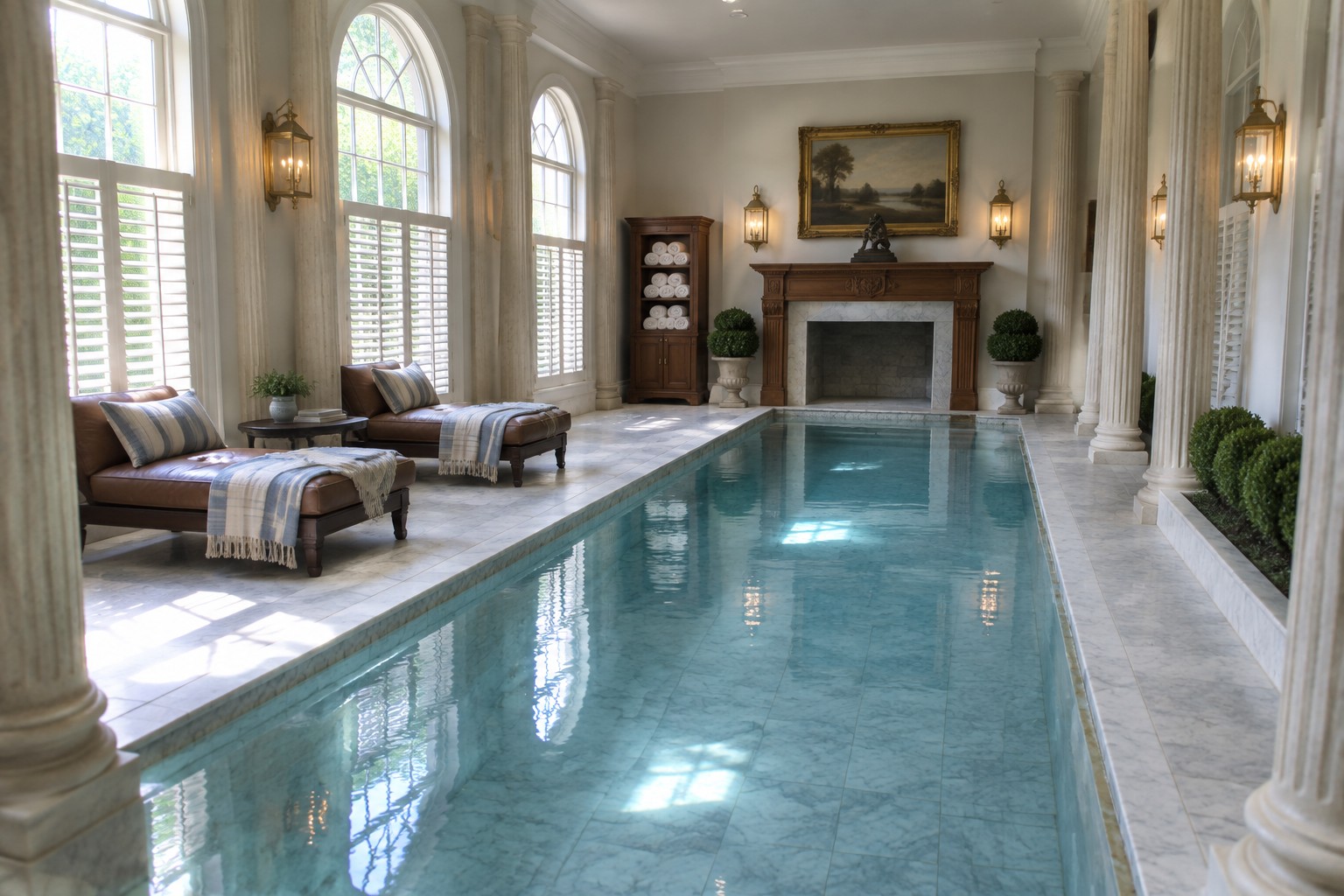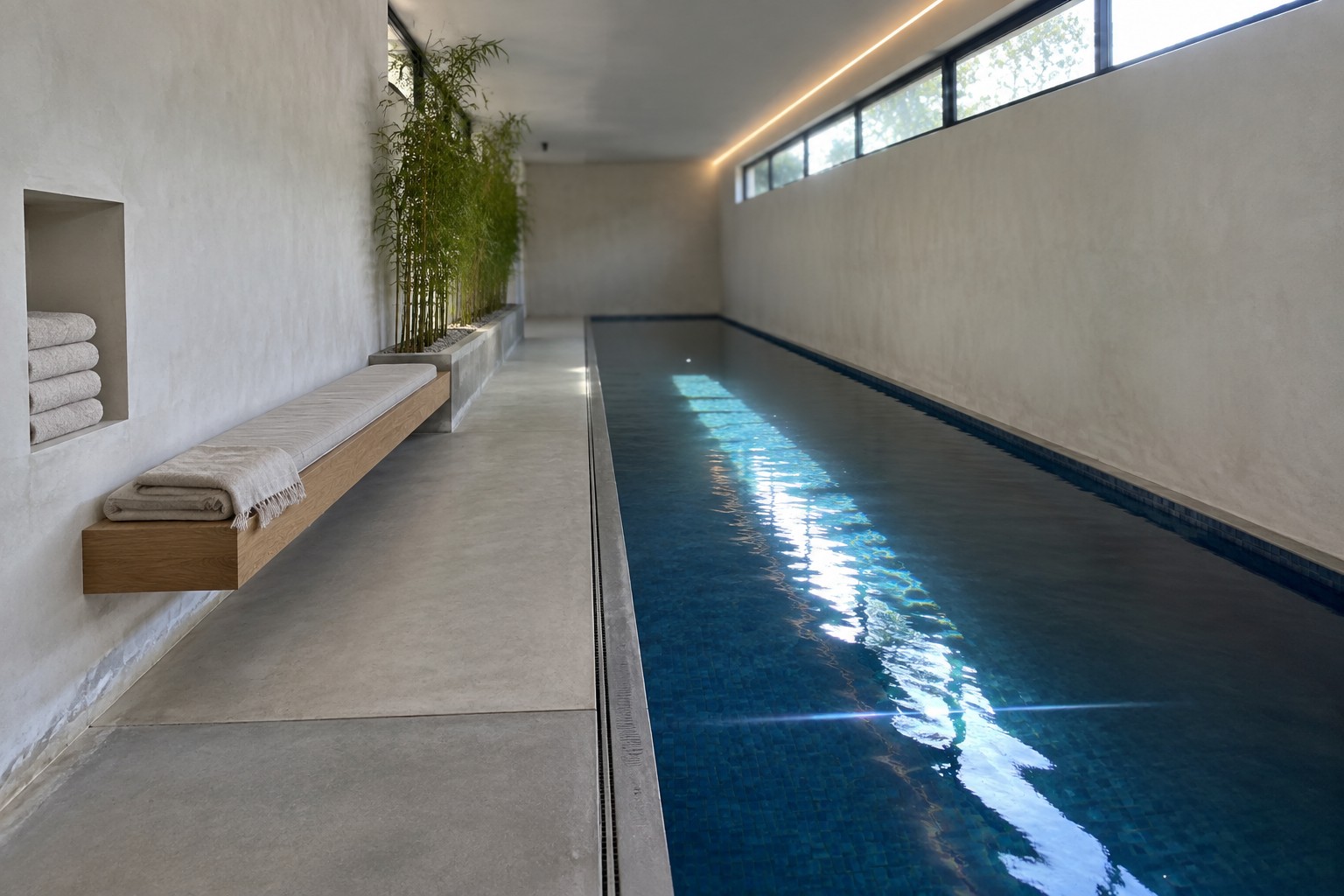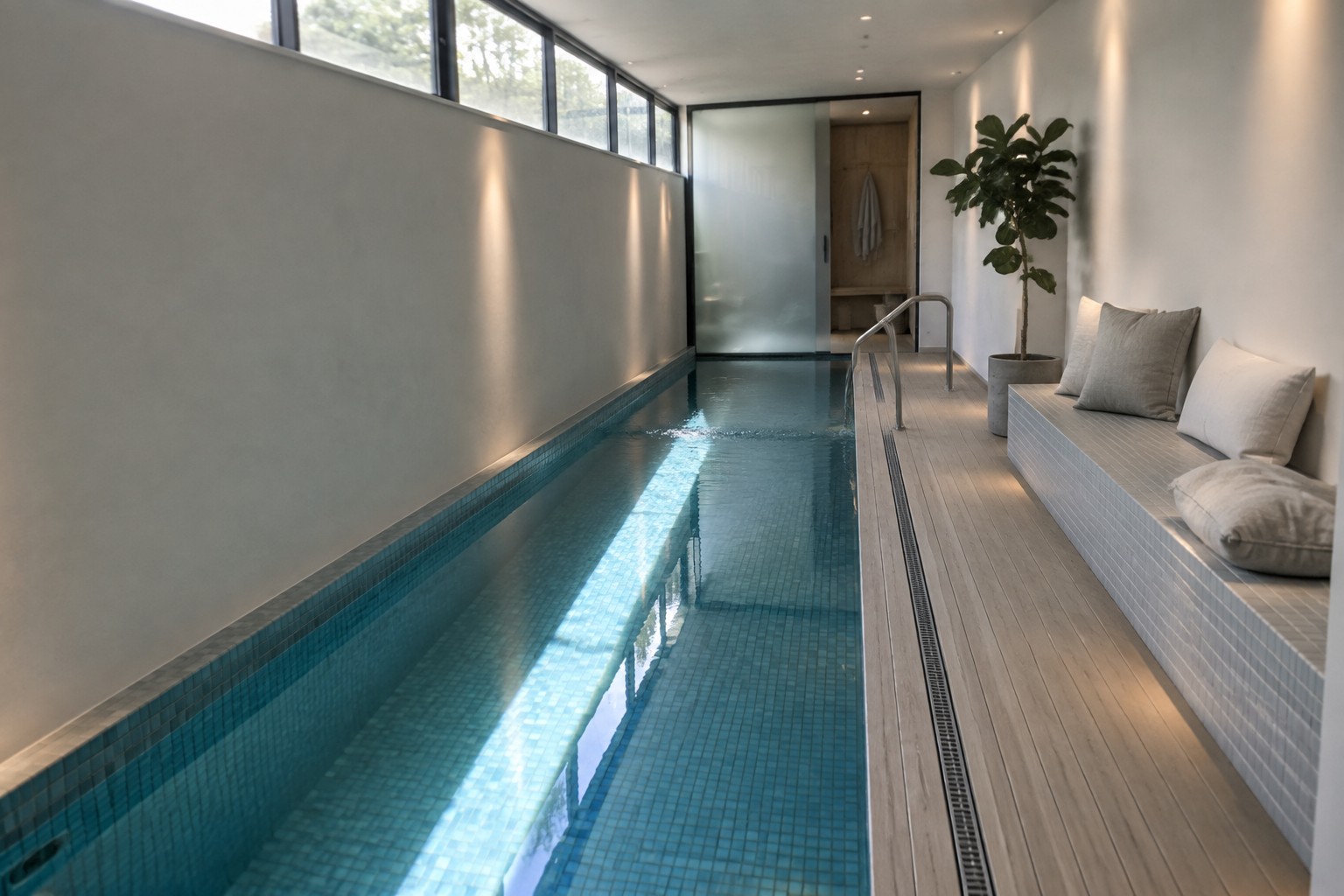
I have seen narrow indoor spaces turn into real swimming rooms when the pool aligns with the natural length instead of sitting across it.
The first thing that stands out is how the water reflects light onto the walls and changes the mood of the room throughout the day.
Planning the mechanical areas early prevents them from eating into the usable floor space later on.
Non-slip edges make all the difference.
I would try the simpler layouts first in a real home because they tend to hold up better over time.
Add A Bench Along One Side
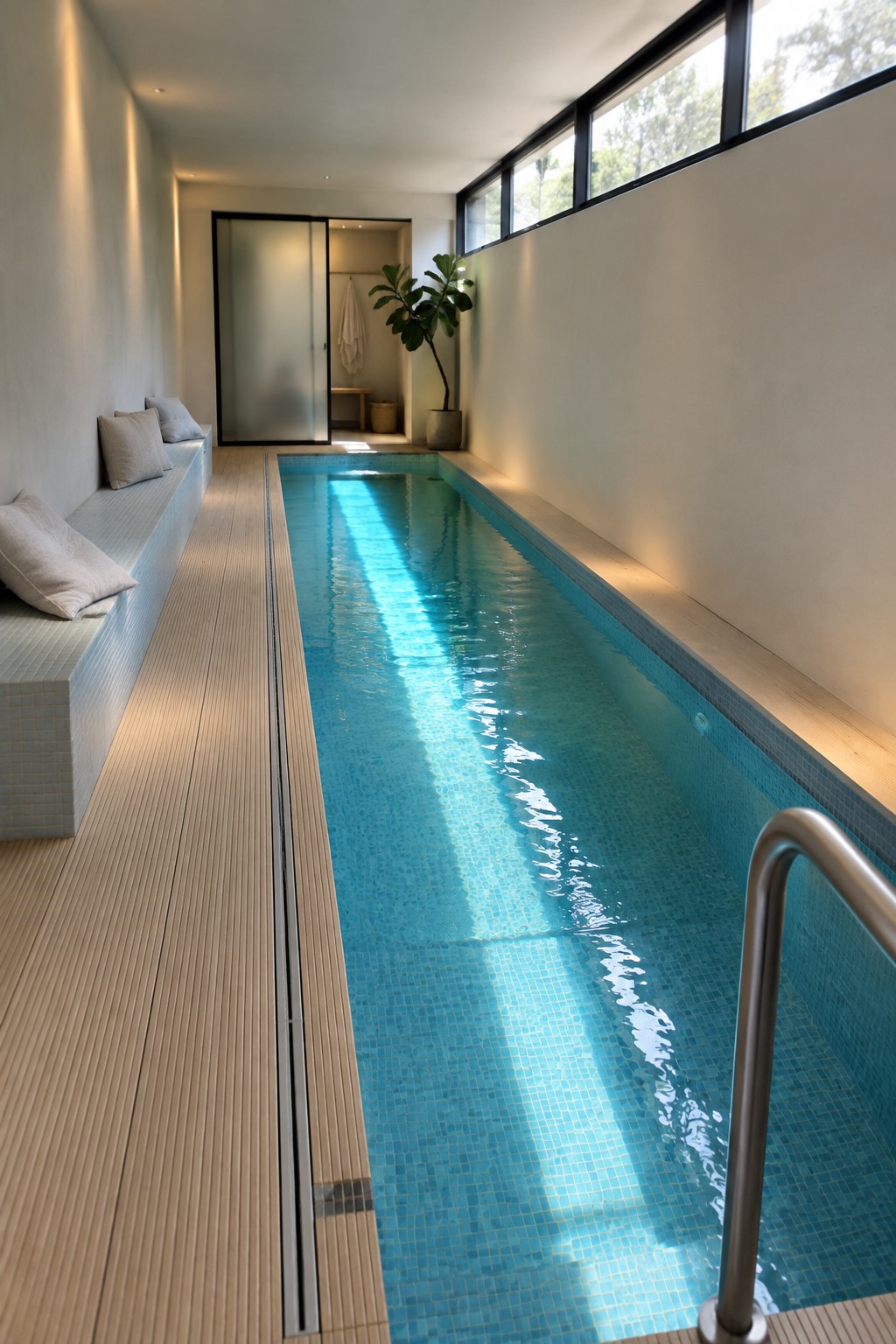
A built-in bench turns the long side of a narrow pool room into usable space instead of wasted wall. It gives people somewhere to sit and rest without adding furniture that would crowd the walkway.
This works best in homes where the pool room also serves as a quiet spot after swimming. Keep the bench height close to the pool edge so the two feel connected rather than separate.
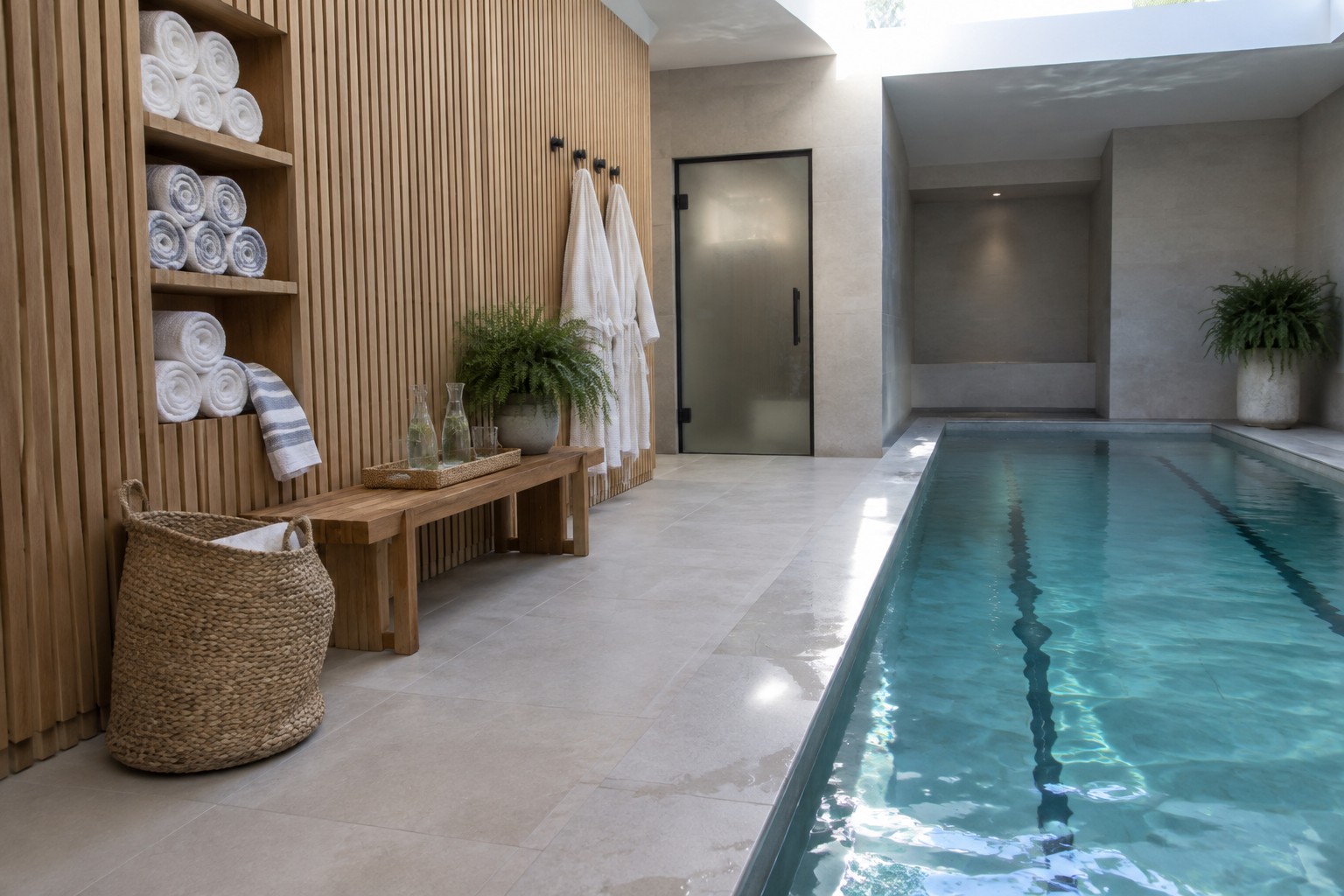
Wood Paneling for Long Narrow Lap Pools
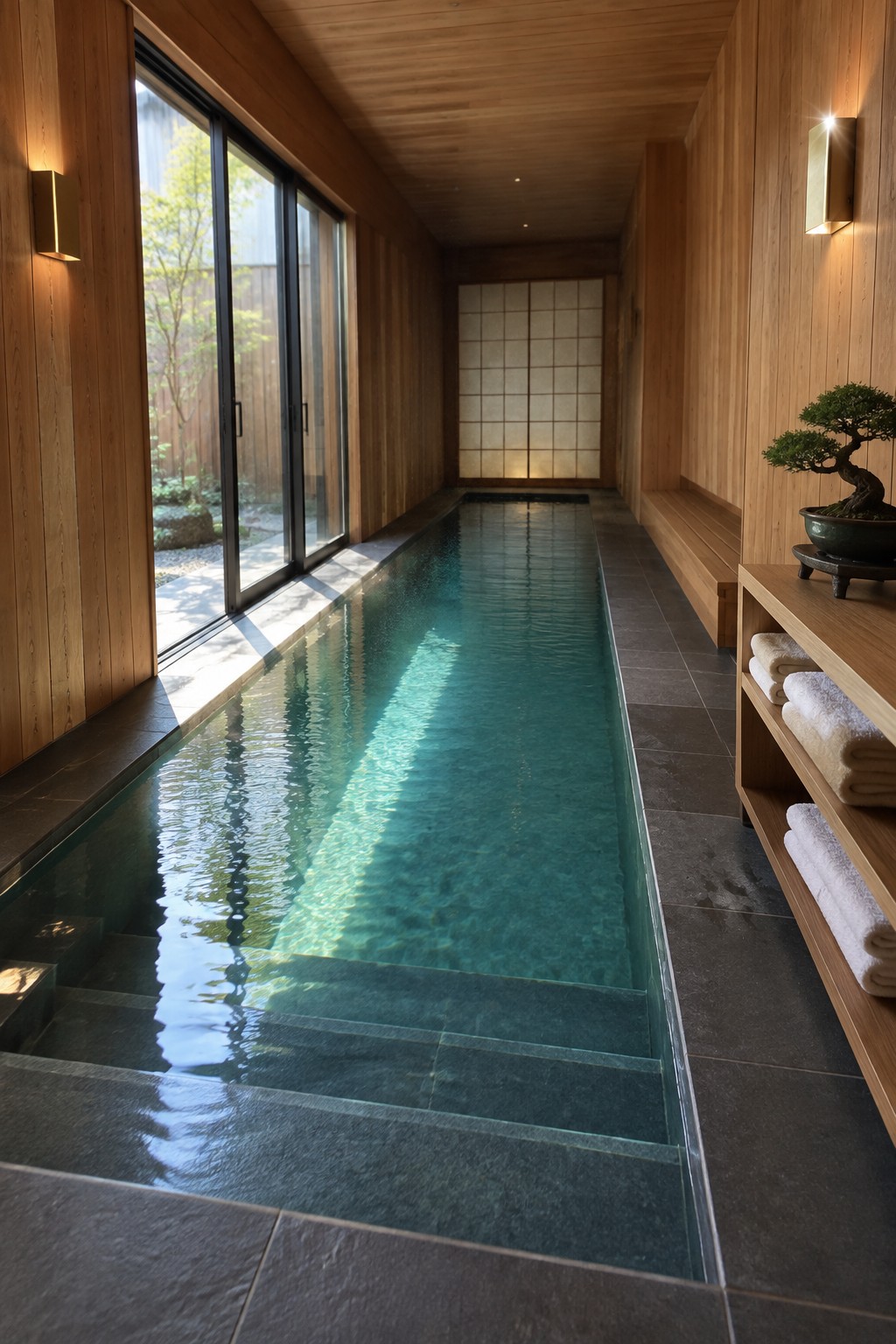
Wood changes how a narrow lap pool feels. Instead of a cold, tiled box, the room takes on a warmer, calmer tone that still reads as modern. The vertical grain running the full length of the walls helps the space feel taller and more finished without adding extra width.
This approach works best in rooms that already have a tight footprint. Keep the wood tone consistent on walls and ceiling, then use a darker stone or tile on the floor and pool edge so the water stays the main focal point. It suits both new builds and renovations where you want the pool to feel like part of the house rather than a separate facility.
Run the Pool the Full Length of the Room

A long narrow room works best when the lap pool runs straight down the center instead of trying to fill the width. This layout keeps the swim lane clear and uninterrupted, which matters more than anything else in a space like this. The concrete walls and simple finishes stay in the background so the water and movement stay the focus.
This approach suits homes where the pool room doubles as a quiet retreat rather than a showpiece. It works especially well with minimal lighting and a single strong focal point at the far end, like a fireplace or window. Just keep the side decks narrow so the room does not feel crowded.
Built-In Benches Along Narrow Lap Pools
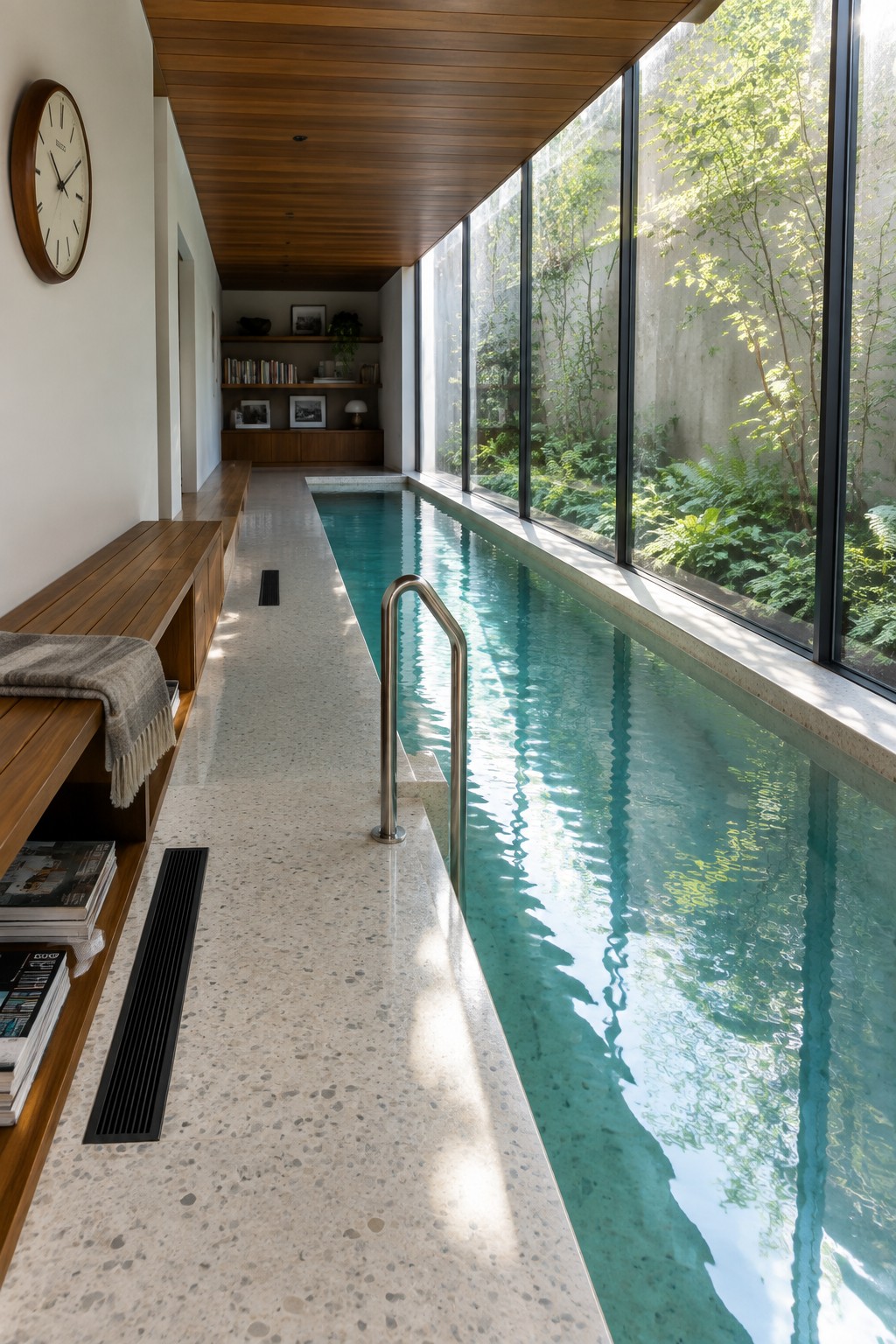
A built-in bench running the full length of a narrow pool room gives people somewhere to sit without eating into the walkway space. It also creates a clean edge that makes the room feel more finished and less like a corridor with water at the end.
This works best in homes where the pool room needs to double as a quiet spot to linger. Keep the bench low and simple, and use a material that handles moisture and wet feet without fuss.
Built-In Benches Along a Narrow Pool
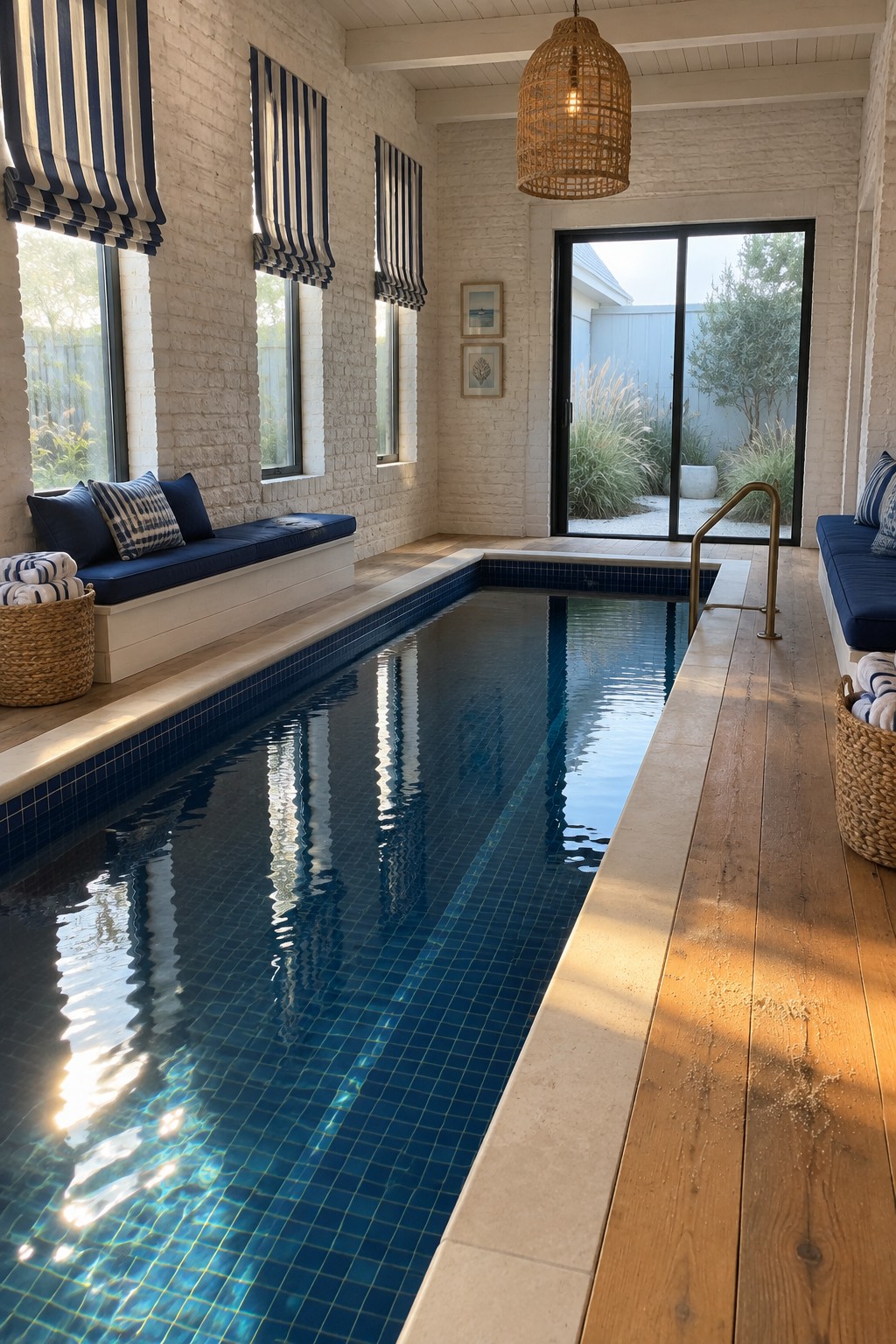
Running built-in benches down both sides of a long narrow lap pool keeps the room usable without adding extra furniture that would crowd the space. The benches give people a place to sit or set towels while leaving the full length open for swimming.
This setup works best in homes where the pool room needs to feel like part of the living area rather than a separate wet zone. Keep the bench depth modest so it does not narrow the walkway too much.
Built-In Seating Along Narrow Pools
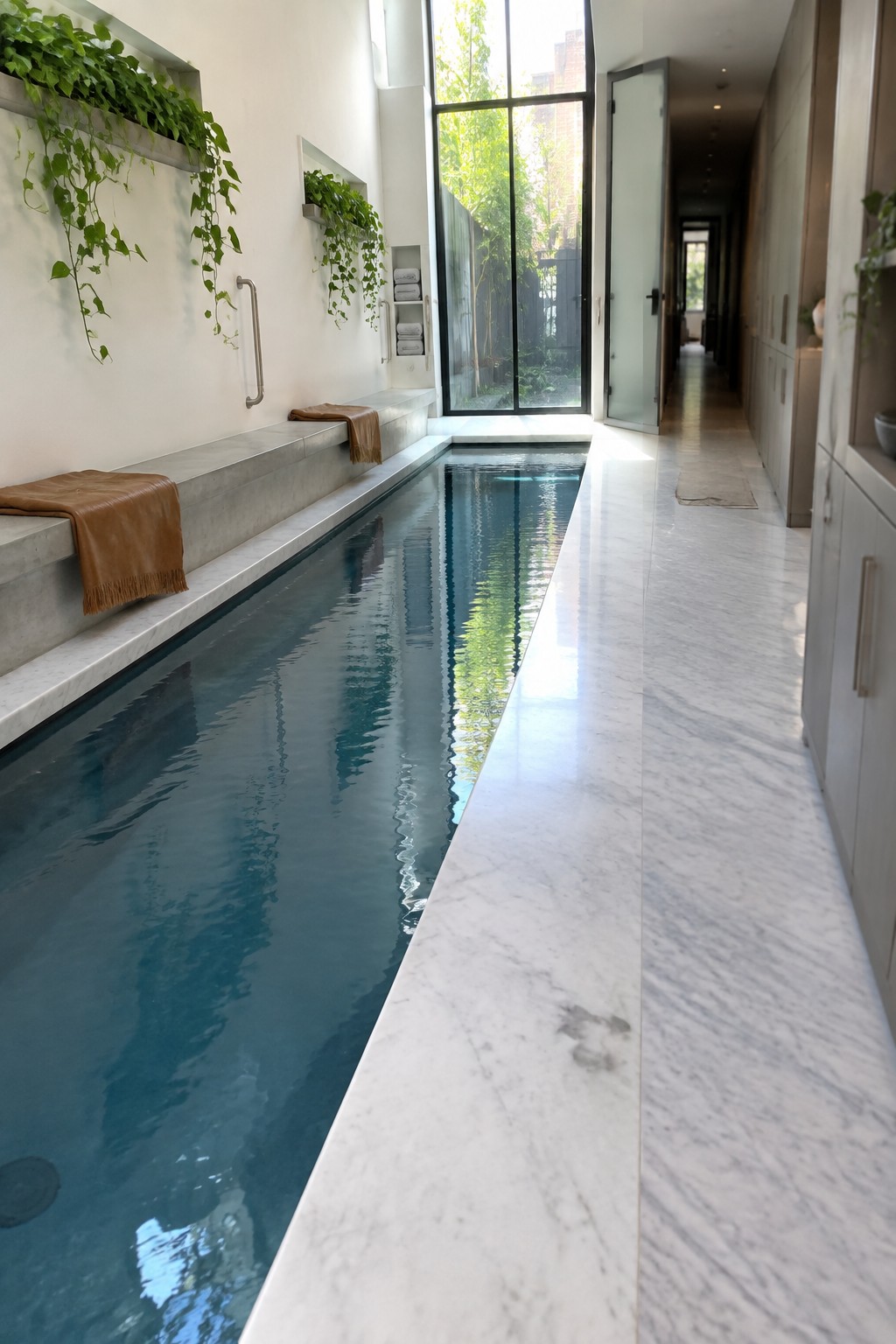
Built-in benches work especially well in long narrow rooms because they give people a place to sit without eating into the limited floor space. The concrete ledges run right along the pool edge, so the whole setup stays clean and functional even when the room is only a few feet wider than the water itself.
This approach suits modern homes that already have a corridor-like space to work with. It keeps the focus on the pool while adding a practical surface for towels or resting, and the simple material choice helps the narrow room feel less cramped.
Line The Pool With Side Loungers
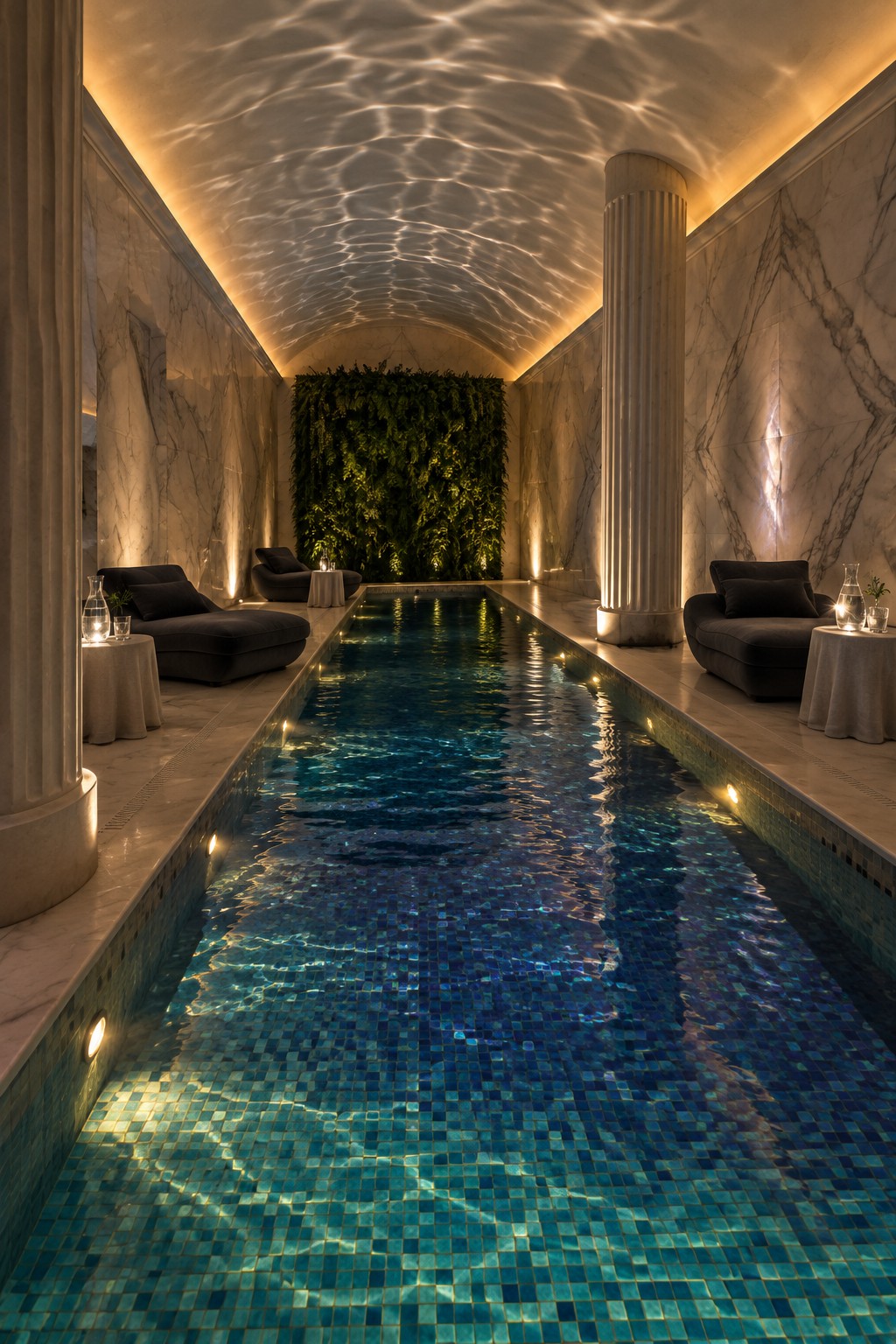
A narrow indoor lap pool can feel more usable when you add seating right along both edges. Low daybeds or chaise lounges turn the leftover space into places to rest without crowding the room or breaking up the long clean line of the water. This setup works especially well in tight widths because the seating sits low and stays out of the way.
It suits homes where the pool room doubles as a quiet spot to unwind rather than just a place to swim laps. Keep the loungers simple and in the same tone so they blend into the walls instead of adding visual clutter. Watch the height though. Anything too tall will make the space feel squeezed.
Line a Narrow Lap Pool With Potted Plants
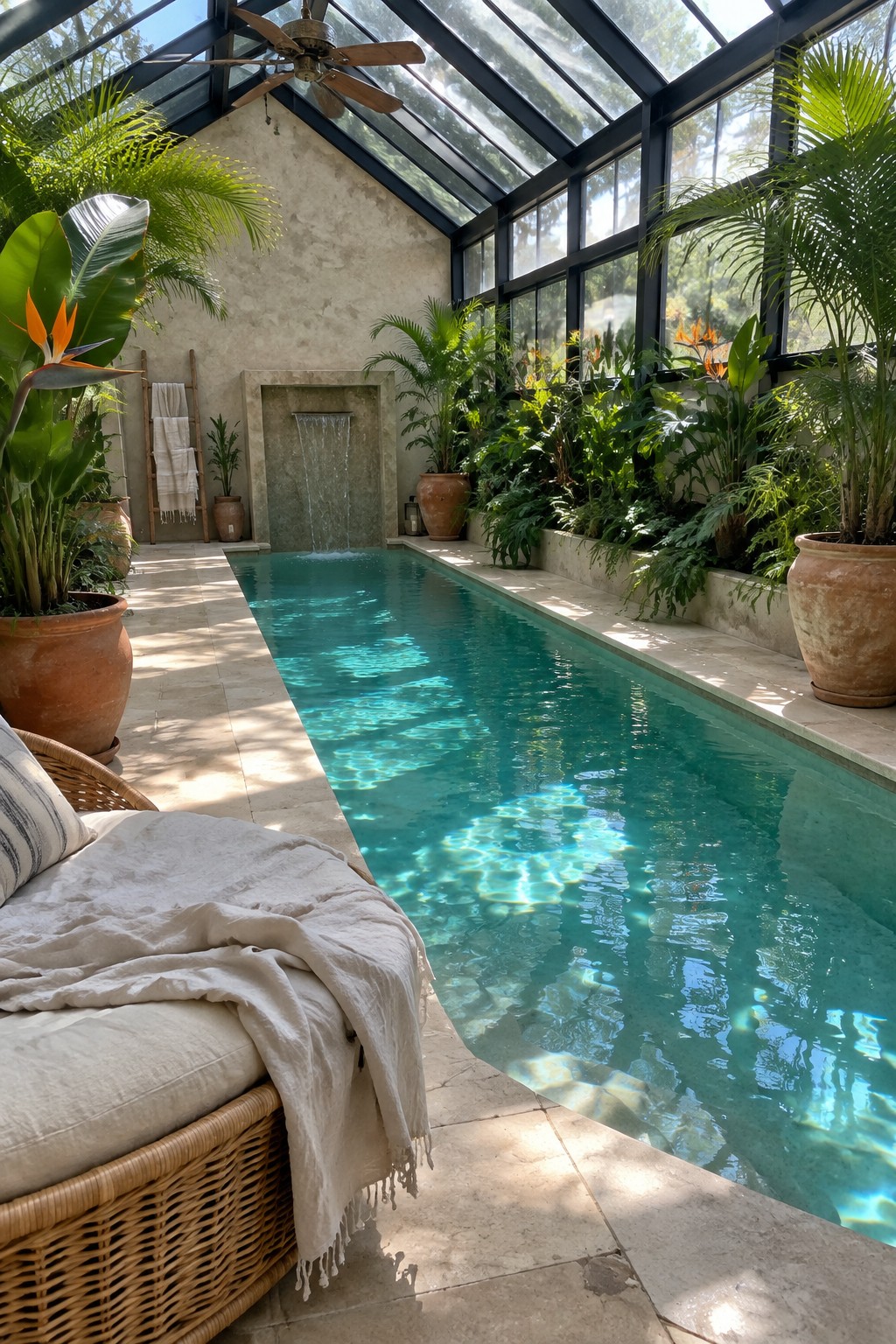
Plenty of large plants can turn a long, tight indoor pool into something that feels much more welcoming. The terracotta pots and leafy greenery along both sides break up the hard surfaces and give the space a softer edge without taking up floor space.
This works especially well in glass-roofed rooms where light reaches the plants easily. Stick to one or two pot sizes and repeat them down the length of the pool so the look stays simple rather than cluttered. It suits homes that already have a conservatory or sunroom feel and want the pool to blend in instead of stand out as a separate feature.
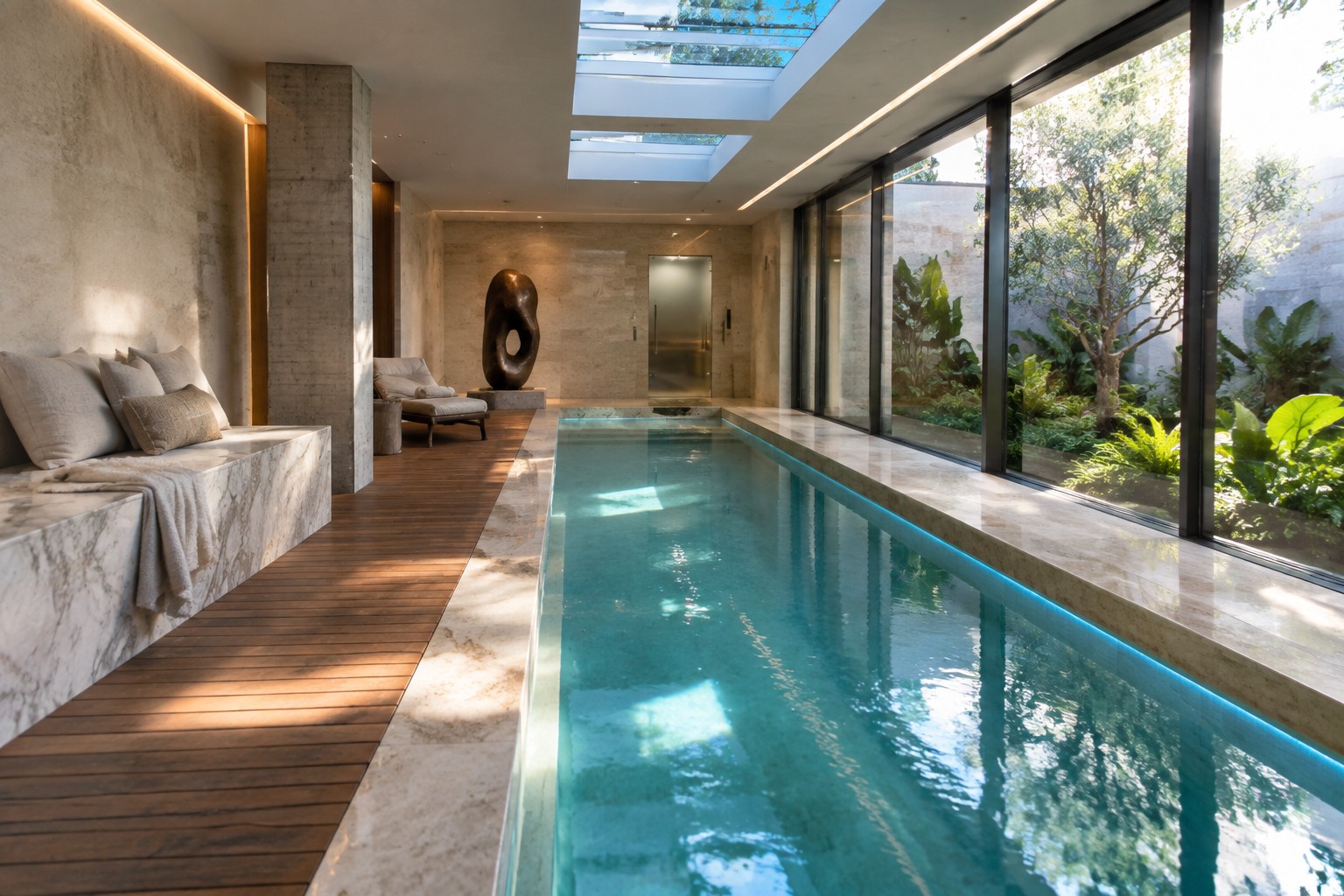
Run a Skylight the Full Length of the Pool
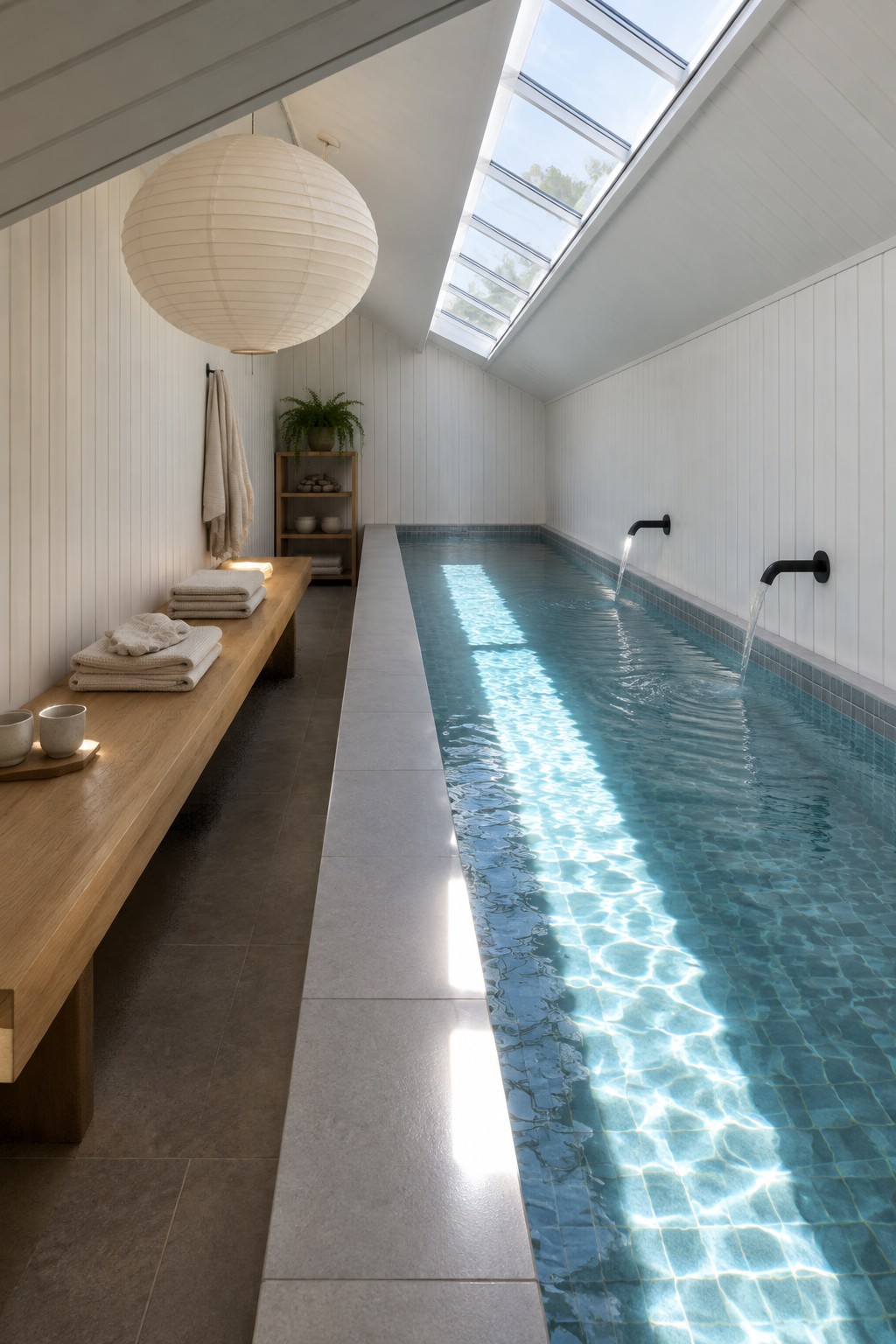
A long skylight overhead works especially well in narrow indoor pools. It pulls daylight straight down the center of the room, keeps the space from feeling boxed in, and lets the water catch the light in a simple way that feels calm rather than bright.
This approach fits homes where side windows are limited or the pool sits in a tight addition. Pair it with a low bench along one wall for towels and seating, and keep the rest of the finishes light so the room stays open and easy to maintain.
Built-In Bench Seating Along Narrow Lap Pools
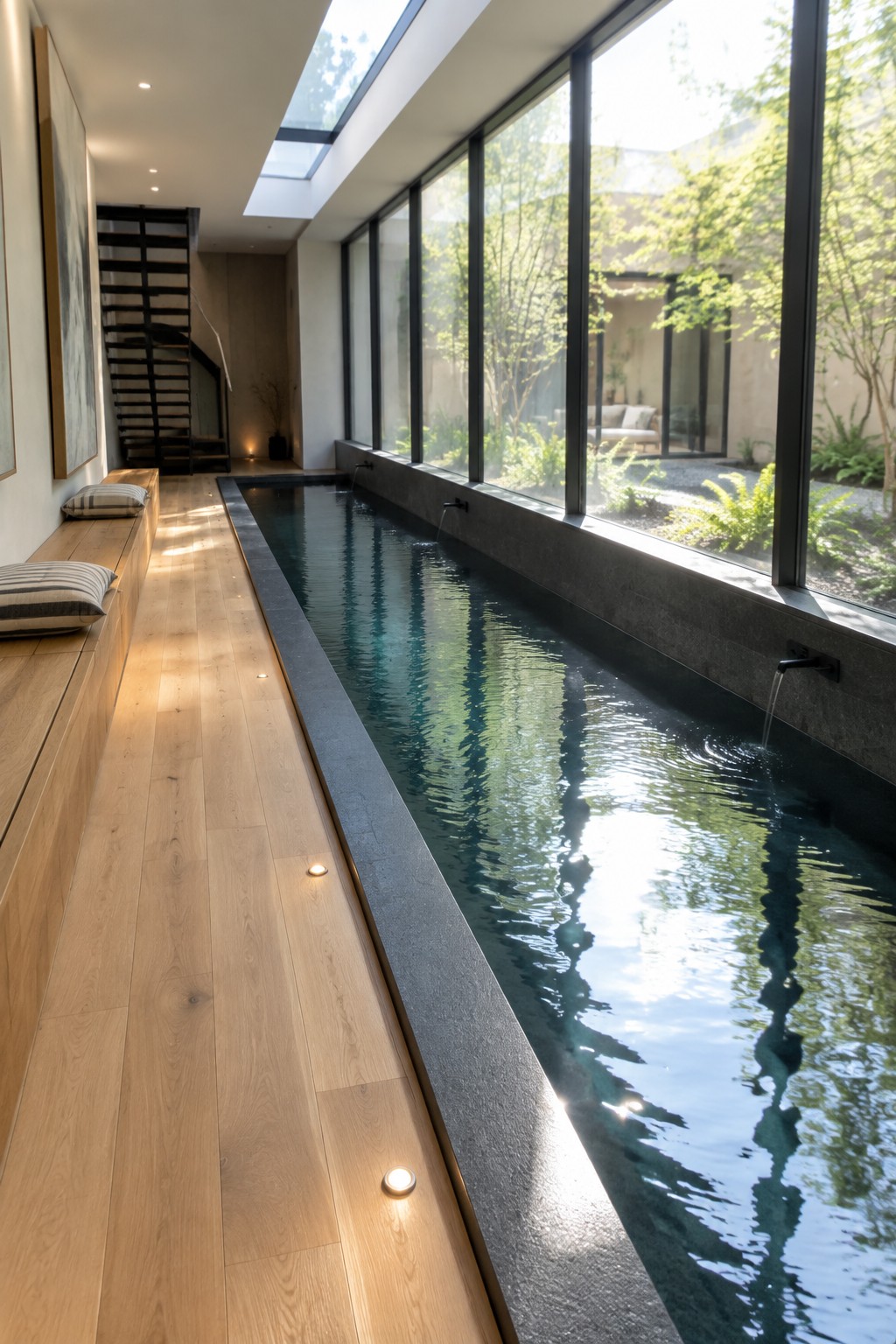
A built-in bench running the full length of an indoor lap pool turns a narrow room into something more usable. It gives people a spot to sit and rest without crowding the walkway or adding separate furniture that would get in the way.
This approach works best in homes where the pool area also serves as a casual lounge. Keep the bench low and simple, and pair it with light flooring so the space still feels open rather than cramped.
Add a Bench Along the Length of the Pool
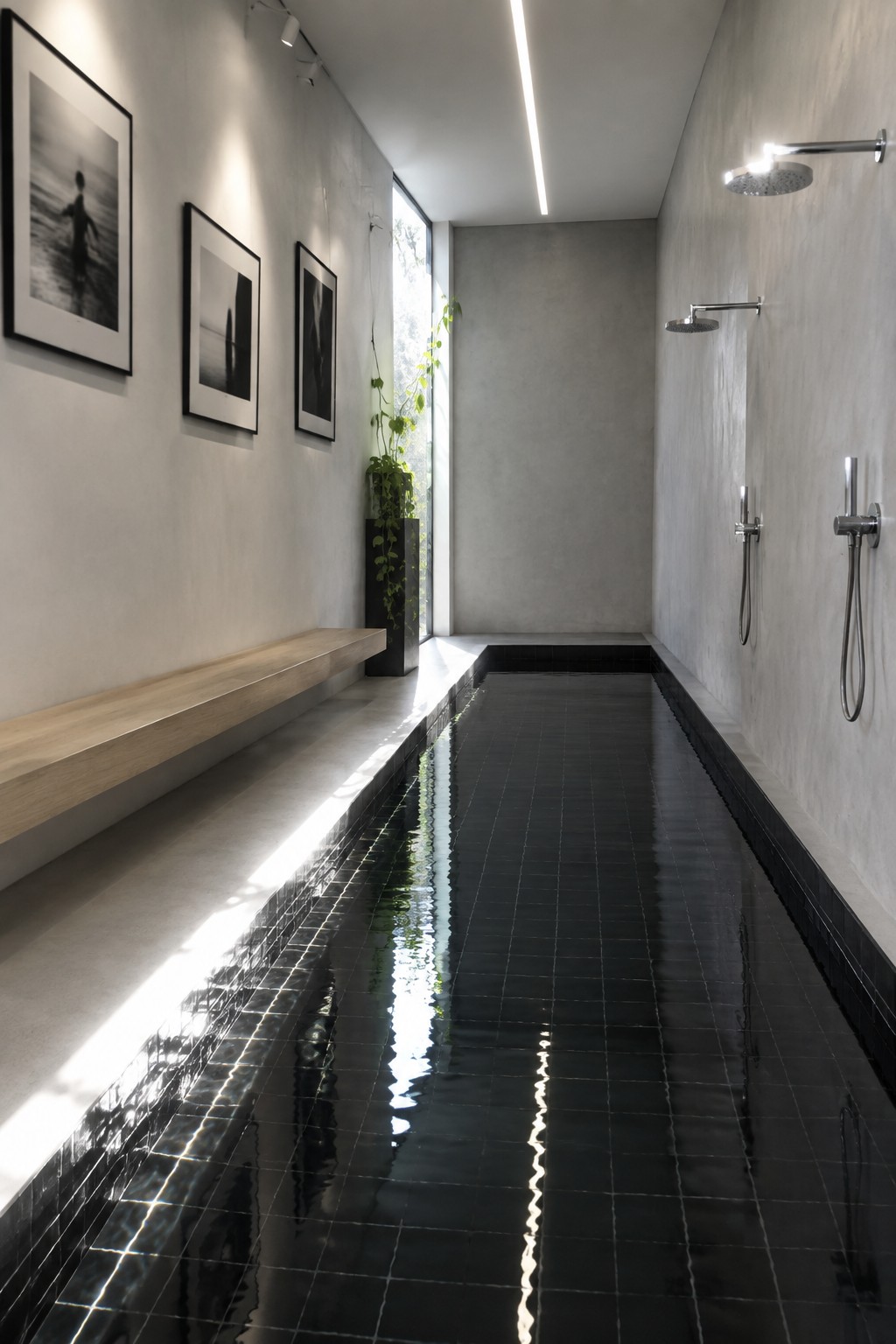
A long narrow room works better for a lap pool when you keep the sides clear and add just one built-in bench. The bench gives people a place to sit without bringing in extra furniture that would make the space feel tighter.
This layout suits homes where the pool runs wall to wall. Keep the bench simple, use a moisture-resistant wood or similar material, and place it on the side opposite the main walkway so swimmers still have room to move.
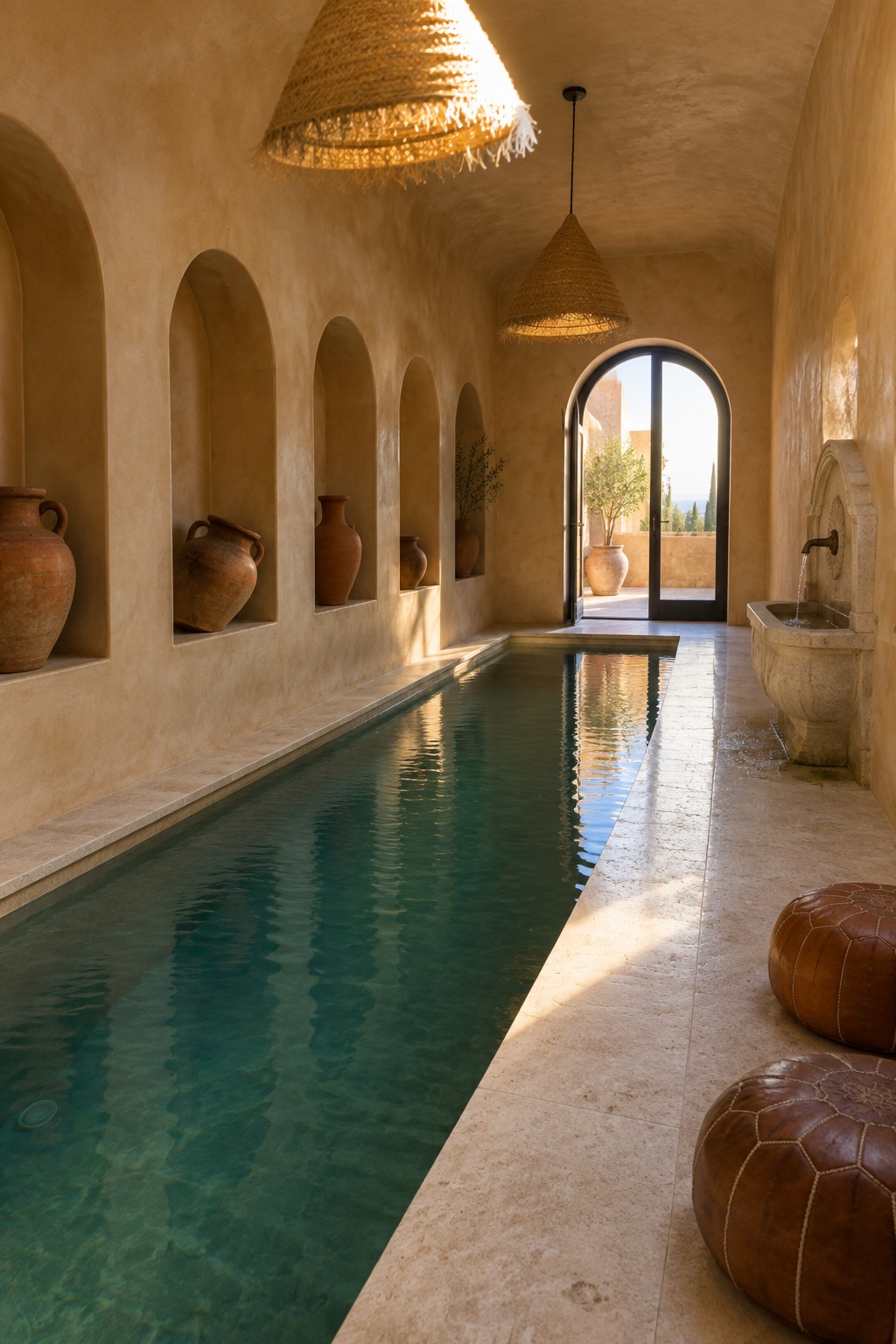
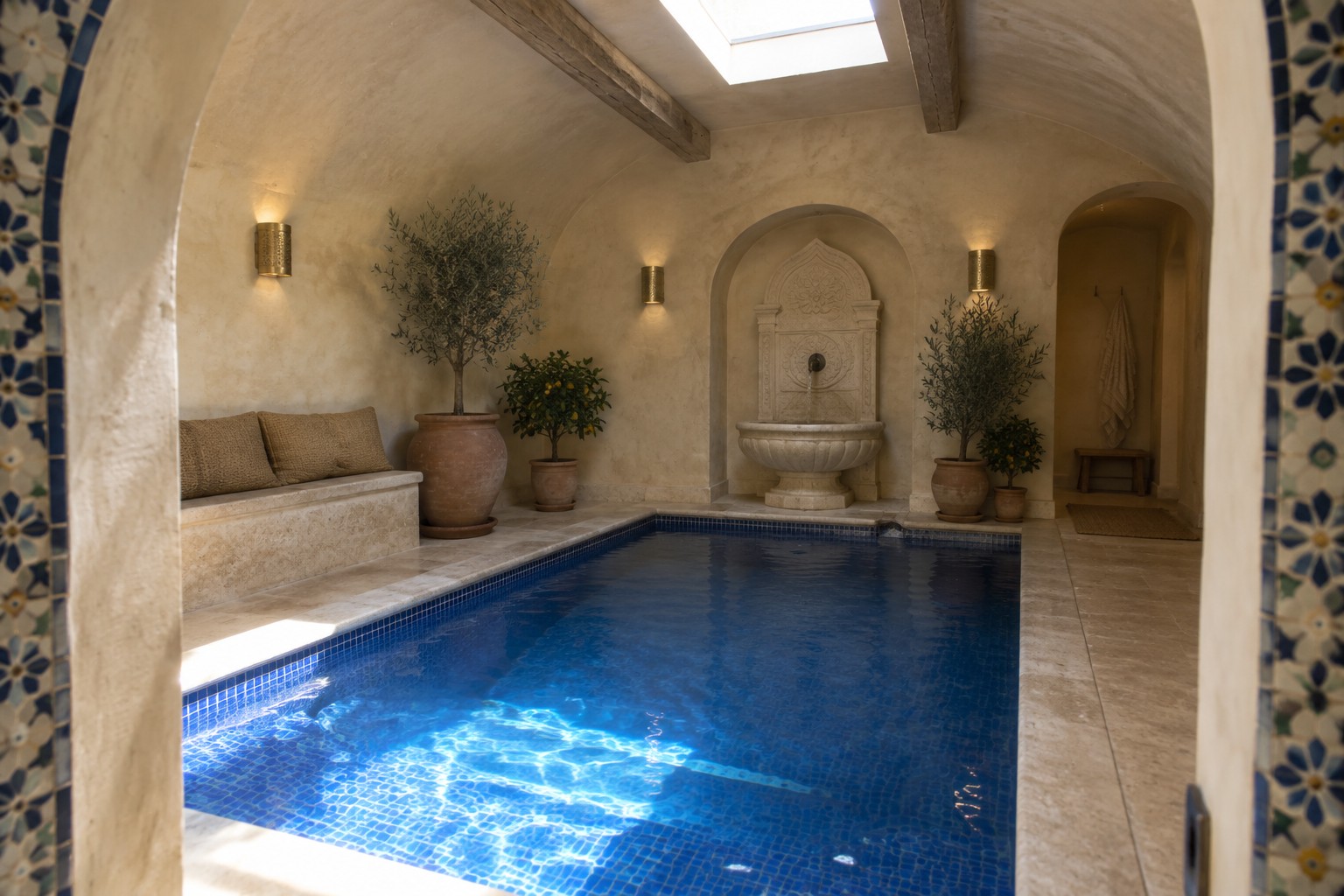
One simple way to handle a long narrow lap pool is to build a series of arched niches into one wall. They give you spots for pottery or small plants without taking up any floor space, which matters when the pool already fills most of the width.
This approach suits older homes or new builds where you can recess into the wall. Keep the niches shallow enough to avoid structural issues and use them only for light items so the walkway stays clear on the other side.
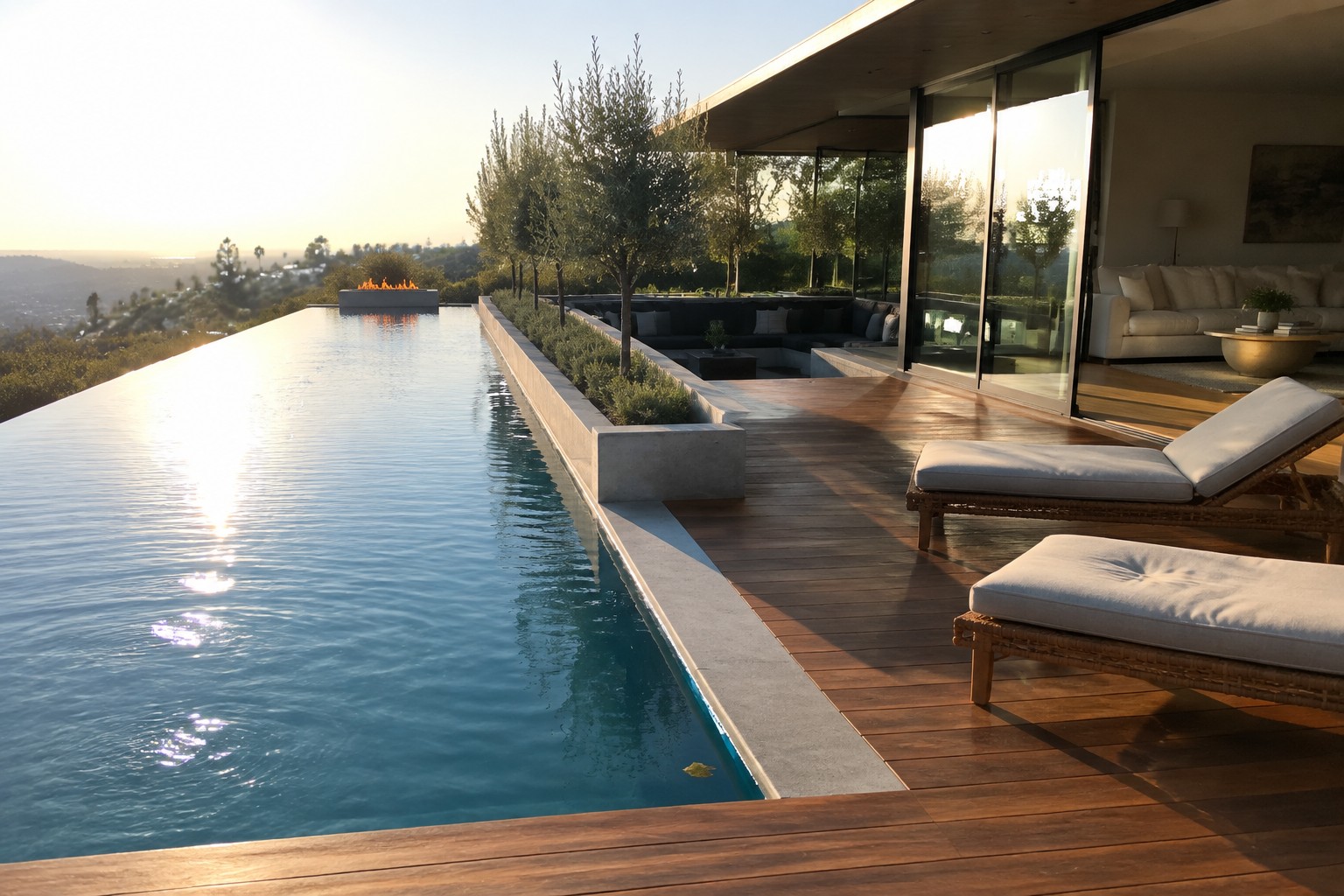
Add a Linear Fire Feature Along One Wall
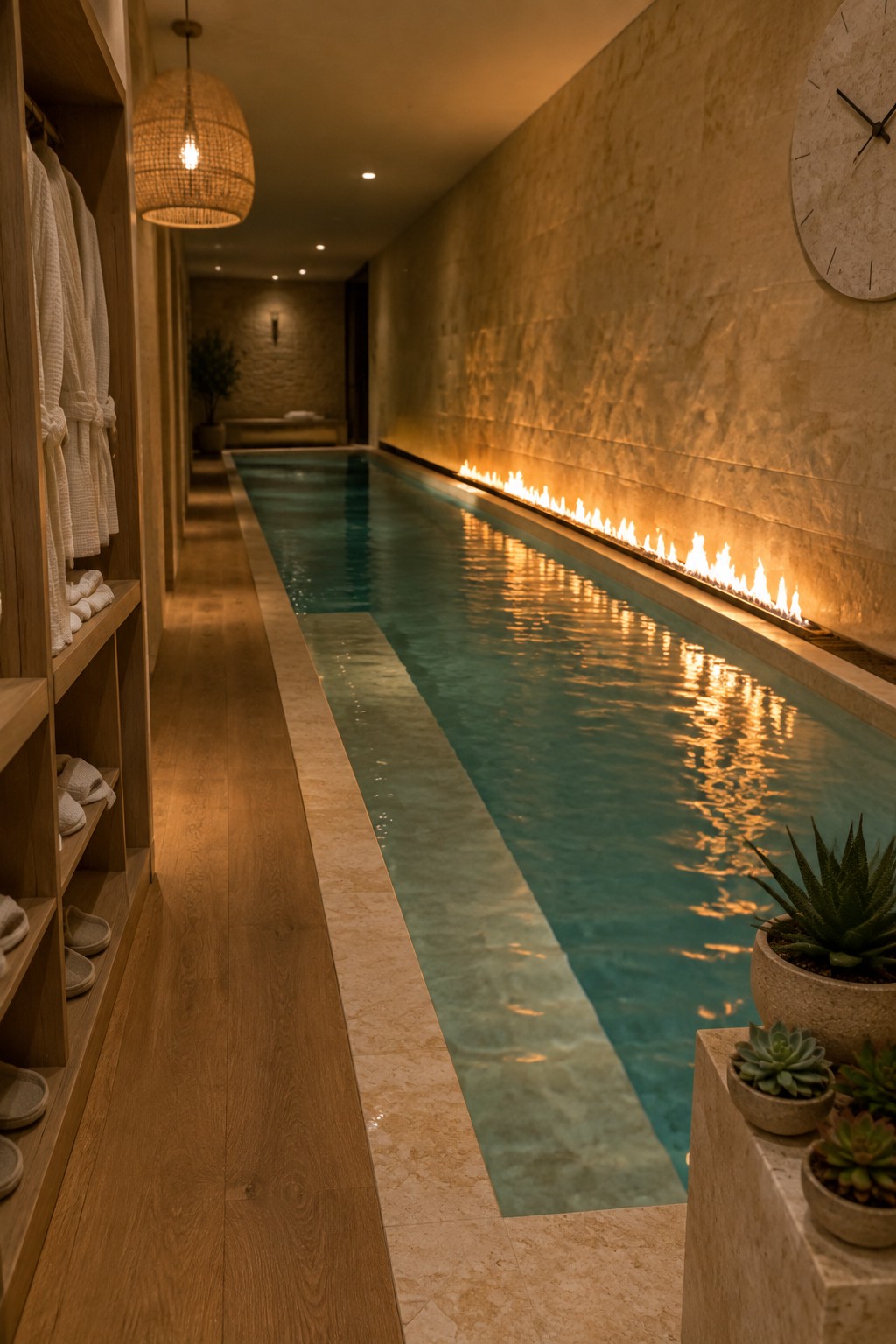
A long narrow lap pool can feel cold or tunnel-like if the walls are left plain. Running a continuous line of flames along one side warms the space up and creates soft reflections across the water that make the room feel more inviting.
This approach works best in indoor settings where the wall can be built with heat-safe stone or tile. It suits homes that want the pool to double as a quiet spa area, but you do need good ventilation and a reliable gas setup to keep it safe and easy to maintain.
Built-In Benches Keep Narrow Pool Rooms Practical
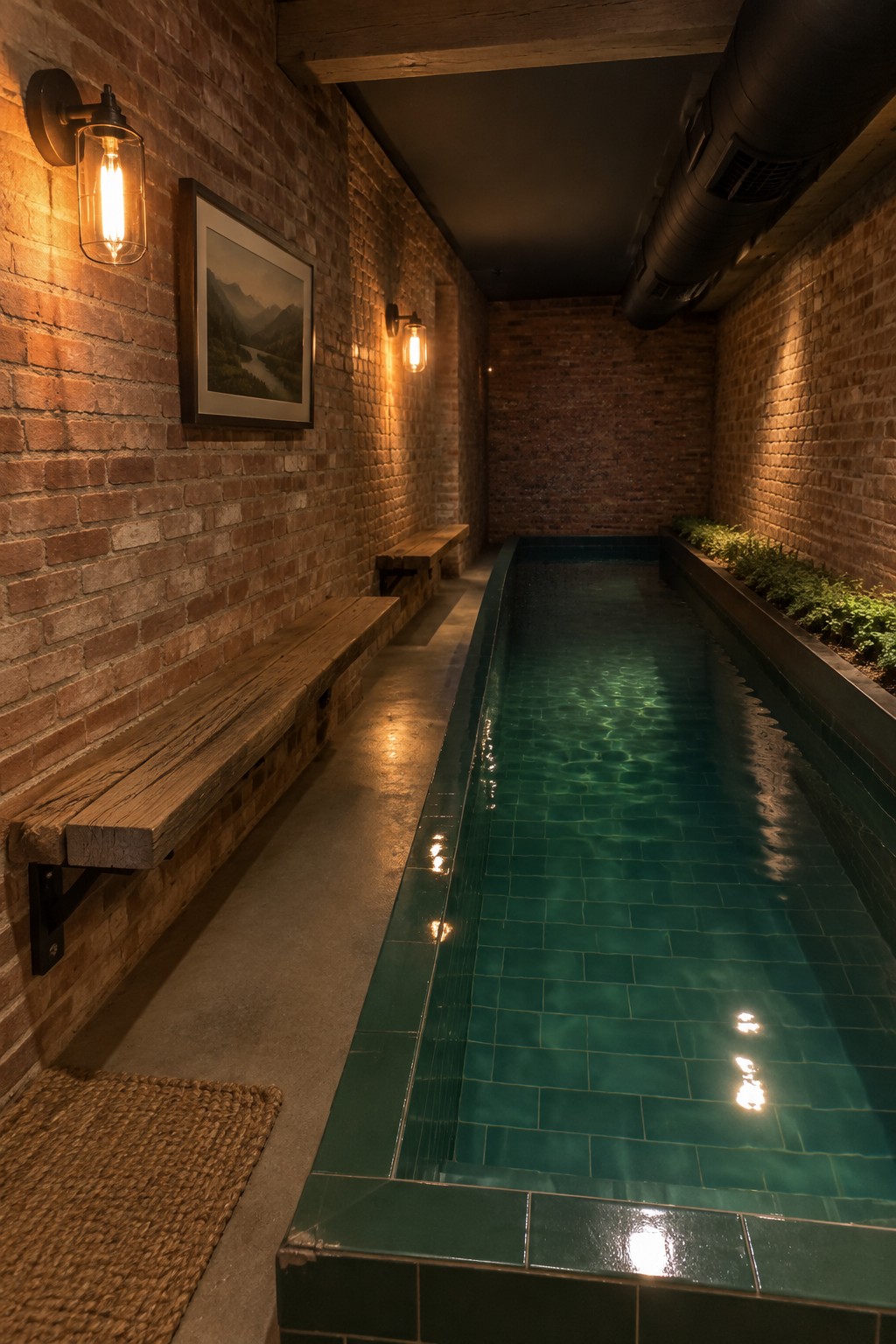
A narrow lap pool room often lacks space for separate seating. Built-in wooden benches along the walls solve this by giving people a place to sit without cutting into the walkway or adding freestanding furniture.
This approach works best in long rooms where the pool takes up most of the width. It suits homes with brick or similar textured walls and helps the space feel finished while staying functional.
Frequently Asked Questions
Q: Can these lap pools go into a room that’s already finished?
A: Yes if you choose an above ground style that sits on top. It avoids major construction and keeps your existing floors intact. Just make sure the structure below can handle the weight.
Q: How often will I need to clean an indoor lap pool?
A: Skim it weekly and check the filters monthly. Indoor pools need less cleaning than you might expect but a cover cuts the effort even more.
Q: Is heating the water going to cost a fortune?
A: Not if you add insulation around the sides. Run the heater only when you plan to swim. And keep the room temperature steady to avoid extra losses.