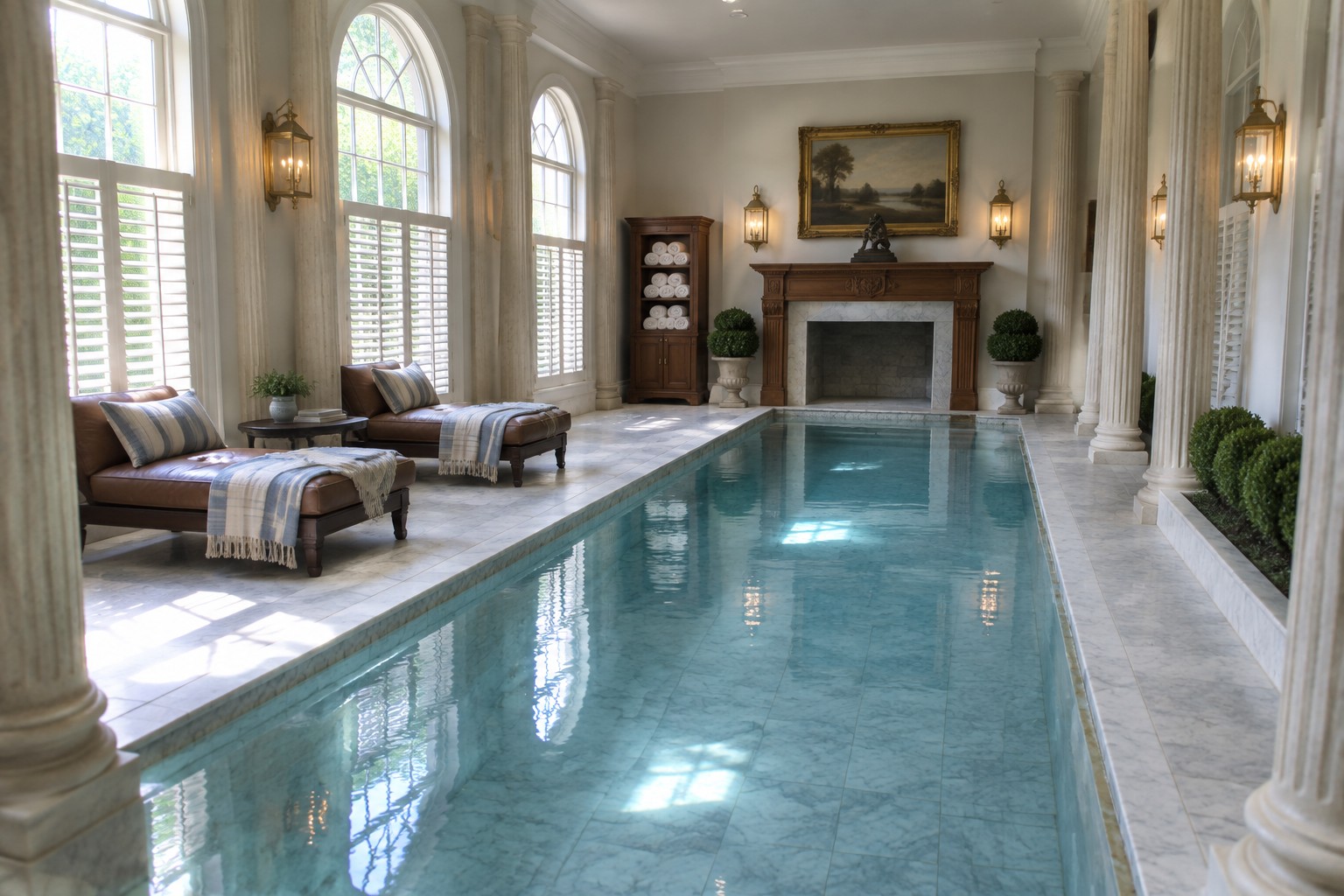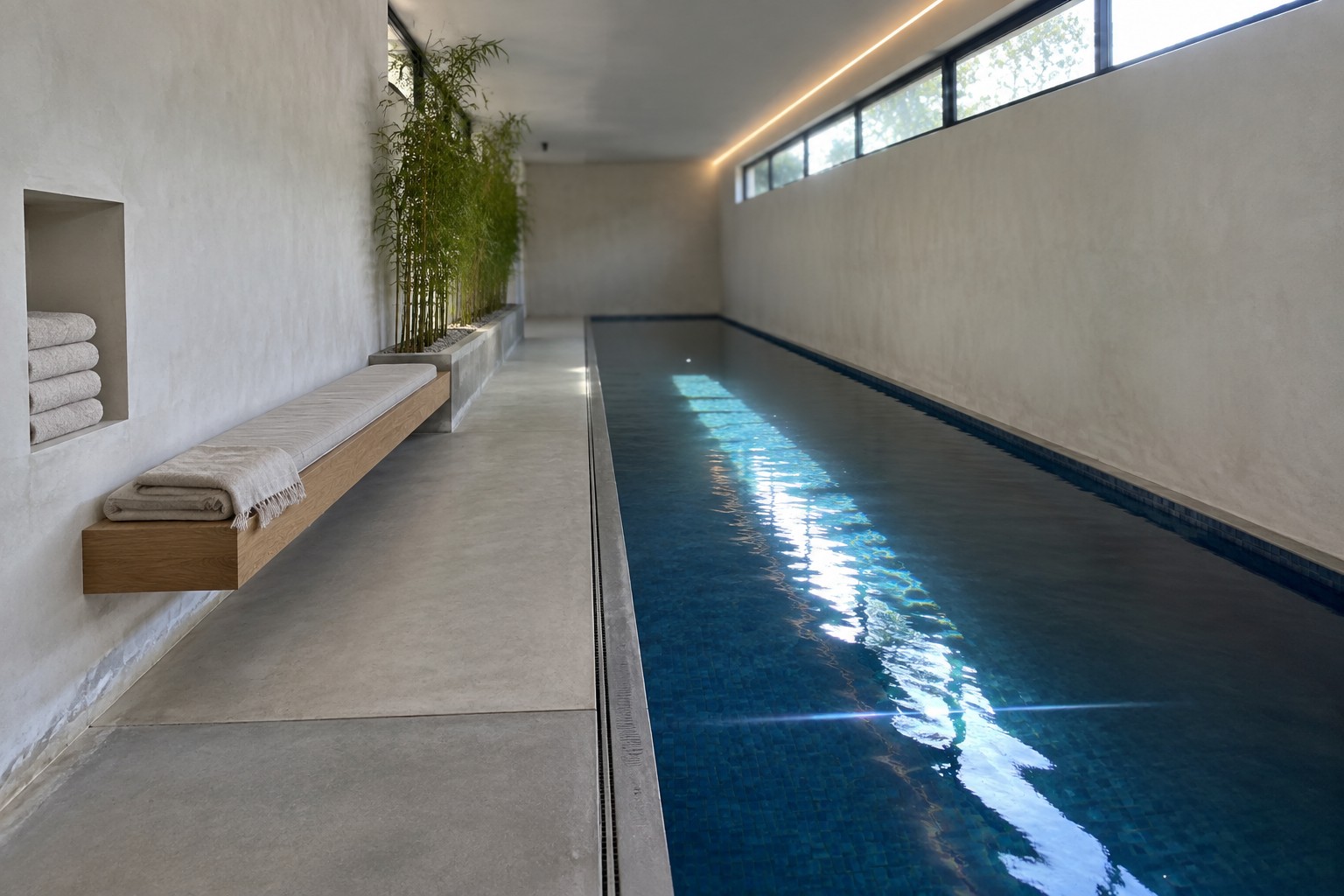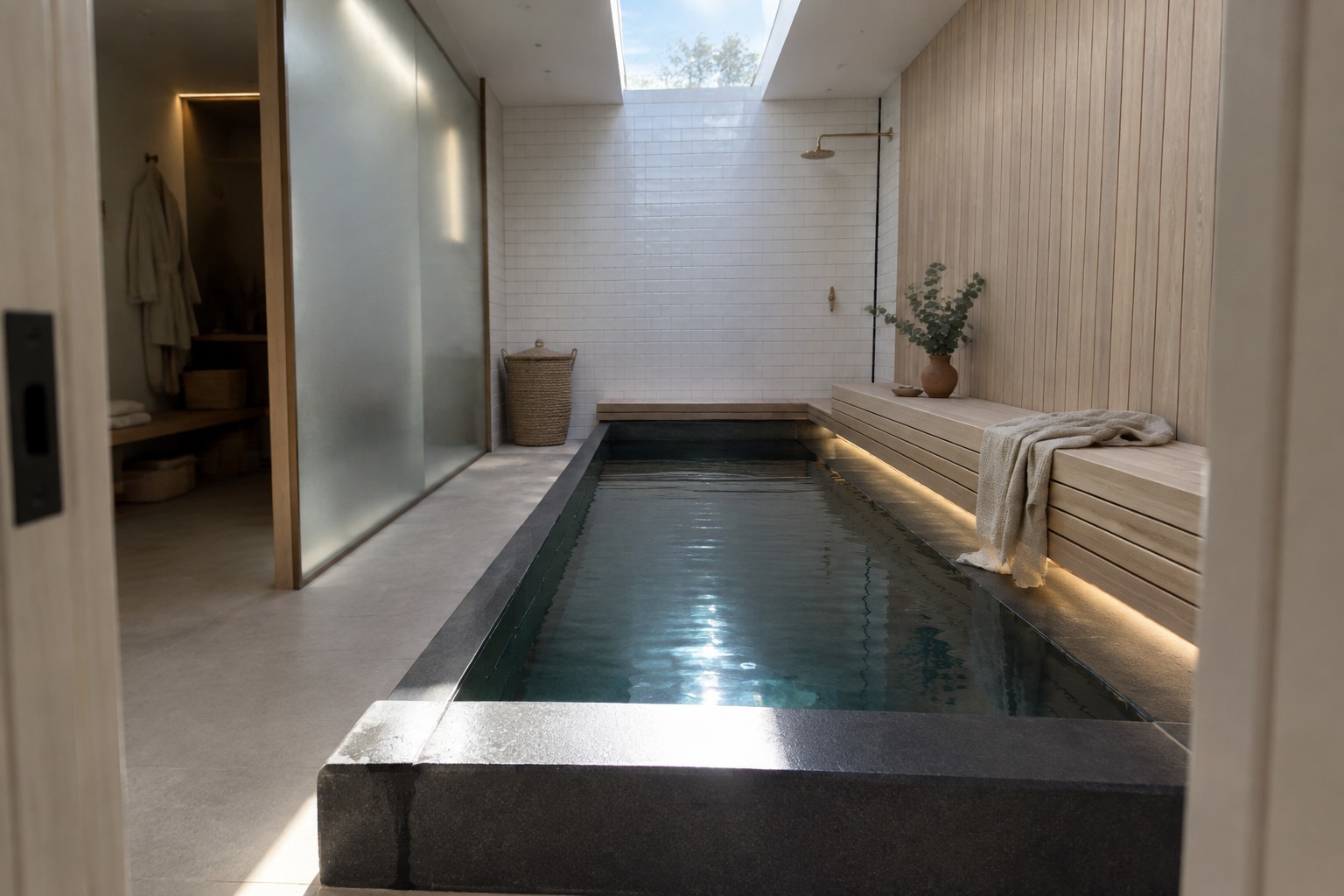
When I think about fitting a plunge pool into a small home, the first thing that comes to mind is how the room has to keep its sense of openness despite the added water element.
The way the pool integrates with the floor and walls can change whether the space feels like an extension of the living area or something separate.
Humidity control becomes essential.
I have noticed that good ventilation and the right materials make all the difference in keeping the room comfortable year round.
A few of these approaches look like they could adapt well if I ever decide to try something similar in a tight space.
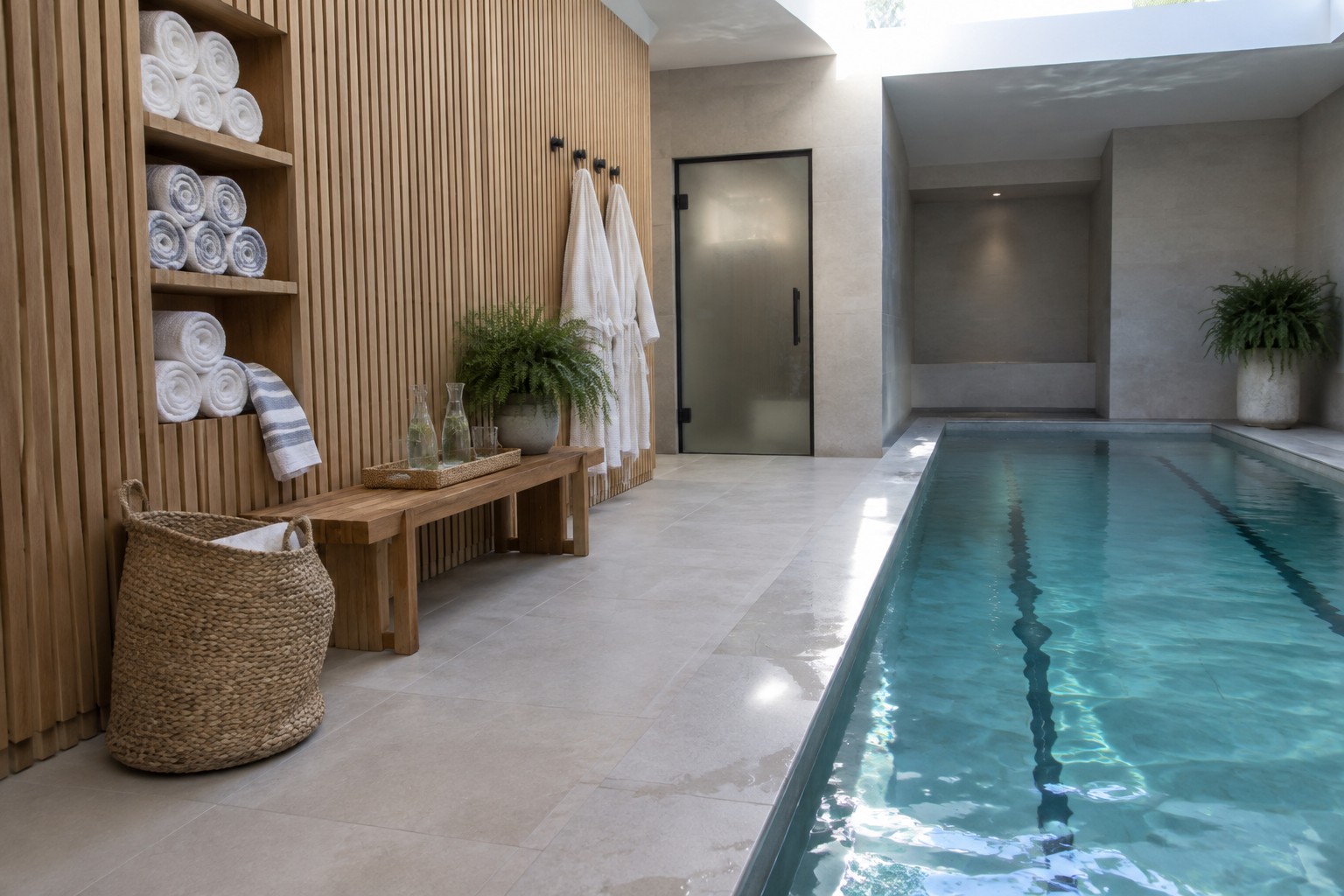
Narrow Plunge Pool With Built-In Bench
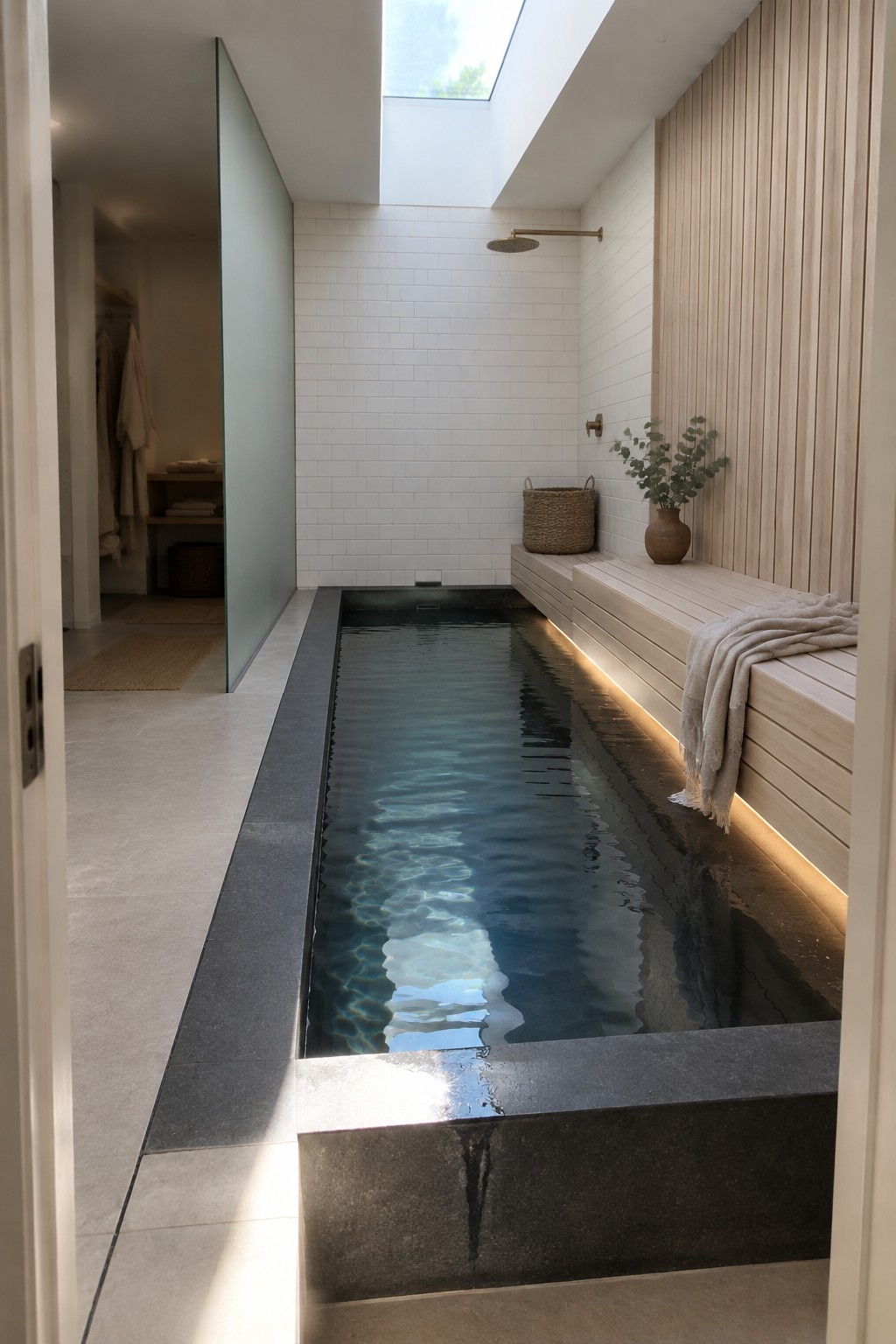
A narrow plunge pool can fit into a small home when the layout stays tight and simple. Running the pool along one wall with a built-in bench beside it keeps the space usable instead of turning it into a single feature that eats the whole room.
This works well in a converted bathroom or a small addition where floor space is limited. The bench doubles as seating and a place to set things down, so you avoid adding extra furniture that would make the area feel cramped.
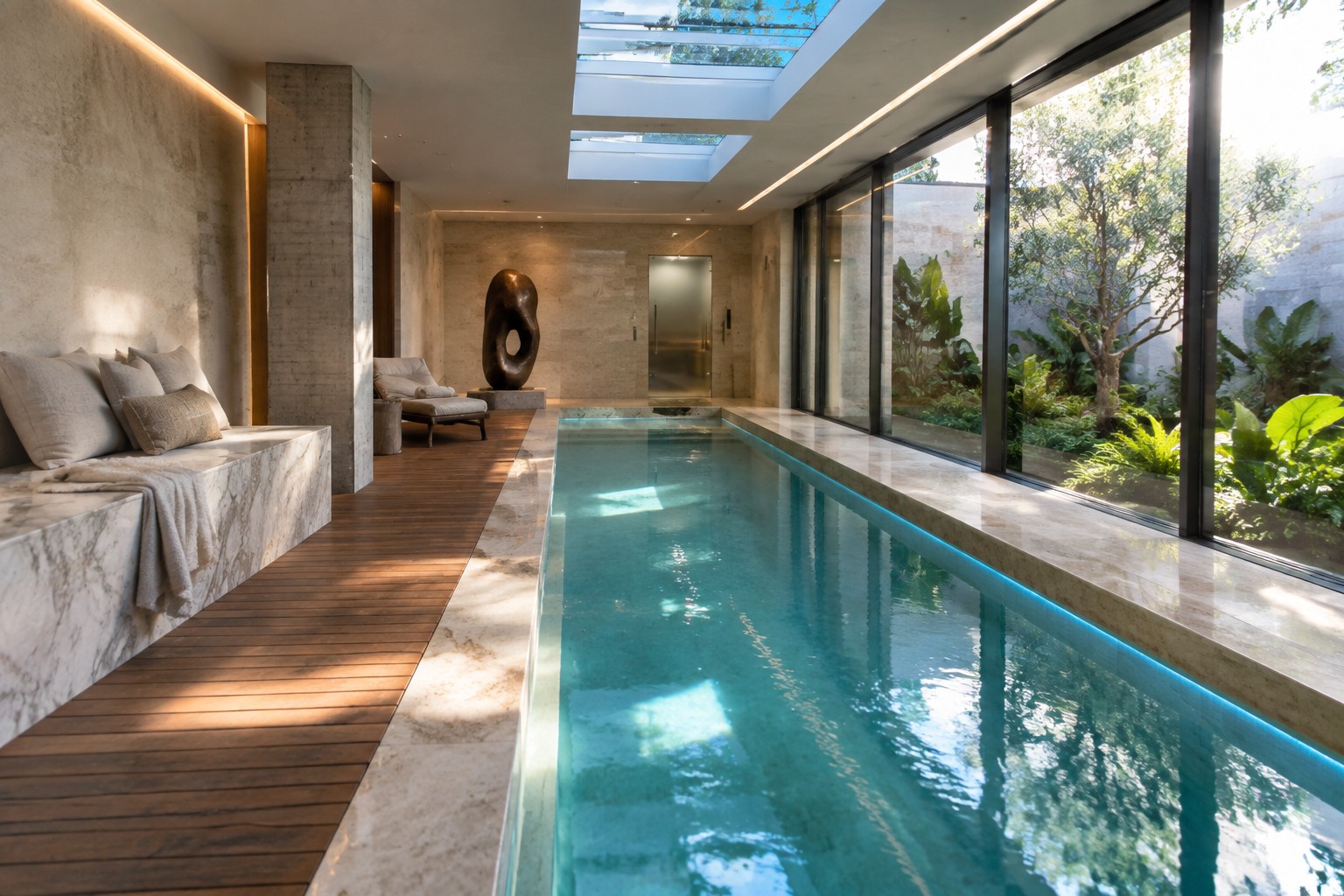
A Narrow Wood Platform Makes The Pool More Usable
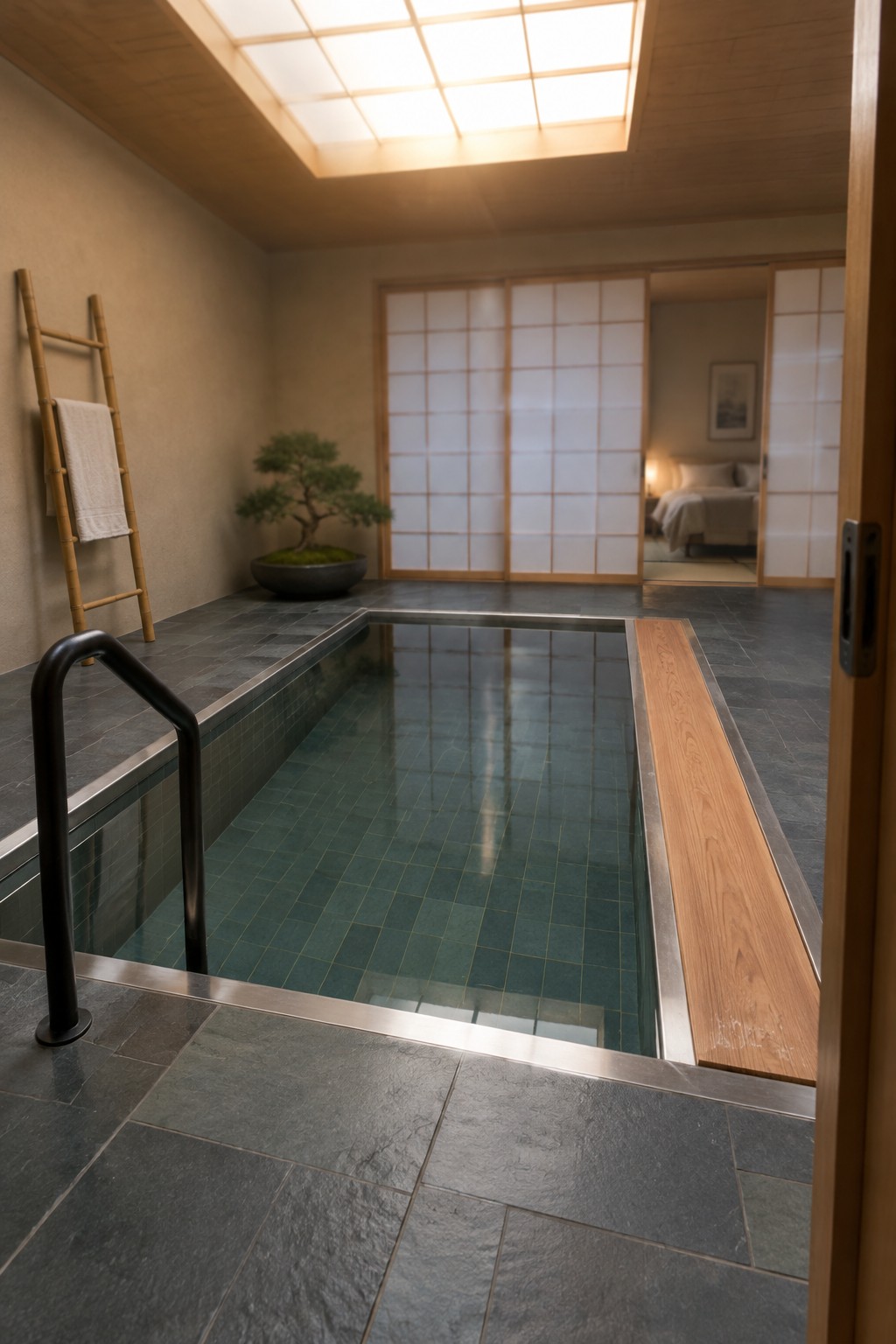
Many indoor plunge pools in smaller homes end up feeling a bit stark once the water goes in. A simple wood platform along one long edge changes that by giving you a dry spot to sit, step out, or set a towel without adding separate furniture that would crowd the room.
This works especially well when the pool sits right off a bedroom or bathroom. Keep the wood sealed well against moisture and choose a tone that contrasts the tile so the edge reads as intentional rather than leftover space. In very tight layouts it can even double as the only seating you need.
A Narrow Plunge Pool Along One Wall
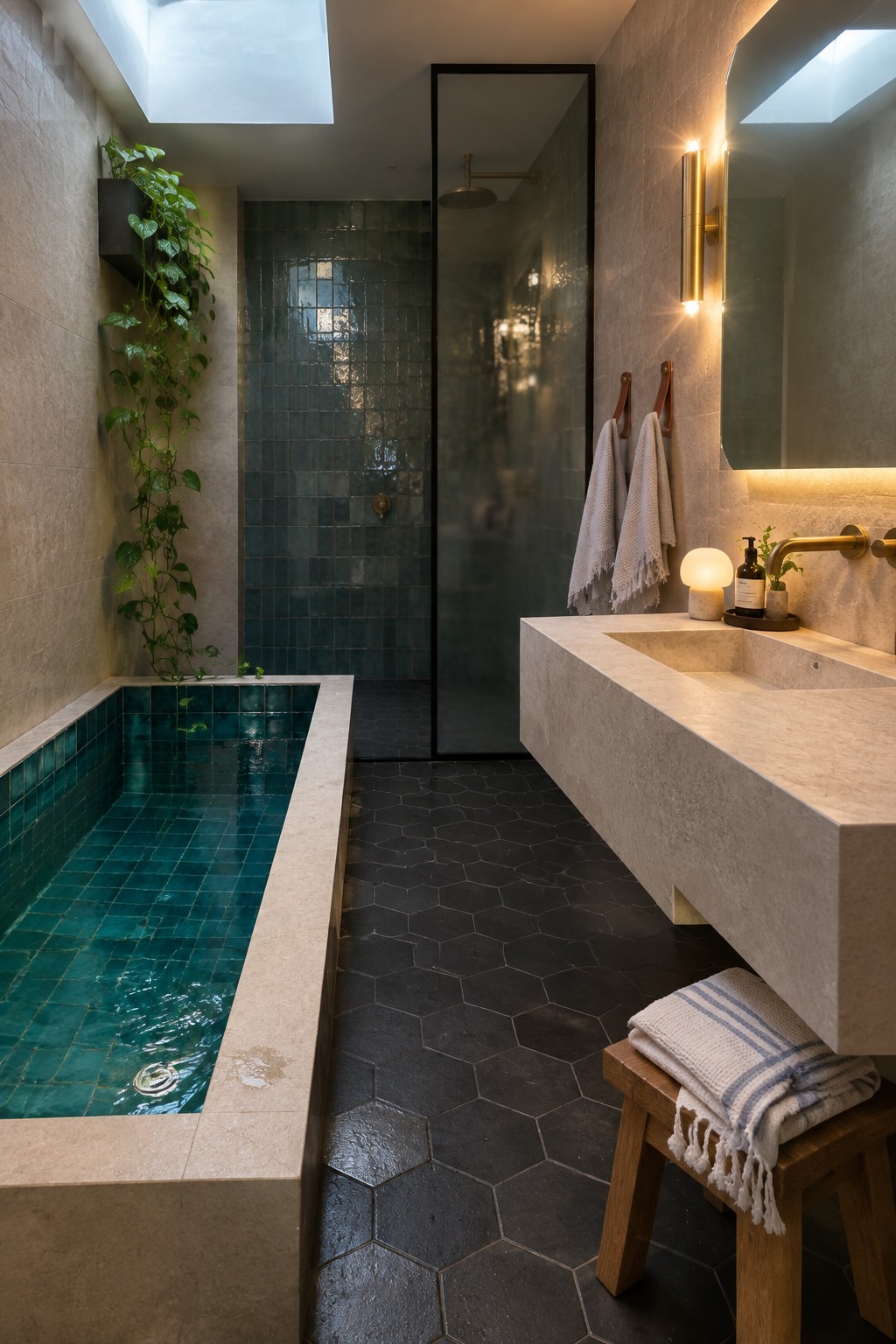
Running a plunge pool lengthwise along one wall lets you add a real water feature without eating up the middle of the room. In smaller bathrooms this layout keeps the floor plan open while still giving you a usable soak space that feels separate from the rest of the room.
This approach suits narrow rooms or those with a long blank wall already in place. Pair the pool with darker floor tiles to mark the wet zone clearly, and leave enough walkway on the other side so the space does not feel cramped.
Narrow Plunge Pools With Wood Decking
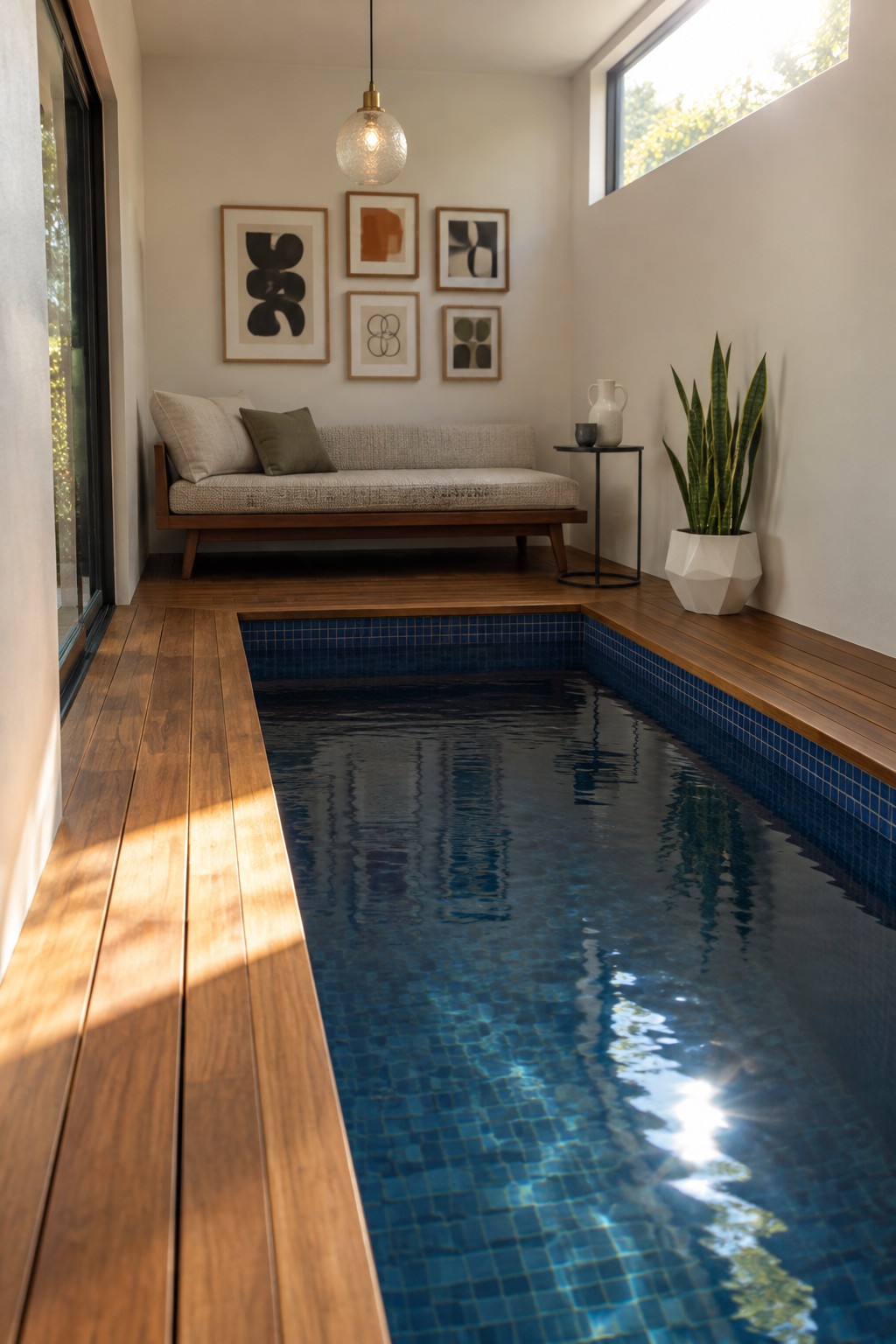
A narrow plunge pool works well in compact indoor spaces because it takes up less floor area while still giving you a place to cool off. The wood decking on both sides turns the edges into usable surfaces for walking or placing a seat without crowding the room.
This approach suits smaller homes or additions where you want the pool to feel connected to the rest of the living area. Match the decking to your existing wood floors so the whole space reads as one rather than a separate wet zone.
Narrow Pools That Fit Small Rooms
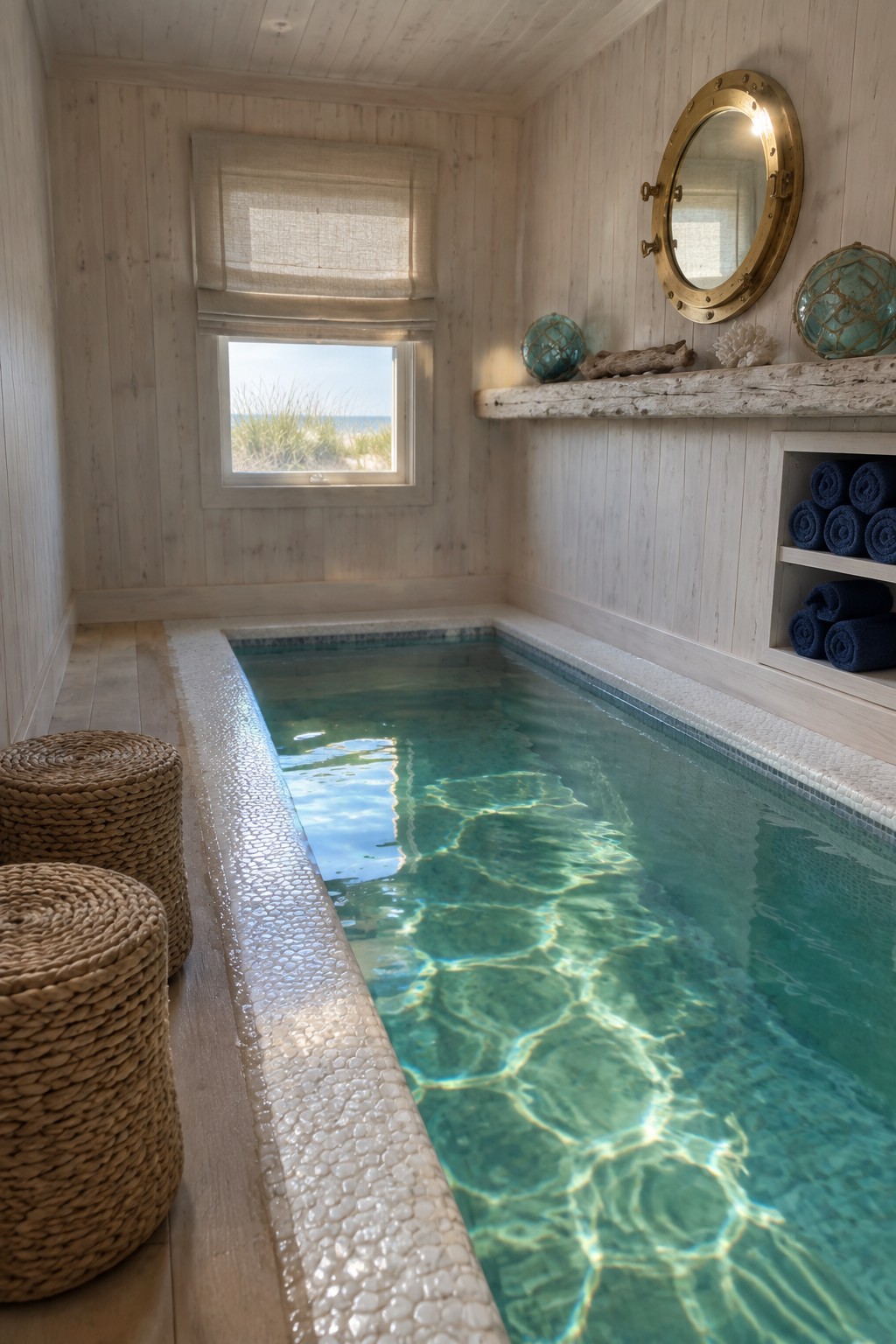
A long narrow plunge pool makes it possible to add water to a really tight indoor space. The shape stretches along the room instead of spreading out, so you still get a decent swim without needing extra width.
This layout suits homes where the available room is limited but has some length to work with. Light walls and a simple window help keep the area from feeling cramped.
Narrow Pool Along One Wall
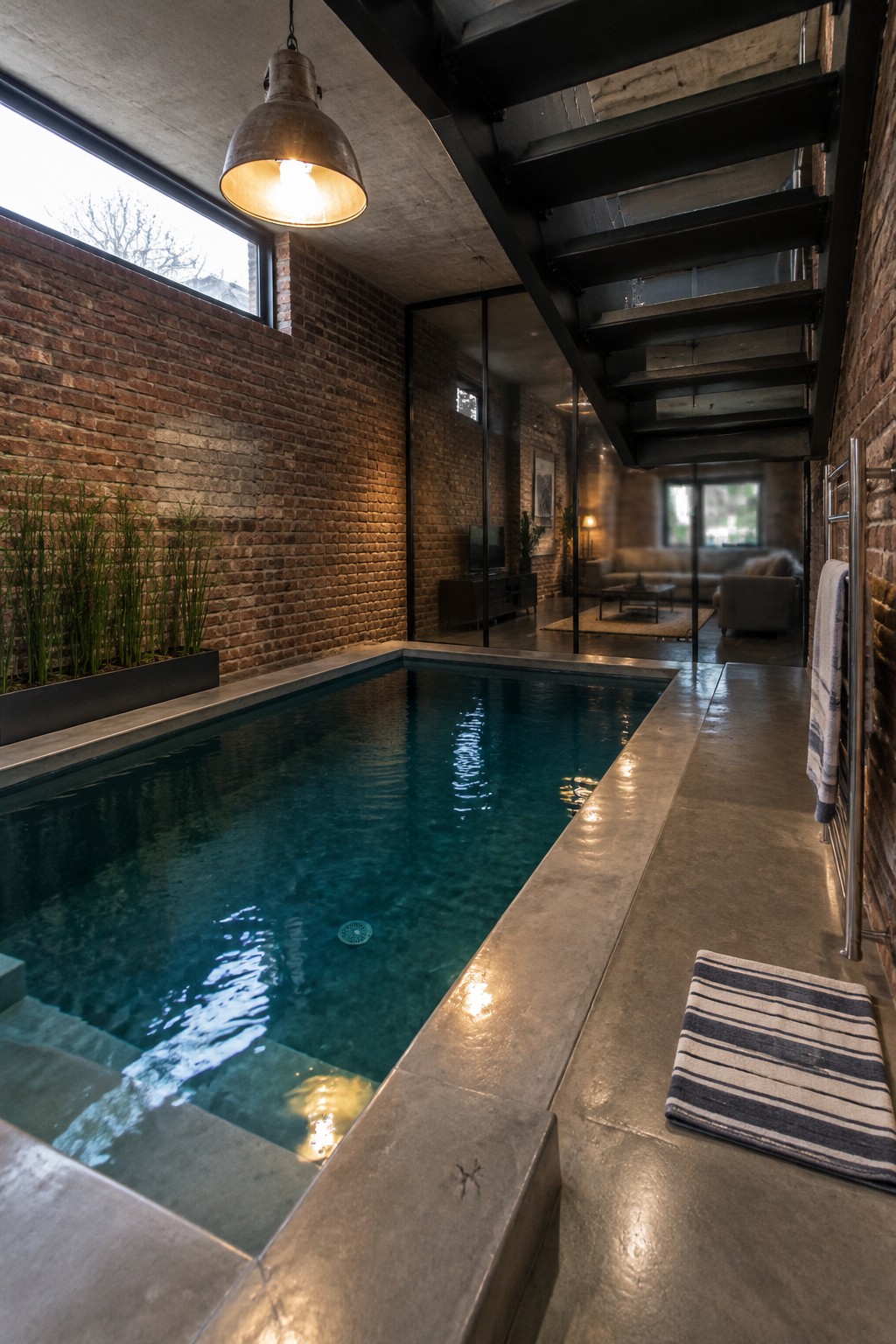
A narrow plunge pool set tight against one wall makes good use of limited indoor space. It gives you a usable swim length without eating into the middle of the room, which helps smaller homes feel less cramped.
This layout suits townhouses or converted spaces where the floor plan runs long and thin. Keep the surrounding floor clear for walking and place seating on the opposite side so the pool feels like part of the living area rather than a separate feature.
Extend the Pool Tile Across the Floor
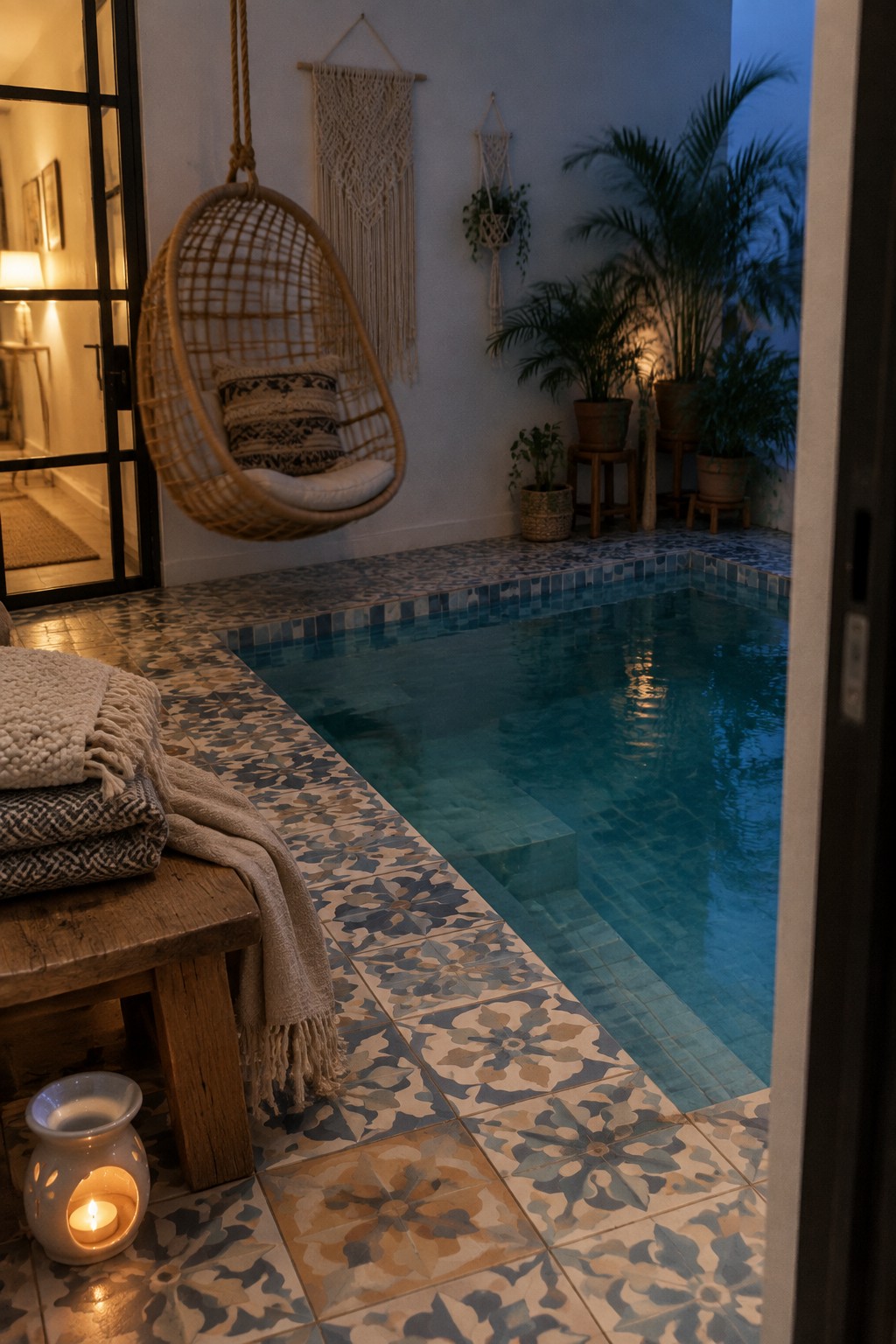
One simple way to make a compact indoor plunge pool feel like part of the room instead of a separate feature is to run the same tile pattern from the pool edge out into the surrounding floor. The continuous surface pulls everything together and helps the small space feel more open and connected.
This approach works best in homes where the pool sits right next to living areas. Keep the pattern from getting too busy, and add a few natural textures like a hanging chair or potted plants to balance the hard surfaces without crowding the space.
Pebble Walls For Compact Indoor Pools
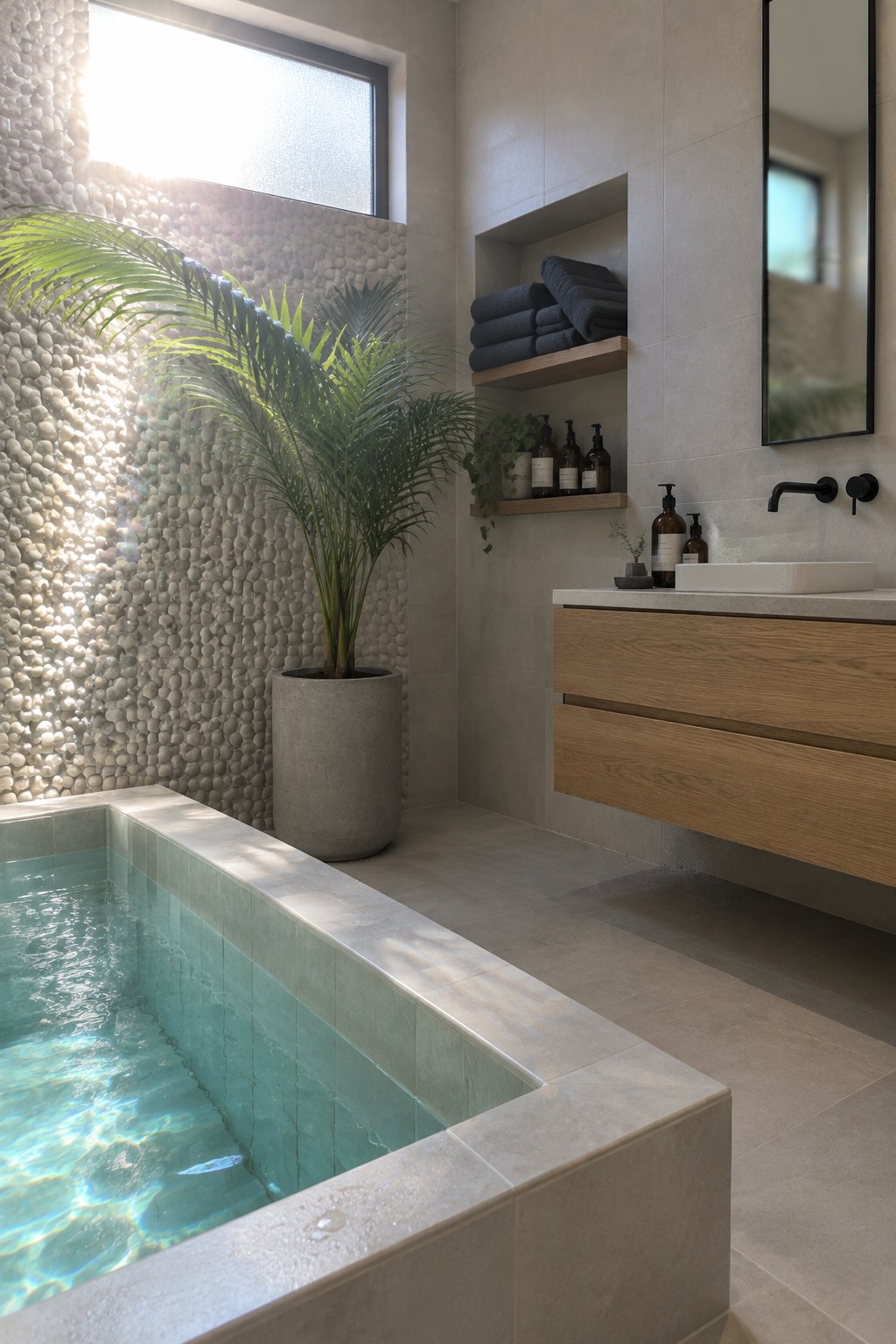
A pebble wall can give a small indoor plunge pool more character without taking up extra floor space. The rough texture plays against the smooth water and helps the pool feel like a natural feature instead of something added later.
This approach works best in bathrooms or small spa rooms that already have simple tile or concrete finishes. Keep other surfaces quiet so the wall and pool remain the main focus, and let a window or skylight bring in daylight to highlight the texture.
Narrow Pools That Fit Compact Rooms
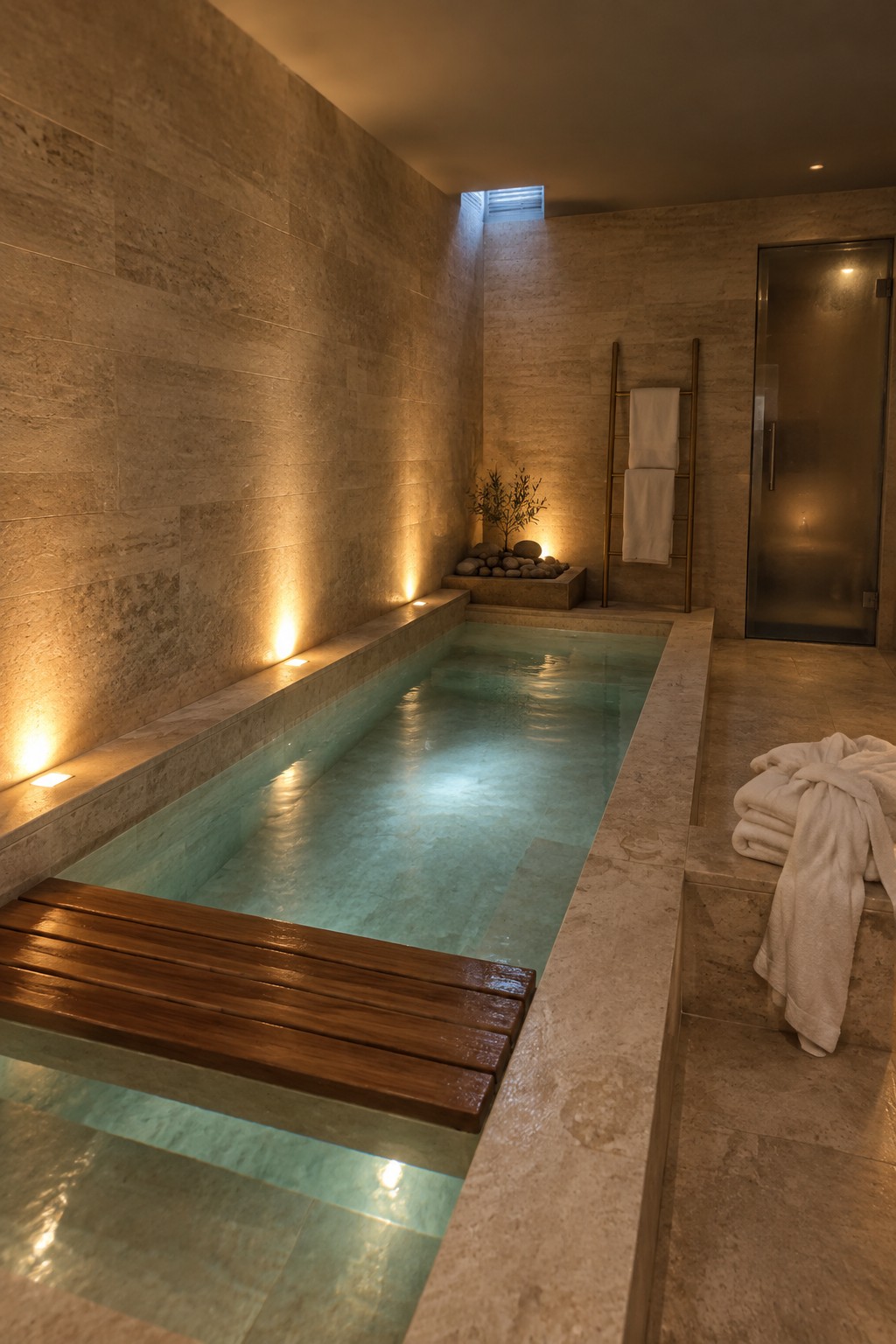
A long narrow plunge pool can slip into a small indoor space where a wider one would not work. The shape uses the length of the room while keeping the width down, so the pool feels useful without crowding the floor.
This layout suits homes that have a spare bedroom, basement corner, or narrow addition. Pair it with simple stone walls and a low bench at one end so the area stays calm and easy to move around.
Concrete That Keeps A Small Indoor Pool Feeling Quiet
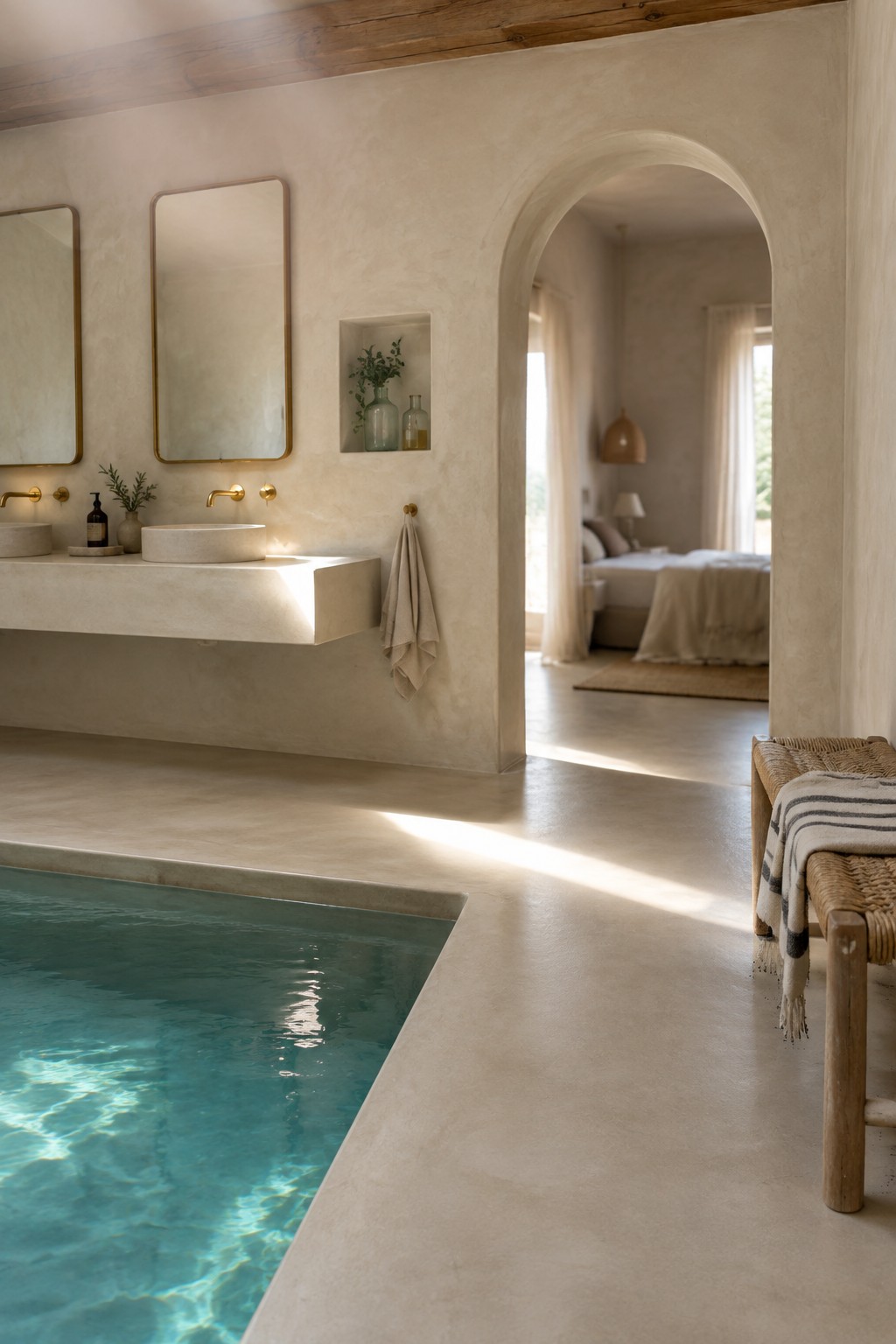
Using the same concrete material across the pool edge, floor, and vanity helps a compact indoor pool sit naturally in the room instead of standing out as a separate feature. The continuous surface makes the space feel larger and more settled, especially when the pool is placed right beside daily living areas.
This works best in smaller homes that already lean toward simple, earthy finishes. Keep the rest of the materials light and minimal so the water stays the only real point of interest.
Bring Tropical Plants Into Your Indoor Plunge Pool Area
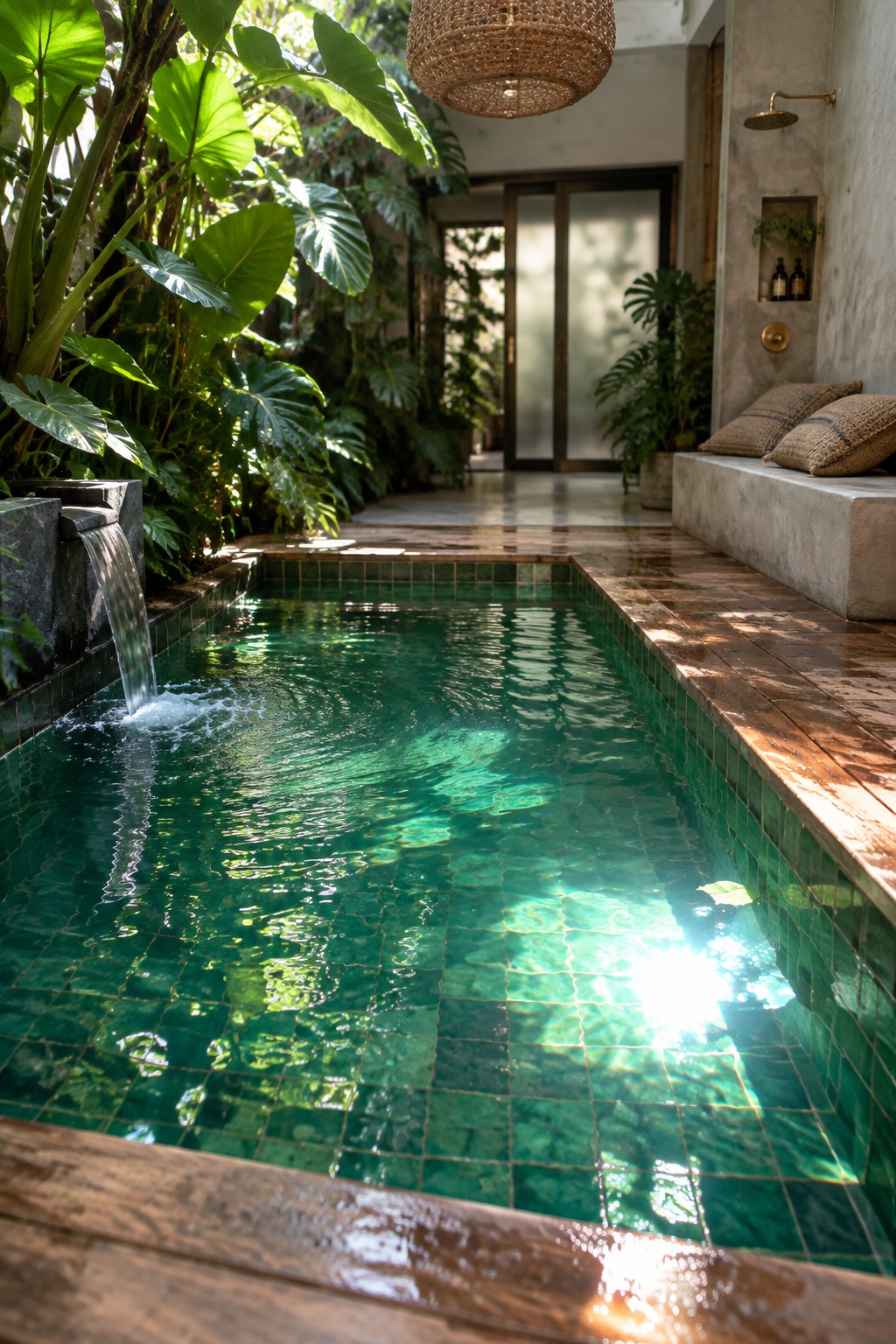
A small plunge pool can start to feel like a real feature once you add plenty of big plants around it. The greenery softens the hard edges of the pool and turns the space into something that feels more like a garden than a bathroom or utility room. In compact homes this works especially well because the plants make the area feel fuller without needing extra square footage.
This approach suits homes that already get decent natural light and can handle a bit of humidity. Stick with large-leaf varieties that thrive in damp conditions, and keep the planting dense along at least two sides so the pool sits inside a green frame rather than sitting alone against bare walls.
Glass Block Walls Beside Compact Plunge Pools
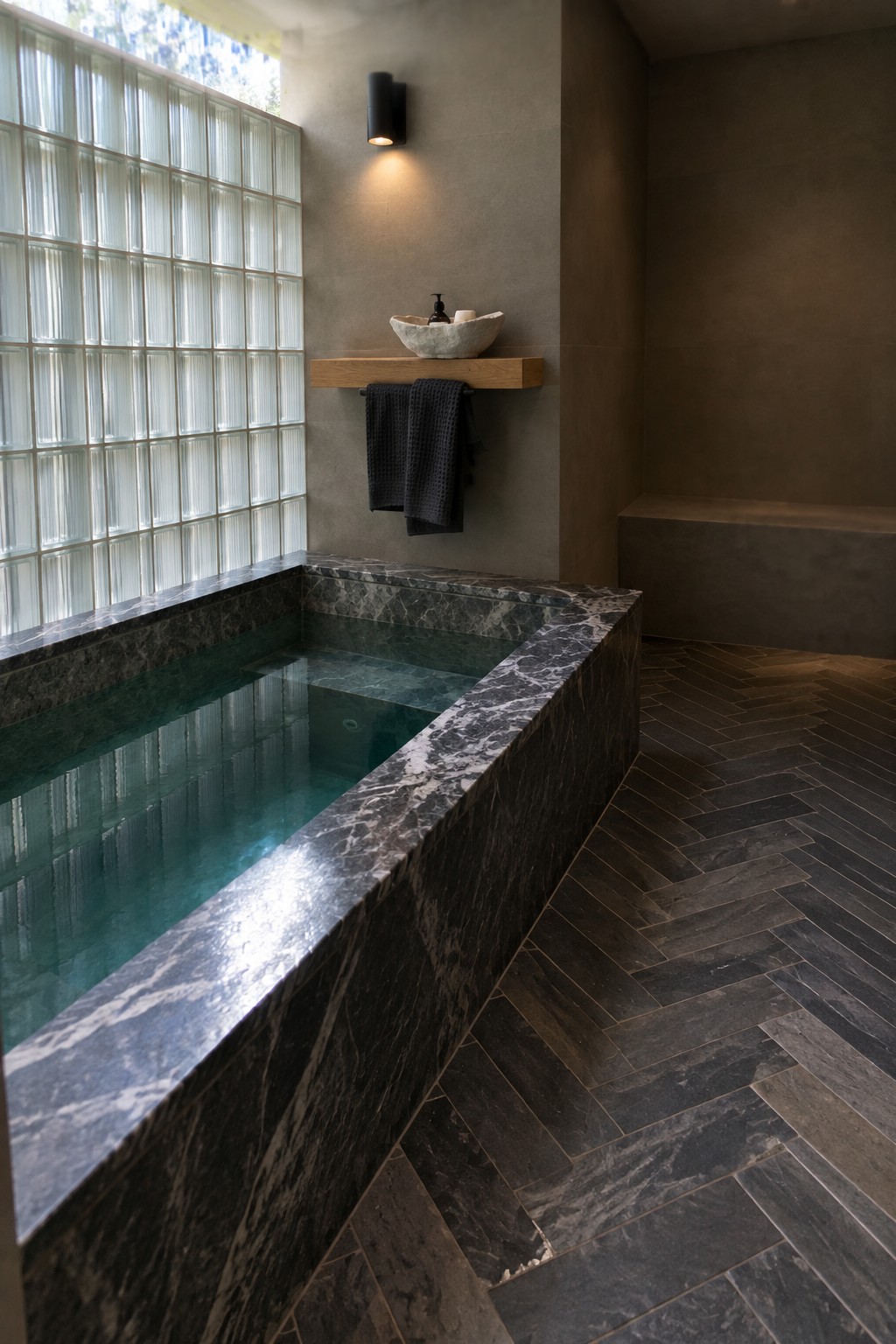
A glass block wall next to an indoor plunge pool brings in daylight without opening the whole room to outside views. This works well in smaller homes where a full window would feel too exposed or take up too much wall space. The blocks keep the light soft and even while the pool stays private.
This setup suits townhouses or homes with tight indoor layouts where you want the pool to feel brighter without adding extra square footage. Keep the surrounding walls simple and use darker stone or tile around the pool so the light from the blocks stands out. Make sure the blocks are properly sealed since moisture levels stay high in this kind of room.
Adding Simple Storage Around an Indoor Plunge Pool
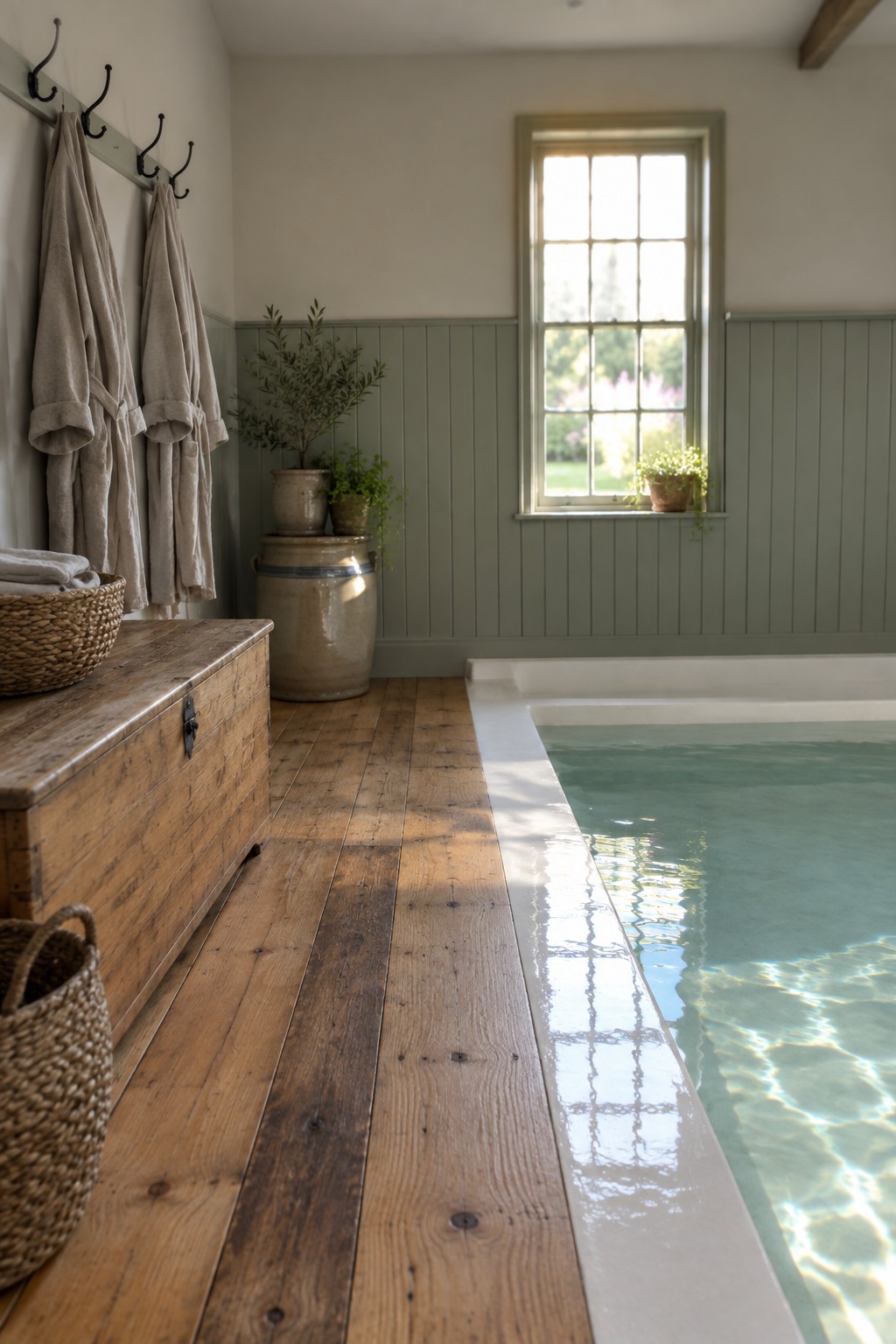
One way to make an indoor plunge pool feel at home in a smaller space is to treat the surrounding area like any other part of the house. A wooden chest and a few baskets give you places to keep towels and robes without adding clutter or needing extra rooms.
This works best in narrow layouts where the pool sits along one wall. The storage pieces keep the floor clear for walking and make the whole room easier to use day to day.
Dark Tiles for Compact Indoor Plunge Pools
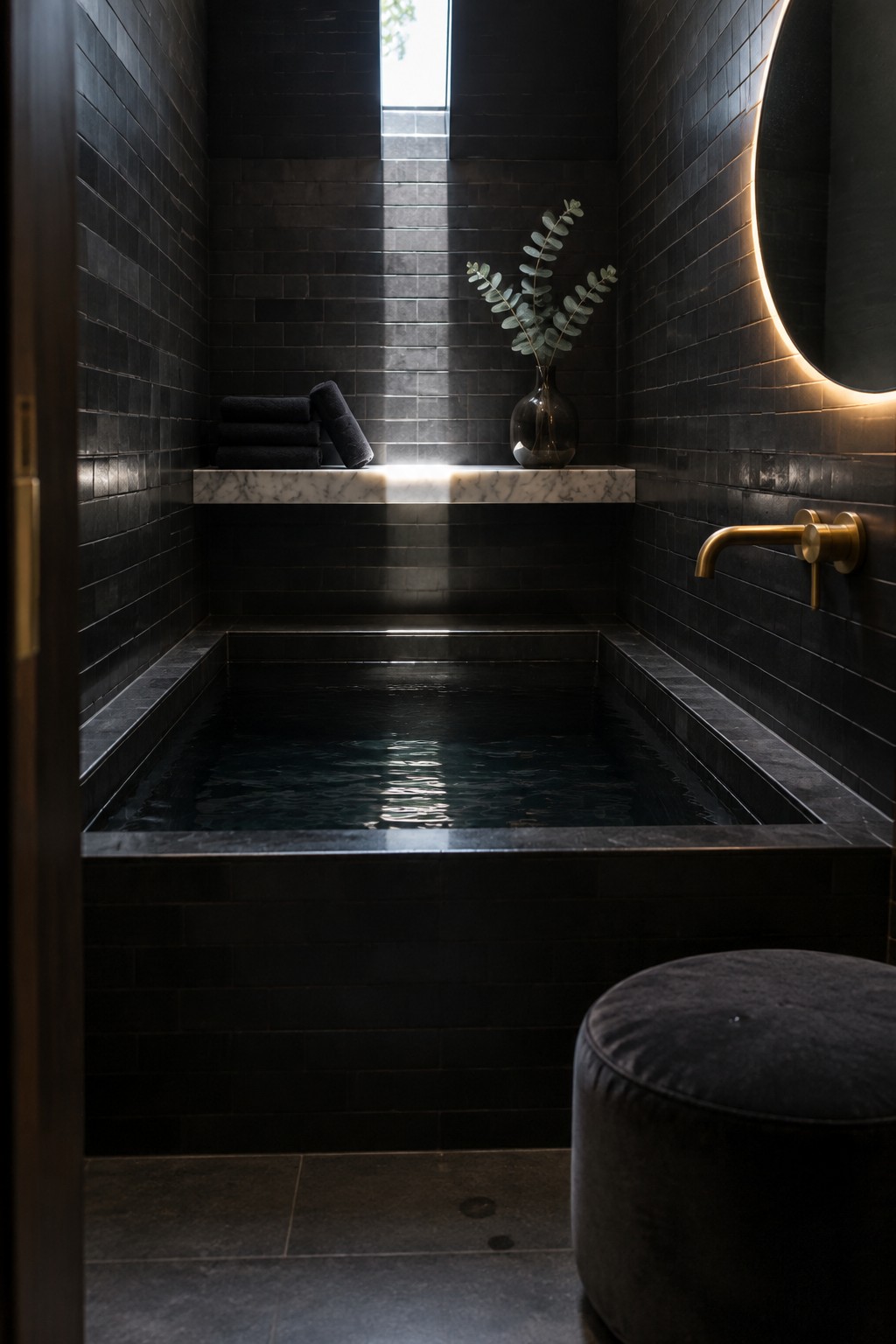
Dark tiles work well when space is tight because they pull the walls in and create a quiet, enclosed feel. The uniform color keeps the eye moving across the surfaces instead of stopping at edges, so the room reads calmer even when the footprint stays small.
This finish suits homes that already have a spare bathroom or utility area they want to convert. Use one lighter accent like a narrow stone shelf to hold towels and keep the rest of the palette simple so the water stays the main point of interest.
Narrow Indoor Pools With Matching Terrazzo Surfaces
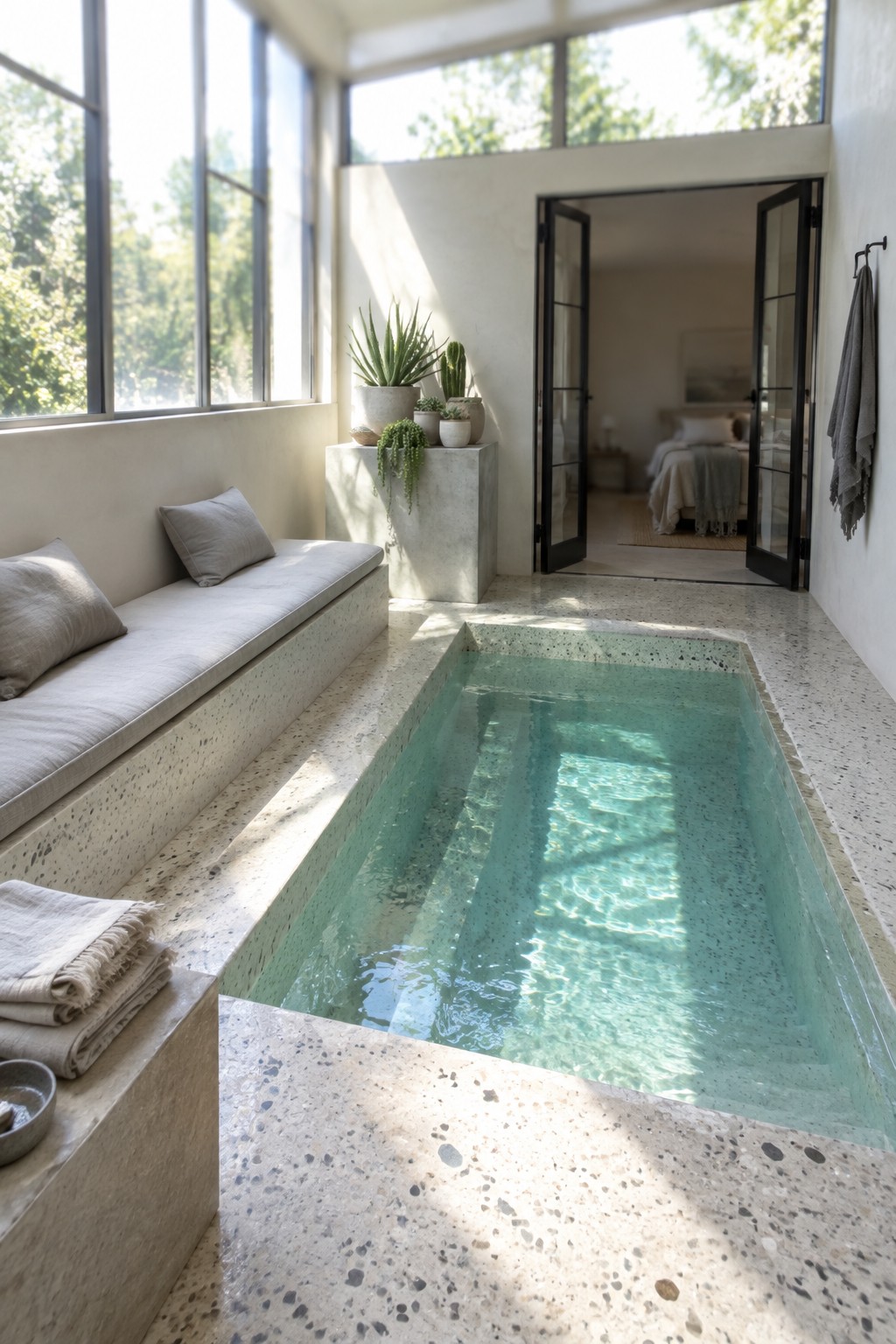
A narrow plunge pool set into the same speckled material as the floor and bench helps the whole area read as one connected space. This keeps the room from feeling chopped up, which matters when you are working with limited square footage and want the pool to feel like part of daily living rather than a separate feature.
The look works best in rooms that already get strong natural light, so the water reflections and simple surfaces stay bright instead of heavy. Use the same material on the bench and any low ledges so the pool edge does not need extra trim or contrast. Keep the surrounding floor clear so the space still functions for normal movement.
Narrow Plunge Pools For Compact Indoor Spaces
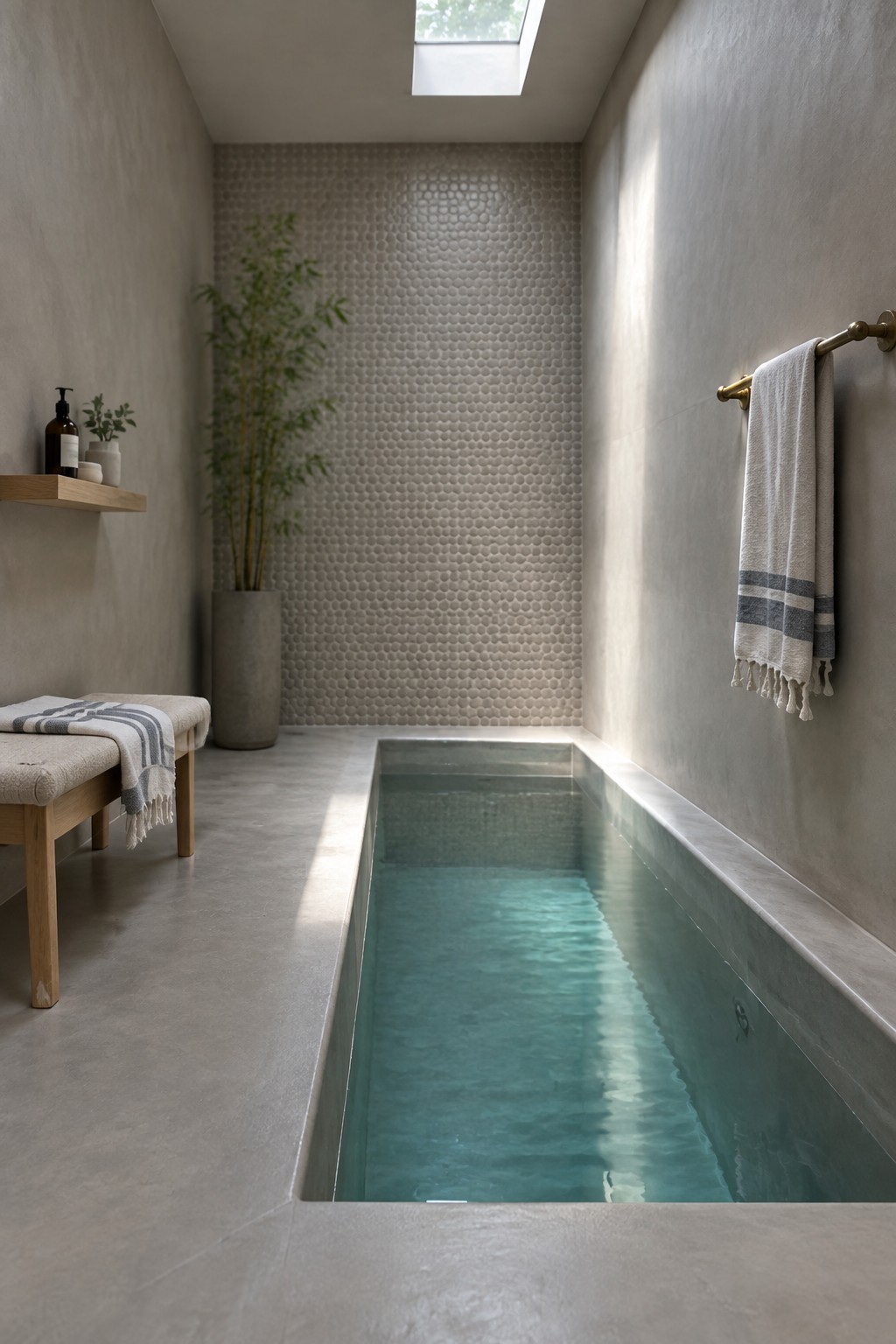
A narrow plunge pool can fit into a small indoor area without taking over the whole room. The long shape stretches the space and leaves room for a bench or simple seating along one side. Concrete walls and floors keep everything quiet and low maintenance.
This works best in townhomes or apartments where floor space is limited. Stick to the same material throughout the room so it feels calm instead of busy. A skylight overhead brings in enough light to make the water look inviting during the day.
Built-In Plunge Pools That Fit Small Spaces
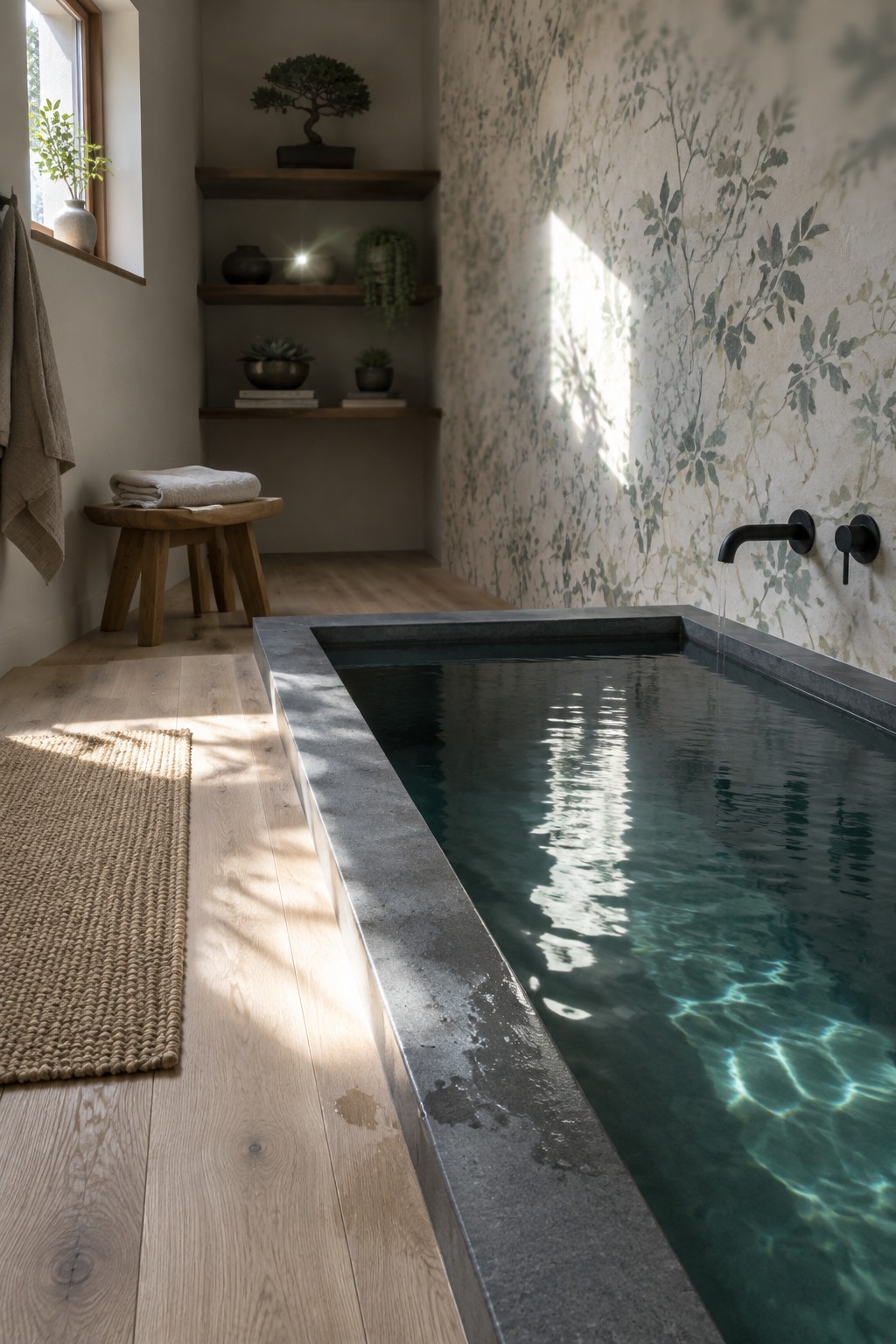
Setting the pool right into the floor with a stone edge keeps the whole thing from feeling like extra furniture in a tight room. The water sits level with the surrounding surface, so the space still feels open even when the pool takes up most of the floor.
This works best in homes that have a spare bedroom or oversized bathroom they can turn over to the pool. Pair it with light wood floors and simple wall texture so the water and stone stay the focus without the room getting busy.
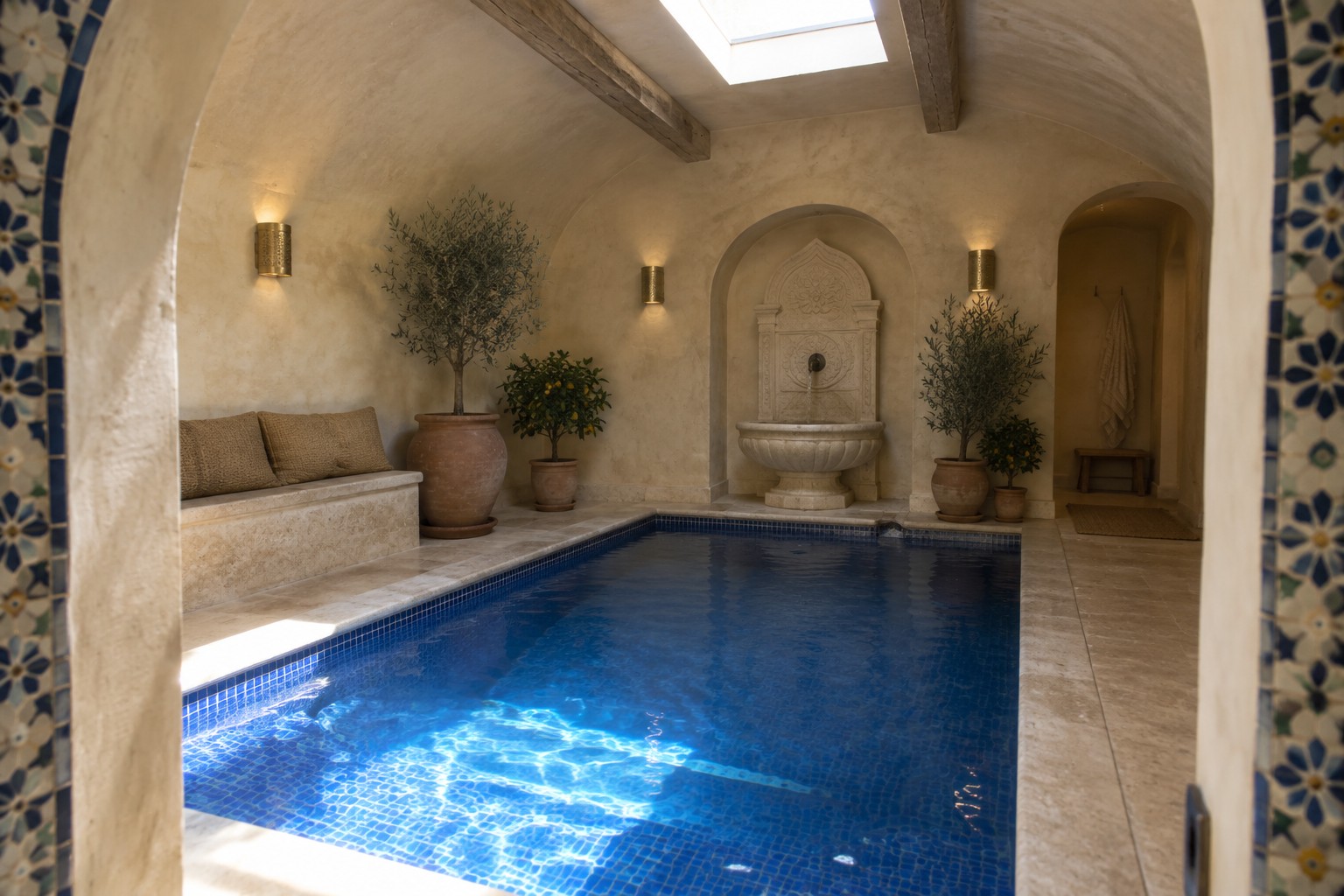
Patterned Tiles For Compact Indoor Plunge Pools
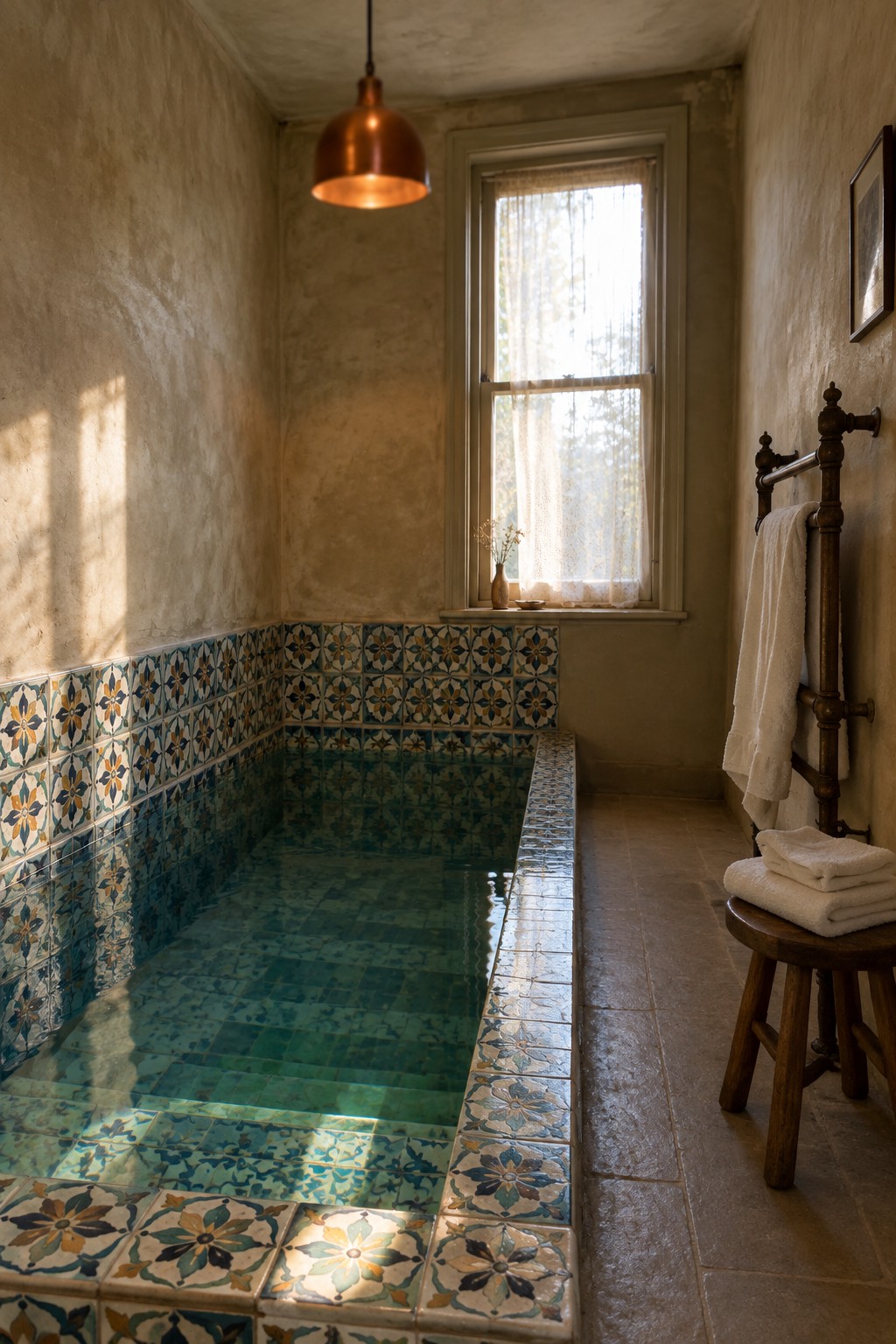
Patterned tiles give a small plunge pool a clear shape and some personality without needing extra room. The mix of colors and shapes around the edge helps the water stand out against plain walls, which keeps the whole space from feeling too plain or cramped.
This works best in older homes or simple rooms where you want one strong detail. Stick to the pool surround and steps with the pattern, and leave the rest of the walls and floor quiet so the tiles do not overwhelm the space.
Built-In Bench Seating Beside The Pool
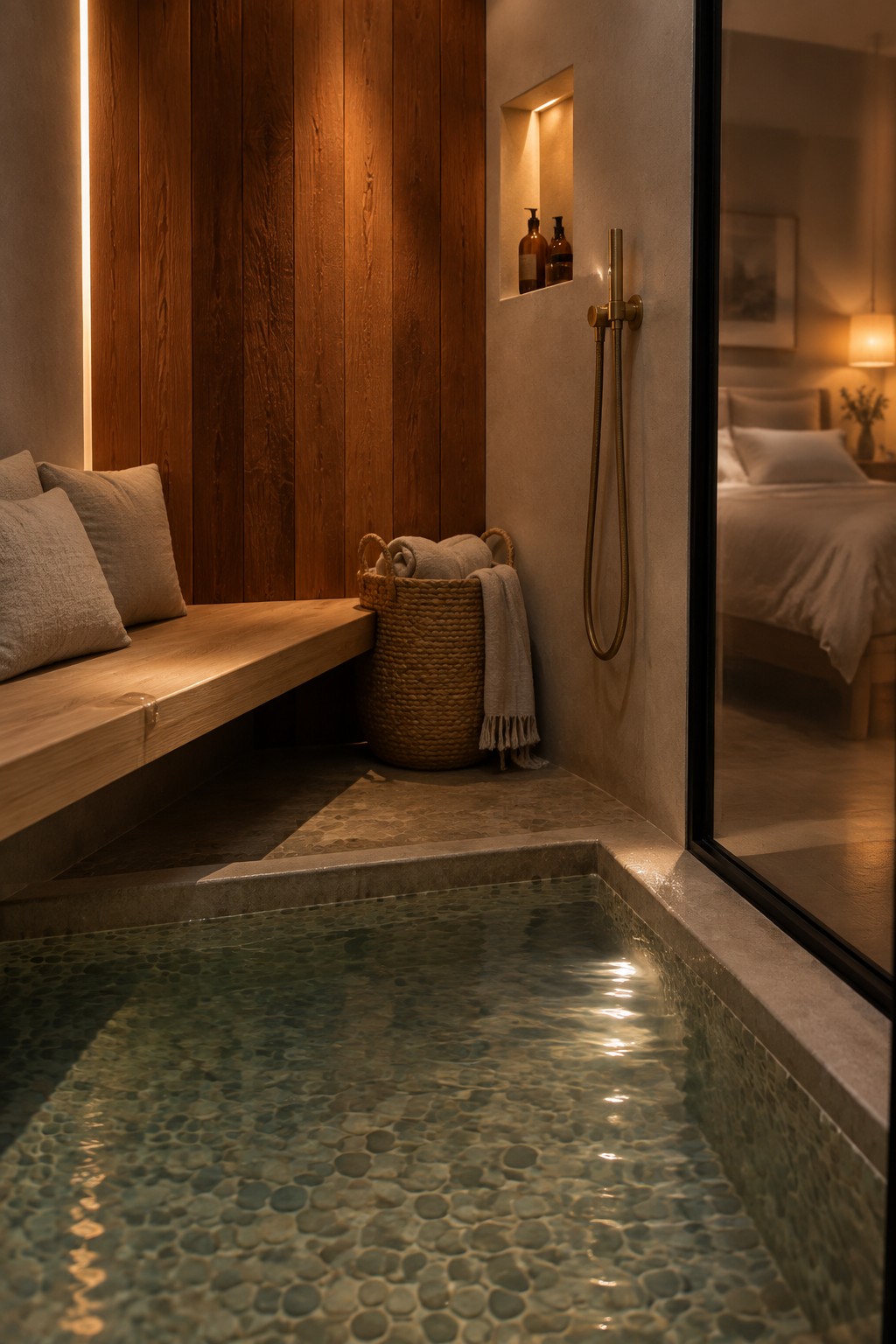
A built-in bench turns the edge of a small plunge pool into a usable spot for sitting and unwinding. In compact homes this keeps the layout tight while giving the water area a clear purpose instead of leaving it as just a tub in the floor.
Place the bench along one wall so it lines up with the pool and any nearby shower fixtures. This works best in homes where space is limited and you want the pool area to feel connected to the rest of the interior rather than tucked away on its own.
Frequently Asked Questions
Q: How much floor space does a typical indoor plunge pool take up in a compact home?
A: Most compact models need about eight to ten feet in length and width. Measure twice before committing to avoid surprises later. A corner installation often saves the most room.
Q: What about the humidity problem everyone mentions with indoor pools?
A: Install a dedicated ventilation system right away. It pulls out moist air before it settles on surfaces. You will notice the difference in comfort levels quickly.
Q: Do these pools require special cleaning routines in tight spaces?
A: Use a small net for daily debris and check the filter weekly. This keeps water clear without much effort.