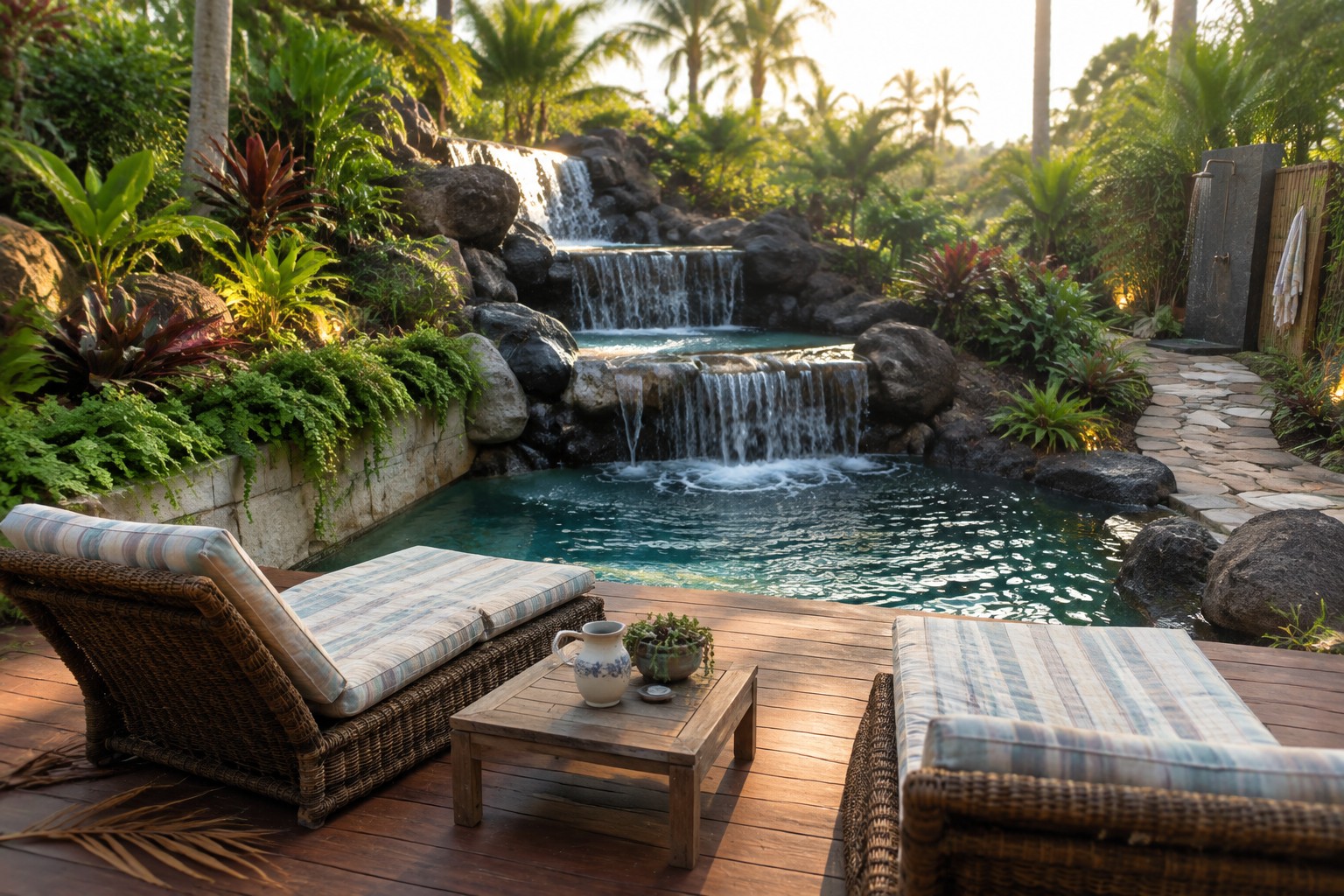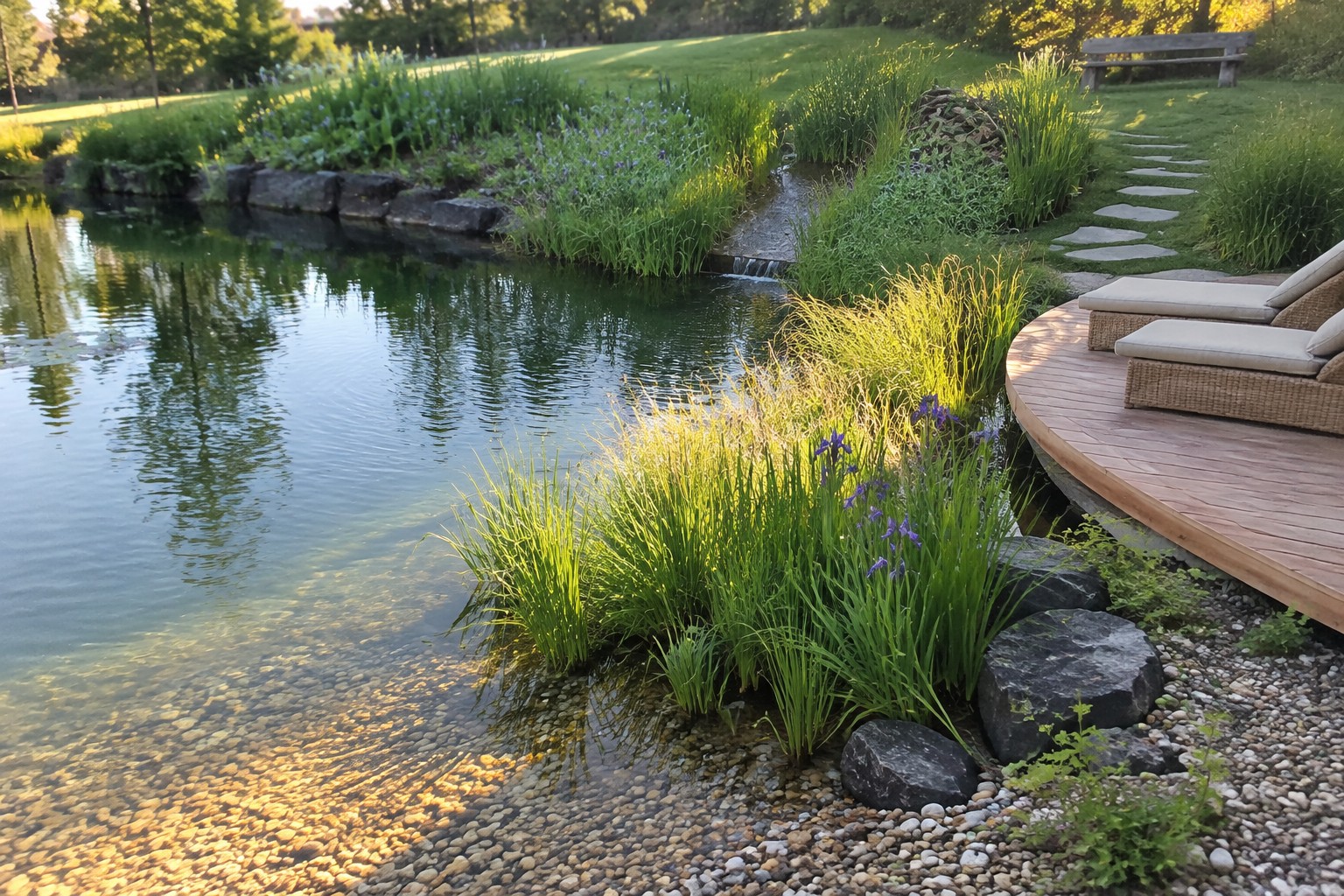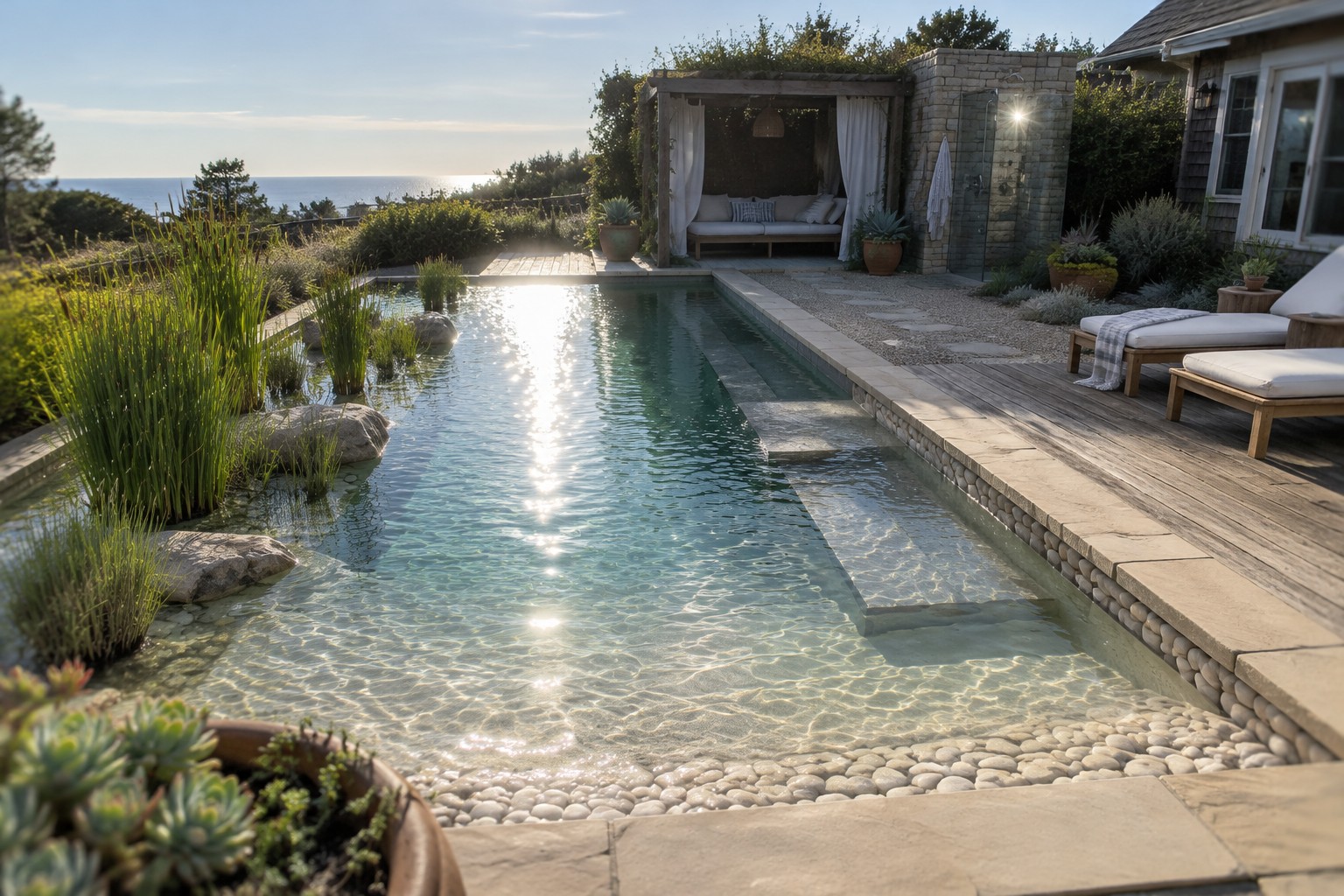
A natural pool can feel like part of the yard rather than a separate feature, but it still needs clear boundaries for swimming and play.
I find that families notice the layout first, especially whether there is room to splash without disturbing quieter spots along the edge.
Shallow shelves, planted borders, and simple paths can help each area feel distinct while keeping the whole garden connected.
The best designs also account for how children move through the space and where adults can keep an easy eye on them.
I’d save ideas that balance safe, practical swimming zones with planting and materials that suit the yard over time.
Separate Shallow and Deep Pool Zones

A natural pool can serve more than one kind of swimmer when its layout includes a broad shallow entry and a deeper swimming lane. The clear change in depth makes it easier for children to wade and play while leaving room for adults to swim.
Use a gradual, nonslip entry and keep the deeper area open enough for swimming. A planted edge can help define the zones, but avoid letting reeds or rocks narrow the main lane.
Use a Stone Divider to Separate Shallow and Deep Pool Zones
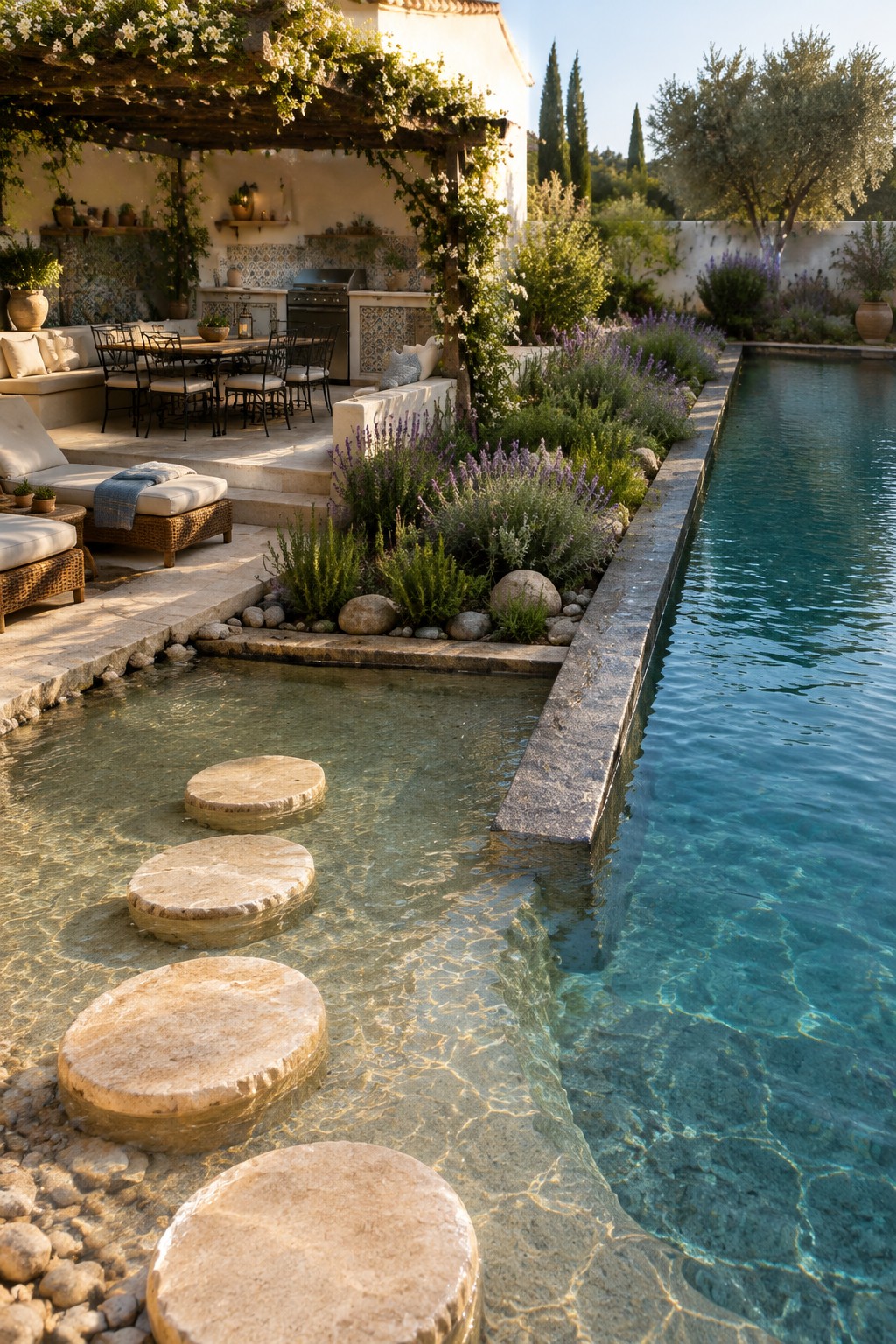
A natural pool can serve swimmers of different ages and comfort levels when it has clearly defined shallow and deep areas. Here, a shallow ledge with round stepping stones sits beside a deeper swimming lane, so the zones are easy to recognize.
For a family pool, keep the shallow section broad enough for children to play and adults to sit nearby. A low stone divider can help mark the change in depth, but make sure it is easy to see and does not create a tripping hazard.
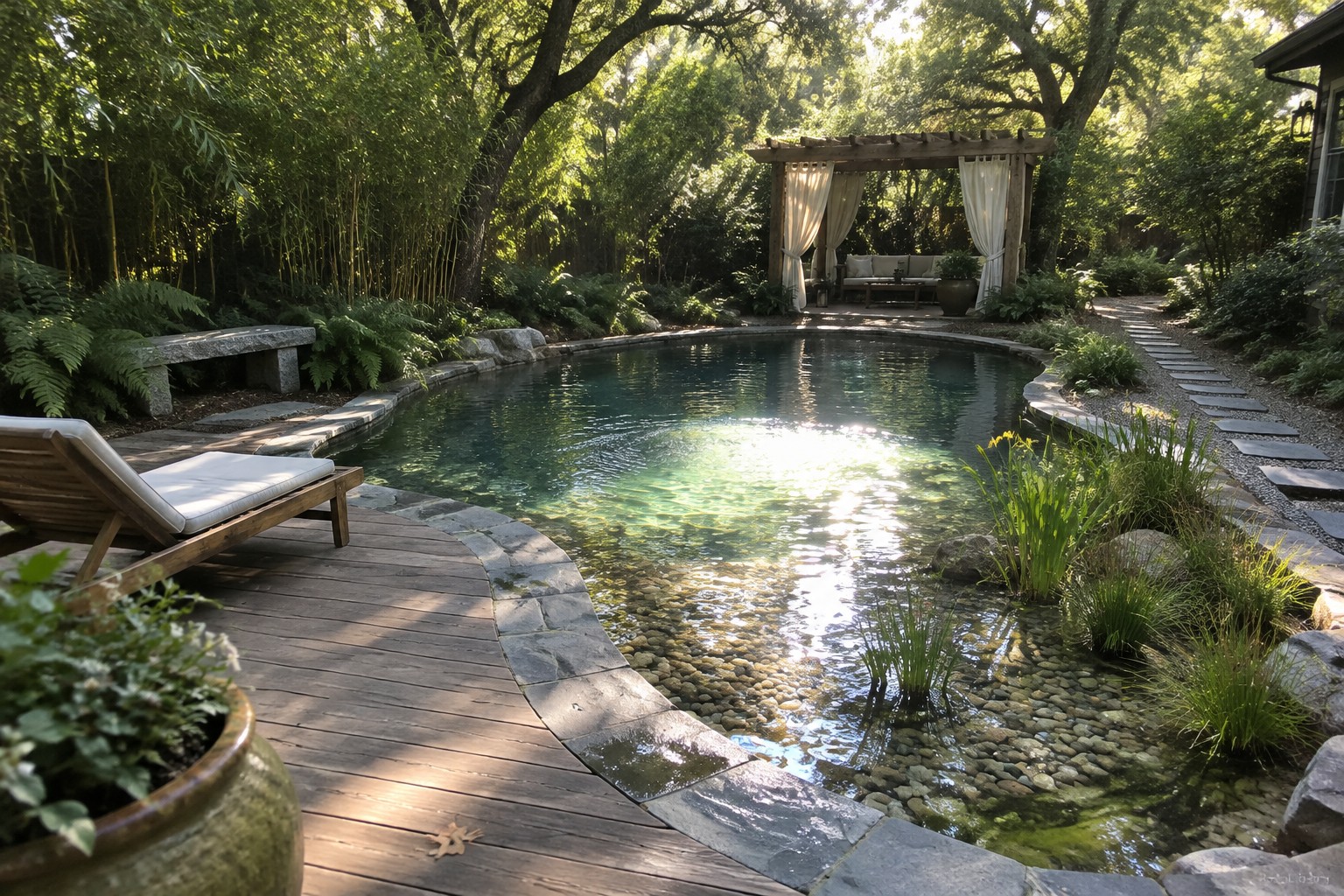
Define Separate Swimming Zones

A natural pool can feel more family-friendly when it has a shallow pebble area apart from the deeper swimming lane. Children can play and cool off in the shallow section while adults still have room to swim.
Keep the change in depth easy to see, and use a clear edge or change in pool finish to mark the boundary. This layout works especially well in a long, narrow pool, where separate zones can fit without taking up extra yard space.
Use Contrasting Pool Floor Colors to Mark Depth Changes

A natural pool can be easier for a family to use when it has clearly defined swimming zones. A broad, shallow shelf gives younger children a place to wade and play, while the deeper lane suits swimming and older kids. The change in depth is easy to see here, with the sandy-colored shallow end leading into a darker tiled lane.
For a family pool, make the shallow area large enough for supervised play and keep the swimming lane clear. Use a visible change in floor color or texture to mark where the depth increases, and add steps or a handrail if access is tricky.
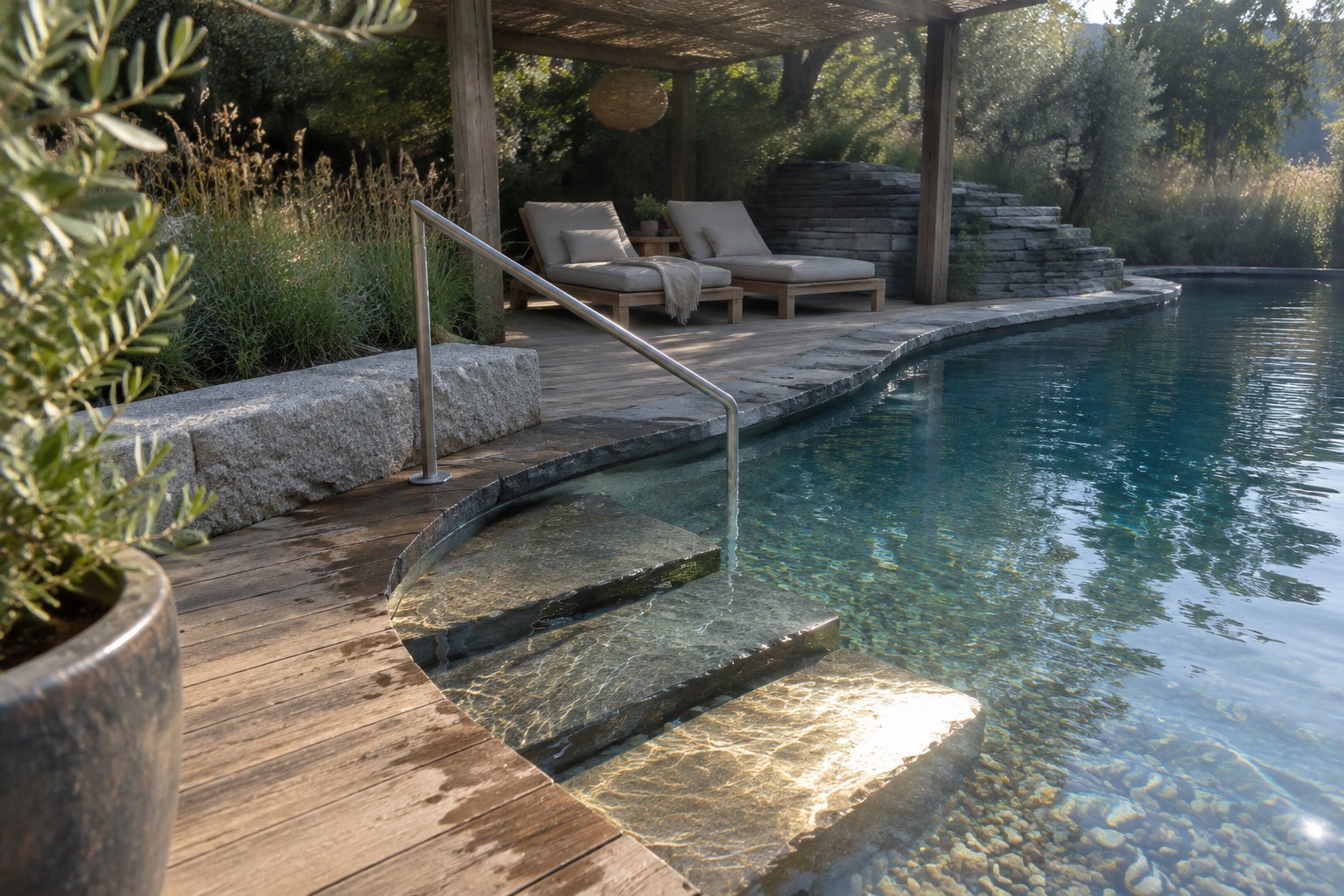
Mark Swimming Zones With Different Pool Depths

A natural pool can serve both young swimmers and confident adults when its shallow and deeper areas are clearly defined. Here, a gradual, stone-edged entry leads into deeper water, making the change in depth easier to understand.
Use a broad shallow shelf near the entry for wading and play, then keep deeper swimming water farther away. A visible change in paving or water depth can help families recognize each zone, but always add proper supervision and safety measures.
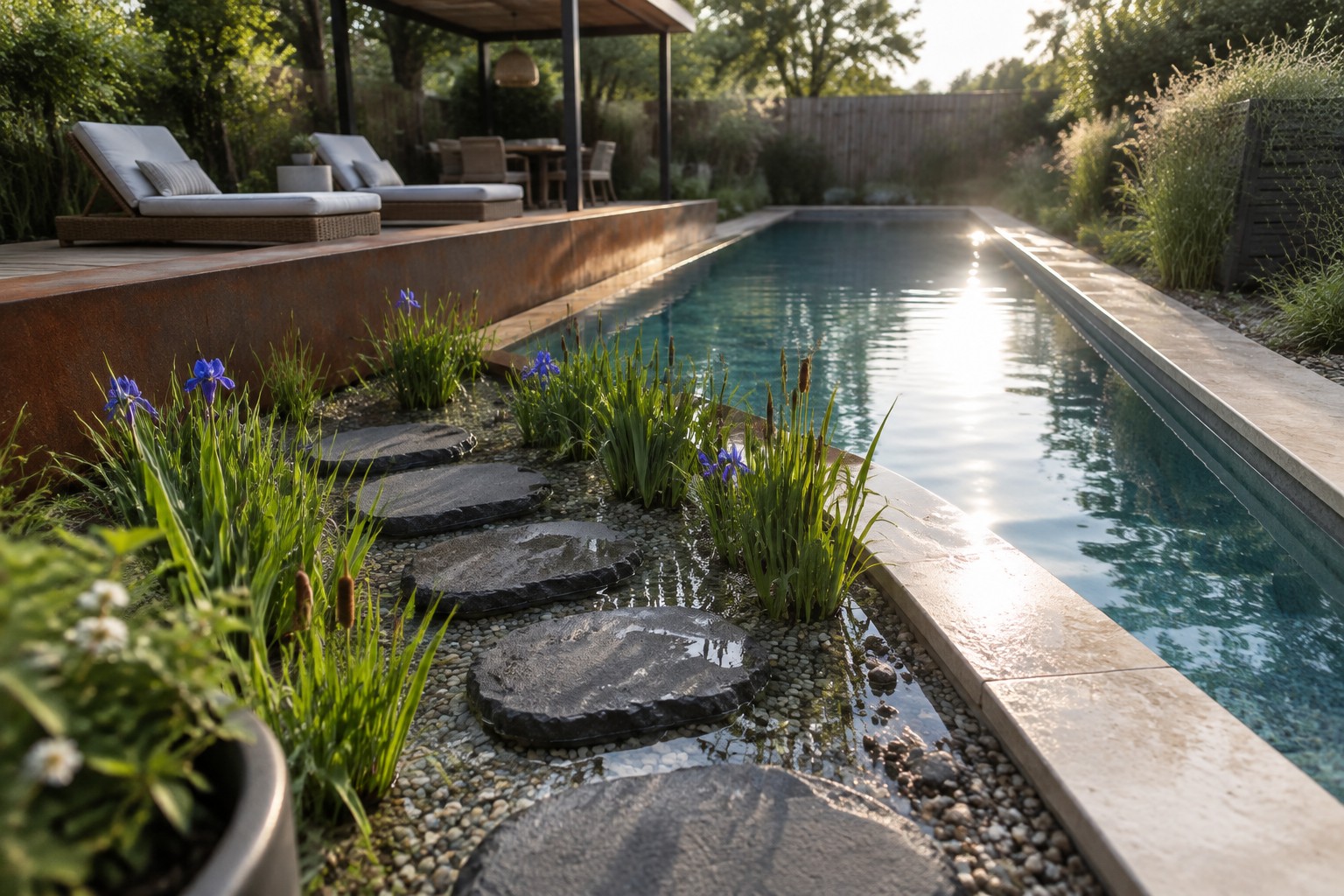
Use Stepping Stones to Mark a Shallow Pool Zone

Large flat stones set into a shallow section give swimmers a clear place to step and pause without making the pool feel divided. This is a practical way to define a gentle entry area while keeping the water connected to the deeper swimming zone.
Use stones with stable, nonslip surfaces, and leave enough space between them for comfortable footing. This approach suits natural pools with a gradual, shallow edge, but the stones should be set securely so they do not shift underfoot.
Give the Pool Distinct Swimming Areas

A pool with a broad shallow entry and a narrower, deeper lane gives family members room to use the water in different ways. The change in shape helps define those areas without adding a barrier that interrupts the flow of the pool.
This layout works well in a long garden or beside a patio, where the shallow end can sit near the seating area. Keep the transition between depths easy to see, and make sure the swimming lane stays wide enough for comfortable use.
Use a Shallow Shelf for Family Pool Play

A broad shallow shelf gives younger swimmers a place to splash while keeping the deeper swimming area separate. In this pool, the pale entry shelf and stone edge make that change in depth easy to see.
For a family pool, keep the shelf wide enough for a few children to play comfortably, and use a gradual transition into deeper water. Check the depth markings and keep the area clear of furniture or loose toys.
Add a Shallow Shelf Beside the Main Swimming Area

A shallow shelf gives a natural pool a place to sit or cool off without using the deeper swimming area. Here, the pale shelf runs alongside the darker, deeper water, making the change in swimming zones easy to see.
This layout works well for families who want room for both wading and swimming. Keep the shelf wide enough to use comfortably, and make the depth transition clear underfoot.
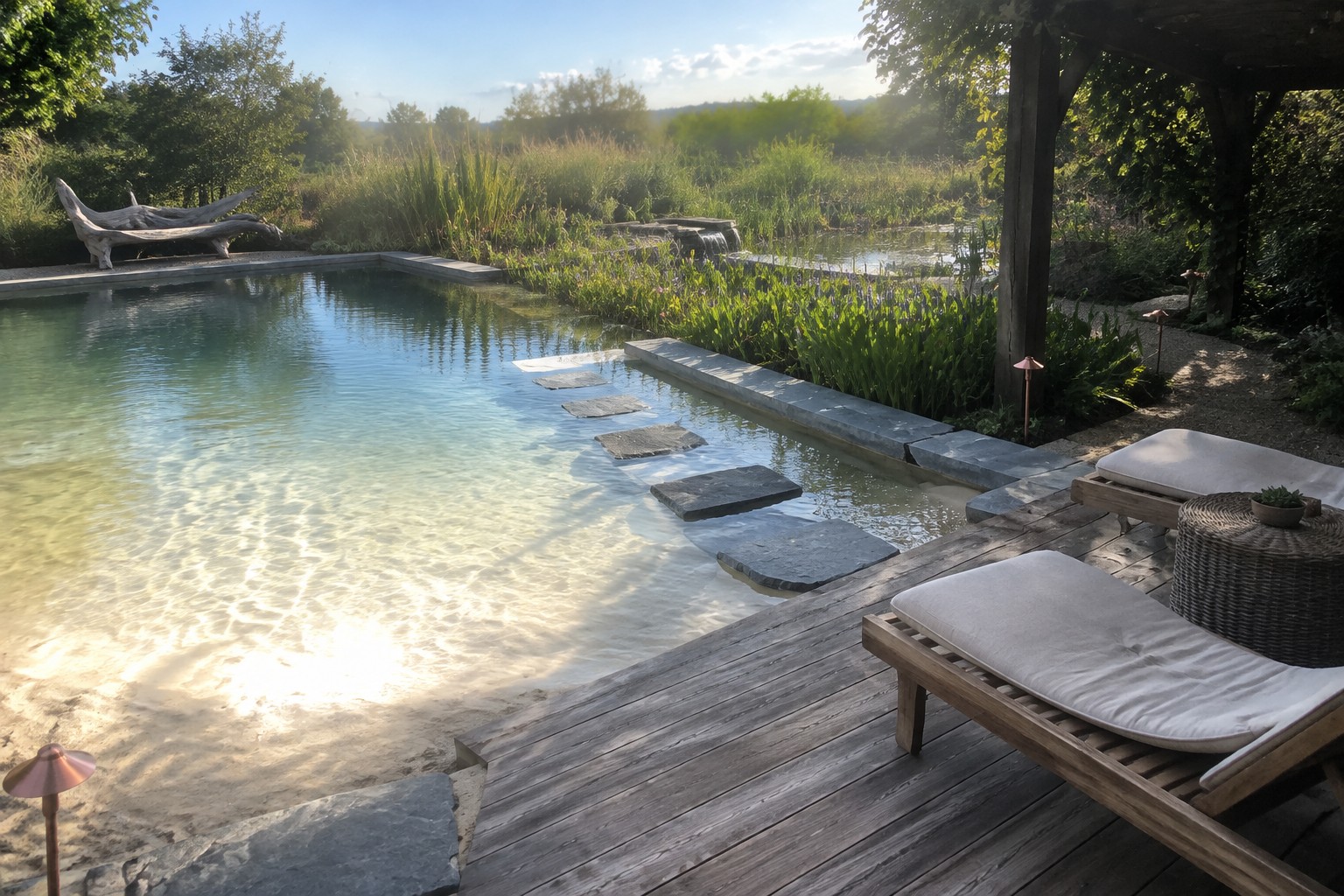
Use a Planted Shallow Shelf to Define a Pool Zone

A shallow shelf with stepping stones gives the pool a gradual, easy-to-use area before it reaches deeper water. It also makes the change in swimming zones clear without adding a raised barrier.
This layout works well for families who want a spot for younger children to play while keeping the main swimming area open. Use stones with stable, nonslip surfaces, and keep the planting low so it does not get in the way of walking or supervision.
Add a Deck Along the Pool
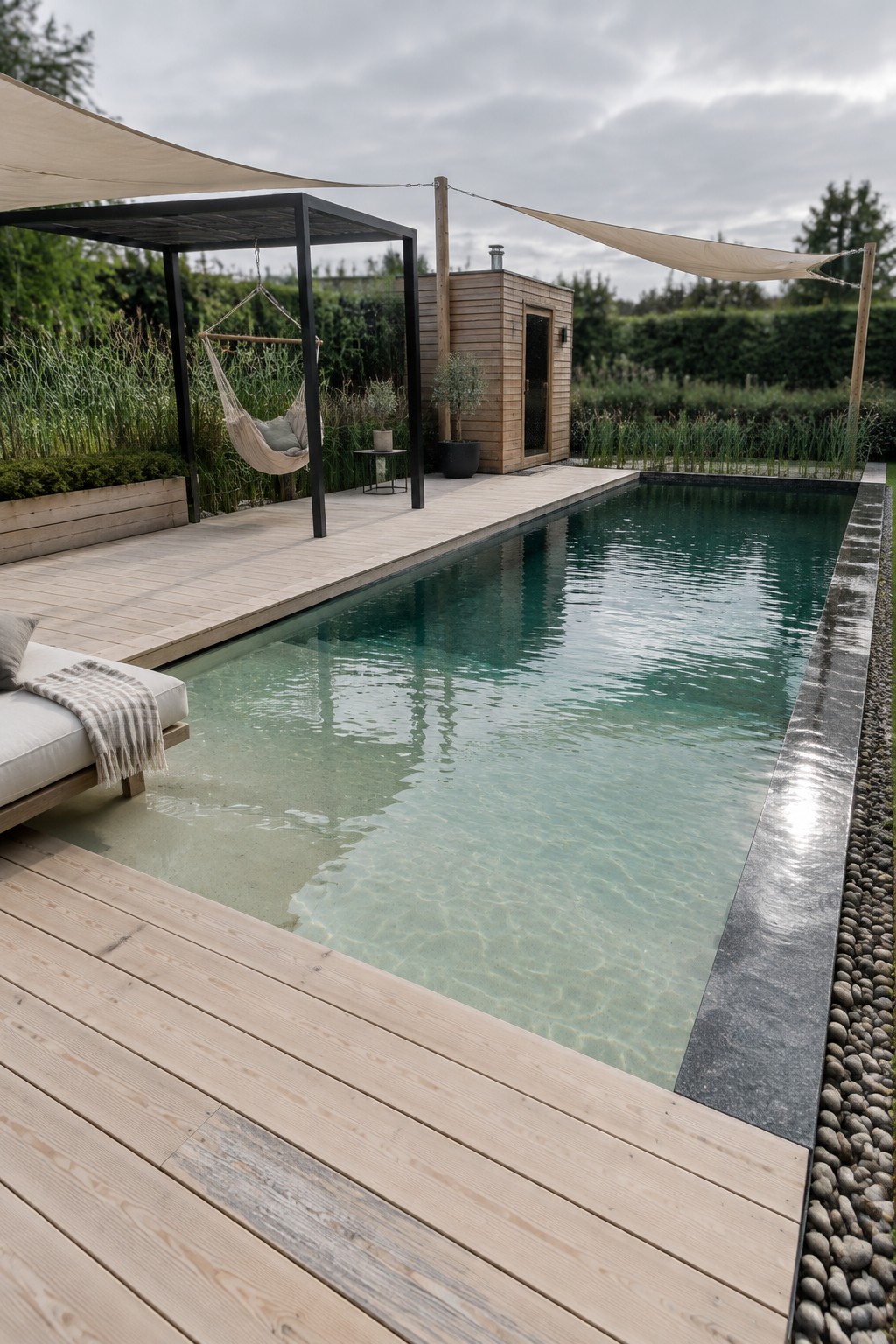
A deck that runs beside the pool gives swimmers a clear place to enter, sit, or dry off without crowding the water’s edge. It also helps define the pool area as a practical family space.
For a natural pool, choose a durable, slip-resistant decking material and leave enough room for safe movement around the water. Pale wood boards, like those shown here, keep the poolside area simple and easy to use.
Use a Pebble Beach Entry for Shallow Water

A gently sloped pebble edge makes one part of a natural pool feel like its own shallow zone. It gives children a gradual place to wade and lets adults keep an eye on them from the nearby seating area.
This approach suits pools designed to blend into a garden, especially when a gradual entry is more useful than a standard ladder. Keep the shallow area clearly defined and use a slip-resistant surface where people step in and out.
Keep a Shallow Play Area Beside the Main Pool

A separate shallow basin gives young children a place to splash while older swimmers use the deeper pool. It makes the different uses easy to see, and the two areas can still feel like one connected pool design.
For a similar setup, place the shallow area close to the main pool and use a clear change in depth or level to mark the boundary. Keep the route between the zones easy to supervise, and check that the edges are safe for wet feet.
Keep the Pool Narrow and Clearly Zoned

A long, narrow pool can give a compact patio a practical swimming area without using up all the room for seating. The straight edges make the pool’s limits easy to see, while a lighter-tiled shallow end marks a separate place to wade or play.
This layout suits a townhouse courtyard or a small urban yard. Keep a clear walking strip along the pool and choose a shallow section that is large enough for its intended use, not just a small patch of tile.
Use a Shallow Shelf for Easy Pool Entry
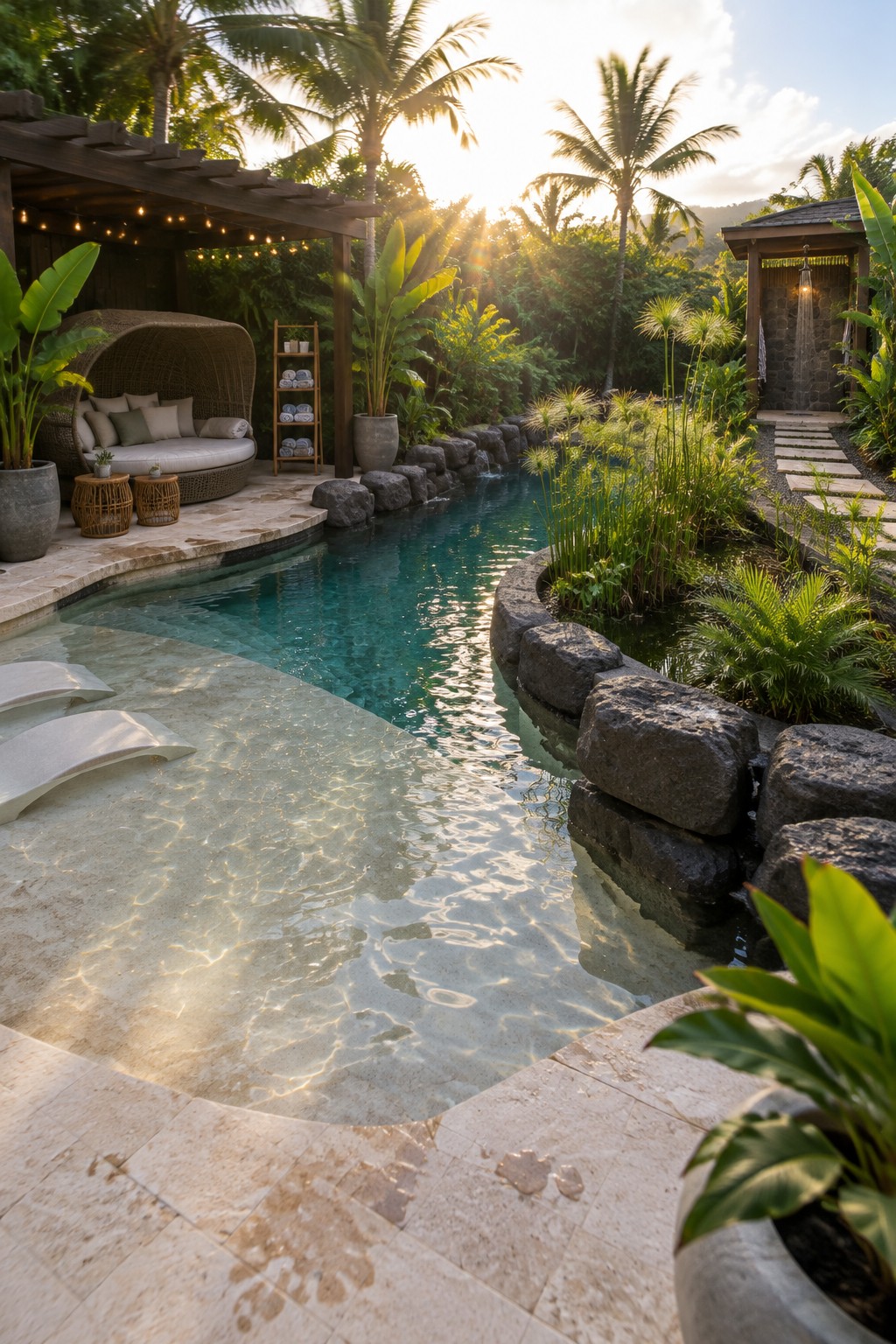
A broad, shallow shelf makes a natural pool easier for children to enter and gives them a place to play without mixing into the deeper swimming area. Here, the pale stone shelf is clearly separate from the darker water, so the change in depth is easy to see.
This layout works well for family pools with enough room for a gradual transition into deeper water. Keep the shelf wide enough for supervised play, and make the edge between zones easy to recognize under changing light.
Add Shade Along the Pool
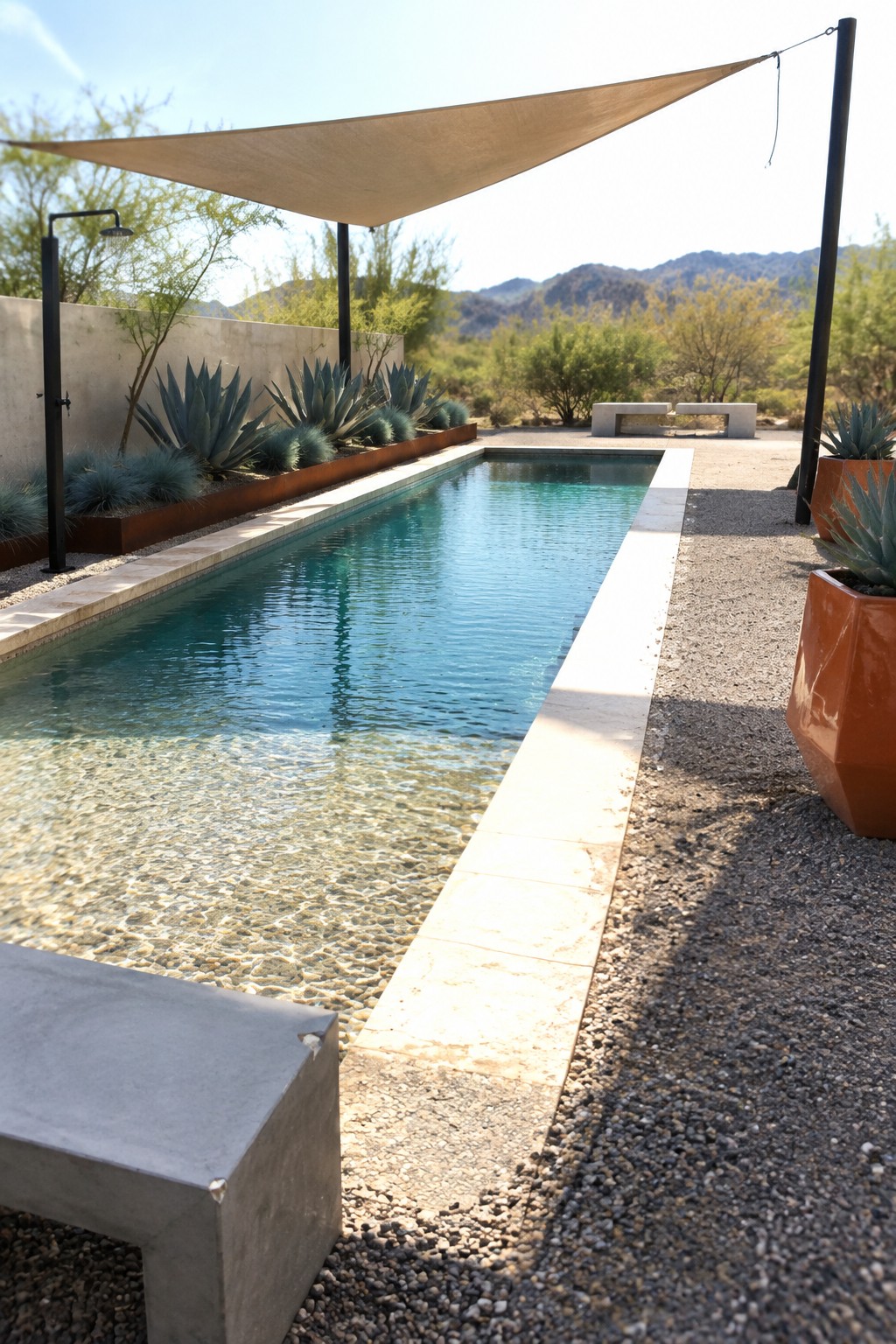
A simple shade sail can make a pool easier for families to use during the hottest part of the day. It gives swimmers a cooler place to take a break without closing in the pool area.
Place the sail over part of the pool or its edge, leaving other sections open to the sun. Check that the posts and fittings are secure, and choose a shade fabric made for outdoor use.
Set Poolside Seating Beside the Water
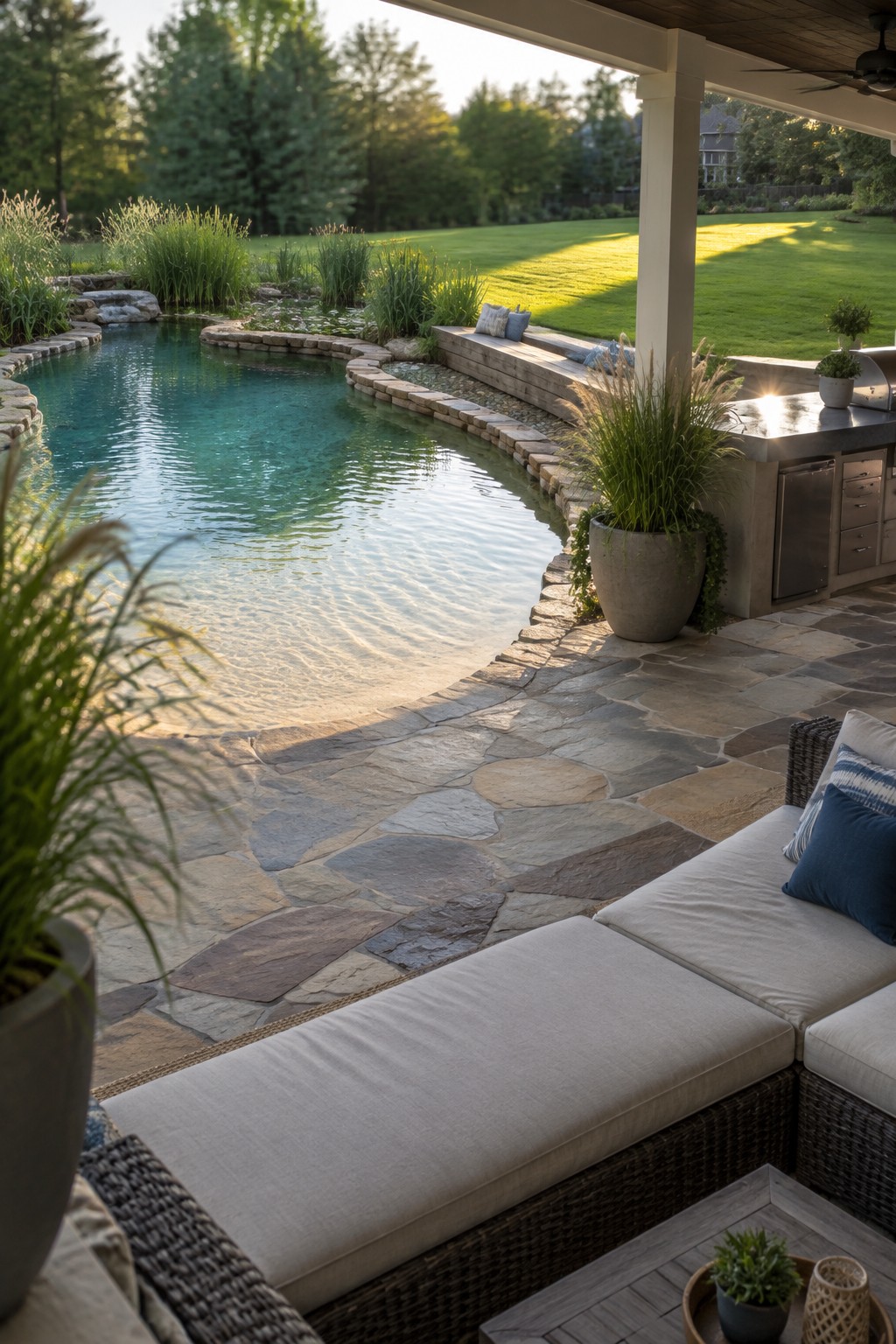
A built-in bench along the pool edge gives family members a place to sit without taking up the main swimming area. It also makes a natural boundary between the water and the patio, so the pool and seating each have a clear purpose.
This works well when you want a spot for watching children or taking a break close to the water. Leave enough room around the bench for safe entry and exit, and keep the main swimming area open.
Use a Pebble Beach Entry for Gentle Pool Access
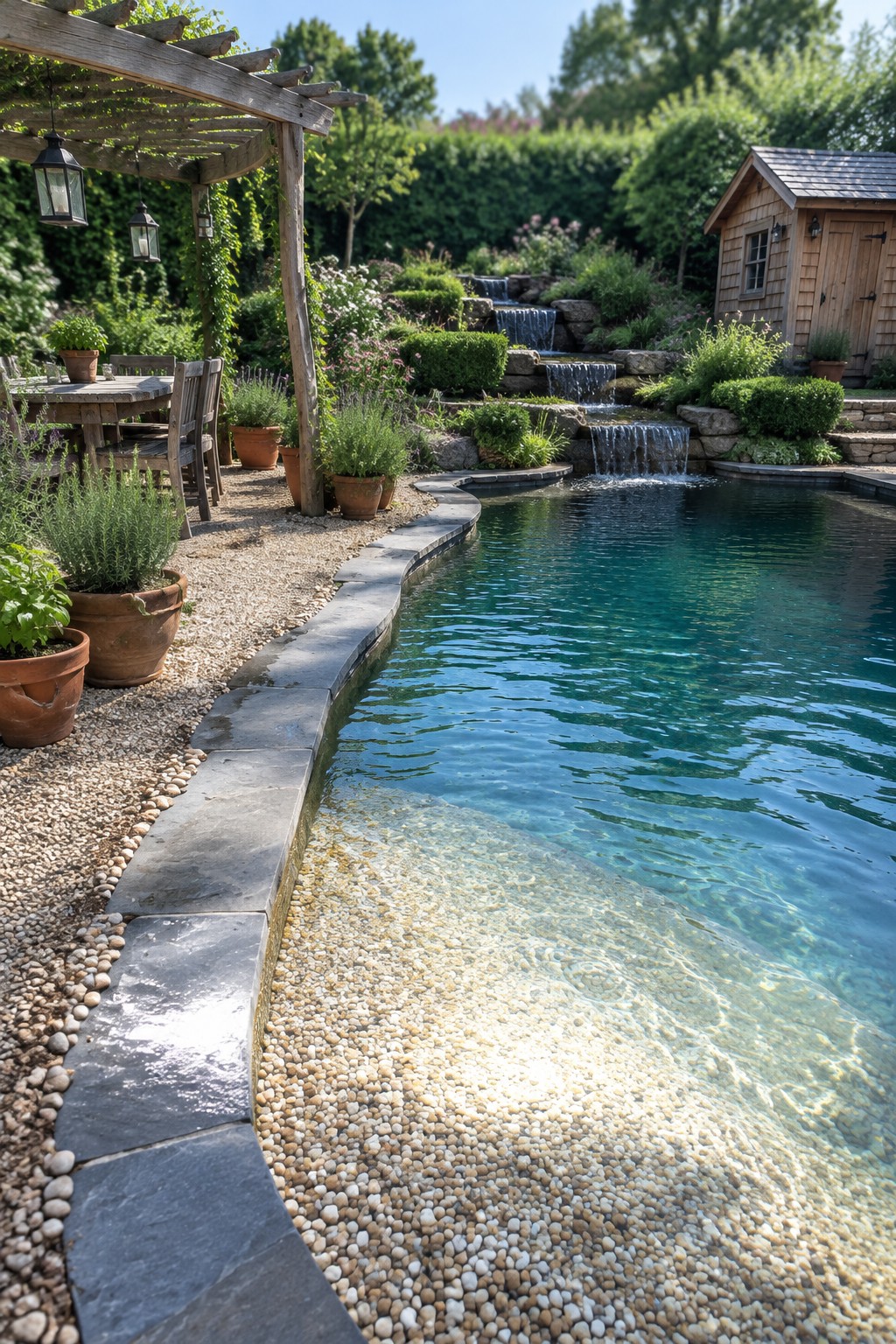
A gently sloped pebble entry gives the pool a shallow zone where children can wade and adults can ease into the water. It also makes the change from the dry path to the swimming area easy to see.
This approach works best when the shallow section is broad enough for safe play and has a clear boundary before the deeper water. Choose smooth, pool-safe stones and keep the entry free of loose gravel.
Keep a Shallow Pool Zone Beside the Main Swim Area

A shallow shelf beside the deeper pool gives children a place to play while adults can still use the main swimming area. The change in depth is easy to see, so family members can choose the spot that suits them.
When planning this layout, make the shallow section broad enough for sitting or supervised play, and use a clear step or edge to mark where the depth changes. It works well in a family pool where people want room for different kinds of swimming.
Frequently Asked Questions
Q: How do I keep the swimming area separate from the shallow zone without making the pool feel divided?
A: Use a gentle change in depth, a low stone ledge, or a planting shelf to mark the transition. Keep the boundary easy to see and walk around, especially if children will use the shallow area.
Q: Can I add a defined swimming zone to a small natural pool?
A: Yes. A simple rectangular swimming area can fit within a compact pool, with the planted filtration zone tucked along one side. Clear edges help the space feel organized without taking up extra room.
Q: Are plants near the swimming zone hard to maintain?
A: They need occasional trimming and clearing so leaves and stems don’t drift into the swim area. Keep plants in a designated regeneration zone rather than letting them spread across the whole pool.
Q: What’s a safe way to separate kids’ play space from deeper water?
A: Give the shallow zone a broad, gently sloped entry and use a visible ledge or change in paving to signal where the water gets deeper. A clear boundary helps, but active supervision is still essential.