A swimming pond can feel like a natural part of the garden when its shape, planting, and swimming area work together.
I find the first thing people notice is often the water’s edge, where clear access for swimmers meets reeds, stones, or other habitat for wildlife.
Native aquatic plants can shelter small creatures and soften the pond’s outline, but they need thoughtful placement so they do not crowd the areas you use.
The ideas ahead show different ways to balance those needs, from gentle shorelines to distinct zones for swimming and habitat.
I’d save the approaches that suit your yard’s size and conditions, then adapt the details to make the pond practical to maintain.
Build a Gradual Pond Edge
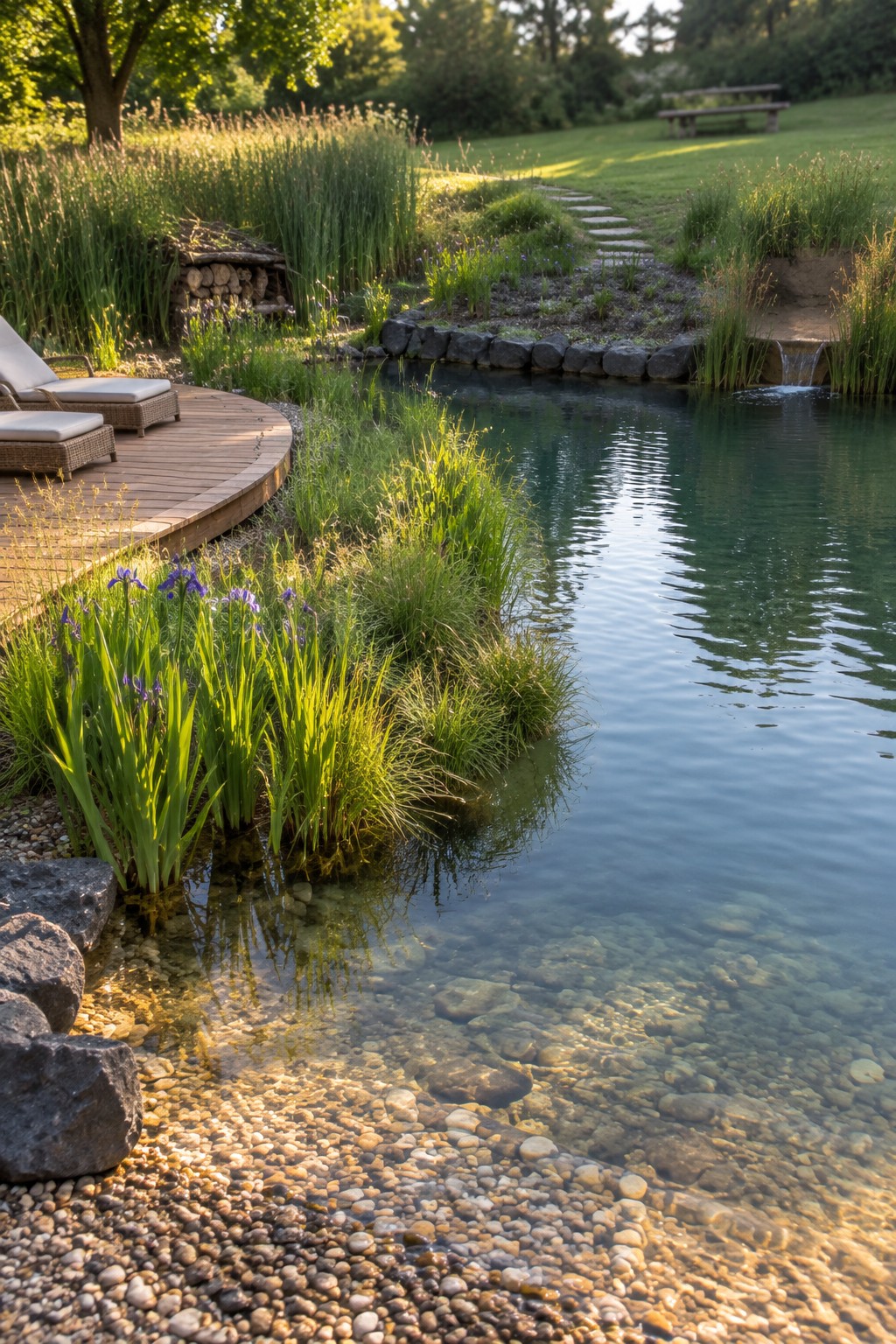
A gently sloped, planted edge lets wildlife move in and out of a swimming pond more easily than a steep drop. Shallow water among reeds also gives small creatures places to shelter.
Use stones and native aquatic plants to make the transition from shore to deeper water gradual. Keep a clear area for swimming, and choose plants suited to your local conditions so the pond edge stays manageable.
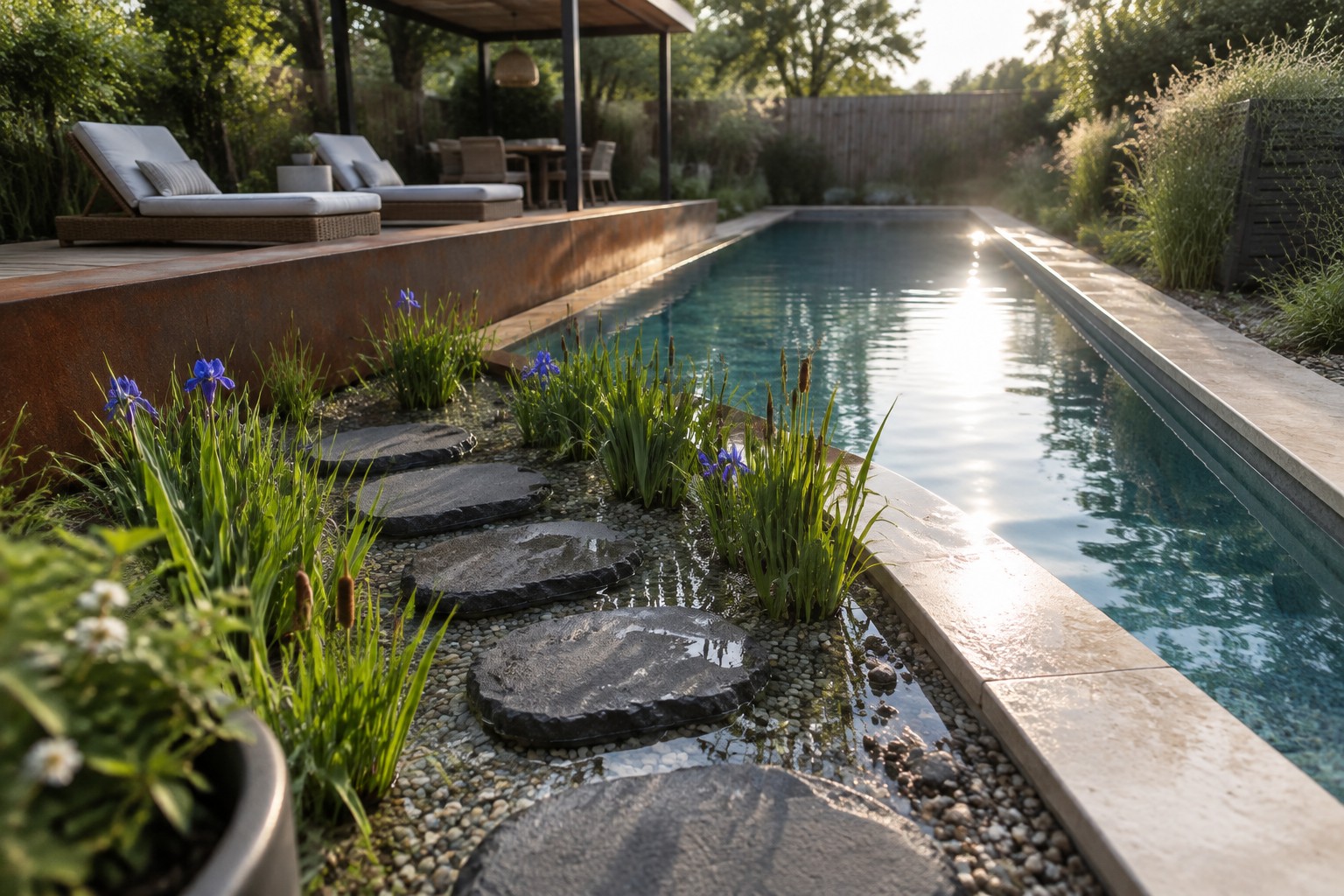
Let the Pond Edge Blend Into the Garden
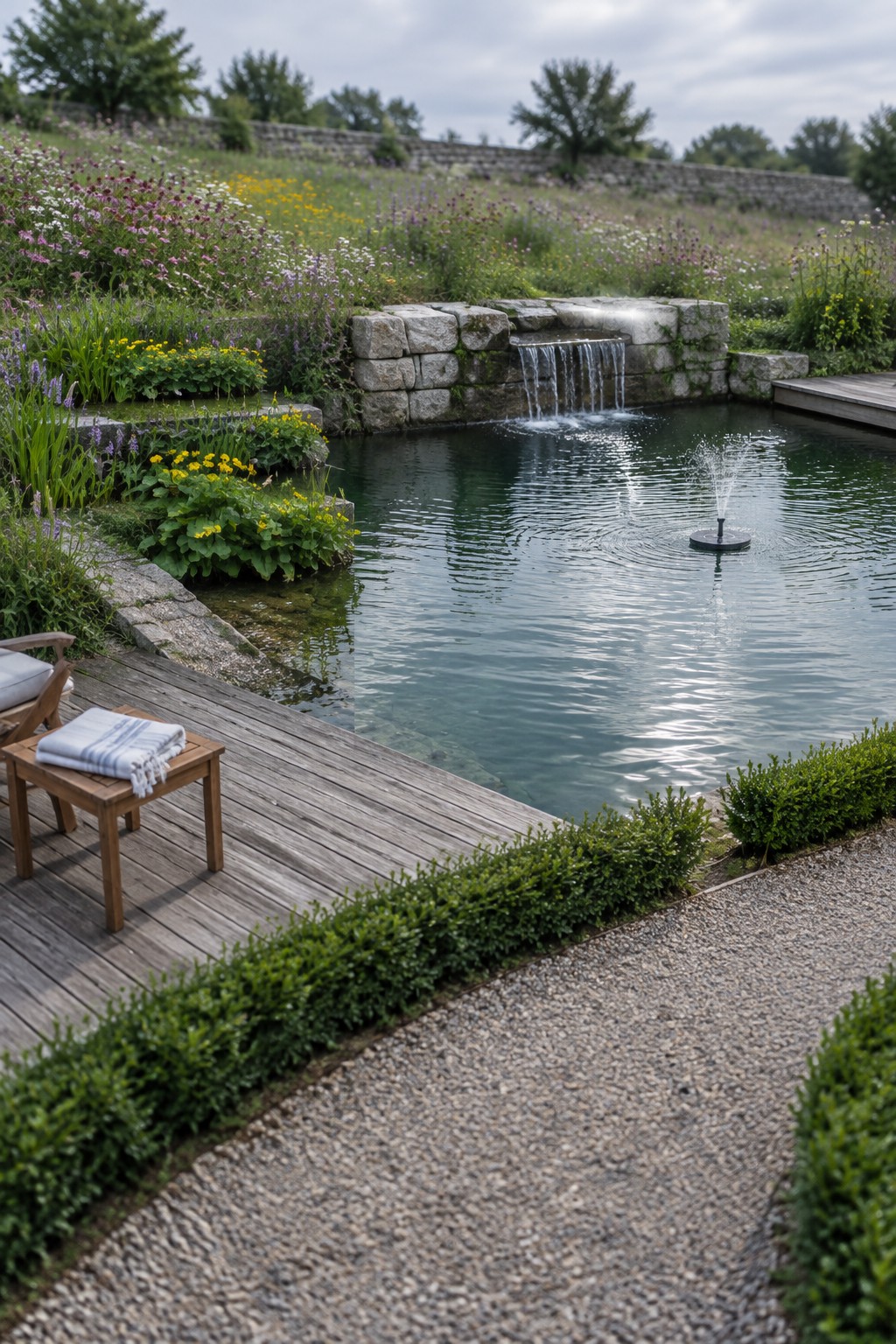
A gently planted pond edge helps a swimming pond feel like part of the garden, rather than a pool dropped into it. Here, broad stone edging meets flower-filled planting, giving wildlife places to approach the water while keeping the pond’s shape clear.
Use irregular stones and native plants suited to damp soil along one or more sides of the pond. Keep a few shallow, gently sloped areas for small animals to enter and leave, and leave enough open edge for people to get in and out safely.
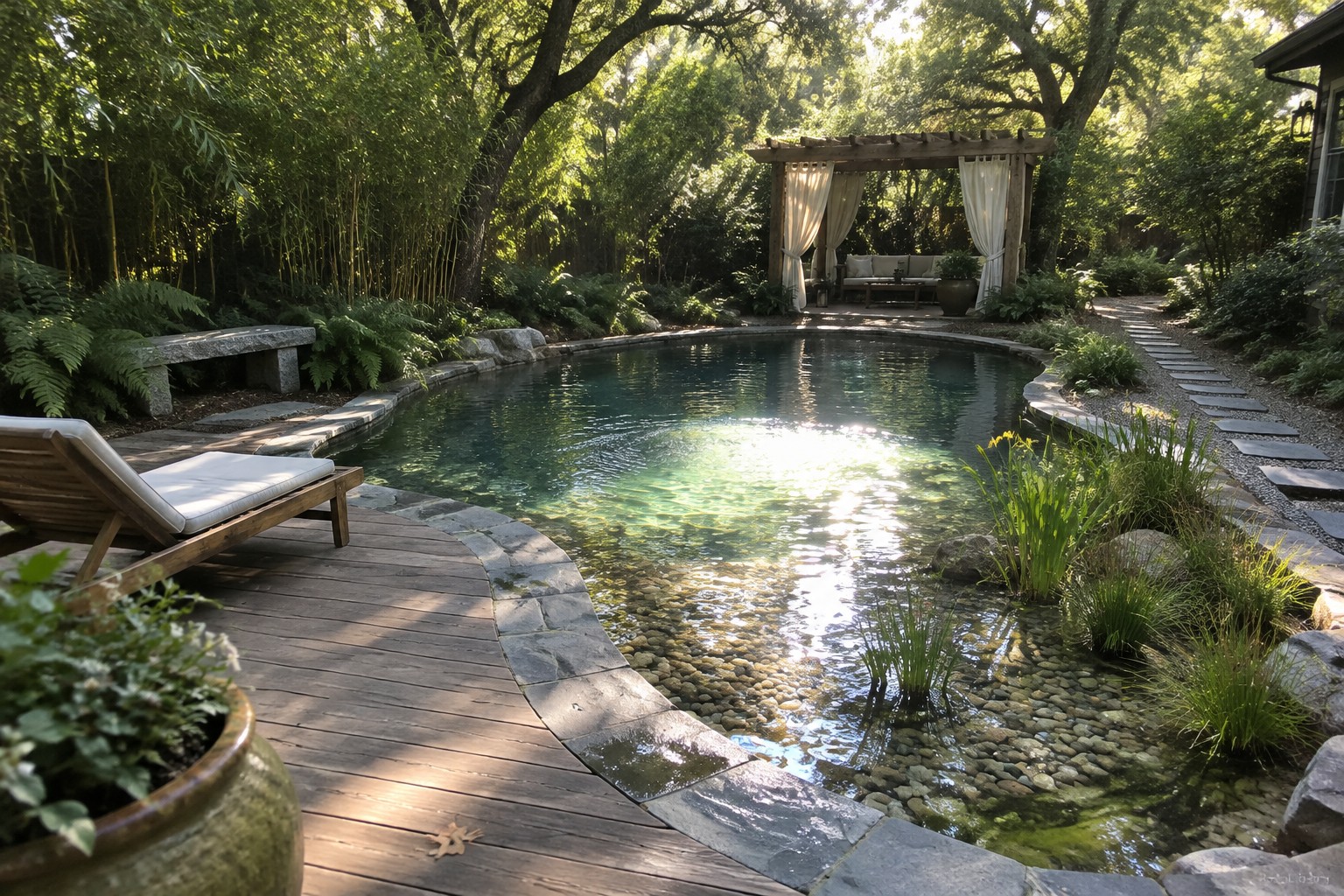
Build a Shallow Swimming Pond
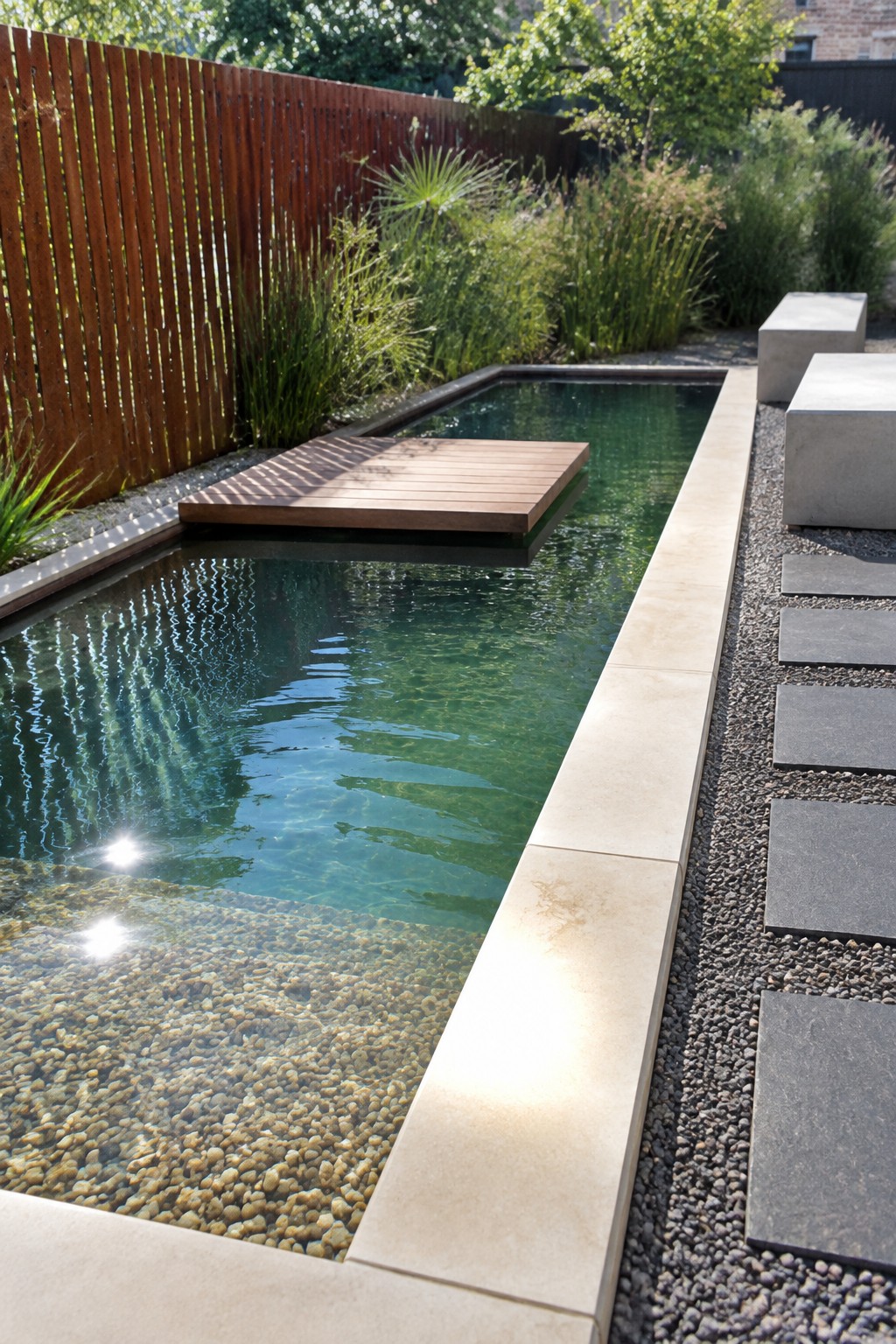
A shallow pond can make a backyard swimming area friendlier to wildlife while still being practical for people. A visible pebble bottom lets water plants and small pond creatures share the habitat, and the natural look feels at home in a garden.
Use a gently sloped, shallow edge where native aquatic plants can grow and wildlife can reach the water. Keep a deeper area for swimming, and avoid steep, smooth sides that can make it hard for animals to get out.
Let the Pond Edge Grow Naturally
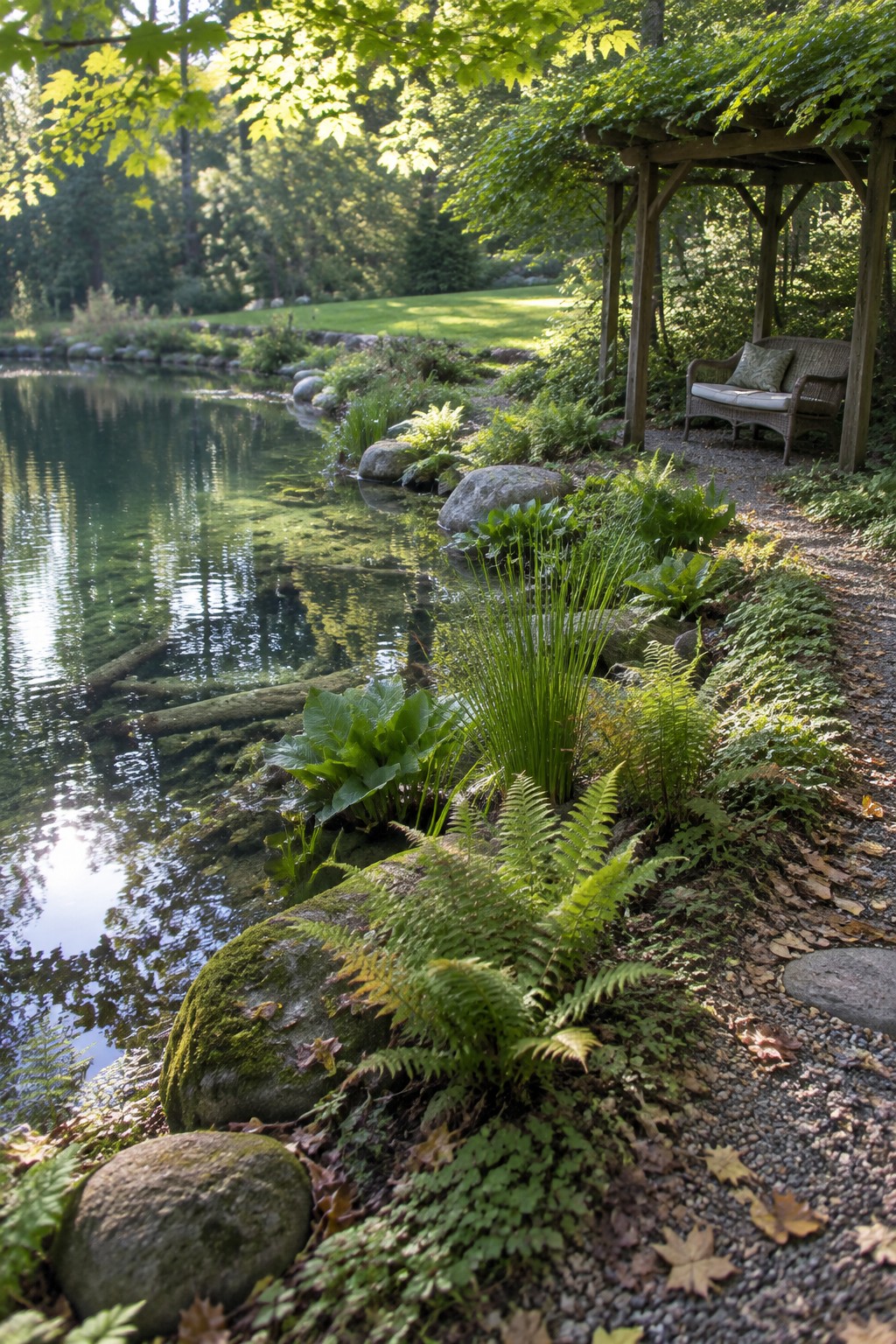
A gently planted pond edge gives wildlife places to shelter and makes a swimming pond feel like part of the garden. Rocks and water-loving plants create a softer boundary than a hard, uniform rim.
Use native marginal plants in small groups along sections of the shoreline, leaving clear access where people enter the water. Choose species suited to your region and pond depth, and keep fast-spreading plants in check.
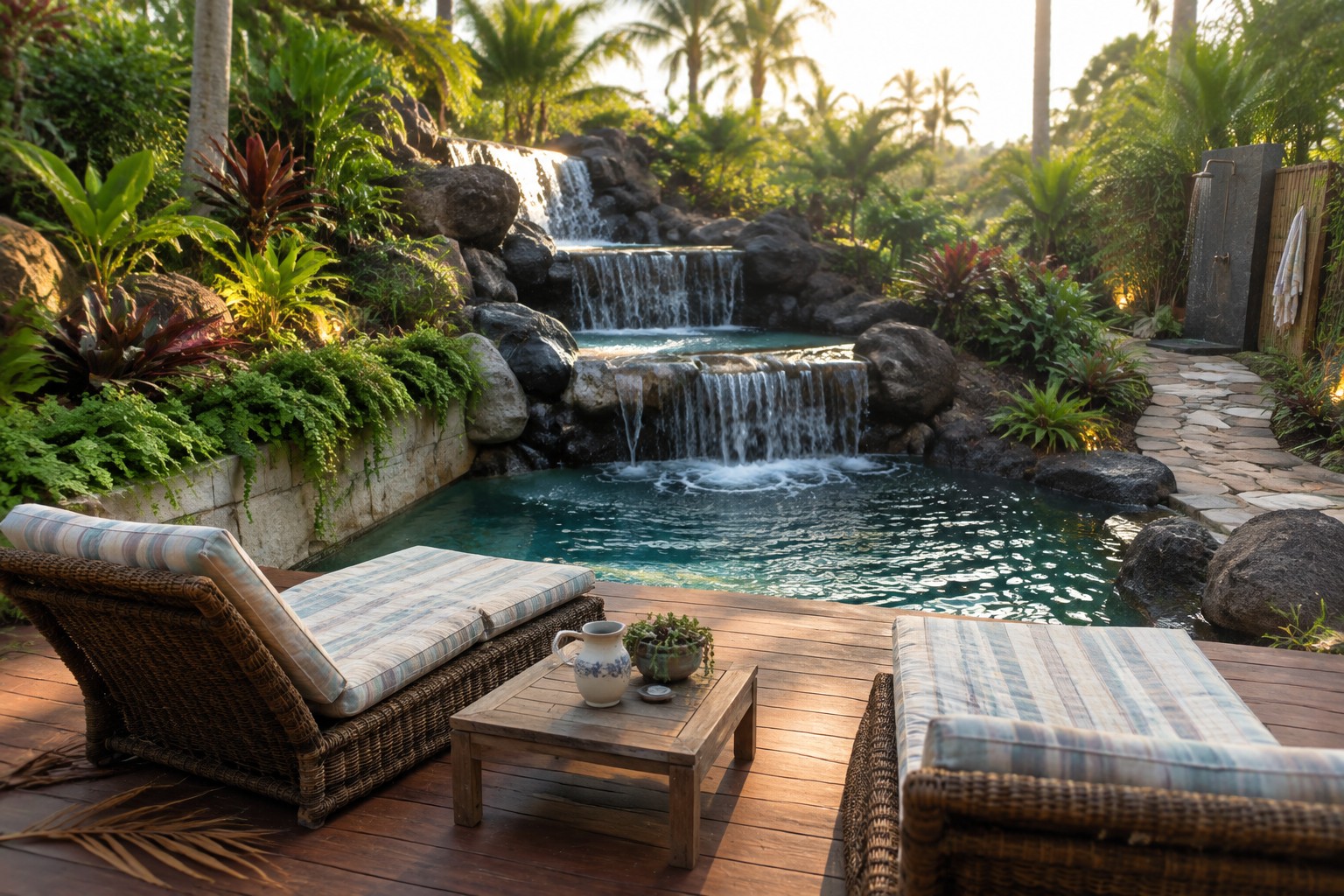
Use a Waterfall to Keep Pond Water Moving
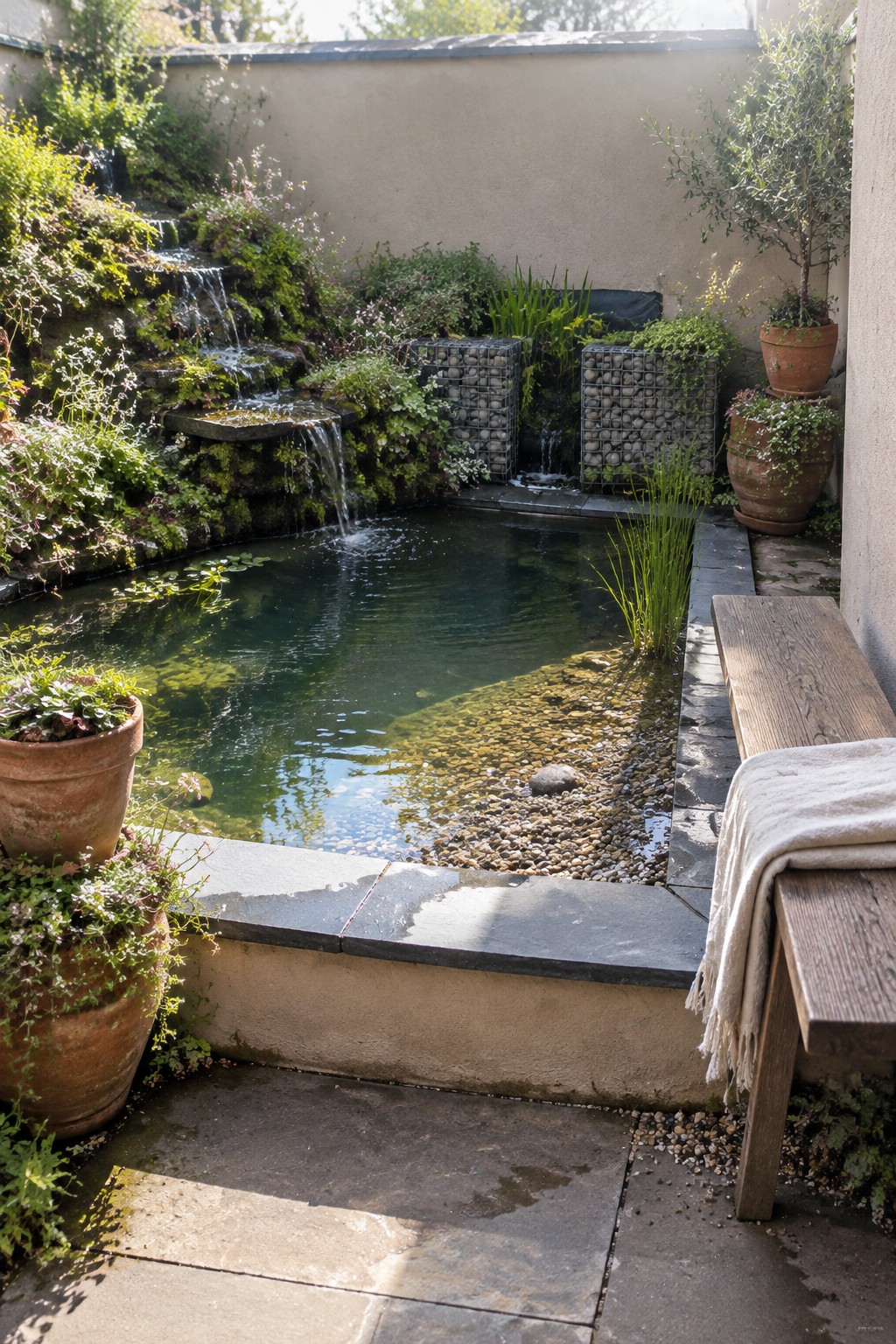
A small waterfall can keep water circulating while making a swimming pond feel like part of the garden. Here, water spills down a planted rock slope and into the pond, giving the feature a natural shape rather than the look of a standard pool.
This approach suits a tucked-away garden where there is room for a raised section at one end of the pond. Use a pump sized for the waterfall, and include quiet, shallow areas where wildlife can rest or get out of the water.
Add a Small Waterfall to the Pond Edge
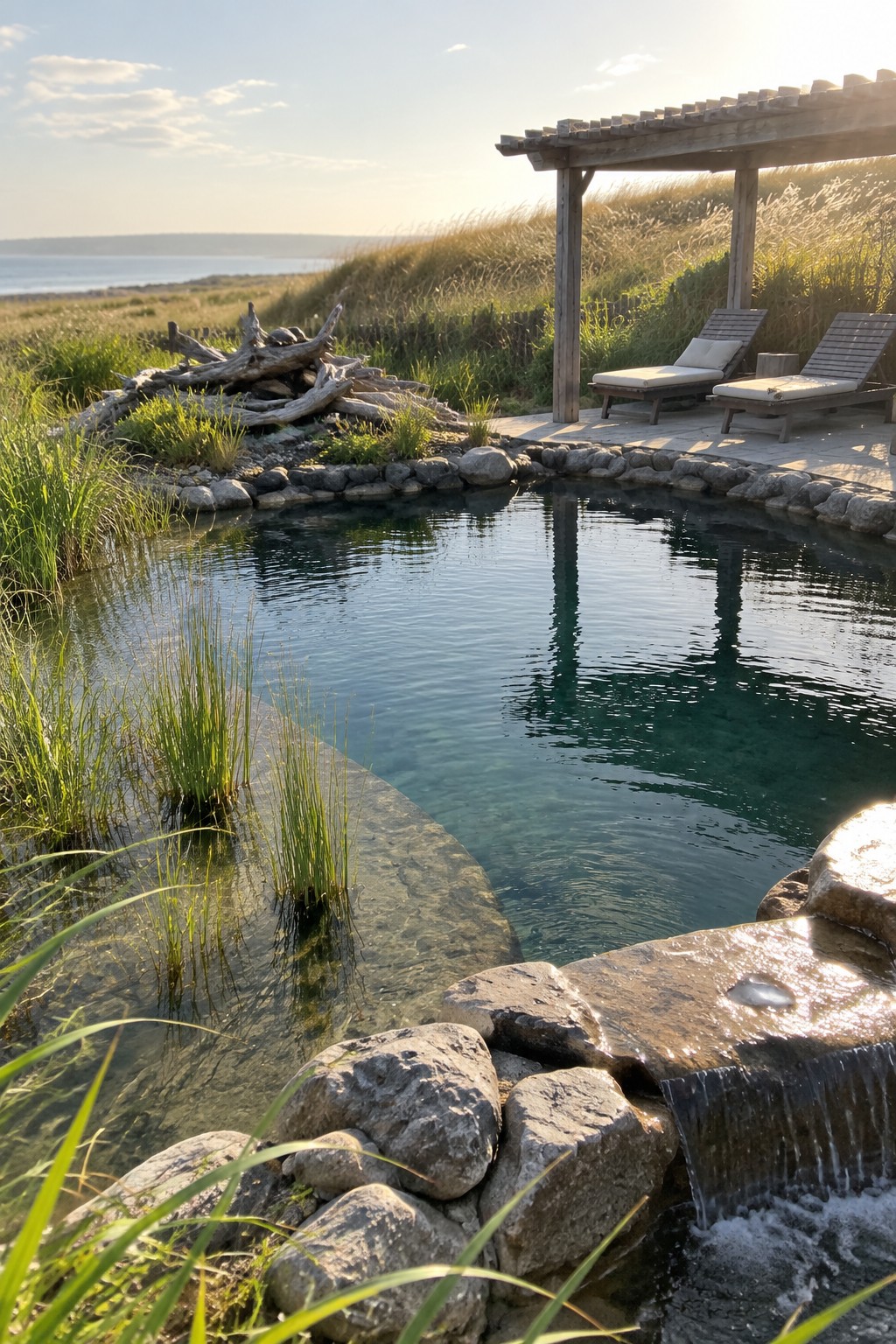
A small stone waterfall gives a swimming pond gentle movement without making it feel too much like a formal pool. The spillway also lets water circulate, while the natural stone edge keeps the feature in step with a wildlife-friendly garden.
Place the waterfall where it can return water to the pond without disturbing the shallow planted areas. Keep the flow modest, and leave quieter spots nearby where wildlife can rest or drink.
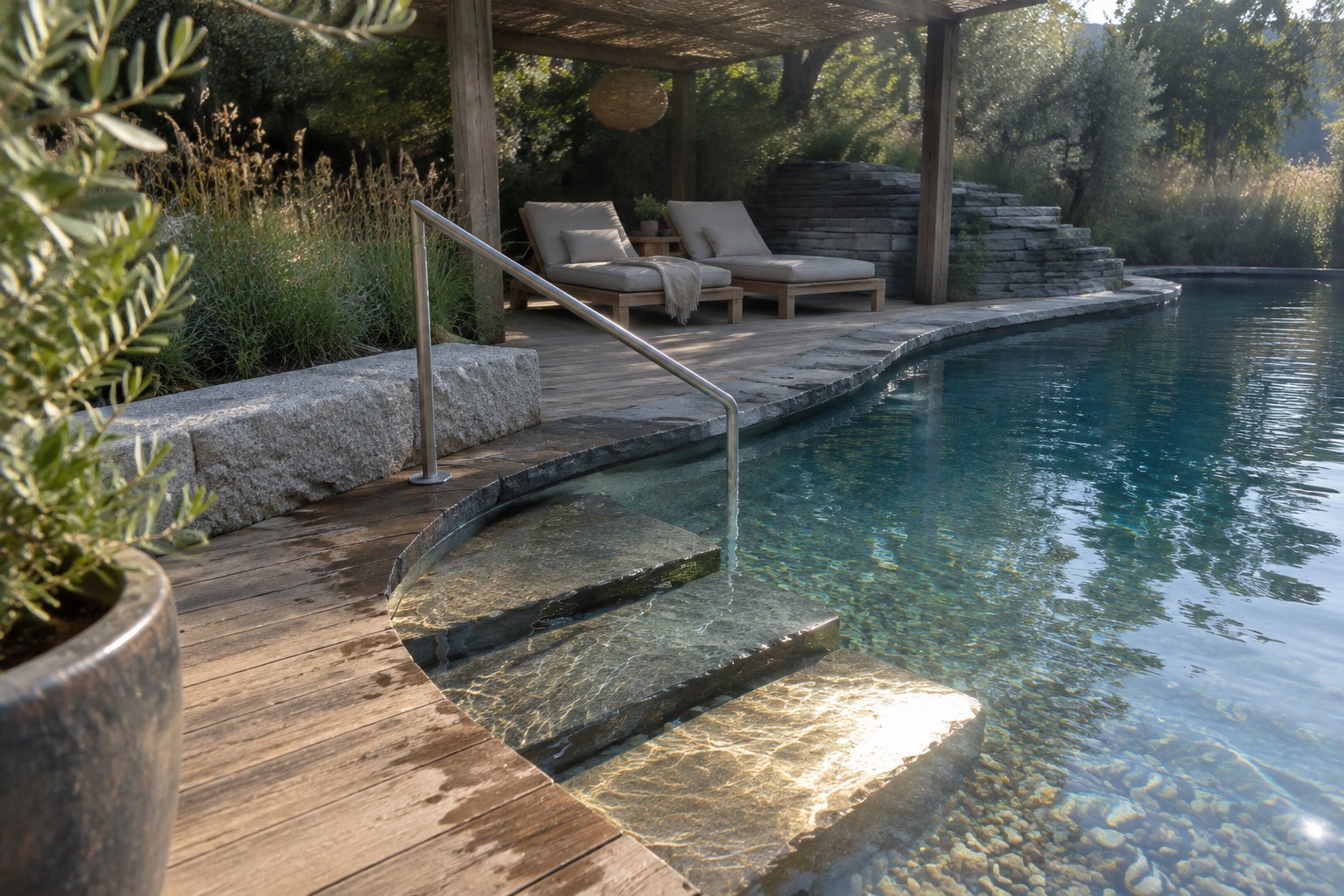
Create a Natural Stone Pond Edge
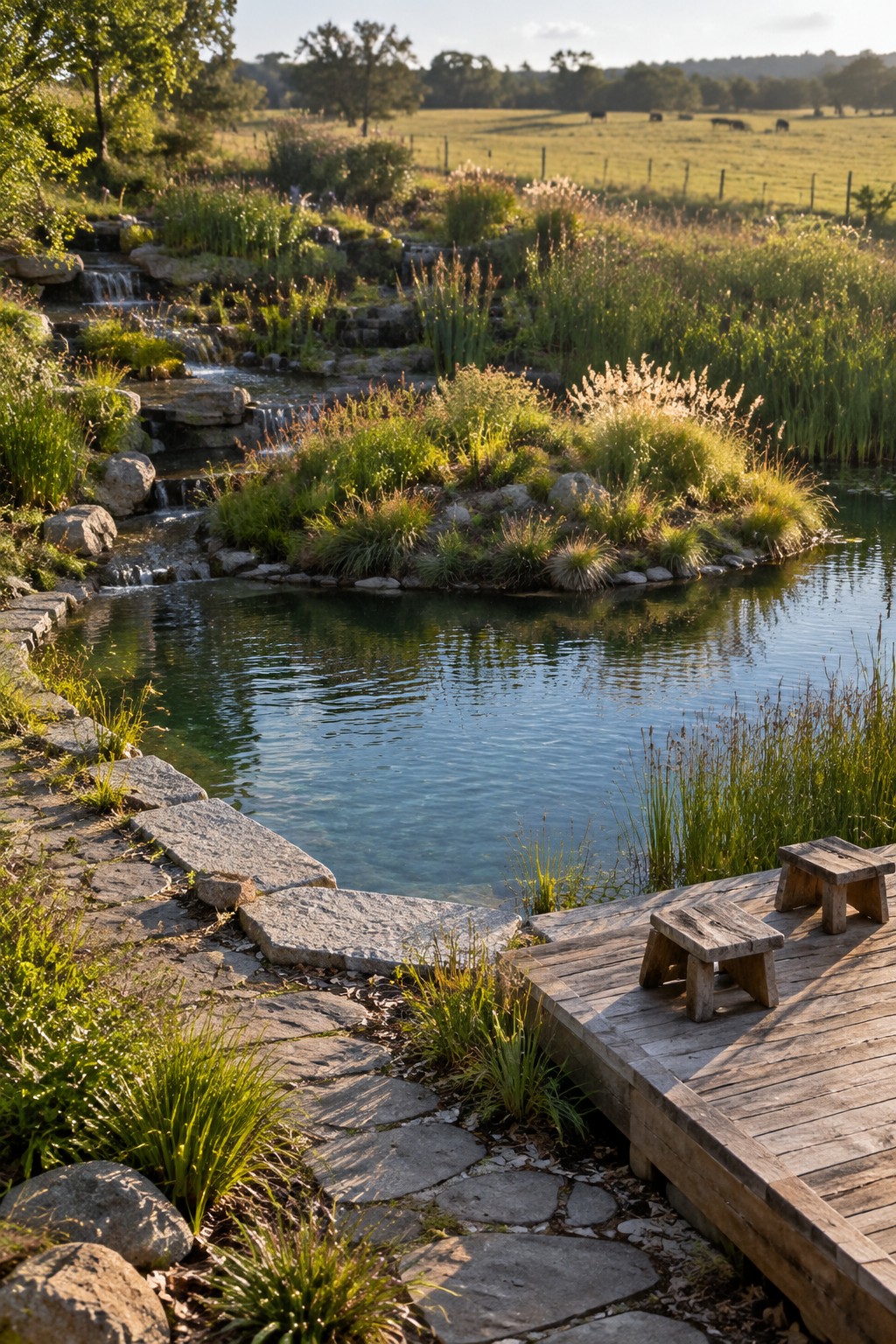
A stone-edged swimming pond can feel like part of the garden rather than a separate pool. Broad, irregular stones make a firm border while leaving room for grasses and other plants to grow close to the water.
Use this approach where you want a sturdy place to walk or sit near the pond, but keep sections of the edge shallow and gently planted for wildlife access. A small wooden deck can provide a clear entry point without hardening the entire shoreline.
Use a Plant-Covered Pergola Beside the Pond
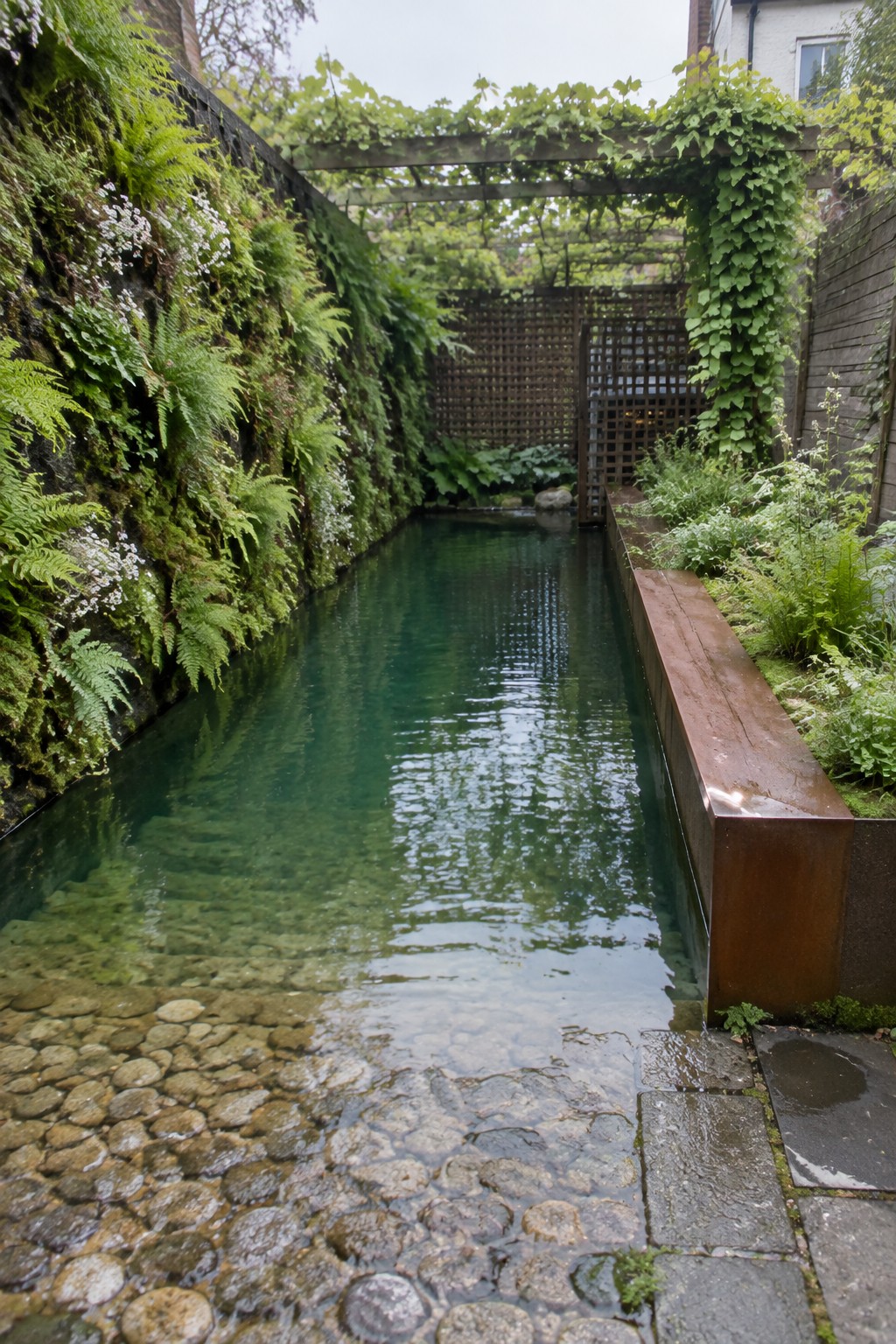
A simple pergola can give a narrow swimming pond a bit of overhead cover while still letting in light. Here, climbing greenery grows across the beams, making the structure part of the garden rather than a separate feature.
This approach suits a compact pond beside a house or garden wall. Choose sturdy supports and train plants so they do not block access to the water or drop too much debris into it.
Add a Pebble Shore for Easy Water Access
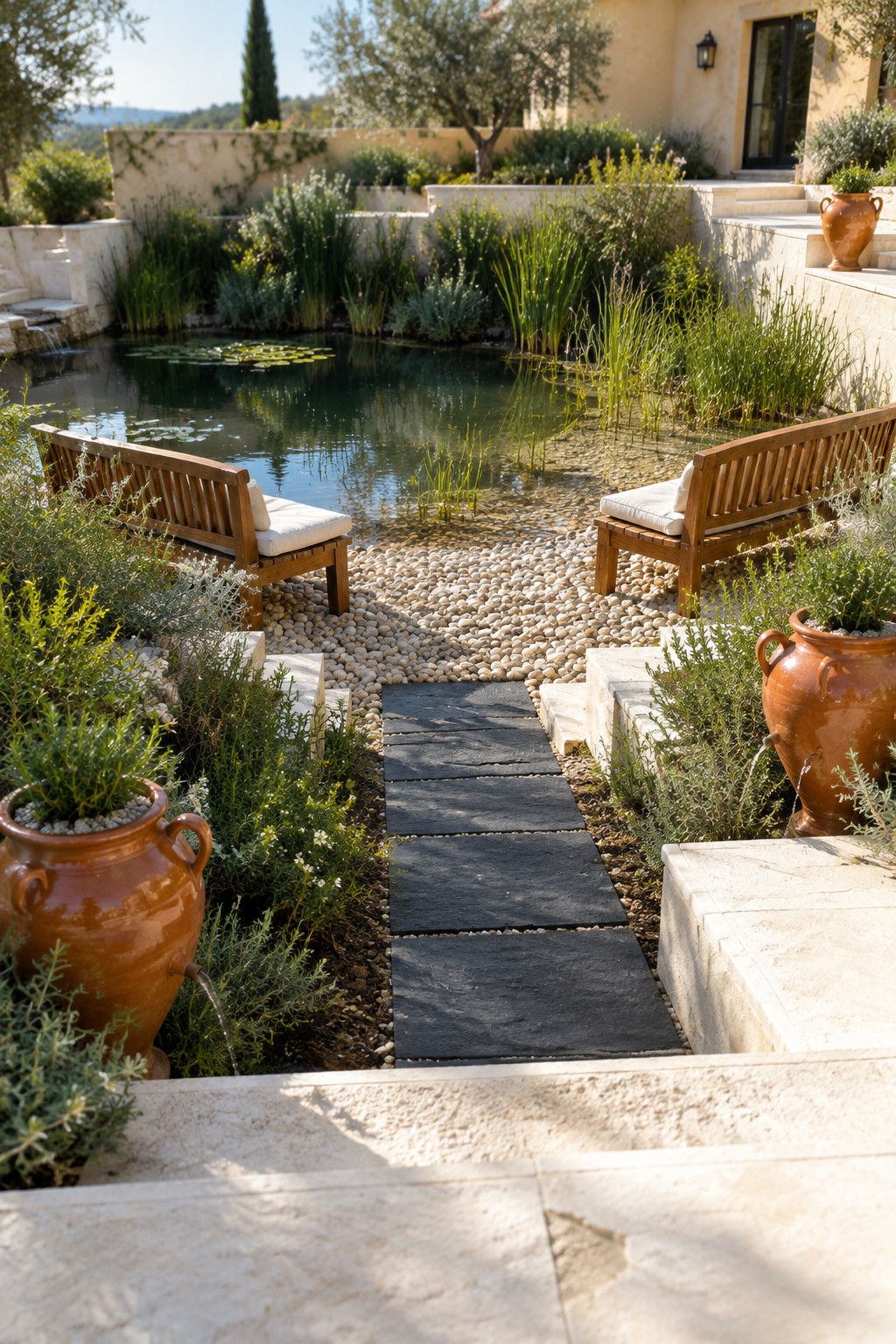
A shallow pebble edge gives a wildlife-conscious swimming pond a gentler transition between water and land. It also makes the pond feel like part of the garden rather than a separate pool, while offering small creatures a place to approach the water.
Use rounded stones along one section of the pond, keeping the slope gradual and stable. This works well where swimmers can enter from a separate path or step, so the shallow habitat edge can stay undisturbed.
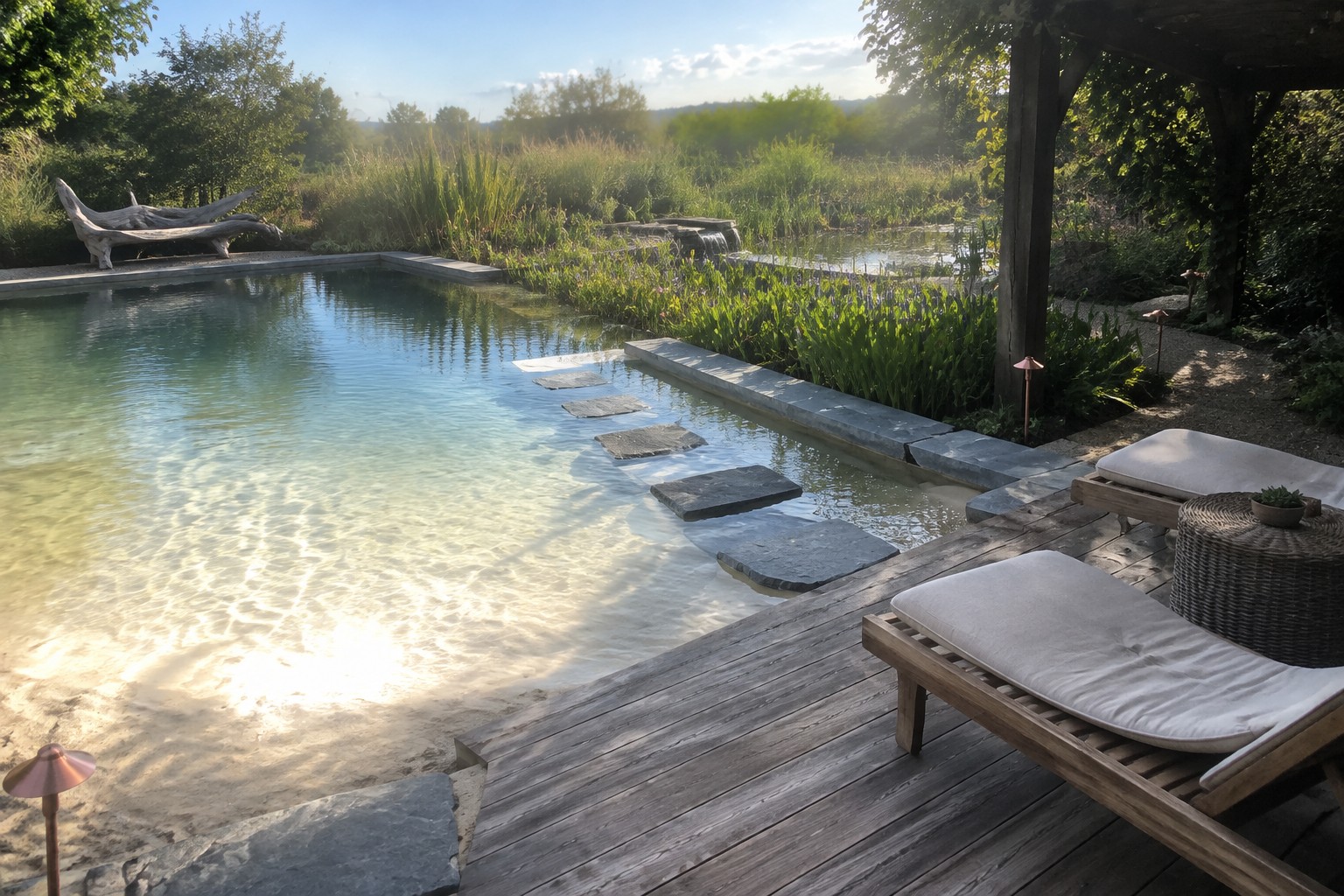
Create a Natural Transition Between Swimming and Wildlife Zones
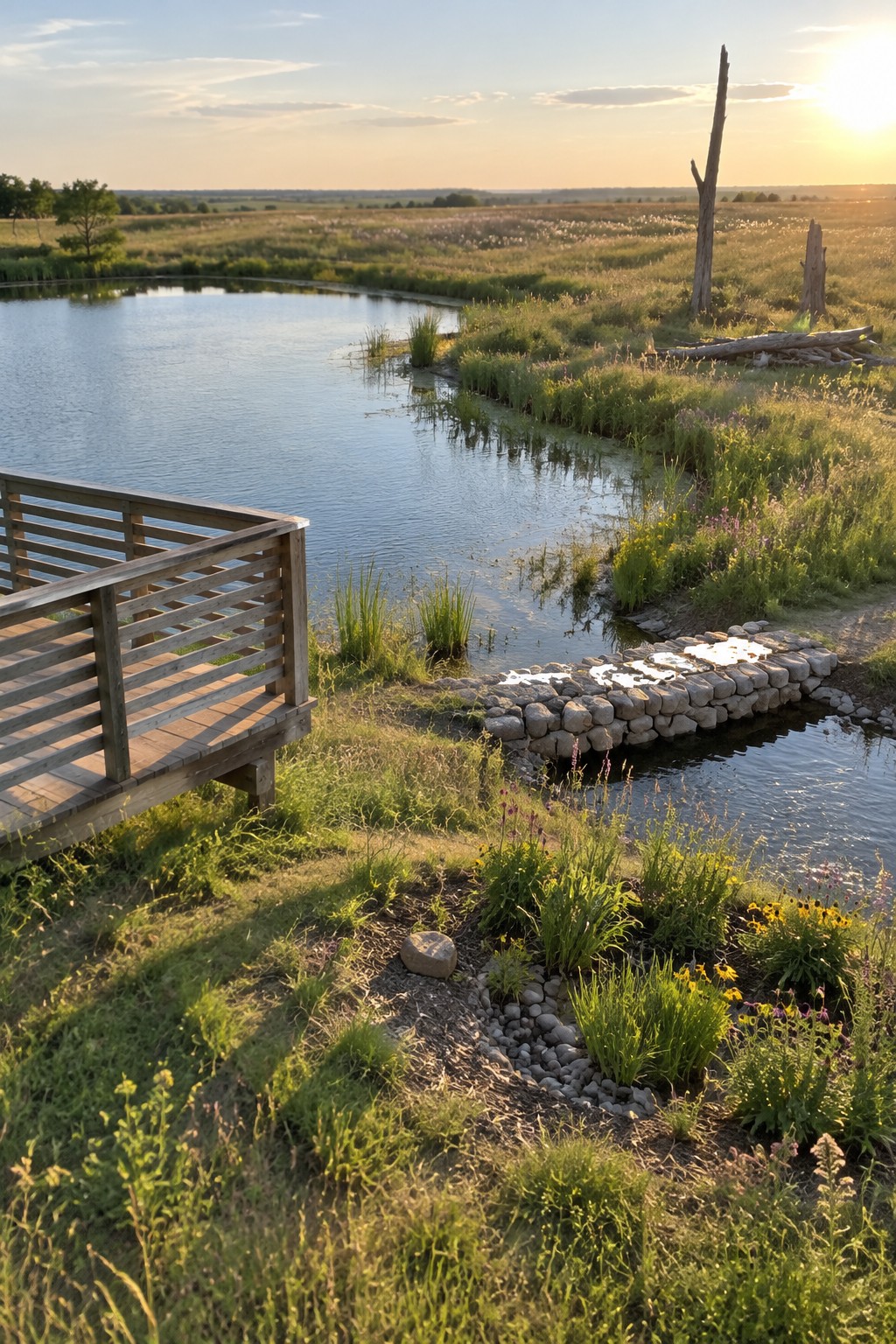
A swimming pond can feel more natural when its edge changes gradually into planted habitat instead of stopping at a hard border. Here, a low stone crossing links the water to the garden while leaving plenty of shallow shoreline for aquatic plants.
Use this approach where you want a clear route across a pond without separating the swimming area from wildlife habitat. Keep stones stable and avoid sealing every edge, so plants and small animals can still reach the water.
Add Stepping Stones Across the Pond
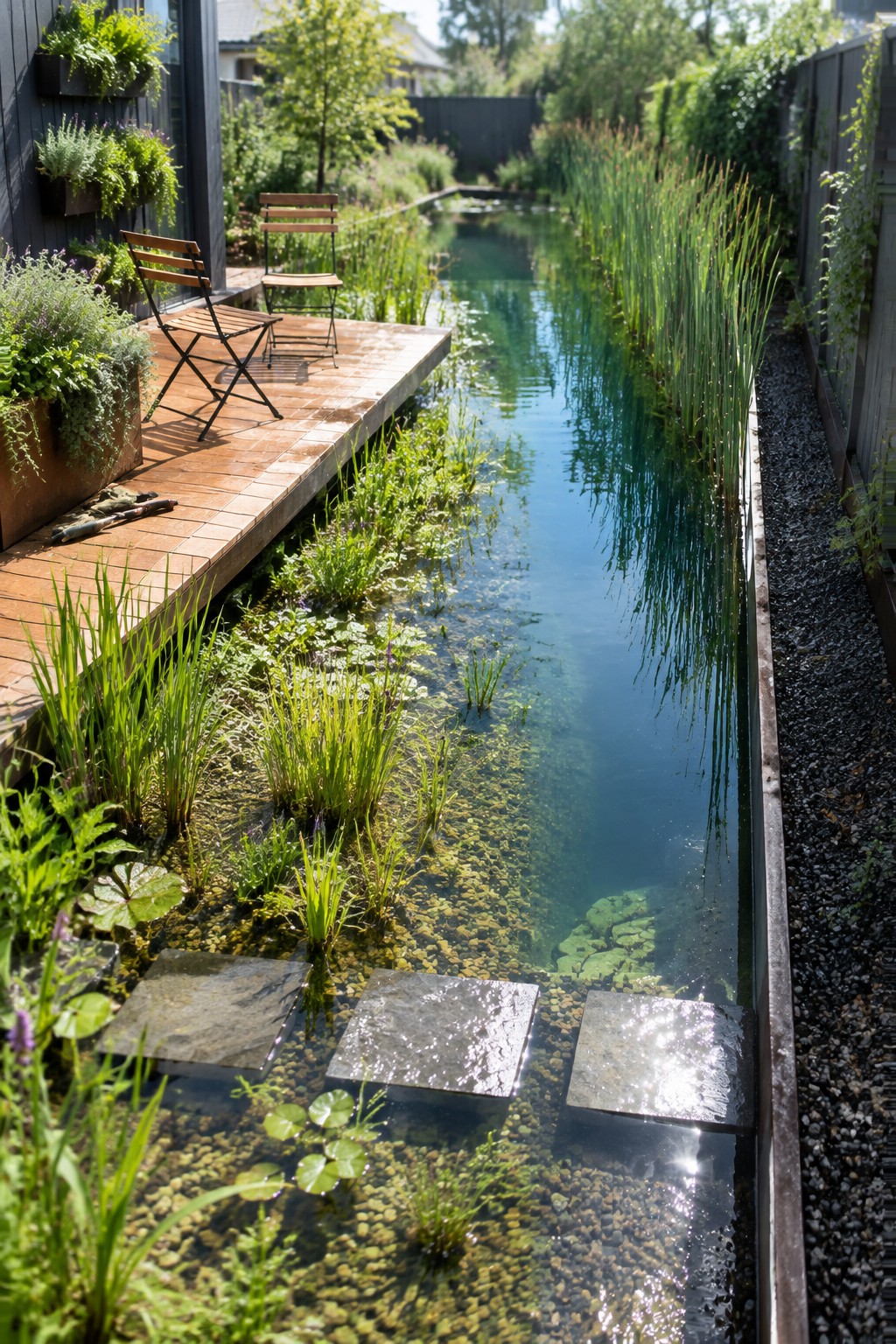
A few flat stepping stones can make a swimming pond easier to cross without covering the water with a full path. They also give the shallow planted edge a simple way to connect with the deck.
Use stones with a rough, non-slip surface and set them firmly in shallow water. Leave enough space between them for aquatic plants and small wildlife to use the pond edge, and avoid placing them where they narrow the main swimming area.
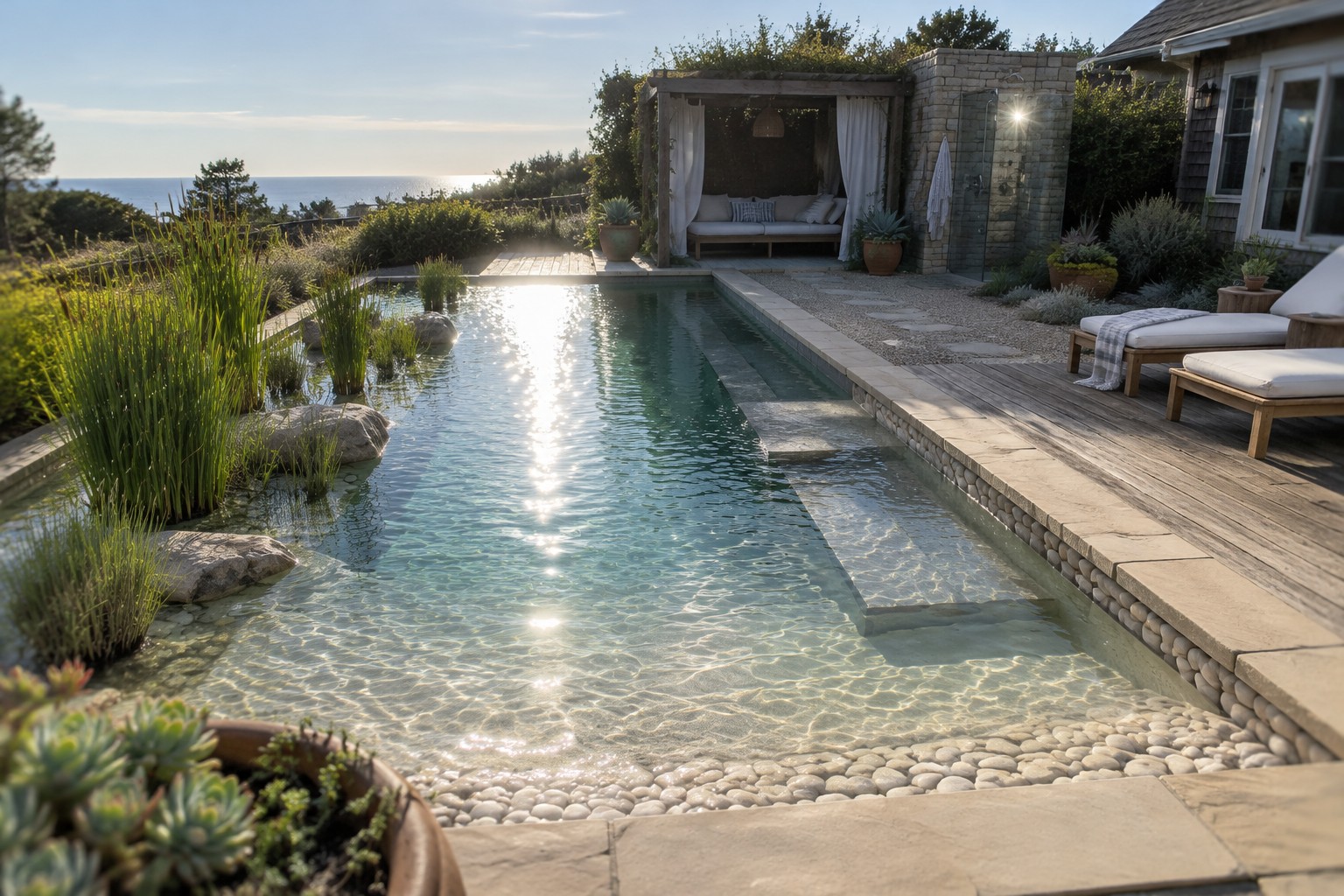
Use a Planted Shelf Along the Pond Edge
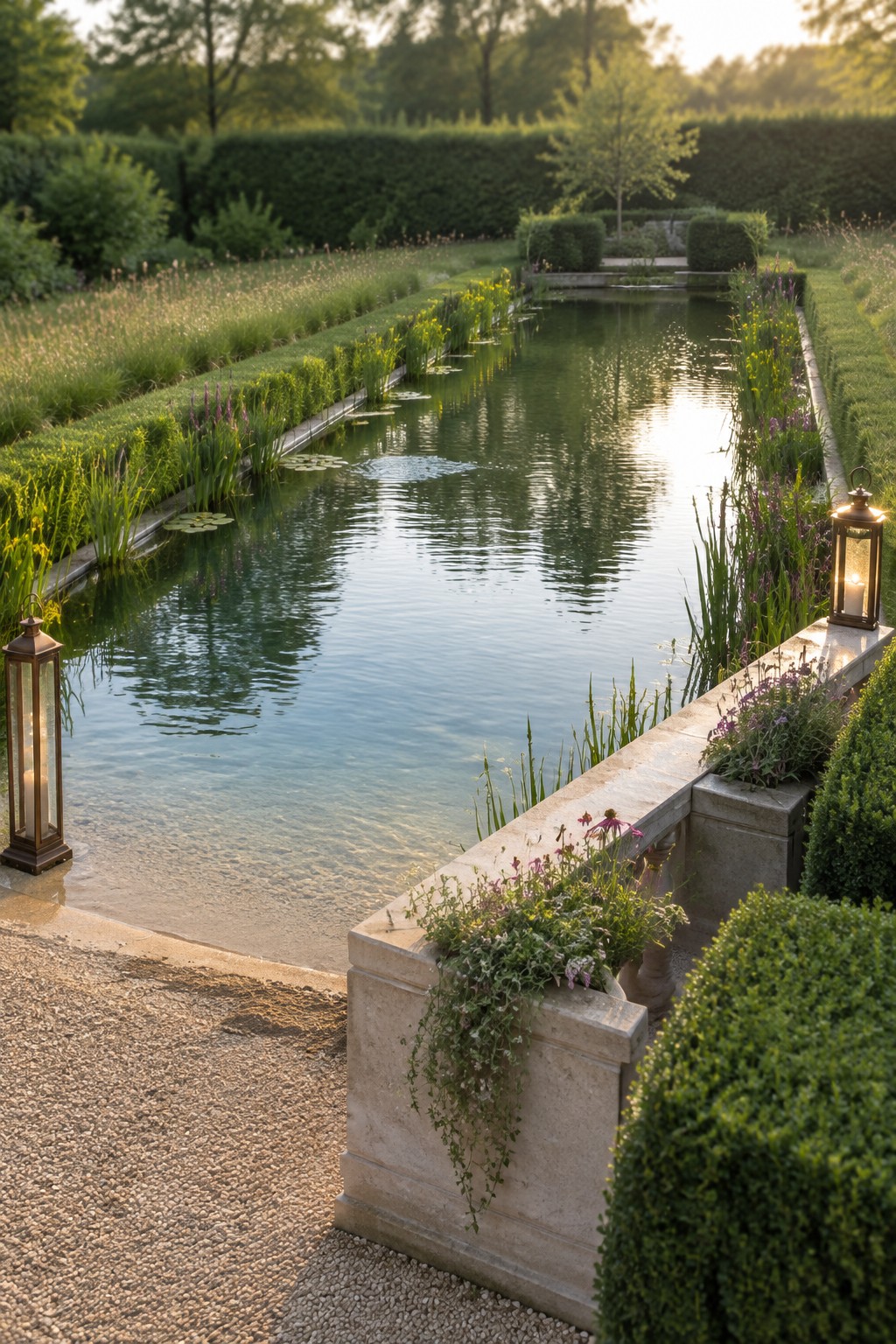
A planted shelf gives a swimming pond a useful transition between open water and the garden. Here, aquatic plants grow along the long stone edge, leaving the center of the pond clear for swimming while providing shallow habitat at the sides.
Use this layout when you have room for a broad, straight pond. Keep the swimming area open and choose native plants suited to the shelf’s depth, so they can support local wildlife without spreading too far into the water.
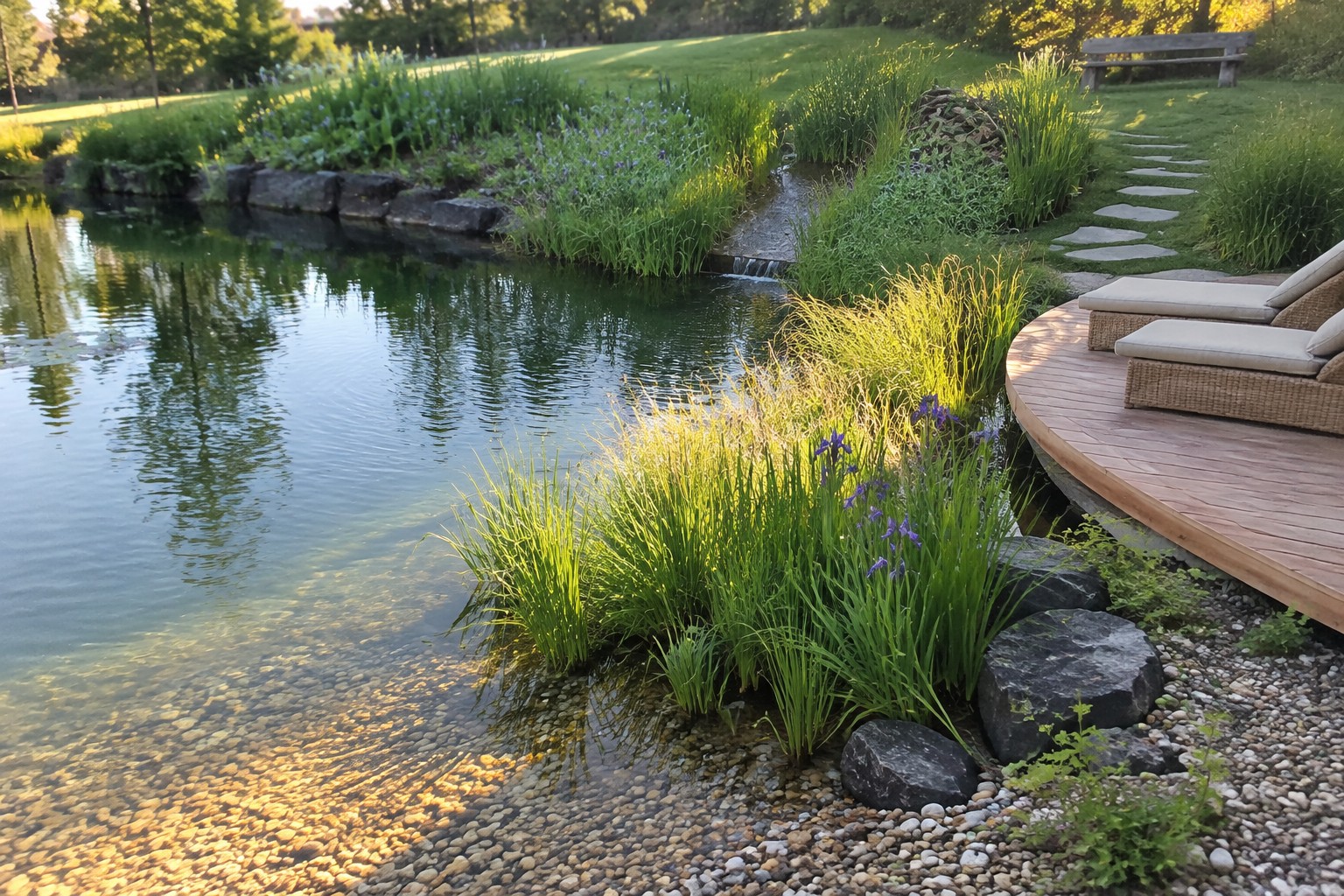
Use a Curving Plant Shelf Along the Pond Edge
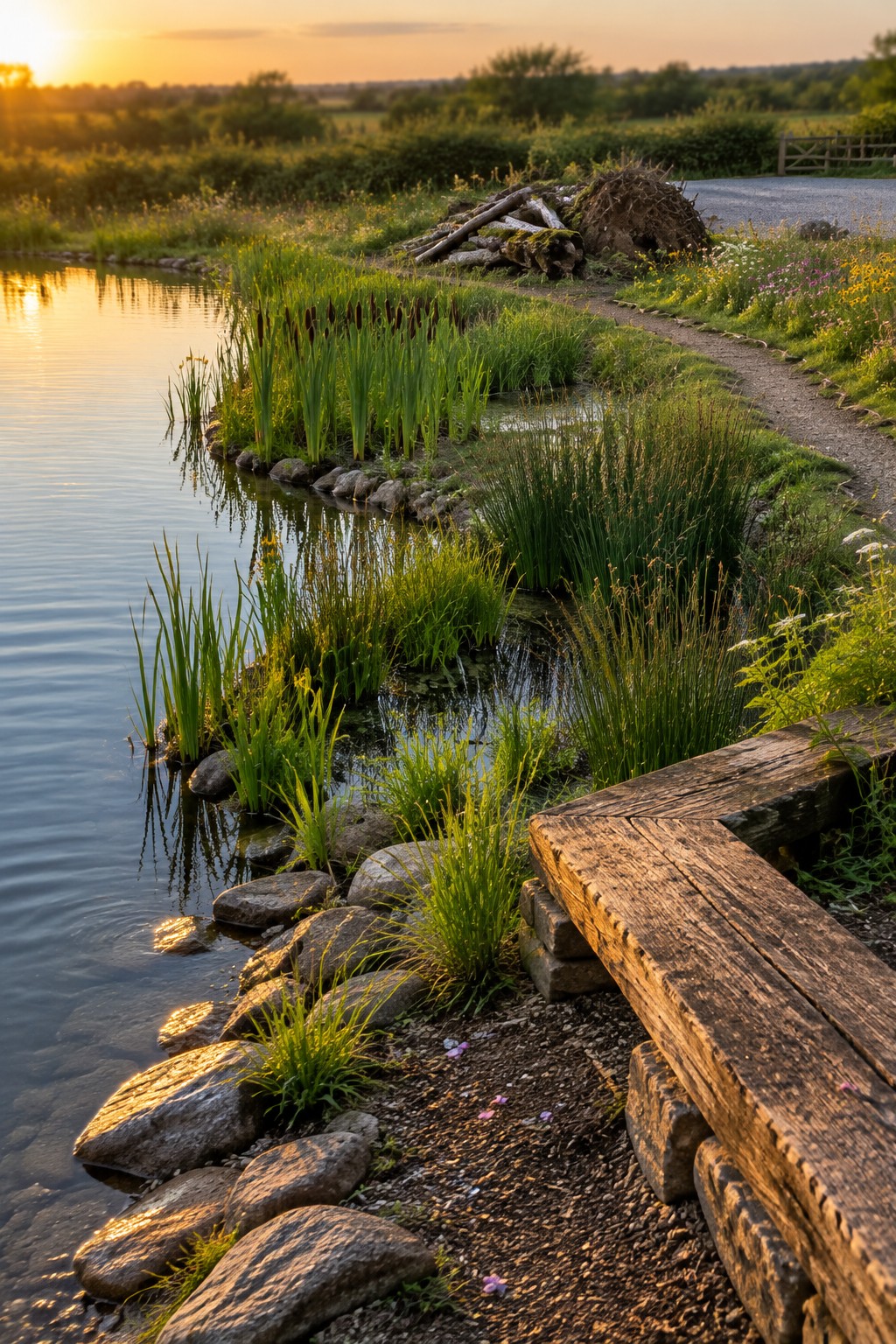
A shallow shelf that curves along the water’s edge gives native aquatic plants room to grow while making the pond feel like part of the garden. Here, clusters of reeds and grasses sit among stones, creating a gradual transition from open water to land.
Use this approach where swimmers can still reach a clear section of the pond, keeping the planted shelf to one side or along the perimeter. Choose plants suited to your climate and leave gaps between clumps so wildlife can move through.
Use a Stone Path Along the Pond
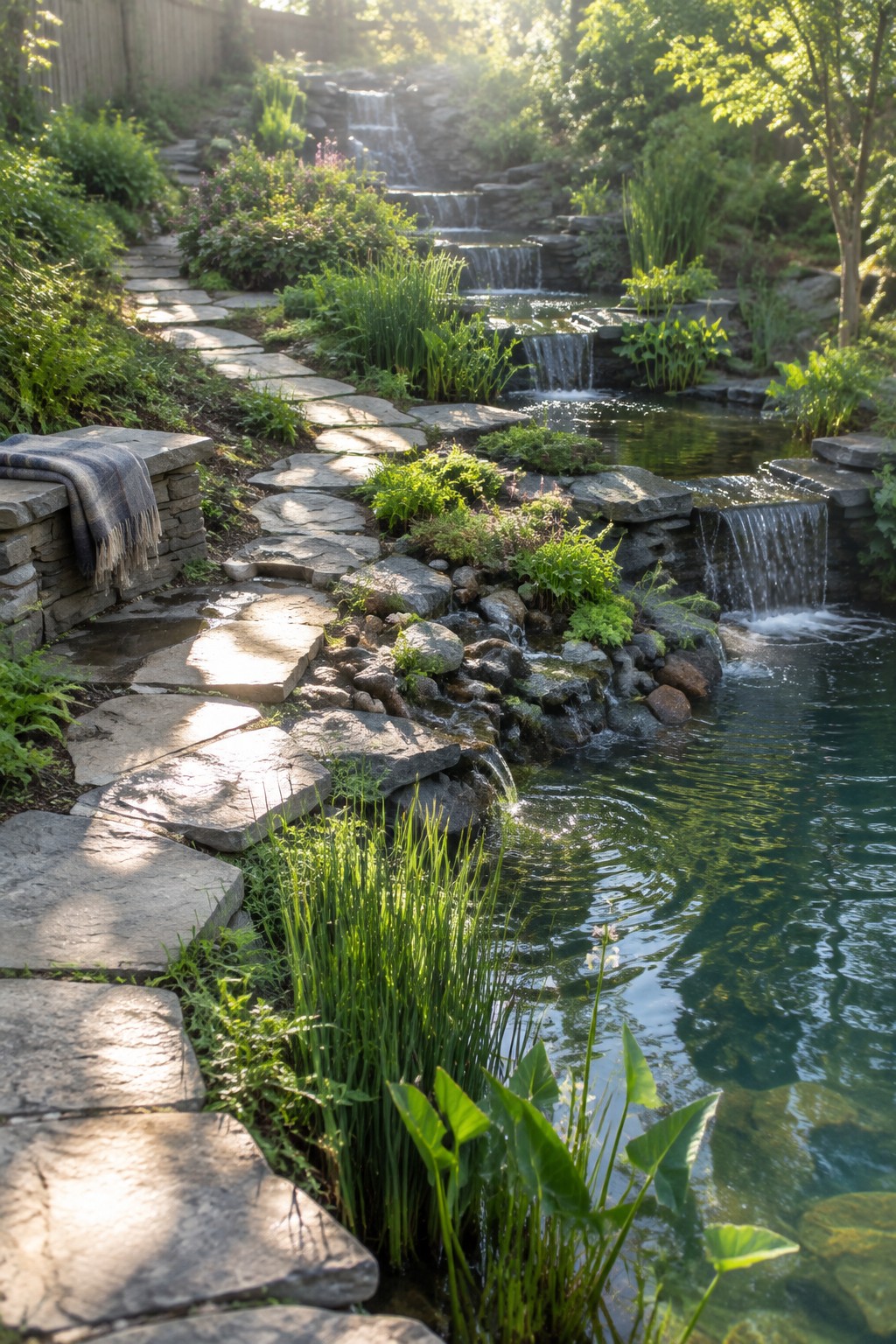
A stepping-stone path lets people move beside a pond without trampling its planted edges. Here, the stones follow the water’s curve, making the route feel like part of the garden rather than a separate walkway.
For a swimming pond, set stones firmly and leave enough space between them for plants to grow. Keep the path wide and even where people will walk often, and use a rough stone surface to help prevent slips.
Use a Planted Filter Bed to Support Pond Life
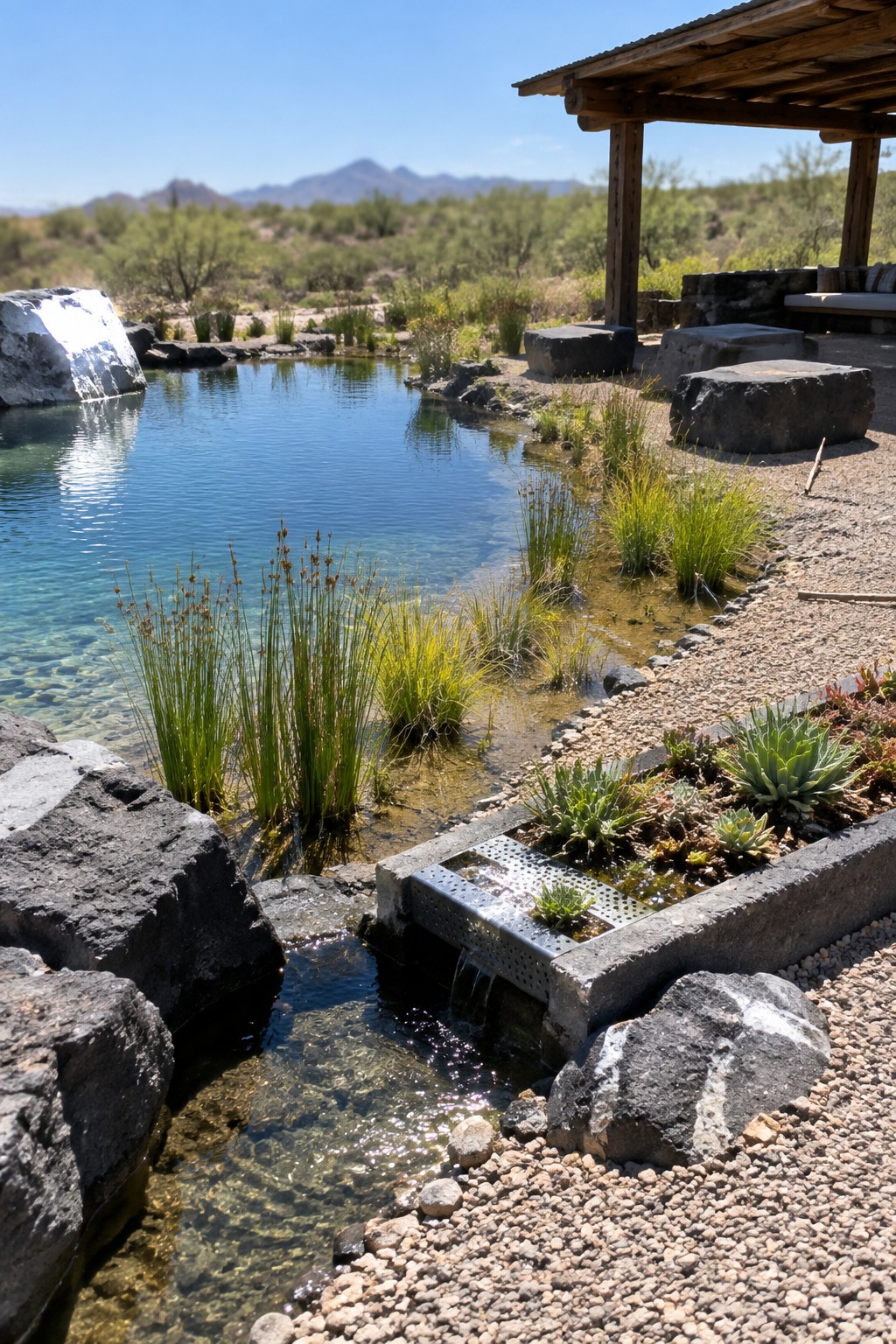
A planted filter bed can help keep a swimming pond clear while giving aquatic plants and small wildlife a place to thrive. Here, water passes through a stone-edged bed filled with grasses before returning to the pond.
This setup works well beside a natural swimming area, especially when there is room for a separate shallow zone. Choose plants suited to local conditions, and keep the planting bed accessible so you can clear debris and maintain the water flow.
Use a Pebble Shore Along the Pond
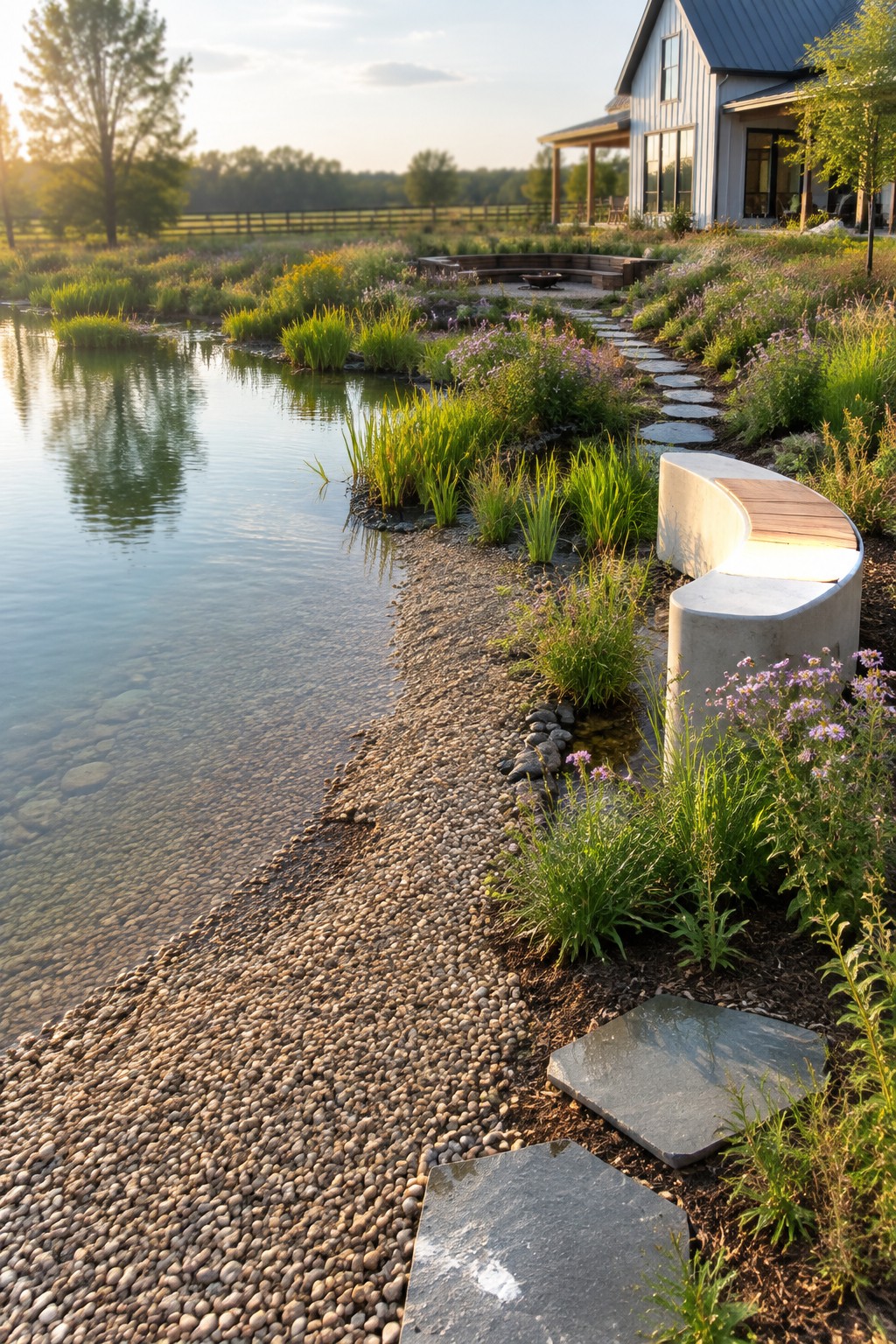
A gently sloped pebble shore gives a swimming pond an easy, natural-looking edge. The shallow water and stones let wildlife reach the pond, while helping the planted areas blend into the water.
Use rounded stones along a gradual bank, and keep aquatic plants nearby rather than covering the whole entry. This works well where people and wildlife share the pond, but choose stones that stay stable underfoot.
Frequently Asked Questions
Q: Can I keep fish in a swimming pond without harming frogs and other wildlife?
A: You can, but fish may eat frog eggs, tadpoles, and small aquatic creatures. If wildlife is your priority, skip fish or keep them in a separate section with a barrier.
Q: How do I keep the swimming area clean without using chlorine?
A: Use a planted regeneration zone to help filter the water, and remove leaves before they sink and break down. A pump or biological filter can help keep water moving without relying on pool chemicals.
Q: Will native plants take over the whole pond?
A: Some spread quickly, so choose plants suited to your pond’s depth and trim them back when they crowd the swimming area. Leave plenty of cover at the edges, where wildlife can hide.
Q: Is a swimming pond safe for kids and wildlife?
A: Add a shallow shelf or gently sloped edge so small animals can climb out, and use a clear boundary to keep children away when no one is watching. Supervision still matters, even in a natural pond.