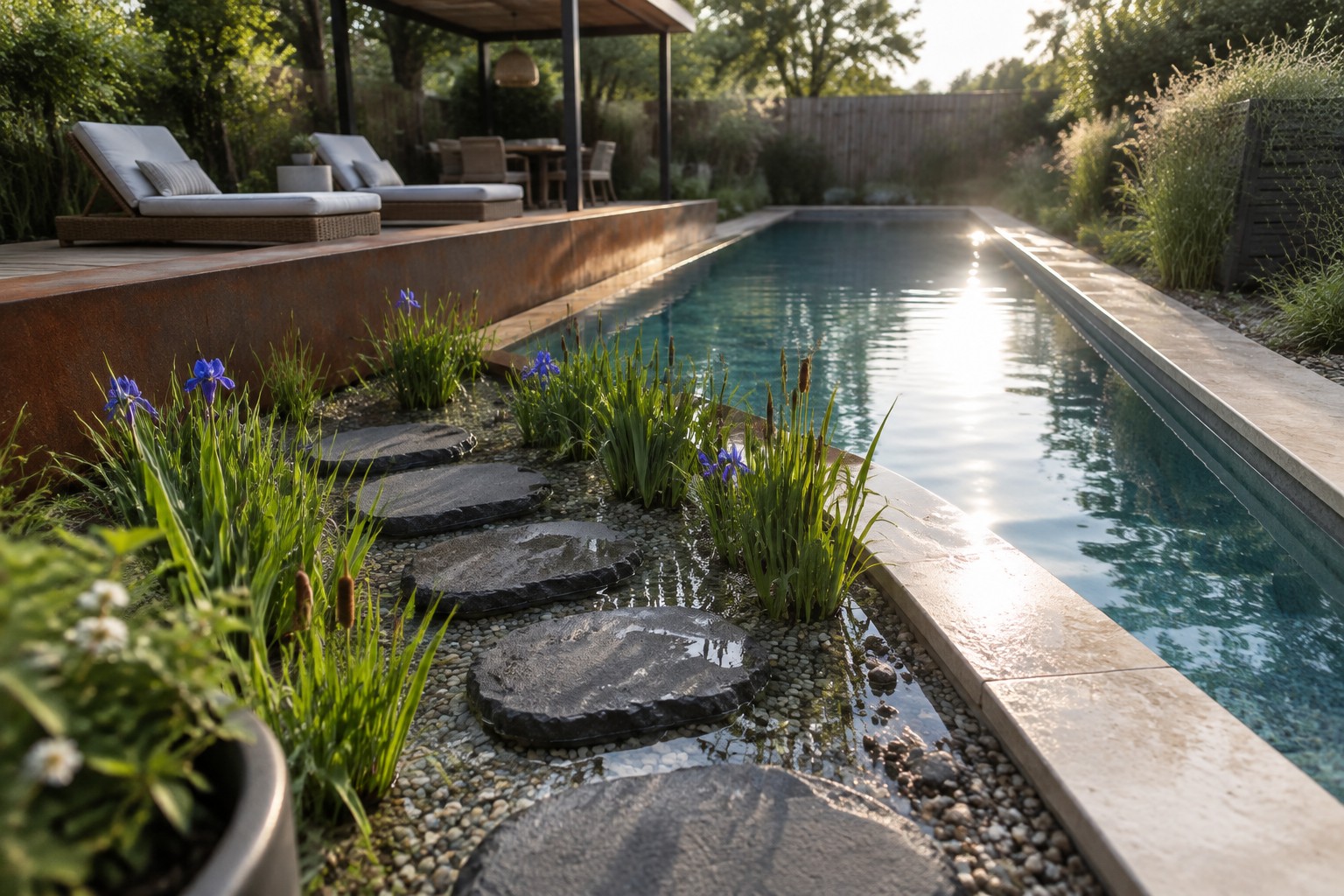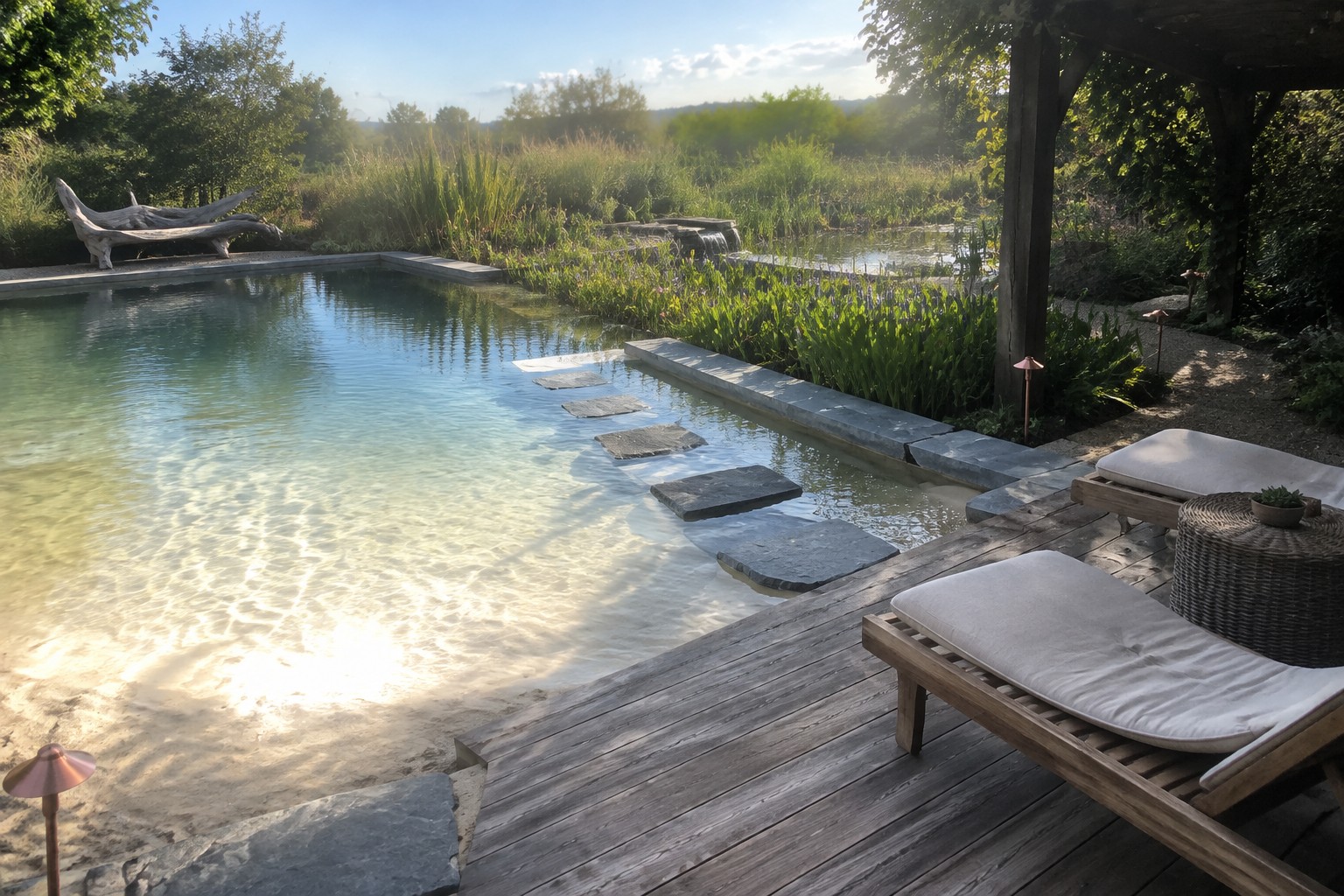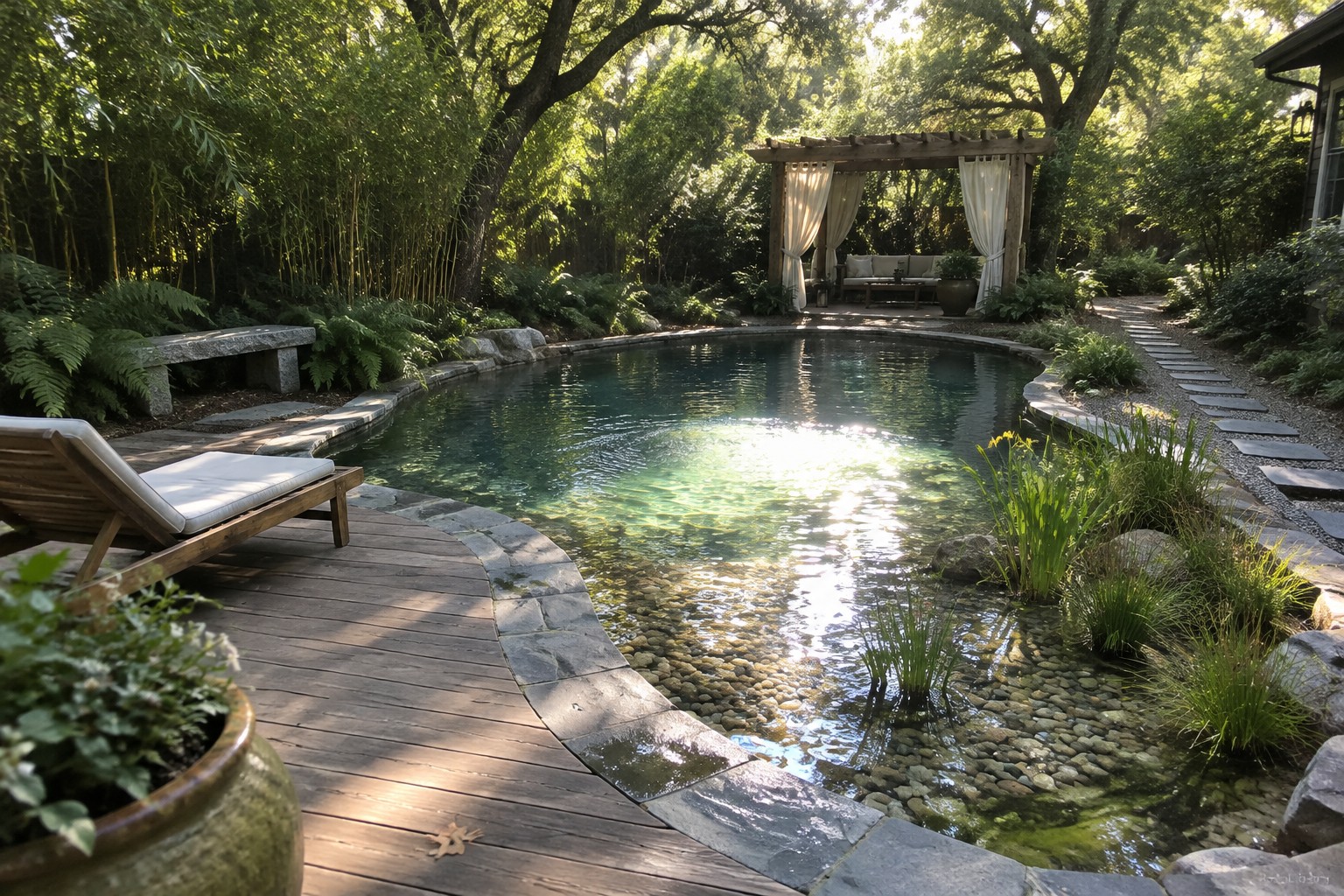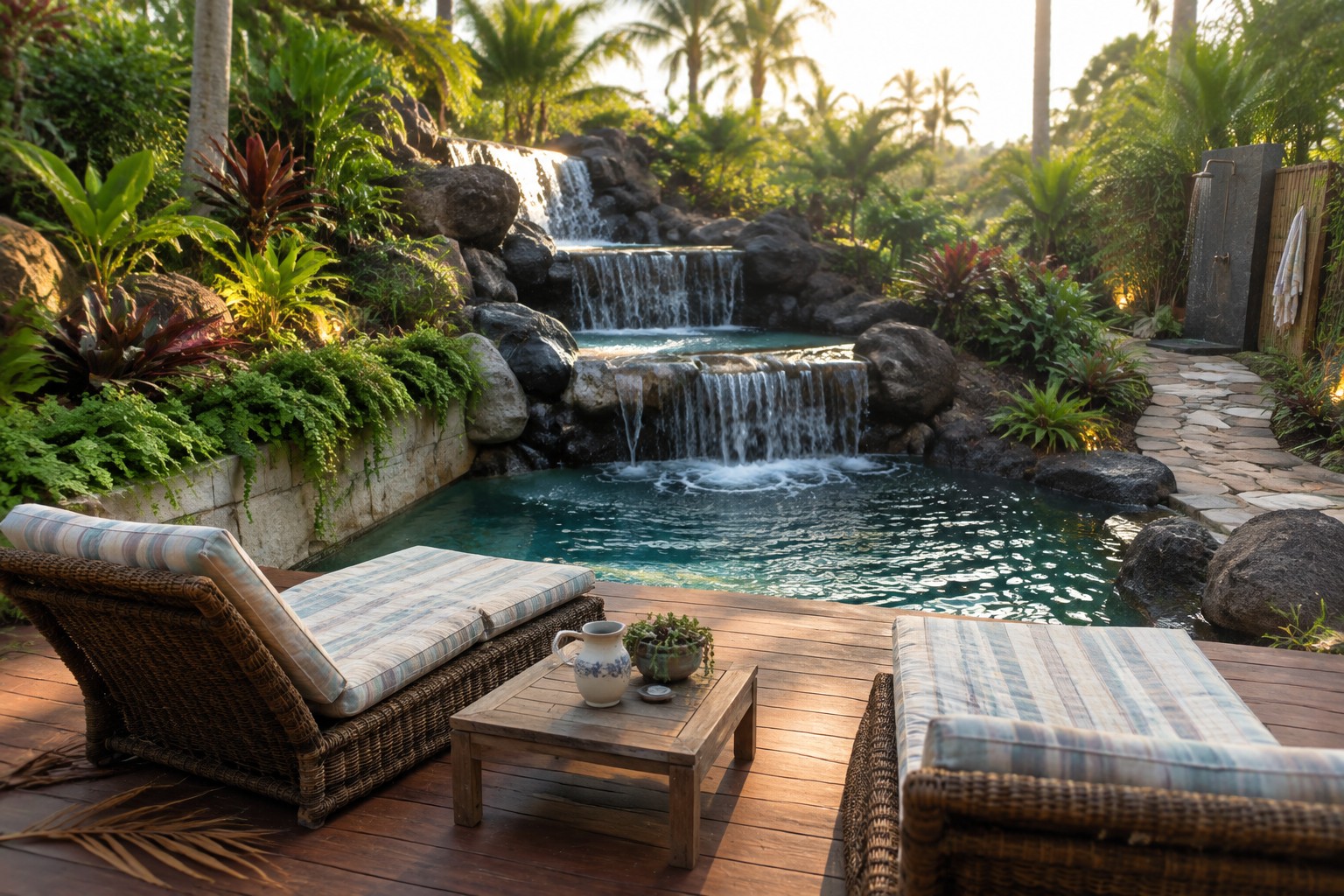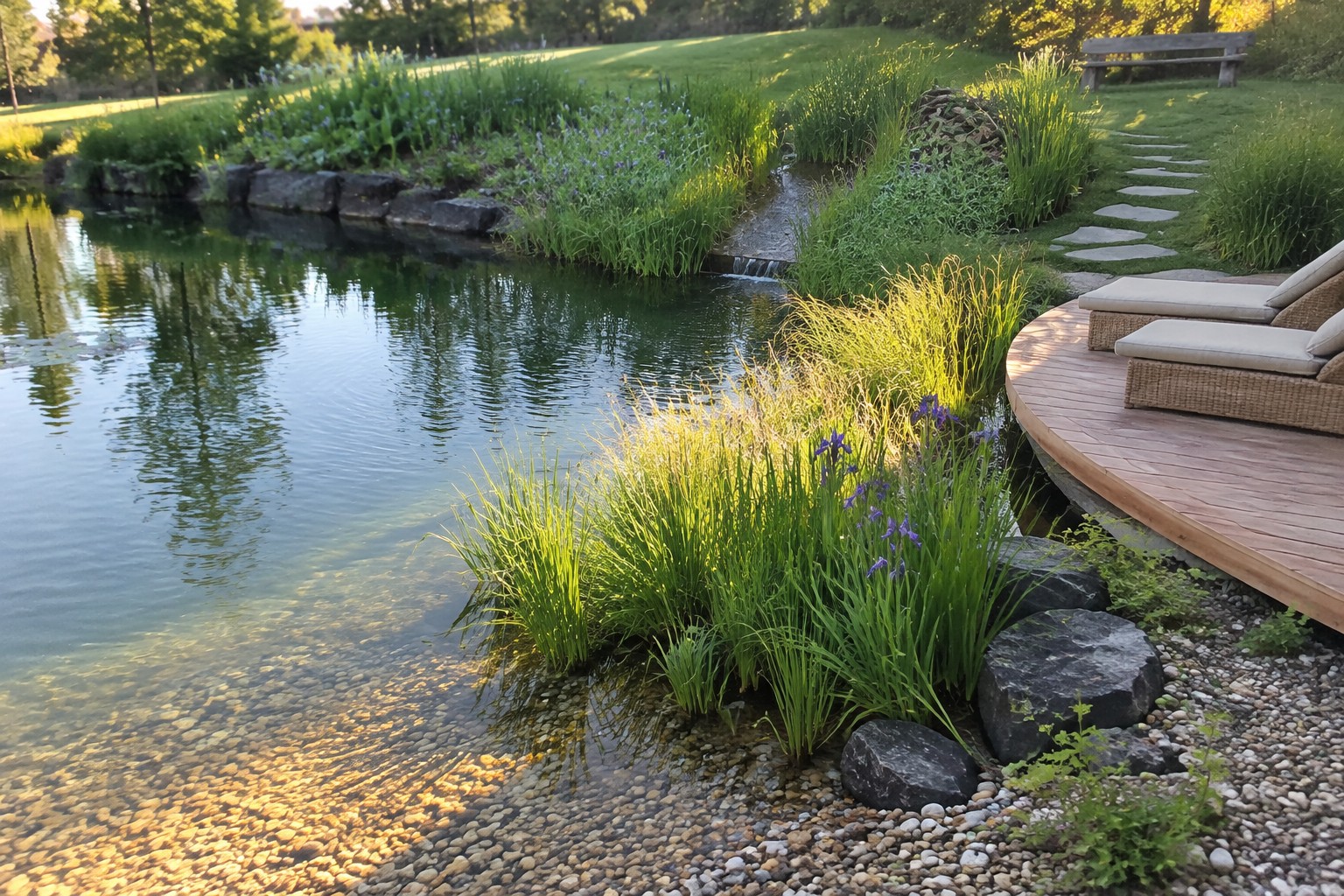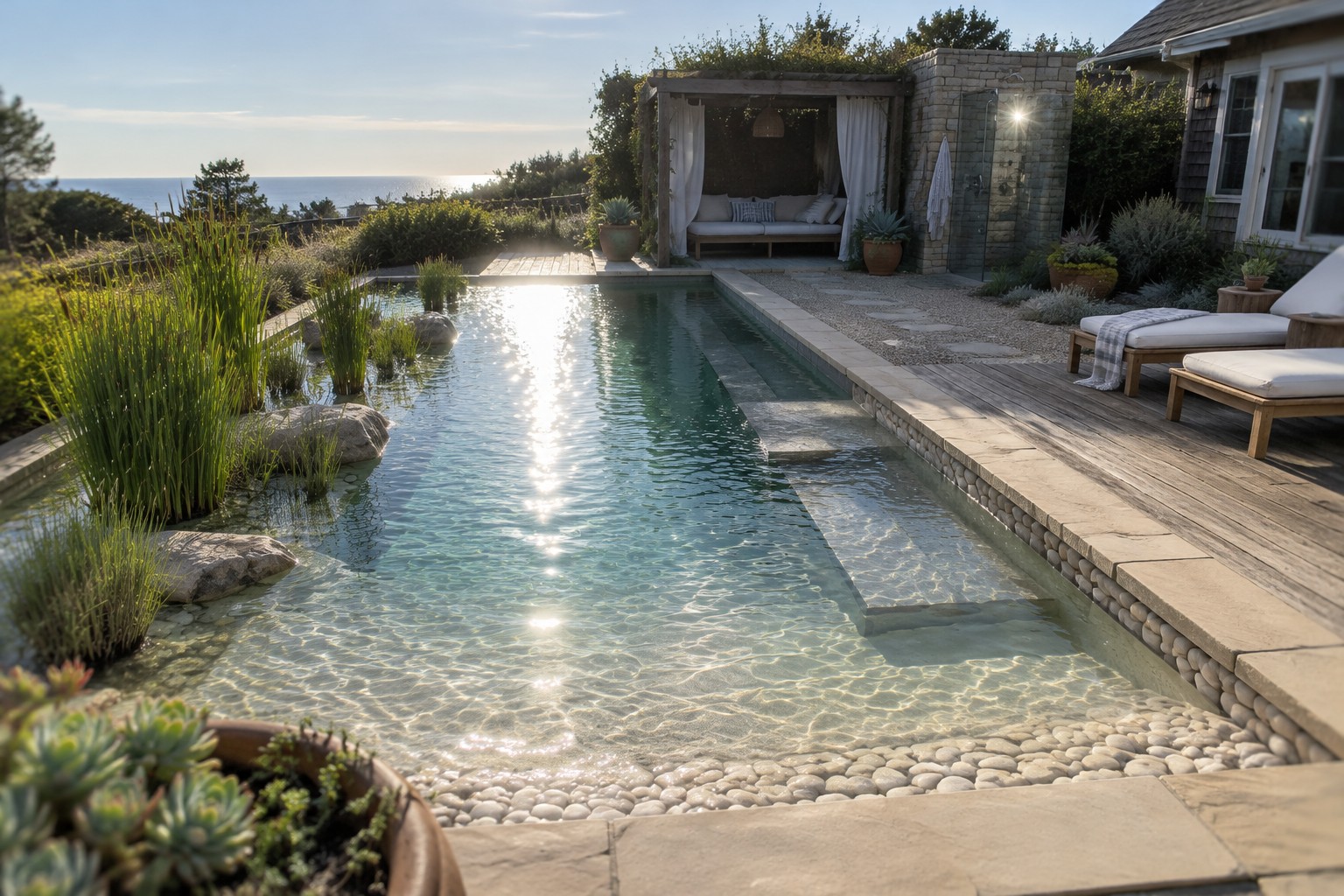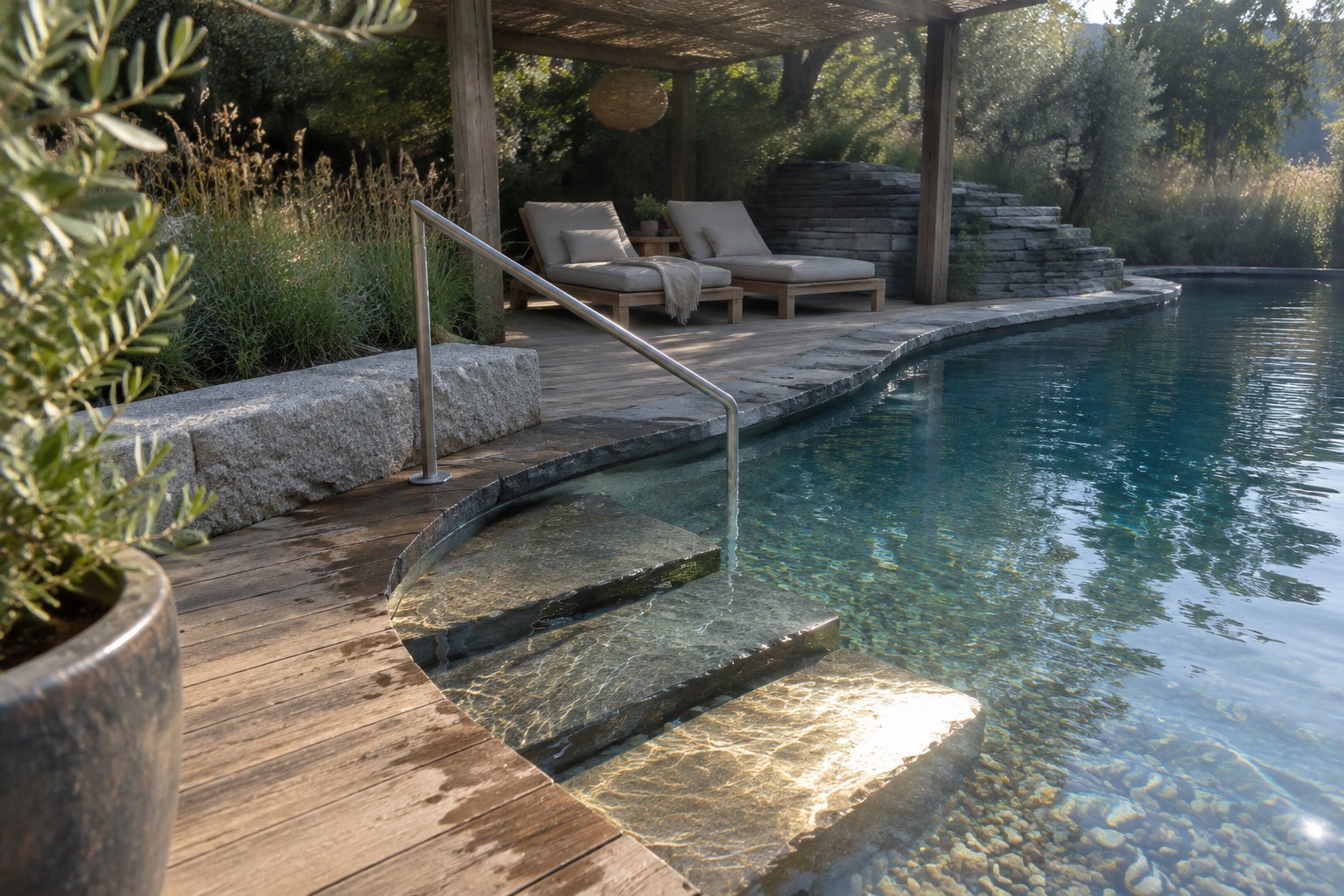
A natural pool should feel connected to its setting, and the way you enter it can make that connection feel easy or awkward.
I find that the first things people notice are the waterline, the stones, and whether the steps seem like a natural part of the landscape rather than an afterthought.
Submerged stone steps can soften the edge of a pool while giving swimmers a steady, practical way in and out.
The best designs balance foot placement, water depth, and the shape of the surrounding bank, so a detail that looks simple still works day to day.
Some of these approaches may be worth adapting to your yard, especially if you want the pool to feel settled into its surroundings.
Use Wide Submerged Steps For An Easier Pool Entry
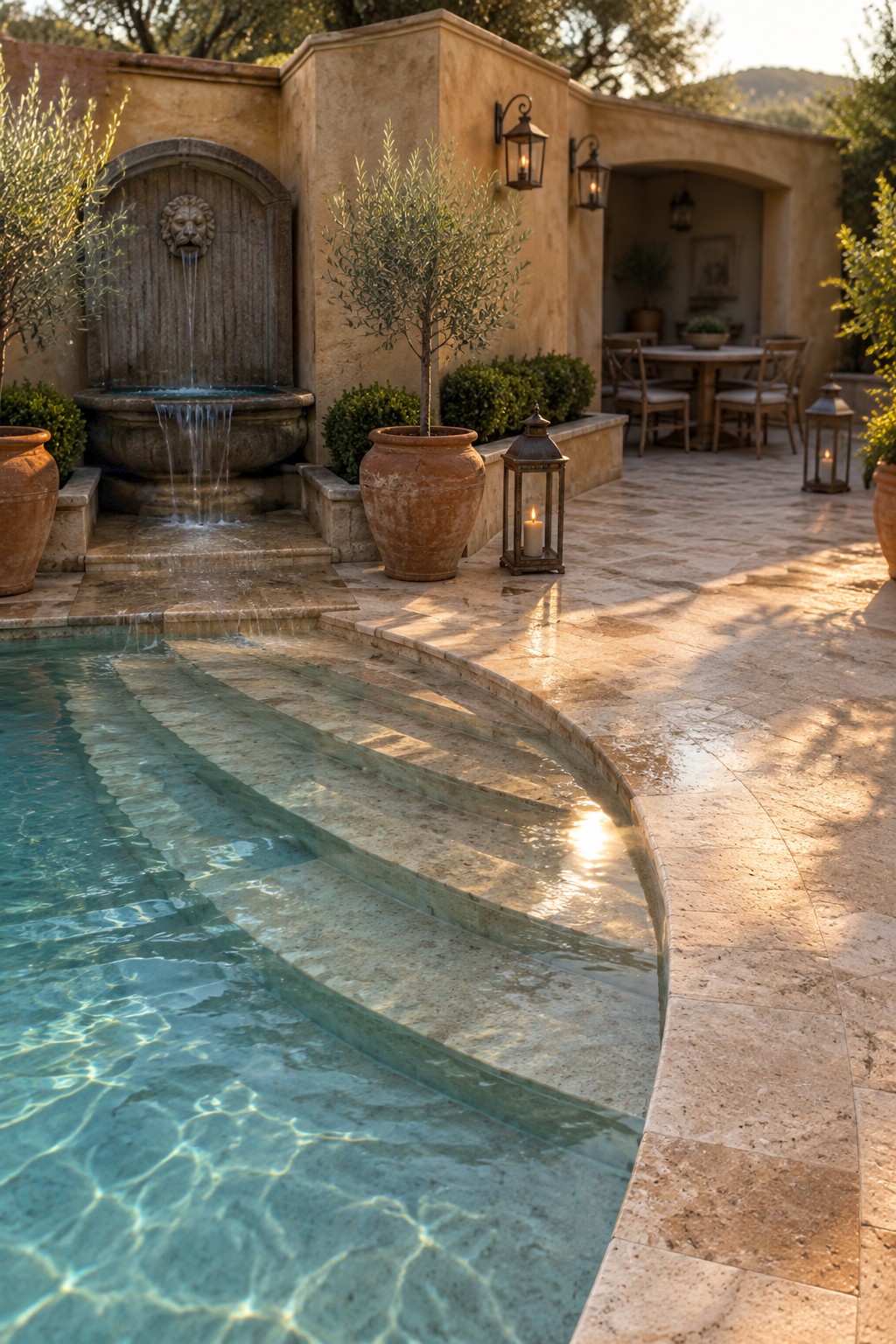
Wide stone steps can make a pool easier to enter without interrupting its natural shape. They provide a place to pause in shallow water, which is useful for children or anyone who prefers a gentler way in.
For a similar design, extend the steps along part of the pool’s curve and use a stone that suits the surrounding patio. Keep each step broad and secure underfoot, and make the depth change easy to see. The image shows pale stone steps curving into clear water beside a stone fountain.
Use Submerged Stone Steps for Pool Entry
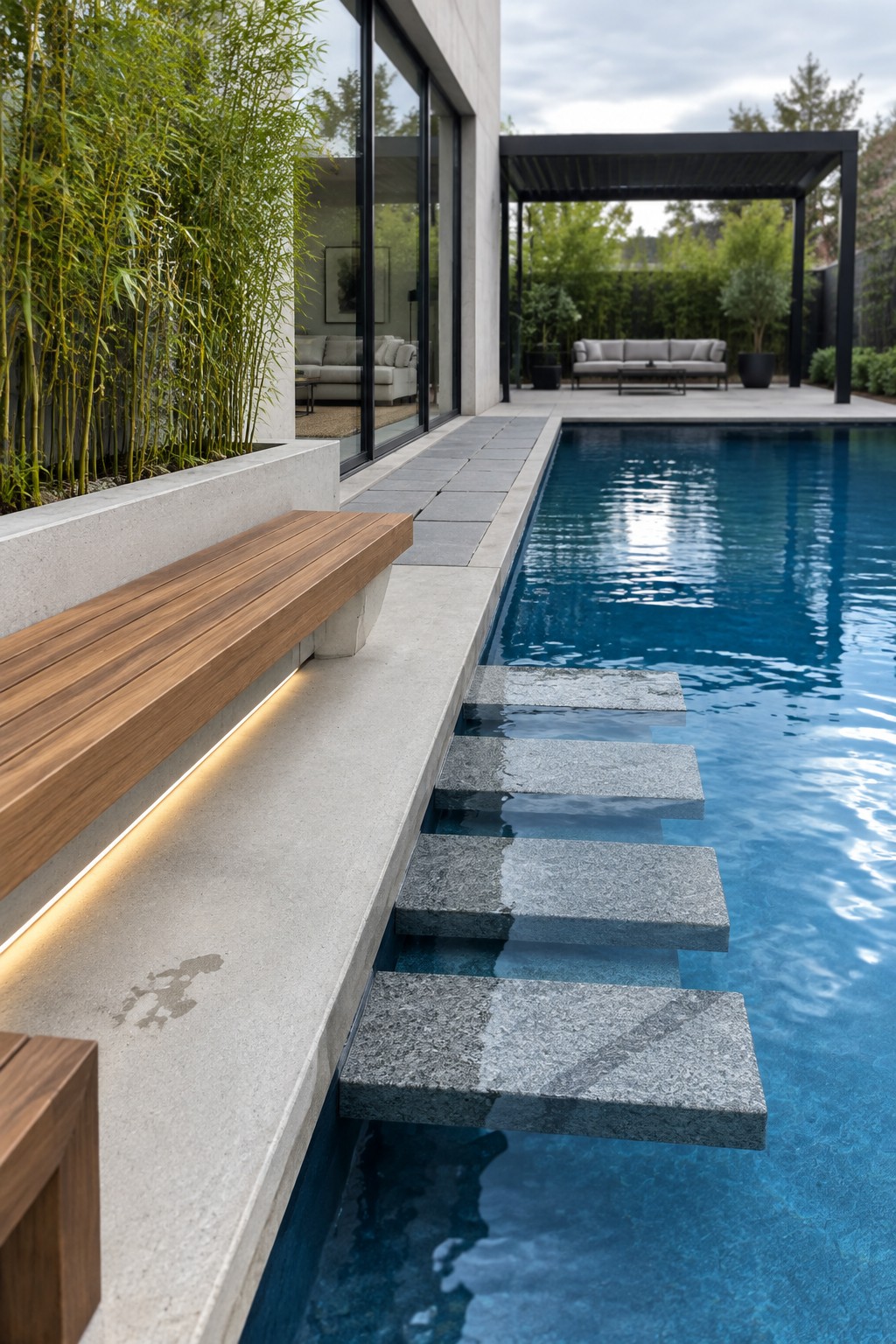
Submerged stone steps make getting into a pool feel more gradual than climbing down a ladder. They also give swimmers a place to pause in the water, which can be handy for anyone who prefers an easy entry.
Set the steps along a straight pool edge so they are easy to find and leave enough room for the surrounding walkway. Choose stone with a rough, slip-resistant surface, and make sure each step stays secure underwater.
Use Broad Stone Steps For Pool Entry
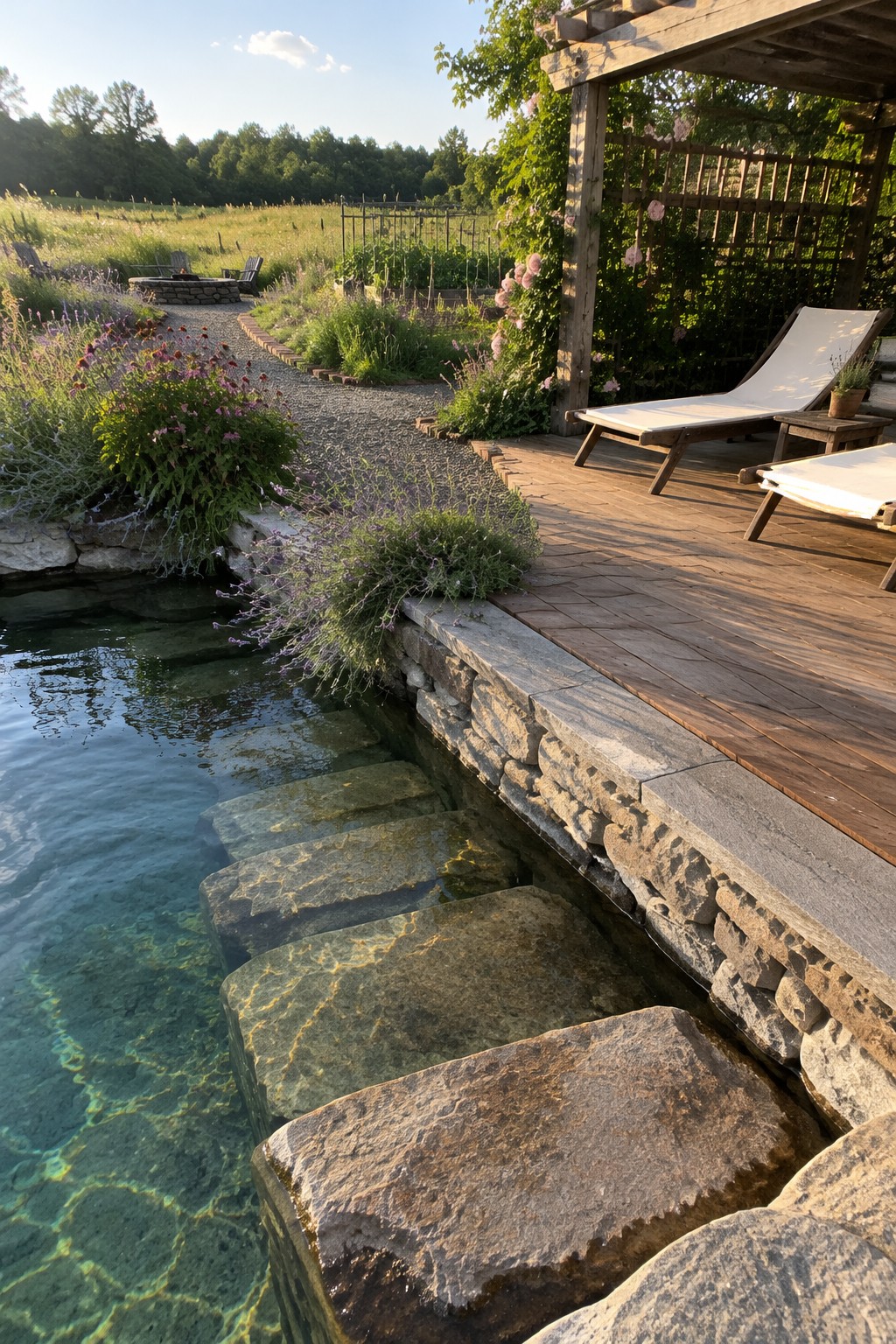
Submerged stone steps make a natural pool easier to enter without adding a separate ladder. Wide treads give swimmers a steady place to pause, and the stone edge can feel like a natural part of the pool rather than an added feature.
Use stones with flat, secure surfaces and keep the steps consistent in height so they are comfortable to climb. This approach works especially well where the pool has a stone retaining edge, but make sure the treads stay easy to see underwater.
Use Natural Stone Steps for Pool Access
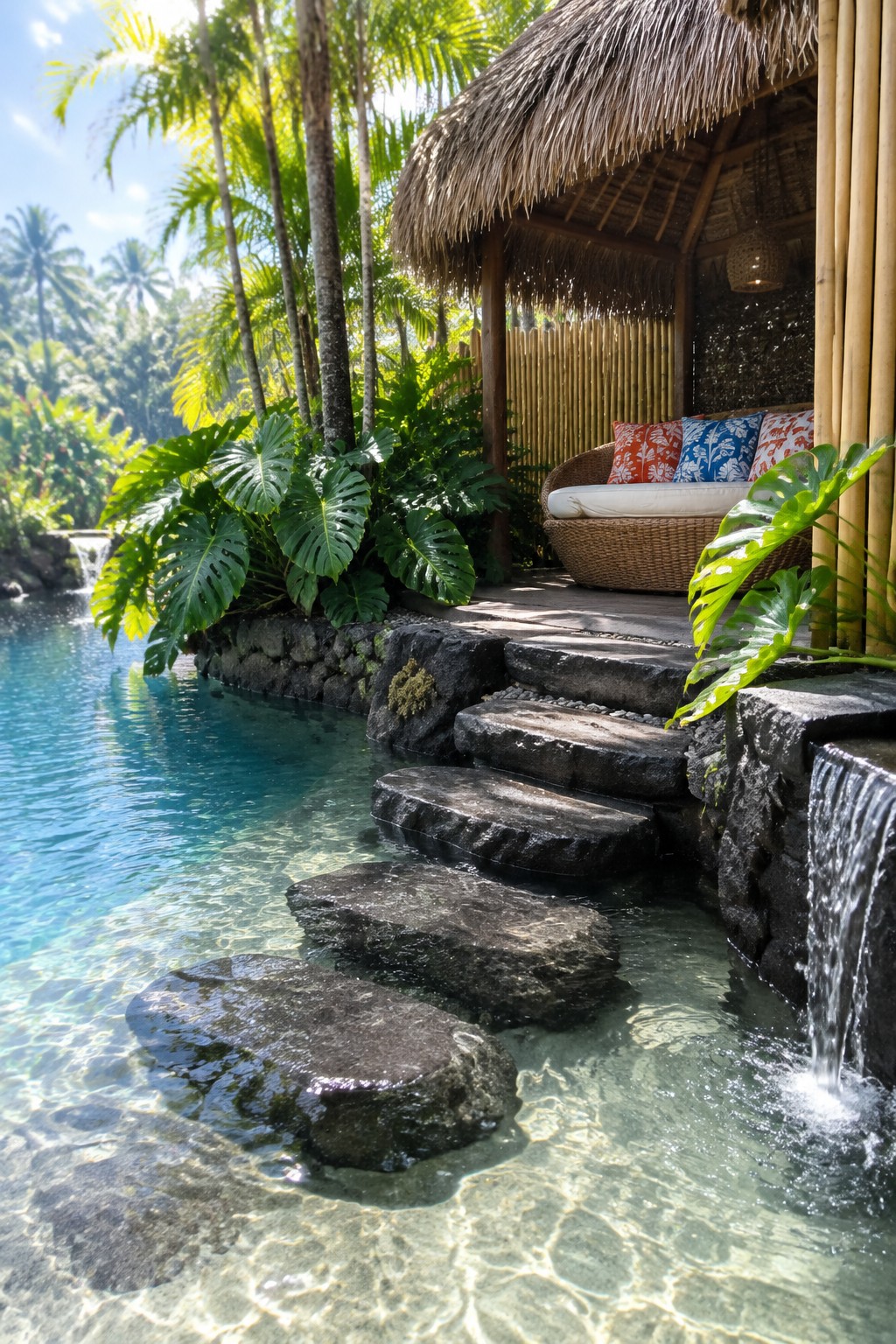
Broad stone steps make it easier to enter a pool gradually, without relying on a ladder. Their rough, irregular surfaces also suit a natural-style pool and can feel more connected to the surrounding garden.
Use sturdy stones that stay secure when wet, and set them at comfortable heights below the waterline. This approach works especially well where a pool edge meets a stone terrace or small waterfall, but the steps should be checked for slippery spots.
Use Large Stone Steps to Enter the Pool
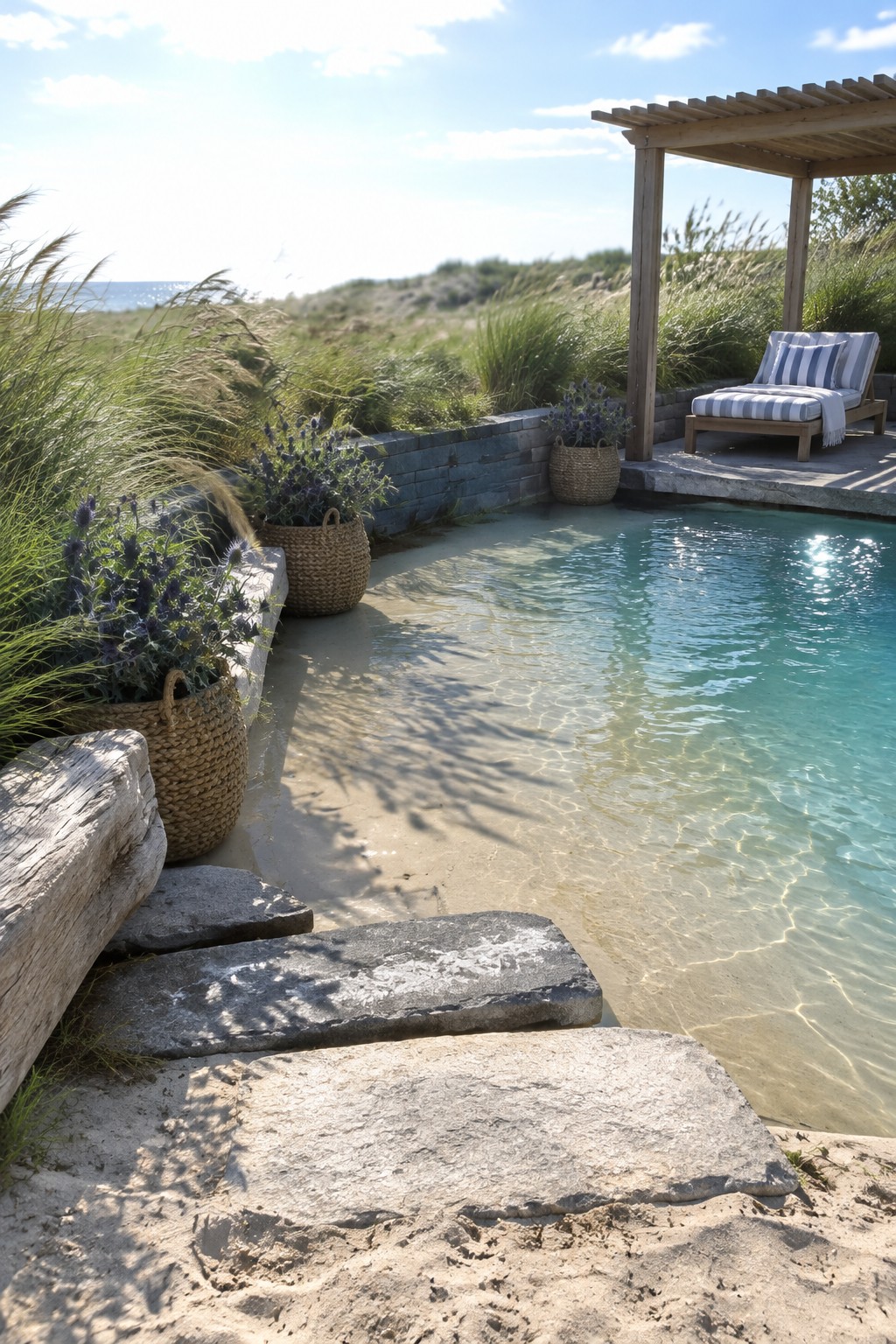
Broad stone treads make a pool entry easier to use than a narrow ladder. They create a gradual way into the water, with plenty of room to pause or sit along the edge.
For a natural-looking pool, choose stone with a slip-resistant surface and make each step deep enough for a steady footing. This approach works especially well where the pool has a shallow ledge or a gently sloping floor.
Use Shallow Stone Shelves for Pool Entry
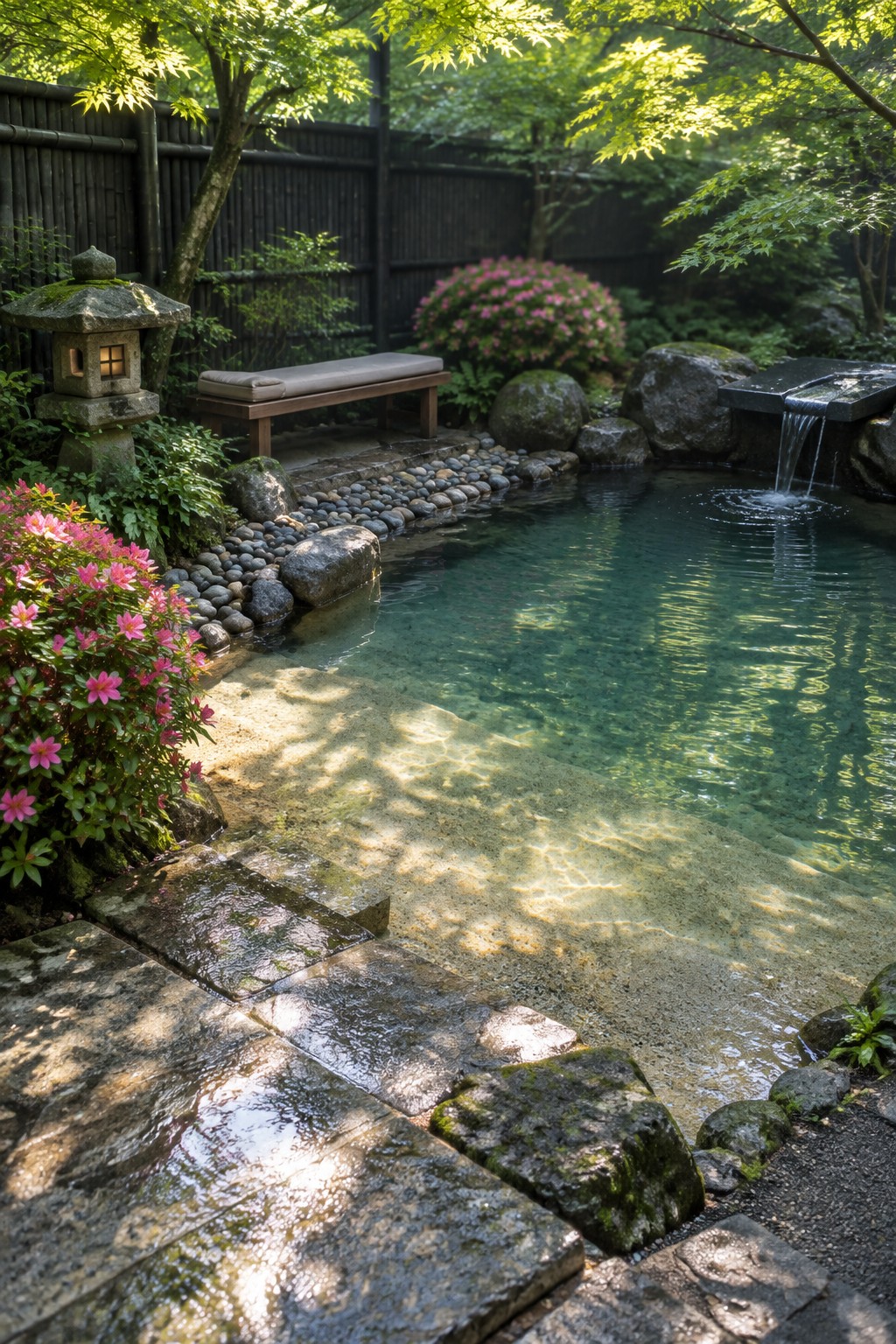
A shallow stone shelf can make the move from the pool edge into deeper water feel gradual. The pale stone floor remains visible through the clear water, so the change in depth is easy to see.
This approach works well in natural pools with a gently sloped entry. Keep the surface even and the stones secure, and use a clearly defined deeper edge so swimmers know where the floor drops away.
Add a Shallow Stone Step Along the Pool Edge
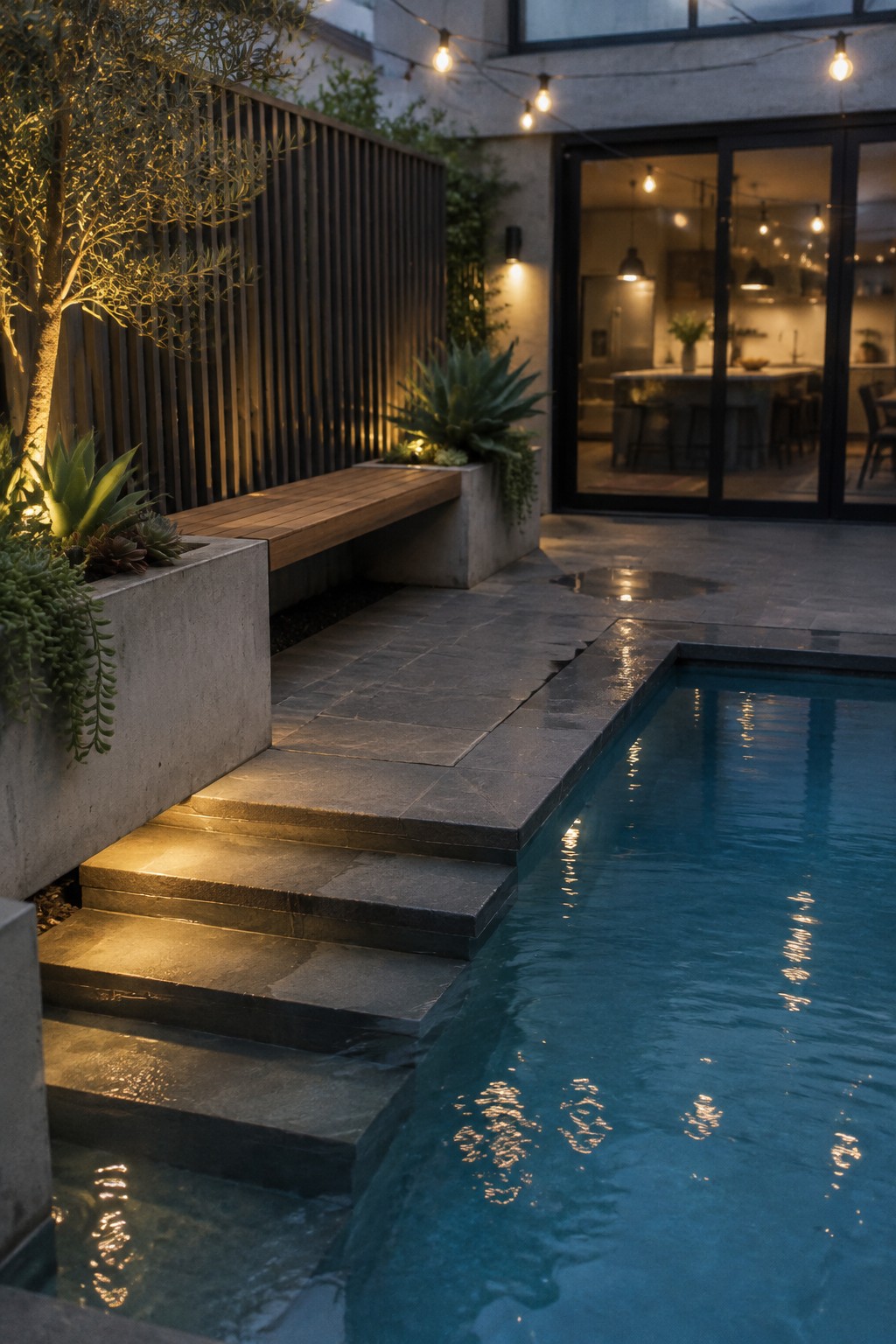
Submerged stone steps can make getting into a pool feel more gradual than using a ladder. Here, broad steps follow the pool’s edge, giving swimmers a place to pause before moving into deeper water.
This approach works well in a narrow pool area where the steps can share space with the surrounding paving. Choose stone with a textured, slip-resistant finish, and keep the steps easy to see beneath the water.
Add a Shallow Ledge Before the Pool Steps
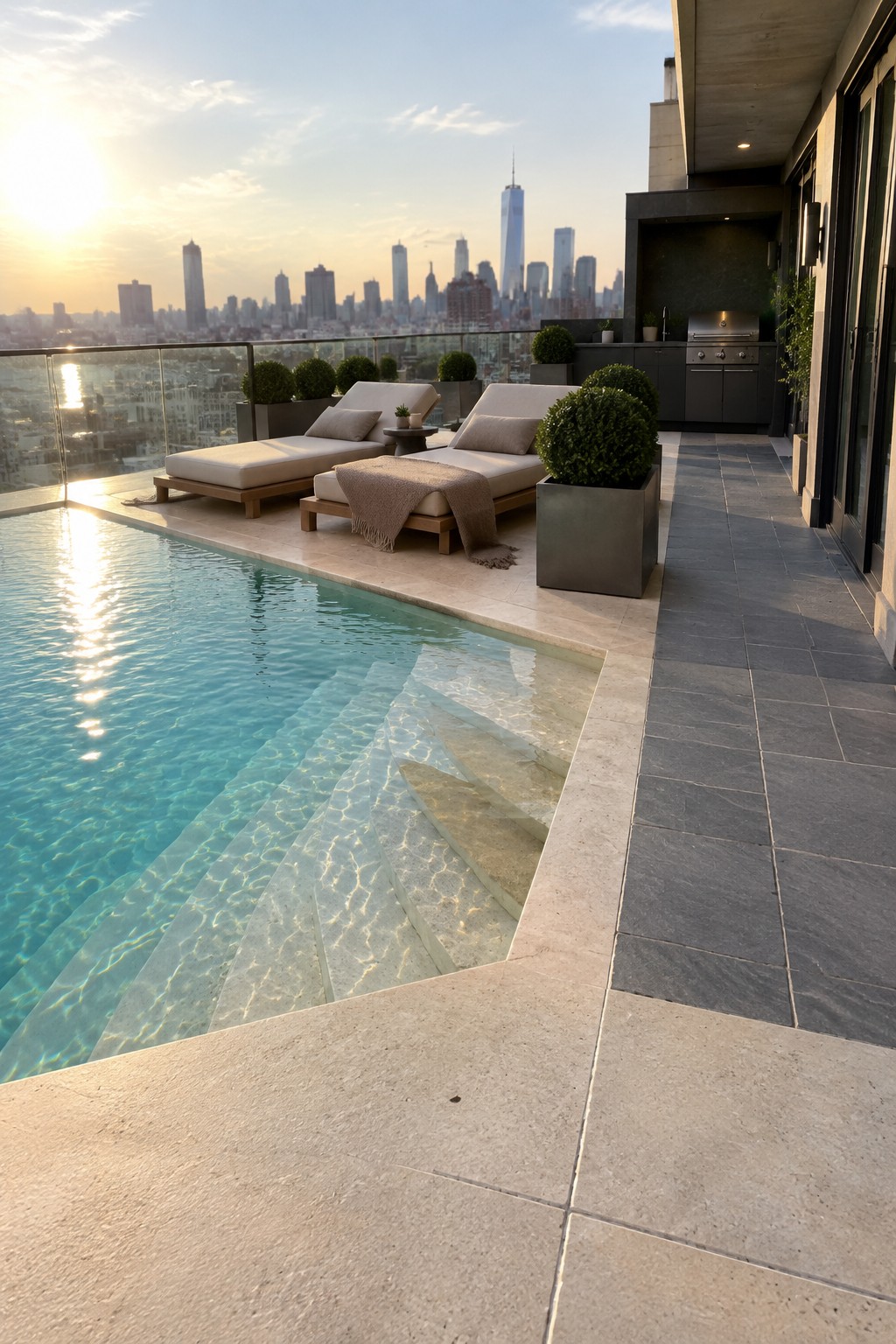
A shallow ledge at the pool edge gives swimmers a gradual place to enter before moving into deeper water. It also makes the transition feel less abrupt, which is useful for children or anyone who prefers a slower entry.
For a similar setup, keep the ledge broad enough to stand on and use a slip-resistant stone finish. Check that it connects naturally to the submerged steps, so swimmers can move from the ledge into the pool without an awkward drop.
Use Curved Steps for a Gentler Pool Entry
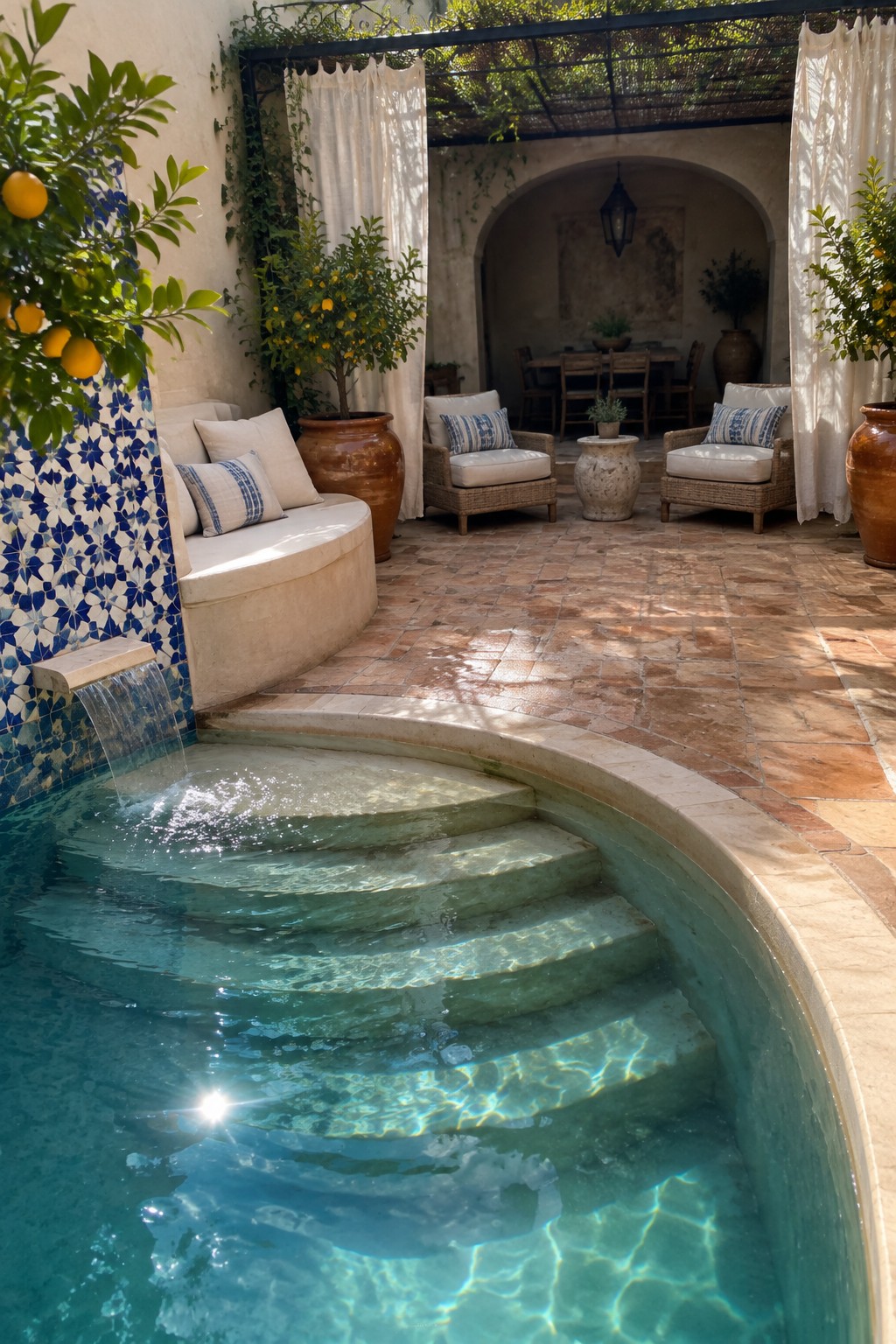
Curved submerged steps follow the shape of the pool and make the entry feel like part of the design, rather than a straight set of stairs. Their broad treads also give swimmers a little room to pause before moving into deeper water.
This approach works especially well in a rounded pool or one with a curved edge. Keep the steps wide and easy to see, and choose a stone finish that stays grippy when wet.
Use Broad Stone Steps Along the Pool Edge
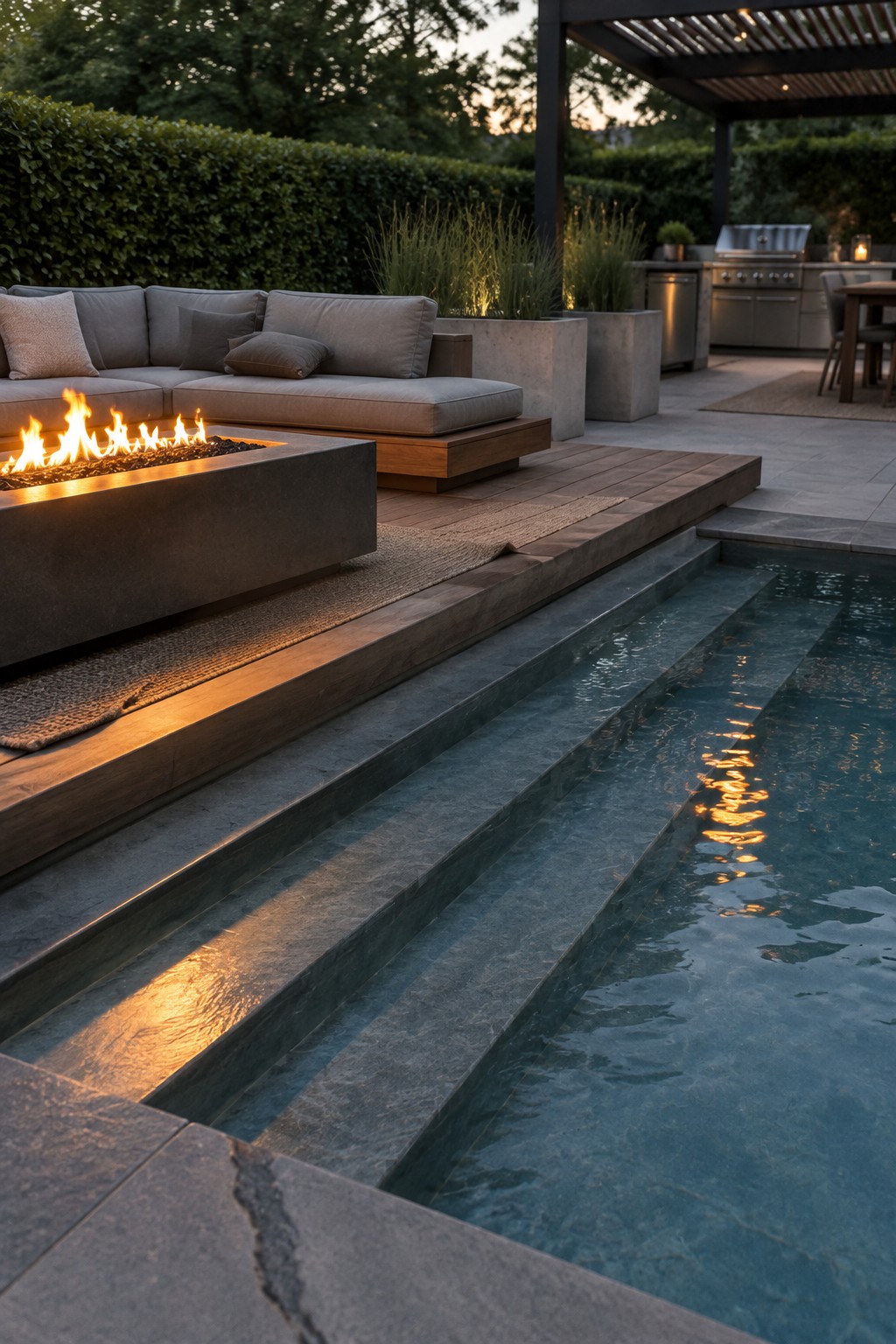
Wide submerged steps make it easier to enter the pool gradually, and they can double as a place to sit in the water. Here, the stone steps continue along the pool’s edge, making the transition from the raised patio feel practical rather than abrupt.
This approach works well in pools with enough room for generous steps. Choose a stone finish that stays grippy when wet, and keep the step depth comfortable for both walking and sitting.
Add Stepping Stones for a Gradual Pool Entry
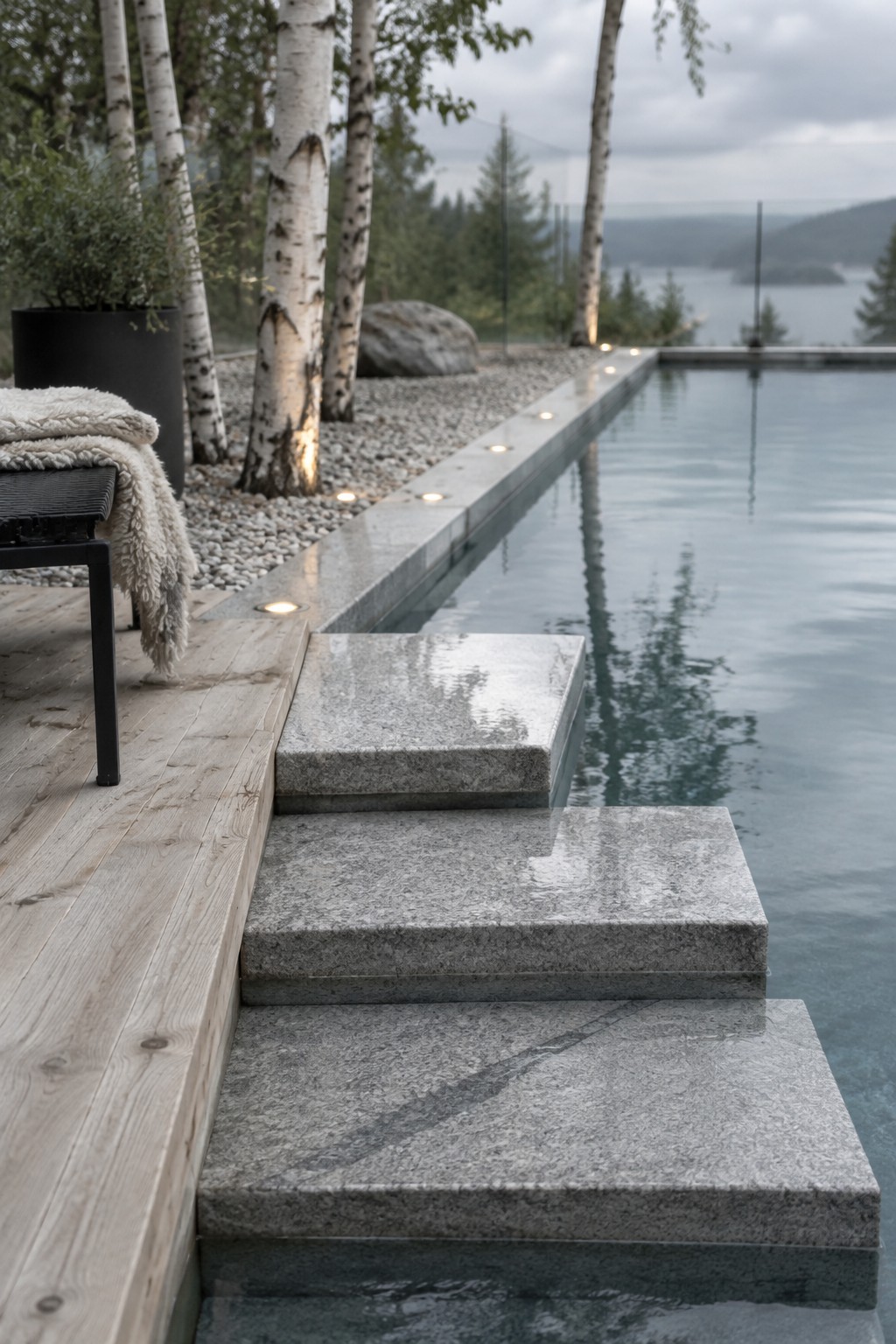
Separate submerged stone treads make it easier to step into a pool gradually, rather than entering by a single ladder or steep set of stairs. The broad, flat surfaces shown here also give swimmers a place to pause before moving into deeper water.
This approach works best when the stones are securely fixed and their height stays comfortable from one step to the next. Choose a finish that remains slip-resistant when wet, and leave enough space between the steps for a steady, natural stride.
Make Pool Steps Part of the Stone Deck
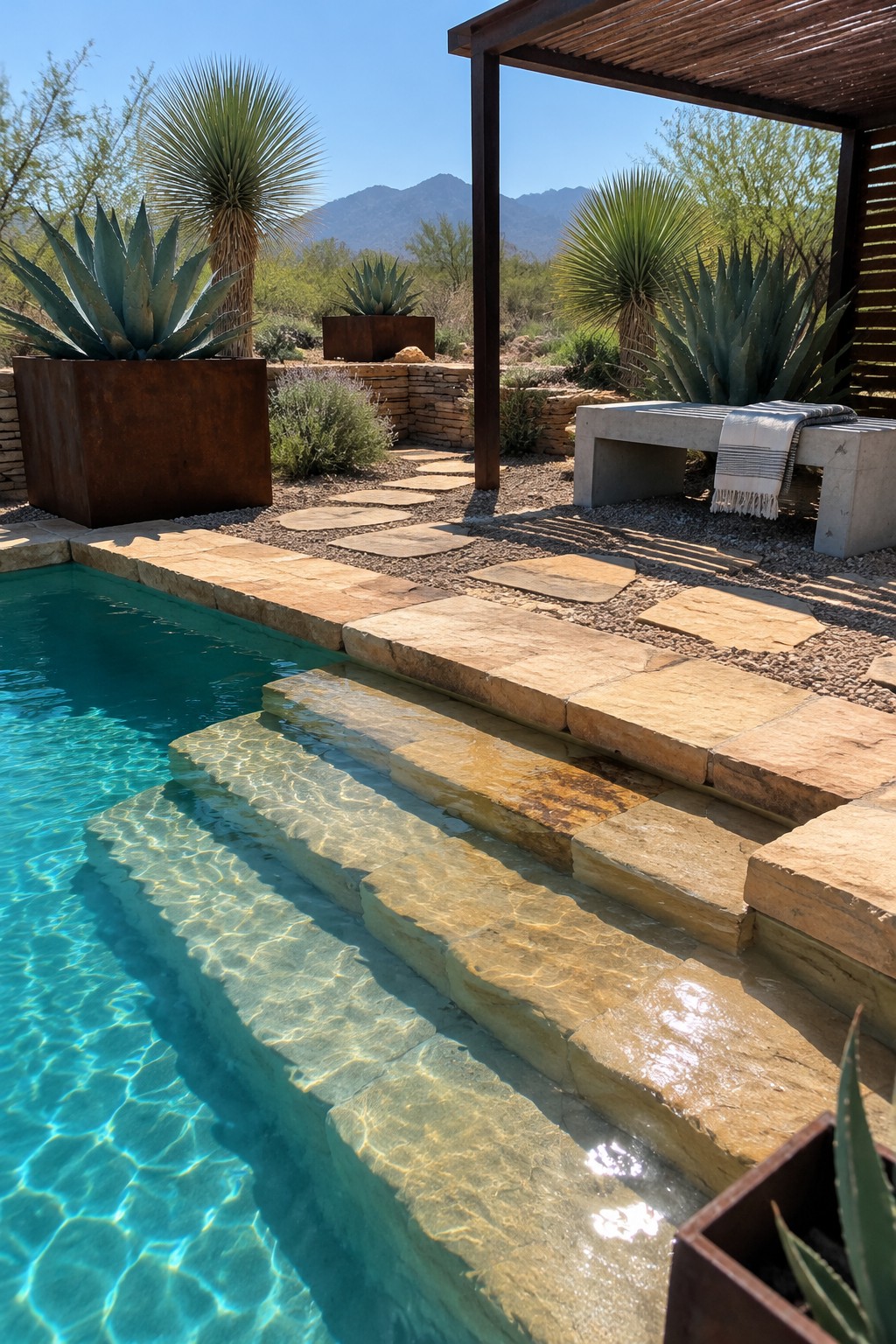
Broad submerged stone steps create a gradual entry and give swimmers a place to pause in shallow water. Using the same warm stone along the pool edge helps the steps feel like a natural part of the deck rather than an add-on.
This approach works well for pools where an easy, unhurried entry matters. Keep the steps wide and the surfaces slip-resistant, and make sure they stay easy to see under the water.
Build Submerged Brick Steps Into the Pool Edge
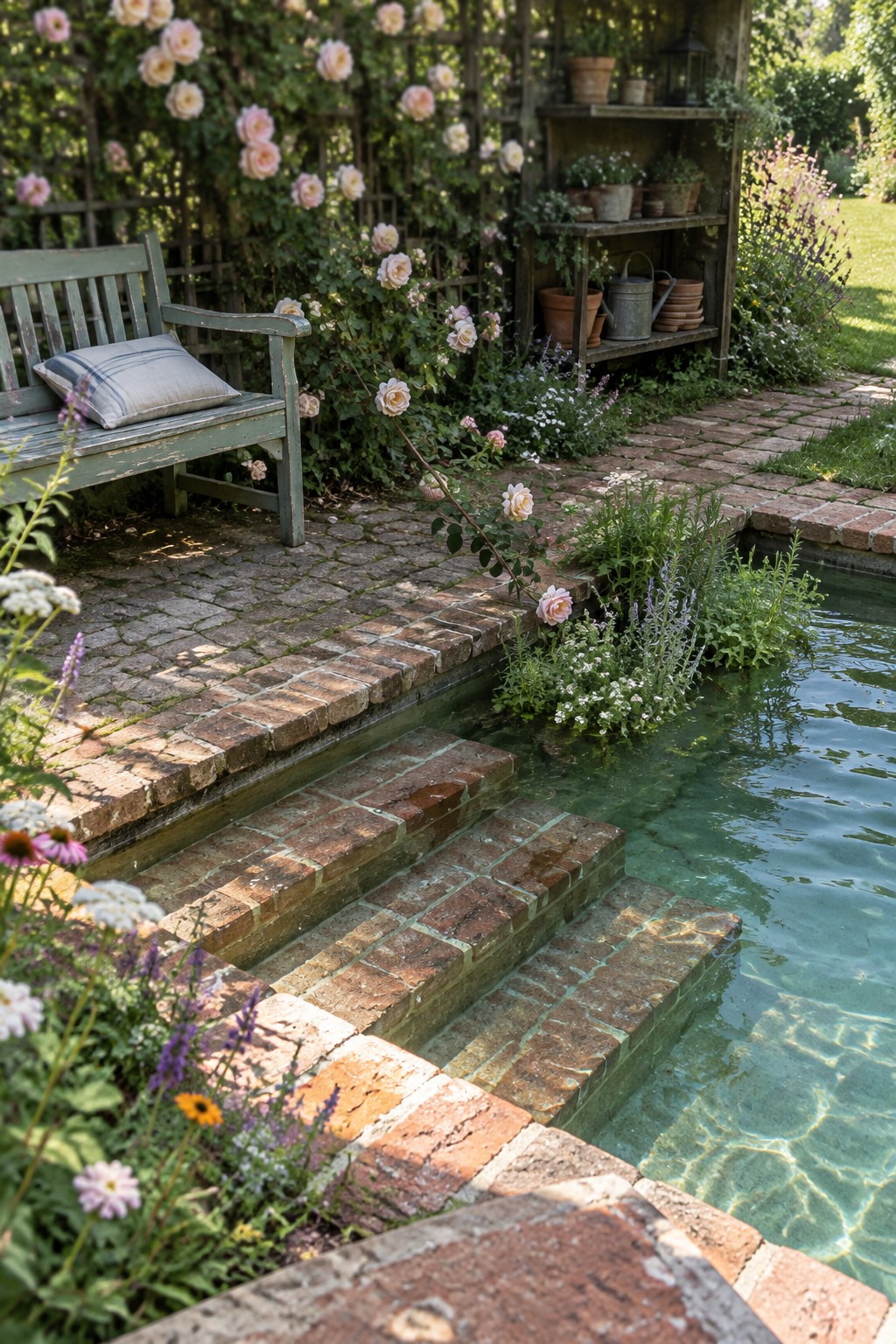
Brick steps that continue below the waterline make a natural pool easier to enter without making the edge feel like a separate set of stairs. The broad, shallow levels also give swimmers a place to pause as they move in or out.
This approach works well when the pool sits beside a brick path or patio, since the materials can carry through from land into the water. Use a rough, slip-resistant finish, and keep each submerged step easy to see.
Use Flat Stone Slabs for Pool Entry
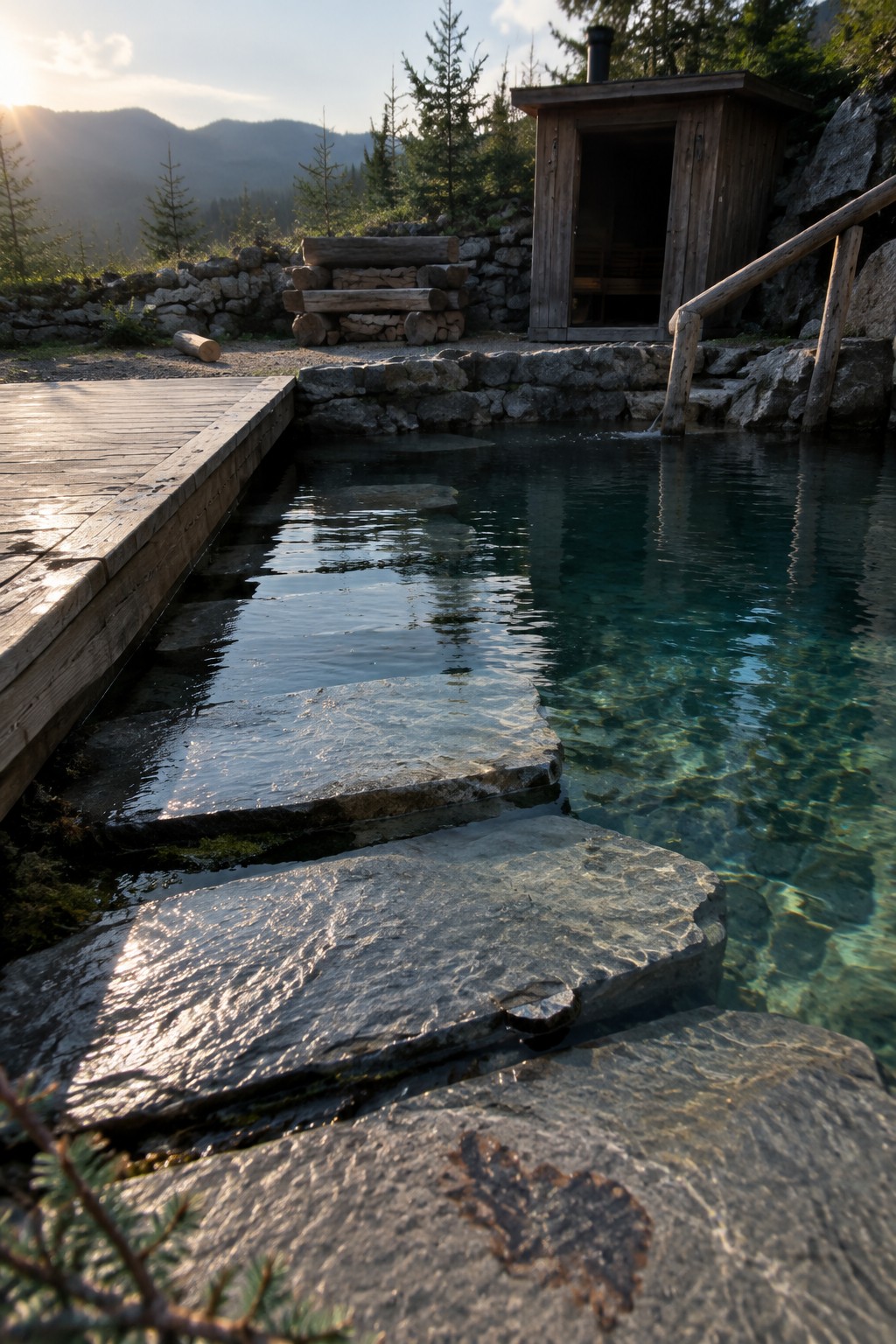
Broad, flat stone slabs make a natural pool easier to enter without relying on a steep ladder. Their uneven edges suit a rustic setting, while the shallow water lets swimmers take their time.
This approach works best when each slab is stable and set at a comfortable height below the water. Leave enough space between steps for secure footing, and choose a stone surface that stays grippy when wet.
Frequently Asked Questions
Q: Are submerged stone steps slippery when wet?
A: They can be, especially if the stone is polished or grows a film of algae. Choose a naturally textured, pool-safe stone and brush the steps regularly.
Q: How deep should the water be over each step?
A: Keep the top step shallow enough to spot easily, then make each step comfortable to place a foot on as the water deepens. Test the layout before finishing so the rise feels natural when you walk in.
Q: Can I add stone steps to an existing natural pool?
A: Yes, but the steps need a stable base and should not block the pool’s circulation or cleaning. A pool builder can check the slope and fit them into the existing edge without leaving awkward gaps.
Q: What stone works well for submerged steps?
A: Choose dense stone with a rough, even surface that holds up underwater. Avoid loose pieces or sharp edges, which can shift or catch bare feet.