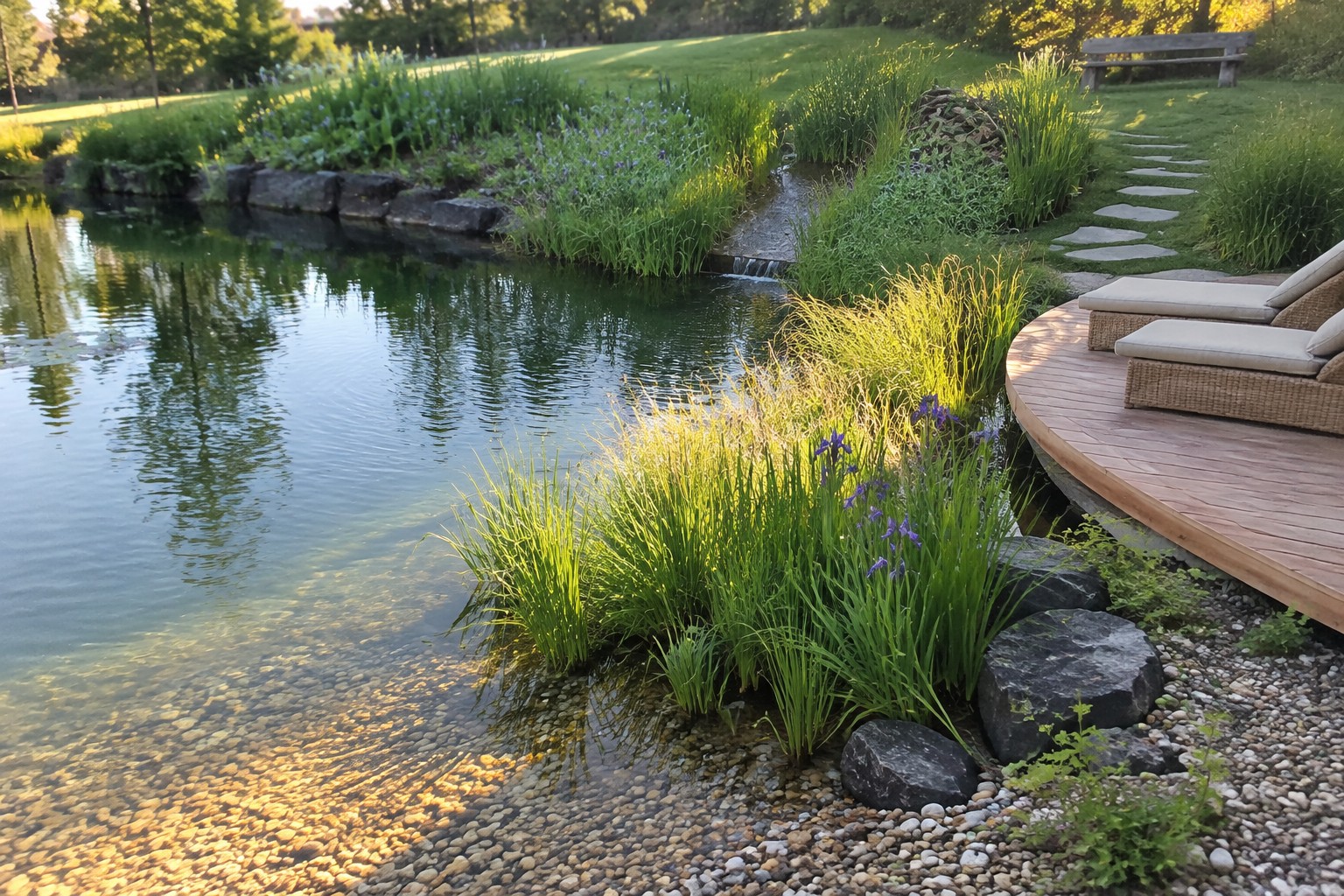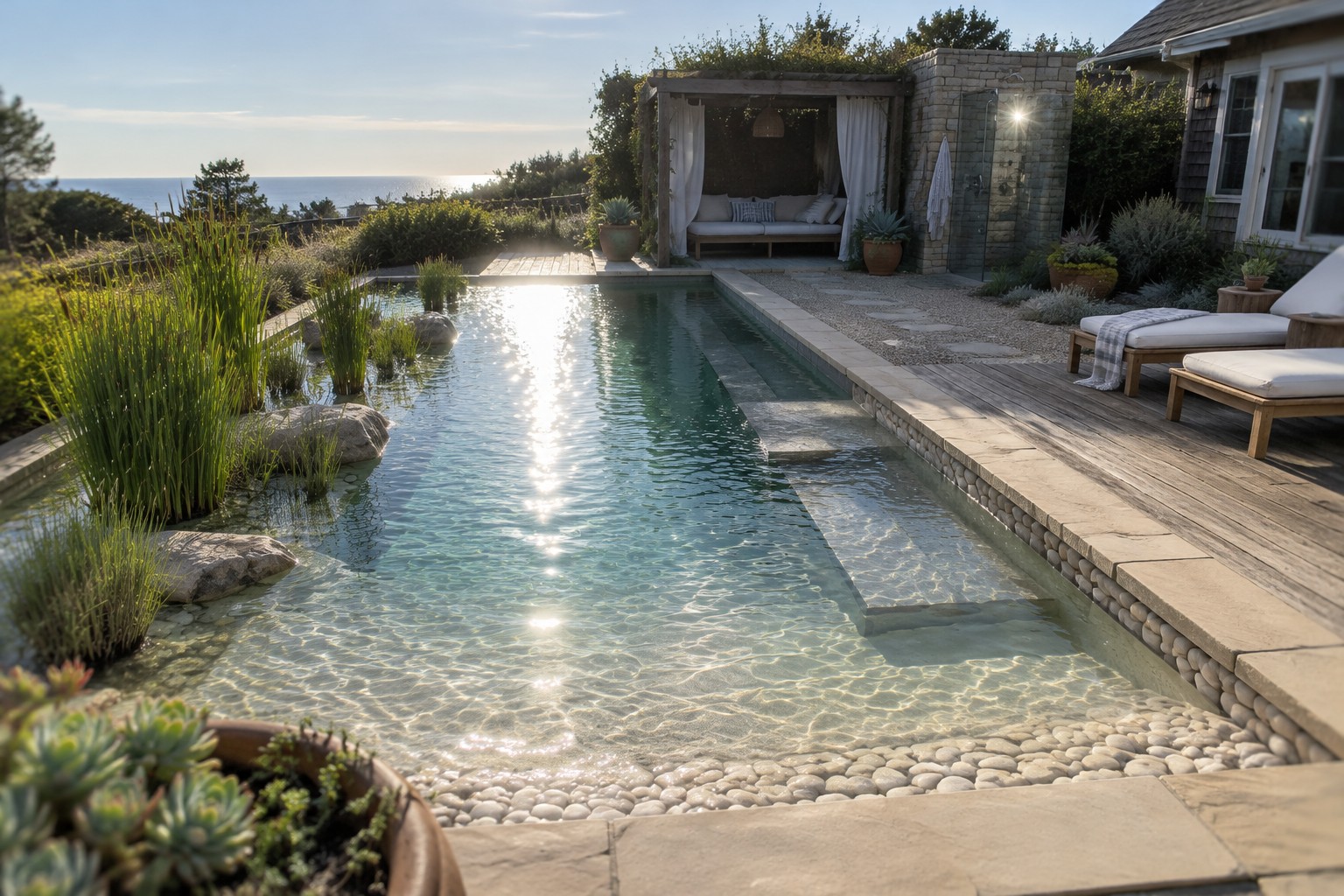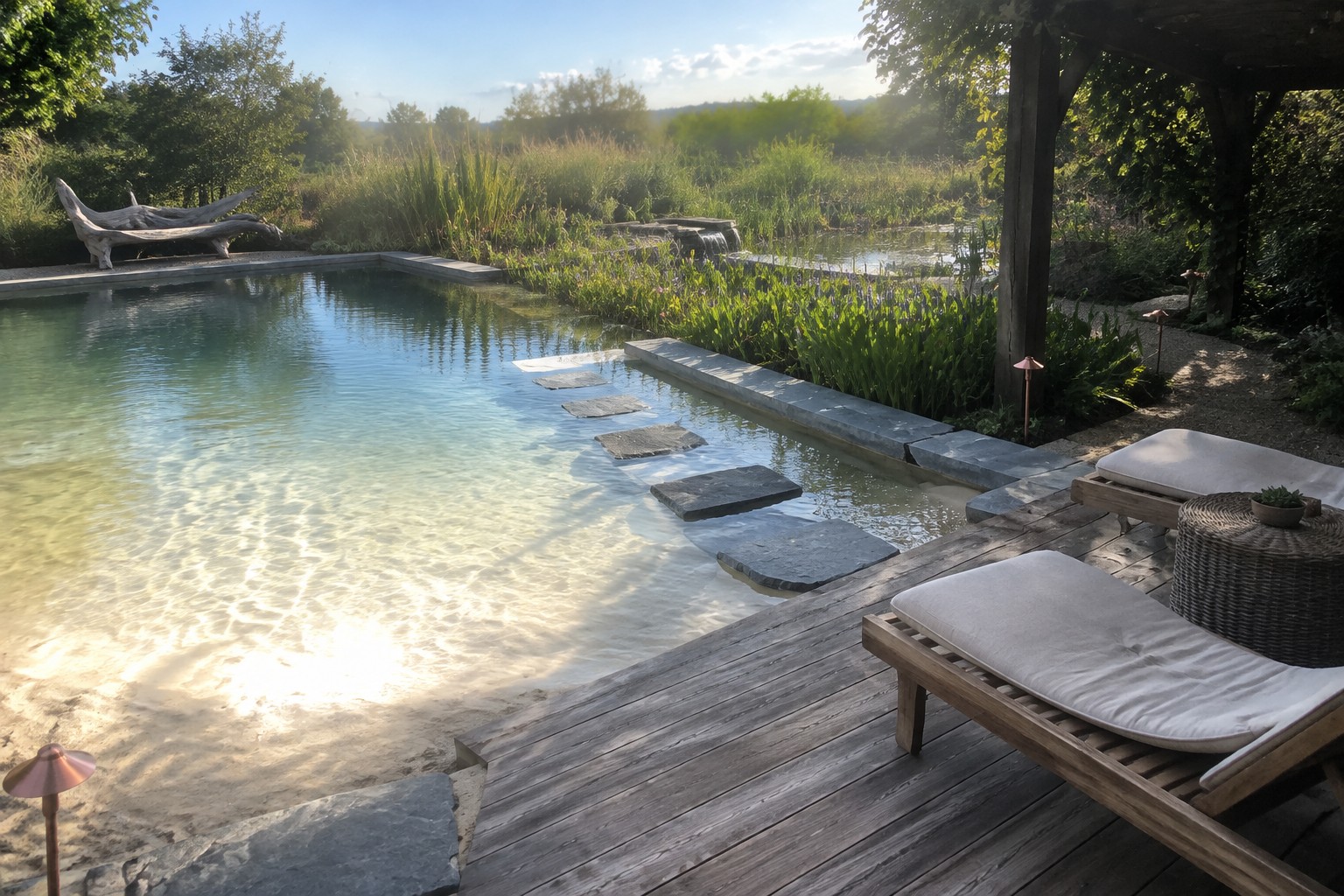
A pool can look like a separate feature in the yard, but its shape, edges, and planting affect how the whole outdoor space feels.
When I consider converting a conventional pool to a natural one, I think first about how people will move between the water, the patio, and the rest of the garden.
A clear layout matters.
Natural filtration and planted zones can make the pool feel more connected to its surroundings, but they need to suit the available space and the way the pool is used.
Some approaches are worth adapting on a smaller scale, especially when they balance a natural look with practical swimming and upkeep.
Make the Pool’s Shallow End Feel Like a Shoreline

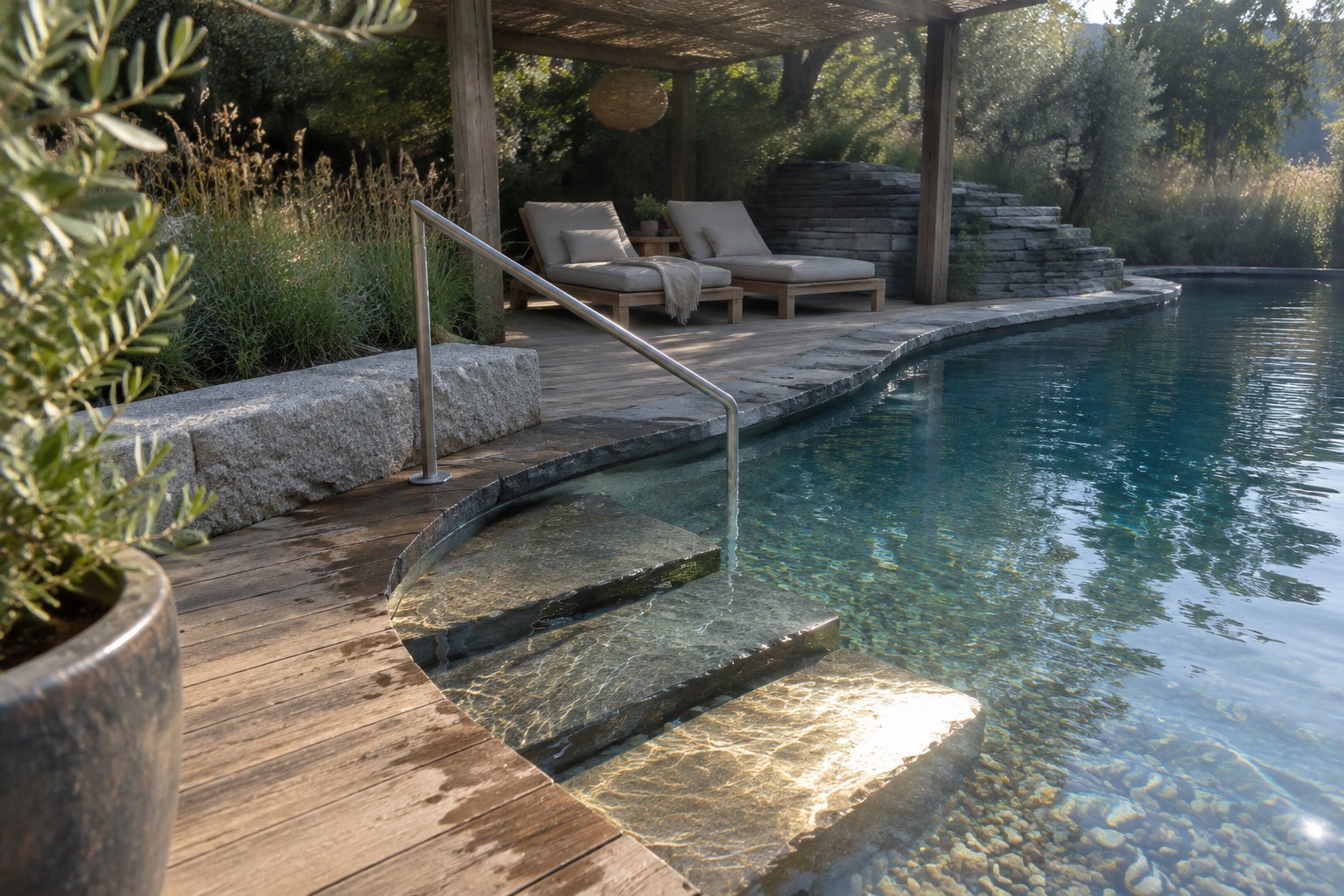
A gradual, shallow entry can make an existing pool feel more like a natural swimming pond. It gives people an easy way into the water and creates a place to sit or wade, rather than making the pool feel like one deep basin.
When converting a pool, use a gently sloped shelf with slip-resistant finishes and stones set securely in place. This works especially well for families or anyone who wants a relaxed place to ease into the water. Be sure the entry leaves enough room for swimming, too.
Add a Shallow Pebble Shelf

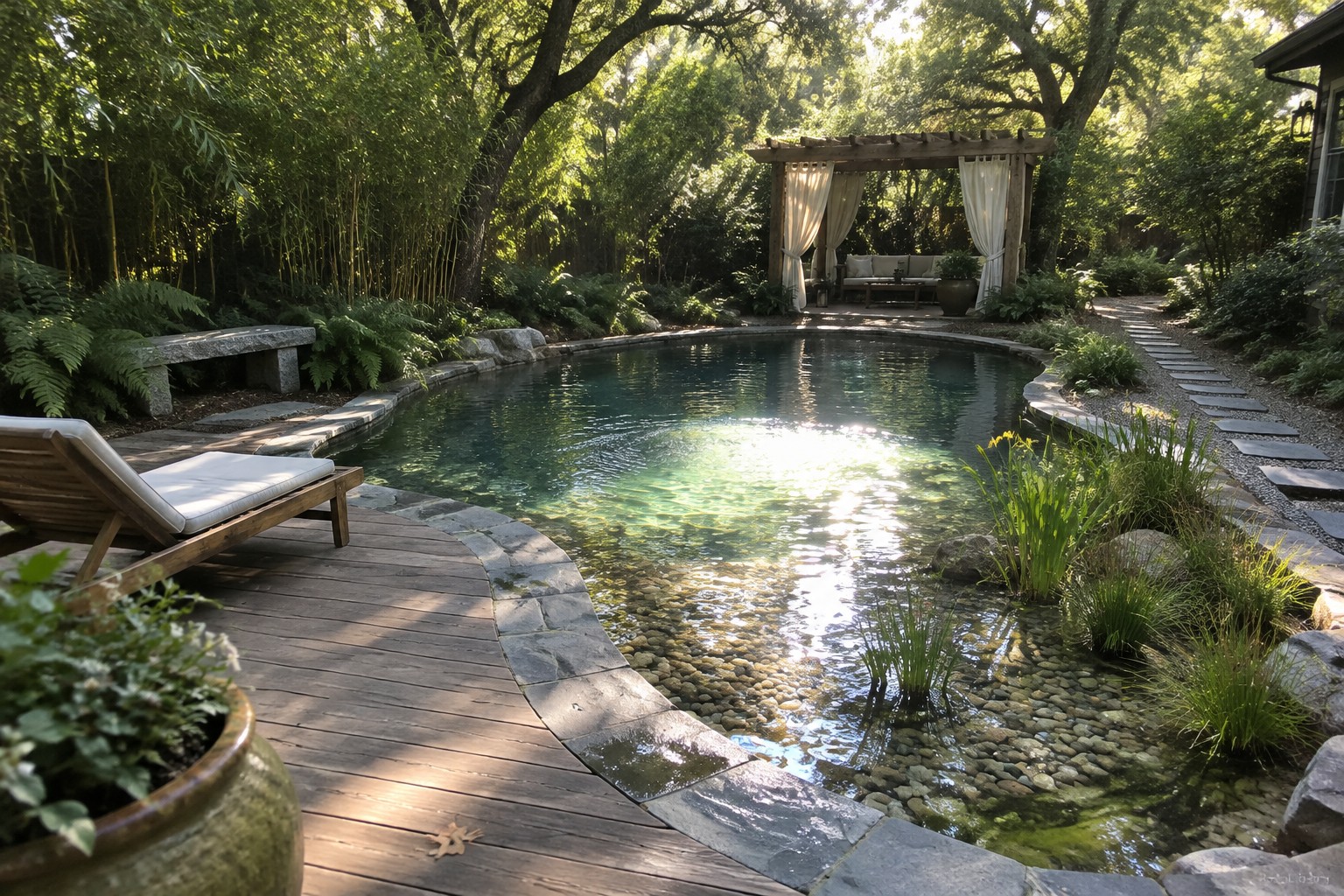
A shallow, pebble-bottomed shelf can turn part of an existing pool into a more natural-looking place to wade or sit. It keeps the water accessible while letting the pool edge blend more gently into the garden.
This works best where the pool has enough room for a broad, gradual entry. Use smooth, pool-safe stones and make sure the shelf stays shallow but stable. A narrow ledge can feel cramped, so plan its size around how people will use it.
Add a Waterfall to a Natural Pool

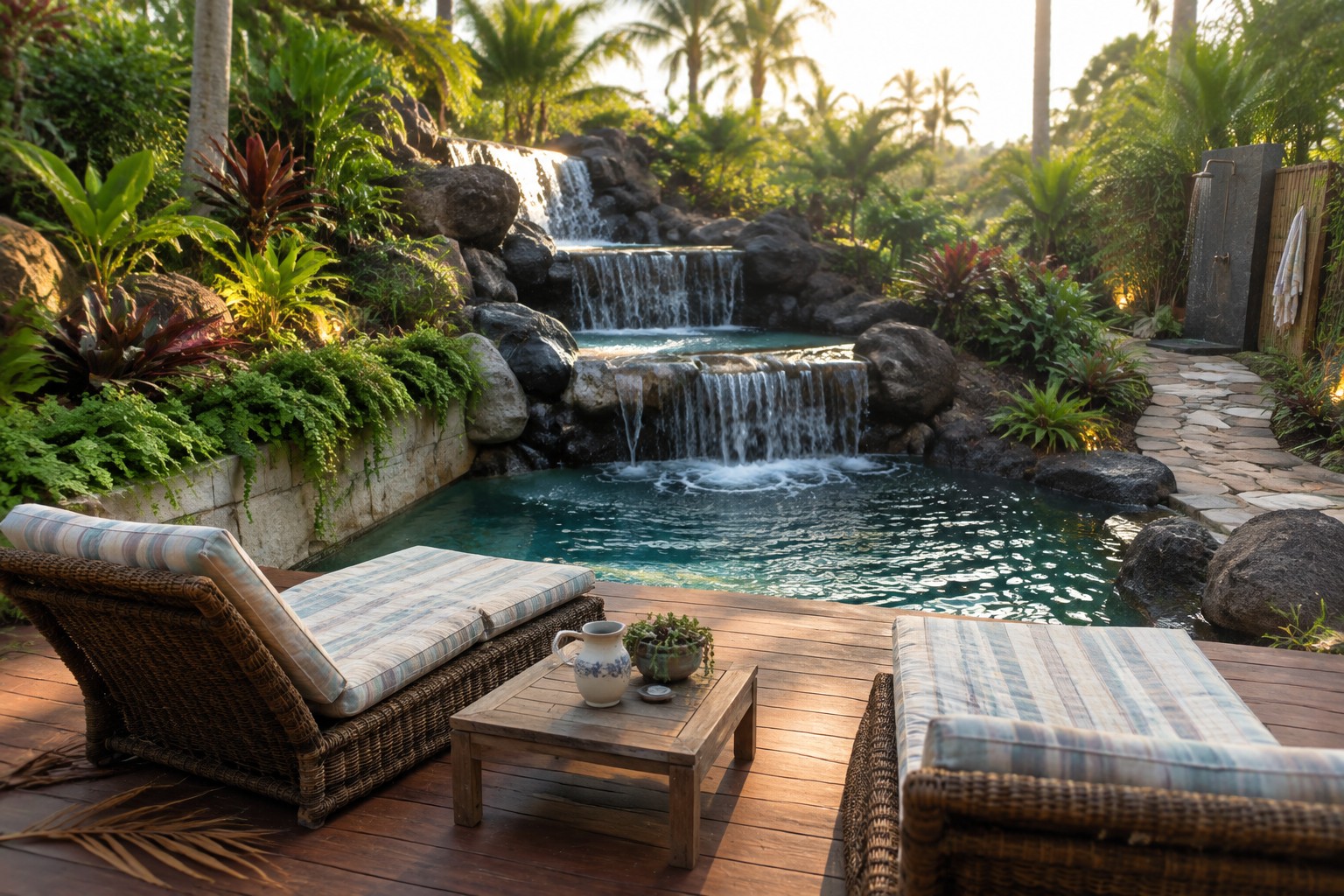
A stone waterfall can make an existing pool feel more like a natural swimming hole. It gives the water a gentle movement and sound, while helping the pool blend into a garden setting.
For a conversion, build the feature into one side of the pool and use stone that suits the surrounding yard. Keep the falls modest if you want a quieter look, and plan for easy access to the pump and plumbing behind the stonework.
Create a Sandy Beach Entry

A sandy, gently sloped edge can make an existing pool feel more like a natural swimming pond. The gradual transition into the water is easy to walk into and gives the shallow end a relaxed, beach-like feel.
This approach works best when there’s enough room to shape a broad entry. Use a pool-safe sand or fine aggregate, and plan for proper circulation so the material stays in place. In this example, the shallow sandy edge leads to two submerged loungers.
Use Decking To Define the Poolside

A wood deck can make a natural pool feel like part of the outdoor living area instead of a separate feature in the yard. Here, the deck runs beside the water and provides a clear place to sit and move around the pool.
For an existing pool, use decking along one side to create a comfortable seating area while leaving room for plants near the water. Choose boards suited to wet conditions, and make sure the surface has good grip.
Add a Submerged Poolside Bench

A built-in bench makes a natural pool easier to use without adding a separate deck or bulky furniture. It gives swimmers a place to sit in the water, and the broad stone edge beside it can double as a simple place to pause.
This works well along a straight pool edge where there is room to build a ledge into the design. Keep the bench deep enough to sit comfortably, but leave a clear route into the water and choose materials made for constant contact with water.
Add a Boardwalk Beside the Natural Pool

A narrow wooden boardwalk can make a natural pool easier to reach without taking over the garden. It gives swimmers a clear place to walk and pause, while the pond-like edge can keep its planted, informal look.
This layout works well where a pool is surrounded by planting or uneven ground. Use durable, slip-resistant boards, and leave enough room for safe access along the water’s edge.
Use Stone Paving Around the Pool

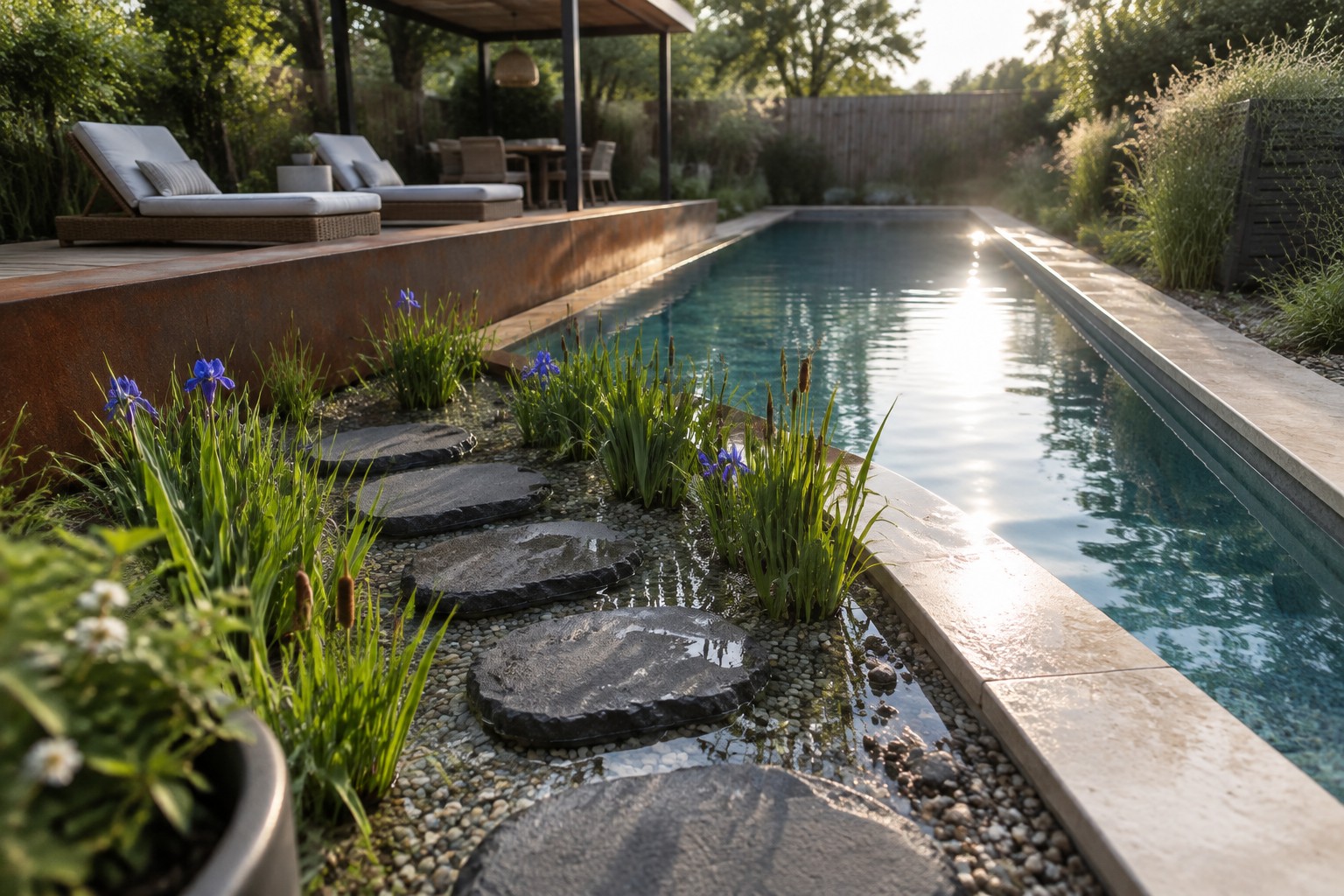
Stone paving helps a natural pool feel connected to the patio instead of set apart from it. Here, the broad, pale stone edge carries the same warm, earthy look as the shallow pebble area, making the transition from pool to dining space feel easy.
For an existing pool, use stone paving to link the water’s edge with a nearby seating or dining area. Choose a finish made for wet feet, and make sure the surface slopes away from the pool so water drains properly.
Add a Driftwood Seating Area Beside the Pool

A natural pool feels more like a swimming hole when the seating uses materials that belong outdoors. A simple driftwood bench beside the water gives swimmers a place to rest without making the edge feel too formal.
Use sturdy, weather-resistant wood and set the bench on a stable patch of sand or stone near the shallow edge. Keep it clear of the main path so people can move around the pool safely.
Use a Floating Deck for Poolside Seating

A floating deck can give a natural pool a clear place to sit without paving the whole edge. Here, the broad timber platform sits just above the water, making room for loungers while keeping the pool open and easy to enjoy.
This layout works well when you want a simple lounging area beside the water. Keep the deck sturdy and use materials suited to wet conditions, especially if it will sit close to the pool.
Add a Small Natural Pool to a Courtyard

A compact pool can turn an unused courtyard into a place to cool off without taking up the whole yard. The simple rectangular shape and green tile give this one a clear edge while still feeling suited to a planted outdoor space.
This approach works well in narrow or enclosed yards where a full-size pool would leave little room to move around. Keep the pool small, allow for a safe walking strip beside it, and choose finishes that can handle frequent contact with water.
Use Stone Steps to Connect Pool Levels

Stepped stonework can make a natural pool feel like part of the surrounding landscape rather than a separate basin. Here, broad stone ledges form a gradual route beside the water, while the waterfall links the upper and lower levels.
This approach works well on a sloped yard, where retaining walls and steps can follow the grade instead of requiring one large flat patio. Choose stone with a stable, nonslip surface, especially where wet feet will pass.
Add a Poolside Cabana for Shade
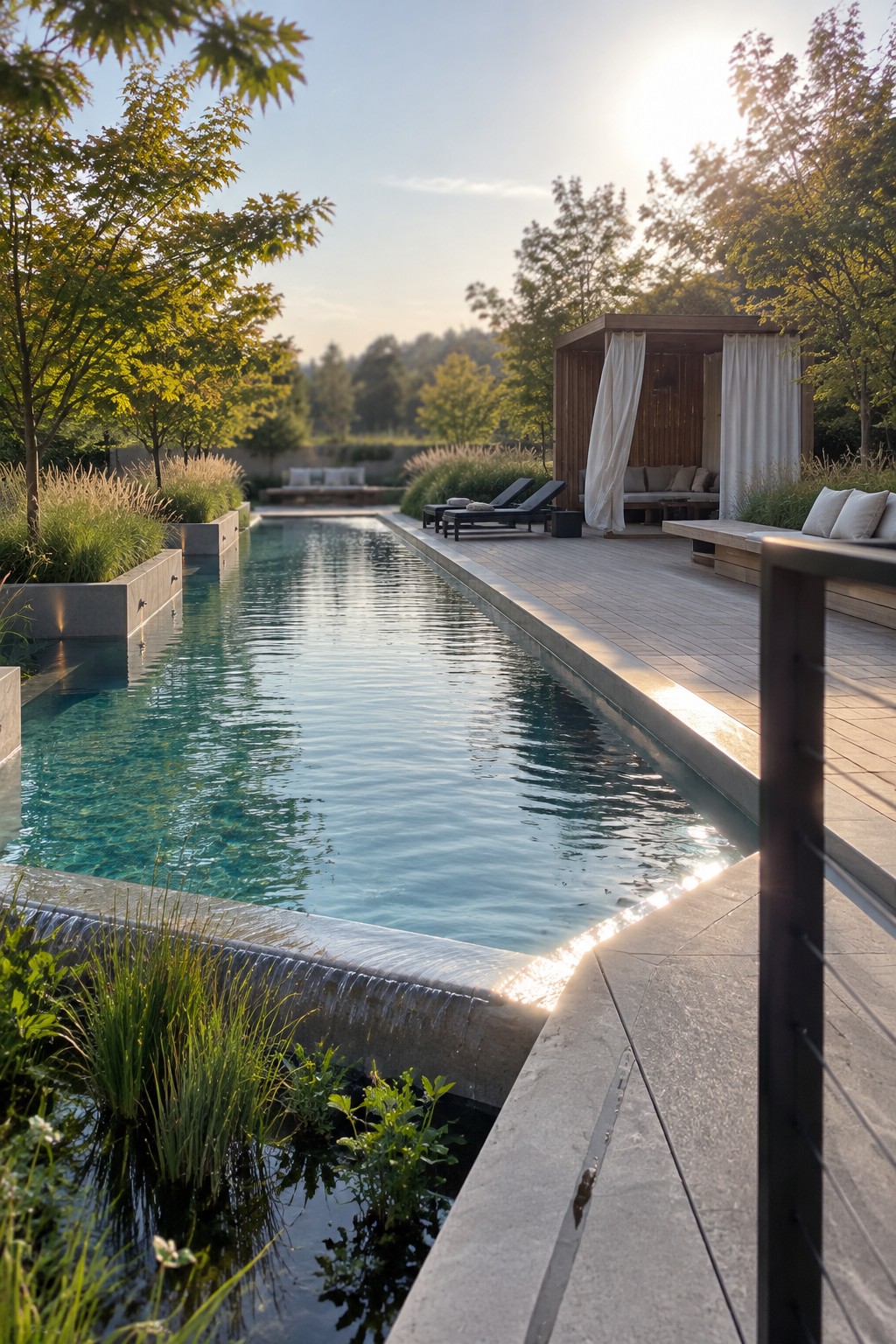
A small cabana can make a natural pool more comfortable to use throughout the day. It gives swimmers a shaded place to rest, and light curtains offer some privacy without closing off the pool area.
Place the cabana beside the deck so it stays easy to reach from the water. Keep the structure simple and use outdoor-rated fabric and materials that can handle moisture.
Add a Fire Feature Beside the Pool

A small fire feature can make a poolside area useful after swimming, too. Set just off the pool, it gives people a place to gather without taking up much room.
For an existing pool, place a fire bowl on a stable, non-combustible surface and leave clear space around it. A raised stone base can help define the spot, but keep it safely away from plants, wood decking, and pool traffic.
Frequently Asked Questions
Q: Can I convert my existing pool without digging it up?
A: Often, yes. You can keep the pool shell and add a planted regeneration zone beside it, or adapt part of the pool for natural filtration. The right approach depends on the shell’s condition and the space around it.
Q: Will a natural pool still look like a regular swimming pool?
A: It can. A stone edge, clear swimming area, and plants gathered in a separate zone keep the design feeling polished without making the whole pool look like a pond.
Q: How much upkeep does a natural pool need?
A: You’ll still need to skim leaves, check water circulation, and trim plants as they grow. The routine is different from managing a chlorine pool, not maintenance-free.
Q: Can I swim in it while the plants are still getting established?
A: It’s better to wait until the filtration system is running well and the water is clear. Give the plants time to settle in, and follow your installer’s guidance before taking the first swim.