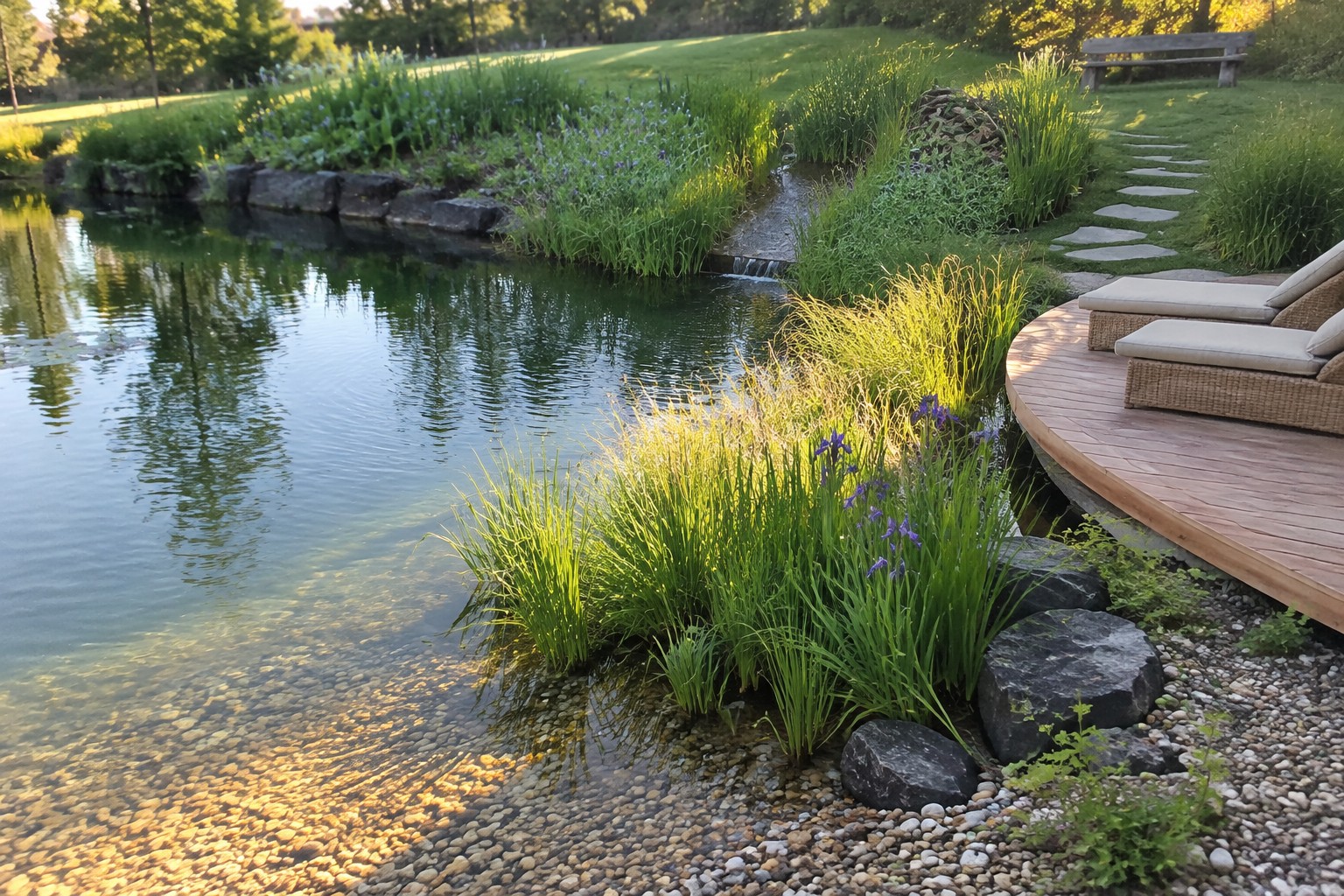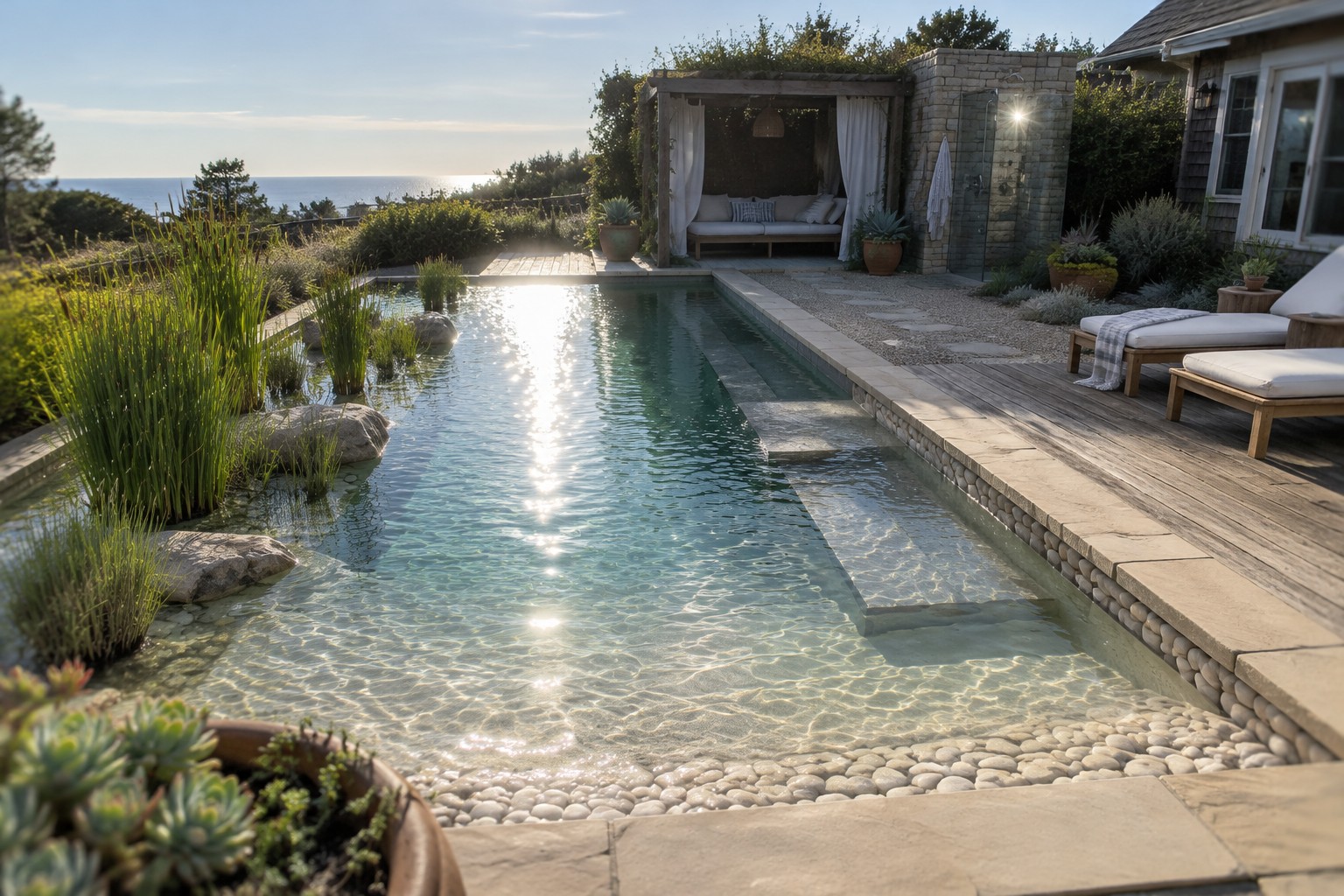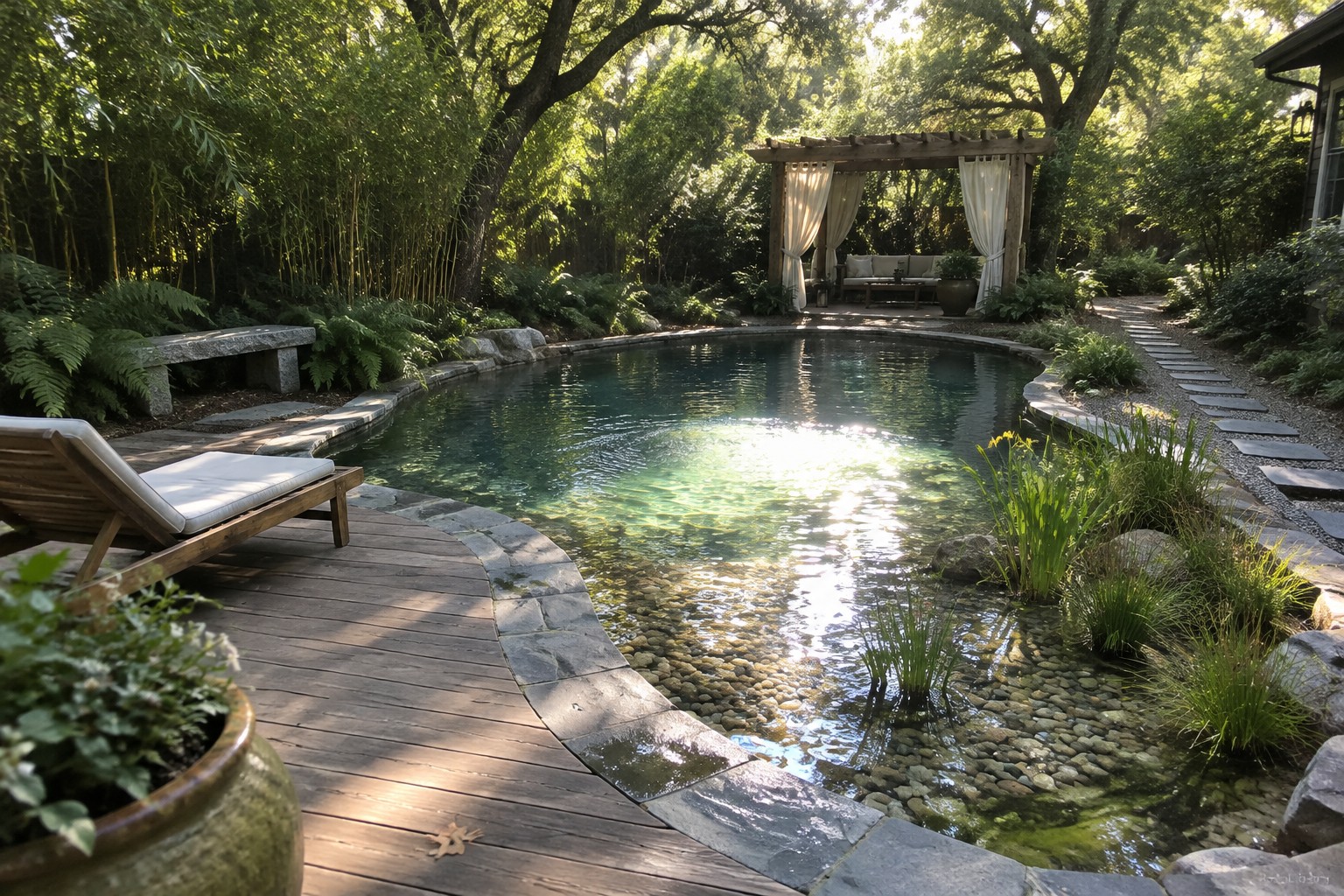
A natural swimming pool can feel tucked away without being hidden behind a wall, and the planting around it often makes the difference.
I find that the best layouts balance privacy with a clear path to the water, so dense shrubs do not make the pool feel cramped or hard to reach.
Layered grasses, trees, and flowering plants can soften the edges while shaping views from the house and creating places to sit in shade.
The planting also needs room to grow, since a scheme that looks open on day one may eventually block light or crowd a narrow walkway.
I’d save the ideas that suit your climate and yard size, then adapt their layout and plant choices to make a pool area feel private and practical.
Use Planting to Give the Pool More Privacy
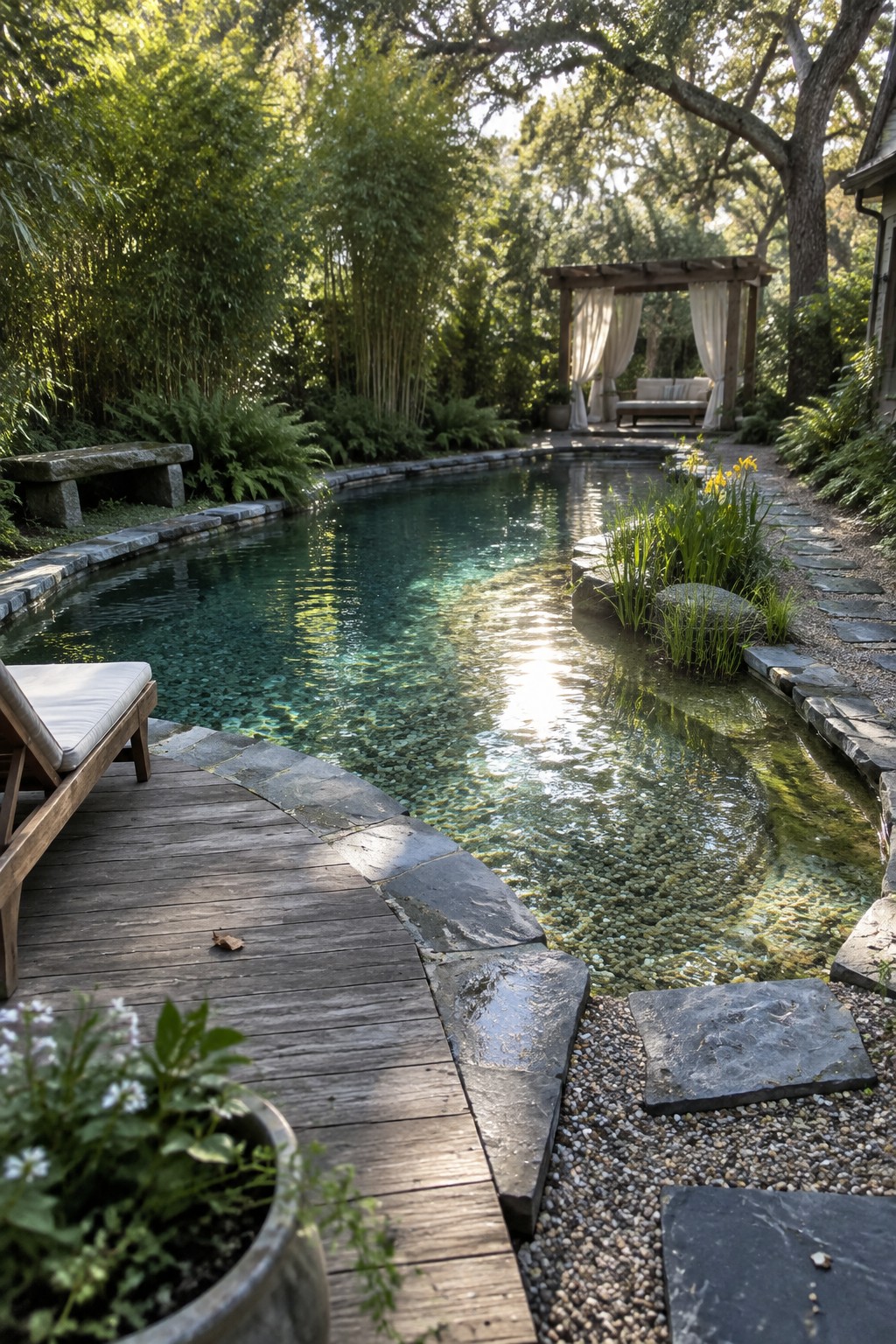
A natural pool can feel more tucked away when plants screen its edges instead of a fence. Here, dense greenery along the water and a small cluster of upright plants break up the hardscape while keeping the pool’s outline open.
Use layered planting where neighbors have a clear view, and leave a little space around paths and seating so the area stays easy to use. Choose plants that suit the pool’s sun and moisture conditions, and avoid placing leaf-shedding trees too close to the water.
Use Tall Planting to Create Pool Privacy

Tall evergreen trees can make a pool feel tucked away without adding a solid screen. Here, narrow cypress trees provide a sense of enclosure while still leaving the space open above.
Use upright trees along the pool’s edges or behind a seating area where neighbors have a direct view. Leave enough room for mature growth and choose varieties suited to your climate, since closely planted trees can become difficult to maintain.
Add Privacy Around a Natural Pool

A natural swimming pool can feel tucked away without a tall, solid fence. Dense shrubs and small trees around the water help screen nearby areas while keeping the garden relaxed and green.
Use a mix of plant heights to make the pool feel more private, and leave a clear path to the water. Choose plants that suit your climate and won’t shed heavily into the pool, since fallen leaves can mean extra cleaning.
Build Privacy Into a Poolside Seating Area

A tall planted wall can make a small pool area feel more private without closing it off completely. Here, dense greenery runs beside the pool, while a built-in bench gives the tucked-away space a clear spot to sit.
For a similar setup, use plants suited to your climate and the amount of sun the wall receives. Keep the seating close enough to the pool to be useful, but leave a clear path around the water for safe access.
Use a Curved Pool Edge to Shape the Space
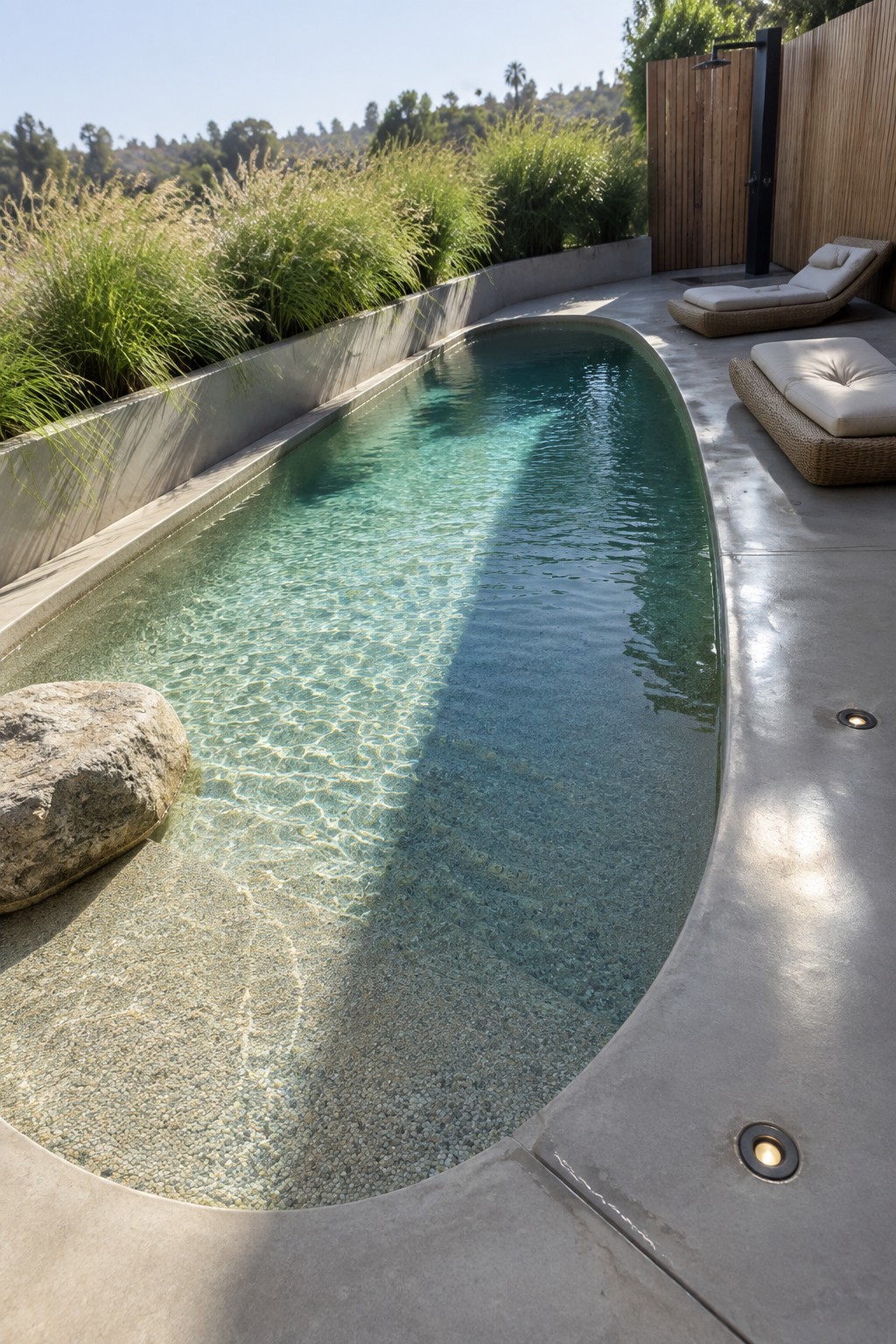
A curved edge gives a natural swimming pool a softer outline than a simple rectangle. Here, the rounded end makes the pool feel tucked into the patio while leaving room to walk beside it.
This shape works well in a narrow yard where a straight pool might feel too rigid. Keep the surrounding deck wide enough for safe movement, and use a low retaining wall where the pool meets a planted bank.
Add a Sheltered Lounge Beside the Pool
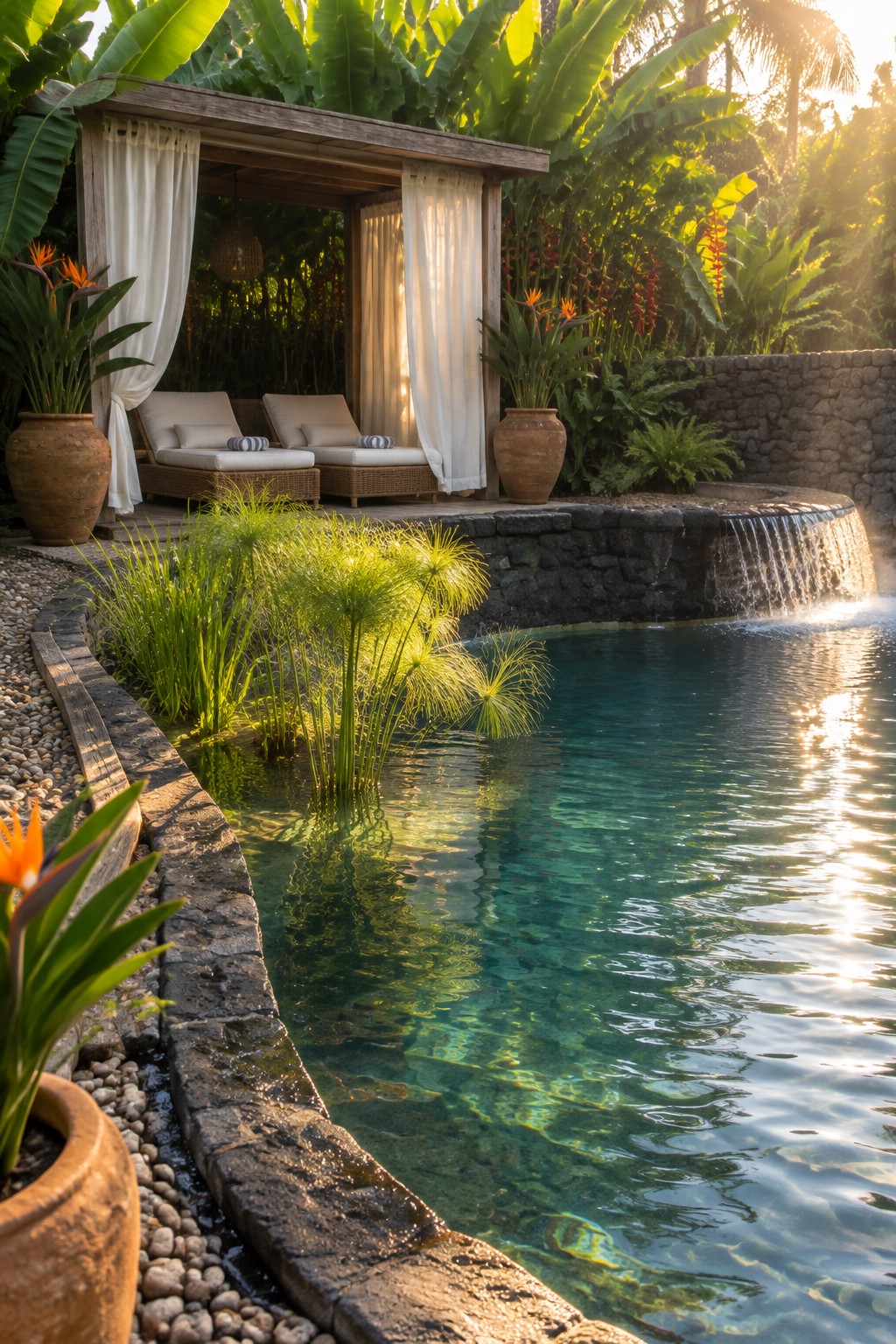
A simple shade structure can make a poolside spot useful for more than swimming. Here, sheer curtains give the lounge area some separation while still letting air move through, which works well in a warm, leafy garden.
Use this idea where you want a place to rest close to the water without putting seating out in the open. Choose outdoor fabrics that dry easily, and leave enough room around the pool for a clear path.
Use Stone Steps to Connect Pool Levels
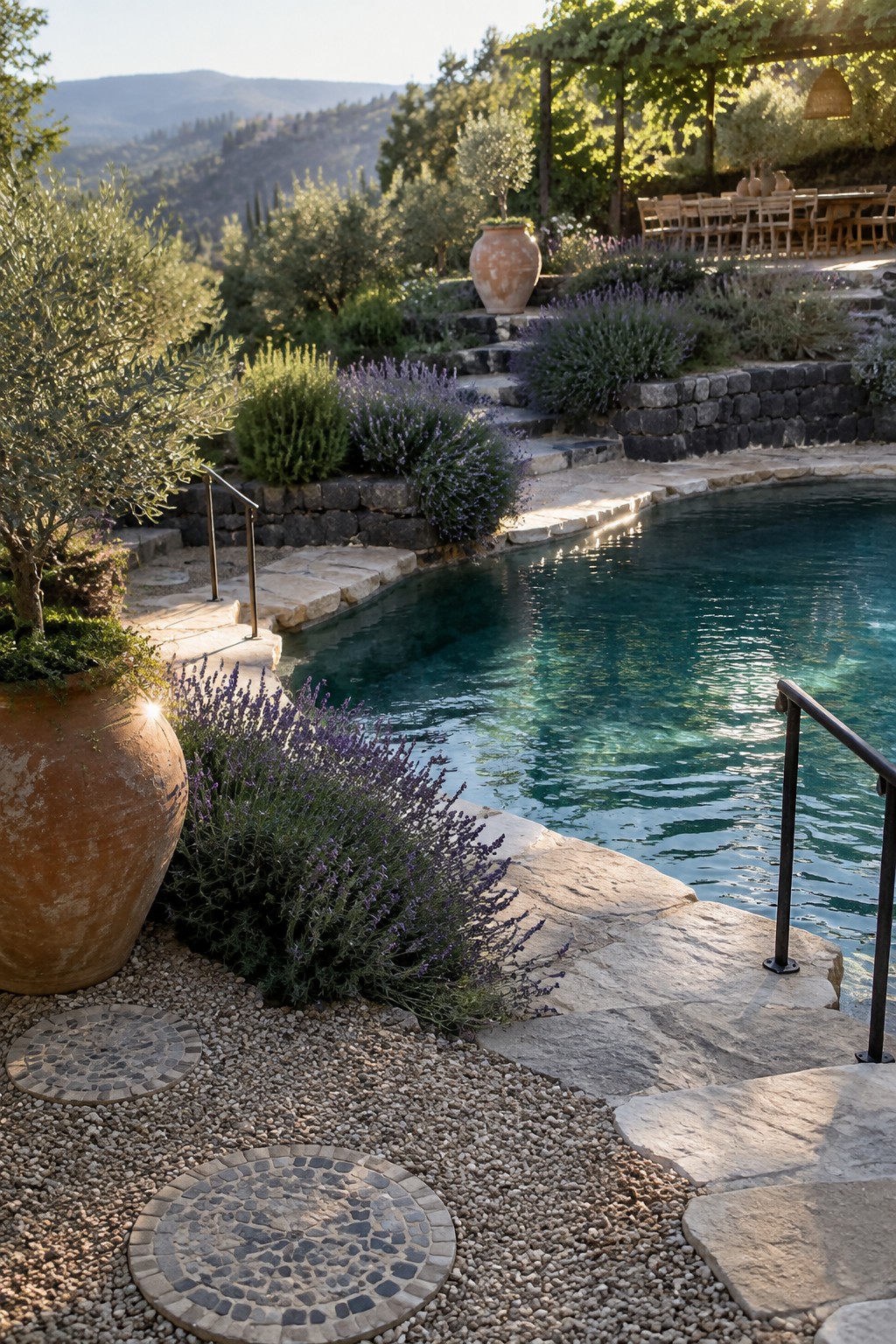
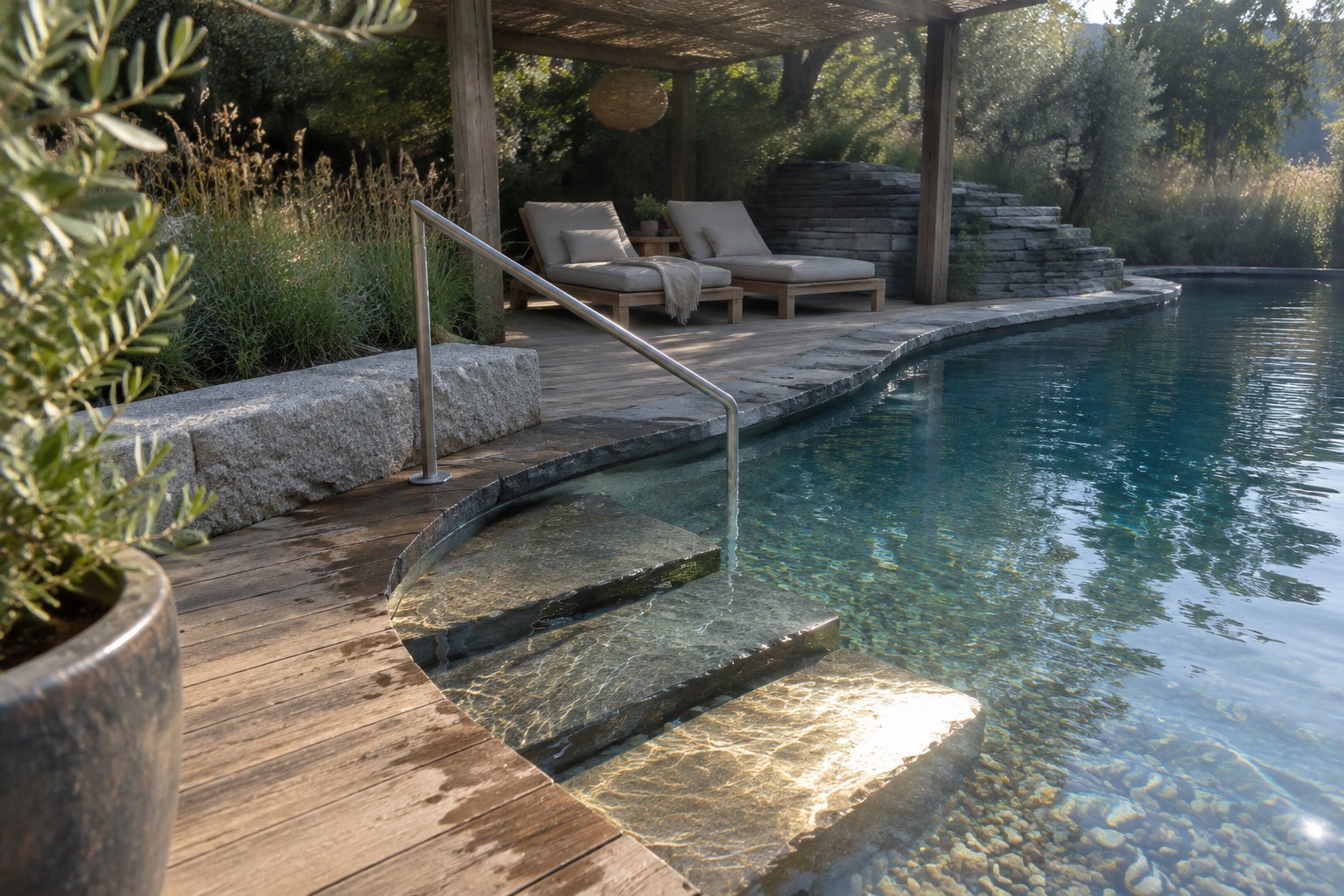
Stone steps make a sloped pool area easier to use while keeping the garden’s natural shape. Here, they link the upper planting beds to the pool edge without relying on a large, flat terrace.
This approach suits a hillside yard where a single level would take a lot of excavation. Use broad, stable treads and keep planting clear of the walking surface so the steps stay practical.
Use a Wood Screen to Enclose the Pool Patio
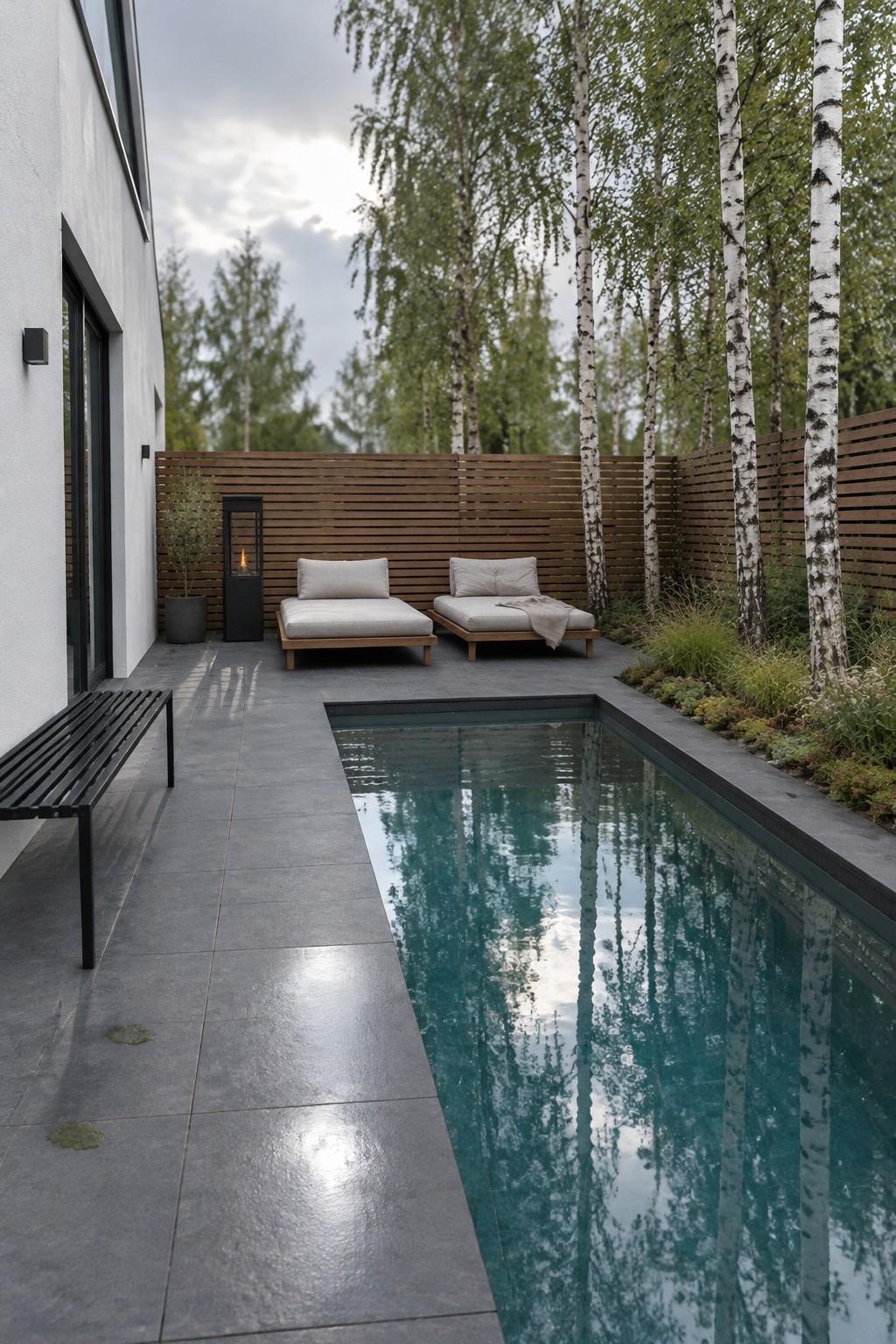
A slatted wood screen can give a pool area privacy without closing it off completely. Here, the tall fence keeps the seating area separate from the surrounding trees, while its open gaps let the space feel less boxed in.
This approach works well in a compact yard where a solid fence might feel too heavy. Choose durable exterior wood and leave room for plants near the base, but check local rules for fence height before building.
Add a Shade Structure Beside the Pool
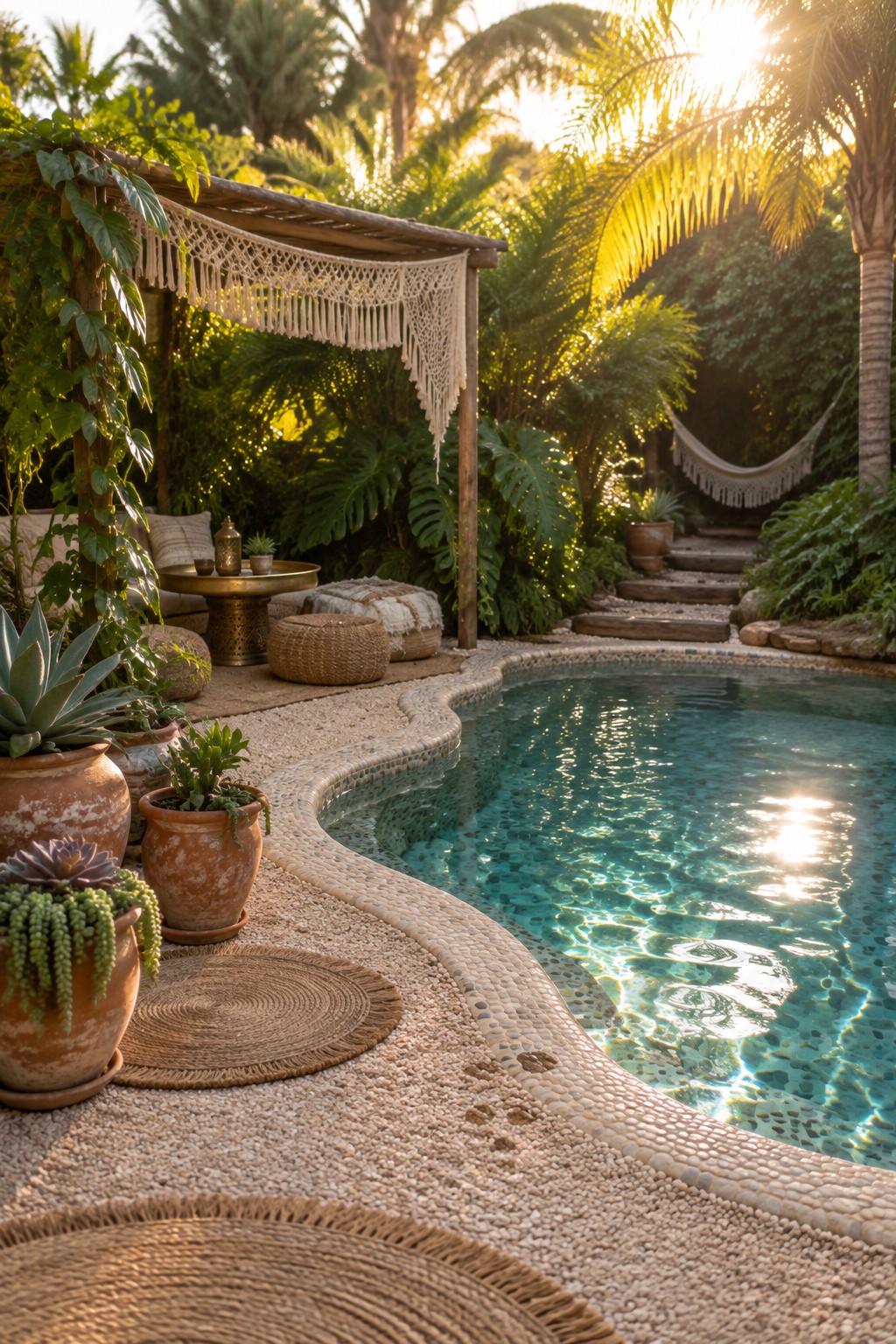
A simple overhead shelter can make a poolside seating area more comfortable and give it a clear place to relax. Here, a timber frame with a woven canopy provides shade without closing off the garden.
This idea works well beside a natural pool, especially where planting already offers some privacy. Keep the structure open on the sides so air and greenery can still flow through, and choose a canopy material suited to outdoor use.
Add a Waterfall Feature to a Natural Pool
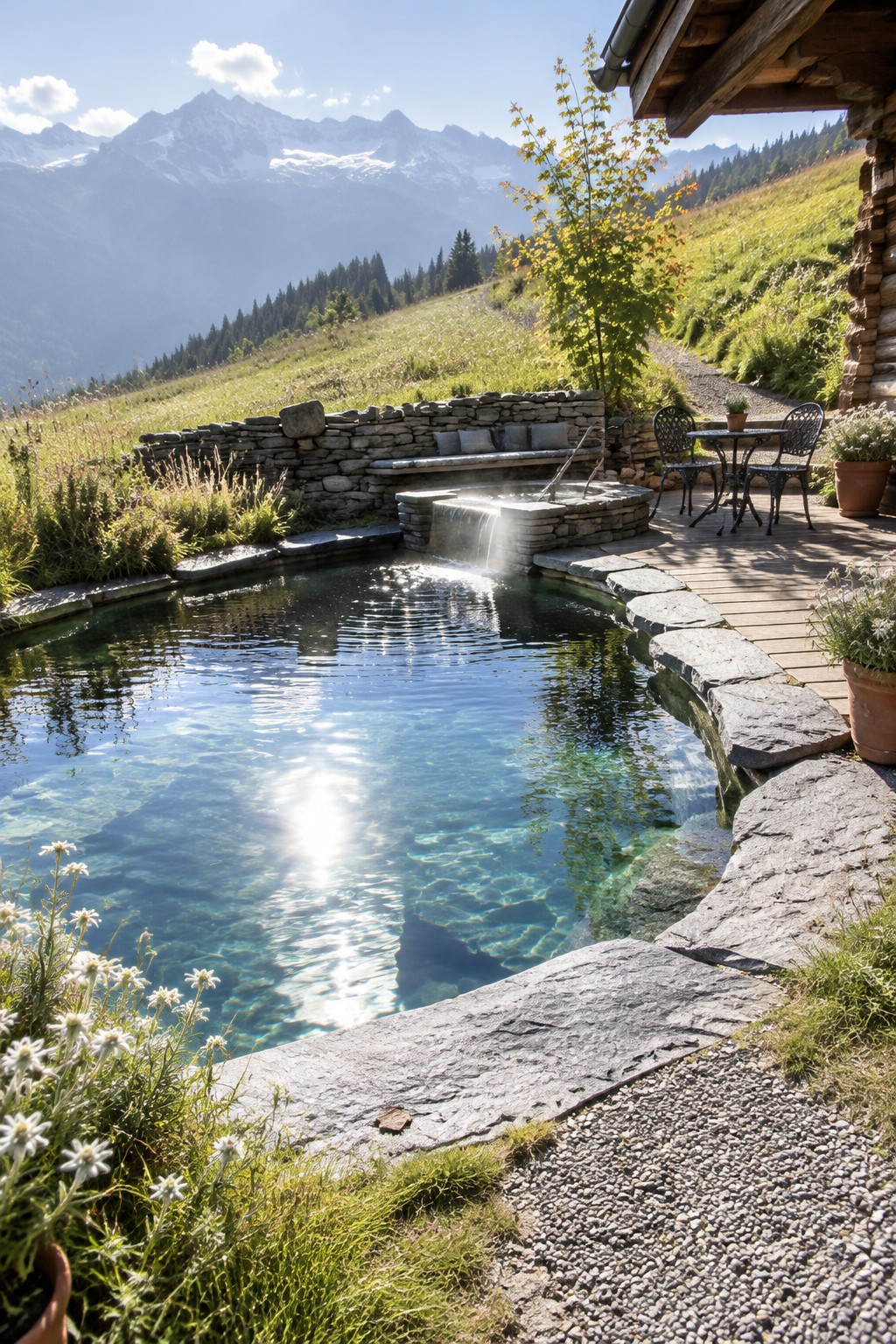
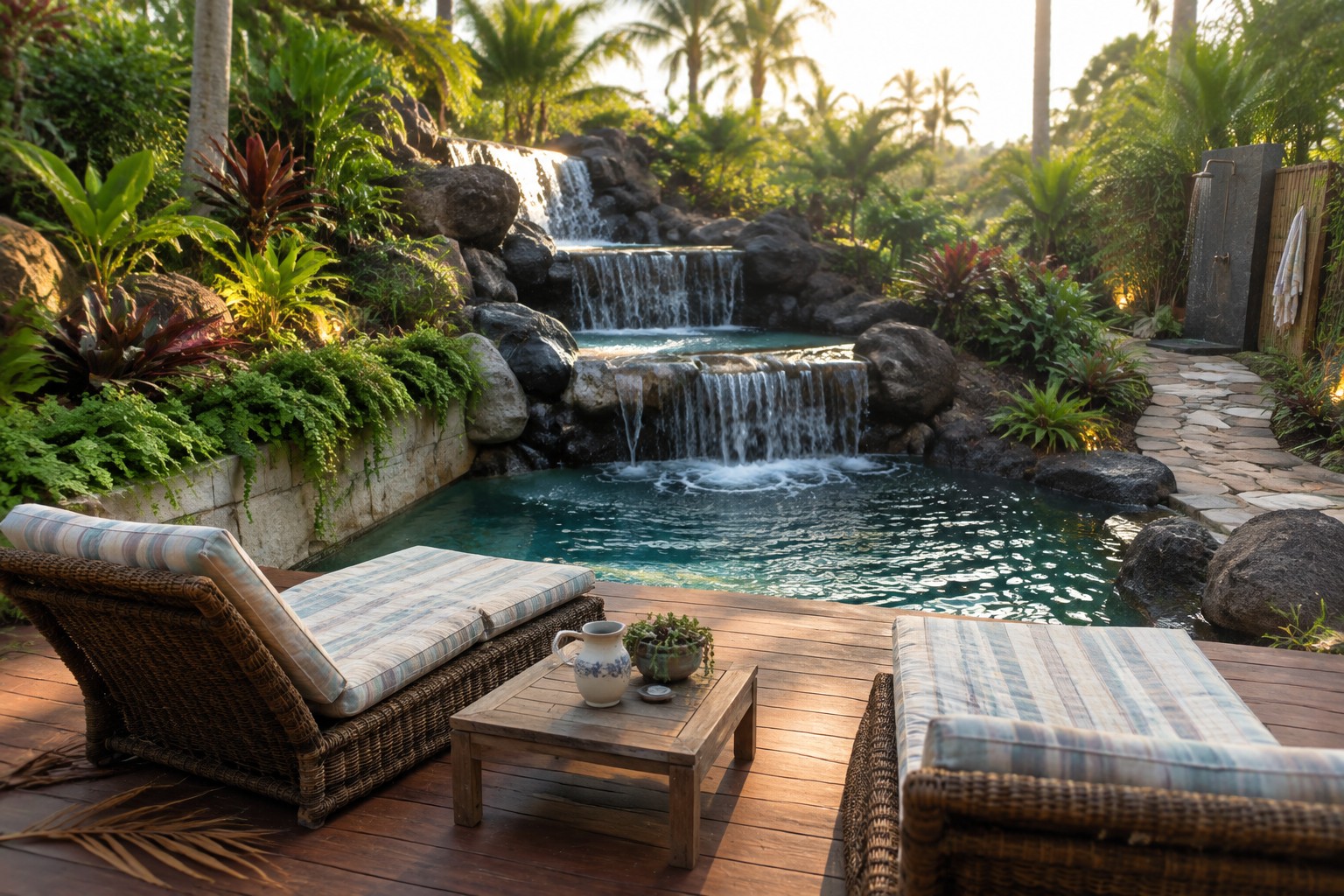
A small stone waterfall can give a natural swimming pool a gentle sound and keep the water moving. Here, the low cascade is built into the pool’s stone edge, so the feature feels like part of the landscape rather than an add-on.
This idea works especially well where the pool already has a raised stone wall or a change in level. Keep the drop modest and make sure the pump and water flow suit the pool’s size, since a waterfall can add upkeep and noise if it is too large.
Add a Shower Beside the Pool
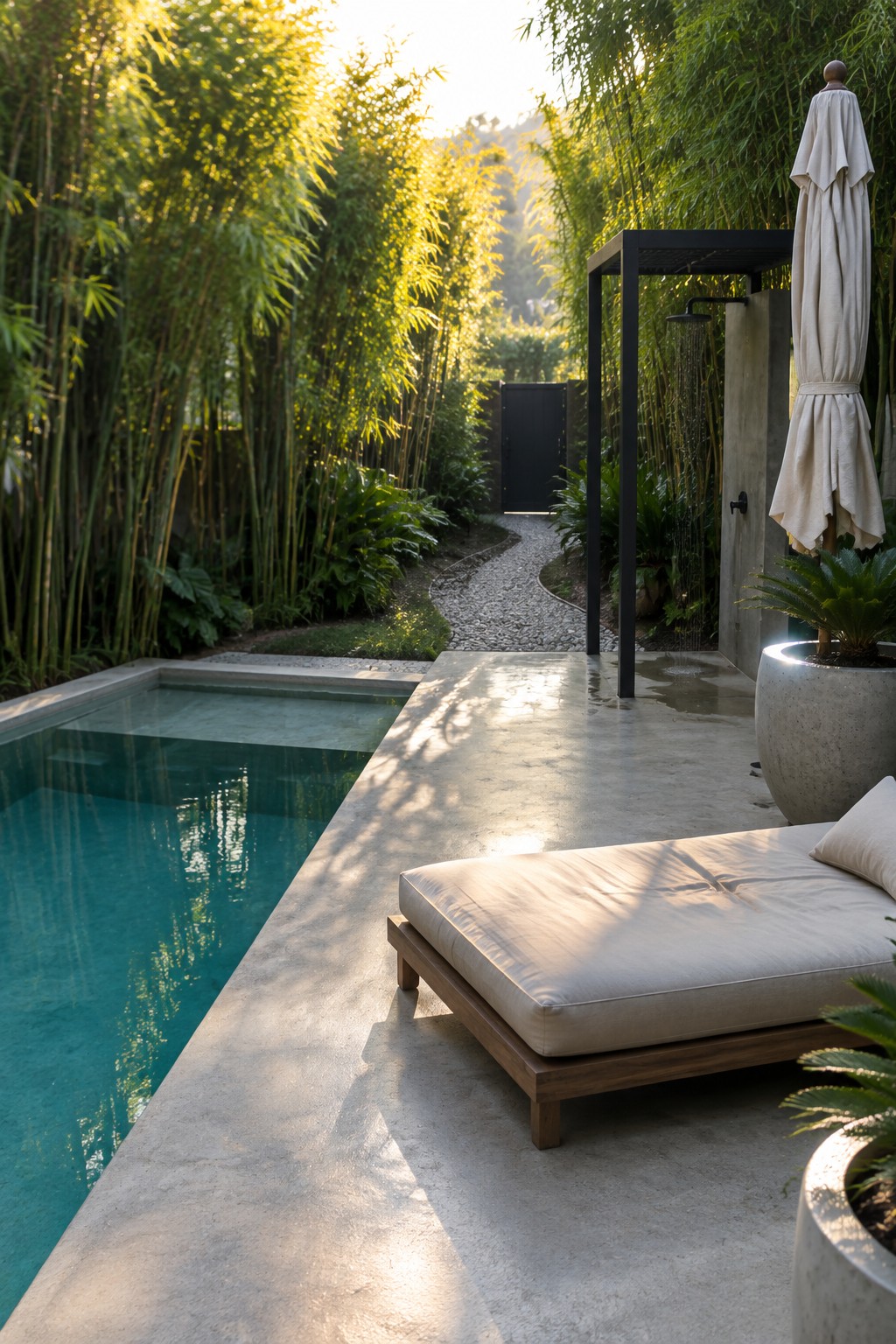
An outdoor shower makes it easy to rinse off without going back inside, and it can fit neatly into a private pool area. A simple dark frame helps define the shower spot without closing it off from the garden.
Place the shower on a paved section near the pool, where water can drain safely. Tall planting nearby helps screen it from view, but leave enough room to move around and keep the floor from becoming slippery.
Add Stepping Stones Along the Pool
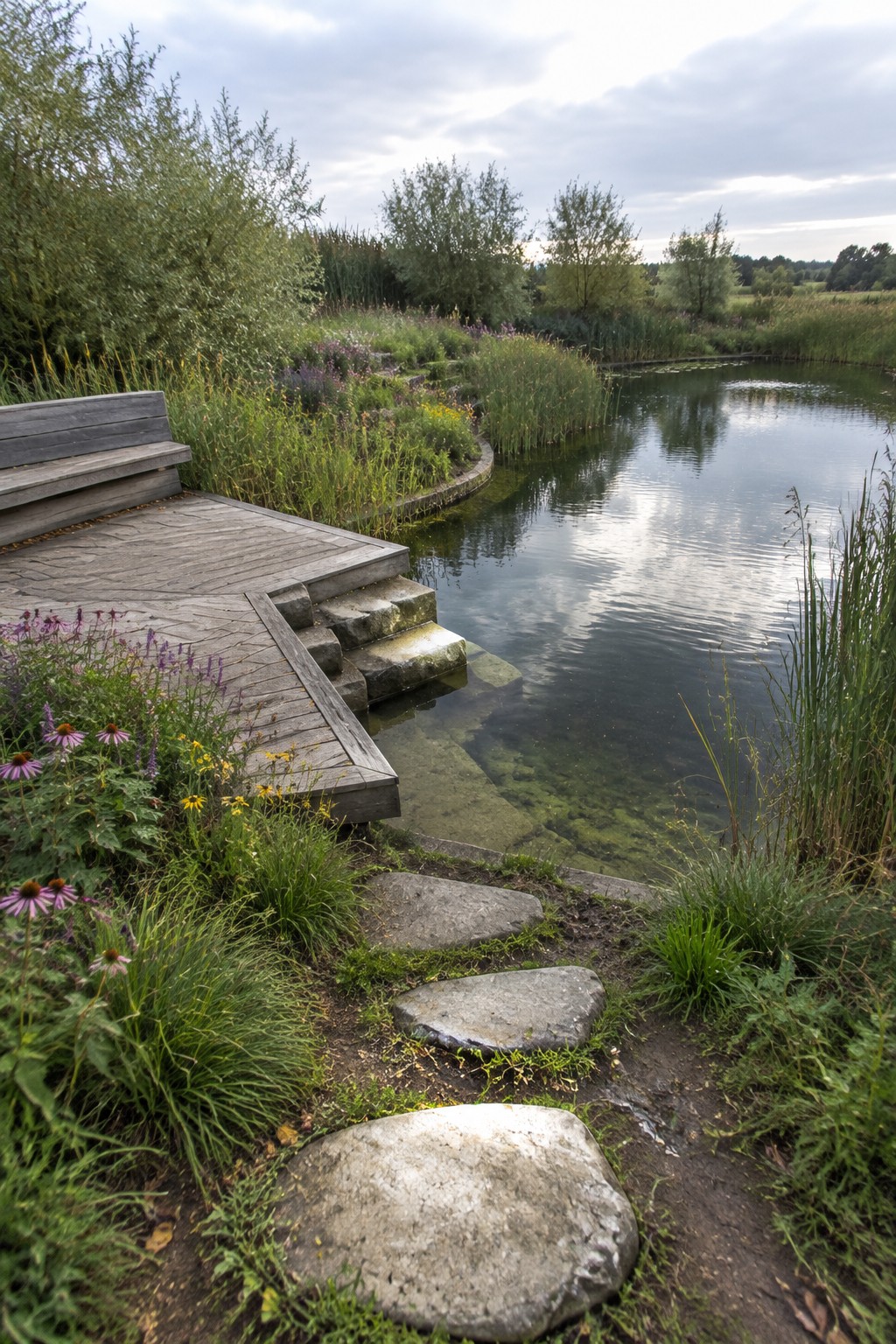
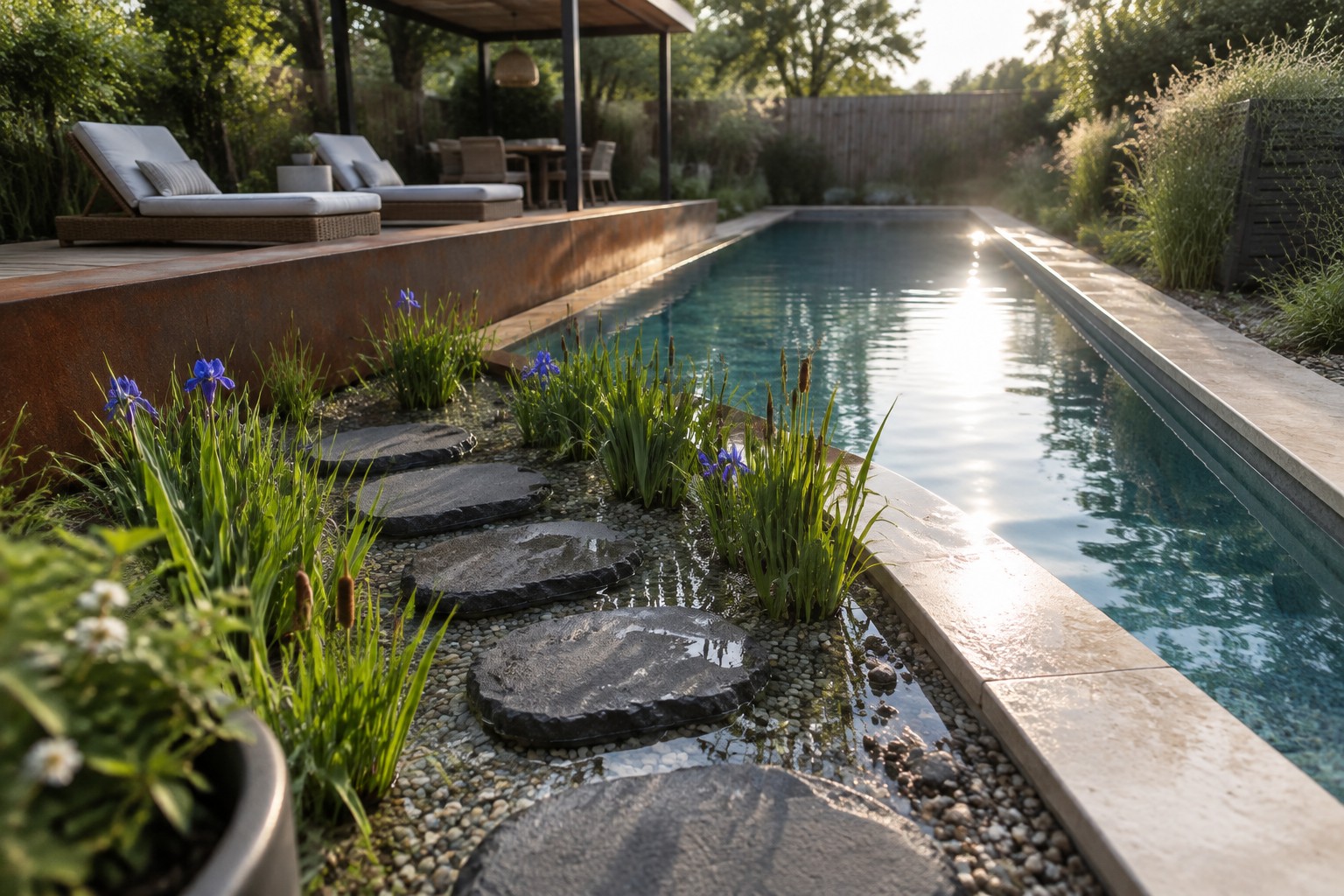
A stepping-stone path makes a natural swimming pool feel easy to reach without covering the garden in paving. The scattered stones keep the route informal and let planting remain the main feature.
Use broad, stable stones where people need to walk, especially near the water’s edge. Leave enough room between them for a comfortable stride, and avoid placing them where wet feet could make the path slippery.
Use a Garden Path to Lead to the Pool
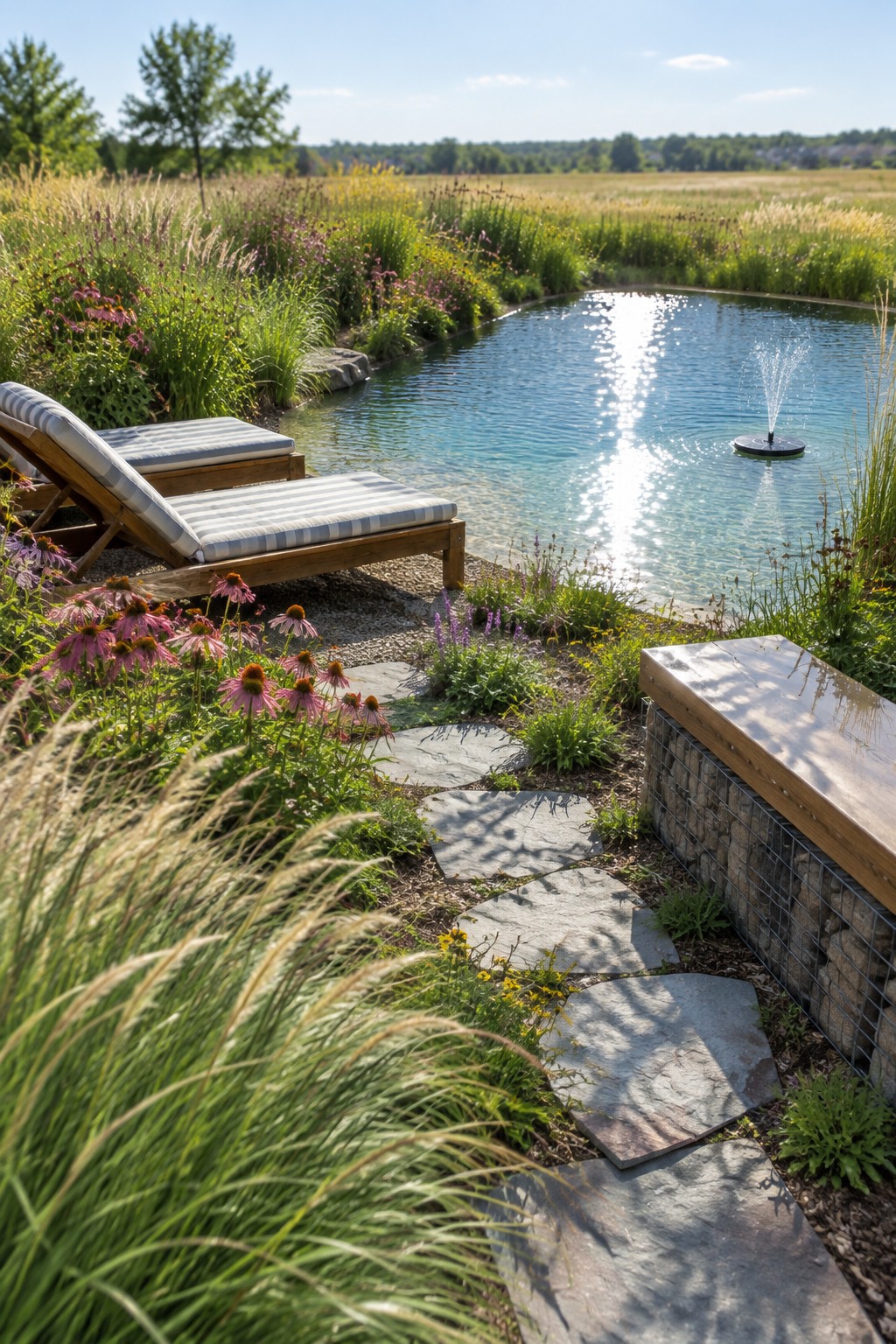
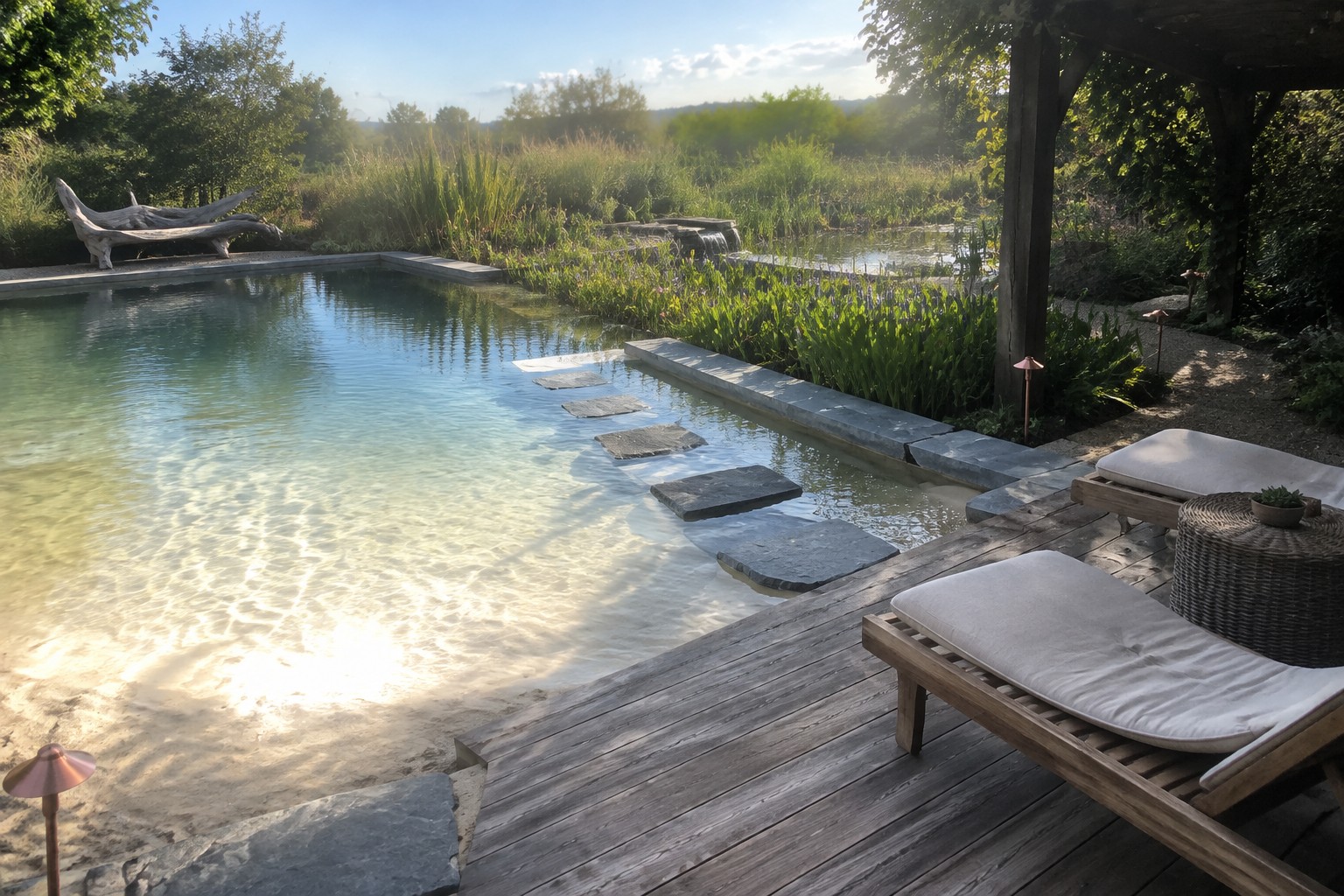
A stepping-stone path makes a natural pool feel connected to the rest of the garden. It gives you a clear way to reach the water while leaving room for plants to grow around the route.
Use broad, stable stones set close enough for an easy stride, and leave gaps for low plants or gravel. This approach suits an informal garden, but keep the stones level and secure so the path stays comfortable to walk on.
Use a Courtyard Layout for Pool Privacy
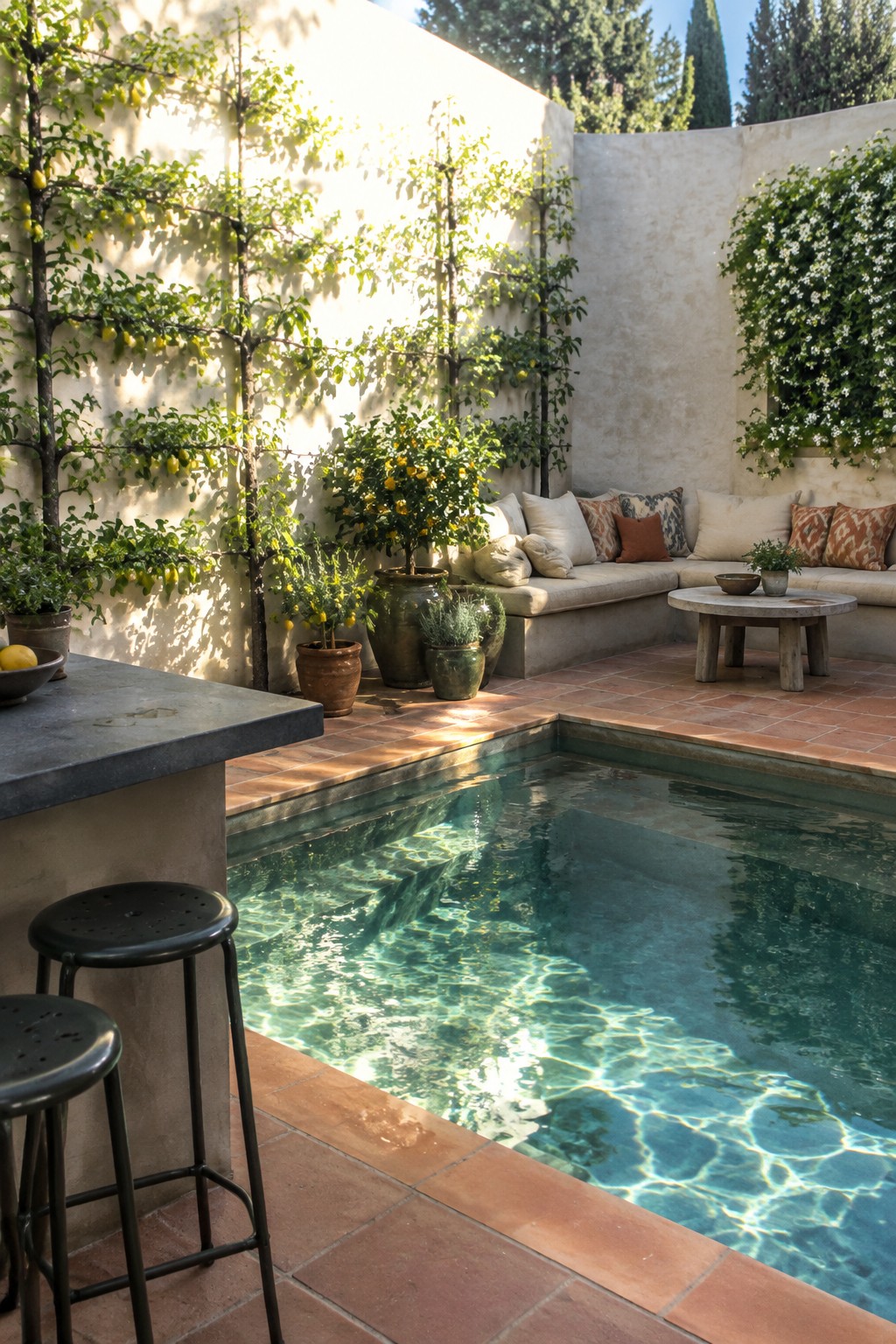
A small courtyard can make a swimming pool feel tucked away without needing a tall fence. Enclosing the pool with garden walls and planting gives the space a private feel, while a built-in bench makes it easy to sit close to the water.
This layout works well in compact yards where a pool, seating, and greenery need to share the same footprint. Climbing plants can soften the walls over time, but leave enough open space to keep the pool area comfortable and easy to maintain.
Use a Long Bench to Make the Poolside More Useful
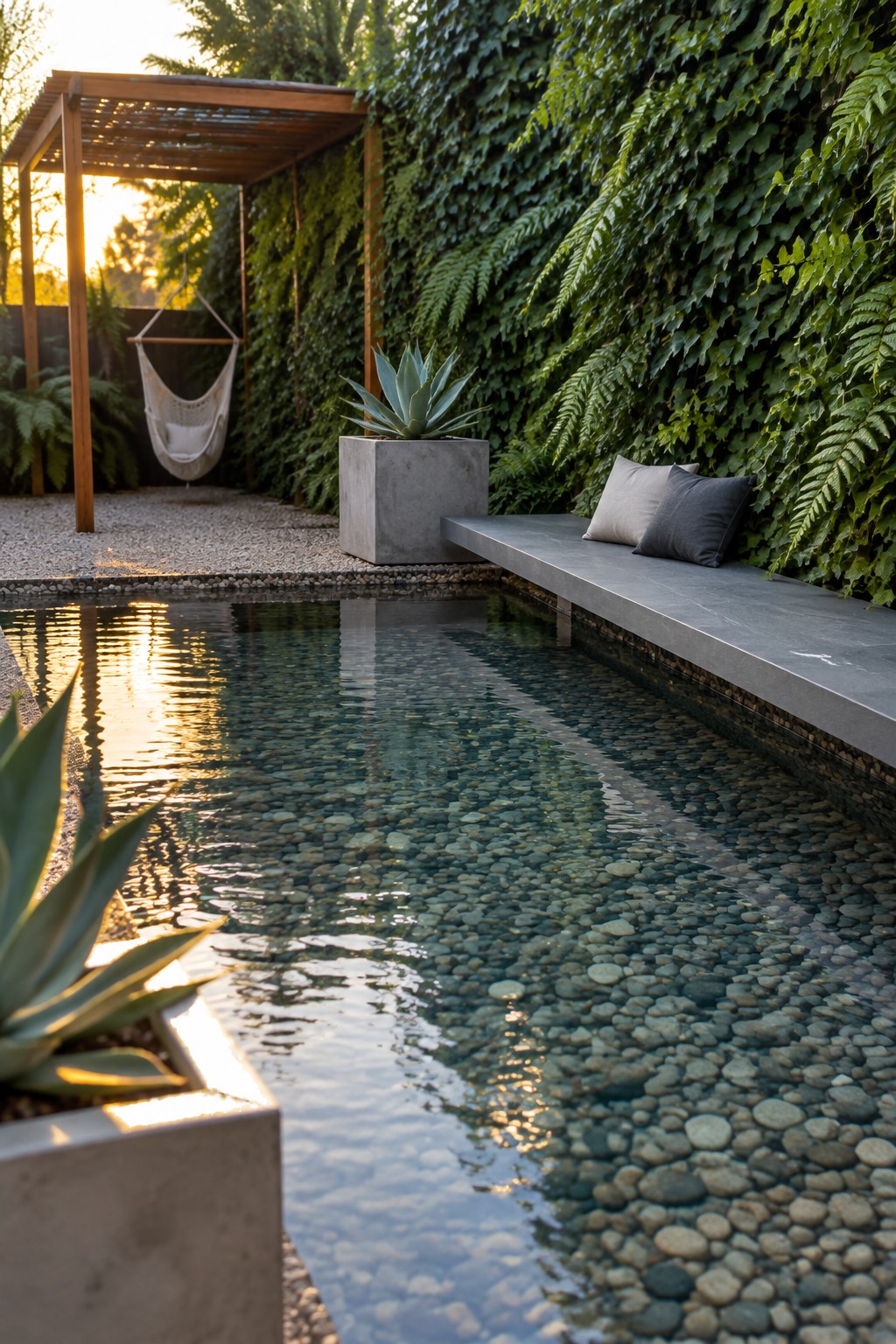
A built-in bench along the pool edge gives you a place to sit without taking up much deck space. Here, the slim stone seat runs beside the water, making the pool feel connected to its lounging area.
This layout suits a narrow courtyard or small backyard where separate chairs might crowd the path. Choose a surface that can handle splashes, and leave enough room to move around the bench comfortably.
Use a Stone Terrace to Shape the Pool Area
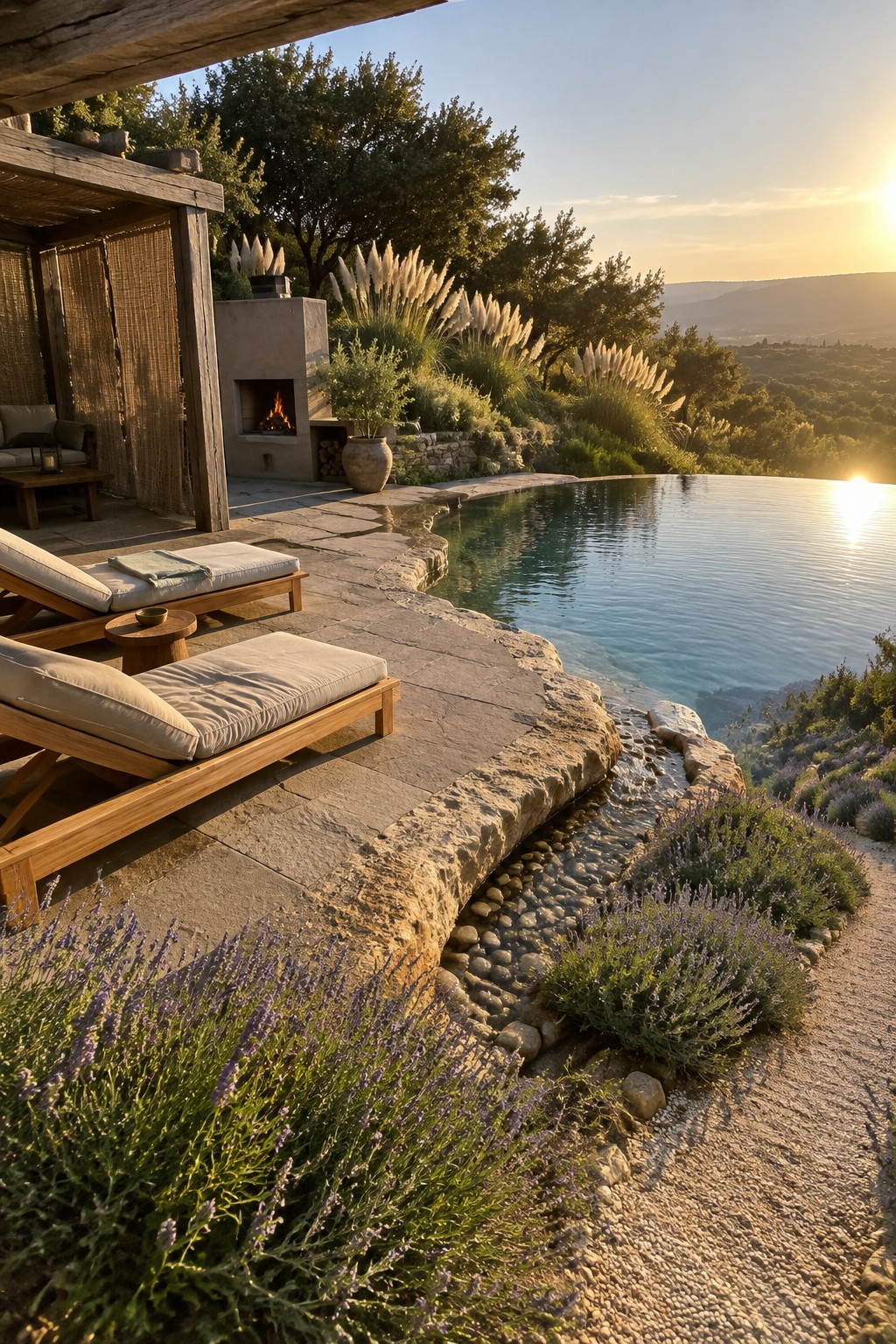
A stone terrace gives a natural swimming pool a clear place for lounging without making the setting feel too formal. Here, the broad paving follows the pool’s uneven edge, so the hard surface feels connected to the garden.
This approach suits a sloped yard where the pool needs a level area for chairs. Use textured stone for a secure walking surface, and leave room for planting along the edges so the terrace does not take over the landscape.
Frequently Asked Questions
Q: What plants give a pool privacy without making the space feel boxed in?
A: Mix a few taller plants, such as clumping bamboo or upright evergreens, with lower shrubs and grasses. That gives you a leafy screen while still letting light and air reach the pool.
Q: How far should privacy plants be from the pool?
A: Leave enough room for the plants to mature without leaning over the water or crowding the path. Keep messy, fruiting, or thorny plants farther away so cleanup and swimming stay easy.
Q: Will plants around a natural swimming pool make the water harder to maintain?
A: They can add leaves and pollen, so avoid planting directly over the water and choose low-litter varieties nearby. A simple path around the pool also makes it easier to skim and care for the edges.
Q: Can I get pool privacy without waiting years for plants to grow?
A: Yes. Use a trellis or simple screen for immediate coverage, then plant climbers or shrubs in front to soften it over time.