A natural swimming pond can make a backyard feel more connected to its garden, but it needs to work as a swimming space as well as a place for plants and wildlife.
I’d pay attention first to how the swimming area, planted filter zone, and paths fit together, since a beautiful pond can be awkward to use if the layout feels like an afterthought.
Biological filtration relies on plants, beneficial microbes, and thoughtful water circulation rather than a conventional chemical system, so the details matter.
The best designs also make upkeep and seasonal changes part of the plan instead of treating them as surprises.
Some of these approaches are worth saving and adapting to the size, sunlight, and everyday use of your own backyard.
Build a Planting Shelf Into the Pool

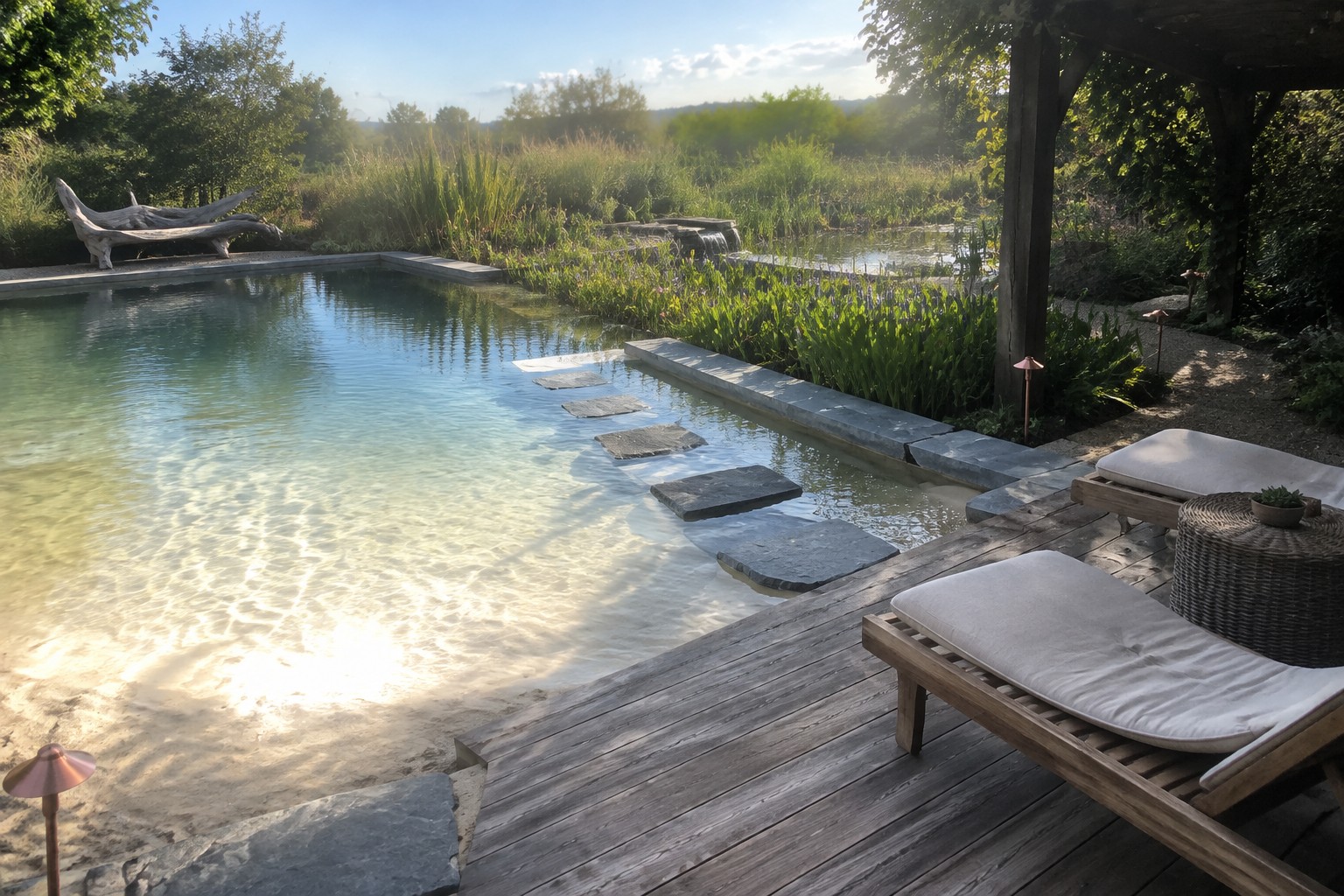
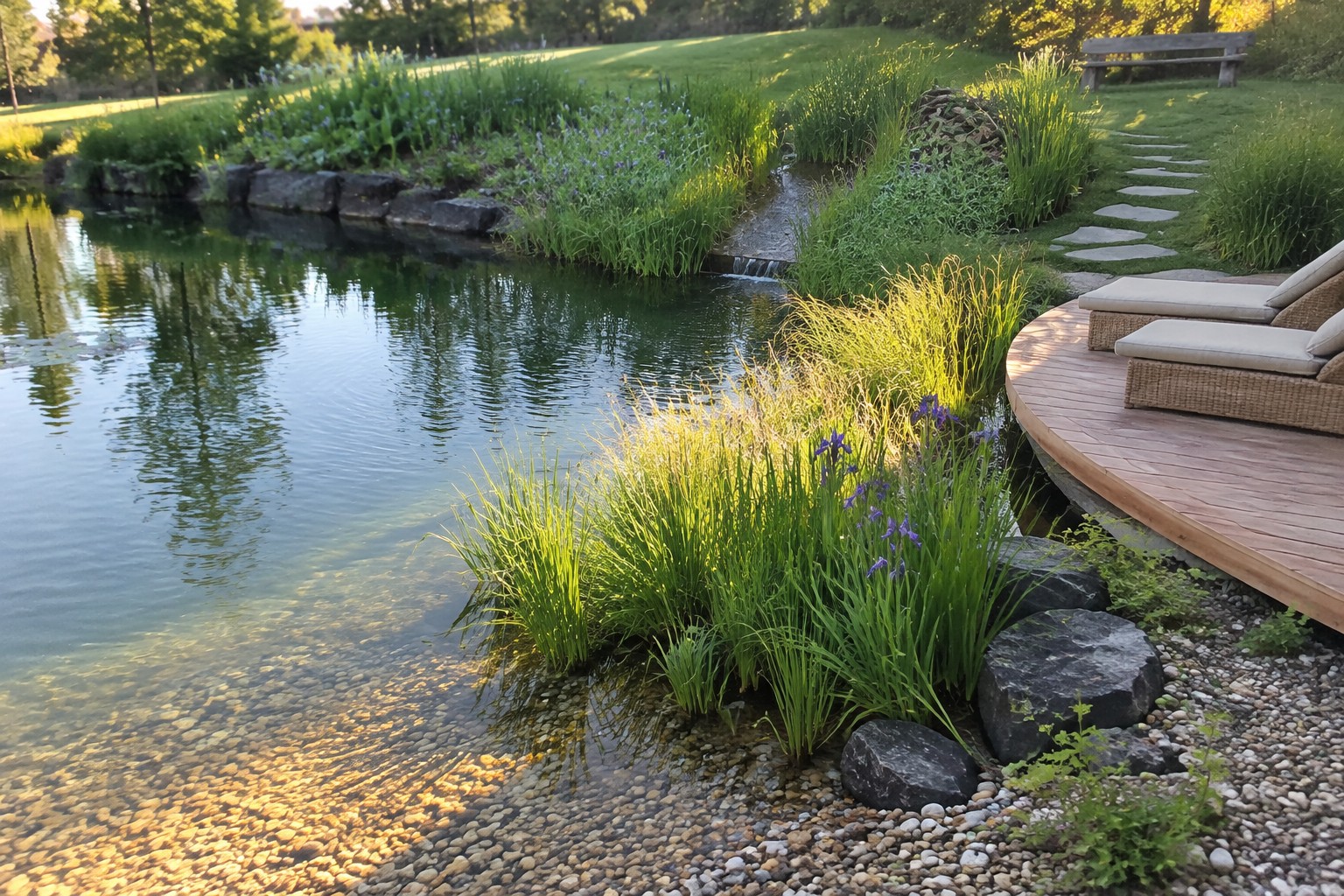
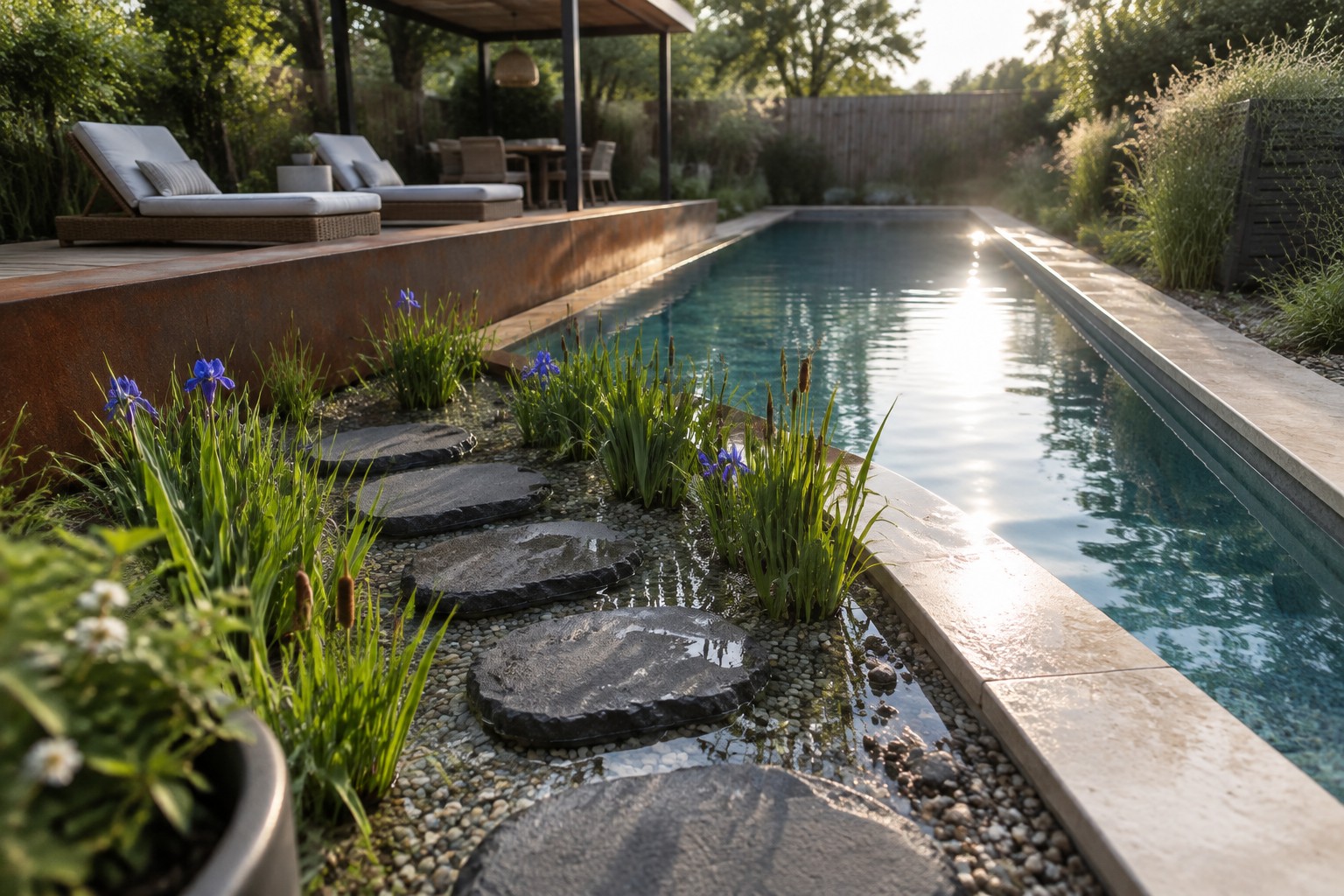
A shallow planted shelf can bring biological filtration right into the pool design. Aquatic plants grow in a bed of gravel, where beneficial microbes help process nutrients in the water. It also makes the transition from planted area to swimming water feel more natural.
This approach works best when the planted zone is planned as part of the pool, not added as an afterthought. Use plants suited to the local climate and keep the swimming area easy to access and maintain. Here, purple irises grow among smooth stones beside stepping pads.
Make the Pool Part of the Outdoor Living Space

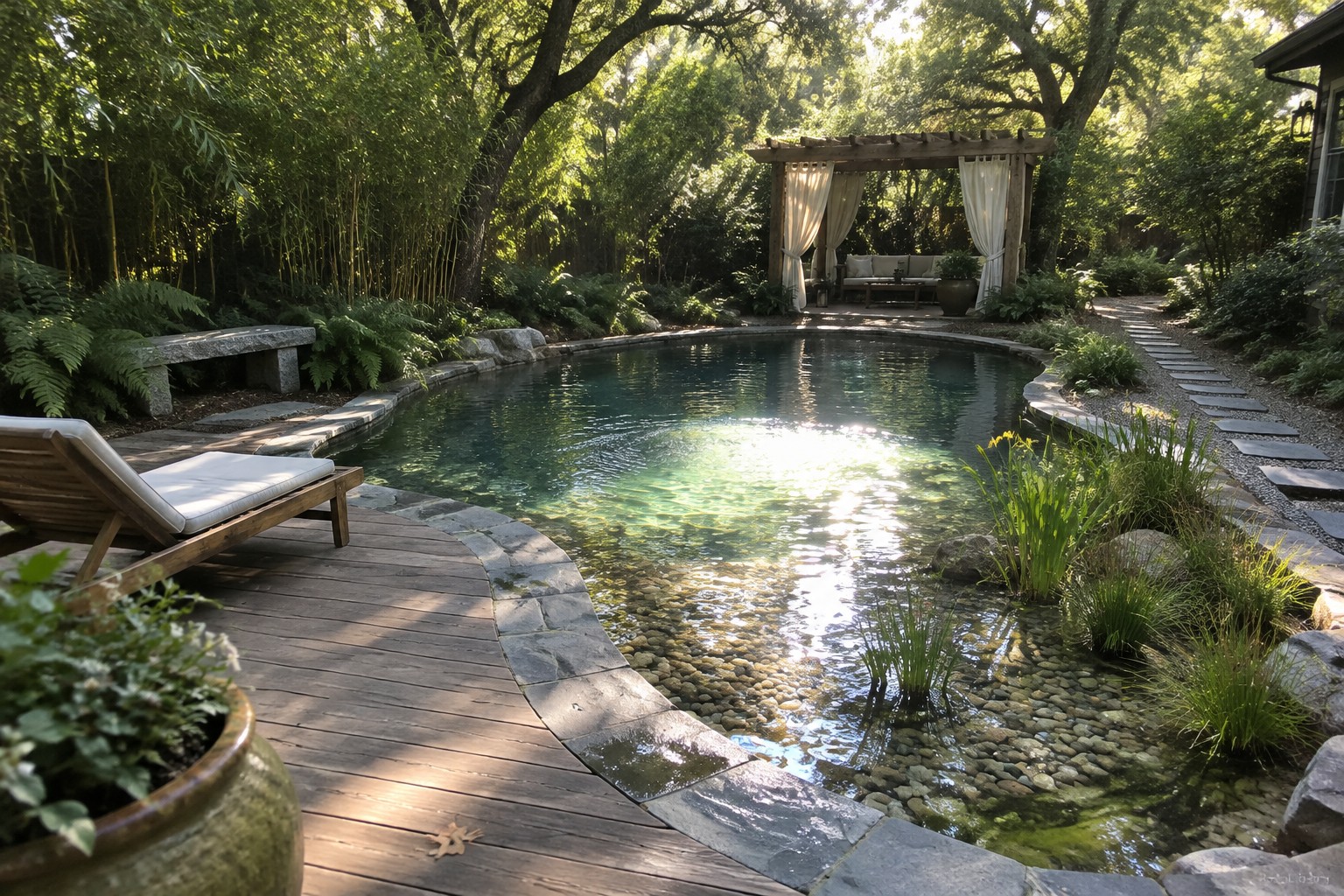
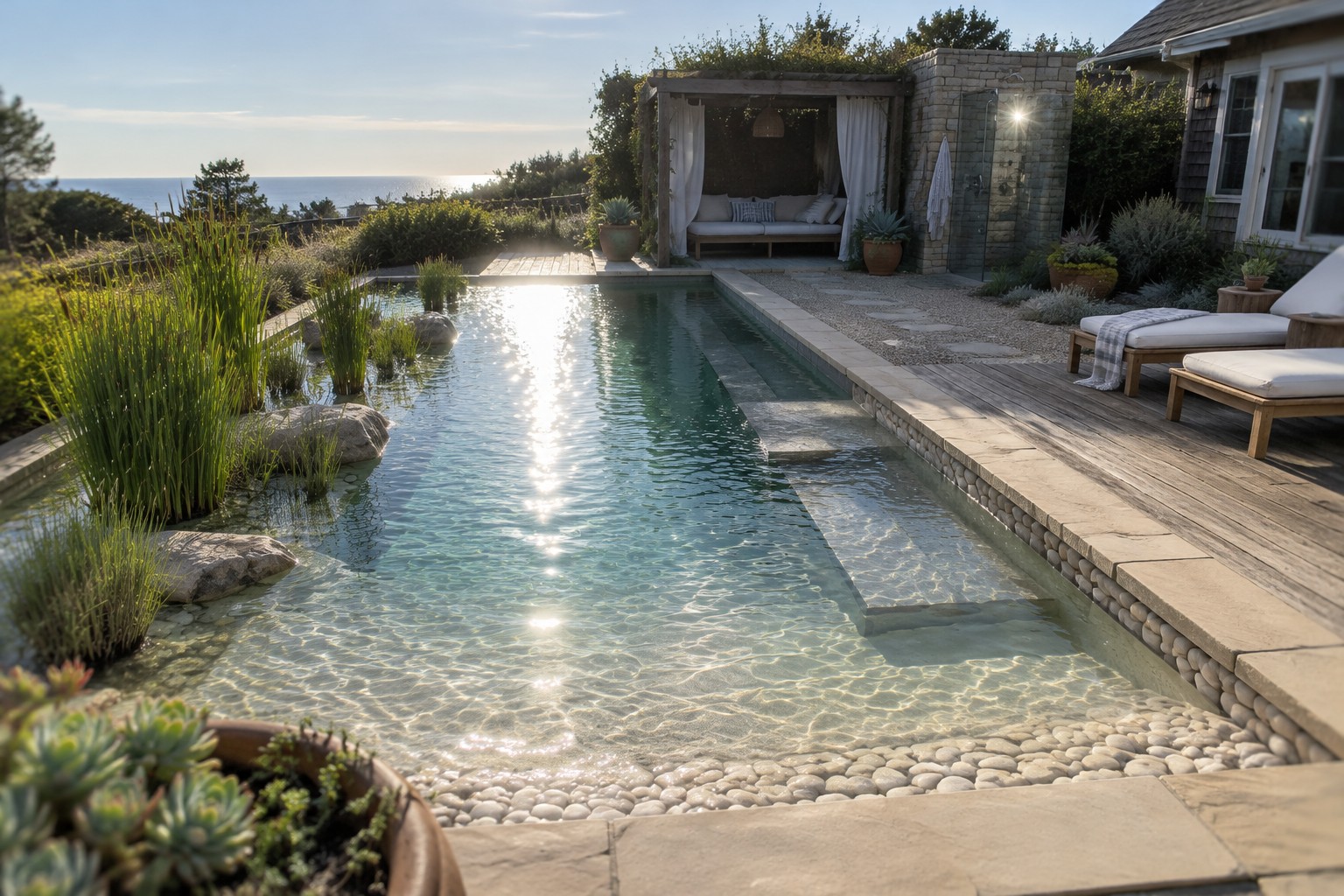
A naturally shaped pool can feel like a practical part of the garden rather than a separate feature. Here, the curved stone edge follows the pool’s shape, while the deck provides room to sit nearby.
This kind of layout suits a yard where people want to swim and relax without giving up space for planting. For a biologically filtered pool, plan the swimming area and planted filtration zone together so the system works well and fits naturally into the yard.
Build Biological Filtration Into the Pool Design
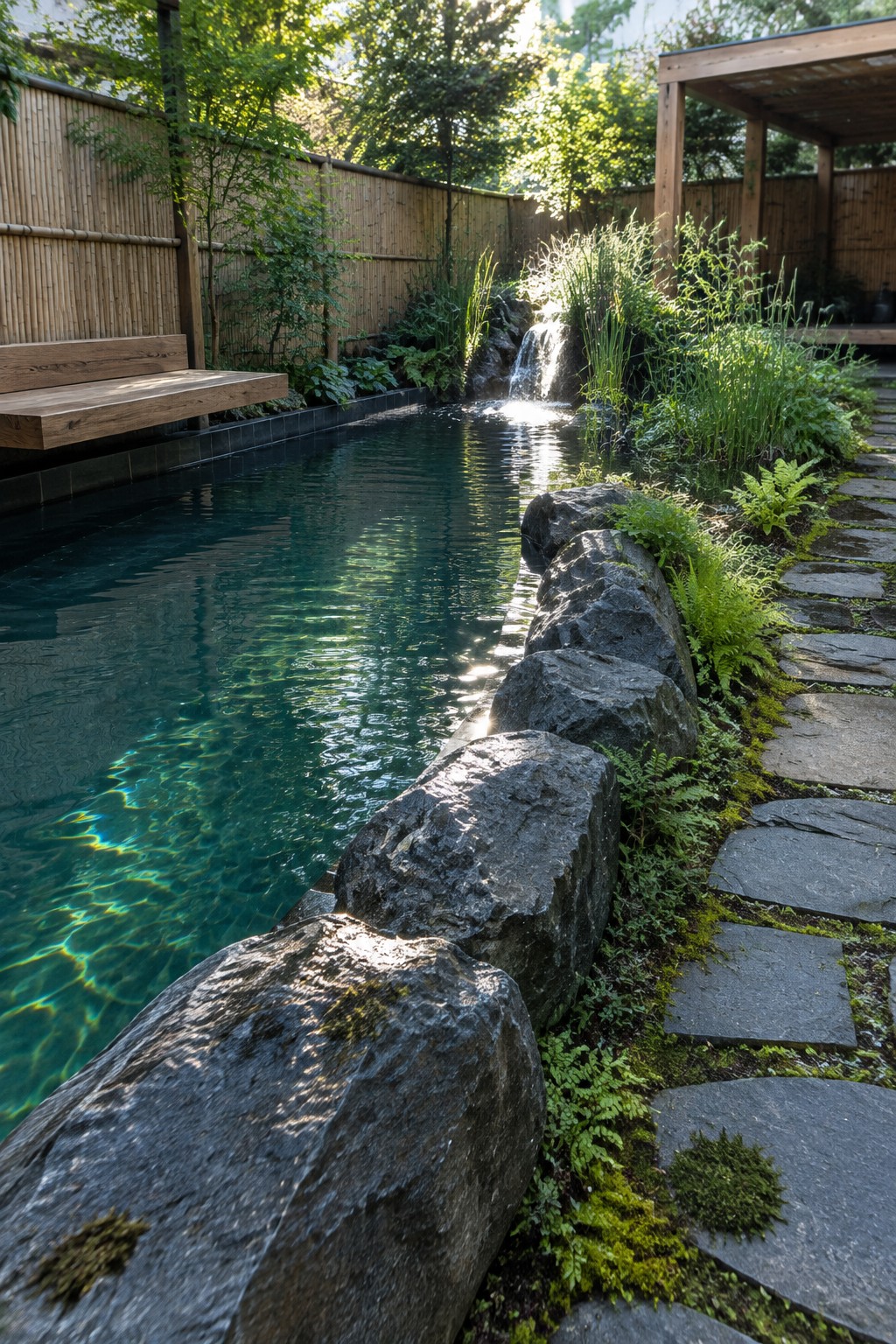
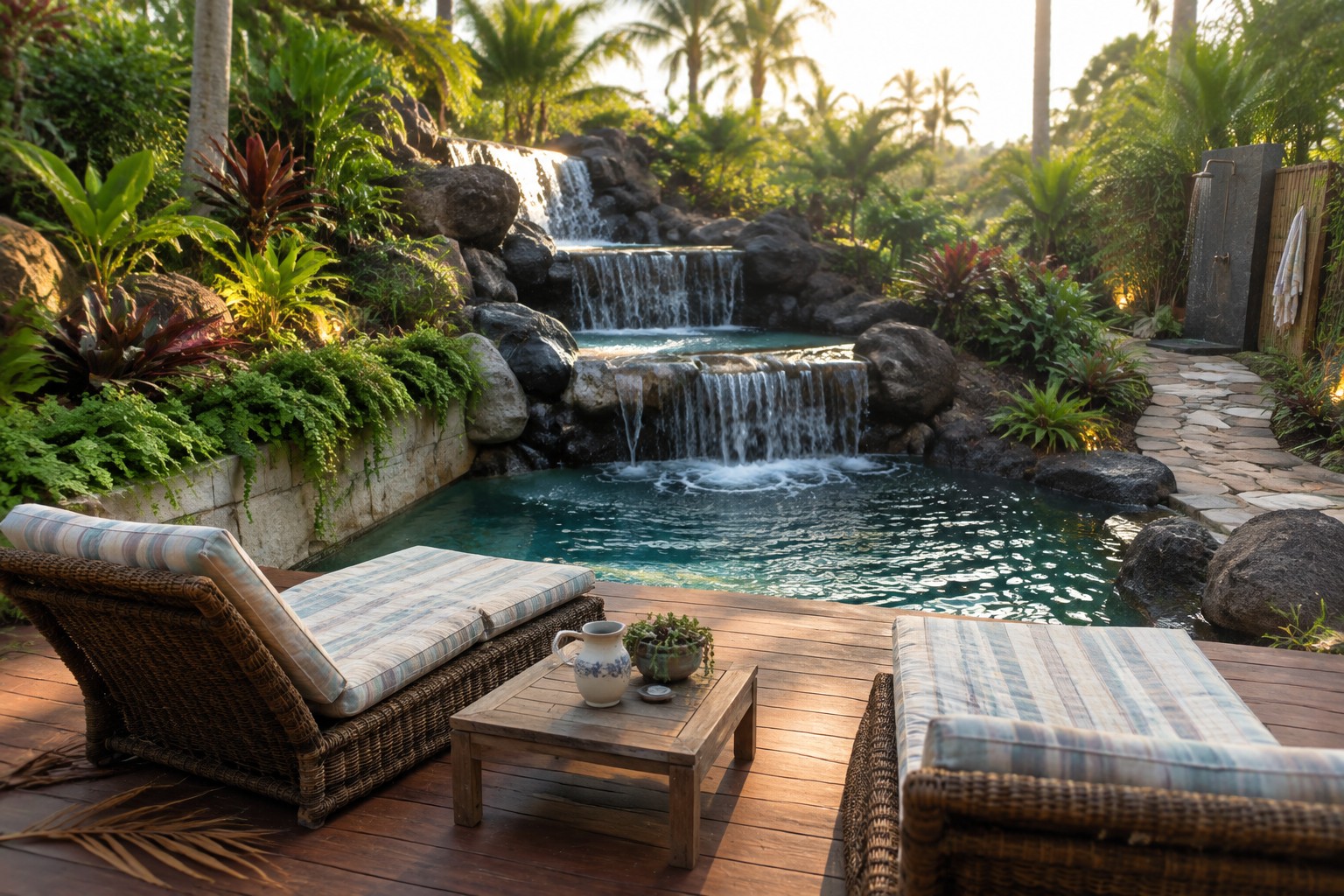
A natural pool can make biological filtration part of the landscape rather than hiding it in a separate system. Here, water passes over a small rock waterfall and through surrounding plants before returning to the swimming area. The result is a pool that feels connected to the garden.
This approach works well in a planted backyard where there is room for a separate regeneration zone or planted filter bed. Choose aquatic plants suited to your climate, and plan for access to clean and maintain the filter area. Plants and rocks support the system, but they do not replace proper circulation and filtration design.
Make the Pool Part of the Patio
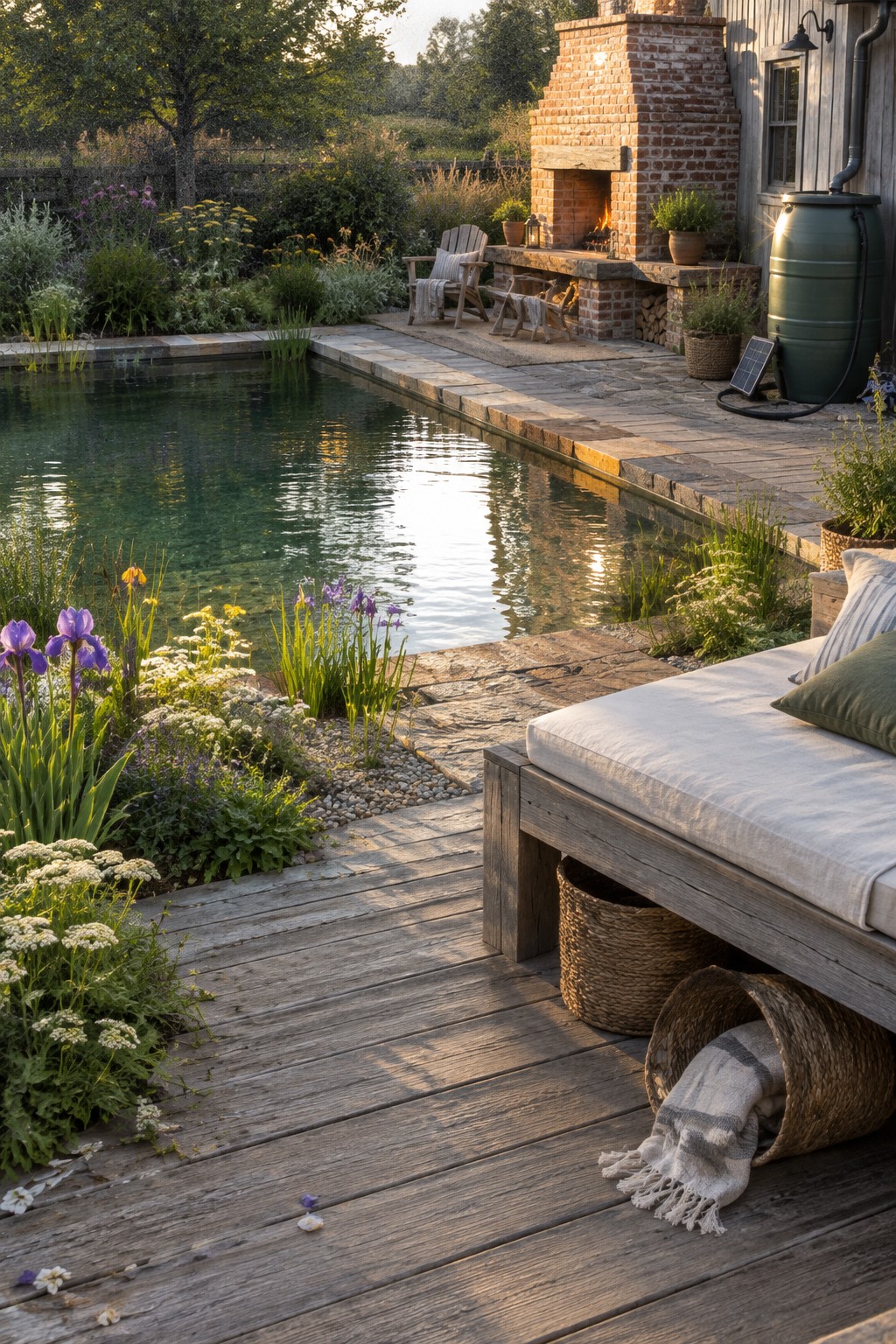
An organic pool can work as part of the outdoor living area rather than as a separate feature. A stone path around the water gives people room to move between the pool and nearby seating, while keeping the natural edge easy to reach.
Leave enough space for chairs or a lounging spot without crowding the pool. This layout suits gardens where the pool is used for relaxing as much as swimming. Keep planting clear of the walking route so wet feet have a safe path.
Keep the Pool Close to the Patio
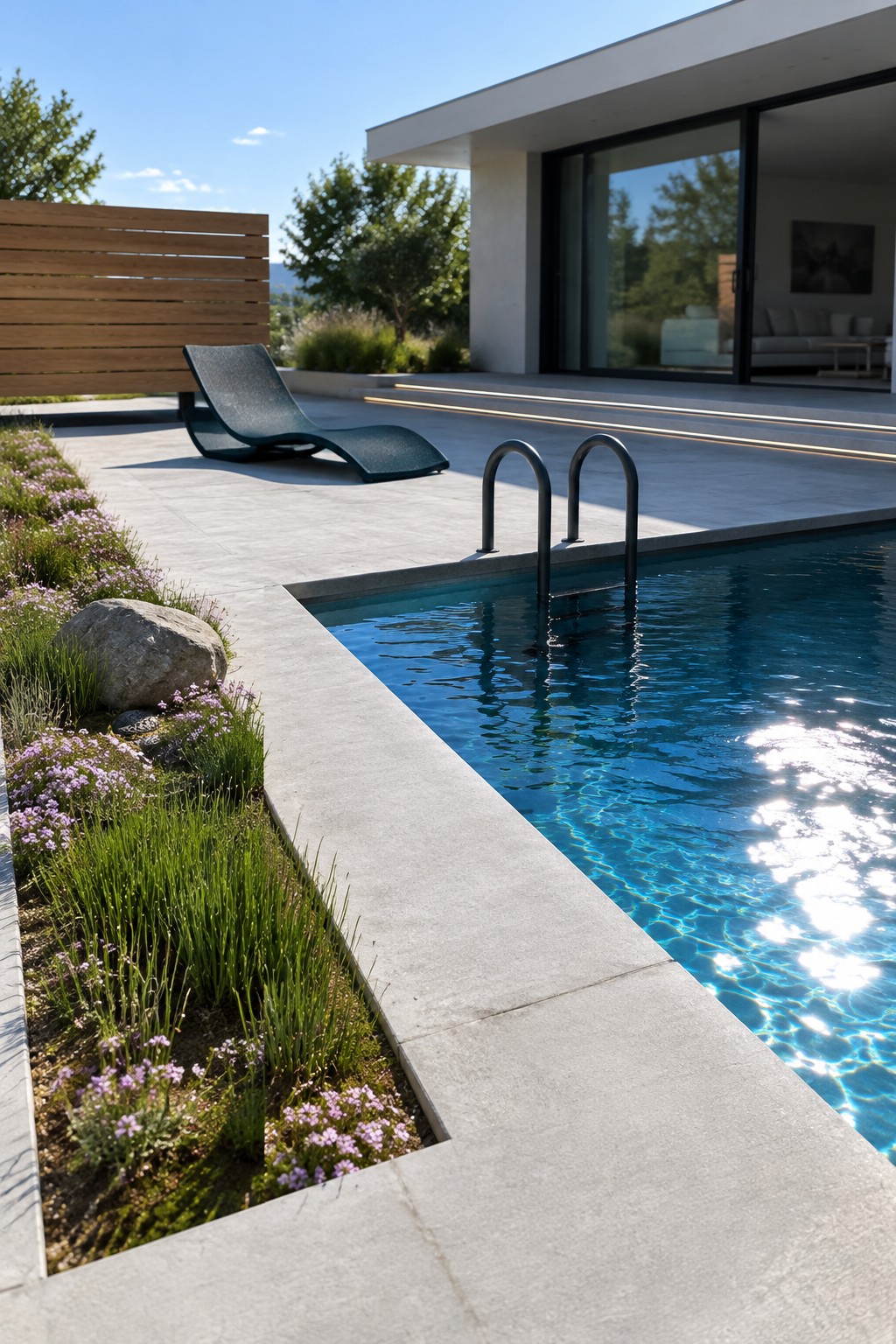
A pool works well as part of the outdoor living area when the surrounding patio has room for both lounging and getting in and out of the water. Here, the broad stone deck and simple lounge chair make the pool feel connected to the home rather than tucked away in a separate corner.
For a similar setup, leave a clear stretch of deck beside the pool for chairs and walking space. If you’re planning a biologically filtered pool, keep the planted filtration area easy to reach for routine care without cutting into the main patio space.
Add a Shallow Planting Shelf to the Pool
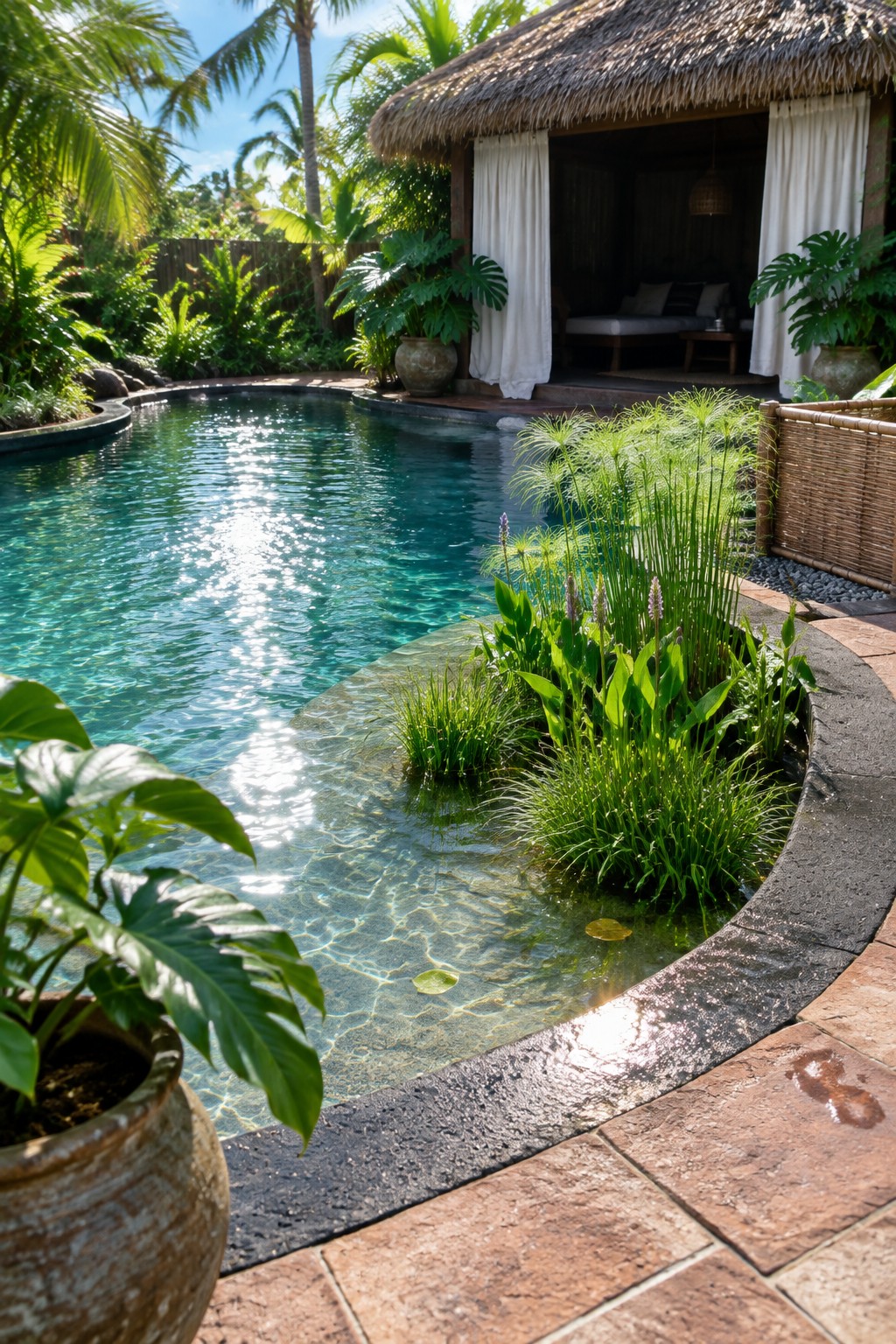
A shallow planted shelf can make biological filtration feel like part of the pool design rather than a separate system. Here, aquatic plants grow in a raised area within the water, where their roots help support natural filtration while keeping the main swimming area open.
This approach suits a garden pool where there is room for a planted section along one edge. Choose plants suited to standing water, and leave enough clear space for swimming and maintenance.
Make Poolside Seating Part of the Layout
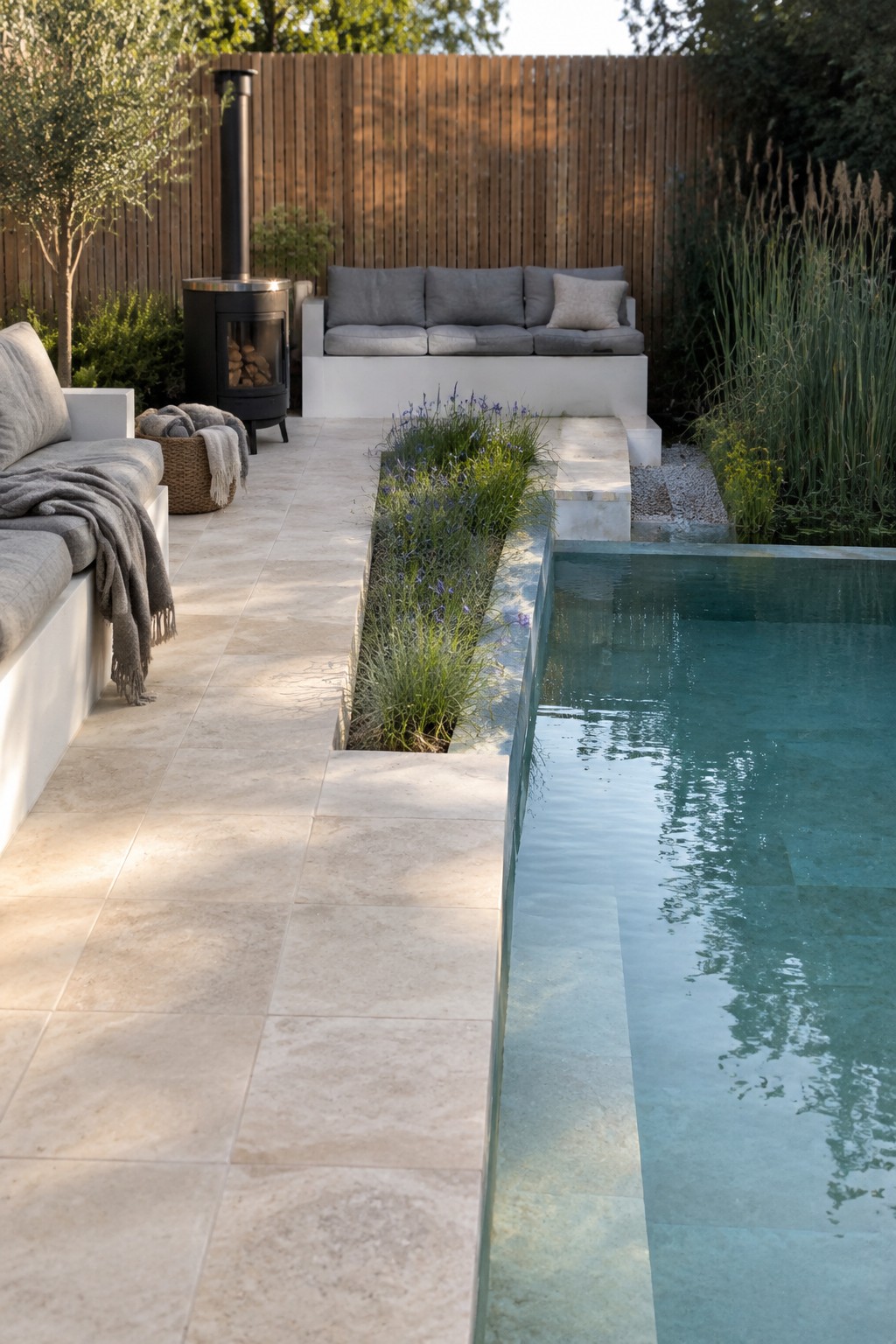
A built-in bench beside the pool makes the seating area feel like part of the overall design, rather than furniture added afterward. Here, a raised planter separates the bench from the water while keeping greenery close by.
This approach works well in a compact yard where space needs to serve more than one purpose. Use durable, water-resistant finishes, and leave a clear path between the seating and the pool edge.
Add a Shaded Lounge Beside the Pool

A shaded seating area gives people a comfortable place to relax right next to a natural pool. Here, the canopy covers a lounge area without taking away the open view of the water, so the pool stays part of the outdoor living space.
For a similar setup, place the seating close enough to the pool for easy access, but leave a clear path along the edge. A canopy or shade sail can work well in a sunny yard, and light-colored cushions help keep the area comfortable.
Add Shallow Steps Along the Pool Edge
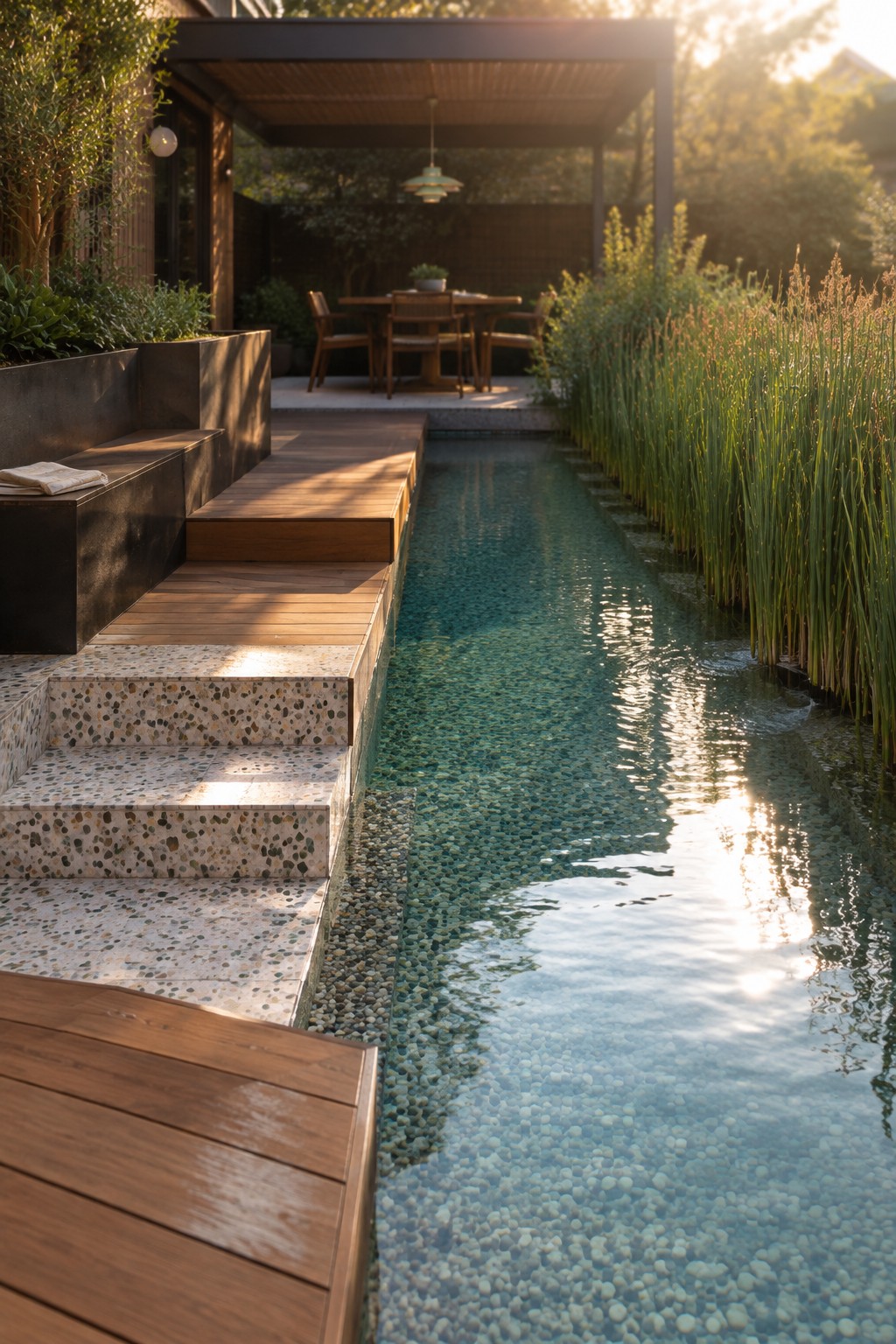
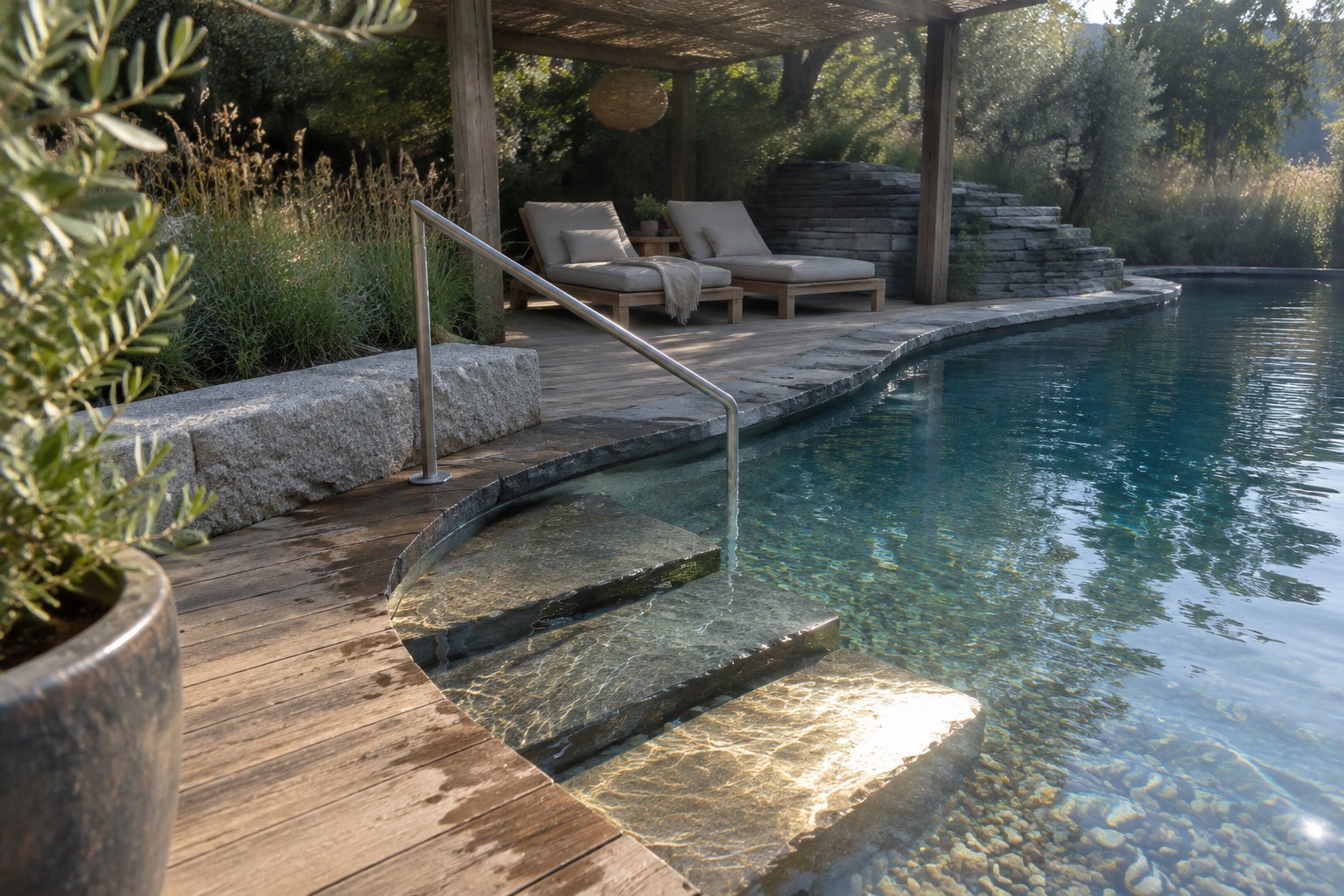
Wide, shallow steps can make a biological pool easier to enter while giving swimmers a place to sit in the water. Here, pebble-finished steps run beside the pool, keeping the transition from deck to water gradual.
This approach works well in a narrow pool where a ladder might take up too much room. Use a slip-resistant finish and keep the steps clear of plants so debris does not collect around them.
Let a Planted Stream Filter the Pool
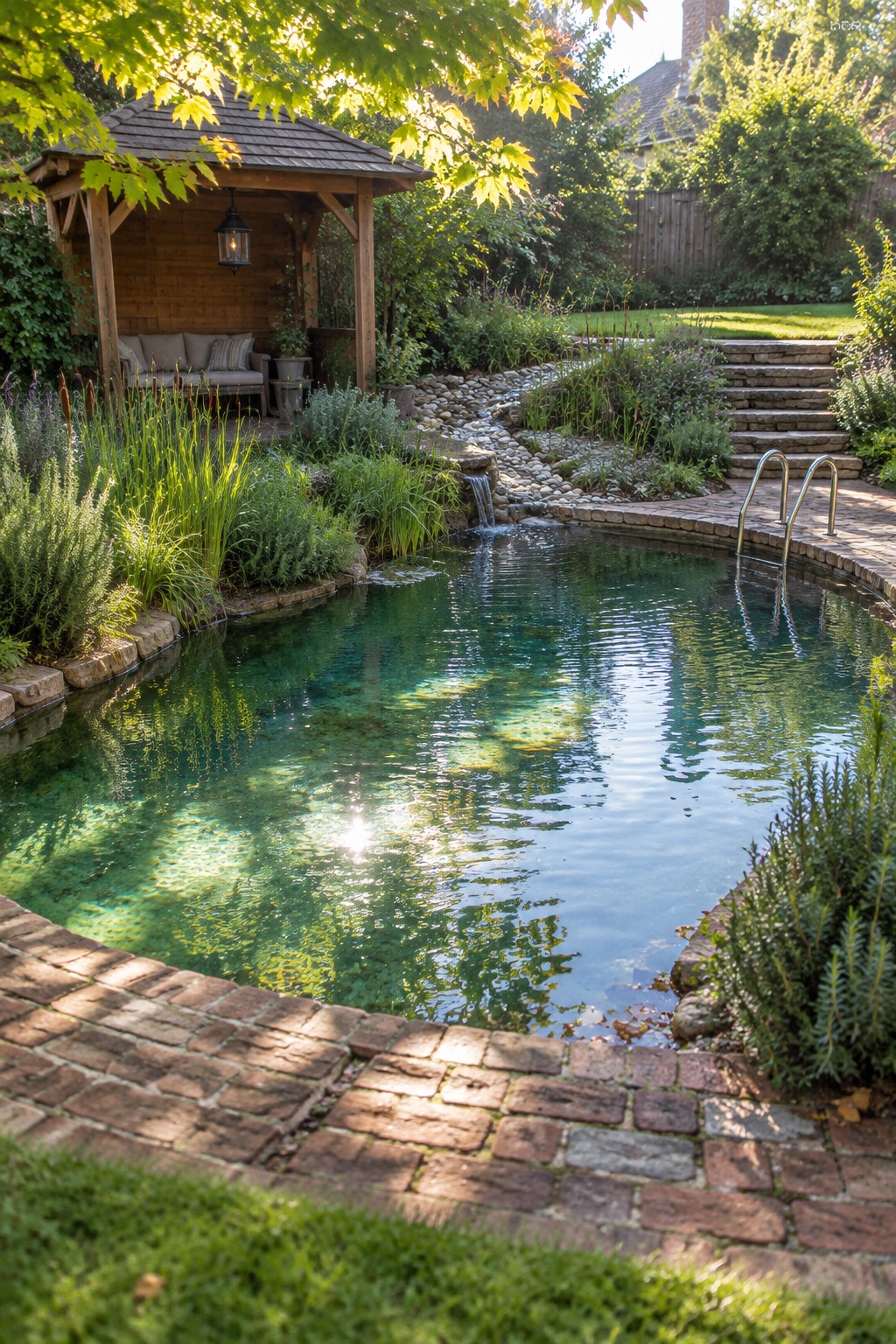
A shallow, planted stream can serve as part of a biological pool filter while making the water system feel like a natural part of the garden. Here, the stream leads into the pool over a small stone spillway, so the filtration area has a clear place in the layout.
This approach works best when there is room to give the plants and water their own channel beside the swimming area. Use gravel and suitable aquatic plants as part of a properly designed filtration system, and make sure the stream can be maintained without disturbing the pool.
Use a Planted Edge for Pool Filtration
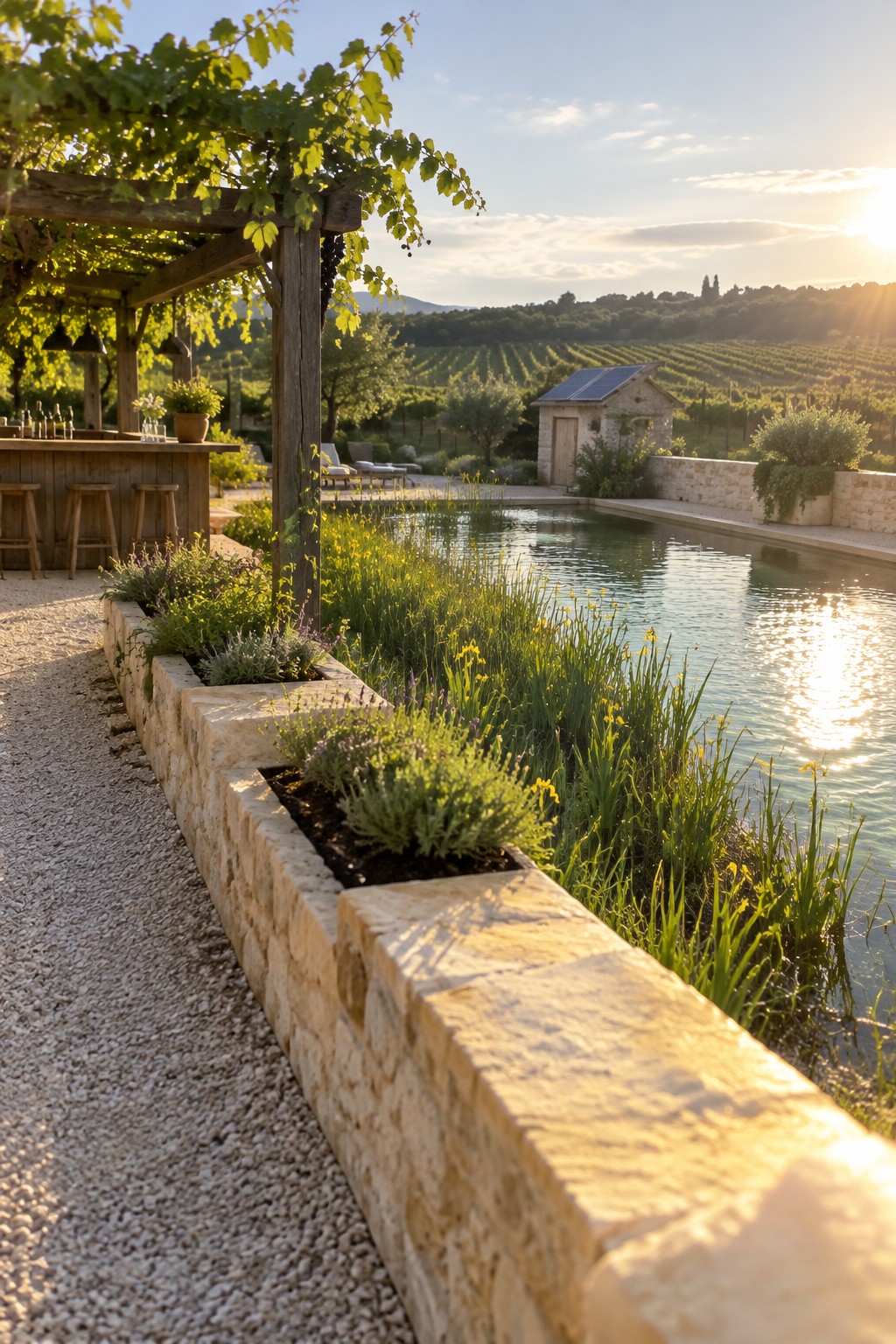
A planted edge can make a biological pool feel like part of the garden rather than a separate, treated swimming area. Reeds and other water plants can grow in a shallow zone beside the pool, where they support the natural filtration system.
This approach works well when there is room to give the plants a clear, contained area along the water. A low stone wall can define the edge, but leave enough space for the planting zone to function and for easy pool maintenance.
Make the Pool Part of the Outdoor Living Space

A pool can feel more useful when the deck and seating are planned as part of the same outdoor area. Here, a narrow wood deck runs beside the water, leaving room to sit close by without taking over the pool.
This layout suits a compact terrace or rooftop where space is limited. Keep the walking strip clear, and choose outdoor materials that can handle splashes and regular use. For a biologically filtered pool, plantings can sit along the far edge so the filtration area remains part of the design.
Plan the Pool as Part of the Outdoor Living Area

A natural pool works best when it feels connected to the places where people gather. Here, the curved pool edge sits beside a gravel terrace, while built-in stone steps link the water to the dining and seating areas. That kind of layout makes the pool feel like part of the yard rather than a separate feature.
When planning a similar space, leave a clear, comfortable route between the pool and the patio, and make room for both lounging and dining. Keep planted filtration areas close to the pool, but allow enough space to move around them and maintain the water.
Use a Living Wall to Filter the Pool
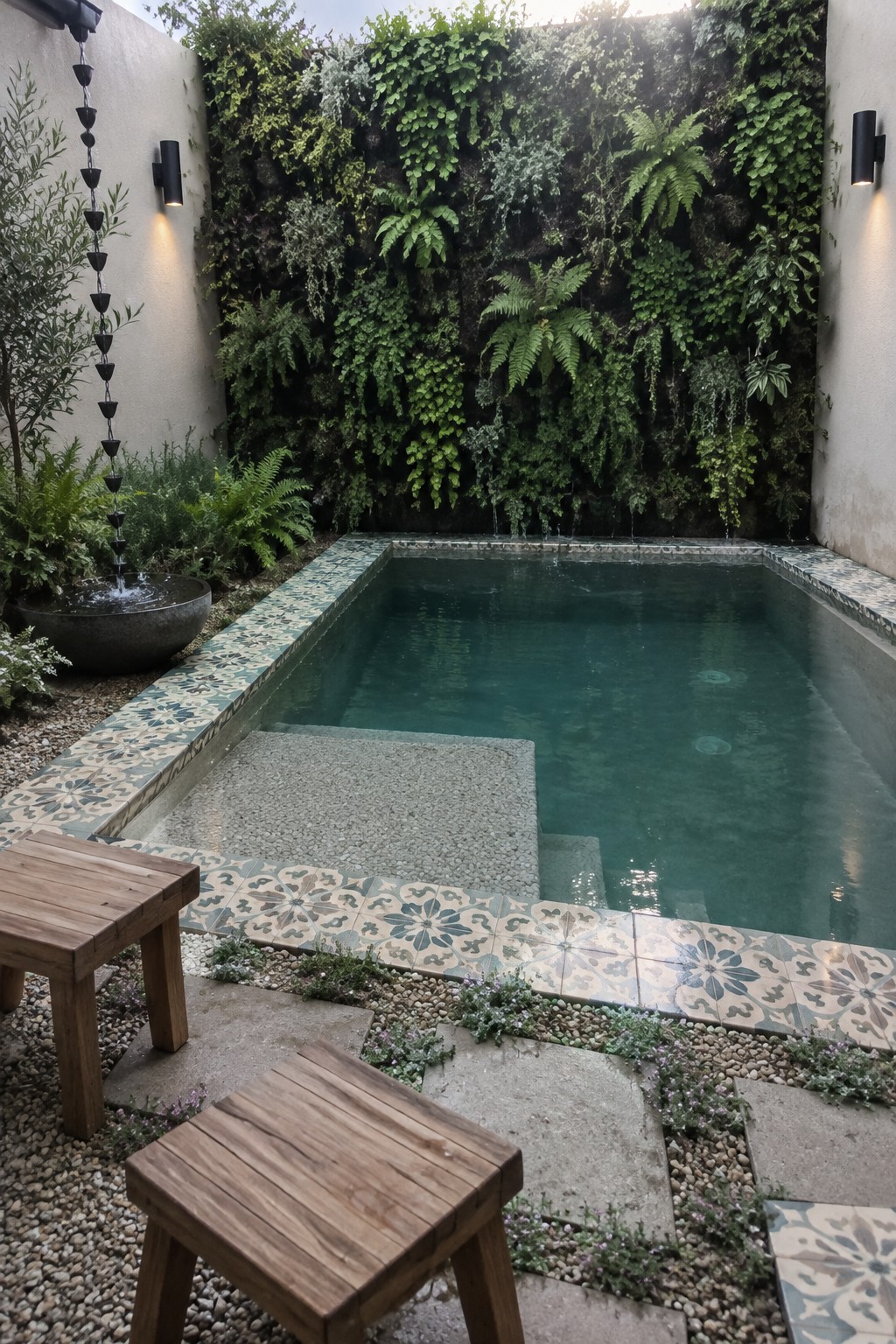
A planted filtration wall can make biological cleaning part of the pool design instead of hiding it in a separate corner. The dense mix of ferns and other greenery gives the water a natural edge, while the pool remains easy to use.
This approach suits a compact courtyard where space for a separate pond is limited. Plan the planting and water circulation together, and choose plants that can handle the local climate and regular splashing.
Use a Planted Border for Pool Filtration
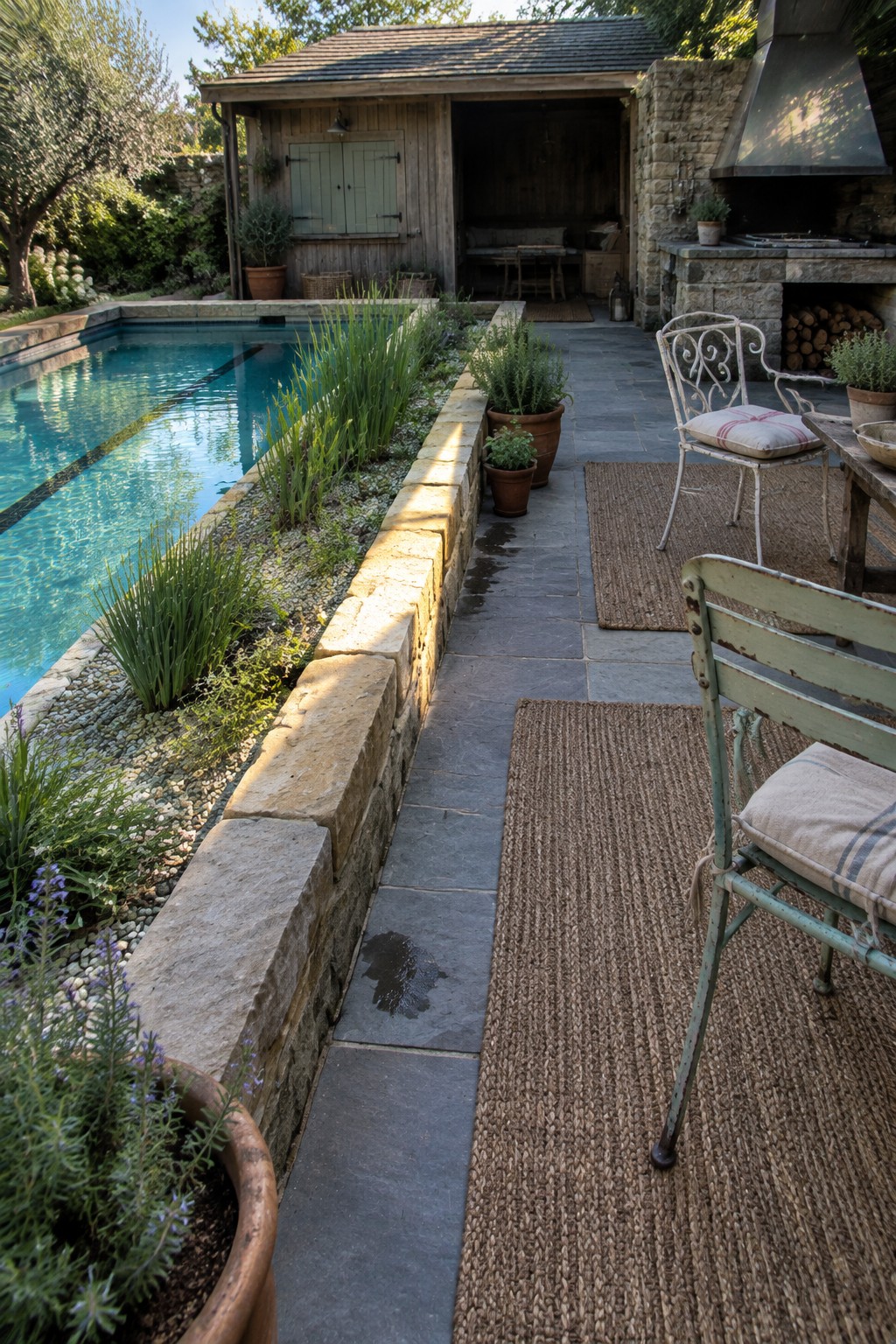
A planted border can make biological filtration feel like a natural part of the pool rather than a separate feature. Here, a shallow gravel bed with tall aquatic plants runs alongside the water, giving the planting zone a clear place within the overall layout.
This approach works well when there is room beside the pool for a planted area and a stone edge to keep it distinct. Choose plants suited to wet conditions, and leave enough space to reach the filter area for routine care.
Use a Planted Edge for Natural Pool Filtration

A planted edge can help make biological filtration part of the pool design instead of hiding it in a separate system. Water moves through a shallow gravel bed and aquatic plants, where beneficial microbes help filter it before it returns to the swimming area.
This approach suits pools set into a garden or sloped yard, where the planted zone can sit beside the water without taking over the deck. Keep the swimming area and filtration bed clearly separated, and choose plants suited to wet conditions and your local climate.
Frequently Asked Questions
Q: Will a biologically filtered pool still look clear enough to swim in?
A: Yes, when the plant zone and filter are sized well and the water keeps moving. The swimming area can stay clear, though it may not look as sharply blue as a chlorinated pool.
Q: Do I need to add fish to make the ecosystem work?
A: No. Fish are optional, and skipping them makes it easier to keep nutrients and algae in check. Plants and beneficial microbes do the core filtering.
Q: How much maintenance does this kind of pool need?
A: Plan to skim leaves, clear plant debris, and check that pumps and water flow are working. You’ll also need to trim plants as they spread, especially during the growing season.
Q: Can I turn my existing pool into a natural pool?
A: Often, but the design needs room for a biological filter or planted regeneration zone. A pool professional who has built natural pools can assess whether your layout and plumbing can support the change.