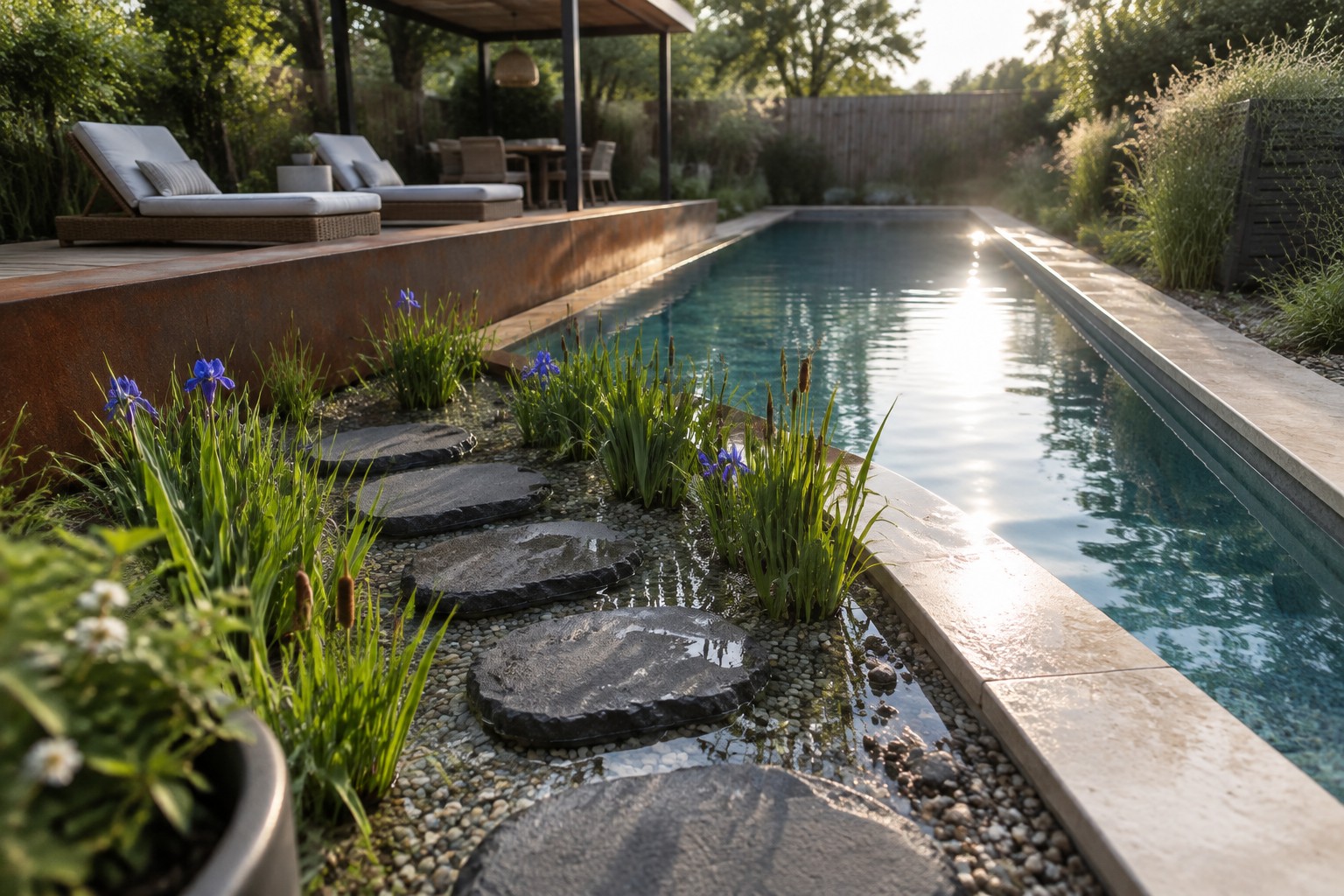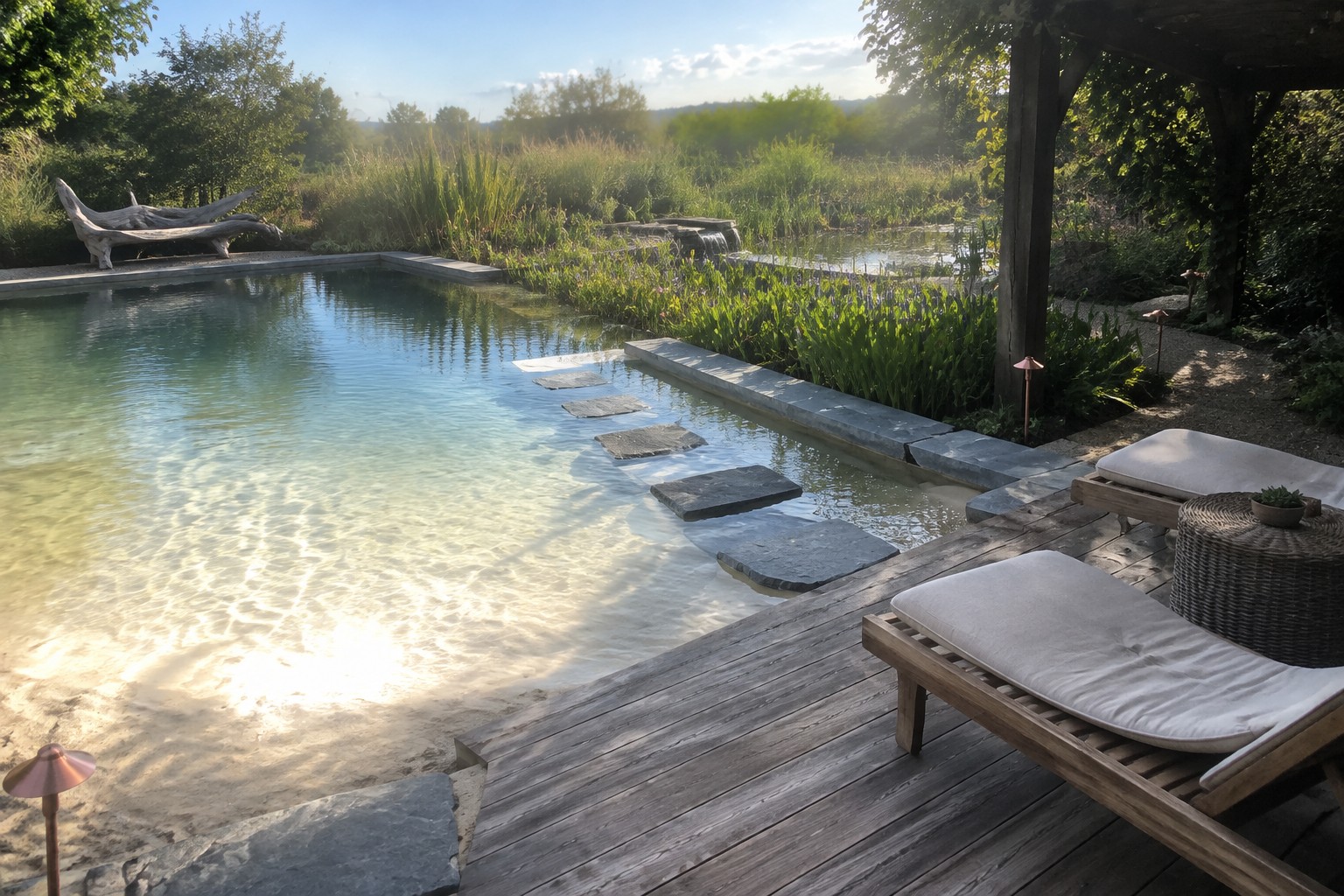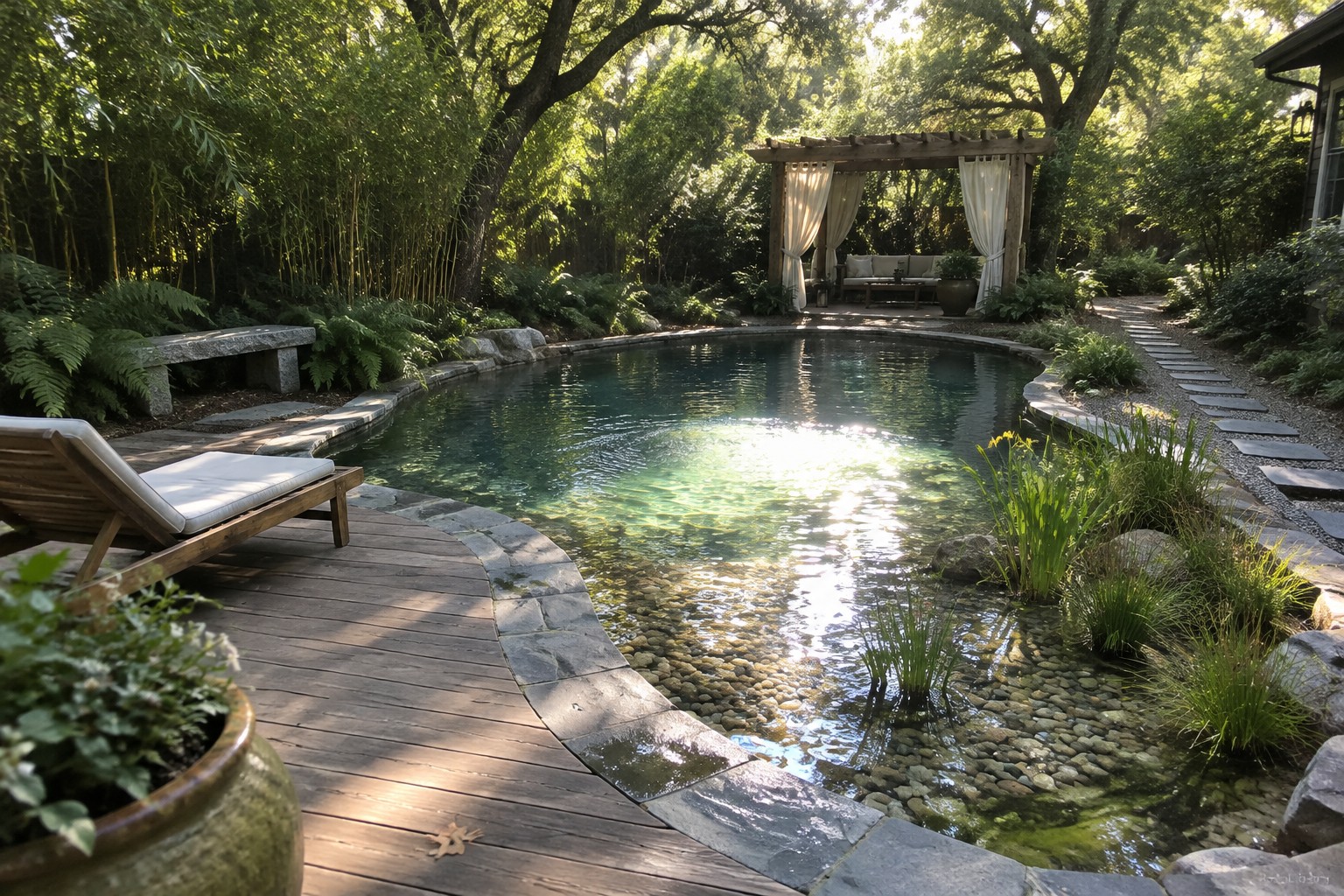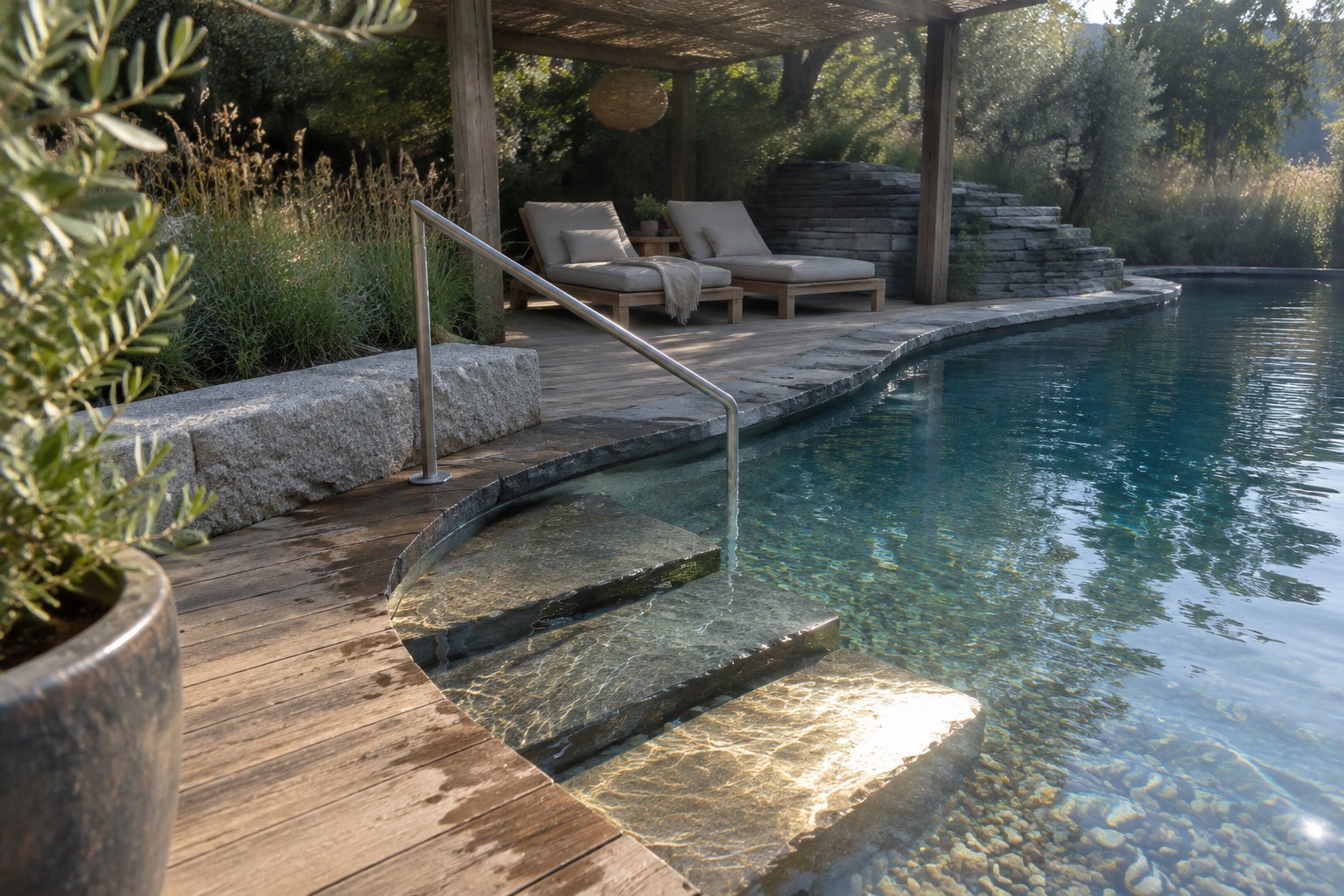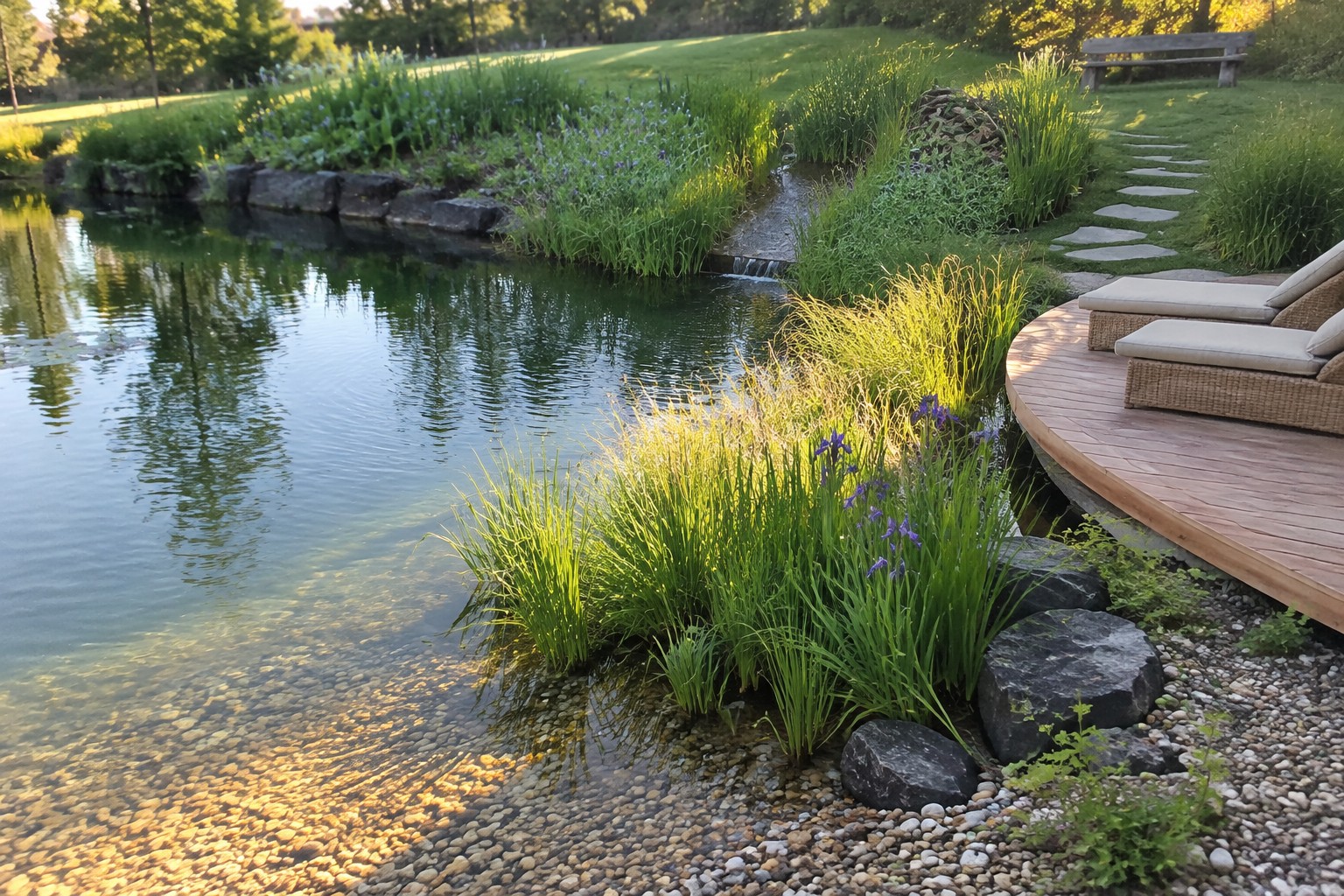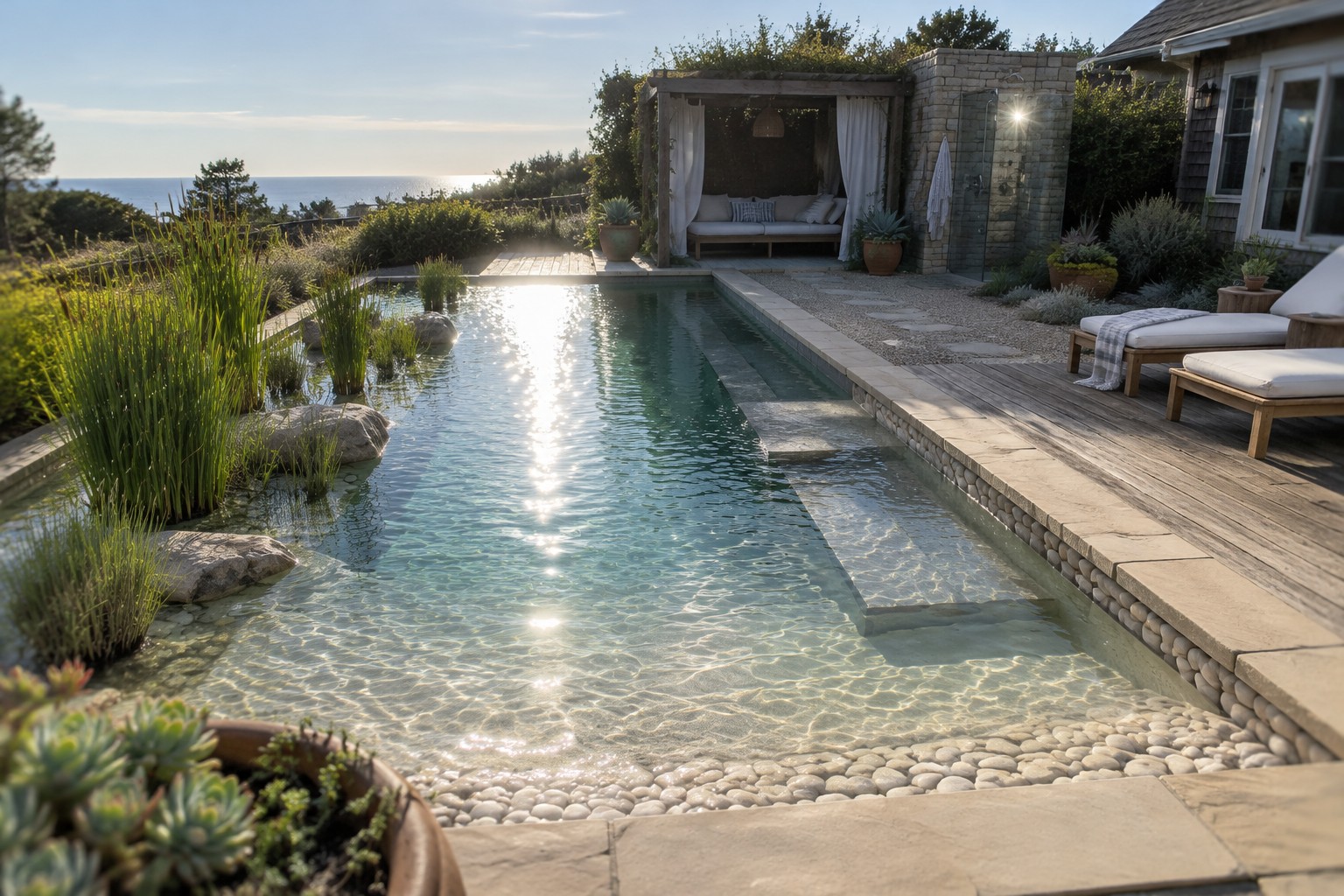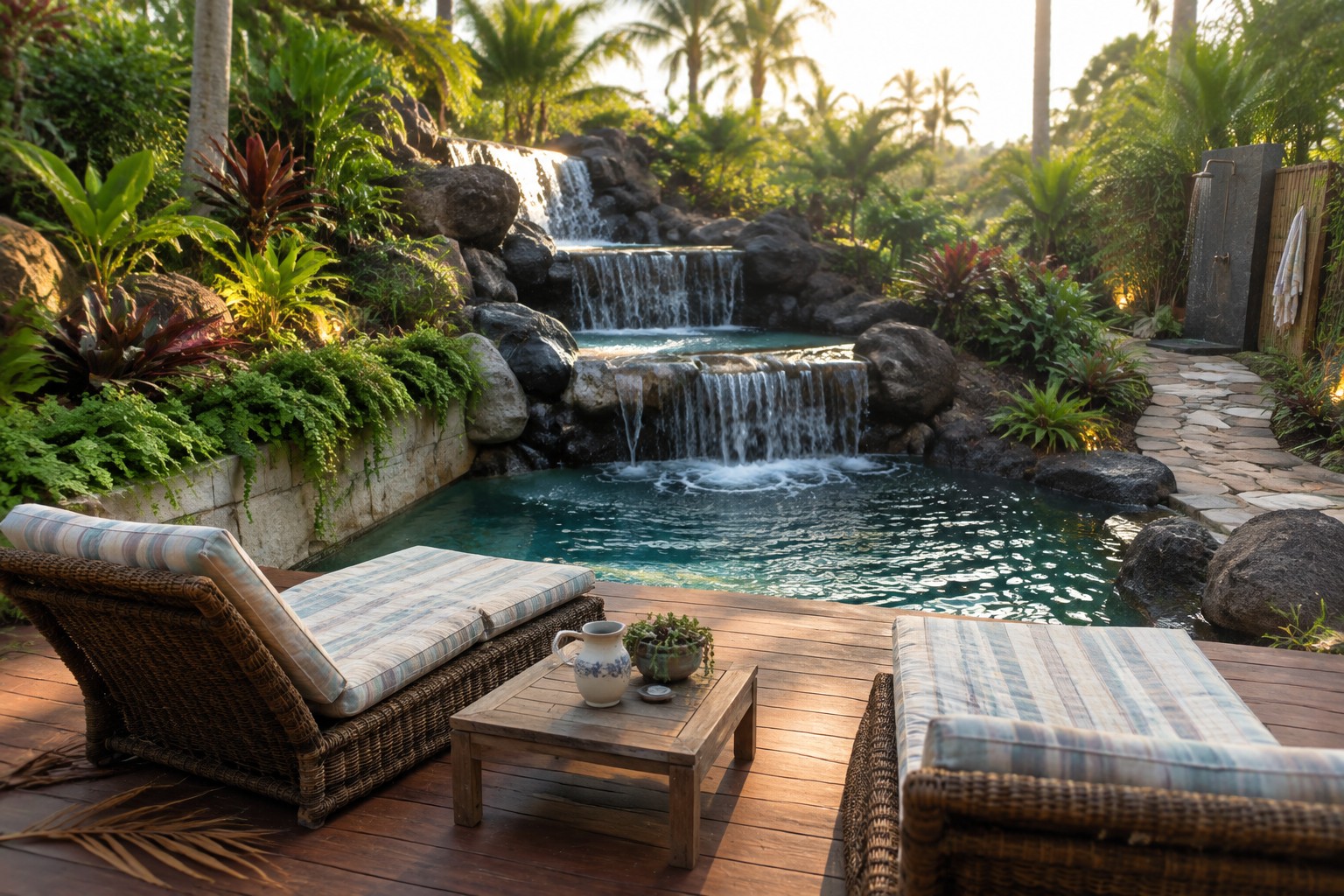
A natural pool can feel like part of the landscape when its shape, rocks, and planting work together rather than compete for attention.
I find that the waterfall often draws the eye first, but its scale and placement matter just as much as the sound of the water.
A cascade that fits the pool’s contours can make the whole yard feel more settled, while an oversized feature may look out of place.
The ideas ahead show different ways to use stone, gentle drops, and surrounding greenery, with details you could adapt to your own site.
I’d start by saving the designs that suit your yard’s slope and the amount of maintenance you want to take on.
Make the Waterfall Part of the Pool
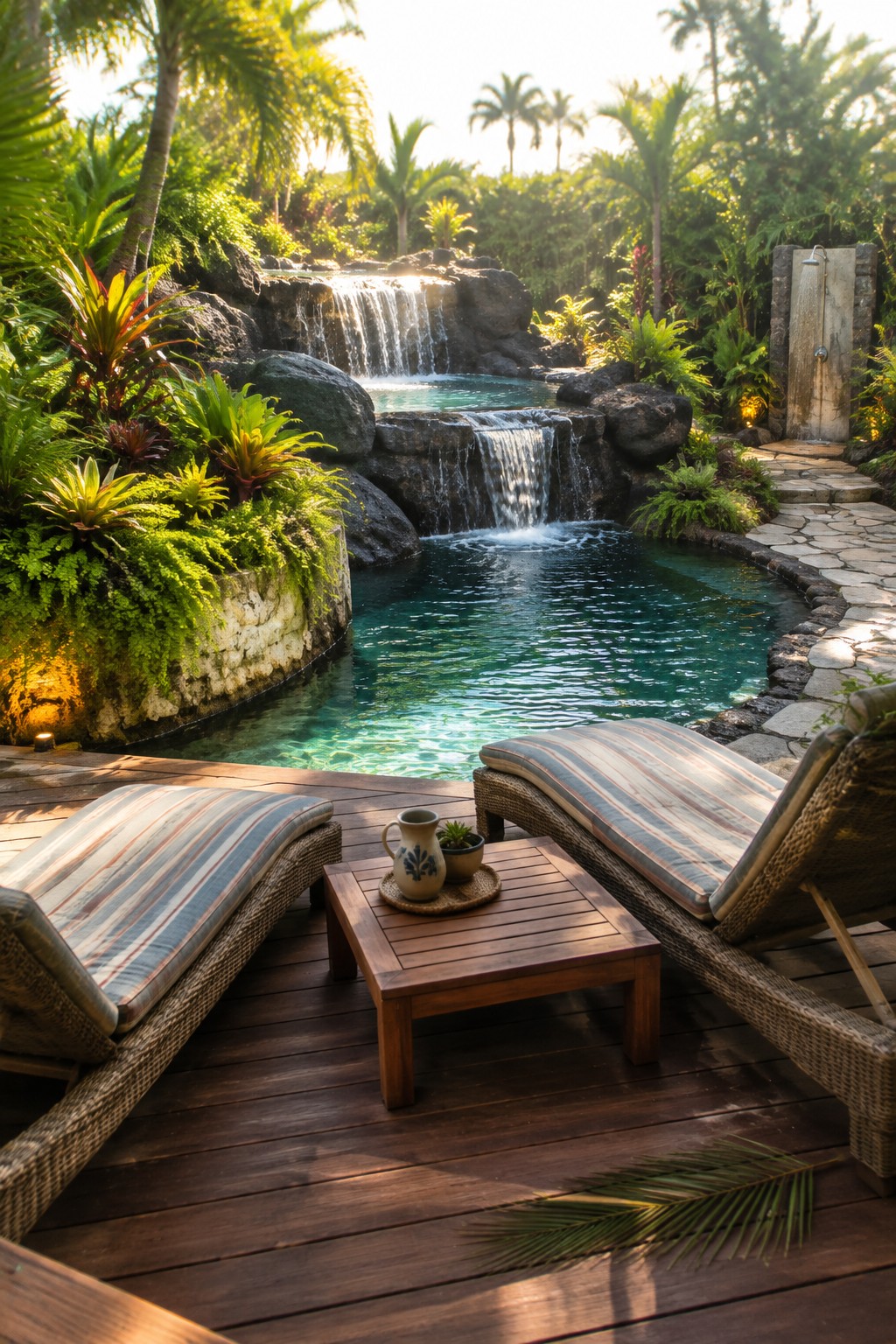
A rock waterfall can make a natural pool feel like part of the garden rather than a separate feature. Here, the water spills over two rocky ledges, giving the pool a gentle sound and movement.
This idea works well in a tropical garden or a yard with room for a tiered pool. Keep the edges irregular and use sturdy local stone, but plan the falls so water returns smoothly to the pool without creating too much splash.
Let the Rock Waterfall Set the Poolside Mood
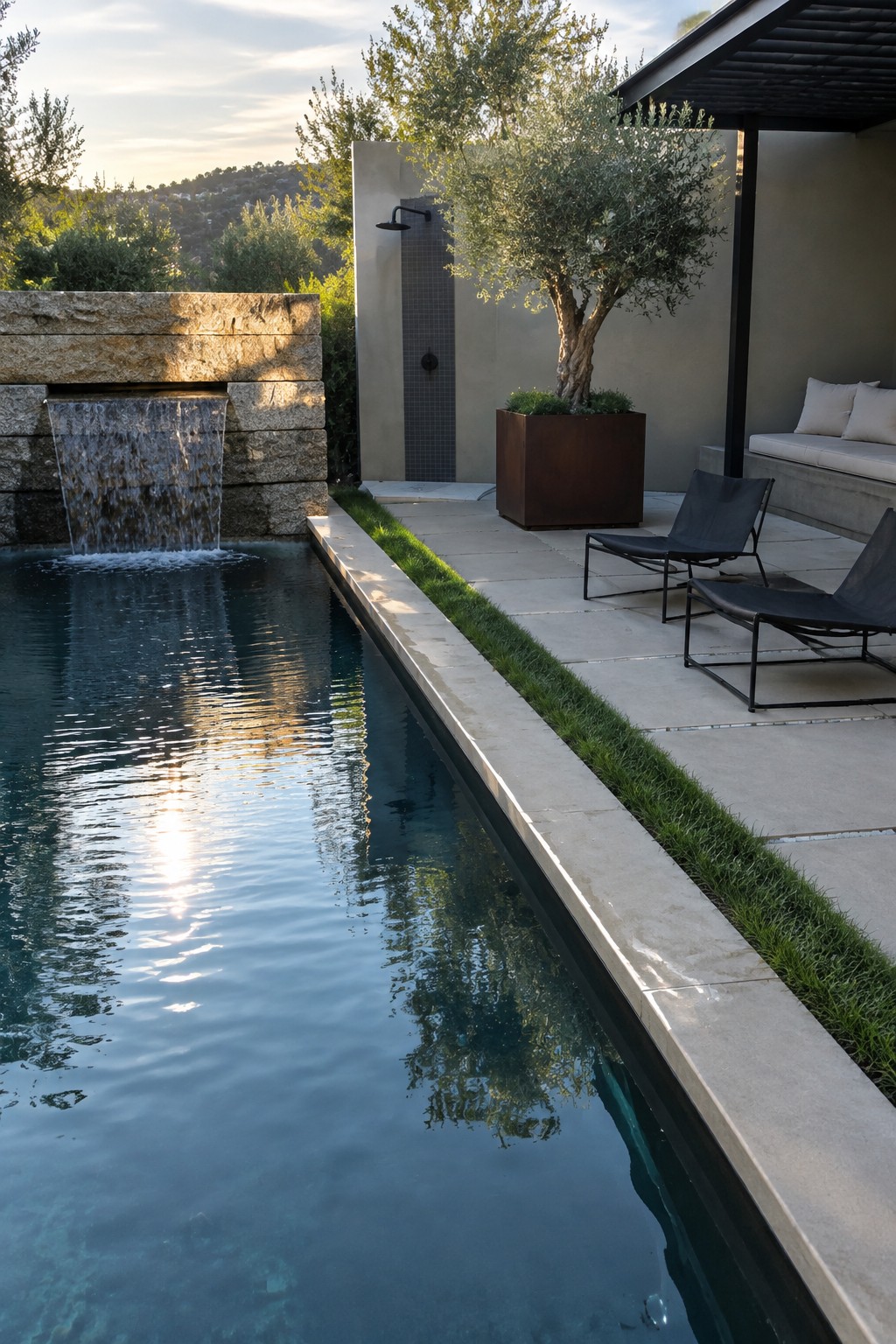
A stone waterfall gives a natural pool a clear focal point and brings the sound of moving water into the patio area. Broad stone blocks suit this look well, especially when the pool edge and paving stay simple.
Keep the waterfall at one end of the pool so it does not crowd the main swimming area. A compact spillway can work in a smaller yard, but plan for easy access to the pump and regular cleaning.
Let the Waterfall Shape the Pool Layout

A short stone spillway can make a natural pool feel like part of the patio instead of a separate feature. Here, the water passes between two connected pool levels, giving the space a clear layout and keeping the sound of moving water close to the seating area.
This approach works best when the levels are planned together from the start, with enough room for safe steps and easy access to both pools. Use a durable stone edge, and make sure the spillway has a reliable circulation system so the water stays clean.
Add a Seating Deck Beside the Pool

A small deck beside a natural pool gives people a comfortable place to sit without taking attention away from the waterfall. Here, the wood boards meet the water’s rocky edge, making the pool easy to enjoy from close by.
Keep the deck just large enough for a couple of chairs, and leave room to walk around the pool safely. Wood suits a relaxed garden setting, but use a finish made for outdoor exposure and check it regularly for wear.
Add a Rock Waterfall to a Natural Pool
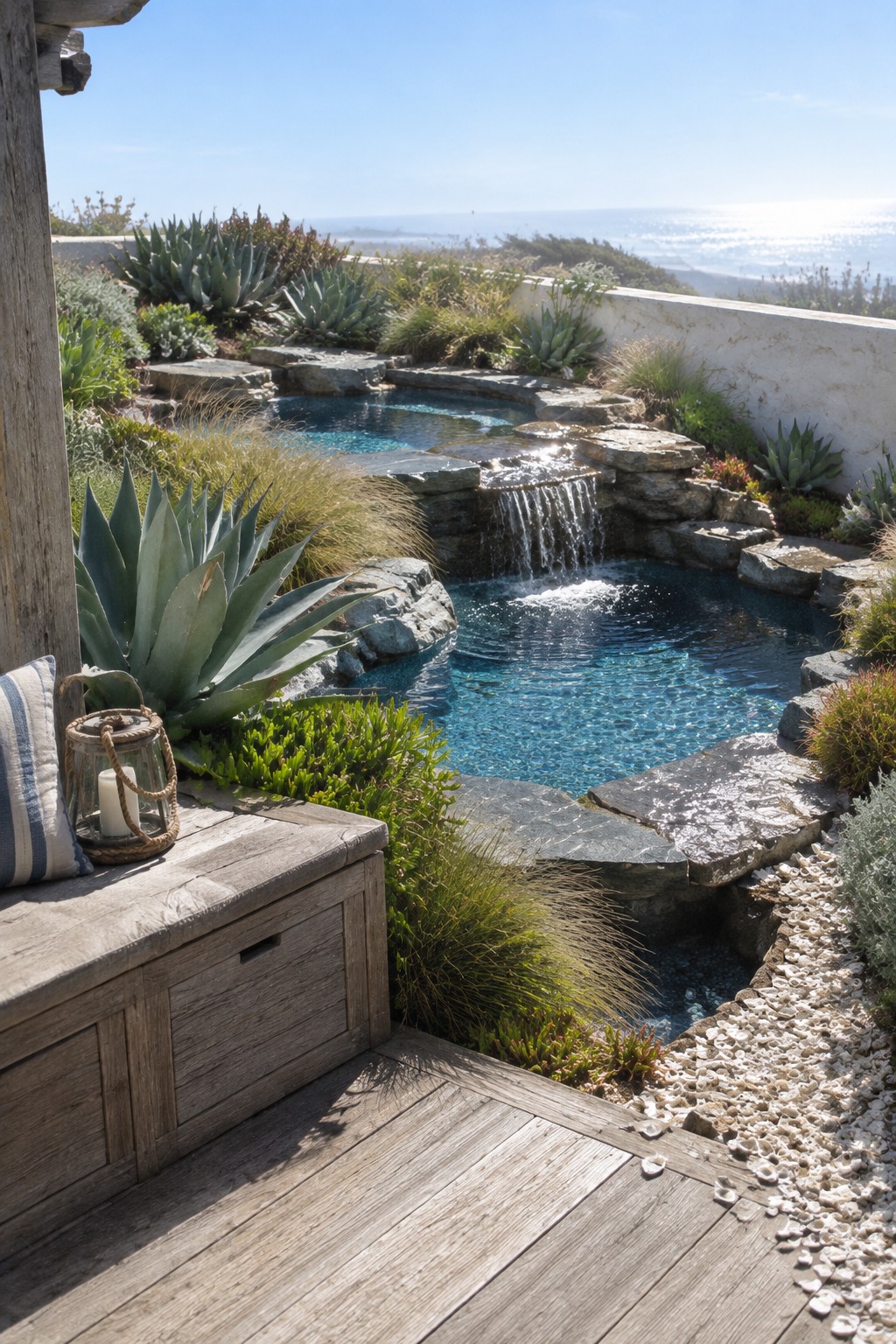
A low rock waterfall can make a natural pool feel like part of the garden instead of a separate feature. The water stays in view and adds gentle movement, while the uneven stone edges give the pool a more natural shape.
This works well in a small backyard pool where a full-height waterfall would take up too much space. Use broad, stable stones for the spillway and keep the drop modest so the sound stays pleasant and the water is easy to maintain.
Add Seating Beside the Waterfall Pool
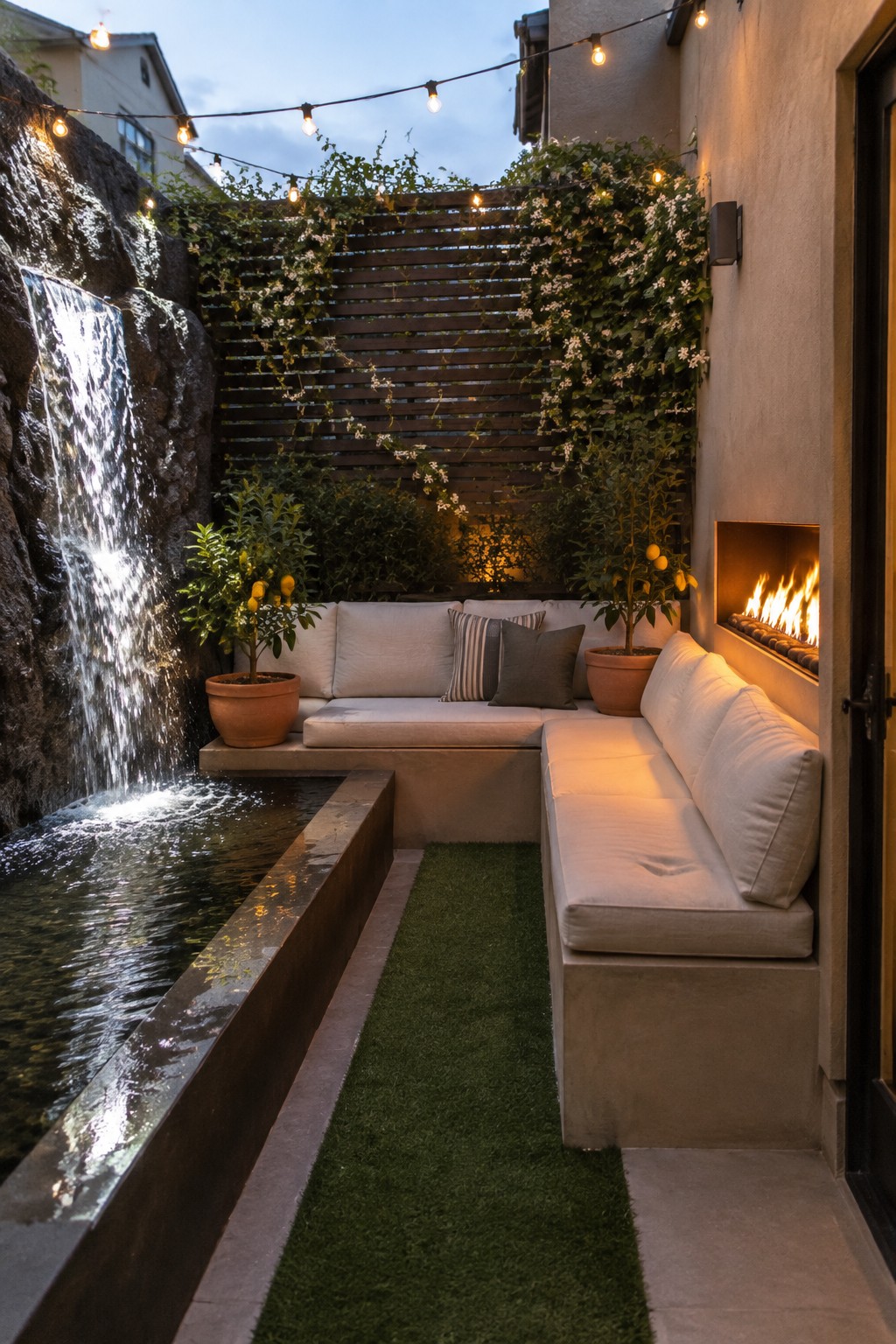
A narrow seating area beside a cascading pool makes the water feature part of the space people actually use. A built-in bench keeps the walkway clear, while the sound of falling water can make a small patio feel more tucked away.
This setup works well in a compact courtyard where there isn’t room for separate poolside furniture. Leave enough space to walk comfortably, and choose outdoor cushions that can handle splashes and damp air.
Use a Rock Waterfall as the Pool’s Main Feature

A natural rock waterfall gives a pool a clear focal point and brings the sound of moving water into the yard. Here, the falls sit at one end of the pool, so the rocky edge feels like part of the water rather than a separate garden feature.
This layout works well in a private backyard where there’s room for a pool and a planted border. Keep the waterfall scaled to the pool, and leave enough clear space around it for easy access and maintenance.
Use Stepping Pools to Follow the Garden’s Slope

A natural pool can work well on a sloped garden when the water moves through a series of small pools. Stone ledges let the water spill from one level to the next, so the change in height feels like part of the pool design.
This approach suits a hillside where a single flat pool would take more work to fit. Keep the drops modest and plan for safe, easy access between levels. Here, stone steps and a short wooden walkway connect the pools.
Create a Shallow Sun Shelf Around the Pool

A shallow shelf gives a natural pool a spot for wading and relaxing without taking up the deeper swimming area. Here, a broad ledge curves along the pool edge, while the rock waterfall gives the water a clear focal point.
This layout works well for family pools and spaces where people want to sit in the water as well as swim. Keep the shelf wide enough for comfortable use, and make sure the change in depth is easy to see.
Make a Waterfall Pool Part of the Patio
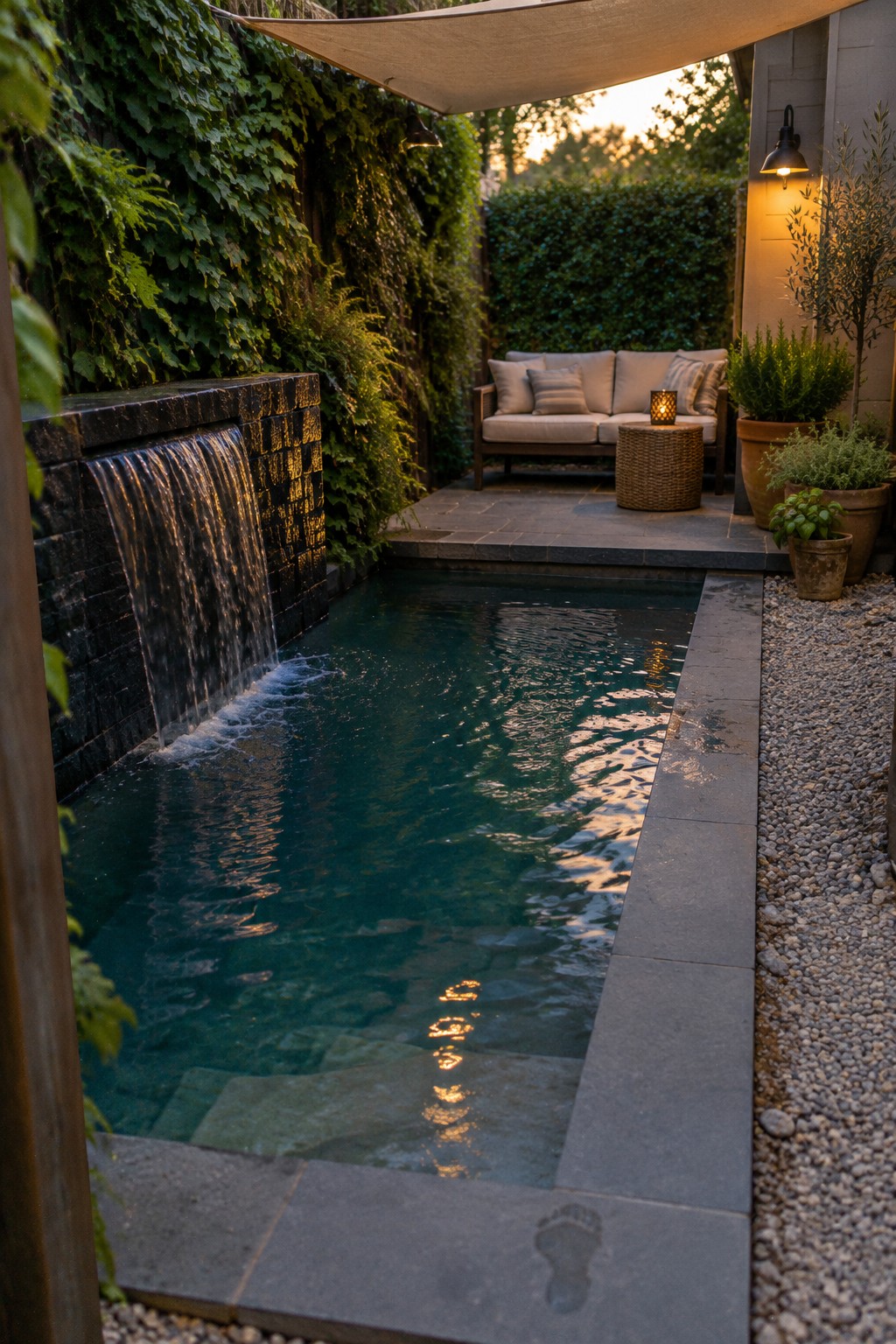
A pool can feel more connected to the rest of the yard when its waterfall sits beside a place to sit. Here, the dark stone water feature spills into the pool near a small paved seating area, so the sound of moving water carries over to the patio.
This layout works well in a narrow courtyard where there is room for a compact pool but not a separate lounge zone. Keep the waterfall close to the seating, and leave a clear path around the pool edge for safe access.
Use a Rock Waterfall to Connect the Pool to the Garden
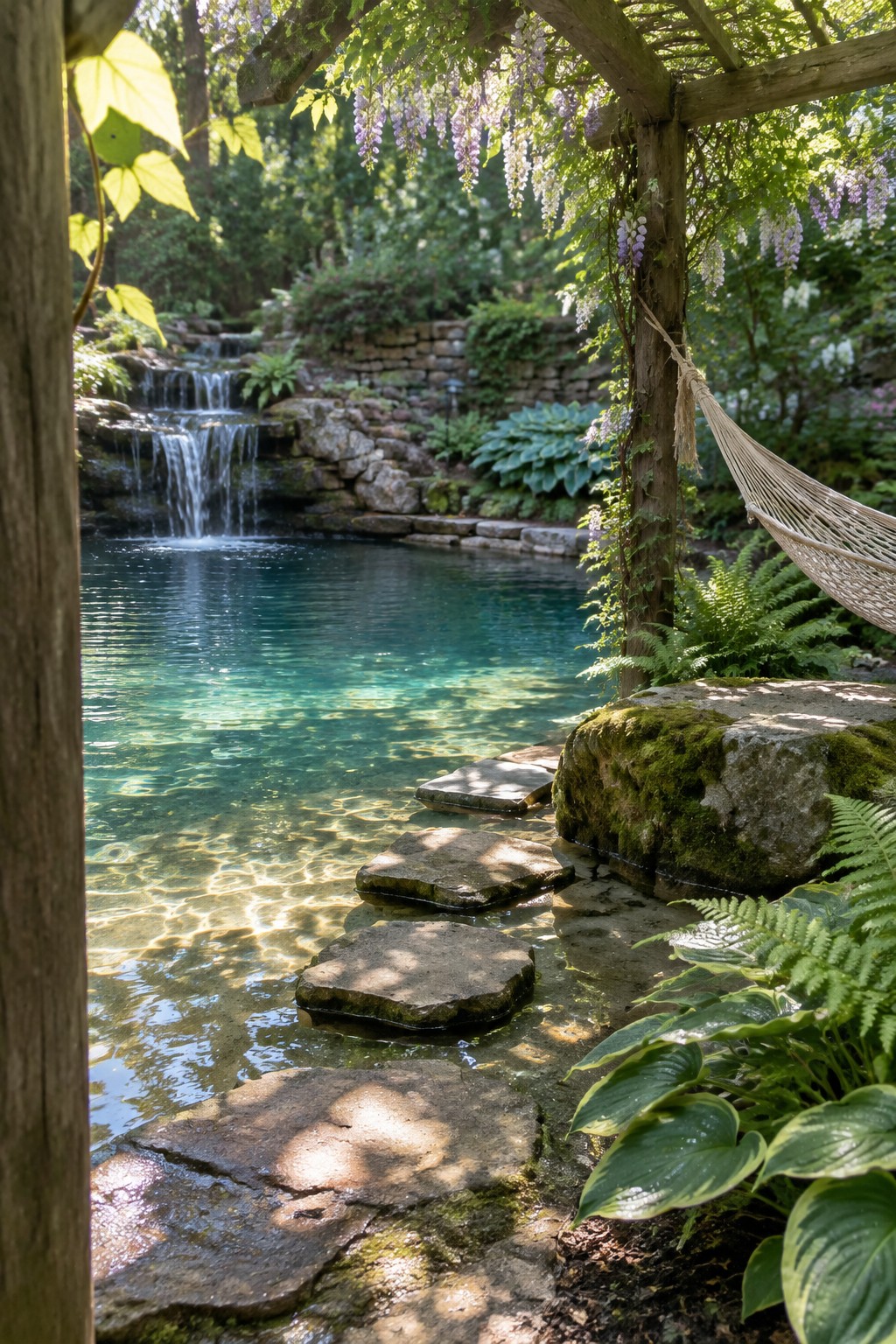
A small rock waterfall can make a natural pool feel like part of the landscape rather than a separate feature. Here, water spills over a low stone ledge into the pool, giving the garden a gentle sense of movement.
Use local-looking stone and keep the cascade modest so it suits the scale of the pool. This approach works especially well in a leafy garden where you want the water feature to feel tucked into its surroundings.
Add a Rock Waterfall Beside the Patio
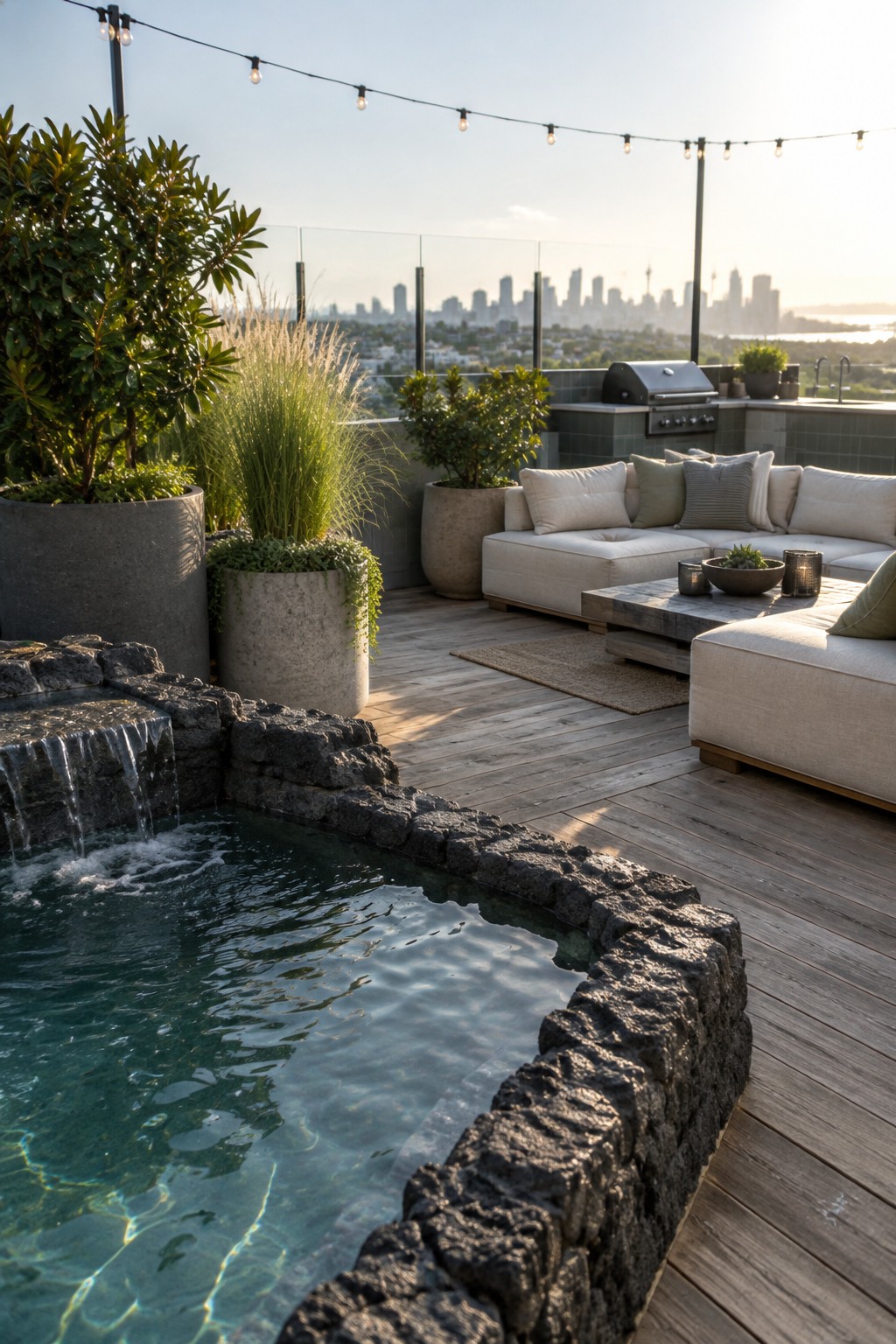
A small rock-edged pool can make a patio feel more connected to the garden. Letting water spill over the stones gives the pool a natural look, while keeping it close to the seating area makes the sound part of everyday outdoor use.
This approach suits a rooftop terrace or compact yard where a larger pond would take up too much room. Use rough stone around the pool’s edge, and leave enough clear deck space for walking and furniture.
Use a Rock Waterfall in a Wooded Pool Setting
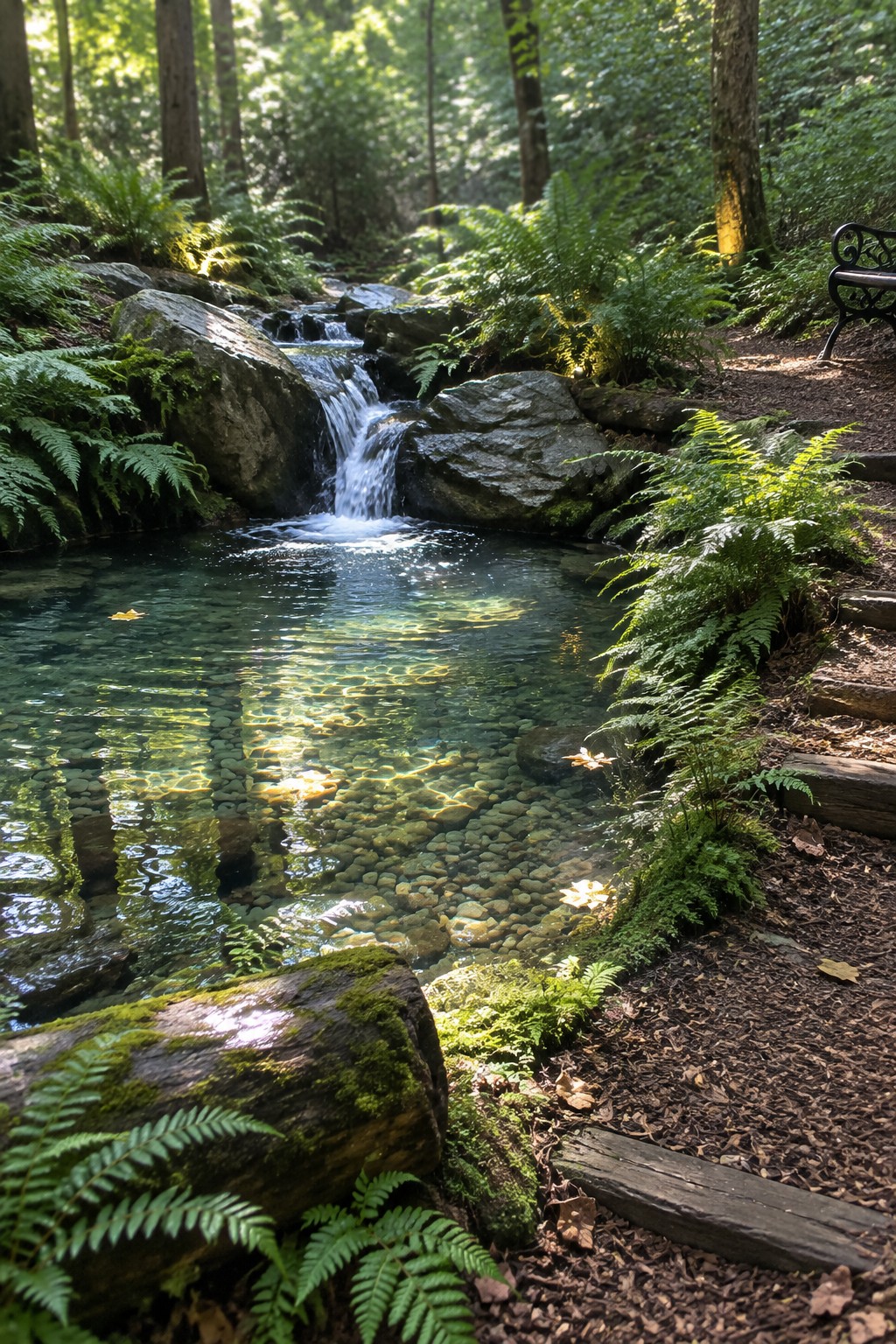
A small rock waterfall can make a natural pool feel at home in a wooded garden. Letting the water run over uneven stone gives the pool a natural edge rather than the look of a separate, formal feature.
This approach suits a shady yard where existing trees and ferns can blend into the planting around the water. Choose stones that look at home in the landscape, and keep a clear path along the pool so it stays easy to reach and maintain.
Make a Rock Waterfall the Pool’s Centerpiece
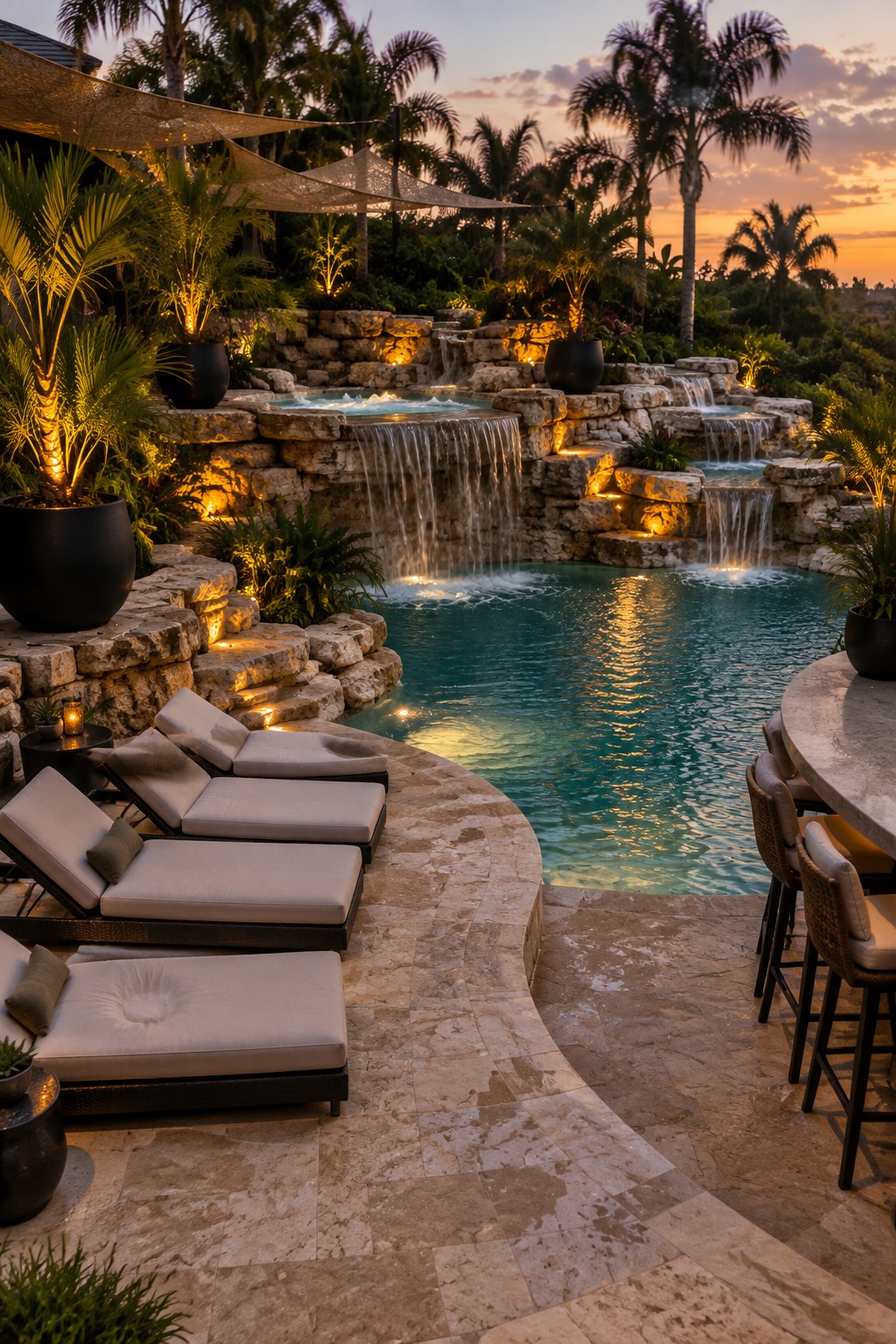
A tiered rock waterfall can give a natural pool a clear focal point and make the water feel connected to its stone surroundings. Several short drops also add movement without requiring one oversized cascade.
This approach works well where the pool has room for a raised stone edge. Keep the falls low enough to suit the scale of the pool, and plan access for cleaning and pump maintenance before building.
Add an Outdoor Shower Beside the Pool

An outdoor shower makes a pool area more practical, especially when it gives swimmers a place to rinse off before heading inside. A simple wall-mounted shower keeps the setup compact, while a nearby bench gives people somewhere to sit or set down a towel.
This works well along a narrow pool deck where there isn’t room for a separate changing area. Use slip-resistant paving and choose outdoor-rated fixtures, since the deck will get wet regularly.
Frequently Asked Questions
Q: Do rock waterfalls make a natural pool harder to maintain?
A: They can catch leaves and send extra water splashing out, so plan for easy access to the pump and filter. A simple skimmer and a quick weekly check usually keep things manageable.
Q: Can I add a rock waterfall to a pool that’s already built?
A: Often, yes. A builder can add a separate waterfall structure, but the pump and plumbing need to handle the added flow. Have the pool checked before choosing the waterfall’s size and height.
Q: Are natural pools with waterfalls noisy?
A: The sound depends on how far the water falls and how much flows over the rocks. A gentle cascade makes a soft trickle, while a larger drop can be loud enough to cover nearby conversation.
Q: What keeps rocks from looking fake around a natural pool?
A: Use stones in varied sizes and avoid arranging them in a neat, repeating pattern. Tucking a few plants into the edges helps the waterfall feel settled into the landscape.