A natural swimming pool can make a backyard feel calmer and more connected to the garden, but it needs to work as a place to swim, not just look good from the patio.
I find that the shape, depth, and placement matter as much as the water itself, especially when choosing a pond liner that can fit the site without making construction overly complicated.
Planting shelves, stable edges, and a clear path to the water help a pool feel settled into the yard rather than dropped into it.
The most practical designs also leave room for upkeep and for people to move comfortably around the pool.
I’d save the ideas that suit your space and test the layout on paper before digging.
Add a Shallow Entry to Your Pool
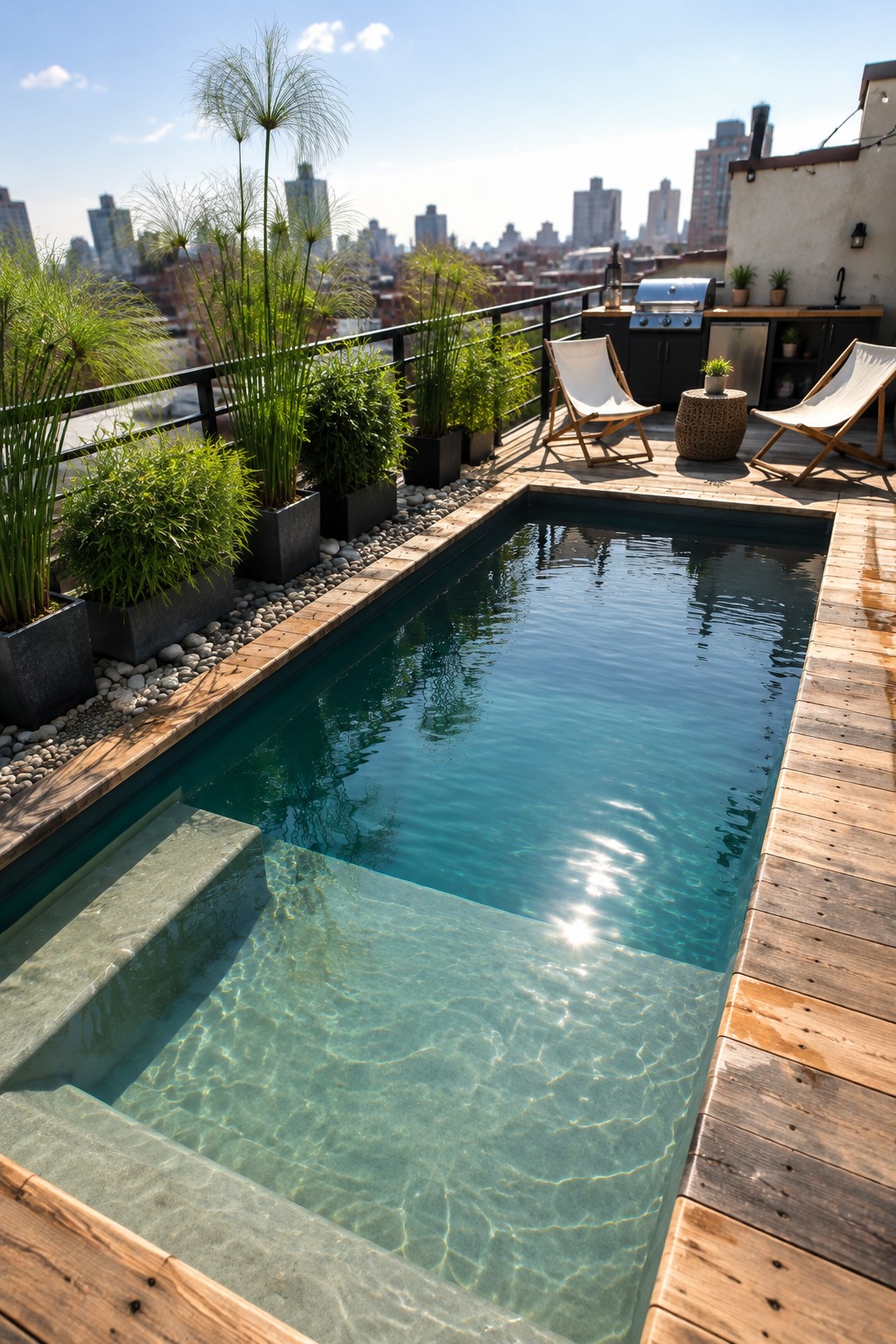
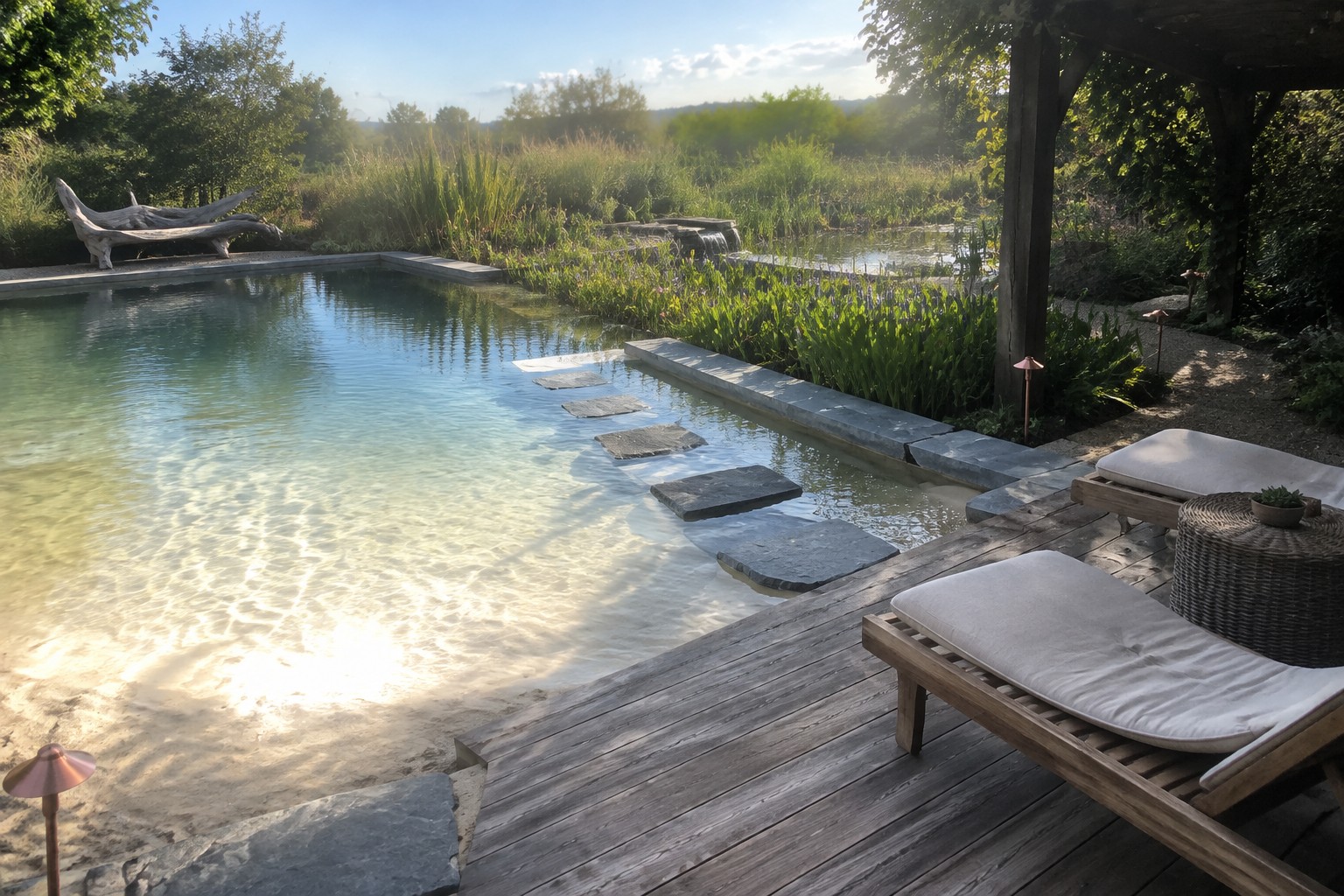
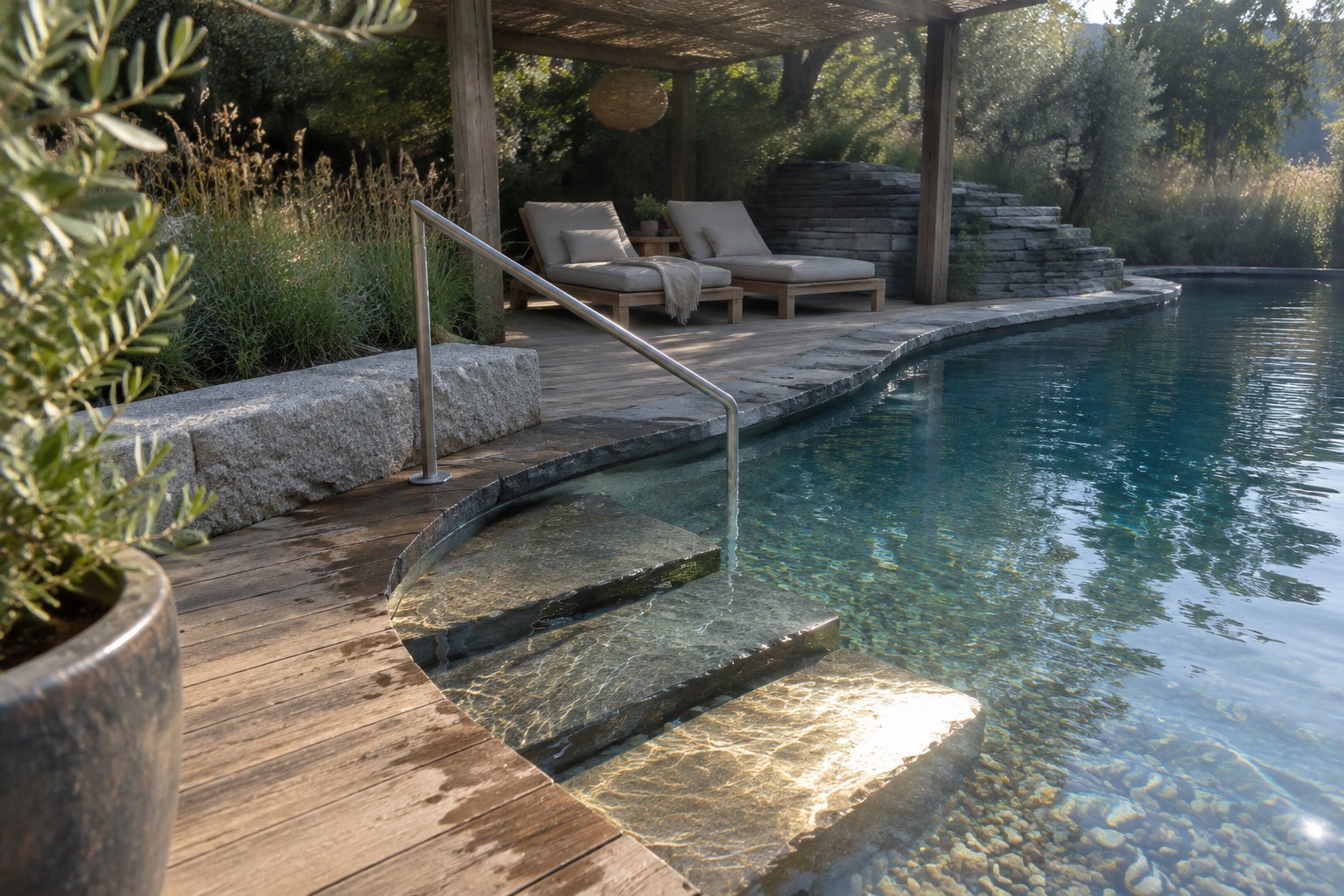
A shallow entry can make a natural swimming pool easier to use, especially for children or anyone who prefers a gradual step into deeper water. It also gives you a comfortable place to sit and cool off without swimming the full length of the pool.
For a DIY pond-liner pool, plan the entry before laying the liner so the shelf and steps have a stable base and smooth edges. Keep the shelf wide enough to sit on, and make sure the liner is protected from sharp corners.
Build a Natural Pool Along One Side
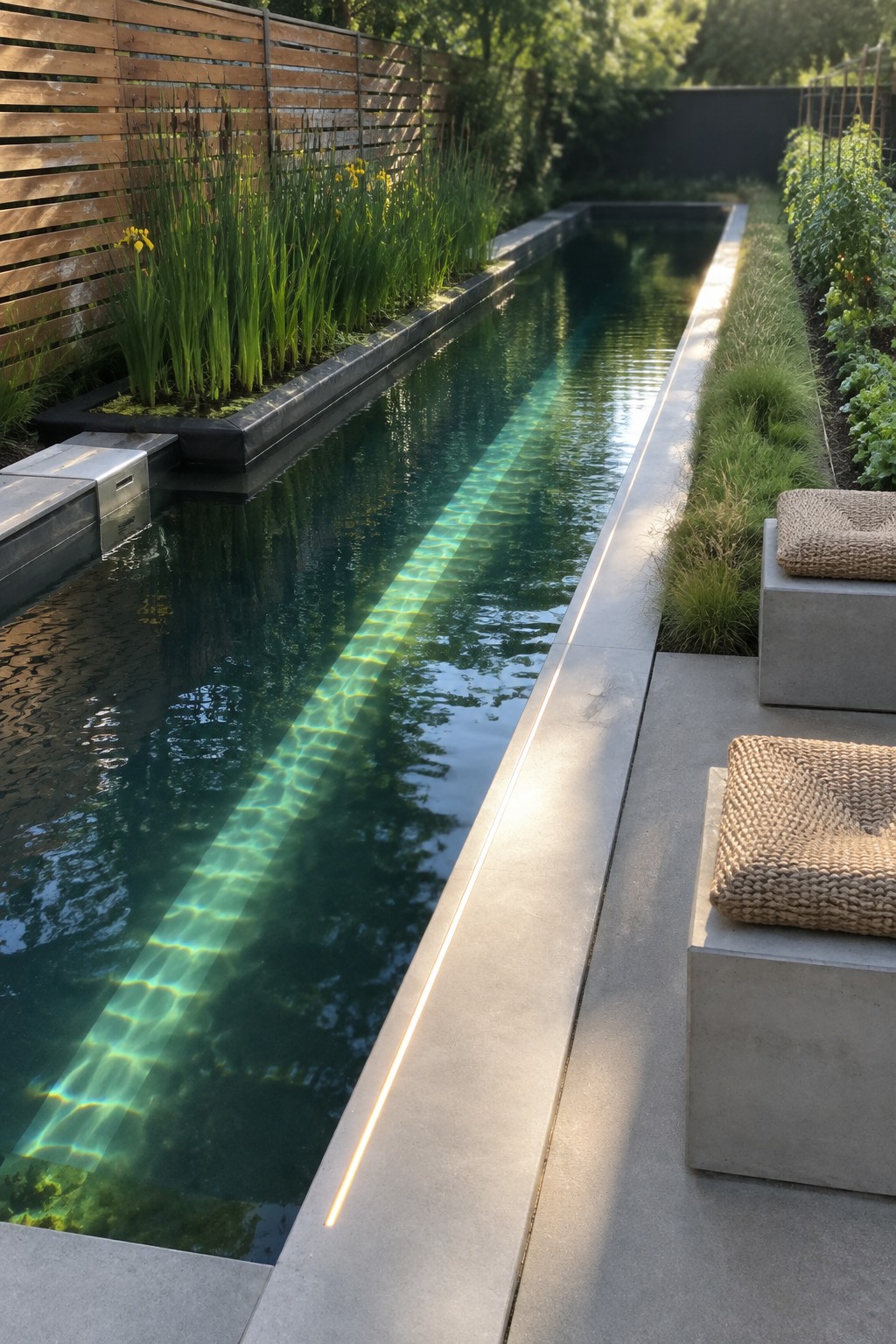
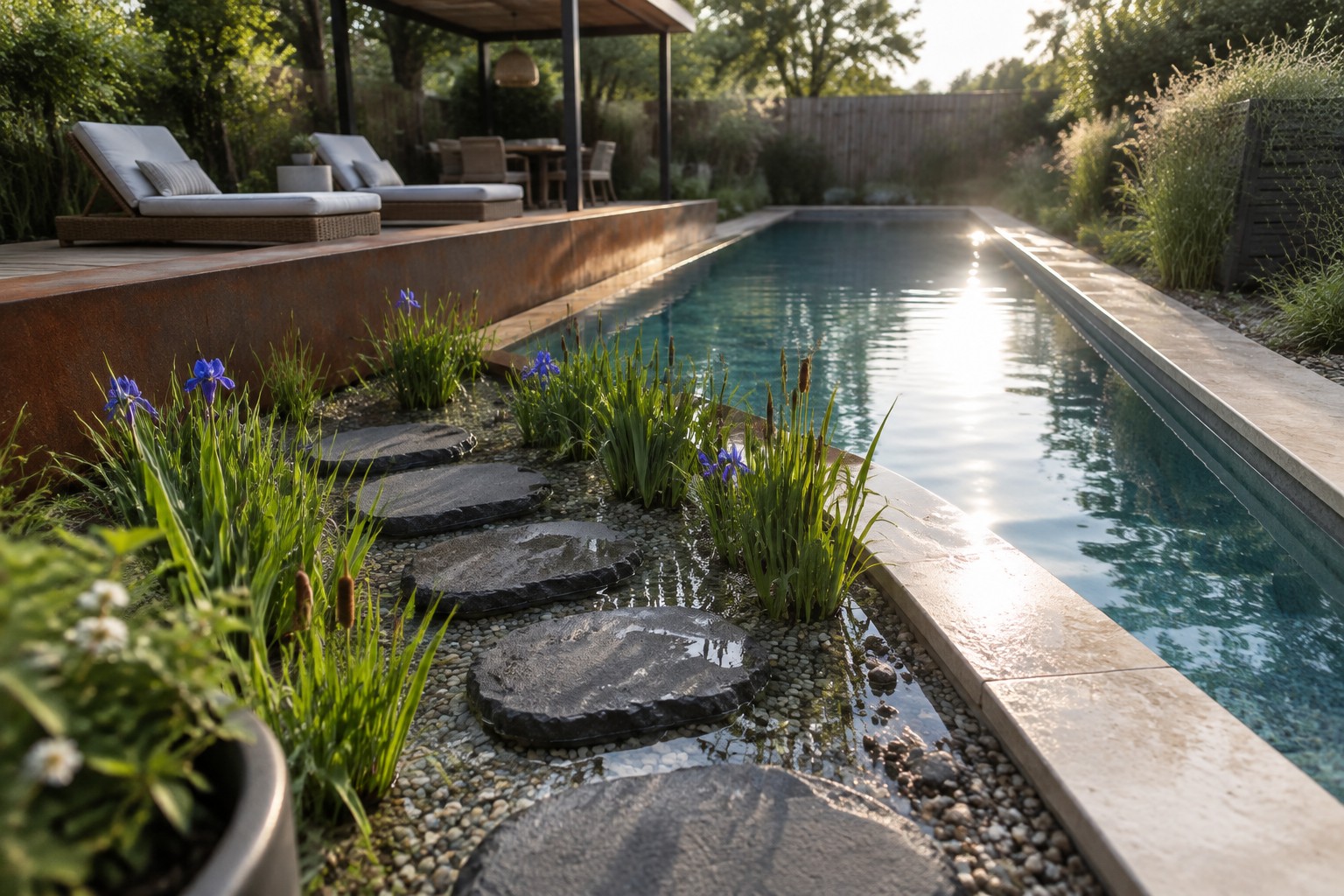
A long, narrow pool can make good use of a side yard that might otherwise be hard to plan. A planting shelf along one edge gives pond plants room to grow while keeping the swimming area clear.
For a DIY version, shape the liner basin and plant shelf before laying the pond liner, then protect the liner from sharp stones or roots. This layout suits a narrow yard, but leave enough space for safe access and check that the shelf depth matches the plants you choose.
Add a Seating Deck Beside the Natural Pool
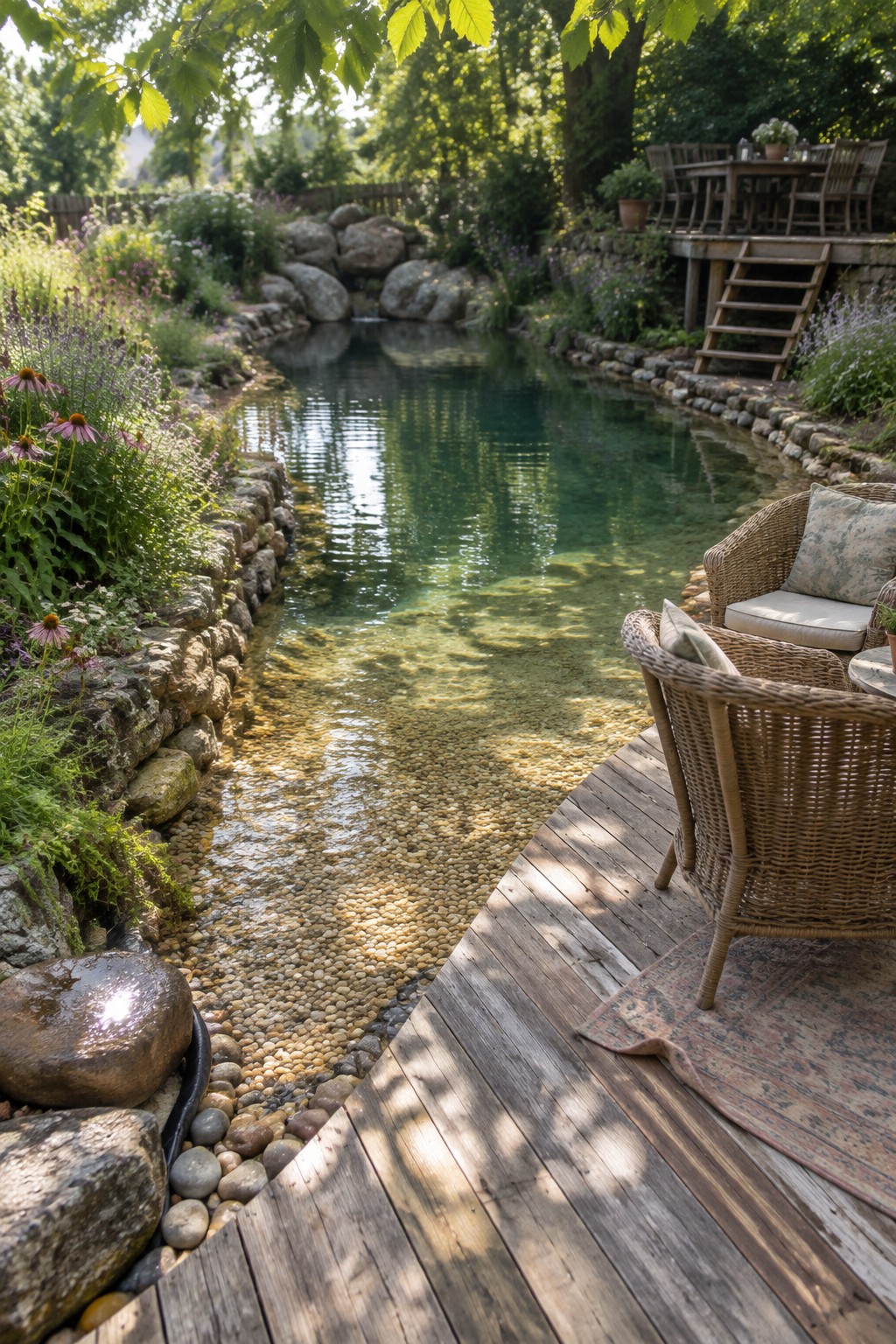
A small deck beside a pond-liner pool gives you a dry place to sit without taking over the swimming area. It also makes getting in and out easier, especially when the pool edge is lined with stones.
Keep the deck close to the water, but leave enough room to reach the liner and check the pool edge when needed. A simple wood platform with a couple of chairs can work well in a backyard where a large patio would feel like too much.
Add a Shaded Seating Area Beside the Pool
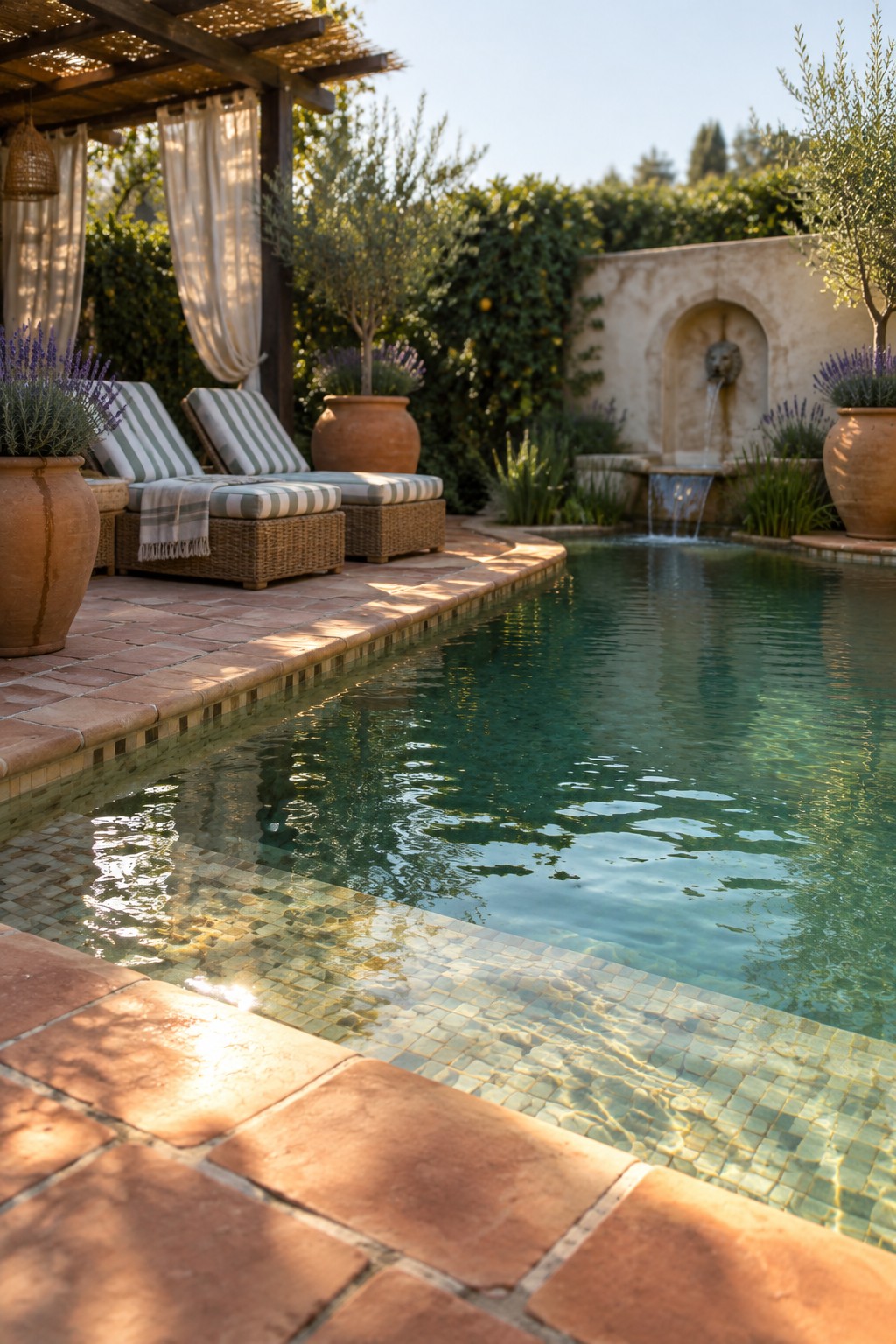
A simple seating area beside a natural pool makes it easier to use the space for more than swimming. A pergola gives chairs some shade, while placing them close to the water keeps the pool at the center of the outdoor living area.
For a DIY setup, put the seating on a stable paved surface and leave enough room to walk around the pool safely. Choose outdoor cushions and fabrics that can handle splashes, and keep any wood supports suitable for damp conditions.
Add a Waterfall to Your Natural Pool
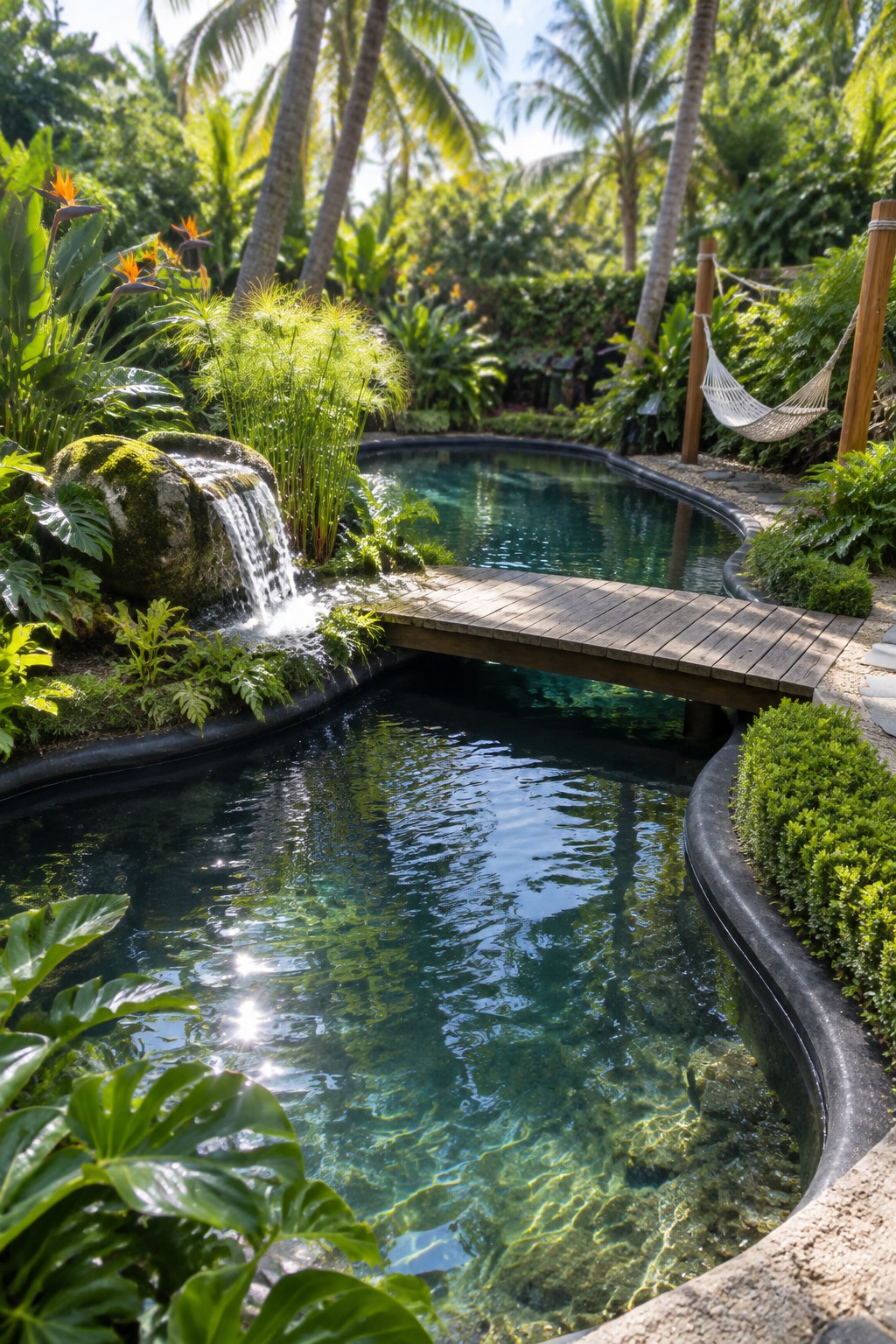
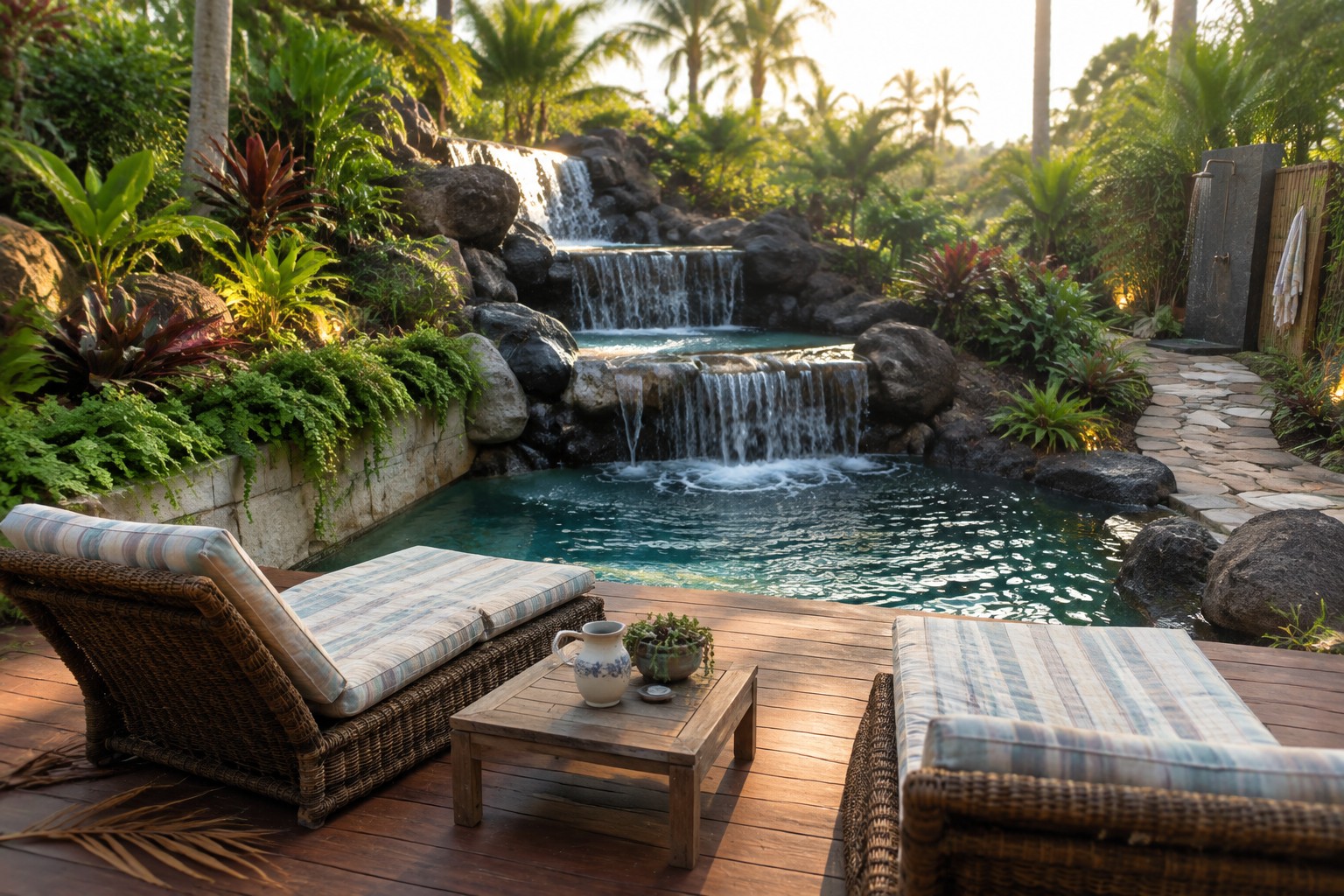
A small waterfall can make a liner pool feel more like a pond while helping the water circulate. A rock-edged spillway is a practical way to add movement without making the pool the only feature in the yard.
Place the waterfall where it can return water to the pool, and make sure the liner is protected beneath the rocks. It works especially well in a planted garden, though the pump and water flow should be sized for the pool.
Add a Pebble-Finished Shallow Area
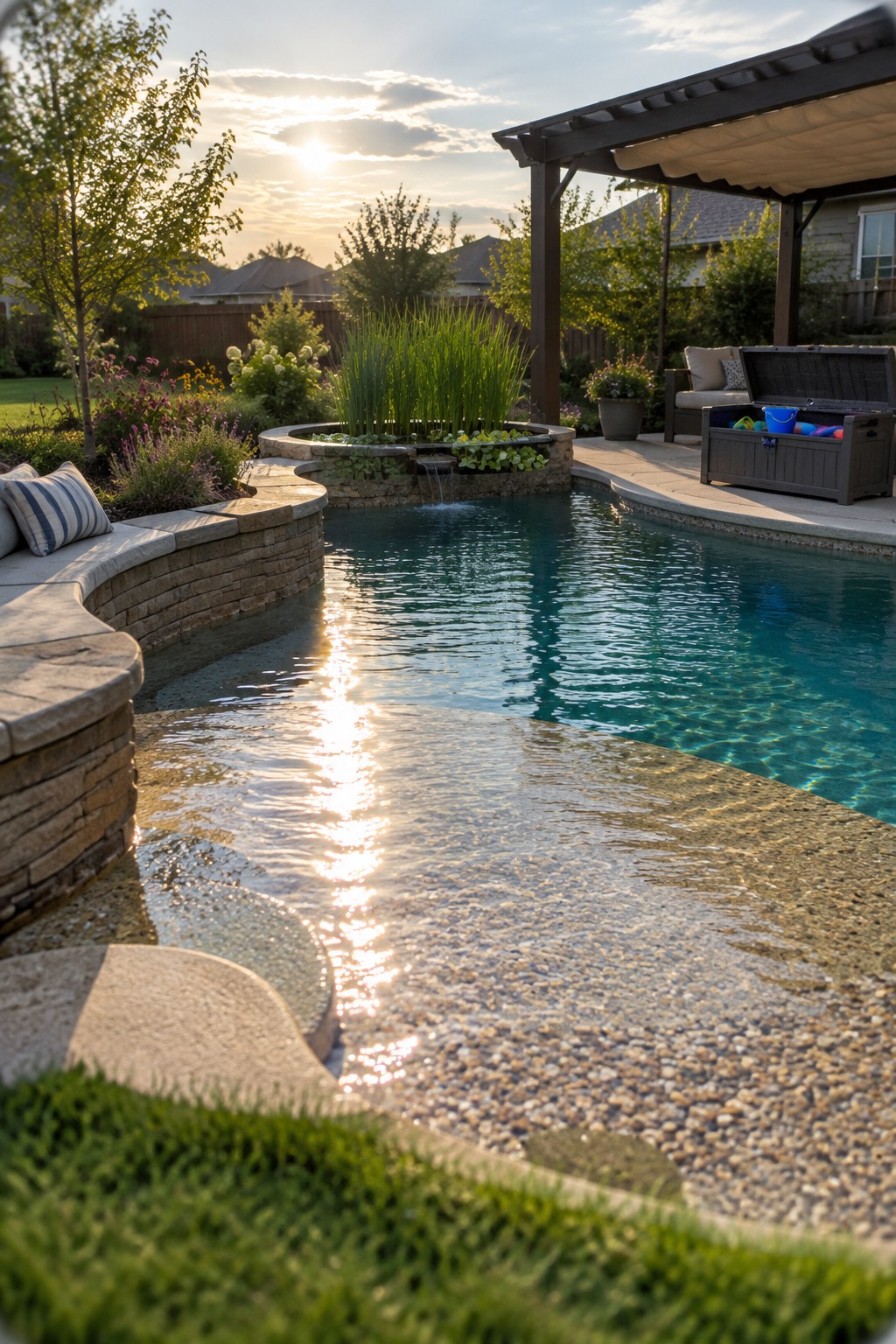
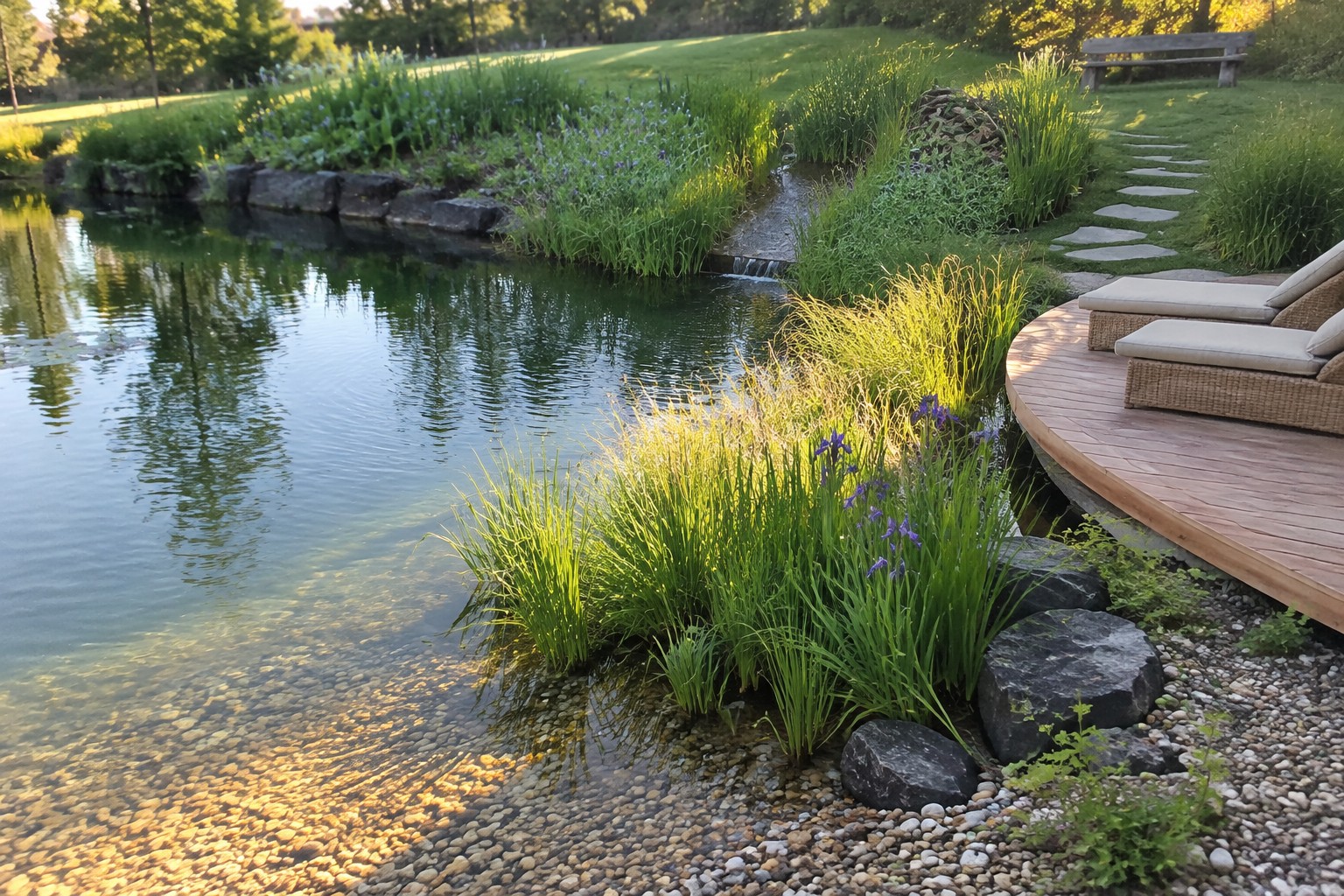
A shallow pebble-finished area can make a natural swimming pool easier to enter and pleasant for sitting in the water. It also gives the pool a gradual edge instead of a straight drop into deeper water.
For a DIY pond-liner pool, shape this section before laying the liner and use a smooth, stable finish over it. Check that the pebbles stay in place and that the transition to deeper water is easy to see and walk across.
Add a Waterfall Feature to Your Pool
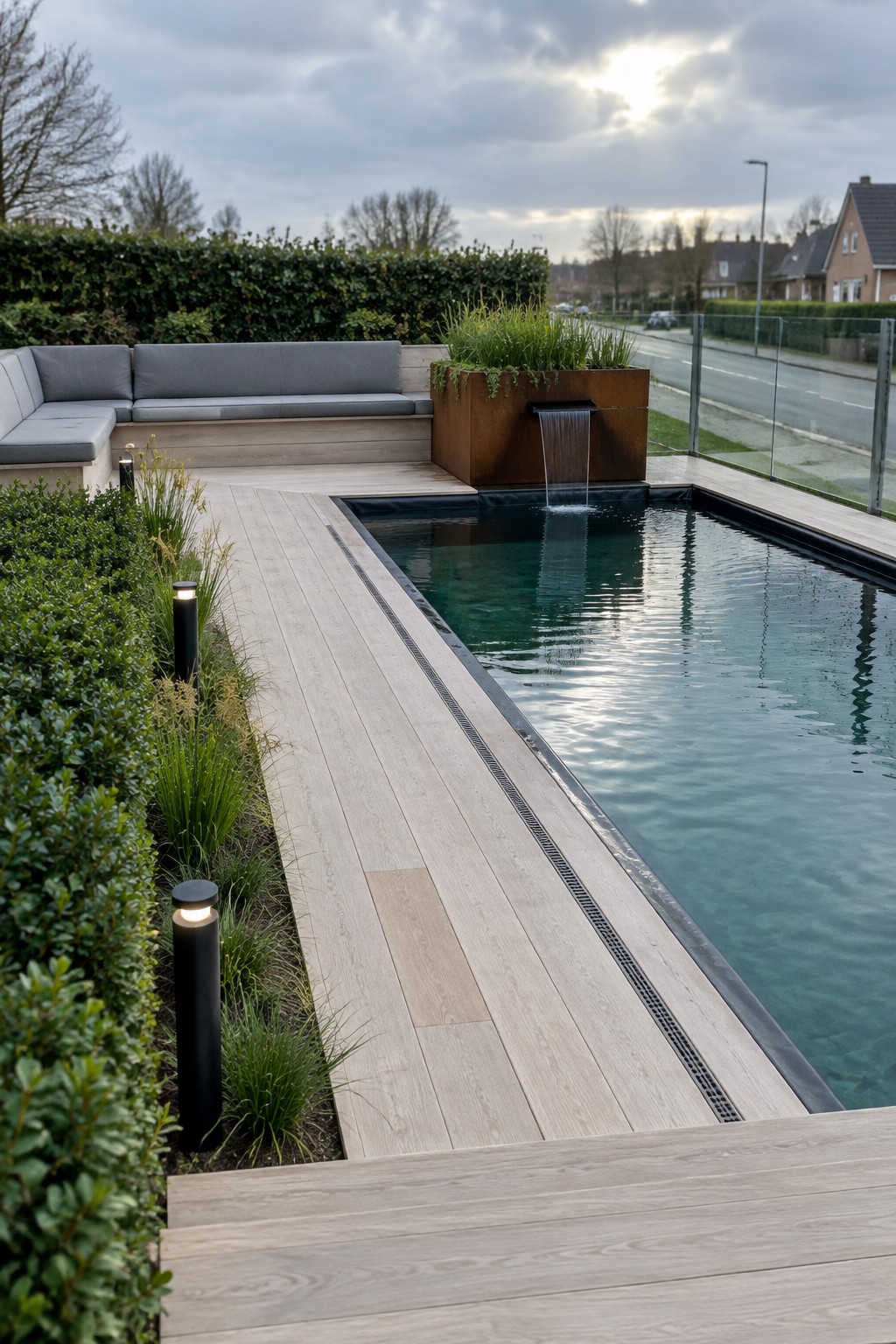
A simple waterfall can give a pond-liner pool the sound and movement of a natural pond. A raised planter or stone ledge with a spillway lets water flow back into the pool without taking up much swimming space.
Place the feature where the return flow can circulate the water, and make sure the liner and spillway are sealed carefully to prevent leaks. A compact setup works well beside a deck or seating area.
Use Stone Steps to Reach the Pool
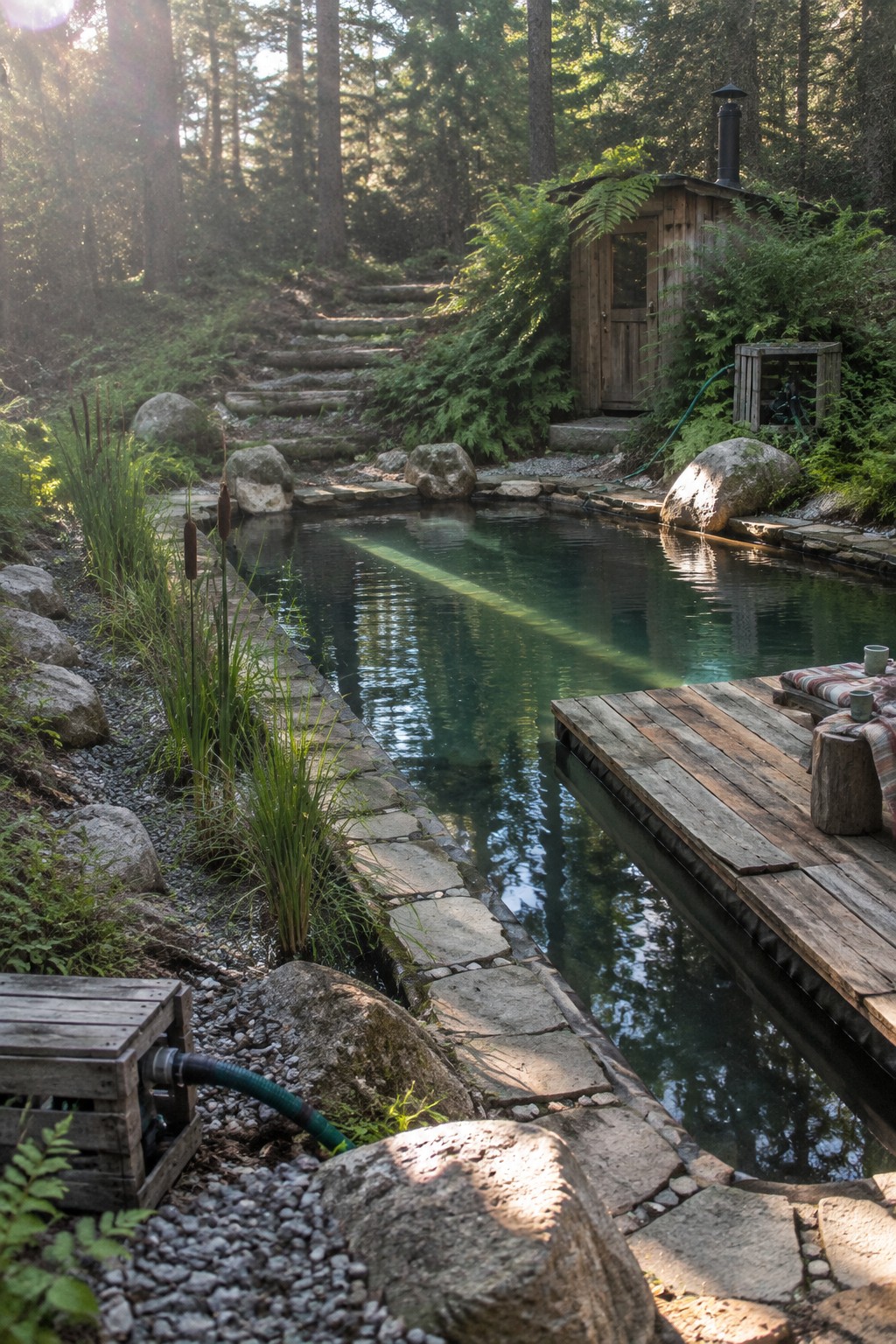
Log steps leading down to a natural pool make the water easier to reach and give the edge a sturdy, informal feel. They suit a pool set into a sloped garden, where the path can follow the land instead of requiring a large level deck.
Use broad, stable logs and secure them well so they stay put when wet. A stone-lined edge helps contain the pond liner, but avoid sharp rocks that could damage it.
Add a Curved Stone Edge to the Pool
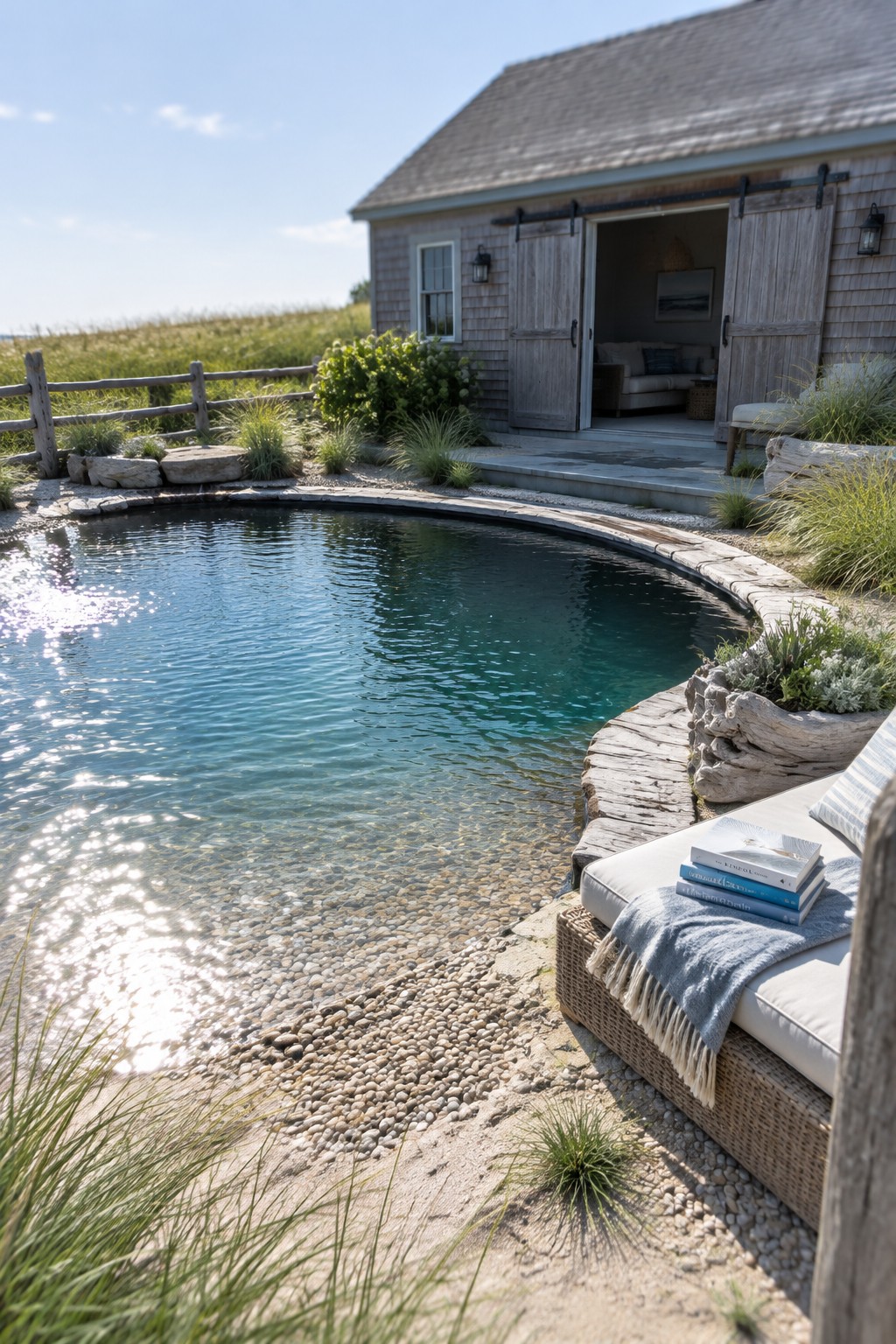
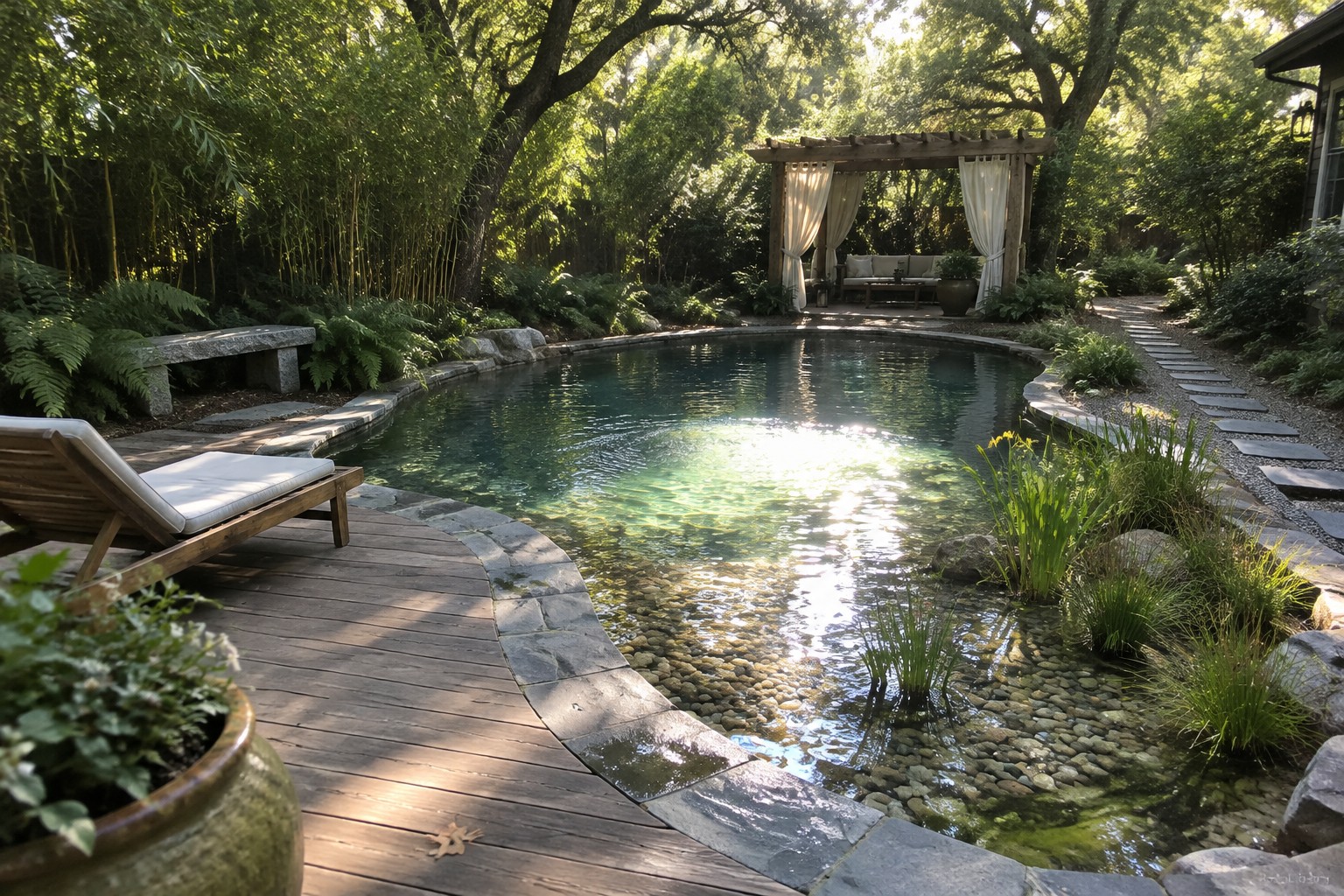
A curved pool edge can make a natural swimming pool feel less formal than a straight-sided design. Here, a low stone border follows the rounded shape, giving the water a clear edge without making the pool look like a standard rectangle.
Use this approach when the yard has room for a freeform pool and a path around its edge. Choose stones with fairly even tops so the border is comfortable to sit on and easy to step across.
Add a Built-In Shower Beside the Pool
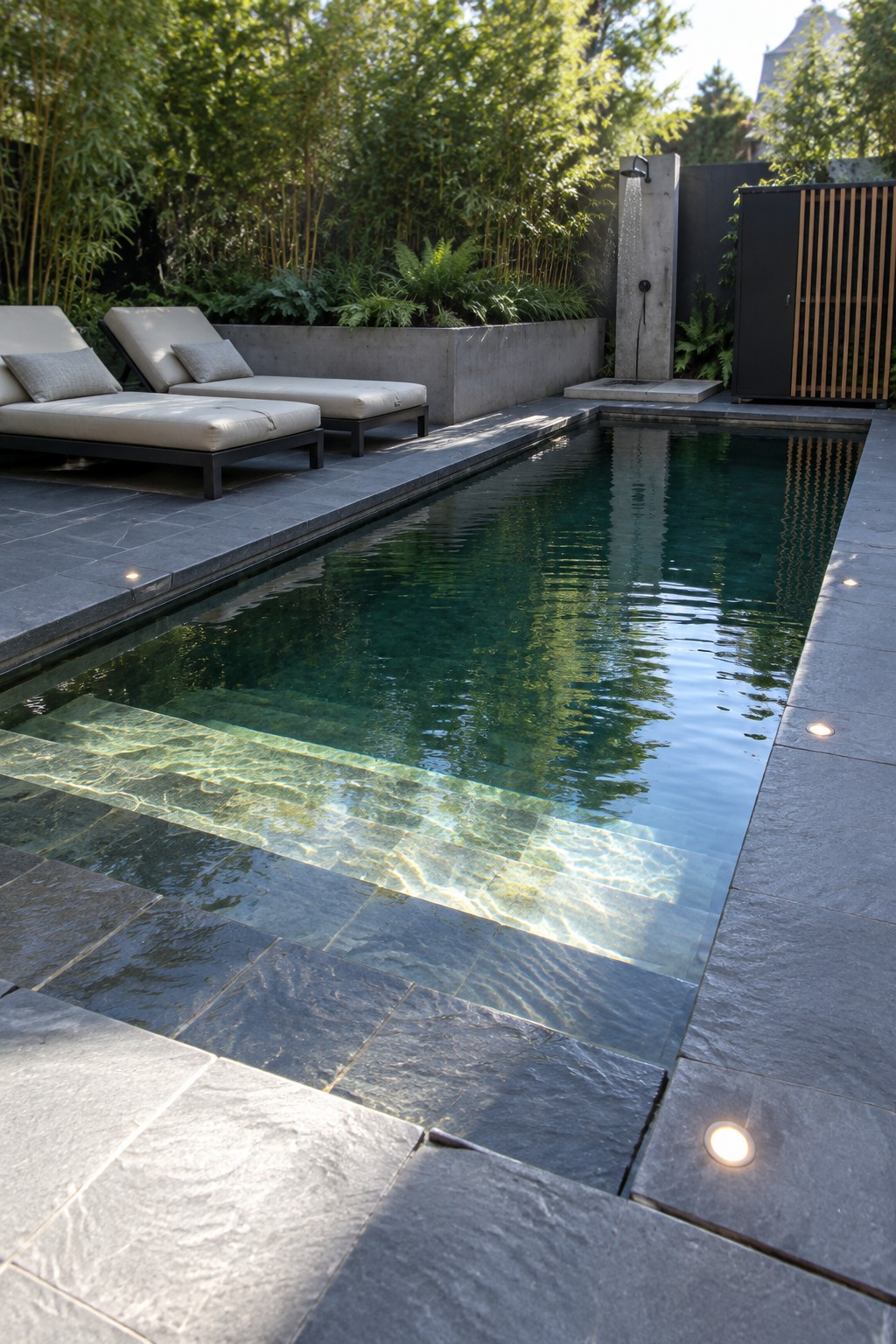
An outdoor shower makes it easy to rinse off before getting into the pool or after a swim. A simple concrete shower wall keeps the setup practical and gives the pool area a defined place for washing off.
For a DIY version, choose a spot near the pool and plan drainage before installing the shower. Make sure the surface is slip-resistant and the plumbing is suitable for outdoor use.
Add a Relaxing Seating Area Beside the Pool
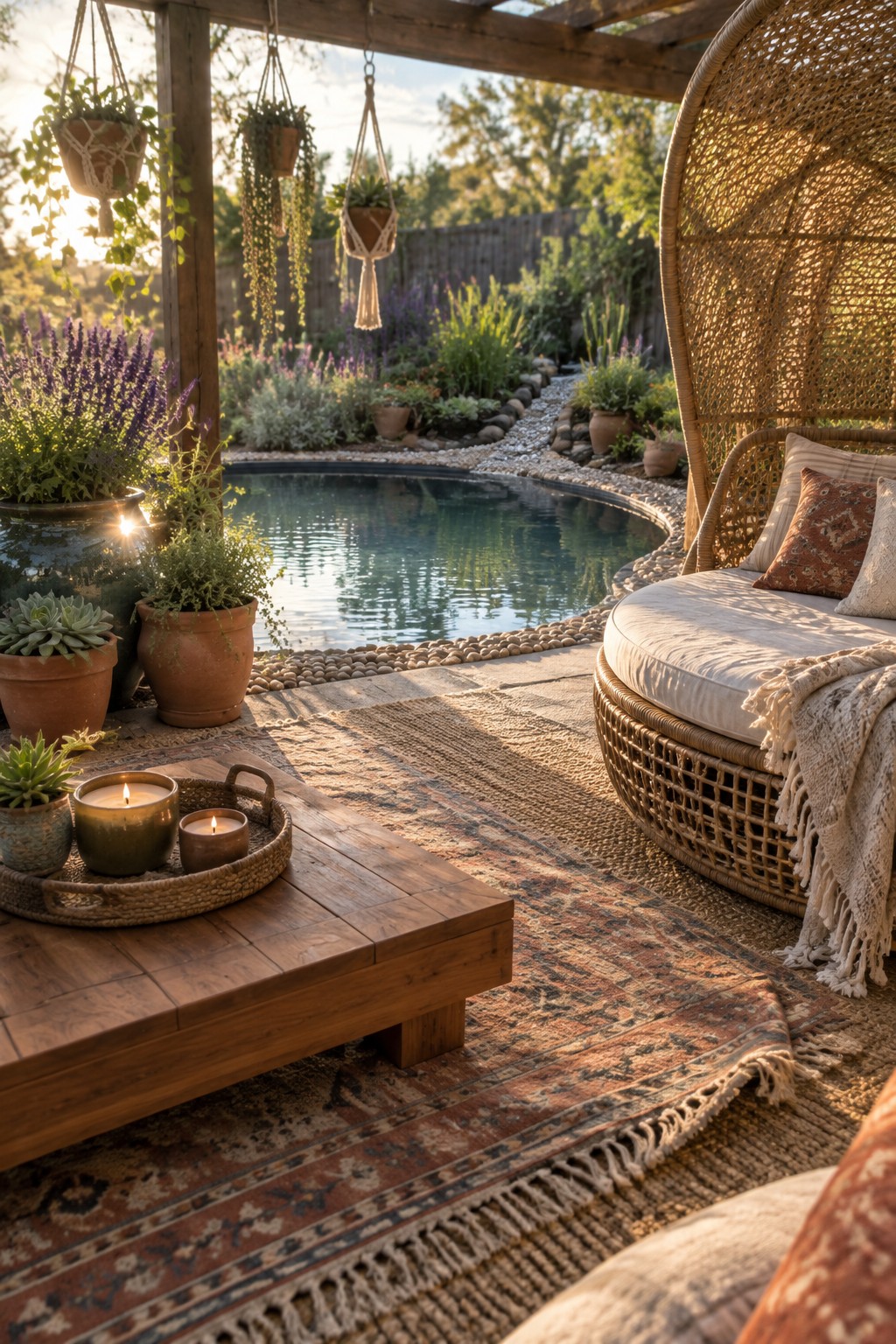
A pool can feel more useful when there’s a comfortable place to sit right beside it. A woven outdoor chair and a small deck area make room for quiet breaks without taking over the yard.
Keep the seating close enough to enjoy the water, but leave a clear route around the pool for easy access and maintenance. A rug can help define the sitting spot, though it should be made for outdoor use and kept where it can dry properly.
Use Tiered Stone Edges for a Natural Pool
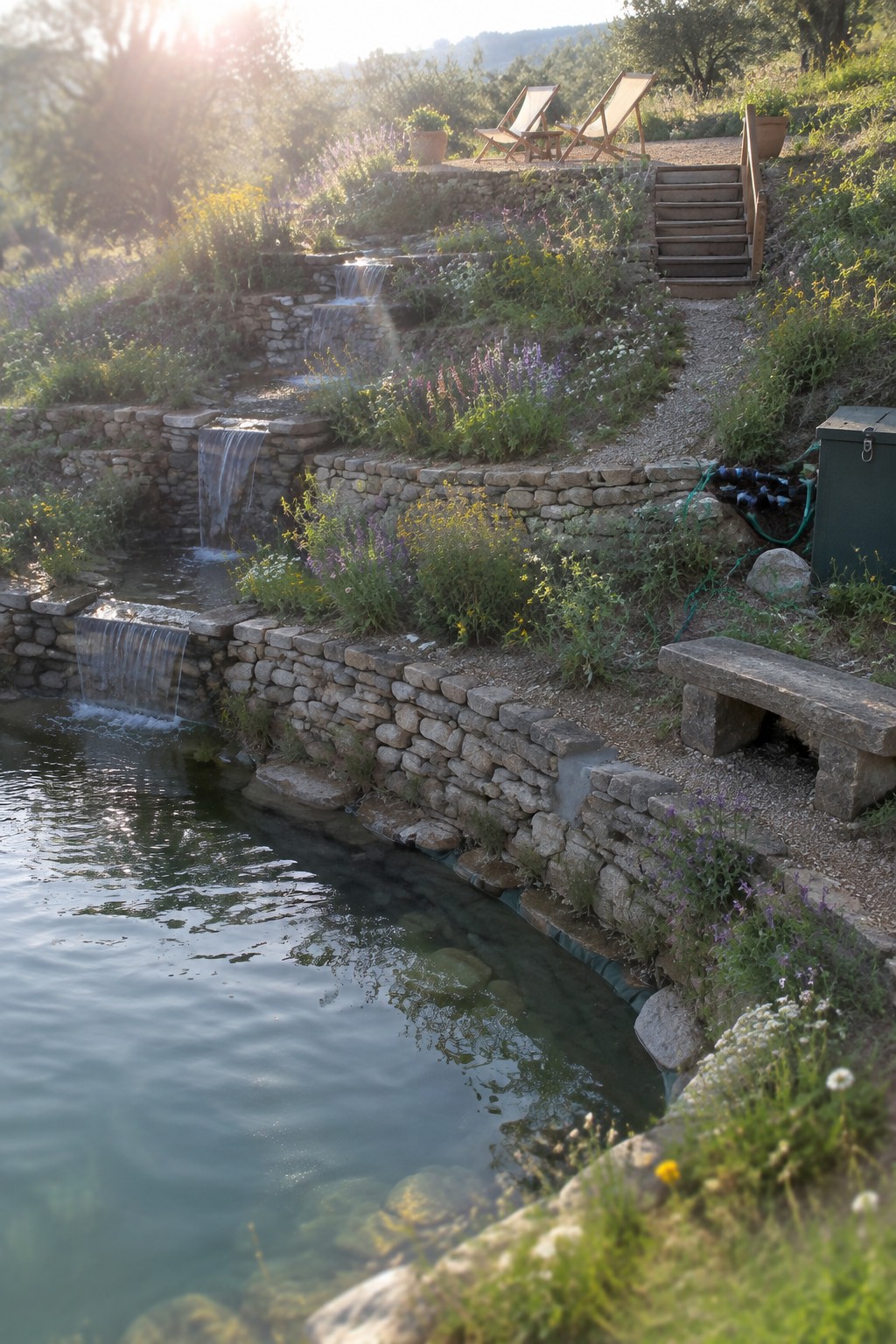
A natural pool can follow the shape of a sloped yard instead of requiring one large, level area. Short stone retaining walls create separate levels, and small spillways let water move from one section to the next.
This approach suits a garden with a noticeable slope, though the walls need a solid base and careful drainage. A pond liner can help hold water in the pool sections, but protect it from sharp stones and make sure the liner edges are secured.
Add a Deck Beside the Natural Pool
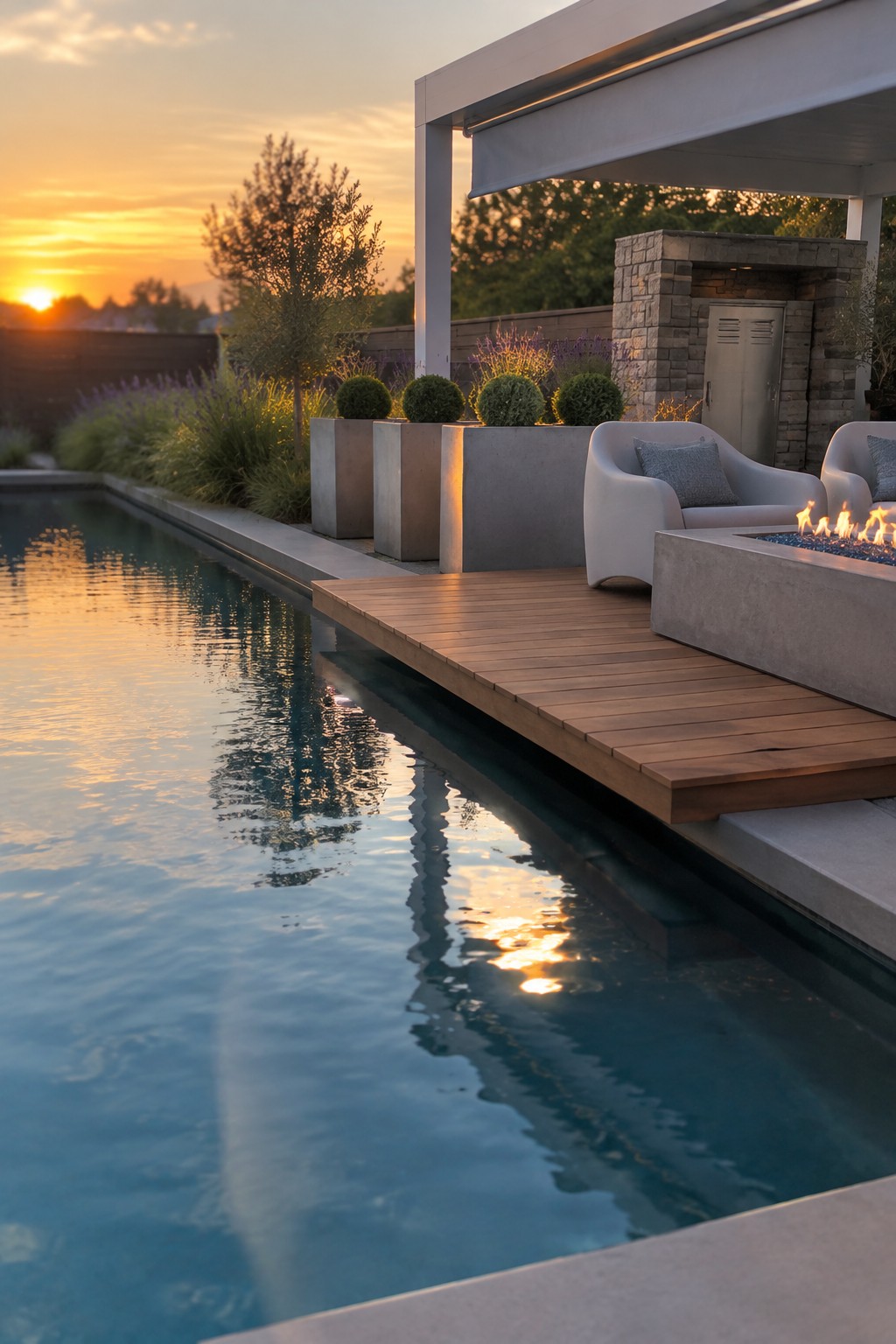
A small deck beside a natural pool gives you a dry place to sit without taking over the swimming area. The wood surface in this design extends right over the water, making the edge feel useful for lounging as well as getting in and out.
Use a simple platform beside the pool, sized for the seating or foot traffic you actually need. Choose outdoor-rated wood and leave room for water to drain, since a deck that stays damp can become slippery.
Add a Poolside Lounge Area
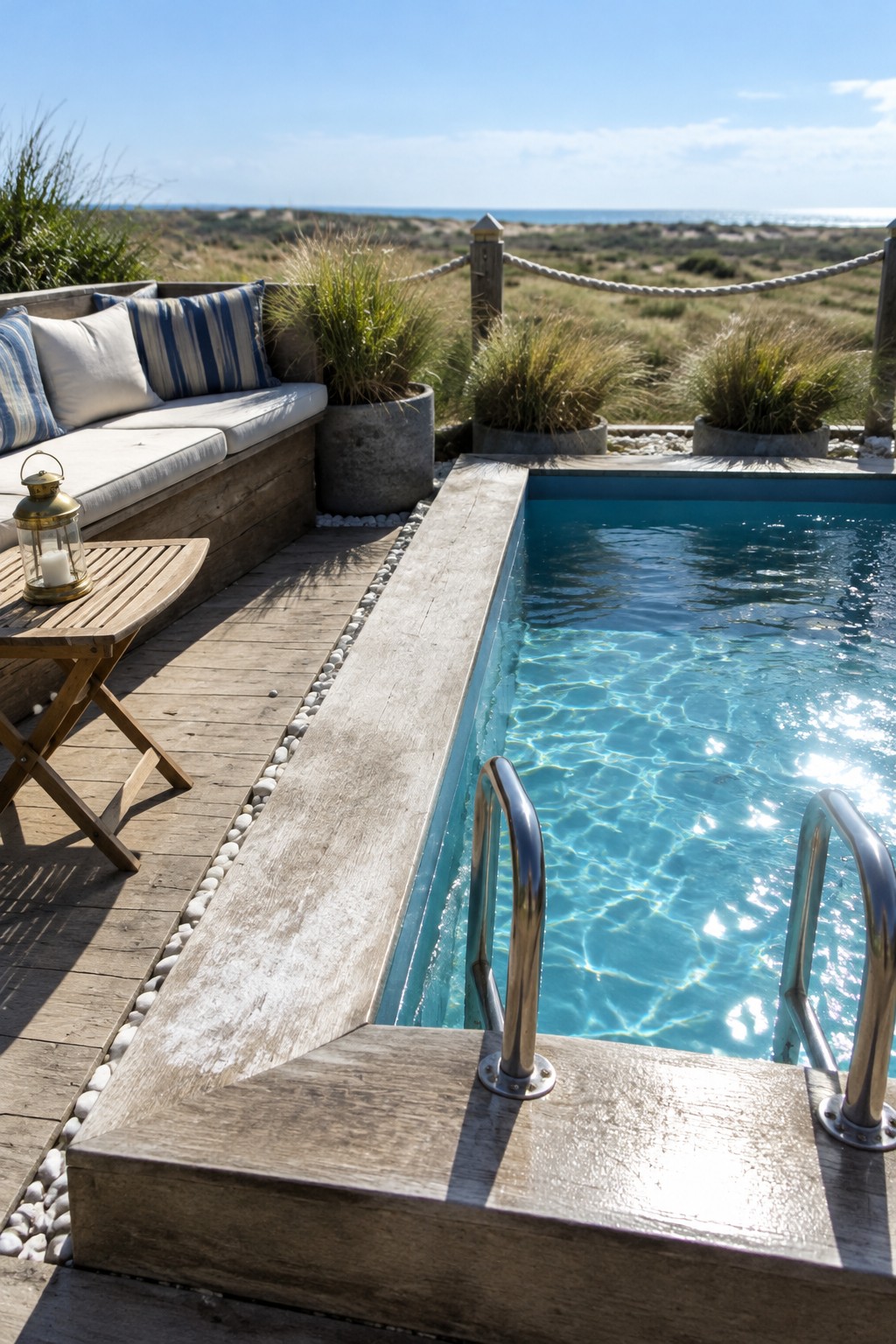
A small seating area beside a natural pool gives people a place to rest without leaving the water’s edge. A built-in bench with washable cushions can make good use of a narrow deck and keep the setup simple.
Leave enough room to walk safely between the seating and pool, especially if the deck gets wet. This works well on a patio or compact pool deck where a few comfortable seats are more useful than a large dining set.
Add a Stone Path to the Natural Pool
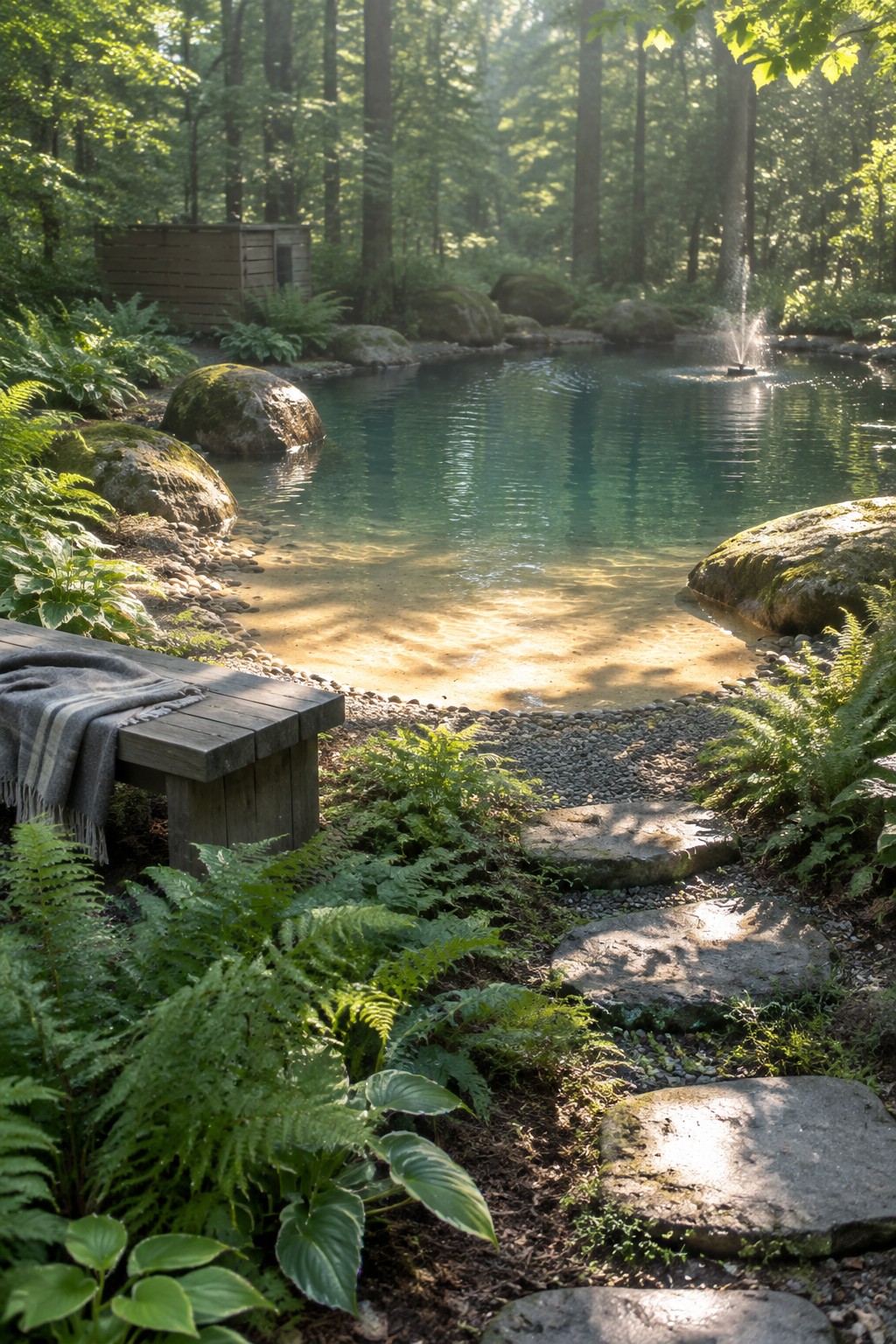
A simple stone path makes a natural pool easier to reach without taking away from the garden feel. Large stepping stones and loose gravel suit this kind of pool, where a hard paved walkway might look out of place.
Set the stones firmly and leave enough space between them for comfortable steps. This approach works well in a leafy yard, but make sure the path stays stable and easy to walk on when wet.
Frequently Asked Questions
Q: Can I put a pond liner directly over the soil?
A: It’s better to first remove roots and sharp stones, then add a layer of sand or protective underlayment. That cushion helps prevent punctures as the ground shifts and people use the pool.
Q: How do I keep the water clear without chlorine?
A: Pair aquatic plants with a pump and a biological filter so the water keeps moving and beneficial bacteria can break down waste. Plants help, but they won’t keep a busy swimming pool clean on their own.
Q: Is a pond liner safe to walk on?
A: A bare liner can feel slippery and may wear down from regular foot traffic. Add a smooth, pool-safe surface or a shallow ledge where people enter and exit.
Q: How often will I need to top up the pool?
A: Some water loss from evaporation is normal, especially in hot, dry weather. Mark the water level and check it every few days so you can spot a leak before it becomes a bigger problem.