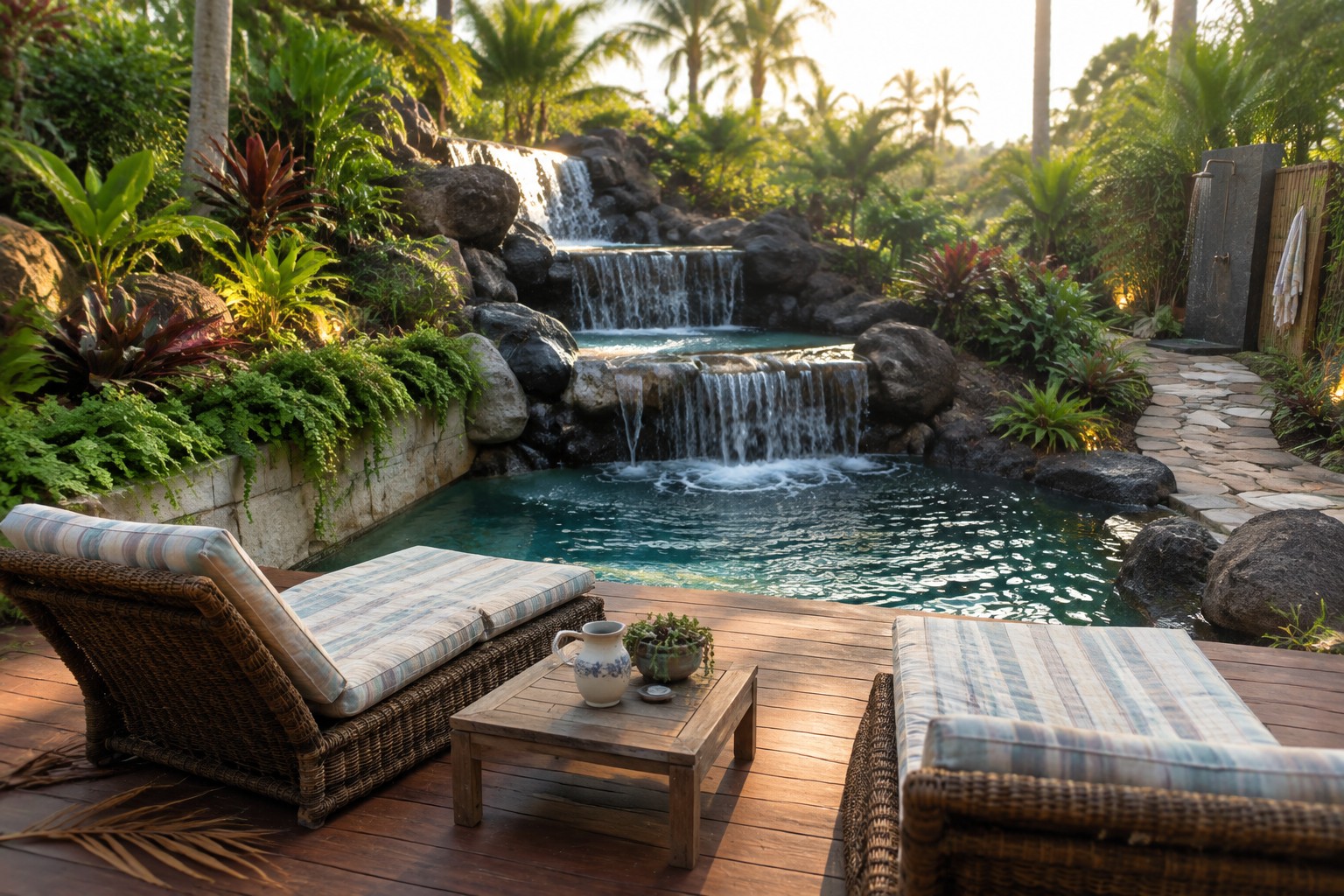
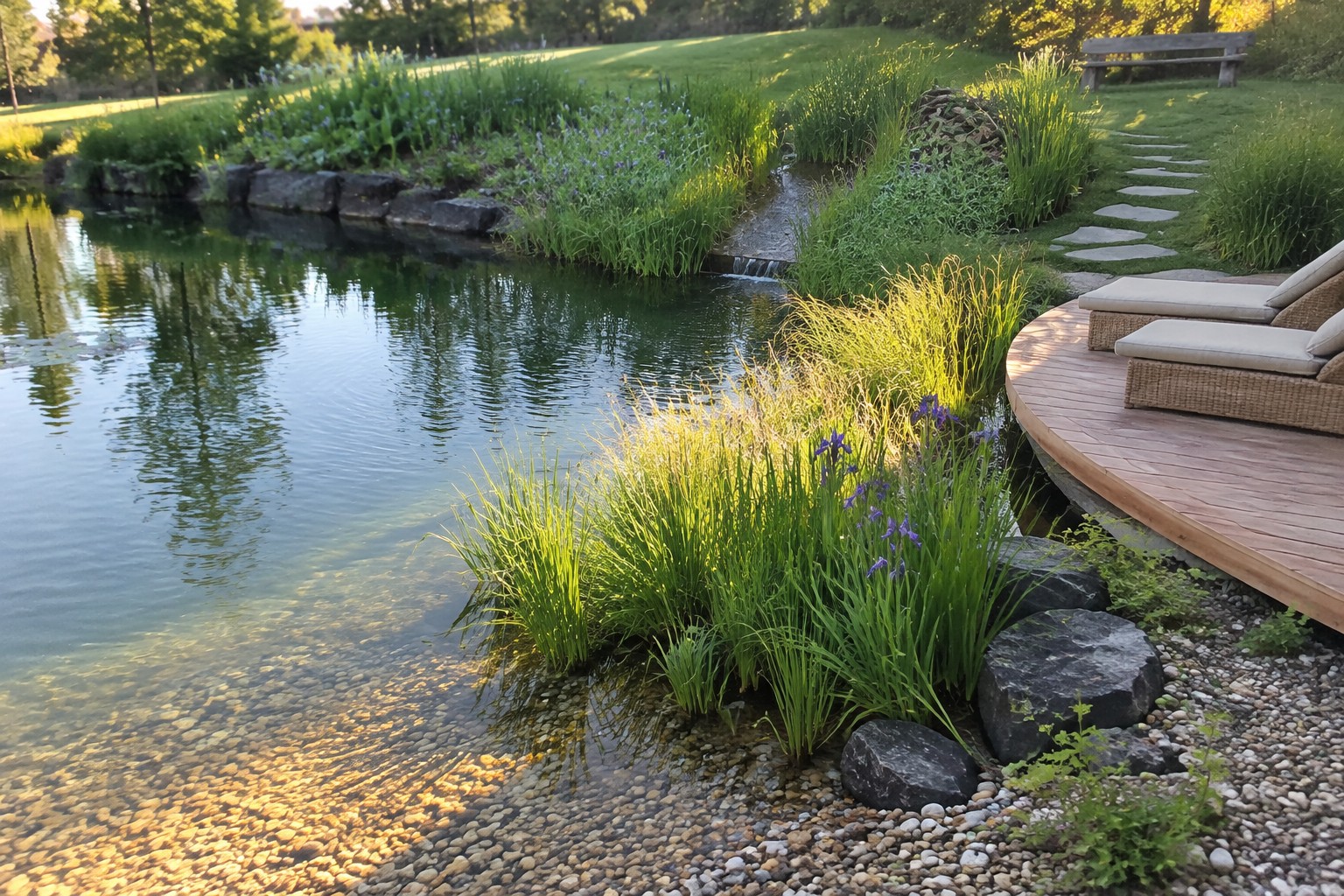
A swimming pond can bring a garden to life, but its shape and setting matter as much as the water itself.
In a small yard, I would first consider how people will reach the pond and where there is room to sit, walk, and tend the plants.
Soft edges and thoughtful planting can help it feel like part of the landscape rather than a pool squeezed into the space.
Some designs keep the water clear and simple, while others use stones, shelves, or dense greenery to create a more natural look.
I’d save the ideas that fit the garden’s scale and test how their paths, planting, and pond edges might work at home.
Add A Narrow Pond To A Small Garden
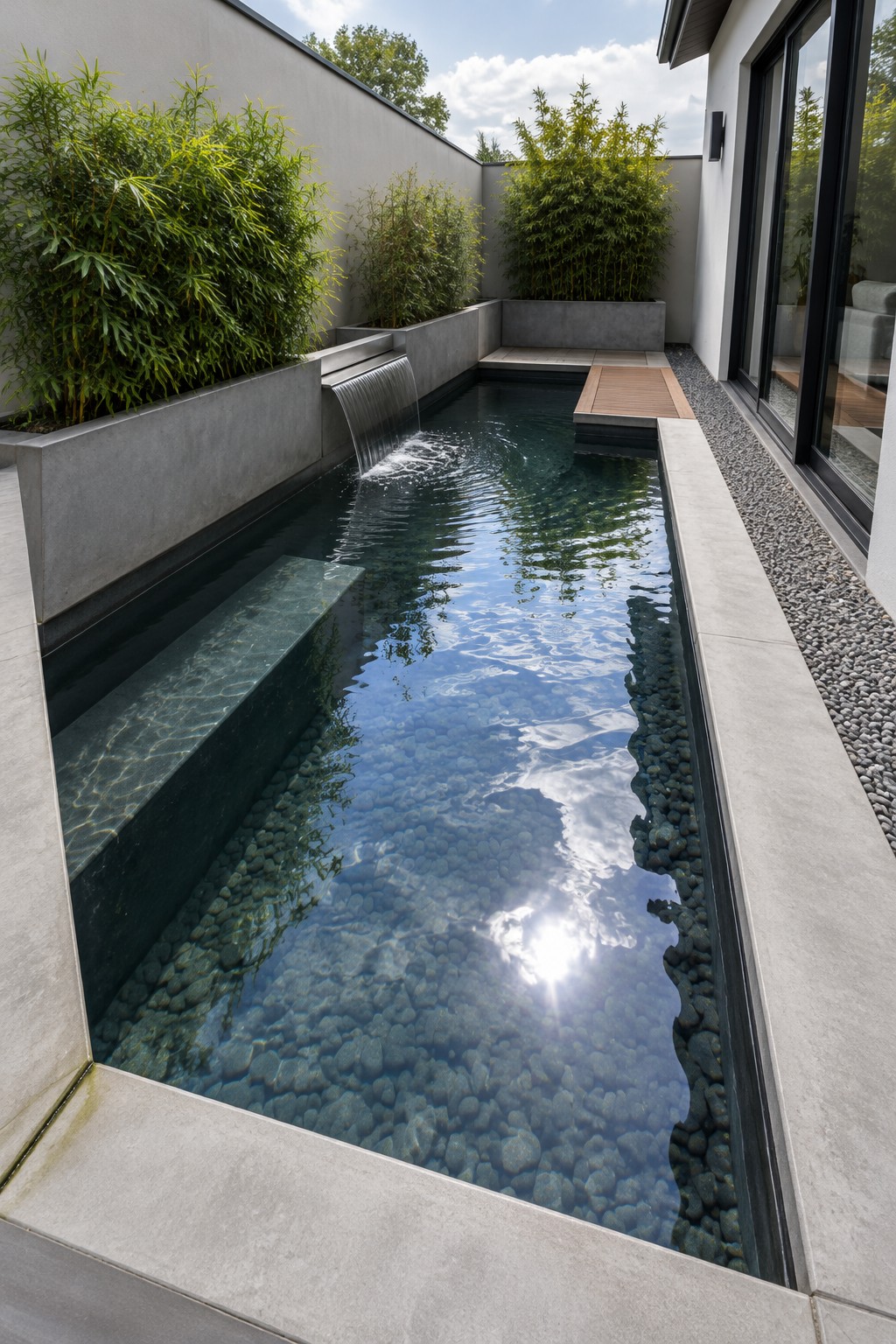
A slim swimming pond can make a small garden feel more usable without taking up the space a wide pool would need. A built-in waterfall adds gentle movement, while the long shape keeps the water easy to enjoy from end to end.
This layout works well beside a house or along a boundary wall. Keep the edges simple and leave enough room to walk around the pond, especially if you plan to use it for swimming.
Add a Bridge to a Small Swimming Pond
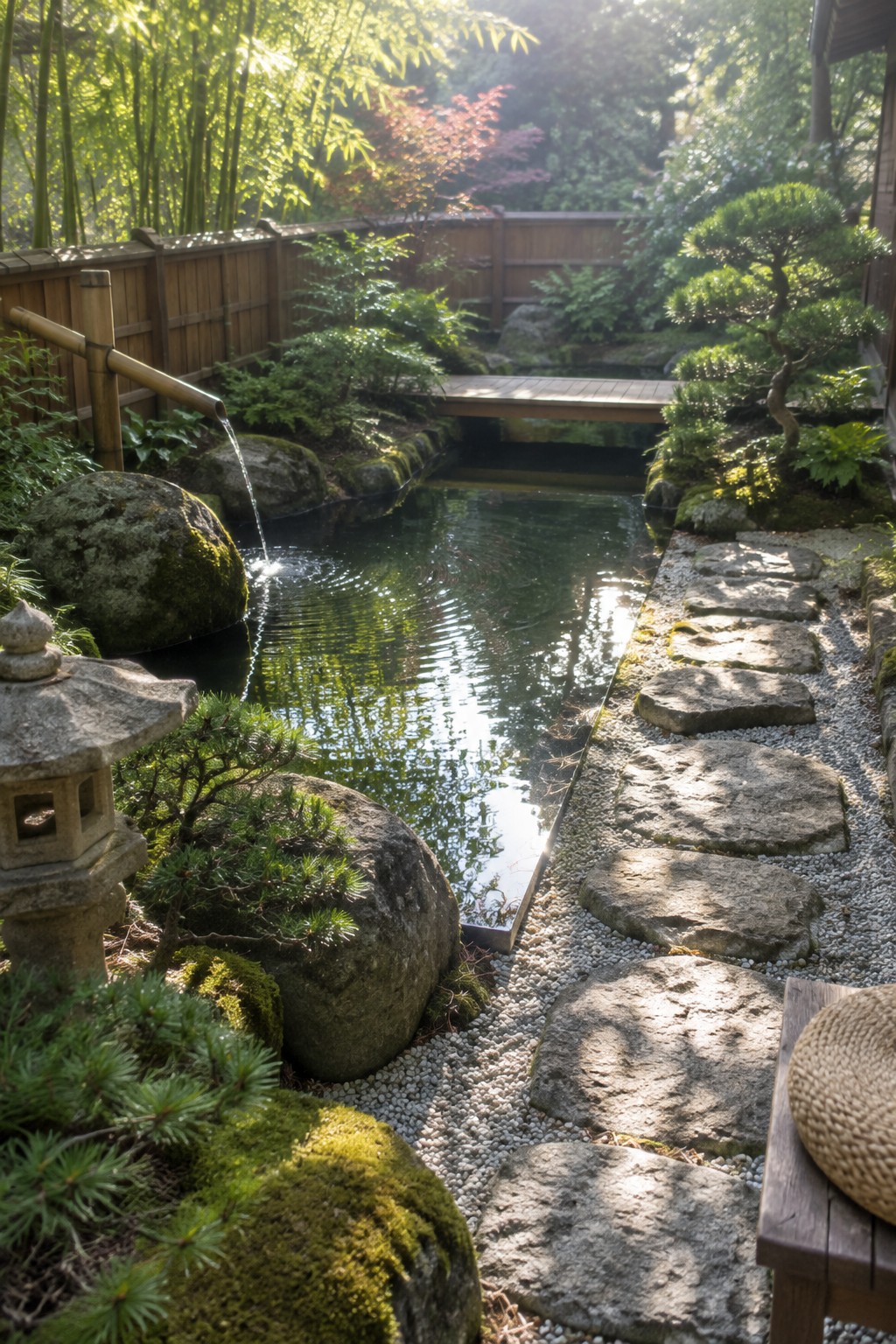
A short bridge can make a small swimming pond feel like part of the garden path rather than a feature set off on its own. It also gives the pond a clear crossing point without taking up much space.
Choose a simple, sturdy design that fits the pond’s width, and leave enough room beside it for safe access to the water. A narrow wooden bridge works well in a compact garden, especially where stepping stones already guide the way.
Make A Small Pool Feel Like Part Of The Patio
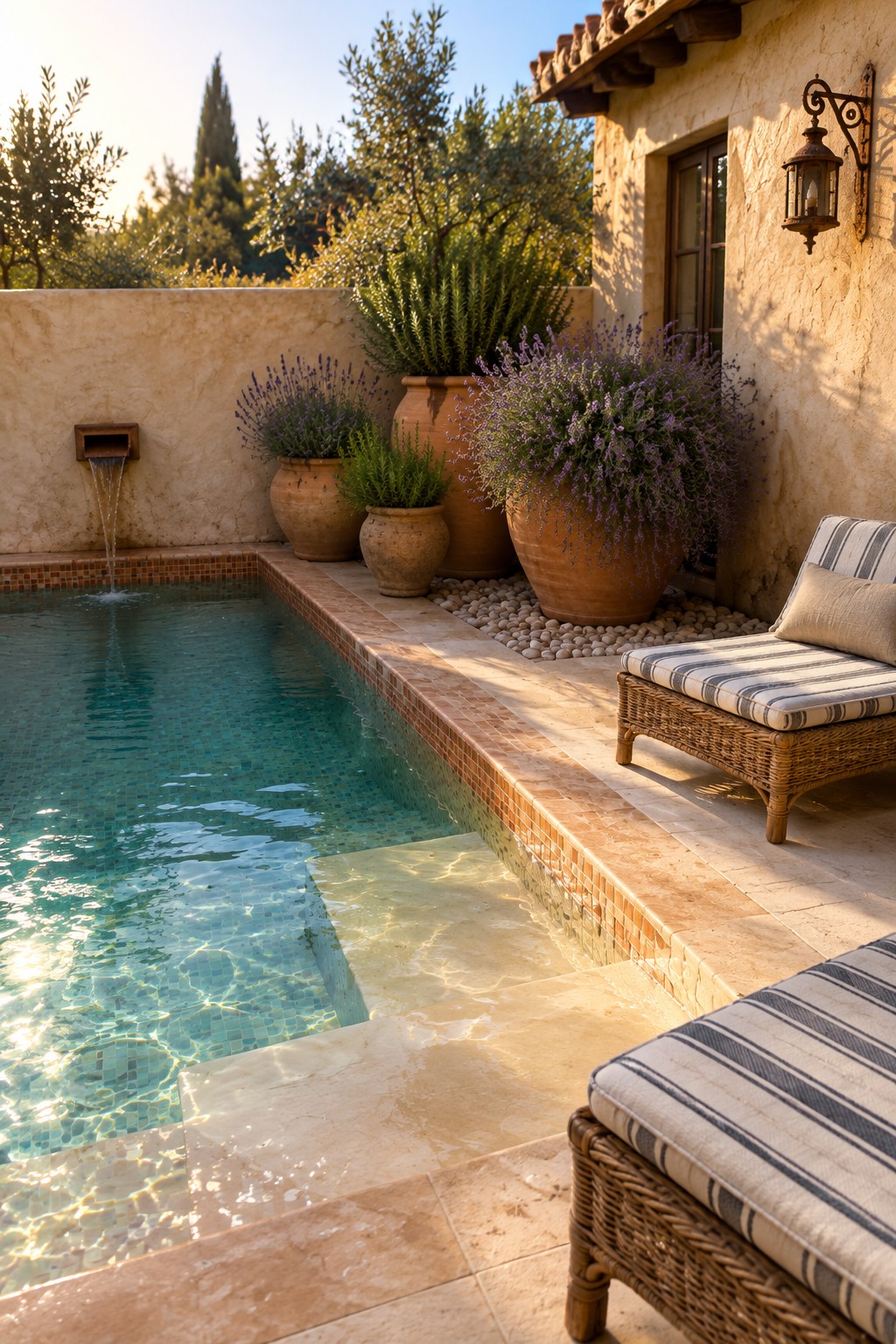
A small pool can sit comfortably within a patio instead of taking over the whole yard. A tiled edge and a shallow entry step help it feel connected to the surrounding space, while still leaving room to sit nearby.
This approach suits compact gardens where every bit of floor space matters. Keep the pool shape simple and use matching or complementary paving around it so the area feels easy to move through.
Use Stepping Stones Along the Pond Edge
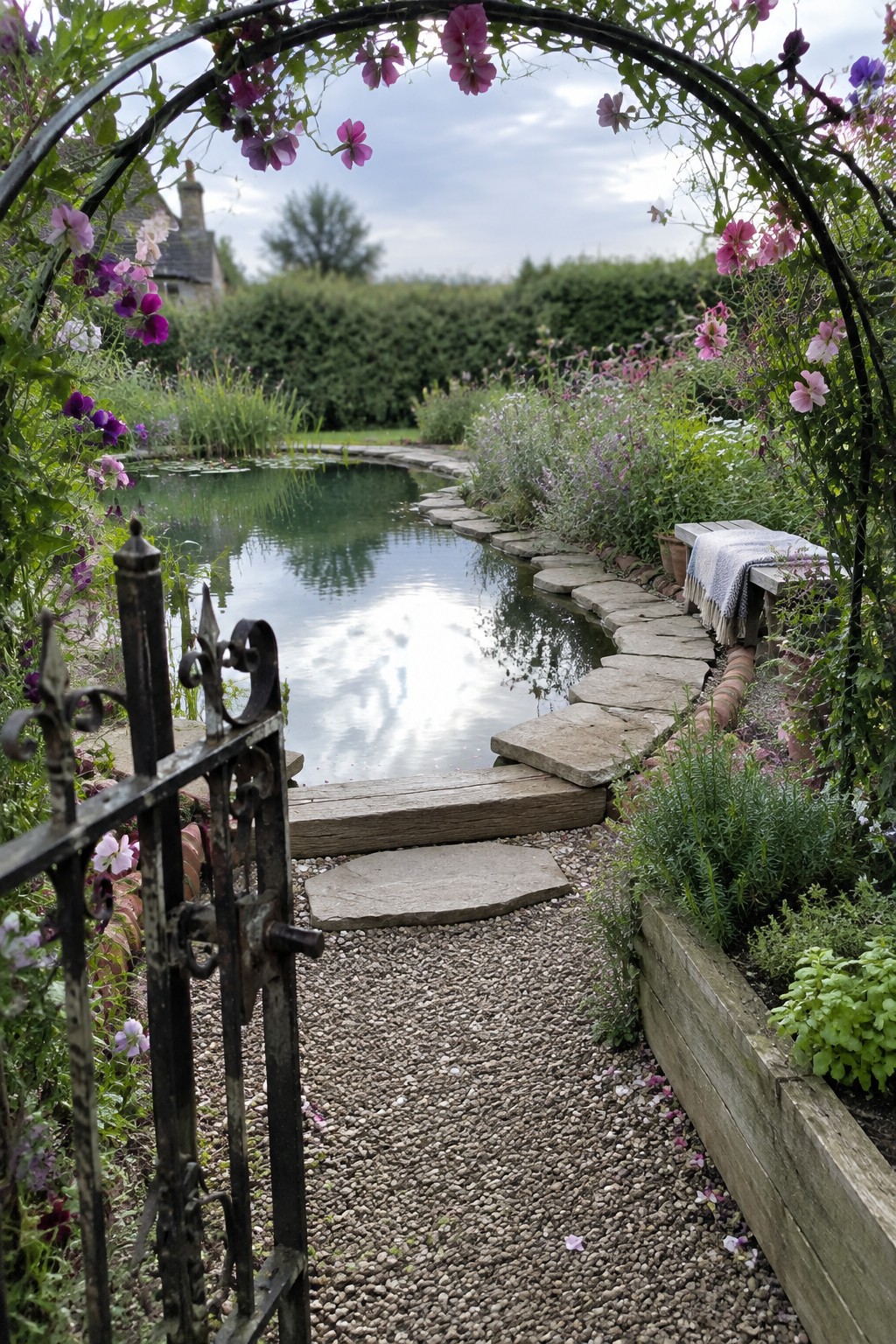
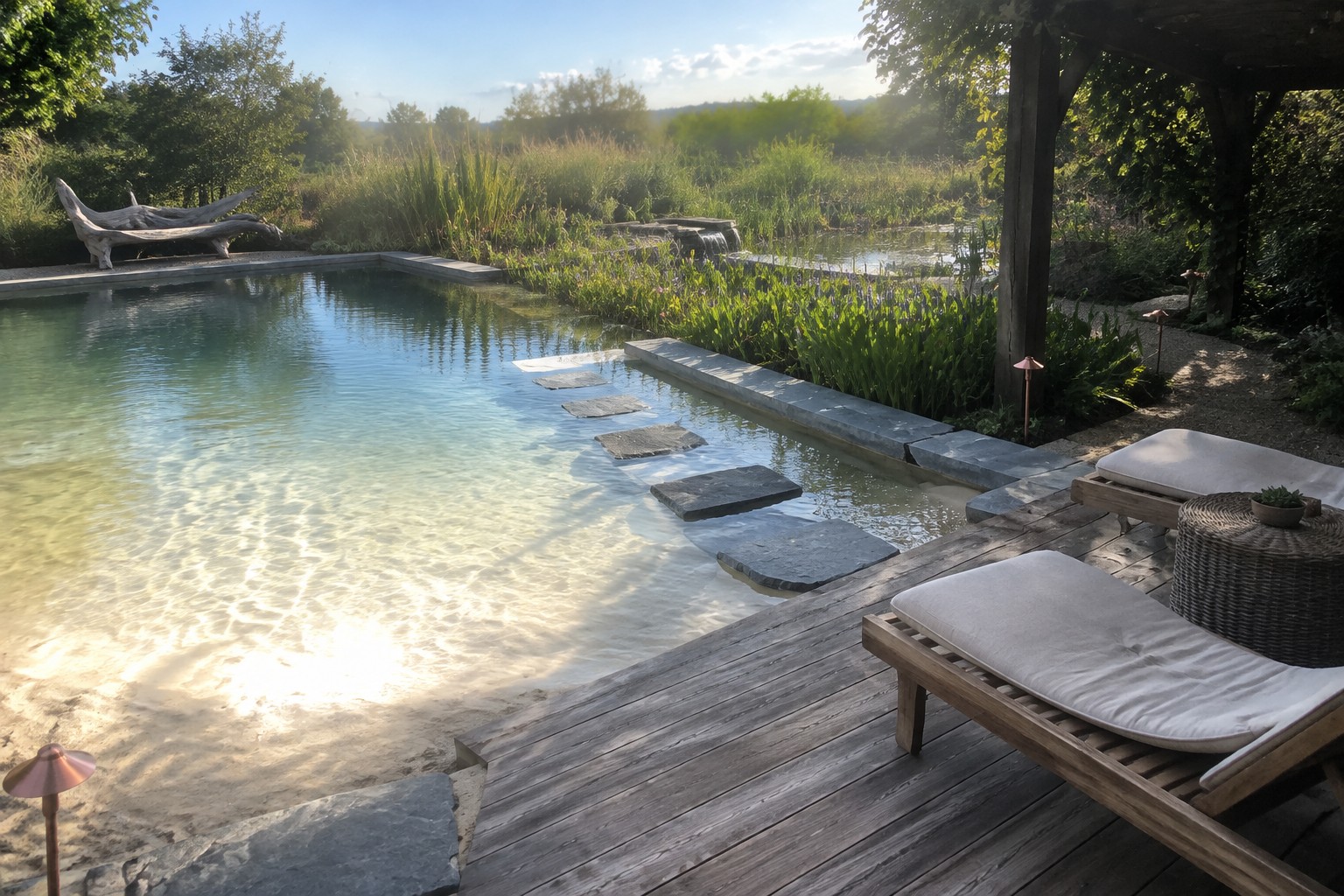
A stepping-stone path can make a small swimming pond easier to reach without taking up much garden space. Here, broad, irregular stones follow the curve of the water and give the pond edge a more natural feel.
Leave enough room between stones for secure footing, especially where the path gets wet. This works well in a cottage-style garden, but choose stones with a steady, nonslip surface.
Add a Built-In Bench Beside the Pond
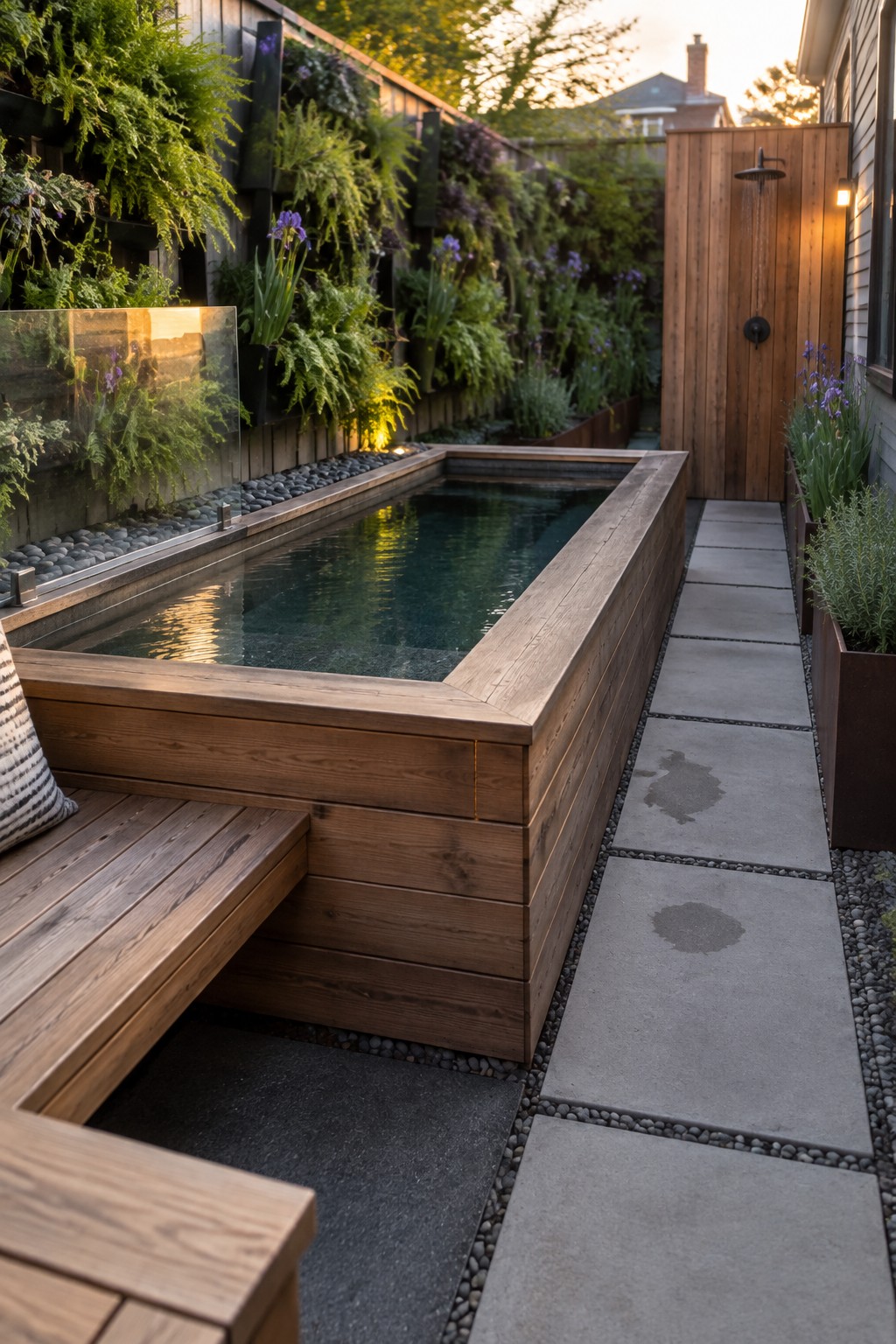
A built-in wooden bench makes a narrow swimming pond more useful without taking up extra garden space. Here, the bench sits right beside the pond, so there’s a handy place to sit before or after a swim.
This setup suits a small garden where every bit of space needs to serve a purpose. Leave enough room for a clear path around the pond, and choose wood that can handle regular splashes.
Use a Curving Path Along the Pond
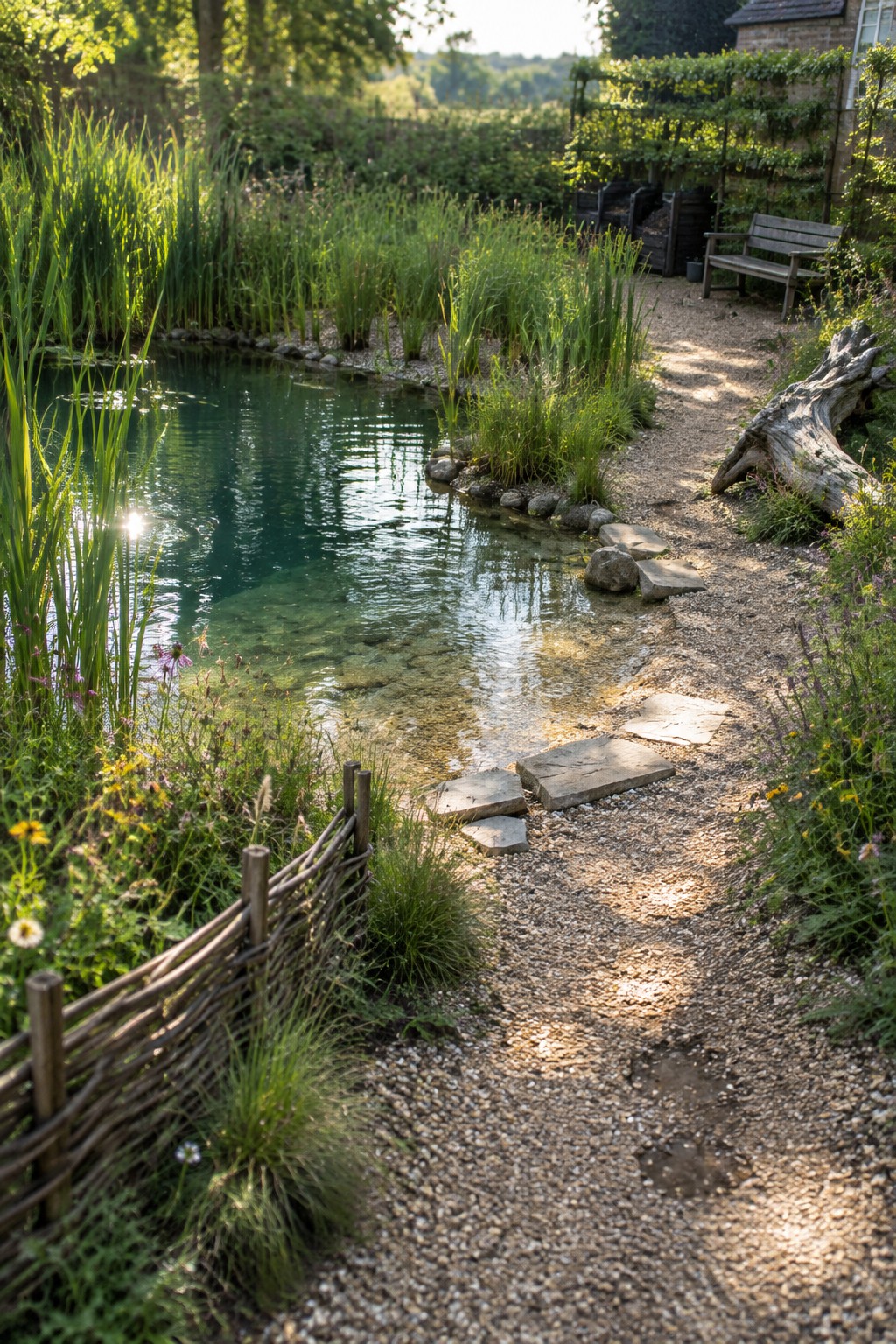
A gravel path that follows the edge of a swimming pond makes the garden easier to move through without taking up much room. The gentle curve also keeps the pond’s outline from feeling too rigid.
For a small garden, keep the path narrow and use a firm gravel base so it stays comfortable underfoot. A few flat stepping stones can make the water’s edge easier to cross, but leave enough planted space beside the path to keep the pond from feeling crowded.
Use a Pergola to Shade the Pond Area
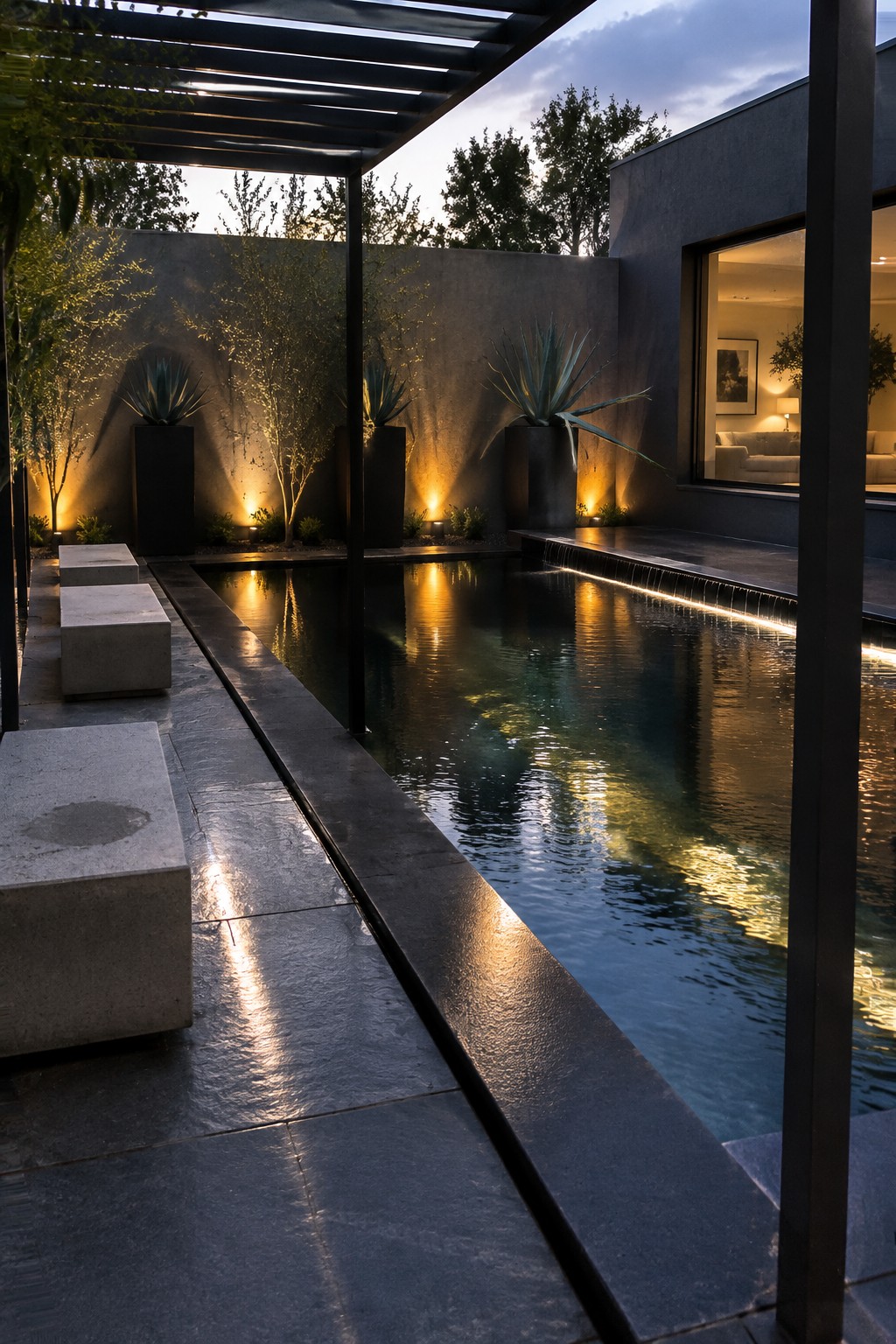
A pergola can make a small swimming pond more comfortable without closing it off from the garden. The open slats provide some shade while still letting in daylight, so the water area feels sheltered but not boxed in.
For a compact yard, place the pergola over a narrow strip beside the pond rather than covering the whole water surface. Keep the supports out of the main walking path, and choose a simple design that suits the house.
Create A Shallow Entry Shelf In The Pond
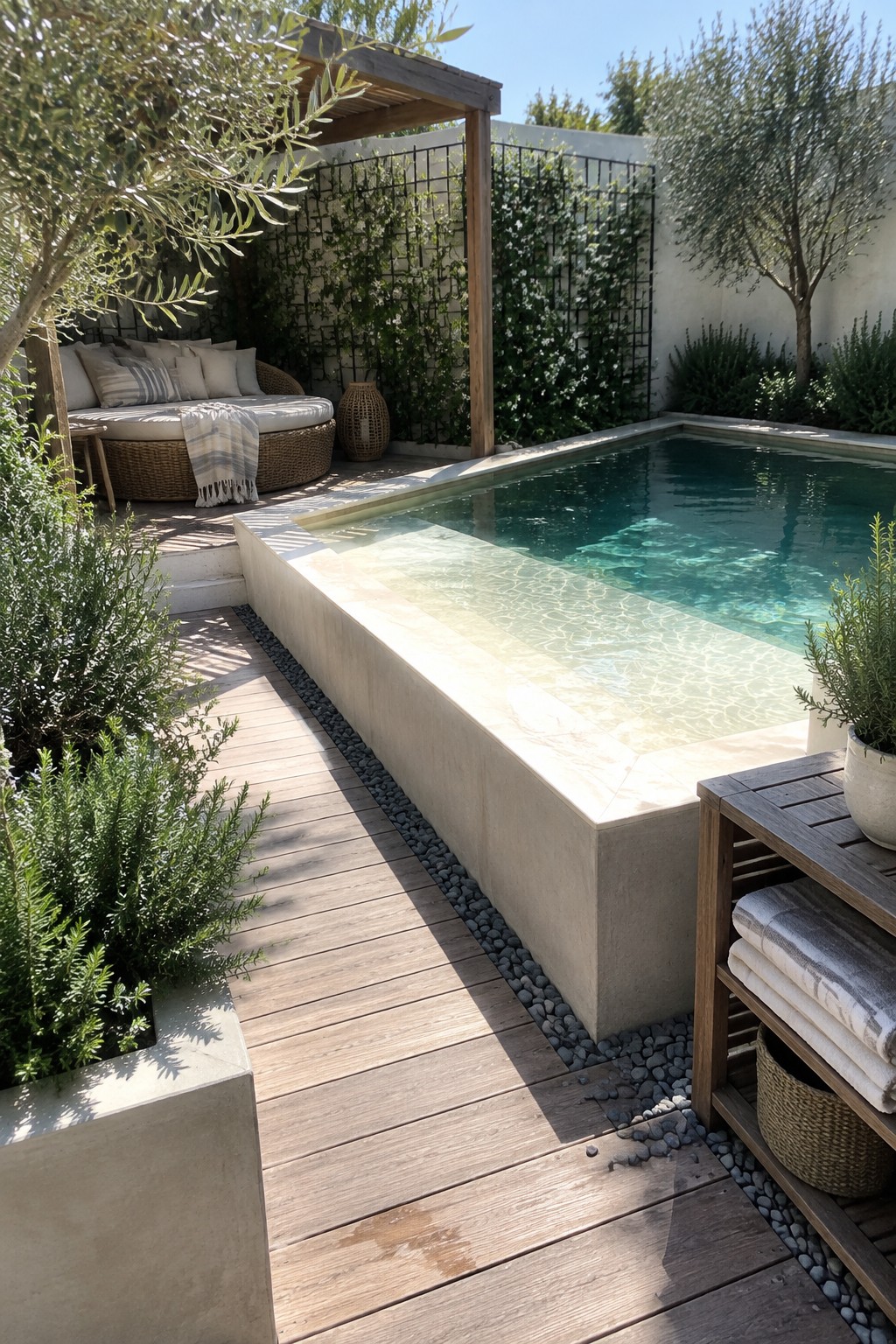
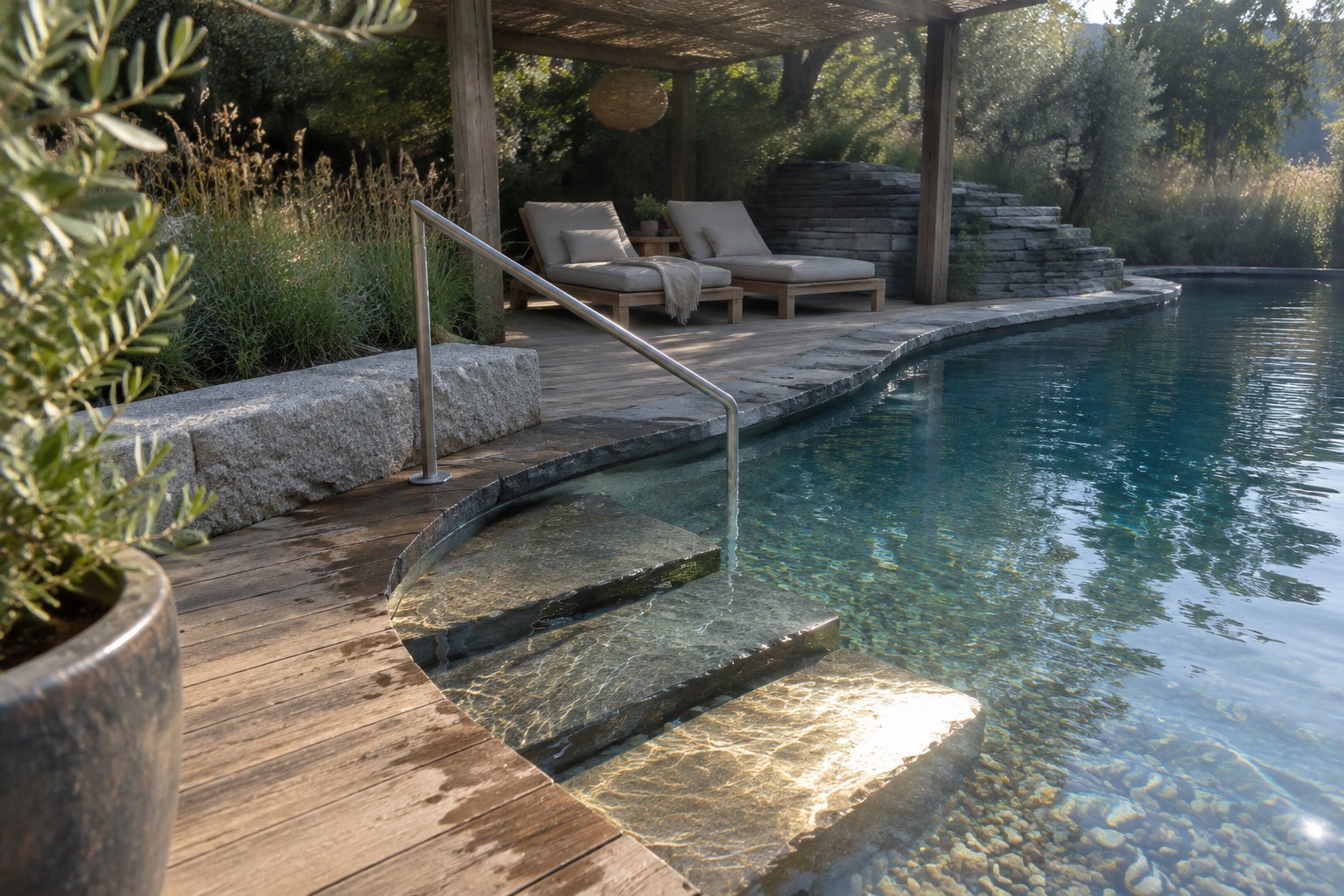
A shallow shelf along one side of a swimming pond gives you an easy place to step in and cool off. Here, the pale ledge runs beside the deeper water, so the change in depth is clear and the pond feels comfortable to use.
This idea suits a compact garden where there is room for a narrow shallow section but not a large beach entry. Keep the shelf wide enough to stand on, and choose a grippy finish for safety.
Add a Curved Edge to a Small Swimming Pond
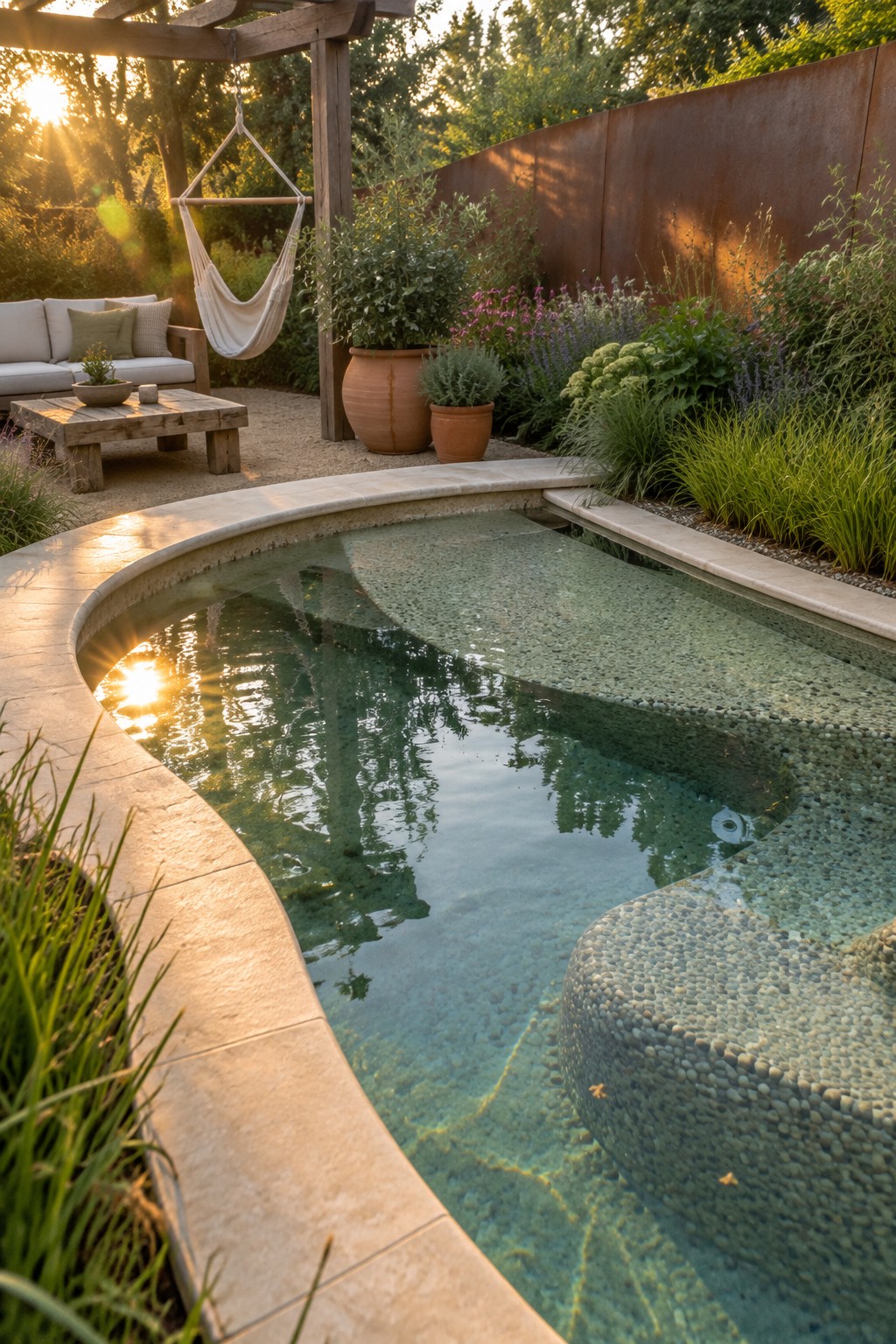
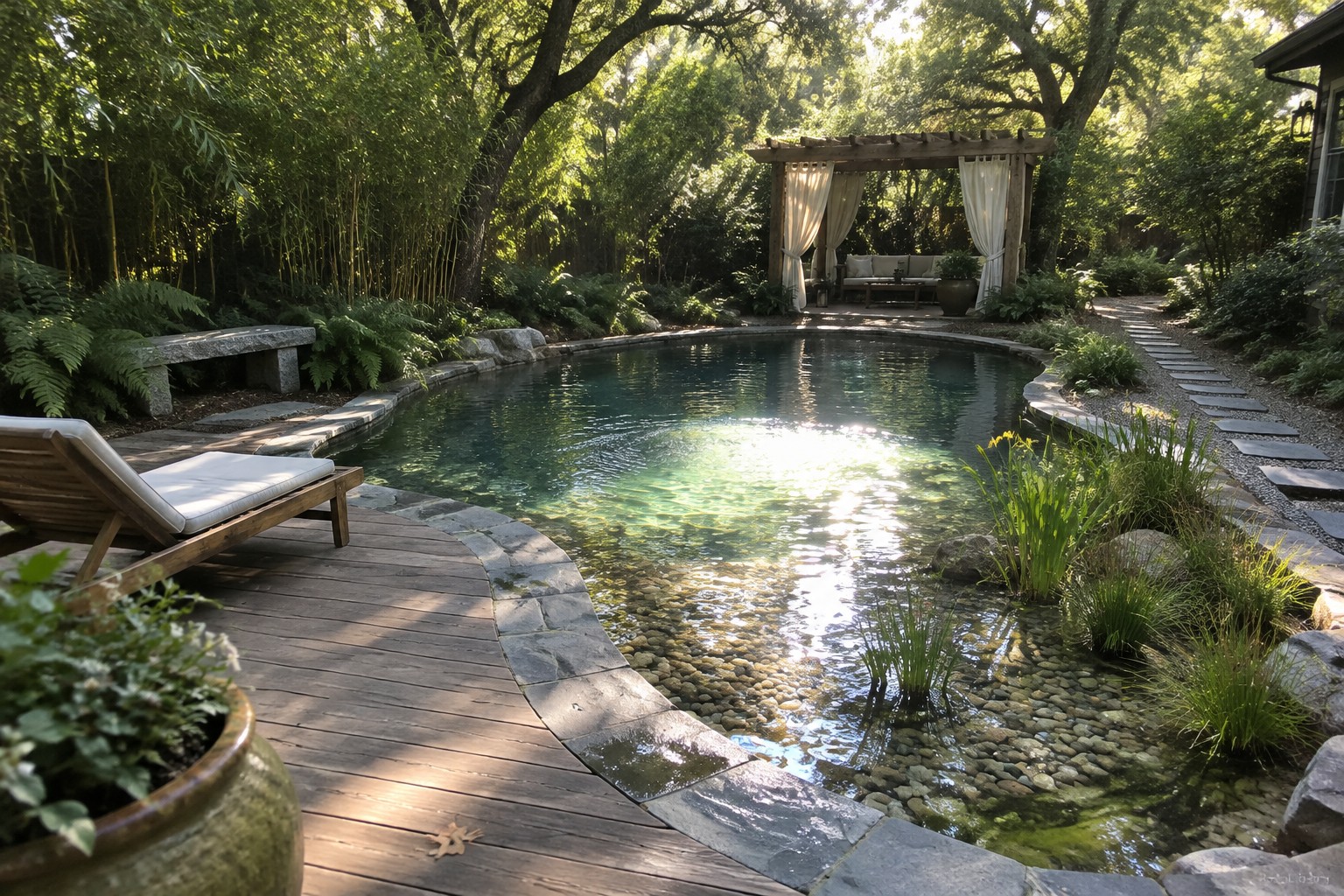
A curved pond edge can make a small garden feel less boxed in. It also gives the water a softer outline than a simple rectangle, while leaving room for a compact seating area nearby.
Use stone coping to make the curve comfortable to sit on and easy to maintain. Keep the shape simple, since too many bends can take up useful space and make the pond harder to build.
Add A Shallow Shelf Along The Pool
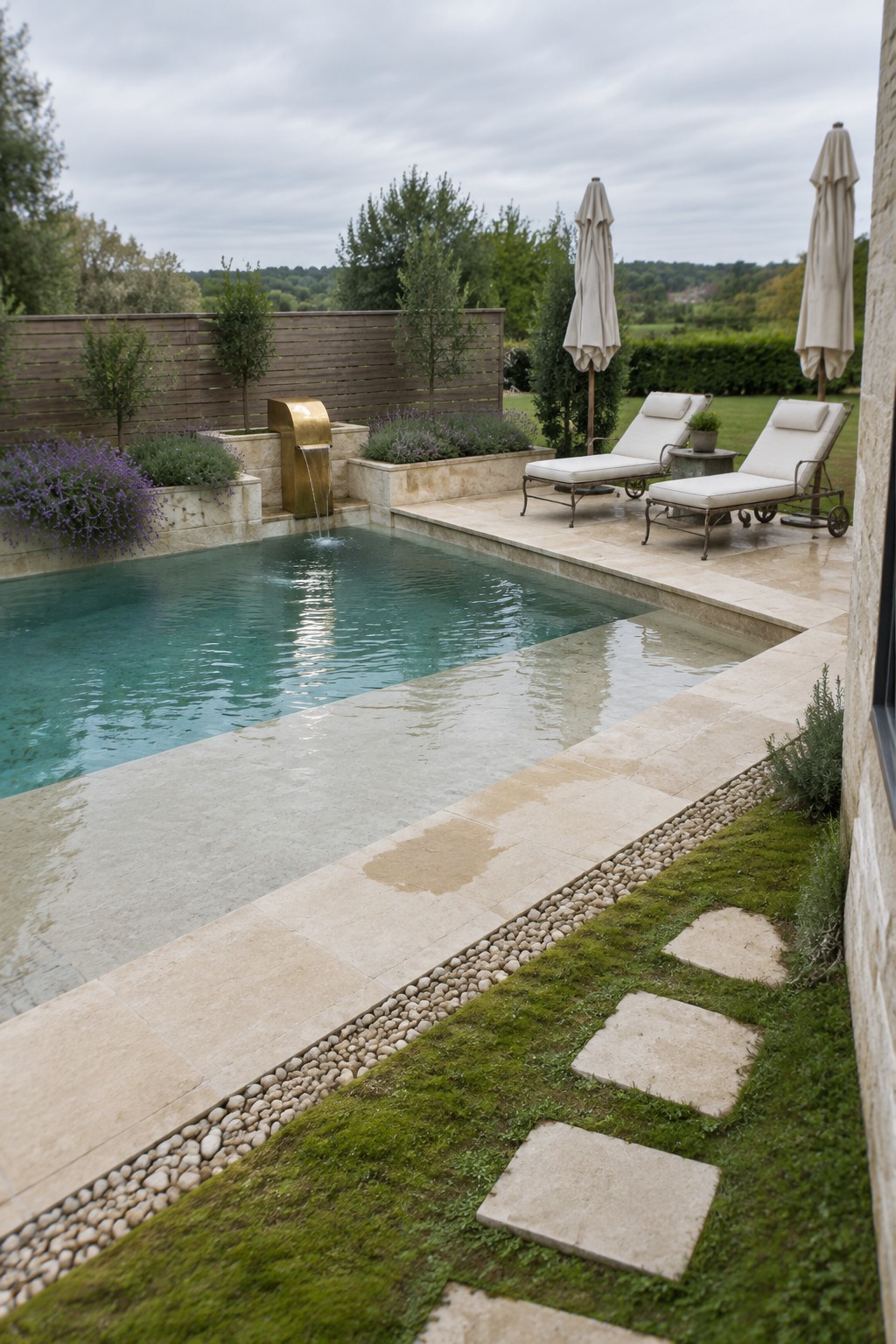
A shallow shelf can make a small swimming pond more useful without taking up space for a separate seating area. It gives you a place to sit in the water or cool your feet, while keeping the main swimming area clear.
Plan the shelf as part of the pond’s shape and use a durable, nonslip finish. In this garden, the pale stone shelf sits beside the deeper water and connects naturally to the patio. Check that the transition is easy to see and walk across.
Add a Slim Planting Strip Along the Pond
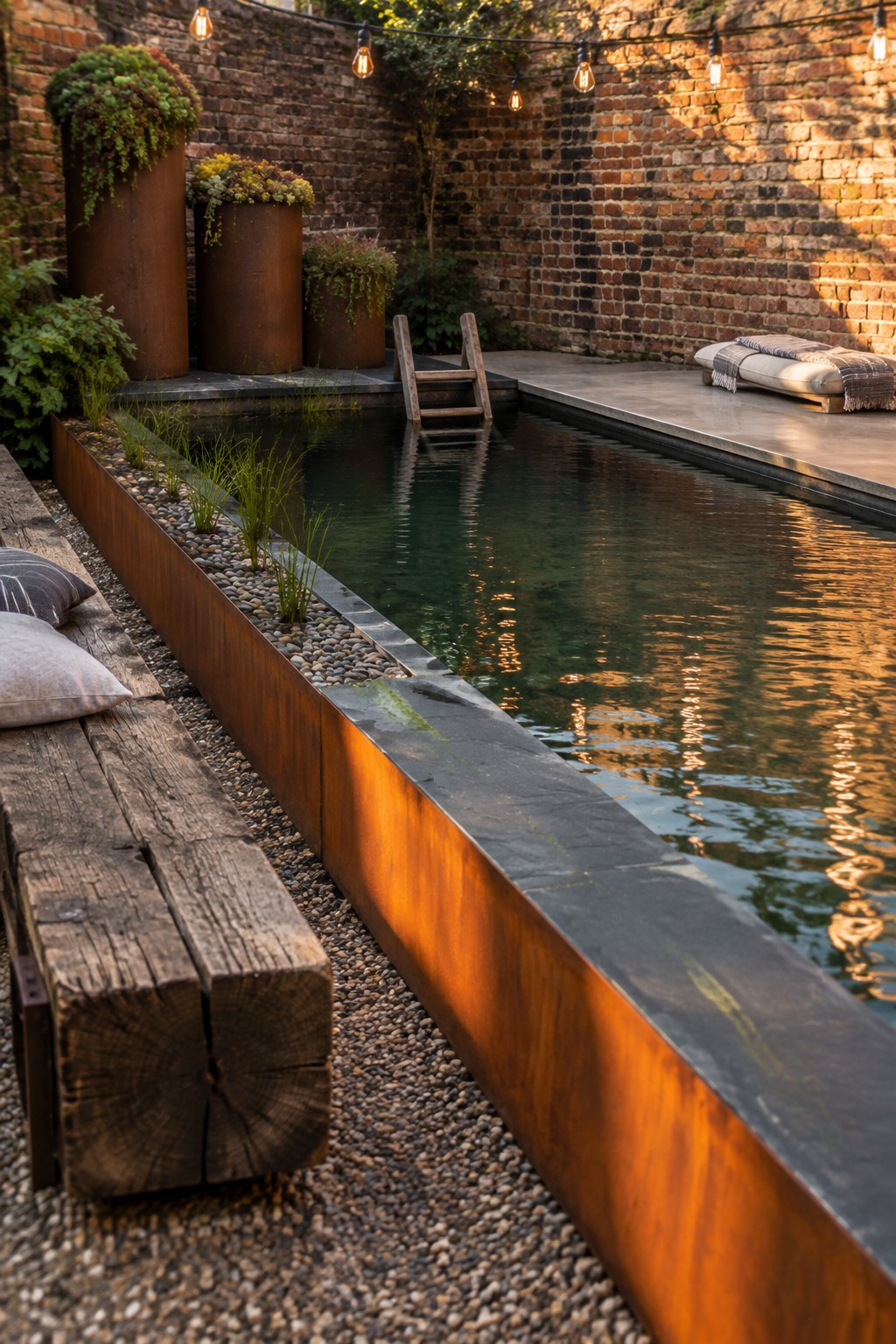
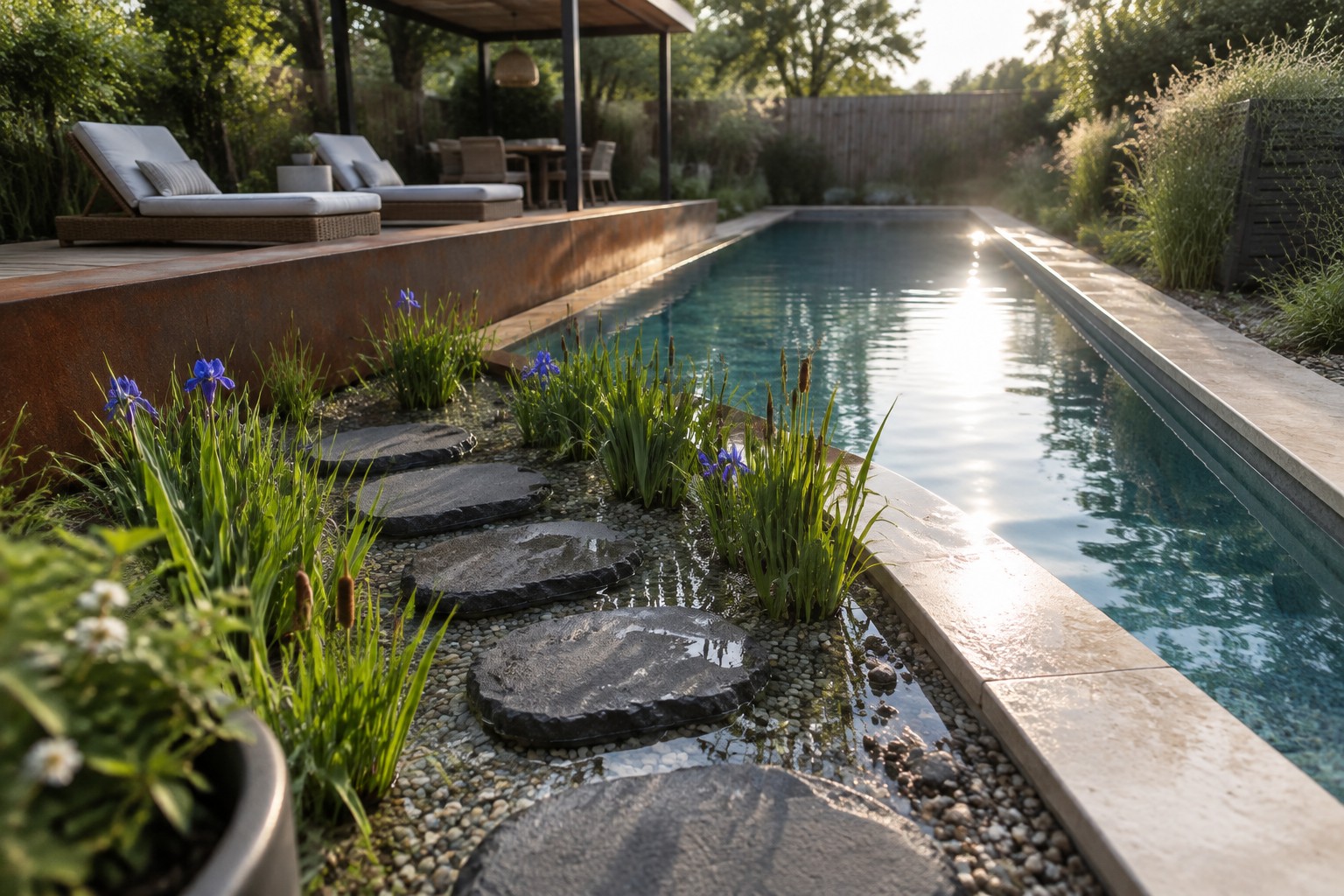
A narrow planted edge can make a small swimming pond feel more like part of the garden without taking up much room. Here, a raised rust-colored border holds pebbles and grasses beside the water, giving the pond a clear edge.
Use a slim strip along one side of the pond, especially where space is tight. Choose plants that suit damp conditions, and leave enough room to reach the water for cleaning and upkeep.
Add a Waterfall to a Small Swimming Pond
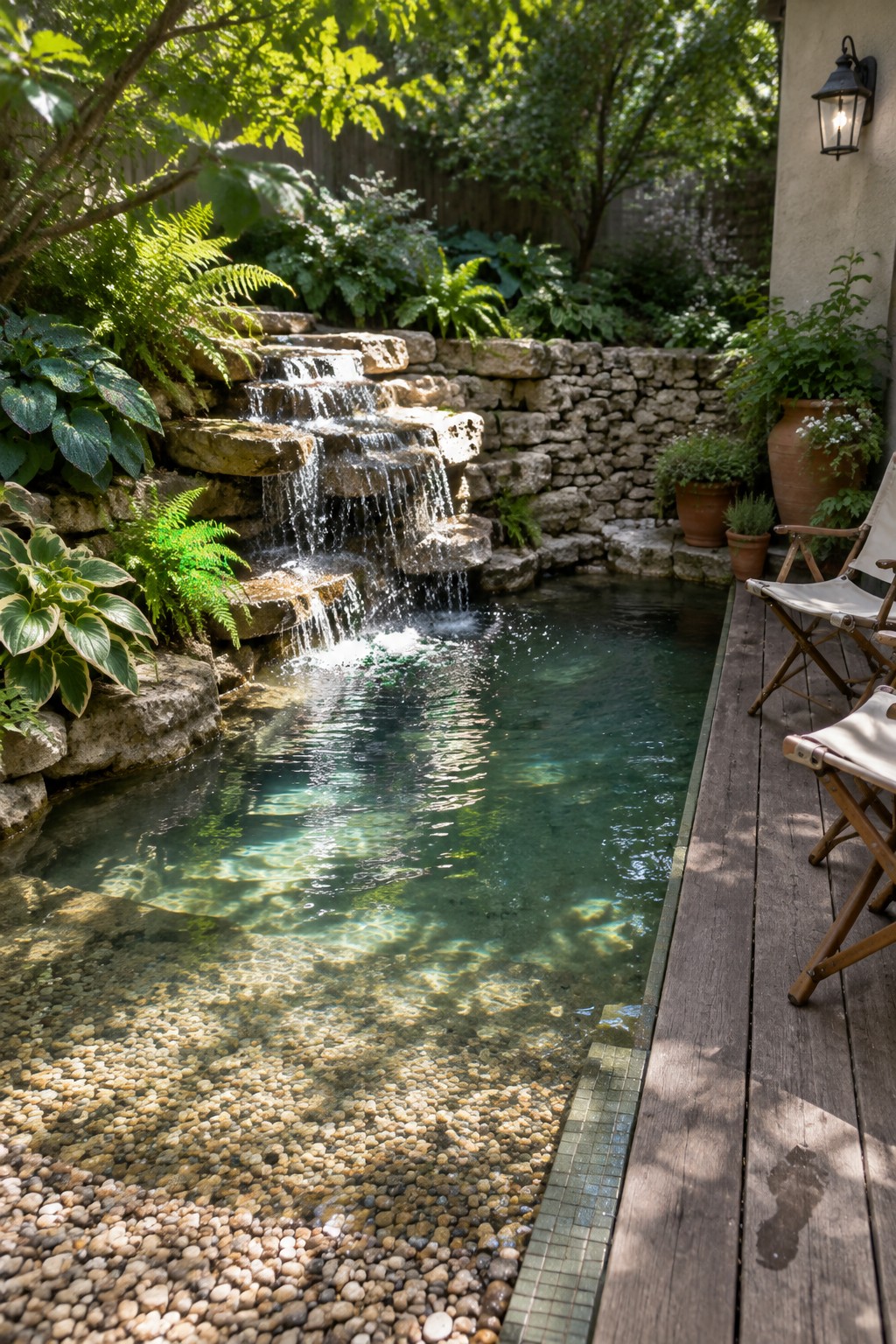
A small waterfall can make a garden pond feel like a natural part of the yard rather than a plain pool. Here, water runs down stacked stone into the pond, adding movement without taking up much swimming space.
Use a short cascade along one end or side of the pond, especially where a stone retaining wall can support it. Keep the drops low so the feature fits a compact garden and does not overpower the pool.
Use Tropical Plants To Give a Small Pond Privacy
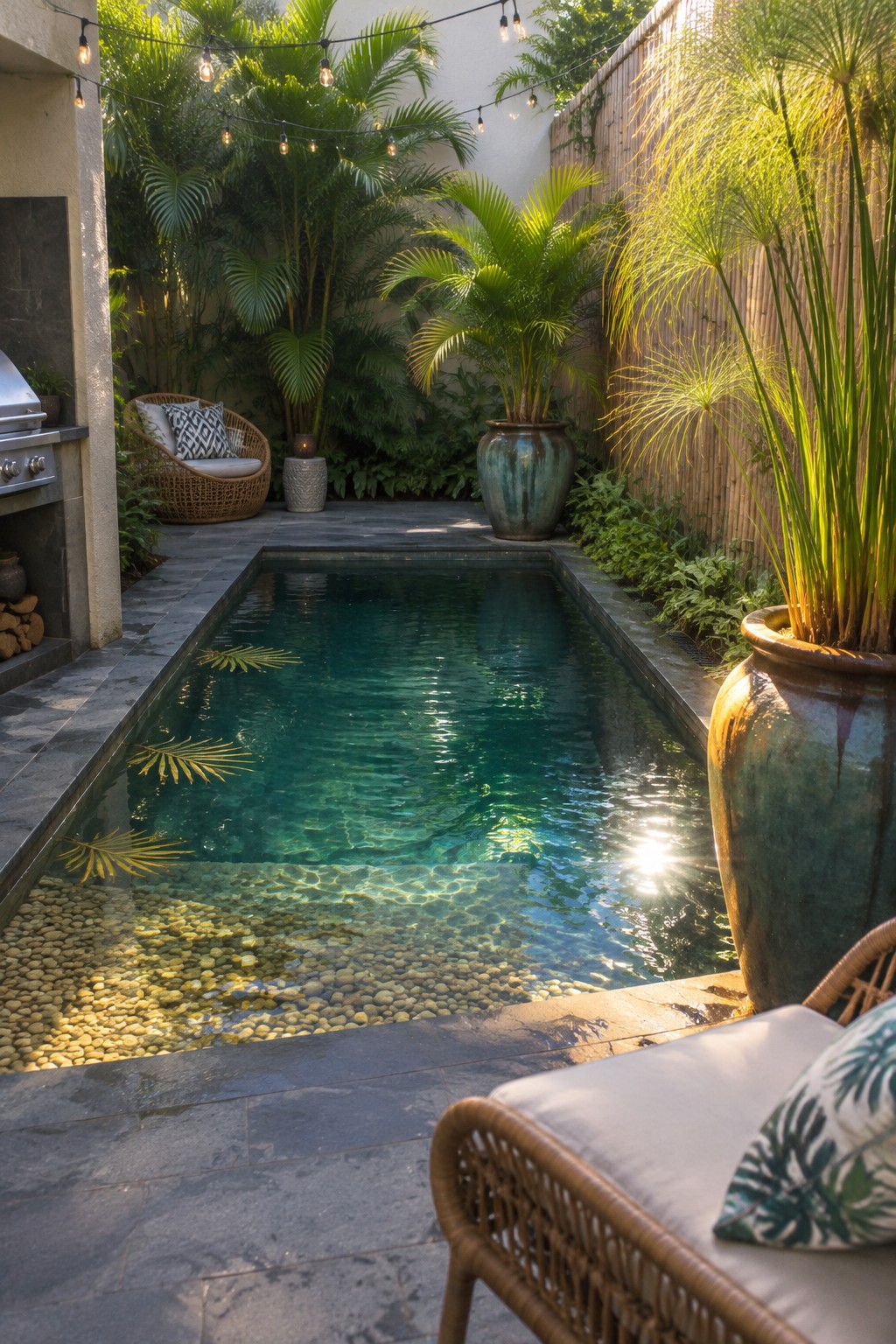
A swimming pond can feel tucked away even in a small garden when leafy plants screen the edges. The dense planting beside this narrow pool makes the space feel private without needing a tall, solid fence.
Use a mix of heights along one or two sides, leaving enough room to walk around the pond and reach the water. Choose plants suited to your climate, and keep vigorous roots away from the pond structure.
Use a Simple Stone Path to Reach the Pond
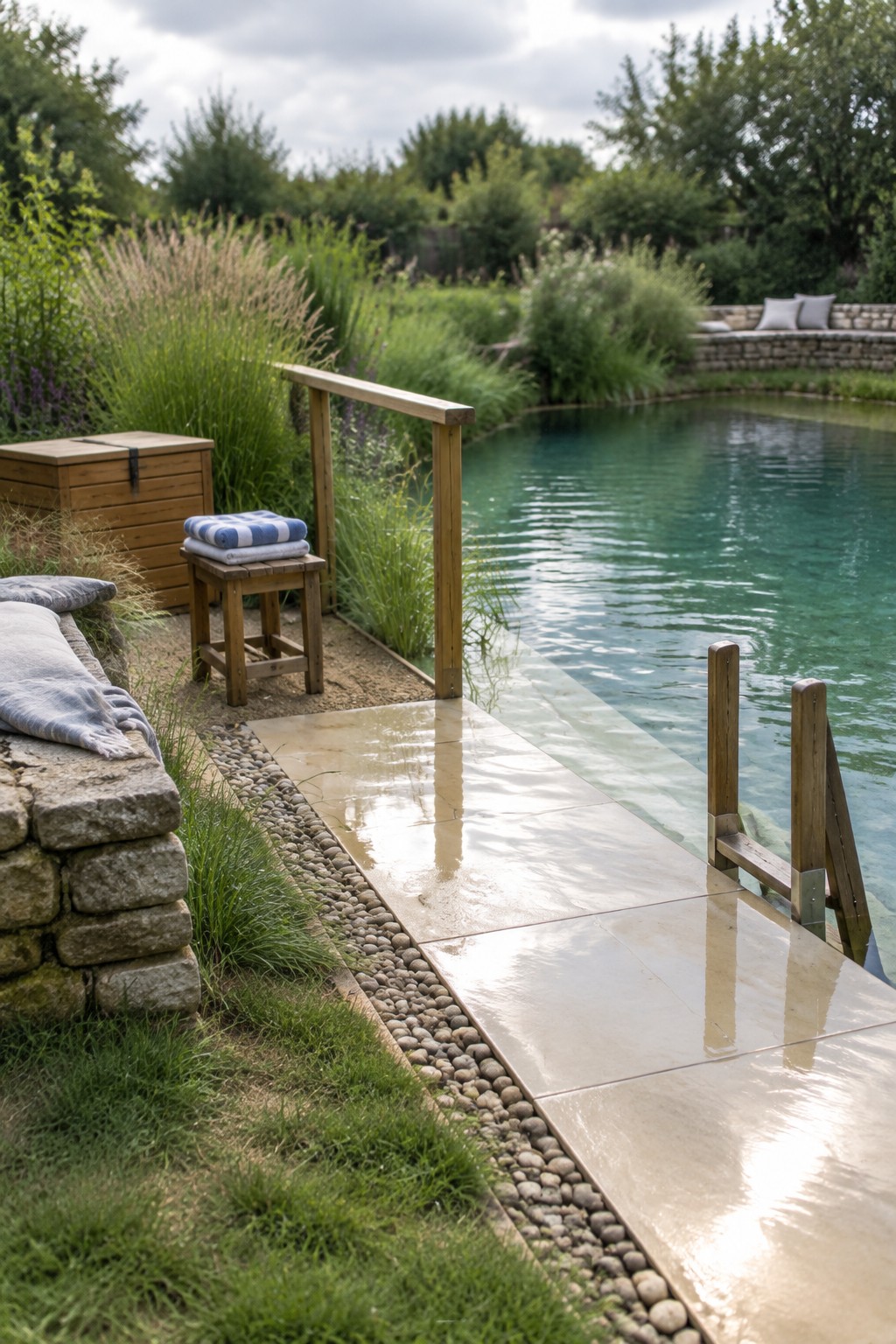
A clear path makes a small swimming pond easier to use without taking over the garden. Large stone pavers give swimmers a dry place to walk, while a narrow pebble border helps the path sit naturally beside the water.
This approach works well where space is limited and you want the pond to feel connected to the rest of the garden. Leave enough room for safe footing, and choose a surface that stays grippy when wet.
Keep the Pond Beside the Seating Area
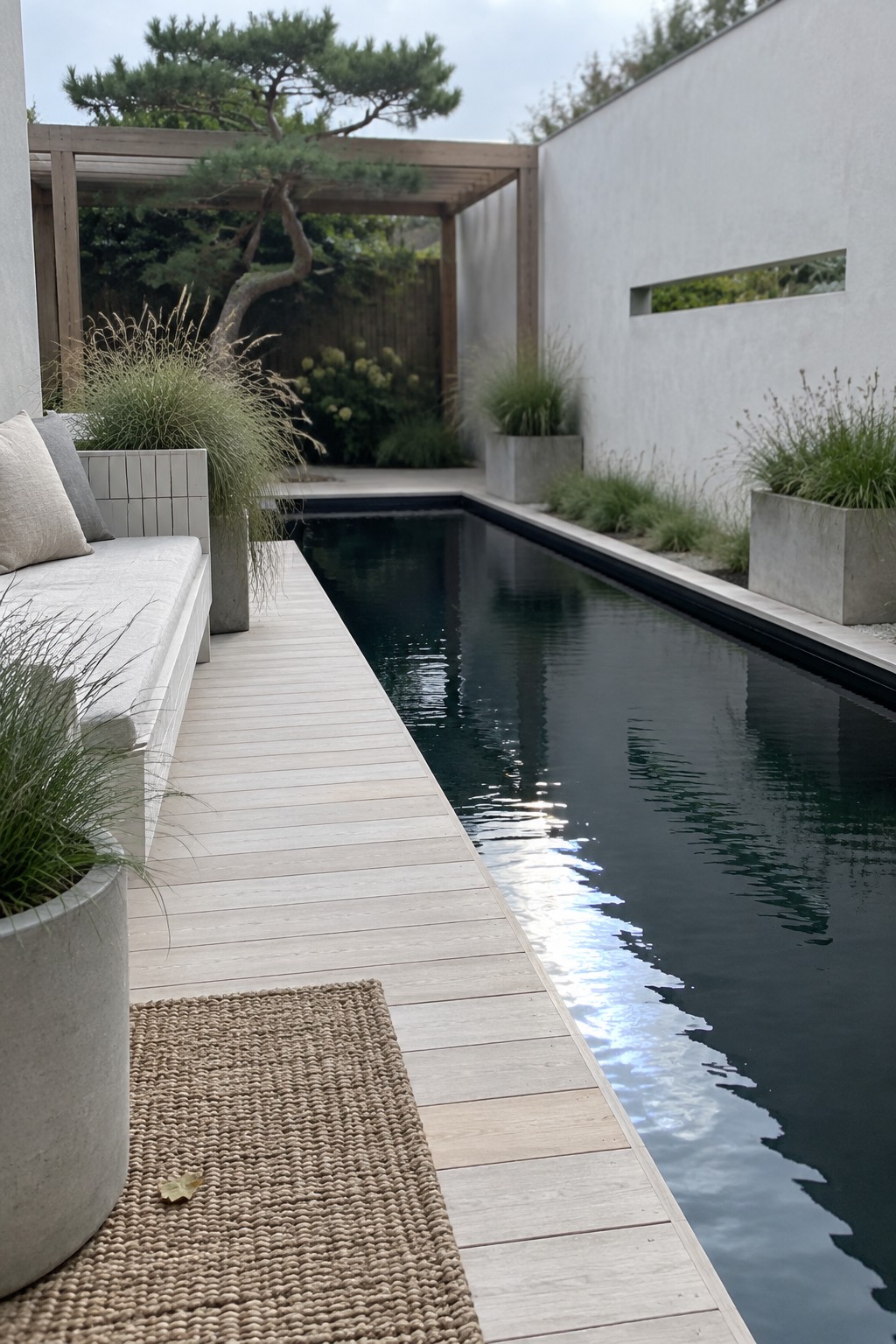
A narrow swimming pond can work well beside an outdoor seating area, especially when space is limited. The close layout makes the water easy to enjoy without needing a large separate pool zone.
Leave a clear path along the pond edge so people can move between the seating and the water safely. Pale decking is one practical option for a small space, but use a surface that stays grippy when wet.
Add a Gravel Shore Beside the Pond
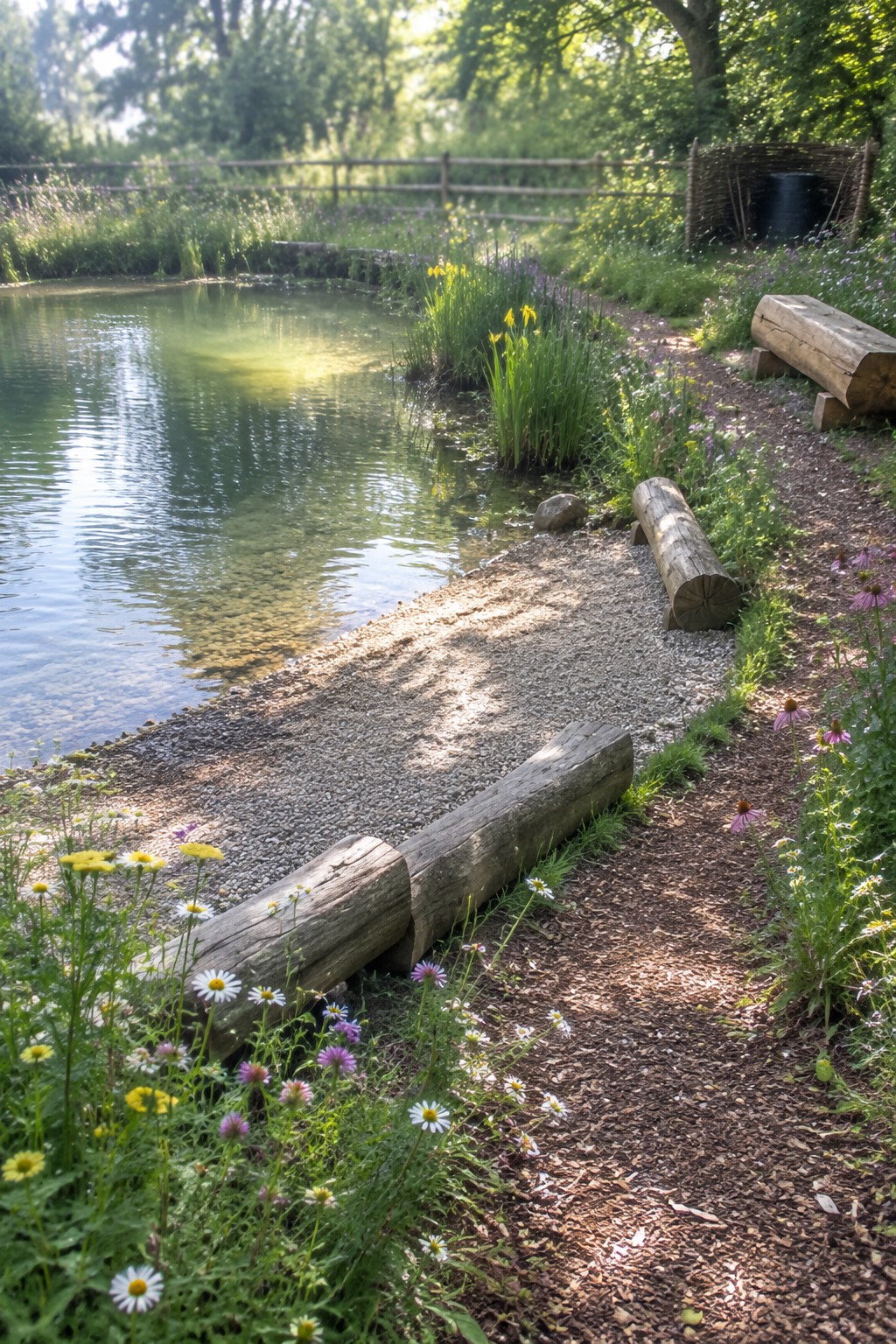
A narrow gravel edge gives a swimming pond a simple place to step in and out without needing a full patio. It also keeps the pond’s edge distinct from the garden while still feeling natural.
For a small garden, keep the gravel strip modest and use rounded stones that are comfortable underfoot. A few log seats nearby can make the area useful for drying off, but leave enough clear shore for safe access.
Add a Wooden Deck Beside the Pond
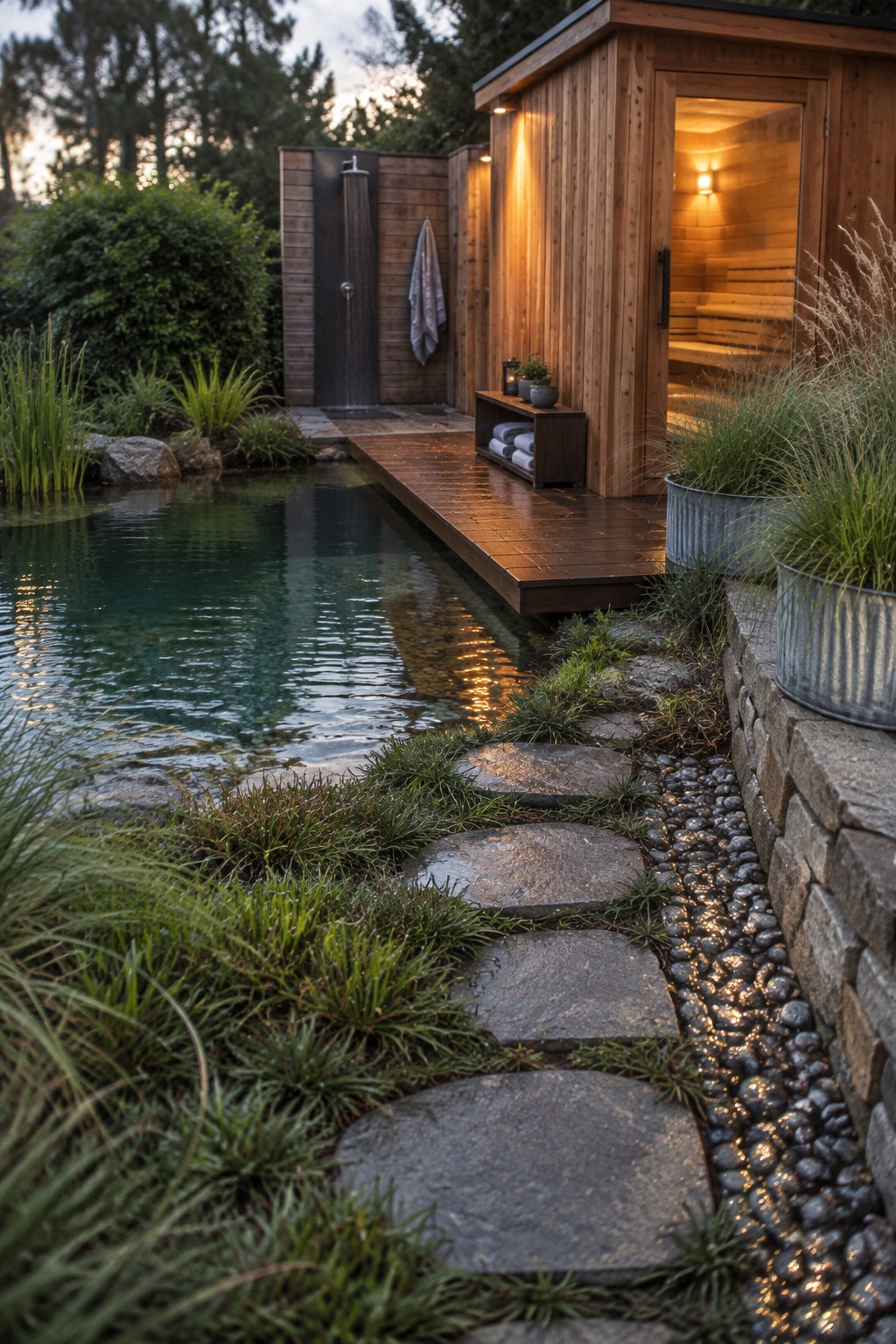
A small deck beside a swimming pond gives you a dry place to step out, sit, or set down a towel. It also makes the pond easier to use without taking up much garden space. Here, the deck leads right to a compact sauna, but the same idea works beside a simple changing shed or outdoor shower.
Keep the deck just large enough for the things you’ll use there, and choose boards made for wet conditions. A clear route from the pond to the house helps, too, especially in a small garden where every bit of space needs to work.
Frequently Asked Questions
Q: How small can a garden be for a swimming pond?
A: Even a compact garden can fit a plunge-size pond if you keep the shape simple and leave room to walk around it. Check where the sun, trees, and underground pipes are before you settle on a spot.
Q: Do swimming ponds need a pump?
A: Most do, especially if you want clear water without using chlorine. A small circulation system keeps water moving through the planted filter area, which helps limit murkiness and mosquito breeding.
Q: How do I keep leaves and dirt out of a small pond?
A: Skim out leaves regularly and avoid placing the pond directly under a tree. A simple cover can also help when you are not using the pond, particularly in autumn.
Q: Will pond plants make swimming awkward?
A: They can if they spread into the swimming area, so keep them in a separate planted zone or baskets along the edge. That gives the water a natural feel without leaving you to dodge stems.