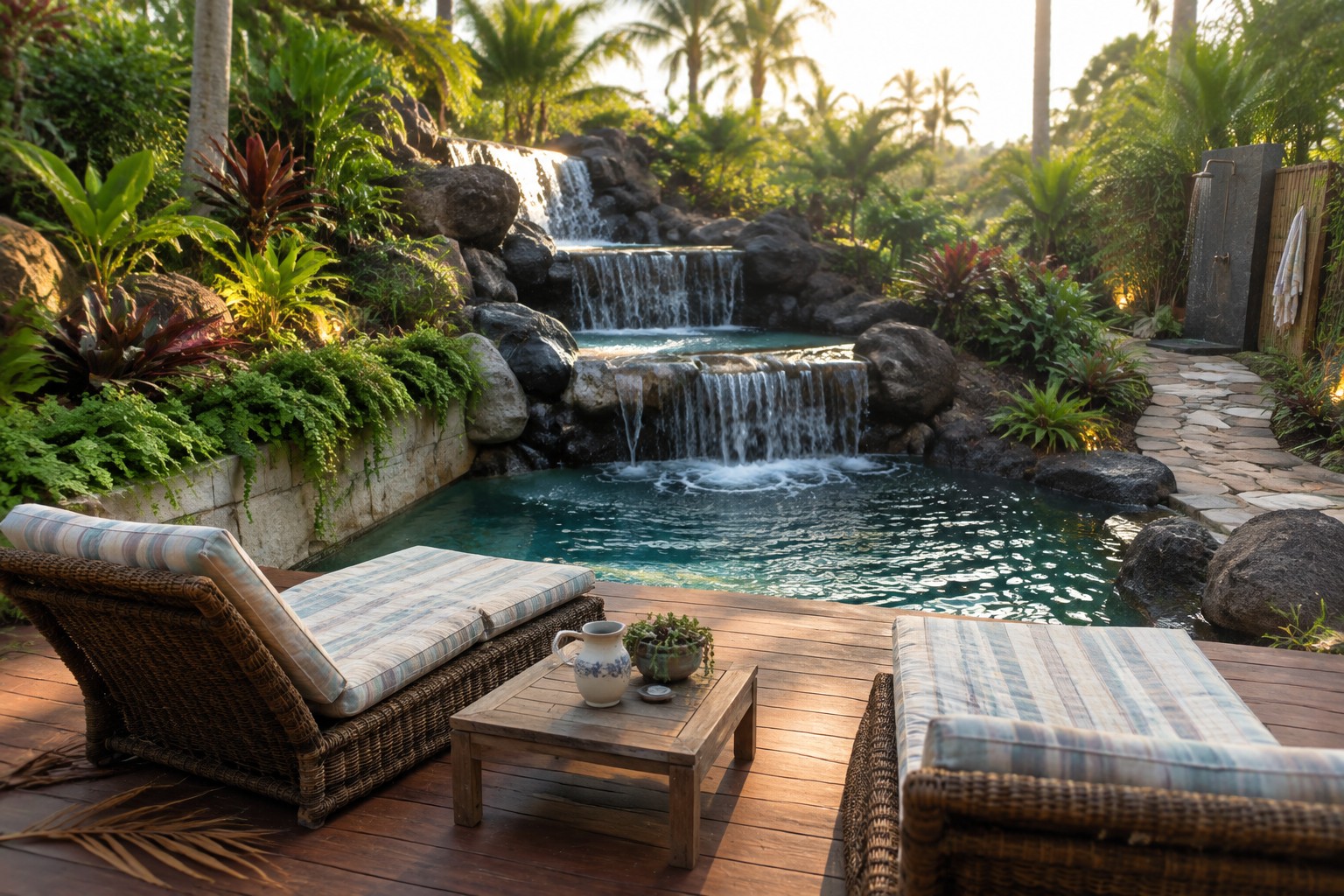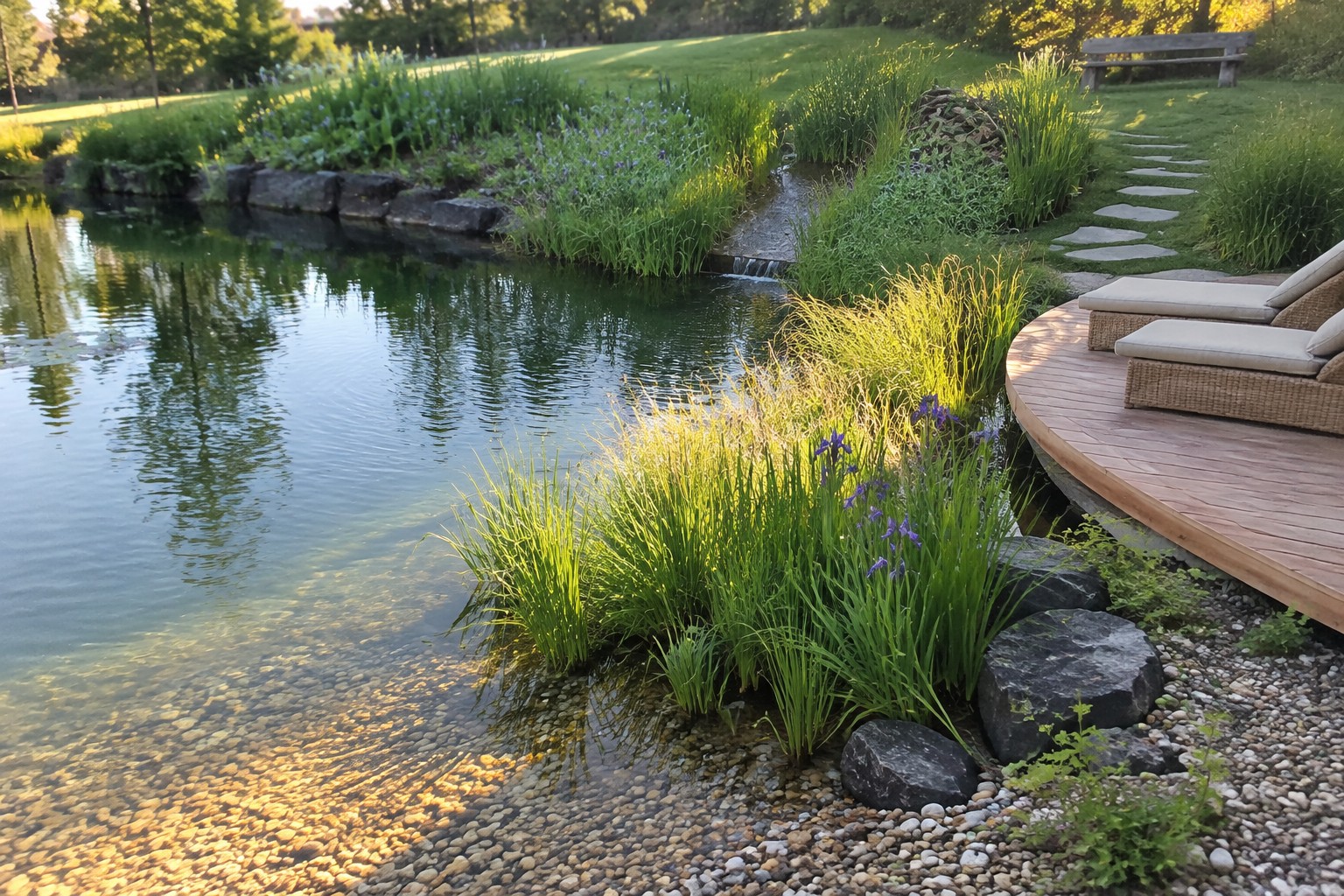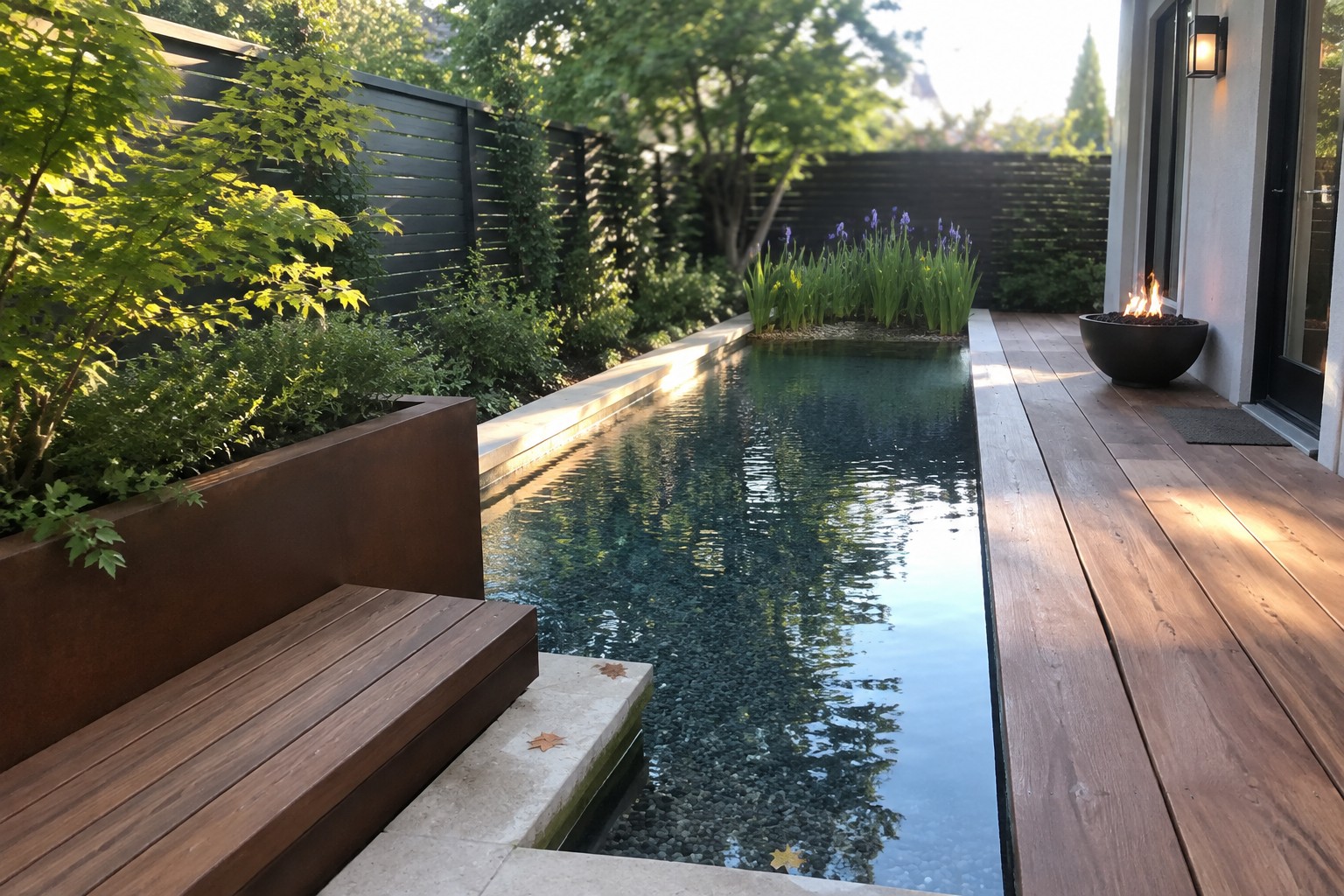
A natural pool can bring a narrow backyard to life, but its shape and placement need to leave enough room to move around it.
I find that the first thing people notice is often how the water sits beside the house, paths, and planting, not just the pool itself.
Long, slim layouts can make good use of a tight yard, though they work best when circulation and a comfortable place to sit are considered from the start.
The right edging, greenery, and sightlines can help the pool feel connected to the rest of the garden rather than squeezed into a leftover strip.
Some of these layouts are worth saving and adapting to your own space, especially if you want a pool that feels natural and usable.
Use a Long, Narrow Pool to Make the Most of a Small Yard

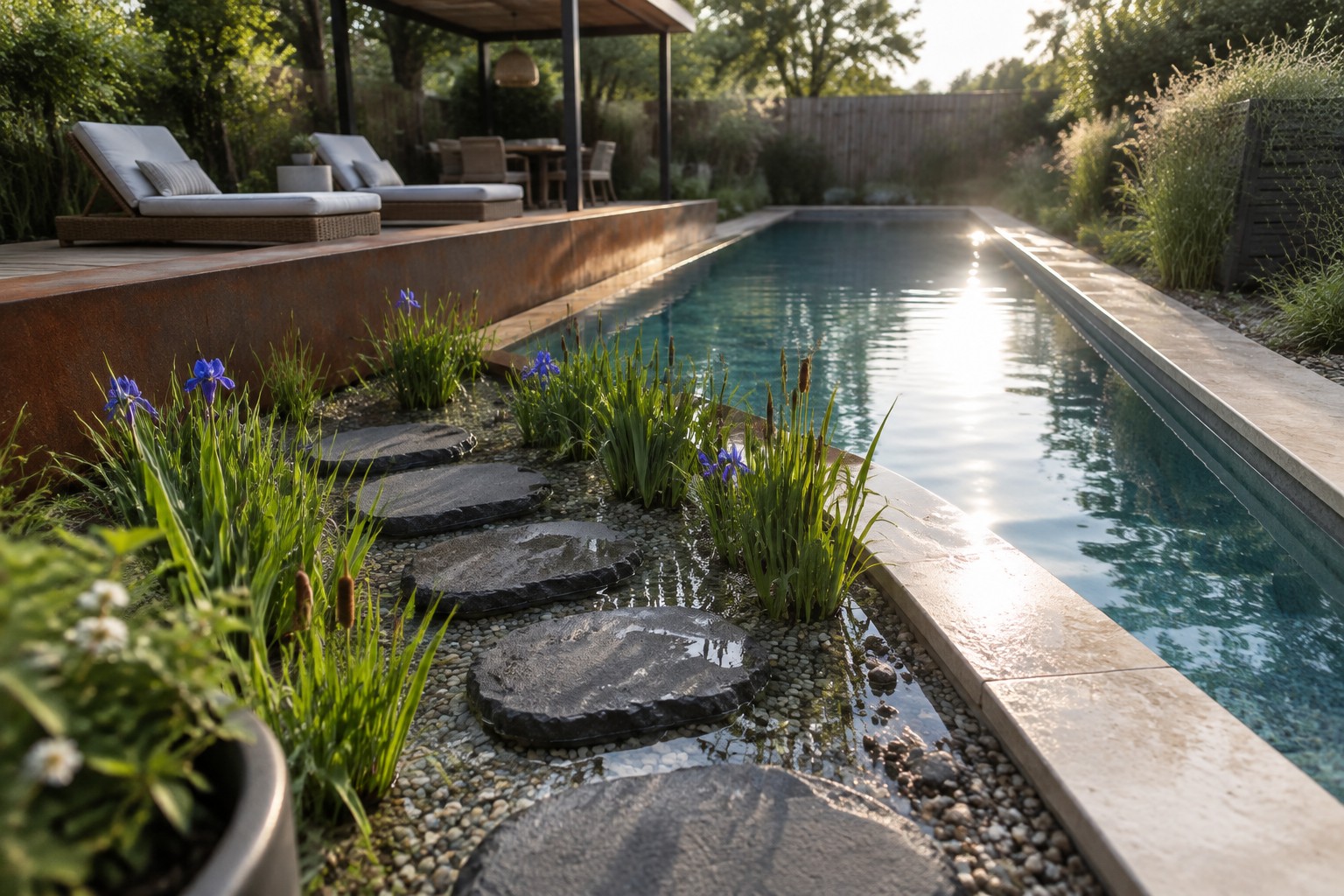
A slim pool can fit a narrow backyard without taking over the whole space. Running it lengthwise also gives the yard a clear shape and leaves room for a deck or walkway along the sides.
Keep the pool simple and make sure there’s enough space to walk around it safely. A wood deck on one side and a slim paved path on the other can work well when the yard is tight.
Keep a Narrow Pool Along One Side Of The Yard
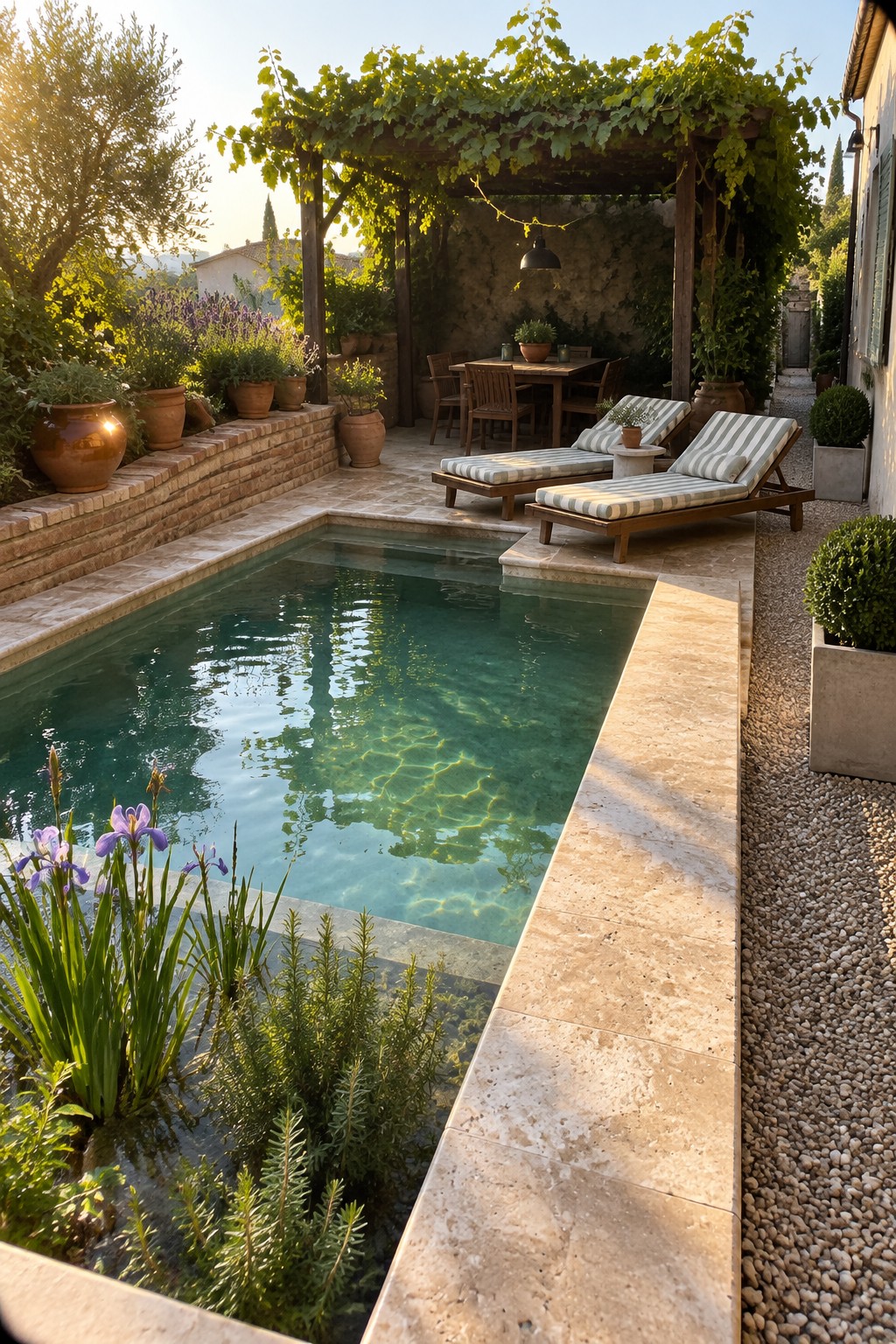
A pool that runs lengthwise can make good use of a narrow backyard without taking over the whole space. The long edge also leaves room for a slim path or a small seating area beside the water.
Keep the pool shape simple and leave enough clearance to walk around it safely. A pair of loungers at one end can work well when there isn’t room for seating along the full length.
Fit a Narrow Pool Along the Yard
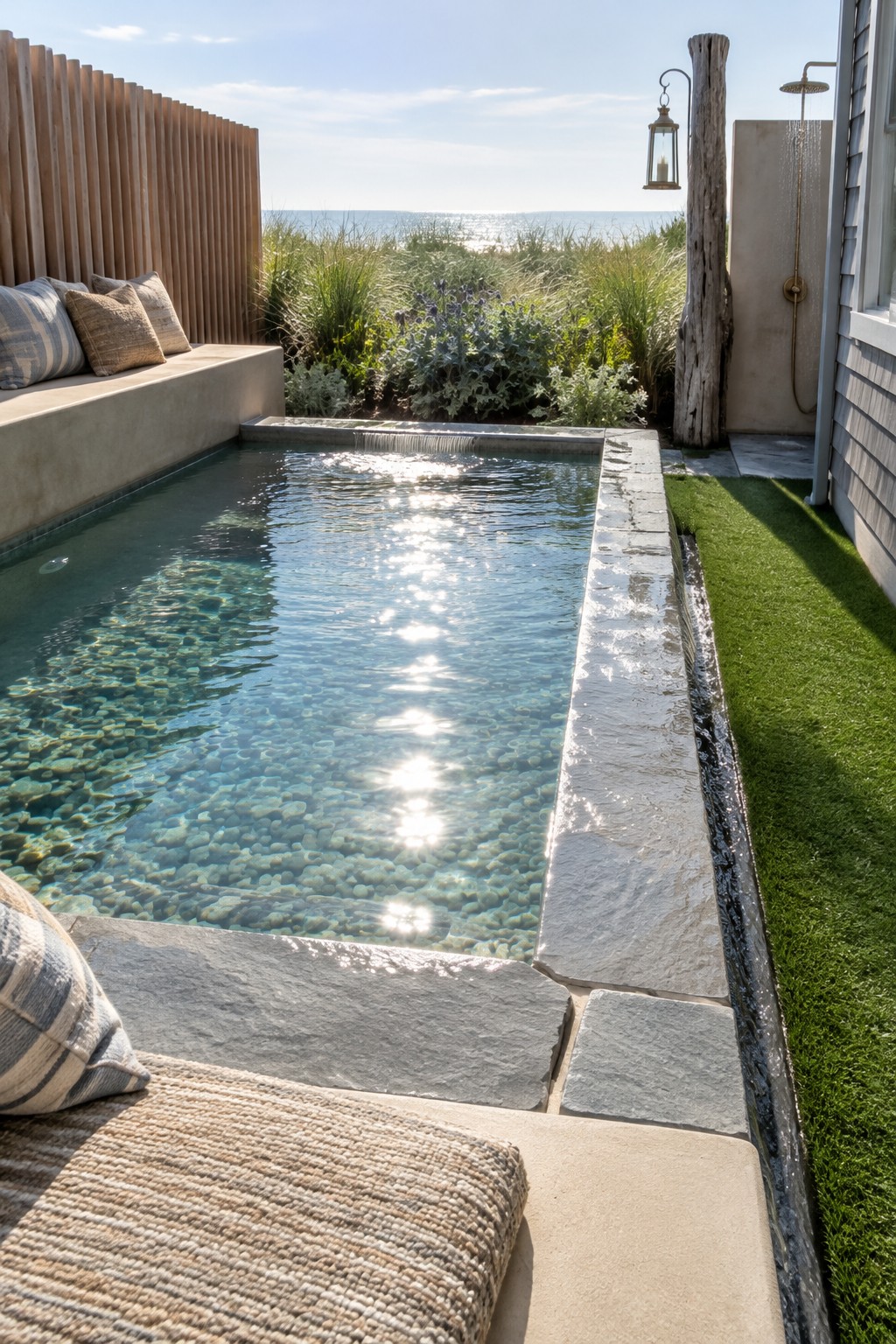
A long, slim pool can make a narrow backyard feel more useful without taking up the whole space. Keeping it along one side leaves room for a small strip of lawn and a built-in spot to sit.
This layout works especially well in coastal or compact yards where a full-width pool would crowd the patio. Choose simple, durable coping and keep the pool’s shape clean so there’s still room to walk around it.
Add a Small Island to a Narrow Pool
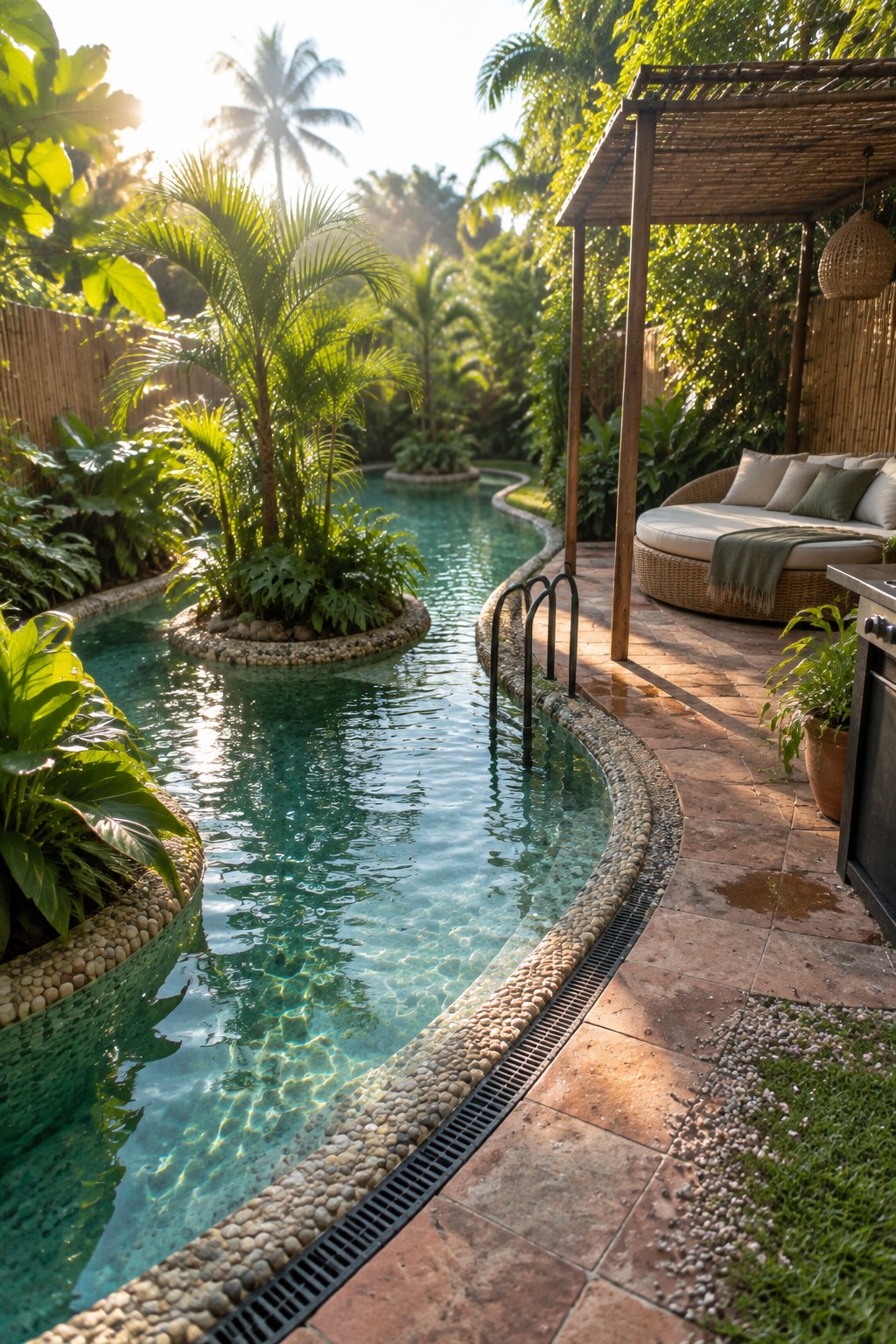
A planted island can break up a long, narrow pool without taking away its natural feel. It gives the water a gentle curve and makes the layout feel more like a garden feature than a straight lap lane.
Keep the island compact so there is still room to swim and move around it. A low stone edge can hold soil and help define the shape, but leave enough clearance around the pool’s curves for safe access.
Add a Bridge to Cross a Narrow Pool
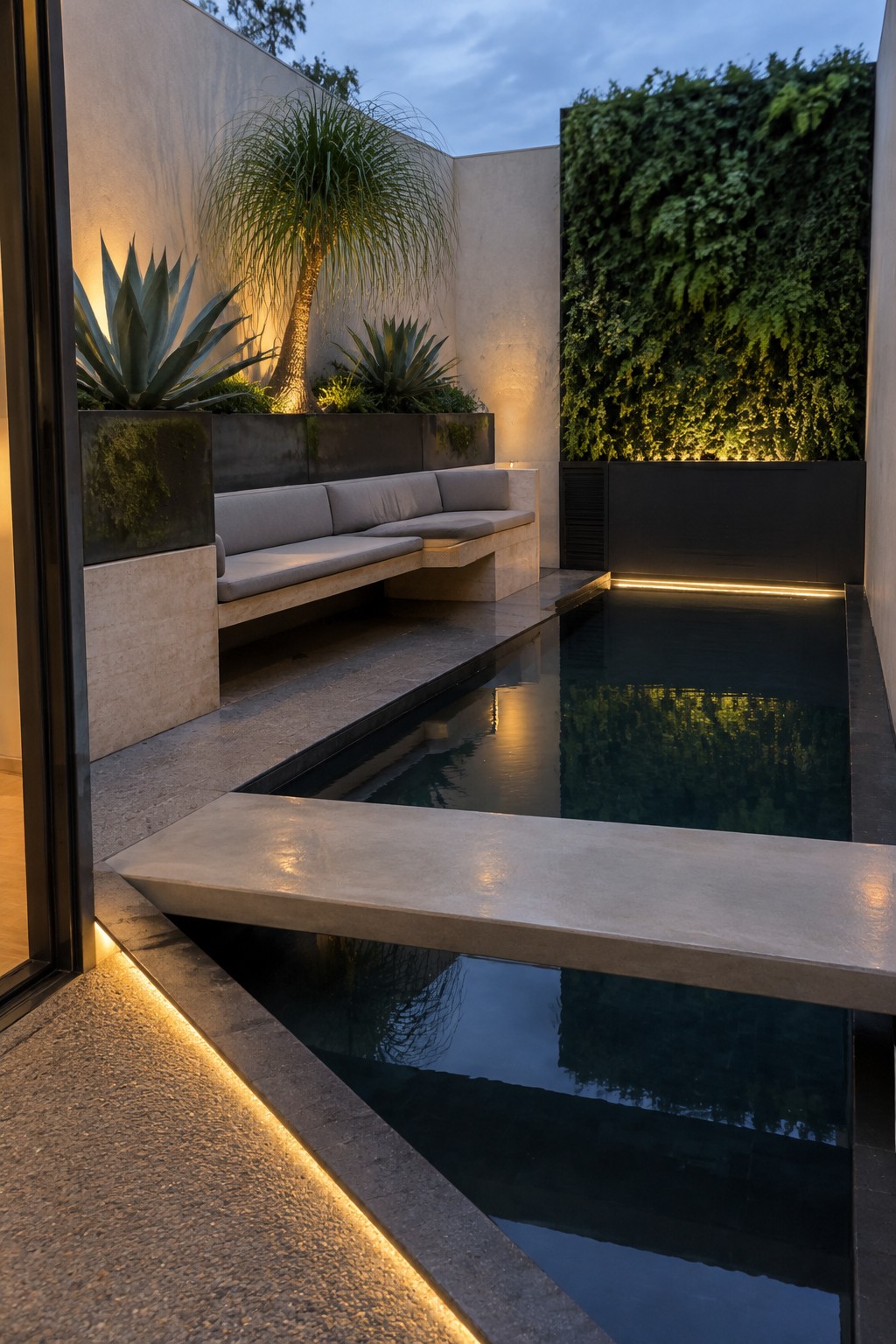
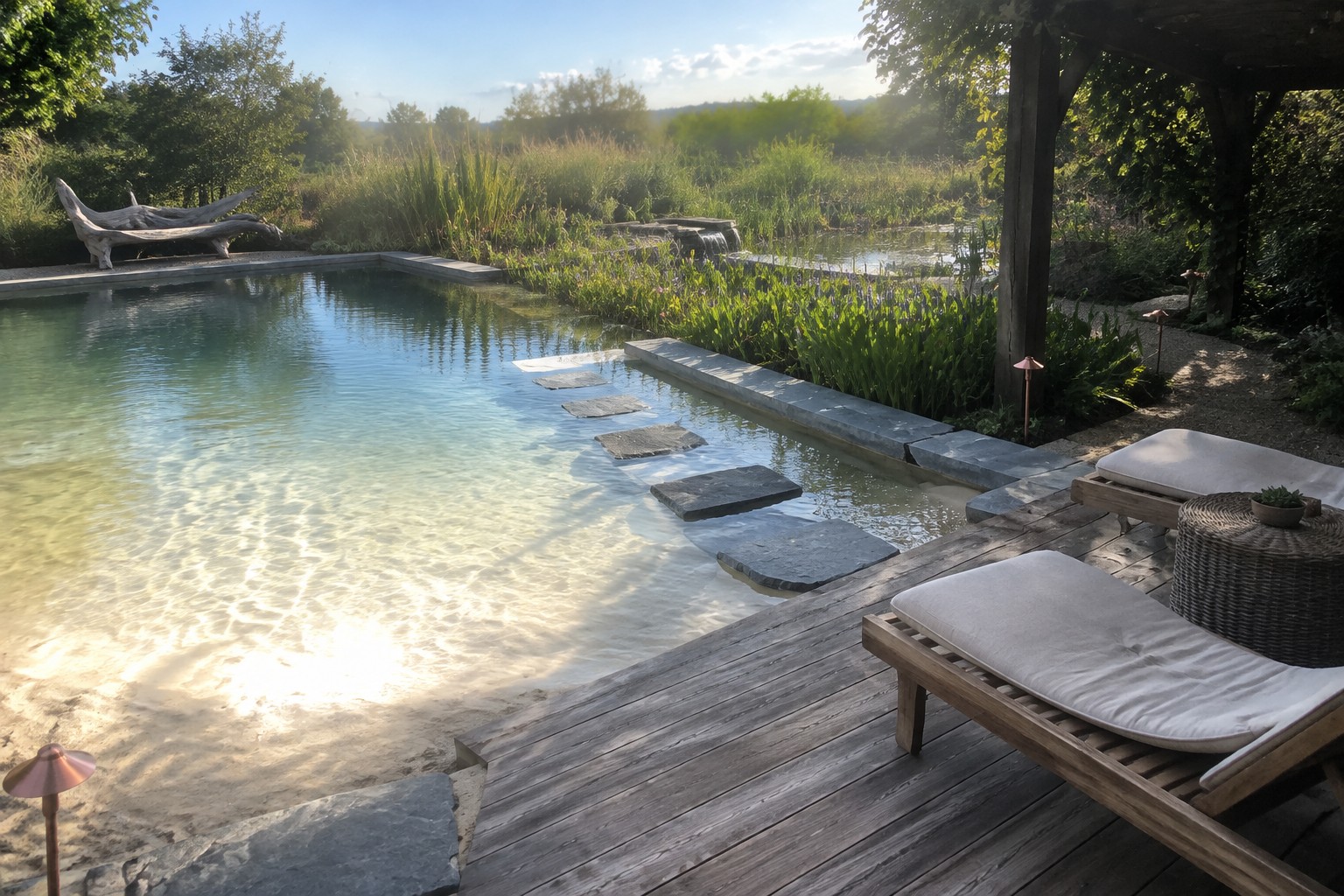
A slim stone bridge can make a narrow pool easier to cross without taking up much yard space. It also breaks up a long stretch of water and gives the pool area a clear path between seating and the house.
Use a sturdy, slip-resistant slab that spans the pool securely, and leave enough open water around it for circulation and cleaning. This works best when the bridge connects two places people actually need to reach.
Use a Waterfall to Connect Two Pool Levels
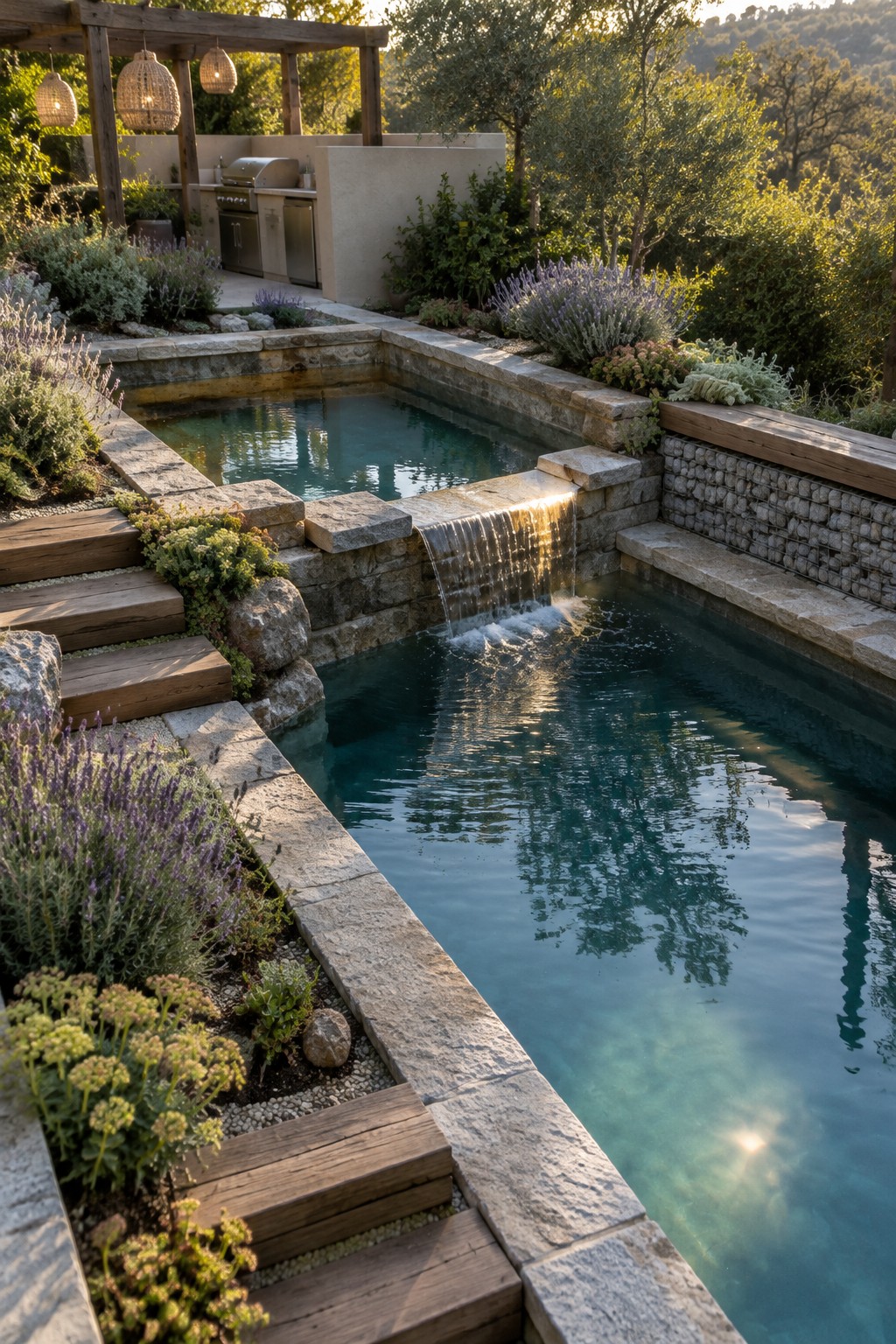
A small waterfall can link two sections of a narrow pool while giving the layout a clear change in level. It also lets water spill from the upper basin into the lower one, rather than taking up space with a long, separate feature.
This works best when the pool already has room for a raised edge, such as a sloped yard or a retaining wall. Keep the drop modest and plan for splash and water circulation so the feature stays practical.
Add Built-In Seating Beside the Pool
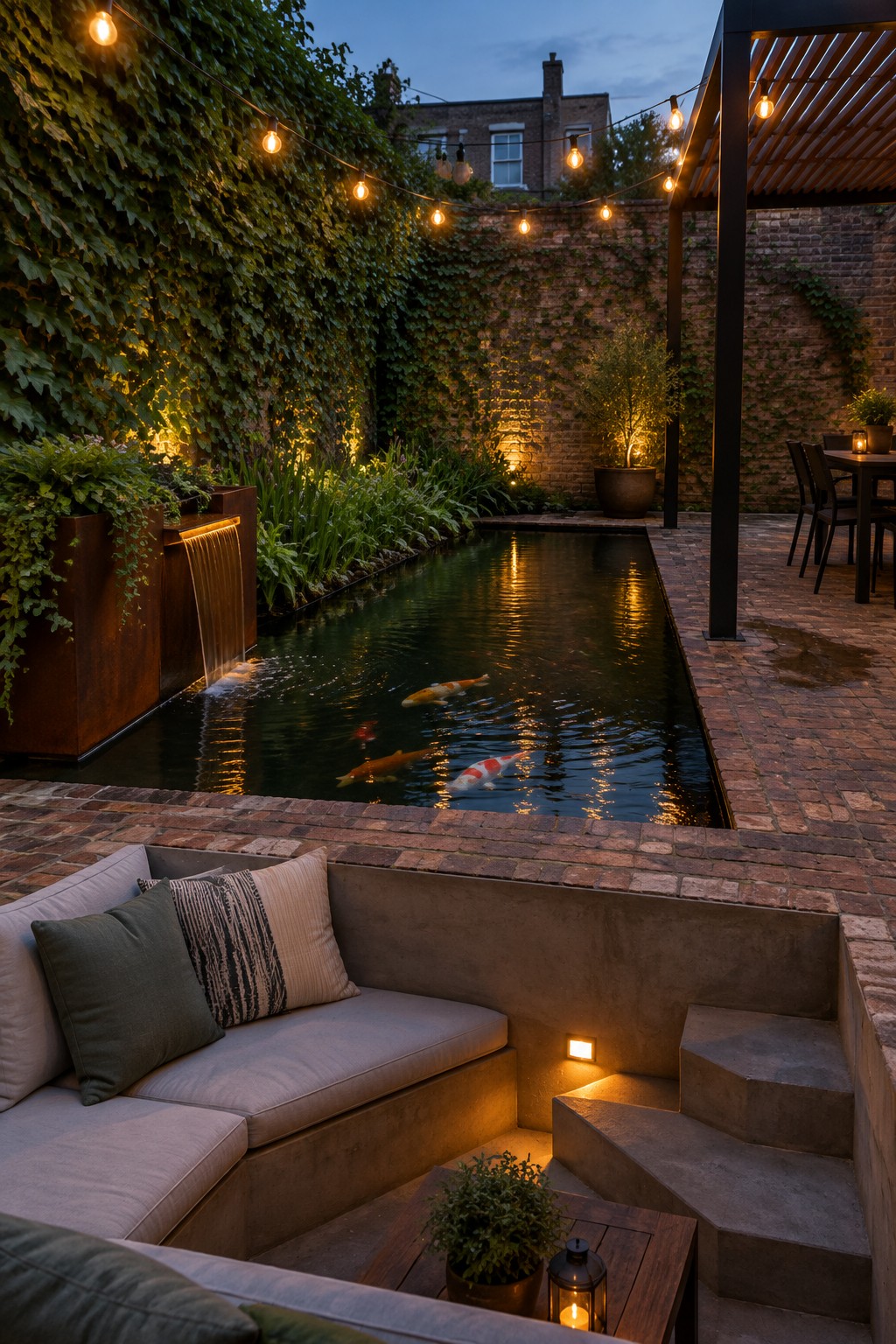
A built-in seating area can make a narrow pool yard more useful without taking up space for separate lounge furniture. Here, the sunken bench sits just beyond the pool, creating a place to sit while keeping the main walkway clear.
This layout works well when the yard is too small for a full patio beside the water. Leave enough room to move around the pool, and choose weather-resistant cushions that are easy to bring inside.
Use Stone Edging to Shape a Narrow Pool
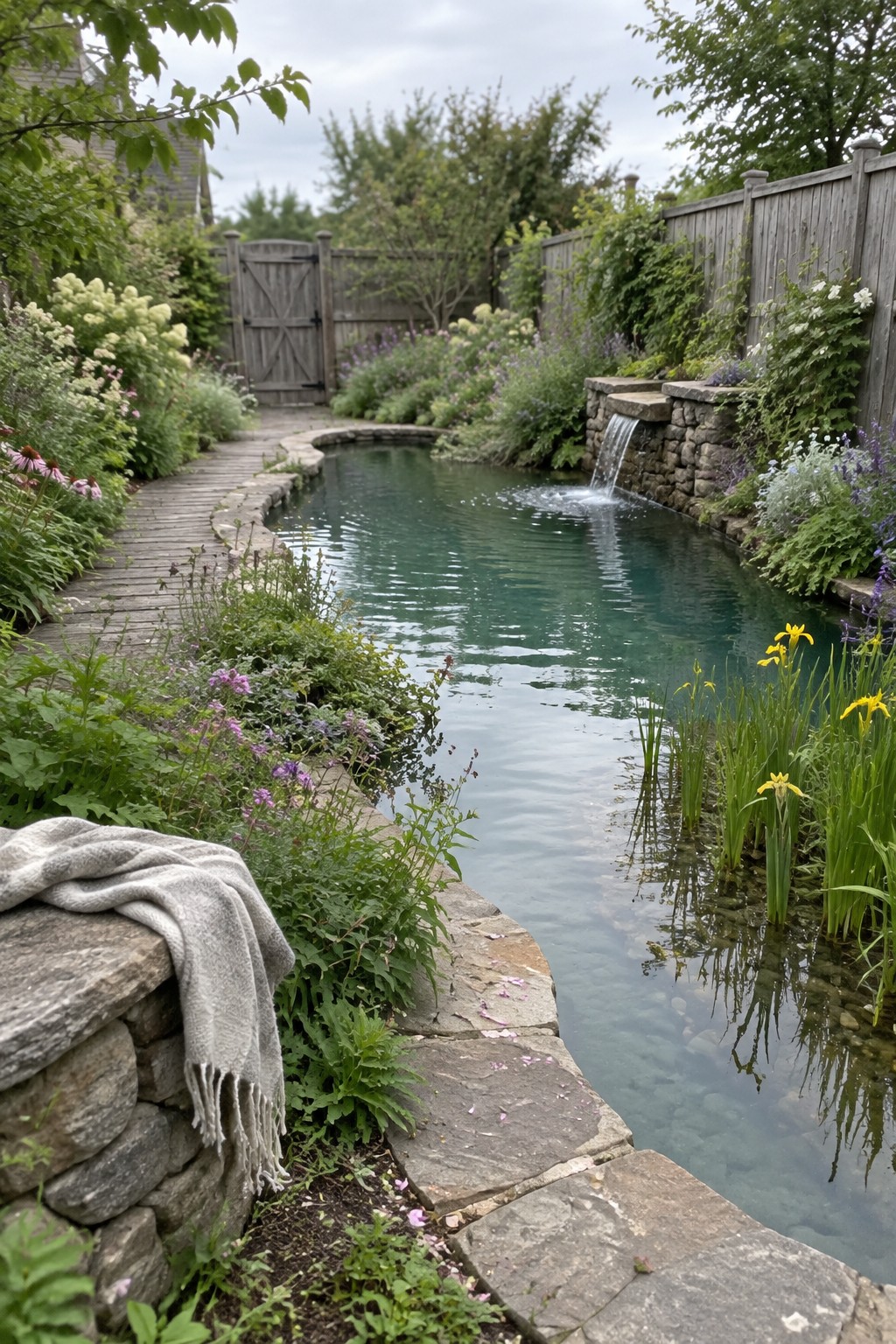
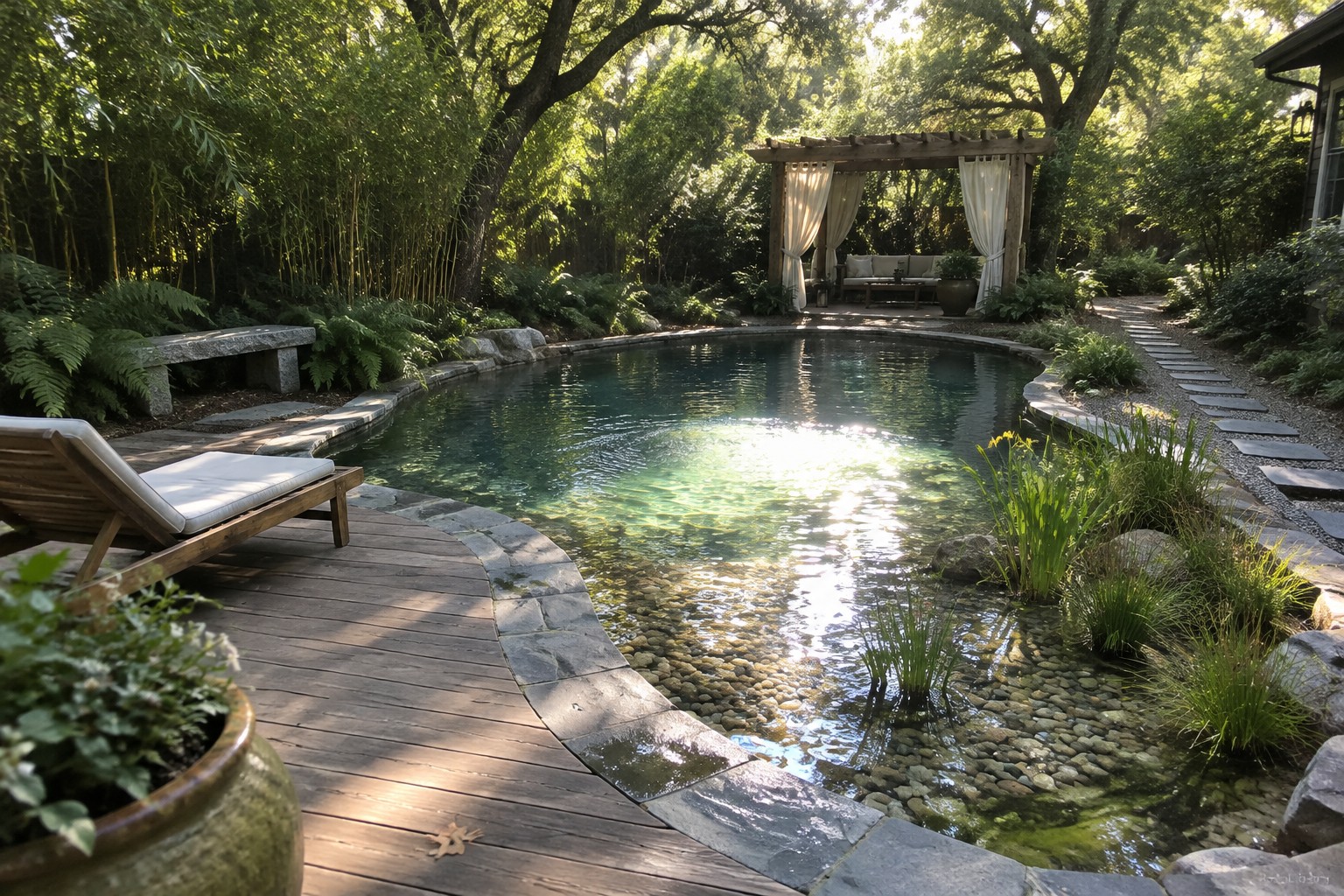
A stone edge helps a narrow pool sit neatly within the garden instead of feeling like a separate feature. Here, irregular slabs follow the pool’s curve and form a clear border that still feels natural.
For a similar layout, use larger, non-slip stones along the water and keep the planting close to the edge. This approach works well in a small backyard, but leave enough room for a safe, comfortable path beside the pool.
Add a Shallow Pebble Shelf to a Narrow Pool
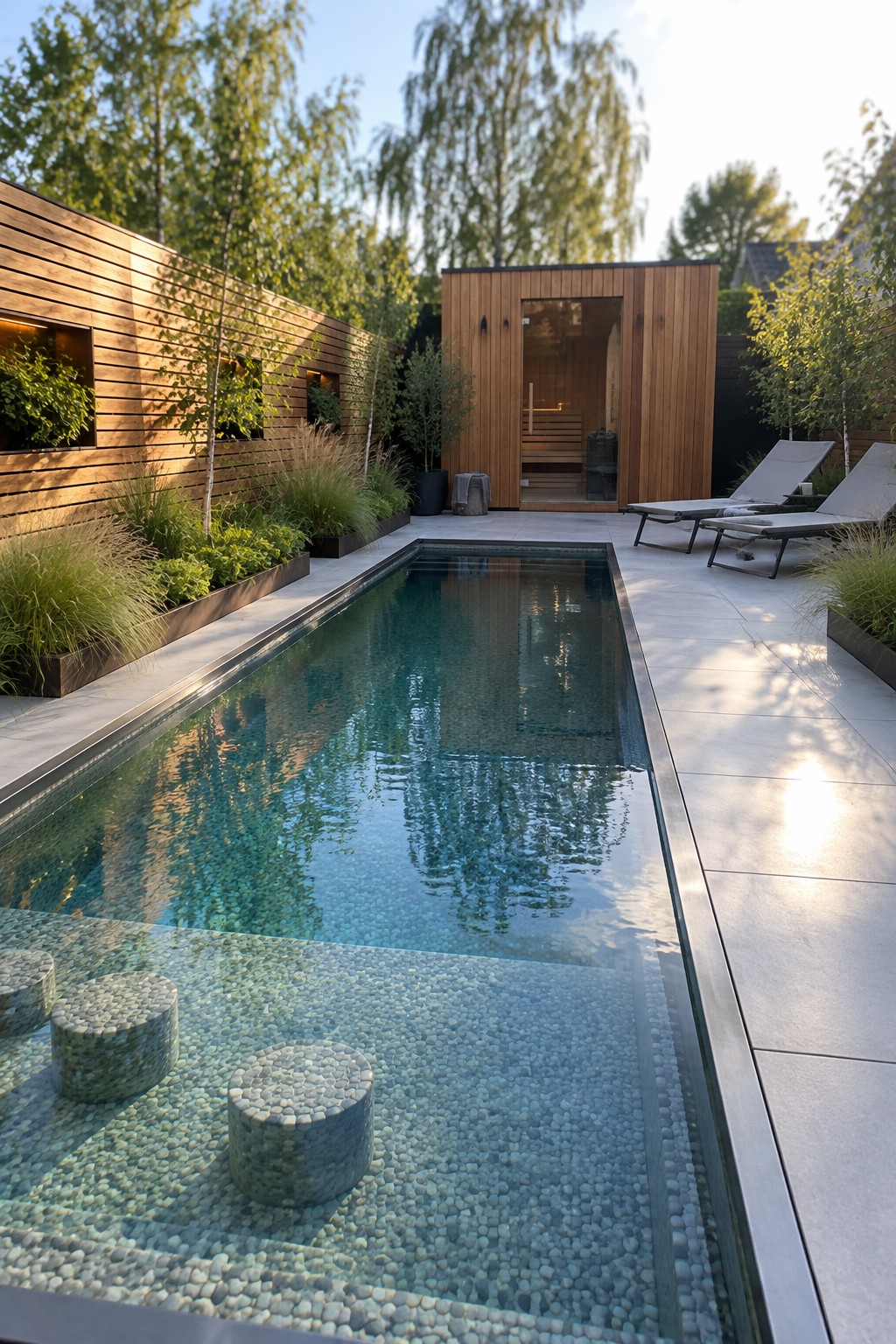
A shallow shelf at one end of a narrow pool gives the water more than one way to be used. Here, a pebble-covered section with round built-in stools creates a spot to sit or cool off without taking up the full length of the swimming lane.
This layout works well in a compact backyard where a wide pool is not an option. Keep the shelf shallow and leave enough clear water beyond it for swimming; smooth, pool-safe stones are important underfoot.
Add a Curved Deck Beside the Pool
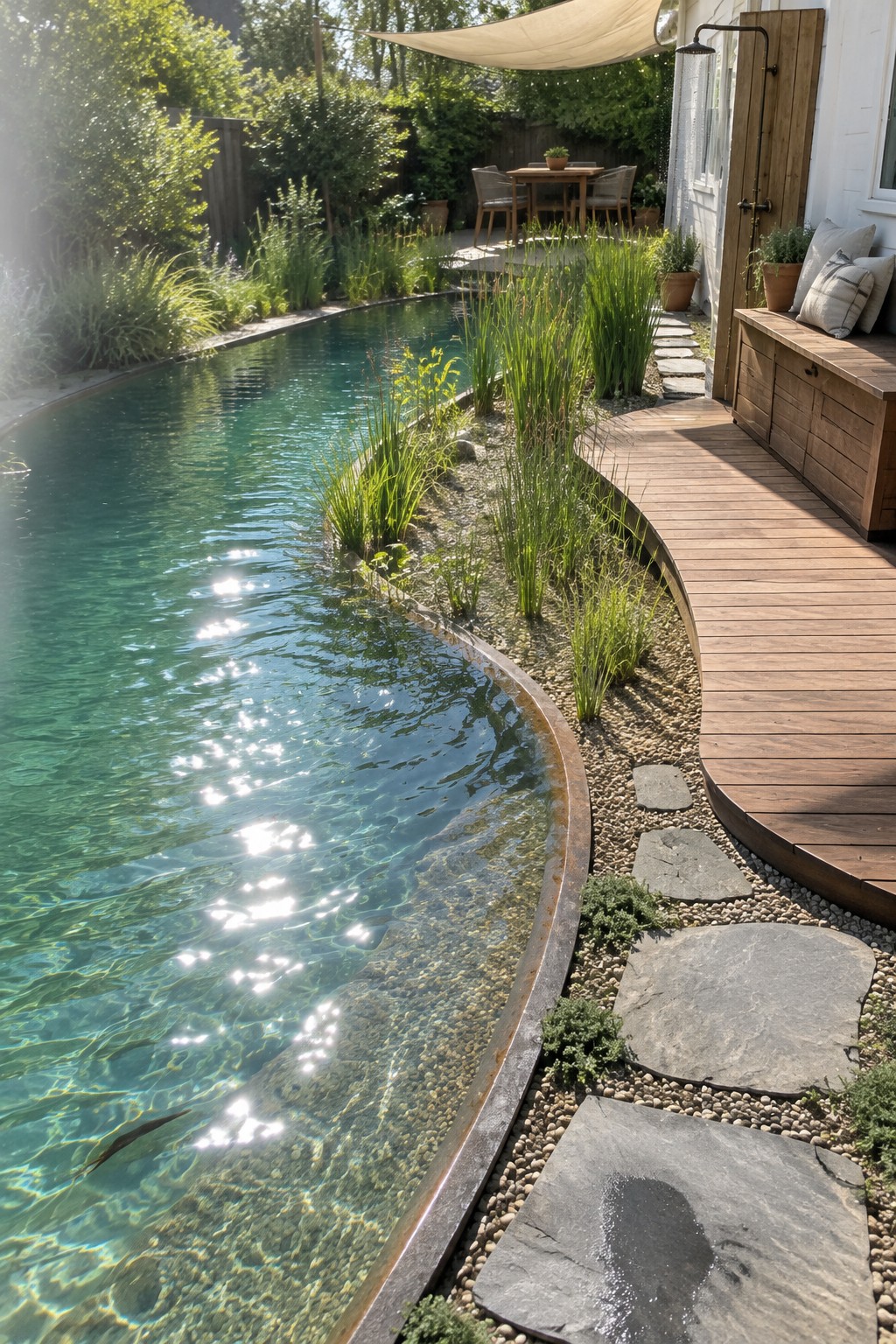
A deck that follows the curve of a narrow pool gives you a clear place to walk and sit without taking over the yard. It also makes good use of the slim strip between the water and the house.
Keep the deck wide enough for comfortable foot traffic, but leave room for planting or a gravel edge where you can. This layout suits a small backyard, though the curve should still leave an easy, safe route to the pool.
Add a Shallow Entry to a Narrow Pool
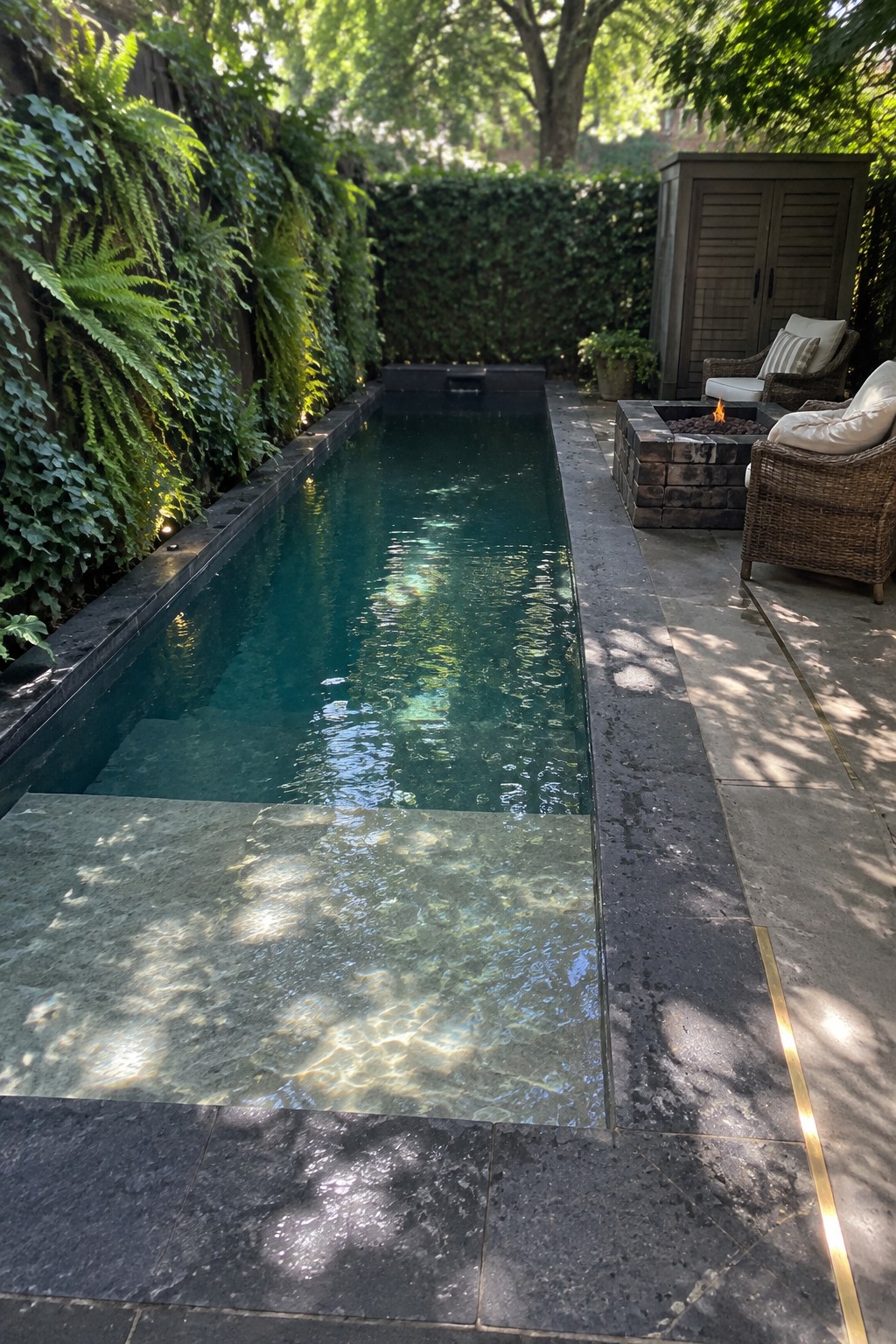
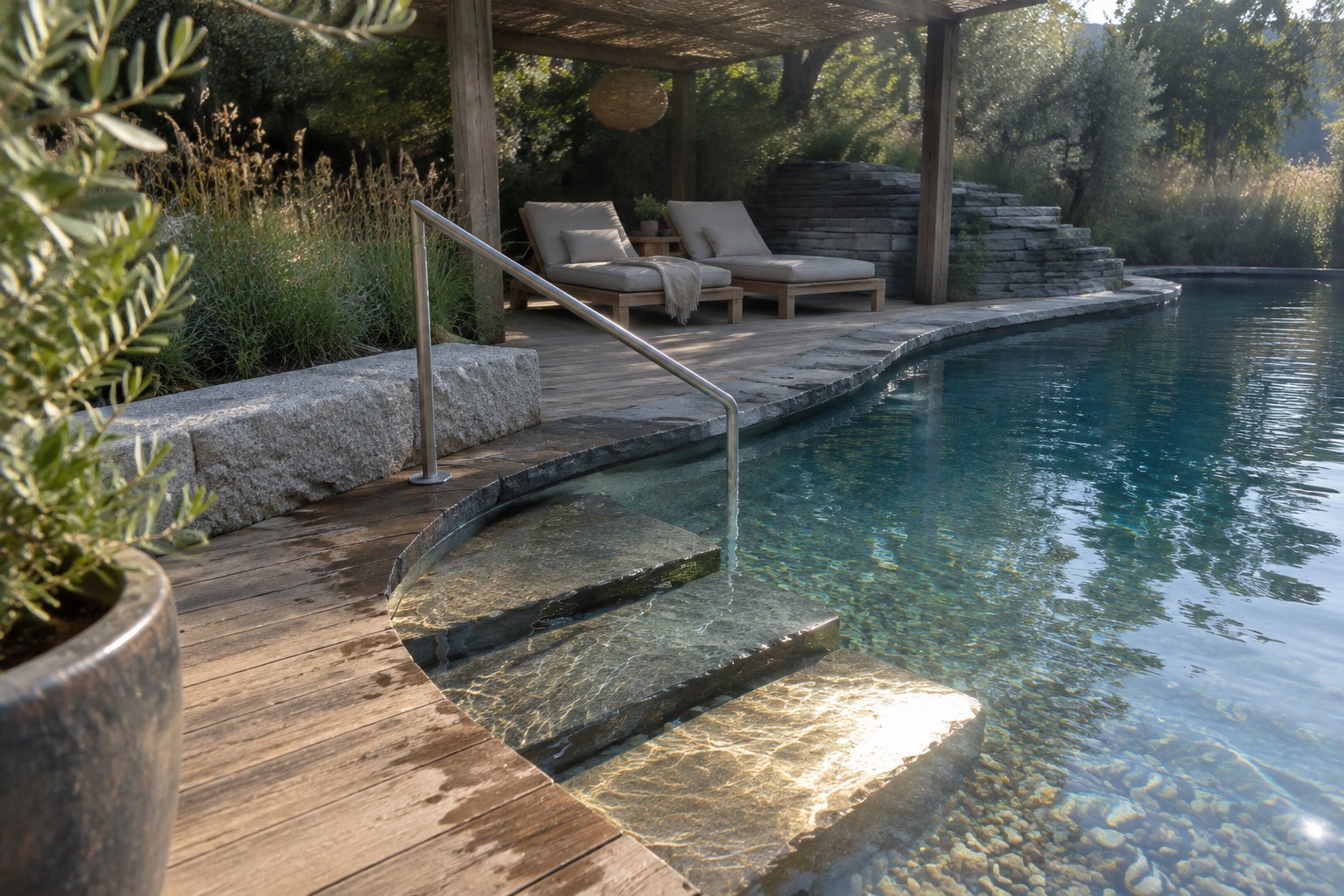
A shallow ledge at one end of a narrow pool gives you a place to sit or ease into the water without taking up much swimming space. It also makes a long pool more useful for relaxing, not just swimming laps.
This works well in a compact backyard where there is room to widen one end slightly. Keep the ledge shallow and make sure its edge is easy to see, especially if the pool is used by children.
Use a Raised Water Wall Beside a Narrow Pool
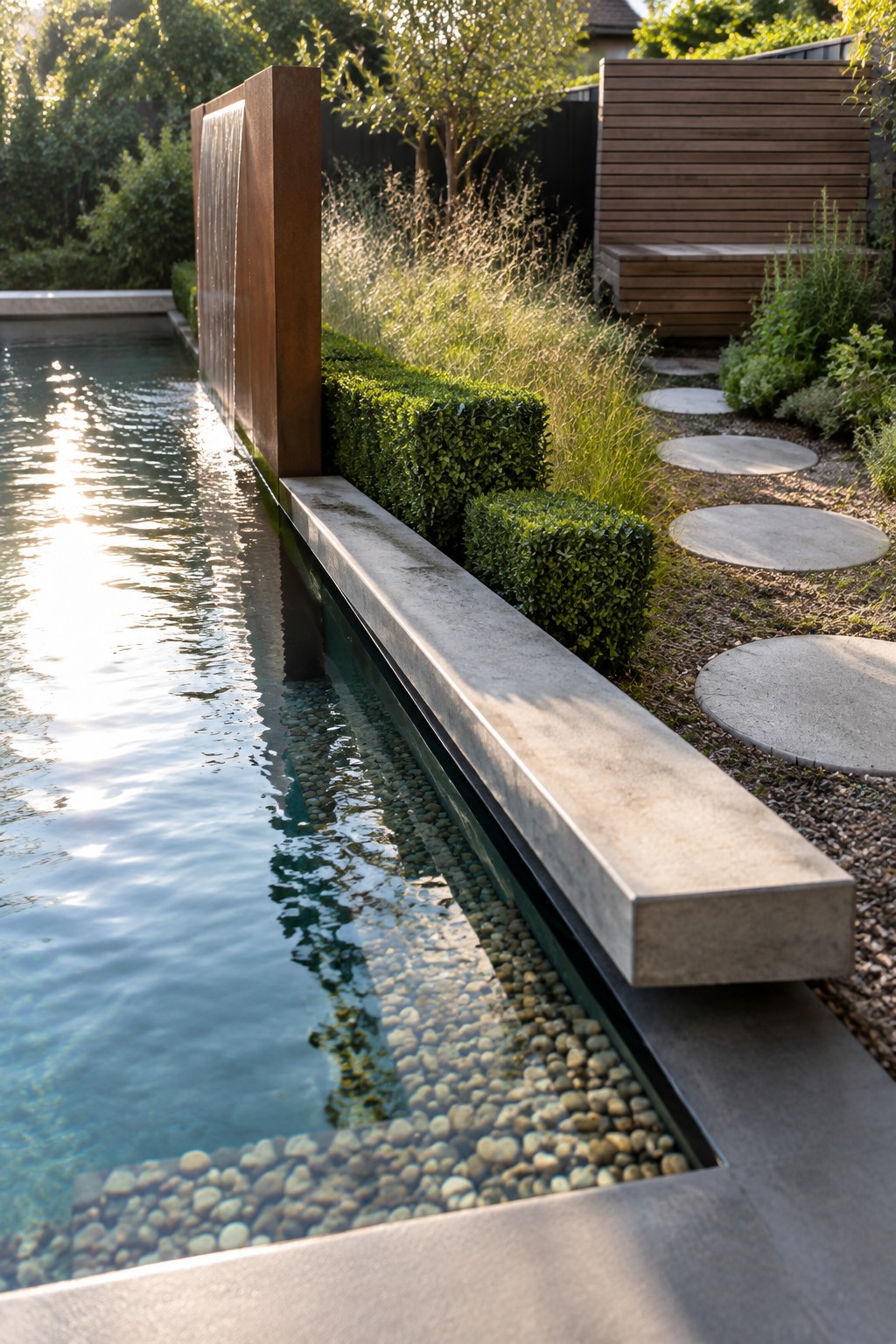
A raised water wall can give a narrow pool a clear focal point without taking up much yard space. Here, water spills down a slim wall at one end, so the feature adds movement while keeping the pool’s long shape intact.
This layout works well when the pool runs along the edge of a small backyard. Keep the wall narrow and choose a finish that suits the surrounding materials. A simple spillway is often enough to make the pool feel special without crowding the walkway.
Add a Brick Path Beside the Pool
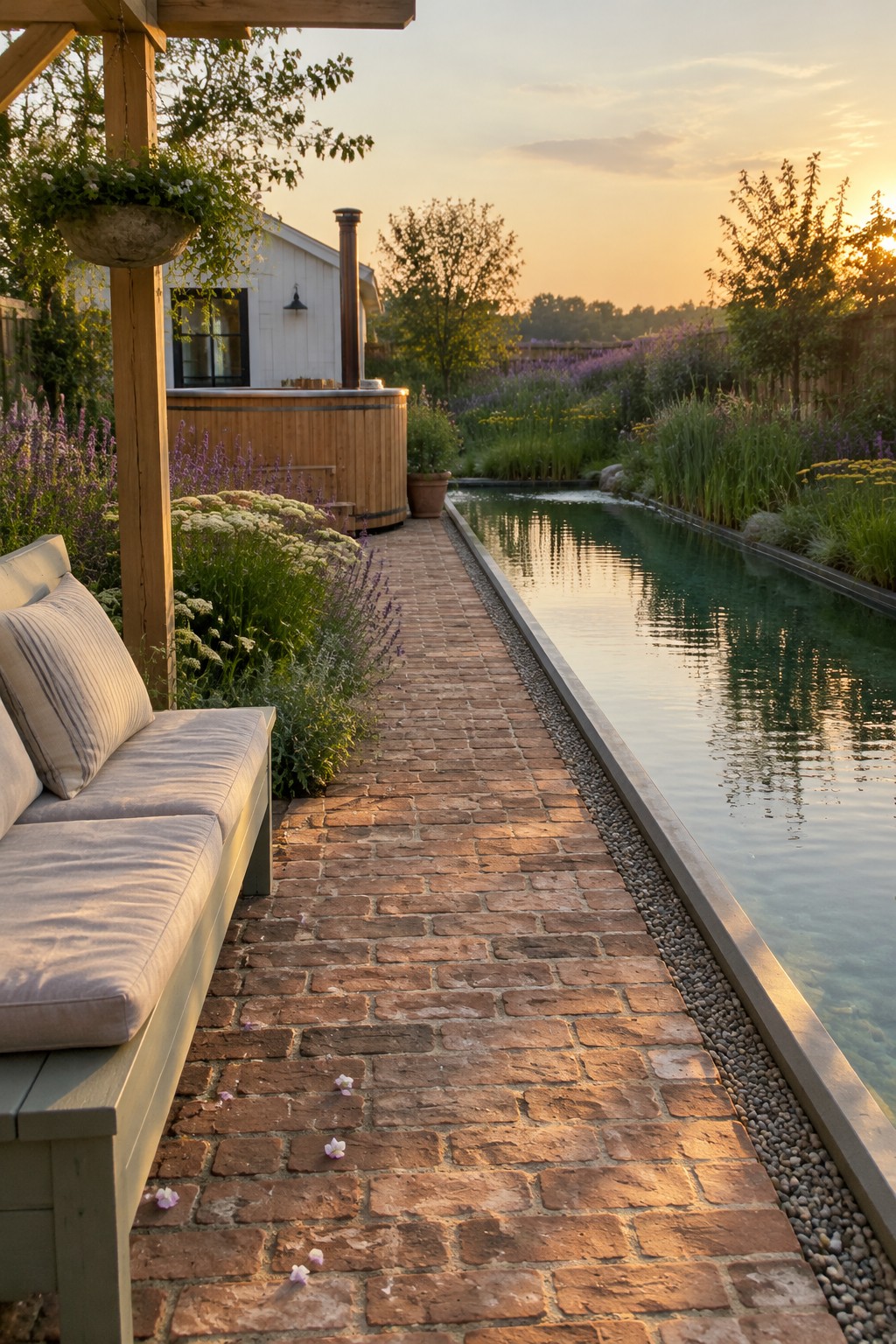
A narrow pool works well when the path beside it has a clear, separate route. Here, a brick walkway runs along the water, making it easy to move between the seating area and the far end of the yard without crowding the pool edge.
This layout suits a long, tight backyard where there is room for one practical walkway rather than a wide patio. Leave a little space between the path and pool coping, and choose a surface that stays comfortable and slip-resistant when wet.
Add a Raised Planter Beside the Pool
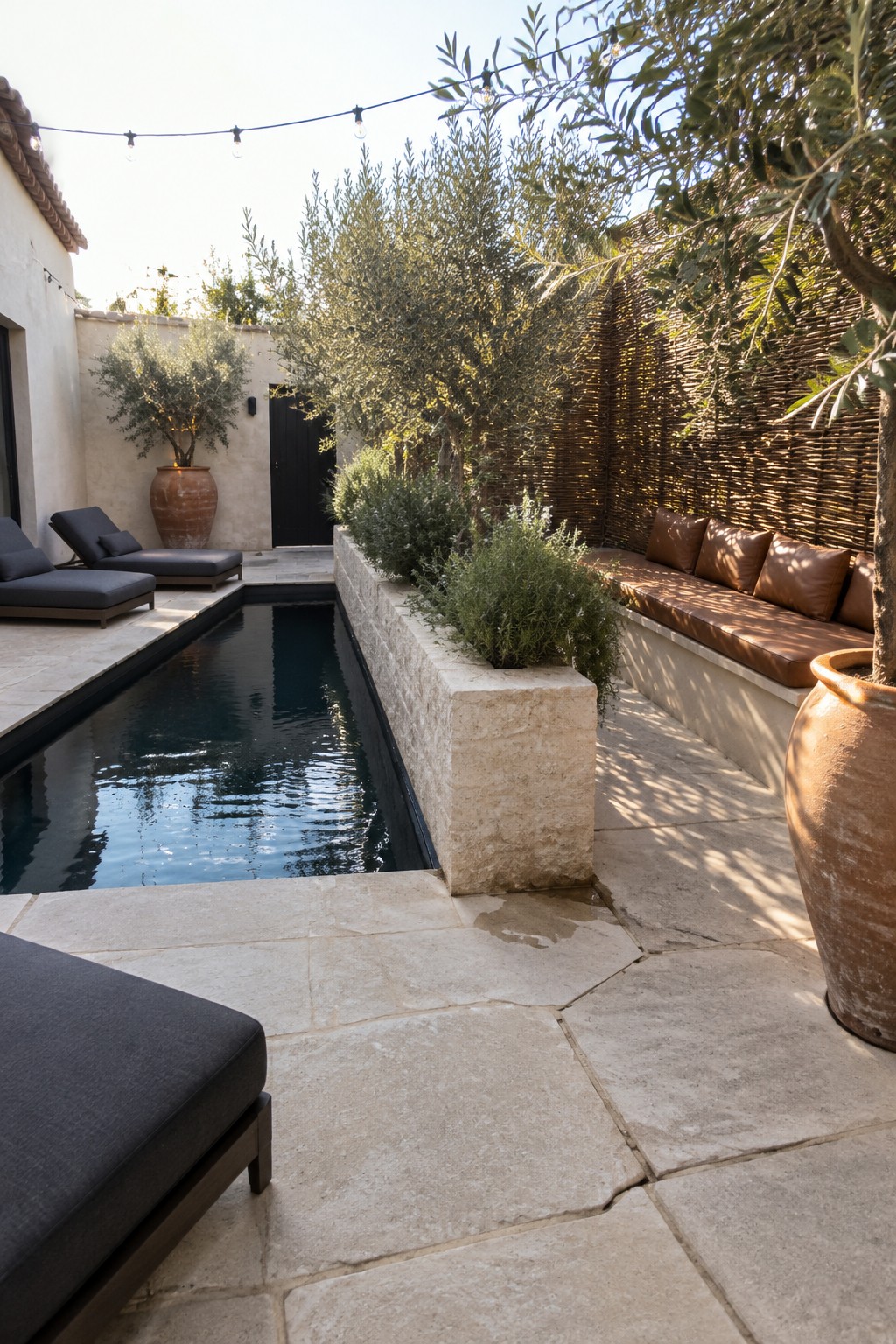
A narrow pool can feel less like a lane when a raised planter runs along one side. It gives the water a clear edge and brings greenery into the seating area without taking up much floor space.
For a similar layout, keep the planter slim and use plants that will not spread over the pool. A built-in bench along the opposite side can make the remaining walkway more useful.
Use a Curved Pool Edge to Save Space
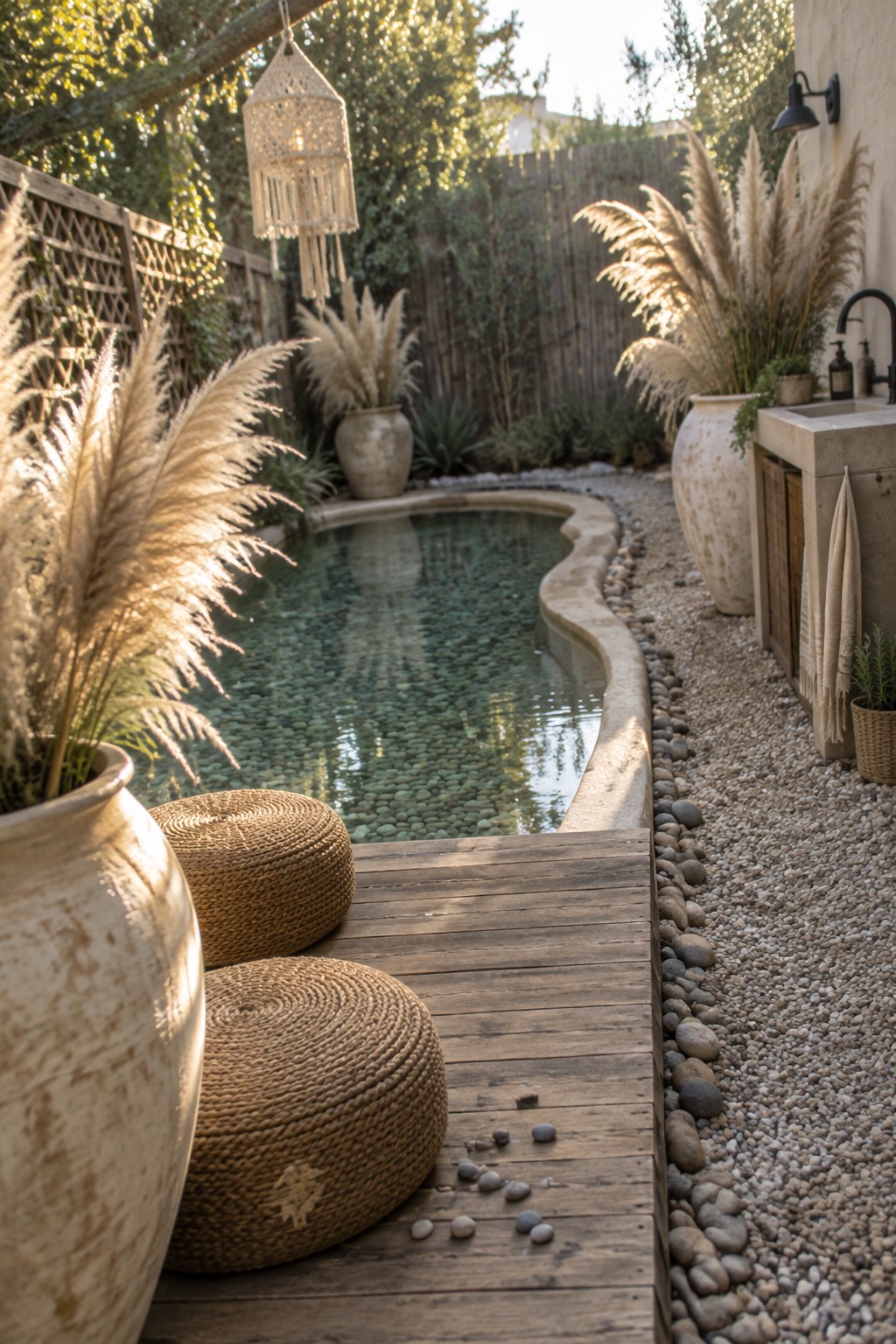
A gently curving pool can fit a narrow yard without making the layout feel like a straight corridor. The rounded edge gives the water a softer outline, while a slim path along the side still leaves room to move around it.
This shape works best when the curves stay modest and the pool remains easy to enter and maintain. Stone coping can define the edge, but keep the surrounding walkway wide enough to use safely.
Use a Pebble Path to Make a Narrow Pool Easier to Reach
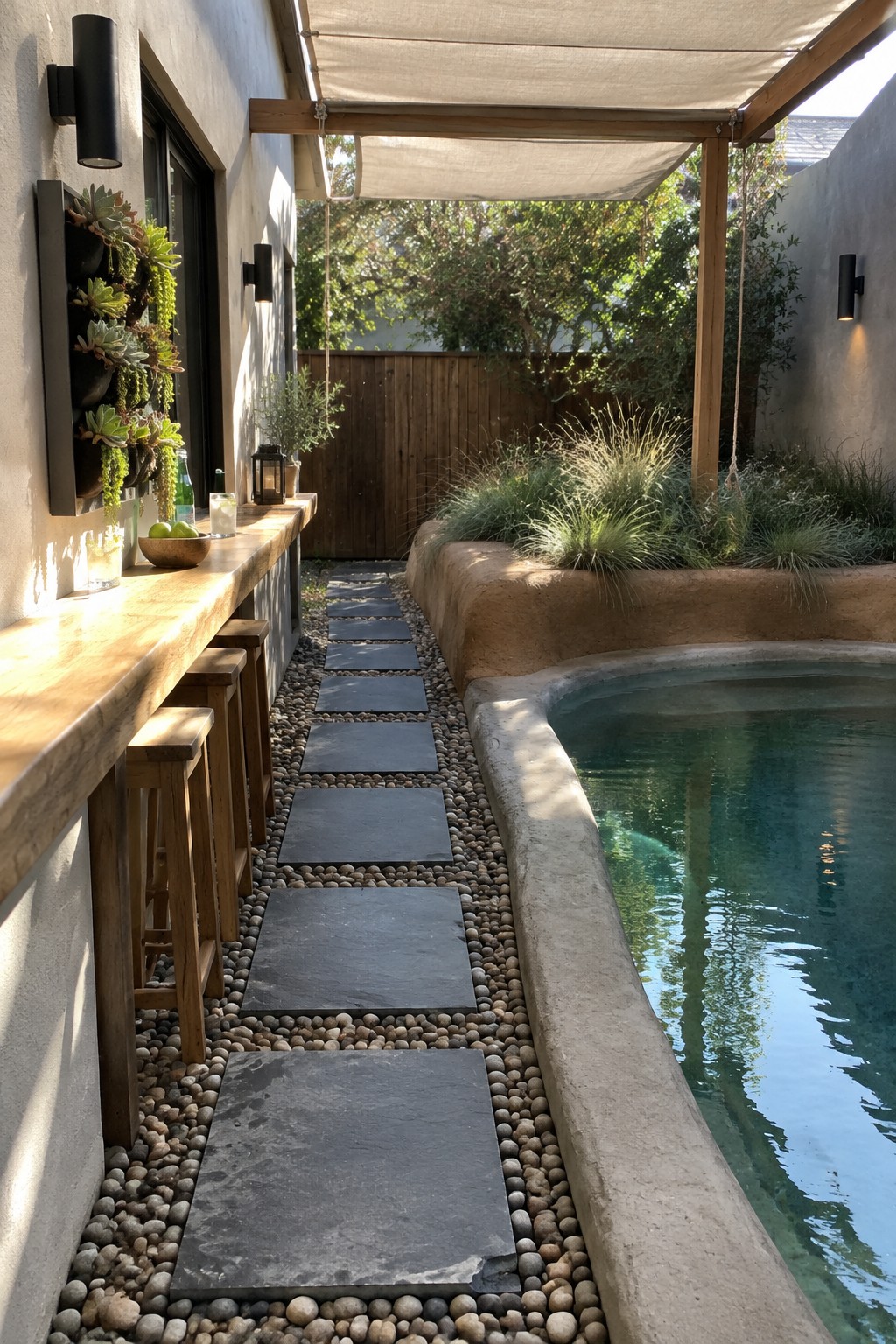
A slim path beside the pool makes a narrow backyard easier to use without taking up much room. Here, large stepping stones set into rounded pebbles give people a clear route while keeping the walkway visually light.
For a similar layout, leave enough space between the stones and pool edge for comfortable steps, and choose a surface that stays stable when wet. This works especially well when a pool runs close to a wall or outdoor counter.
Add a Boardwalk Along One Side of the Pool
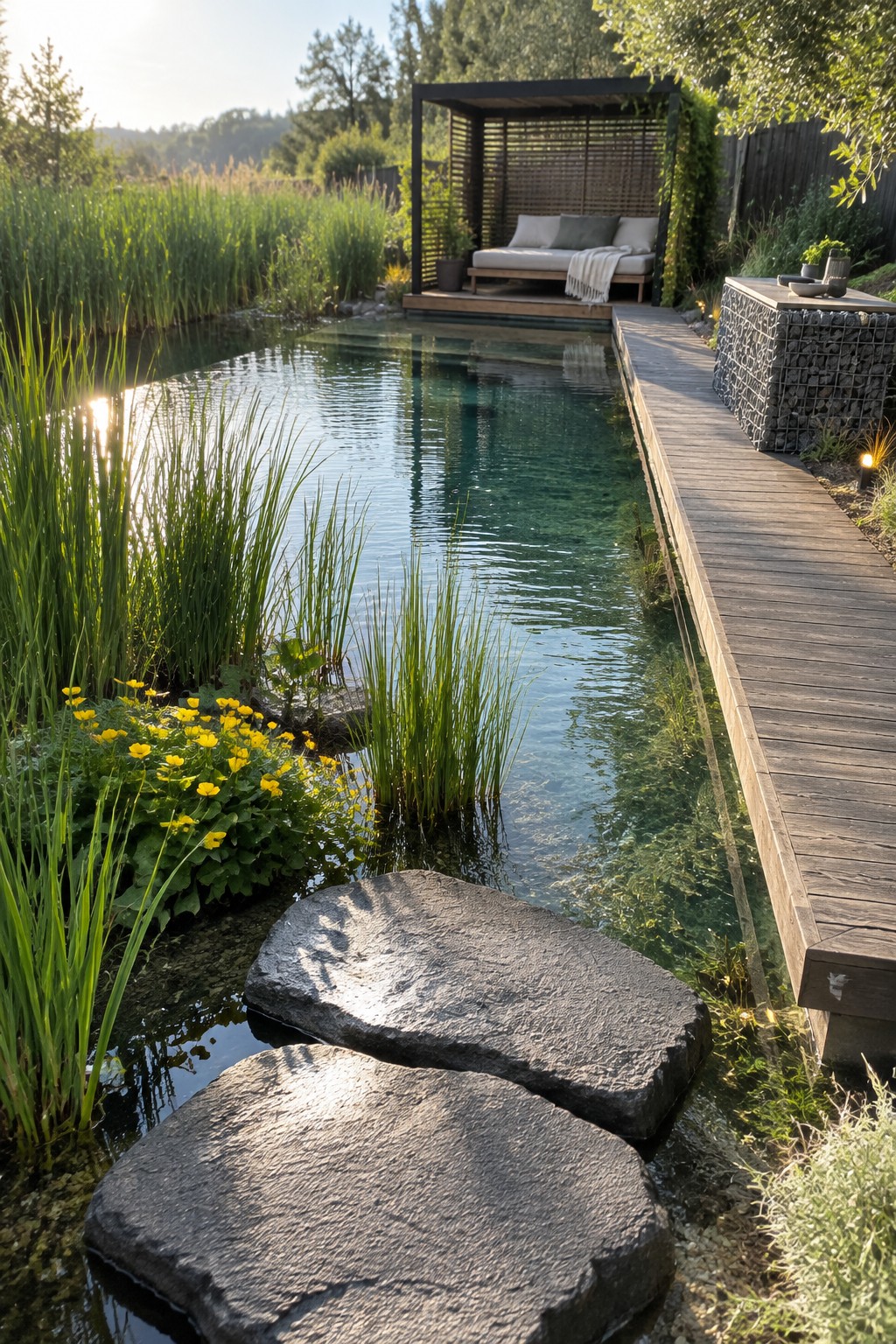
A narrow boardwalk gives you a clear route along the pool without taking up much yard space. It also keeps the edge easy to reach, which is handy when the pool sits close to planting.
Use simple, slip-resistant decking and leave enough room to walk comfortably. In a small backyard, keeping the path to one side can preserve more space for the pool and plants.
Frequently Asked Questions
Q: How narrow can a backyard be and still fit a natural pool?
A: Even a slim yard can work if you choose a long, simple shape and keep the surrounding paths compact. Leave enough room to walk safely along at least one side, and check local rules before settling on the pool’s dimensions.
Q: Can I put a natural pool right beside a fence?
A: It’s usually better to leave a little breathing room for maintenance and access. A narrow planting strip can soften the fence without making the pool feel squeezed in.
Q: Will a natural pool take up more space than a regular pool?
A: It can, because the planted regeneration area needs room too. In a narrow backyard, a compact filtration system may leave more space for swimming, while still giving the pool a natural feel.
Q: How do I make a narrow pool feel less like a corridor?
A: Break up the straight lines with a small deck, a change in paving, or plants at one end. Keep the main path clear, though, so the yard stays easy to move through.