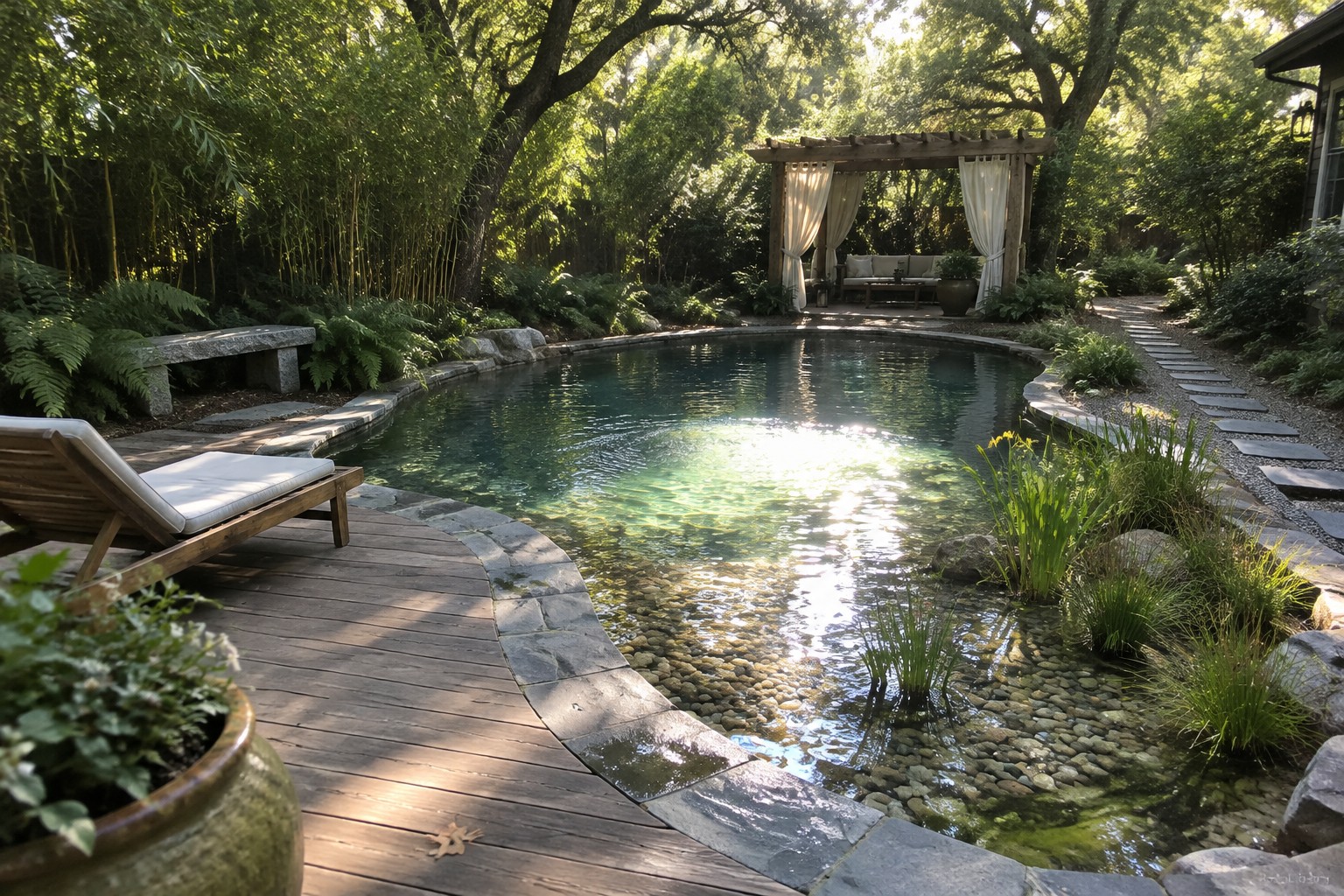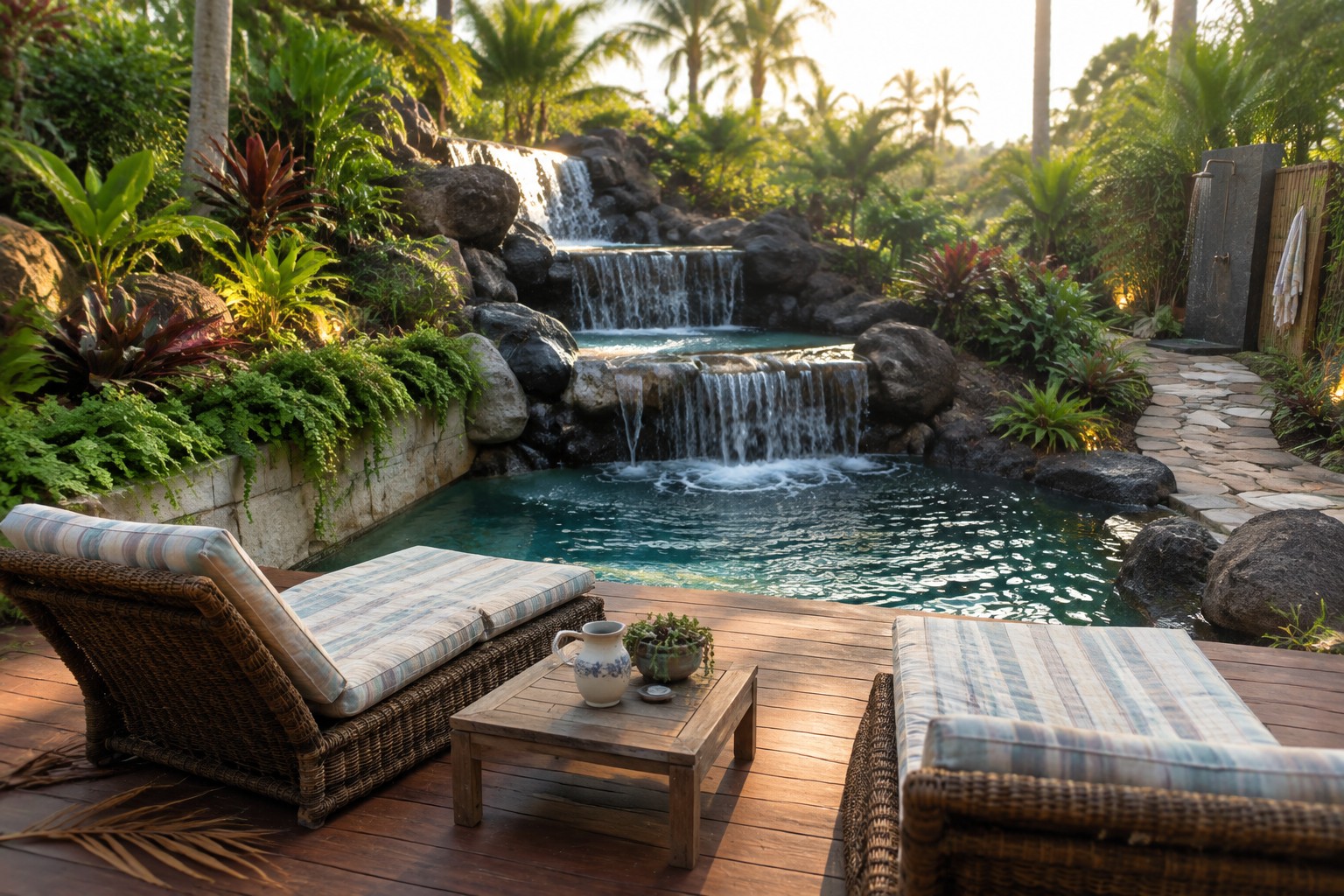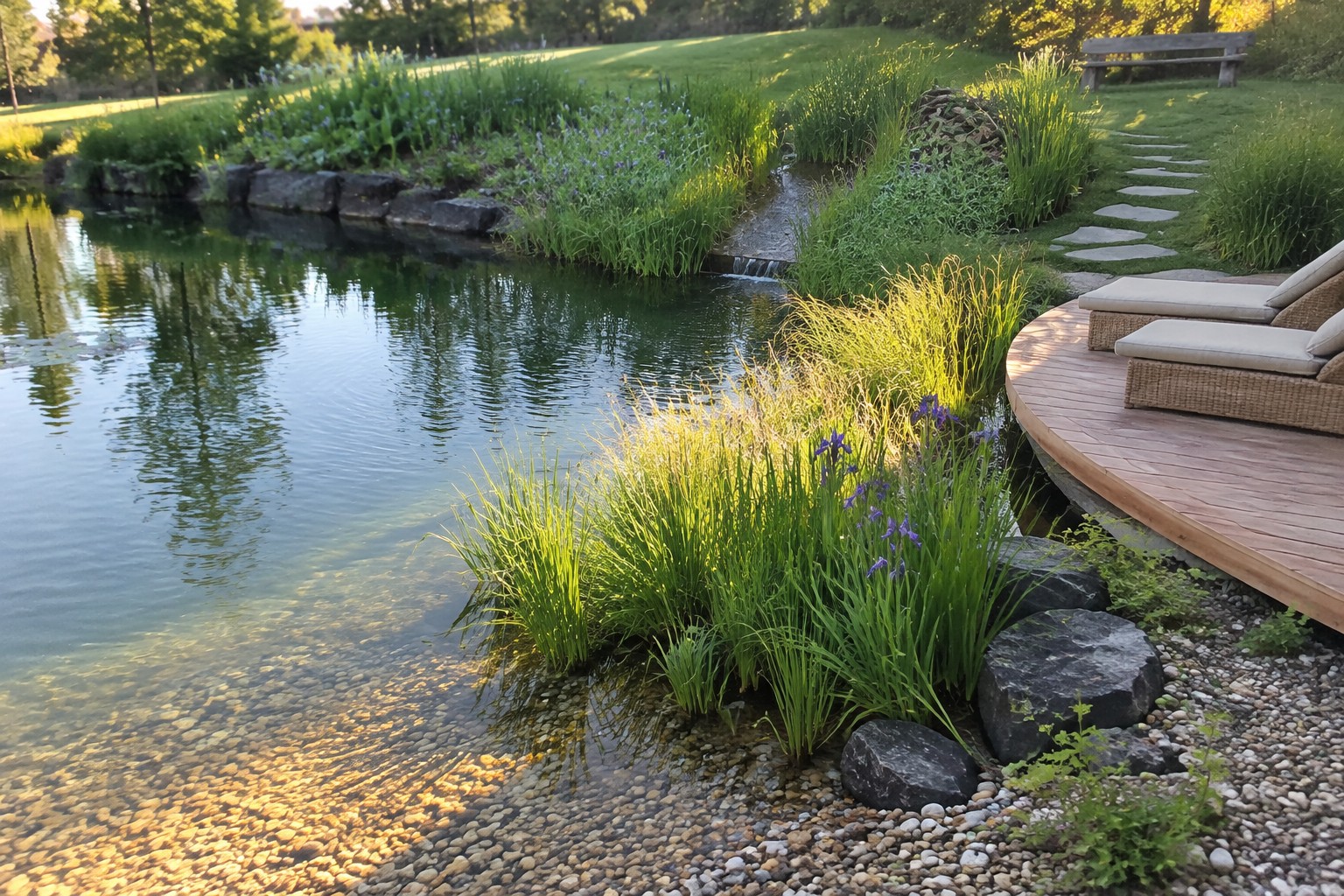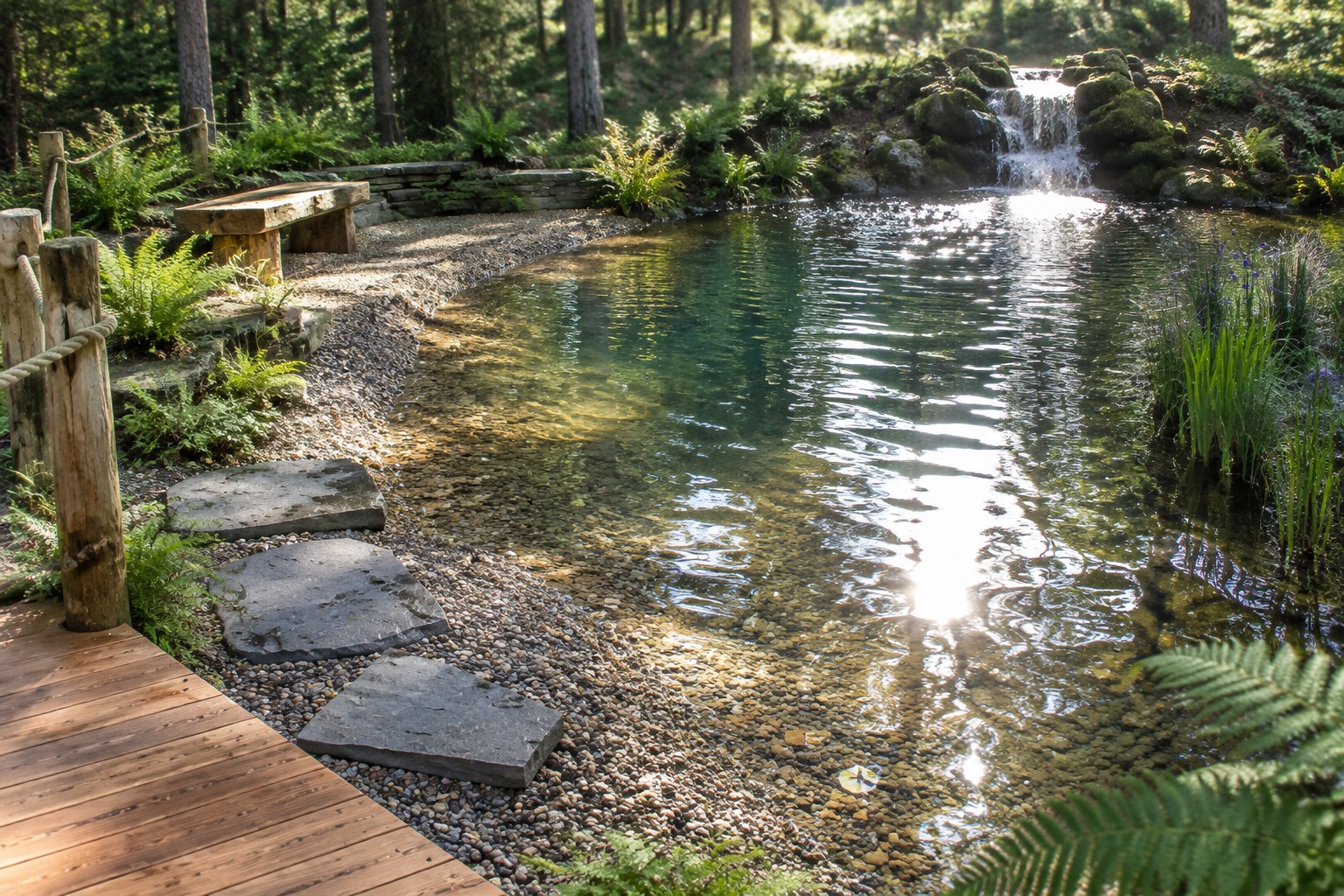
A swimming pond tucked among trees can feel like a quiet part of the garden, but its placement and shape matter as much as the water itself.
I’d first look at how the pond sits among the trunks, ferns, and paths, since a clear route to the water makes the space easier to use and enjoy.
Natural edges and varied planting help a pond blend in, while a little open ground nearby keeps the garden from feeling crowded.
Some designs lean wild, while others make room for a simple deck or stone ledge where I could sit after a swim.
The ideas ahead offer details worth adapting to your own yard, from planting around the water to choosing a spot that works with the existing trees.
Add Stepping Stones Along the Pond Edge
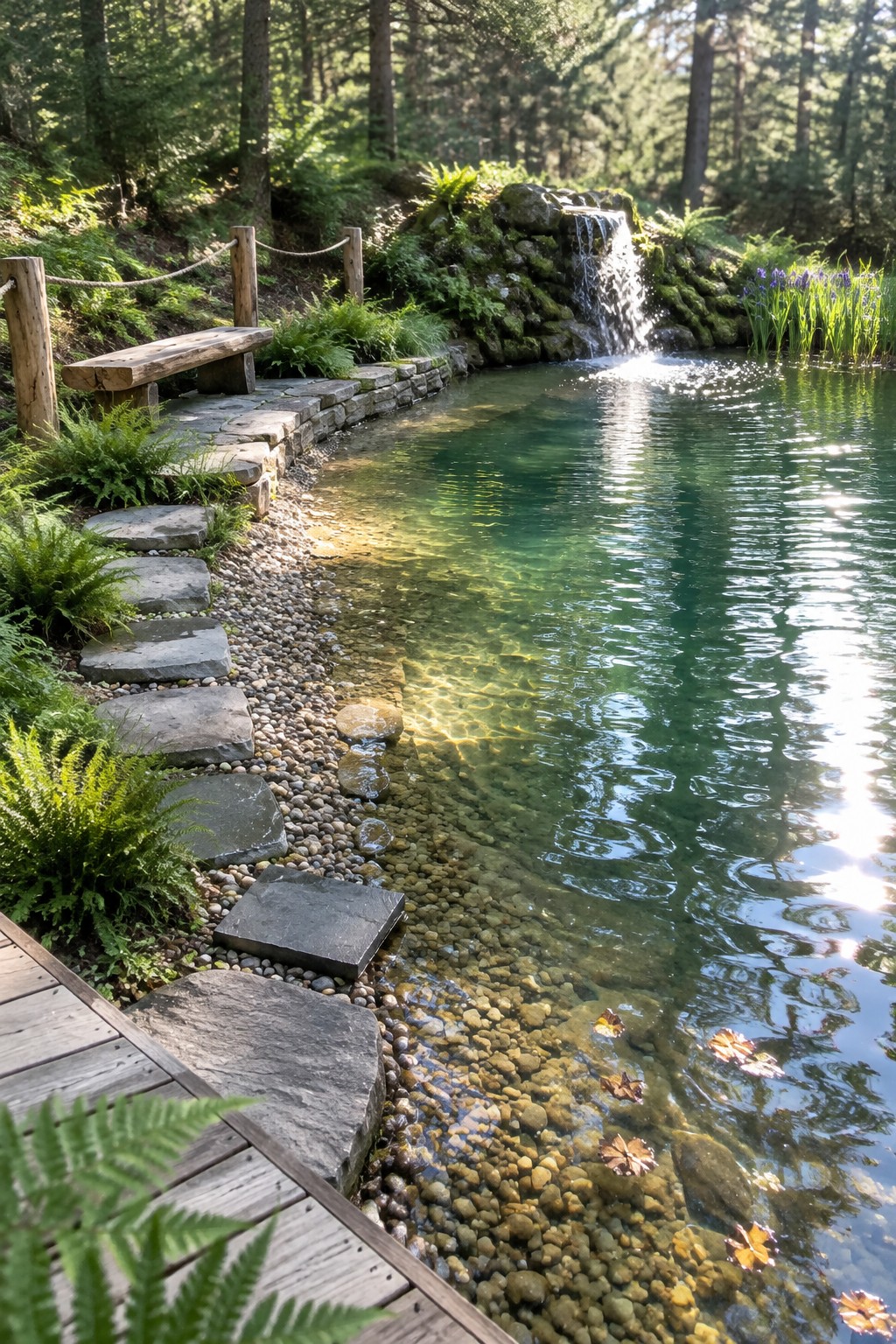
Stepping stones make a woodland swimming pond easier to reach without turning the bank into a broad paved path. Here, flat stones follow the curve of the water and sit beside a narrow strip of pebbles, keeping the edge natural-looking.
Use stones that are broad and stable underfoot, and set them firmly so they do not wobble when wet. This works well along a gently sloped pond edge, but leave enough room between stones for water plants and groundcover.
Add a Small Dock Beside the Pond
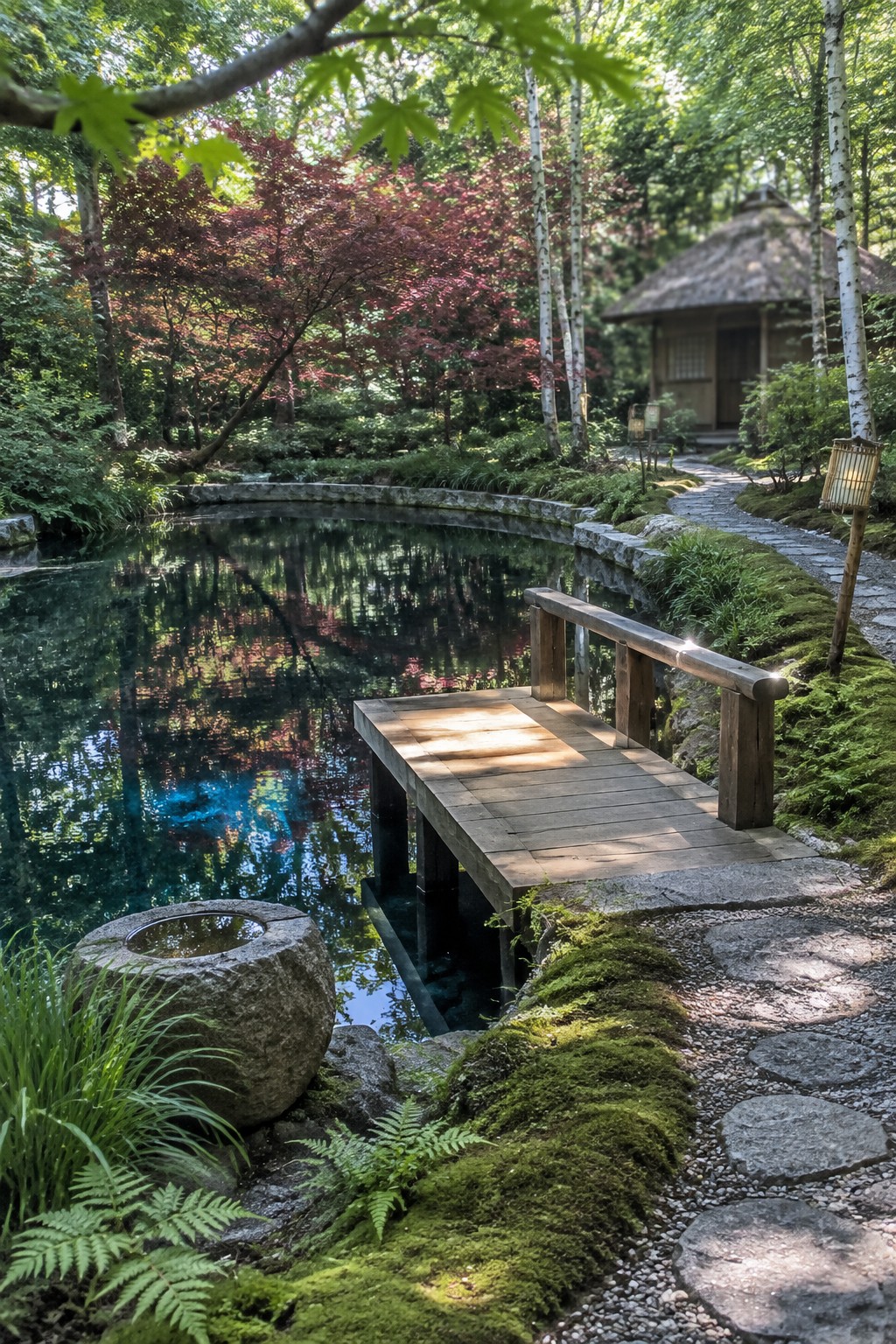
A small wooden dock makes a woodland swimming pond easier to use without taking over the garden. It gives you a firm place to step into the water, and the simple wood suits a natural setting.
Keep the dock close to the shore and just large enough for its intended use. A sturdy handrail can help with getting in and out, especially where the pond edge is uneven. Check that the boards stay slip-resistant when wet.
Let the Pond Follow the Natural Slope
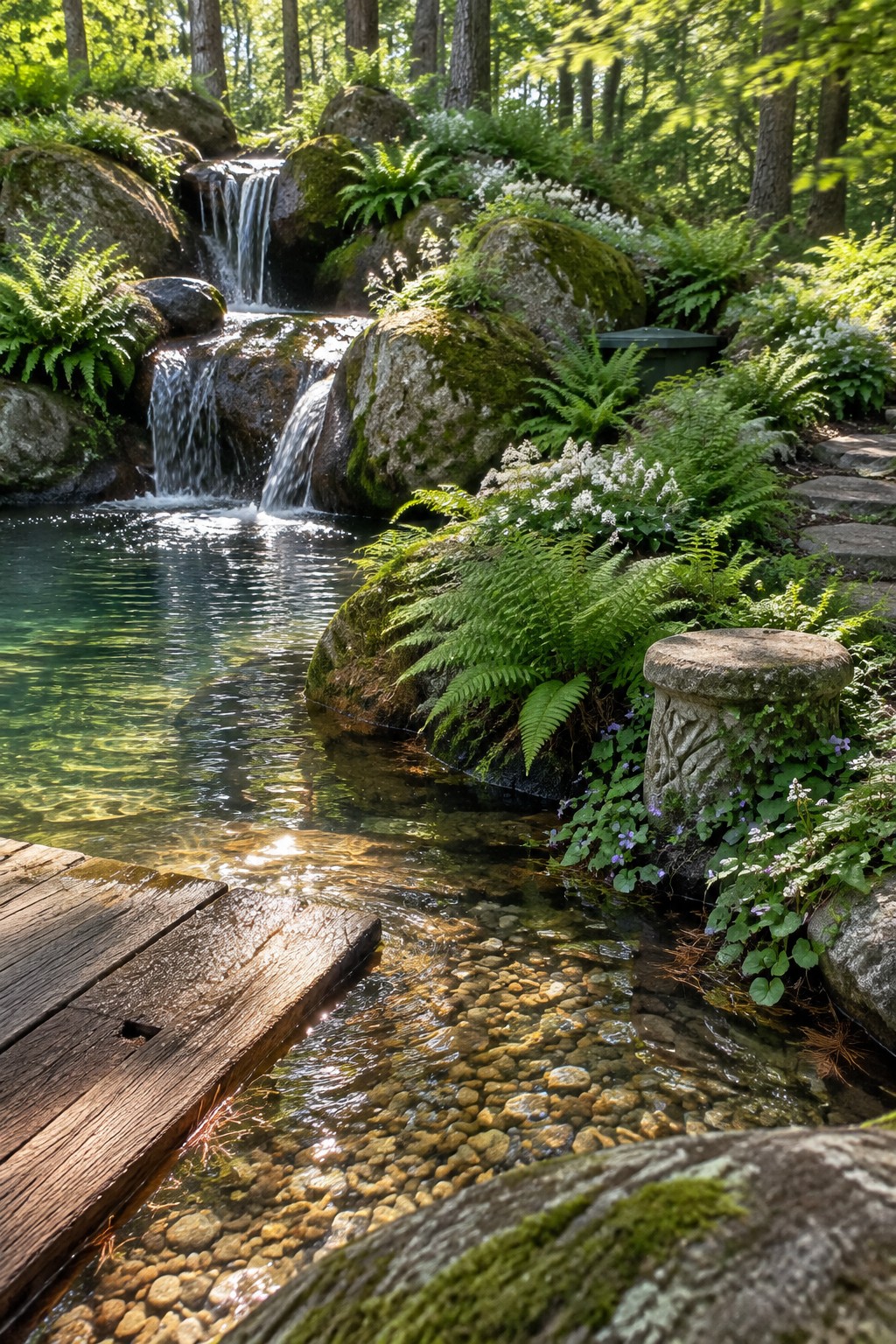
A woodland swimming pond can feel at home among the trees when it follows the land instead of looking like a formal pool dropped into the garden. A small cascade over natural stone gives the water a gentle flow and makes the pond feel connected to its surroundings.
Use the slope to create a shallow stream or a short series of falls that feed into the swimming area. This approach suits a garden with existing changes in level, but plan for safe edges and easy access before adding rocks and planting.
Add a Deck for Pondside Seating
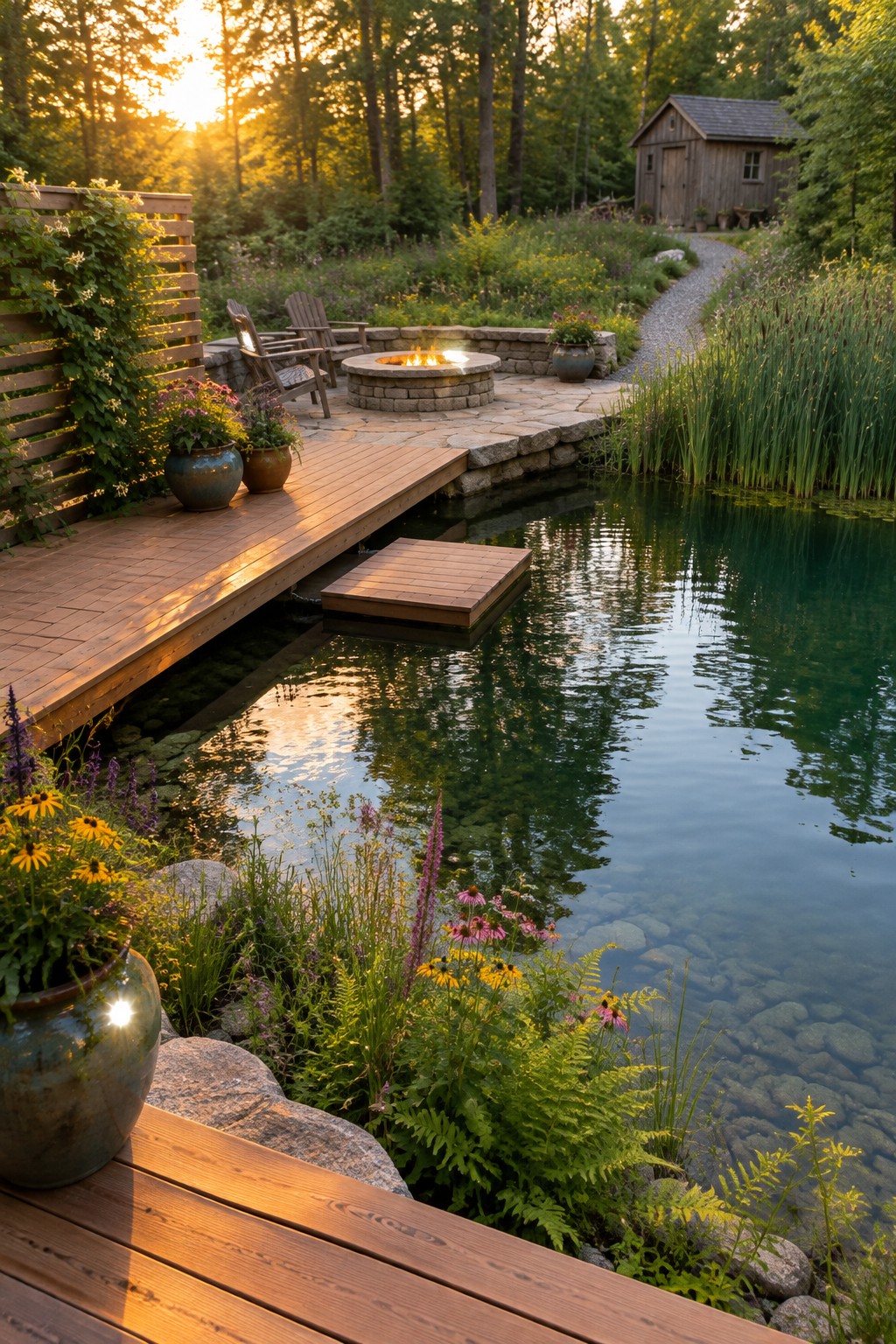
A small deck beside a swimming pond gives you a dry place to sit close to the water. Here, the broad wooden platform connects the seating area to the pond, while a smaller floating section offers another spot to pause.
This setup works well when you want room for chairs without taking over the natural pond edge. Use weather-resistant decking, and keep the platform low so it sits comfortably within the garden.
Add Steps Beside a Woodland Swimming Pond
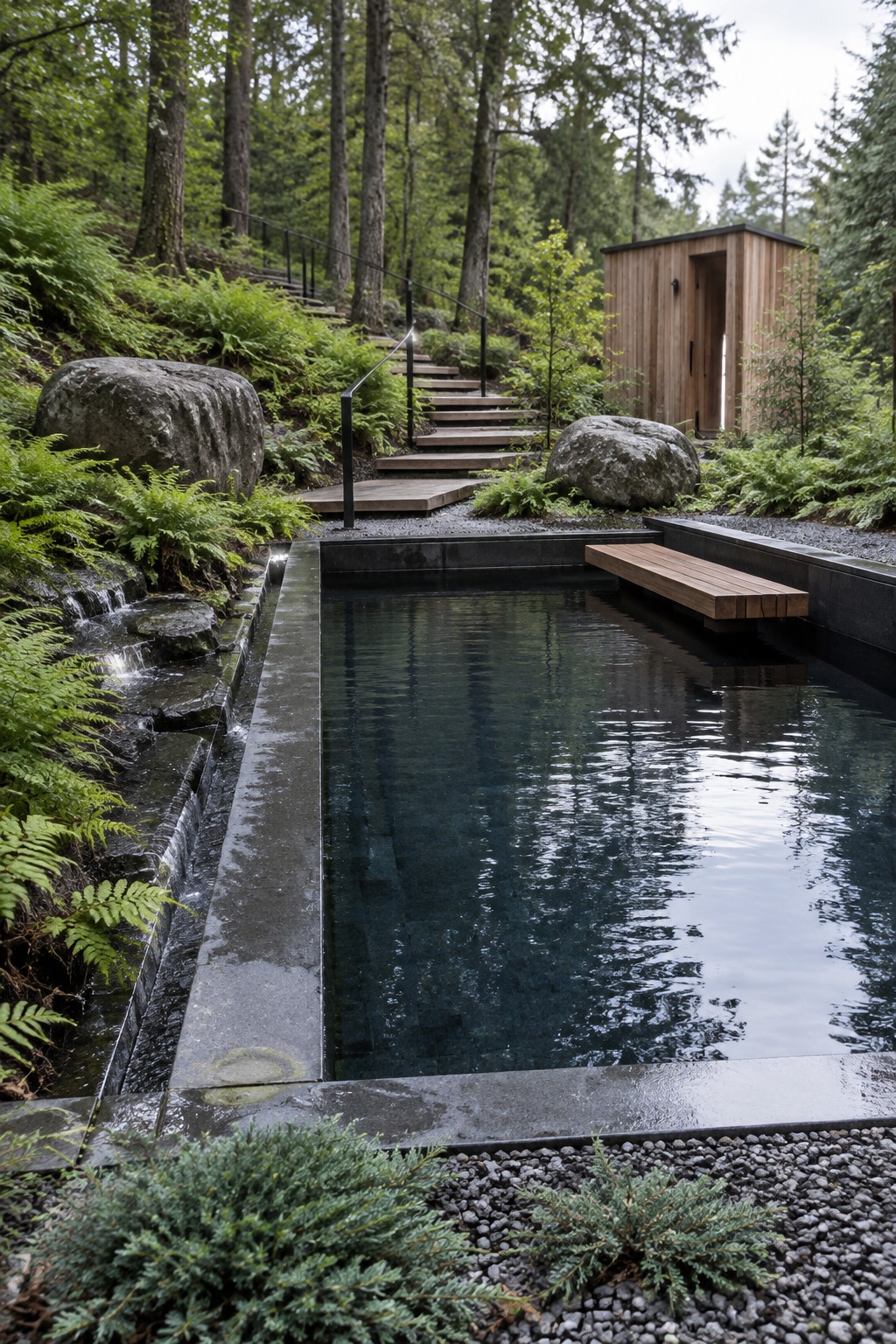
A set of steps makes a swimming pond easier to reach when it sits on a slope. Here, the wooden stairway connects the higher part of the garden to the water without needing a long, winding path.
For a similar layout, keep the steps steady and add a simple handrail, especially if the route may get wet. This approach works well in wooded gardens where the ground changes height naturally.
Use a Curved Path Along the Pond

A narrow path that follows the pond’s edge makes it easy to walk beside the water without taking over the garden. The curve feels more natural than a straight route, especially in a wooded setting.
Use gravel or another firm, permeable surface, and keep the path wide enough to pass comfortably. A simple log border can help hold the edge in place, but leave room for ferns and other plants nearby.
Add a Shaded Seating Area Beside the Pond
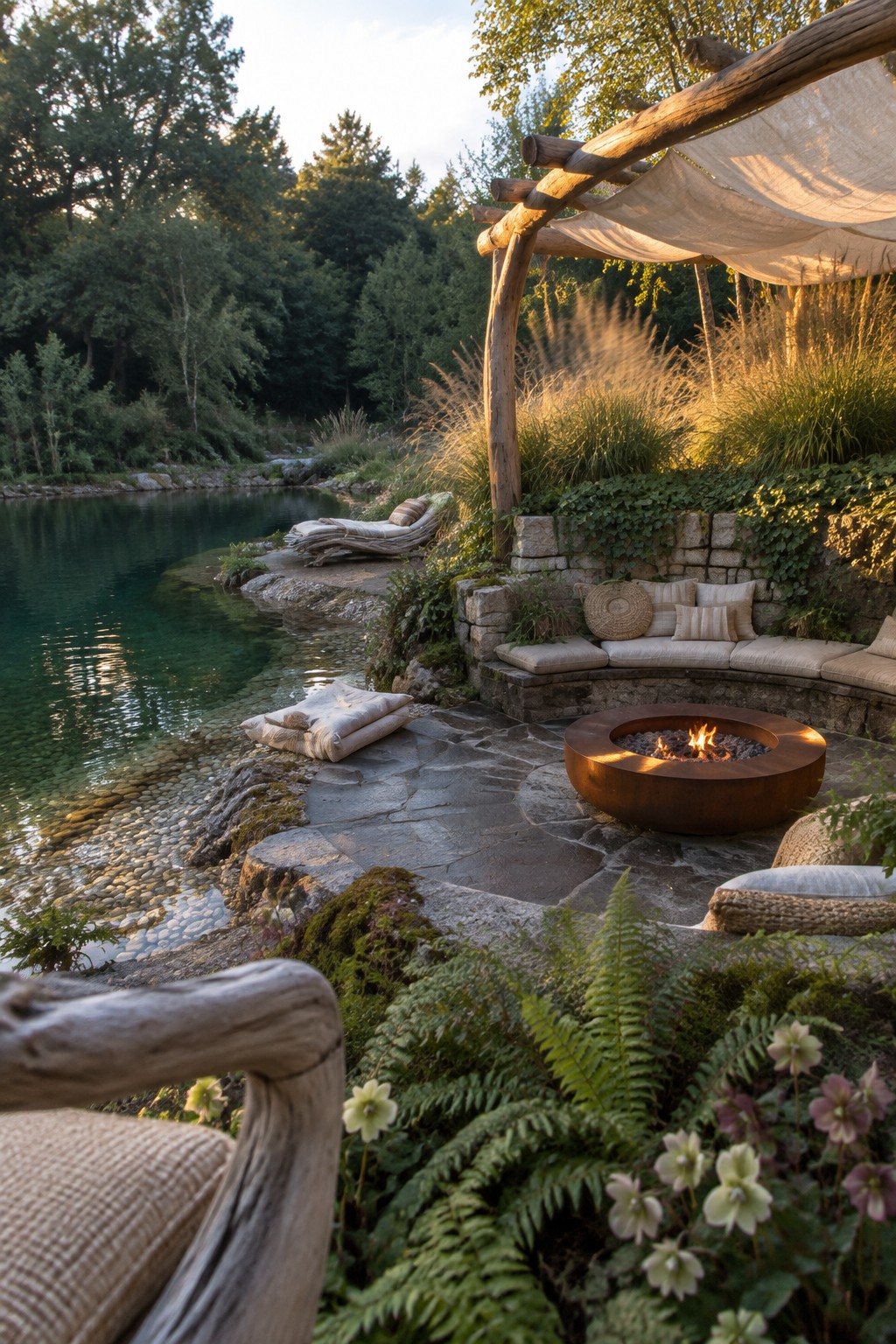
A small seating area beside a swimming pond gives people a place to rest without leaving the water’s edge. Here, a curved stone bench and fire pit make the spot useful after a swim, while keeping the pond as the main feature.
For a similar setup, place seating on a stable stone or gravel surface and leave a clear route to the water. A simple timber canopy can provide shade, but make sure it is secure and suited to your climate.
Alt text: A stone patio beside a woodland pond has a curved cushioned bench, a round fire pit, and a timber canopy.
Add Built-In Steps Into the Pond

Built-in wooden steps make it easier to enter a swimming pond without adding a large dock or deck. Their low profile suits a wooded setting, and the wood feels at home beside natural stone.
Place the steps where the water is shallow and the approach is easy to reach. Choose durable, water-safe materials, and make sure the steps stay secure when wet.
Add an Outdoor Shower Beside the Swimming Pond

An outdoor shower near a swimming pond makes it easy to rinse off before or after a swim. A simple timber screen gives privacy without making the bathing area feel closed in.
Place the shower on a firm, well-drained surface and keep it close enough to the pond to be convenient. A wood-plank screen like this suits a woodland setting, but make sure the materials can handle regular moisture.
Use Stepping Stones to Cross the Pond
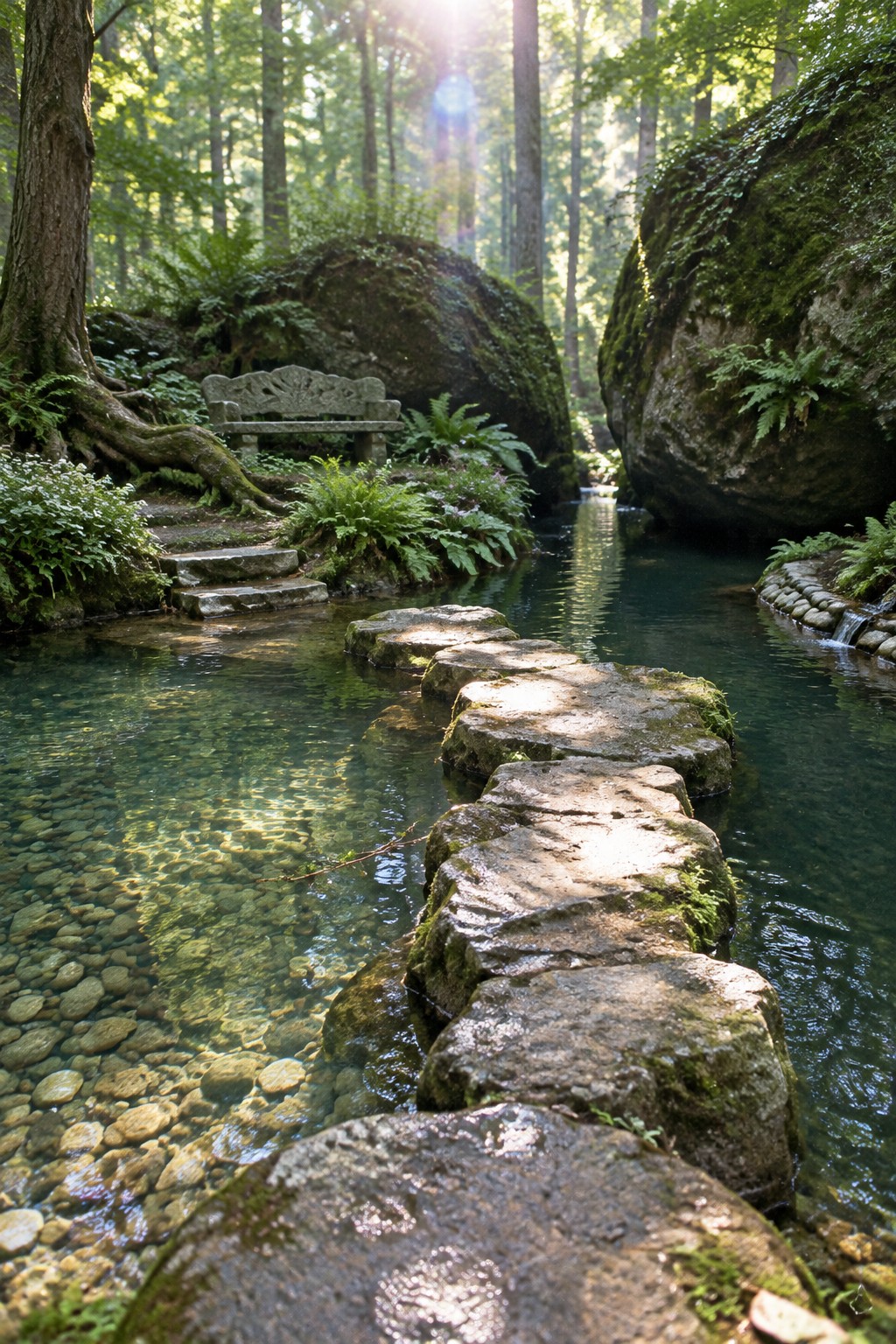
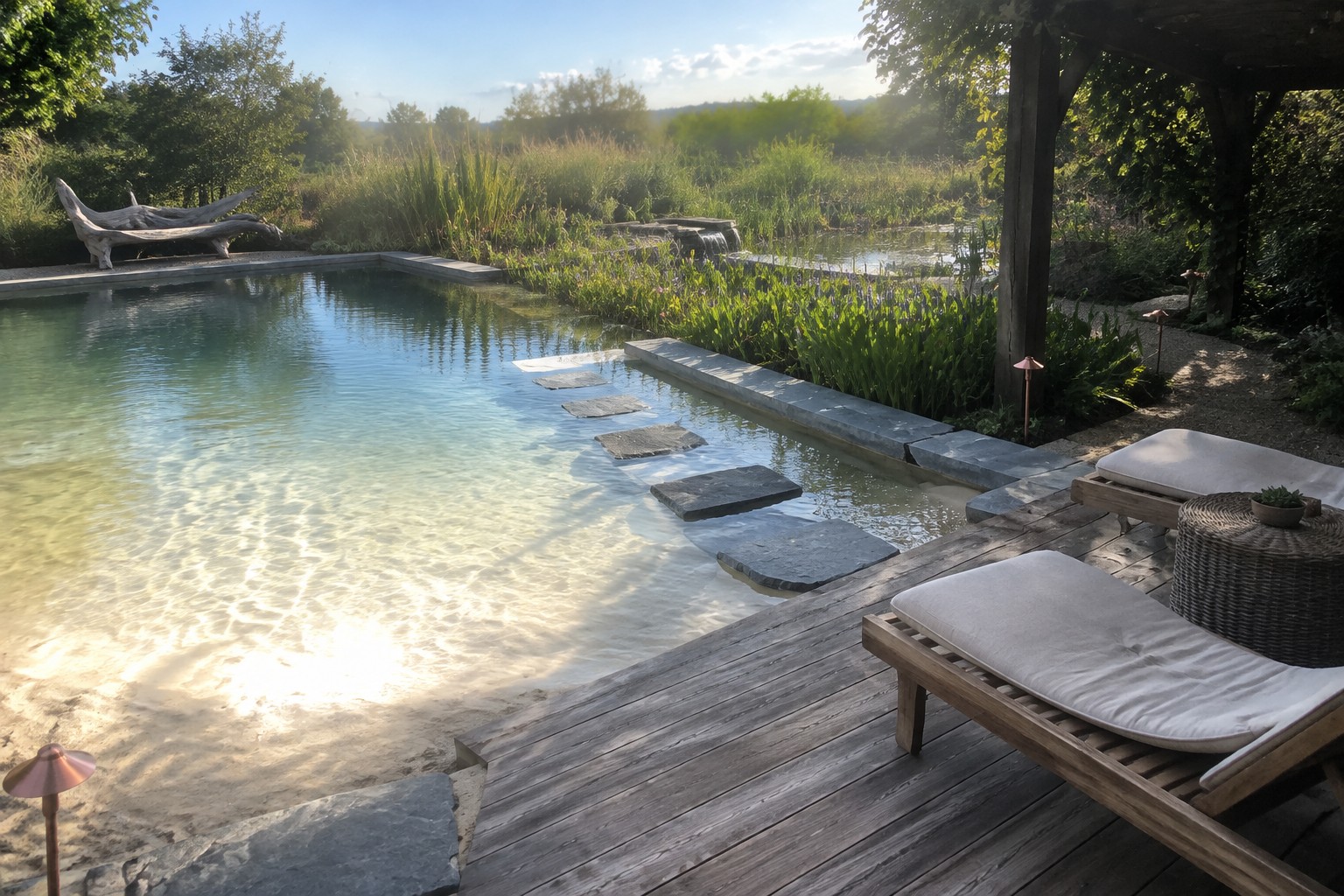
A line of broad stepping stones can make a woodland swimming pond easier to cross without building a bridge. It also keeps the route simple and lets the water remain the main feature.
Choose stones with flat, stable tops and set them close enough for comfortable steps. This approach suits a shallow crossing, but avoid placing stones where they could be slippery or difficult to see beneath the water.
Use a Straight Edge for a Woodland Swimming Pond

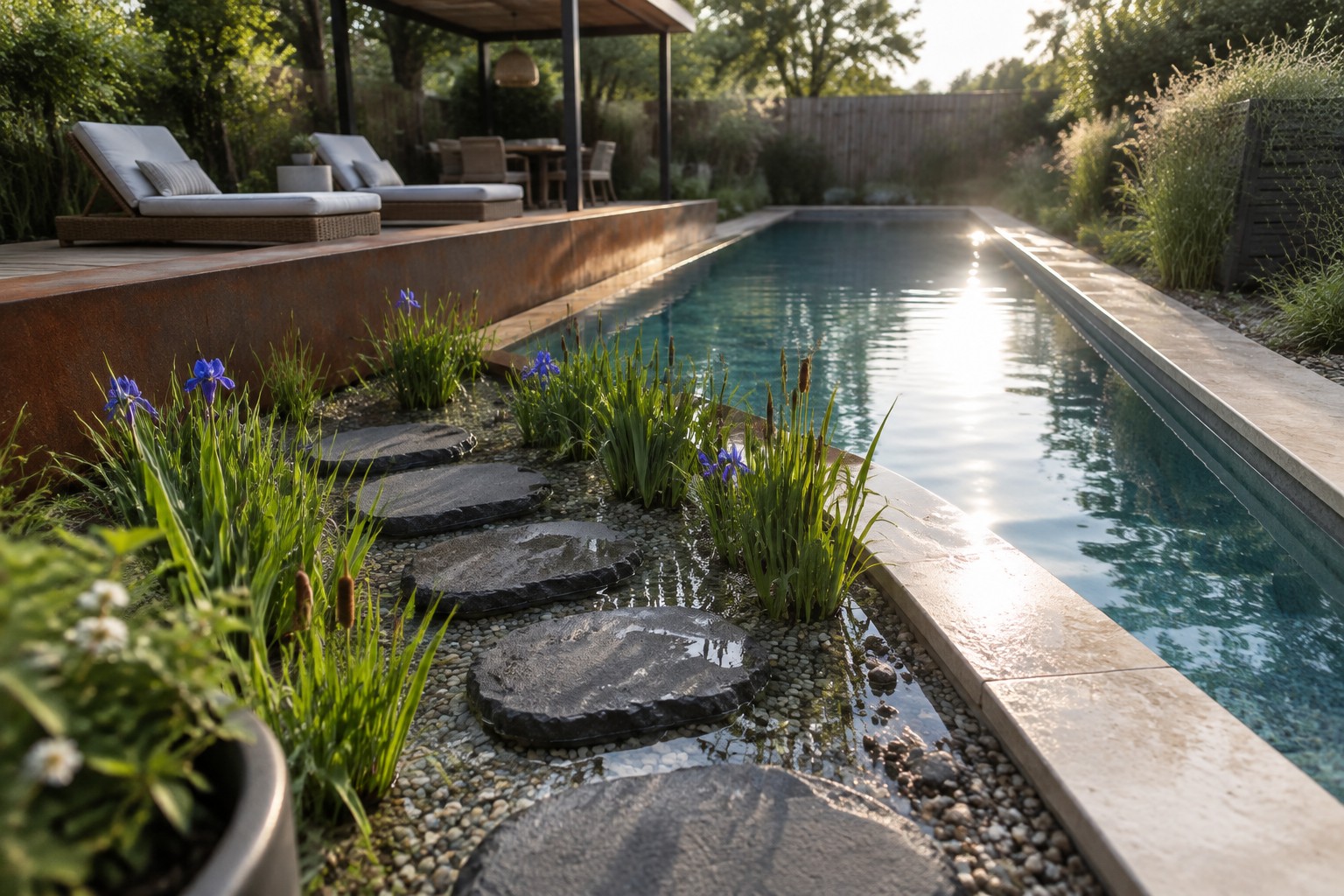
A straight pond edge gives a natural garden a clear, practical swimming area. Here, the stone coping runs alongside the water, making the pond easier to enter and keeping the swimming lane distinct from the surrounding plants.
This approach works well when you want a pond to feel at home among trees and flowers without giving up a useful place to swim. Choose a durable, slip-resistant edging material, and leave enough room beside it to walk safely.
Use Brick Paving Around the Pond

Brick paving gives a woodland swimming pond a clear, sturdy edge without making it feel separate from the garden. It also creates a practical surface for walking around the water and setting up a small place to sit.
Use reclaimed or weathered-looking bricks for a more natural finish, and let the paving follow the pond’s shape rather than forcing a rigid outline. Make sure the surface drains well and is not too slippery when wet.
Add a Covered Lounge Beside the Pond
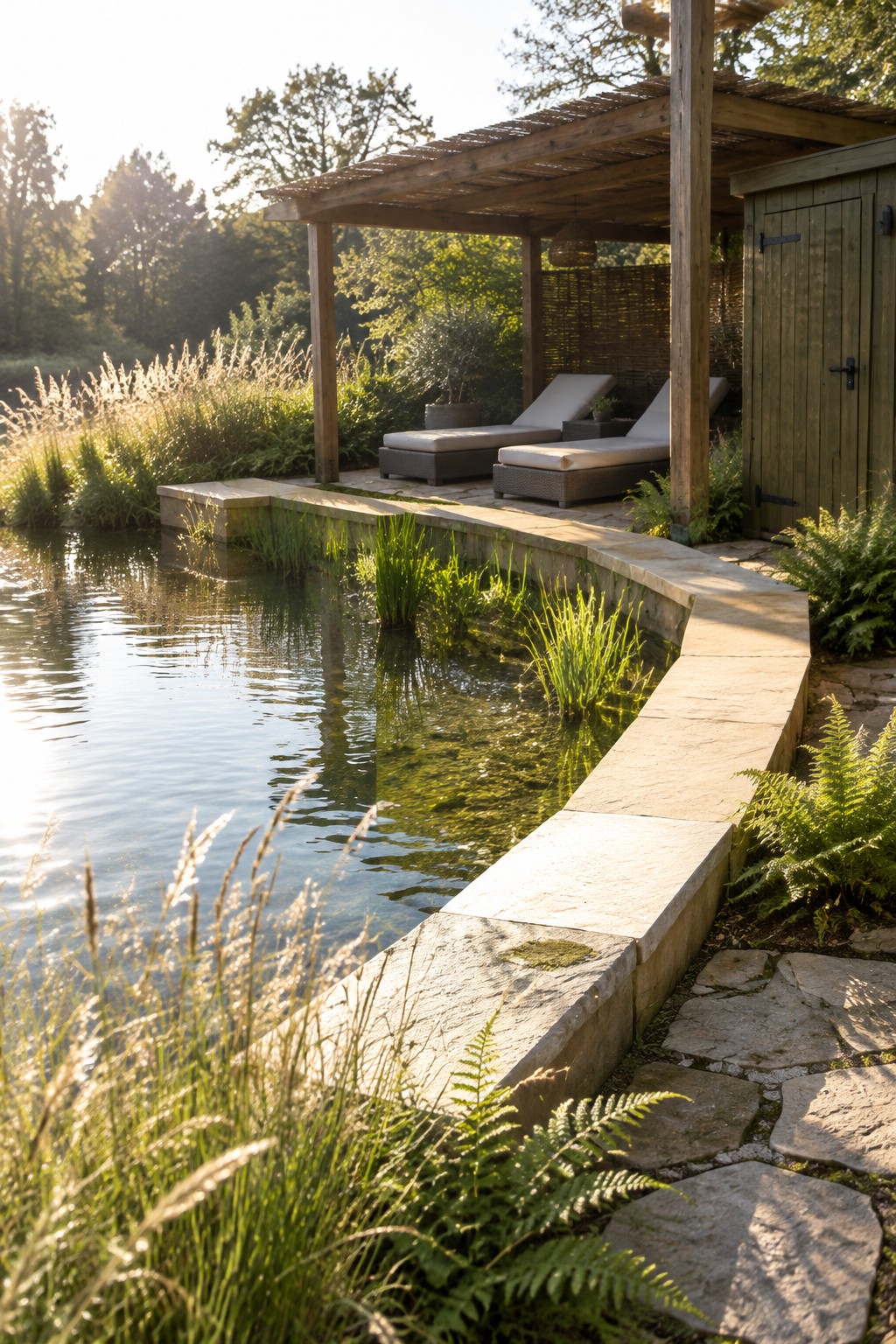
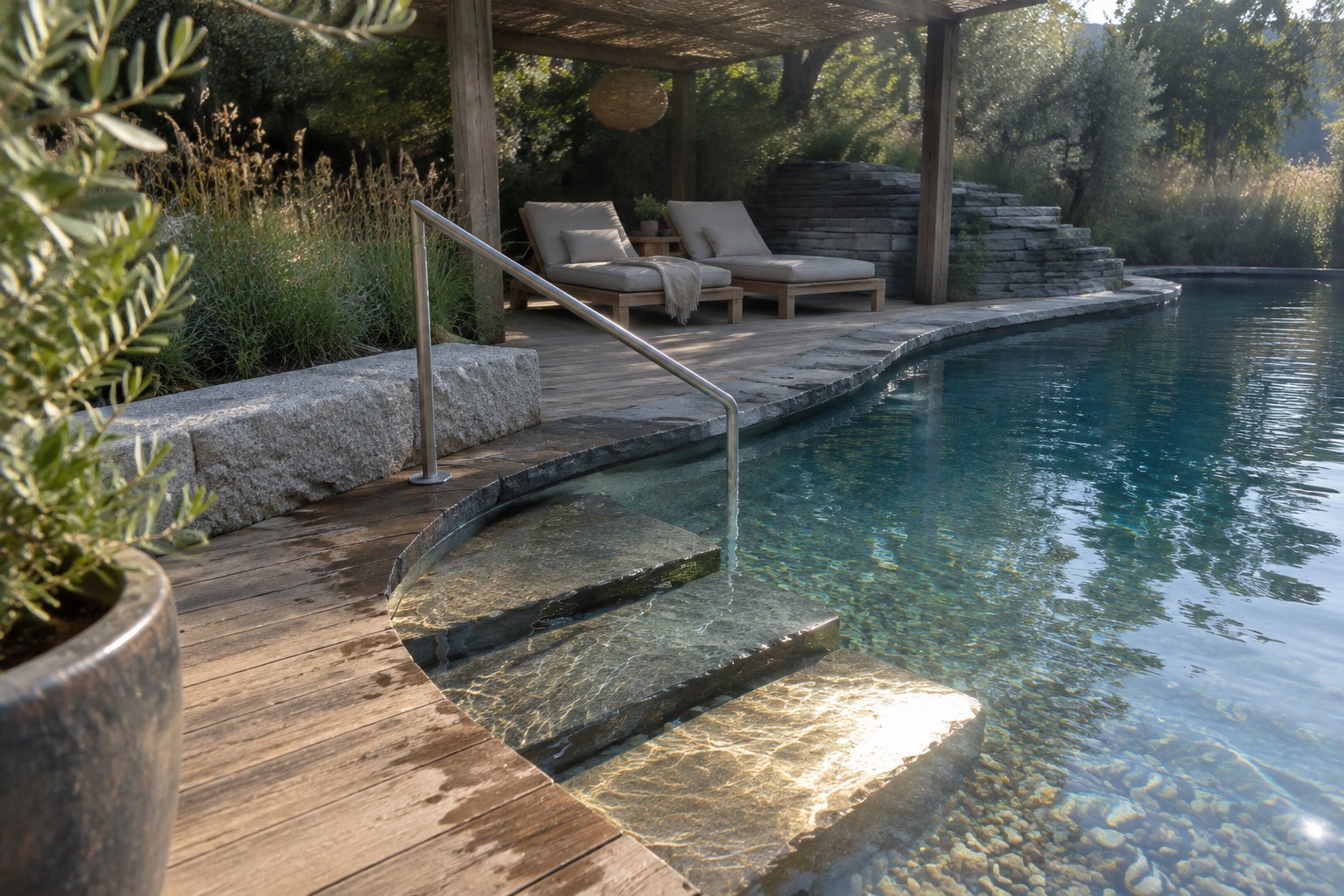
A simple shade structure can make a swimming pond more useful when the sun is strong or you want a place to rest between swims. Here, the covered seating area sits right beside the water, so the pond feels connected to a spot for relaxing.
For a similar setup, place a small pergola or timber shelter near the pond and leave enough room to move safely around the edge. Keep the seating simple and use materials suited to damp outdoor conditions.
Add Planted Stone Ridges to a Woodland Pond
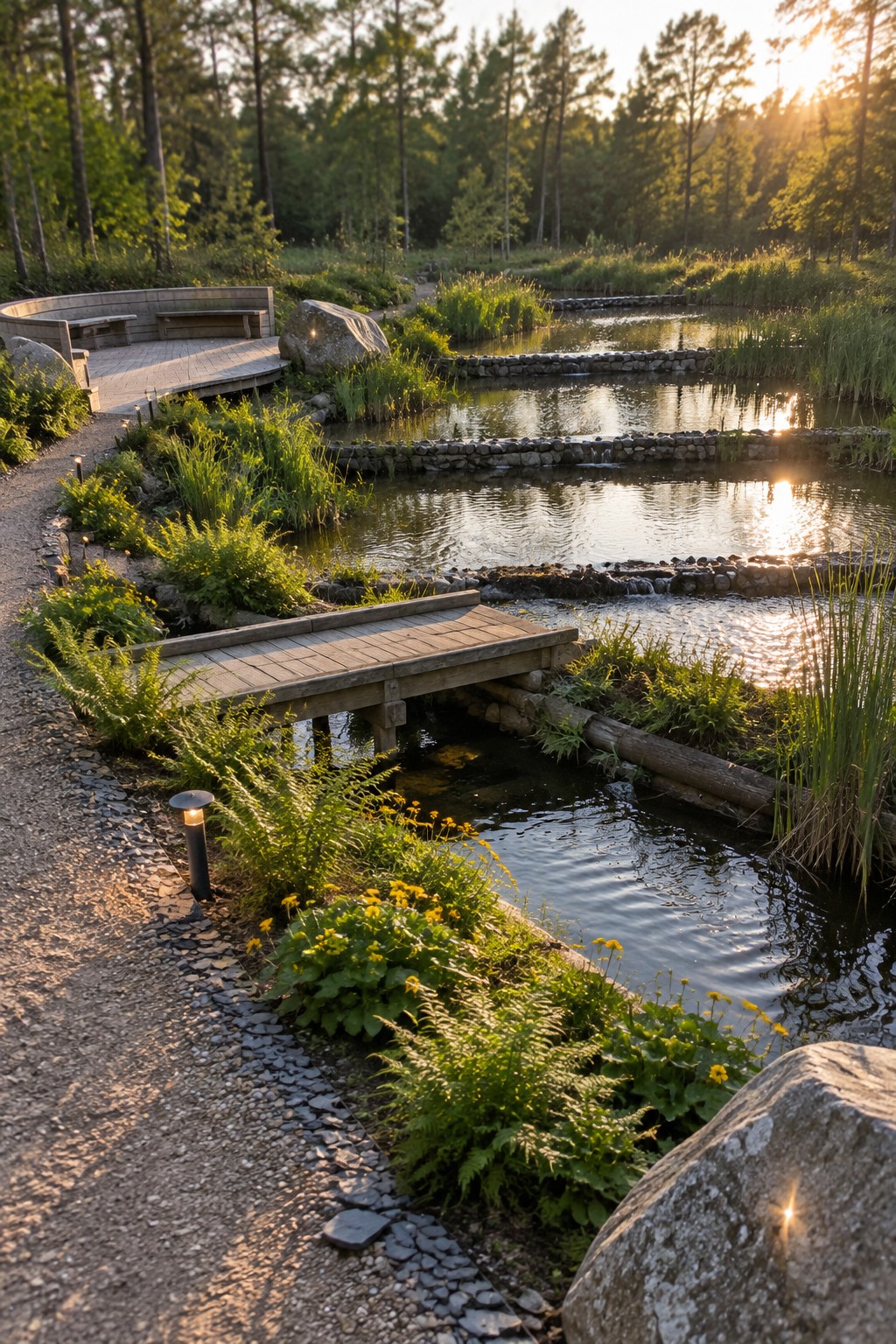
Low stone ridges can divide a swimming pond into smaller sections while keeping the layout natural. They give water plants a place to grow and help define the pond’s shape without relying on a hard, continuous border.
Use this approach where you want shallow planted areas alongside deeper water. Keep the stonework low and sturdy, and leave clear routes through the pond so the edges remain practical to maintain.
Frequently Asked Questions
Q: Can I build a swimming pond beneath trees?
A: Yes, but choose the spot with care. Nearby trees bring lovely shade and a woodland feel, though falling leaves can add to your cleanup, so keep the swimming area clear of branches where you can.
Q: Will ferns and other plants make the water safe to swim in?
A: Plants can help filter a natural pond, but they are only one part of a well-planned system. Keep the swimming zone separate from planted regeneration areas, and follow a regular routine for checking water quality.
Q: How do I keep leaves out of the pond in autumn?
A: A simple leaf net can catch most of the fall before it sinks. Skim out anything that gets through, since decaying leaves can cloud the water and add extra work.
Q: Do woodland ponds need full sun?
A: No. Dappled light can keep the water cooler and suit a quiet forest setting. Just make sure the pond still gets enough light for its chosen plants.