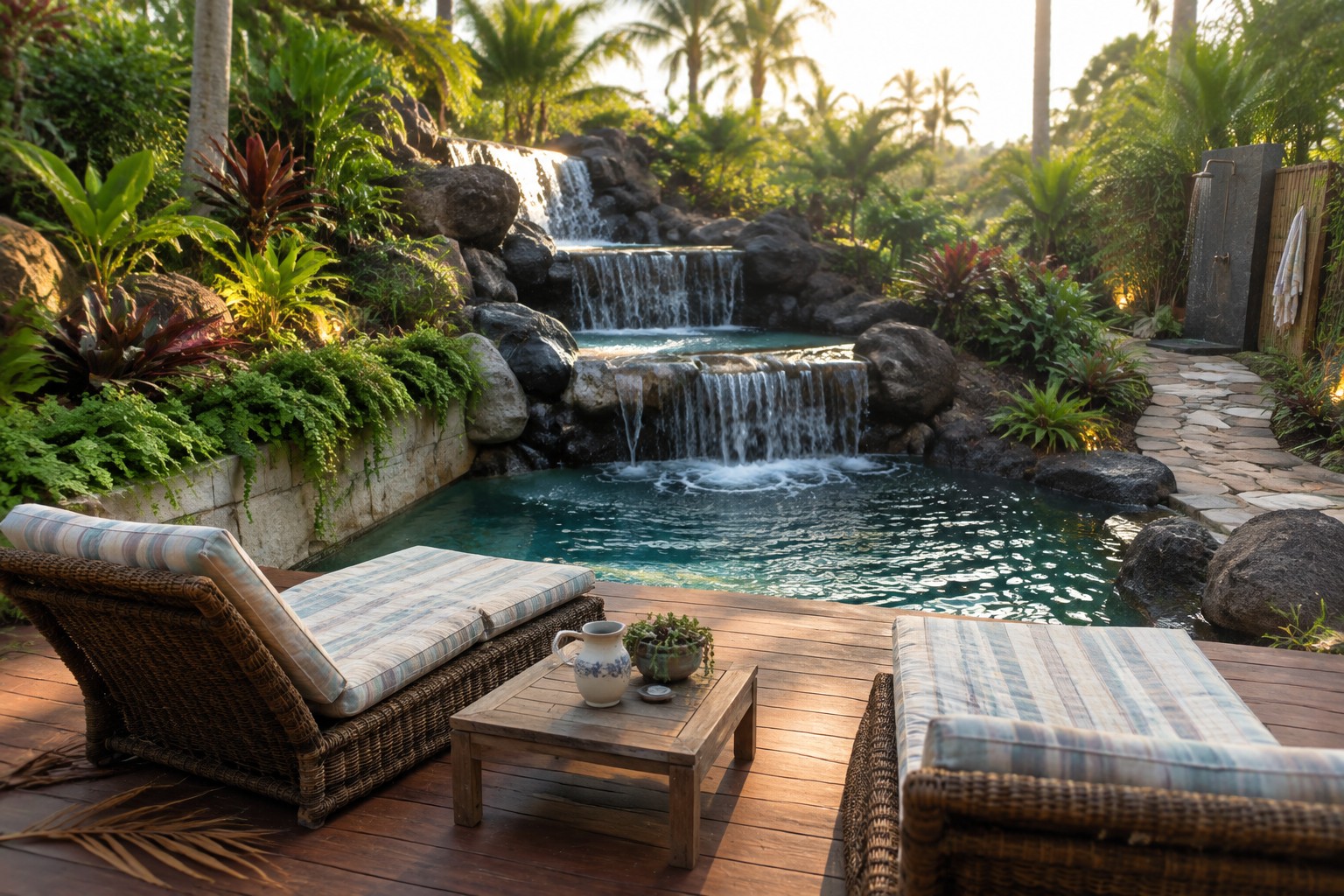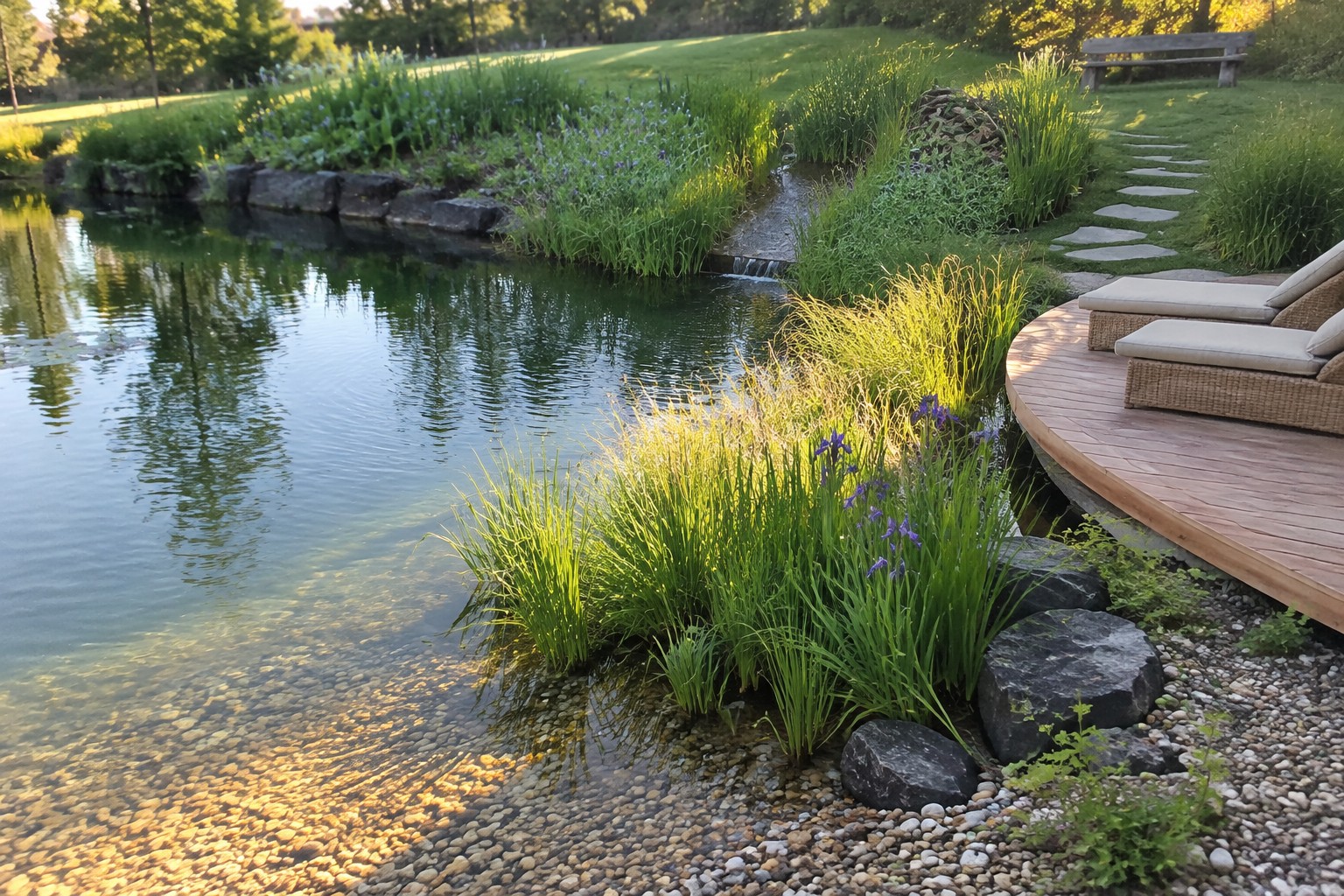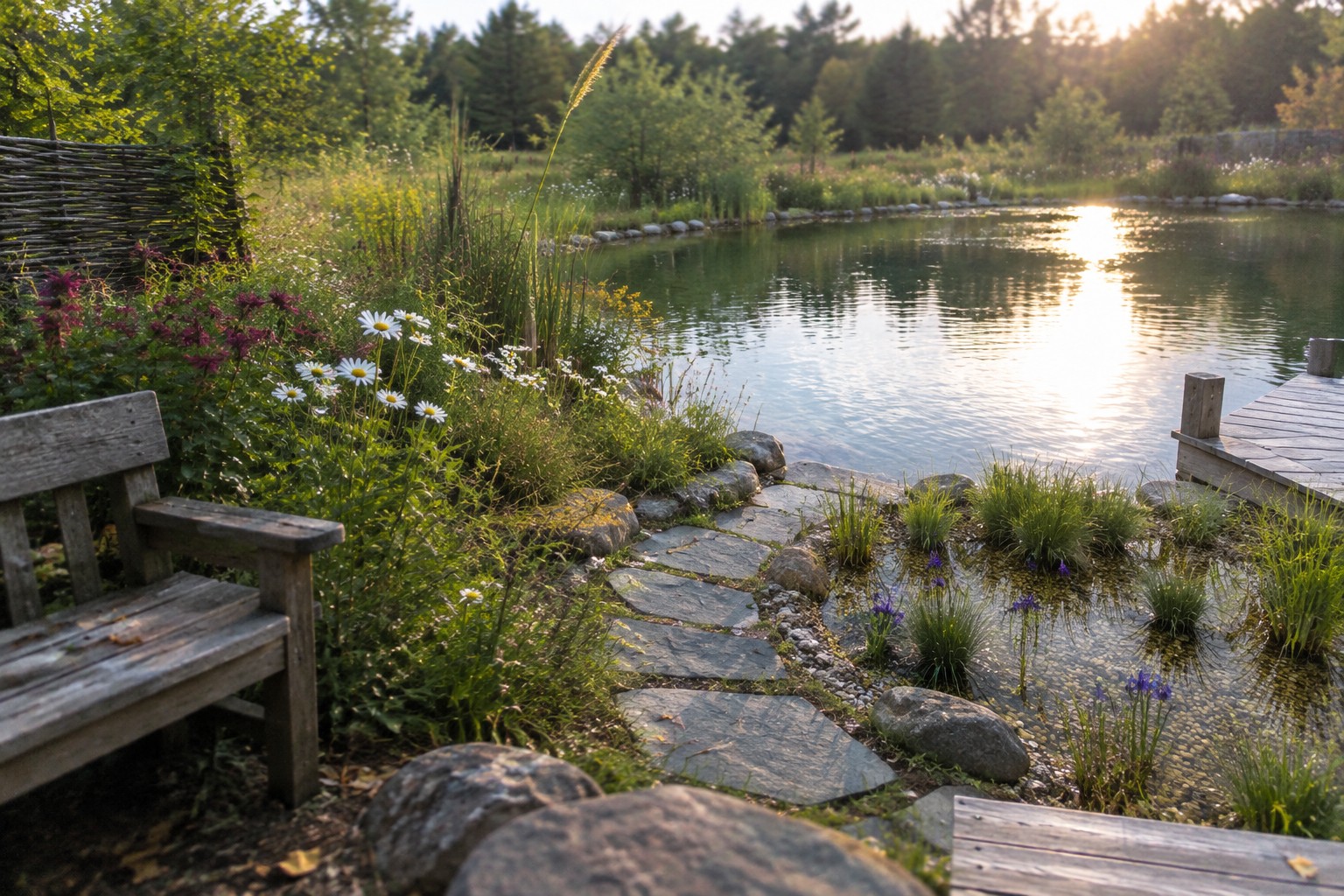
A natural swimming pond feels most convincing when it belongs in the garden, rather than looking like a pool dropped into it.
The planted shoreline helps shape that transition, softening the water’s edge while giving nearby paths, grasses, and seating a clear place to fit.
I’d pay close attention to how people will enter and move around the pond, since a beautiful planting scheme still needs to work for regular swims and maintenance.
The strongest designs balance open water with plants that frame the view without crowding the swimming area.
Some of these details are easy to adapt to a real yard, even if the pond itself needs to be planned in stages.
Use Natural Edges Around the Pond
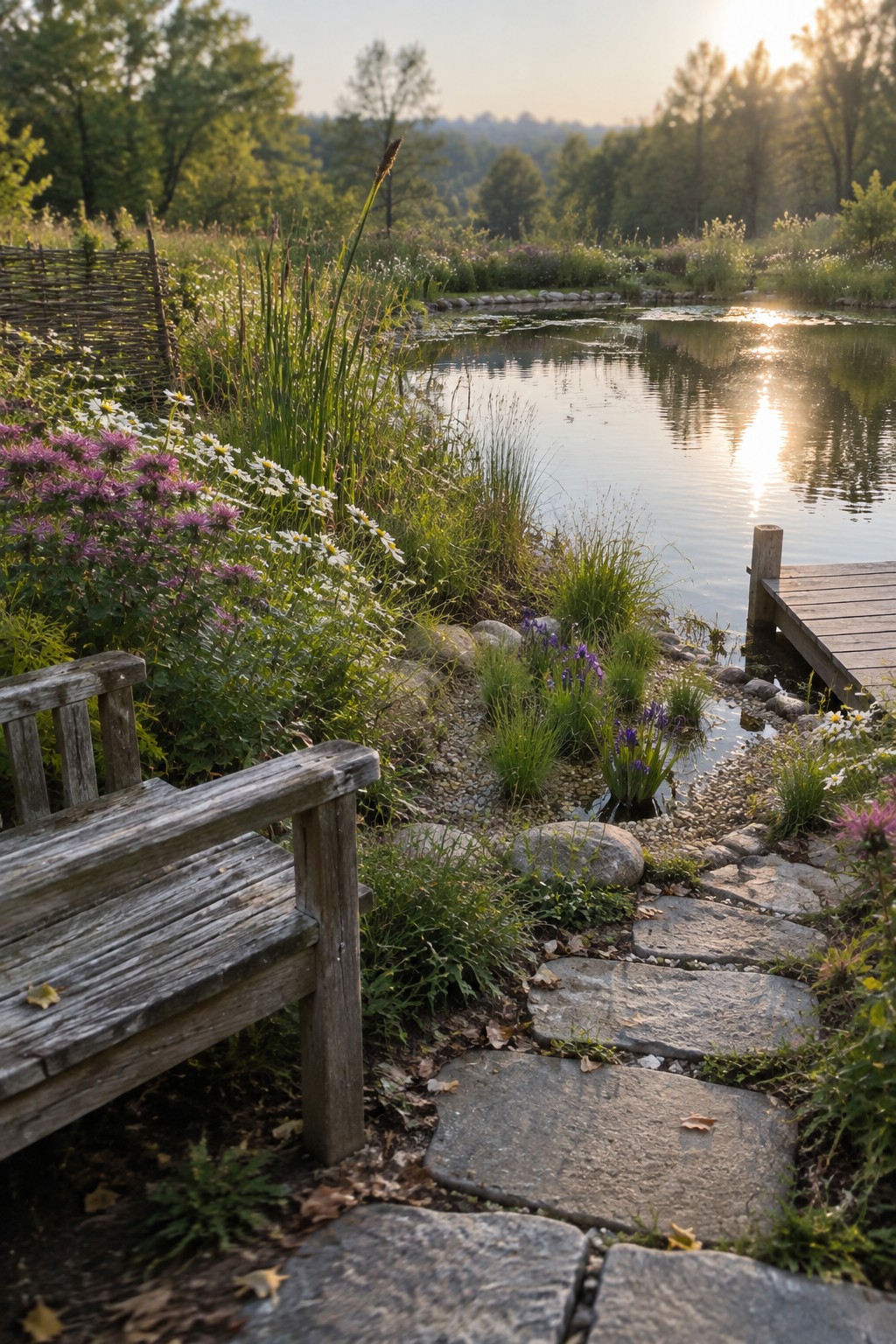
A planted shoreline lets a swimming pond blend into the garden instead of looking like a pool set into the yard. Grasses and flowering plants soften the edge, while stones help mark the waterline without making it feel too formal.
Choose plants that suit the pond’s conditions and leave enough clear access for swimming and maintenance. A simple stone path or small dock can provide a practical way to reach the water without crowding the planting.
Use a Floating Deck Beside the Pond
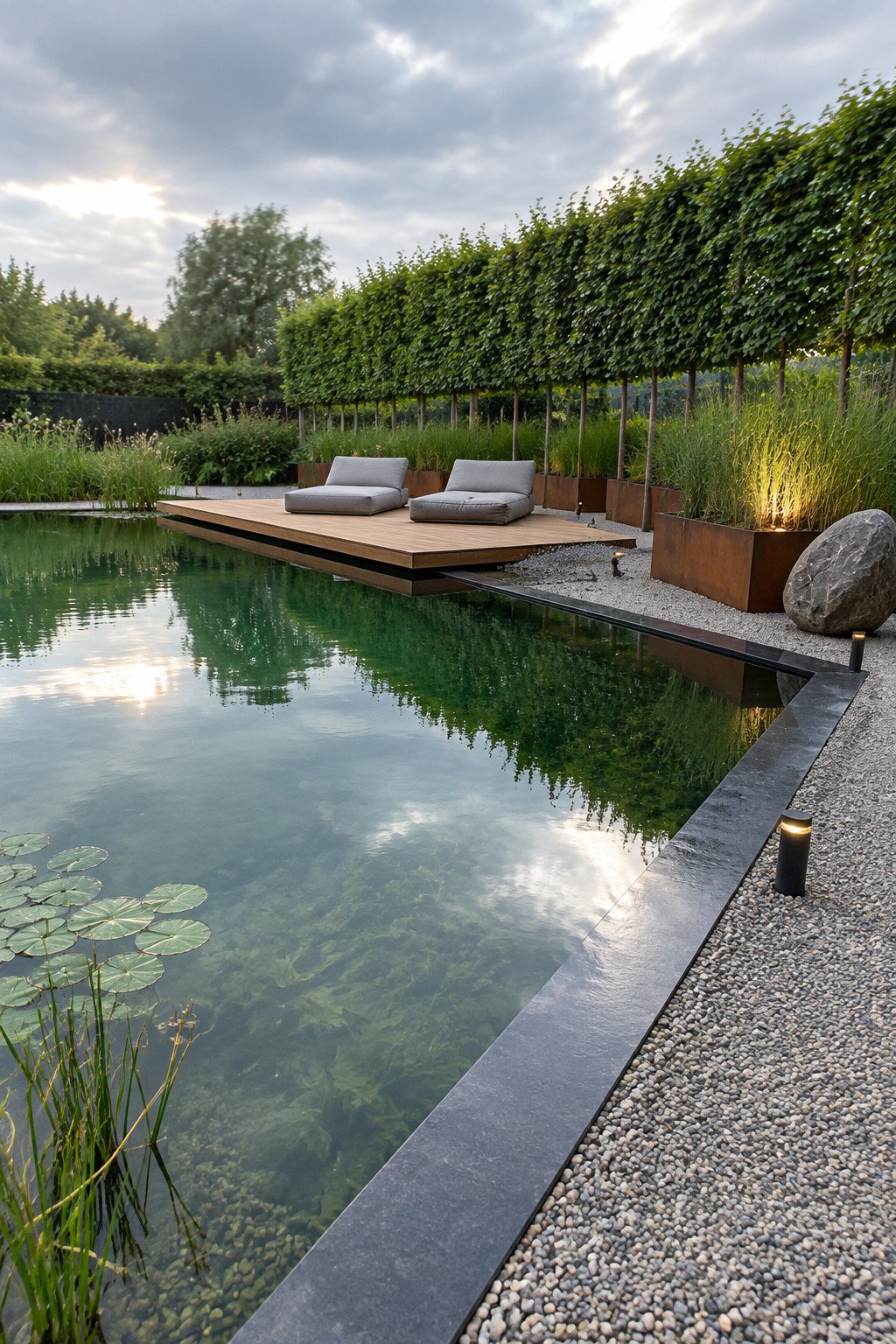
A small deck that extends over the water gives a swimming pond a handy place to sit without taking over the planted shoreline. It also lets you enjoy the pond from close by while keeping most of the edge open for plants and natural materials.
Keep the deck modest and use slip-resistant boards suited to wet conditions. This layout works especially well in a garden with limited room for a broad patio. Check that the support and overhang are designed for the pond’s edge.
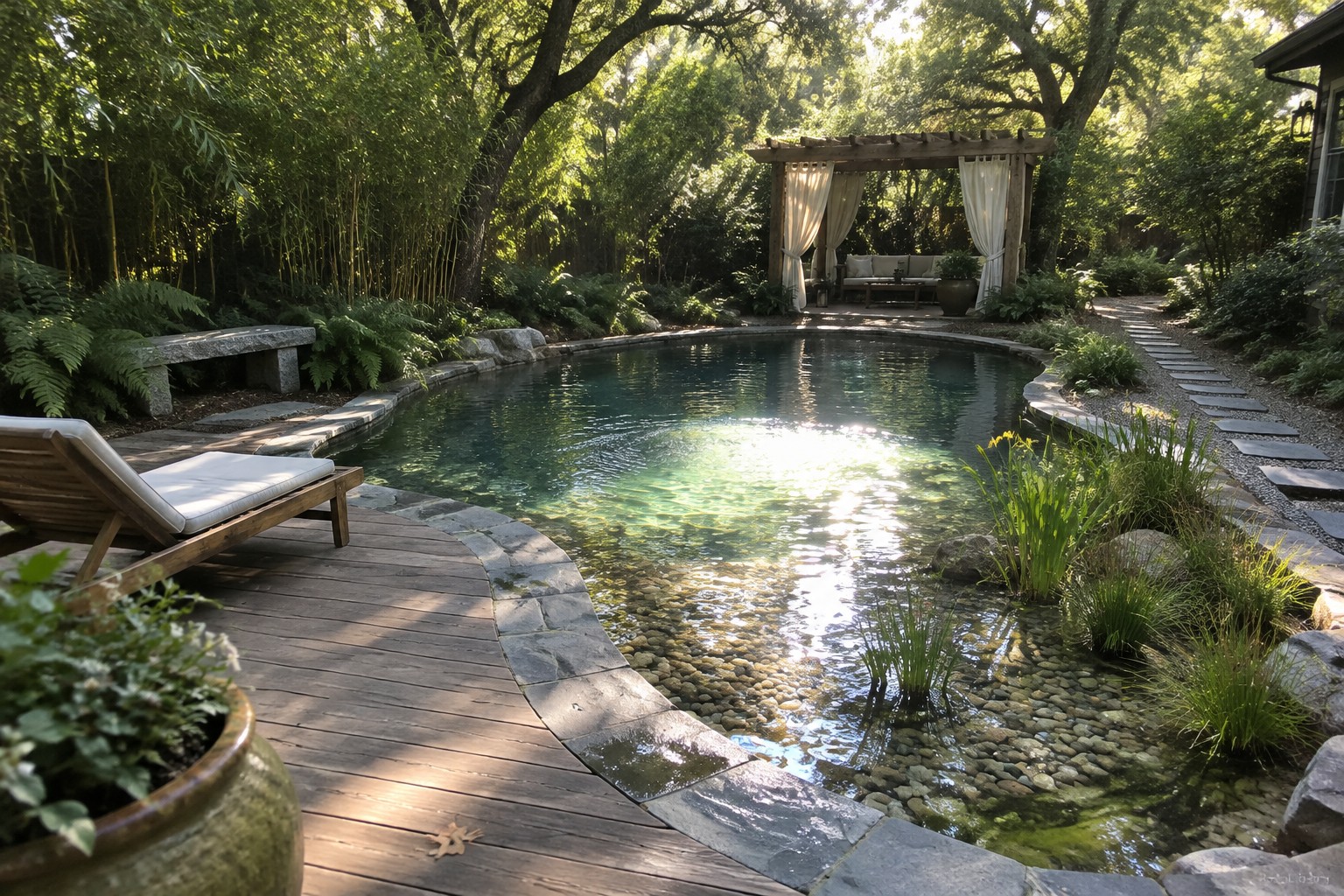
Use Planted Edges Along a Natural Pond
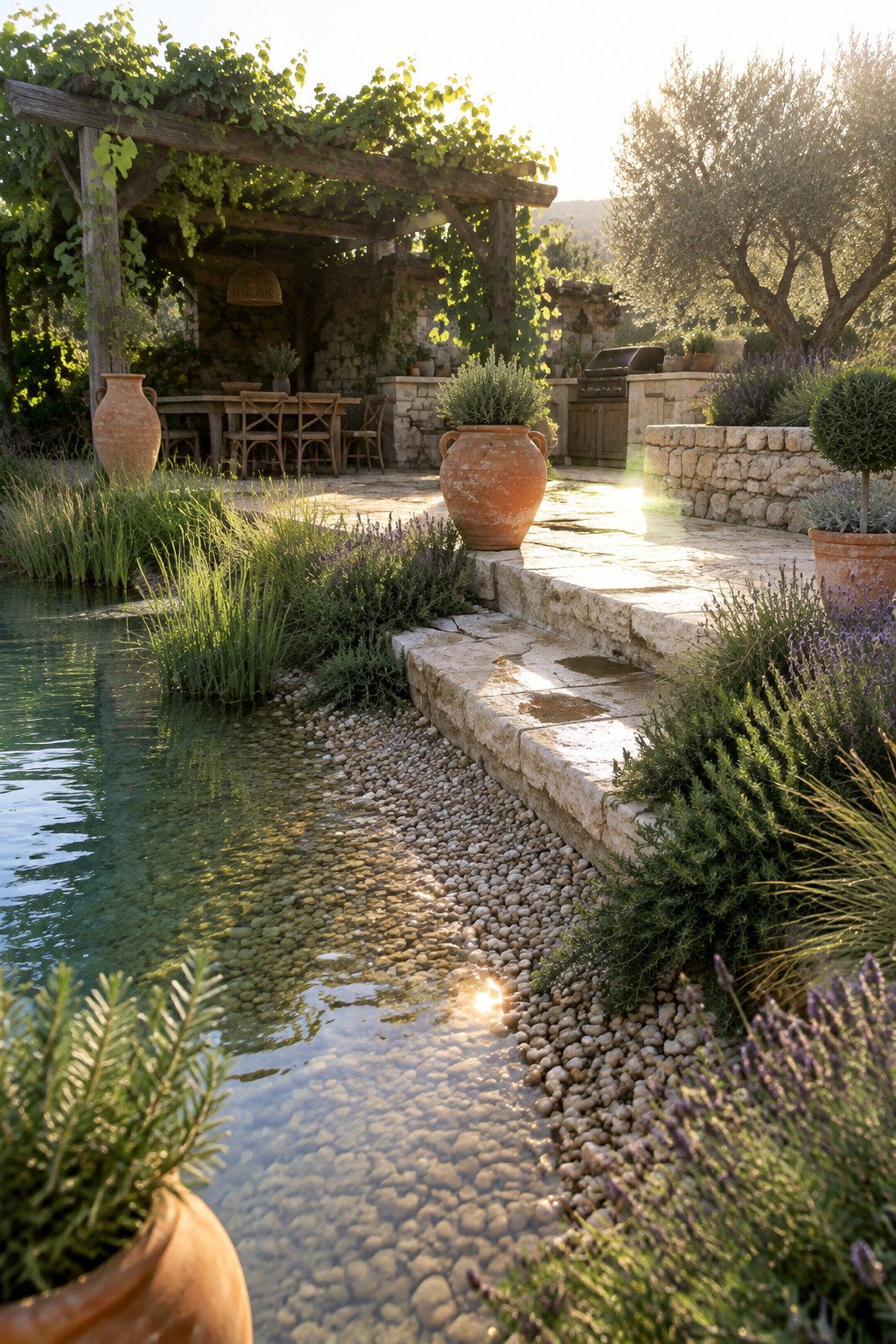
A planted shoreline helps a swimming pond feel like part of the garden rather than a separate pool. Grasses and low shrubs can soften the edge while leaving clear places to step into the water.
Use plants suited to damp soil near the water, then keep taller growth back from entry points so the pond stays easy to use. A stone path or low retaining edge can help manage the transition without making the shoreline feel too formal.
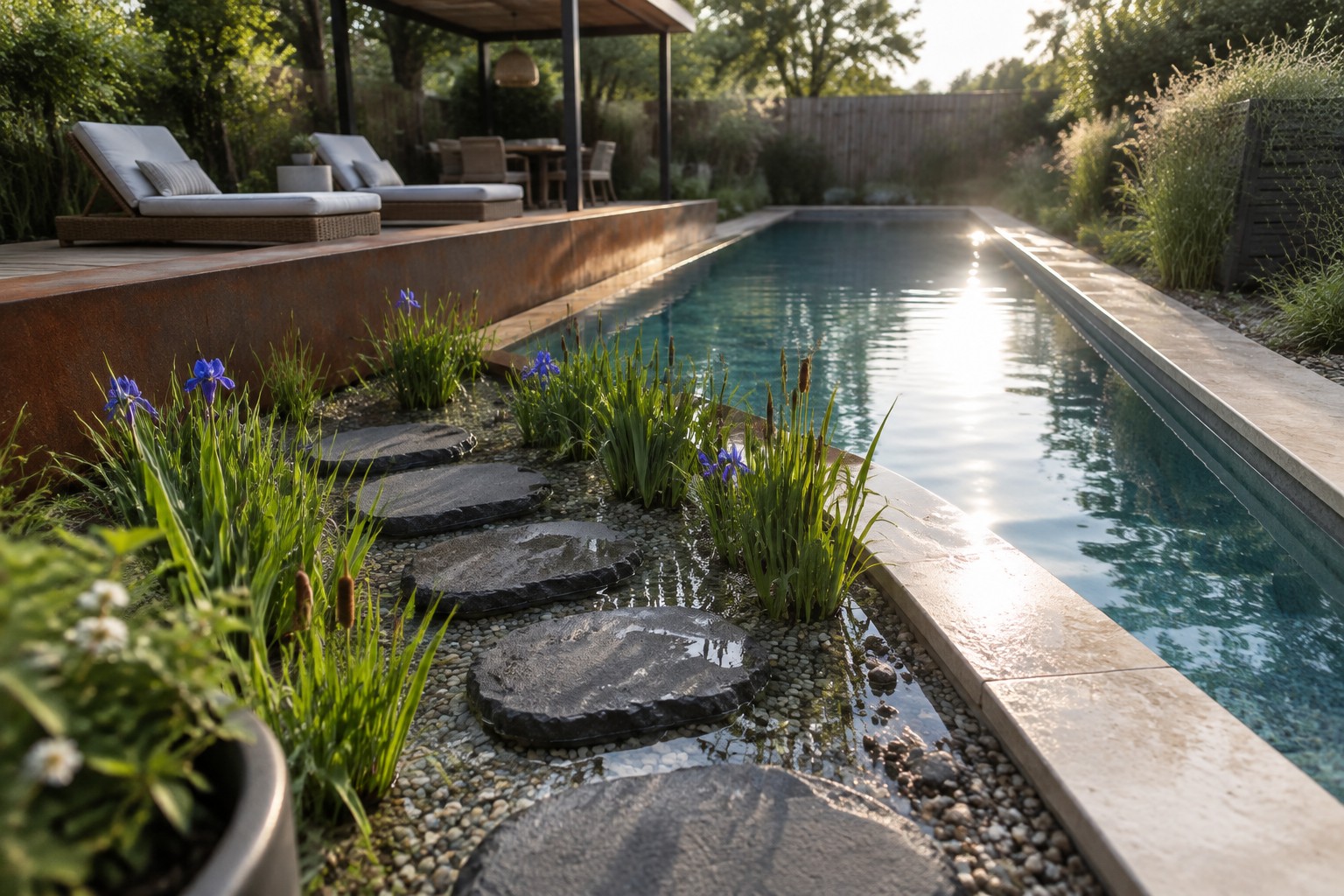
Use Stepping Stones Along the Pond Shore
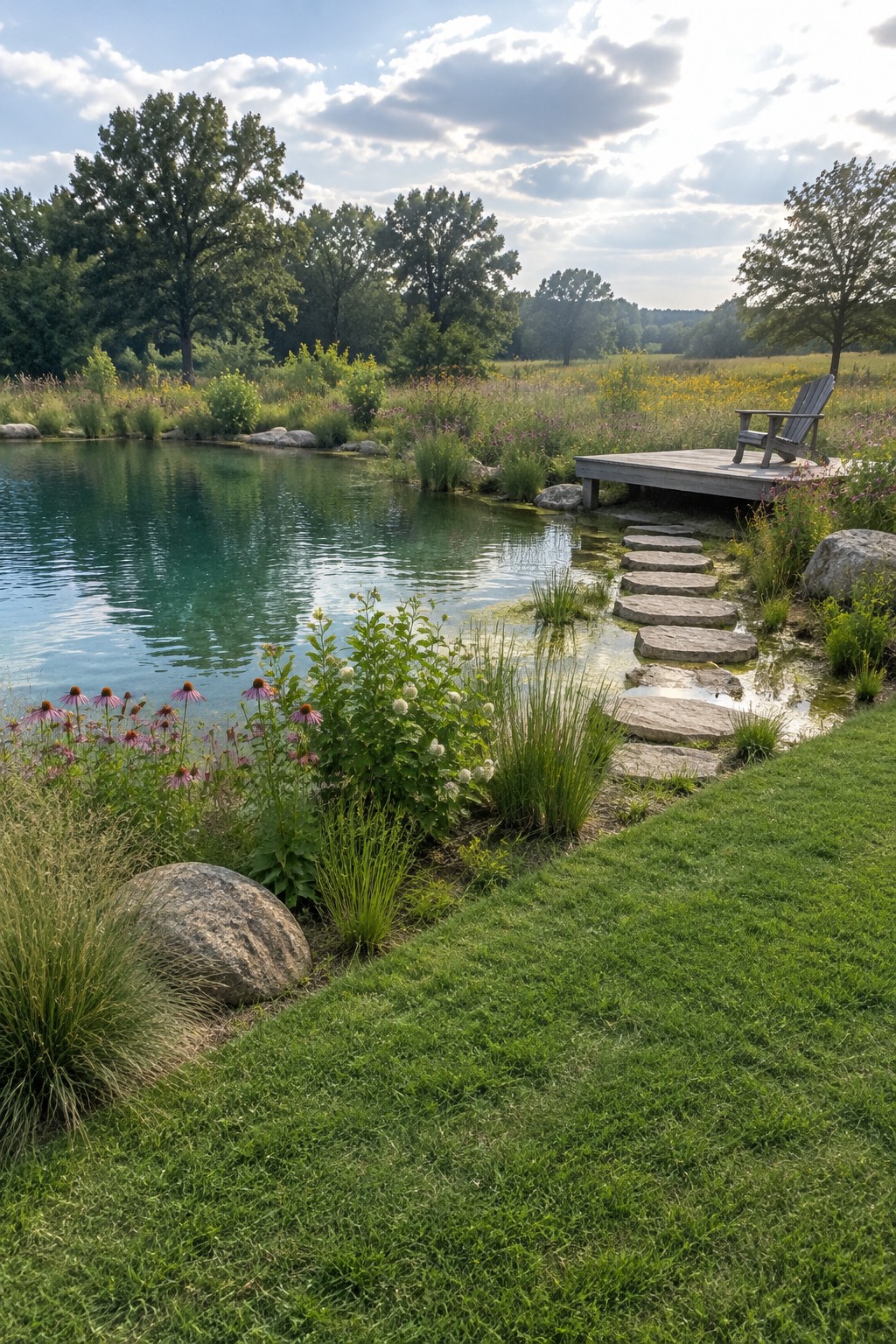
A stepping-stone path makes a planted pond edge easier to reach without turning the shoreline into a hard, paved border. It also gives the garden a clear route while leaving room for water-loving plants to grow along the bank.
Set the stones slightly apart and keep them level and stable, especially where the ground stays damp. This works well for a natural swimming pond where you want an easy way to get to the water without crowding the planted edge.
Add a Seating Area Beside the Pond
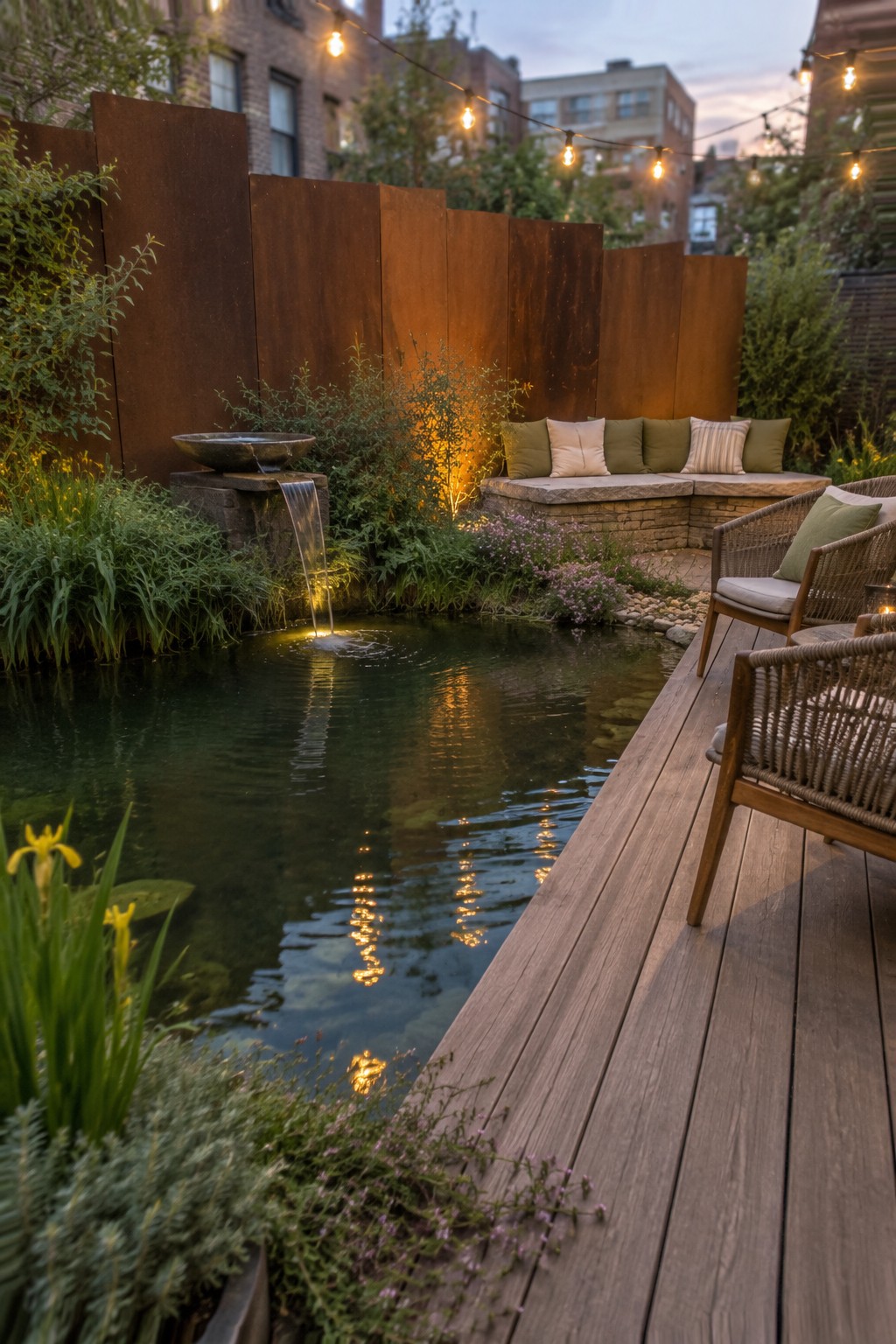
A small seating area beside a swimming pond makes it easier to enjoy the water without giving up a place to relax. Here, a curved built-in bench sits near the pond’s planted edge, while the deck offers room for a few chairs.
For a similar setup, place seating where it has a clear view of the water but leaves plenty of shoreline open for plants. This works well in a compact yard, though the path between the deck and the pond should stay easy to walk.
Add a Boardwalk Along the Pond Edge
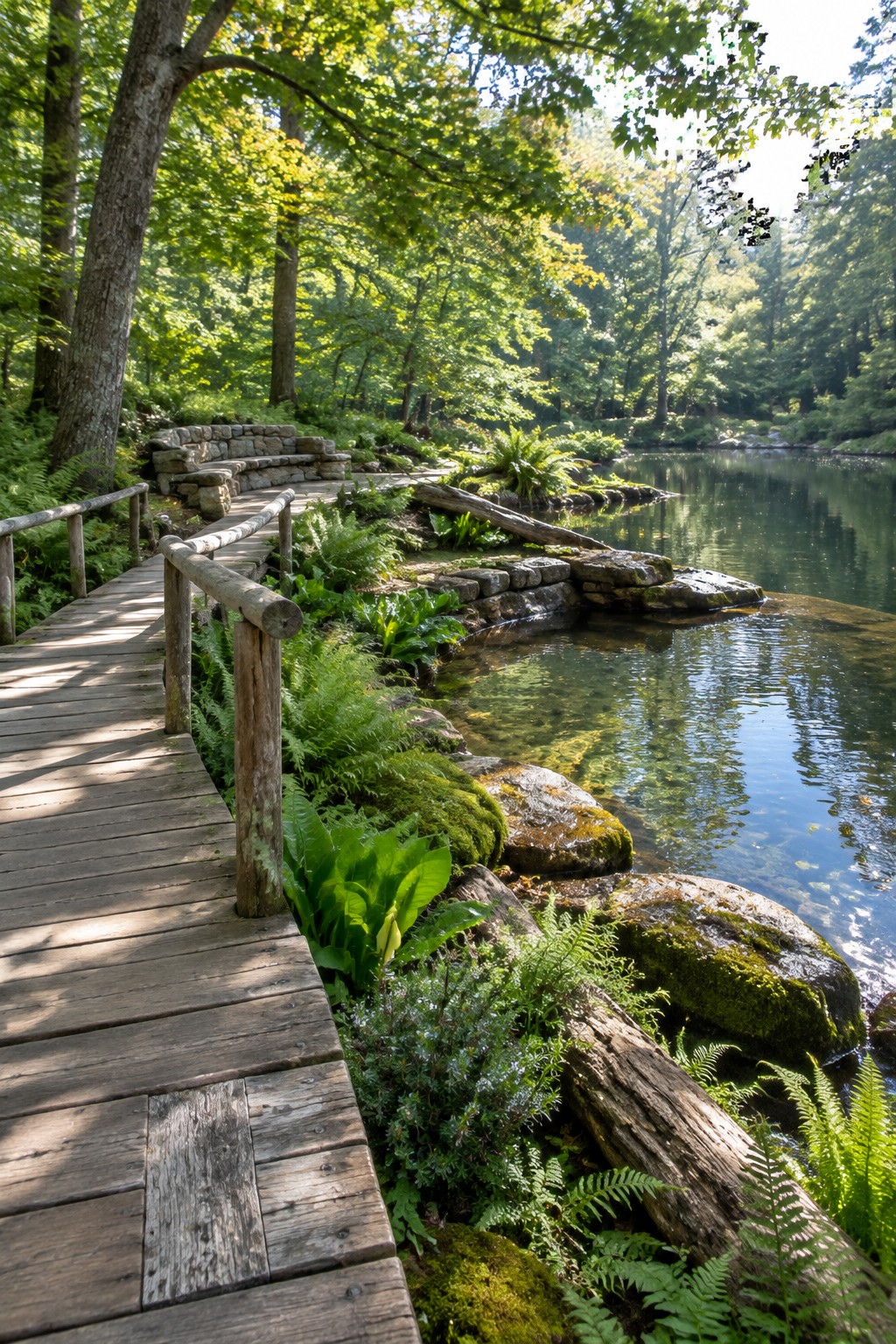
A narrow boardwalk makes it easier to enjoy a natural swimming pond without paving over the shoreline. The raised wood path keeps feet out of the planted edge, while a simple handrail helps make the route safer.
This approach works well when you want a clear way to reach the water but still leave room for shoreline plants and rocks. Use durable, water-resistant lumber, and keep the path only as wide as needed so it does not take over the pond’s natural feel.
Build a Pebble Shoreline Around the Pond
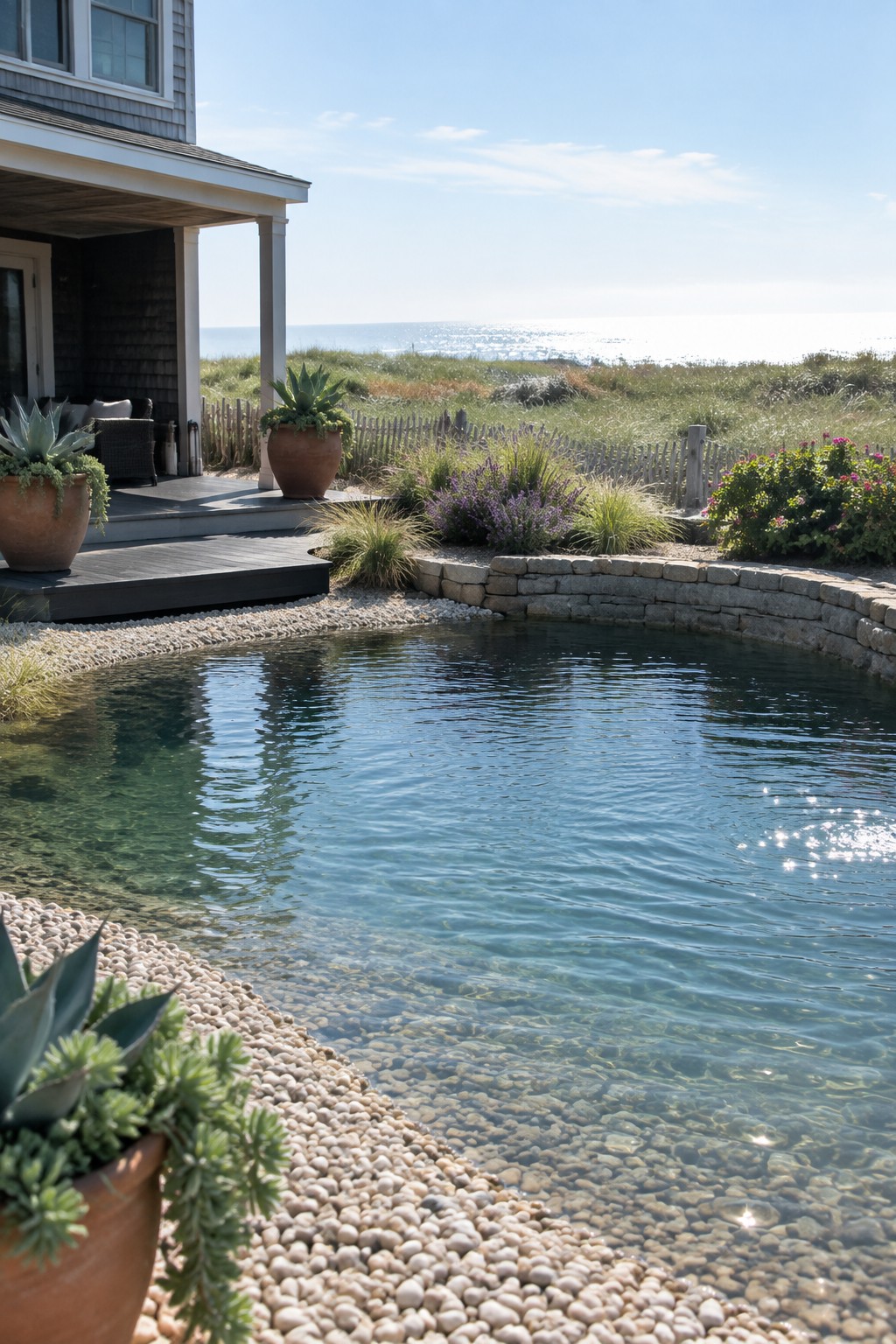
A pebble edge gives a natural swimming pond a softer border than a solid paved surround. The small stones also let the water’s outline follow a gentle curve, which suits a relaxed garden setting.
Use rounded stones in a consistent size so the edge feels comfortable underfoot and is less likely to shift into the water. A low stone retaining edge can help keep the surrounding planting in place, but leave plenty of room for plants to grow along the shore.
Add a Garden Path Along the Pond
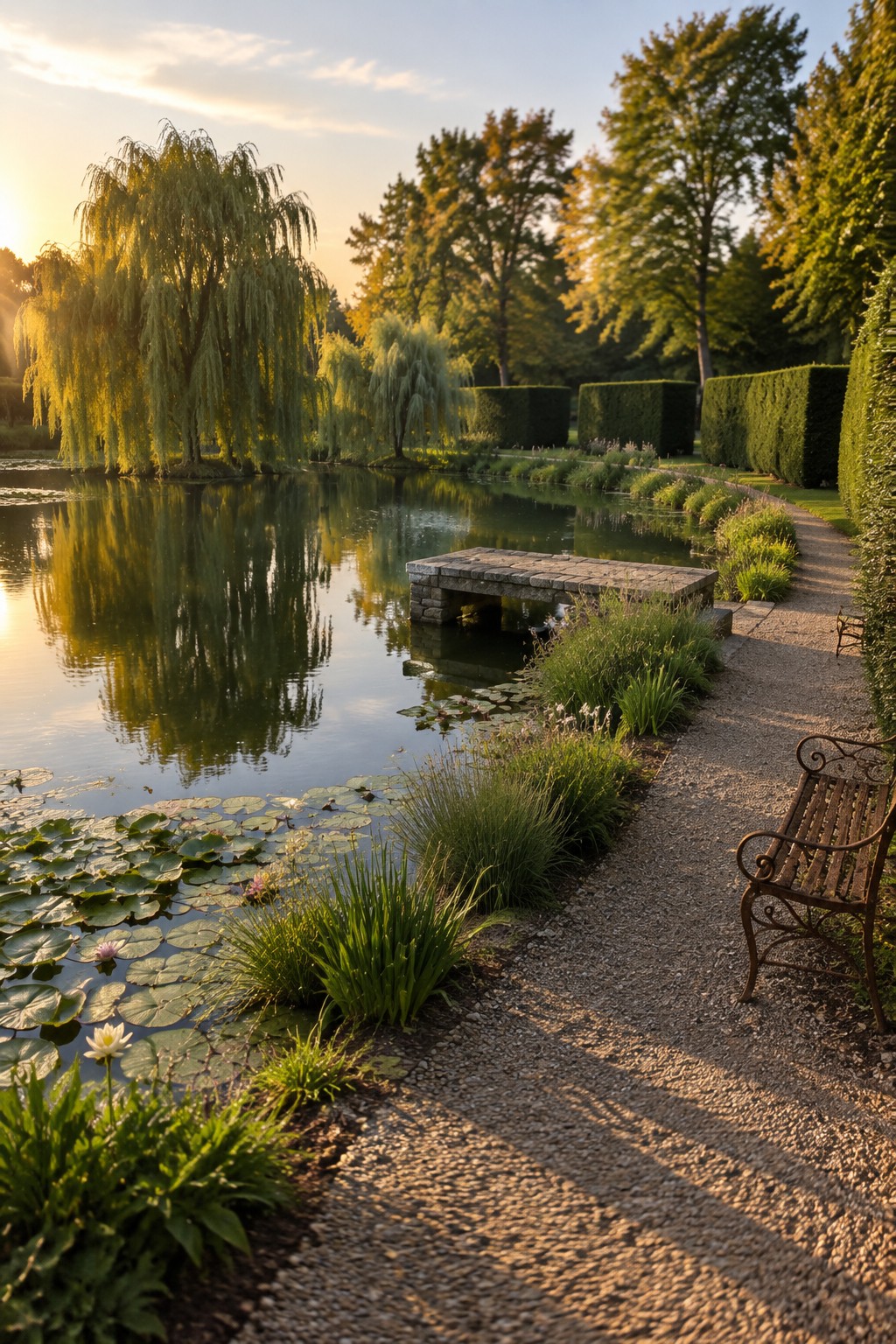
A path beside a swimming pond makes it easier to move around the water without disturbing the planted shoreline. A simple gravel surface also suits an informal garden better than a wide expanse of paving.
Keep the path narrow and let it curve gently along the pond’s edge. Leave enough room between the gravel and the water for grasses or other low plants, and choose a firm surface that stays comfortable underfoot when damp.
Add a Shaded Lounge Beside the Pond
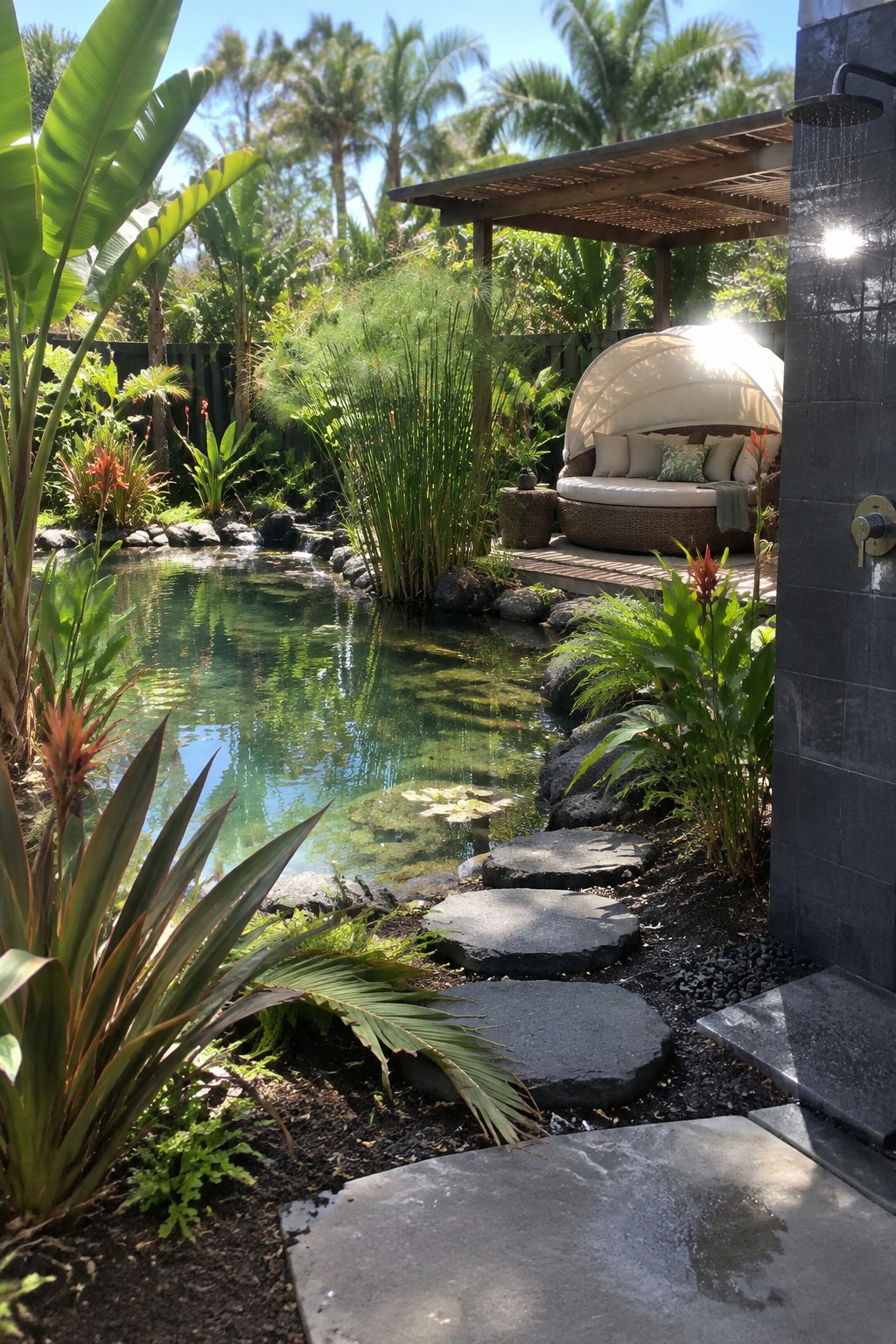
A shaded seating area gives you a comfortable place to enjoy a natural swimming pond without needing to leave the garden. A simple canopy over a cushioned daybed makes the spot useful during the warmest part of the day.
Place seating on a small deck near the water, leaving enough room for the pond’s planted edge to grow naturally. Choose outdoor fabrics and furniture that can handle damp conditions, and keep the path to the water clear.
Add a Small Deck Beside the Pond
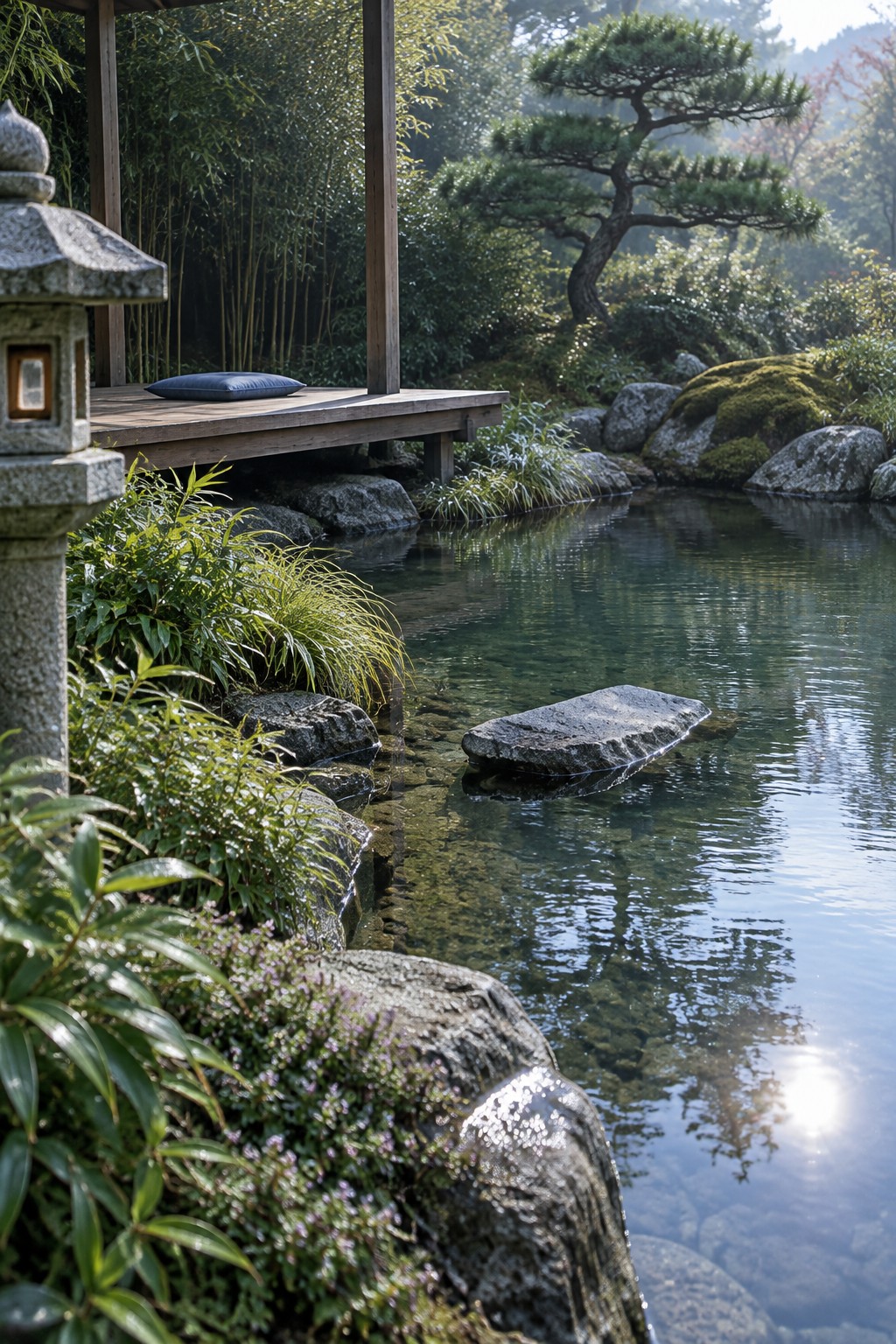
A small deck can make a natural swimming pond easier to enjoy without taking over the planted shoreline. Here, the simple wooden platform offers a dry place to sit right beside the water.
This works well where the bank is uneven or planted densely, since the deck gives you a clear spot to pause without paving the edge. Keep it modest in size and use durable, water-resistant materials.
Add a Fire Pit Near the Pond
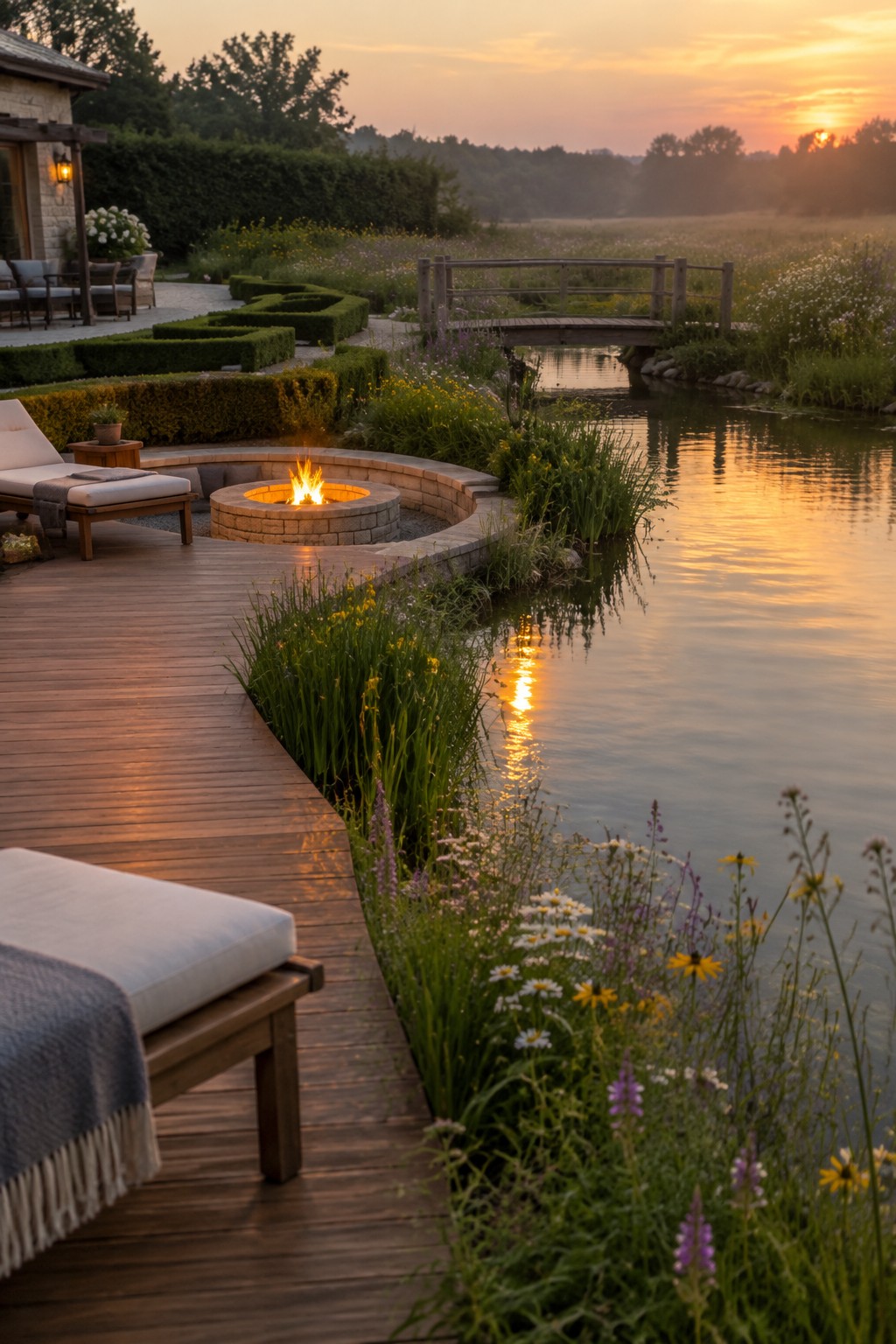
A fire pit gives a pondside seating area a clear place to gather after a swim or at the end of the day. Keep it close enough to the water to enjoy the view, but leave a comfortable path between the seating and the planted shoreline.
A built-in circular pit works well beside a deck or patio, especially where there is room for chairs without narrowing the walkway. Use materials suited to outdoor conditions, and check local fire rules before building.
Add Stone Steps Along the Pond
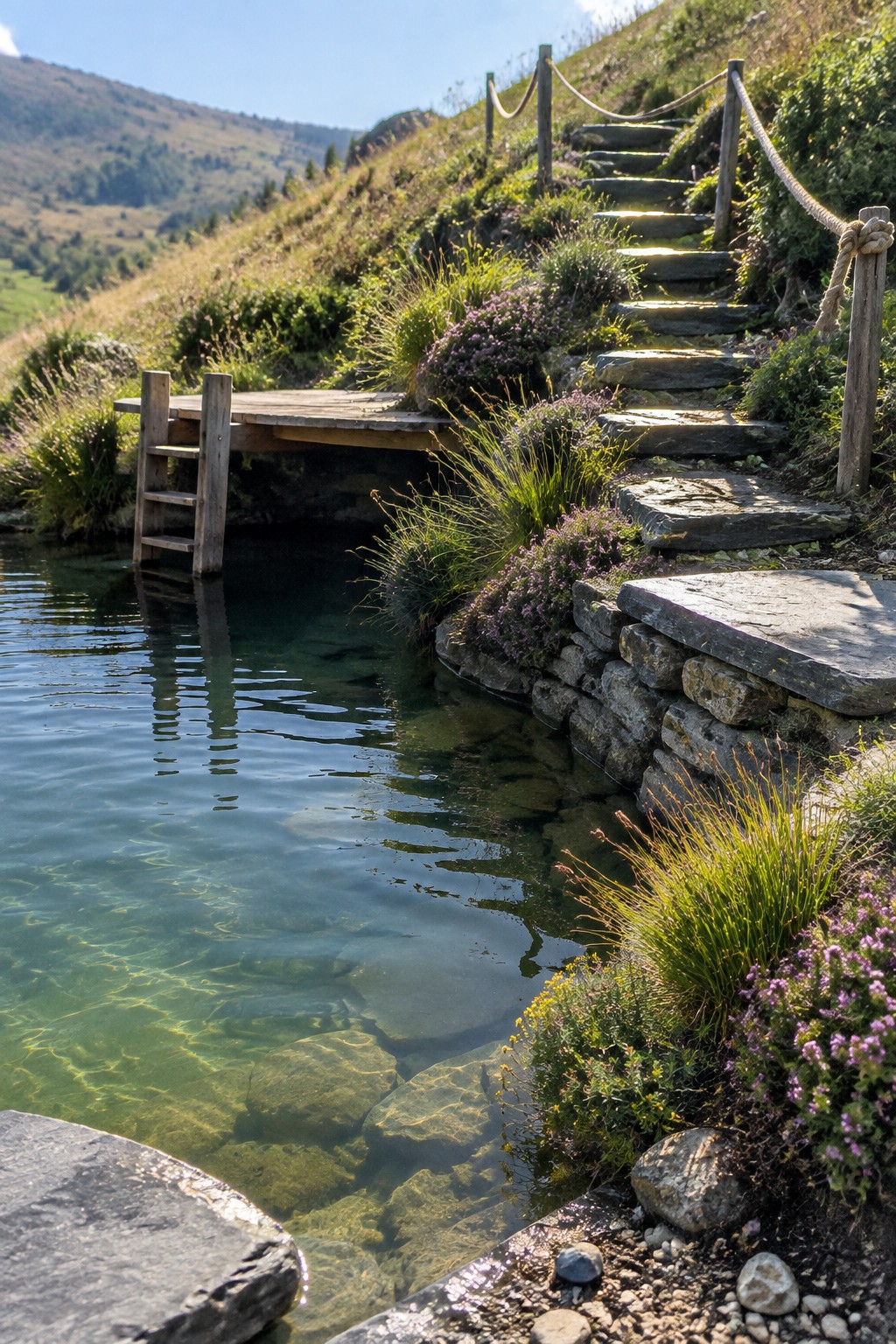
Stone steps make a sloped pondside easier to use without taking away its natural feel. Set into the bank, they provide a clear route down to the water while letting planted areas remain part of the shoreline.
This approach suits a hillside garden where a level path would take more work. Use broad, stable stones and keep the steps at a comfortable height, with a sturdy rope handrail if the route is steep.
Add a Shade Structure Beside the Pond
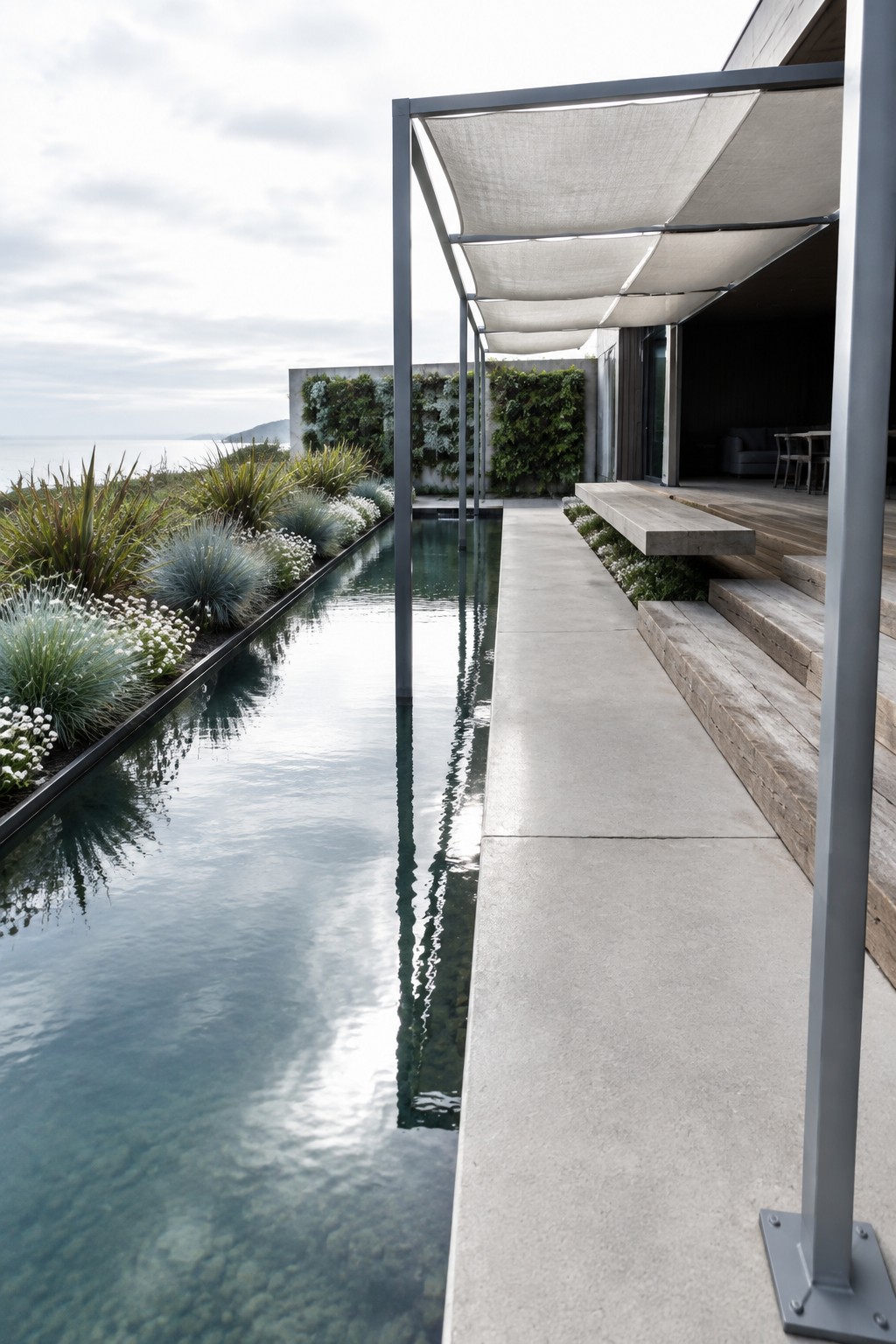
A simple overhead shade structure can make the pond edge more comfortable without closing it off from the garden. Here, fabric panels stretch across a metal frame, providing shade along the narrow walkway.
This works well beside a pool or pond where people want a cool place to sit or walk during sunny hours. Choose outdoor-rated fabric and leave enough open space around the frame so the planted shoreline still feels connected to the water.
Use Flower Beds To Shape the Pond Edge
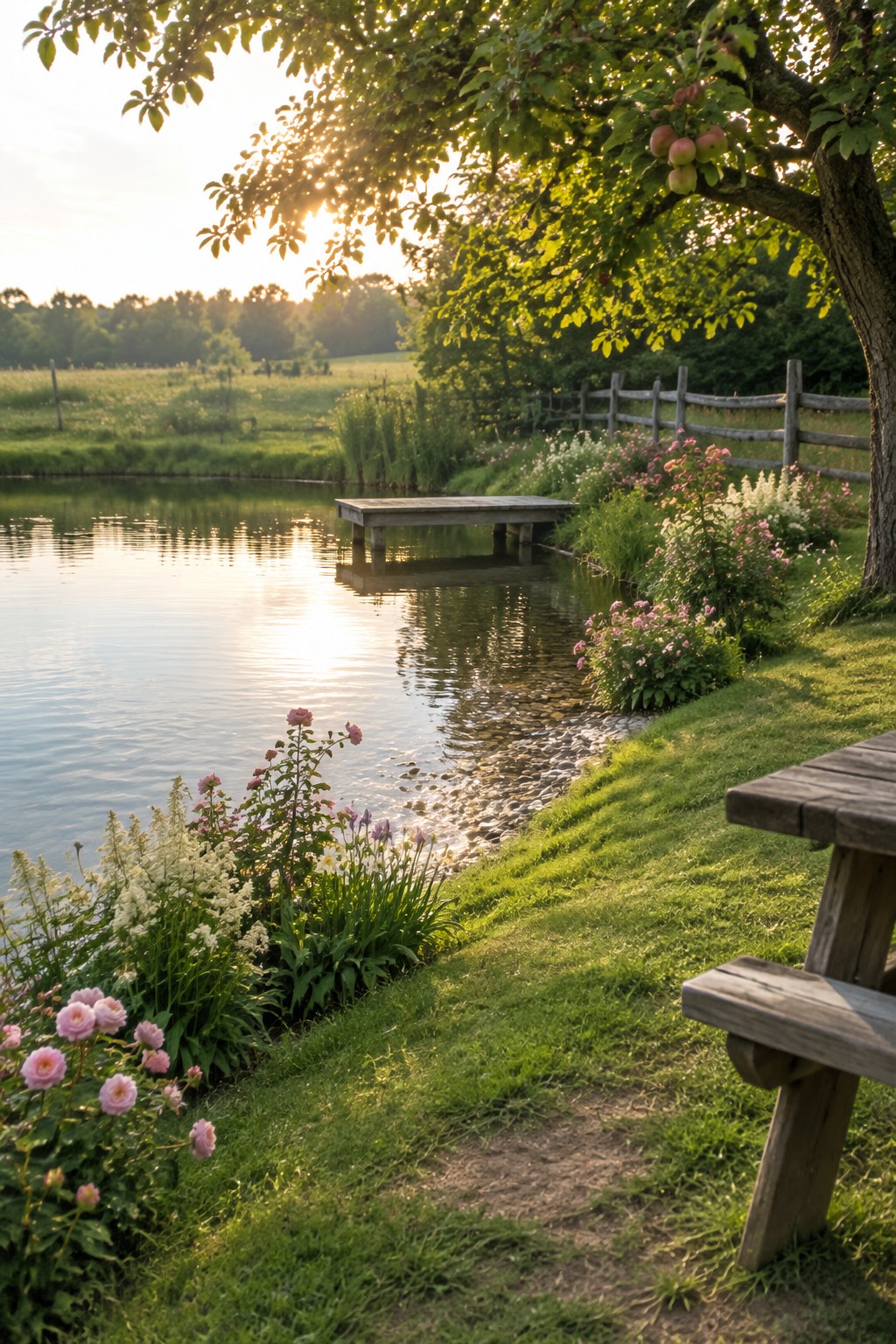
Planted borders help a natural swimming pond feel like part of the garden rather than a separate feature. Flowers and grasses along the shore make the edge less formal and give the water a softer outline.
Use a mix of plants suited to damp soil near the water, with taller varieties set farther back so they do not block access. Leave a few clear spots along the bank for entering the pond or sitting nearby.
Add Concrete Platforms Along the Pond
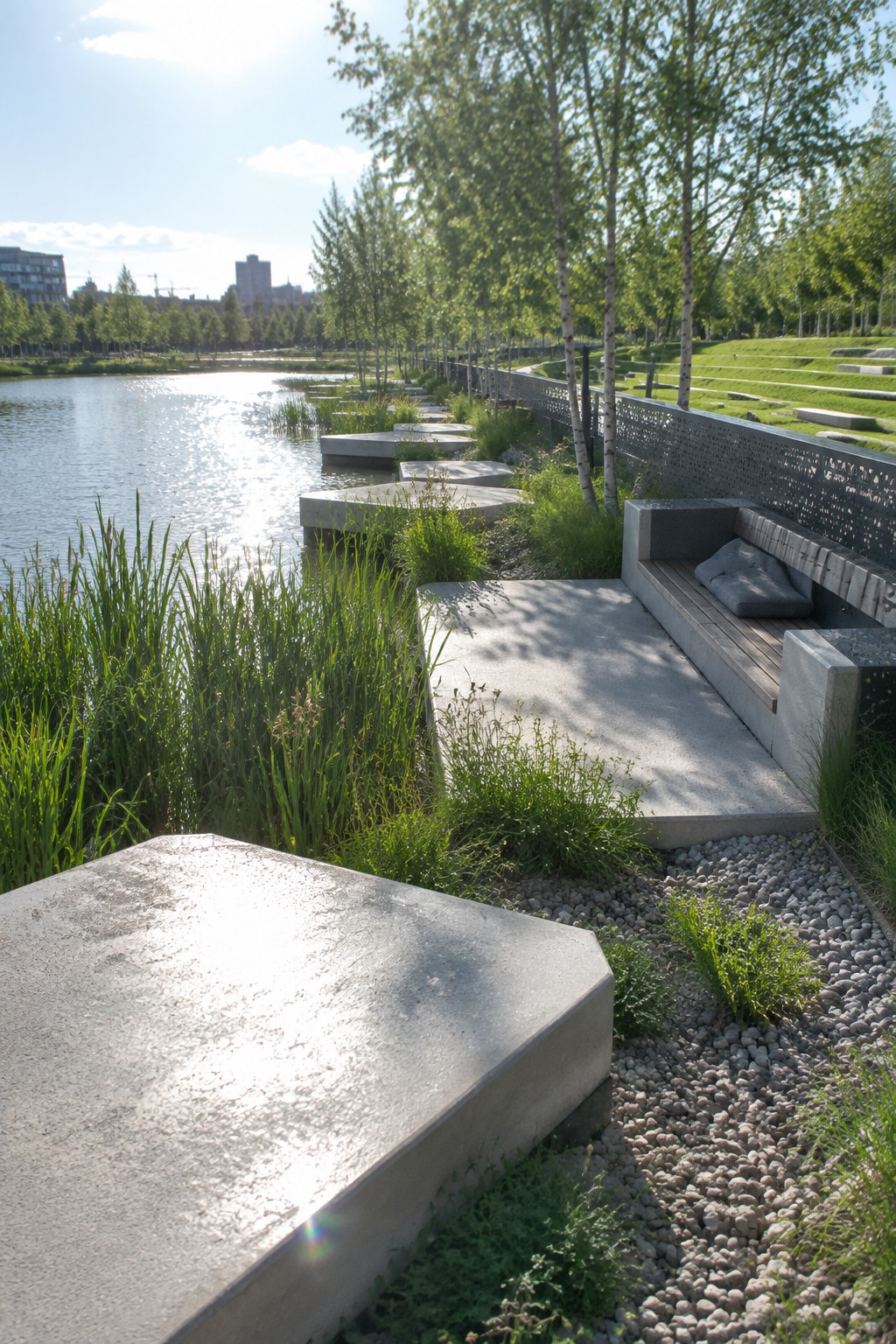
Concrete platforms create small places to pause along a planted pond edge without paving over the whole shoreline. Their simple shape gives visitors a firm spot to sit or step closer to the water, while reeds and other plants can still grow between them.
Use a few platforms rather than a continuous strip, and leave enough space for planting to soften the edges. This approach works well on a broad pond where people can reach the water from several points. Keep the surfaces slip-resistant, especially where splashes may reach them.
Add a Sheltered Bench Beside the Pond
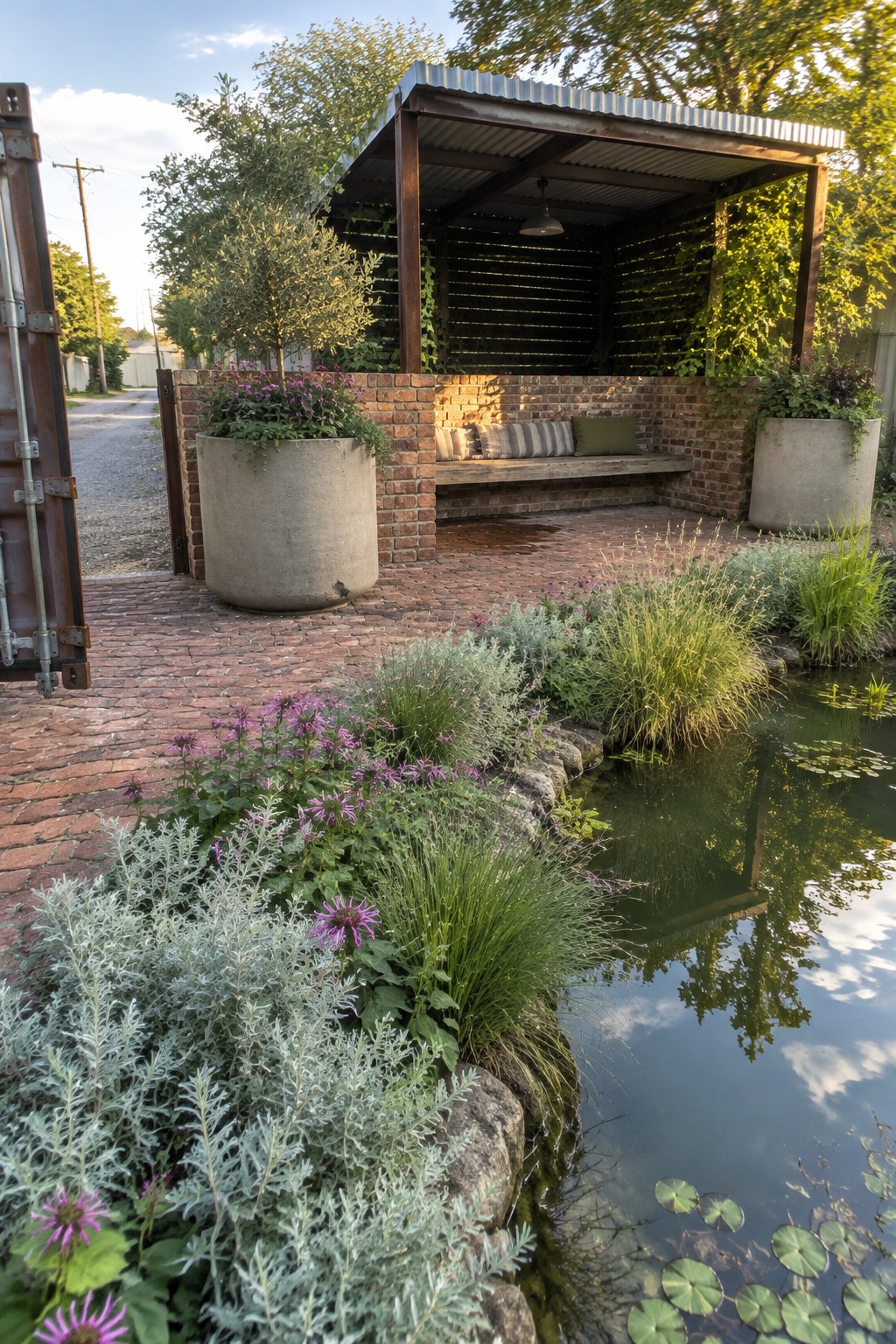
A covered bench makes a pondside garden useful even when you want a break from the sun. A simple roof and built-in seat give the area a clear place to pause without taking up much room.
This setup works well beside a small natural pond, especially where there is space for a path and a sturdy base. Keep the shelter open to the water, and choose materials that can handle damp conditions.
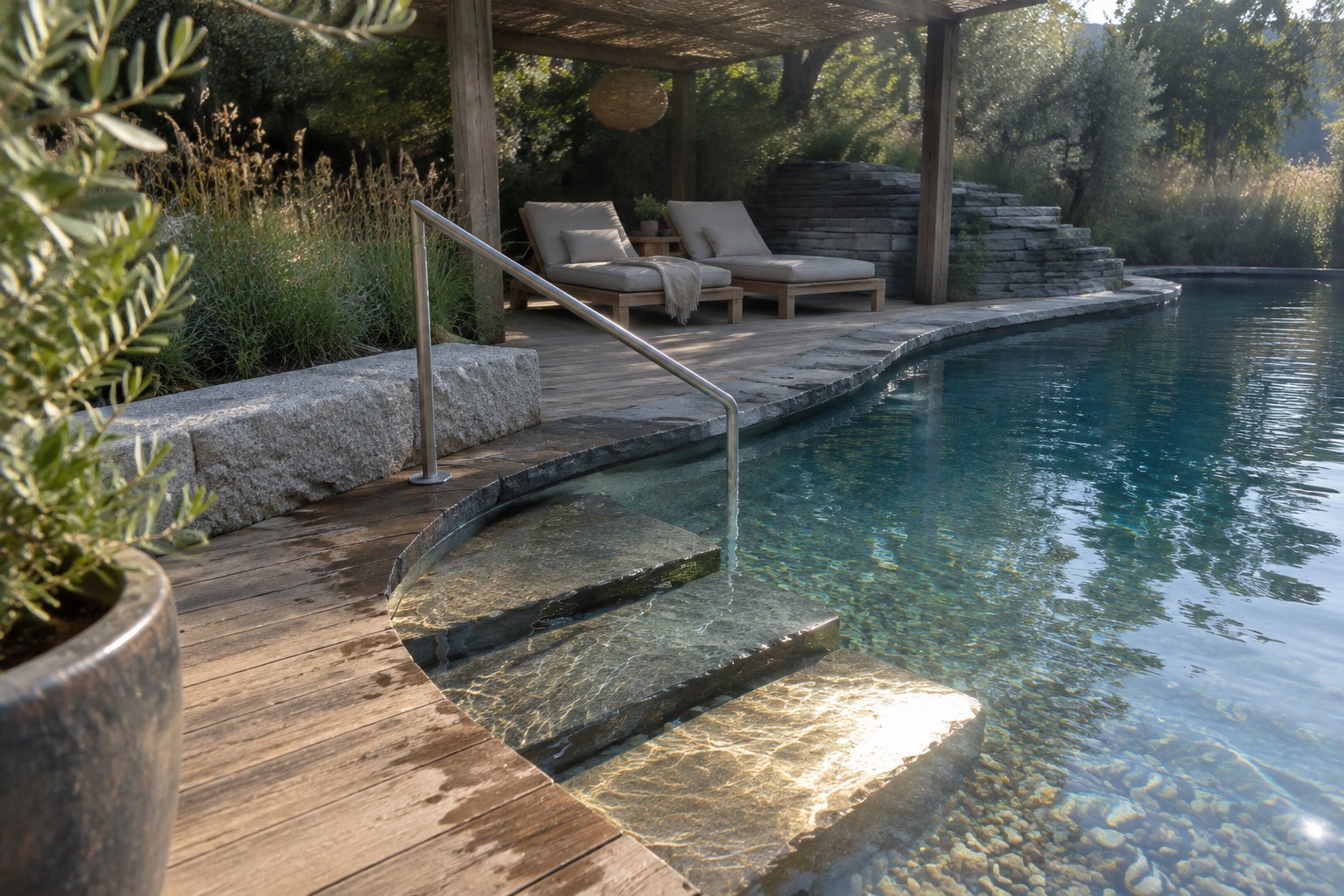
Add Stone Steps Into the Pond
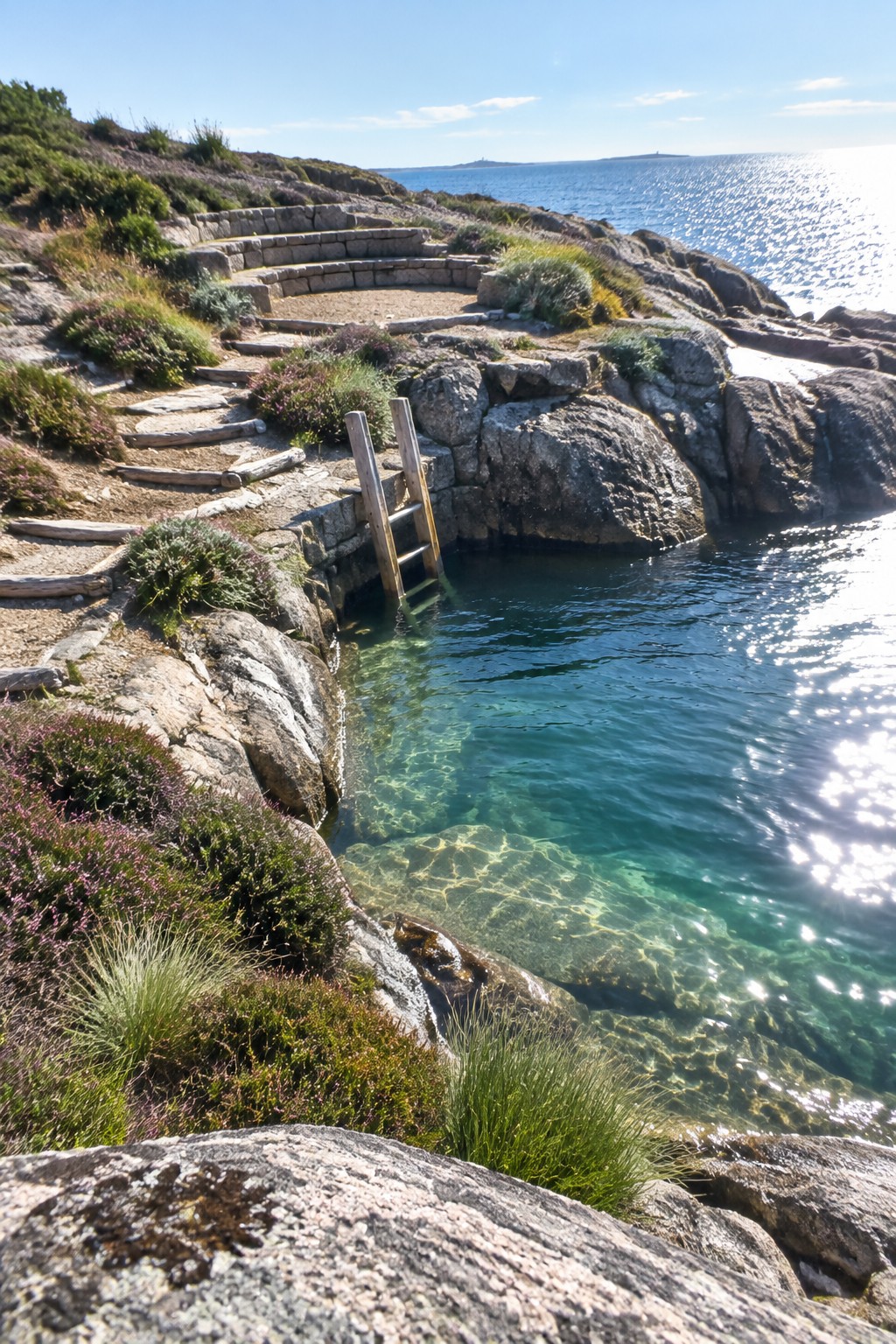
Stone steps can make a natural swimming pond easier to reach without hiding its rocky shoreline. Here, broad steps follow the slope down to a simple wooden ladder, so swimmers have more than one way to enter the water.
This approach works well on a sloped, rocky site where a level path to the water would be difficult. Use rough, stable stones and keep the steps wide enough for safe footing, especially where they meet the water.
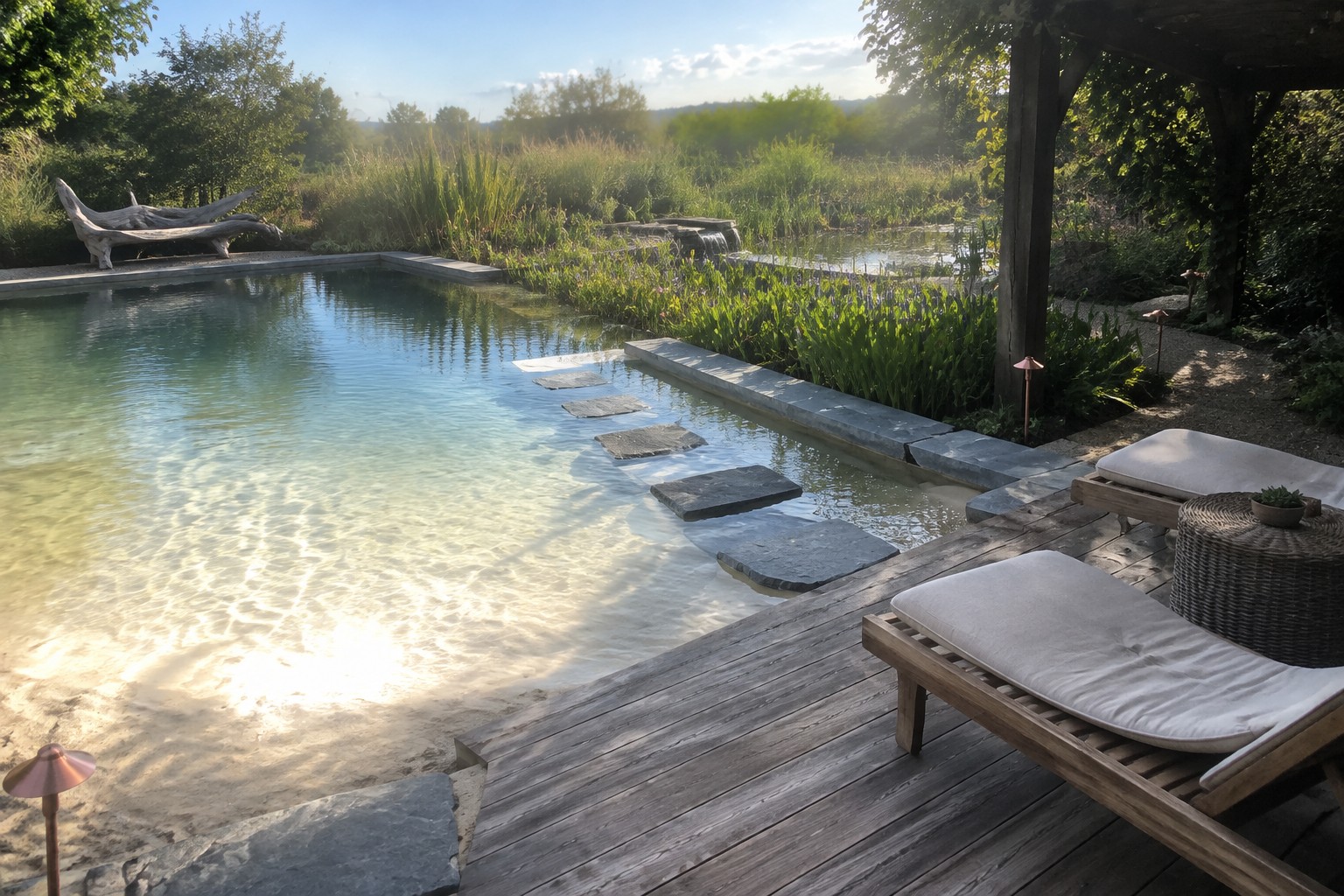
Use Stone Slabs As Pondside Stepping Stones
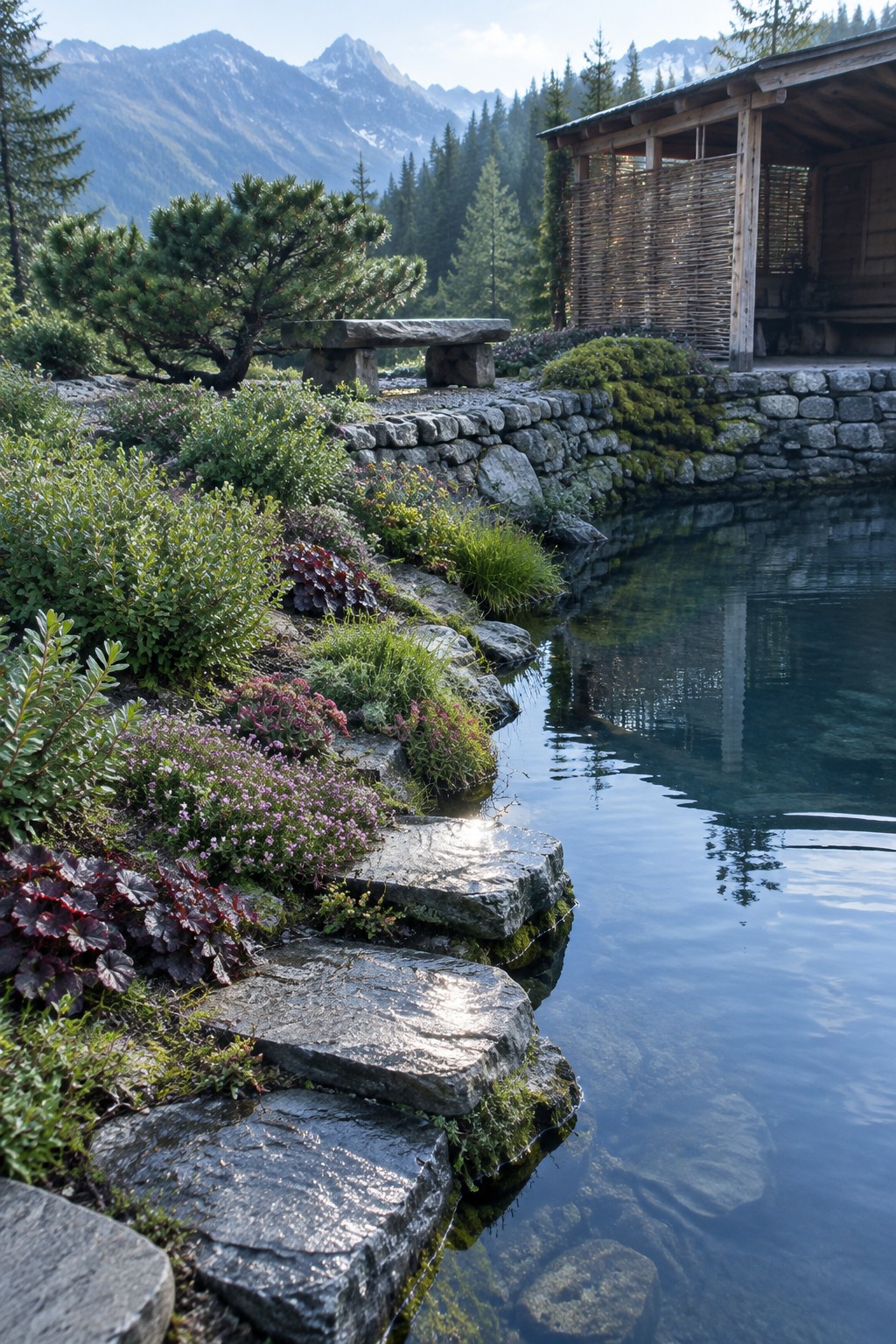
Large, flat stones make a practical way to reach the water while keeping a planted shoreline intact. Set them close together along the edge, and the path feels like part of the garden rather than a paved route.
This works well in a natural swimming pond where plants and uneven stone already shape the banks. Choose slabs with a rough surface for grip, and make sure each one sits firmly so it does not shift when wet.
Plant Grasses Along the Pond Edge
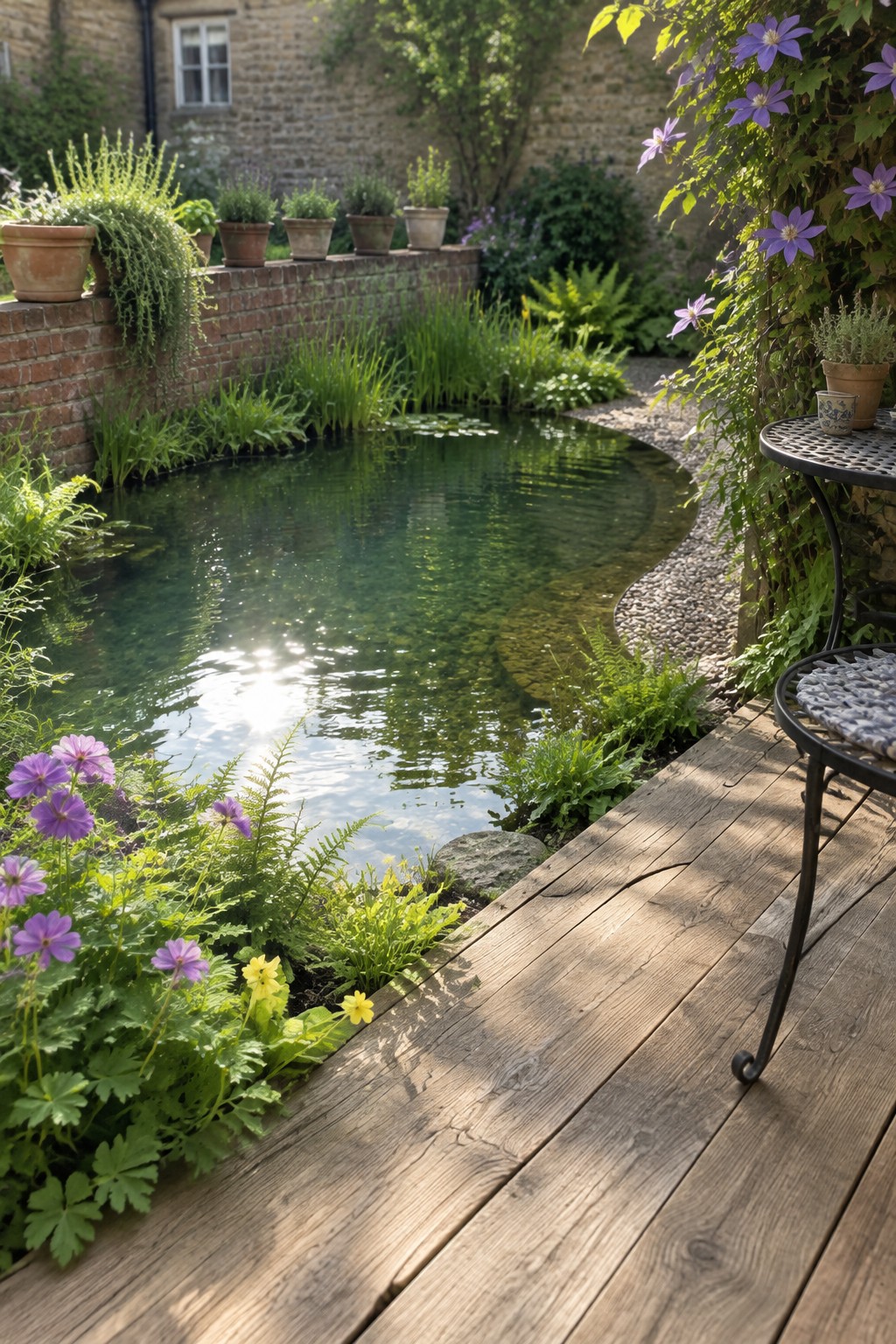
Grasses planted at the water’s edge give a swimming pond a natural outline and help it feel connected to the garden. Their upright leaves also add a little movement without hiding the water.
Use clumps of pond-friendly grasses along parts of the shoreline, leaving open spots for easy entry and a clear view across the pond. They work especially well beside a low brick wall or gravel bank, but choose varieties suited to your climate and trim them back as needed.
Make the Patio Part of the Pondside Garden
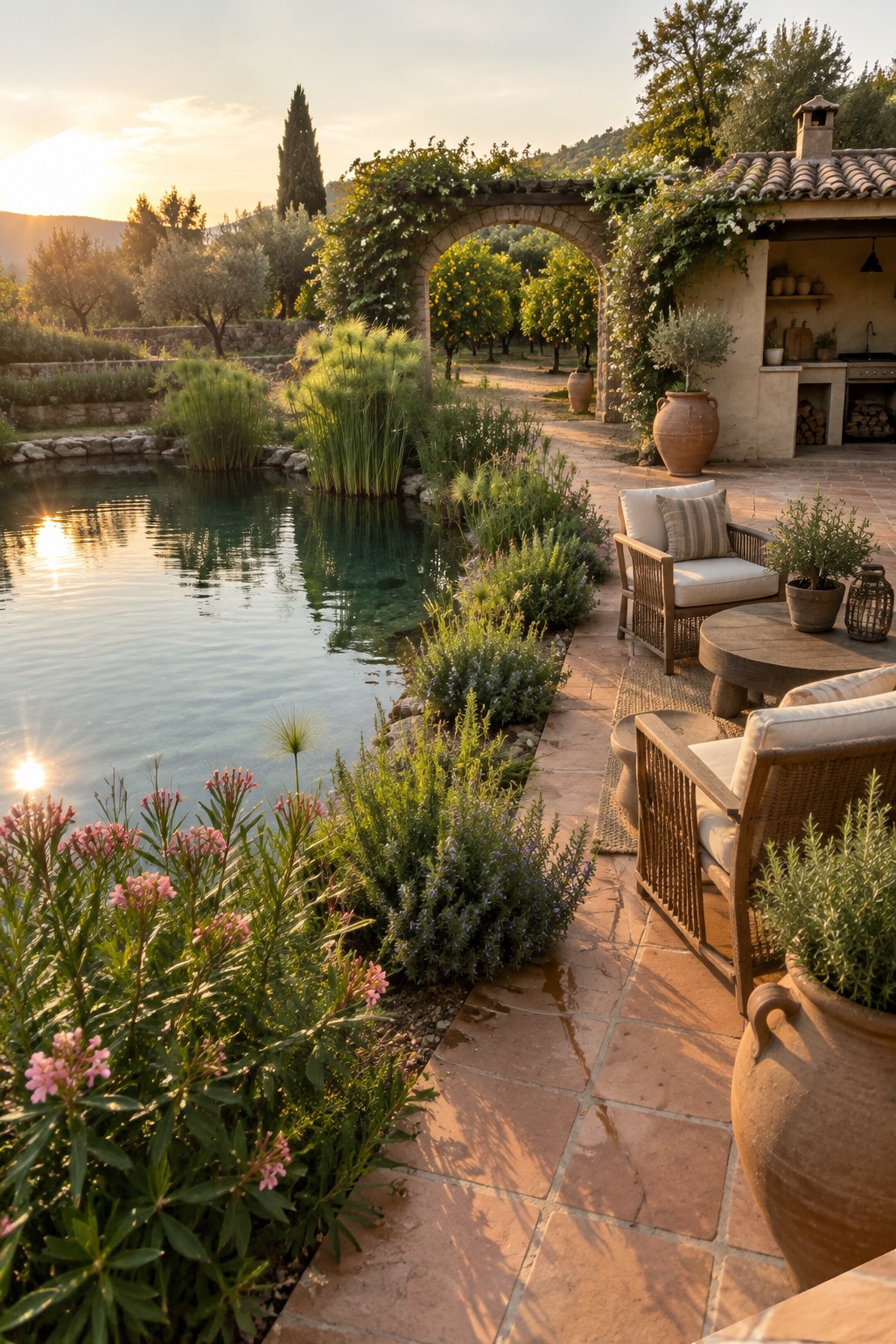
A patio can sit close to a natural swimming pond without taking over the garden. Here, the stone paving follows the water’s edge, while planted borders keep the seating area connected to the shoreline.
For a similar layout, let the patio curve or narrow along the pond rather than forming a wide, hard boundary. Leave enough room to move chairs and walk safely, and use plants suited to damp conditions near the water.
Use Built-In Seating Along the Pond
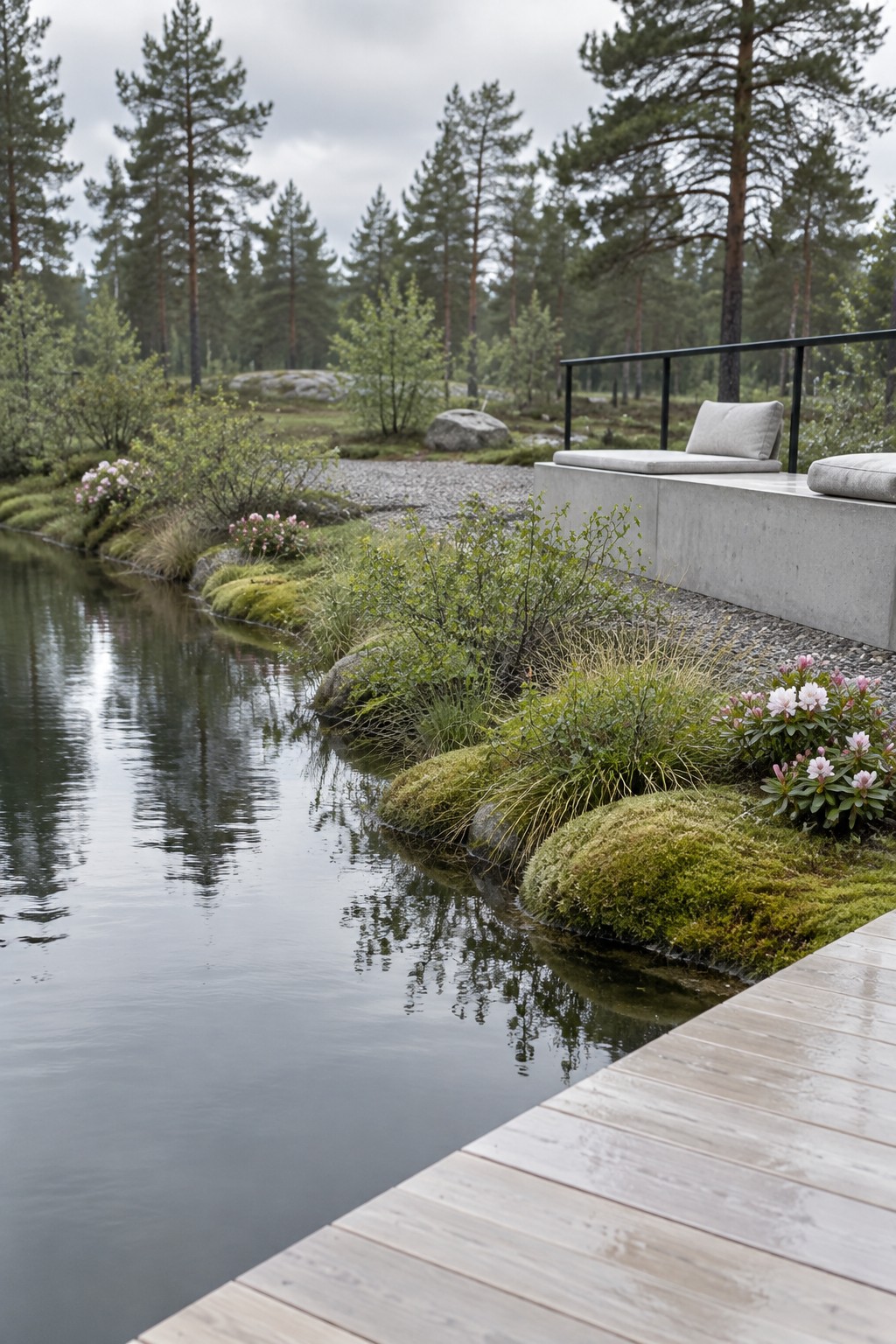
A built-in bench can make a pondside seating area feel like part of the garden rather than furniture set beside it. Here, the simple concrete seat gives people a place to pause while keeping the planted shoreline in view.
This idea works well on a terrace or deck near the water, especially when you want seating that stays in place. Leave enough room to move around it, and choose cushions that can be brought inside when the weather turns.
Let Plants Shape the Pond Edge
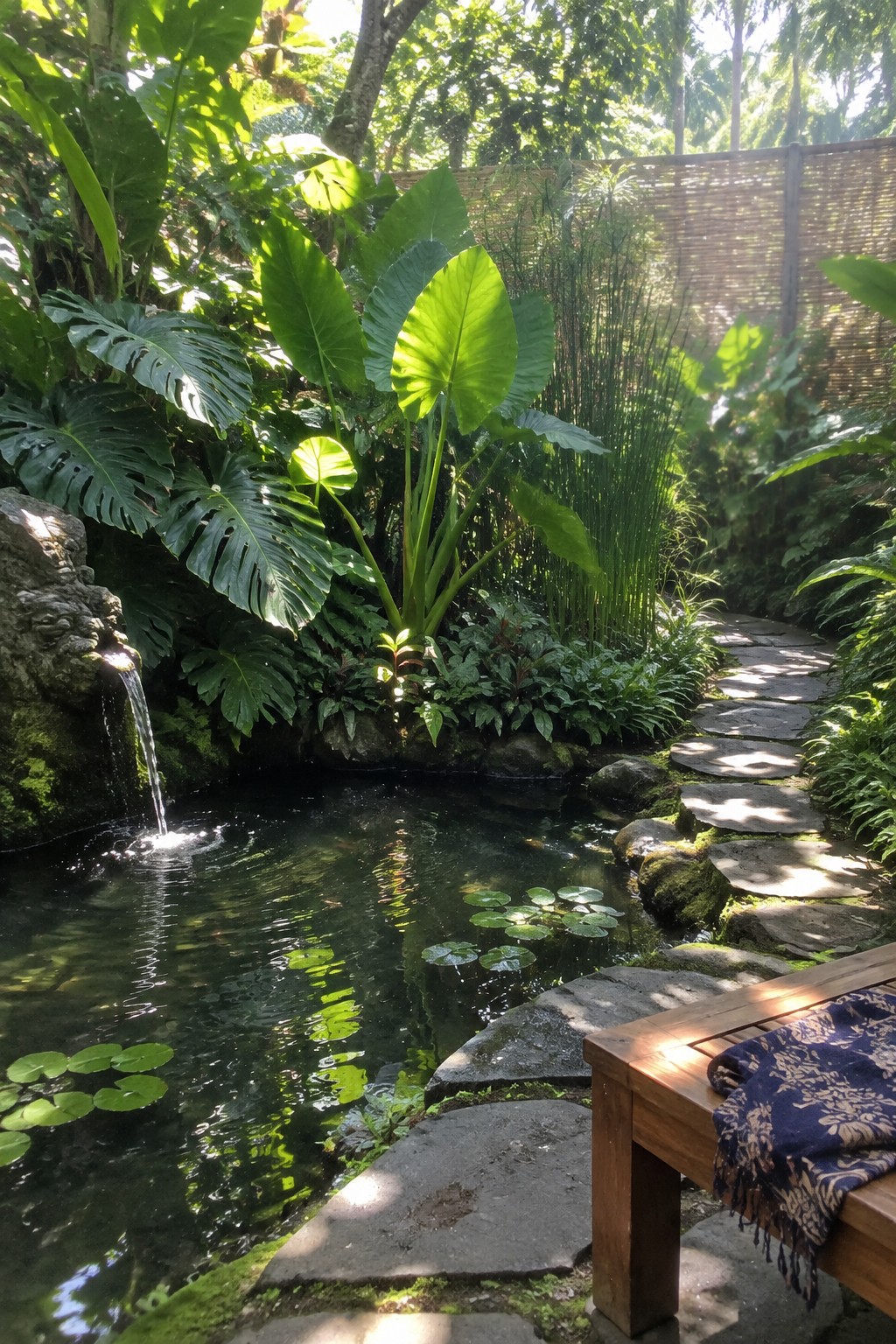
A natural pond feels more at home in the garden when plants grow right up to the water. Large leafy plants and smaller groundcover soften the shoreline, so the pond feels like part of the planting rather than a separate feature.
Use a mix of leaf sizes around the edge, but leave enough open space to reach the water and keep it clear. This approach works especially well in a leafy garden, where a narrow stone path can provide access without taking over the planting.
Add a Pergola for Pondside Seating
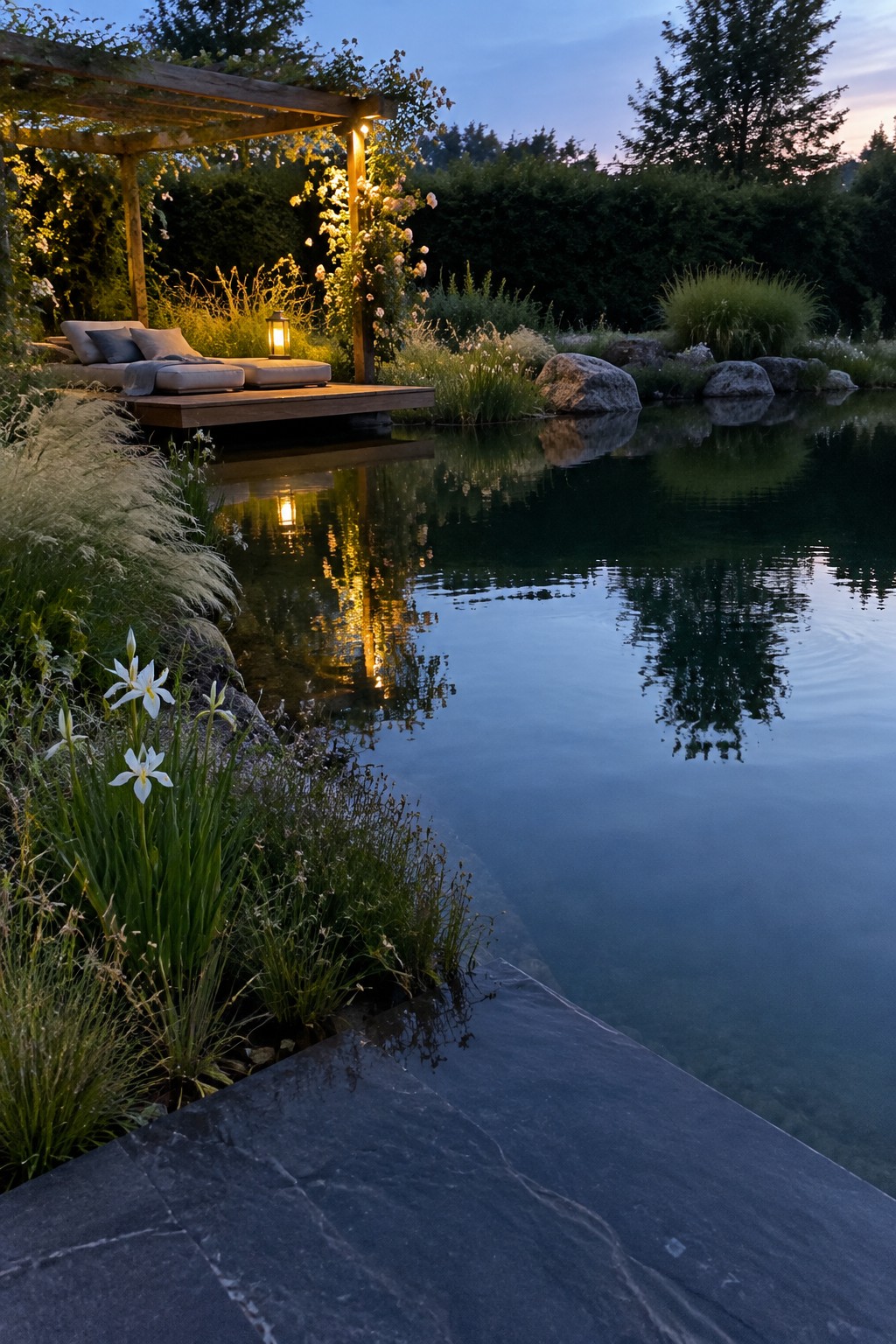
A pergola can make a small seating spot beside a swimming pond feel like a place to pause, without separating it from the garden. Here, the open timber structure sits over a simple deck, leaving the planted pond edge in view.
This works well where you want a little definition around outdoor seating but still want an open feel. Keep the structure modest, and choose weather-resistant wood; climbing plants can add cover over time, but they may need regular trimming.
Frequently Asked Questions
Q: Will plants around a swimming pond make the water muddy?
A: They shouldn’t if you give them a defined planting shelf and keep loose soil out of the swimming area. A gravel edge or stone border can help hold the shoreline in place while still letting plants soften the pond’s edge.
Q: How much space do I need for a planted swimming pond?
A: Plan for room beyond the swimming area, since the plants need their own zone to help keep the water clear. Even a compact pond can work, but a narrow planting shelf is less useful than a separate, generously sized regeneration area.
Q: Can I swim in a natural pond with plants and wildlife?
A: Yes, but expect a more natural feel than you’d get from a conventional pool. Keep the swimming zone clear of dense plants, and remove fallen leaves or other debris before they settle.
Q: Do planted shorelines need a lot of upkeep?
A: They need regular attention, especially while new plants are settling in. Once established, the main jobs are trimming back vigorous growth and clearing out dead leaves.