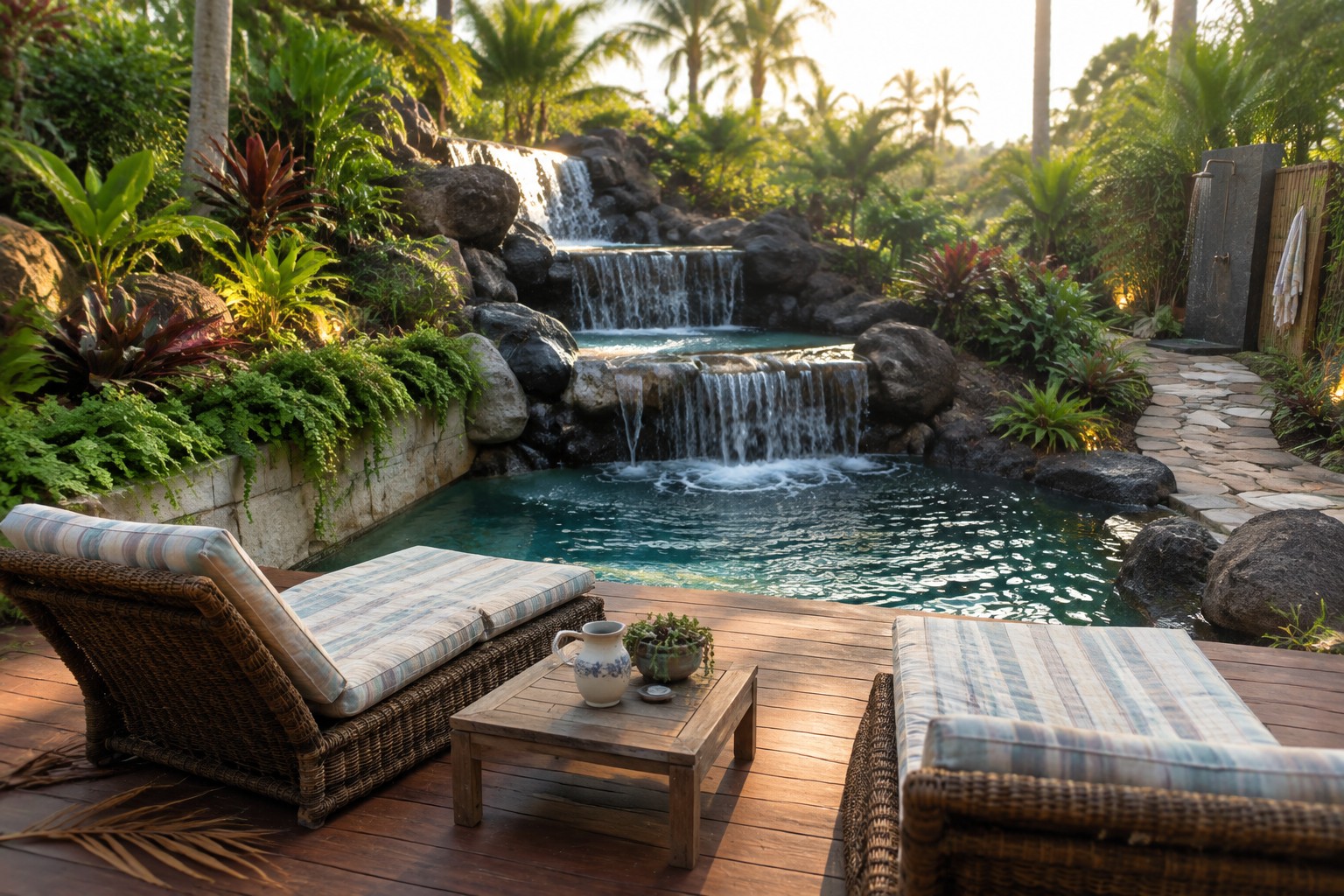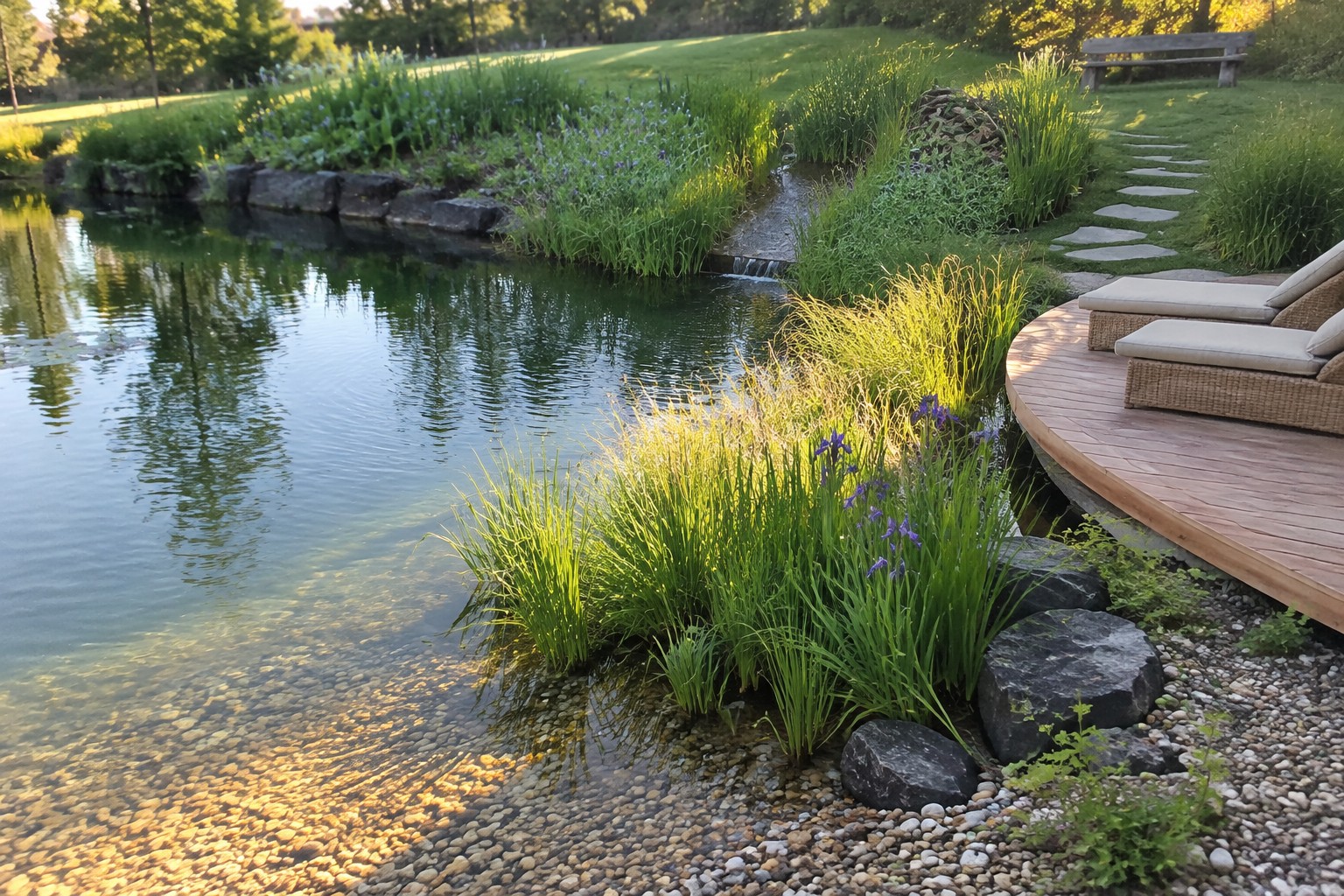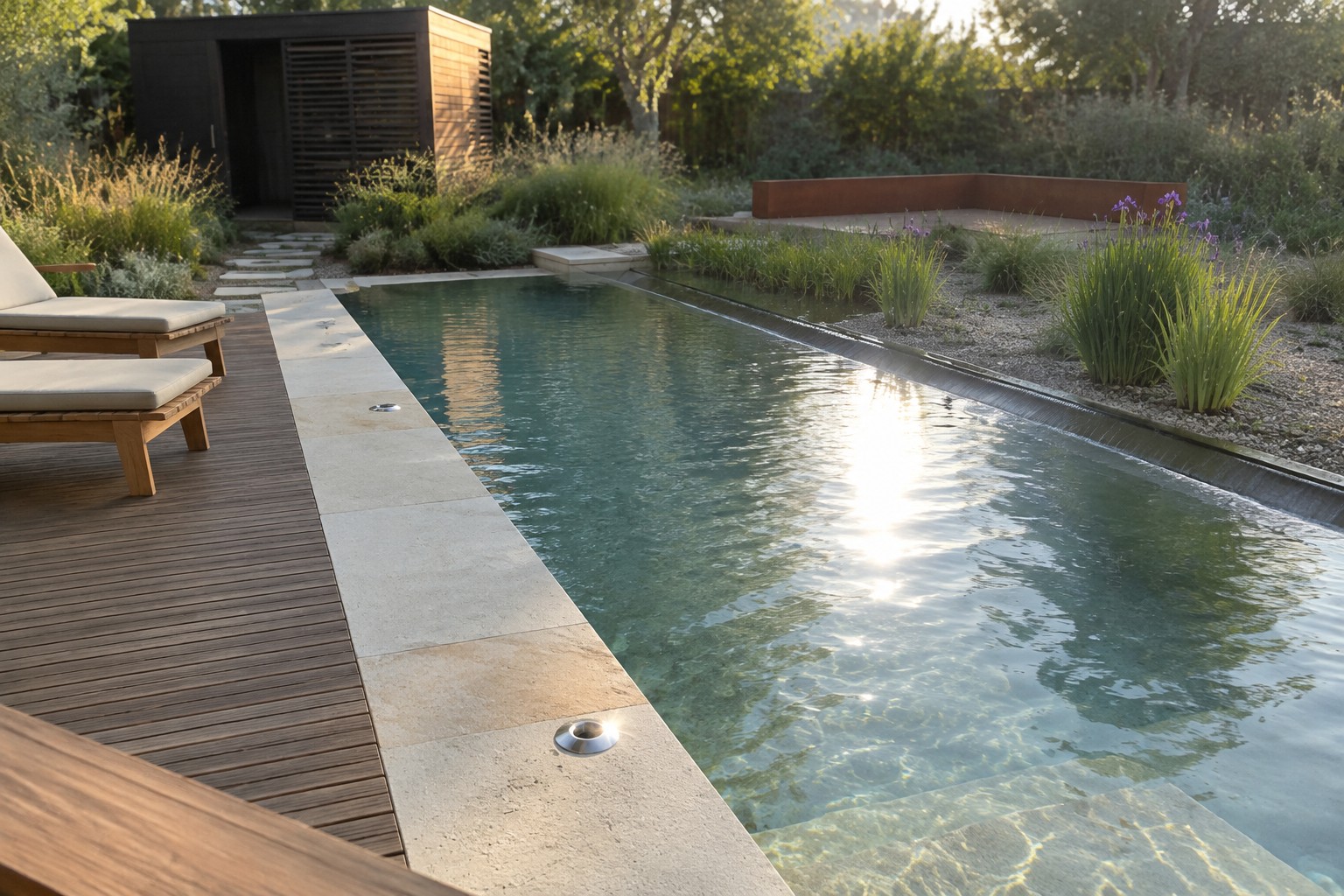
A natural swimming pool can look calm and simple, but its circulation plan has to do a lot of quiet work beneath the surface.
I’ve found that the first thing people notice is often the clear water and the way the pool sits in the garden, while the placement of pumps, skimmers, and planted filters determines how well the space works day to day.
A useful diagram makes those connections easier to understand, especially when you are balancing swimming areas with regeneration zones and paths around the water.
I’d pay close attention to flow direction and access for maintenance before adapting any layout, since small choices can affect both water quality and how the surrounding yard feels.
These diagrams offer practical starting points to save and test against the shape of your site, your planting plans, and the kind of pool you want to use.
Plan a Pool Around Clear Water Circulation
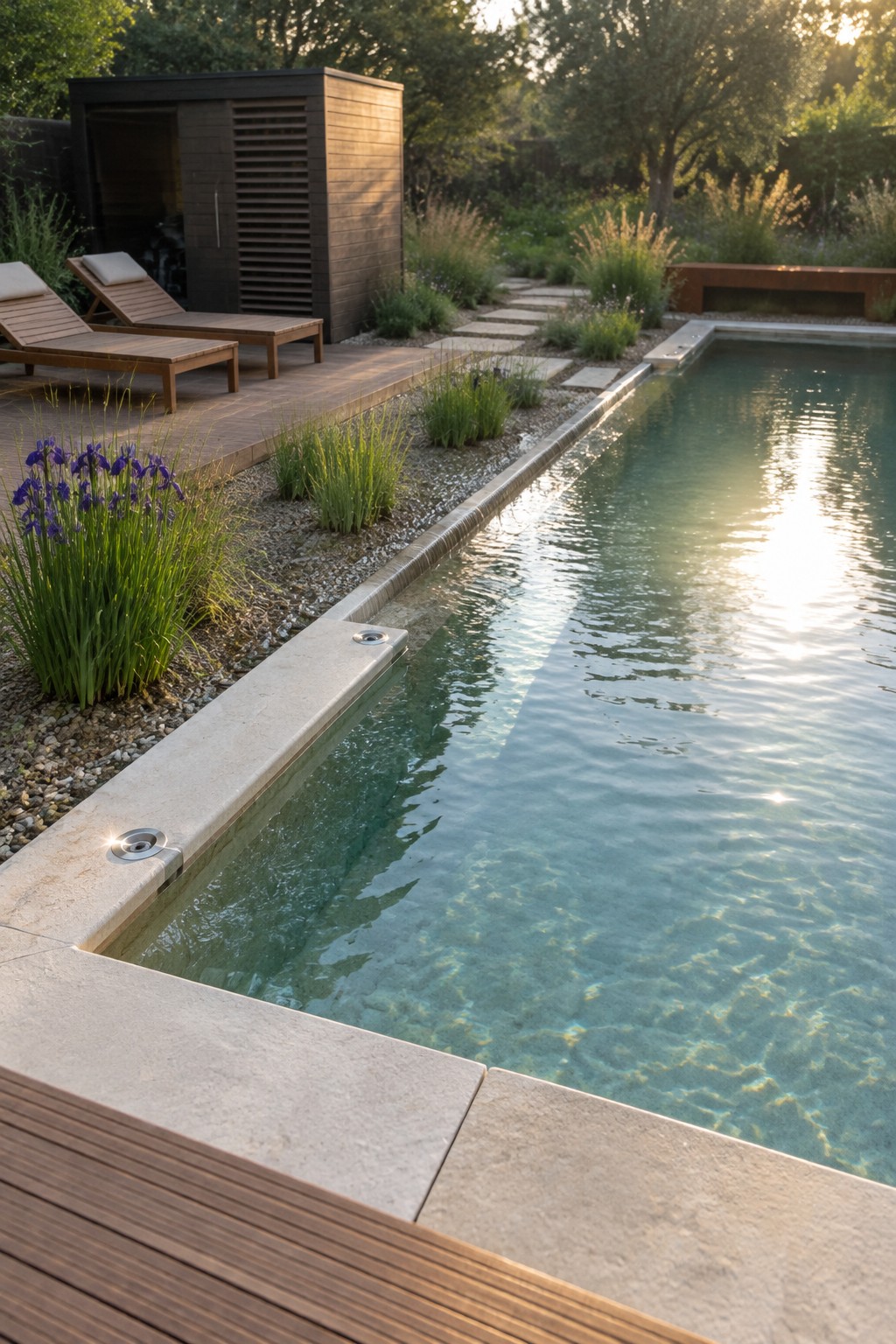
A natural swimming pool works best when the water has a clear route through the swimming area and its treatment zones. Keeping the pool shape simple, as shown here, can make it easier to plan circulation and avoid corners where water sits still.
When laying out a similar pool, mark where water will enter and return before settling on the final shape. Allow room for circulation equipment and keep planting beds from narrowing the flow path. A pool professional can help size the system for the pool’s volume and layout.
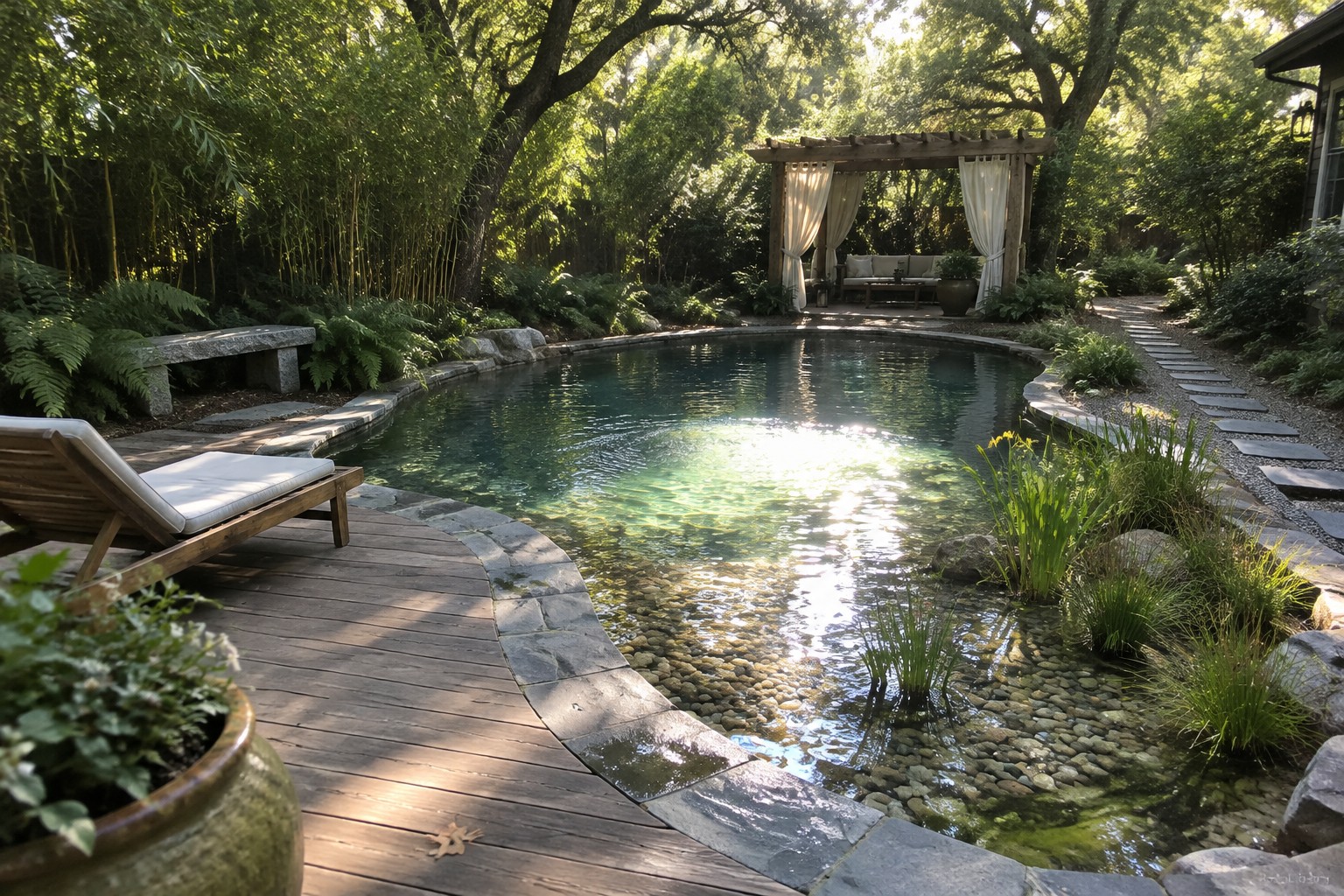
Plan Water Circulation Around the Pool’s Shape
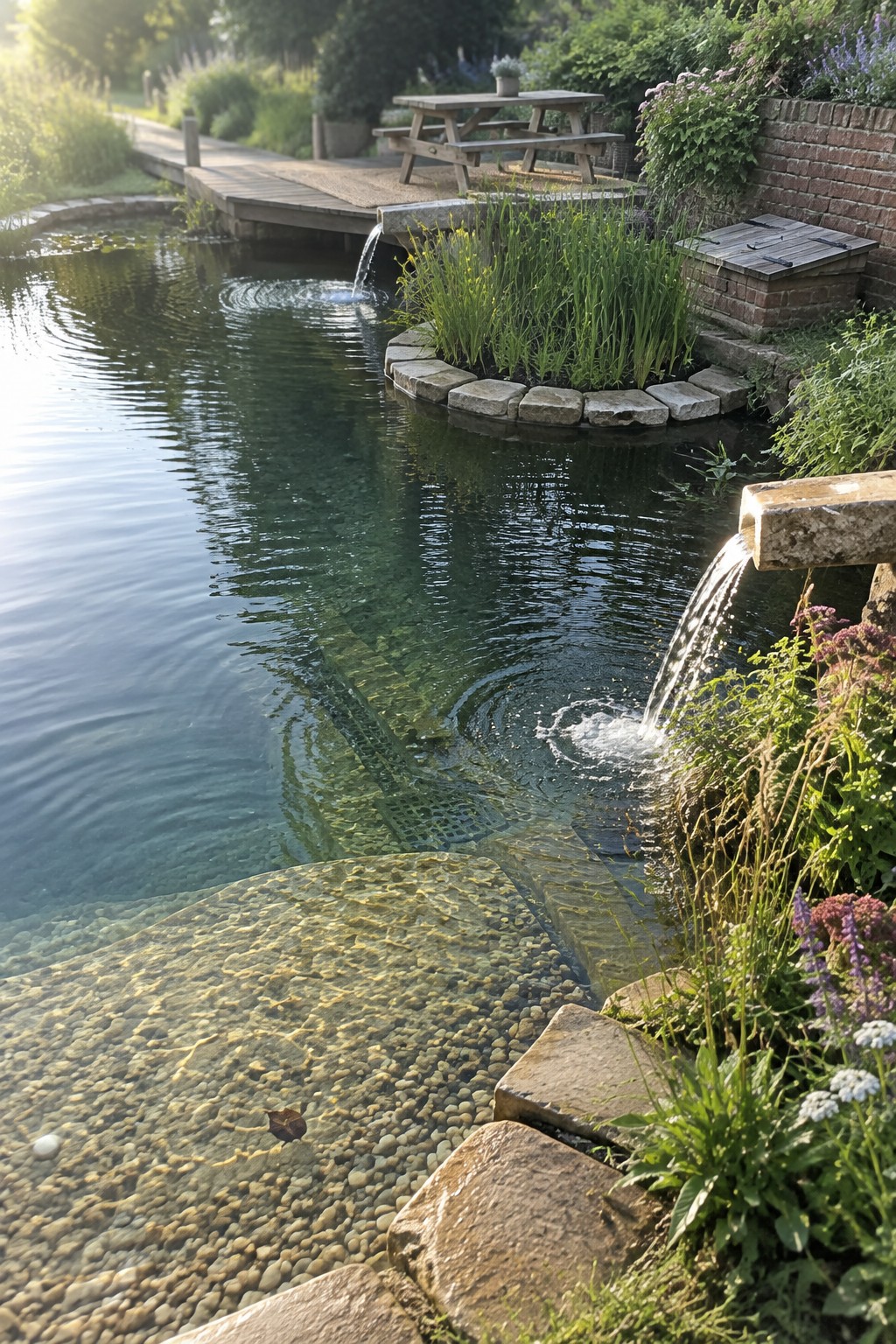
A natural swimming pool can use curved edges and planted areas without making water circulation an afterthought. In this example, the planted island sits within the pool, while small spouts return water at different points.
When planning a similar layout, decide where water will enter and how it will move through the swimming area before fixing the shape of the planting beds. Keep returns clear of dense plants and check that water can circulate through the whole pool, including its quieter edges.
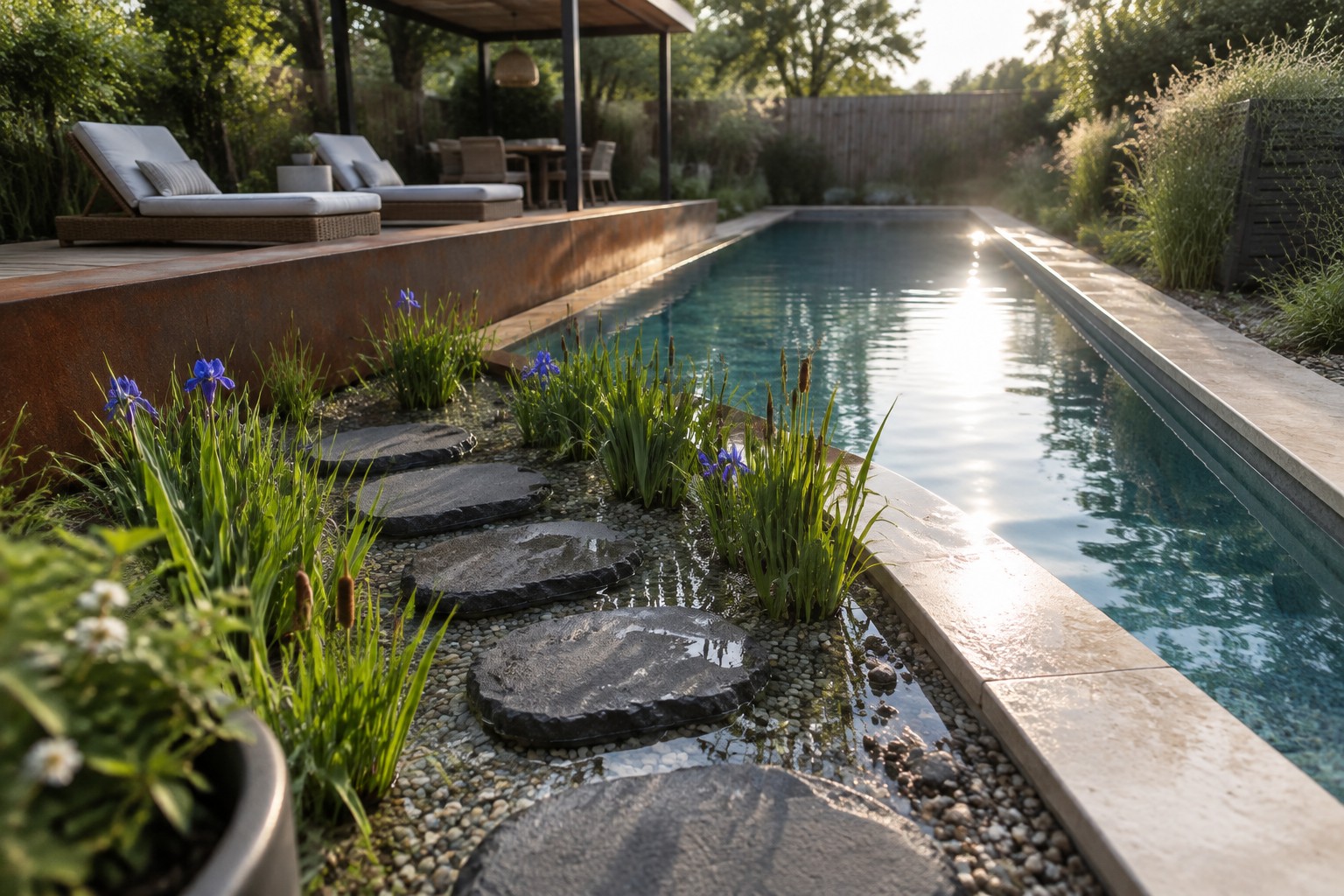
Plan Water Flow Through a Narrow Pool
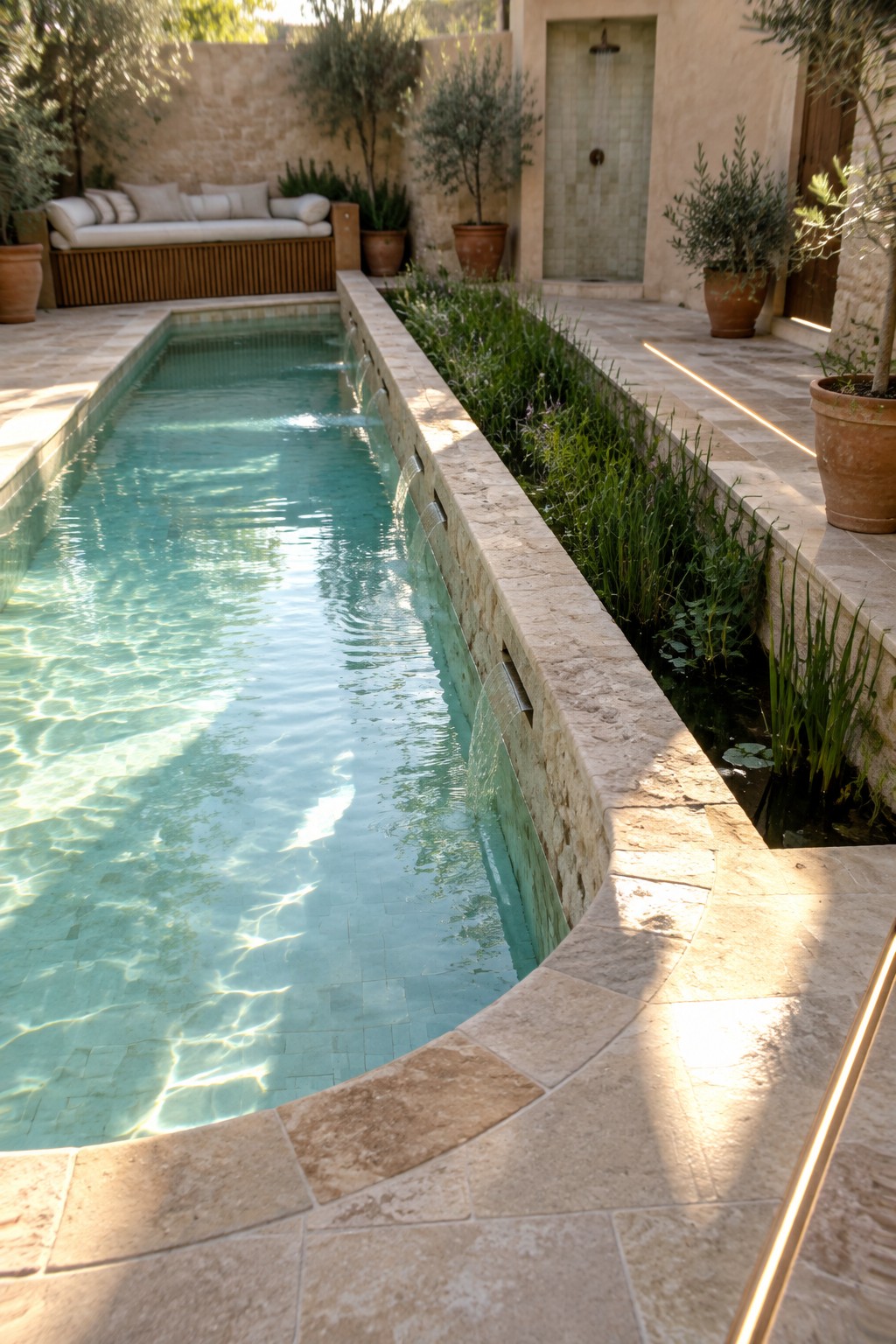
A long, narrow pool makes water circulation easier to plan because its shape gives you a clear route from one end to the other. In a natural pool, a planted channel beside the swimming area can serve as part of the filtration system, as long as water moves steadily between the two zones.
When planning the layout, decide where water will enter and return before fixing the edges or adding plants. Keep the channel accessible for cleaning, and make sure its width and depth suit the circulation equipment you choose.
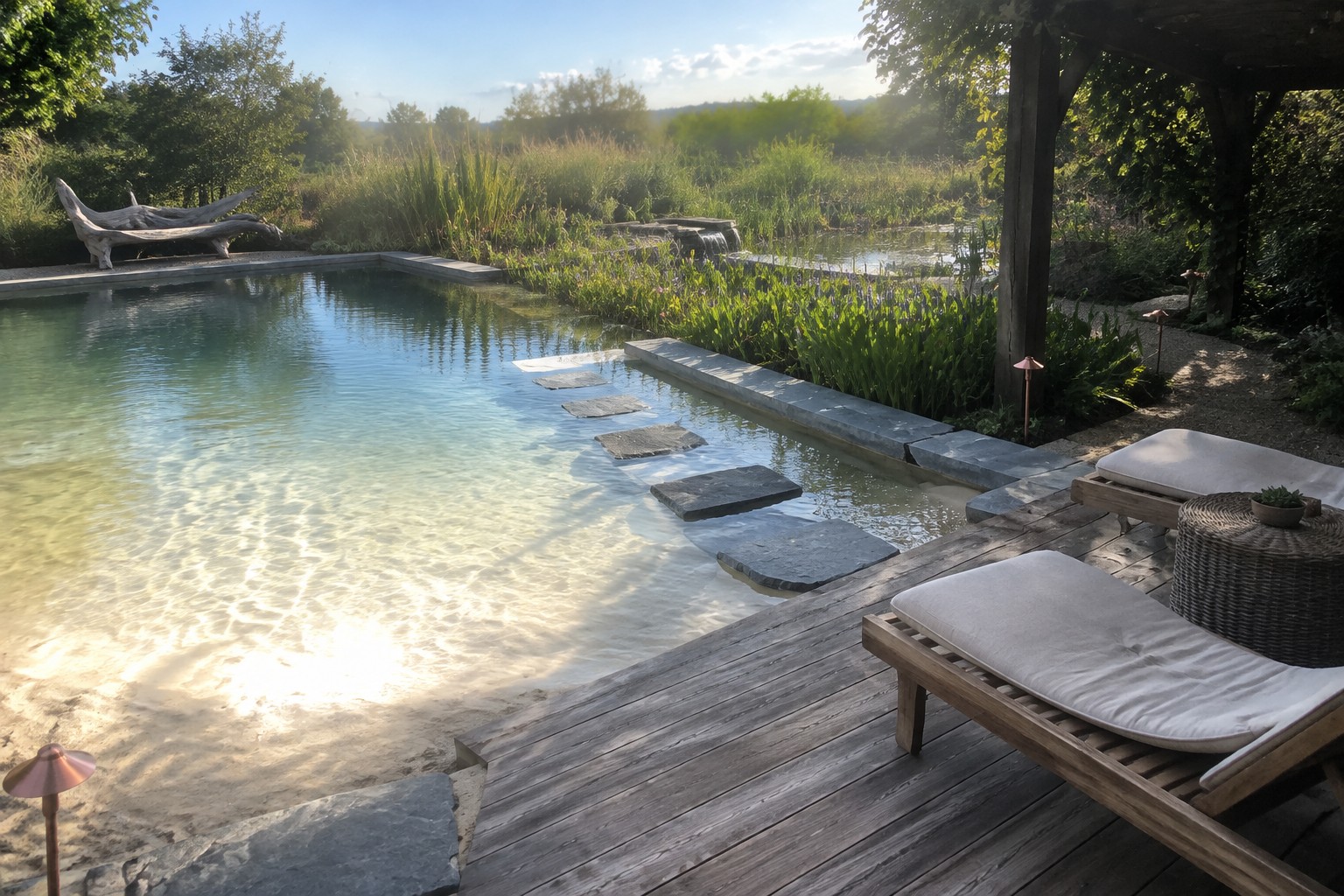
Use a Planted Regeneration Zone
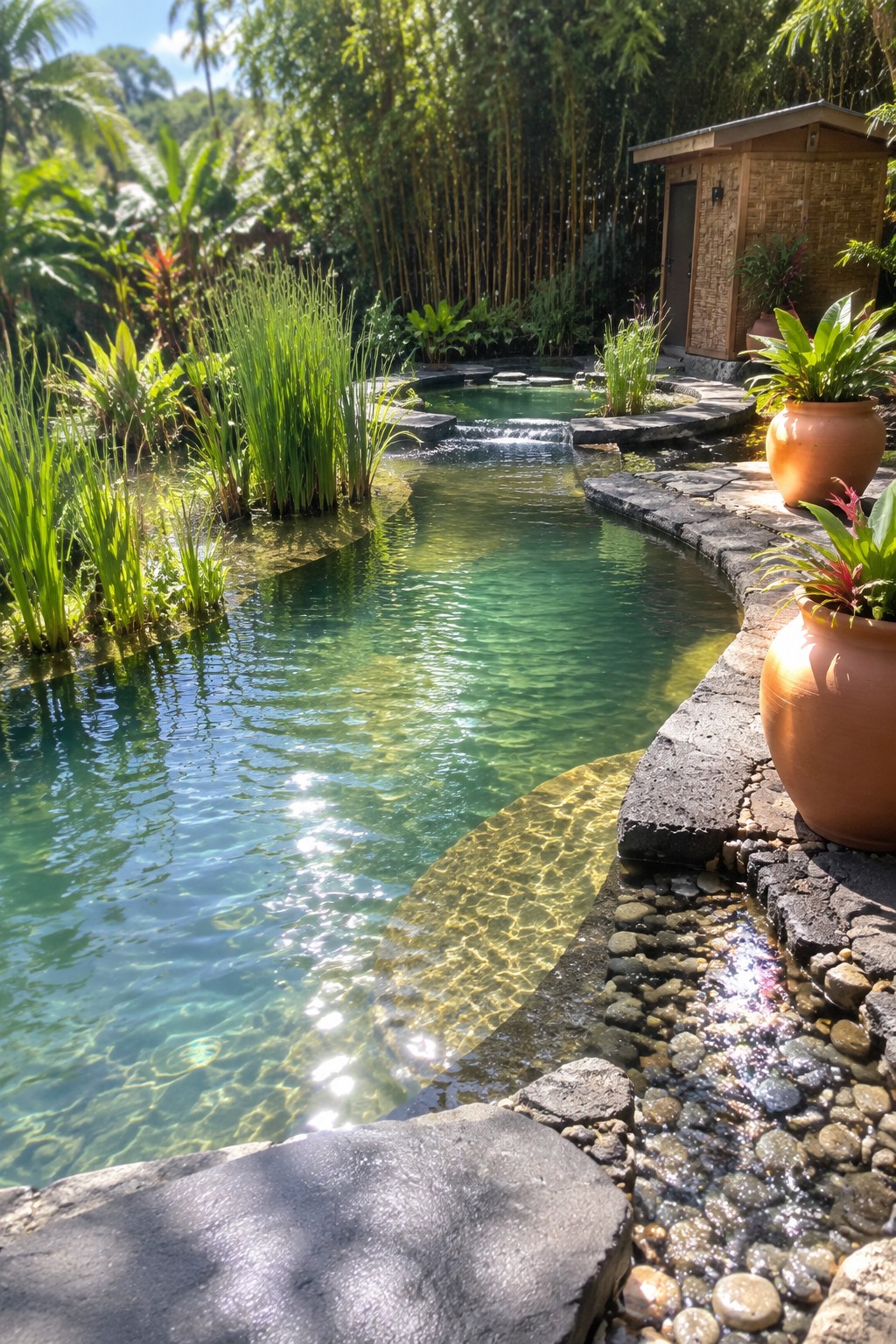
A natural pool can use a planted area to help circulate and filter water without relying on a conventional pool system alone. Here, aquatic plants sit beside the swimming area, while a small cascade moves water between the two zones.
When planning a similar pool, make the regeneration zone large enough for the plants and circulation method you choose. Keep it connected to the main pool so water can move through the system, and leave clear edges where people enter or walk around the water.
Use a Planted Channel to Guide Pool Water
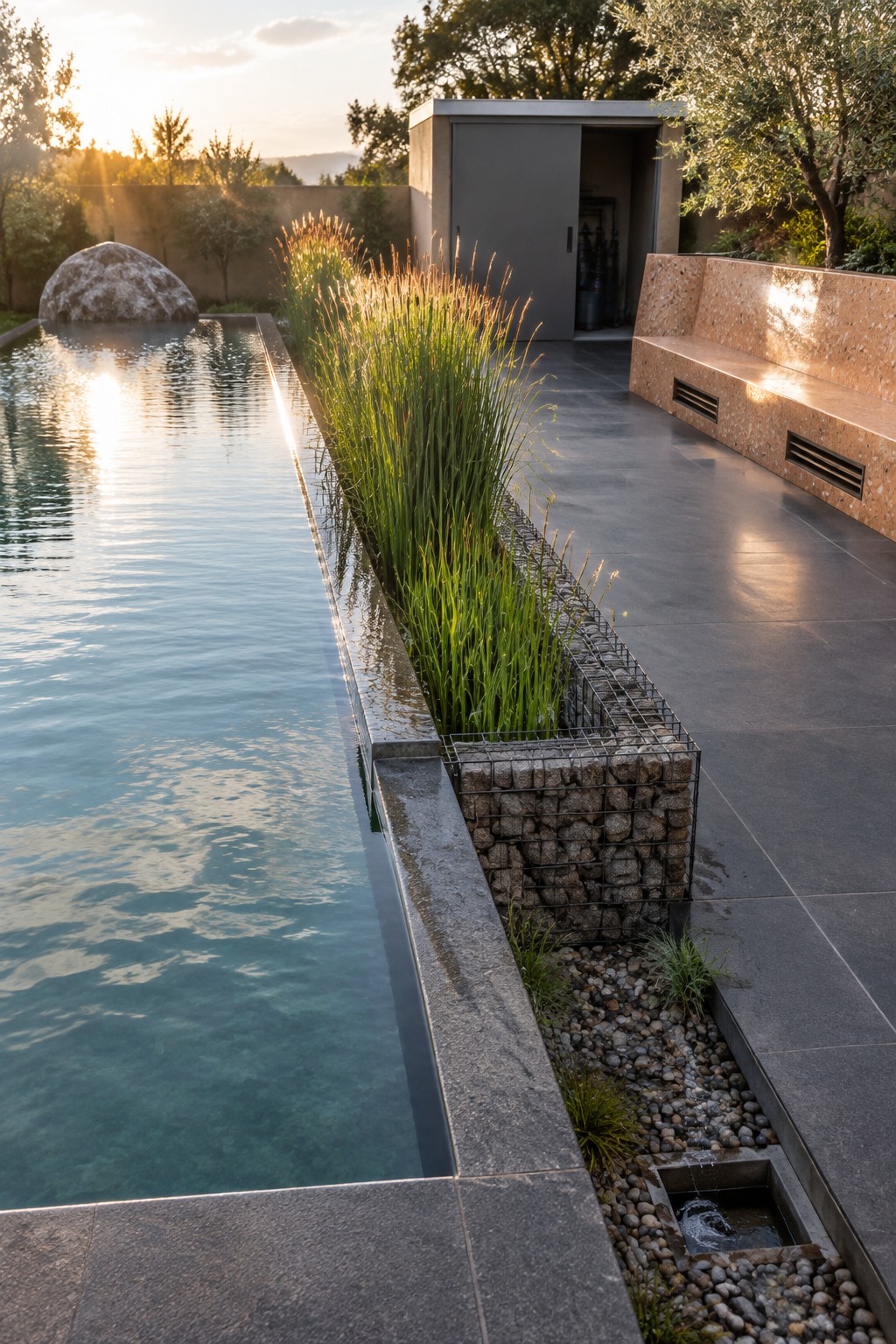
A planted channel beside the pool can be part of the circulation plan, not just a garden feature. Water can move through the gravel and reeds before returning to the main pool, helping make the route easy to understand.
Keep the channel sized for the intended flow, and plan how it will be cleaned and maintained. This approach suits a natural pool with room for a separate planted zone, though the plants and filter materials need to match the system’s water needs.
Use a Stone Weir to Guide Pool Water
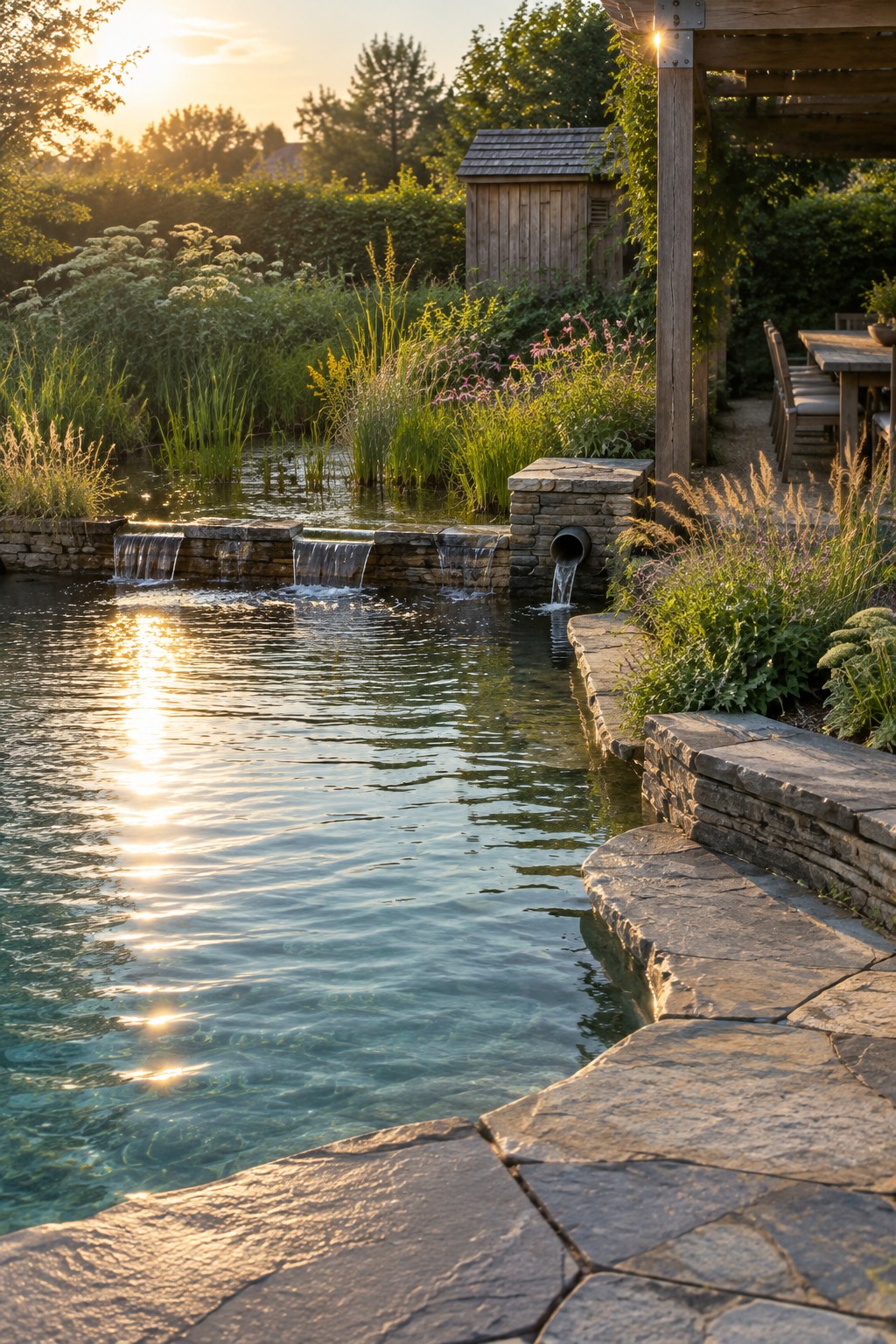
A low stone weir can move water gently from one pool level to another while making the circulation route easy to plan. Here, water spills through several openings in a retaining wall, with a separate pipe outlet adding another visible return point.
For a natural swimming pool, place the weir where it can help carry surface water toward a planted regeneration zone or filtration area. Keep the channel and outlets accessible so you can remove leaves and check the flow.
Use Waterfalls to Keep Pool Water Moving
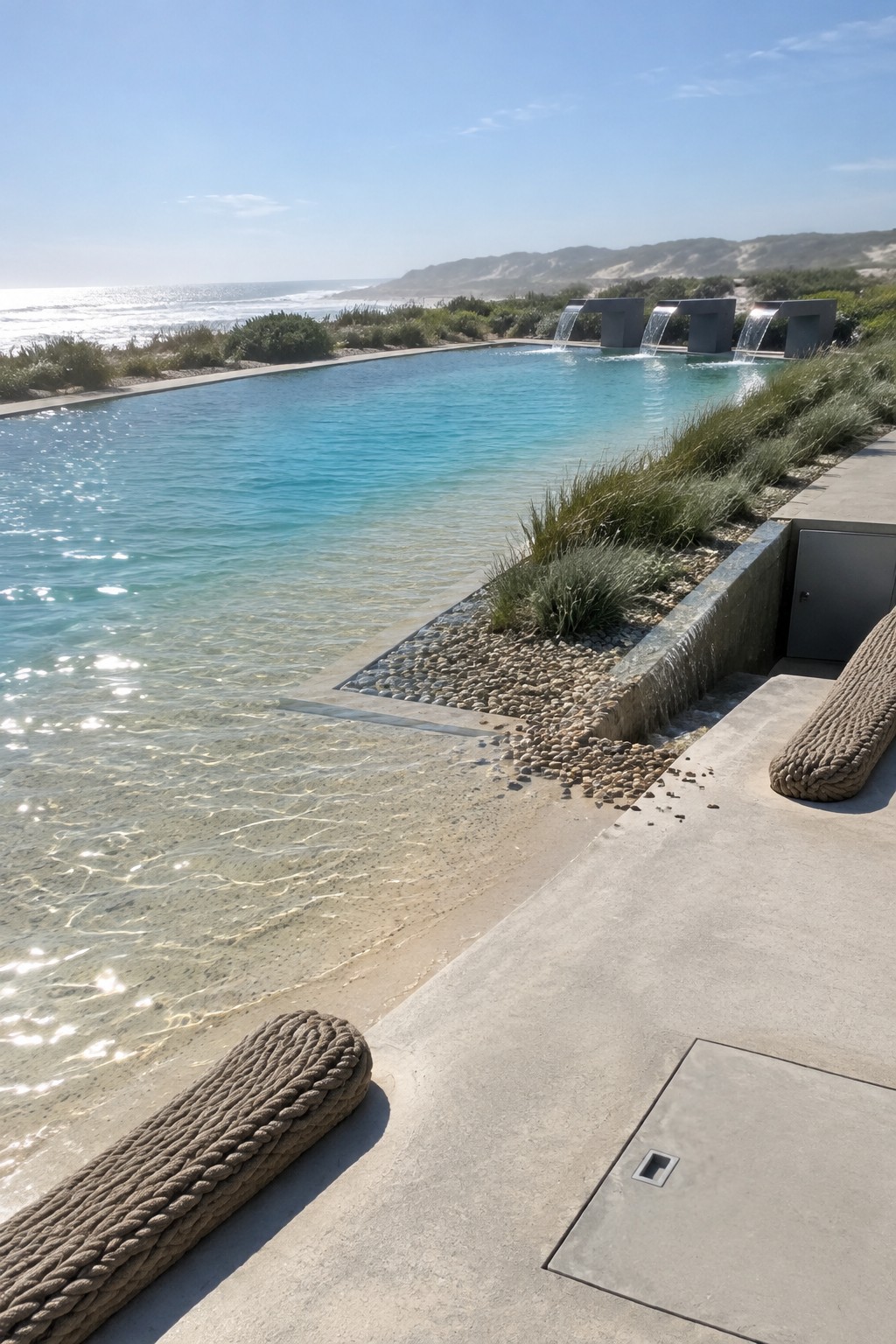
Waterfalls can serve as visible return points in a natural pool circulation plan. Here, three spillways feed water back into the pool, helping spread movement along one end instead of relying on a single outlet.
When planning a similar setup, place the returns so water travels across the swimming area and toward the filtration zone. Make sure the pump and plumbing can supply each spillway evenly, or some may flow much more strongly than others.
Use Tiered Stone Weirs to Move Water
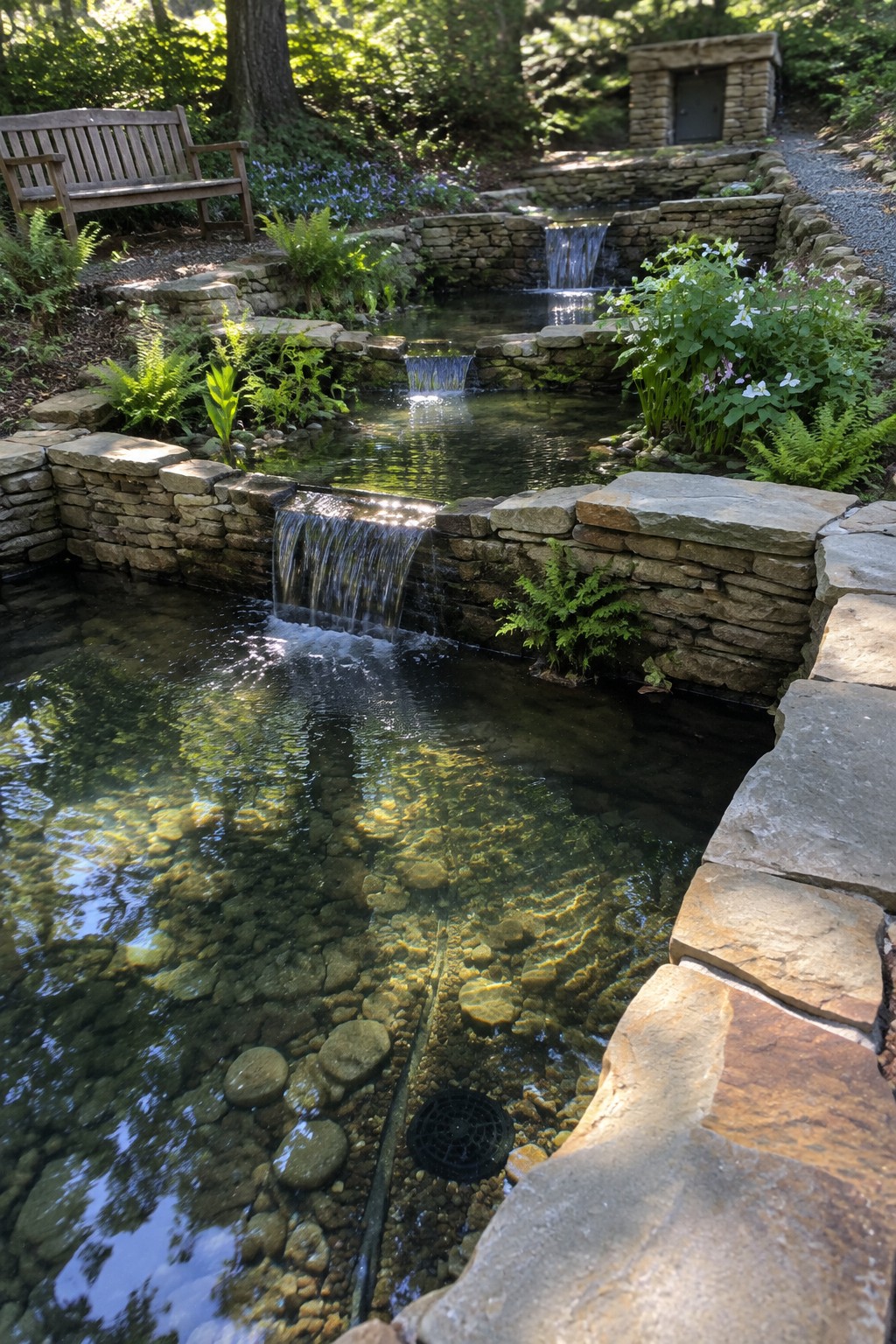
In a natural swimming pool, several small stone weirs can guide water through a series of connected basins. This stepped layout keeps water moving between levels and makes the circulation path easy to plan.
Place each drop where water can flow evenly into the next section, and size the openings to suit the pump and pool volume. Stacked stone gives the weirs a natural look, but the edges need to be secure and the water level should stay consistent.
Use Wall Jets to Move Water Across the Pool

Wall jets can help keep water circulating through a natural swimming pool, especially along a long edge where water might otherwise sit still. Here, several outlets send water back into the pool at intervals, spreading movement along the side rather than relying on one return point.
When planning the layout, space the jets so their streams reach the main swimming area without creating an uncomfortable current. Aim them away from steps and shallow lounging spots, and make sure the circulation system can be adjusted as needed.
Keep a Clear Path Along the Pool Edge
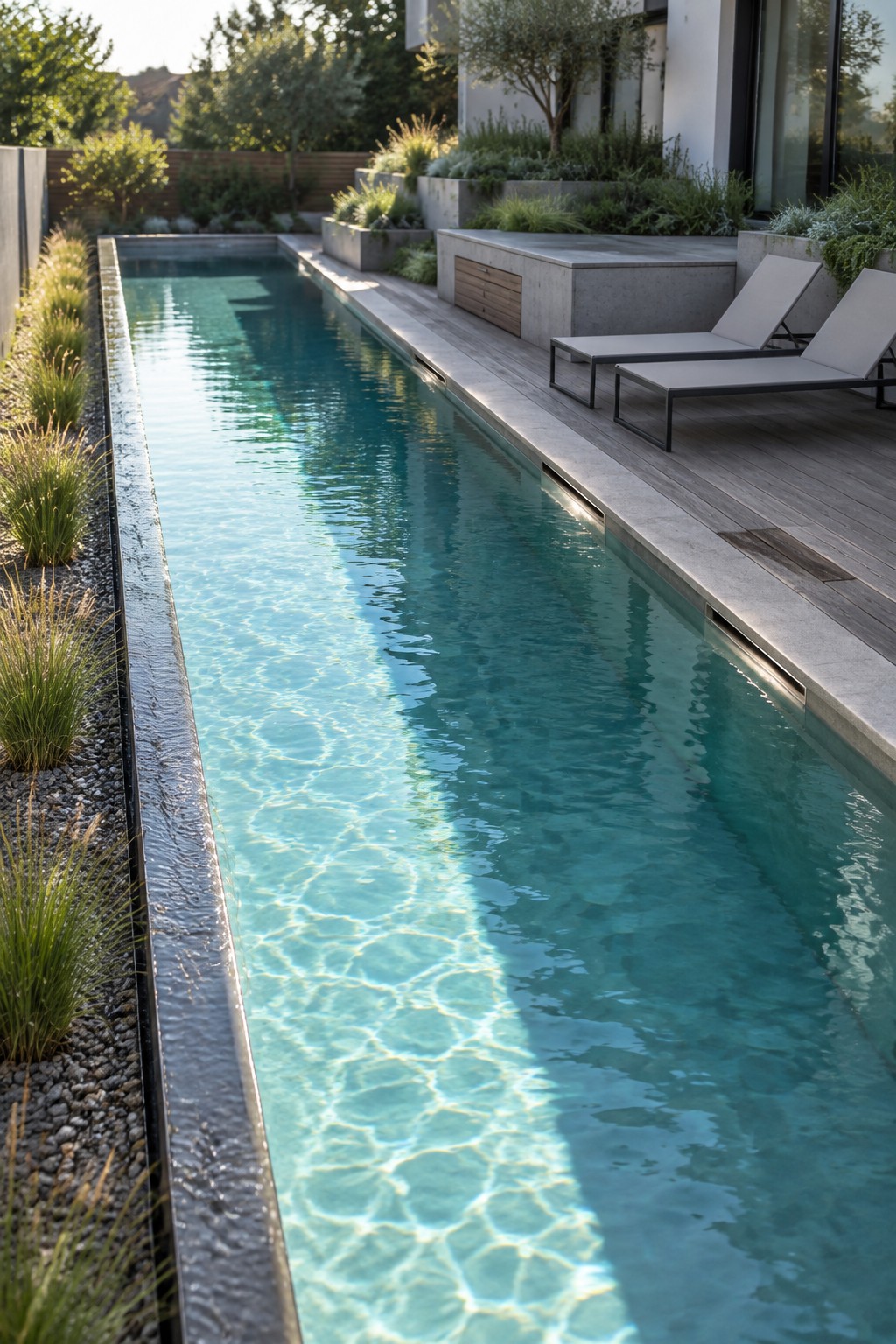
A narrow pool can work well in a compact yard when the deck stays open along one side. That clear strip gives swimmers room to get in and out, and it leaves space to reach the water for routine cleaning and circulation checks.
When planning the layout, allow enough room for comfortable passage without making the pool feel squeezed. Here, the loungers sit on a wider deck area rather than blocking the pool’s length, a useful approach for a long, narrow swimming space.
Use a Planted Filter Bed Along the Pool
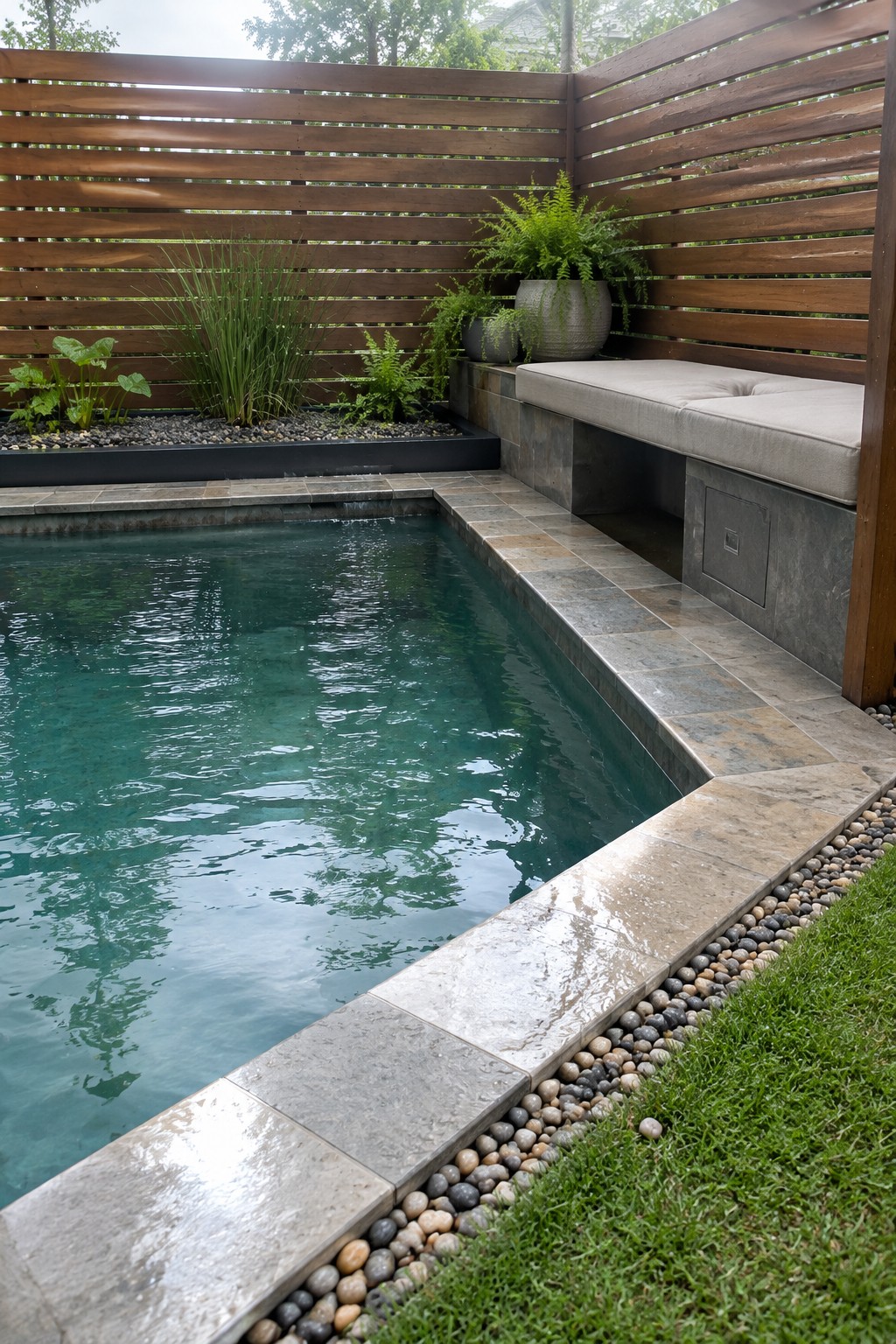
A planted regeneration bed can be part of a natural pool’s circulation plan, not just a decorative border. Water moves through the bed so plants and filter materials can help clean it before it returns to the swimming area. Here, the raised planting strip sits beside the pool, making that arrangement easy to see.
When planning a similar setup, leave enough space for water to pass through the filter zone and for plants to grow without crowding the pool edge. It works well where a compact pool has room for a narrow planted area, but the circulation route should be planned before choosing the plants.
Use Small Weirs to Move Water Between Pool Levels

Stone weirs can guide water from one pool section to the next while creating a simple, visible circulation route. The short drops shown here also help keep the water moving without relying on a large waterfall.
For a natural swimming pool, place each weir where water can pass from the swimming area toward the next stage of the circulation system. Keep the openings broad enough to avoid restricting flow, and plan access nearby so the stonework can be checked and cleared.
Use Poolside Lighting to Mark the Water’s Edge
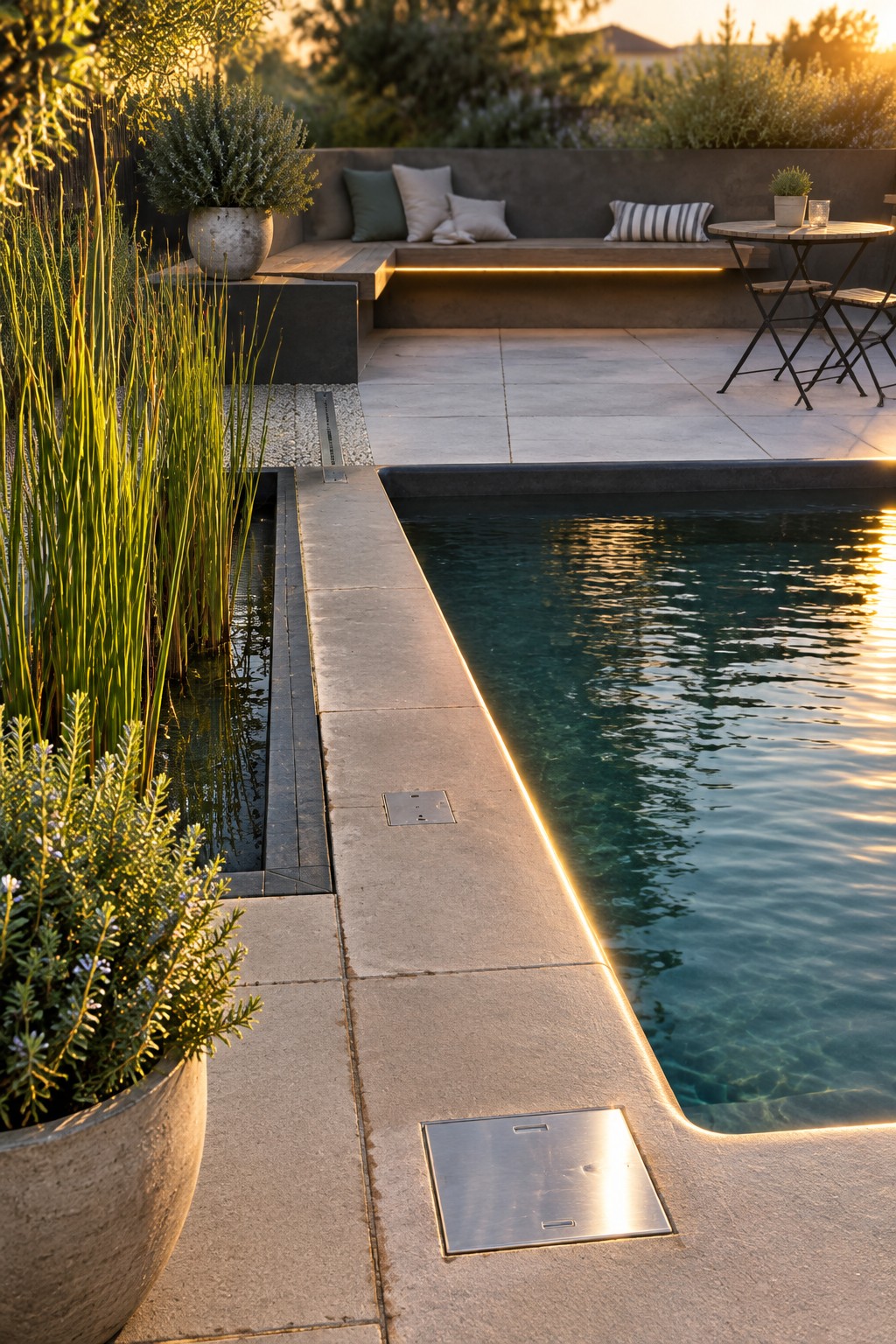
A slim light along a pool edge can help show where the paving ends and the water begins after dark. Here, the light follows the long side of the pool, making the edge easier to see without adding bulky fixtures.
For a similar setup, use outdoor-rated lighting tucked beneath the coping or set into the surrounding hardscape. Keep it low and continuous, and make sure the wiring and fixtures are suitable for wet areas.
Use Stone Edging to Separate the Pool and Garden
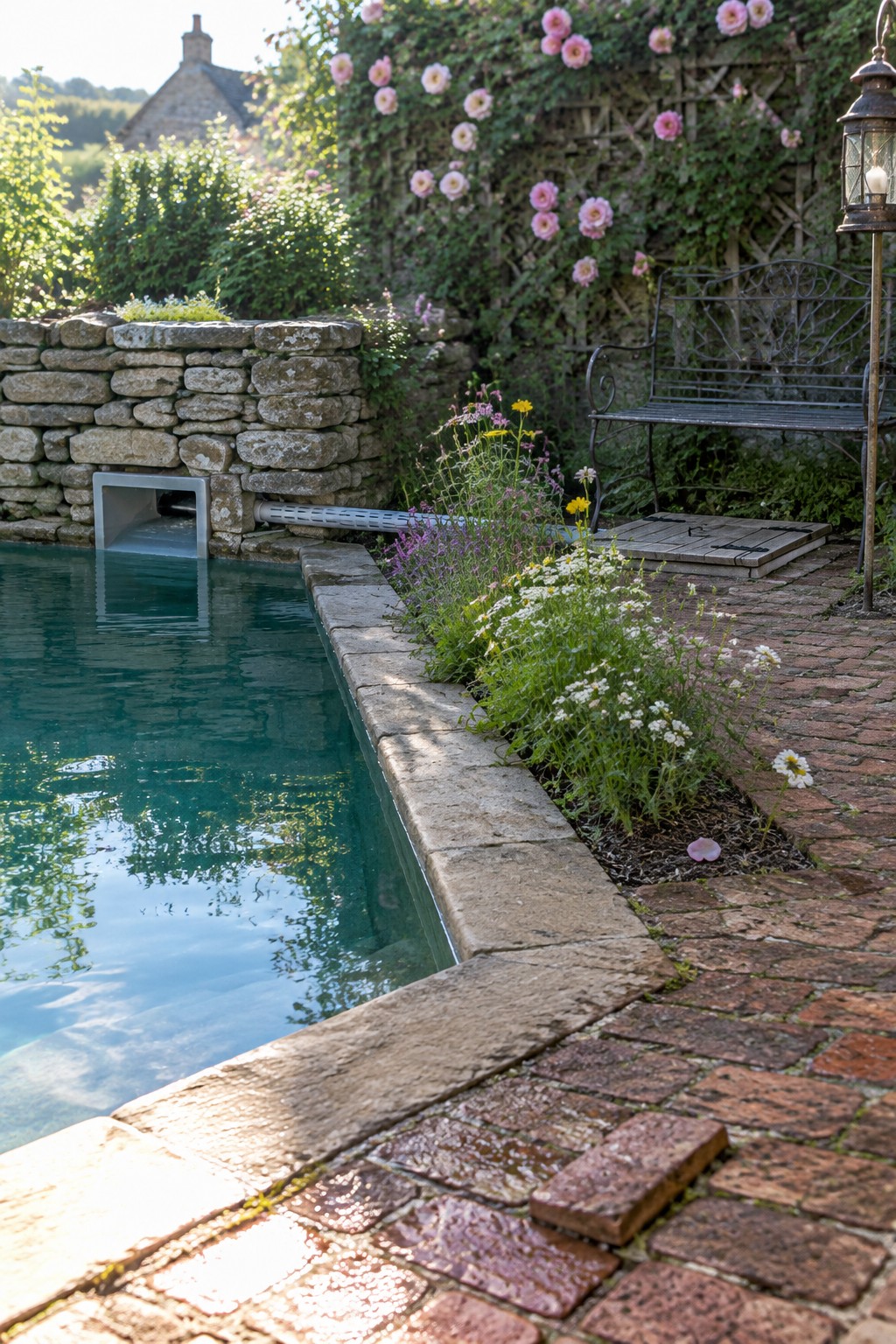
A stone edge gives a natural swimming pool a clear boundary while keeping it connected to the garden. Here, the broad coping separates the water from the flower bed and brick path, and it also provides a firm surface beside the pool.
For water circulation planning, keep the pool edge clear enough to inspect and maintain any inlets or outlets. Choose durable stone with a comfortable, nonslip finish, especially where people may step in and out of the water.
Use a Planted Channel for Water Return
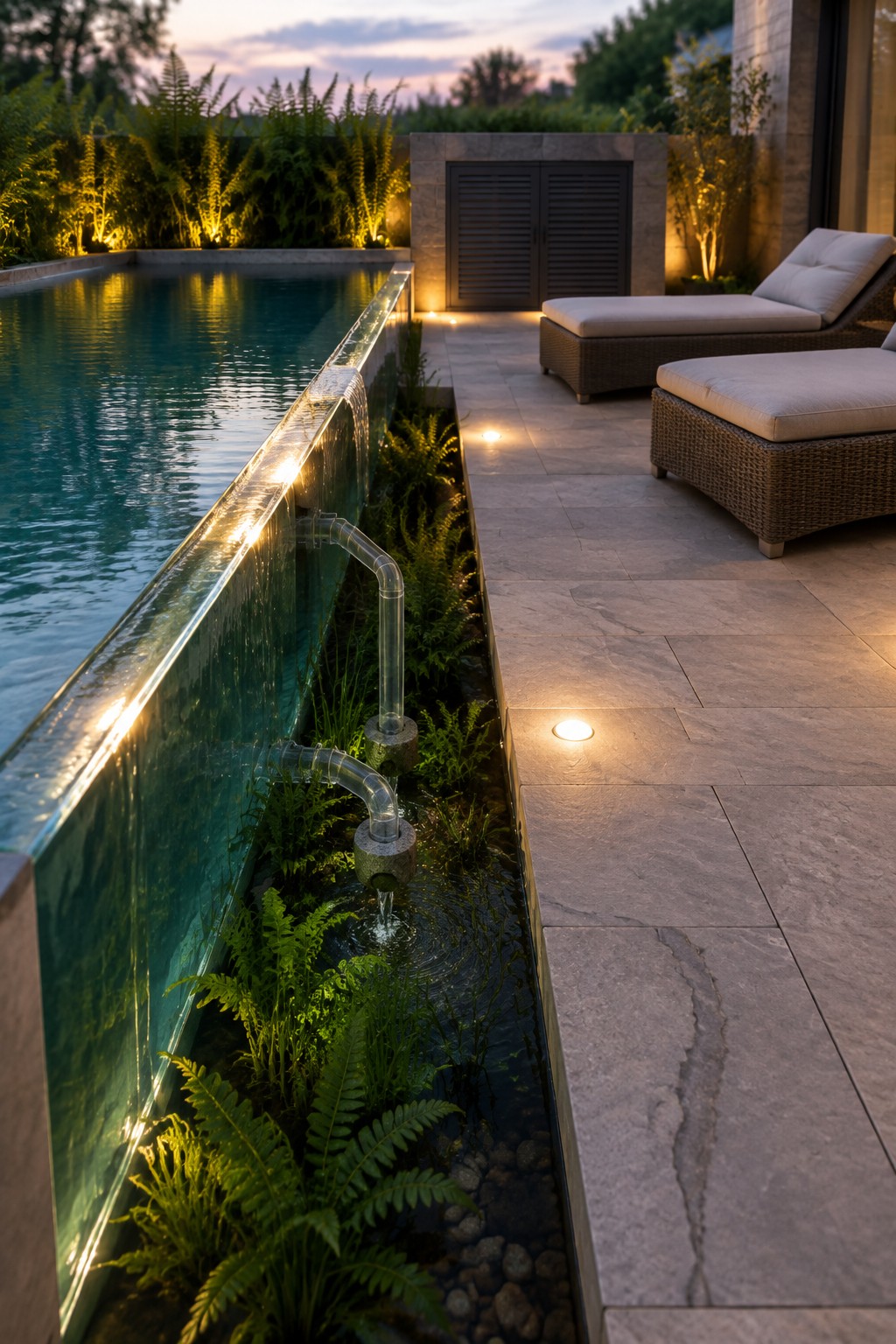
A narrow planted channel can carry water alongside a natural swimming pool while keeping the pool edge clear. It gives circulation a visible route, and the plants and stones can help the channel feel like part of the garden rather than a separate piece of equipment.
Plan the channel’s width and depth around the required flow, and make sure the pump can return water evenly to the pool. A glass divider can keep planting media and gravel out of the swimming area, but leave access for cleaning and maintenance.
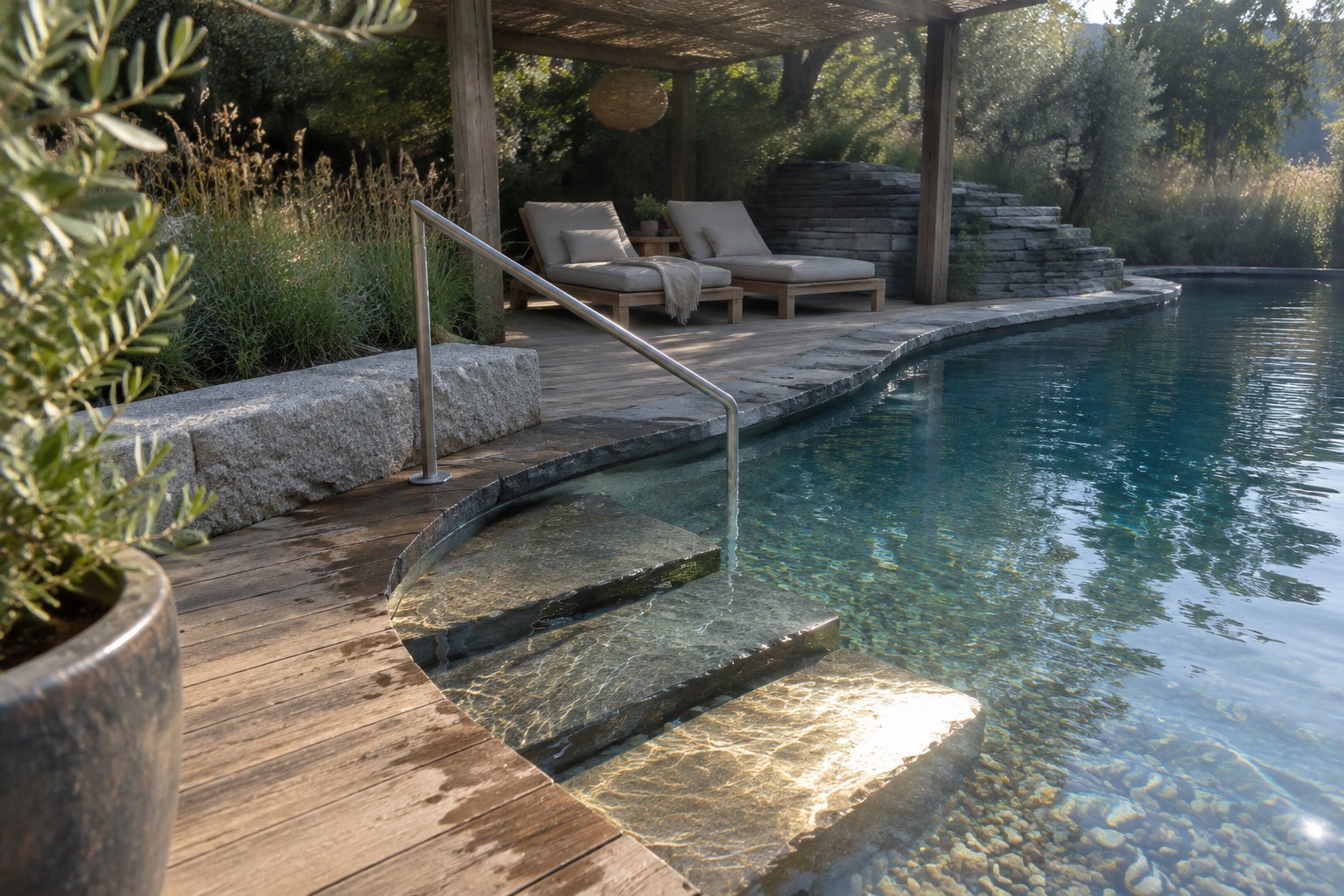
Plan Circulation Around a Poolside Sun Shelf
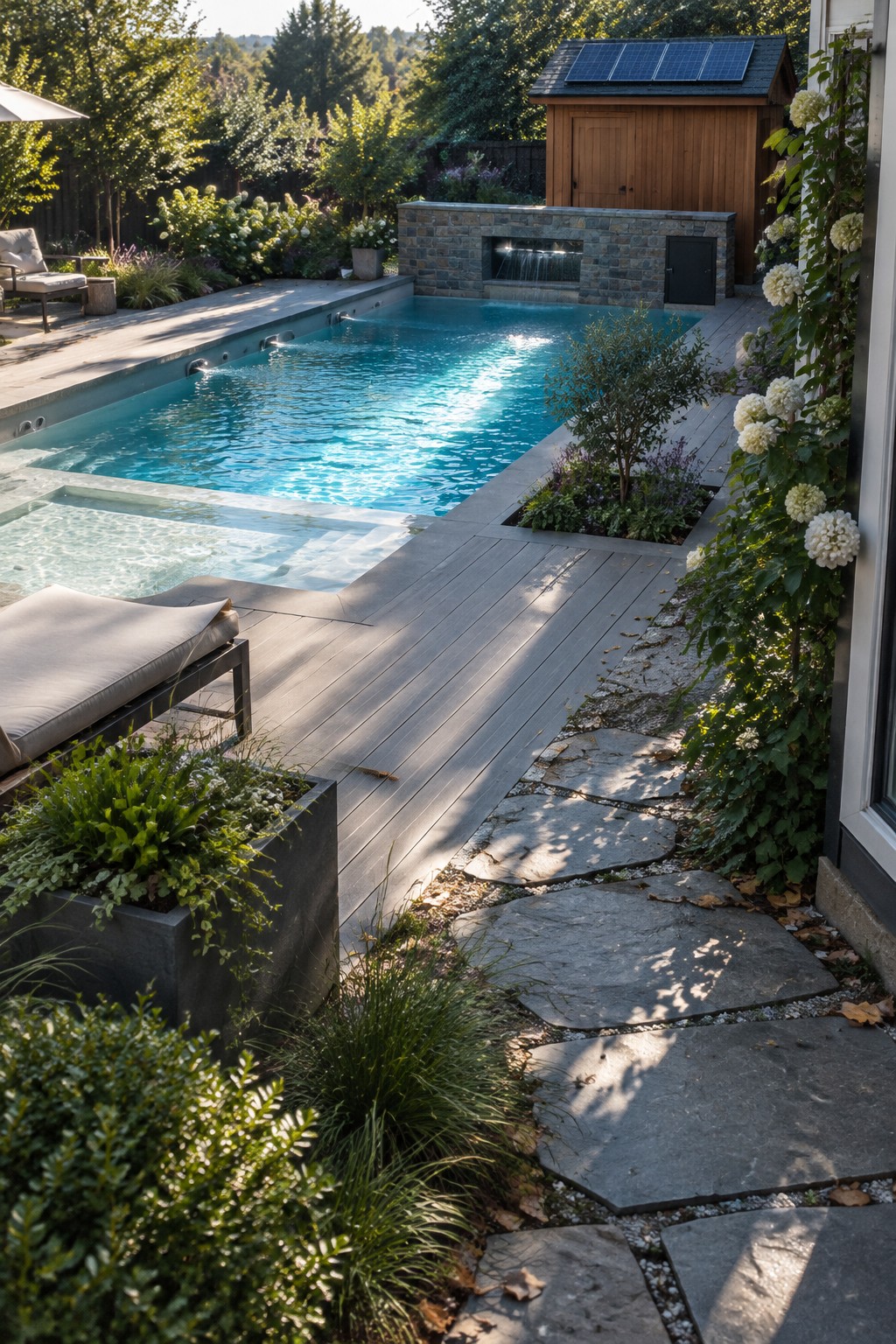
A shallow sun shelf can make a pool easier to enjoy, but it should be included in the circulation plan. Water needs to move through this area too, rather than sitting still while the main swimming zone gets all the flow. In this design, the shelf sits at one end of the pool and connects directly to the deeper water.
When planning a similar pool, consider how returns and skimmers will move water across both levels. Keep fittings clear of the main lounging spot, and make sure the shelf is not so large that it interrupts circulation through the rest of the pool.
Frequently Asked Questions
Q: How much space should I leave between the swimming area and the plant zone?
A: Leave enough room for water to move slowly through the plants without making the swimming area feel cramped. The diagrams can help you picture that balance, but mark out both zones on the ground before settling on a layout.
Q: Do I need a pump if the pool is meant to feel natural?
A: Usually, yes. A pump keeps water moving between the swimming area and the regeneration zone, where plants and filter materials help clean it. You can hide the equipment, but make sure it stays accessible for maintenance.
Q: Can I use one of these diagrams for a sloped yard?
A: Treat it as a starting point, not a ready-made plan. A slope can affect excavation, drainage, and how water moves between zones, so adjust the layout to match the site before building.
Q: How can I tell whether the circulation design is working?
A: Water should move through the intended route without obvious stagnant spots or debris collecting in corners. If it does not, check for blocked inlets or outlets before changing the whole layout.