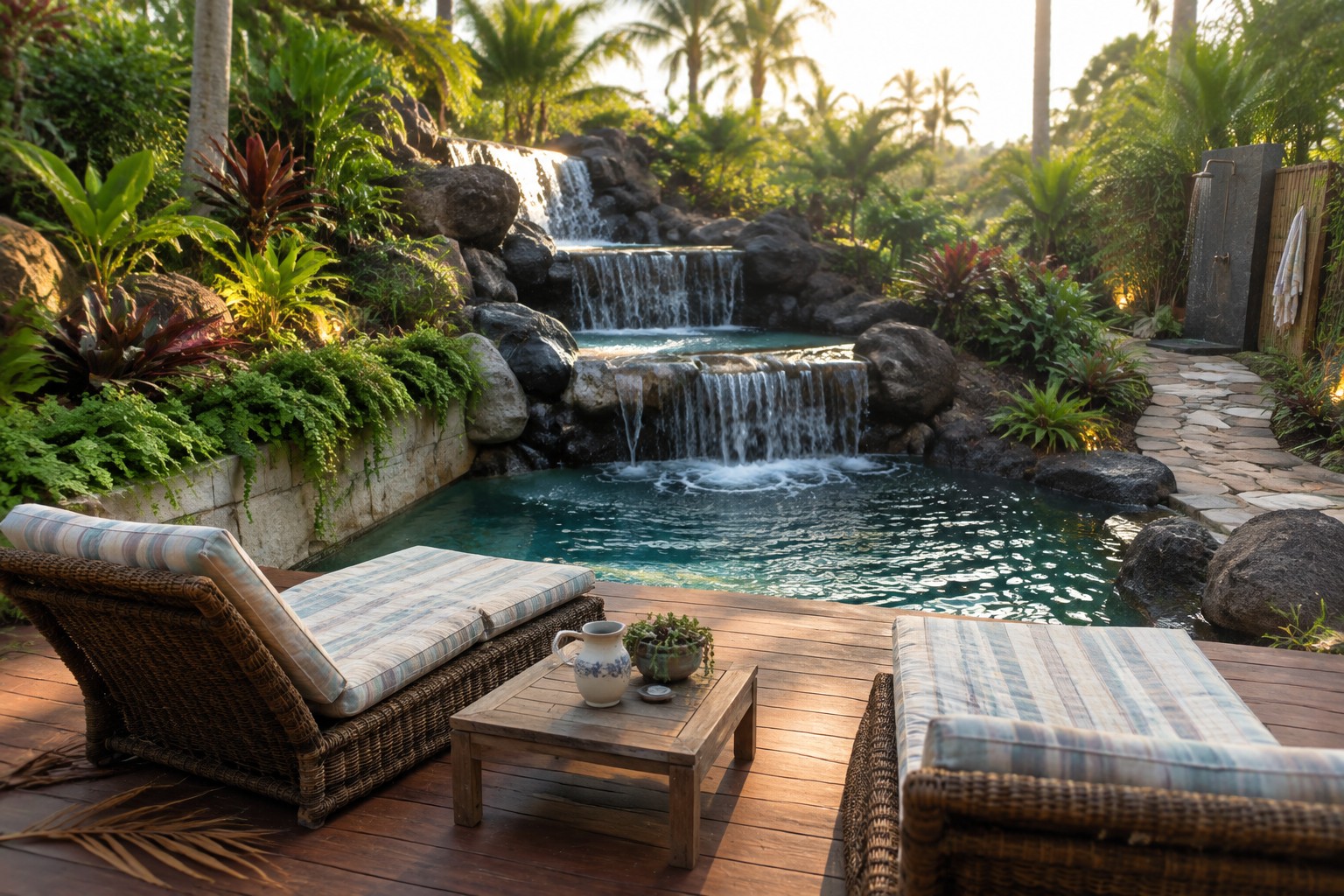
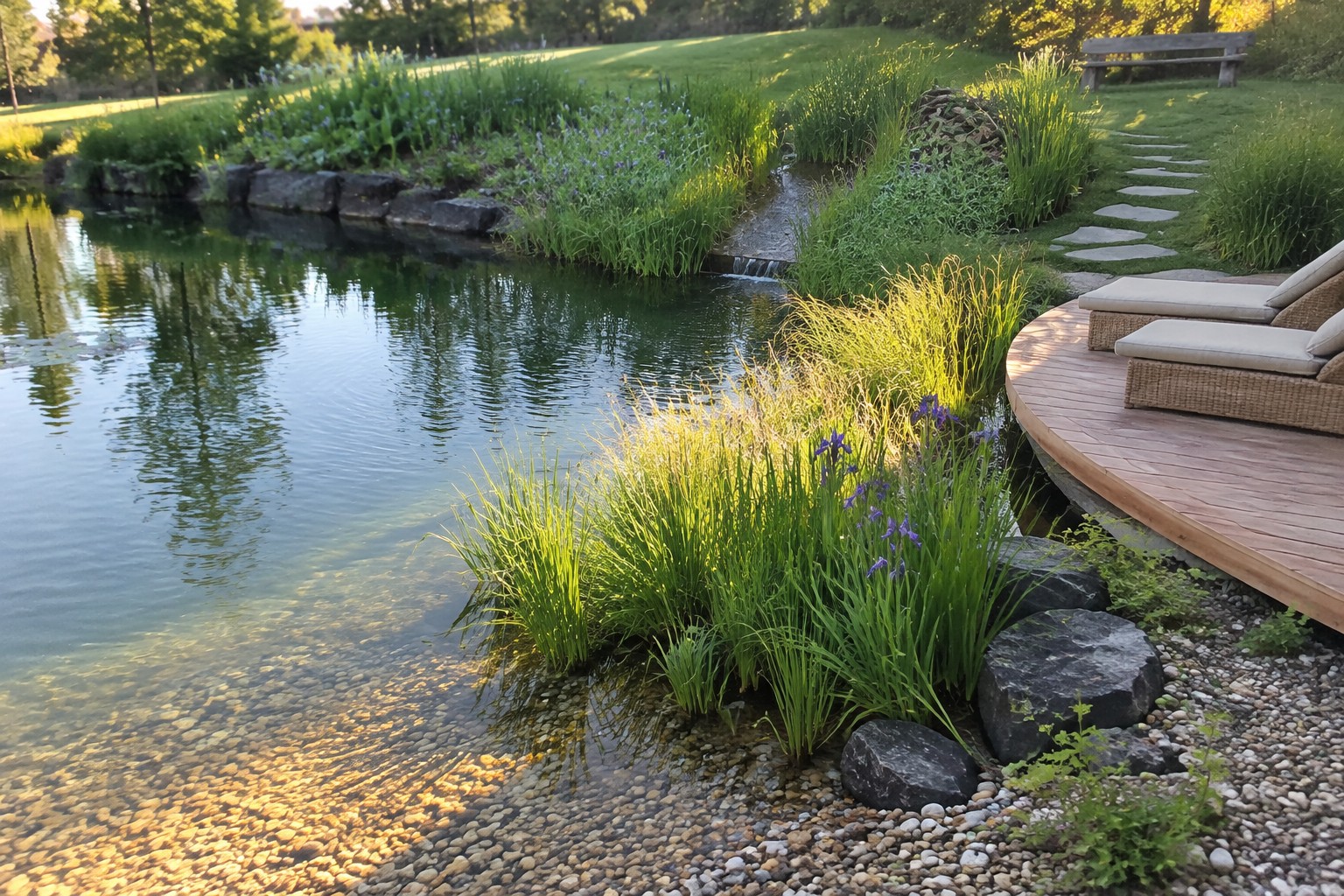
A natural pool can feel like part of the landscape when its edges, materials, and surrounding plants work together.
I find that weathered timber and stone bring warmth, but they need to suit the pool’s shape and the way people move around it.
A clear path to the water, a comfortable place to sit, and practical surfaces underfoot matter just as much as the view.
Some combinations feel grounded and easy to maintain, while others may look better in a photo than in a well-used backyard.
I’d save the ideas that balance a relaxed, natural look with details you could adapt to your own space.
Build a Natural Pool Into the Deck Layout

A natural pool feels more at home in the yard when the deck and stone edging follow its shape instead of boxing it in. Here, a weathered timber deck meets a rock-lined pool, making the water easy to enjoy from the seating area.
This layout works well beside a wooded home or a cottage-style house. Leave enough deck space for chairs, but keep the stone edge clear and secure so people can move around the pool safely.
Use Weathered Timber For Poolside Decking

Weathered timber decking gives a natural pool area a more relaxed feel than a fully paved surround. Here, the long boards sit beside a narrow stone edge, a practical way to keep the wood distinct from the pool while bringing both materials into the design.
This approach works well on a terrace where there is room for a clear walking path along the water. Choose boards made for outdoor use, and leave enough space between the deck and pool edge for safe, easy movement.
Use Stone to Shape the Poolside

A natural pool feels more connected to its setting when the edge follows an irregular line instead of a perfect rectangle. Stone coping can give the pool a settled, garden-like look, while keeping the boundary clear and easy to walk around.
Choose stone with a textured, nonslip surface, and keep the pieces comfortable underfoot. This approach suits a rustic garden or a pool tucked among mature plants. Check that the stones are properly set, since shifting edges can become a tripping hazard.
Build a Pool Into the Deck

A narrow pool set into a timber deck makes good use of a small outdoor area. The wood gives the pool a natural edge, while the stone seating area nearby keeps the space practical for lounging.
This layout suits a sloped garden or a compact patio where a full-size pool would take up too much room. Use weather-resistant timber, and leave enough clear deck space for safe access around the water.
Add a Small Bridge Across the Pool
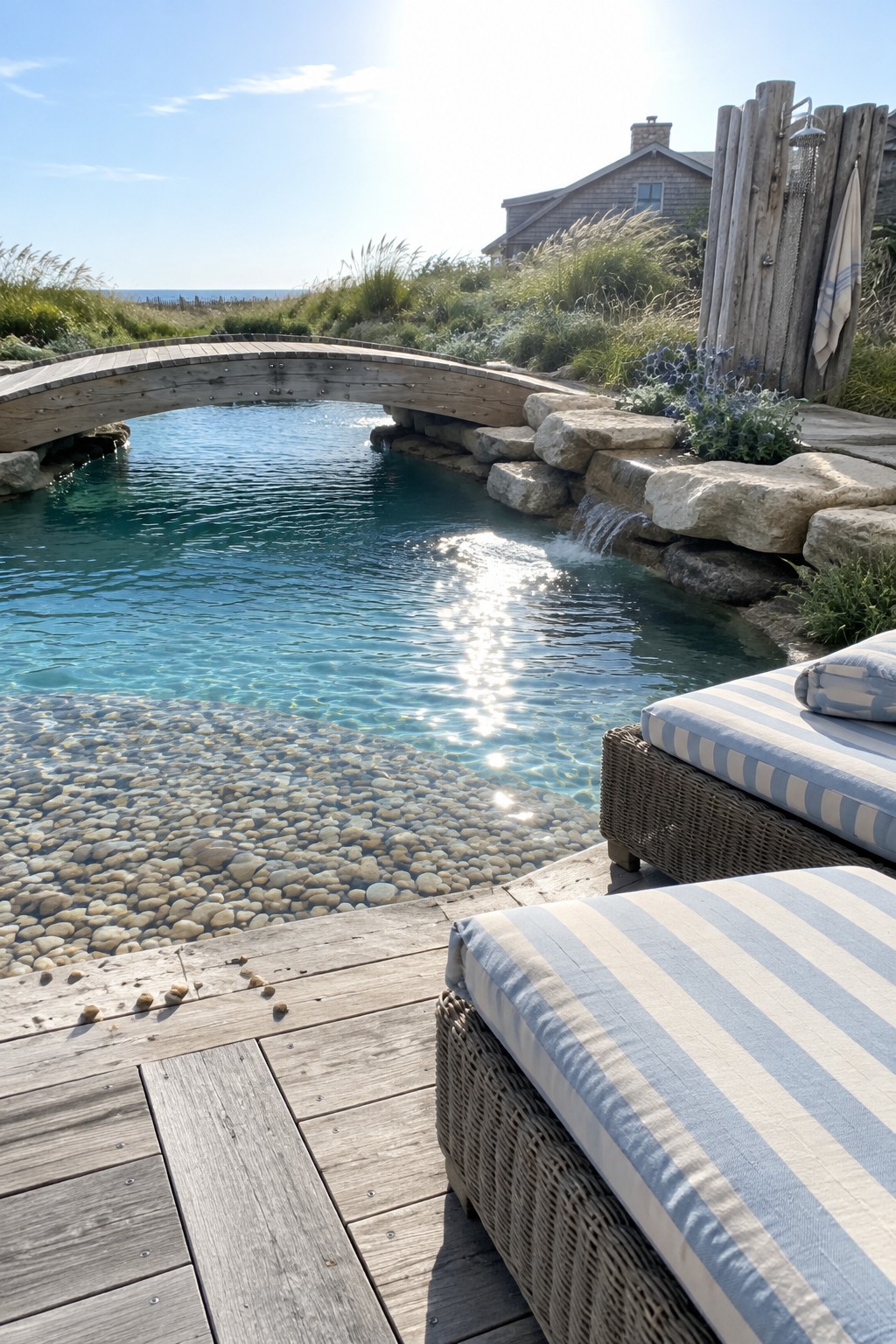
A simple timber bridge can make a natural pool feel more like part of the garden. It gives the water’s edge a useful crossing and adds a bit of character without needing a large structure.
Keep the bridge low and broad enough to walk across comfortably, and use timber that can handle regular exposure to moisture. A curved shape suits a natural-style pool, but make sure the surface has good grip when wet.
Use Stone to Shape a Natural Pool
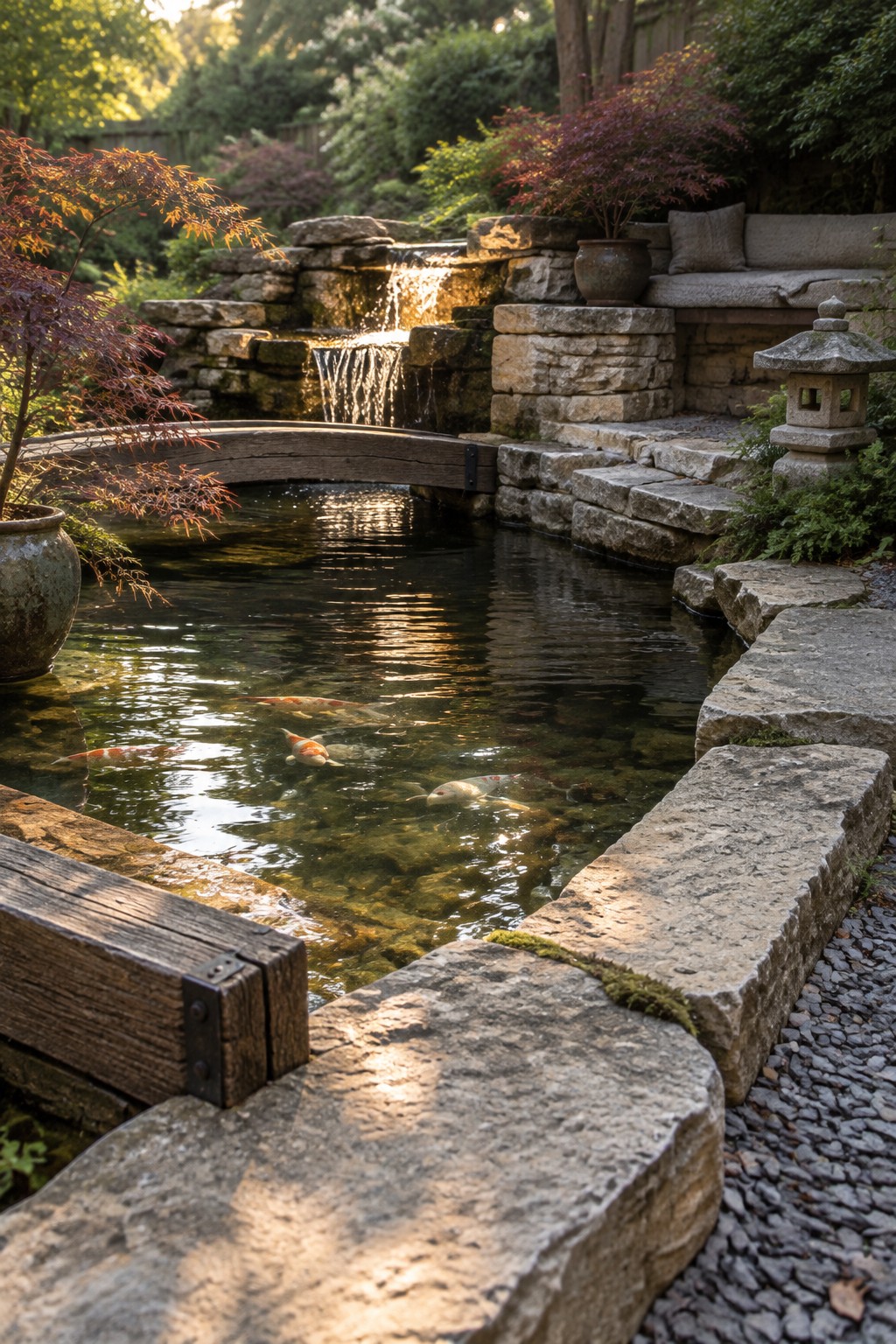
Stone can give a natural pool a finished edge without making it feel too formal. Here, broad, irregular blocks form the pool border and continue into a small waterfall, so the hardscape feels like part of the water feature.
This approach works well in a garden where you want a natural-looking pool and a place to sit nearby. Choose stones with varied shapes, but keep the pool edge secure and comfortable to walk beside. A small timber bridge can span the water without taking away from the stonework.
Add A Fire Pit Beside The Pool

A built-in fire pit can make a poolside deck useful after swimming, too. Set into a lowered seating area, it gives people a comfortable place to gather without taking up the main walking space.
Use weathered timber for the bench seating and stone around the fire pit to suit a rustic pool setting. Leave enough room between the fire and the pool edge, and choose materials made for outdoor use.
Use Stone Pavers Along the Pool

Stone pavers make a practical pool edge, giving swimmers a firm path around the water. Their natural variation also suits a rustic pool without needing much extra decoration.
Choose a slip-resistant finish and leave enough room to walk comfortably beside the pool. Large pavers can work well in a narrow yard, where they keep the poolside route clear and simple.
Add Timber Steps Beside a Stone Pool

Broad timber steps make it easier to move between seating areas and the pool, while giving the stone edge a more relaxed feel. They also provide a useful place to sit or set down a towel.
This layout suits a sloped garden where one flat deck would be awkward. Use sturdy, slip-resistant timber, and leave enough room on each step for comfortable footing.
Use Warm Lighting Around a Natural Pool
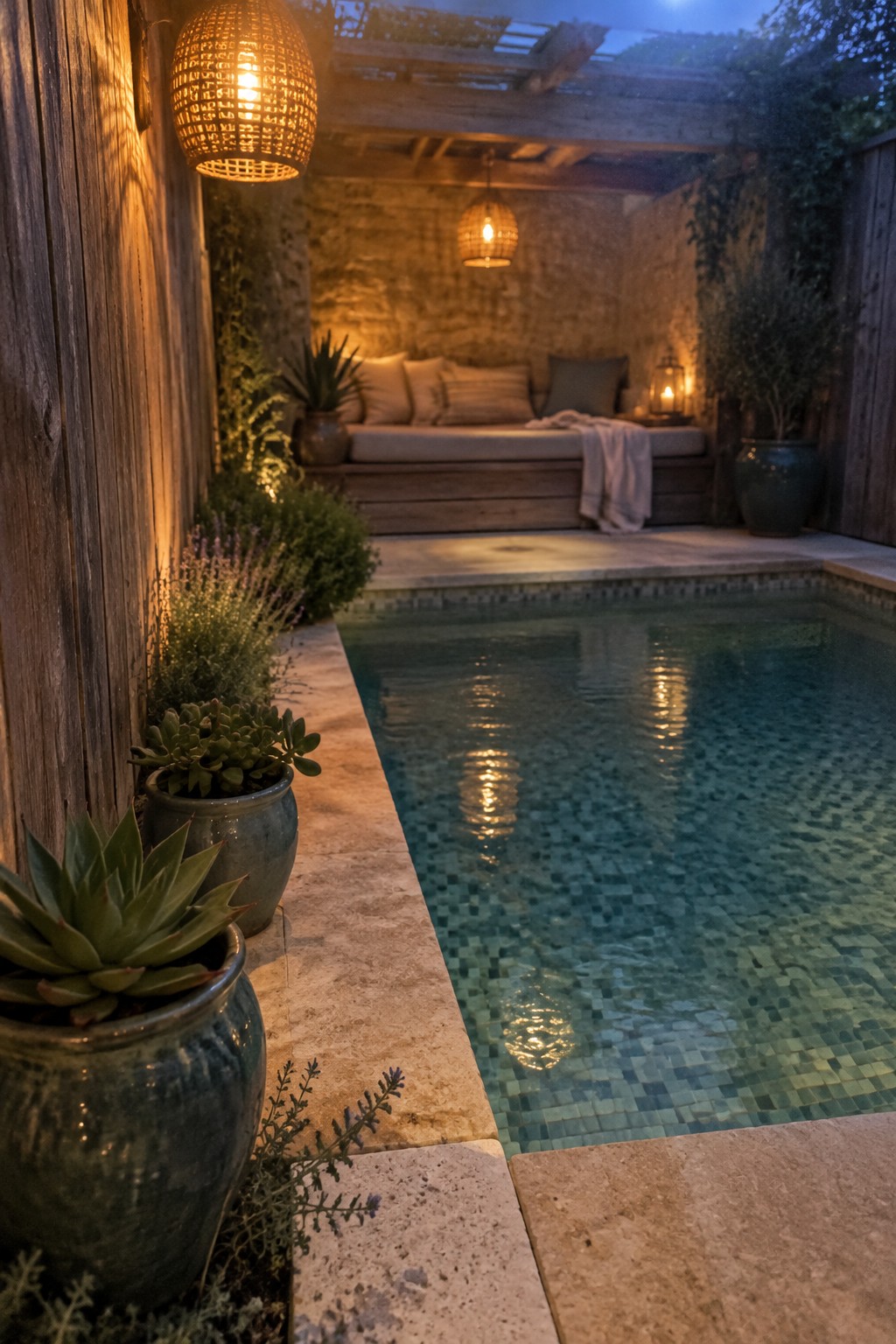
Woven pendant lights can make a pool area usable after sunset without relying on bright overhead fixtures. Their warm glow suits rustic timber and stone, and it reflects gently across the water.
Hang pendants beneath a covered seating area, making sure they are rated for damp outdoor conditions and kept safely away from the pool. A few small lights are usually enough.
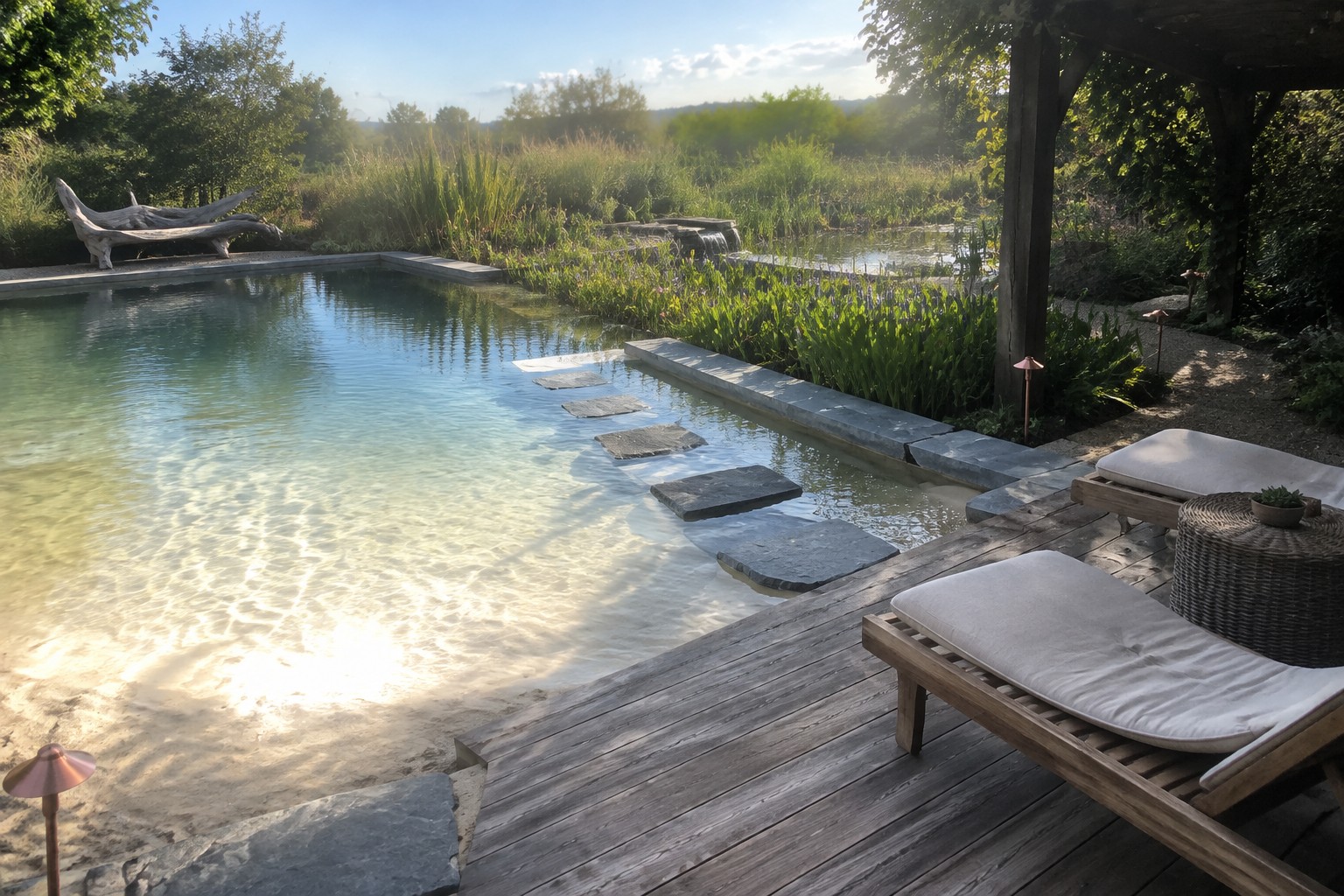
Add Small Timber Walkways to a Natural Pool
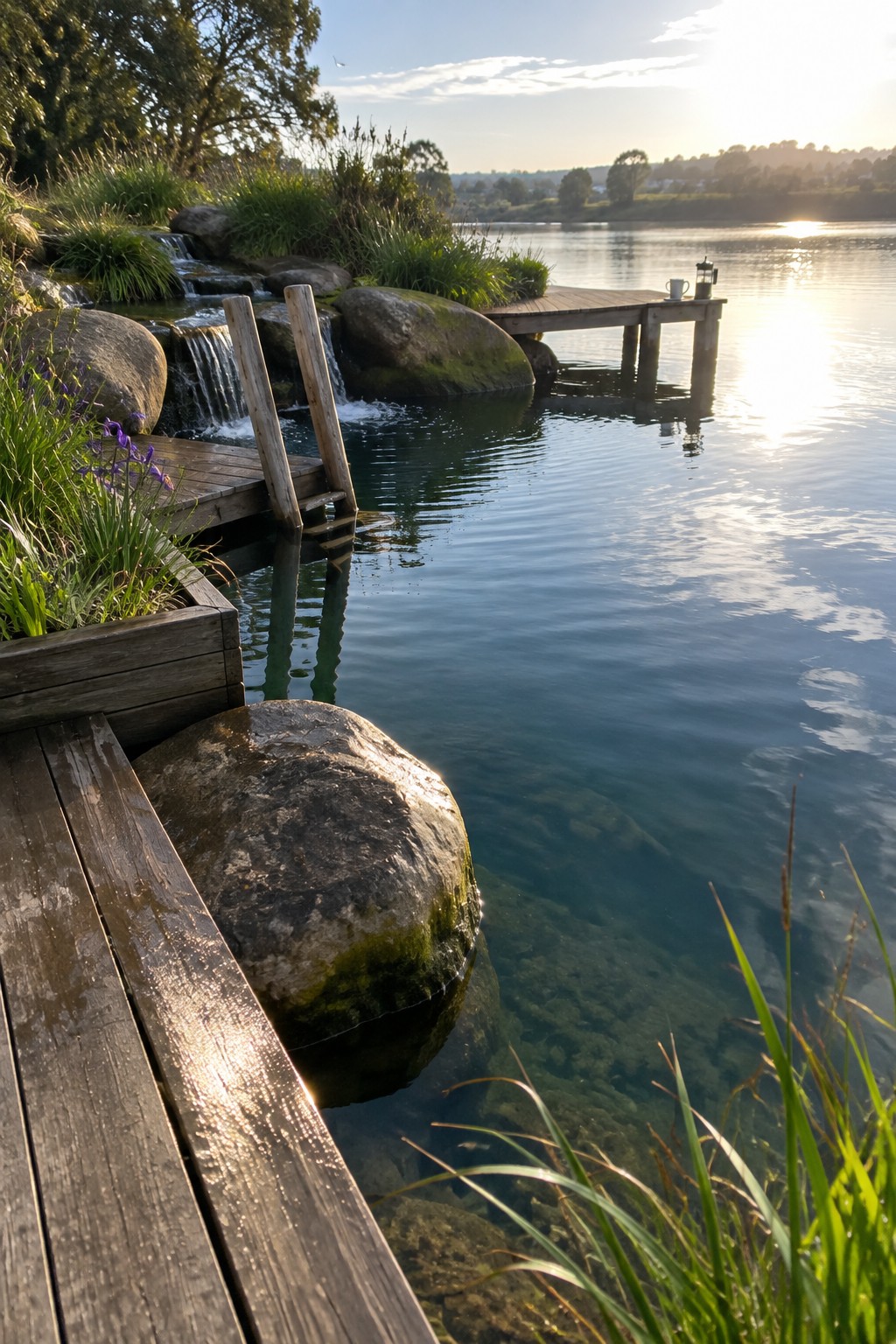
Timber walkways can make a natural pool easier to use without covering up its stone edges or clear water. A narrow deck that reaches over the pool gives you a place to step in or sit near the water, while keeping the setting informal.
Use sturdy, weather-resistant boards and keep the walkway only as wide as it needs to be. In this design, simple wooden platforms sit beside the rocks, with a short section crossing the water near the small cascade.
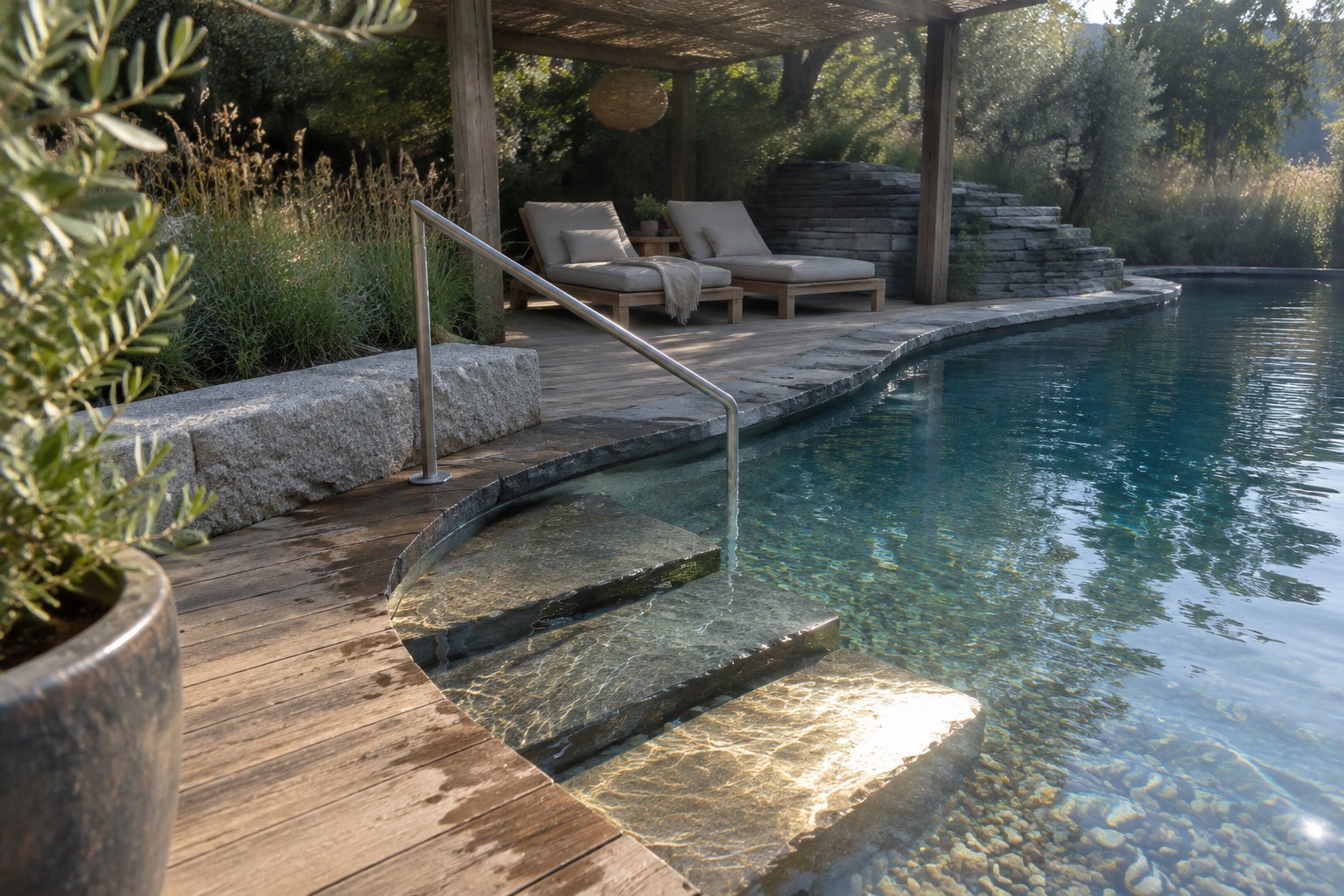
Build Stone Steps Around a Natural Pool
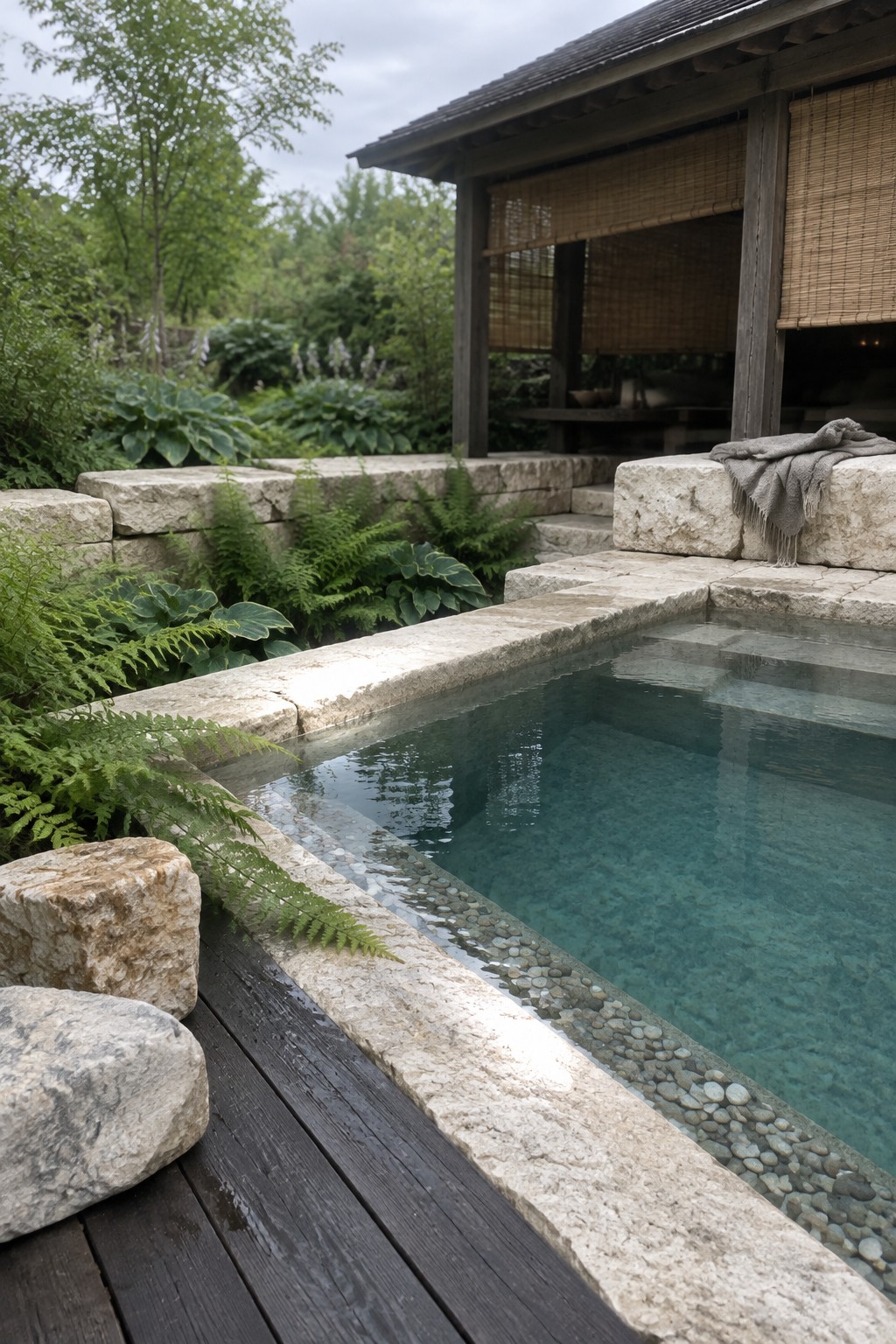
Stone steps make a natural pool easier to approach and give it a more built-in feel. Here, broad blocks create a clear route between the pool edge and the raised area beside it, while leaving room for planting.
This works well on a sloped or uneven site where a flat deck would feel out of place. Use sturdy, slip-resistant stone, and keep the steps wide enough for comfortable footing.
Add Outdoor Dining Beside a Natural Pool
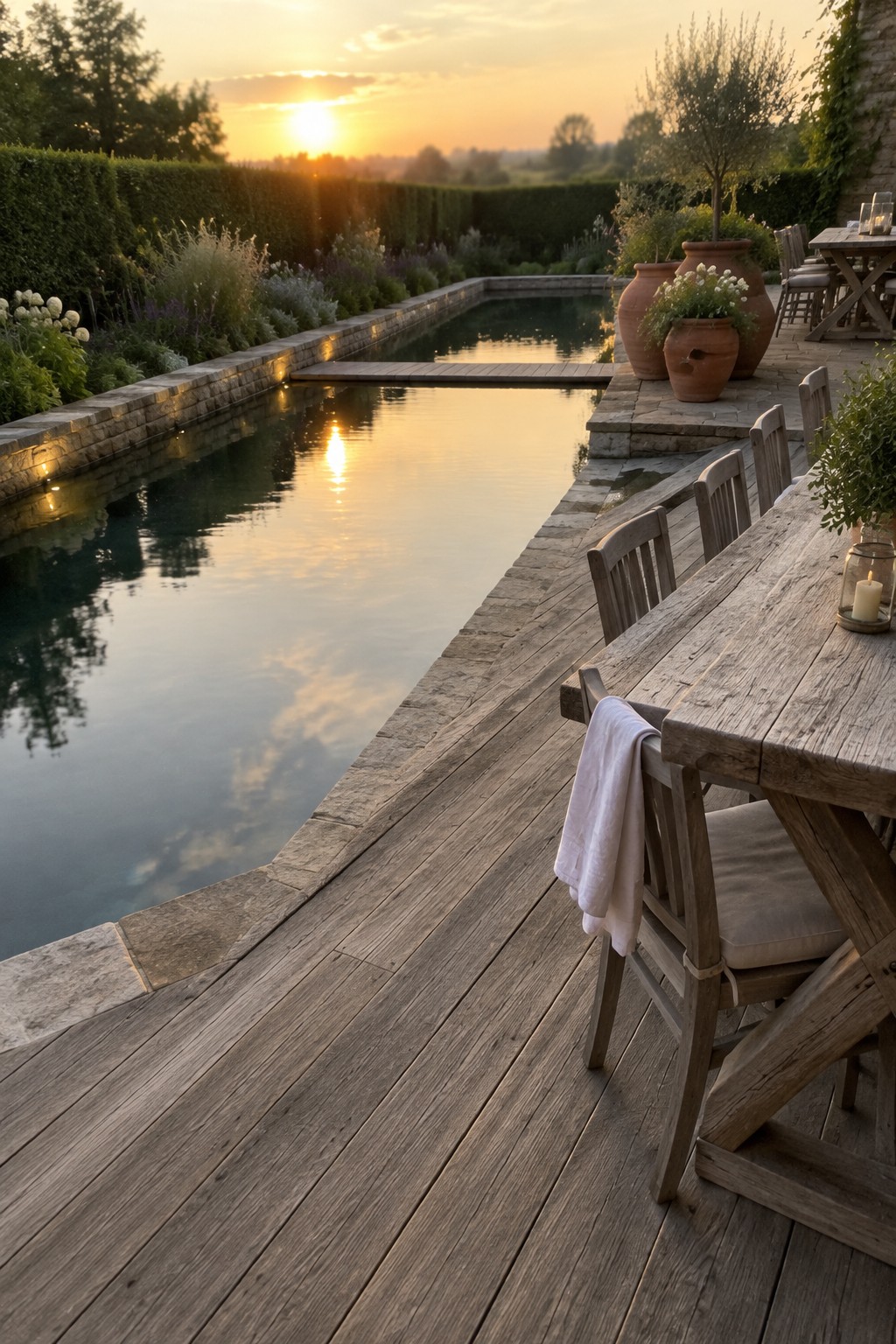
A dining deck beside a natural pool makes it easy to move between eating and swimming. Weathered timber suits the relaxed look of a stone-edged pool, and a sturdy table gives the area a clear purpose beyond lounging.
Leave enough room to pull out chairs and walk around the table without crowding the pool edge. This setup works well on a broad deck, but keep the dining area far enough from splashes to protect the wood and keep meals comfortable.
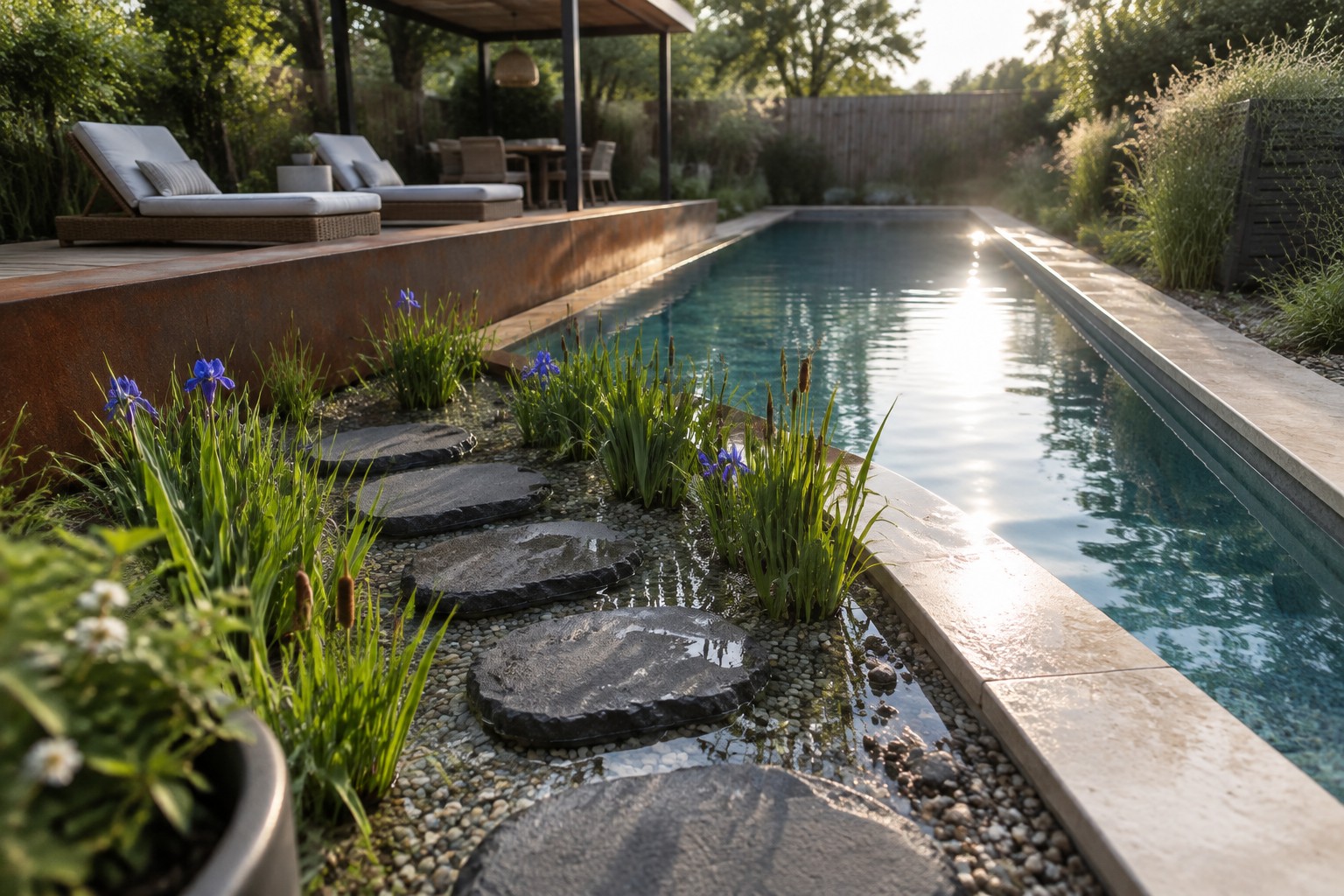
Use Timber Stepping Stones Beside the Pool

A few broad timber slabs make a practical path along a narrow pool without covering the whole area in decking. The gaps keep the surface open and let the stone edging remain part of the design.
This approach suits a compact courtyard where a full-width deck would feel crowded. Set the slabs level and leave enough room between them for a comfortable stride, then check that the timber stays stable and slip-resistant when wet.
Make a Natural Pool Part of the Garden
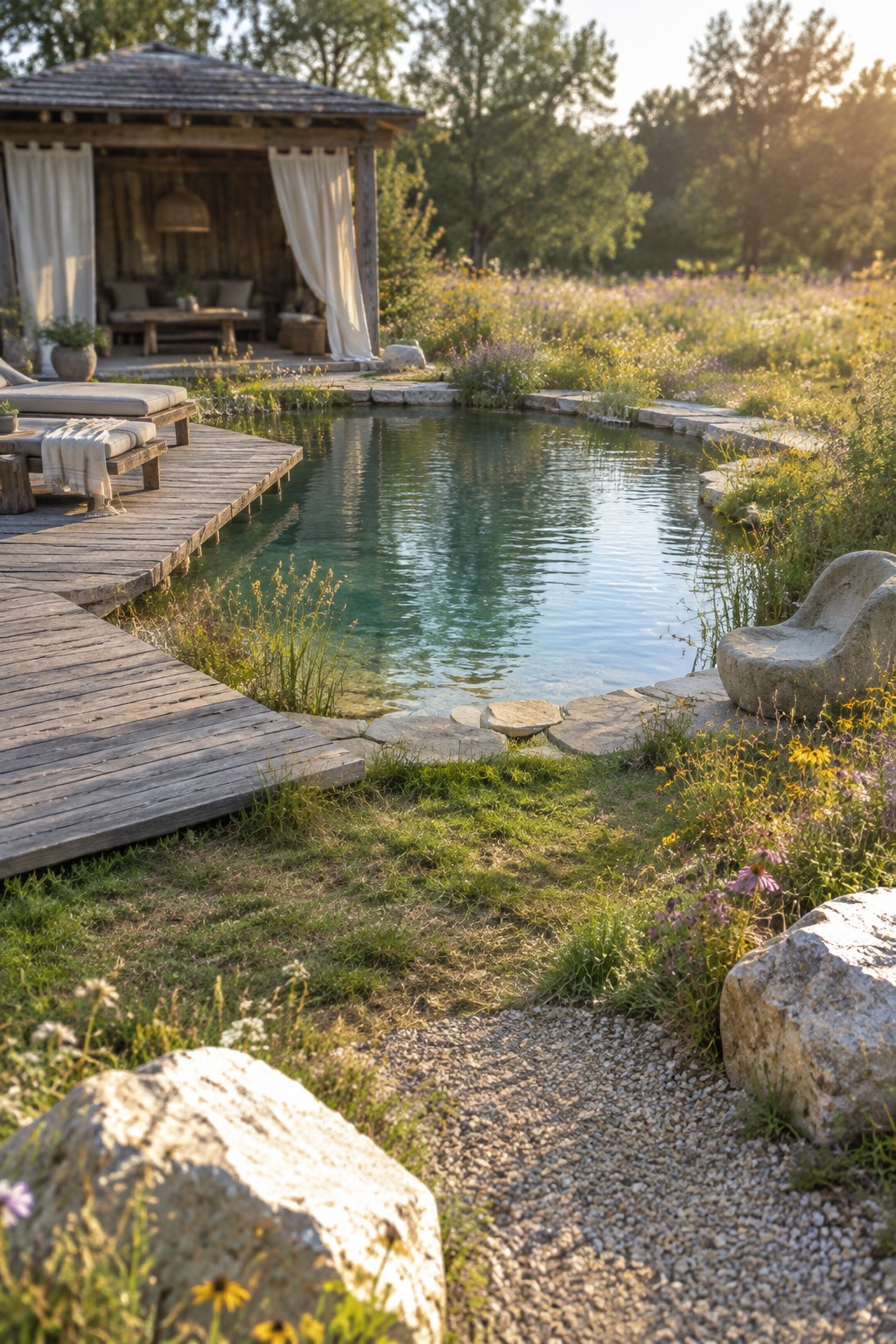
A natural pool feels at home in the yard when its edge follows the garden rather than looking sharply separate from it. Here, irregular stone coping and loose planting give the water a softer outline.
Use varied stone around the pool and leave room for plants to grow near the edge. This approach suits a relaxed garden, but keep a clear, stable path to the water so the natural look stays practical.
Make a Narrow Pool Part of the Deck Layout

A slim pool can fit neatly alongside a deck, making good use of a narrow terrace without taking over the seating area. The long shape also keeps the water close to the lounge, so the pool feels like part of the outdoor living space.
This layout works well on rooftops and compact patios. Leave a comfortable path along the pool edge, and choose durable decking that can handle regular splashes. A stone coping helps define the pool’s edge.
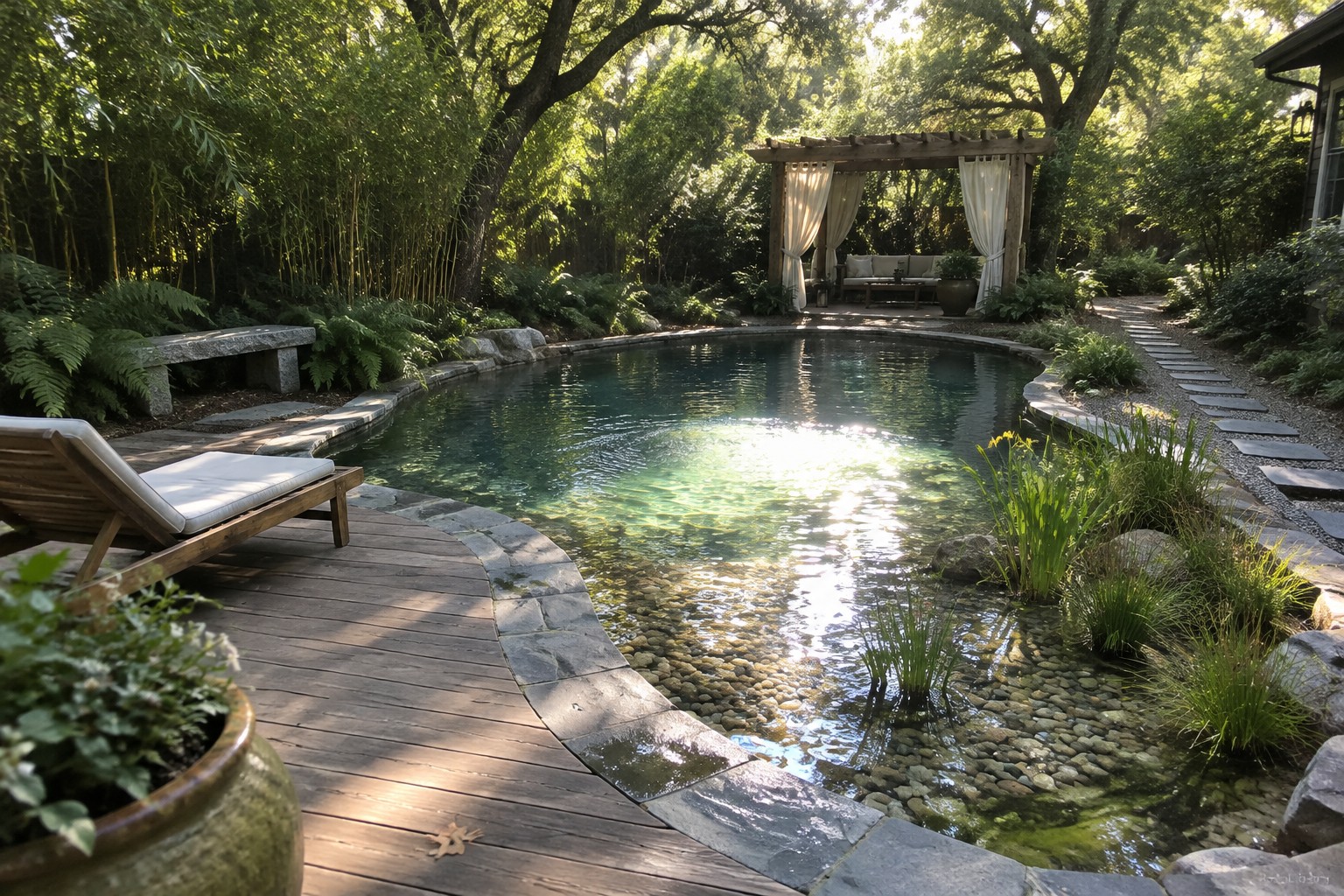
Build a Stone Pool Into a Sheltered Garden

A natural pool can feel like part of the garden when stone steps lead directly down to the water. The uneven stone edges suit a relaxed, rustic setting and make the pool feel less like a separate feature.
This approach works well in a leafy courtyard or a compact garden with a little shade. Use stones with stable, level surfaces for steps, and make sure the edges stay secure when wet.
Use Stone Steps to Connect the Pool Levels
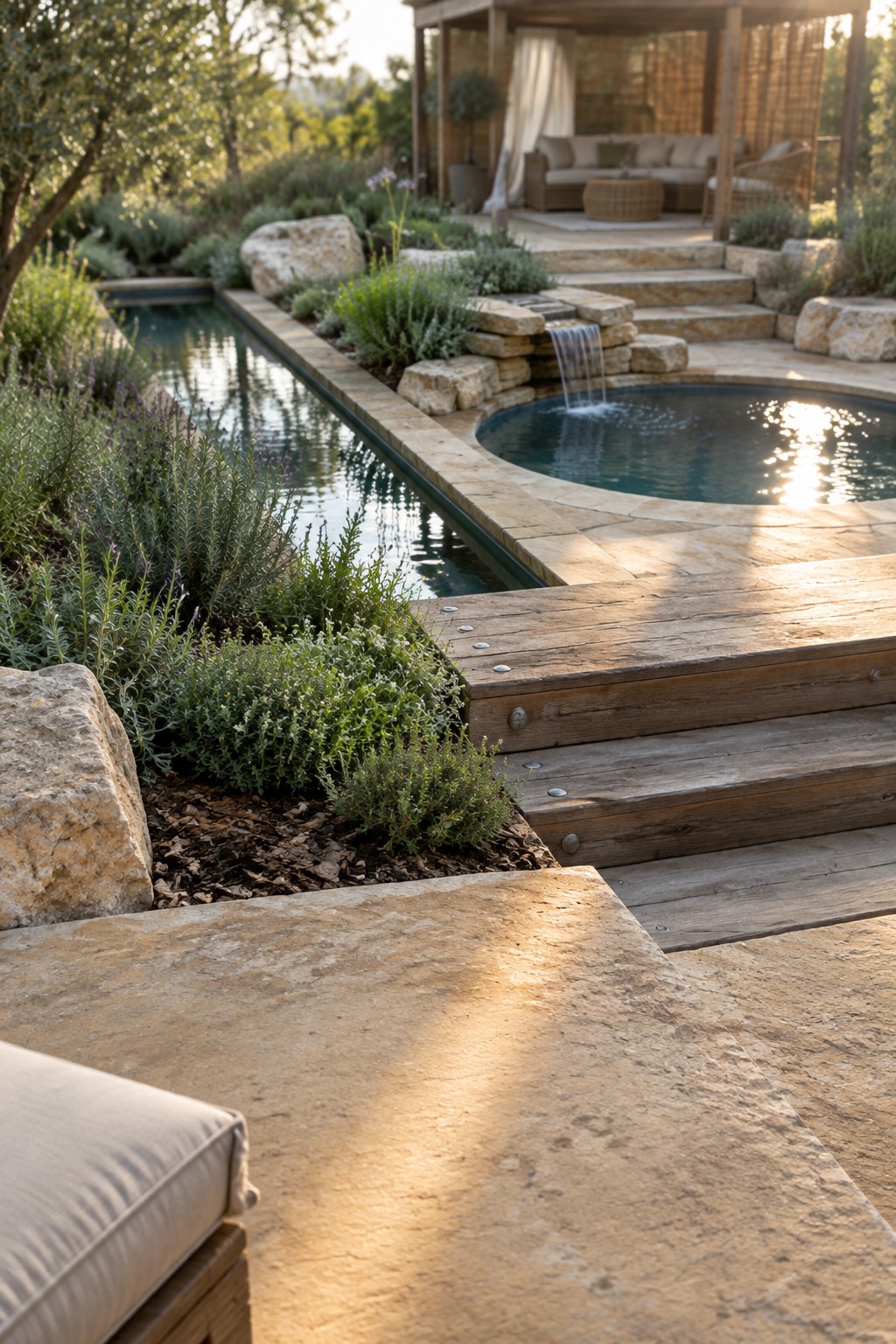
Stone steps make a natural pool easier to move around while helping it feel like part of the garden. Here, broad stone treads lead from the upper seating area down to the pool, and a small spillway carries water between the levels.
This approach works well on a sloped yard or wherever the pool and patio sit at different heights. Keep the steps wide and use a textured stone surface for better footing when it gets wet.
Use Timber to Divide a Narrow Natural Pool

A long timber walkway can divide a natural pool into separate swimming areas without making the layout feel complicated. It also gives you a dry route along the water, which is useful when stone coping alone would leave little room to walk.
This layout suits a compact courtyard or a long, narrow yard. Keep the timber boards textured and suitable for wet conditions, and leave enough width for comfortable foot traffic. The image shows a walkway running between two stone-edged sections of water.
Use a Timber Deck Along the Pool
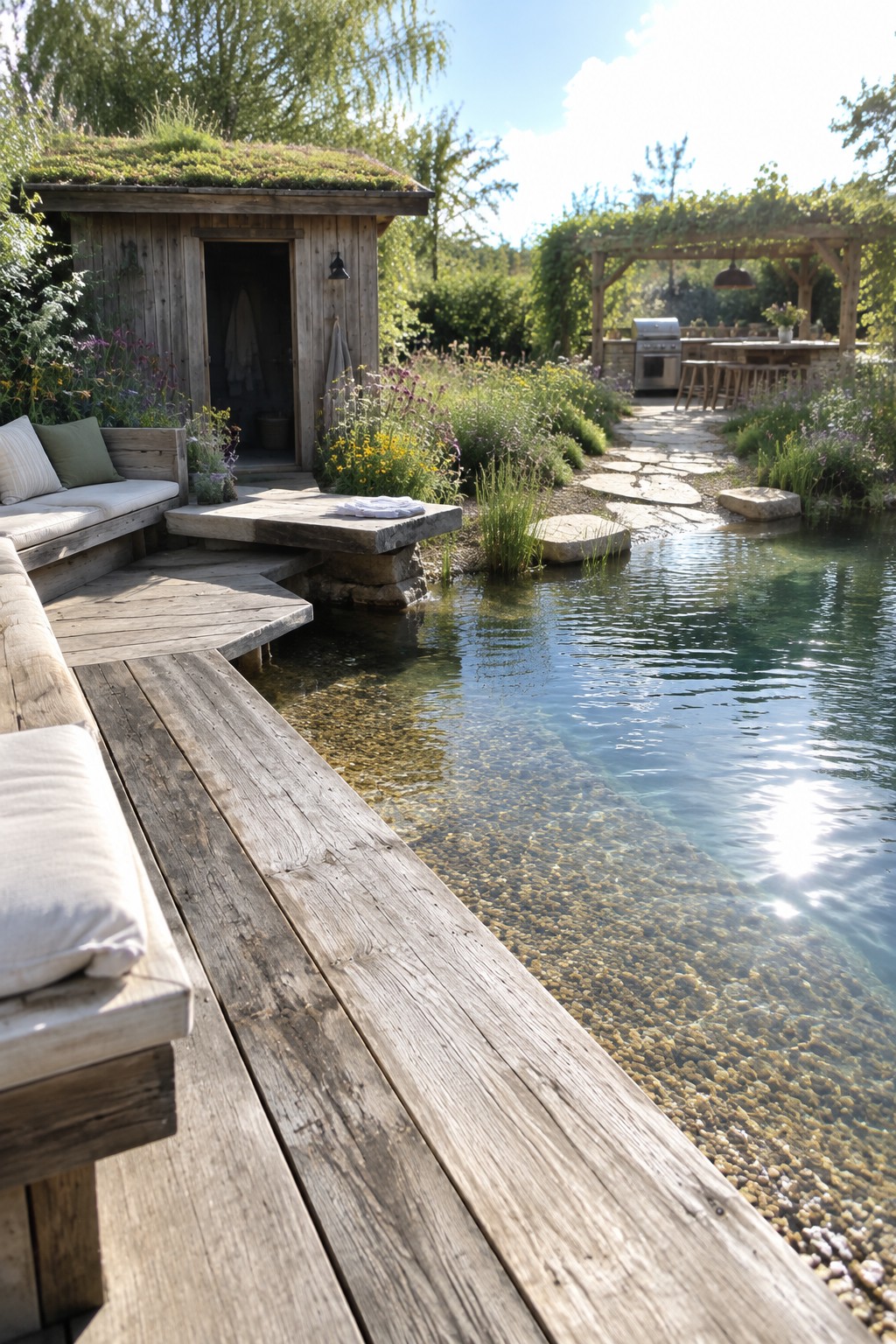
A weathered timber deck gives a natural pool a practical place to sit and relax. Here, the broad boards run right beside the water, making the pool edge feel like part of the seating area rather than a separate feature.
This layout suits a garden pool where people want easy access to the water and a spot to lounge nearby. Choose durable, slip-resistant boards, and leave enough room for chairs without making the deck feel crowded.
Frequently Asked Questions
Q: Can I use real wood around a natural pool without it rotting?
A: Yes, but choose durable timber and keep it out of constant contact with wet soil. Leave space for air to circulate, and plan to clean and reseal the wood as it weathers.
Q: Will stone make the pool edge too slippery?
A: It can if you choose a polished finish. Look for rough, textured stone that feels steady underfoot, especially on steps and paths near the water.
Q: Do rustic natural pools need more upkeep than regular pools?
A: They still need regular water care, and leaves or debris can collect among rocks and plants. A simple skimming routine and clear access to the pump make upkeep much easier.
Q: Can I get this look in a small backyard?
A: Absolutely. A compact pool with a timber deck and a few carefully placed stones can feel just as inviting as a larger design.