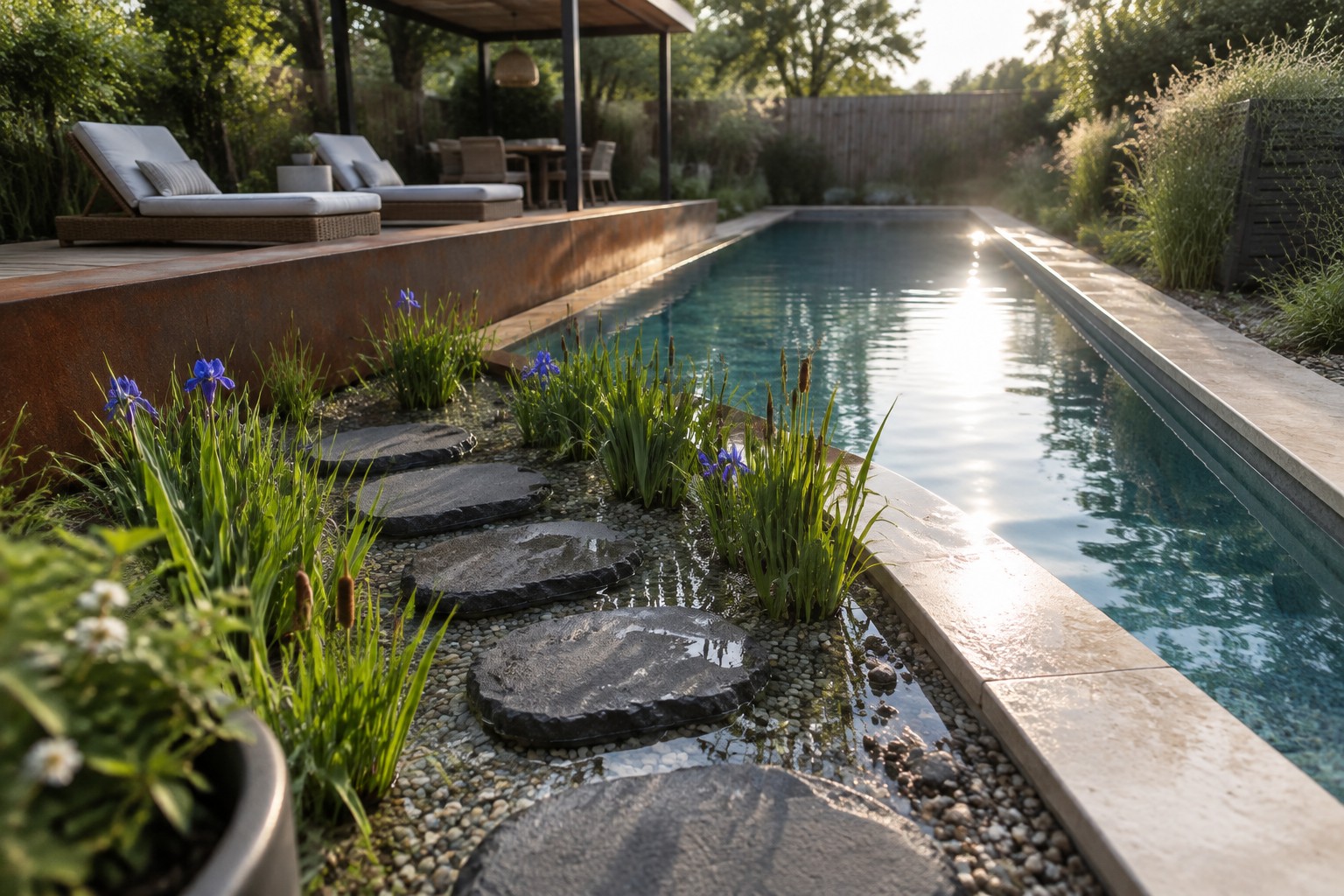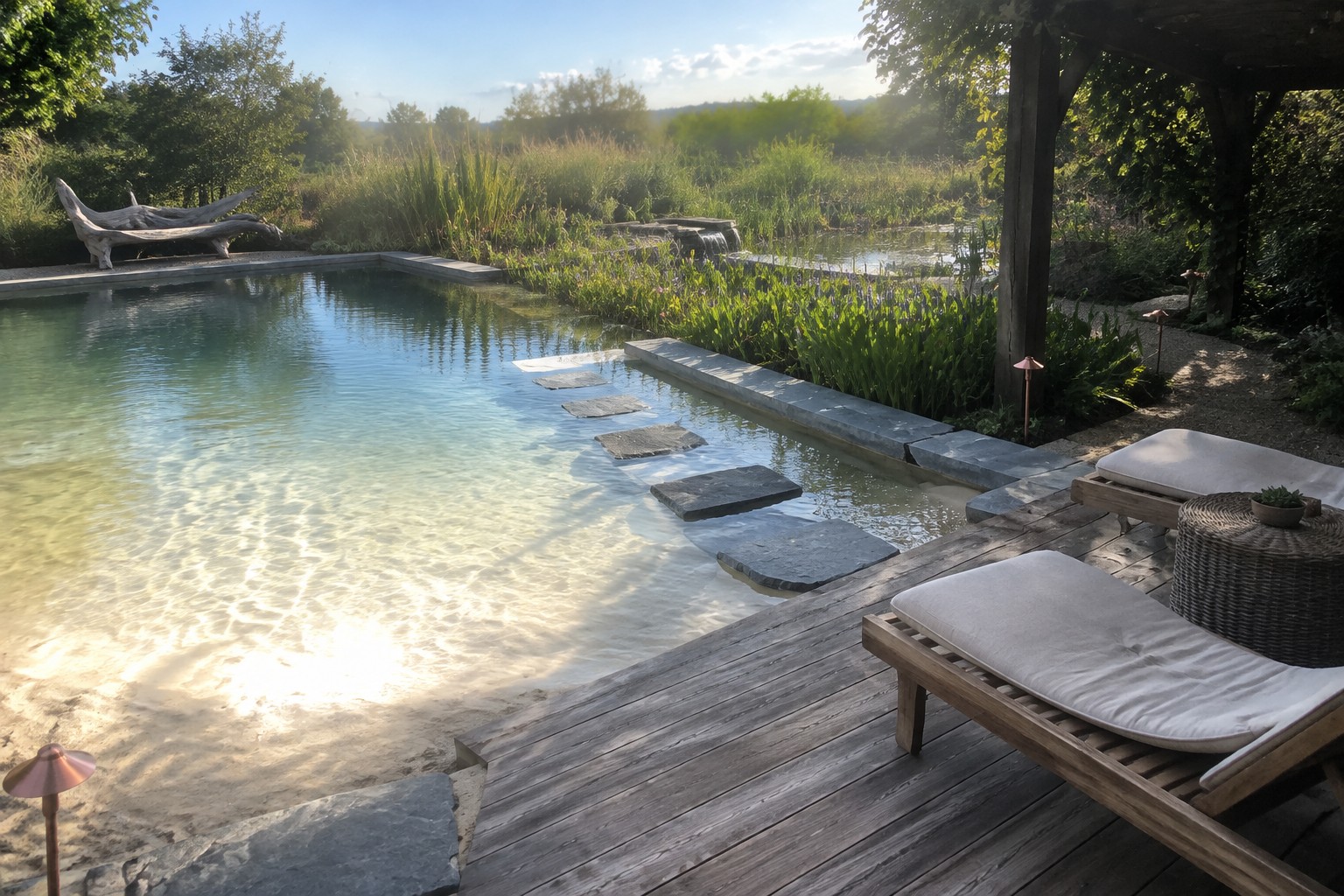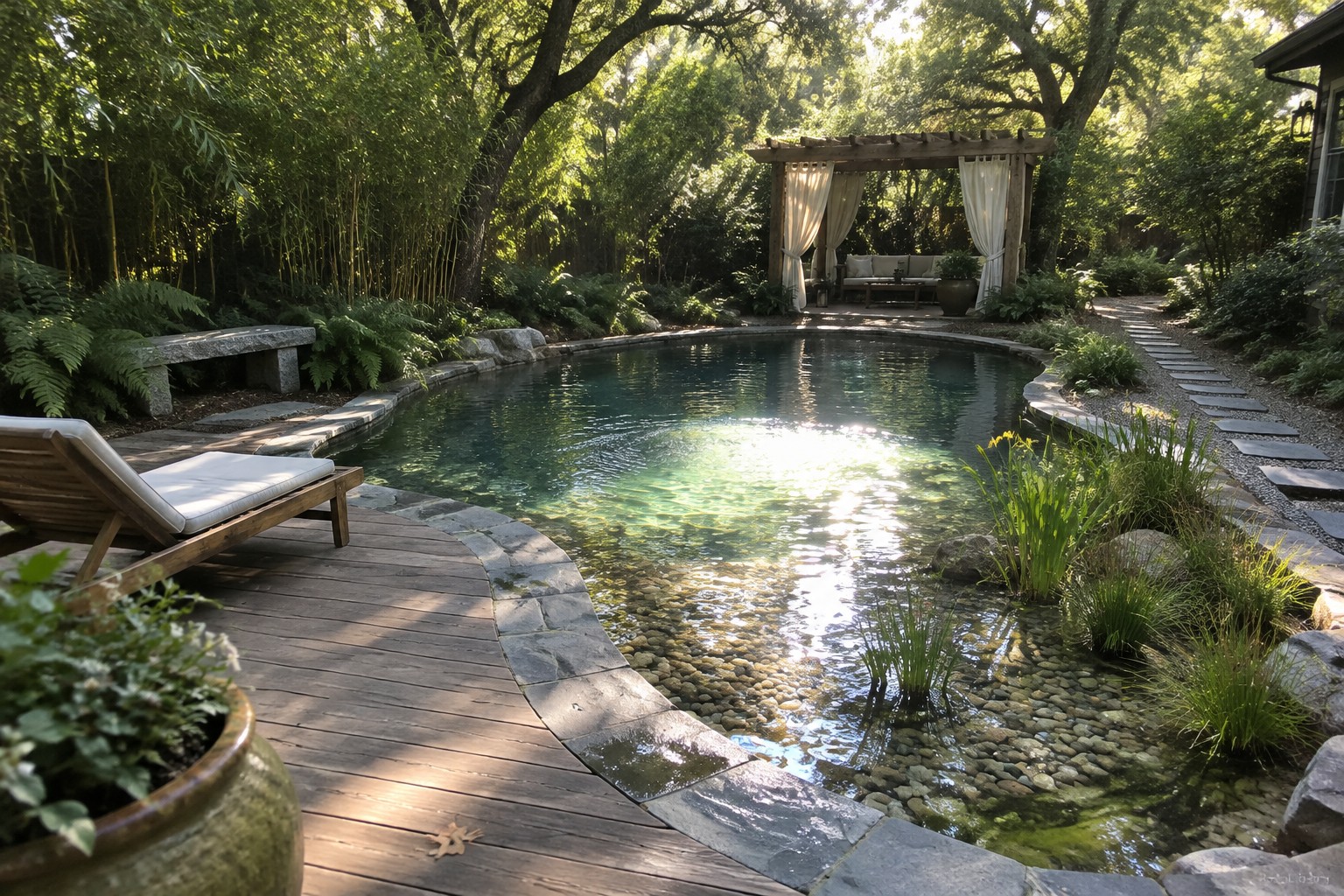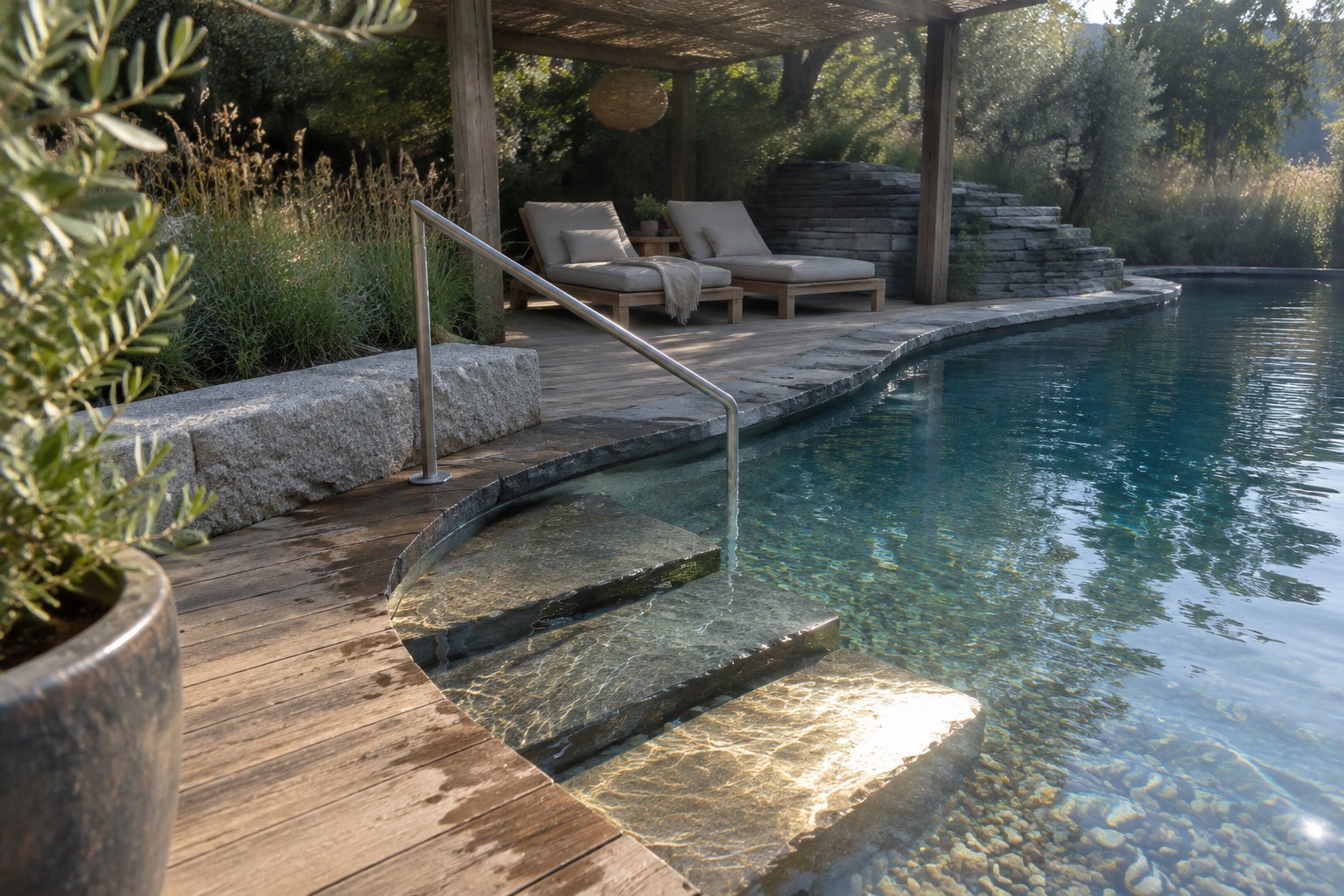
A natural pool can feel like part of the garden rather than a feature placed in the middle of it, especially when planting softens the edges and gives the water a sense of shelter.
I tend to notice the balance first: dense greenery can make a pool feel private and cool, but it still needs clear paths and open areas for swimming and lounging.
Stone edging, layered foliage, and a few well-placed tropical plants can shape the space without making it feel crowded.
The best designs leave room for everyday use while letting the landscape grow around the water over time.
I’d save ideas that show how to keep that lush look manageable in a real backyard.
Create a Natural Poolside Seating Area

A natural pool feels more connected to the garden when the seating area uses simple materials and leaves room for plants and stone to remain part of the setting. Here, the loungers sit on a paved edge beside the water, making it easy to move between swimming and resting.
For a similar setup, place a few loungers on a stable, slip-resistant surface close to the pool. Keep enough clear space to walk around them, and choose materials that can handle splashes and humidity.
Use Dense Greenery for Pool Privacy

A thick planting border can make a narrow pool feel more private without adding a tall solid fence. The leafy backdrop here keeps the water tucked away from neighboring spaces while giving the pool area a natural edge.
For a similar setup, use evergreen shrubs or climbing plants where you need screening, and leave enough room for them to grow and be maintained. A living screen works especially well in a small courtyard, where a fence might feel closed in.
Make a Natural Pool Part of the Garden
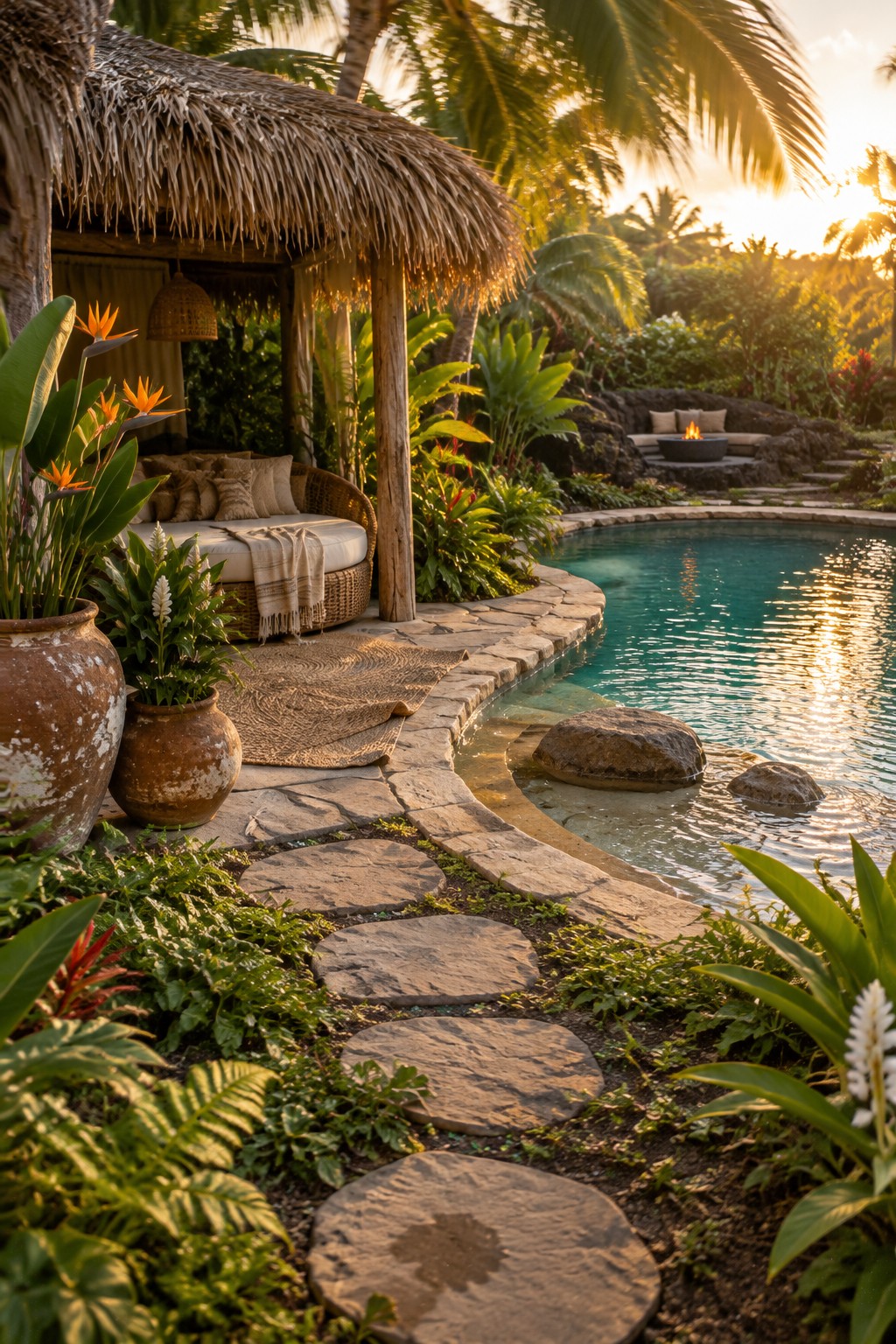
A natural pool can feel more settled into a yard when its edges follow the garden rather than forming a stark, regular outline. Irregular stone coping lets planting come close to the water and gives the pool a softer transition into the surrounding landscape.
Use this approach where there’s room for a gently curved pool edge and a planted border. Choose stone with a surface that stays safe when wet, and leave enough clear space for people to walk around the pool.
Cover a Poolside Wall With Climbing Greenery

A tall, leafy boundary can make a small pool area feel more sheltered without adding a solid fence. Here, climbing greenery covers the wall, giving the water and nearby seating a more private setting.
This approach works well in compact courtyards where neighboring views are a concern. Use a sturdy support and choose plants suited to your climate, since dense growth needs regular trimming and can be difficult to manage if it spreads too far.
Create a Small Poolside Lounge
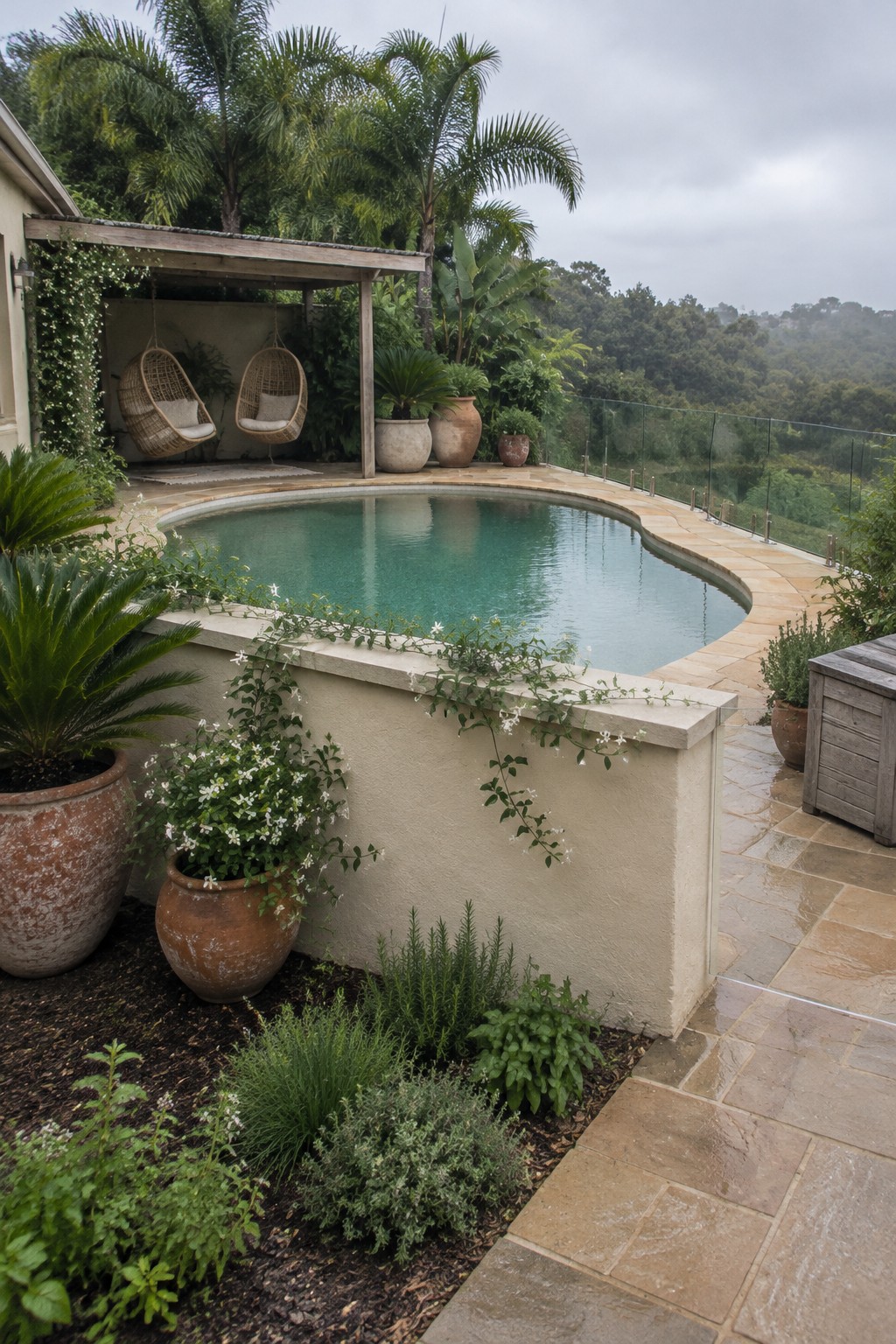
A pool feels more useful when there is a place to sit nearby. A simple covered nook with hanging chairs gives people somewhere to relax between swims without taking up much of the pool deck.
This setup works well beside a compact pool, especially where space for a full patio is limited. Leave enough clear deck for walking, and use weather-ready seating that can handle damp air.
Add an Outdoor Dining Area Beside the Pool
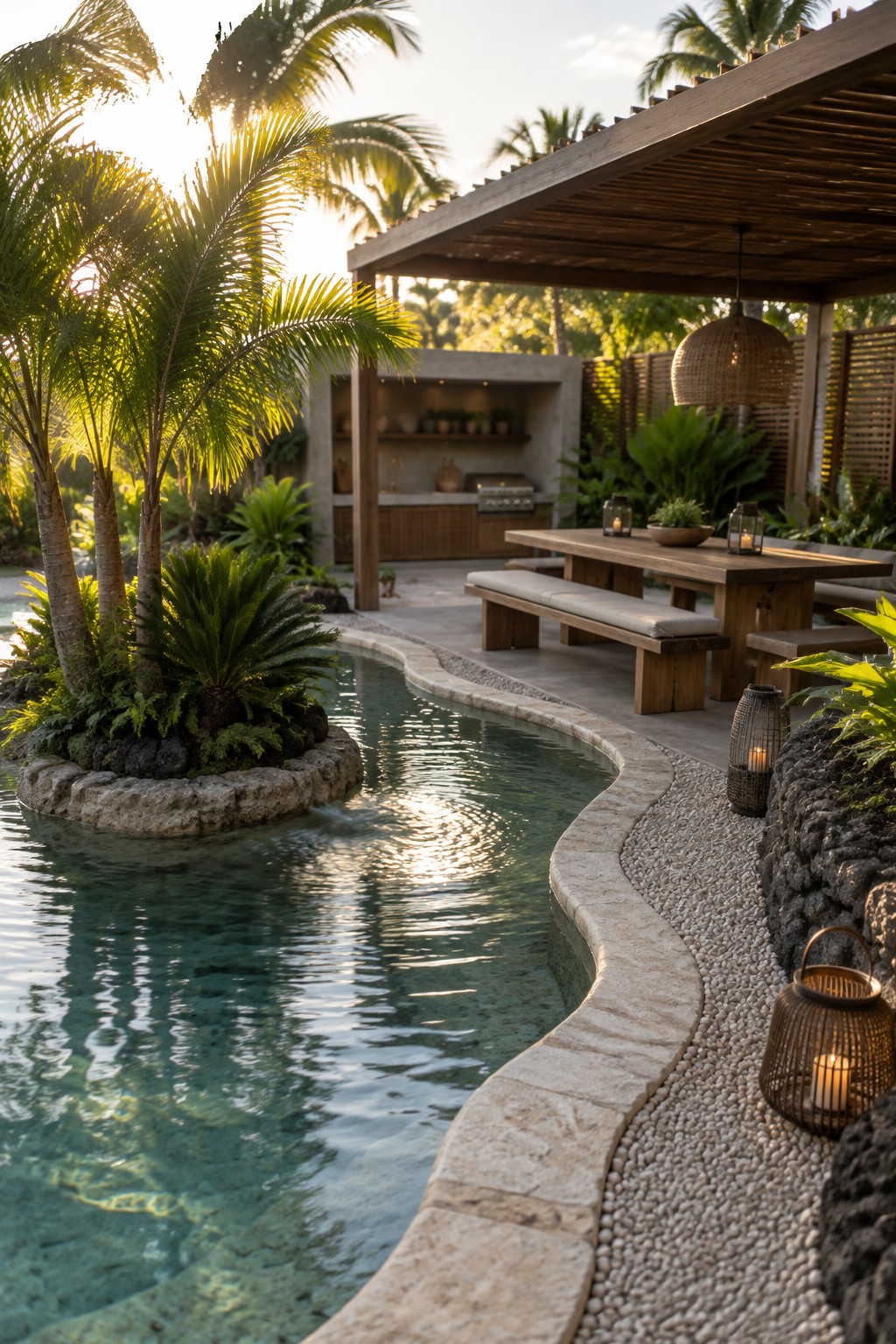
A dining spot beside a natural pool makes it easy to move between swimming and eating without leaving the garden. A simple wooden table under a shade roof gives the area a clear purpose and keeps meals comfortable in the sun.
This setup works well on a larger pool deck or patio, especially when you want space for both dining and swimming. Leave enough room around the table for chairs and walking, and choose materials that can handle moisture and outdoor use.
Add a Built-In Spa Beside the Pool
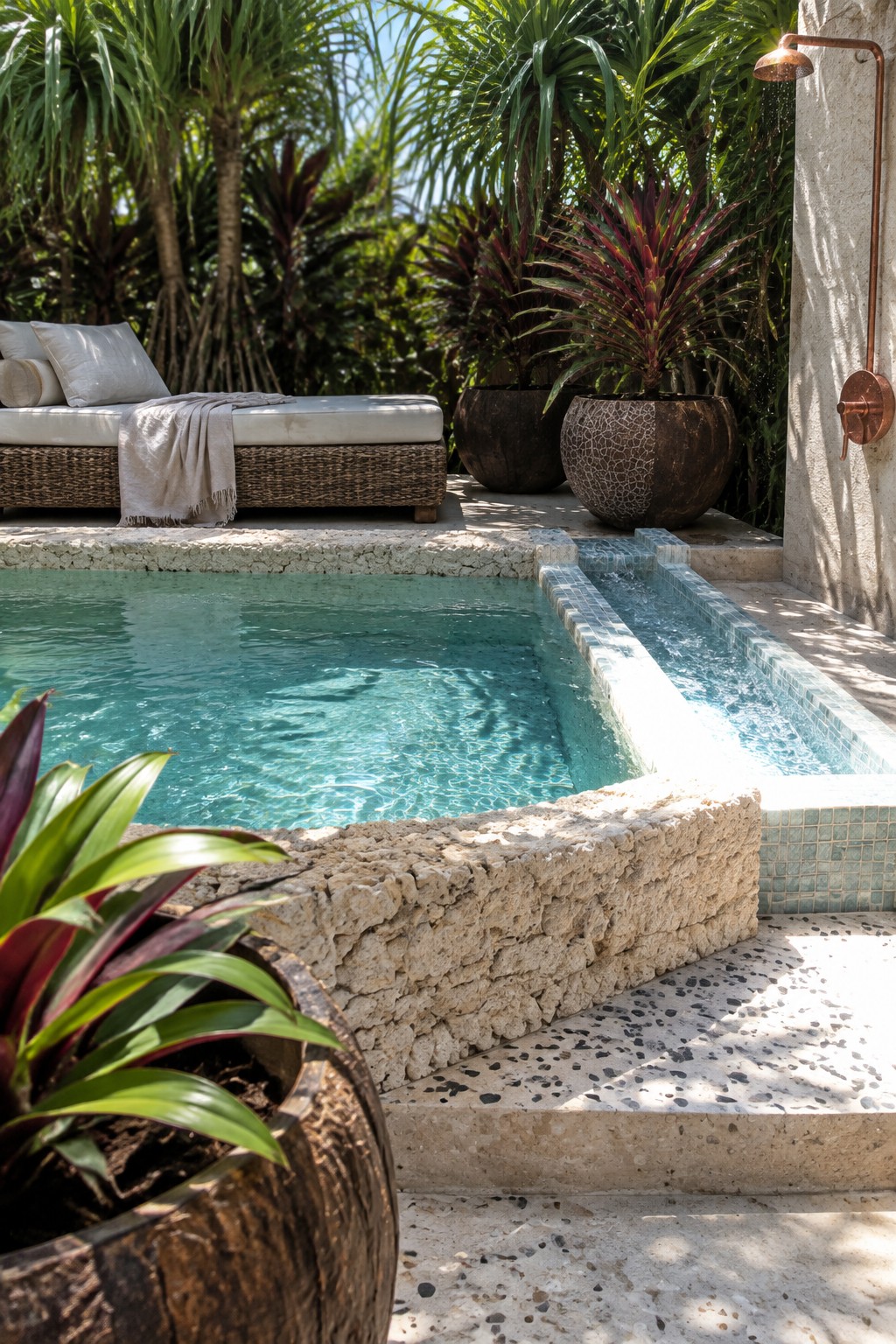
A small raised spa beside the main pool makes the water area more useful without taking up much extra space. The tiled basin sits neatly along the pool edge, so the two sections feel connected while still offering different ways to relax.
This setup works well in a compact courtyard or garden where there is room for a plunge pool but not a separate hot tub. Keep the spa easy to reach from the pool, and choose finishes that suit the surrounding stone so the edge looks tidy.
Add a Wooden Bridge Beside the Pool

A small wooden bridge can help a natural pool feel connected to the rest of the garden. It gives people a clear way to cross a planted area without paving over every bit of ground.
Use a short bridge where a poolside path meets a stream, rain garden, or dense planting bed. Choose weather-resistant wood and make the walking surface secure, especially when it may get wet.
Build a Pool Into a Sloped Garden

A pool on a hillside can follow the natural slope instead of requiring one large, level terrace. Here, stone walls create separate pool levels, while the main pool can extend toward the view.
This approach works best where the land already drops away, but it needs careful planning for drainage and sturdy retaining walls. Keep the planting around the edges suited to the local climate so it stays manageable.
Add a Shaded Lounge Beside the Pool

A covered poolside lounge makes a narrow outdoor area more useful throughout the day. Here, a timber pergola provides shade for hanging chairs, giving the pool edge a comfortable place to pause without taking up much room.
For a similar setup, choose compact seats and leave a clear path along the water. It works especially well in a long, narrow yard where a full patio might feel crowded.
Add a Canopy Over a Built-In Poolside Bench

A shaded lounge makes a pool area more useful when the sun gets strong. Here, a fabric canopy covers a simple built-in bench, giving people a comfortable place to sit close to the water.
This setup works well on a patio where there’s room for a pool and a narrow seating zone. A canopy can provide cover without closing off the space, but make sure its supports and fabric are suited to outdoor use.
Set Up Outdoor Dining Beside the Pool

An outdoor dining spot beside the pool makes it easy to move between meals and a swim without leaving the garden. A sturdy wooden table gives everyone room to gather, while a simple shade cover helps make the area comfortable during sunny afternoons.
This kind of layout works well in a courtyard or garden where the pool and dining space can share one paved area. Leave enough room around the chairs for people to walk through, and choose materials that can handle damp towels and splashes.
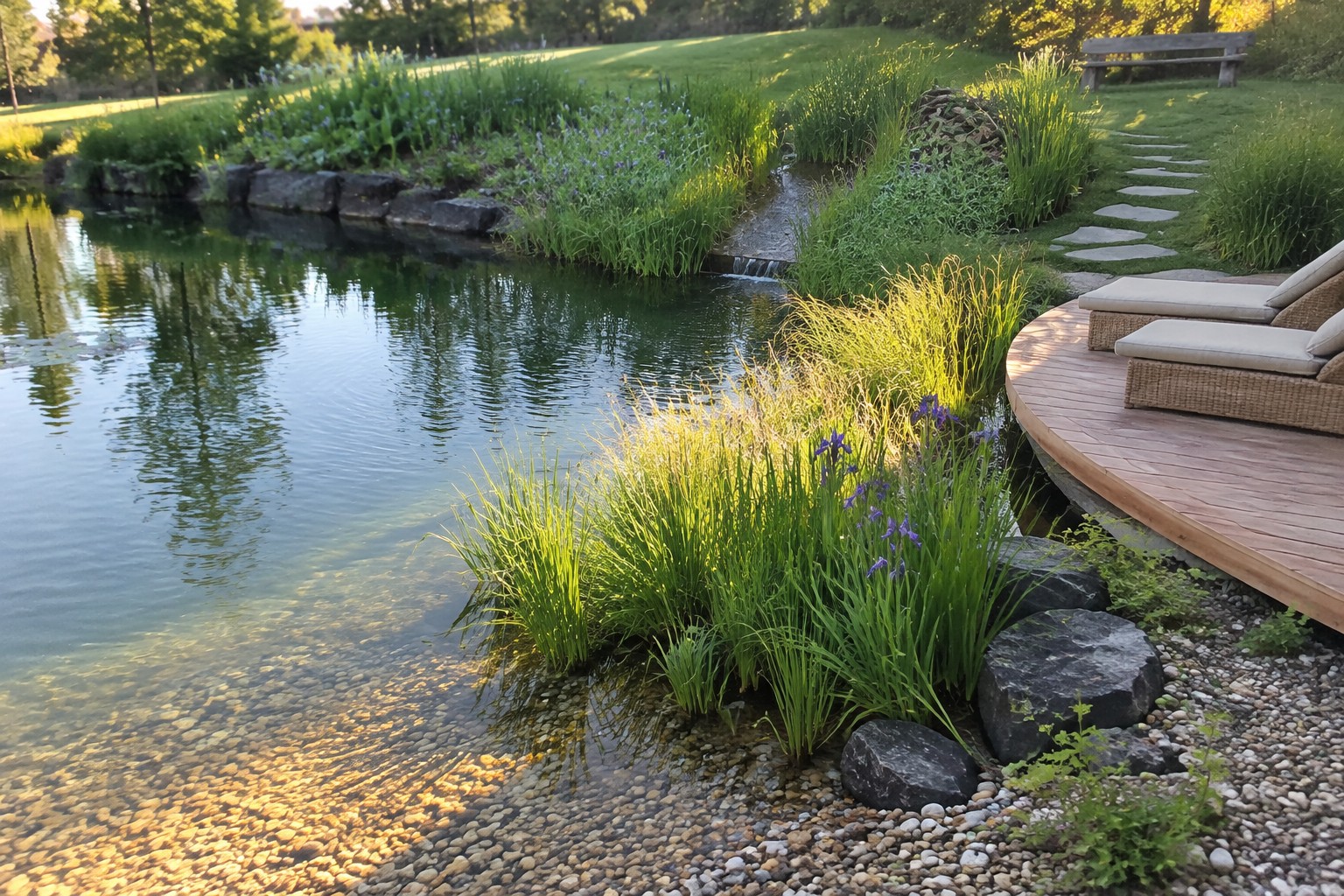
Add a Shallow Pebble Shelf to a Natural Pool

A shallow shelf lets a natural pool shift gradually from a swimming area to a spot for wading or sitting in the water. Small, smooth pebbles make the transition feel like part of the pool rather than a separate deck.
This layout works well in a garden pool where people want room to cool off without swimming. Keep the shelf broad enough to use comfortably, and choose stones that are smooth underfoot and suited to regular contact with water.
Add a Wooden Deck Along the Pool

A wood deck that runs right beside a pool makes it easy to move between swimming and lounging. The long boards give the pool edge a clear, comfortable place to walk and sit, while keeping the water as the main focus.
This works well in a compact courtyard or beside a narrow pool, where a broad patio could take up too much room. Choose a durable, slip-resistant decking material, and leave enough space for safe passage around the water.
Add a Bridge Across the Pool

A short wooden bridge can divide a long pool into two connected sections while giving people an easy way across. It also makes the pool feel more like part of the garden than a single open stretch of water.
Use a bridge where the pool is narrow enough for a simple crossing, and leave plenty of clear space around it for safe access. Wood suits a natural garden setting, but choose a durable, slip-resistant finish for wet conditions.
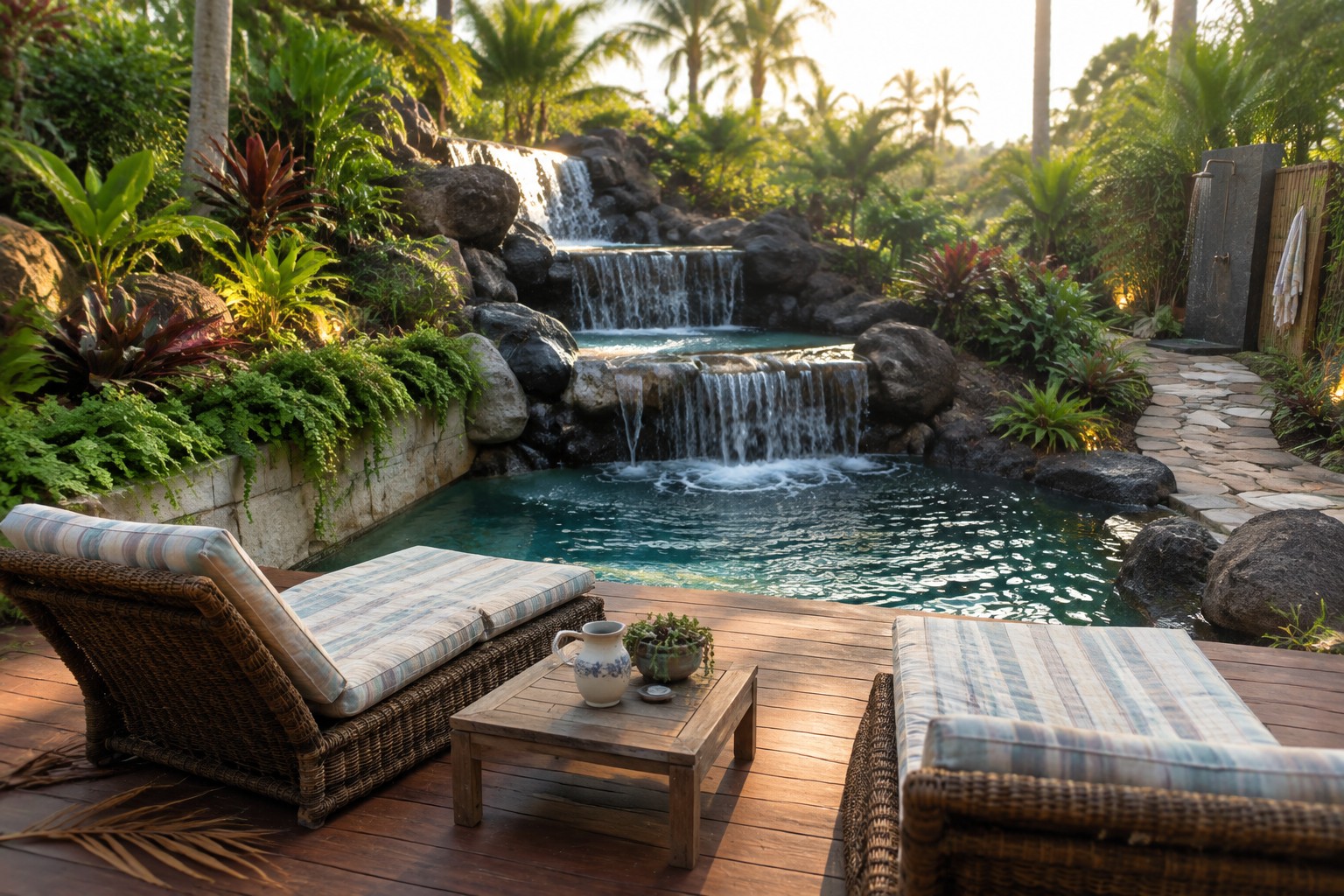
Add a Waterfall Beside a Natural Pool
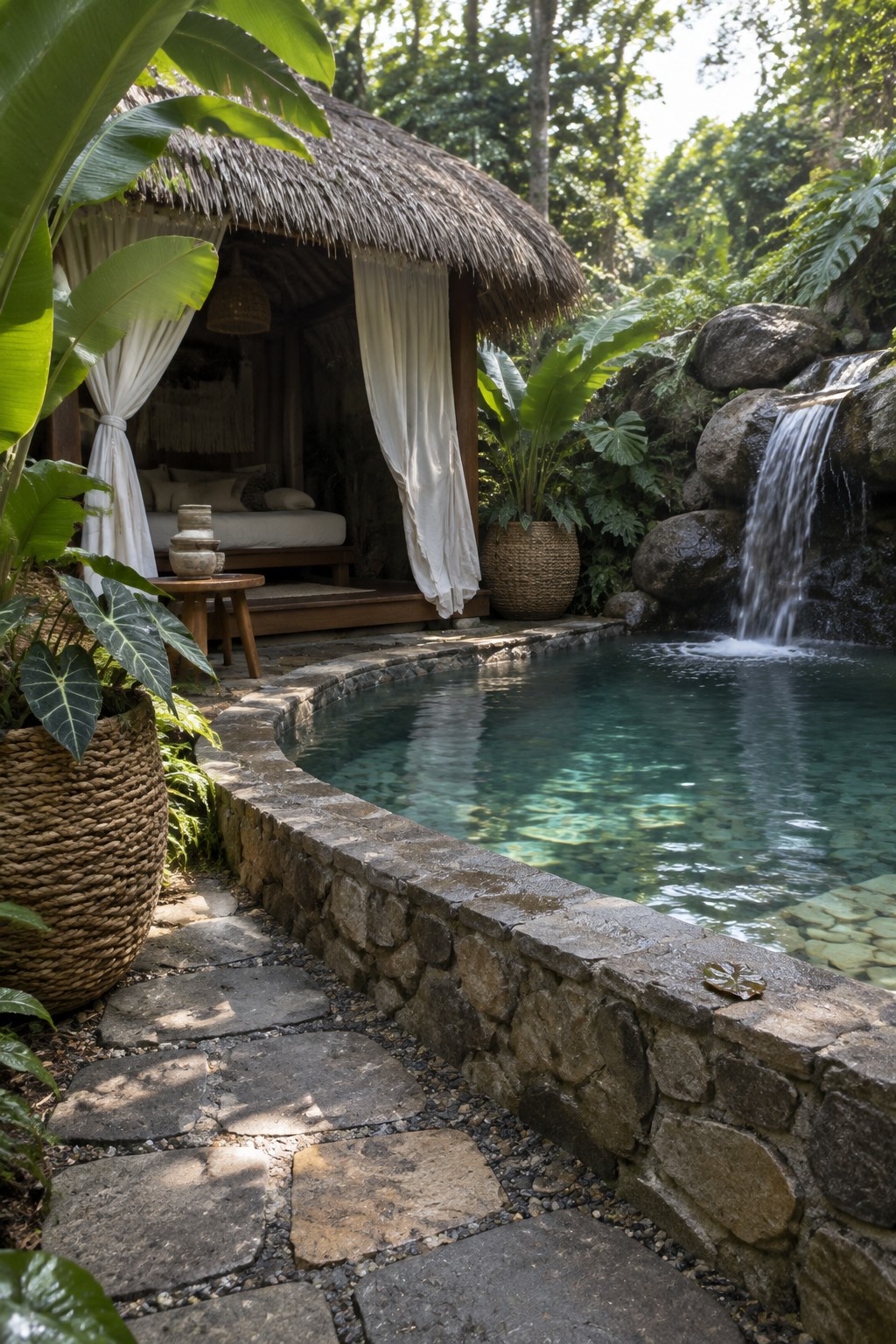
A small waterfall can make a natural pool feel connected to the garden rather than set apart from it. Here, water spills over a rocky edge, giving the pool a simple focal point and a gentle sense of movement.
This works especially well where the yard has a slope or existing stonework. Keep the drop modest and make sure the rocks direct water safely back into the pool, since splashing can otherwise leave nearby paths wet.
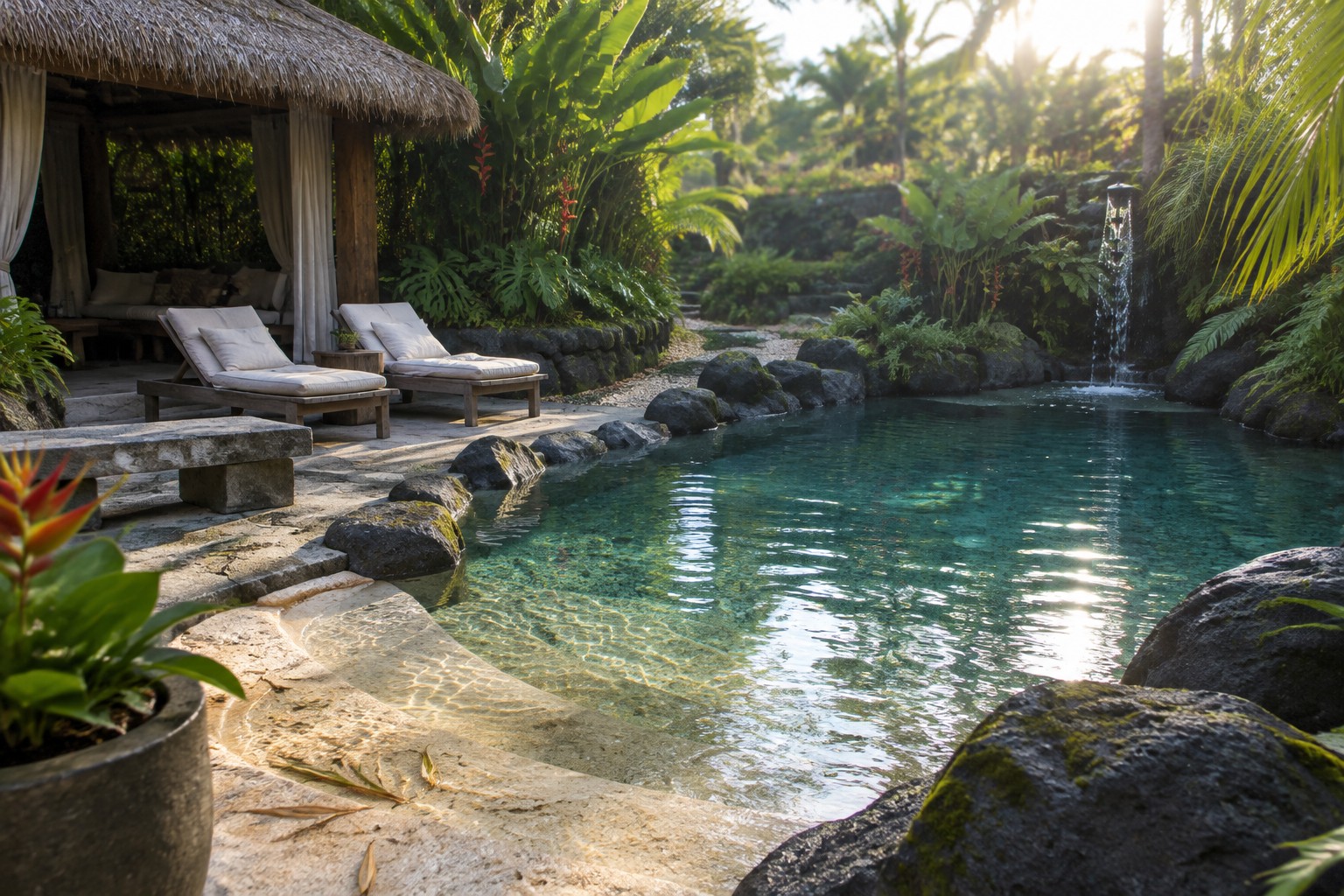
Use a Shallow Pool Entry for Lounging

A shallow shelf at the edge of a pool gives you a comfortable place to sit or stretch out in the water. It also makes the transition from the stone surround to the deeper swimming area feel gradual.
This layout works well in a natural pool where people want space to cool off without swimming laps. Keep the shelf wide enough for relaxing, and use a slip-resistant finish around the waterline.
Add Natural Stone Steps Along the Pool

Stone steps make it easier to move around a natural pool while keeping the edge connected to the garden. Broad, flat stones offer a steady place to walk and give the water a more organic border than a straight paved edge.
Use stones with a rough, slip-resistant surface, and set them firmly so they do not shift when wet. This approach works especially well for a pool with an uneven or curved shoreline.
Use Warm Lighting Around the Pool

String lights make a poolside seating area easier to enjoy after dark. Their soft glow reflects on the water and helps connect the lounge area to the pool without needing bright overhead lighting.
Hang outdoor-rated bulbs above the seating area, and keep the wiring clear of the water and walking paths. A few low lights near the edge can help people see where they’re going without overpowering the garden.
Frequently Asked Questions
Q: Can I make a tropical natural pool work in a small backyard?
A: Yes. Keep the pool shape simple and use dense planting along one edge or at the back, rather than surrounding every side with greenery. A few layered plants can give the space a lush feel without crowding the swimming area.
Q: How do I keep leaves and flowers out of the water?
A: Leave some open space between the pool and larger plants, especially trees that drop leaves or blossoms. A skimmer and a quick daily sweep help, too. Dense greenery looks lovely, but it shouldn’t make pool care a chore.
Q: Will a natural pool attract mosquitoes?
A: Moving, well-maintained water is less likely to become a mosquito breeding spot than stagnant water. Keep plant areas tidy and clear out standing water nearby, such as in saucers or unused pots.
Q: What plants give a tropical look without taking over?
A: Choose a mix of upright plants, broad leaves, and low greenery, then check how large each one will grow. Put the biggest plants farther from the pool edge so they frame the water without swallowing the path.