A natural pool can bring a quieter, more grounded feel to a garden, but its shape and setting need to feel connected to the rest of the yard.
I find that stone edges and gravel paths work best when they guide movement without making the space feel overly arranged.
The first thing I notice is often how the pool sits among the plants, paths, and open areas around it.
A few carefully placed stones, a simple entry path, and planting that softens the edges can make a natural pool feel like part of the landscape rather than an object set into it.
I’d be most likely to adapt ideas that balance a calm Japanese-inspired look with practical details such as safe footing and easy access.
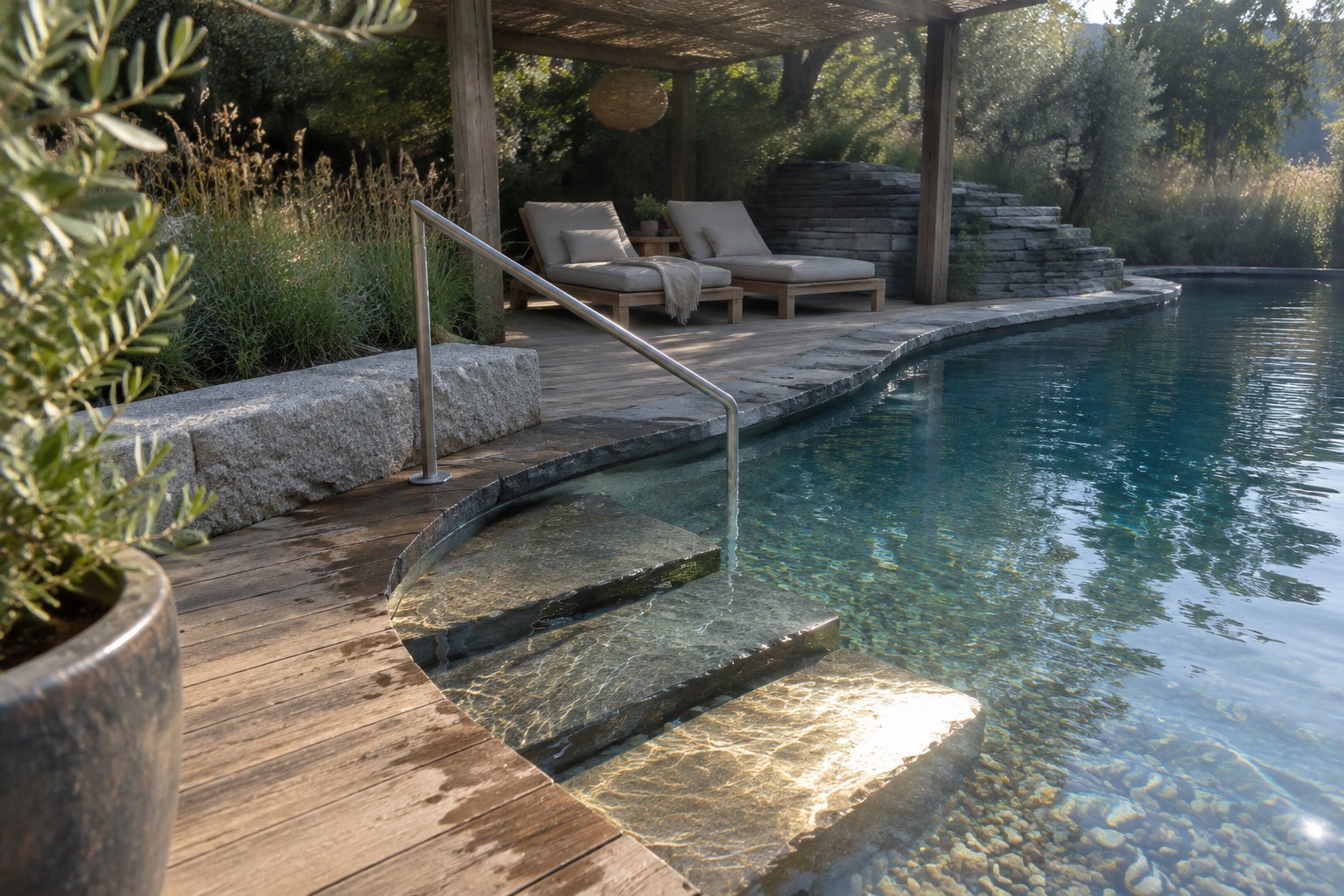
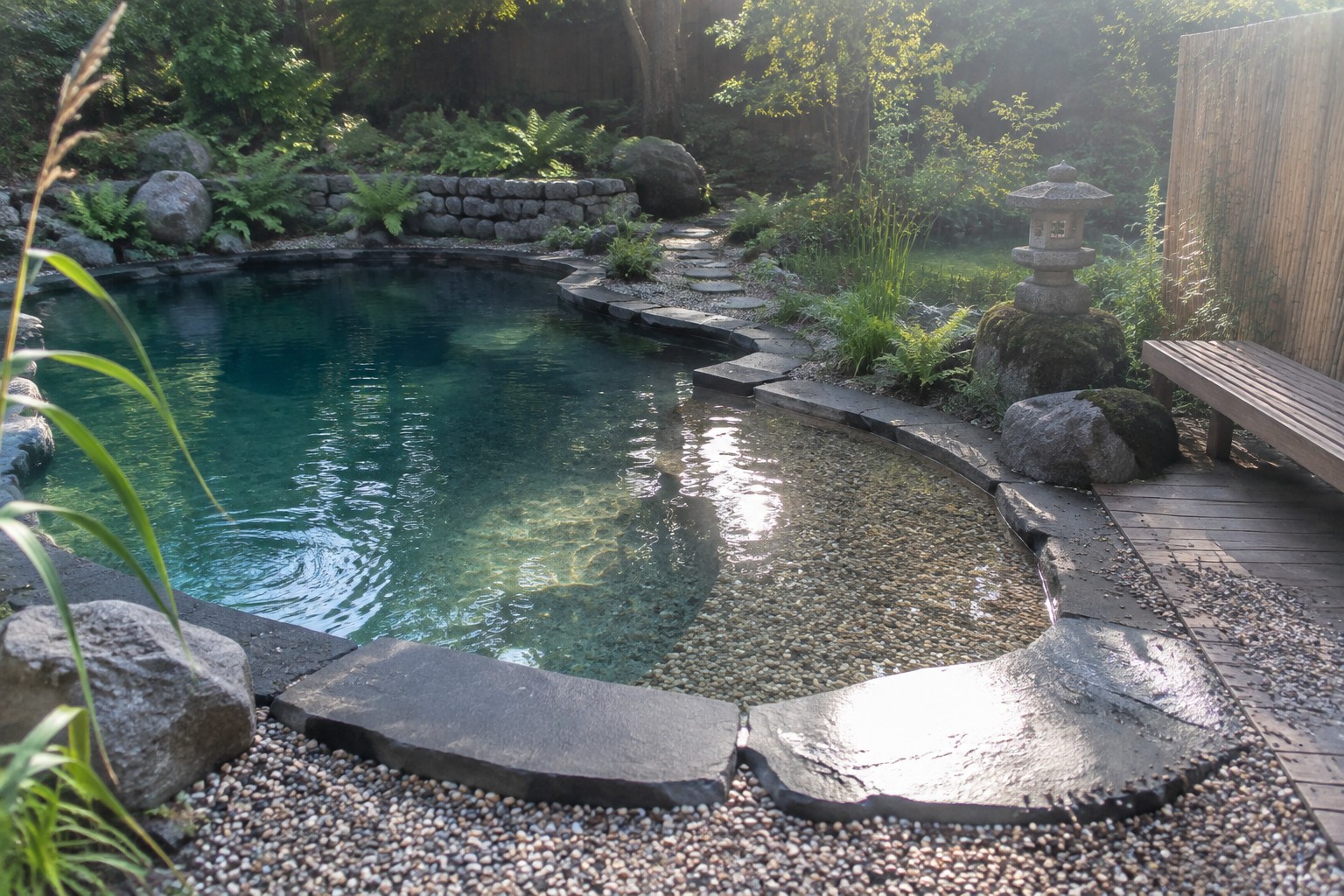
Use Stone Edging Around a Natural Pool
Stone edging gives a natural pool a clear shape without making it feel too formal. The broad, irregular stones also provide a sturdy edge, while the water remains the main feature.
For a similar look, choose stones with uneven edges and leave enough room beside them for a safe walking path. This works well in a garden where you want the pool to blend into its surroundings, but make sure the stones sit securely and have a surface that is not slippery when wet.
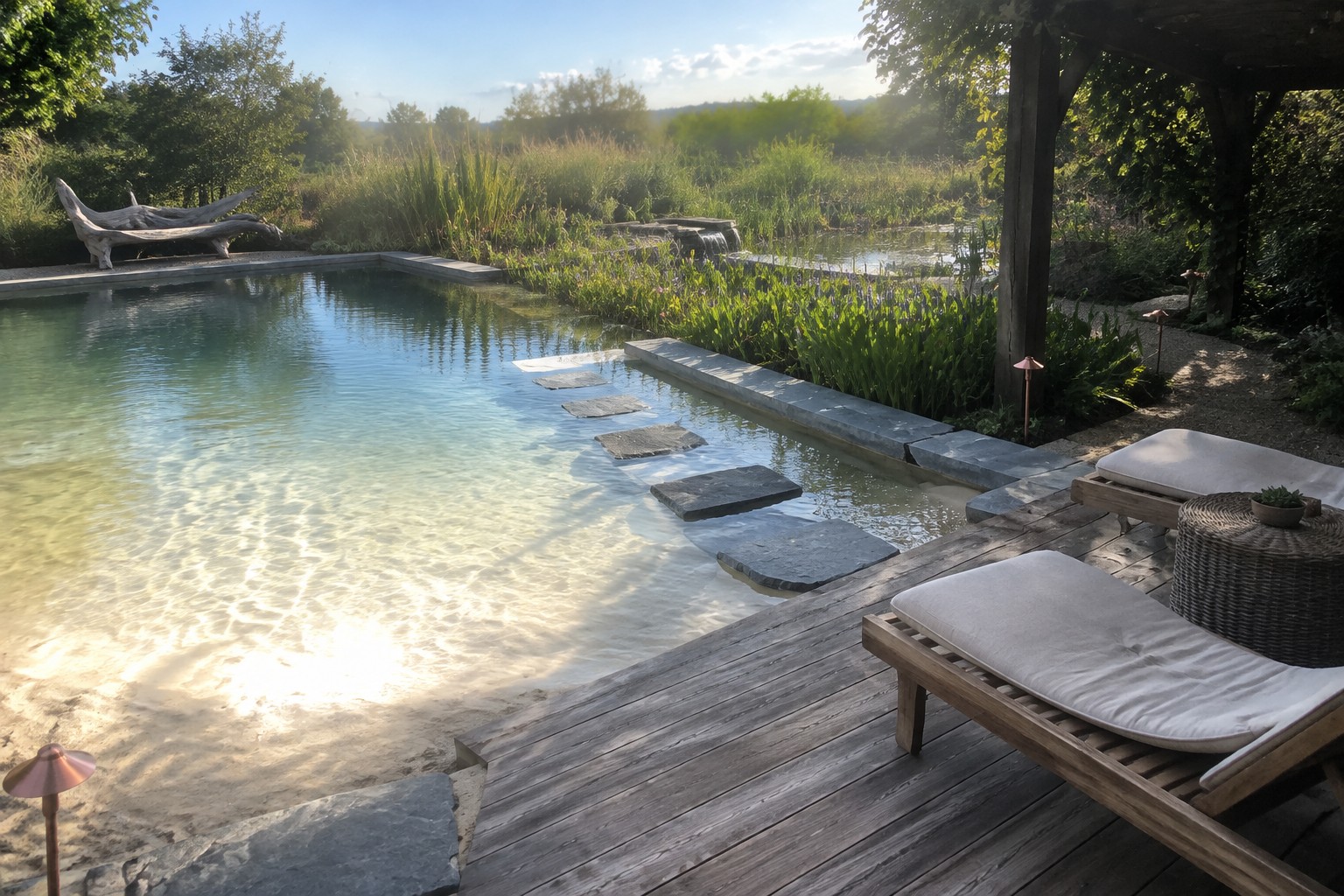
Use Stone Steppers to Cross a Natural Pool

Large stone slabs make a natural pool easier to cross without adding a formal-looking deck. Set slightly apart, they keep the water as the main feature and give the path a simple, steady rhythm.
Choose broad, stable stones with gently textured tops, and place them so each step feels comfortable to reach. This works well in a gravel garden, but make sure the stones are level and secure, especially if the pool is used often.
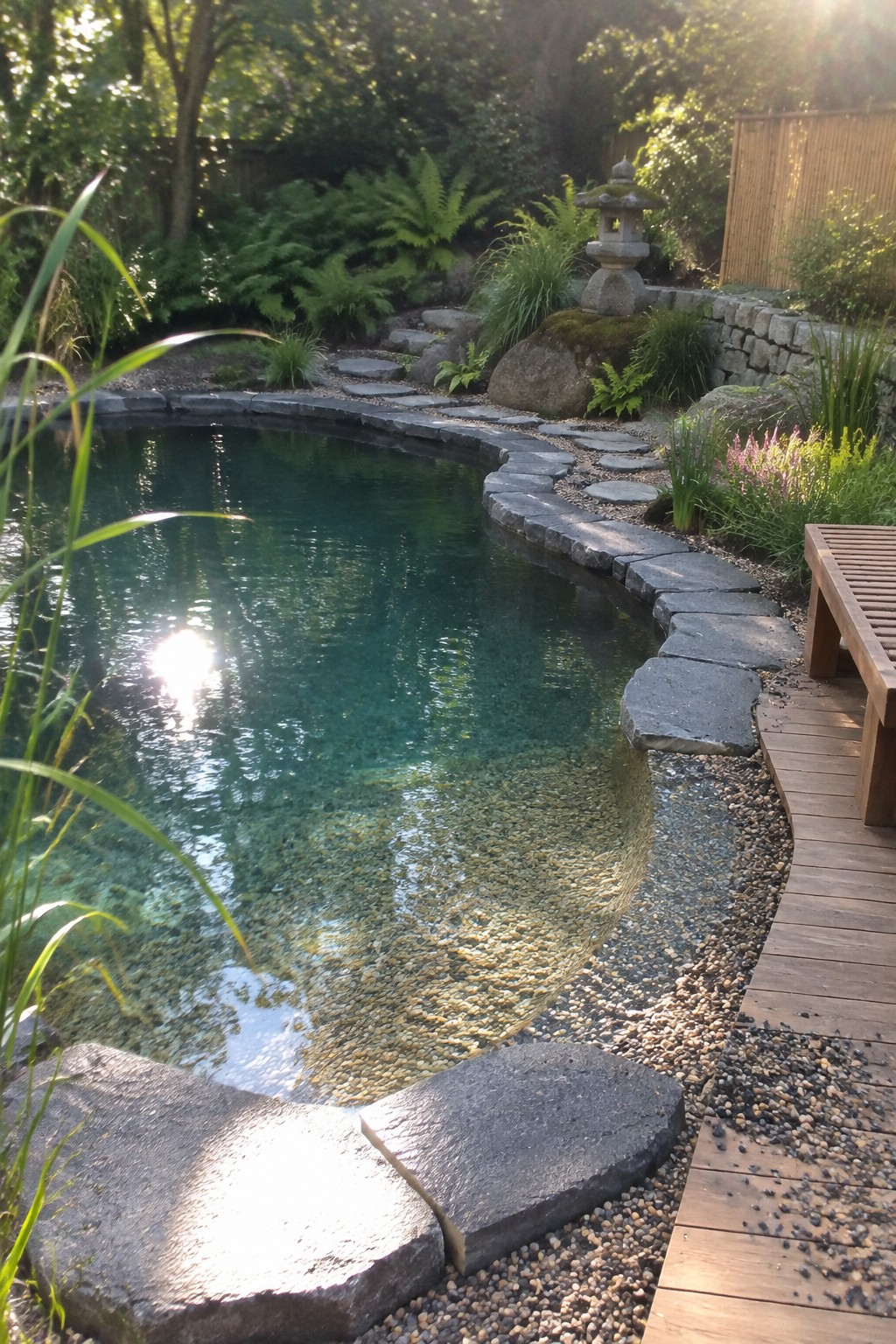
Use Stepping Stones Along the Pool Edge

Stone stepping pads make it easier to cross a narrow natural pool without paving over the whole edge. They also give the water a more informal feel than a solid border would.
Set the stones far enough apart for a comfortable stride, and keep them level and stable. This approach works best beside a slim pool where a continuous path already runs along one side.
Use Stone and Gravel to Shape the Pool Area
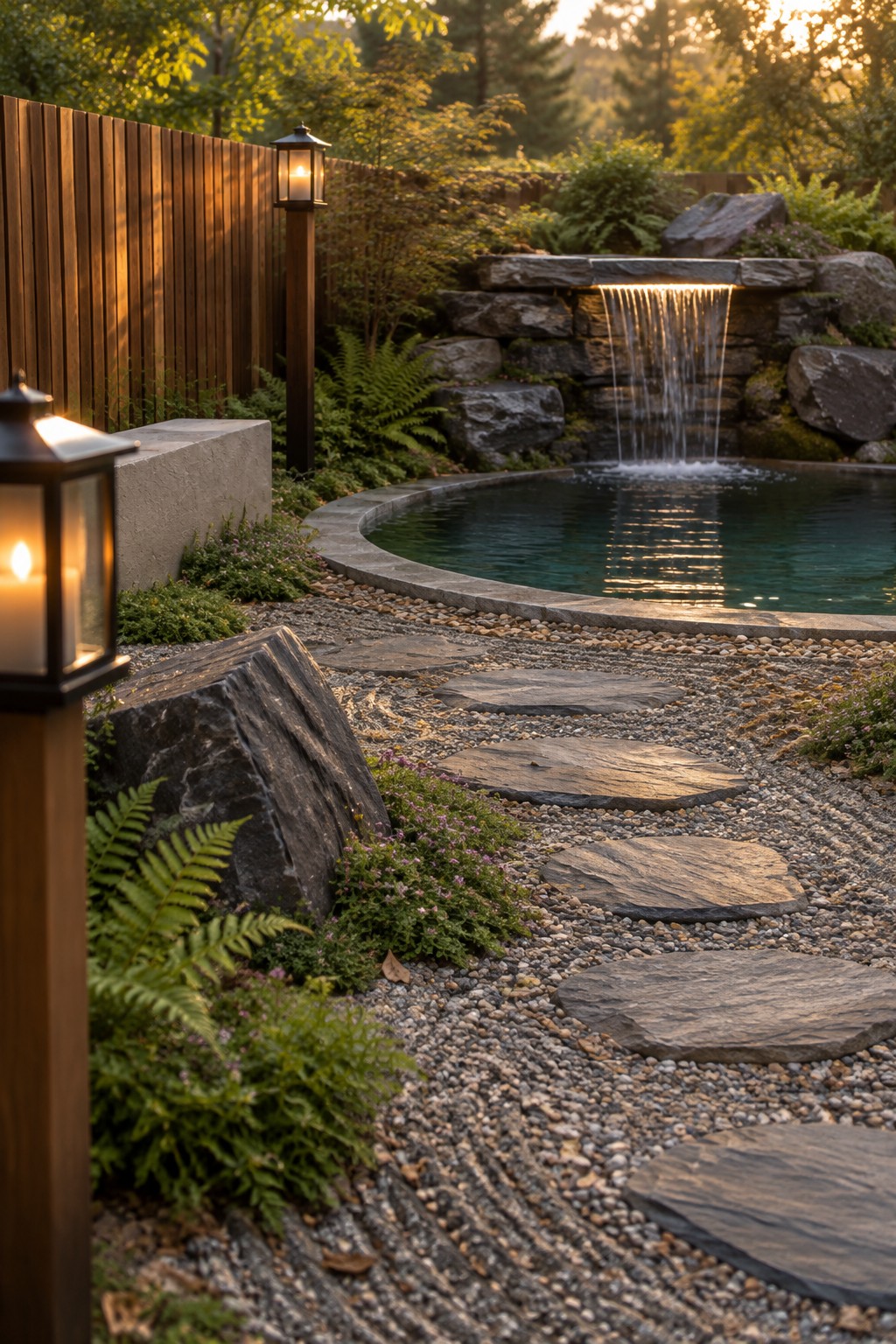
A gravel path with broad stone stepping pads makes a natural pool feel connected to the garden. The mix has an easy, informal look, and gravel lets water drain rather than collecting on the path.
Use this approach around a curved pool or in a smaller garden where a solid paved walkway might feel too heavy. Choose pads with a steady, even surface, and keep them spaced comfortably for walking.
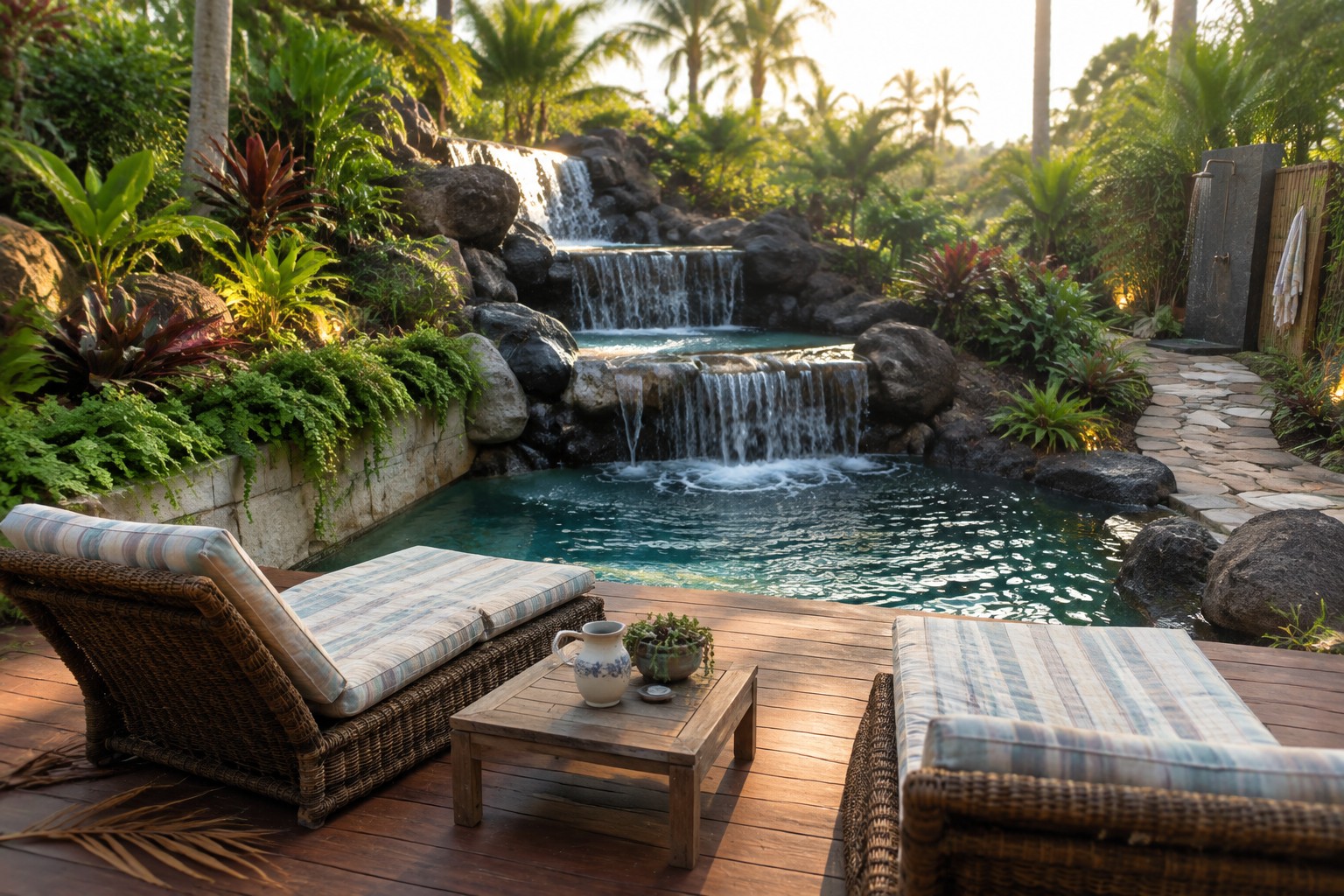
Let a Small Waterfall Feed a Natural Pool
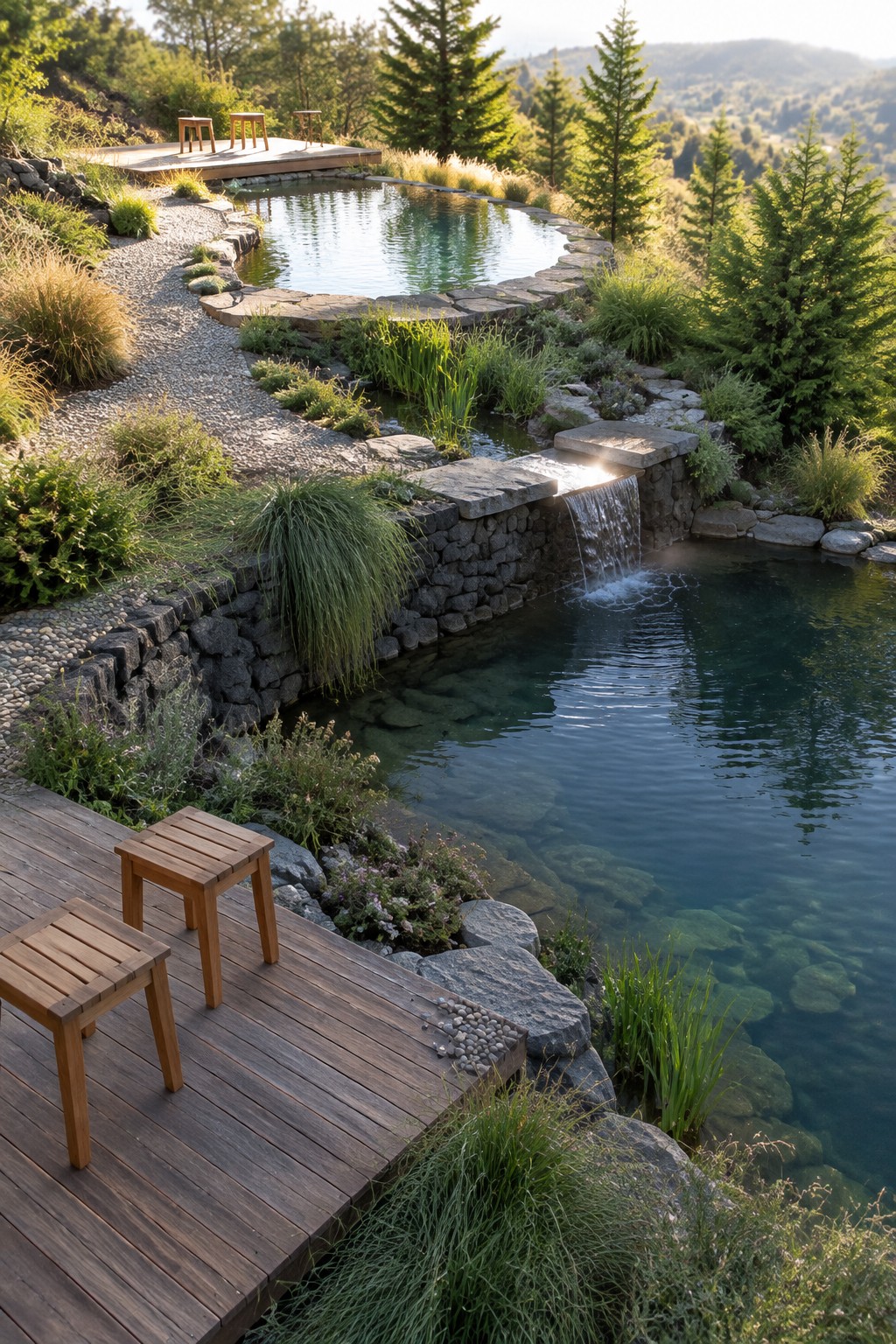
A short stone spillway gives a natural pool a gentle current and lets water move between two levels. It adds a useful feature without making the pool feel too formal.
Place the waterfall where the upper pool can flow into a lower basin, and keep the drop modest to avoid excessive splashing. A stacked-stone wall can support the spillway, while plants around the edges help it fit into the garden.
Add a Gravel Garden Around the Pool
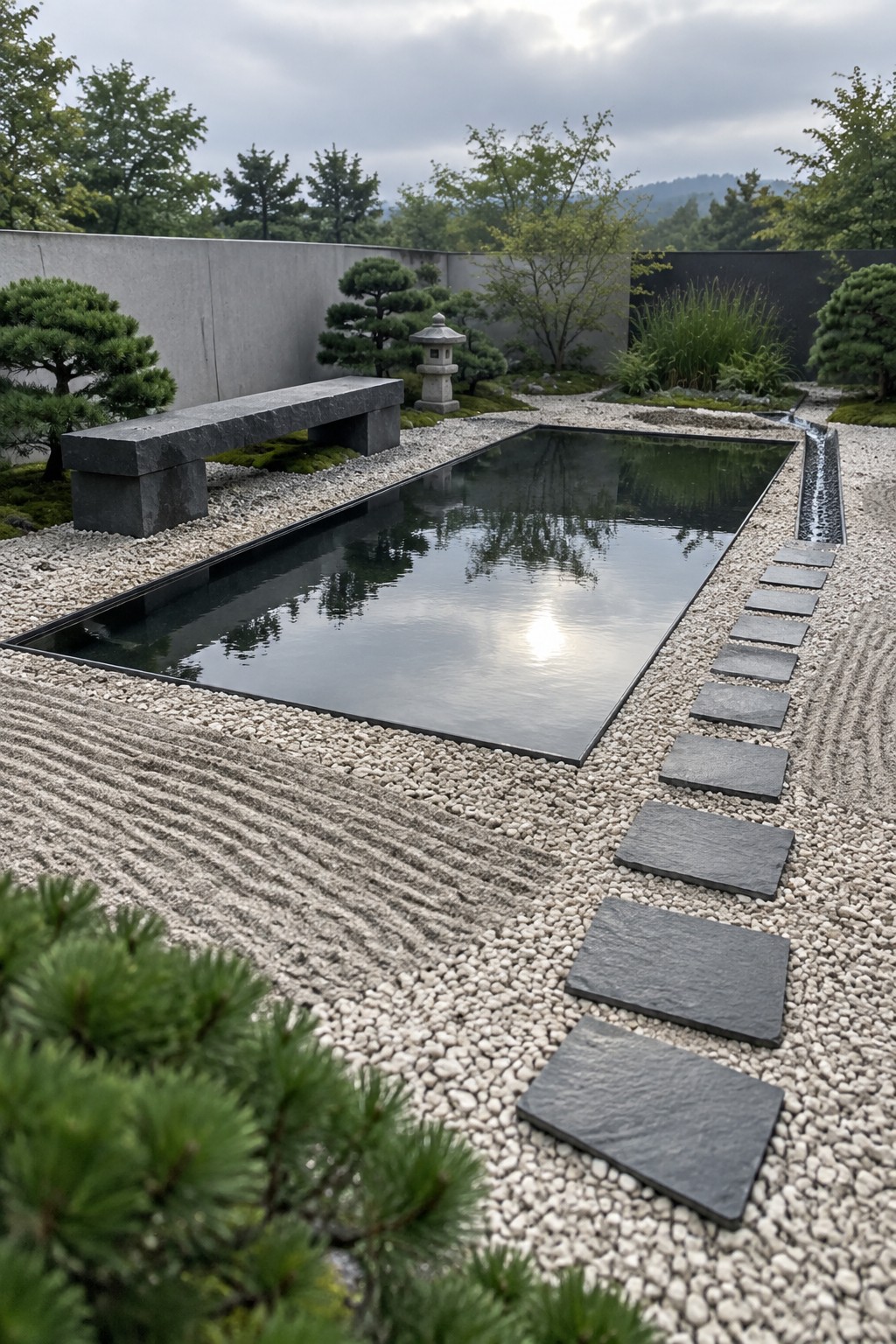
A gravel surround gives a natural pool a simple, low-key setting. The pale stones make the dark water stand out, while a raked section brings a quiet garden feel without needing a lawn.
This approach suits a compact courtyard or a garden with a restrained planting plan. Keep the gravel contained at the pool edge, and choose stones that are comfortable to walk on where people will use the space.
Use Pebbles to Create a Natural Pool Edge
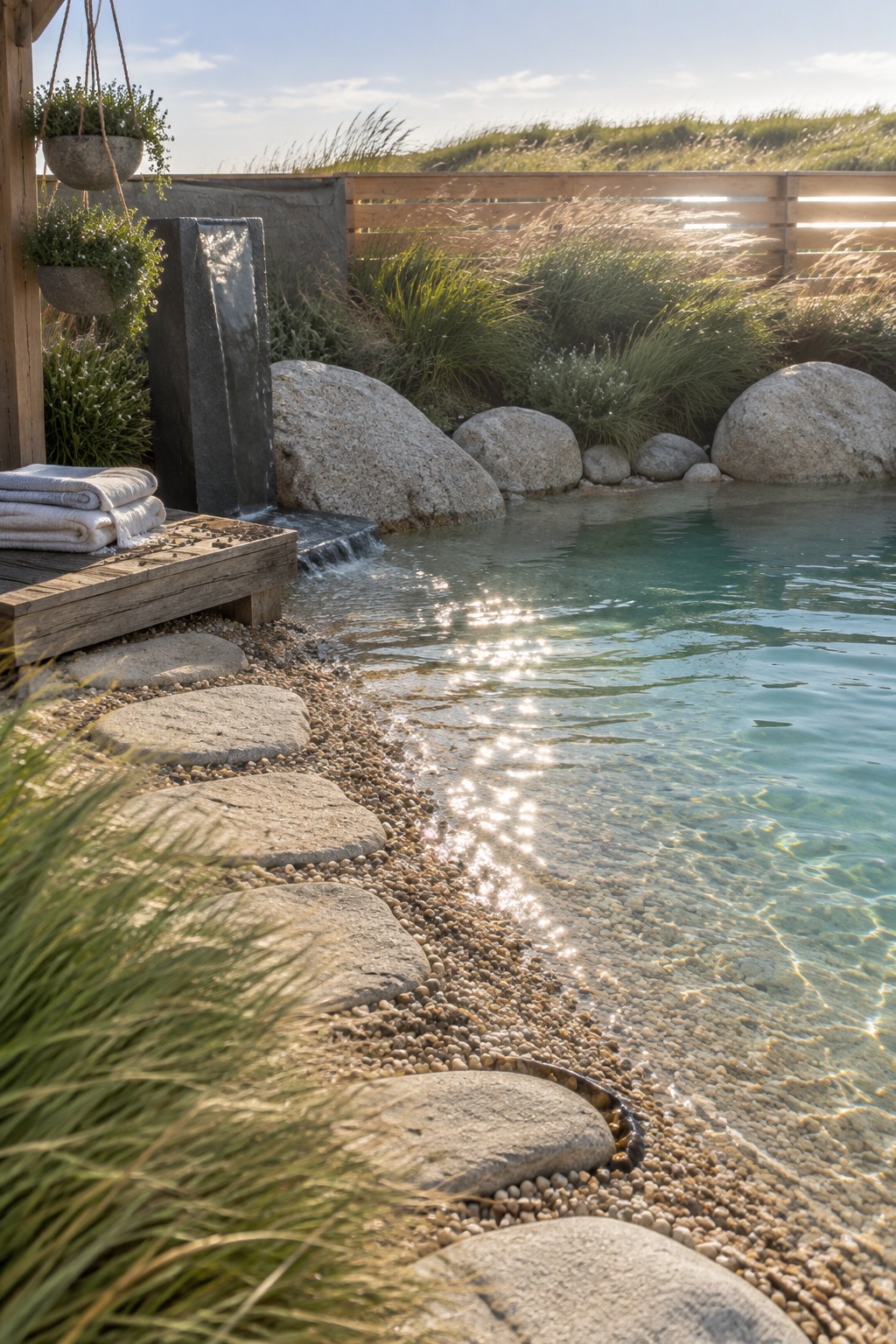
A band of small pebbles along a natural pool gives the water a gentler, more gradual edge. It also lets the pool feel connected to the surrounding garden instead of sharply separated from it.
Use rounded gravel where the water is shallow, and add a few larger stones where you want a firm place to step. Keep the pebbles contained so they do not spread into the water or make the walking edge unstable.
Create a Gravel Path Beside the Pool

A narrow gravel path makes a natural pool easier to walk around without covering the whole yard in hard paving. Here, large stepping stones sit in the gravel, while a stone border separates the path from the water.
This approach suits a small garden where every bit of space needs to be useful. Choose stones with a steady, comfortable surface, and keep the gravel contained so it does not scatter into the pool.
Use a Gravel Path to Connect Garden Spaces
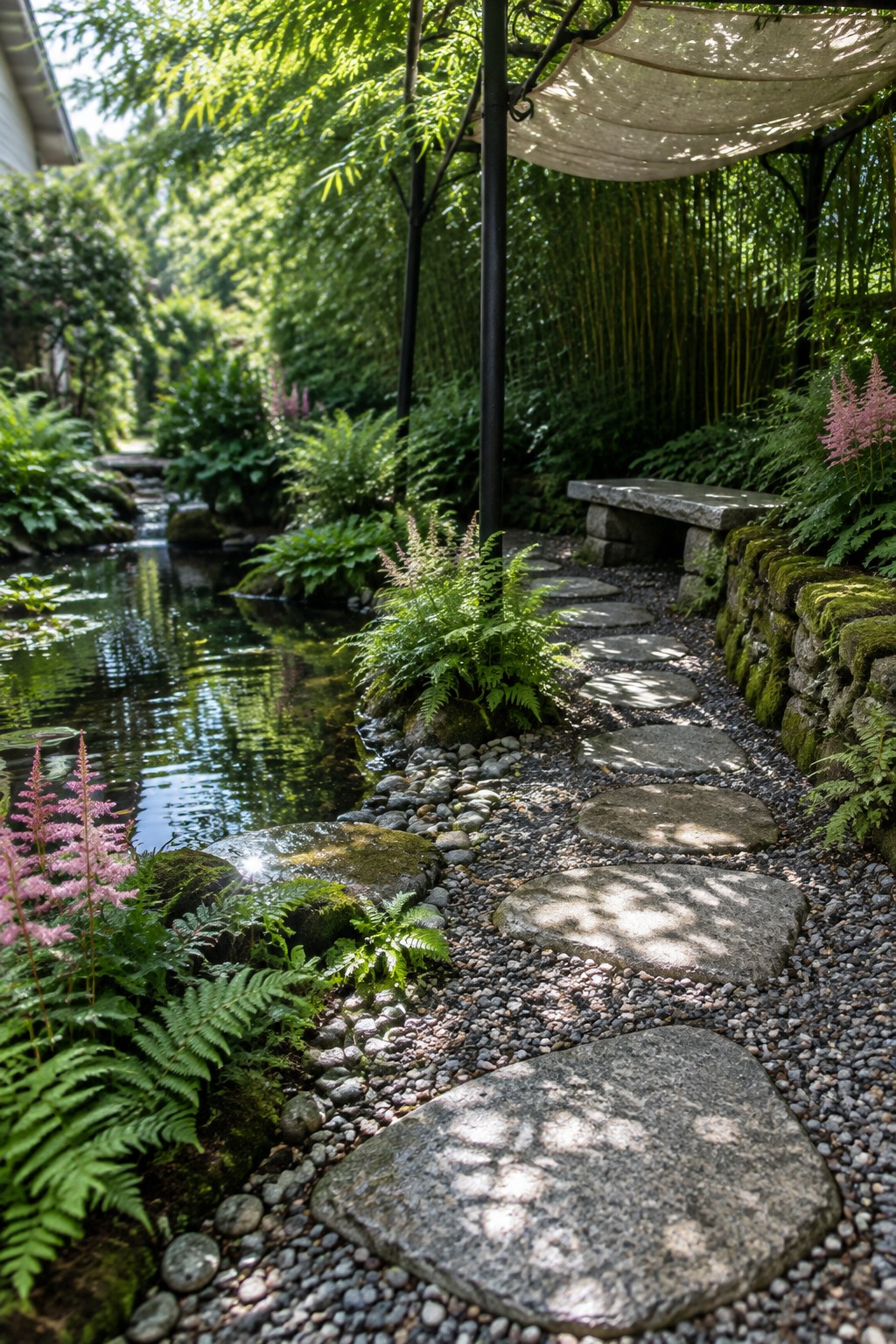
A gravel path with broad stone steppers makes it easy to move alongside a natural pool without paving over the garden. The mix feels informal, and water can drain through the gravel instead of collecting on a solid surface.
Use flat, stable stones and leave enough room between them for a comfortable stride. This approach suits a garden path near a pool or stream, though the gravel may need occasional raking to keep the stepping route clear.
Use a Stone Wall to Feed the Pool

A low stone wall can do more than hold back a garden bed. Add a simple spout and it becomes a quiet water source for a natural pool, while the stonework helps the feature feel settled into the landscape.
This works well where the pool edge meets a planted slope or raised bed. Keep the wall low and use stones that suit the rest of the garden. A steady flow is usually enough; a strong jet can make the pool feel less peaceful.
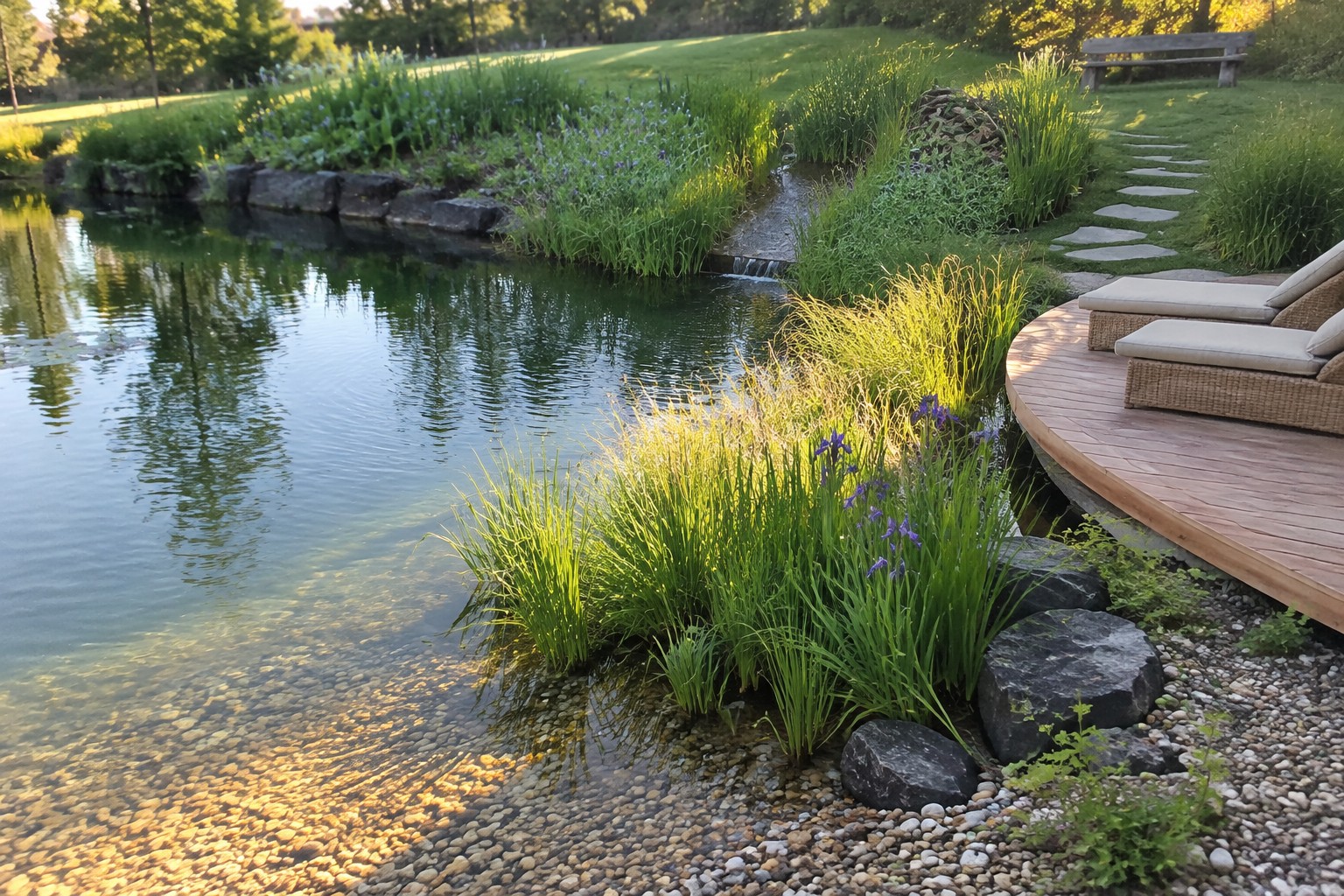
Add a Gravel Border Along the Pool
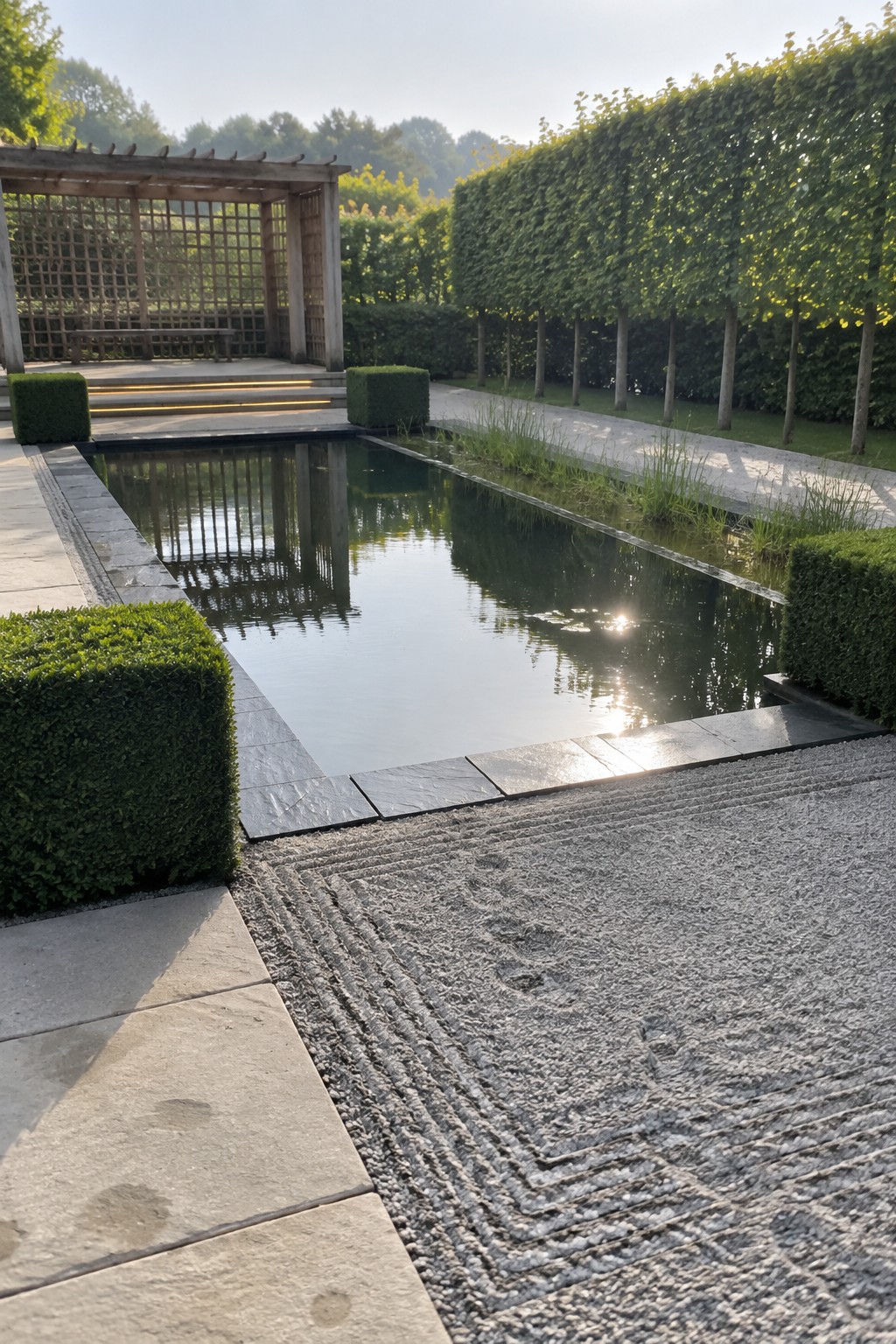
A narrow gravel border can help a natural pool feel settled into the garden without hiding its clean shape. Here, the loose gravel and small grasses along one edge offer a gentle change from the stone coping.
This works well beside a straight-sided pool where you want a softer edge but still need a clear walking surface. Keep the gravel contained so it does not spill into the water, and choose a size that is comfortable underfoot.
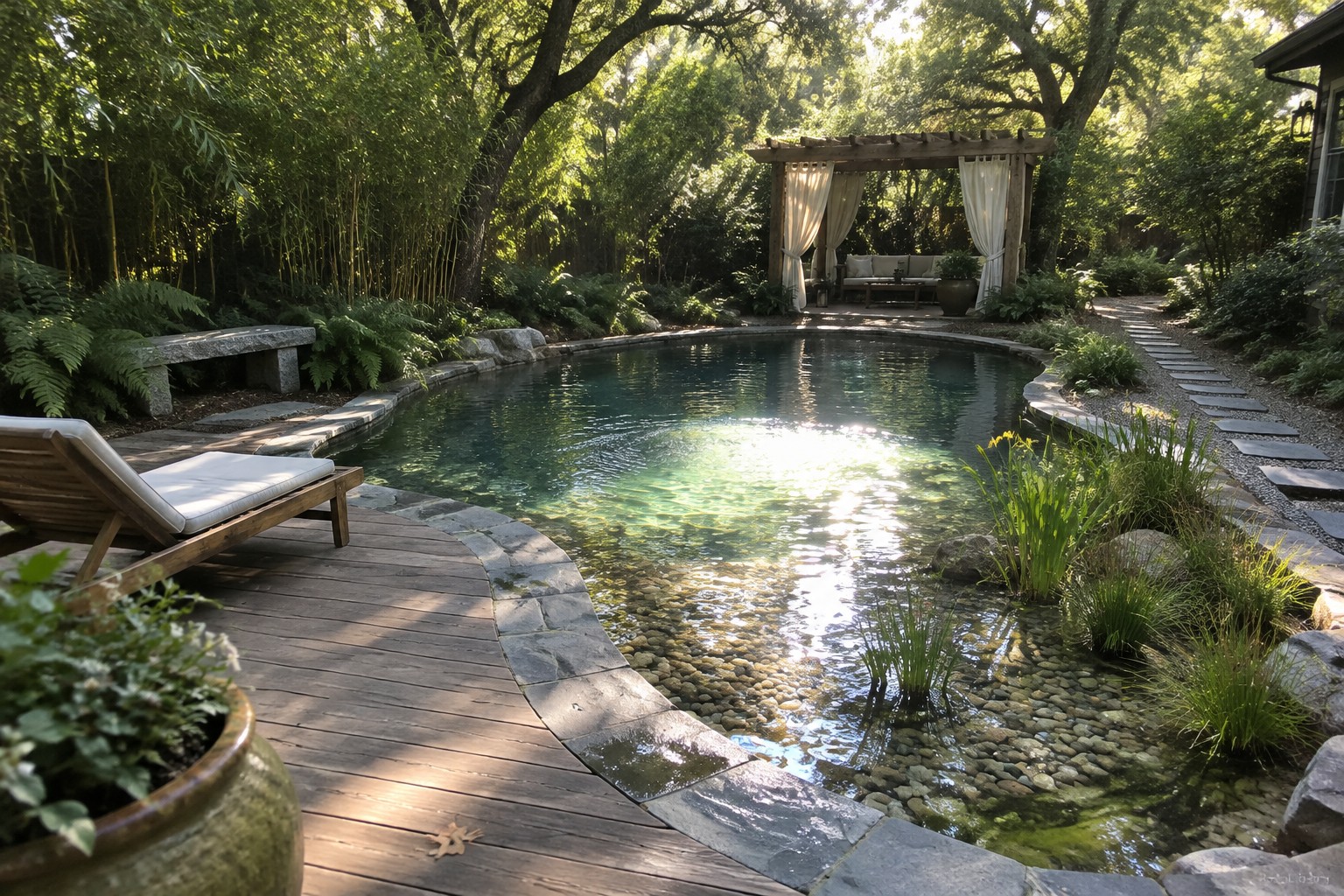
Make a Natural Pool the Center of the Garden
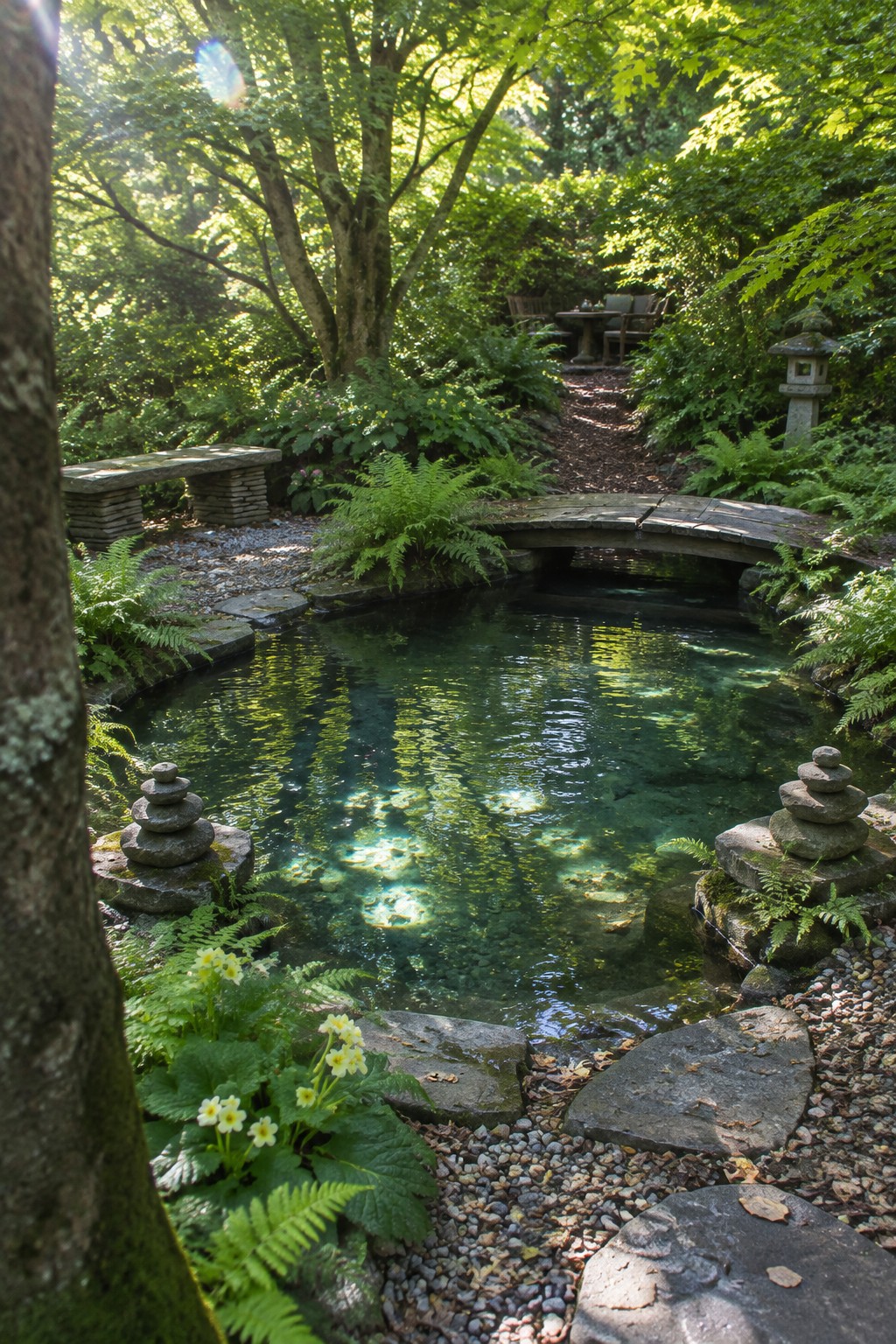
A natural pool can feel like part of the garden when stone and gravel shape its edges instead of a formal paved surround. The irregular stone coping here gives the water a settled, natural outline.
For a similar look, keep the pool edge simple and let planting meet the stones in a few places. This works well in a leafy garden, but choose stable, slip-resistant stones and keep loose gravel out of the water.
Use Curved Gravel Ridges Around the Pool

A gravel surround can do more than provide a place to walk. Shallow, curved ridges give the pool edge a clear shape and make the area feel like a considered part of the garden. Here, the pattern also keeps the hard surface from looking like one broad, flat patch.
This approach works well in a Japanese-inspired garden where you want the pool to sit naturally among plants and stone. Use a few broad curves rather than tight, fussy lines, and choose gravel that is comfortable underfoot and easy to rake back into place.
Use a Stone Waterfall to Separate Pool Zones

A low stone waterfall can mark the change from a shallow, clear-water area to a deeper swimming zone. It gives the pool a natural focal point, and the sound of moving water is a nice extra.
For a similar setup, build the waterfall into a sturdy stone wall and keep the drop modest so it is easy to maintain. It works well in a garden with a gentle slope, where the wall can also help manage the change in level.
Add a Copper Water Spout to a Natural Pool

A simple spout can give a natural pool the gentle sound of moving water without taking up much room. Here, the copper basin catches the flow before it reaches the pool, making the water feature feel like part of the garden rather than a separate fixture.
Place the spout where its trickle can be heard from a nearby sitting spot, and make sure the basin and pool are easy to reach for cleaning. Copper suits a garden with natural stone and timber, but check that the pump and water supply are practical for your setup.
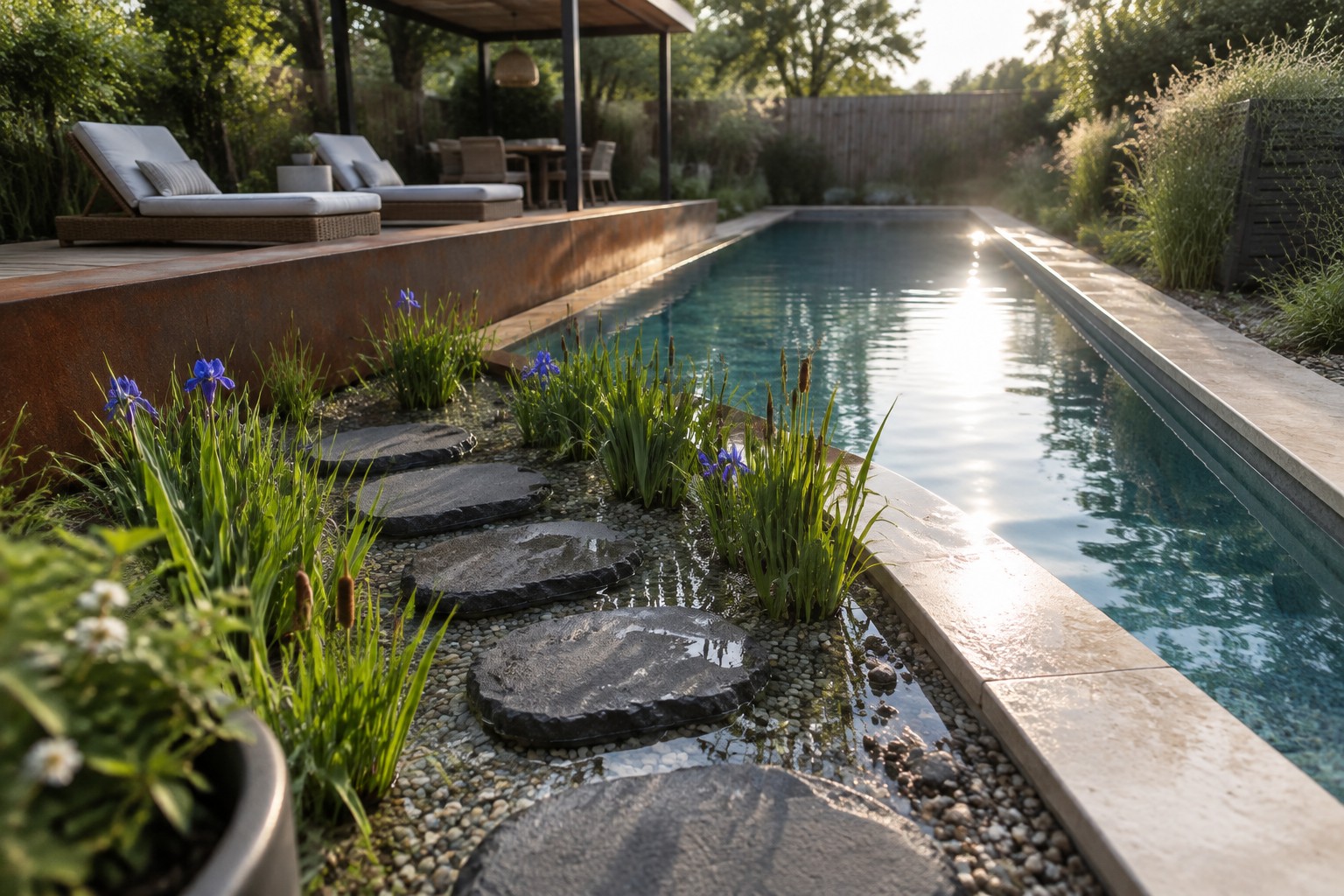
Add a Pebble Walkway Beside the Pool

A narrow pebble walkway can make a pool area feel more like a garden path than a plain deck. Here, large stepping stones give the gravel a steady walking surface while keeping the pool edge clear.
Use this idea where you want a low-key route between the pool and nearby seating or plants. Choose stones that sit firmly and leave enough room to walk comfortably, especially if the path may get wet.
Add a Timber Waterfall to a Natural Pool

A vertical timber panel can turn a pool’s water return into a simple focal point. Water runs down the wood into the pool, adding gentle movement without relying on a large stone feature.
This works well in a compact, enclosed garden where a full waterfall might take up too much room. Use durable, water-resistant timber and leave enough space behind the panel for plumbing and maintenance.
Add a Bamboo Spout to Feed the Pool

A simple bamboo spout can bring a gentle flow of water into a natural pool without needing a large waterfall. Here, it pours into a stone basin, giving the water a clear starting point and a quiet sound.
This works well in a small garden pool or a tucked-away corner where a broad cascade would feel out of place. Set the spout so water lands safely in the basin, and make sure it can be cleaned easily to keep the flow steady.
Frequently Asked Questions
Q: Can I use gravel around a natural pool without it washing into the water?
A: Yes, if you keep the gravel on a stable, gently sloped shelf and use a firm edge between it and the swimming area. Choose larger, rounded stones for the border so small gravel stays put.
Q: What kind of stone feels comfortable underfoot?
A: Smooth, flat stones are easier to walk on than sharp or uneven pieces. Test a sample barefoot before you cover a large area, especially near steps and shallow spots.
Q: Will a Japanese-inspired natural pool need a lot of upkeep?
A: It still needs regular skimming and water checks, but a simple layout makes those jobs easier. Keep leaves and loose gravel away from the water’s edge to cut down on cleanup.
Q: Can I get the look in a small backyard?
A: Absolutely. A compact pool, a few carefully placed stones, and a gravel path can suggest a quiet garden without taking over the yard.