A natural pool has to feel like part of the garden, not just a swimming area with plants placed around it.
I tend to notice the edges first, because clean coping and a clear path can make the water feel calm even when the planting is lush.
The balance takes some thought: reeds and other aquatic plants soften the view, while simple shapes keep the pool practical to swim in and maintain.
I’d pay close attention to where the plants sit, how much open water remains, and what the pool looks like from the house.
Some of these approaches may be worth adapting to the size and style of your own yard.
Add Aquatic Plants To A Compact Pool

Aquatic plants can make a small pool feel more connected to the garden without taking up the swimming area. Planting them in a shallow section at one end keeps the main pool clear while giving the water a softer, more natural edge.
This setup works well in a narrow courtyard where there is little room for separate garden beds. Use plants suited to standing water, and keep them in a defined zone so their roots and leaves do not spread into the swimming space.
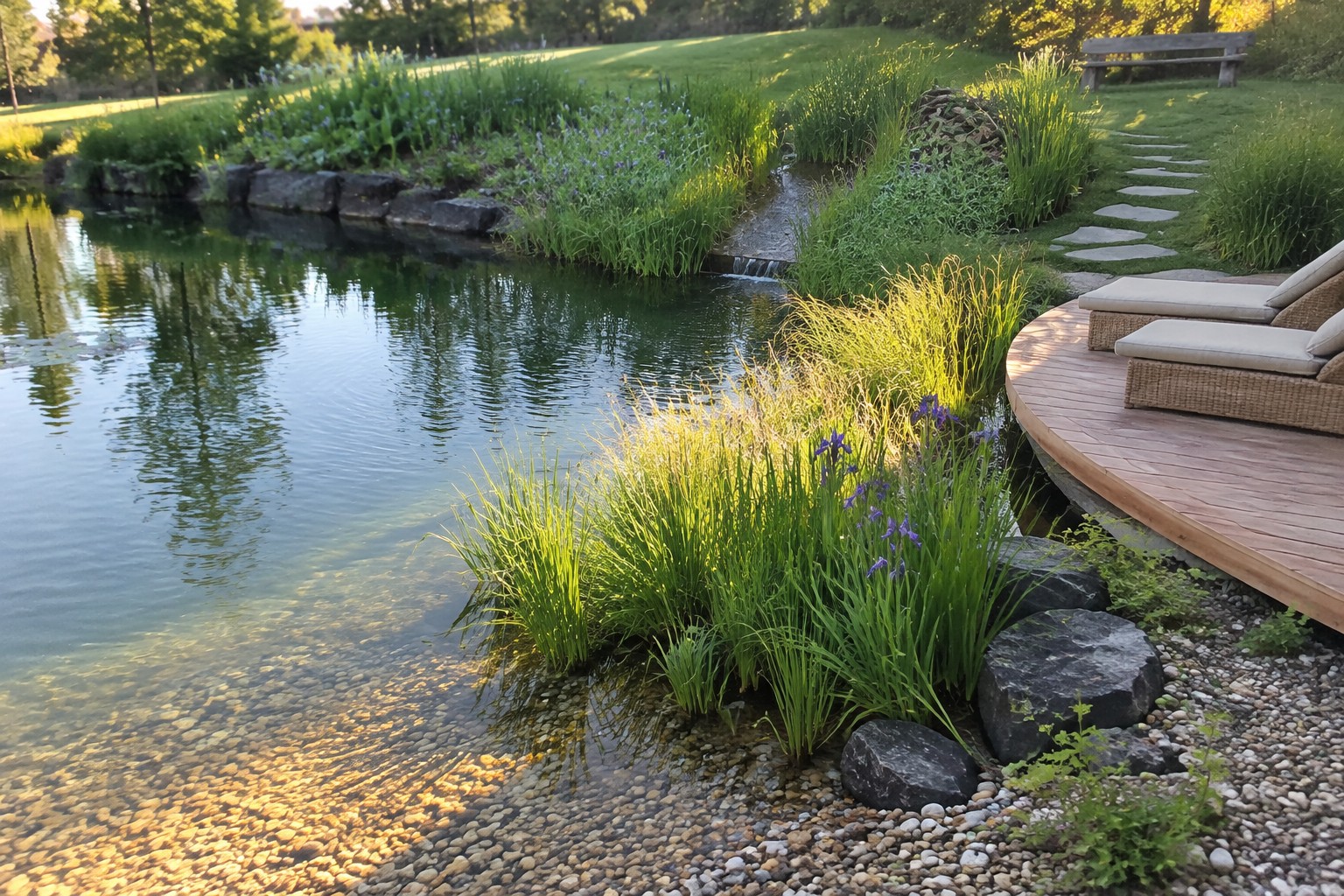
Add a Built-In Planting Bed Beside the Pool

A raised planting bed set right beside a small pool lets aquatic plants feel like part of the pool design, rather than a separate garden feature. Tall papyrus and low flowers give the water’s edge a softer, more natural look while keeping the pool’s outline simple.
This layout works well on a terrace where space is limited. Keep the bed to one side so there’s still a clear path around the water, and choose plants that suit your climate and won’t spread into the swimming area.
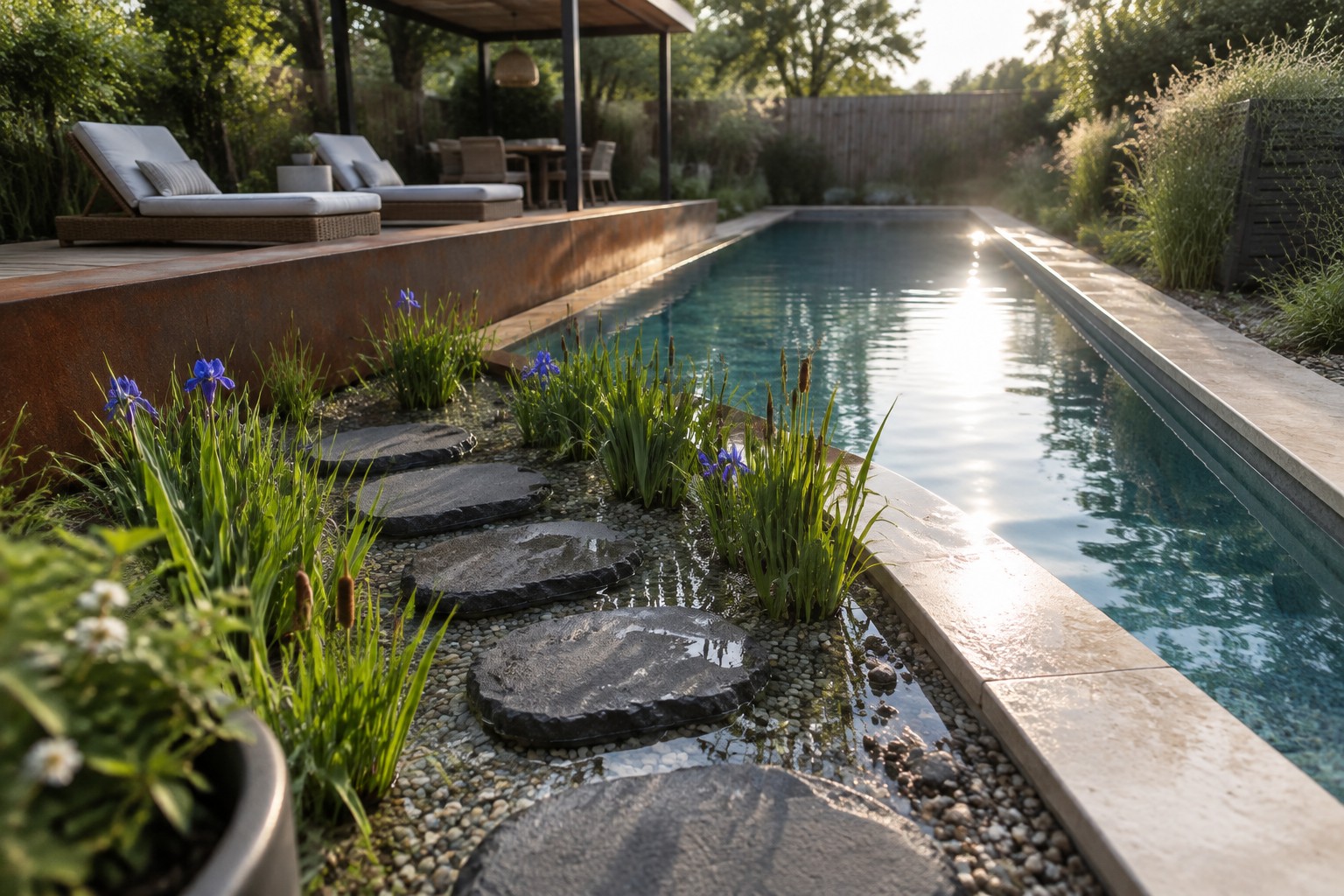
Use a Planted Edge Beside the Pool

A planted edge can make a modern pool feel connected to the garden without giving up its clean shape. Here, the planting stays to one side, leaving the long, straight pool edge clear and easy to use.
This layout works well when you want greenery near the water but still need room for walking and seating. Keep plants in a defined bed beside the coping, and choose varieties that can handle splashes without spreading into the pool.
Add a Waterfall Edge to a Natural Pool
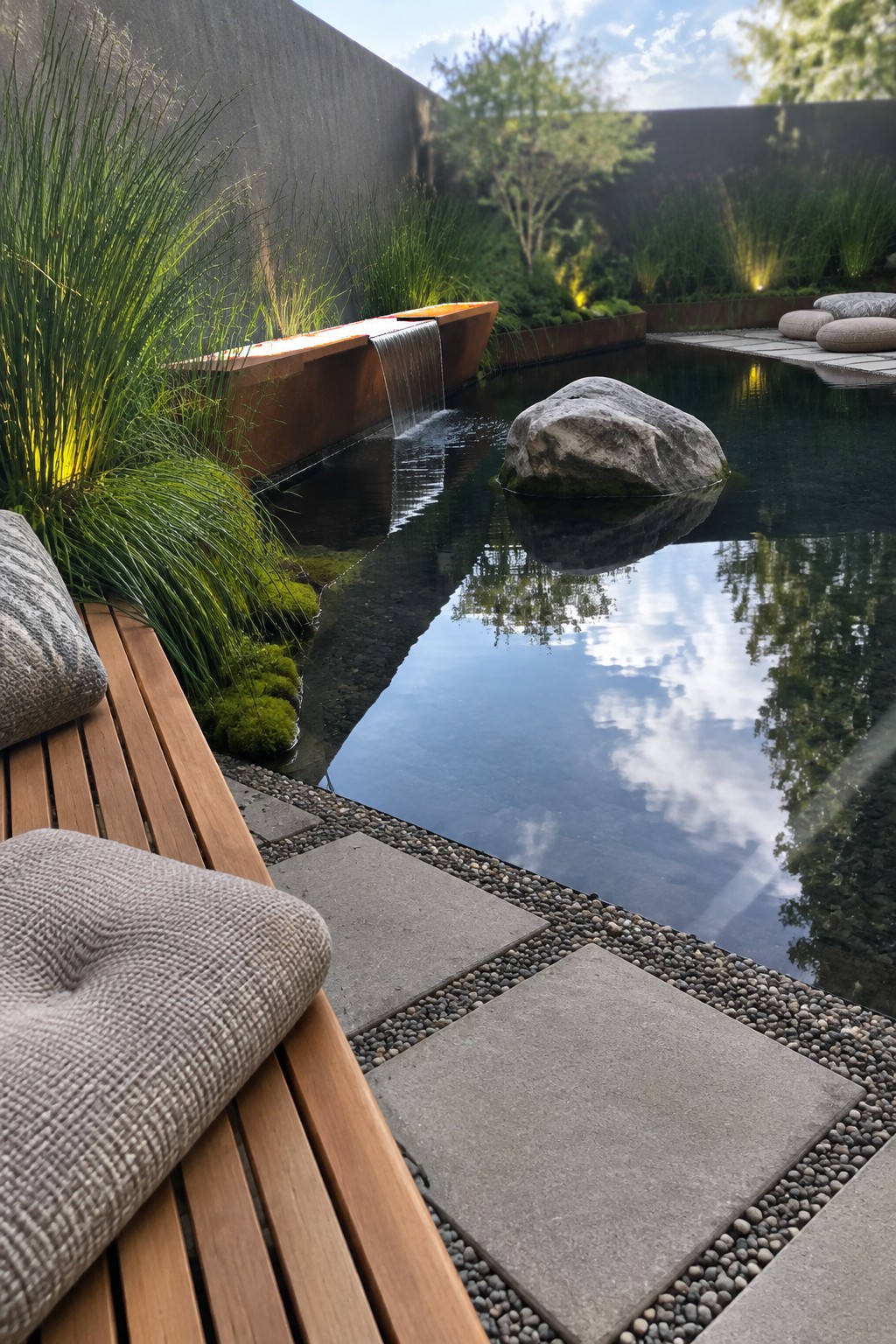
A low wall that spills water into the pool gives the edge a clear purpose and brings gentle movement to the surface. Here, the rust-toned wall also makes a simple contrast with the surrounding stone and plants.
This works well in a compact pool where a larger fountain would take up too much room. Keep the spillway modest, and plan for a pump and easy access to clean leaves from the water.
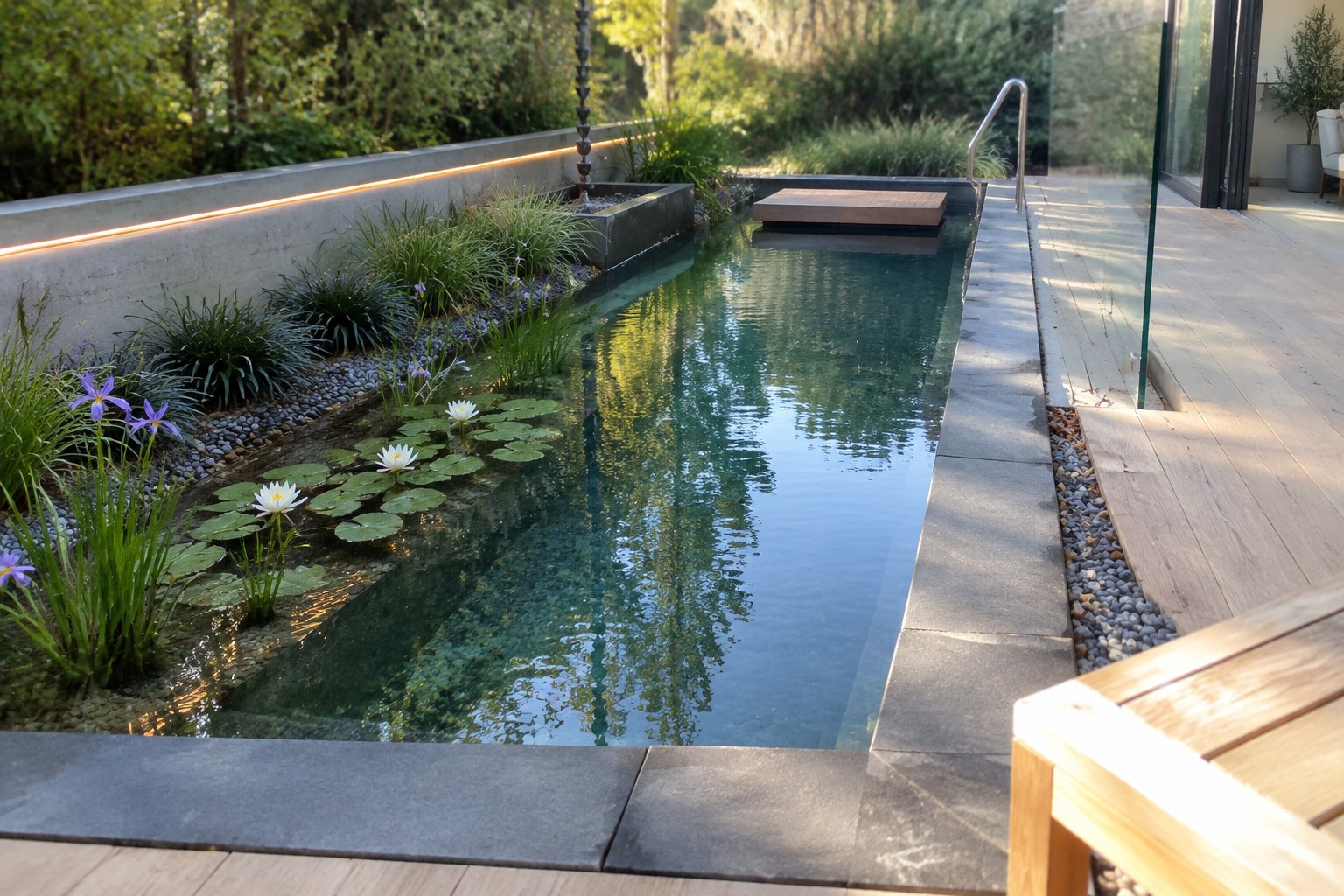
Add a Narrow Reflecting Pool Beside the Patio

A long, narrow pool can make a modern patio feel connected to water without taking over the whole yard. Aquatic plants gathered along one edge bring a natural touch, while the open water keeps the layout clean and easy to enjoy.
This approach works well beside a glass-walled home or along a straight walkway. Keep the planted section contained so leaves do not spread across the entire pool, and leave enough clear water for reflections and simple upkeep.
Create a Deckside Seating Area
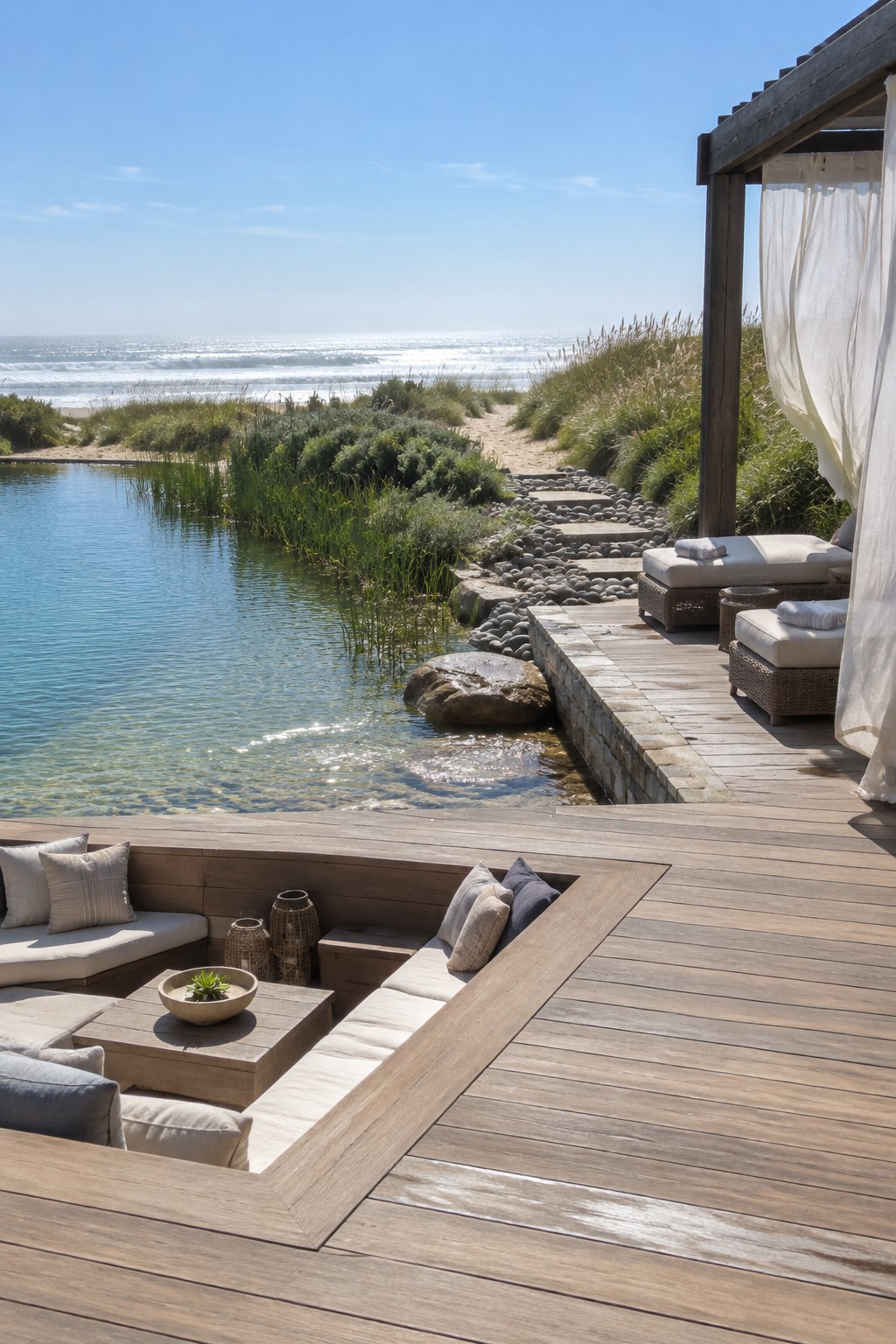
A built-in seating nook makes a pool deck useful for more than swimming. Here, the lowered bench area gives people a place to sit close to the water without crowding the main deck.
This layout works well beside a natural pool when there’s enough room to keep the seating clear of the water’s edge. Use weather-resistant cushions and leave a practical path between the nook and the pool.
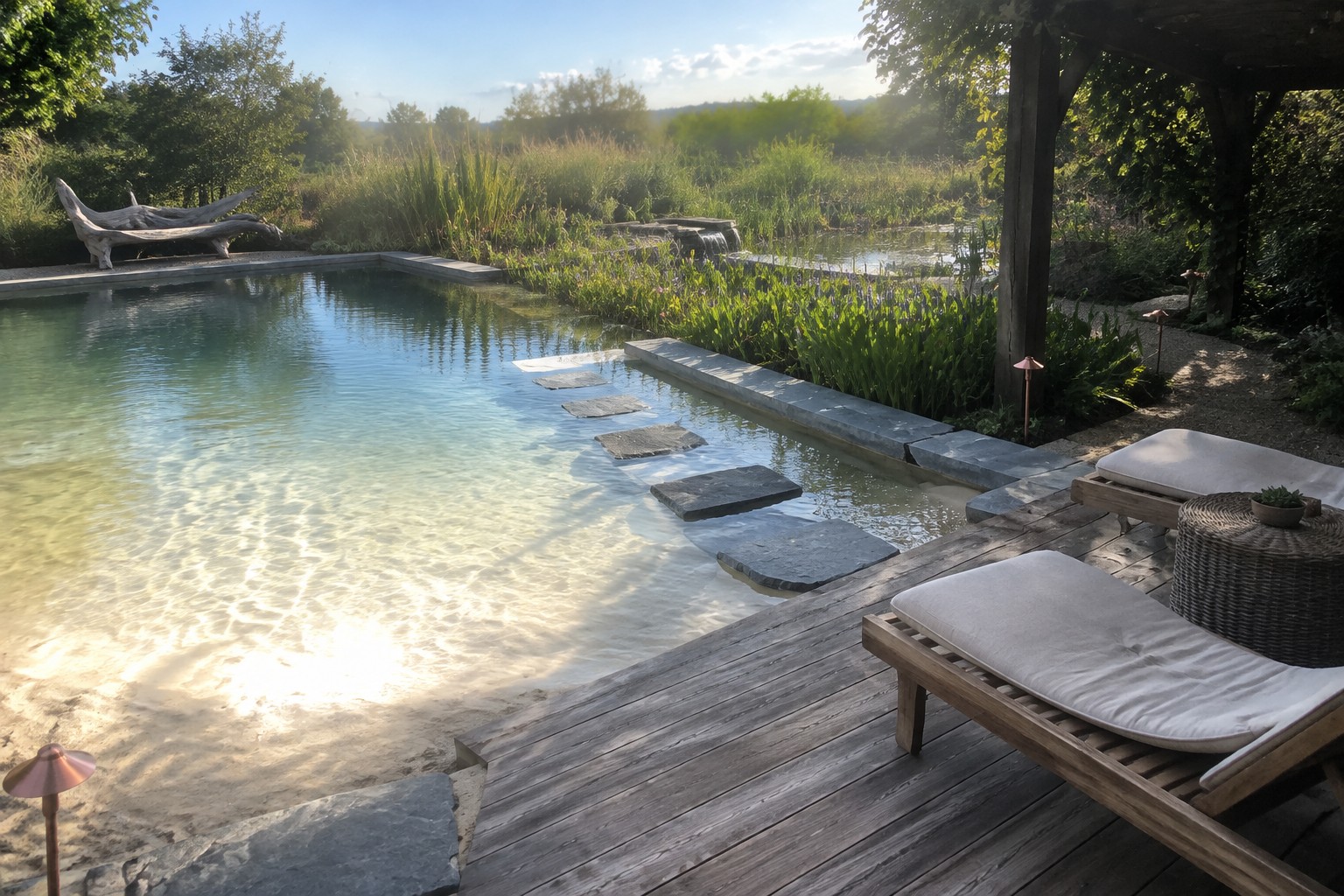
Use Stepping Stones Across the Pool
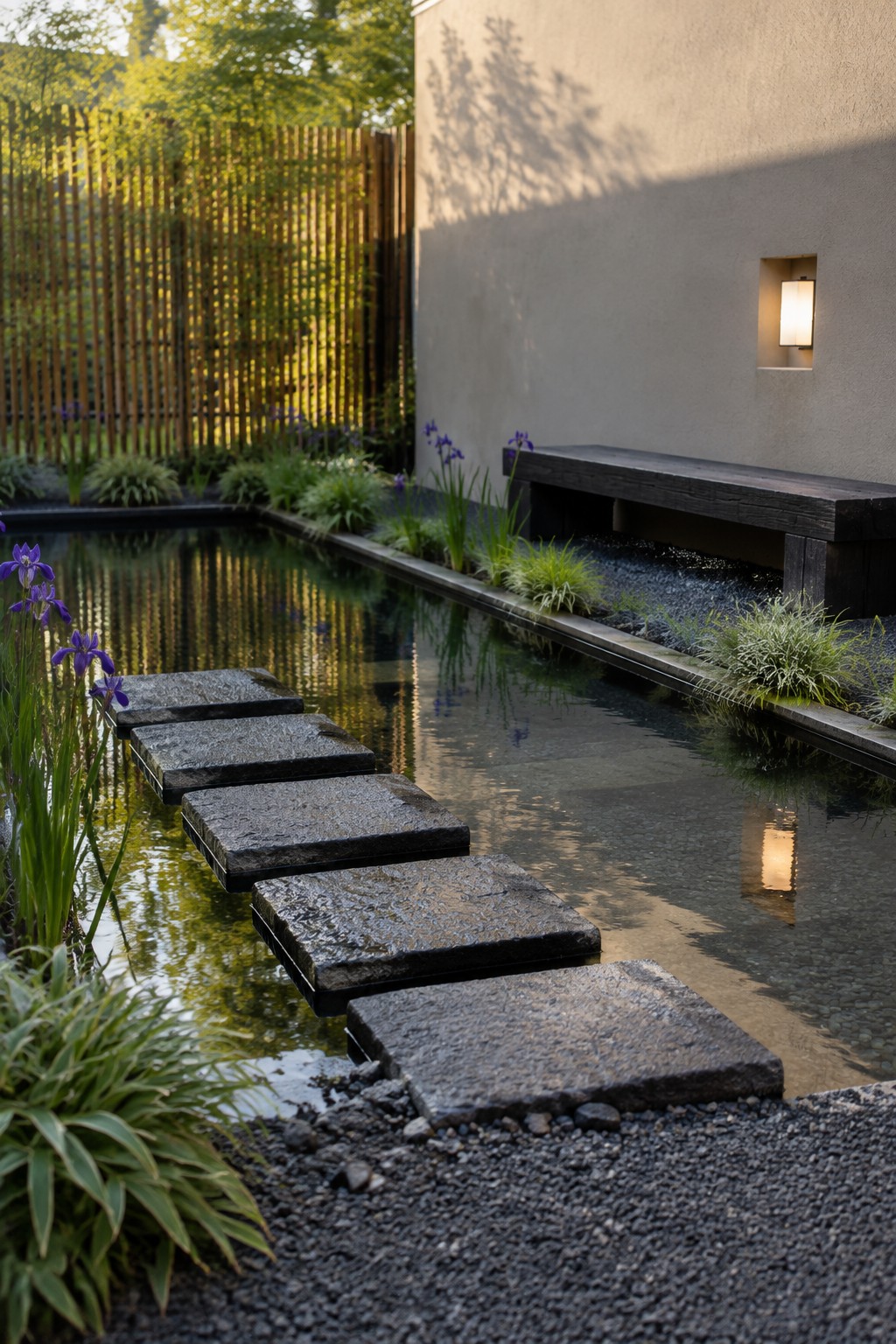
Stepping stones let you cross a natural pool without adding a full path or deck. Here, broad stone slabs sit just above the water, making the route feel part of the pool’s design.
This works well in a narrow garden where a walkway would take up too much room. Choose stones with a rough, slip-resistant surface and space them for comfortable, steady steps.
Create a Poolside Dining Area

A dining spot beside the pool makes the outdoor space useful beyond swimming. Keeping the table close to the water works well here, while the pergola gives the area some shade.
For a similar setup, leave a clear path between the table and pool, and choose outdoor chairs that are easy to move. A vine-covered pergola can provide shade, but it may need regular trimming to keep the dining area comfortable.
Add a Sculptural Feature to a Natural Pool
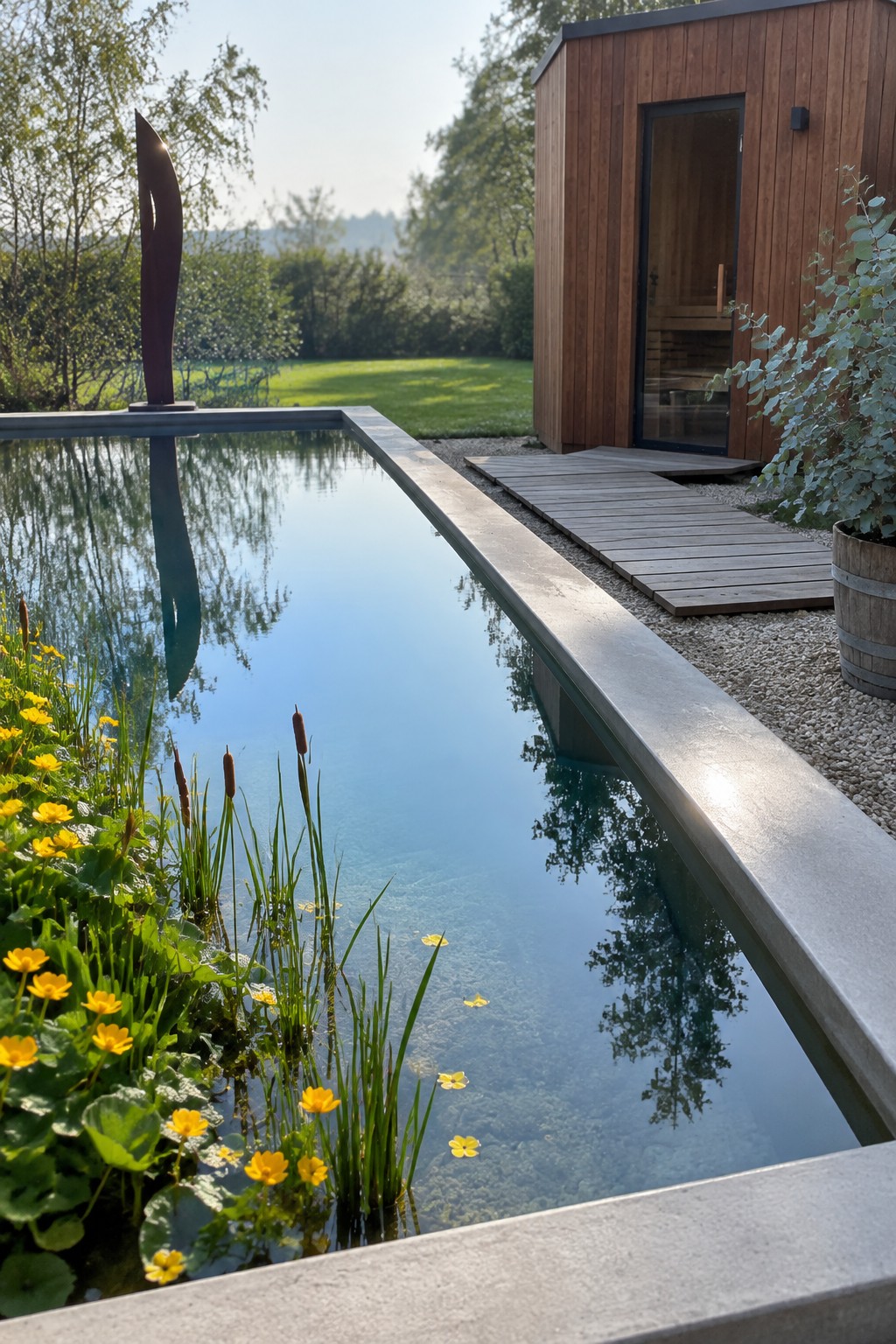
A simple sculpture can give a natural pool a clear focal point without taking attention away from the water and plants. Here, a tall metal piece stands at the pool’s far edge, where its reflection becomes part of the view.
This works best in a pool with a clean, uncluttered layout. Choose a weather-resistant sculpture with a shape that suits the setting, and place it where it won’t interfere with swimming or maintenance.
Set Large Stepping Stones Beside the Pool
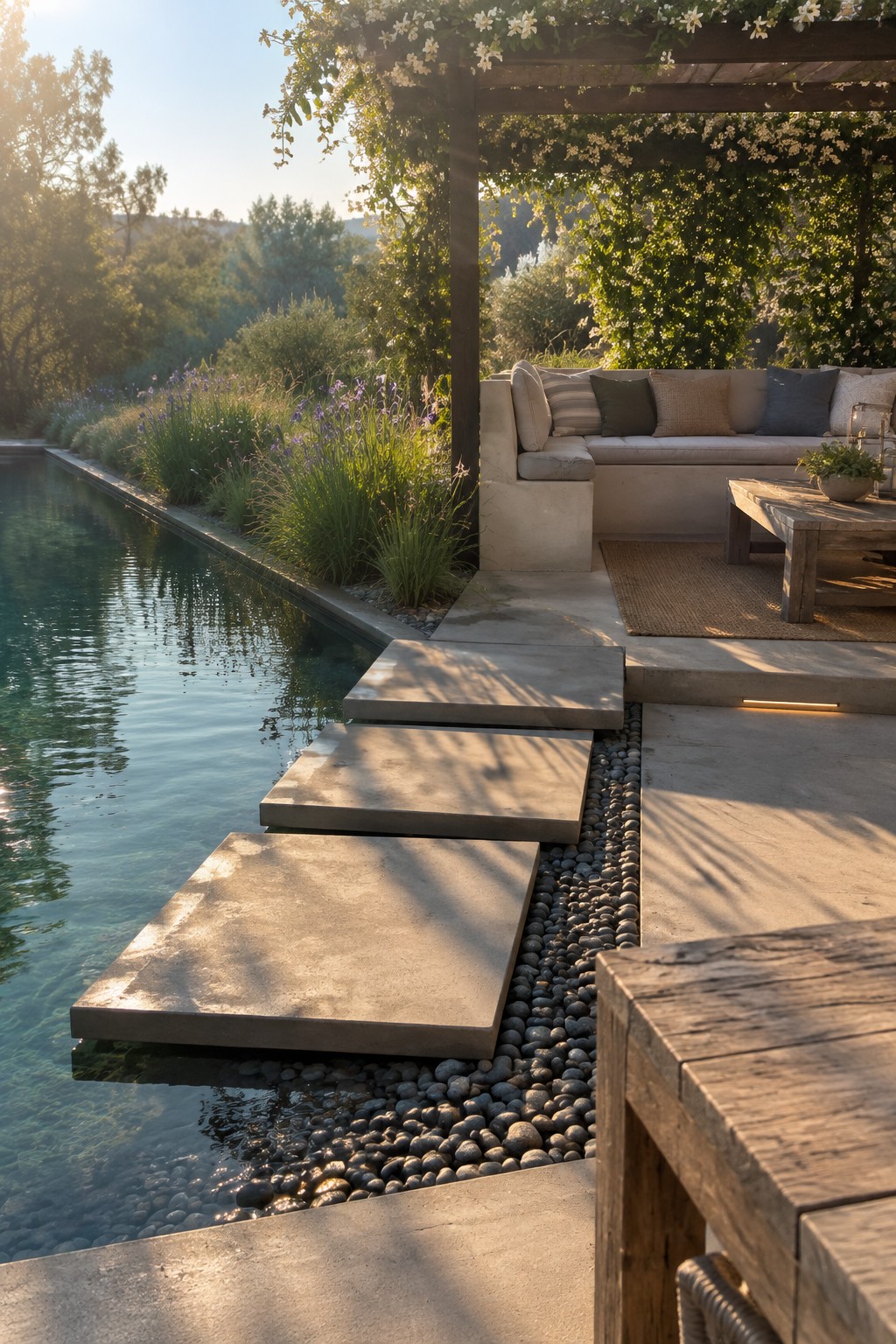
Oversized stepping stones make a useful transition between the pool and the patio. They give you a clear route along the water while leaving room for a narrow bed of rounded pebbles, which helps the hard surfaces feel less continuous.
Use this layout where you want easy access to the pool without paving the whole edge. Set the stones firmly and keep their spacing comfortable for walking, especially if the surface may get wet.
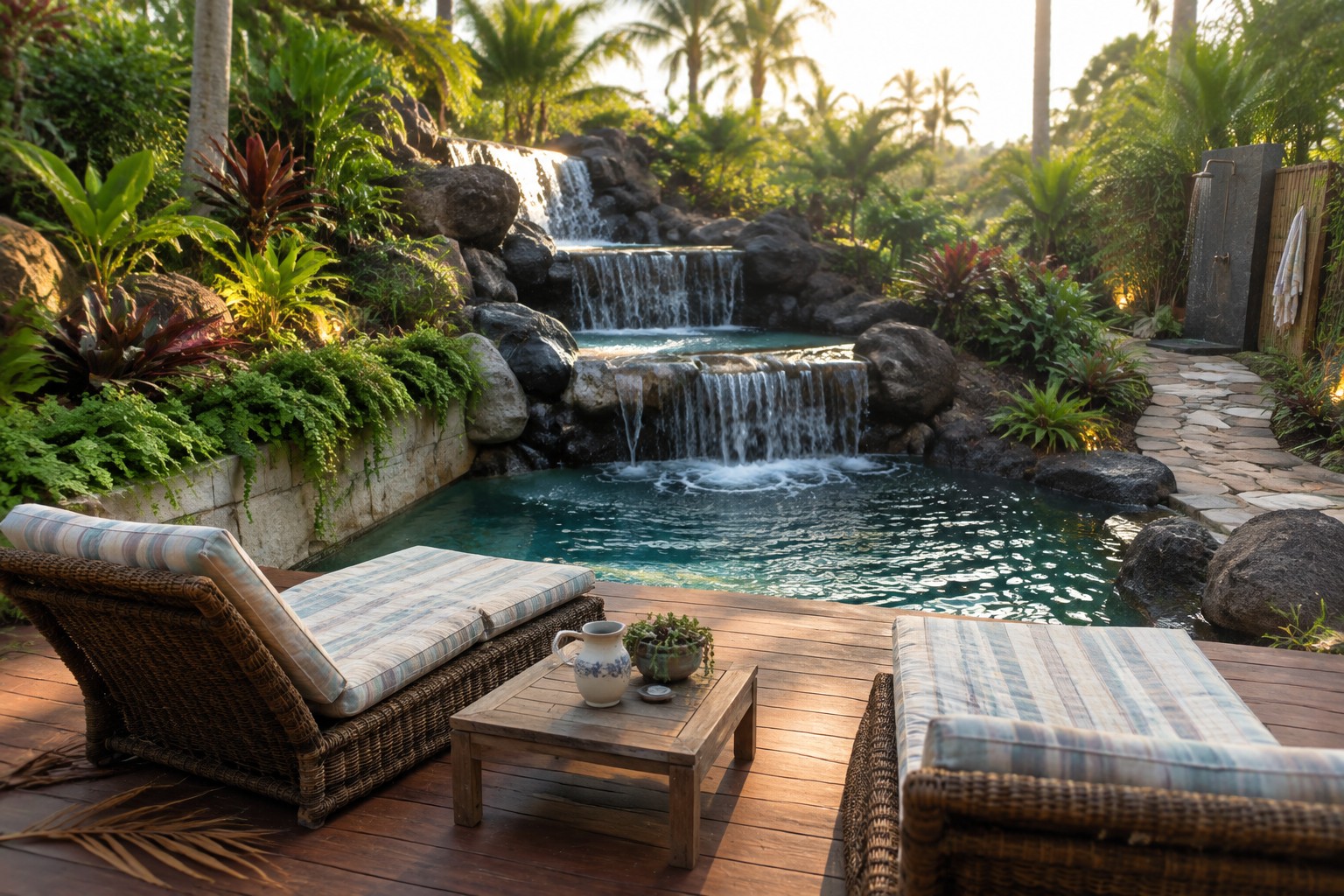
Use Terraced Waterfalls to Connect Pool Levels

A series of low stone waterfalls can make a natural pool feel like part of the garden rather than a separate feature. Here, water moves down through several levels, while rocks and plants help each section fit into the landscape.
This approach works well on a sloped yard, where the change in ground level can guide the water naturally. Keep the drops modest and plan for easy access to pumps and filters, since a multi-level feature needs regular upkeep.
Let Poolside Water Features Feed the Planting

Clay pots can spill water into a natural pool while aquatic plants grow in a narrow bed along the edge. This brings the water feature and planting into one simple layout, rather than treating them as separate parts of the yard.
A raised ledge can support the pots, with a shallow planted channel beside the pool to catch splashes and give water-loving plants room to grow. Keep enough open water for swimming, and choose plants that suit the channel’s depth and sun exposure.
Add a Cold-Water Pool Beside an Outdoor Shower

A small natural pool can work as part of a simple rinse-and-cool-down area. Here, the stone shower sits just above the pool, so water flows back toward it instead of being sent away from the bathing space.
This setup suits a garden with a natural slope and room for stone paving around the water. Keep the pool close to the shower, and use a textured surface underfoot to help with slipping.
Frequently Asked Questions
Q: Can a natural pool still have crisp, modern lines?
A: Absolutely. Use a simple rectangular shape and clean coping, then soften the edges with aquatic plants in a separate regeneration zone or built-in planters. The contrast keeps the design feeling modern without making it look sterile.
Q: Will aquatic plants make the swimming area messy?
A: Not if you keep plants out of the main swim zone. A planted shelf or separate filtering area lets you enjoy greenery while keeping leaves and stems away from where you swim.
Q: Do natural pools need more upkeep than regular pools?
A: They trade some chemical care for plant and water-system care. You’ll still need to skim debris and check circulation, plus trim plants as they grow.
Q: What plants work well around a natural pool?
A: Choose water-loving plants suited to your climate, and avoid anything that drops lots of leaves or spreads aggressively. Keep taller plants where they won’t block sightlines or crowd the pool edge.