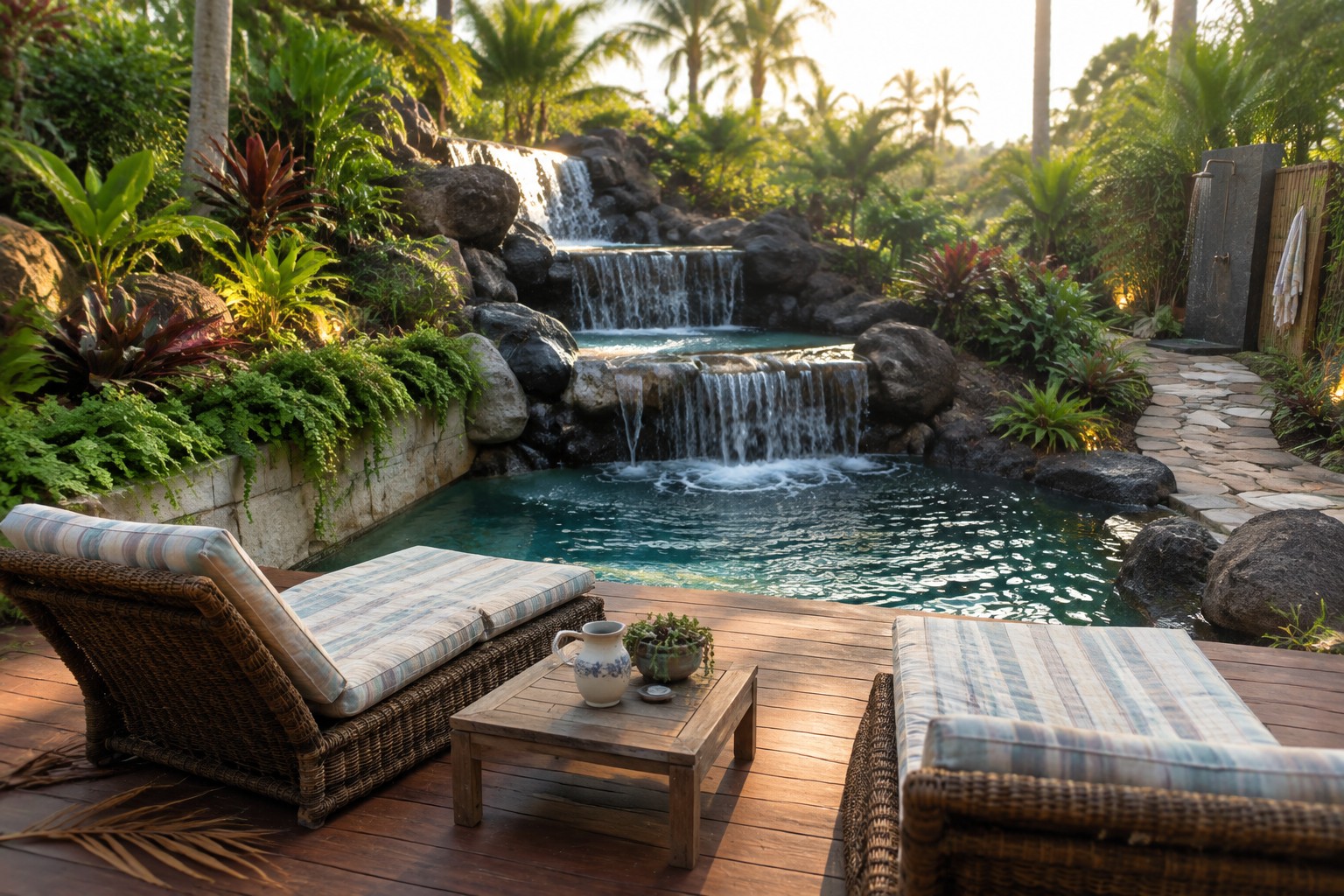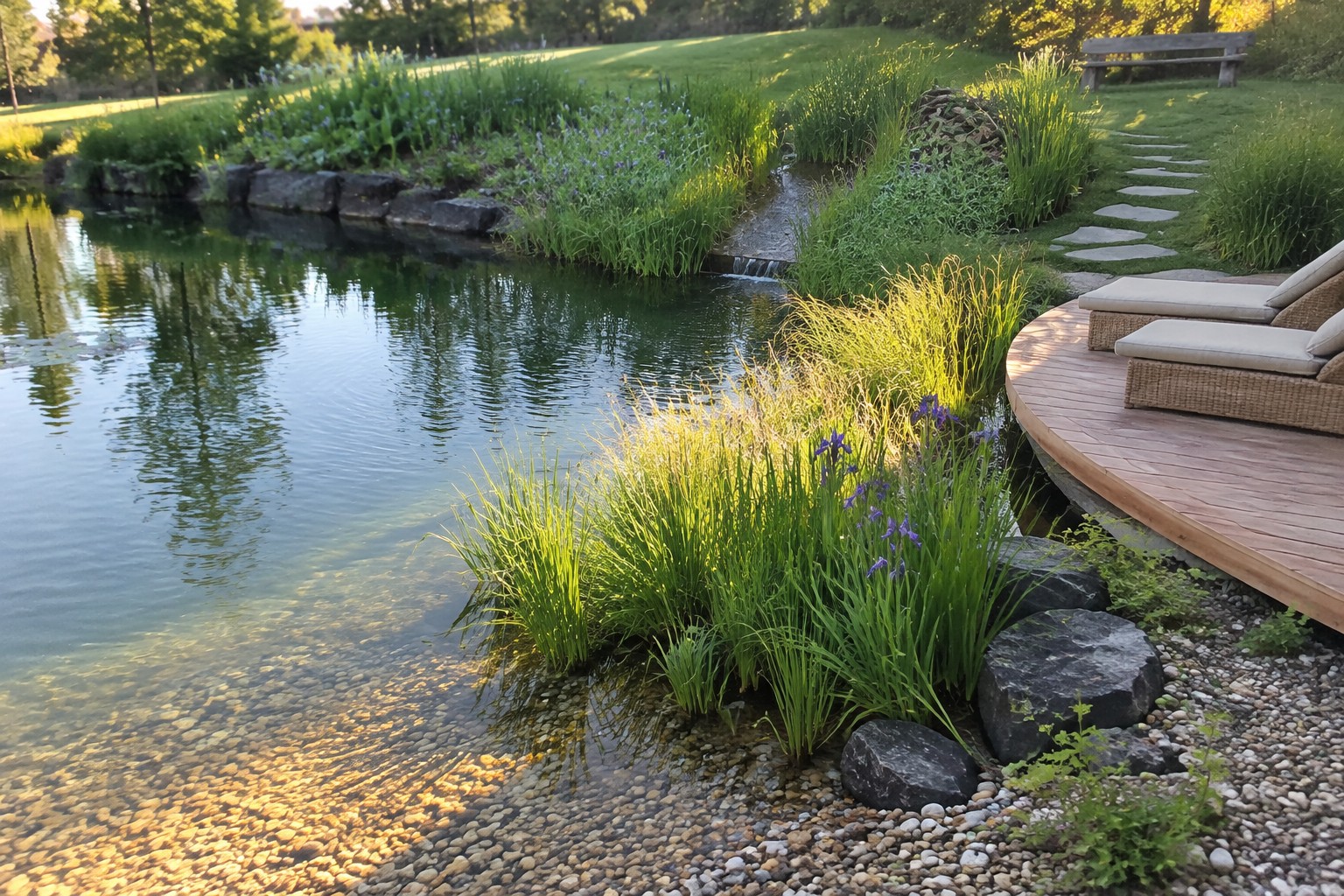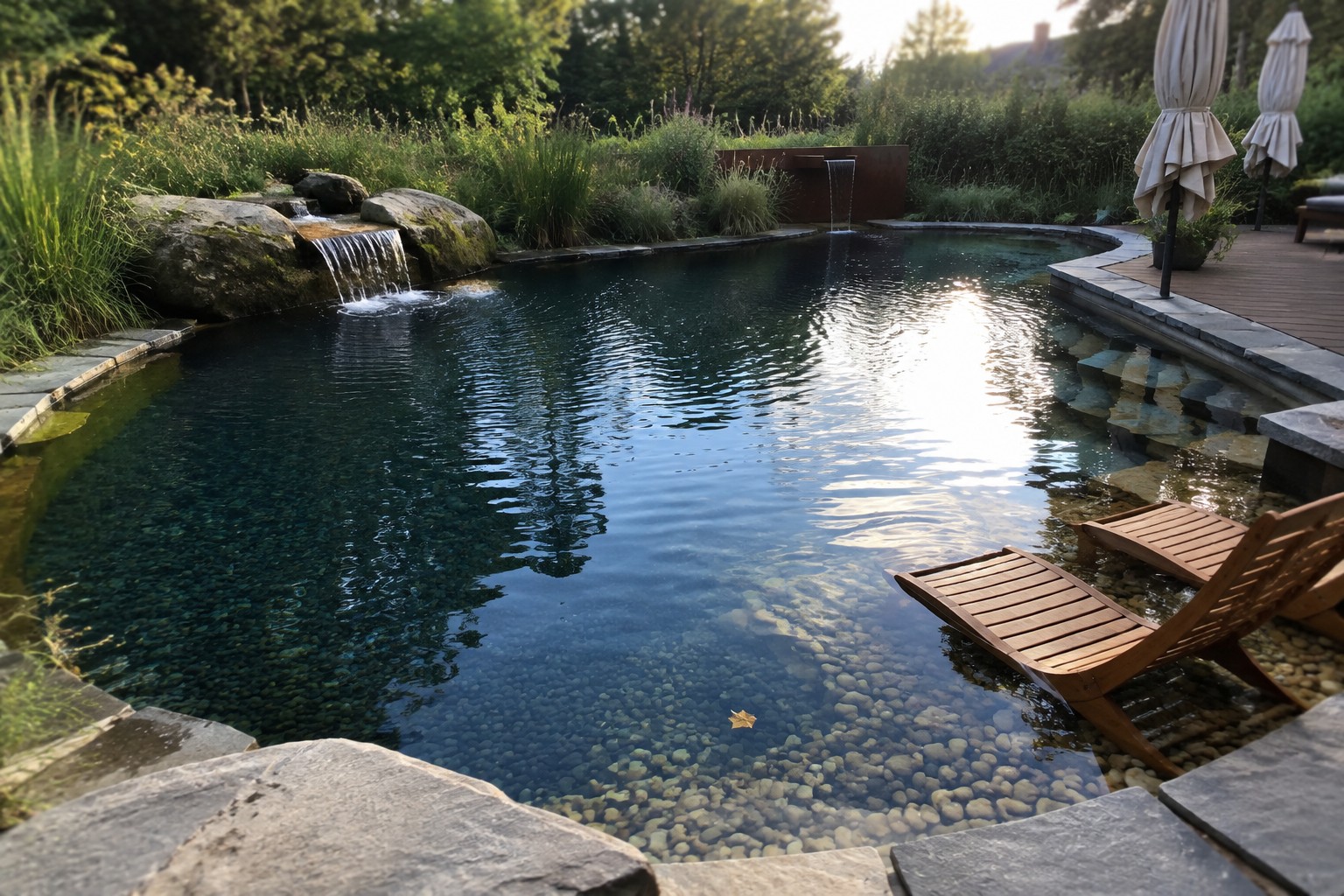
A dark-bottom pool can feel less like a bright backyard feature and more like a quiet pond, especially when its edges blend naturally with the surrounding garden.
I find the balance matters: dark water can look calm and reflective, but the pool still needs clear paths, practical entry points, and a layout that works for everyday swimming.
Stone edging, simple planting, and a few well-placed shrubs can soften the shape without making the space feel overgrown.
The water’s color changes with the light.
Some of these designs lean into a natural, tucked-away feel, while others keep a cleaner outline that may be easier to adapt to a real yard.
Add a Waterfall to a Dark Pool
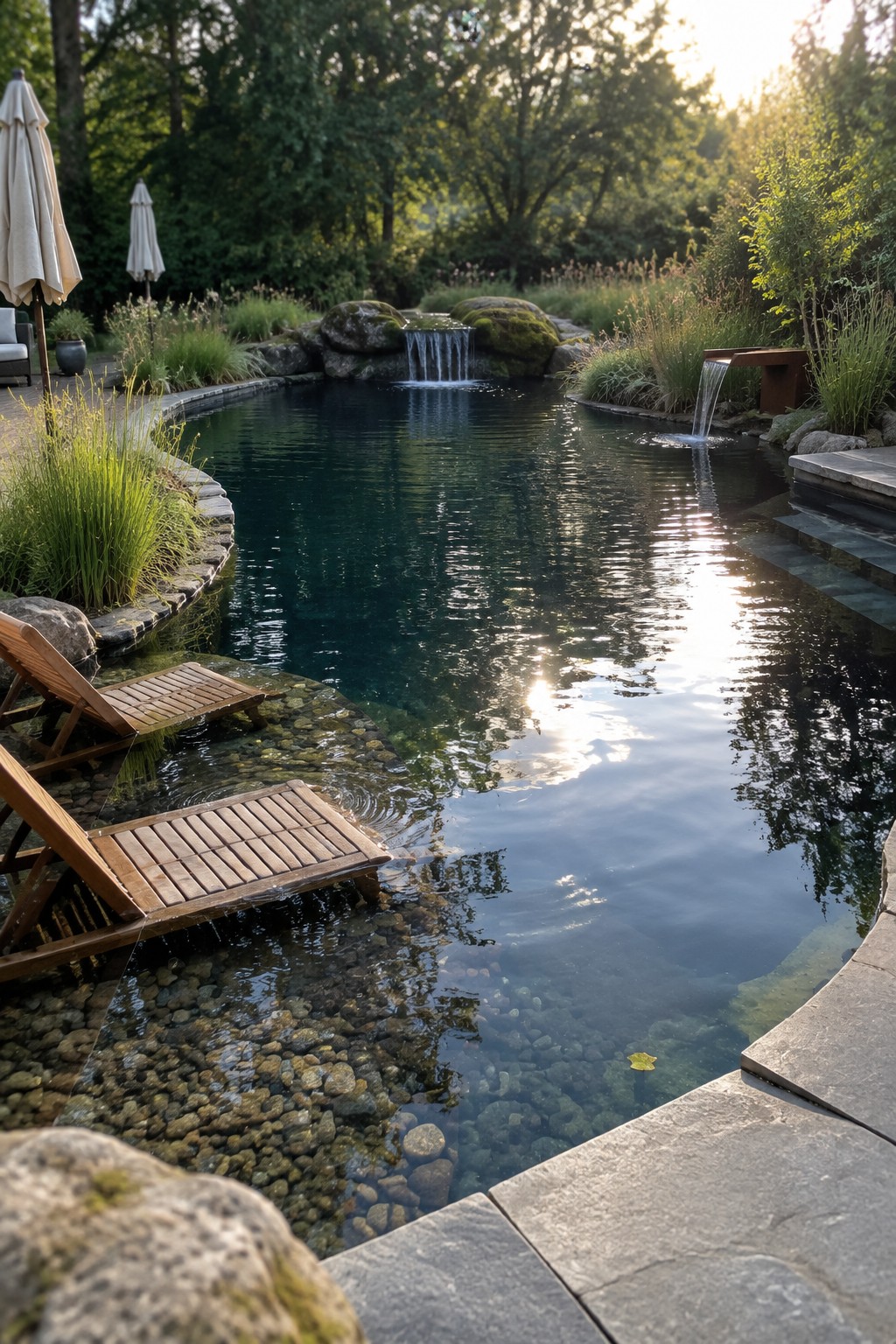
A small waterfall gives a dark-bottom pool the moving water and sound of a natural pond. It also helps a simple pool shape feel less formal, especially when the edge is finished with stones and planted grasses.
For a similar look, build the waterfall into a rocky end of the pool and keep its scale in proportion to the water. This works well in a garden setting, but the pump and water flow need to be planned carefully so the feature stays easy to maintain.
Use Dark Pool Tiles For a Pond-Like Look

A dark pool finish makes the water look deeper and more like a natural pond than a bright blue pool. Small, dark tiles also give the water a subtle texture, while reflections keep the surface from looking too uniform.
This approach suits a compact courtyard pool, especially when you want the water to feel connected to the surrounding stone and planting. Choose a finish that still lets you see the pool floor, and check a sample in both sun and shade before committing.
Use Dark Tile To Give a Pool a Natural Look

A dark pool bottom can make the water feel more like a pond than a bright blue swimming pool. The deep tile also reflects nearby plants and trees, so the surface changes with what surrounds it.
This look works well in a courtyard or garden where the pool sits close to stone paving and greenery. Choose a dark tile that suits the setting, and check a sample in both sun and shade before committing, since the water can look quite different throughout the day.
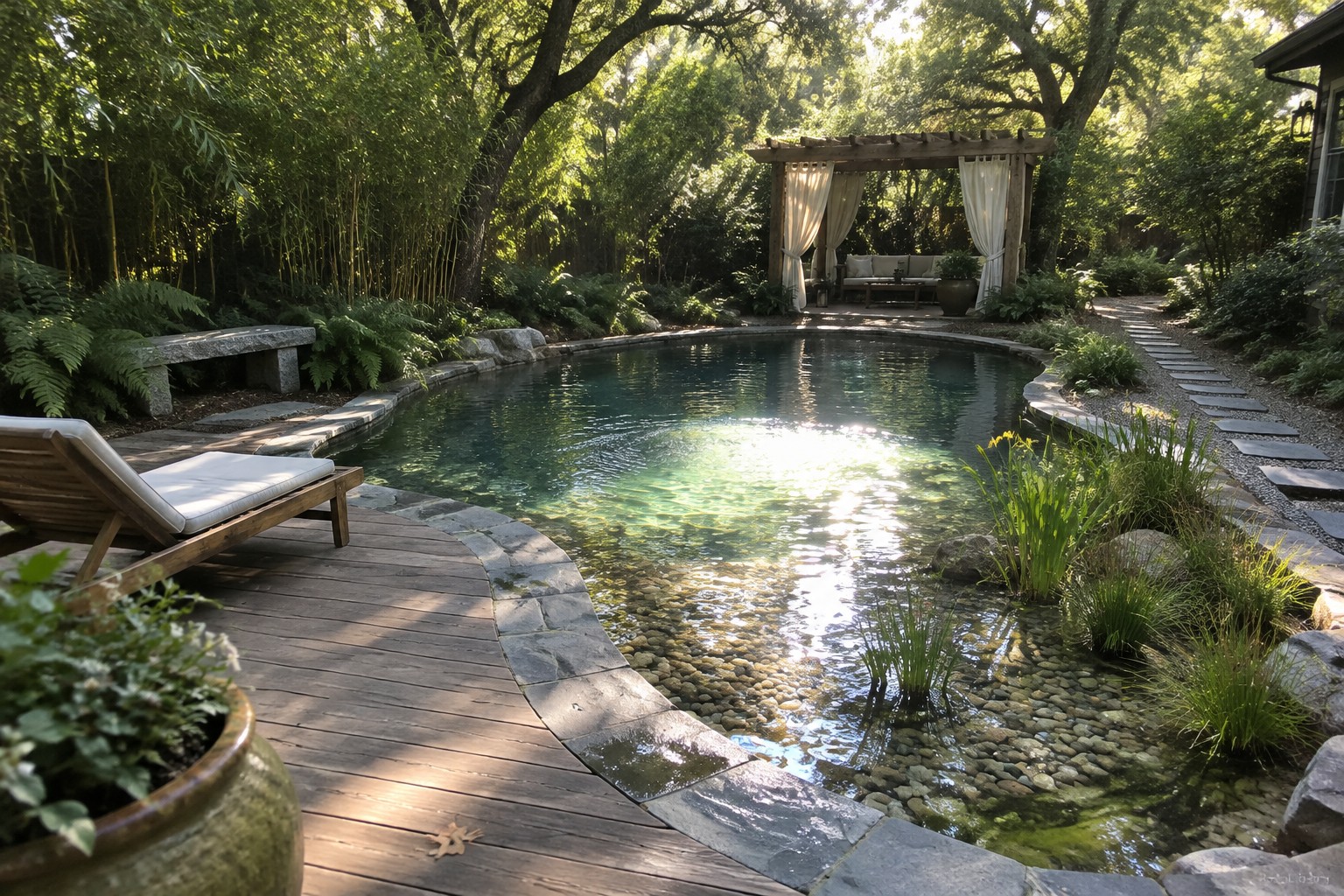
Let the Pool Feel Like a Natural Pond

A dark-bottom pool can look more like a natural pond when its edges are shaped with large stones instead of a crisp, uniform border. The darker water helps the rounded stones and pebbled floor feel like part of one setting.
This approach works well in a leafy backyard where the pool can sit close to existing plants. Use stones in a few sizes, but keep a clear, stable path along the edge so getting in and out stays practical.
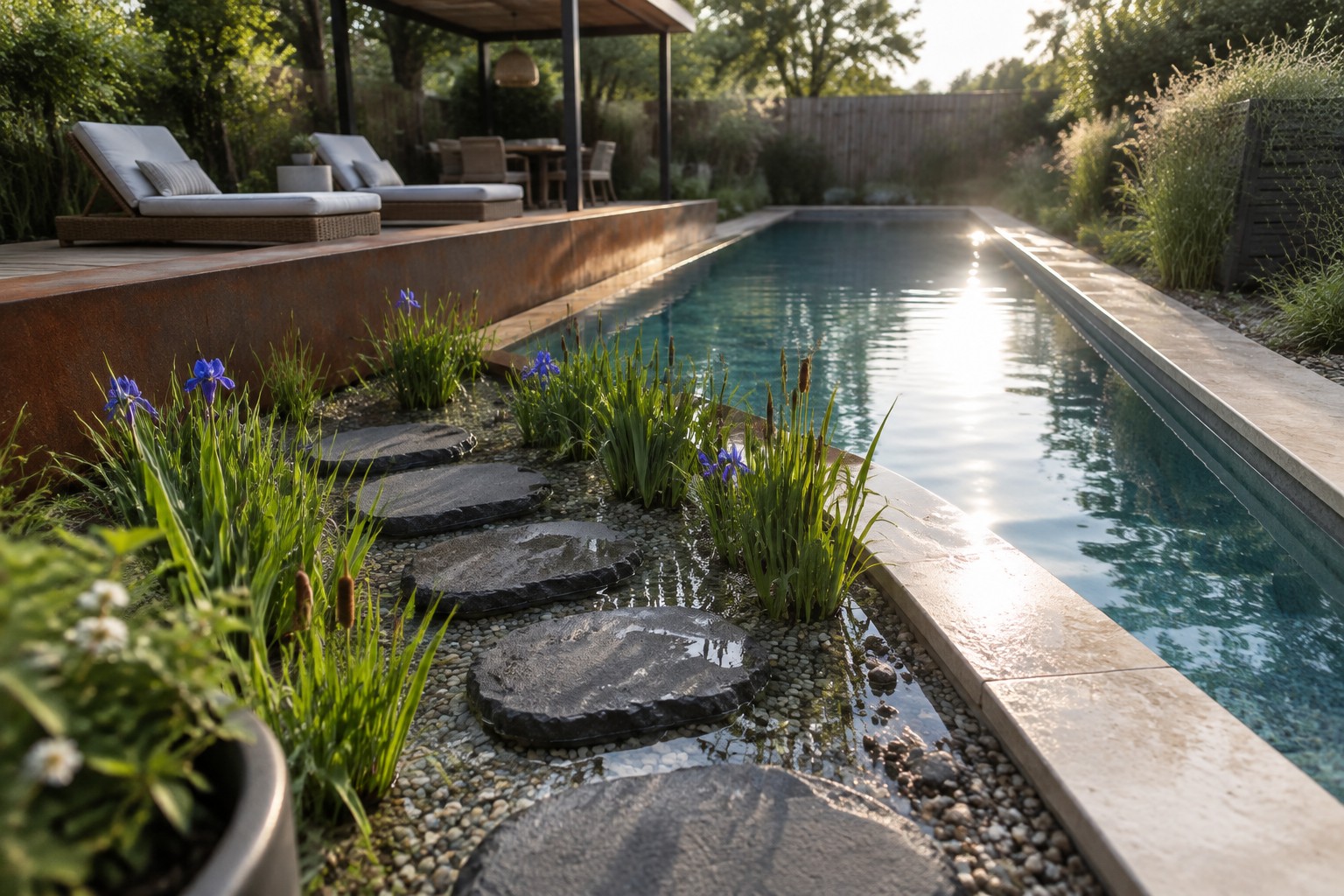
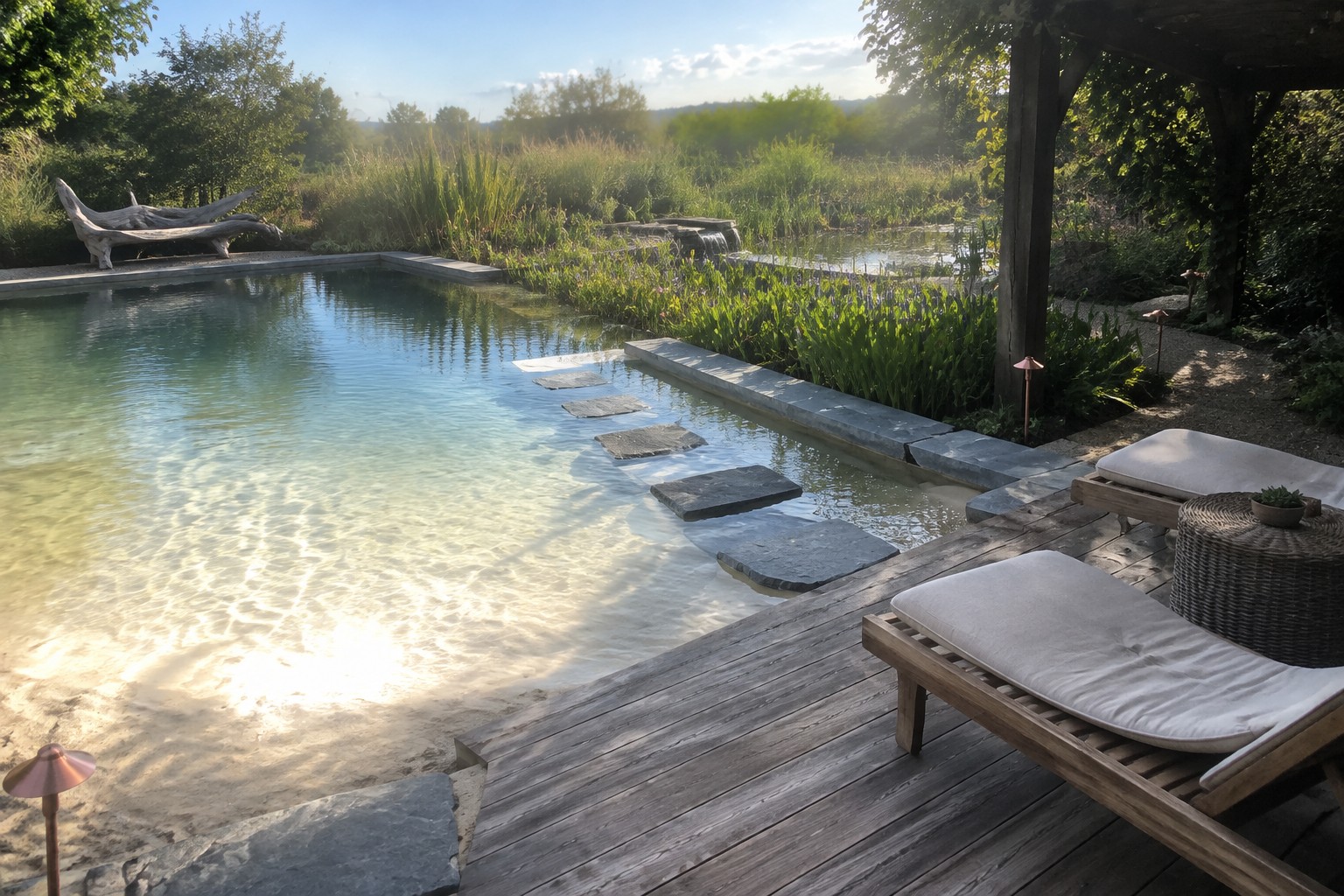
Use Stepping Stones Along a Dark Pool

Stepping stones give a pond-like pool a practical way to cross the water without a formal-looking deck. Broad, uneven stones feel more natural than a row of matching pavers, and they let the dark water remain a main part of the design.
Use this idea where there’s enough room to step comfortably from stone to stone. Keep the stones stable and level, and leave enough space around them for safe access and easy cleaning.
Make a Dark Pool Part of the Patio
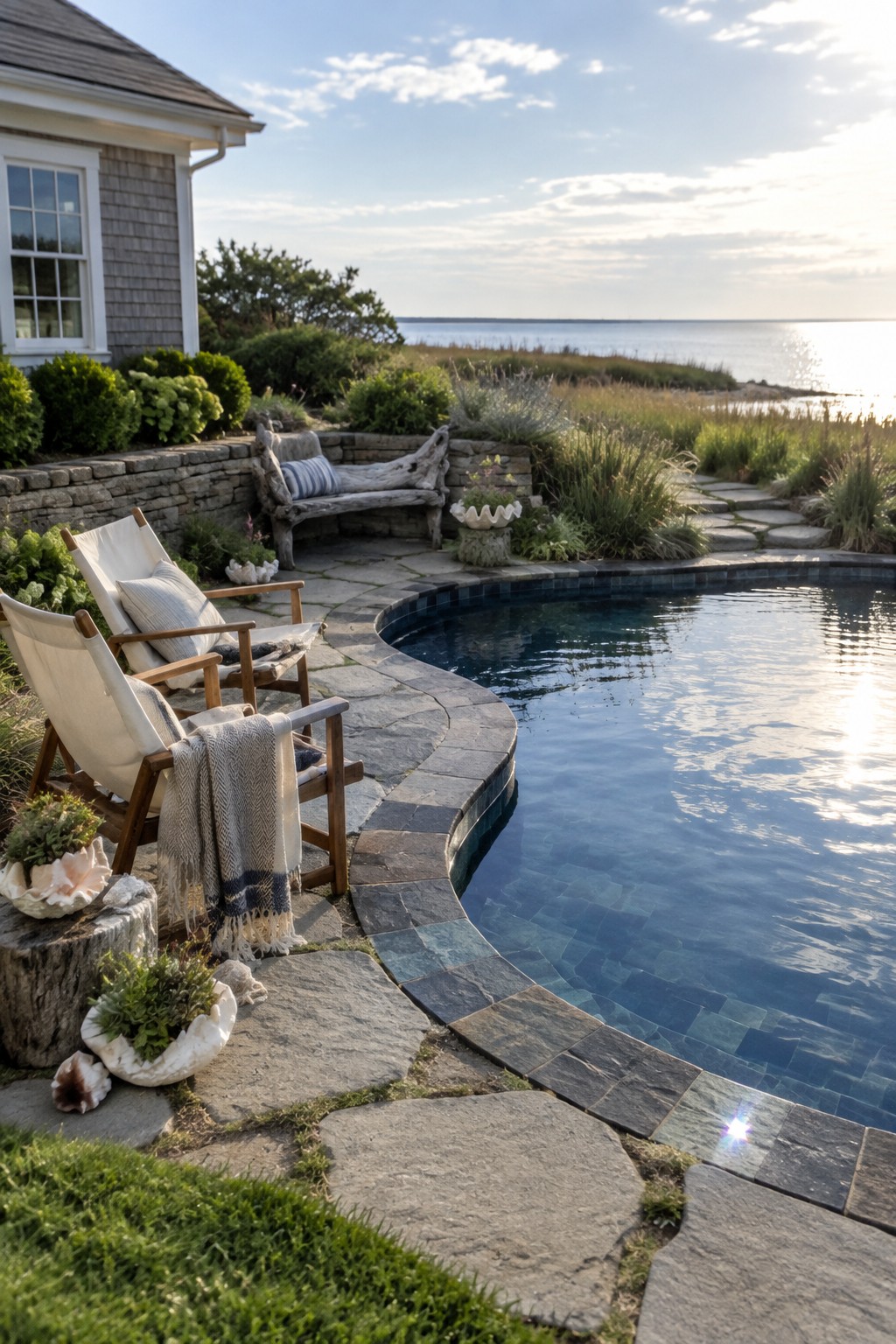
A dark-bottom pool can feel like a natural part of an outdoor living space rather than a separate feature. Here, the curved edge and stone coping give the water a softer outline than a straight-sided pool would.
For a similar effect, use a freeform shape and choose dark tile that suits the surrounding stone. This works especially well in a coastal or cottage-style yard, but keep the edge easy to walk around and maintain.
Add a Dark Pool to an Outdoor Lounge
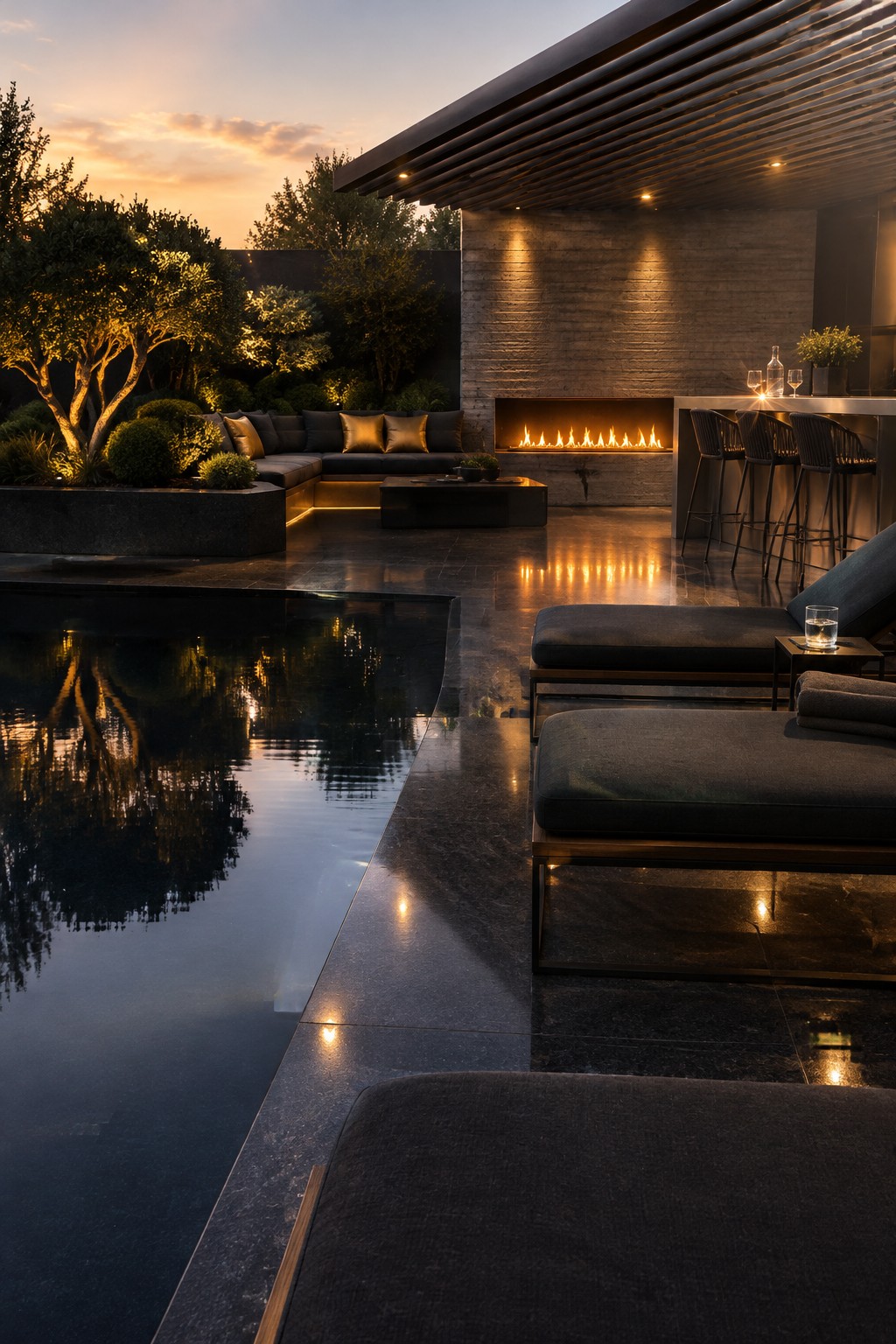
A dark-bottom pool can make an outdoor seating area feel more connected, almost like a still pond beside the patio. Its reflective surface suits a simple lounge layout, where people can enjoy the water without giving up space for conversation.
Keep the pool edge close to the seating, but leave a clear path between the water and the chairs. Dark finishes tend to show reflections well, though they can make it harder to see the pool floor, so plan for safe steps and good underwater lighting.
Create a Dark Pool With Natural Stone Edges

A dark-bottom pool can look more like a natural pond when its edges use irregular stone rather than a crisp, uniform border. The uneven shapes make the water feel connected to the garden, while the dark finish helps hide the pool’s outline.
This approach suits a wooded yard or a garden with a relaxed, natural style. Use broad, stable stones around the water, and keep the edge secure where people enter or walk beside the pool.
Add a Dark Pool to a Rooftop Terrace
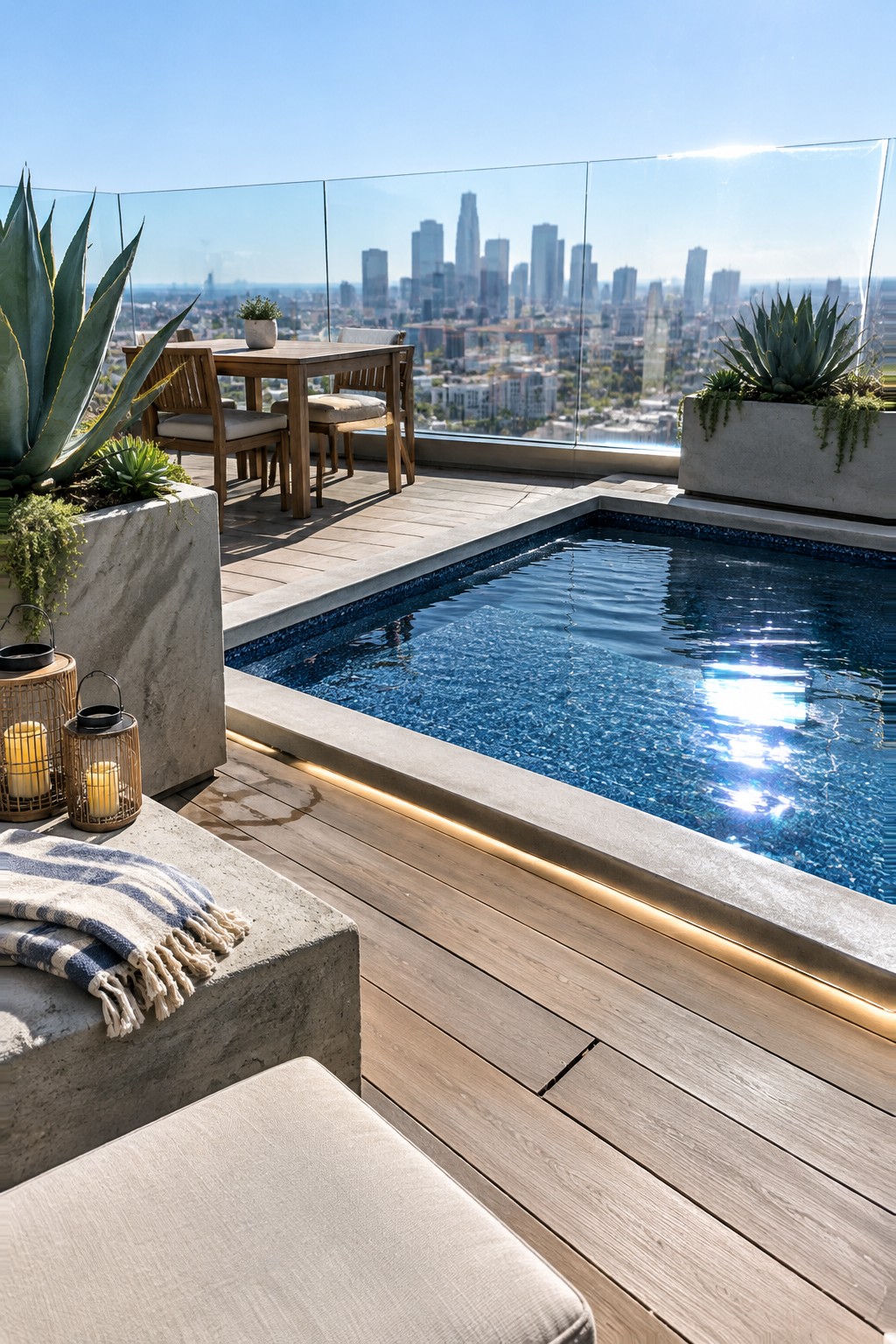
A dark-bottom pool can make a rooftop terrace feel more connected to the outdoors. Its deep blue water gives the pool a pond-like look, while a simple deck keeps the surrounding area practical for everyday use.
This setup works best where the structure can support a pool and there is room to move around it safely. Keep the pool edge clear, and choose durable decking that can handle regular splashes.
Add a Waterfall Wall to a Dark Pool
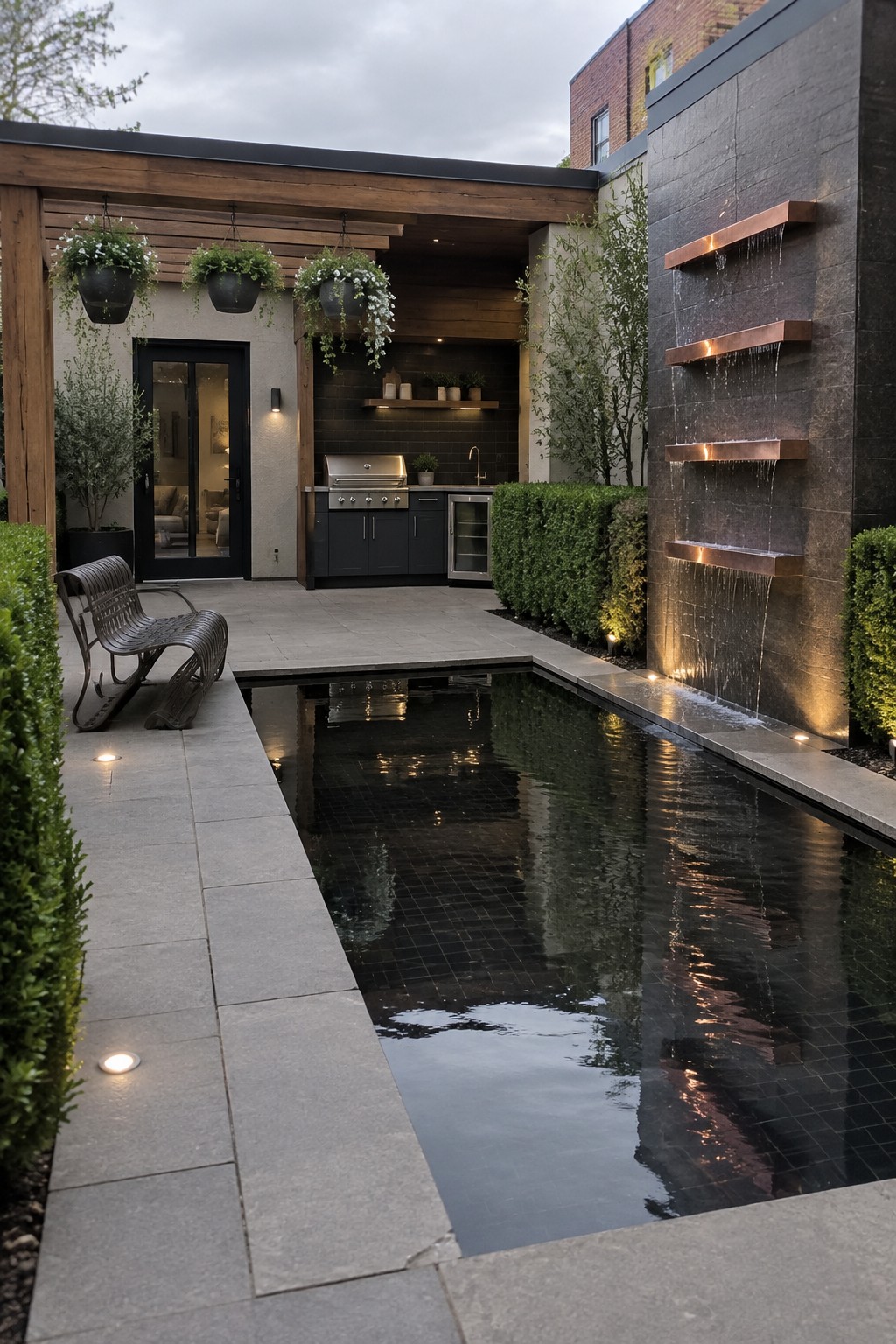
A dark-bottom pool can feel more like a natural pond when water moves down a wall at one end. The steady flow gives the pool a clear focal point, while the dark surface reflects the water and surrounding greenery.
This works well in a narrow courtyard where a long pool runs beside a wall. Use stone or another water-safe finish, and plan for easy access to the pump and plumbing. A few slim ledges can keep the feature simple without taking up much space.
Add Built-In Seating Along the Pool

A built-in ledge gives a dark-bottom pool a useful place to pause without making it feel like a separate patio. Here, timber platforms extend over the water, so the pool can work for sitting as well as swimming.
This idea suits a natural-style pool with a defined edge. Use weather-resistant materials and keep the seating clear of the main swimming area. A simple platform is often enough.
Add a Dark Pool to a Courtyard

A narrow dark-bottom pool can fit neatly into a courtyard, making use of a long, compact space without taking up the whole patio. The deep tile gives the water a pond-like look, while the simple rectangular shape keeps the layout practical.
This approach works well in an enclosed courtyard where a full-size pool would feel out of place. Leave enough room along one side for a clear walking path, and use built-in seating to save space.
Use Dark Pool Water as Part of the Patio

A dark-bottom pool can feel more like a natural pond when it sits within a simple outdoor living area. The deep water gives the patio a quieter look than a bright blue pool, while pale stone coping makes the edge easy to see and use.
This approach works well in a desert-style yard or any space with gravel and drought-tolerant plants. Keep the pool shape simple, and choose a dark finish that still lets you see the water clearly.
Add Seating Beside a Dark Pool

A small seating area beside a dark pool makes the water part of everyday outdoor living, rather than something to admire from across the yard. Weathered wooden chairs suit a relaxed garden setting and give people a comfortable place to sit near the water.
Keep the chairs on a stable surface and leave enough room to walk between them and the pool edge. This works well in a garden with a curved pool, where a simple pair of seats can fit naturally without crowding the path.
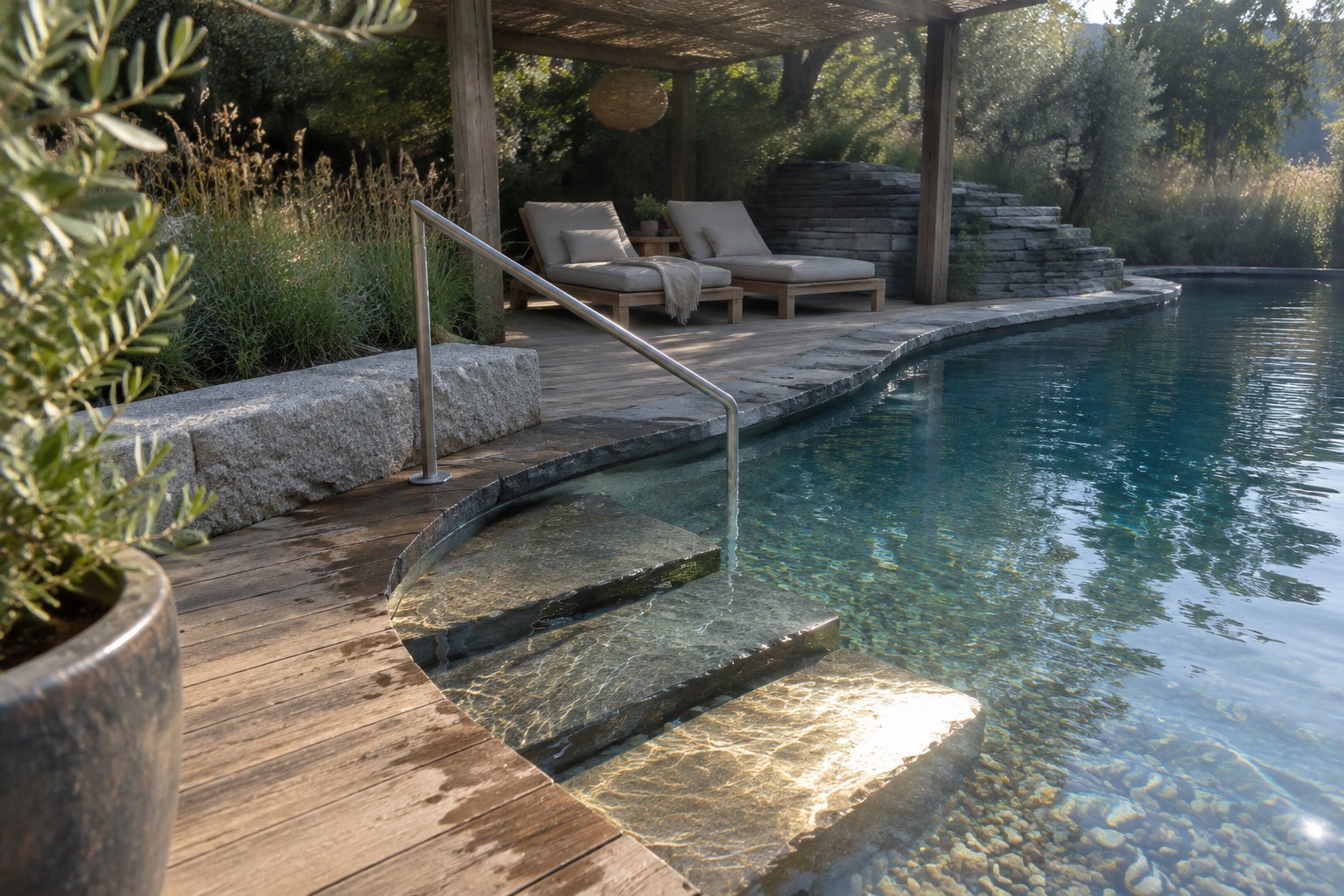
Set Up Seating Beside the Pool
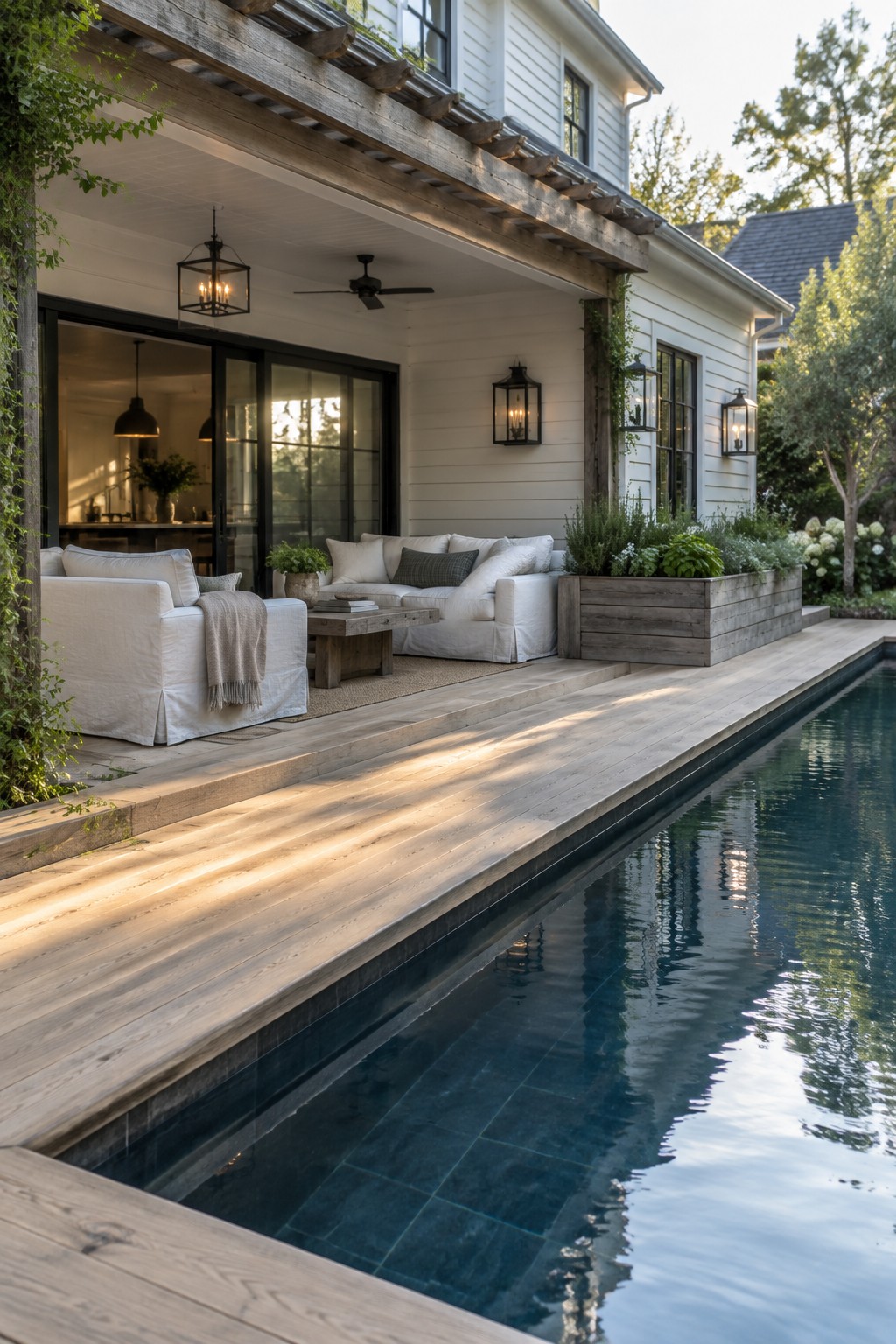
A poolside seating area works best when it feels like a natural extension of the deck. Here, the covered lounge sits just steps from the water, making it easy to move between relaxing and swimming.
For a similar setup, leave a clear path along the pool edge and choose outdoor furniture that can handle moisture and sun. A covered patio is especially useful, but a simple deck with a few comfortable seats can work too.
Use Dense Planting for Pool Privacy

A thick planting wall can make a small pool feel tucked away without closing it in. Here, greenery covers one side of the pool, while the dark water keeps the setting feeling natural.
This approach works well in a courtyard or narrow backyard where neighboring windows are close. Choose plants that suit the light and keep them trimmed back from the water so leaves do not become a constant cleanup job.
Add a Fire Pit Beside a Dark Pool

A fire pit beside a dark-bottom pool makes the patio useful after swimming, too. Keeping it close to the seating gives people a place to gather without taking attention away from the water.
Leave enough room to walk safely between the pool and fire pit, and choose a spot where smoke will not blow toward the seats. This setup works well on a spacious patio with a built-in lounge area.
Frequently Asked Questions
Q: Will a dark-bottom pool actually look like a natural pond?
A: It can, especially when the shape is gently curved and the edges blend into planting or stone. The water may look greenish or deep blue depending on the light, so it won’t have the same bright, tropical look as a pale pool.
Q: Does a dark pool bottom make the water harder to keep clean?
A: Not necessarily, but leaves, dust, and other debris can be harder to spot against a dark surface. A regular skim and a quick look over the steps and floor help you catch buildup before it becomes a chore.
Q: Will a dark-bottom pool feel warmer in the sun?
A: Dark surfaces absorb more sunlight, so the water may warm up more than it would in a light-bottom pool. If you prefer cooler swims, shade from trees or a pergola can help.
Q: What should I use around the pool to make it feel more like a pond?
A: Natural stone, soft-edged planting, and a few shallow areas can make the transition from yard to water feel less formal. Keep plants far enough back that dropped leaves don’t become a daily cleanup job.