A swimming pond can feel like a natural part of the yard when its edges, planting, and paths fit the shape of the space.
Gravel beaches soften the transition from lawn to water, but their size and placement matter if you want room to sit, walk, and get in comfortably.
I’d pay close attention to how the gravel meets the pond, since a clear edge can keep the design tidy without making it feel too formal.
Planting around the water also helps the pond settle into its surroundings and can make the whole area feel more private.
The ideas ahead offer practical details to save and adapt to your own garden.
Use Gravel to Make a Gentle Pond Path

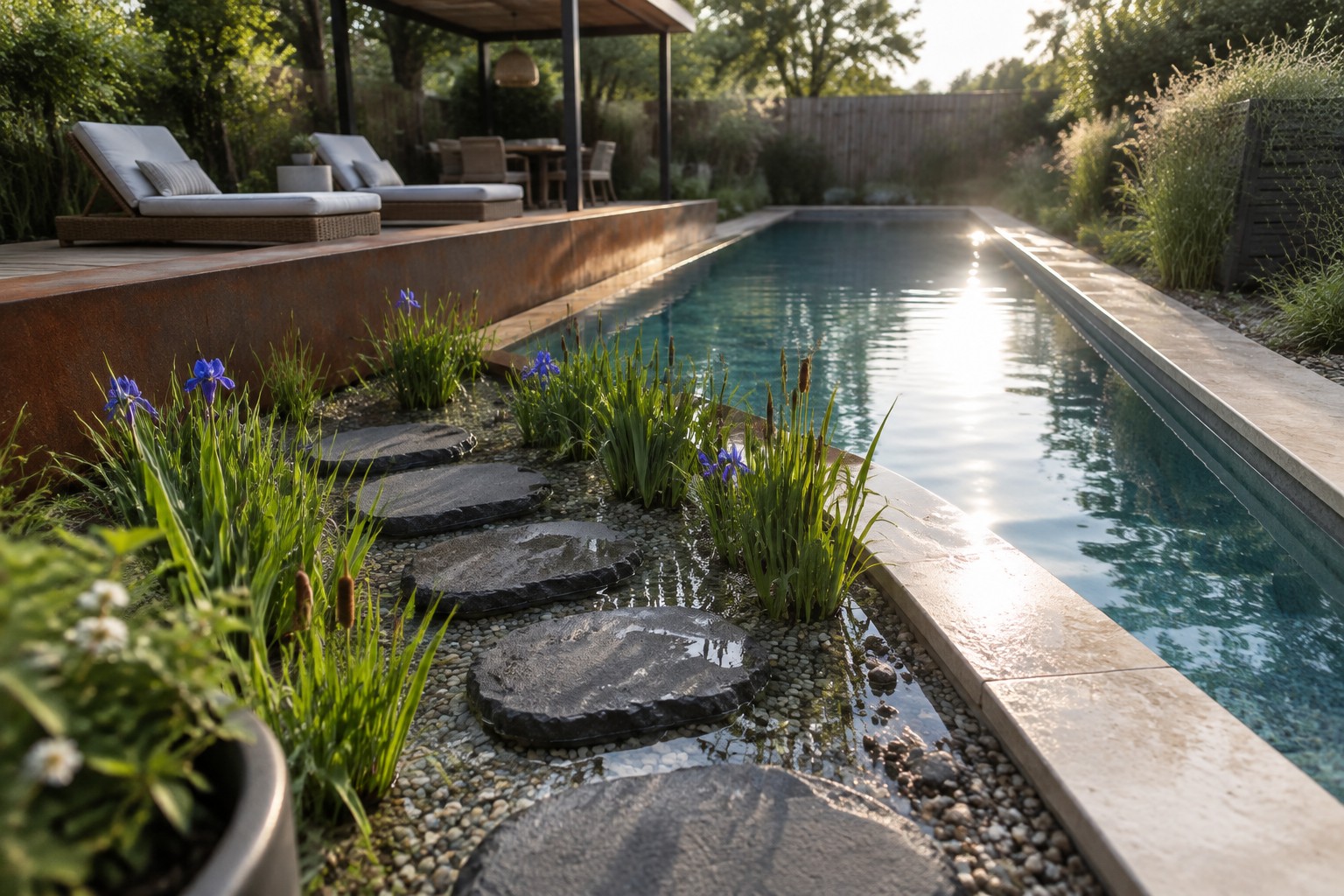
A gravel beach gives a swimming pond a gradual, natural edge instead of a hard border. It also makes the walk around the water feel more relaxed, especially when stepping stones provide a firm place to walk.
Use rounded gravel where the pond meets the shore, and keep it contained so stones do not wash into the water. A few broad stepping stones can guide the route without covering up the gravel.
Add a Gravel Beach to the Pond
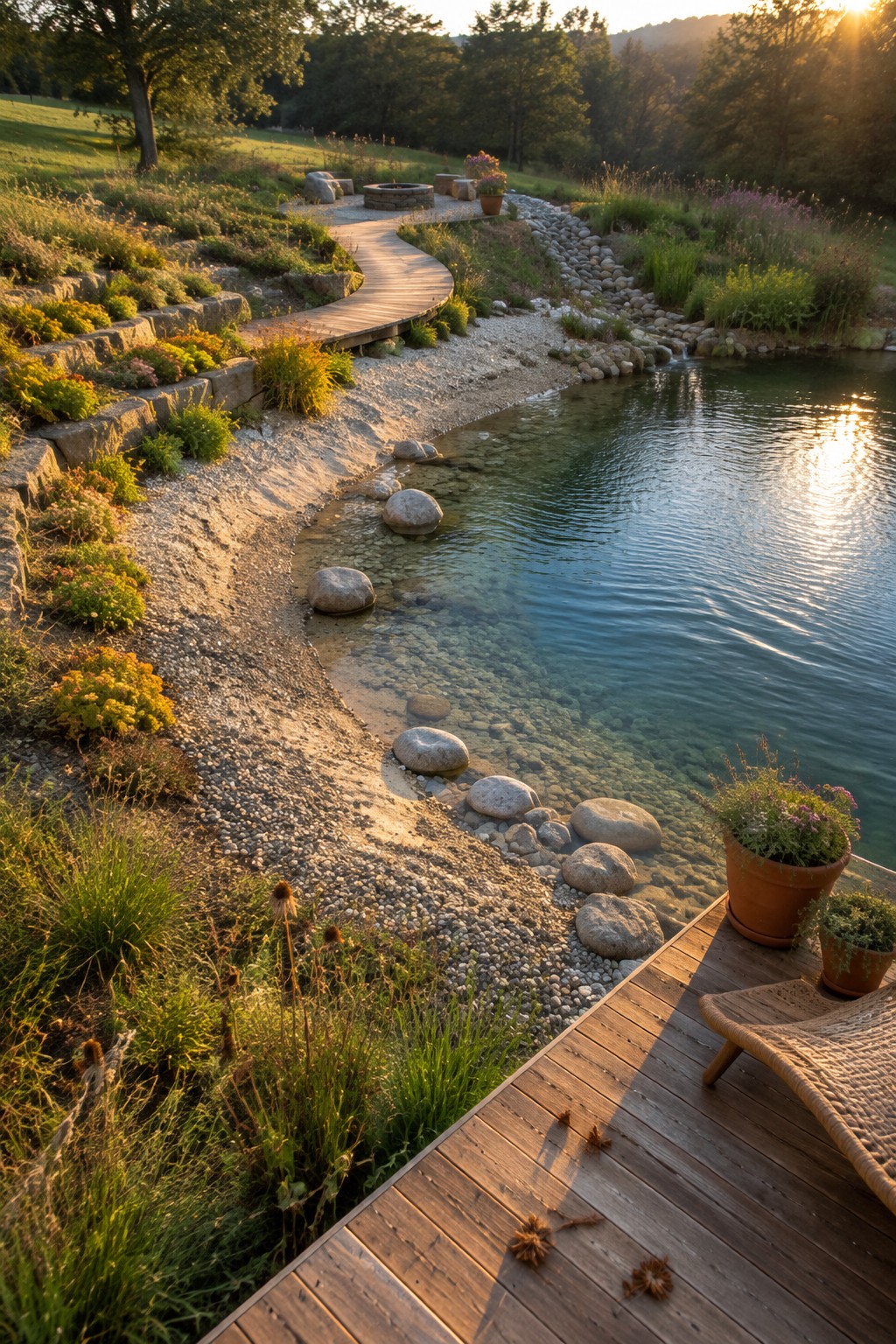
A gravel beach gives an organic swimming pond a gradual, natural-looking edge. It also makes it easier to step into shallow water than a steep, planted bank does.
Use rounded gravel along a gently sloping shore, and place a few larger stones near the waterline to help hold the edge in place. This approach suits ponds where you want an easy entry point, but make sure the beach is wide enough to stay comfortable underfoot.
Use Gravel To Shape The Pond Edge

A gravel beach gives a swimming pond a more gradual, natural edge than a hard pool border. It also provides a practical place to step into the water, while a simple brick edging keeps the gravel from spreading into the path.
This approach works well in a garden where you want the pond to blend into the landscape. Choose rounded gravel that feels comfortable underfoot, and make sure the pond has a clear, stable boundary where people walk.
Make a Gravel Beach Part of the Pond
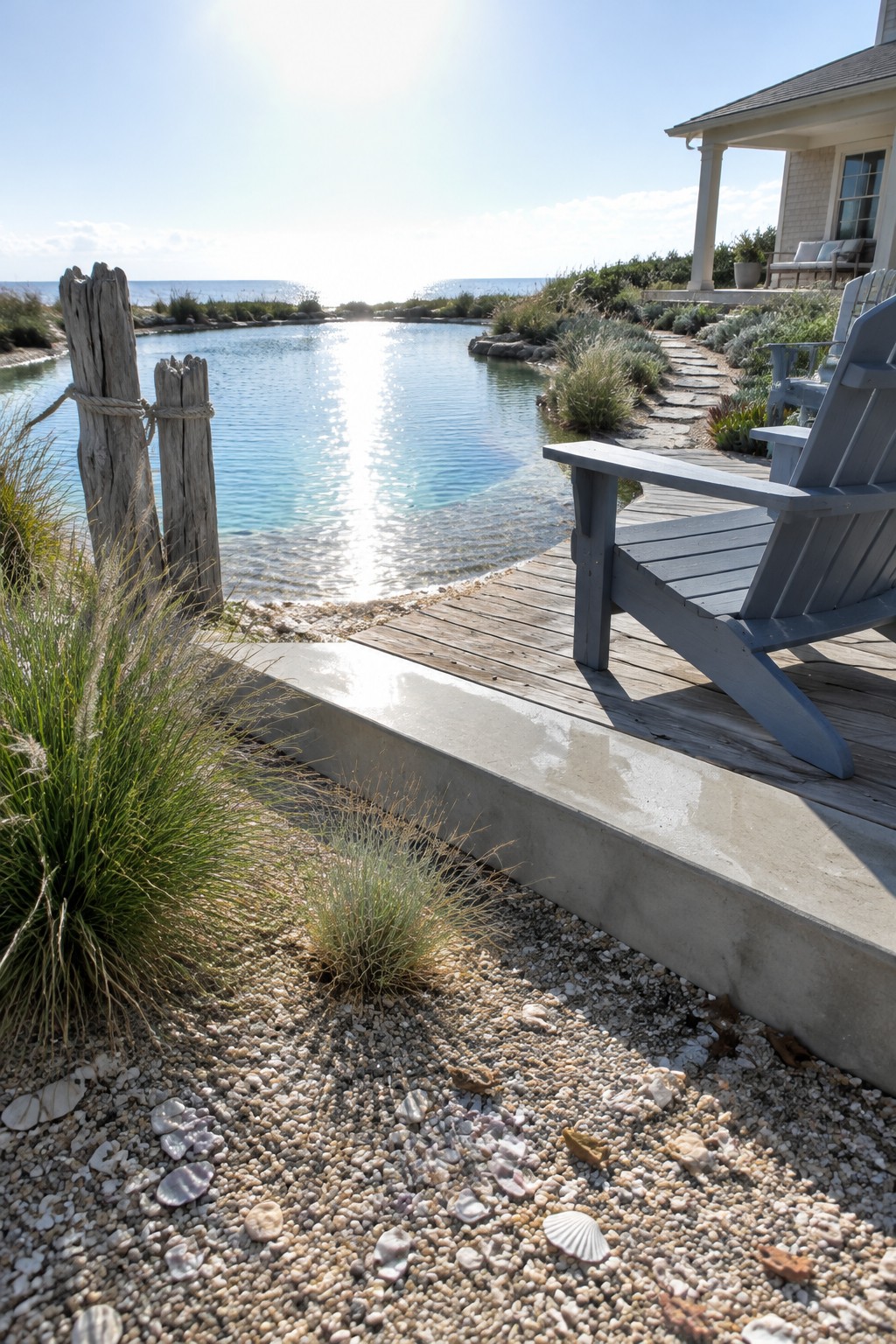
A gravel beach gives an organic swimming pond an easy place to meet the shore. It creates a gradual edge for stepping into the water, while the loose stones keep the pond’s natural look.
Use rounded gravel in a shallow area beside a deck or seating spot, and keep the transition stable so stones do not wash into the swimming zone. A small shell-strewn beach, like the one shown here, suits a coastal-style yard particularly well.
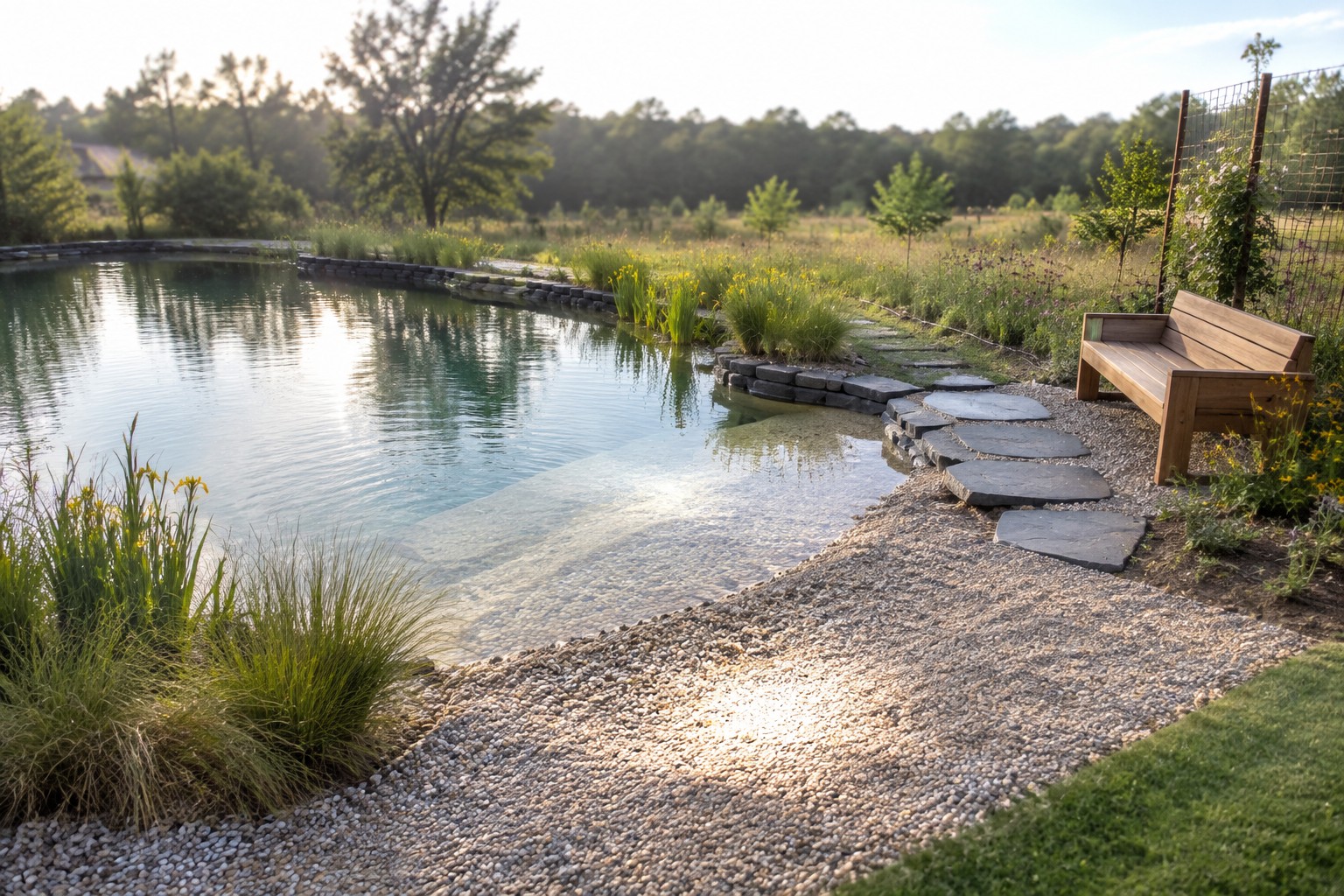
Use Stepping Stones Beside a Gravel Pond Shore

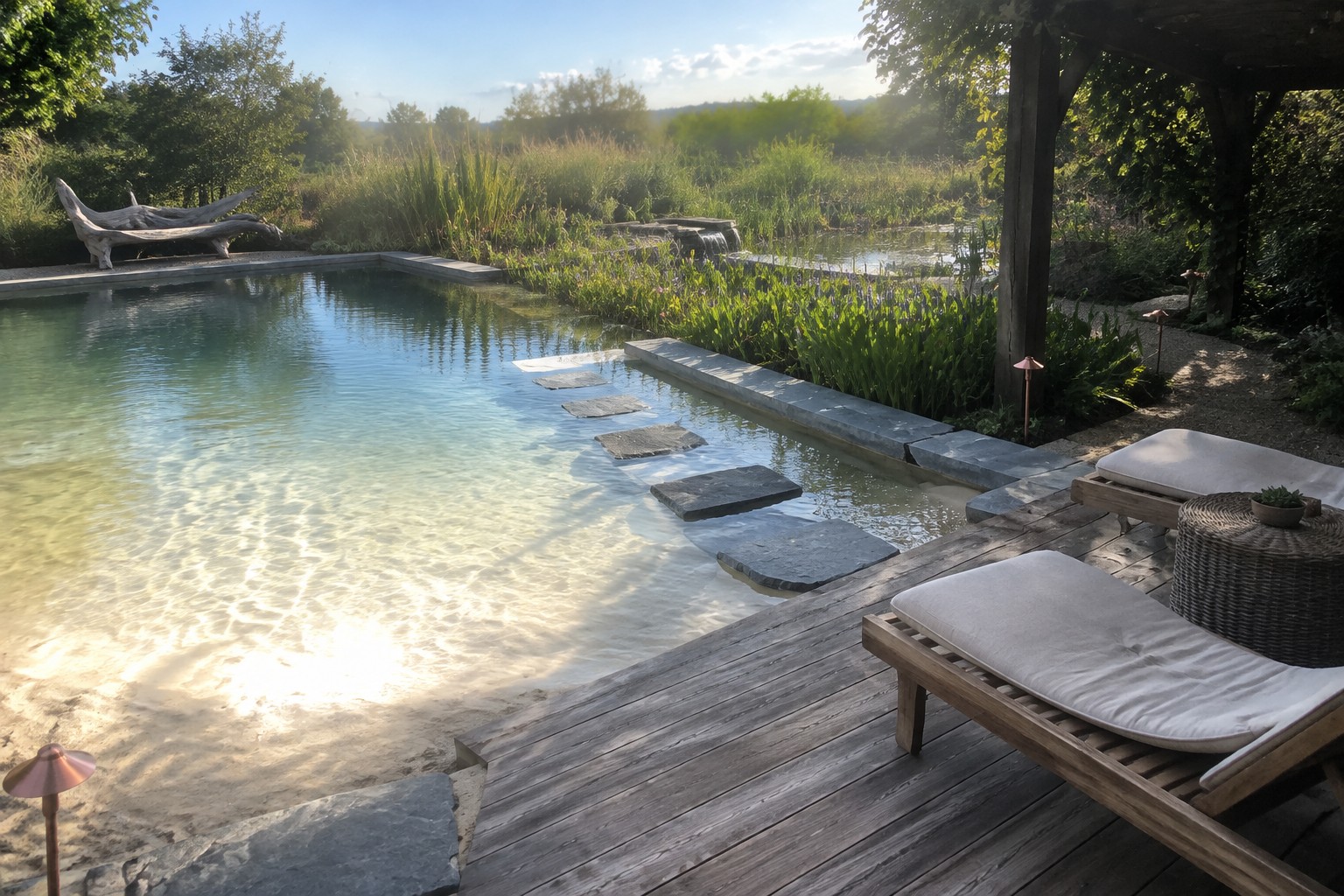
A gravel shoreline can make a swimming pond feel like part of the garden, rather than a separate pool. Flat stepping stones set into the pebbles give people a firm place to walk while keeping the edge informal.
This works well in a naturalistic garden where a paved border would feel too formal. Choose stones with a steady, nonslip surface, and set them securely so they do not shift underfoot.
Build Stone Steps Into the Pond’s Edge

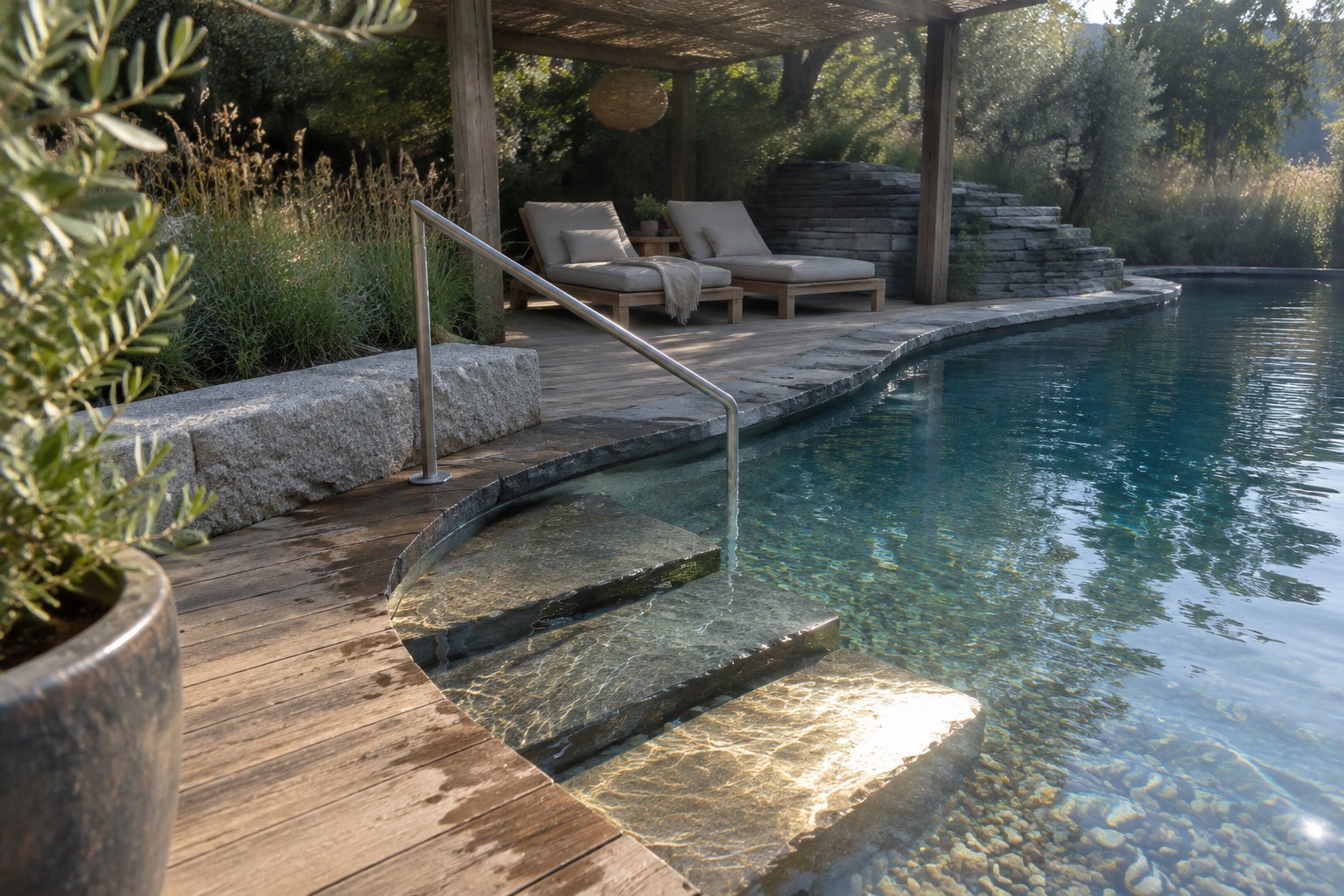
Stone steps leading down to the water make a pond easier to reach and give the shoreline a clear place to enter. Here, the broad steps sit beside a narrow gravel beach, so there is a gradual transition from the terrace to the pond.
This works well on a sloped site, where steps can connect different levels without making the bank feel abrupt. Use textured stone for a safer footing, and keep the final step low enough to meet the water comfortably.
Use a Pebble Shore to Shape the Pond Edge
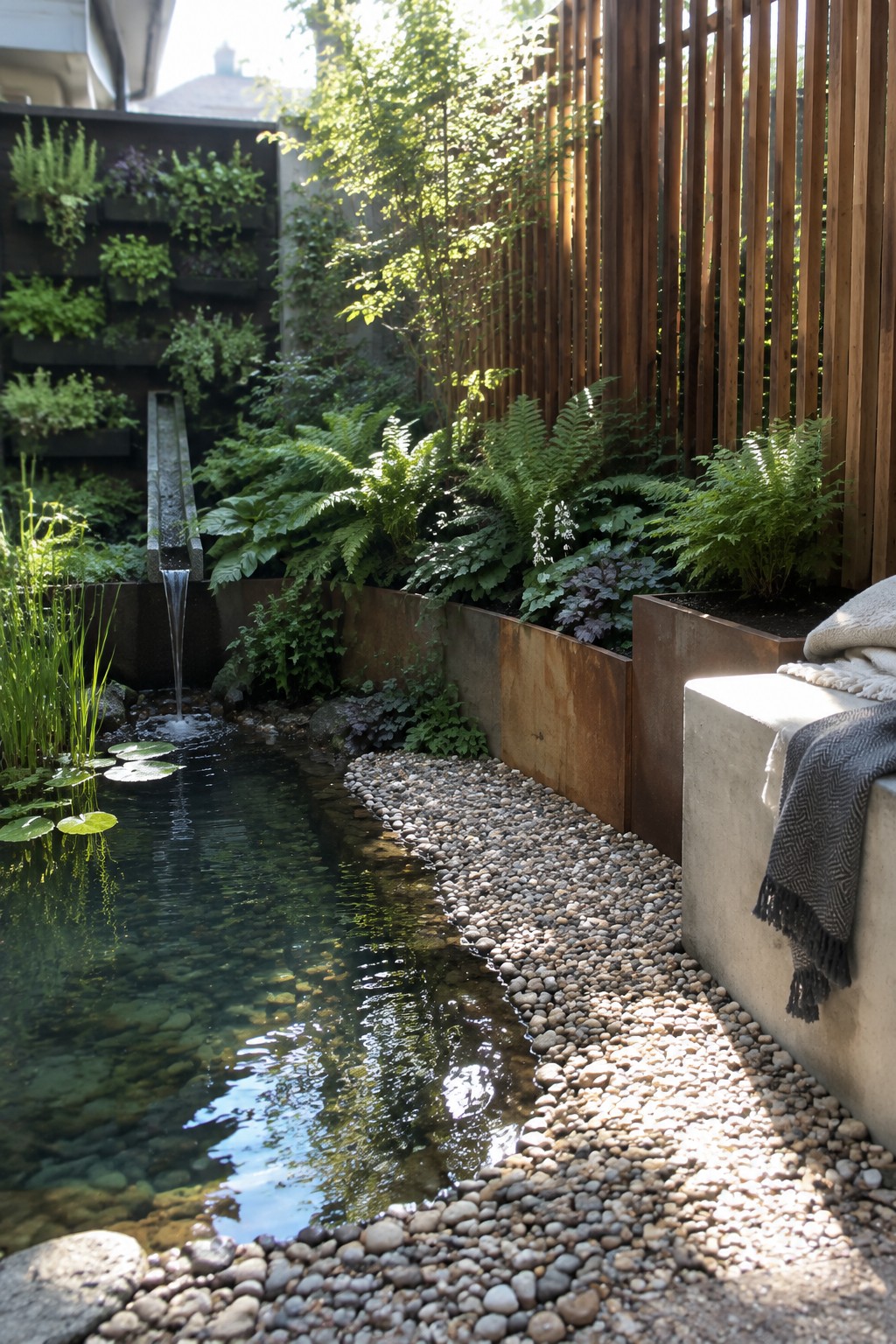
A narrow pebble beach gives an organic swimming pond a softer, more natural edge than a hard border. It also makes the transition from water to garden feel gradual, while keeping the pond’s outline clear.
This approach works well in a small courtyard or beside raised planting beds. Choose rounded stones that are comfortable underfoot, and keep the layer deep enough to stay in place along the water’s edge.
Set Up an Outdoor Dining Area Beside the Pond
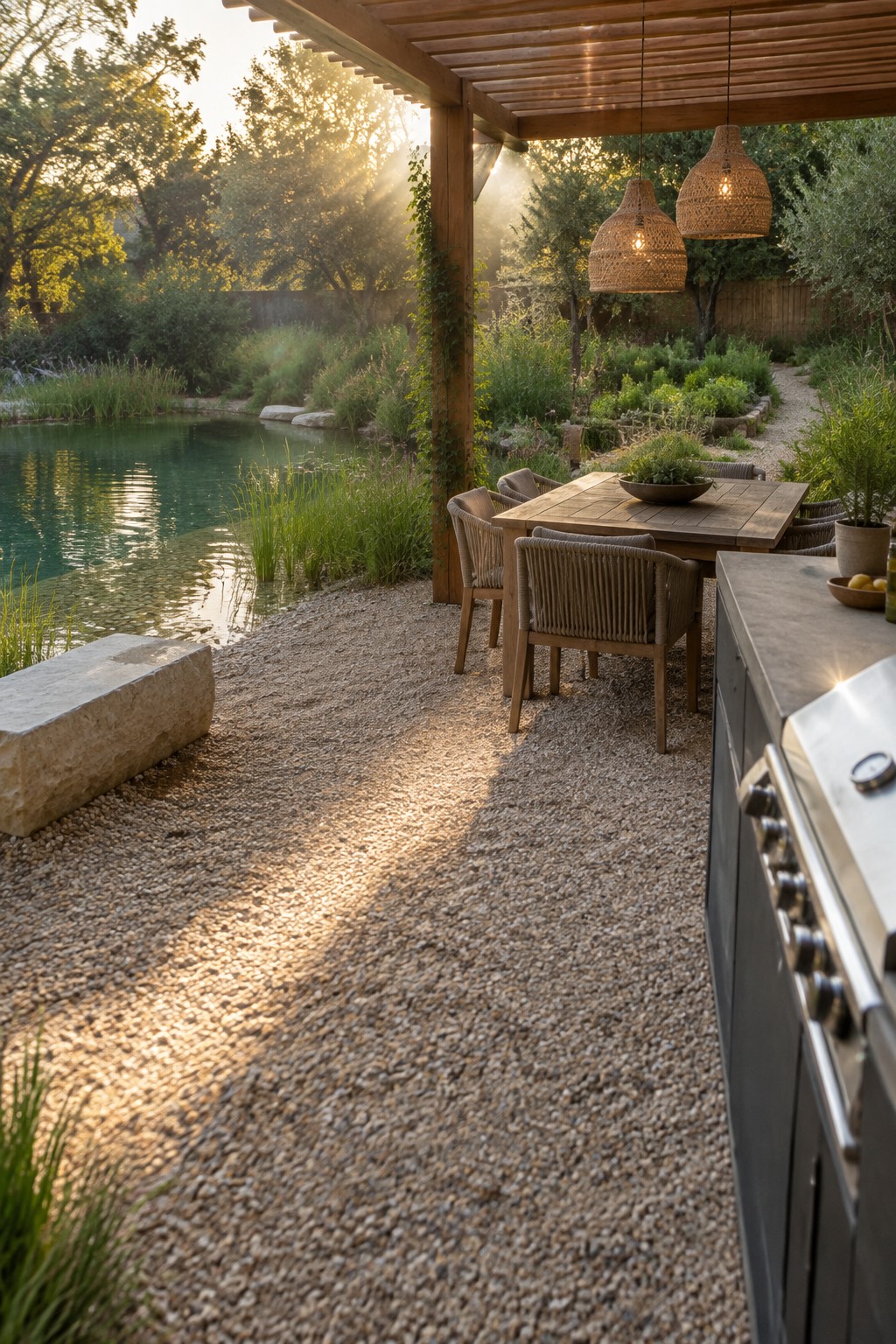
A dining spot near a swimming pond makes it easier to enjoy the water as part of everyday outdoor living. Gravel gives the area a relaxed, informal feel and can connect the seating space to the pond shore without making the whole yard look like a conventional patio.
For a similar setup, keep the table on a firm, level section of gravel and leave a clear route between the chairs and the water. A pergola can provide useful shade, though the dining area should still feel separate enough that wet feet and splashes do not become a nuisance.
Add a Simple Gravel Seating Area Beside the Pond

A gravel clearing beside a swimming pond gives people a place to pause without turning the shoreline into a full patio. Here, a low bench keeps the spot useful while leaving the water’s edge open.
This approach suits informal ponds and gardens where a paved area might feel too rigid. Use compacted, well-draining gravel, and keep it contained so loose stones do not wash into the pond.
Create a Gravel Beach Beside the Pond

A gravel beach gives a swimming pond a more natural, easygoing edge than a hard pool border. It also makes a simple place to step into the water, as shown by the pebbled shore beside this pond.
Use small, rounded gravel where the water meets the bank, and keep the layer deep enough to stay in place. This works especially well with a wood deck nearby, but a clear edge helps keep loose stones from spreading into the swimming area.
Add a Gravel Beach for Pondside Lounging

A gravel beach gives a swimming pond a simple place to sit and relax without needing a full paved patio. Here, the gravel area makes room for loungers while leaving the water’s edge close by.
This layout works well when you want a clear lounging spot beside the pond. Use compacted gravel that feels comfortable underfoot, and keep the pond edge neatly contained so loose stones do not wash into the water.
Add a Shallow Gravel Entry to the Pond
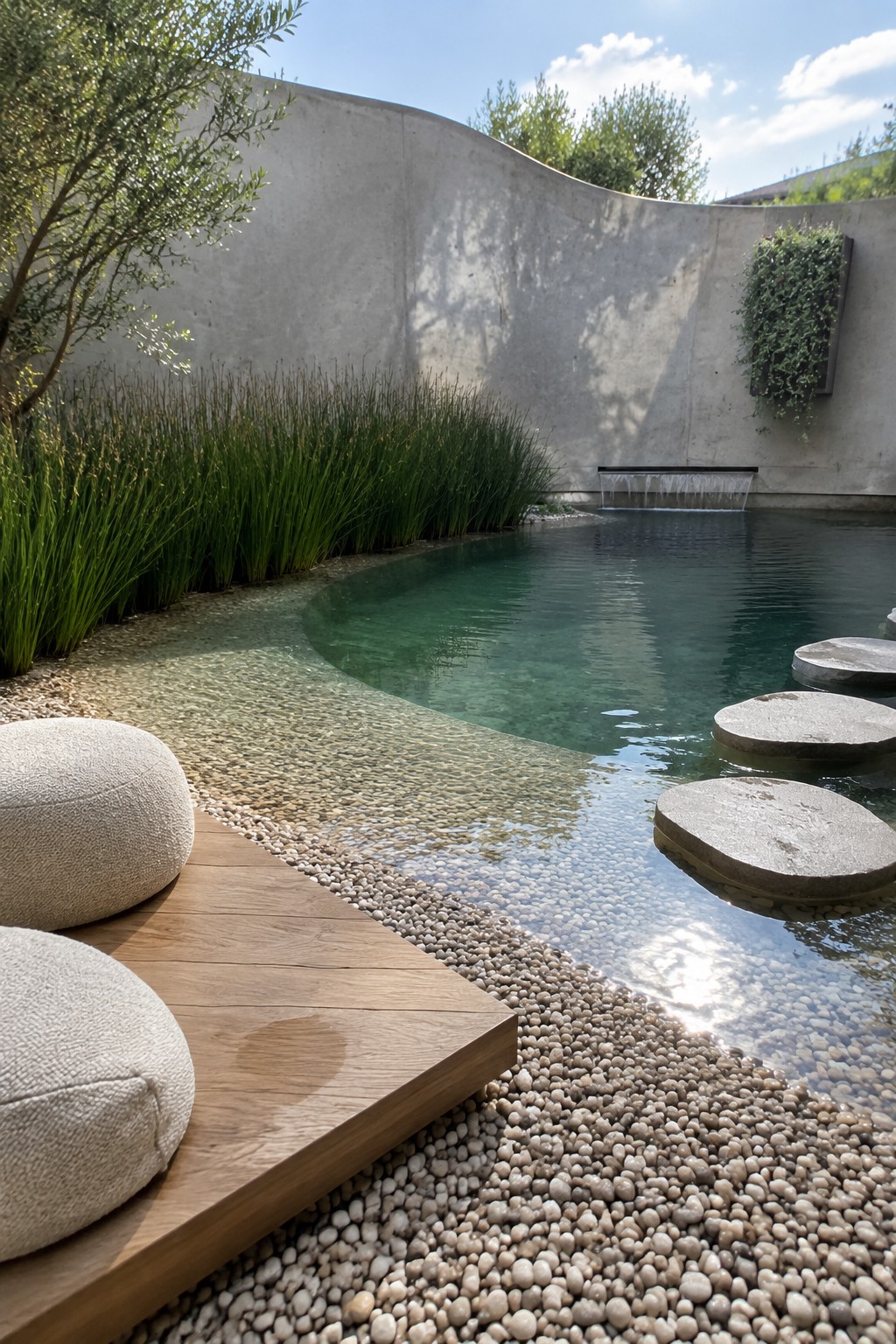
A shallow gravel edge makes a swimming pond feel easier to enter than a steep-sided pool. Here, the clear pebble shelf gradually meets deeper water, so it works as both a natural-looking shoreline and a place to wade.
Use a stable layer of rounded gravel where the water stays shallow, and make sure it is contained so stones do not slide into the deeper area. This approach suits ponds designed for a relaxed, beach-like edge, but the entry should stay wide and even enough to walk on safely.
Add Steps Along a Planted Pond Edge
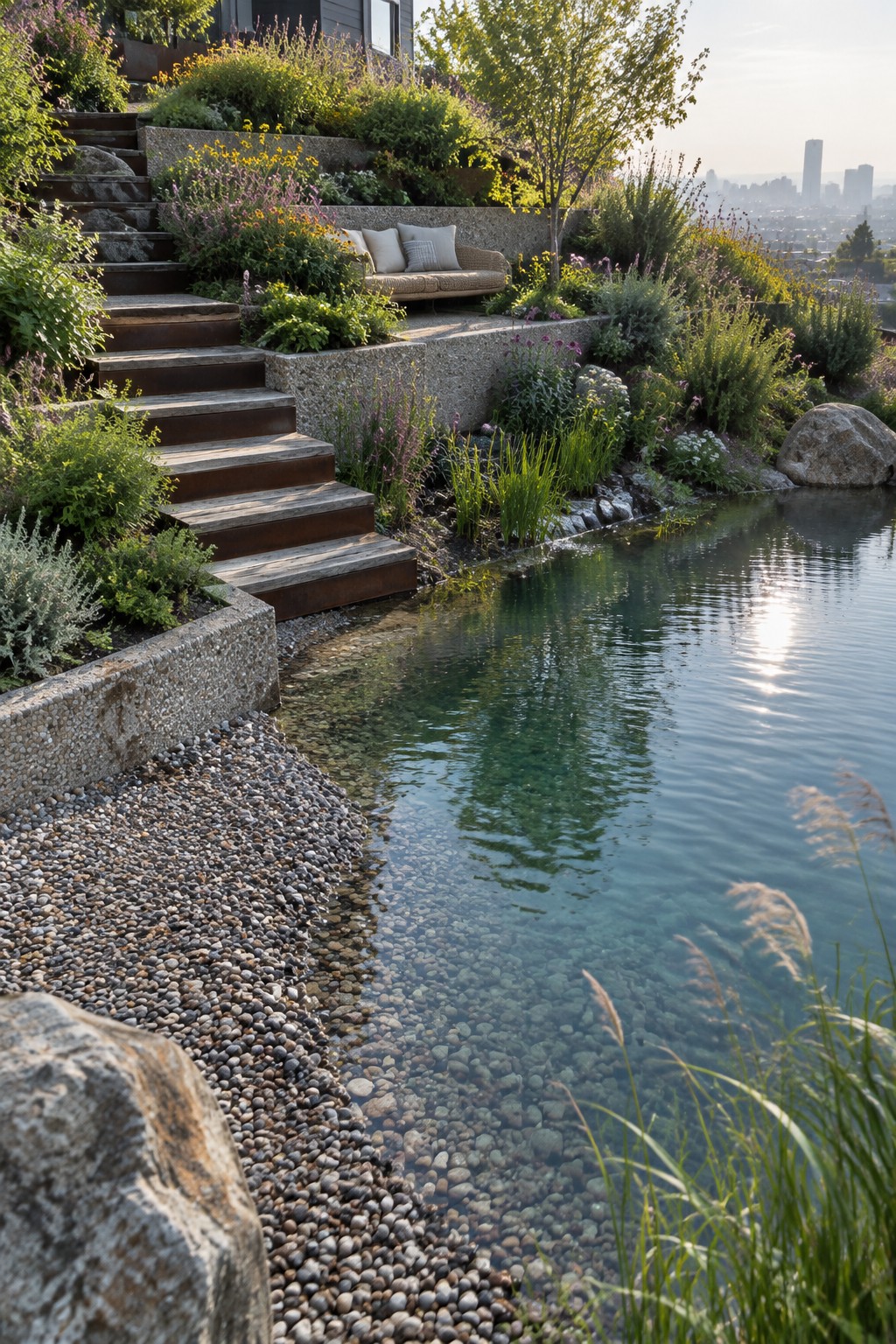
Steps can make a sloped garden easier to move through while keeping the pond edge connected to the planting. Here, broad timber treads descend beside a low stone retaining wall, giving the changing levels a clear path.
This approach works well where a pond sits below a terrace or seating area. Use sturdy, slip-resistant materials, and keep the steps wide enough for comfortable footing. Avoid letting loose gravel spill onto the treads.
Use a Curved Gravel Shore Around the Pond

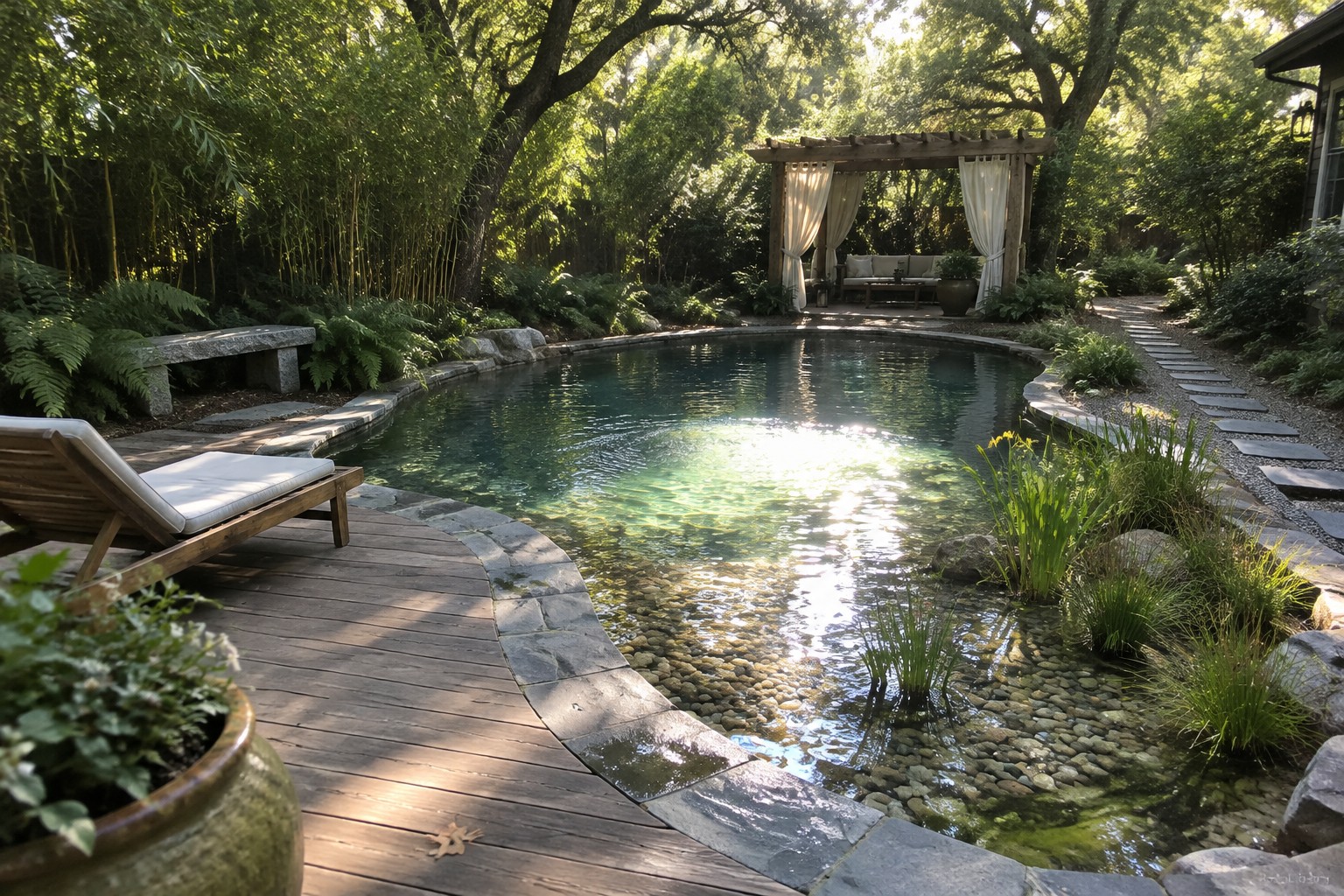
A curved gravel shore gives a swimming pond a more natural outline than a straight, hard edge. Here, the pale stones follow the pond’s shape and meet a low stone border, making the water feel connected to the surrounding garden.
For a similar look, keep the curve gentle and use gravel that is comfortable underfoot. A stone edge can help hold the shore in place, but check that it does not create a sharp drop where people enter the water.
Use Gravel to Shape a Curved Pond Shore

A curved gravel shoreline gives a swimming pond a more natural outline than a straight, sharply edged bank. Here, a dark gravel strip follows the water’s edge, making a clear border while leaving the shore easy to reach.
Use a gentle curve to guide the path around the pond, and keep the gravel shallow near the water. A simple timber bench can make the spot useful for a pause, but leave enough room along the shore to walk safely.
Use a Boardwalk to Cross the Pond

A narrow boardwalk makes it easy to move between the gravel shore and the far side of an organic pond. It also gives you a dry place to pause without covering up the clear water and rounded stones.
This works well in a long pond where a path around the edge would take up too much room. Choose boards suited to wet conditions, and keep the crossing wide enough for comfortable steps.
Add Stepping Stones Along the Pond Shore

A few flat stones can make a pond easier to approach without covering up its natural edge. Here, the stepping stones lead from the gravel shore into the water, giving people a simple way to cross or pause by the pond.
Use stones that sit securely and stay level, with enough space between them for a comfortable step. This works especially well where a gravel beach meets shallow water, but avoid placing stones where they could shift or make the entry slippery.
Set Up Dining Beside the Pond
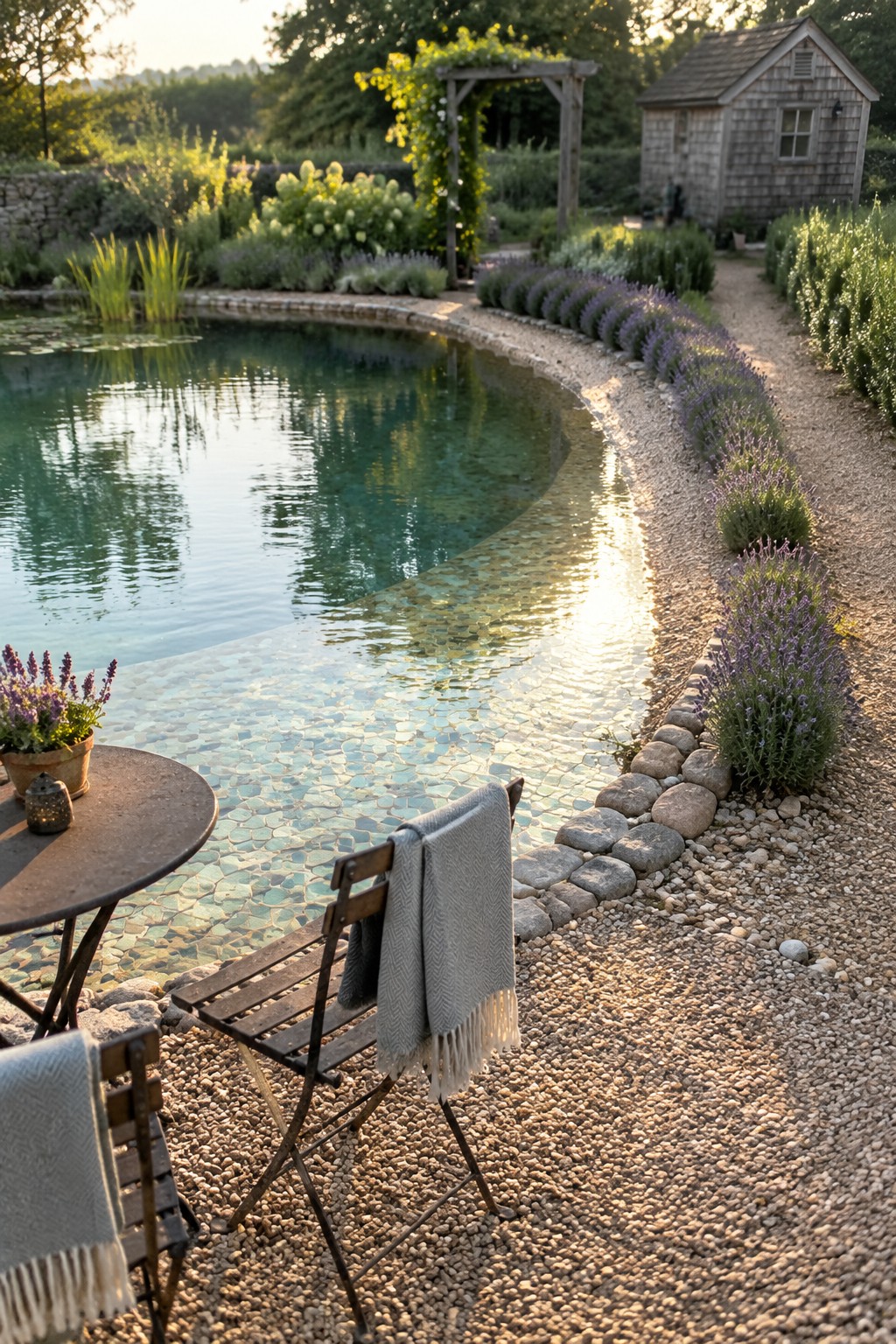
A small dining spot beside a swimming pond makes it easy to enjoy the water without giving up a place to sit and eat. A compact table and folding chairs suit this kind of gravel beach, and they can be moved aside when more room is needed.
Keep the seating on a level, stable patch of gravel and leave a clear route to the pond. A towel over each chair is handy after a swim, but avoid placing furniture so close to the edge that it narrows the path.
Frequently Asked Questions
Q: Do gravel beaches need a lot of upkeep?
A: They need occasional attention, but not much more than a regular garden pond. Rake leaves off the gravel and pull out any weeds before they take hold.
Q: Is a gravel beach comfortable to walk on?
A: Yes, if you choose smooth, rounded gravel rather than sharp crushed stone. A shallow slope also makes it easier to wade in and out.
Q: Will the gravel wash into the swimming area?
A: It can if the beach slopes too steeply or the edge has no support. Keep the slope gentle and use a stable border to help hold the gravel in place.
Q: Can I use ordinary landscaping gravel?
A: Avoid gravel that may contain dust, sharp pieces, or unknown coatings. Rinse clean, rounded stone before adding it, especially near the swimming zone.