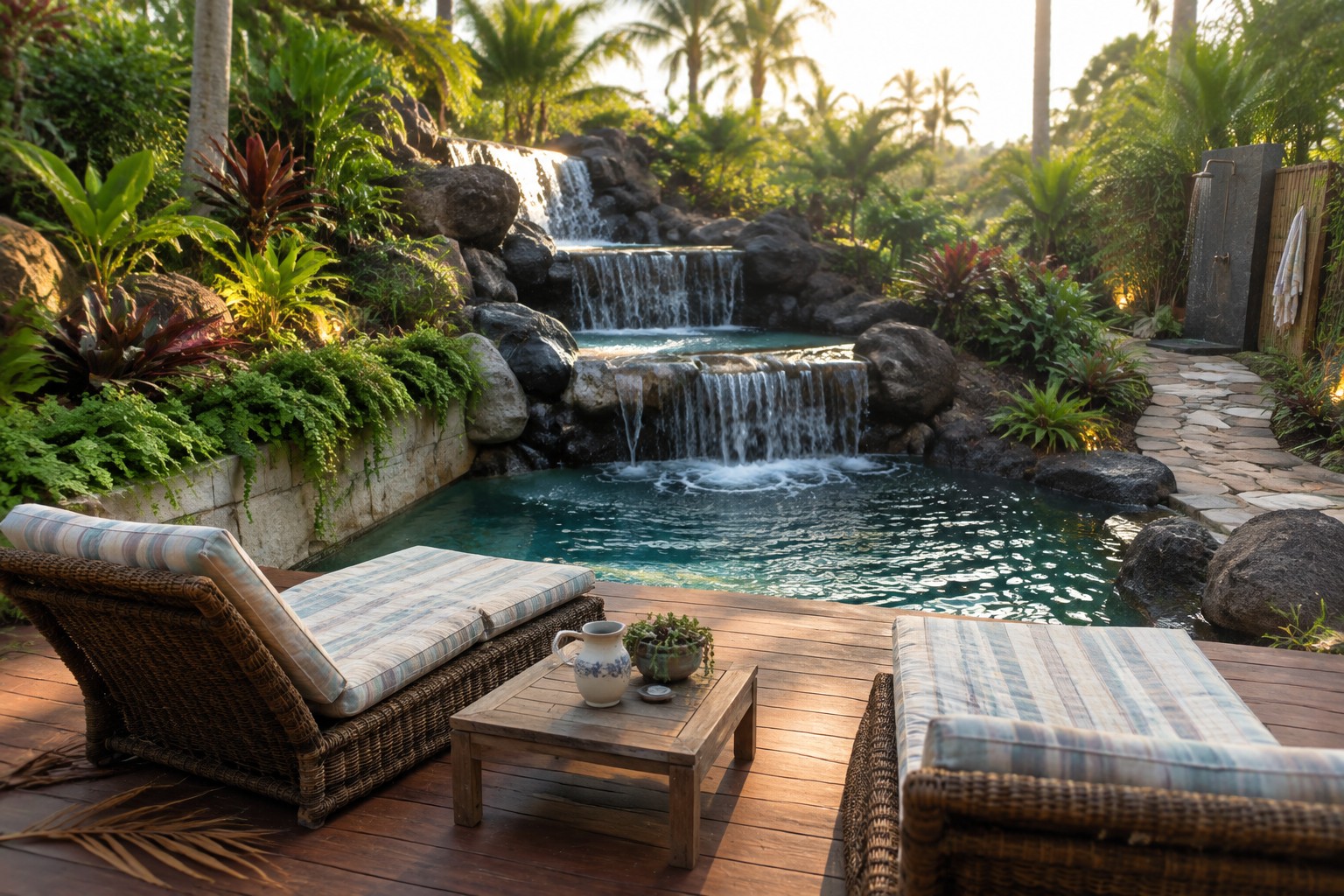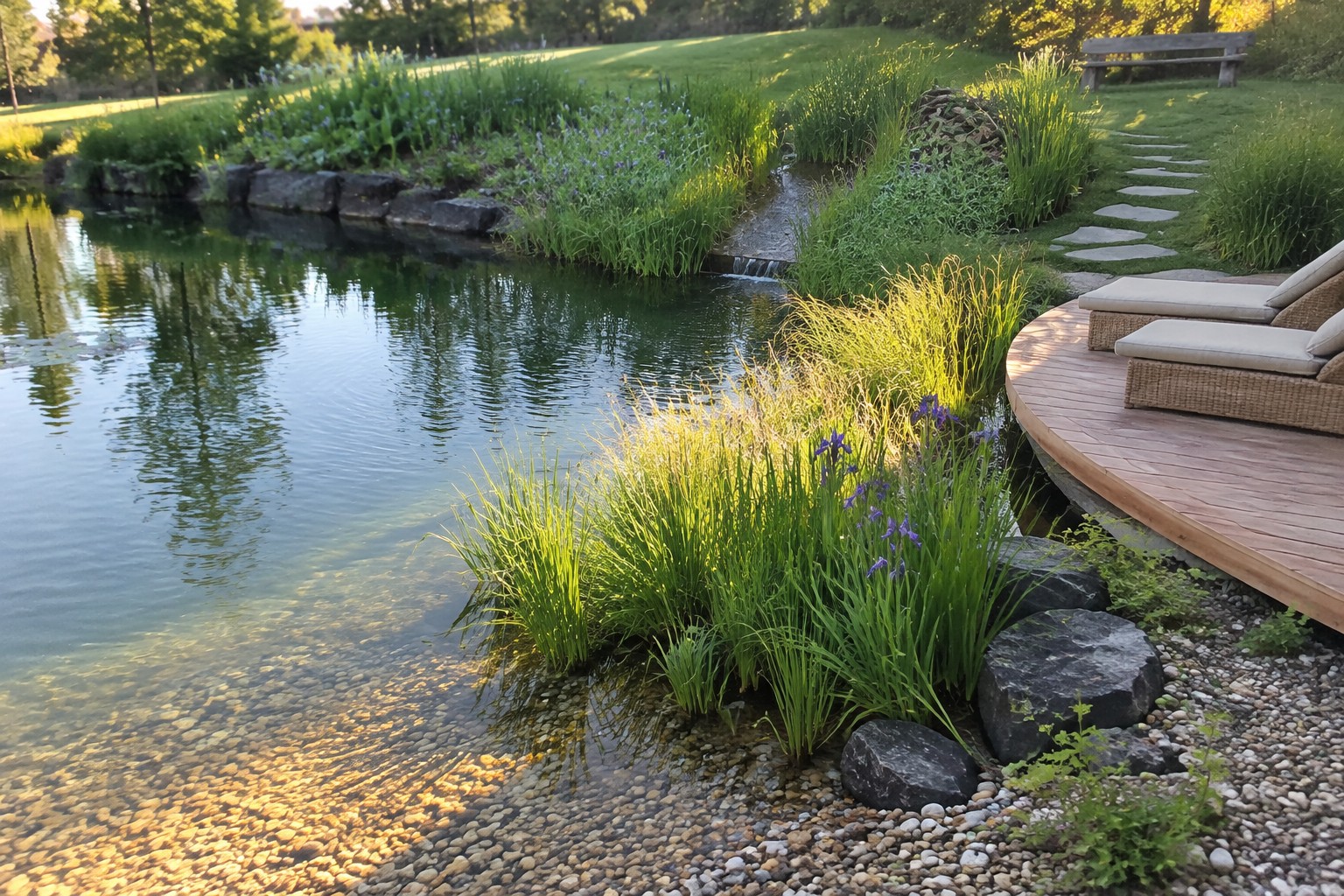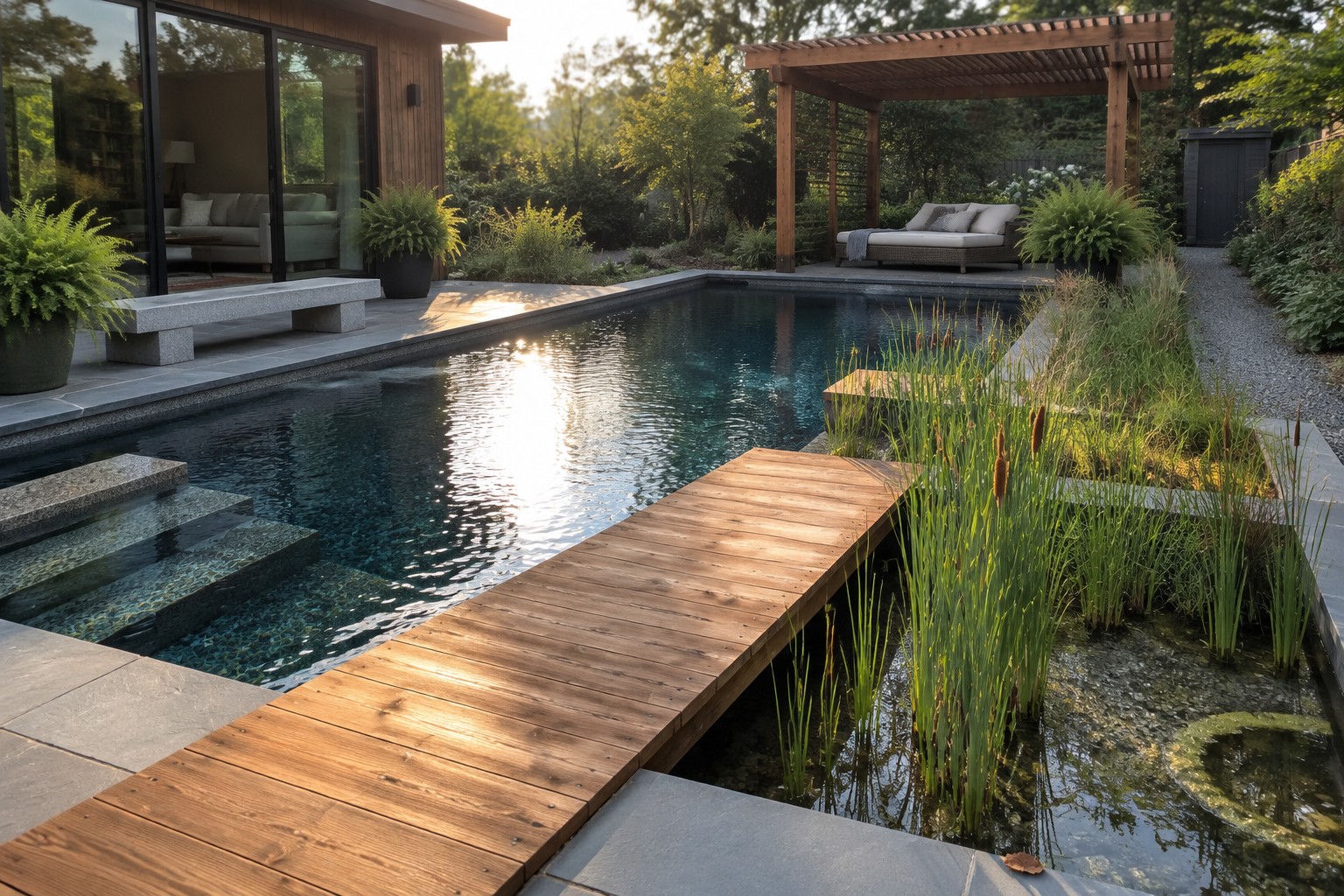
A natural swimming pool works best when the swimming area and filter pond feel like parts of the same garden, rather than separate features squeezed into a yard.
I find the layout matters as much as the water itself, since clear paths, well-placed plants, and a comfortable edge can make the whole space easier to use and care for.
The first thing I notice is how the pool sits among the planting and whether the filter pond looks intentional from the house and seating areas.
Some designs keep the two zones distinct, while others connect them with stones, grasses, or gentle changes in level.
I’d save the ideas that fit your yard’s shape and test how the planting, access, and water flow might work together in real life.
Keep the Filter Pond Beside the Main Pool

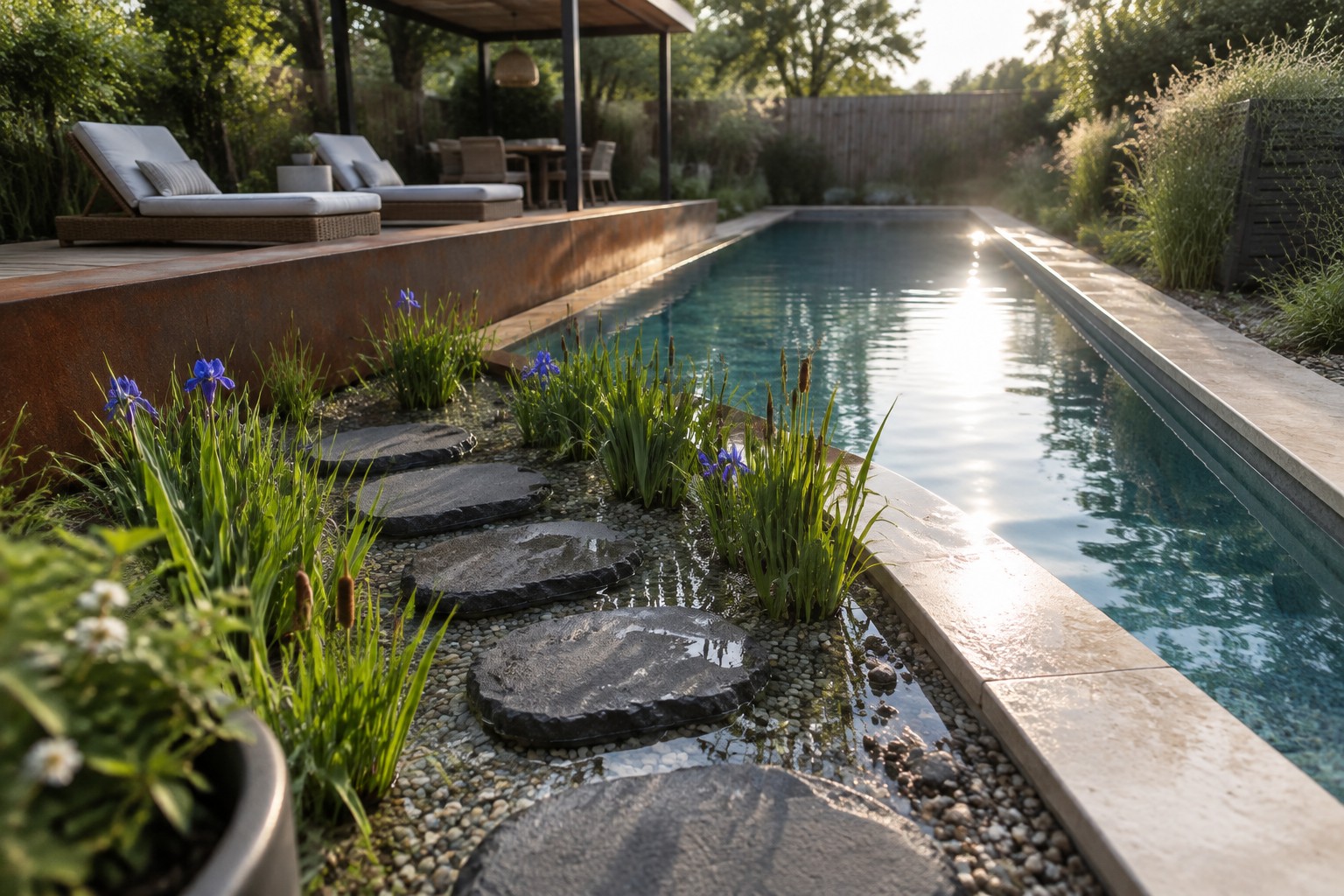
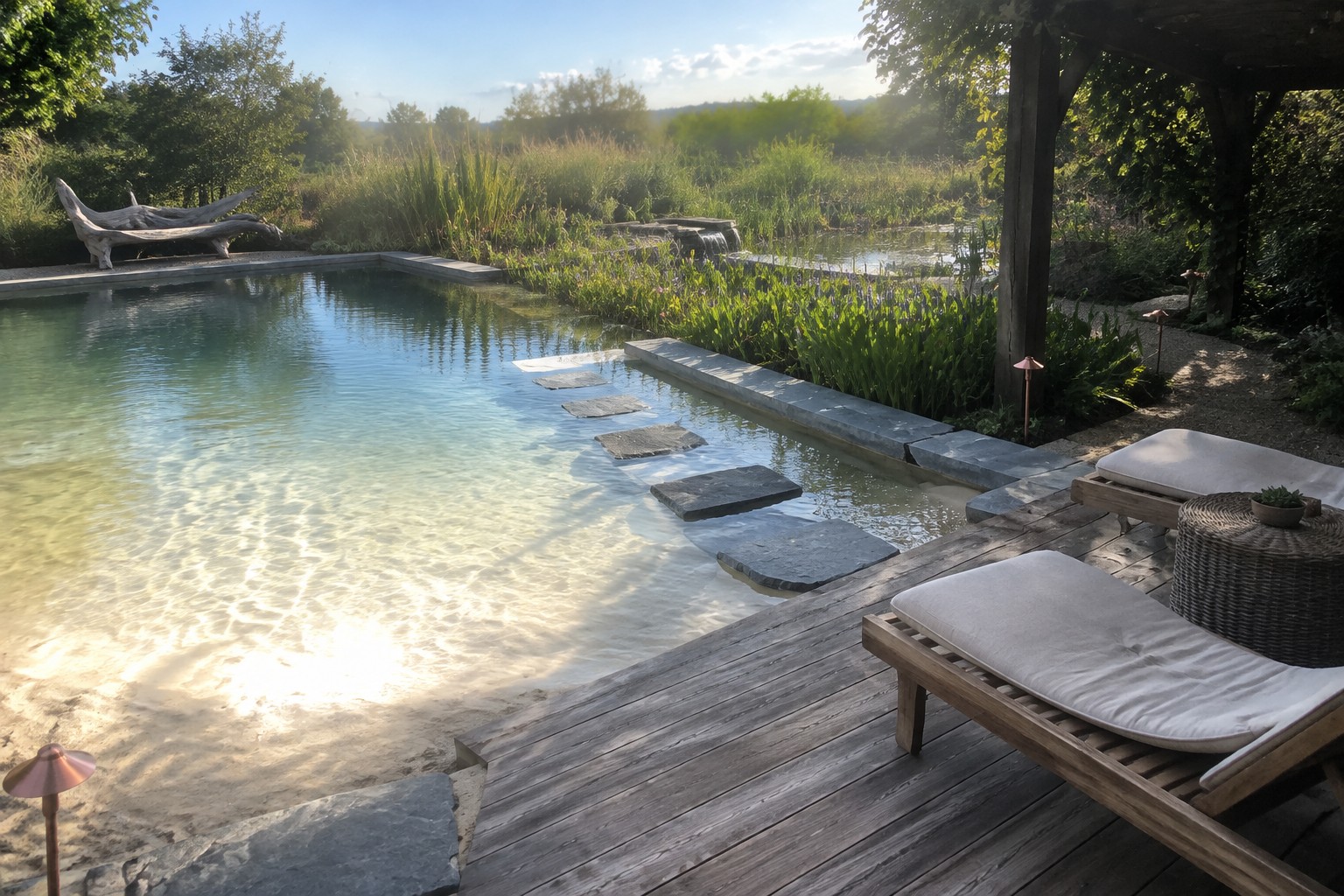
A separate filter pond can make a natural swimming pool feel more like part of the garden. Here, a planted water channel sits beside the main swimming area, divided by a narrow stone edge and crossed by wooden decking.
This layout suits a long, narrow yard where a filter pond can run alongside the pool. Leave enough room to reach both water areas for upkeep, and use a small bridge or deck crossing where you want an easy route through the garden.
Separate Filter Ponds Can Keep a Natural Pool Clear

A separate filter pond lets plants help clean the water without filling the swimming area with greenery. It also gives the pool a more natural look while keeping a clear place to swim.
For a compact yard, put the planted pond beside the pool and connect the two so water can circulate between them. A curved stone edge can mark the change in depth and keep the plants out of the swimming area. Make sure there is enough room to reach the filter pond for upkeep.
Keep The Filter Pond Separate From The Swimming Area

A separate filter pond can keep a natural pool looking simple while giving plants their own space to help clean the water. The swimming area stays open and easy to use, rather than sharing its edges with dense planting.
For this layout, keep the planted pond alongside the pool and use a clear boundary between the two. It works well when there is room for both areas, but allow enough space to reach the plants and maintain the filtration system.
Let the Filter Pond Blend Into the Pool

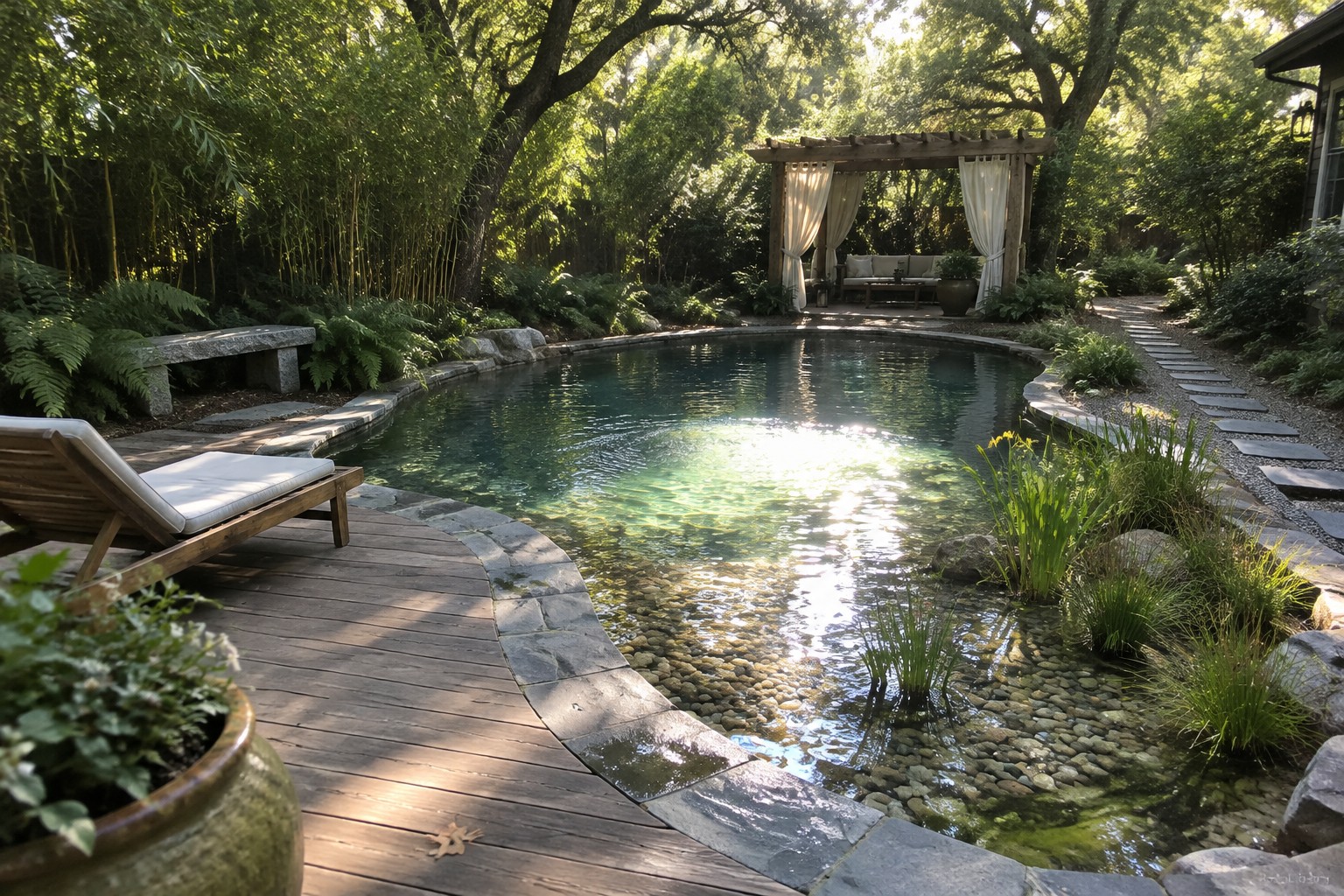
A separate filter pond can look like a natural part of the swimming area instead of a utility feature. Here, the planted pond sits beside the main pool, while rocks and a short stone edge mark the change between the two.
This layout suits a garden with enough room for both zones. Keep the filter pond accessible for maintenance, and use aquatic plants and natural stone to help it fit the pool’s overall shape.
Make the Pool Area Feel Like an Outdoor Room

A natural pool can work as the center of an outdoor living area, rather than feeling like a feature set apart from the rest of the garden. Here, the paved edge gives people a place to sit close to the water, while the separate planted pond keeps the filter area distinct from the swimming space.
For a similar setup, leave enough room around the pool for chairs and a clear walking route. This works especially well in a courtyard or compact garden, where one connected layout can make the pool and patio easier to use.
Add a Filter Pond Alongside the Pool

A separate filter pond can sit beside the swimming area and help keep the pool water clean while giving the design a more natural feel. Here, the planted section runs along one edge of the long pool, so it stays distinct without being far away.
This layout works well in a narrow yard where there is room to place the filter pond beside the pool rather than at one end. Use aquatic plants to support filtration, and keep the swimming area clearly defined for easier access and upkeep.
Give the Pool a Separate Filter Pond

A separate planted pond can handle filtration while keeping the main swimming area open for use. Here, the pond sits beside the wood-sided pool, so the two parts feel connected without sharing the same space.
This layout suits a terrace where there is room for a compact pool and a planted edge. Keep the pond close enough for practical plumbing, and leave a clear path around the swimming area for everyday access.
Make the Pool Part of the Outdoor Living Area

A natural pool feels more useful when it sits beside a place to relax and eat. Here, the stone pool edge meets a wooden deck with a dining table, so swimming and everyday outdoor living share one area.
If you’re planning a separate filter pond, keep it close enough to feel connected to the pool, but leave clear space for seating and walking around the water. This layout works well in a larger garden where the pool can sit beside a patio or deck.
Keep the Pool and Filter Pond Side by Side

A long, narrow filter pond can sit right beside the swimming pool, making both parts easy to reach without blending them into one body of water. The parallel layout also makes good use of a slim strip of space along the pool edge.
For a similar setup, keep the pond narrow and leave a clear paved path between it and the main swimming area. Choose aquatic plants that suit your climate, and plan access for removing leaves and trimming growth so the filter pond stays easy to maintain.
Use Steps to Connect the Pool and Filter Pond

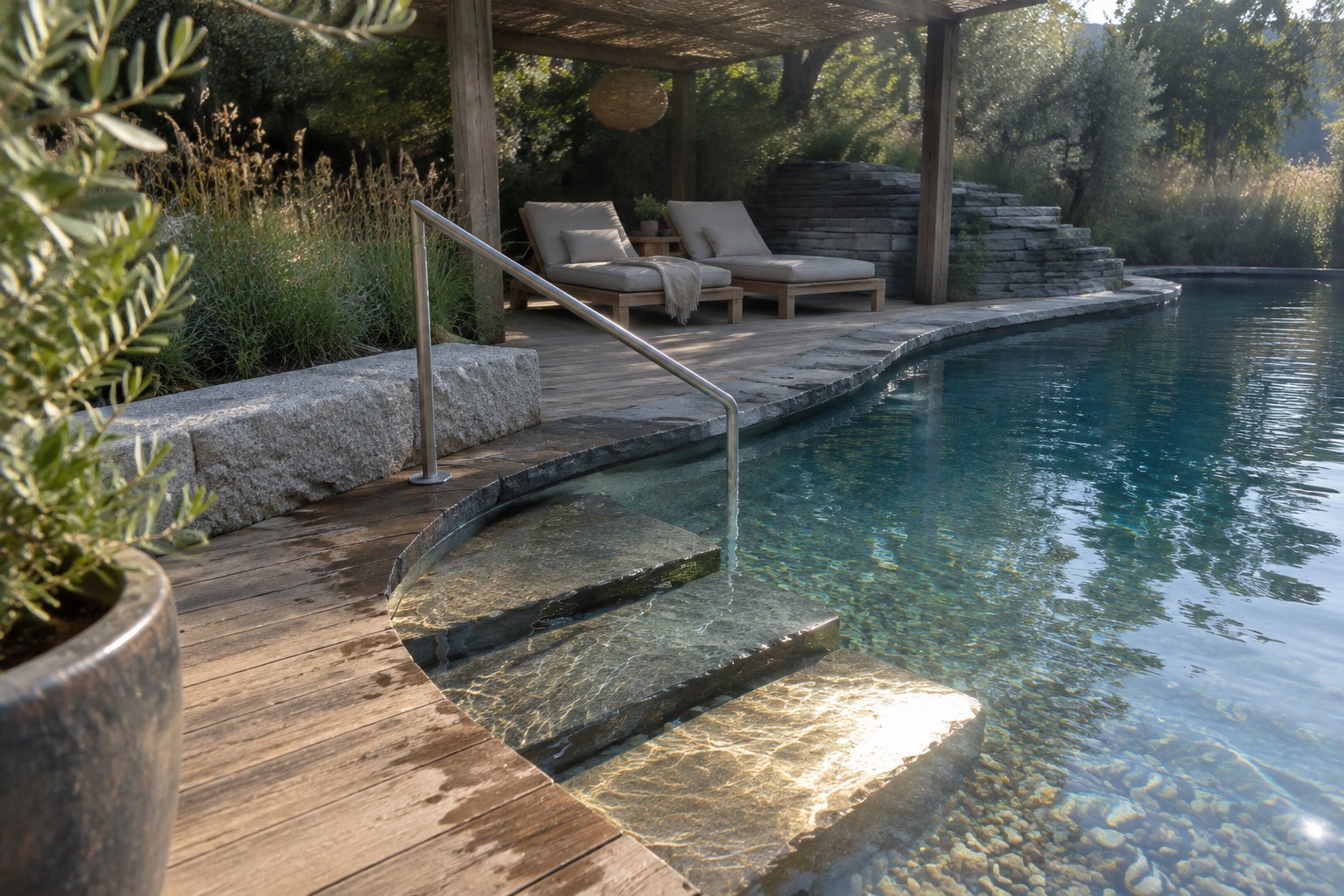
A short run of steps can make a separate filter pond feel like part of the pool area, rather than a feature tucked away at the edge of the garden. Here, the stone steps bring the upper patio down toward the water and make the change in level easy to use.
For a similar layout, keep the steps wide enough for comfortable access and choose paving that suits both water areas. This works especially well on a sloped site, but leave enough room around the pond for plants and maintenance.
Make the Pool Part of the Patio

A natural pool can feel like a regular part of the outdoor living area when the deck gives people room to sit and move around it. Here, the wood deck runs right up to the pool edge, so the swimming area and seating feel connected.
This layout works well in a compact backyard where the pool needs to share space with a patio. Leave a clear route around the water, and choose decking that can handle regular splashes without becoming slippery.
Make a Small Pool Part of the Patio
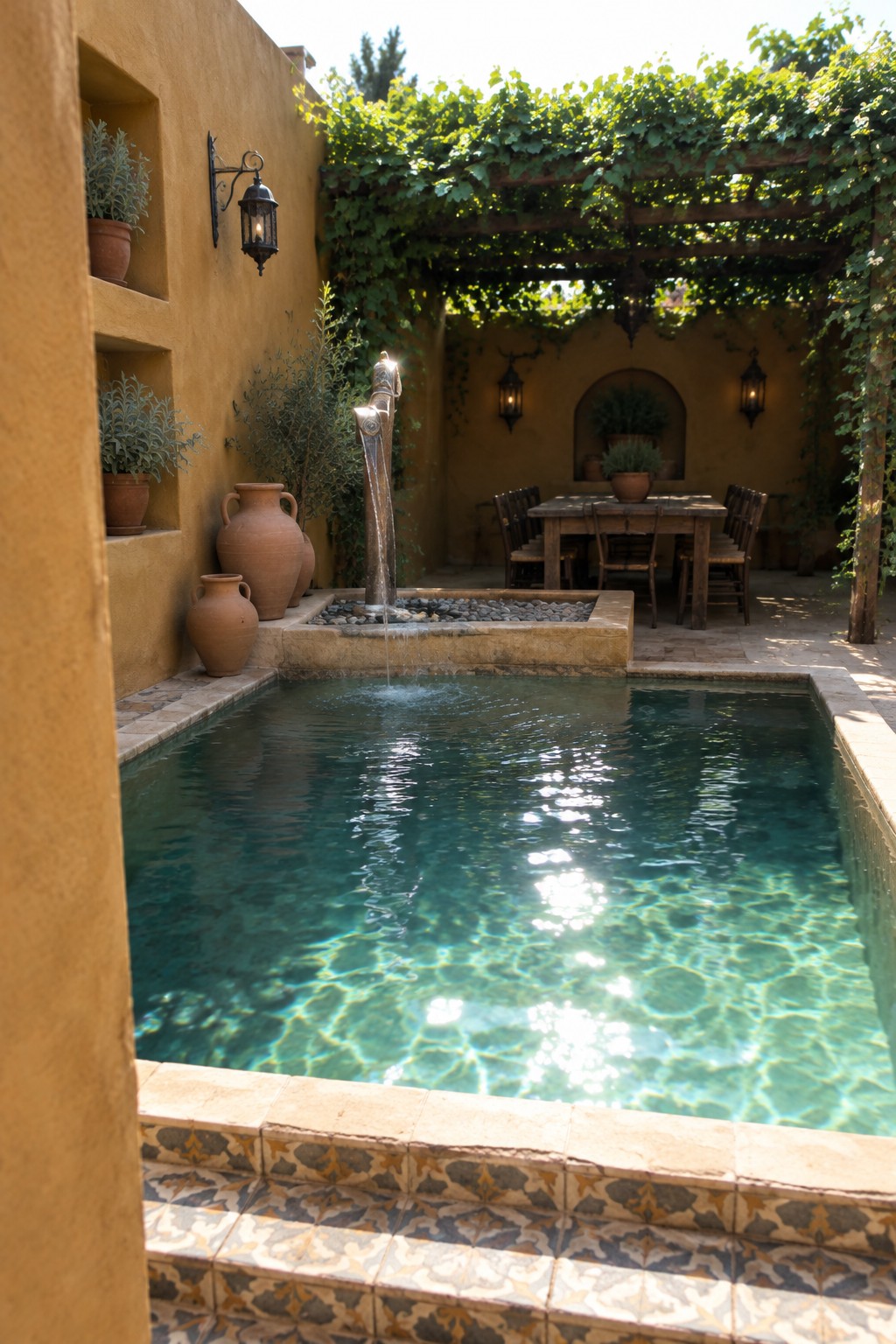
A compact pool can work well as part of an outdoor dining area instead of sitting apart from it. Keeping the water close to the table makes the space feel connected and gives a small courtyard more than one use.
For a natural pool, a separate filter pond can sit beside the swimming area, so the two functions fit into the same courtyard. Leave enough clear deck space around the pool for walking and chairs, and keep the dining area far enough back to avoid splashes.
Use a Low Stone Wall to Define the Filter Pond

A low stone wall can mark the edge between a natural swimming pool and its separate filter pond without making the two feel disconnected. Here, the curved gabion wall holds back the planted pond while keeping it close to the pool, so the water garden remains part of the same outdoor living area.
This approach suits a yard where you want a clear boundary but still want the pond to look like part of the pool design. Keep the wall low enough to see the plants and water, and make sure its curve leaves a comfortable route around the pool.
Set the Pool Beside a Sunken Seating Area
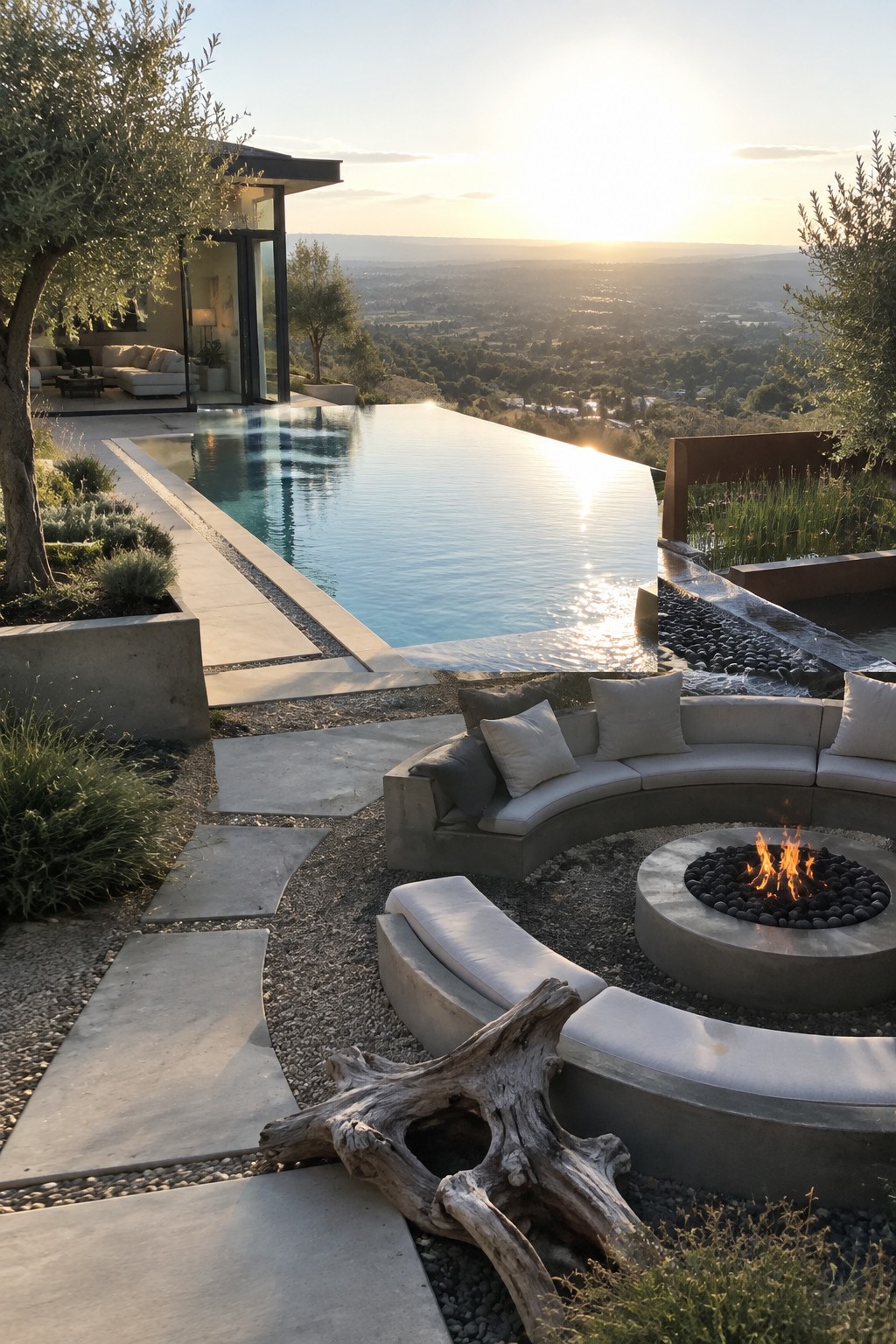
A pool can feel like part of the patio when the seating area sits close by, rather than off in a separate corner of the yard. Here, the curved built-in bench and fire pit make a natural place to gather before or after a swim.
For a similar layout, leave a clear path between the seating and pool, and keep enough room around the water for easy access. If the pool includes a separate filter pond, place it alongside the swimming area so it stays connected to the patio without taking over the seating space.
Plan the Pool as Part of the Outdoor Living Area

A natural pool works well when it sits close to the places people already gather. Here, the deck leads from the water to a built-in seating area, making the pool feel like part of the patio rather than a separate feature.
For a similar layout, keep the main pool beside a lounge or dining space, then place the filter pond along an edge where it can be planted without blocking access. Leave enough clear deck for walking and pool care.
Frequently Asked Questions
Q: Does a separate filter pond take up a lot of extra space?
A: It needs room of its own, but it can be smaller than the swimming area. A narrow pond beside the pool or a planted section at one end can work well, as long as water can circulate between the two.
Q: Can I use fish in the filter pond?
A: You can, but they add waste and make water quality harder to manage. Many people keep the pond plant-focused, especially when the swimming pool is the main attraction.
Q: Will the pool stay clear without chemicals?
A: A well-designed filter pond can help keep the water clear, but it still needs regular care. Remove leaves, trim plants, and keep the pump and circulation moving so debris does not build up.
Q: Is a natural pool comfortable to swim in?
A: Yes. The water often feels softer than heavily treated pool water, though the temperature and clarity can vary with the season and weather.