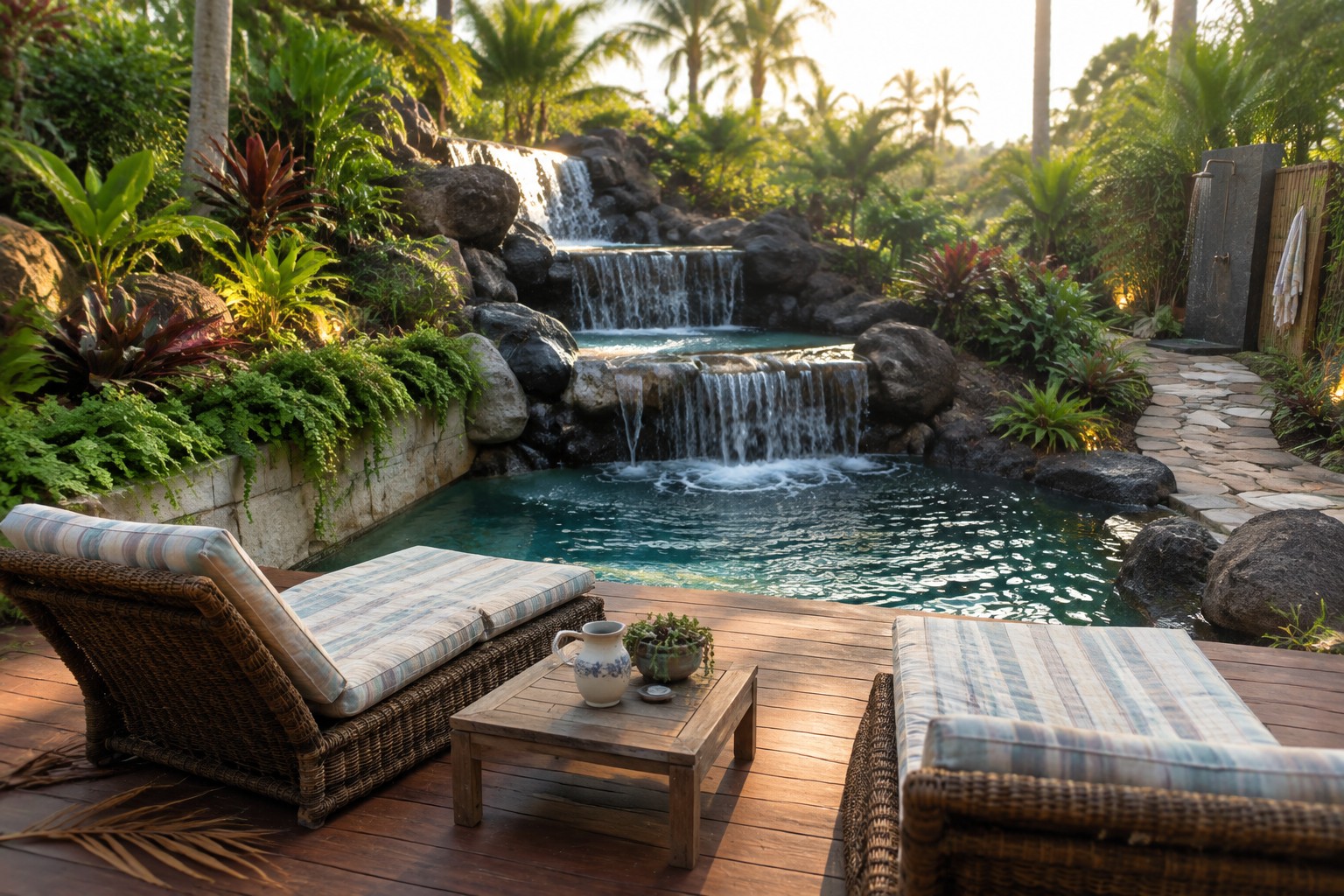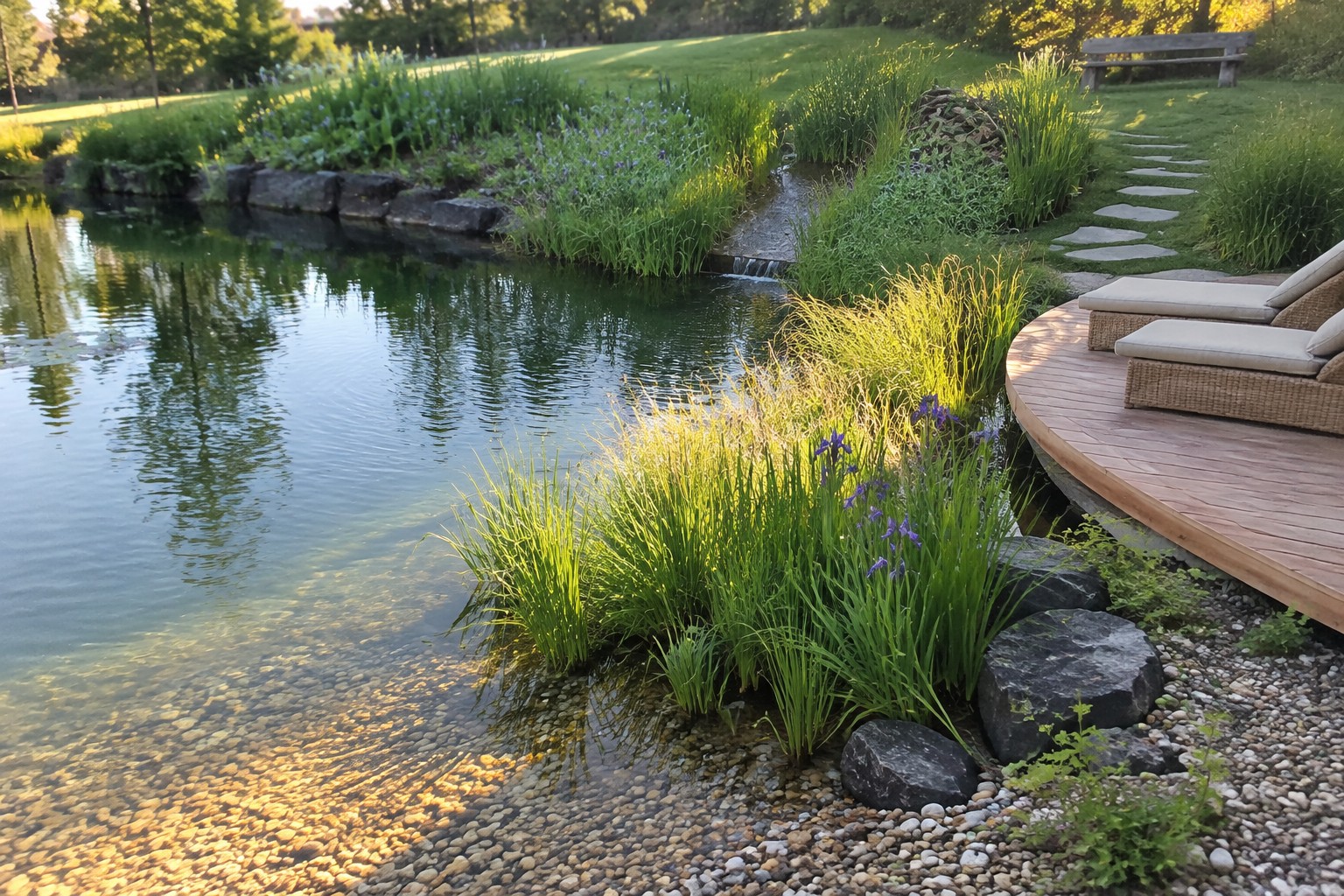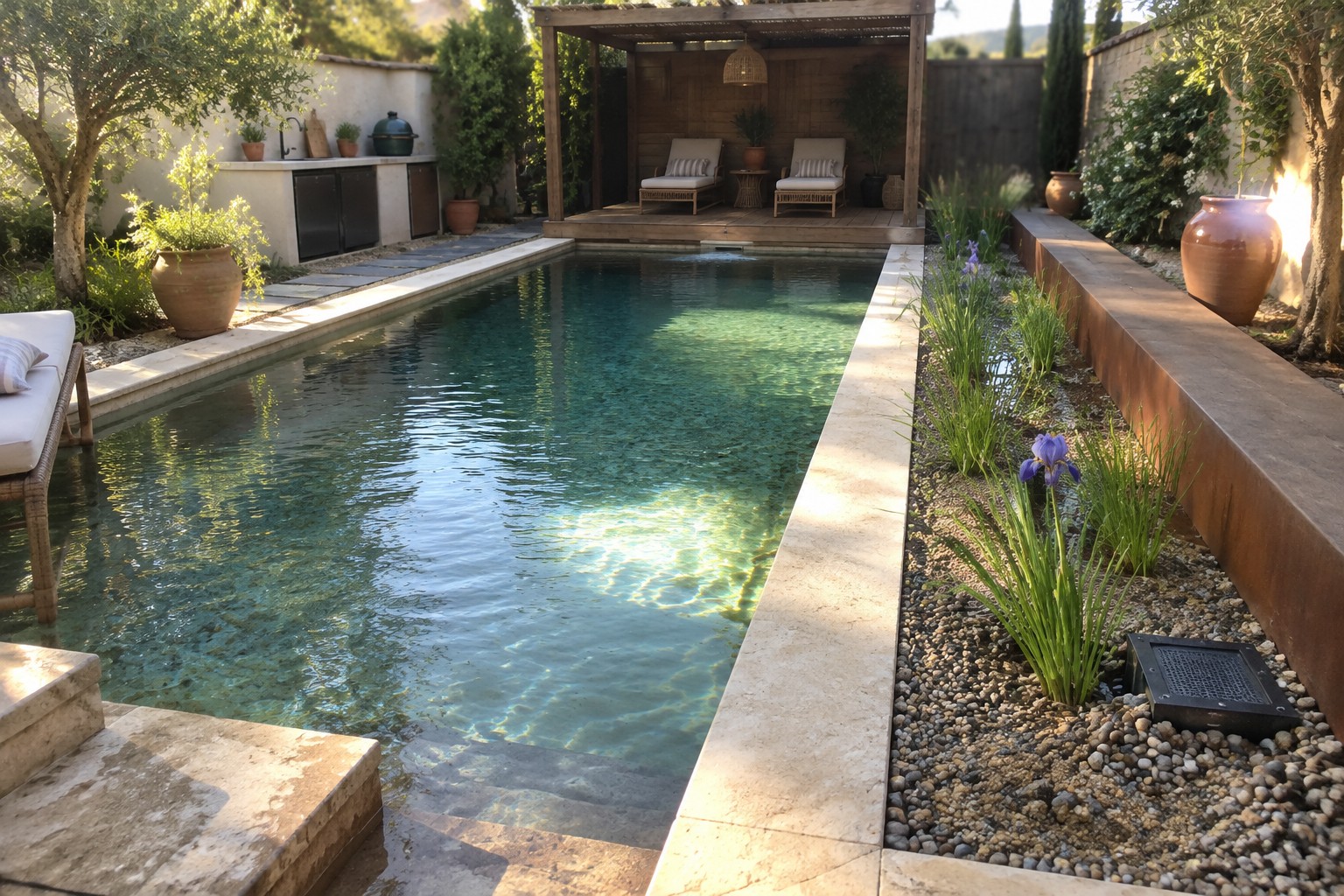
A bio pool has to do more than look natural; its planting, swimming area, and filtration zone need to work together in the yard.
I’m drawn to designs where the gravel filter feels like part of the landscape rather than a separate utility feature, while still being easy to reach and maintain.
The first thing I notice is often how the pool sits among paths, planting beds, and the house, since those choices shape both the view and how people move around it.
A well-planned layout can make the water feel clear and calm without crowding the space with too many features.
Some of these designs offer practical details worth adapting, whether you’re planning a new pool or rethinking an existing backyard.
Use Gravel Beds to Filter Pool Water Naturally
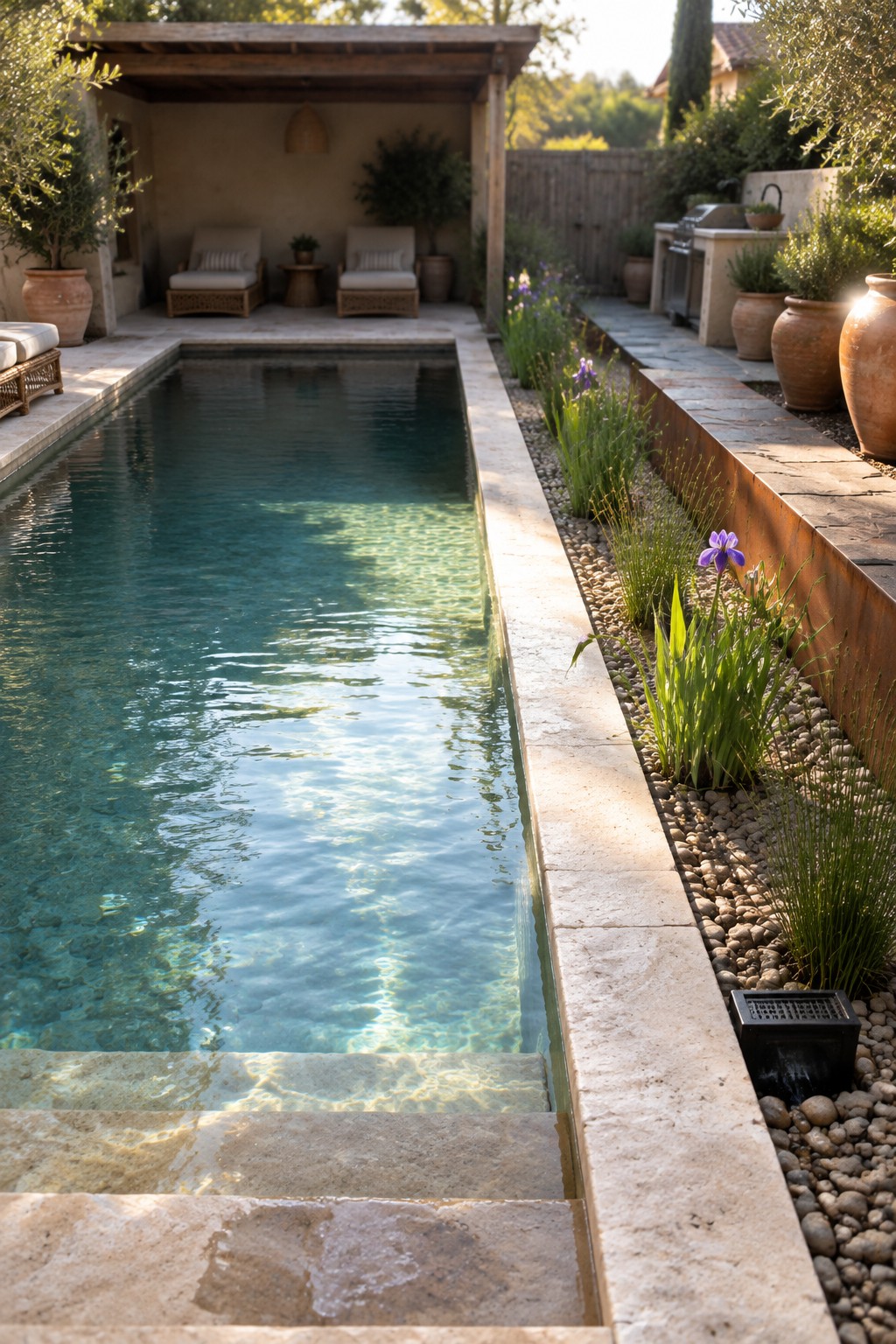
A gravel biofilter can make a pool feel connected to the garden while helping clean the water without relying on a conventional chemical system. In this design, a narrow planted gravel bed runs beside the pool, so the filter becomes part of the landscape rather than a separate piece of equipment.
This approach works best when there is room for a dedicated filter zone beside the swimming area. Choose plants suited to wet conditions and keep the gravel bed accessible, so it is easier to maintain and check the water flow.
Use Gravel Beds to Integrate a Biofilter
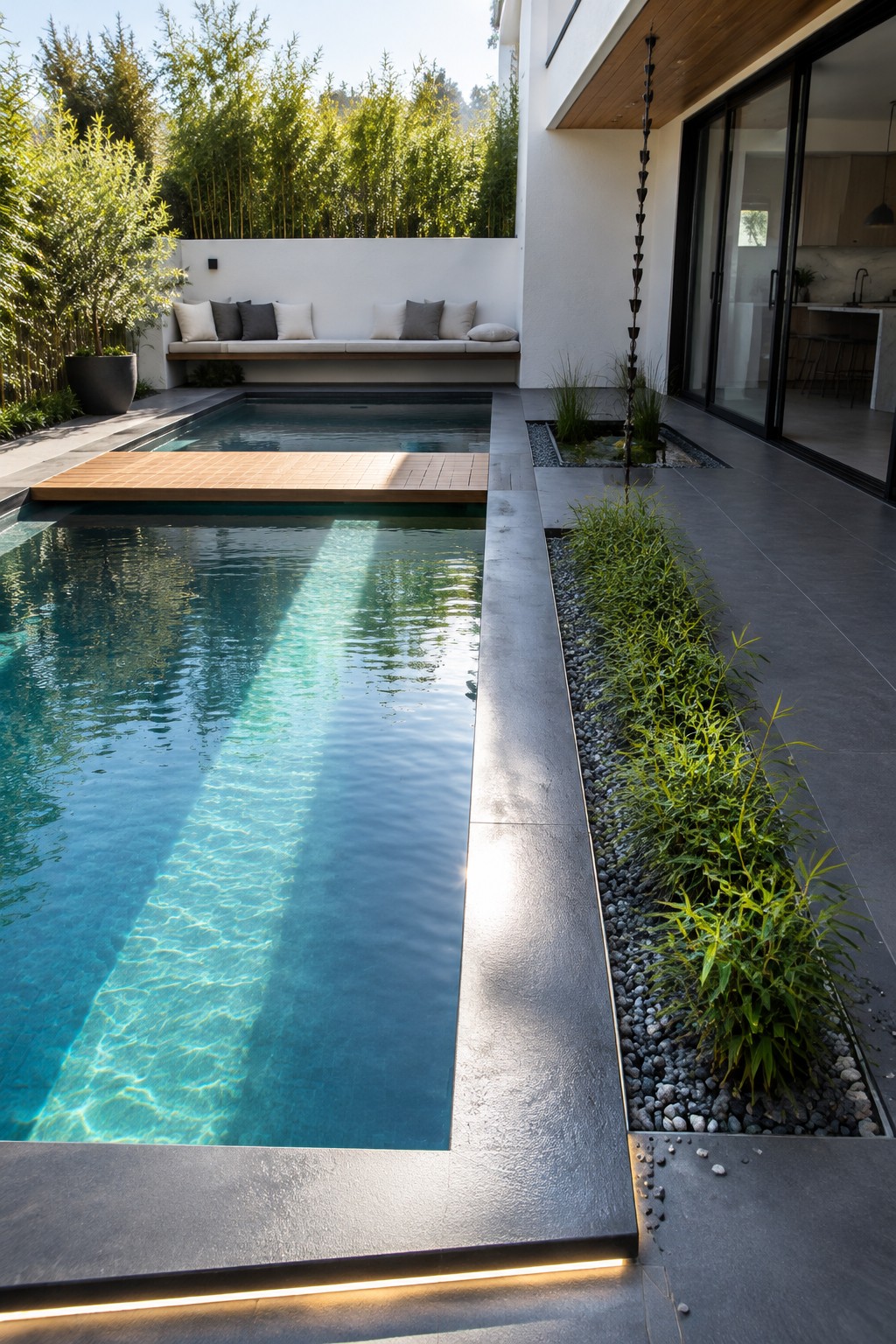
A gravel biofilter can sit neatly beside a pool rather than taking up space in the swimming area. Here, a narrow planted gravel bed runs along the pool edge, making the filtering area part of the overall layout.
This approach suits compact courtyards where every section needs to earn its place. Keep the bed accessible for maintenance, and choose plants that can handle the damp conditions around the filter.
Use a Gravel-Shaped Island to Guide Pool Circulation
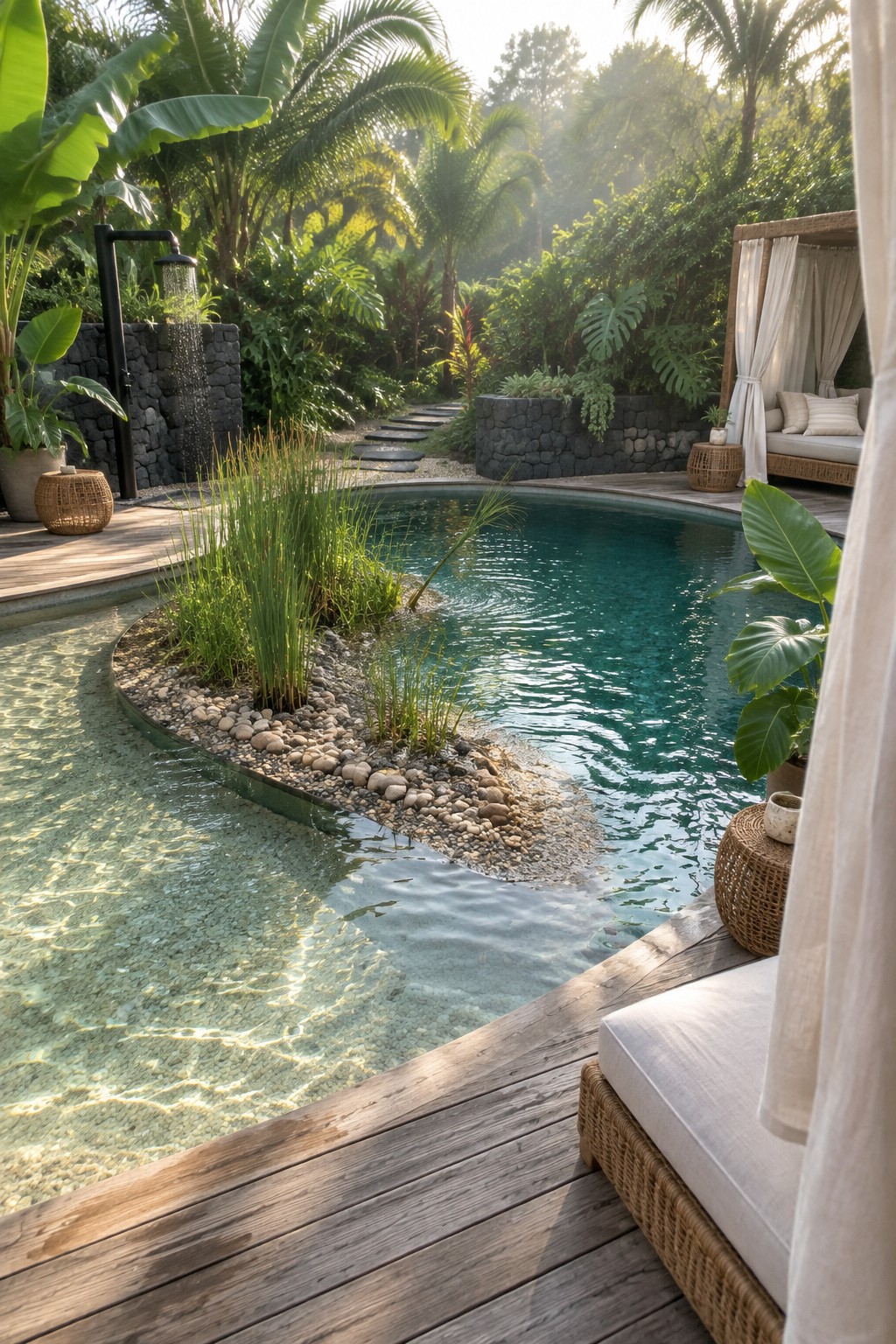
A gravel biofilter can sit within the pool as a planted island, giving water a natural route through the filter instead of hiding all the treatment equipment at the edge. The broad, curved shape shown here also helps separate shallow and deeper swimming areas without a hard boundary.
This approach suits a garden pool where there is room to leave the filter island open and accessible. Use rounded edges and size the planted area to the pool, so it supports filtration without taking up too much space for swimming.
Build a Pool Into the Patio Layout
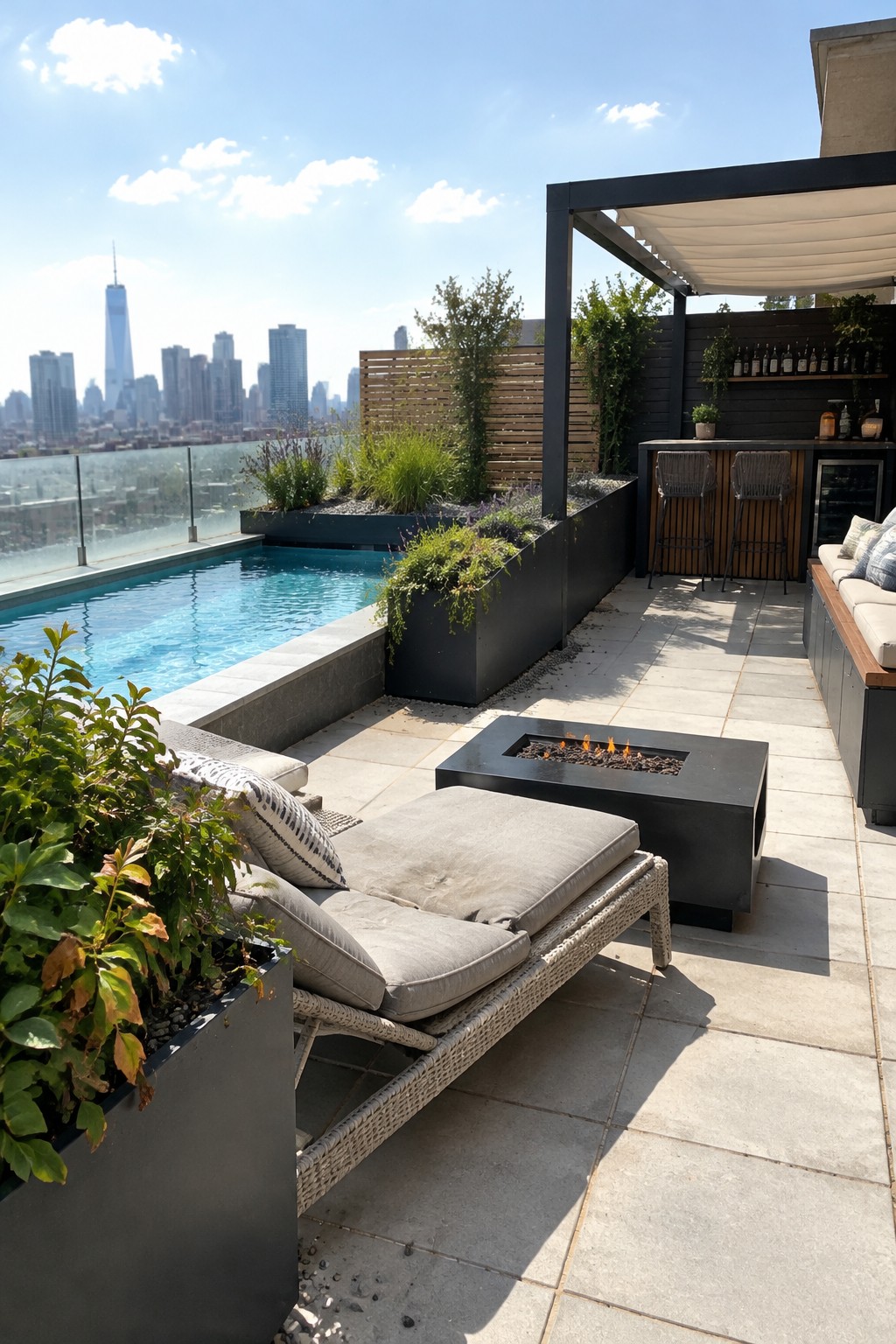
A pool can feel like part of the patio when it sits beside the main seating area instead of apart from it. Here, the narrow pool runs along the terrace, leaving room for a lounge area and a clear path between the water and the bar.
This layout suits a rooftop or compact yard where every bit of space needs a purpose. Keep the pool edge and walking route easy to access, and use raised planters to separate zones without closing them off. For a bio pool, gravel filtration can be built into a planted section nearby.
Make a Bio Pool Part of the Garden Layout
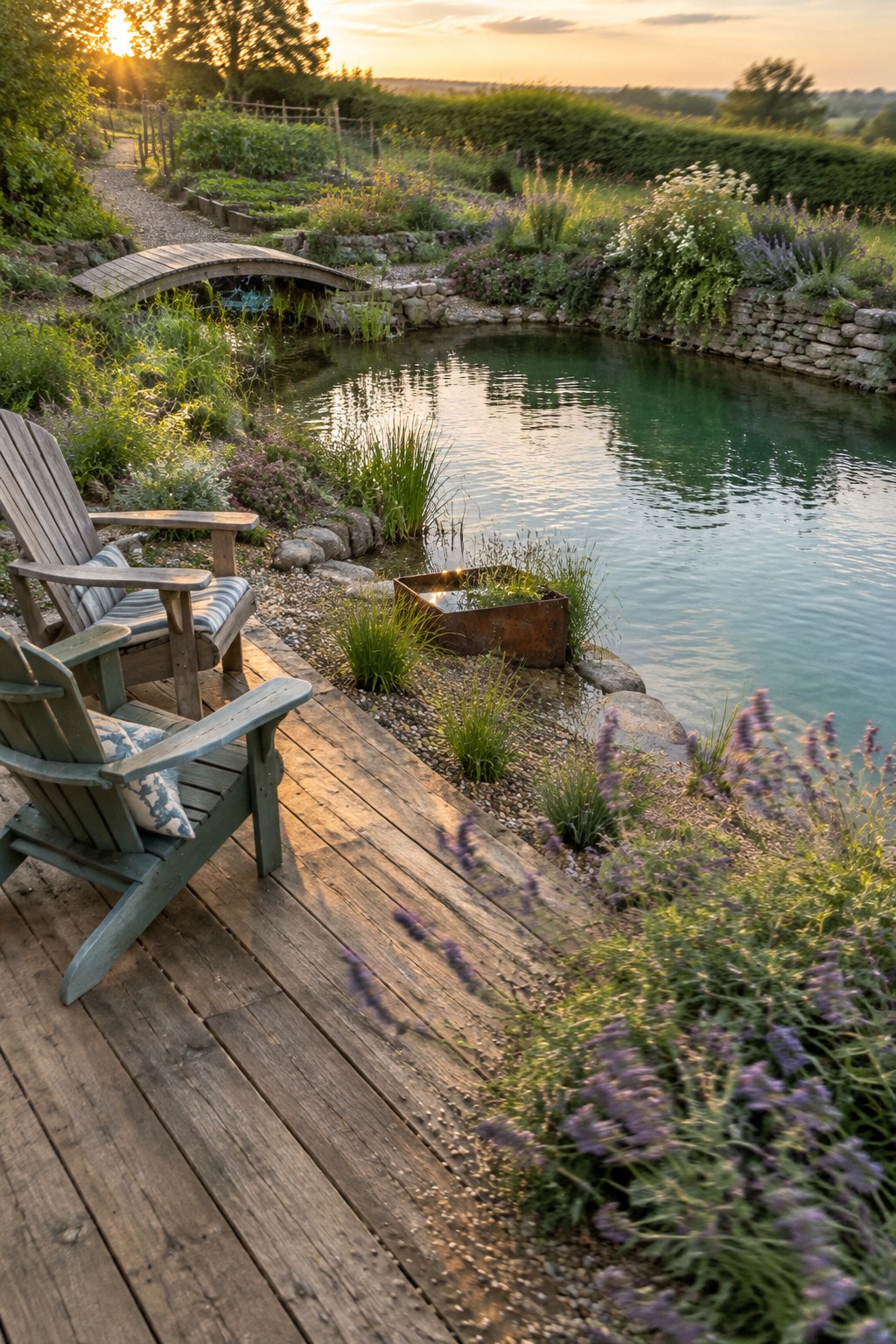
A natural swimming pool can feel like part of the garden when its edges follow the planting and stonework instead of looking like a separate feature. Here, reeds and low flowers grow close to the water, while a stone edge gives the pool a clear shape.
This approach suits gardens where you want swimming water to sit naturally among planted areas. Use gravel and suitable aquatic plants around the pool as part of a designed biofilter, and leave enough open water for comfortable swimming and easy care.
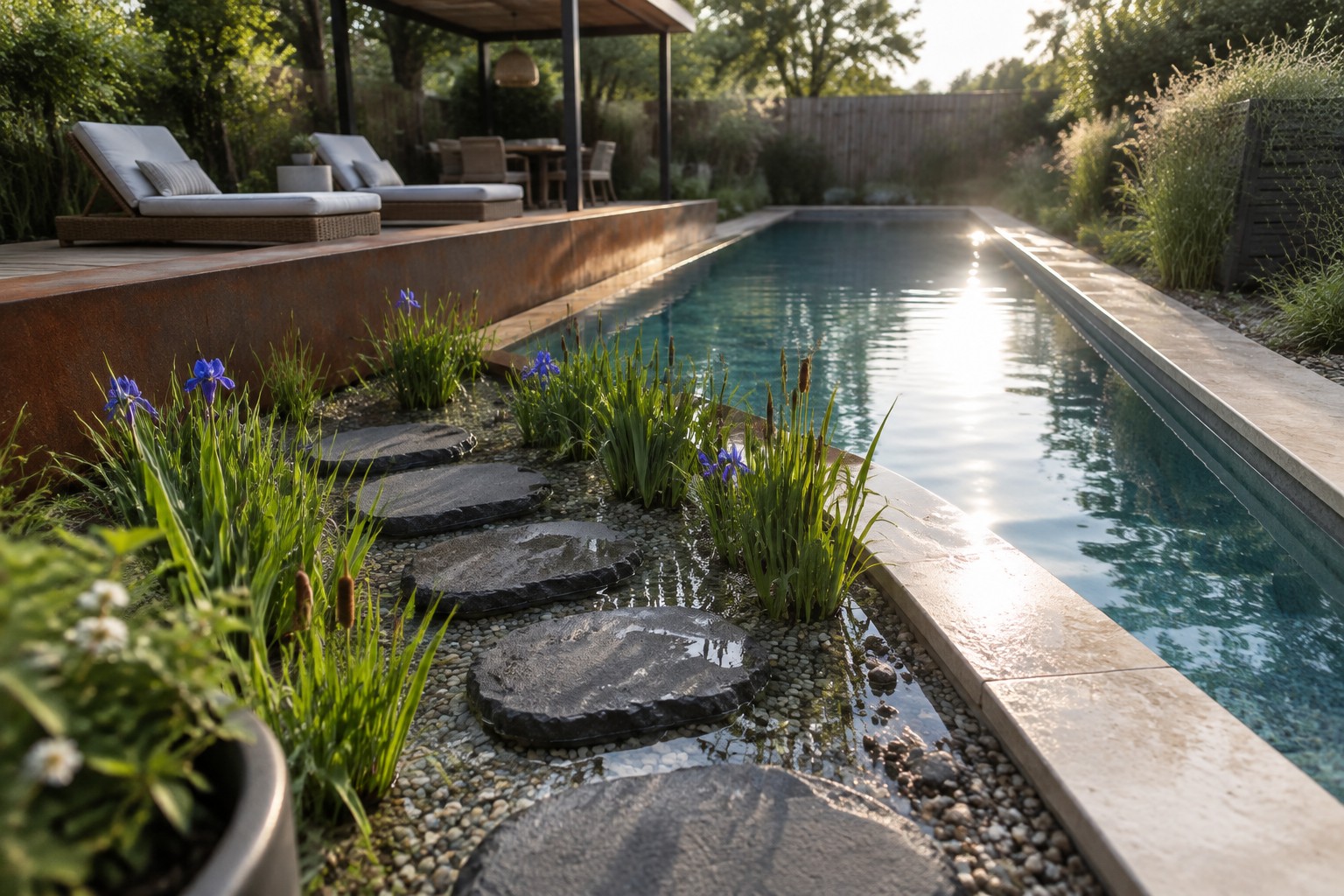
Add a Shallow Biofilter Along the Pool Edge
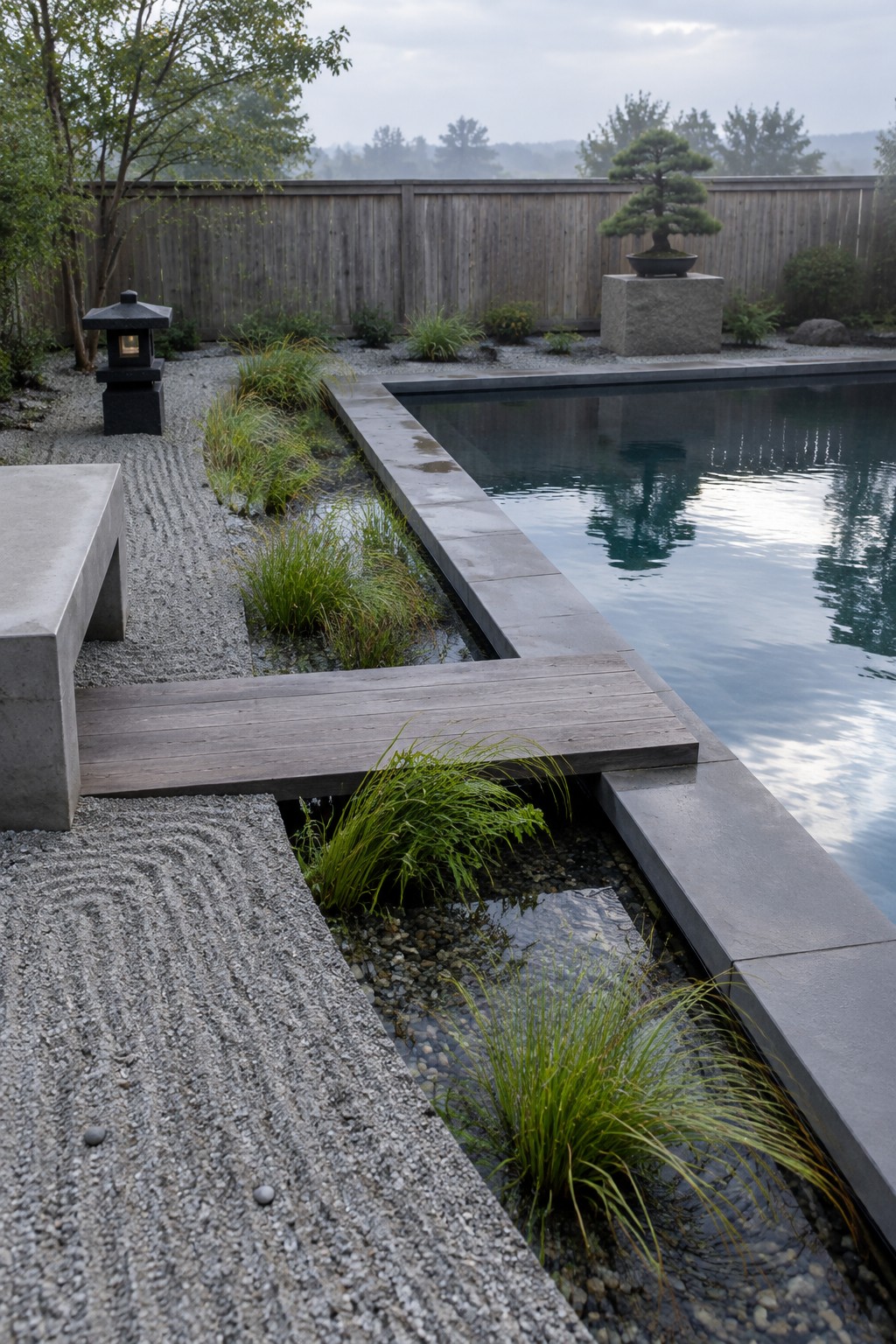
A shallow gravel channel can act as a planted biofilter while making the pool edge feel more like part of the garden. Here, the narrow water garden runs beside the pool, and the grasses help make the filter area look intentional rather than purely functional.
This layout works well when there is room for a separate channel beside the swimming area. Use aquatic plants suited to your climate, and keep the channel accessible so you can remove debris and maintain the filter. It may be less practical in a very small yard.
Use Gravel To Define a Natural Pool Edge
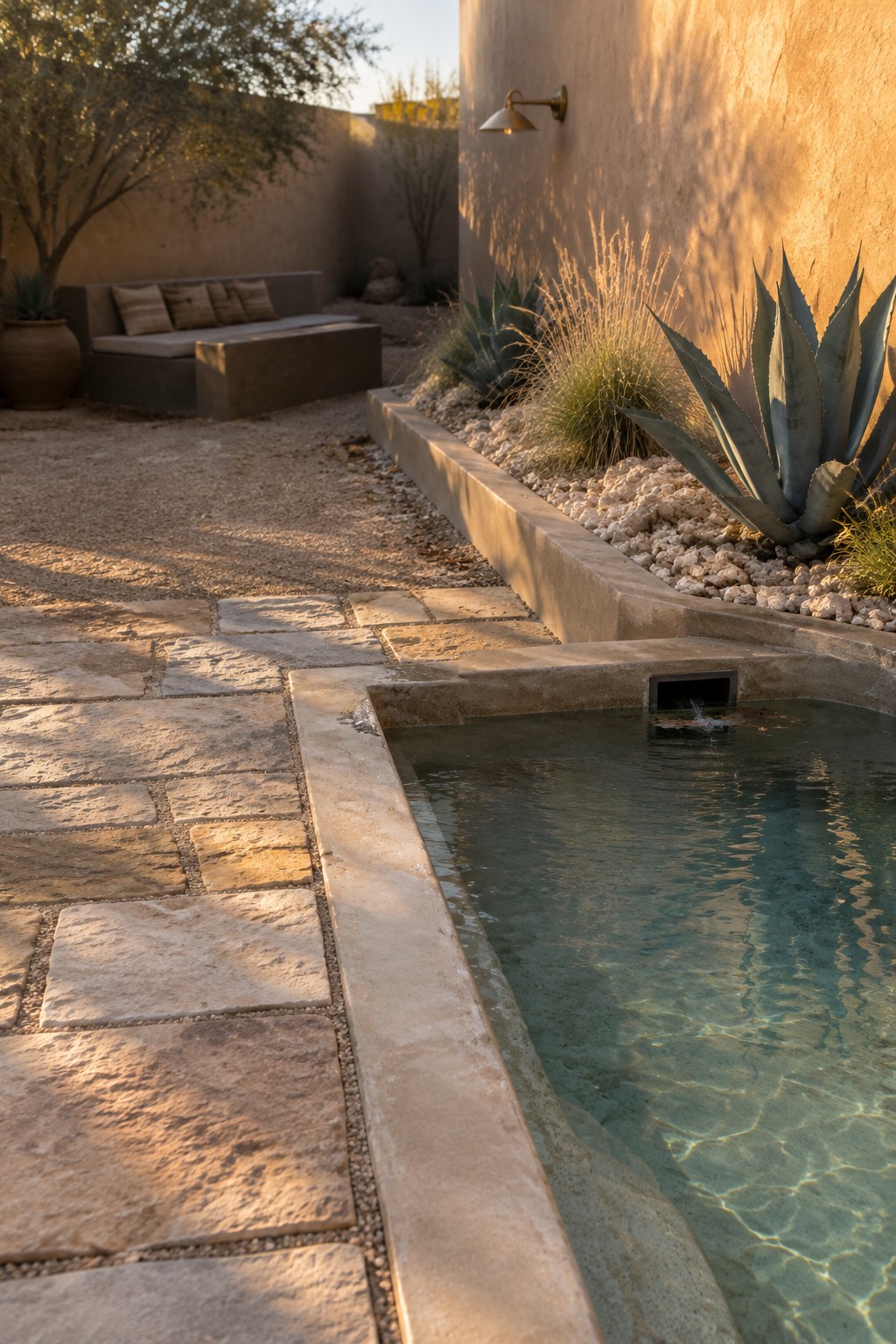
A gravel planting bed can make a bio pool feel like part of the garden rather than a separate feature. Here, the low stone border keeps the bed tidy while leaving room for water-loving plants to help filter the pool.
This approach works well in a compact courtyard where a clear edge matters. Choose gravel suited to the filter system and keep the planting zone accessible for occasional cleaning and maintenance.
Use Raised Planting Beds Along the Pool Edge
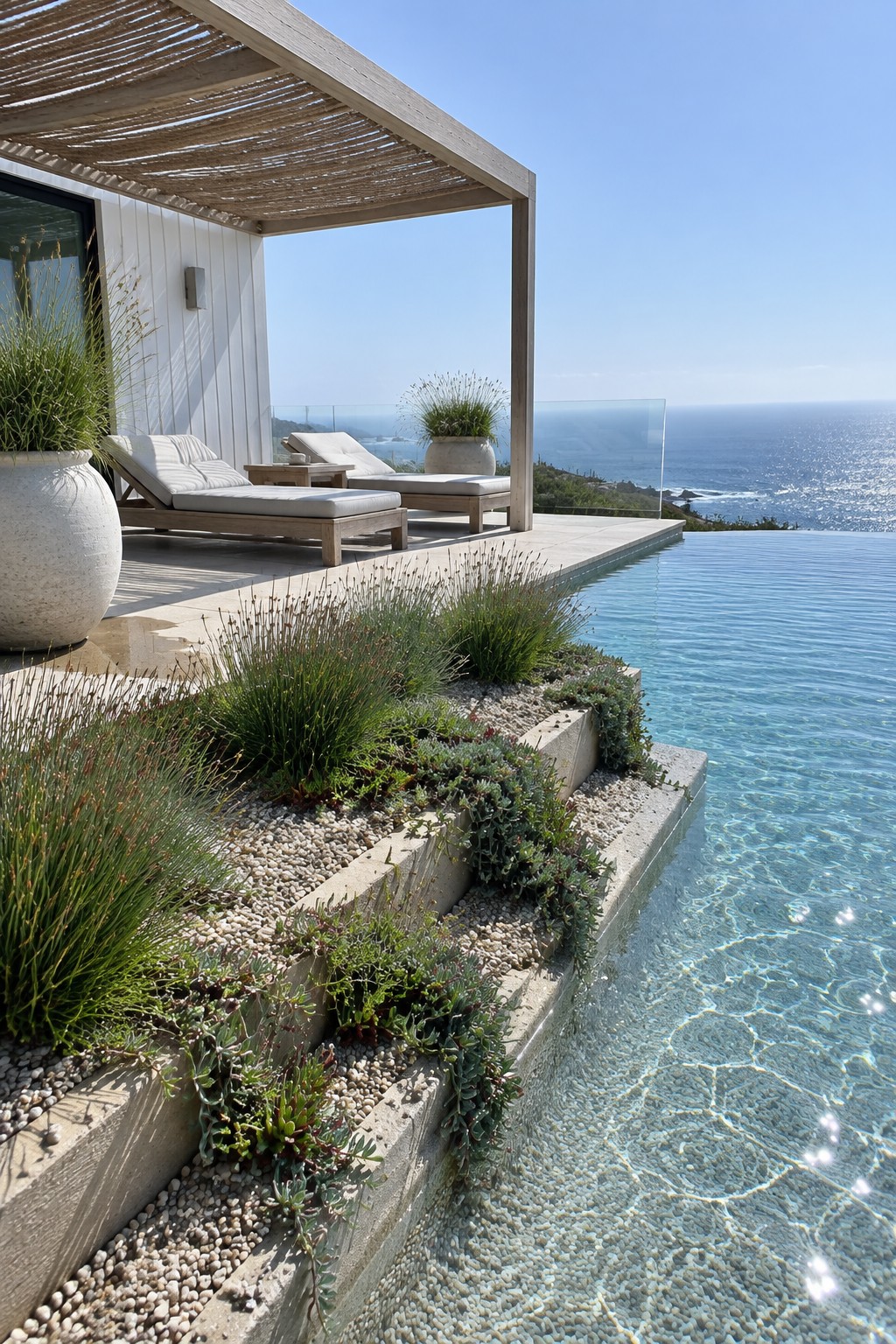
Raised gravel beds can bring a biofilter right alongside a swimming area, so the planting becomes part of the pool design rather than a separate garden feature. The low, stepped edges give plants room to grow while keeping the water’s boundary clear.
This approach suits a pool with enough space for broad, shallow planting shelves. Choose plants that tolerate wet conditions, and leave access to the filter area for cleaning and maintenance.
Use a Narrow Pool Layout in a Small Yard
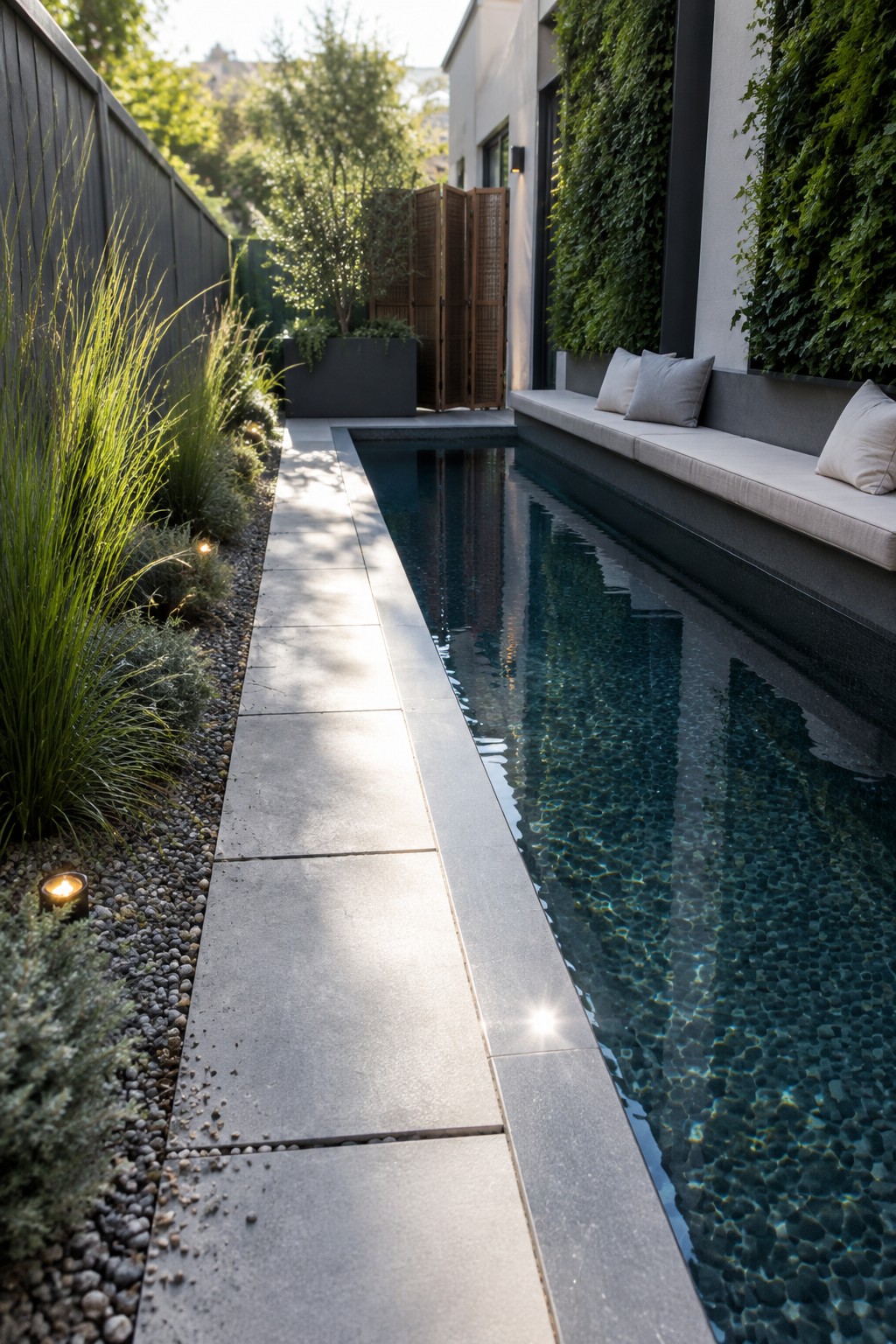
A long, narrow pool can make a tight side yard useful without taking up space for a large patio. In a bio pool, this shape can also leave room for a gravel filter bed along one edge, where plants help clean the water.
Keep the walking path clear and leave enough space for safe access to the pool. This layout suits side yards and compact gardens, but the filter area needs to be planned as part of the pool system, not added as decoration.
Connect the Biofilter to the Pool
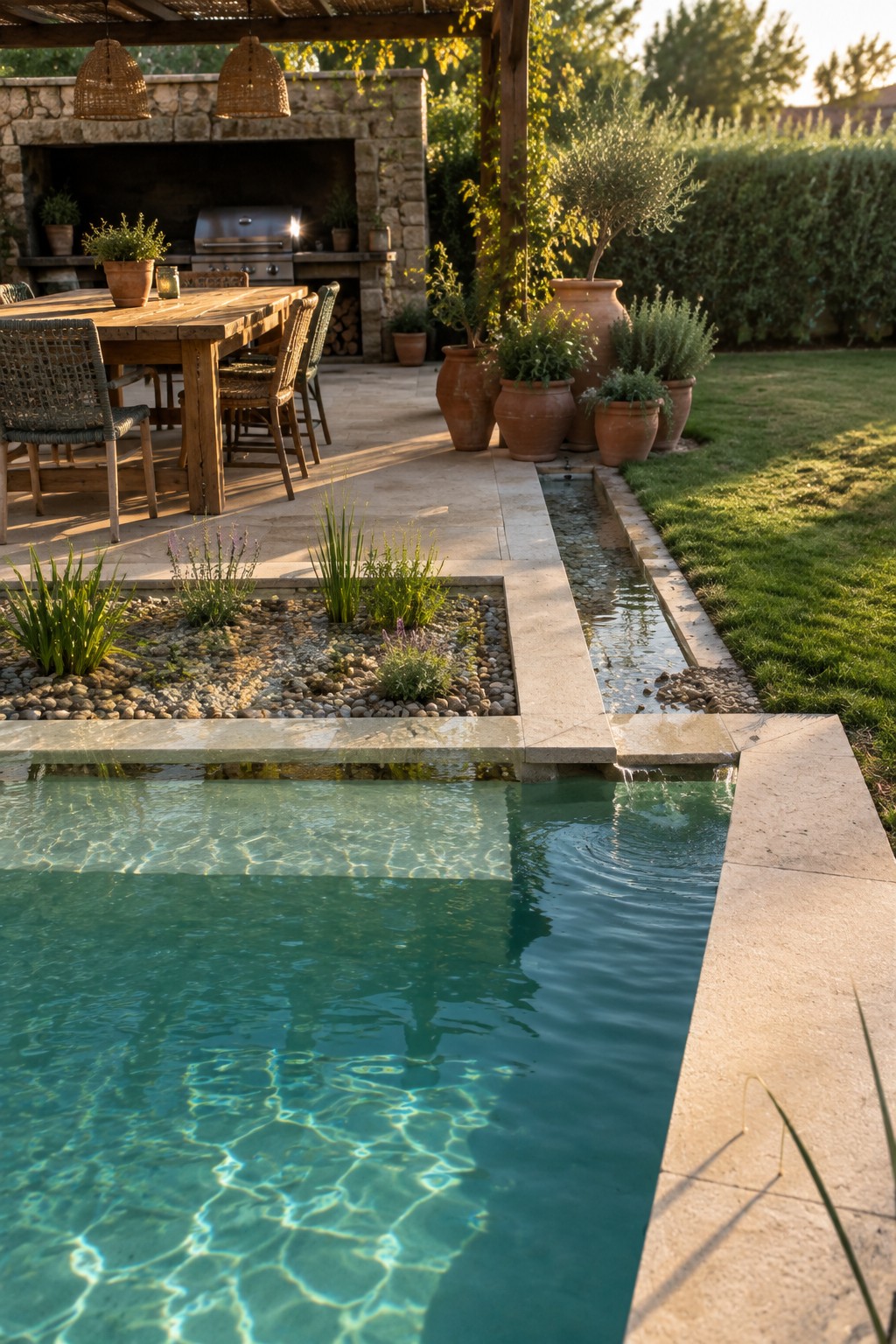
A narrow gravel biofilter can sit beside the swimming area instead of being tucked away at the back of the garden. This makes the filtration zone part of the pool layout, while aquatic plants help clean the water naturally.
Leave enough room around the channel for easy access and maintenance. A stone border keeps gravel in place and gives the water a clear edge, especially in a compact courtyard pool.
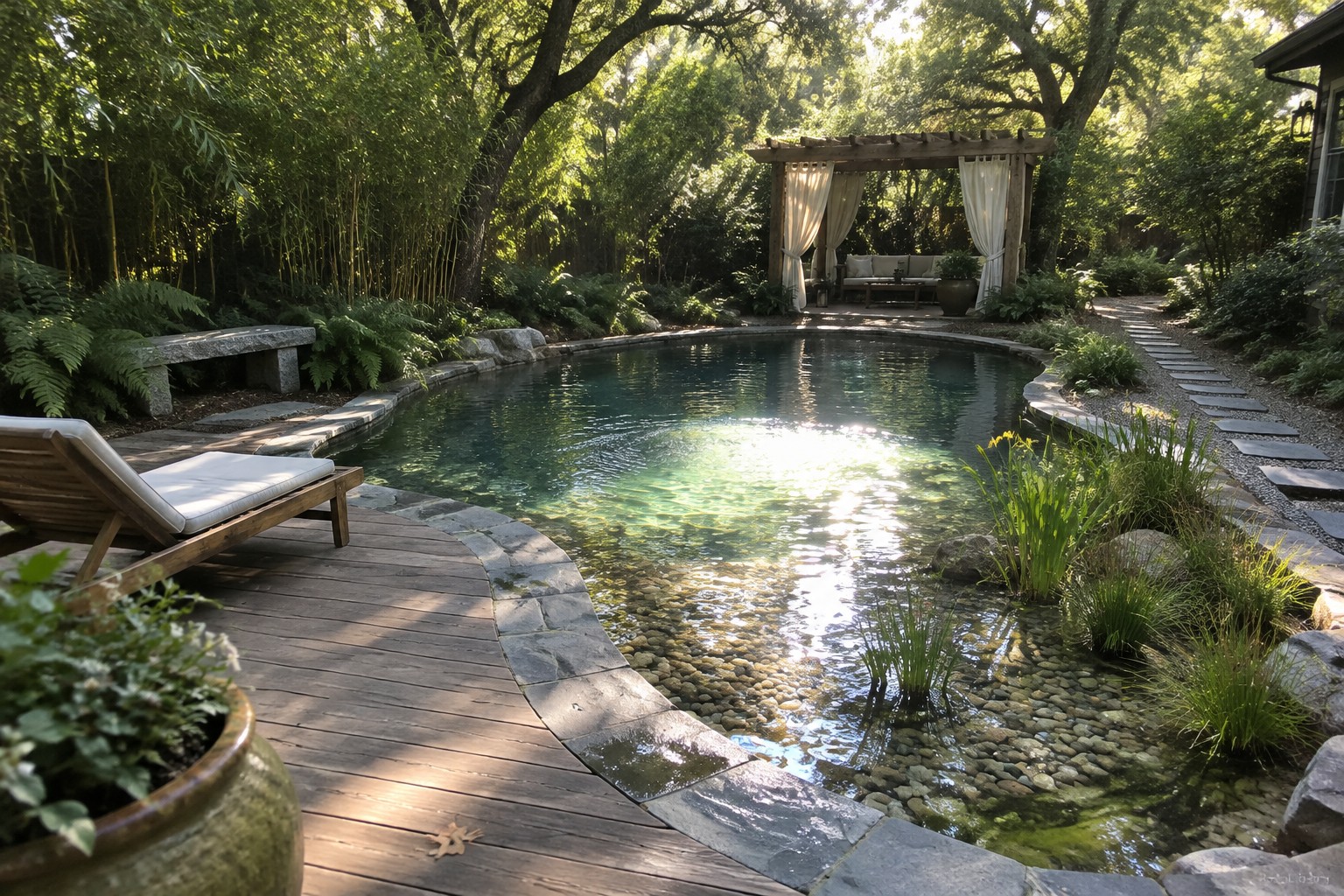
Choose a Round Pool for a Small Patio
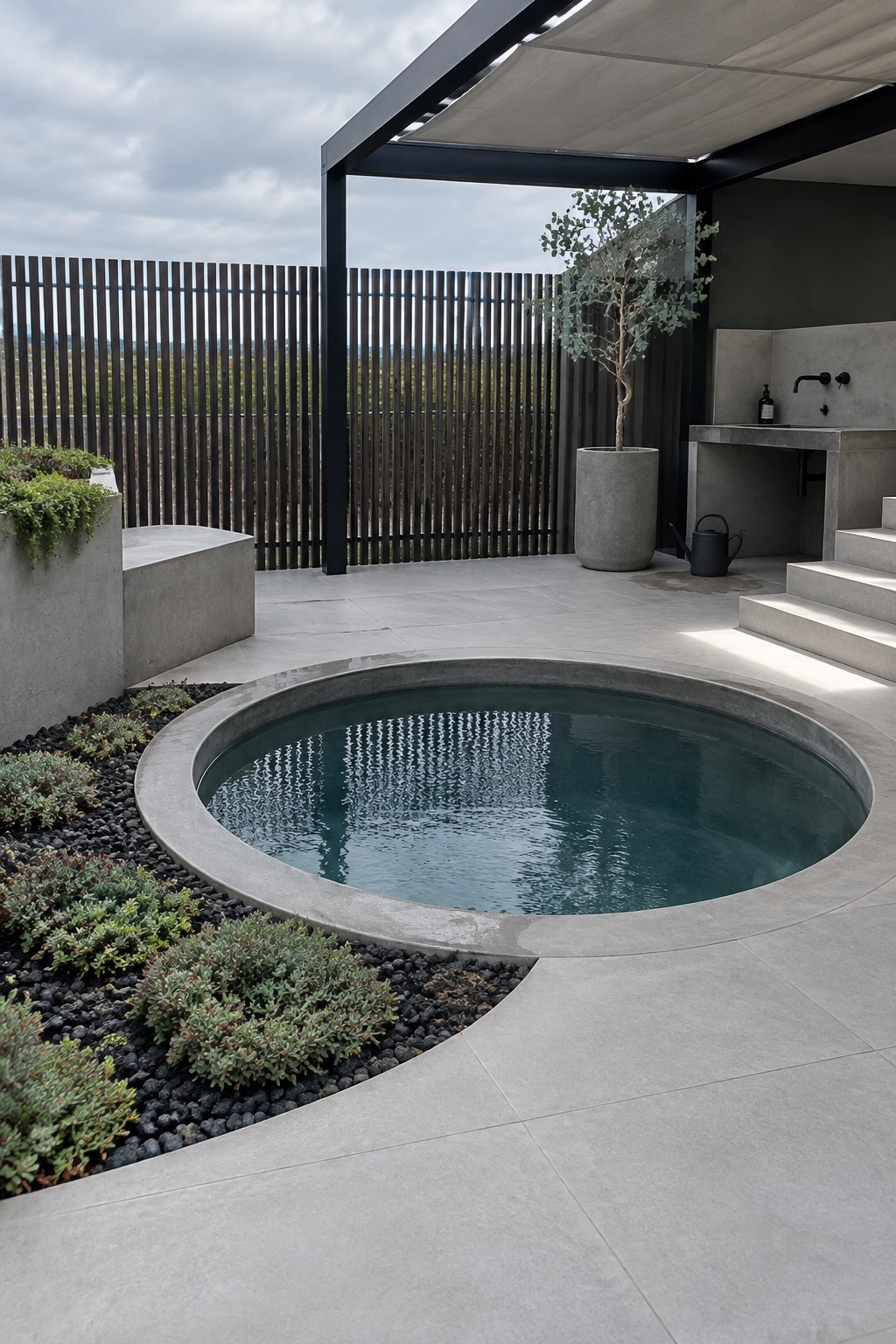
A compact, circular bio pool can make a patio feel more considered without taking over the whole space. Its curved edge gives the water a clear place in the layout, while gravel planting around part of the pool can help connect it to the garden.
This shape works well in a courtyard or on a smaller terrace, especially when you want room to walk around the pool. Leave enough space for safe access, and plan the gravel biofilter so it can clean the water without making the pool difficult to maintain.
Set the Pool Into a Terrace Layout
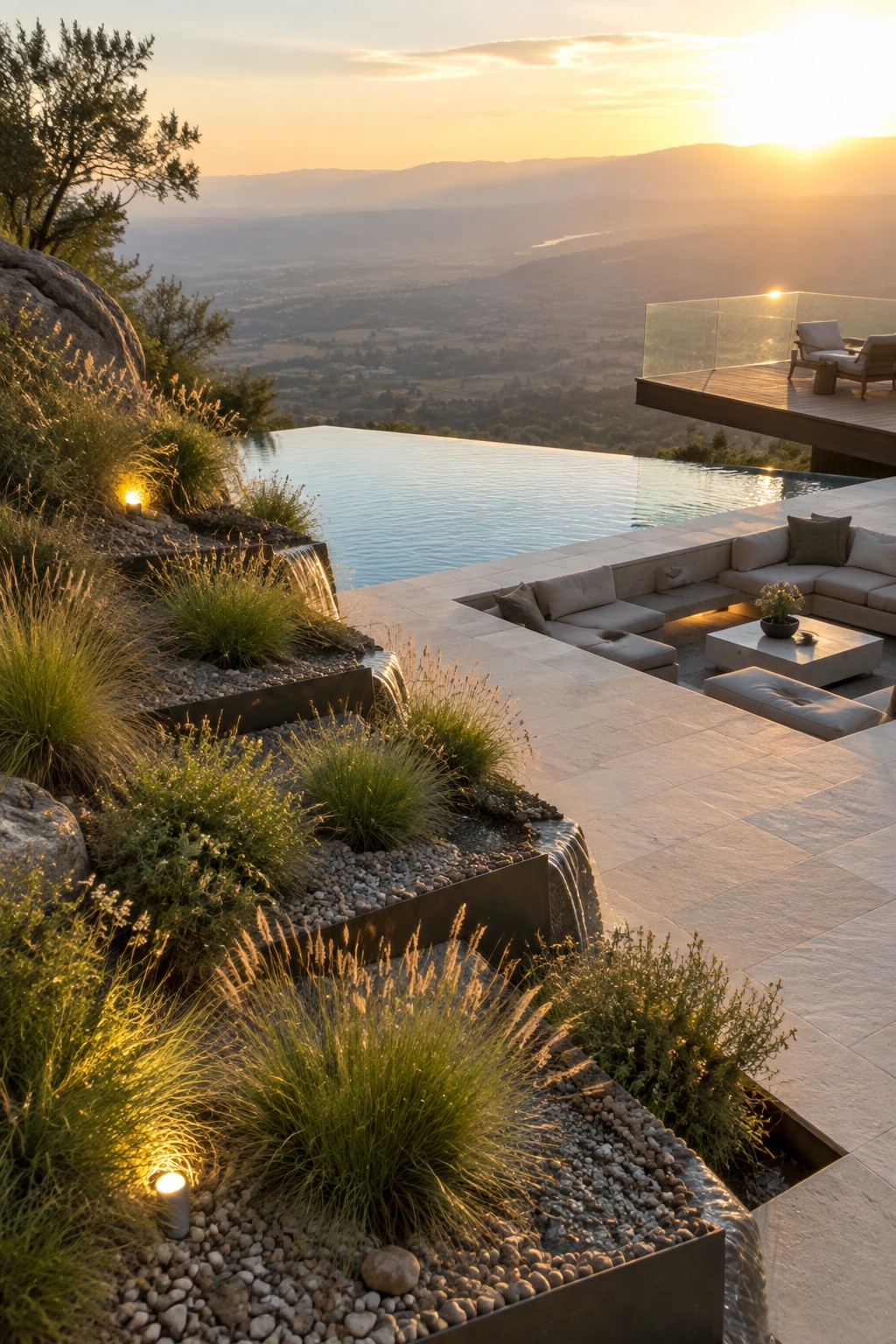
A pool can feel like a natural part of an outdoor living area when the terrace is planned around it. Here, the paved deck and built-in seating keep the pool close to the place where people gather, rather than setting it apart at the edge of the yard.
This layout suits sloped sites, where separate levels can make room for a pool and a lounge area. For a bio pool, leave enough space around the water for a gravel filter zone and easy access for maintenance.
Create a Relaxed Poolside Seating Area
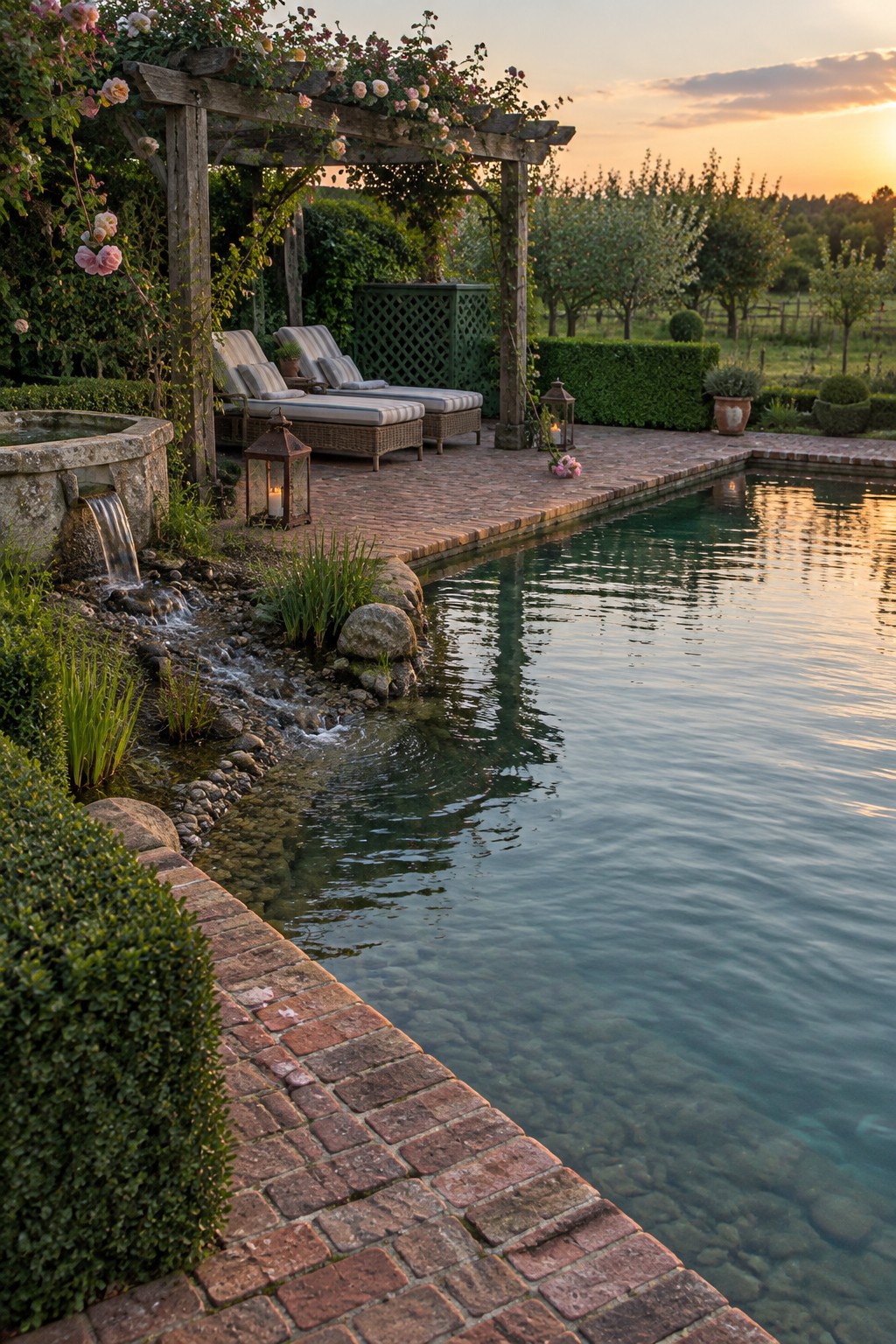
A small seating area beside a bio pool makes it easier to enjoy the water without needing a large deck. Here, a pergola gives the seats a defined spot, while the brick paving provides a sturdy surface close to the pool.
For a similar setup, place seating where it won’t block access to the water or the gravel-filtered edge. A simple shade structure can help make the area more comfortable, but leave enough open space to move around and maintain the pool.
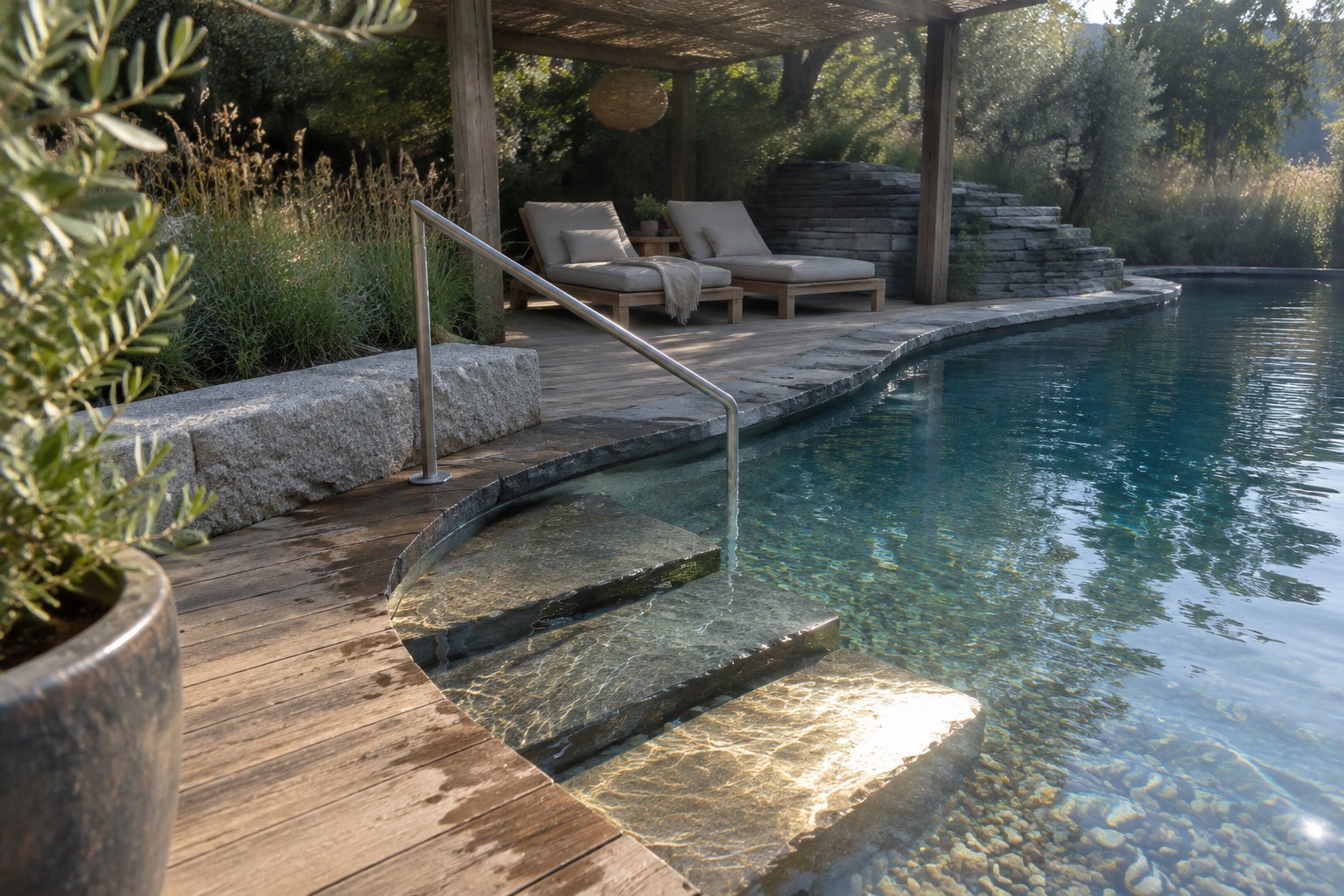
Make a Bio Pool Part of the Outdoor Seating Area
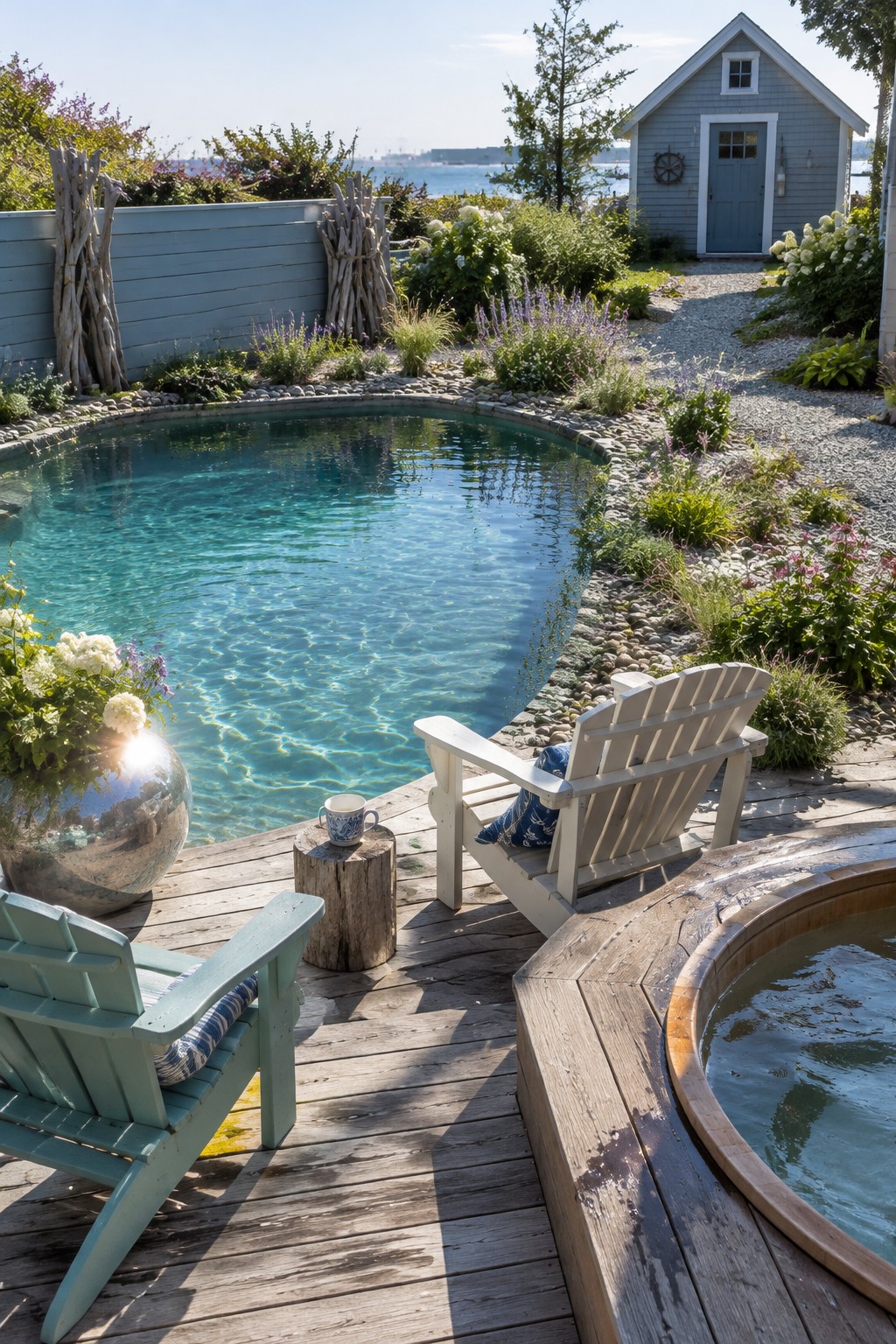
A natural pool can work as the center of an outdoor living space, rather than sitting apart from it. Here, the deck brings seating close to the water, so the pool feels like part of the place to relax.
For a similar layout, leave enough clear deck for chairs and safe movement around the pool. Gravel and planted edges can help the water blend into the garden, but make sure the biofilter has enough room to do its job.
Make the Pool Part of the Outdoor Living Area
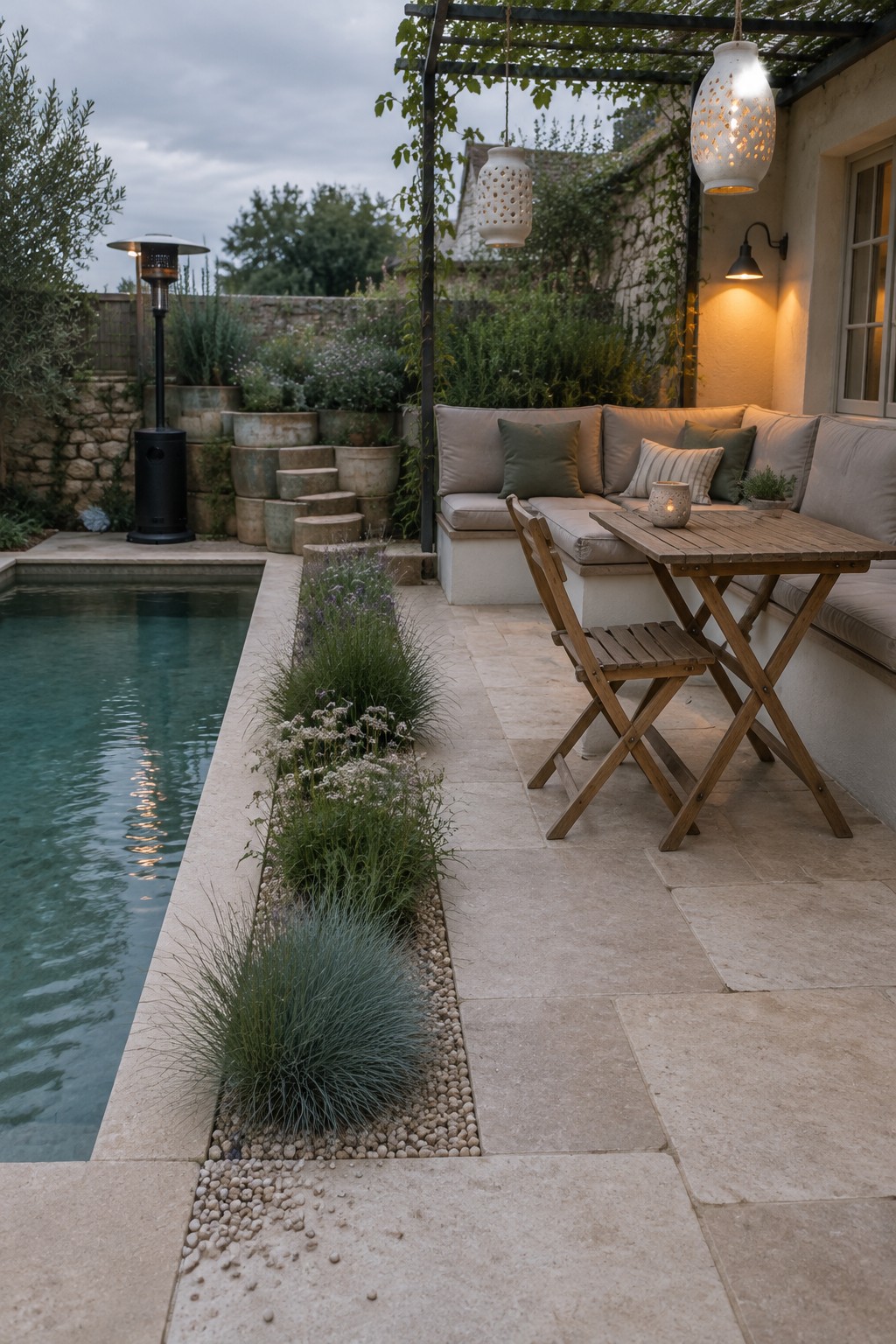
A pool can feel more connected to daily life when the patio is planned as one usable space around it. Here, the dining table and built-in seating sit close to the water, so swimming and eating can happen in the same area rather than in separate parts of the yard.
For a similar layout, leave a clear walkway between the pool edge and the seating, and keep gravel biofilter planting in a defined strip where it will not interrupt circulation. This approach works well in a compact courtyard, but the walking space matters just as much as the seating.
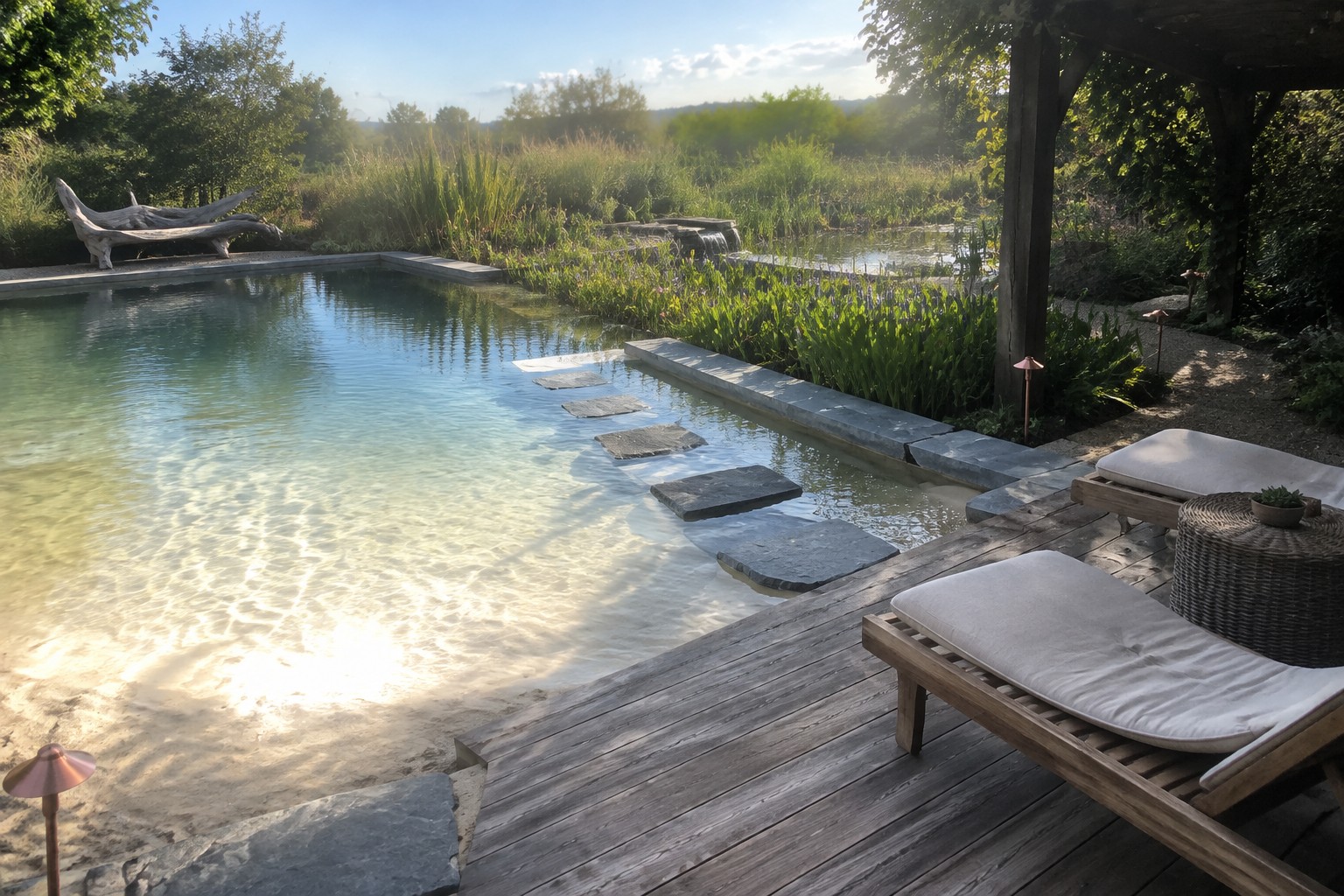
Use Stepping Stones to Link the Pool and Garden
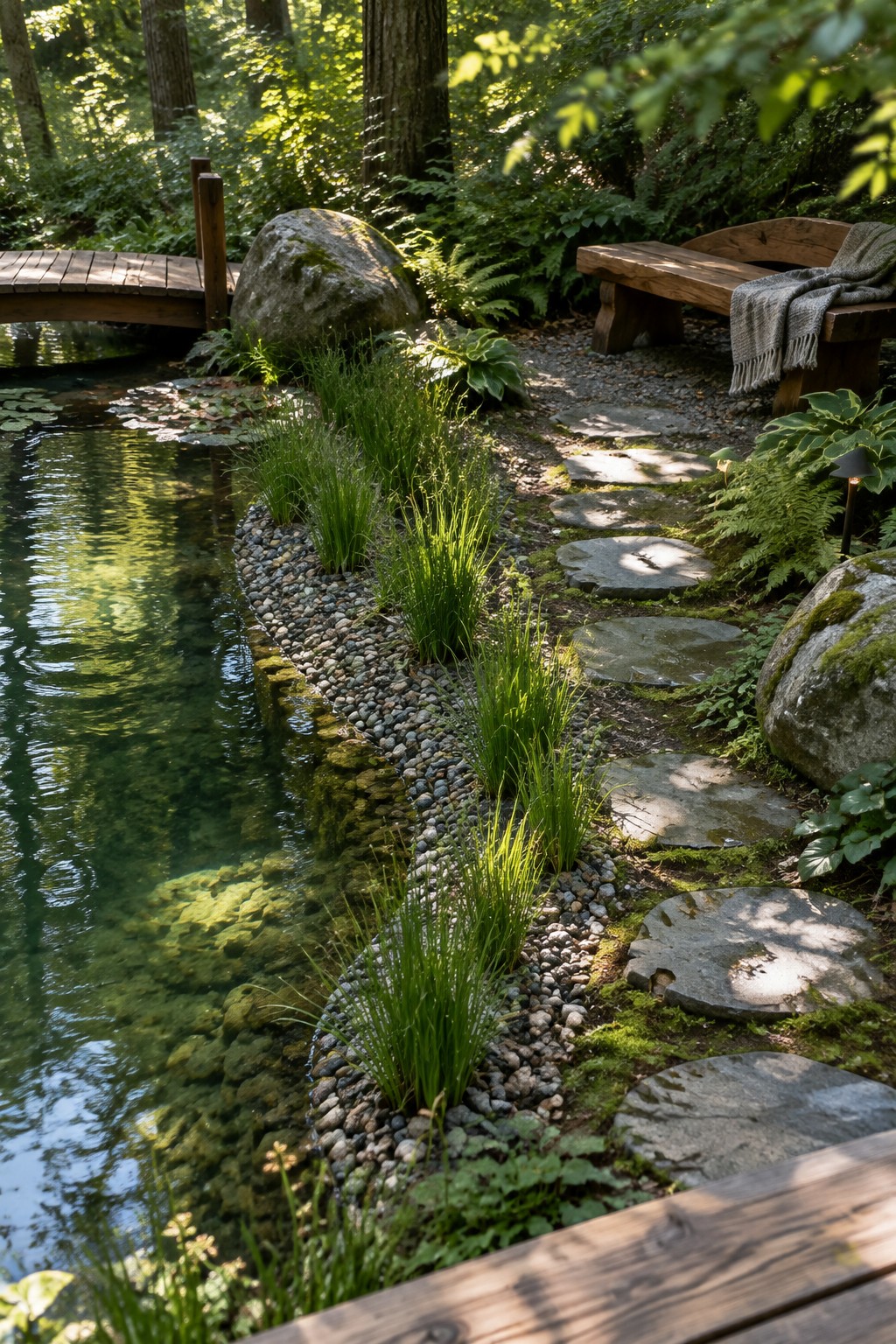
A stepping-stone path makes it easy to move between the water and a place to sit without covering the whole garden in paving. The gaps between stones leave room for gravel and plants, which suits a natural pool area.
Use broad, stable stones and space them for a comfortable stride. This works especially well beside a gravel biofilter, but keep the route clear of plants that could spill onto the walking surface.
Use a Stepping-Stone Path Beside the Pool
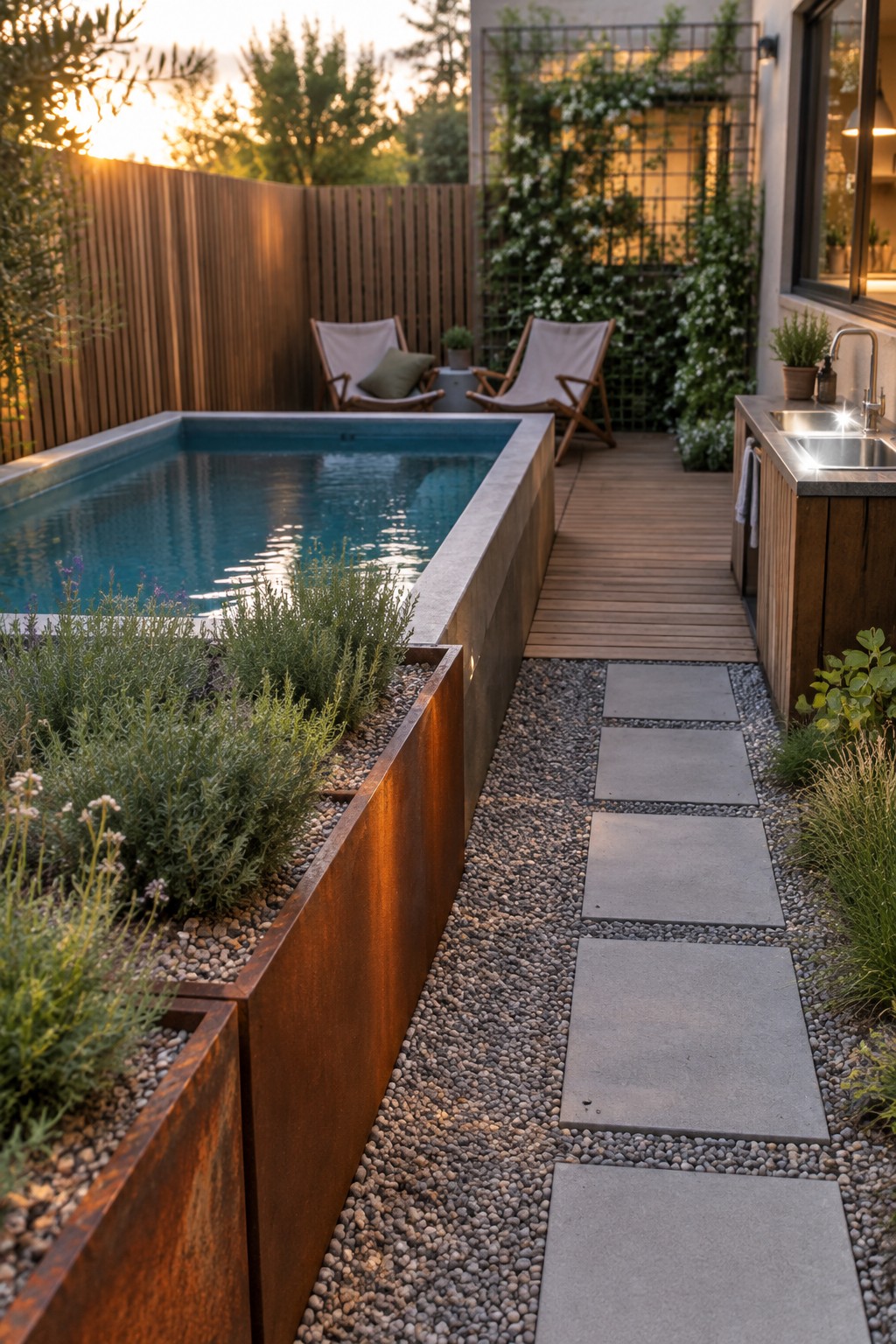
A stepping-stone path makes a narrow pool area easier to move through without paving the whole space. The gravel between the slabs lets the path feel less formal and can suit a compact backyard.
Set the stones on a firm, level base and leave enough room for comfortable steps. Beside a bio pool, keep gravel from spilling into the water and choose a slip-resistant surface for wet feet.
Use a Gravel Planting Shelf Along the Pool
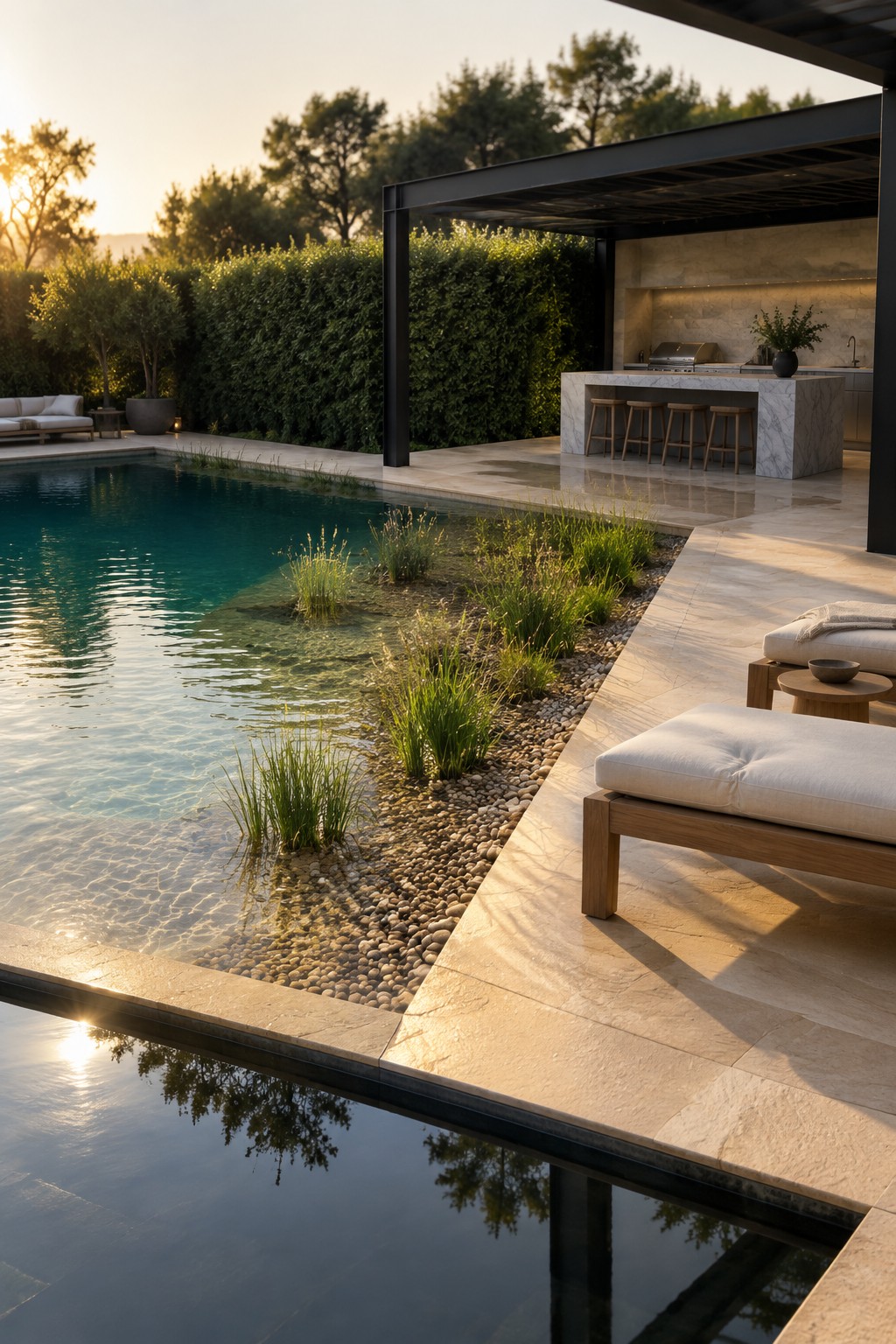
A shallow gravel shelf can let water plants sit right beside the swimming area while helping filter the pool. It also makes the transition from open water to the patio feel less abrupt.
This works best when the planted section stays narrow enough to leave plenty of room for swimming. Use rounded gravel and plants suited to shallow water, and keep the shelf easy to reach for trimming and cleaning.
Frequently Asked Questions
Q: Can I use gravel from a local landscaping yard in a biofilter?
A: Yes, as long as it’s clean, washed gravel without soil, dust, or chemical residue. A mix of gravel sizes can help water move through the filter while giving beneficial bacteria plenty of surface to grow on.
Q: How often do I need to clean a gravel biofilter?
A: Rinse out leaves and other debris when they build up, but avoid scrubbing the gravel spotless. The helpful bacteria live on its surfaces, so a gentle clean keeps water flowing without stripping away the biofilter’s living layer.
Q: Will a gravel biofilter keep my pool clear all year?
A: It can help keep water clear, but seasonal changes still matter. Remove fallen leaves, check water circulation, and give the filter time to settle after heavy rain or a big swim day.
Q: Can I add plants around or inside the biofilter?
A: Yes. Choose plants suited to wet conditions, and keep roots from blocking the water’s path through the gravel.