A swimming pond can feel at home in a cottage garden when its edges sit naturally among flowers, paths, and informal planting.
I find the layout matters as much as the plants, since a clear route to the water and a comfortable place to sit make the pond easier to use.
Flowering borders soften the water’s edge, but leaving some open space helps the pond remain visible and keeps the garden from feeling crowded.
The ideas here show different ways to balance blooms, stone, greenery, and swimming space, with details I’d consider adapting to the shape and light of my own yard.
Small choices in edging and planting can change how the whole garden feels.
Shape a Pond Into the Garden
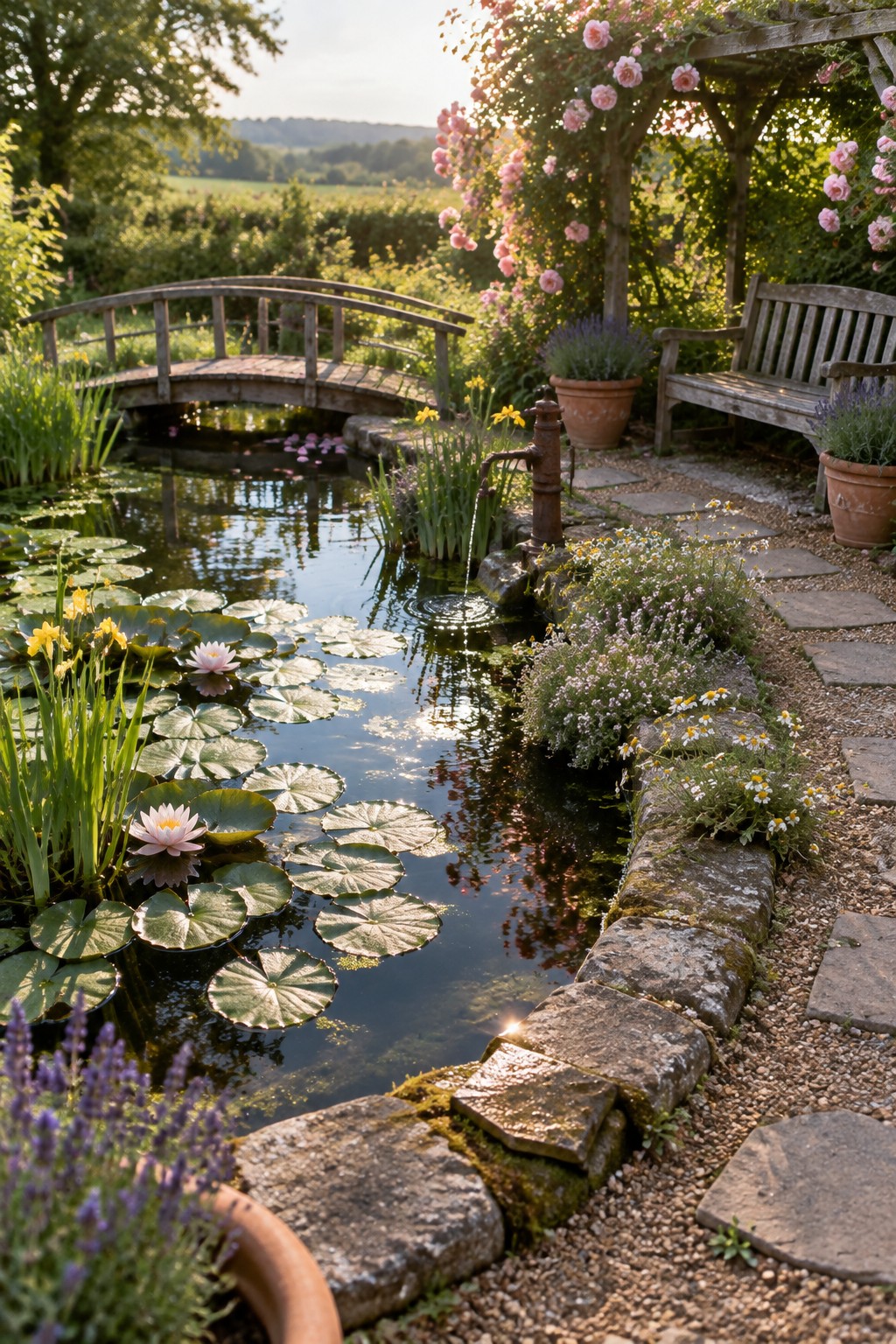
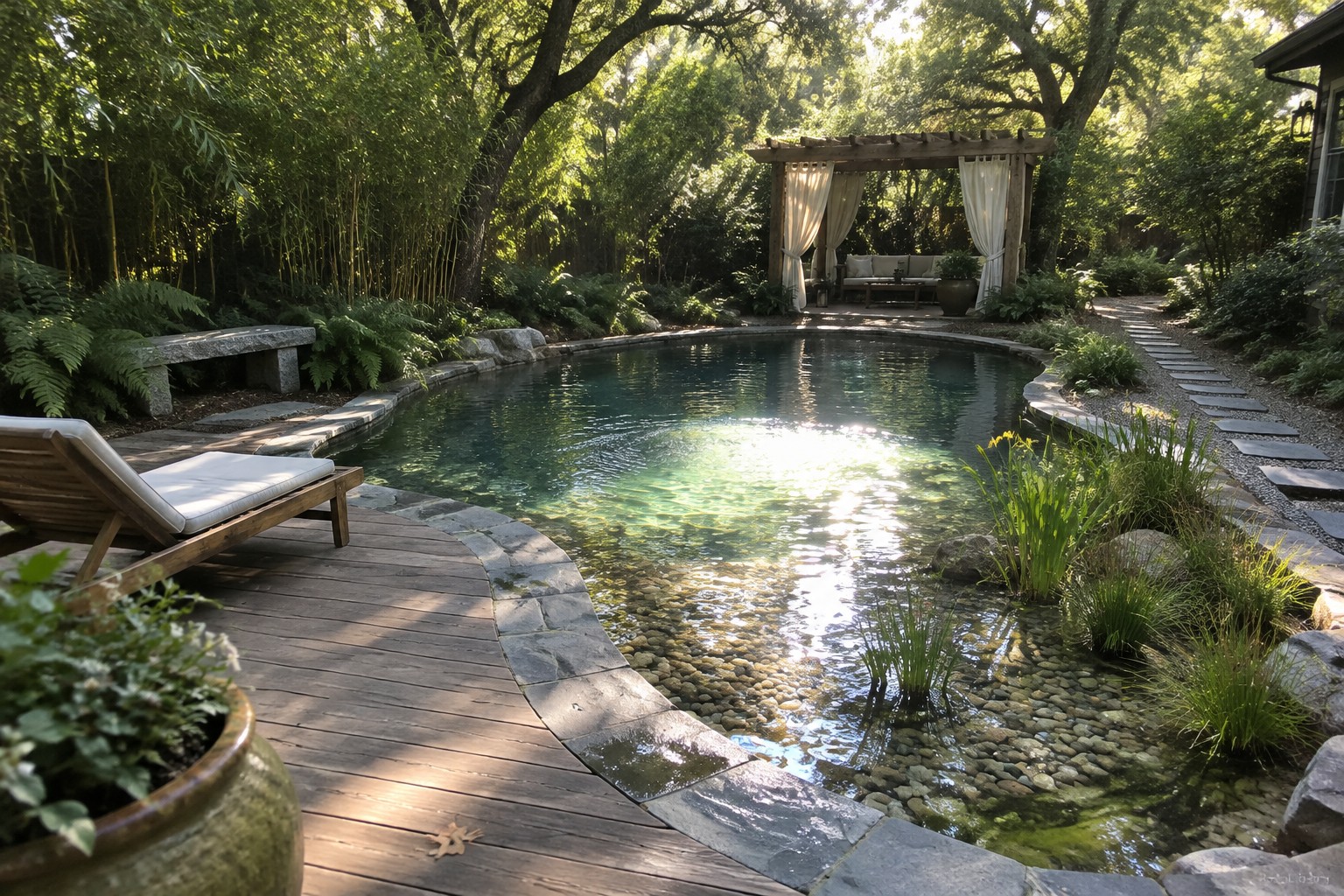
A curved pond edge can make a cottage garden feel like one connected space rather than a lawn with a water feature added on. A low stone border gives the pond a clear outline while leaving room for flowers and grasses to grow close to the water.
Use this approach where you want a small pond to feel settled into the garden. Keep the edge low and varied, and leave enough space nearby to walk and reach the pond for upkeep. A stepping-stone path can provide access without making the shoreline feel too formal.
Plant Flowers Around the Pond Edge
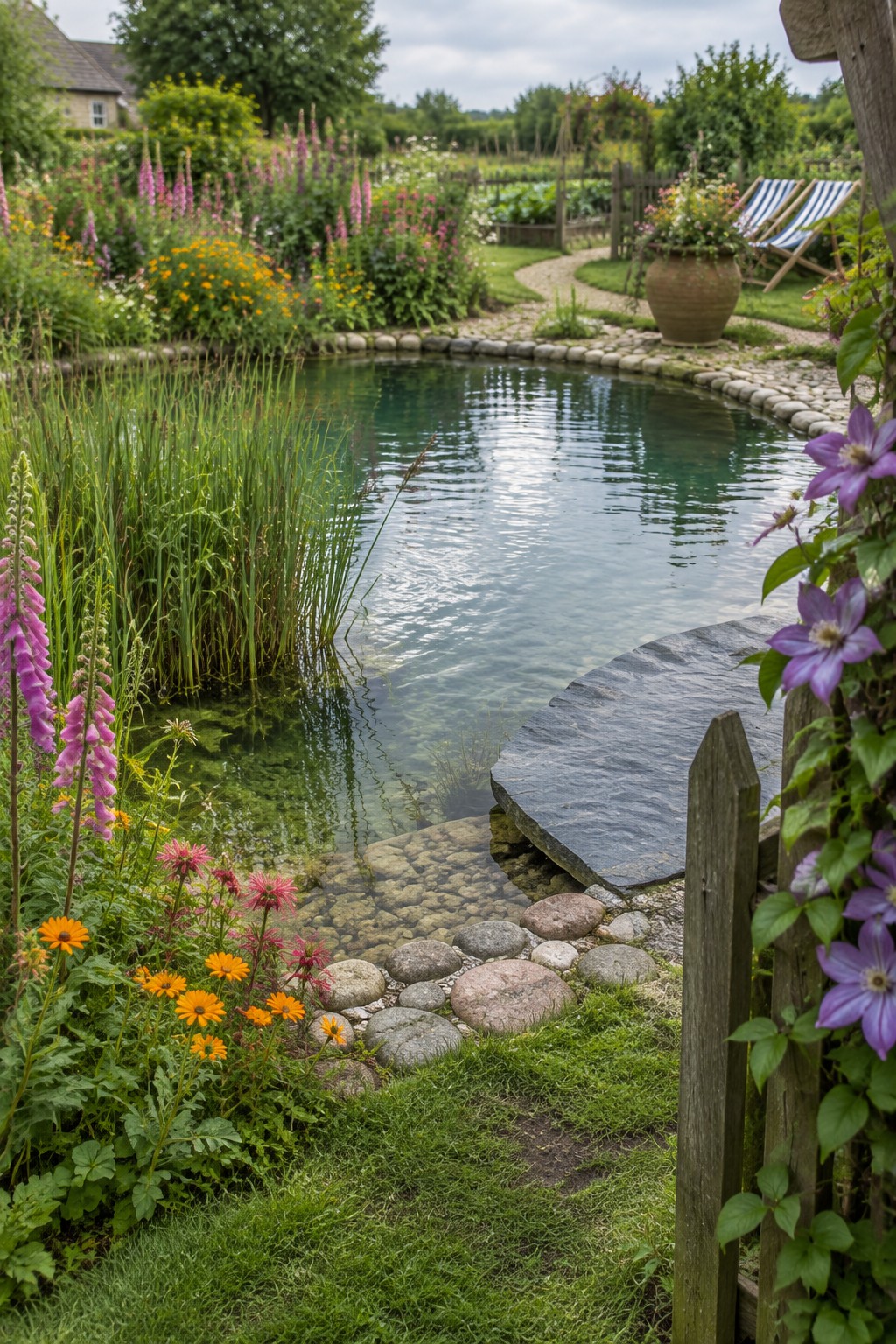
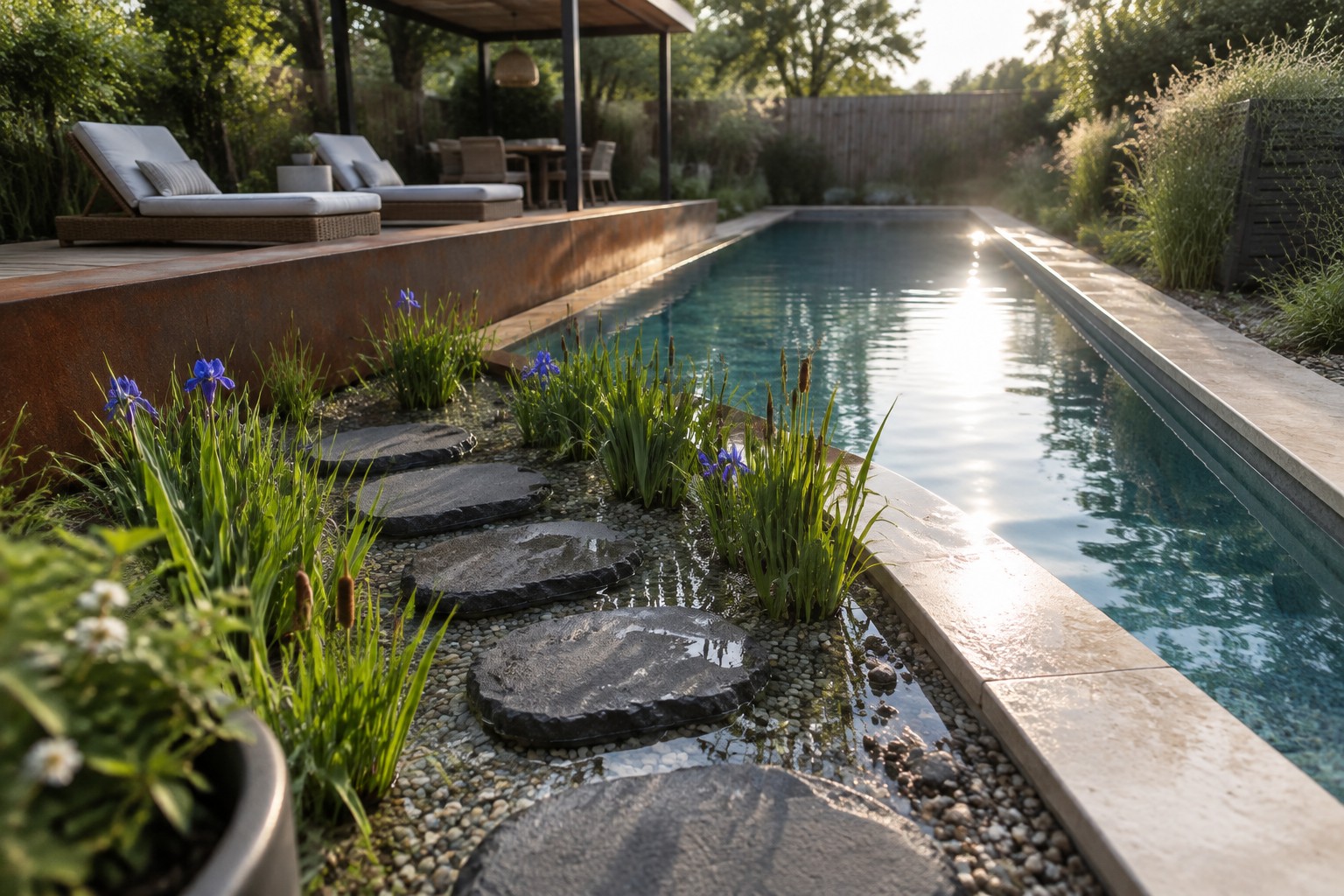
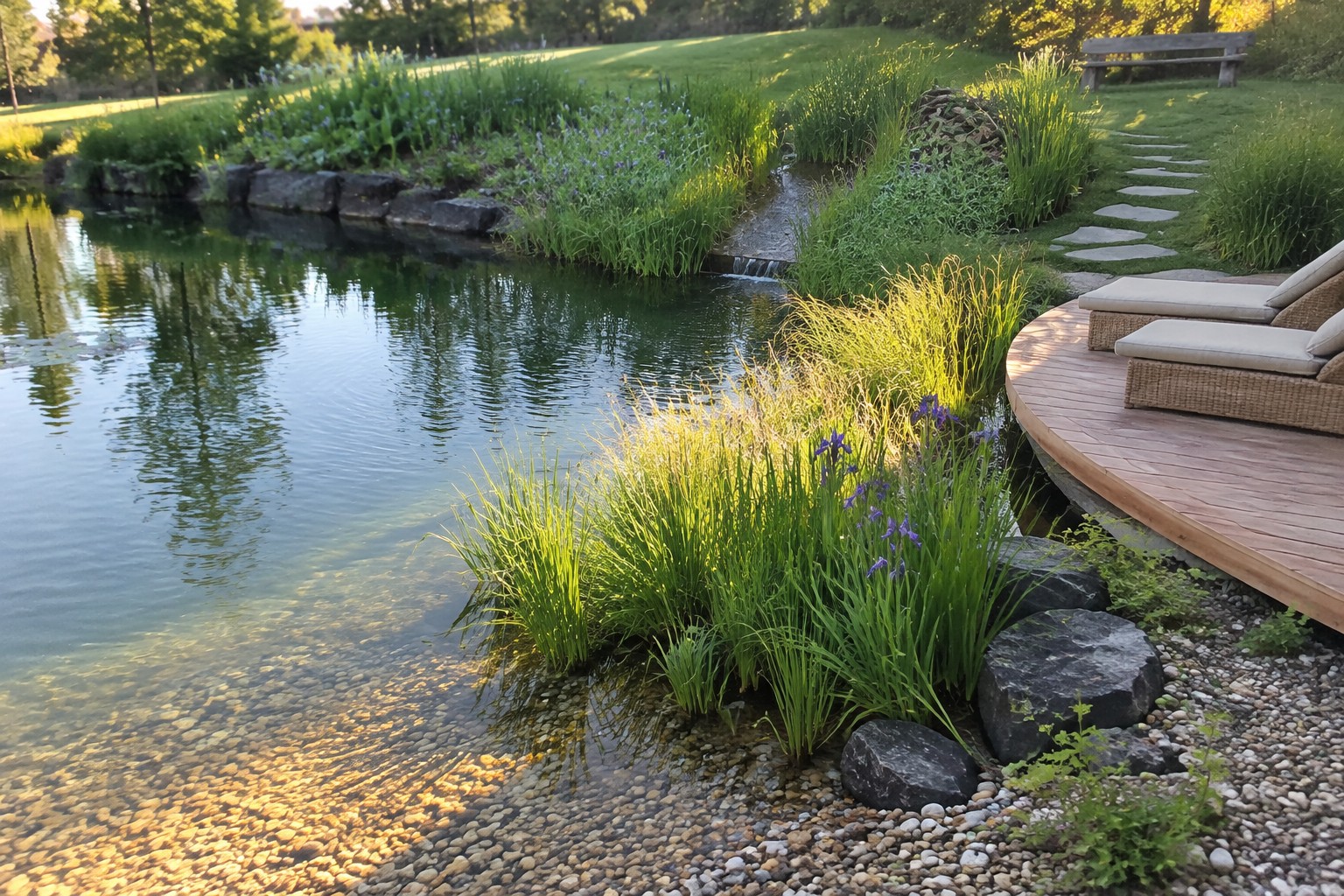
A pond can feel like part of the garden when flowers and grasses grow right along its edge. This planting style makes the water feel less separate from the rest of the yard, while leaving the pond itself open and easy to enjoy.
Use a mix of upright plants and lower flowers, but leave a clear route to the water for cleaning and care. It works especially well in a cottage garden, where a loose planting edge suits the informal look. In the image, tall reeds and bright flowers grow beside the stone border.
Make a Small Pond Part of the Patio
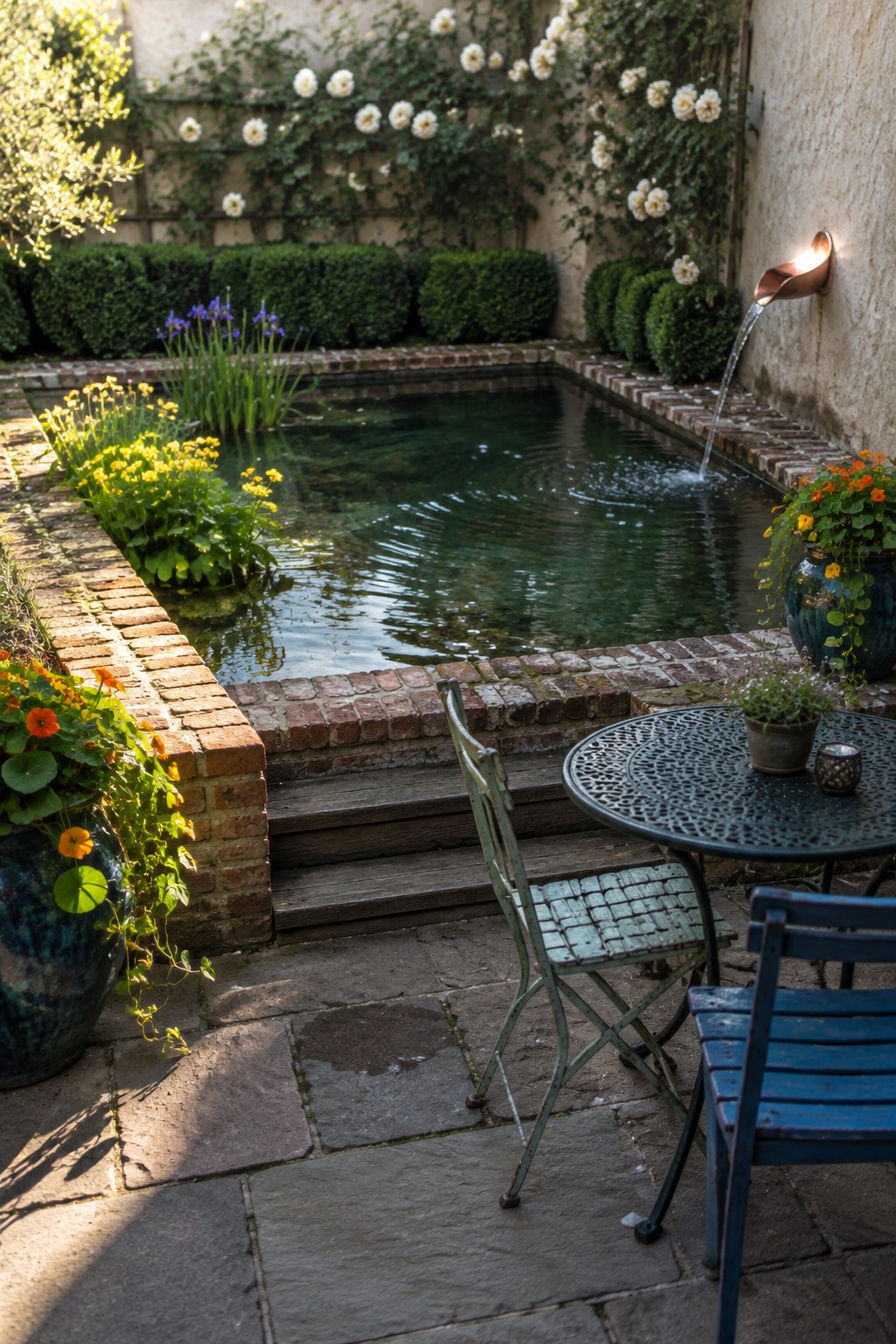
A small swimming pond can feel like a natural part of an outdoor living area when it sits close to the patio. Here, the brick edge gives the water a clear boundary, while a small table nearby makes it easy to enjoy the space without giving up room for seating.
This layout suits a compact courtyard or cottage garden. Keep a clear path around the pond, and choose sturdy paving that can handle splashes and damp feet. A low edge also makes it easier to sit beside the water, but it should be planned with safety in mind.
Use Stepping Stones To Guide The Garden Path
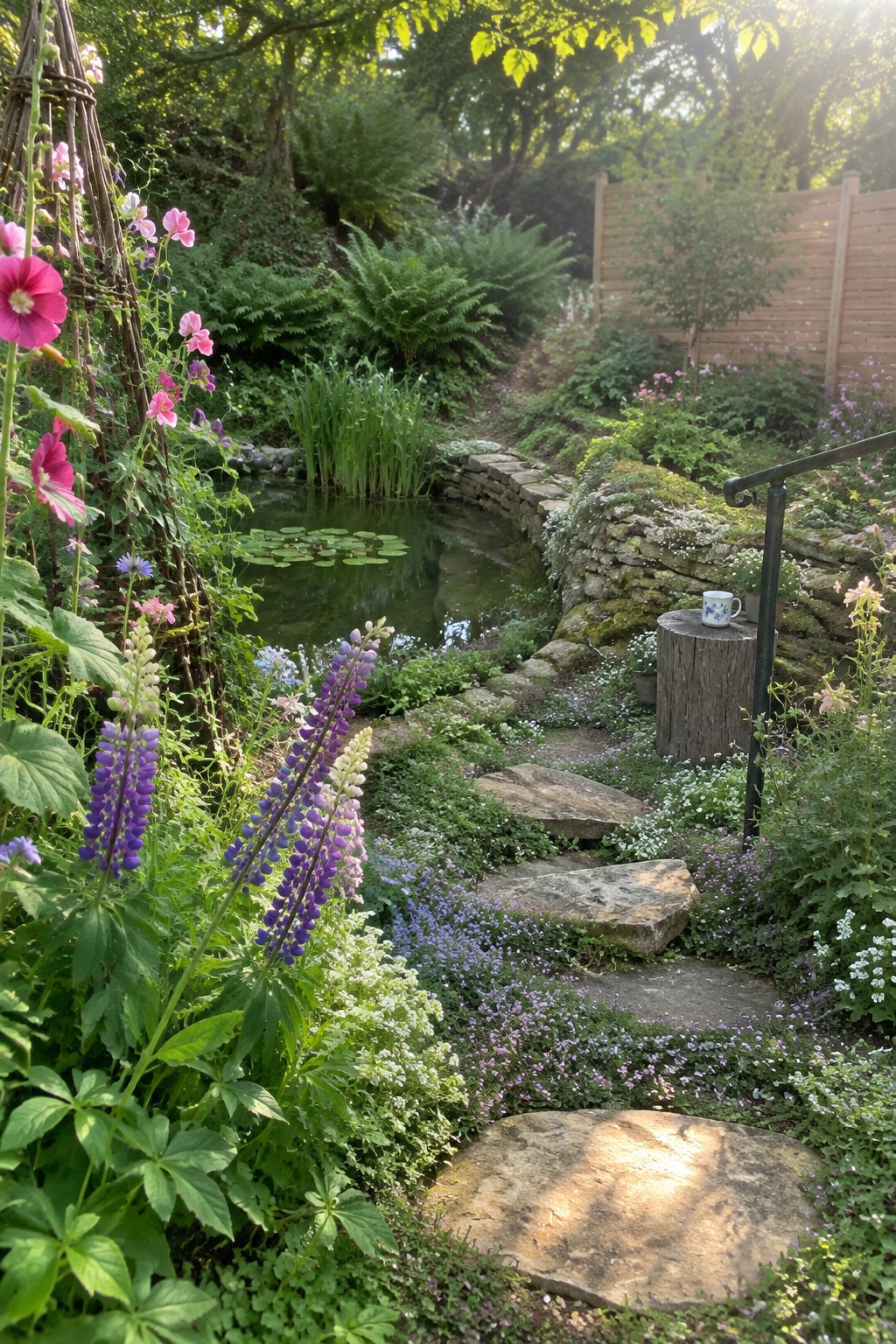
A stepping-stone path can make a cottage garden easier to walk through without taking away its informal feel. Set the stones through low-growing plants, and the path becomes part of the planting rather than a separate strip of paving.
This approach works well beside a swimming pond, where a clear route helps people move around the water. Leave enough space between stones for comfortable steps, and choose a surface that stays grippy when wet.
Add a Stone Edge Along the Pond
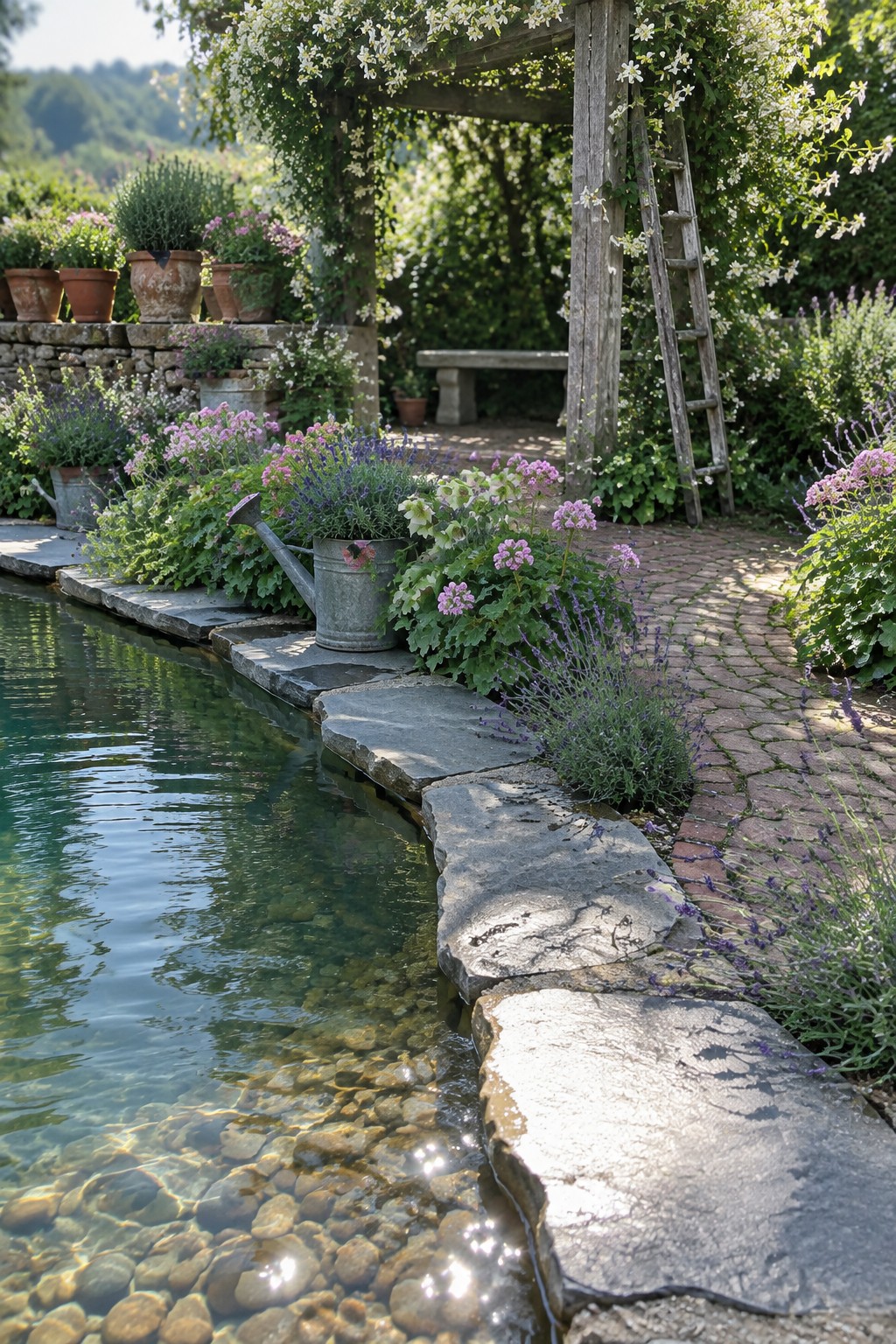
A broad stone edge gives a swimming pond a clear, sturdy boundary while keeping it connected to the garden. The uneven slabs suit a cottage-style space and make a practical place to sit near the water.
Use stones with a rough, natural finish, and set them securely so the edge stays safe underfoot. Leave room for flowers along the path, but keep plants trimmed back where people enter or move around the pond.
Use a Path To Lead To The Pond
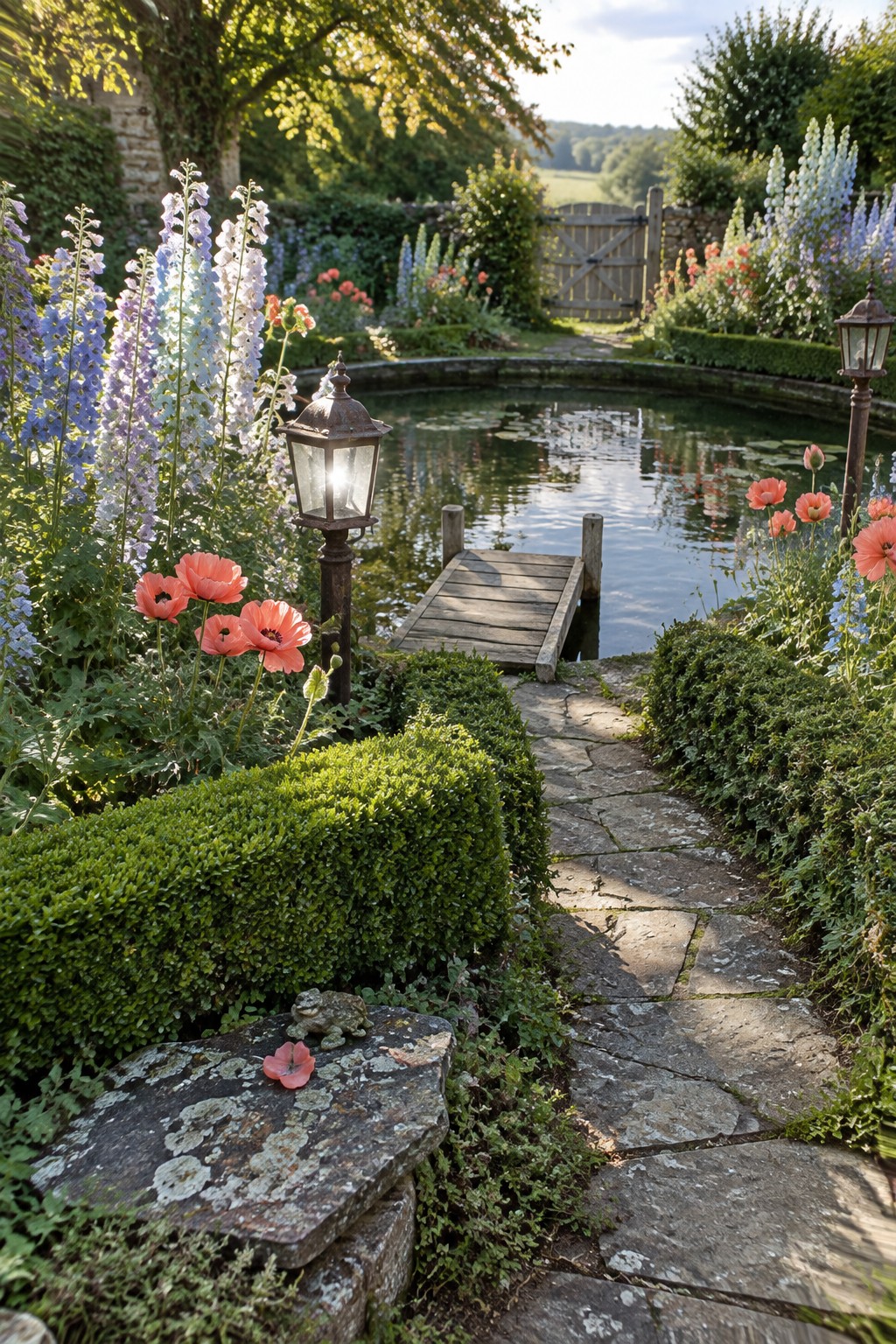
A stone path that ends at a small pond makes the water feel like a natural destination in the garden. It also gives the space a clear route through the planting without taking over the flowers.
Use irregular paving for a relaxed cottage look, and leave enough room to walk comfortably, even when plants spread over the edges. A small wooden landing at the pond can make it easier to approach the water.
Add a Small Deck Beside the Pond
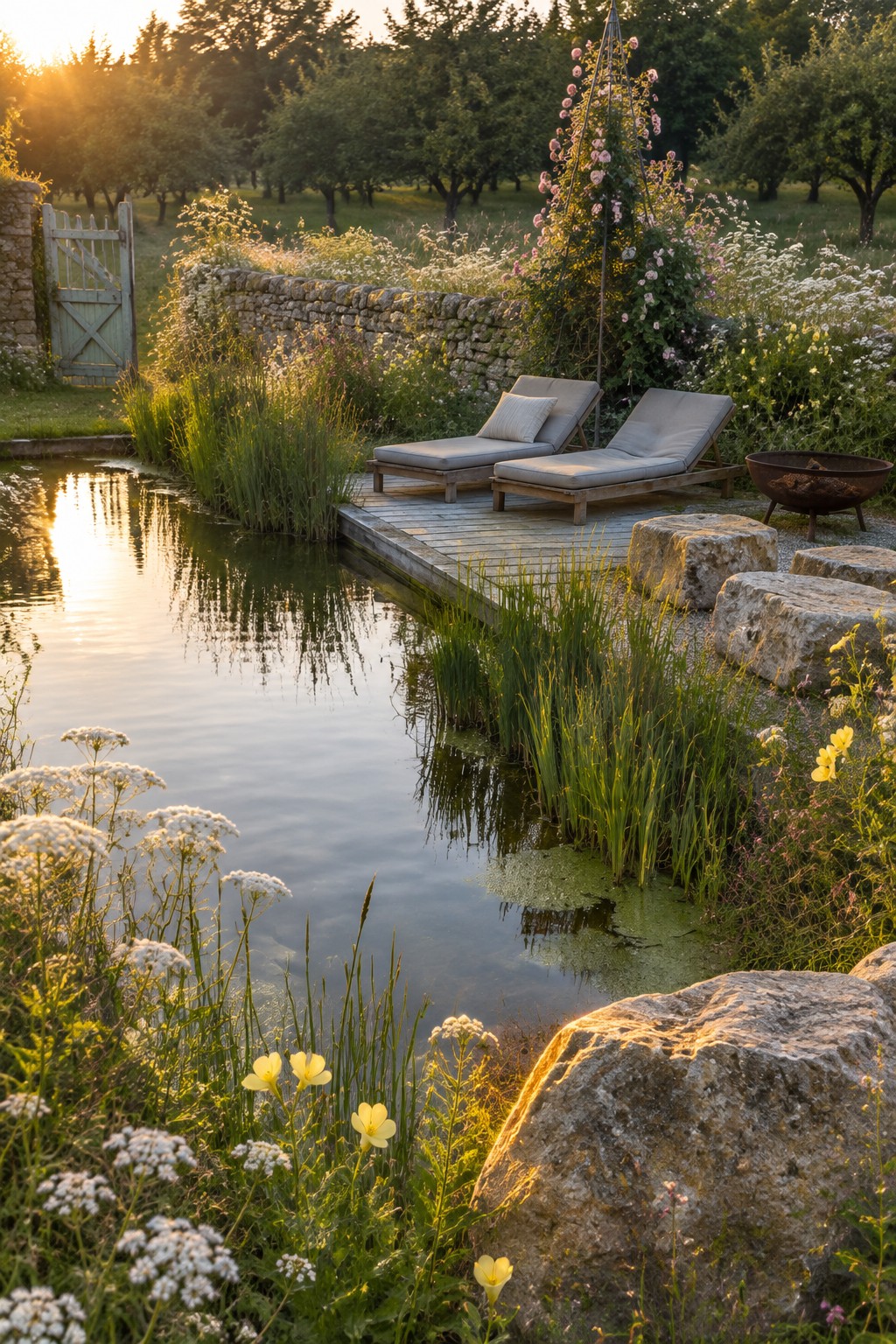
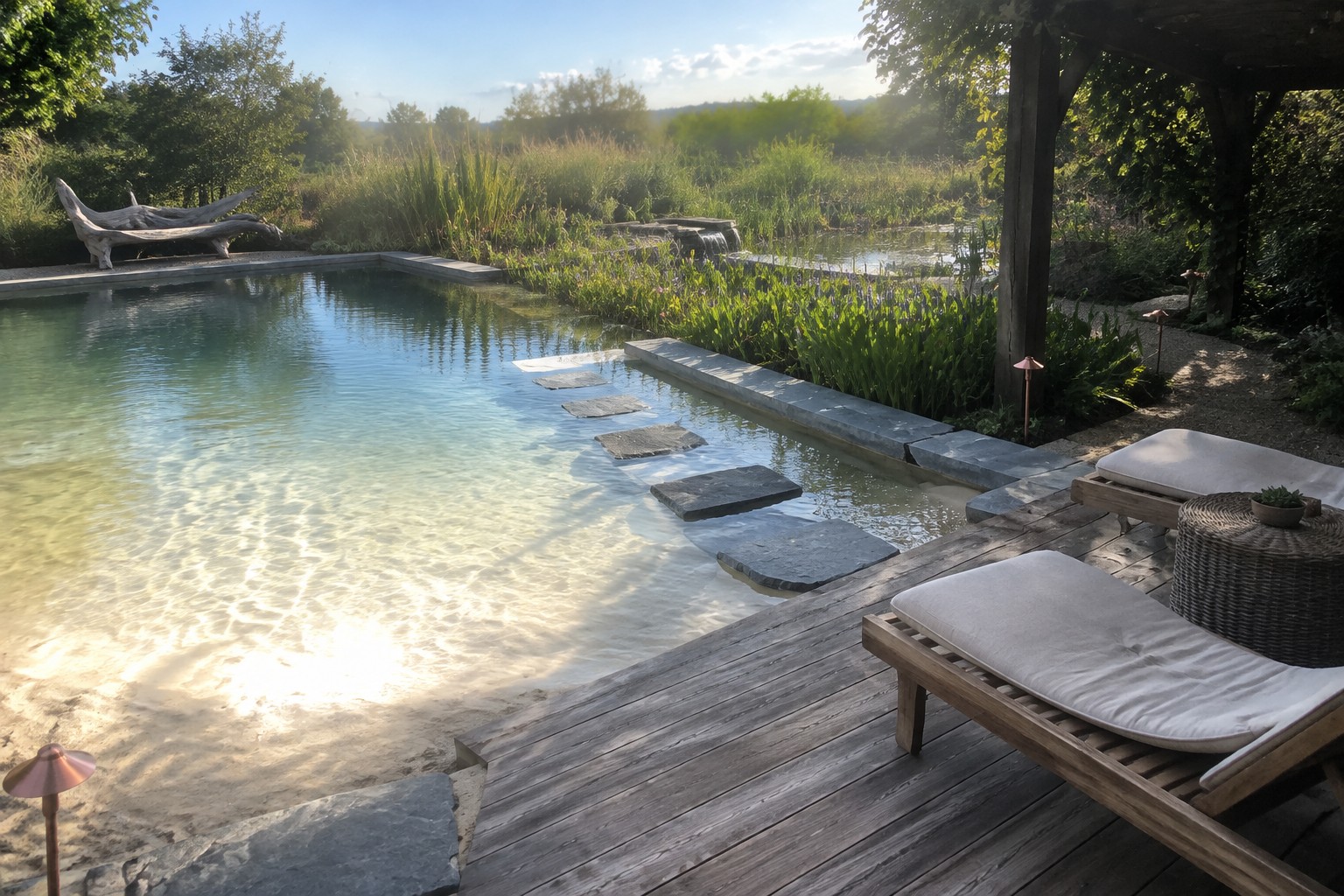
A small deck beside a swimming pond gives you a dry place to sit close to the water. It can make the pond easier to enjoy without taking over the garden, especially when the deck is kept just large enough for a couple of loungers.
Use a simple, low platform that follows the pond’s edge, and leave plenty of room for plants around it. Choose materials suited to wet conditions, and check that the surface stays slip-resistant.
Use Stone Steps to Connect Garden Levels
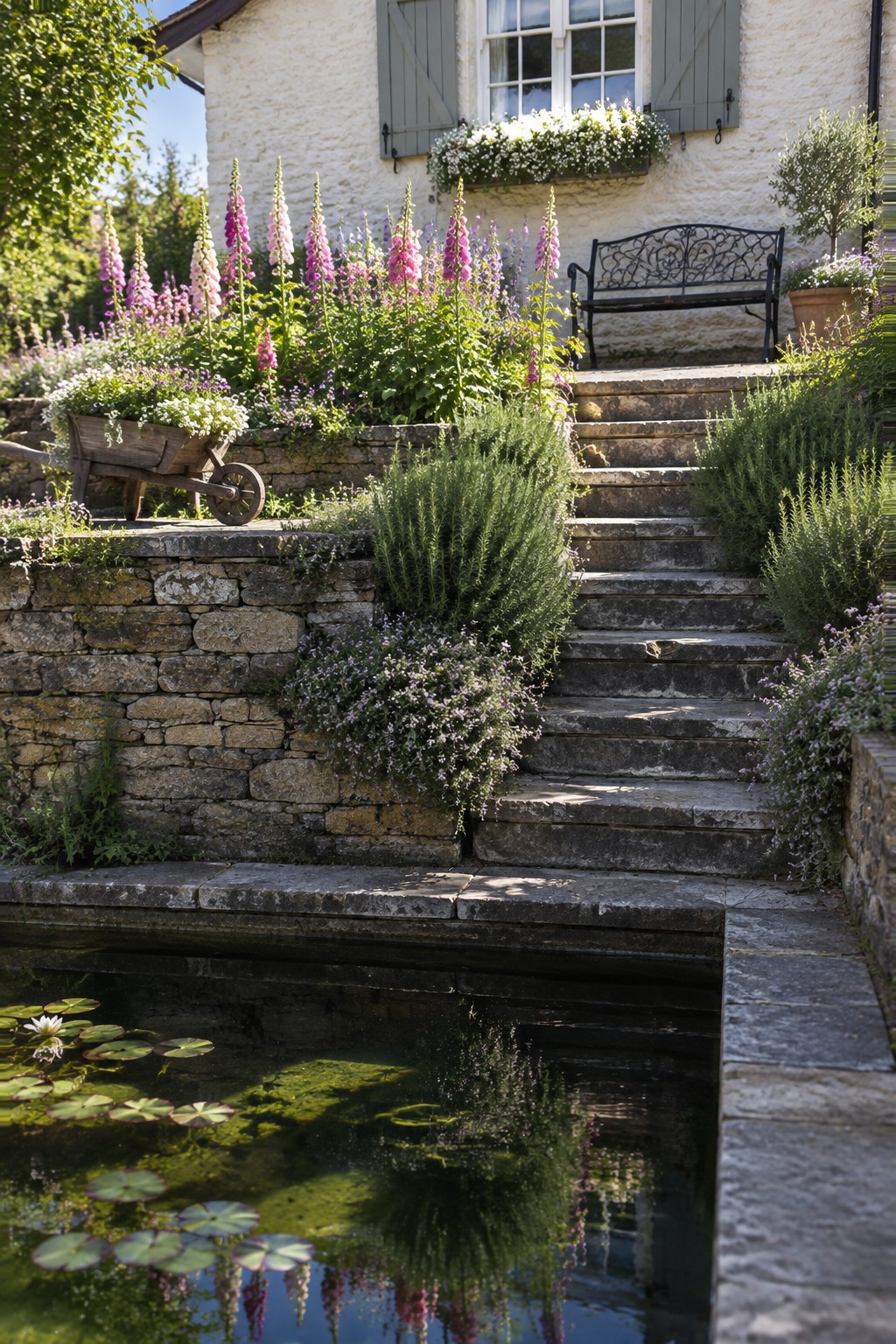
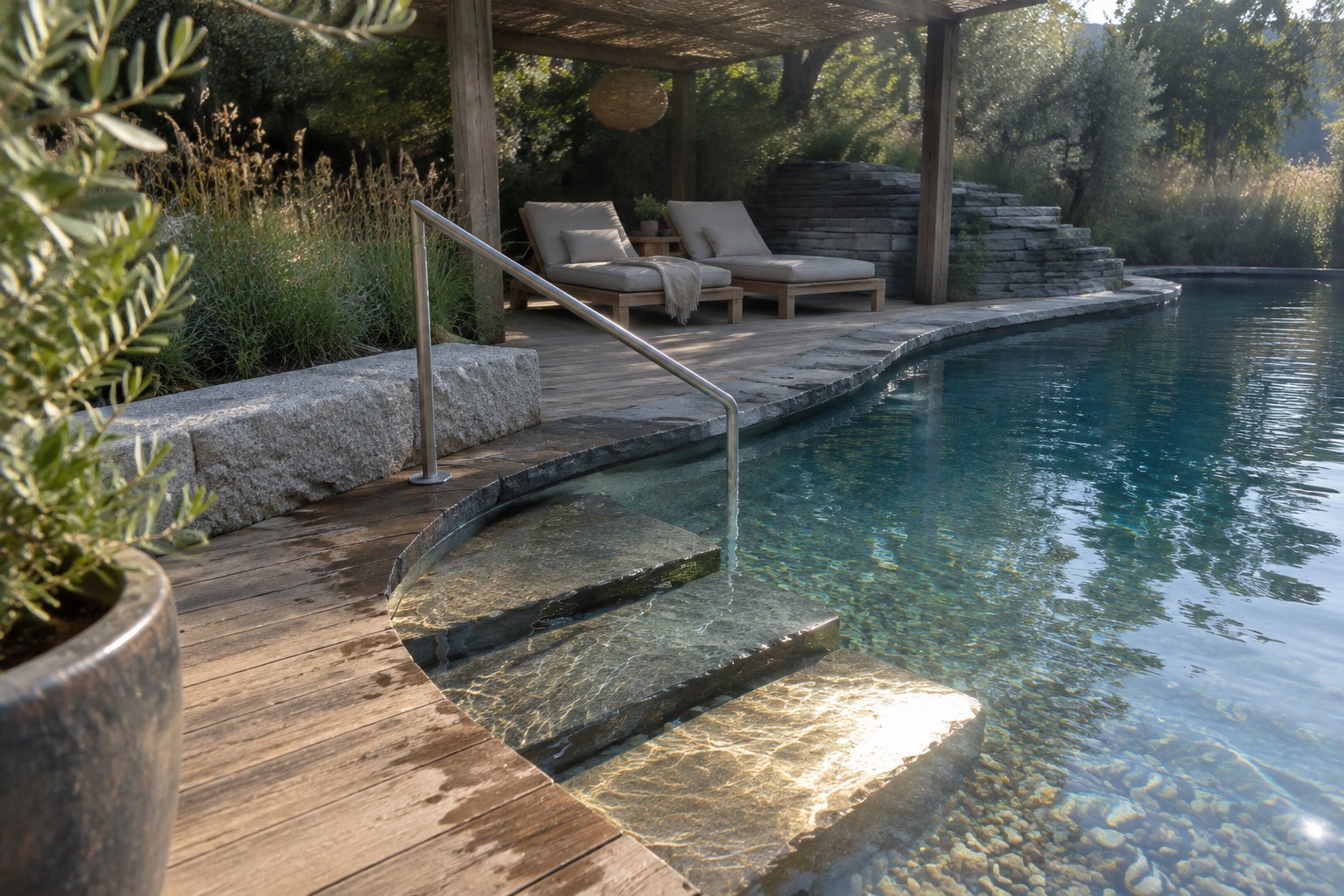
A short flight of stone steps can make a sloped garden easier to move through while giving the planting a clear structure. Here, the steps climb between flower beds and a low stone retaining wall, so the change in level feels like a natural part of the garden.
For a similar layout, keep the steps wide enough for comfortable footing and use sturdy stone that suits the walls nearby. This approach works especially well in a cottage garden with a pond on a lower terrace, where the steps can link the water’s edge to an upper seating area.
Set Up Seating Beside the Swimming Pond

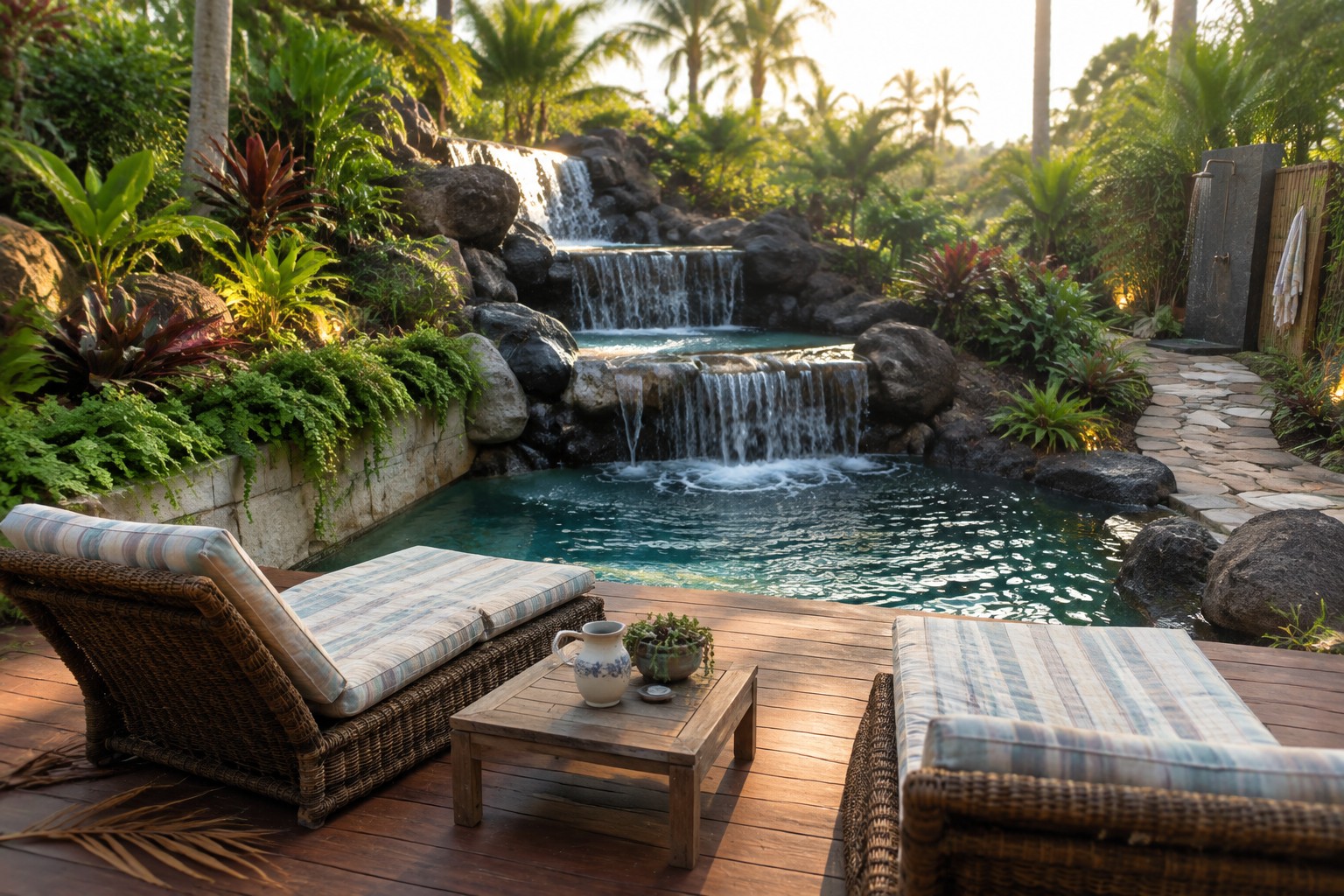
A pair of loungers beside a pond gives the garden a comfortable place to pause. Keeping the seating close to the water makes it easy to enjoy the pond without taking over the planting around it.
This arrangement suits a cottage garden with a paved edge or small terrace. Leave enough room to walk around the chairs, and choose outdoor furniture that can handle splashes and damp conditions.
Let a Stone Path Follow the Pond’s Edge
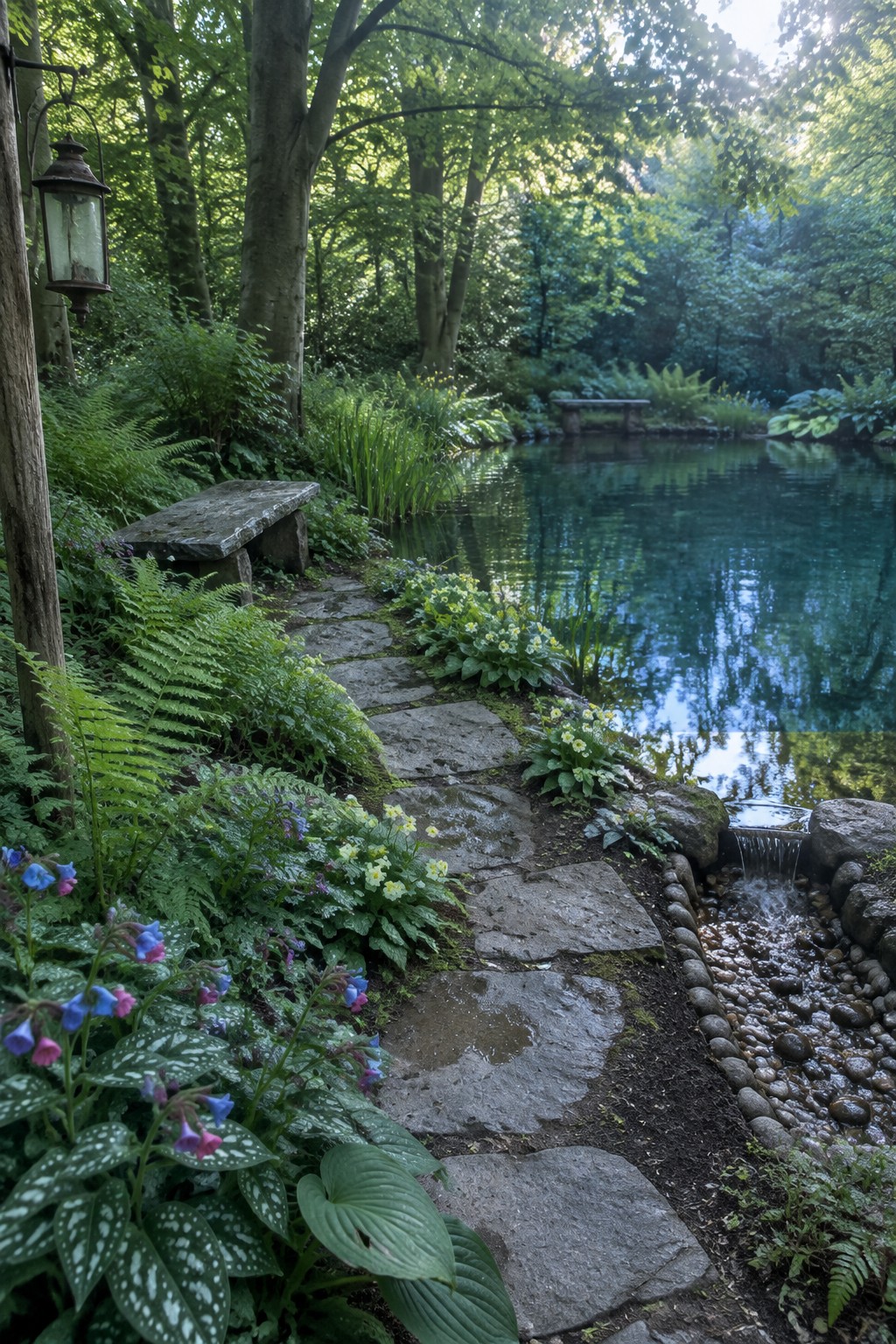
A gently curving stone path makes a pond feel like part of the garden rather than a separate feature. It also gives you a practical route through dense planting without needing to widen the whole shoreline.
Use irregular stepping stones and leave enough room between them for plants to grow along the edges. This approach suits a cottage-style garden, but keep the stones stable and fairly level where the path gets damp.
Let the Pond Sit Within a Flower Garden
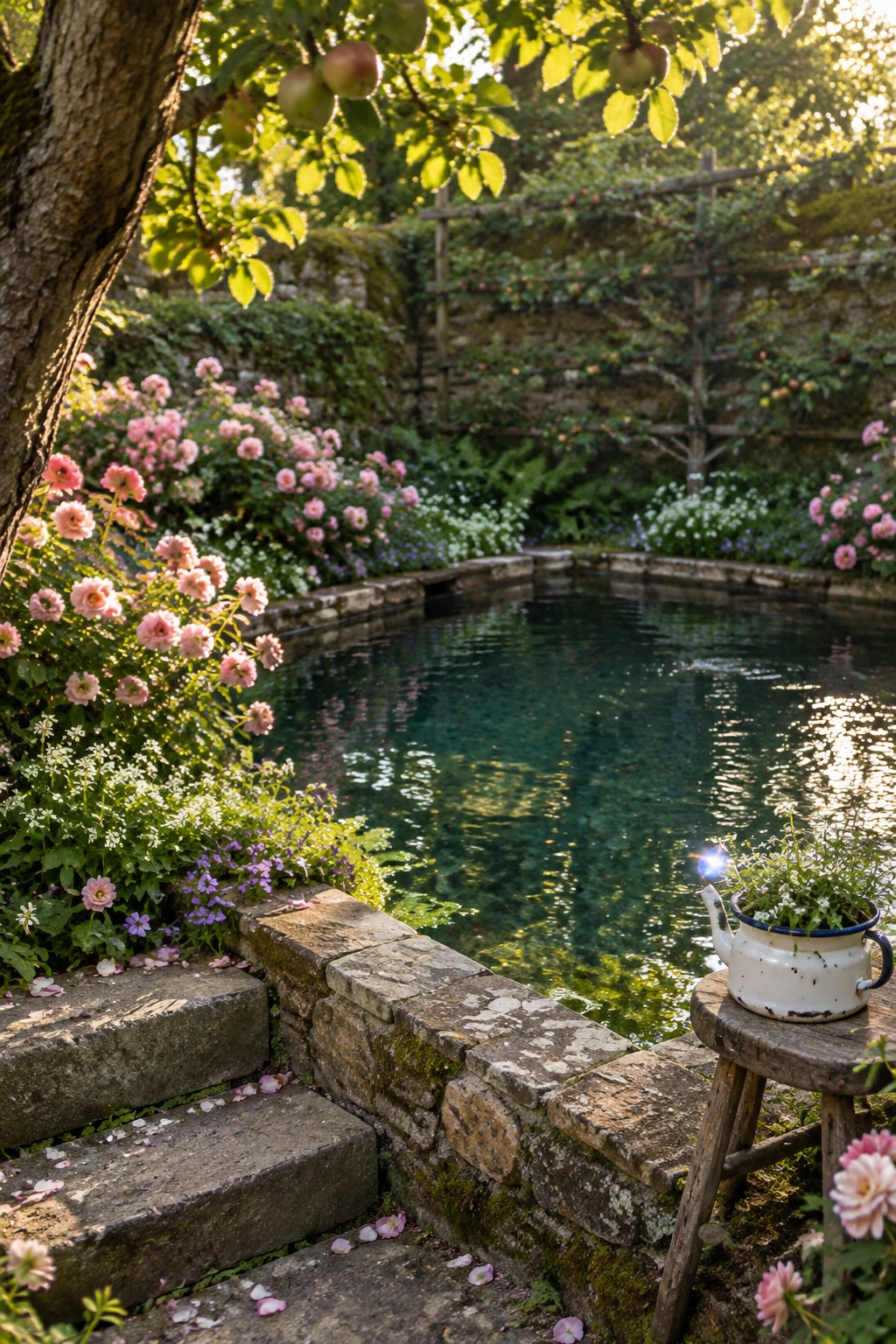
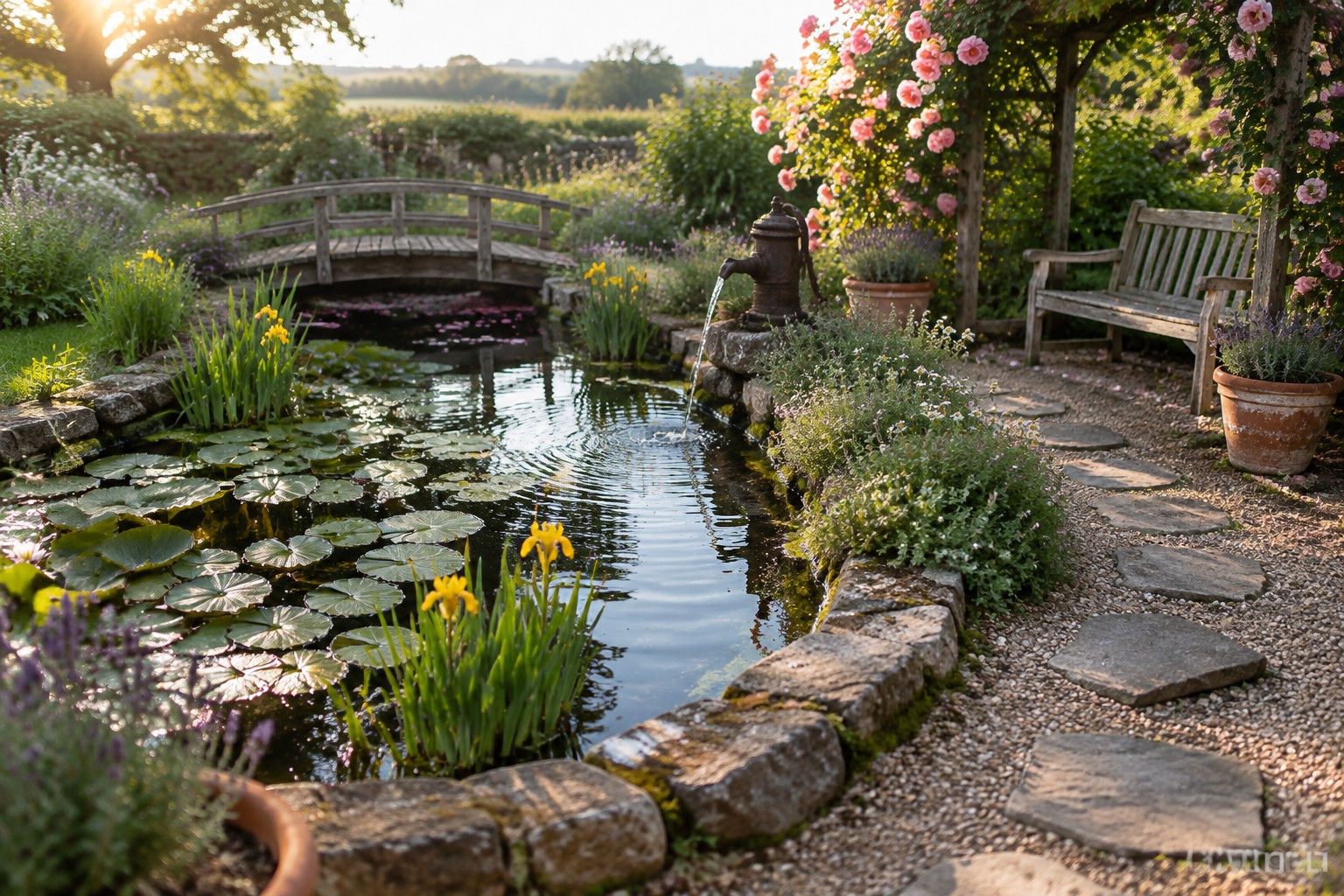
A swimming pond can feel like part of the garden when flower beds meet its stone edge instead of stopping at a separate border. Pink flowers beside the water make the pond feel settled into the planting, rather than added later.
Keep the flowers in generous groups and leave enough clear space around the edge for easy access and upkeep. This approach suits a cottage-style garden, but avoid planting so densely that leaves and petals collect in the water.
Add a Shaded Sitting Area Beside the Pond

A shady place to sit makes a swimming pond feel like part of the garden, not just a spot for a quick dip. A simple pergola can give the seating area a little shelter while still letting the pond stay in view.
Place a lounge chair or bench on a small deck beside the water, where it is easy to reach but leaves room to move around the pond. Keep the structure open and use climbing plants for shade, so the area stays connected to the garden.
Use a Pebble Path to Shape the Garden
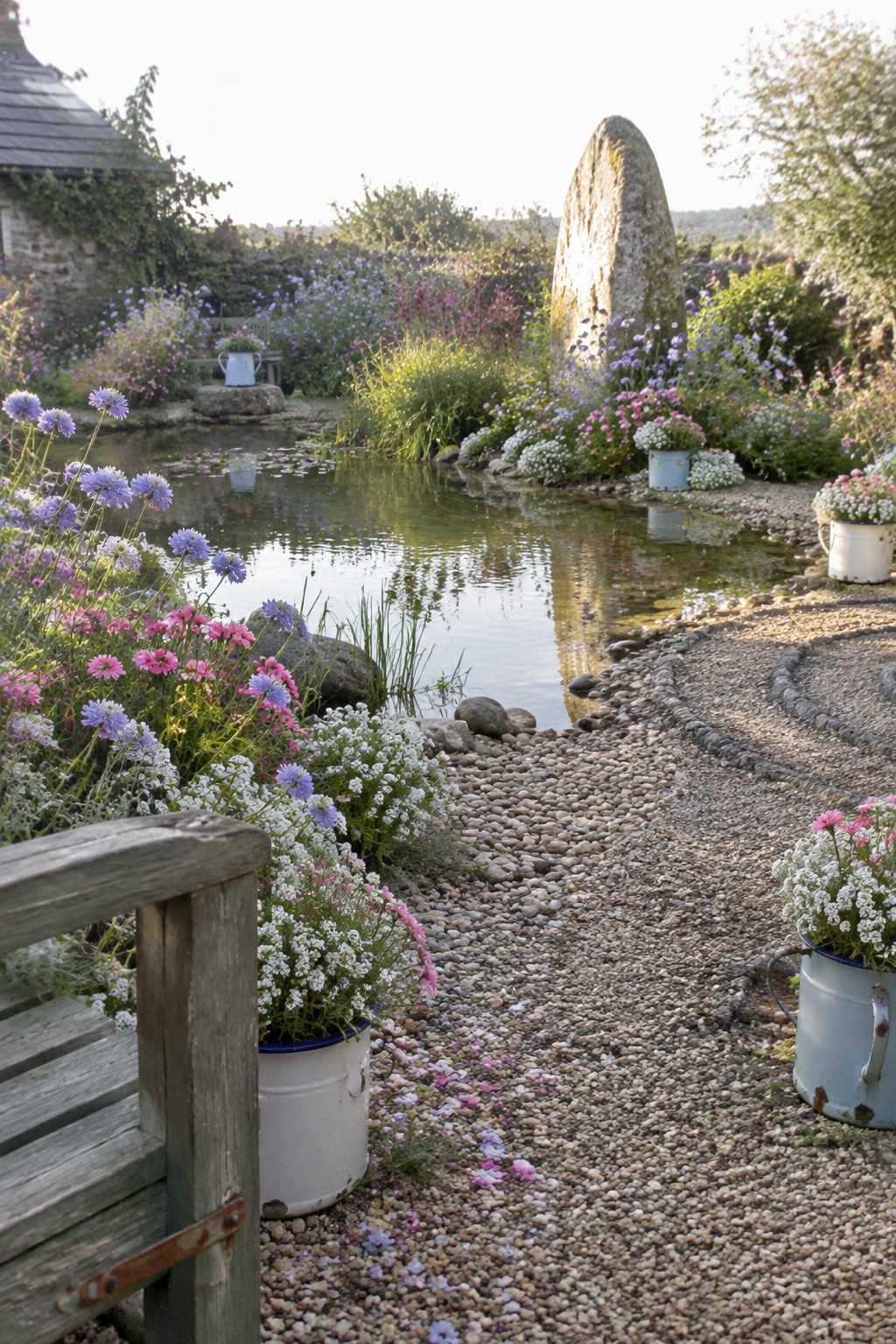
A curving pebble path can give a cottage garden pond a clear route through the planting without making the garden feel too formal. The rounded stones suit the pond’s natural edge, while flower pots and low blooms help the path feel part of the garden.
This approach works well in a small garden where a broad paved walkway would take up too much room. Choose pebbles that are comfortable to walk on, and keep the surface fairly level, especially near the water.
Frequently Asked Questions
Q: Can I keep a swimming pond clear without using chlorine?
A: Yes. A planted regeneration area with gravel and aquatic plants helps filter the water naturally. Keep leaves and debris out, and make sure the pond has enough circulation so the water doesn’t become stagnant.
Q: How much space do I need for a cottage-style swimming pond?
A: You can make the idea work in a modest garden, but leave room for both a swimming area and plants that help clean the water. A simple, compact shape is often easier to fit than a pond with lots of curves and inlets.
Q: Which flowers can grow near the pond without getting in the way?
A: Choose moisture-loving flowers for the damp edges, and plant them far enough back that they won’t spill into the swimming area. Keep taller plants where they won’t block your view or make it tricky to get in and out.
Q: Is it safe to swim among the flowers and pond plants?
A: It can be, as long as you keep the main swimming zone clear and choose plants without sharp stems or irritating sap. Leave a firm, unobstructed path to the water, especially if children or older adults will use the pond.