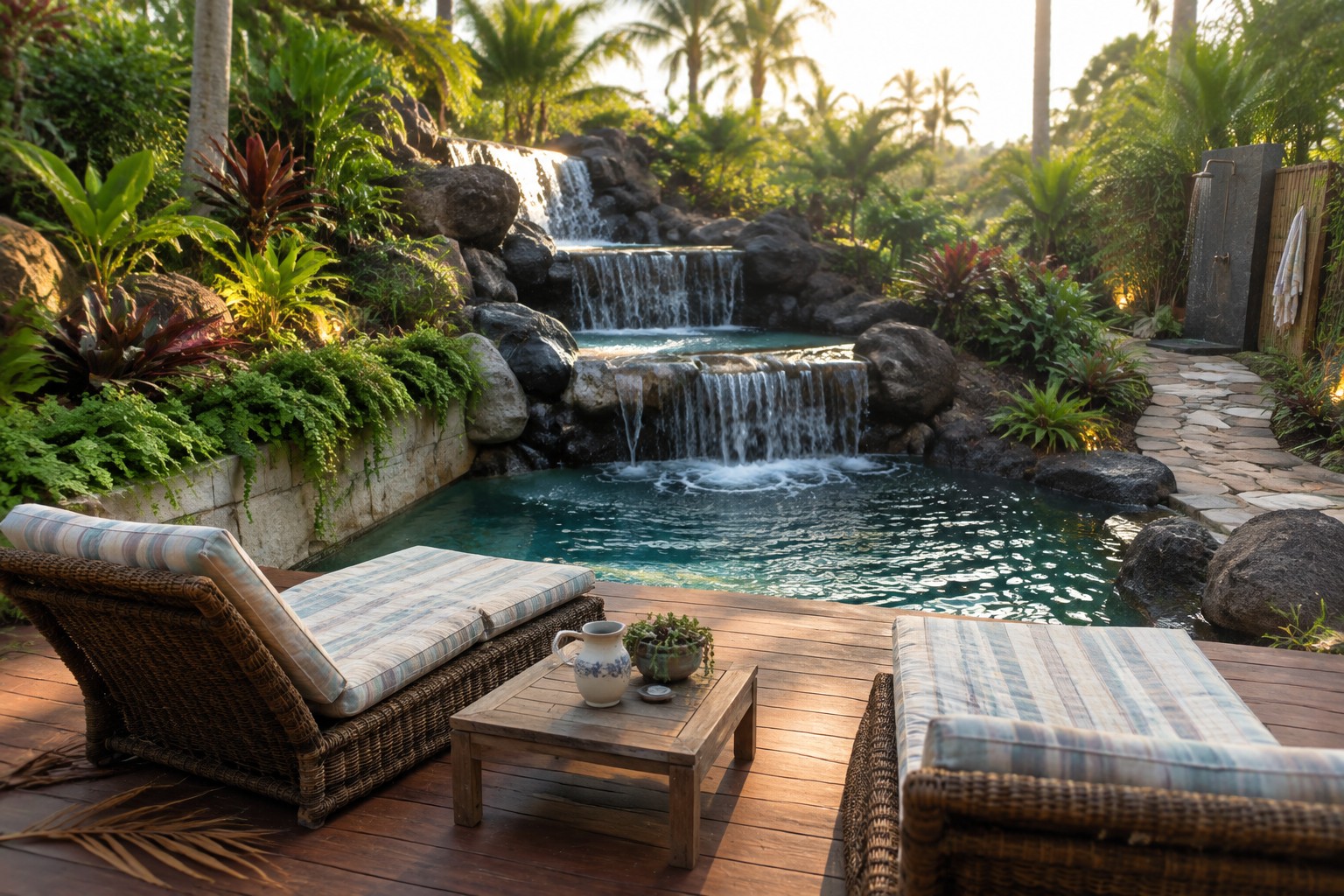
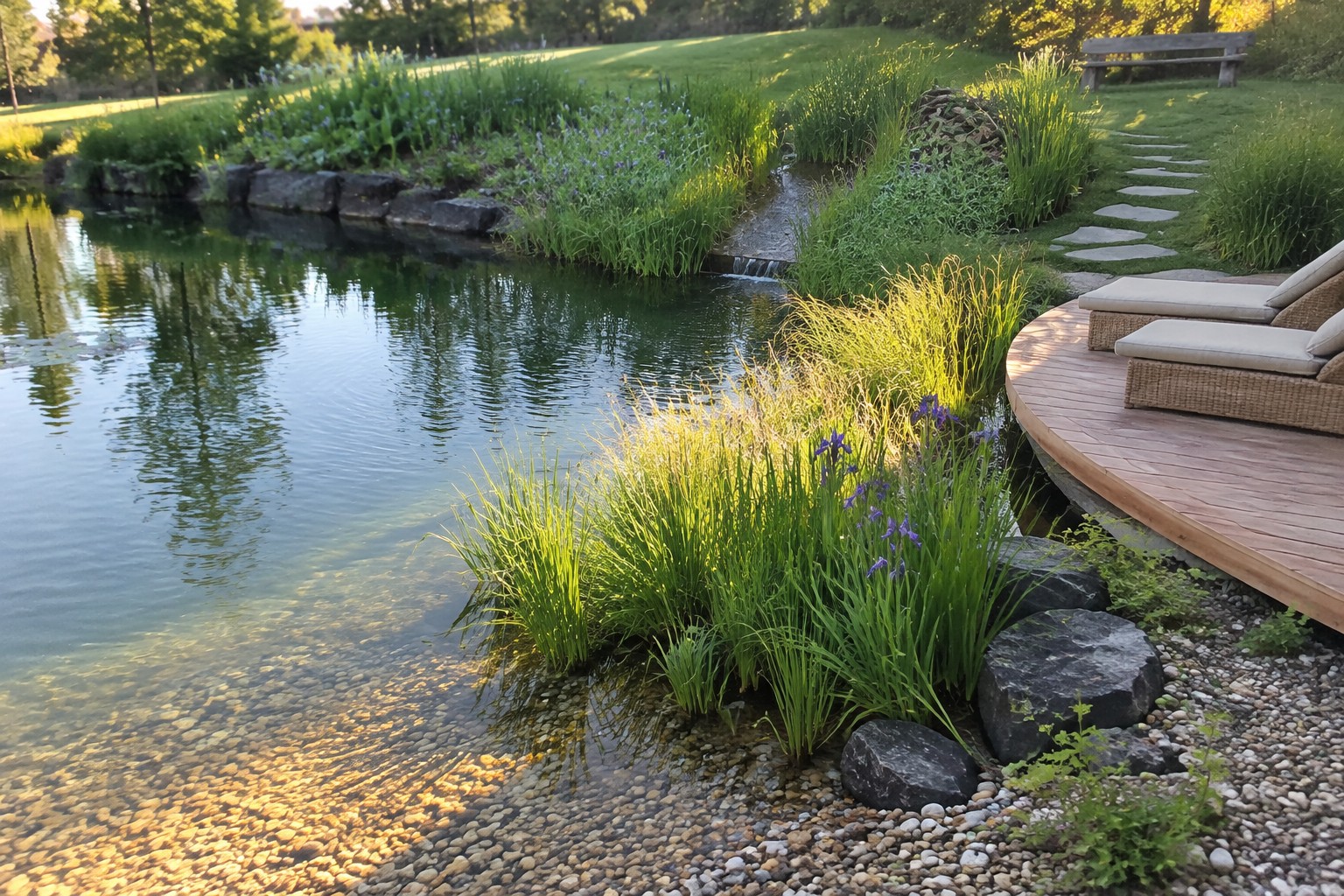
A pool can feel like part of the landscape when its edges echo the stone and contours around it.
I find that rock coping makes the biggest difference when its texture suits the setting and the edge is still comfortable to walk along.
The surrounding deck, planting, and shape of the pool all affect whether the stone looks settled in or out of place.
Some designs lean into rugged boulders, while others use smaller stones for a more restrained transition between water and yard.
I’d save the ideas that balance character with practical details, then adapt the stone size and layout to the space at home.
Use Rock Coping Along a Narrow Pool

Rock coping gives a narrow pool a clear edge and a more natural look than a smooth, uniform border. Here, the irregular stones sit beside broad, simple paving, so the pool still feels tidy without losing that natural detail.
This approach works well in a long, compact pool area where a defined edge helps organize the space. Choose stones with a comfortable, fairly even top surface, and check that they are securely set around the water.
Use Stone Coping to Shape the Pool Edge
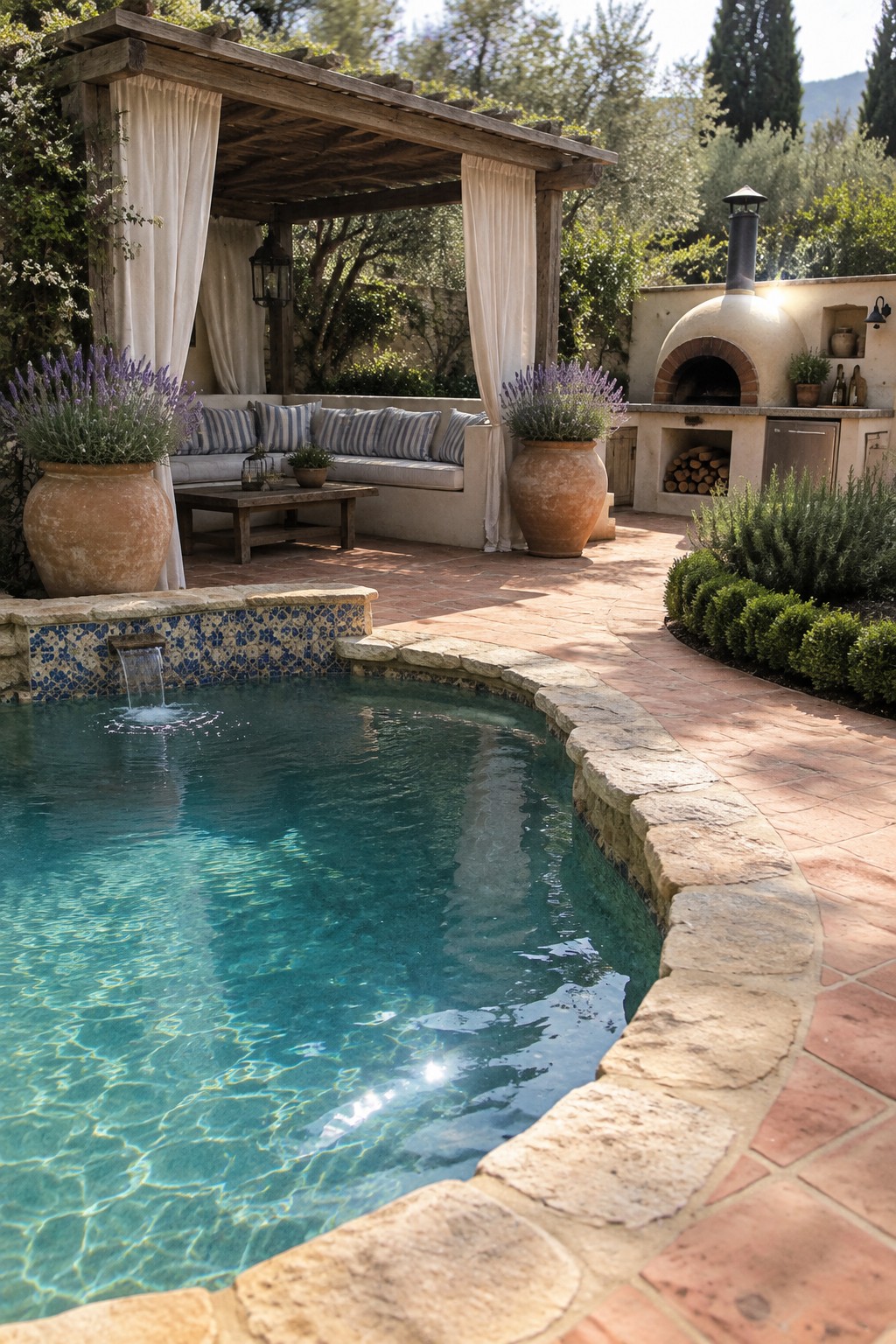
Natural stone coping gives a pool a softer, more settled edge than a straight row of manufactured pavers. The irregular pieces follow the curved outline here, making the border feel like part of the patio rather than a separate trim.
This approach works especially well on pools with freeform shapes. Choose stones with comfortable, fairly even tops so they’re pleasant to sit on and safe to walk across, and keep the joints tidy to limit weed growth.
Use Rock Coping To Define The Pool Edge

Rock coping gives a pool a substantial, natural-looking border and helps it sit comfortably within a stone patio. The irregular texture feels less formal than a smooth, uniform edge, while still clearly marking where the paving ends and the water begins.
For a similar look, choose coping stones that suit the patio in color but have enough variation to keep the edge distinct. Make sure the stones are properly set and finished for wet, bare feet, since rough surfaces can be uncomfortable around a pool.
Use Rock Coping To Shape Poolside Seating

Rock coping can make a pool feel like part of the surrounding landscape while also giving its edge a sturdy, natural finish. Here, the irregular stone border curves around a sunken seating area, making the pool and lounge space feel connected.
This approach works well when you want a poolside spot for both relaxing and gathering. Use stones with fairly level tops for comfortable seating nearby, and keep the coping carefully fitted so the uneven edges do not create tripping spots.
Create a Poolside Dining Area

A poolside dining area makes it easy to move from swimming to a relaxed meal without leaving the patio. Keeping the table close to the outdoor kitchen is practical, and the stone coping helps mark the pool’s edge beside the paved space.
For a similar setup, leave enough room around the table for chairs to slide out and for people to pass comfortably. It works well on a roomy patio, especially when the dining spot has shade nearby.
Use Stone Coping Around a Pool Sun Shelf

Stone coping can make a shallow pool shelf feel like a natural part of the pool rather than a separate feature. Here, the pale stone edge contrasts with the dark water and tile, making the transition easy to see.
This idea works well for pools with built-in loungers or a shallow lounging area. Choose stone with a slip-resistant finish, and make sure its color and thickness suit the rest of the pool surround.
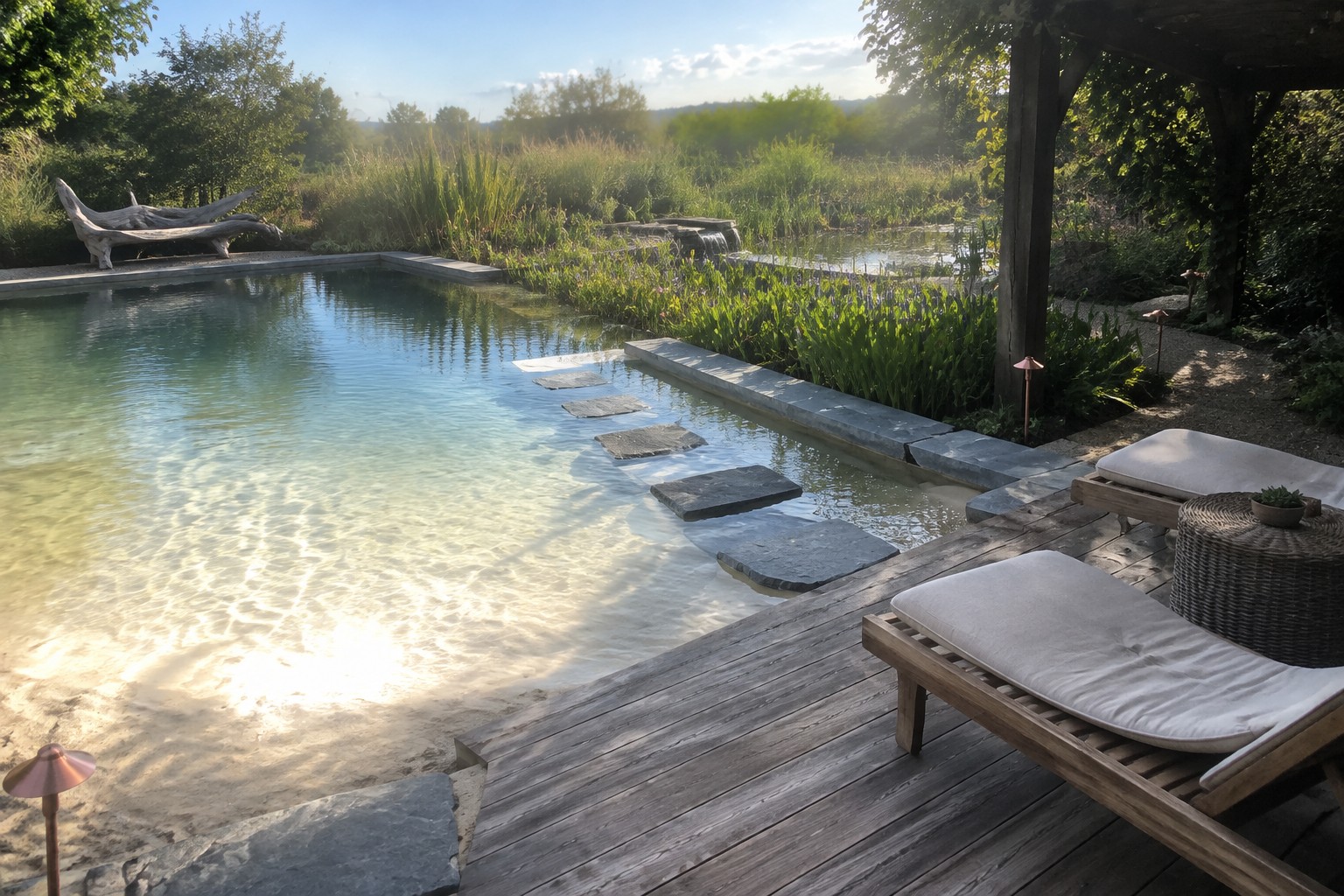
Create a Natural Poolside Path With Rock Coping

Rock coping can help a pool area feel connected to the rest of the outdoor living space. Here, the large stones trace a curved edge between the swimming pool and a shallow pond, making the change in water areas easy to follow.
This approach suits a garden pool where an informal edge feels more at home than a straight, uniform border. Keep the stones stable and the walking route clear, especially where the coping curves beside the patio.
Add a Stone Pool Border to a Garden Patio
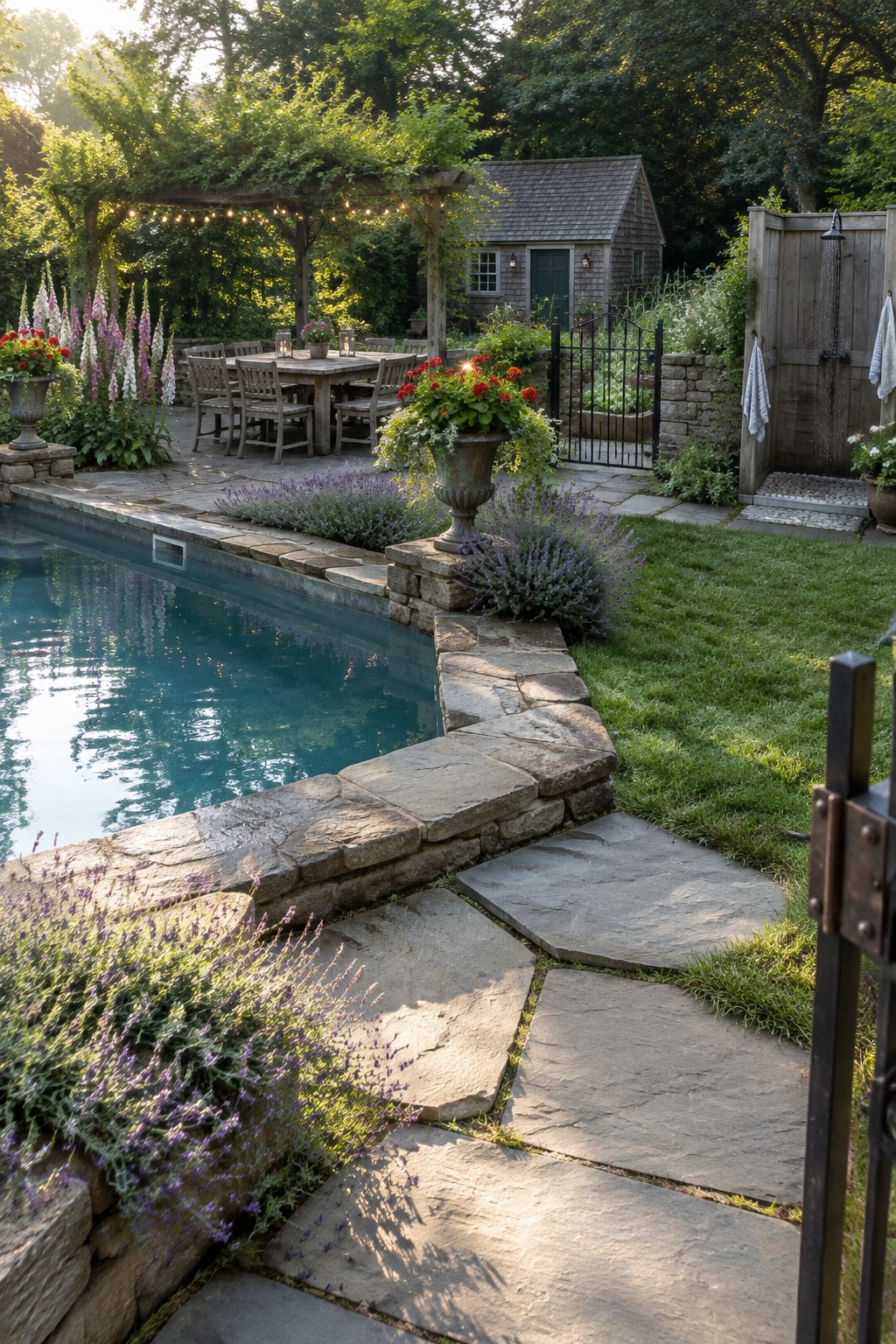
Natural stone coping can help a pool feel like part of the patio rather than a separate feature. Here, the irregular stone edge gives the water a clear border and suits the relaxed, garden-style setting.
For a similar look, choose coping stones that complement the patio paving, and keep the joints even enough for safe footing. This approach works well where a pool meets a stone terrace, though rough or uneven edges need careful placement around the water.
Create a Poolside Lounge Area

A poolside lounge works best when there’s room to sit comfortably without crowding the water’s edge. Here, the loungers sit on a broad patio beside the pool, making it easy to relax near the water while keeping the main walking area open.
For a similar setup, leave enough space behind and between loungers to move chairs or walk through. Rock coping can give the pool edge a natural finish, but keep the surrounding patio surface level and practical for wet feet.
Add a Fire Feature to a Poolside Lounge

A built-in fire feature can make a pool deck useful after swimming, giving people a comfortable place to gather and sit. Here, the long fire trough sits beside the sectional, so it warms the lounge area without taking up much floor space.
This setup works well on a spacious deck with room to keep seating a safe distance from the flame. Use stone coping around the pool to define its edge, and check local rules for fire features before installing one.
Use Rock Coping to Connect the Pool and Patio

Natural stone coping gives the pool edge a clear boundary while helping it feel like part of the patio, rather than a separate feature. Here, the irregular stone border works with the larger paved surface without making the transition look too formal.
This approach suits a pool area where people move between swimming, dining, and lounging. Choose coping with a comfortable, even top surface, and make sure its color and texture sit well alongside the patio stone.
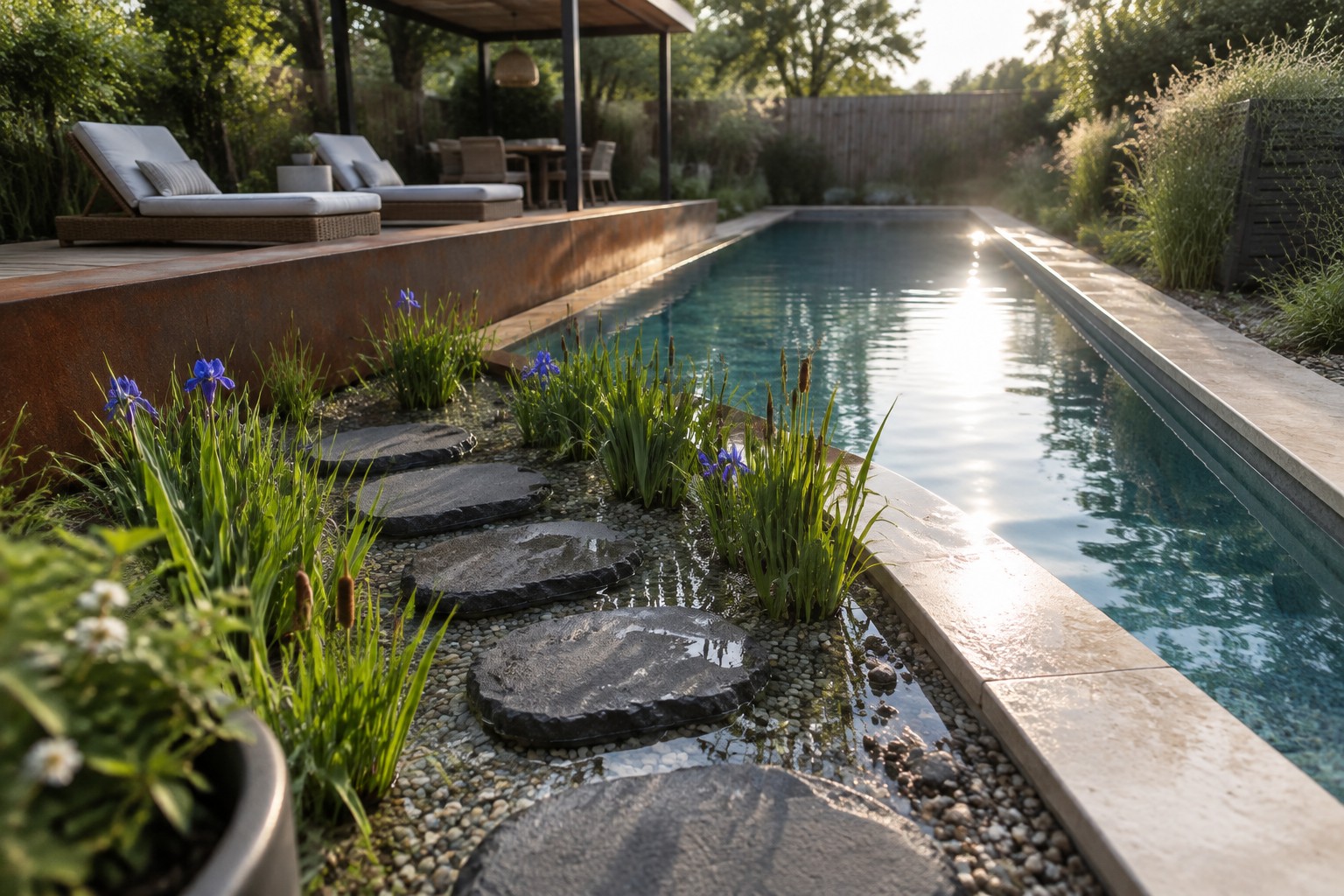
Use Dark Stone to Edge a Garden Pool

A dark stone border gives a natural pool a clear, sturdy edge while keeping the finish in step with the garden. Here, it also makes a practical boundary between the water and the gravel path.
This approach suits a tucked-away garden pool where a crisp edge helps define the walking area. Choose stone with a surface that stays secure when wet, and keep the coping wide enough to sit on or step across comfortably.
Use a Waterfall to Connect the Pool and Patio

A small spillway built into a raised stone planter gives the pool edge a useful focal point. It also lets water flow from the patio level into the pool, making the transition feel intentional rather than like a plain wall.
This works well in a modern outdoor living area where a raised planter can double as a divider. Choose coping stone that suits the planter and pool edge, and keep the spillway modest so it does not overpower the seating area.
Use Stone Coping to Link a Pool and Patio
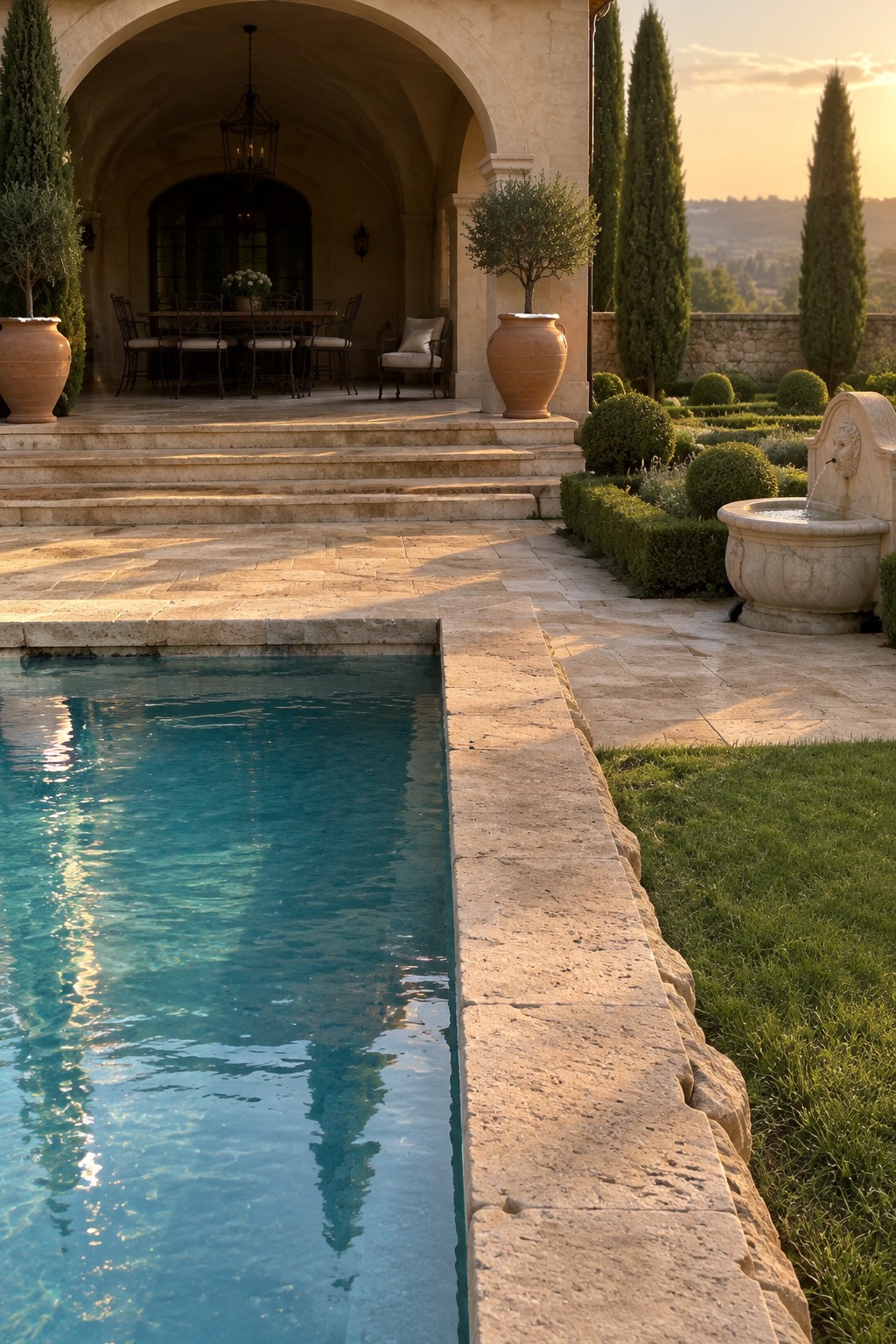
A stone pool edge can help a patio and pool feel like one connected outdoor living area. Here, the pale coping continues into the paved space, making the pool easy to approach without a separate-looking border.
This works well when the pool sits beside a terrace or dining area. Use stone that suits the patio paving, and keep the coping wide enough for a comfortable walkway. Make sure the surface is suitable for wet feet.
Use a Long Stone Divider Beside the Pool
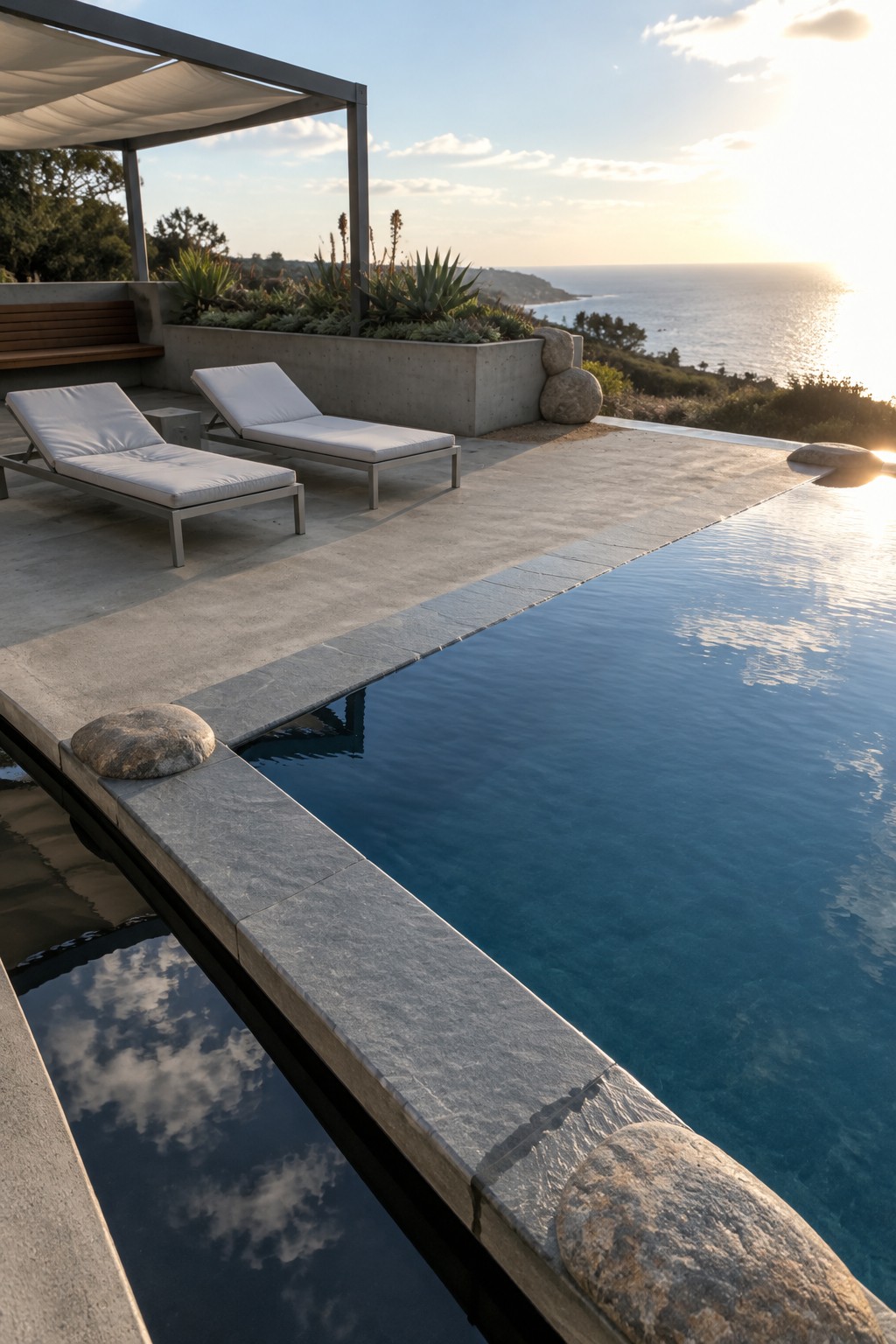
A raised strip of stone can separate a pool from a narrow water channel without breaking up the patio. Here, the straight coping gives the two water areas a clear edge and makes the layout feel intentional.
This works well in a modern outdoor space where you want distinct pool zones but still need an open path around them. Choose coping wide enough to sit on safely, and keep the surface slip-resistant.
Create a Garden Poolside Seating Nook

A small seating area beside the pool can make the space useful for more than swimming. Here, a pair of chairs and a little table sit close to the stone pool edge, making it easy to pause without taking up much room.
This setup works well in a compact garden where there is space for only a few seats. Leave a clear path around the pool, and choose outdoor chairs that can handle splashes and damp conditions.
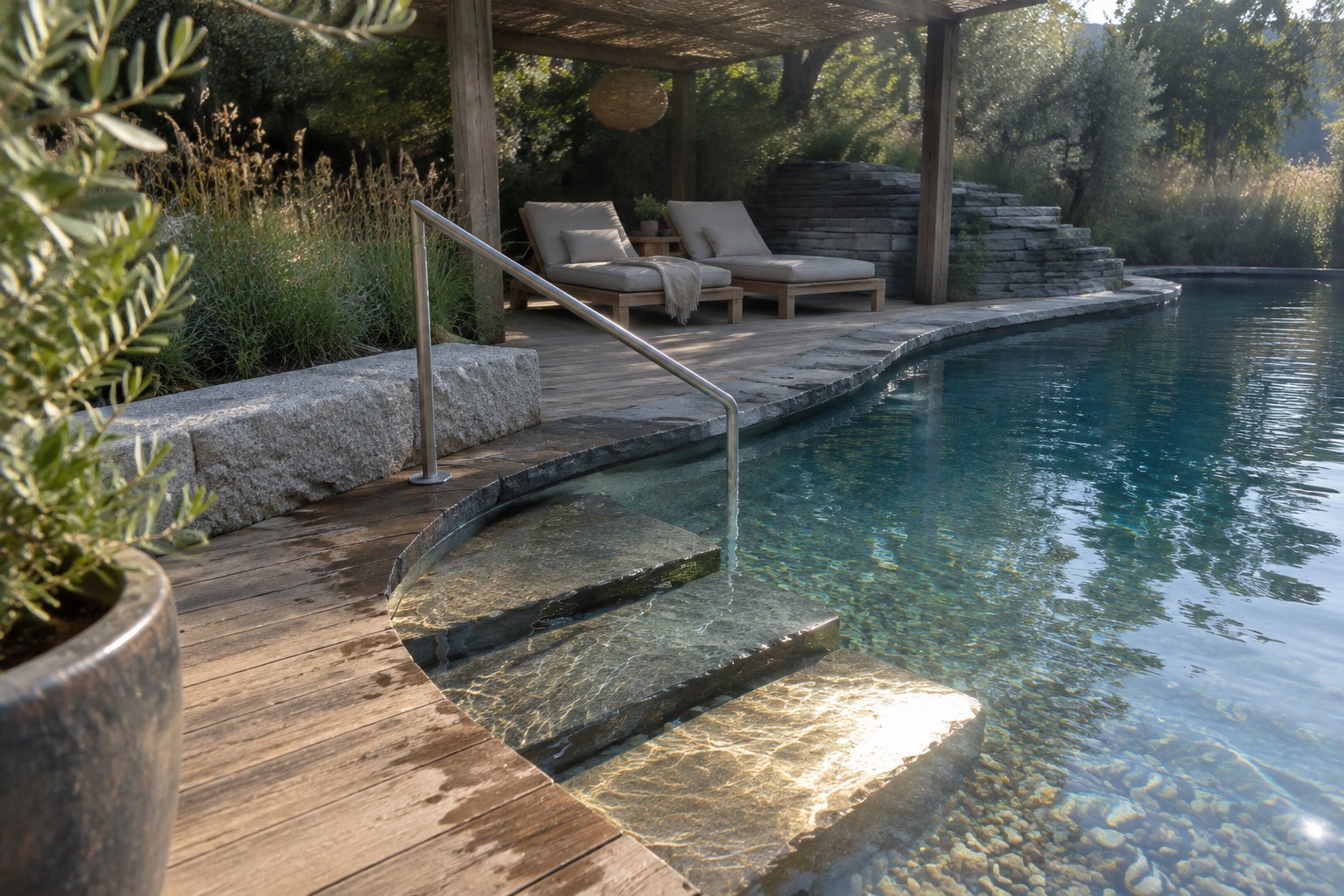
Make Pool Steps Part of the Rock Edge

Natural rock coping can do more than outline a pool. Using broad stones beside submerged steps makes the entry feel like part of the pool’s design rather than a separate feature.
This works especially well where a pool has a shallow ledge or gradual entry. Choose stones with stable, rounded surfaces, and keep them secure so they do not shift underfoot.
Use Stone Coping Along a Narrow Pool
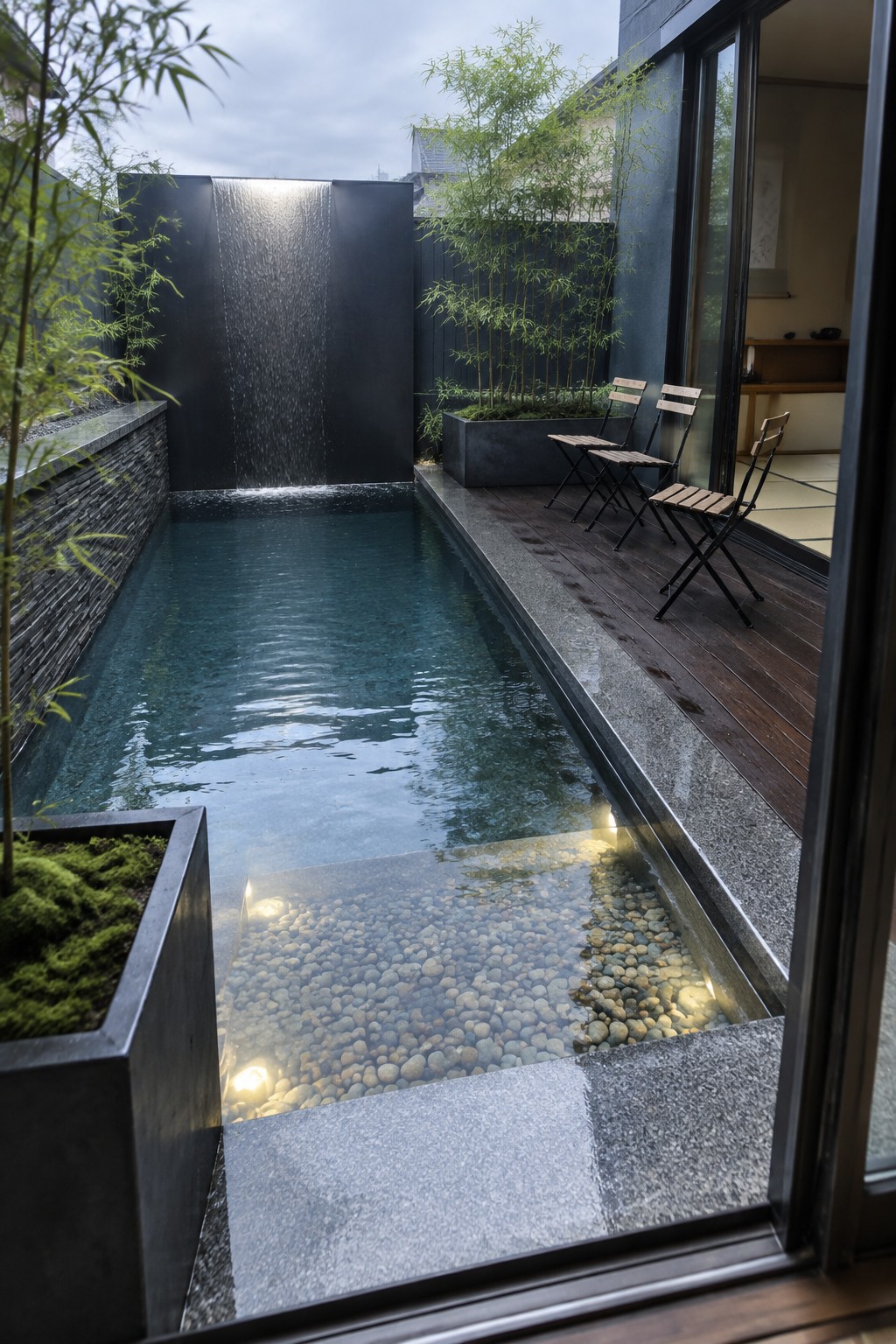
A narrow pool can feel like a useful part of the outdoor living area when its stone edge leaves room for a slim walkway or deck. Here, the coping gives a clear boundary between the water and the wood seating area without taking up much space.
For a compact courtyard, choose coping wide enough to walk on comfortably, but not so wide that it crowds the pool. A simple stone finish also suits modern homes and keeps the pool edge practical for everyday use.
Add Built-In Steps Beside a Rock-Coped Pool

Rock coping can make an infinity pool feel like part of the hillside rather than a separate feature. Here, the uneven stone edge follows the waterline and gives the pool a natural outline.
For a similar look, choose stone that suits the local landscape, and keep the pool edge comfortable to walk on. Broad steps nearby can make changes in patio level easier to manage.
Use Rock Coping to Finish a Narrow Pool

Natural stone coping gives a narrow pool a clear, finished edge while keeping the surrounding surface practical for walking. The stone’s varied texture also suits a garden-style pool better than a uniform manufactured border.
For a similar setup, choose coping that feels comfortable underfoot and has a slip-resistant finish. A consistent width helps the pool edge look tidy, especially where the deck is narrow. The large rock at one end adds character, but keep the main walking route open.
Use Natural Stone Coping Around the Pool

A broad stone edge gives a pool a finished border and makes it feel connected to the surrounding patio. Here, the rough-cut coping suits the garden setting and provides a clear boundary between the water and the gravel seating area.
This approach works well when you want the pool edge to feel like part of the yard rather than a separate feature. Choose stones with a comfortable, fairly even top surface, and keep the joints neat so the edge is practical to walk along.
Use Rock Coping to Shape a Poolside Lounge

Rock coping gives this pool a clear edge while making the nearby seating area feel connected to the water. The rough stone contrasts with the smooth pool tiles and paved deck, so the border feels like part of the design rather than just a finish.
This approach works well when a pool sits beside a patio or outdoor lounge. Keep the coping wide enough to define the edge, but choose a comfortable, even surface where people will walk or sit nearby.
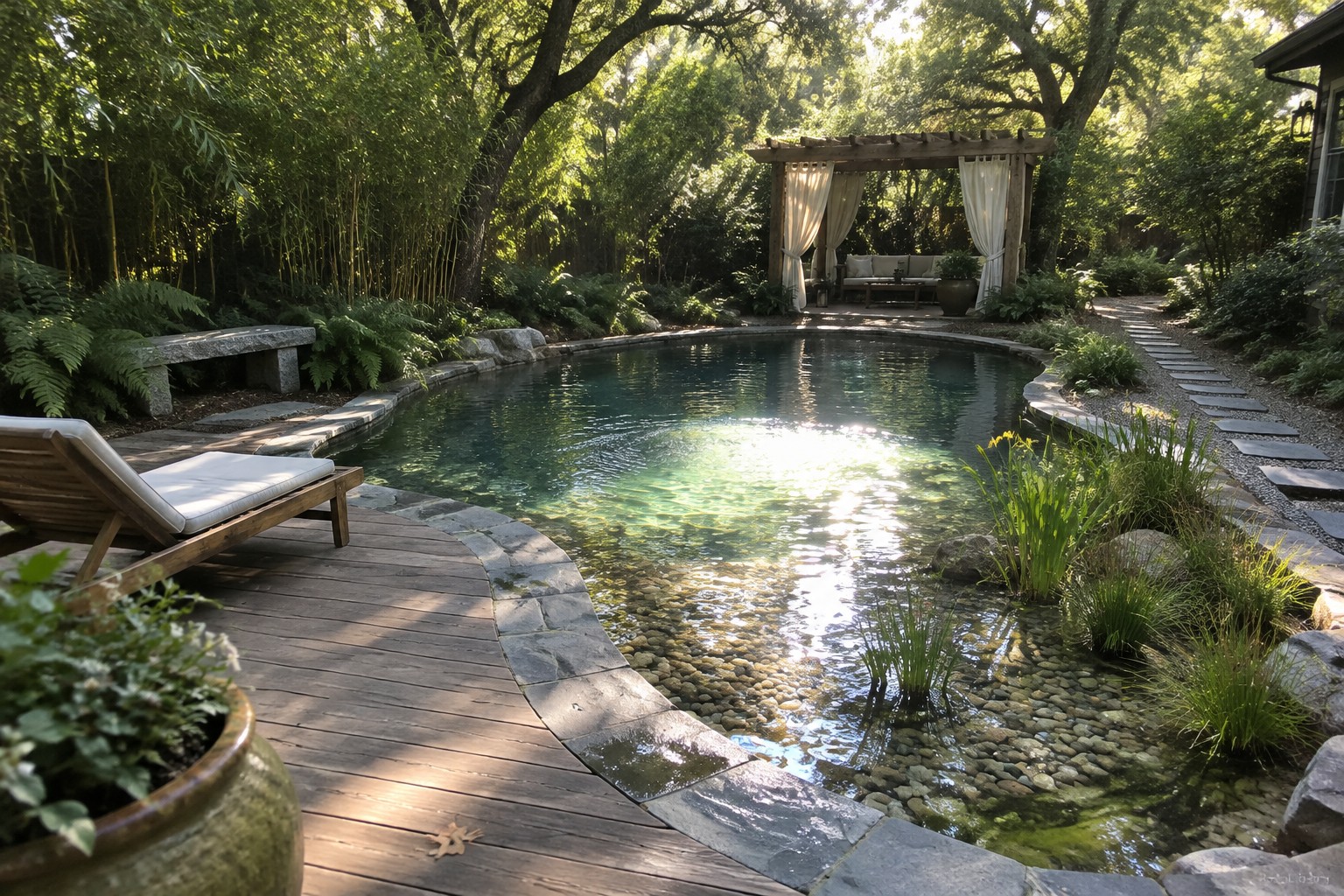
Use Rounded Rock Coping for a Natural Pool Edge
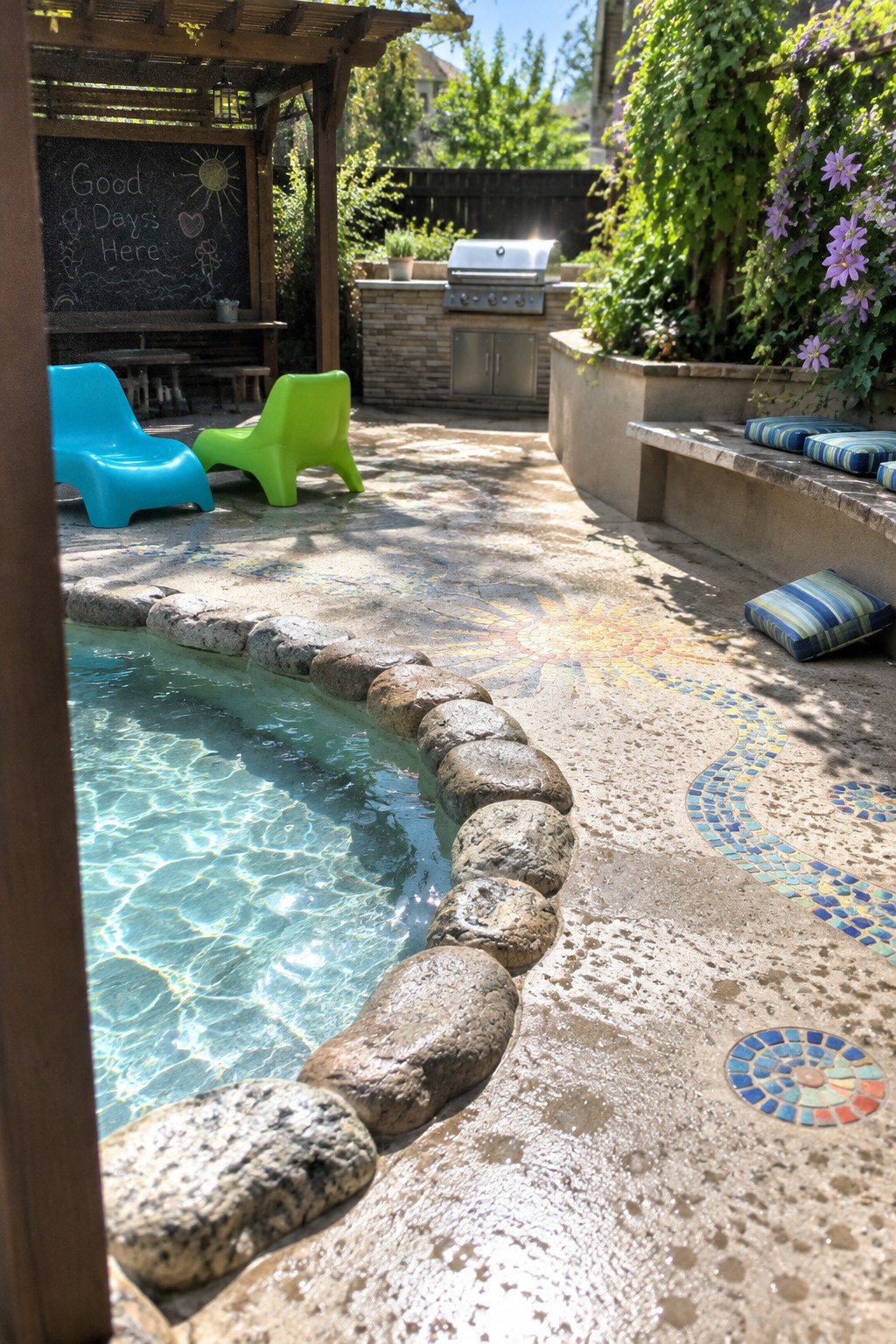
Rounded stones make a pool edge feel less formal than a straight, uniform border. Their varied shapes give the waterline a hand-built look, while the stone still provides a clear boundary between the pool and patio.
This approach suits a garden pool where a softer edge feels at home. Choose stones with stable, fairly even tops, and set them securely so they’re comfortable to walk beside and don’t shift over time.
Use Rock Coping to Shape a Poolside Lounge

A curved stone pool edge can help a lounge area feel connected to the water rather than set apart from it. The irregular coping also suits a relaxed outdoor space better than a sharp, formal border.
For a similar setup, keep seating close to the pool and leave enough clear deck space to walk around it safely. Choose stone with a surface that stays practical when wet, and make sure the curves do not create awkward narrow spots.
Frequently Asked Questions
Q: Is natural stone coping too rough to walk on barefoot?
A: Not necessarily. Choose stone with a naturally textured but fairly smooth surface, and avoid sharp, jagged edges around the pool. A sample is worth touching before you commit.
Q: Will rock coping get slippery when it’s wet?
A: Some stones become slicker than others, especially if they have a polished finish. Look for a slip-resistant surface, and keep leaves and algae from building up along the edge.
Q: How do I keep the stone from looking grimy?
A: Sweep or rinse it regularly, and clean spills before they soak in. A sealer made for your specific stone can help with stains, but it won’t replace routine cleaning.
Q: Can I use irregular rocks for the coping?
A: Yes, but make sure the stones sit securely and have a comfortable, even edge where people enter and leave the pool. Irregular rock can look striking, though a wobbly coping stone is a safety problem.