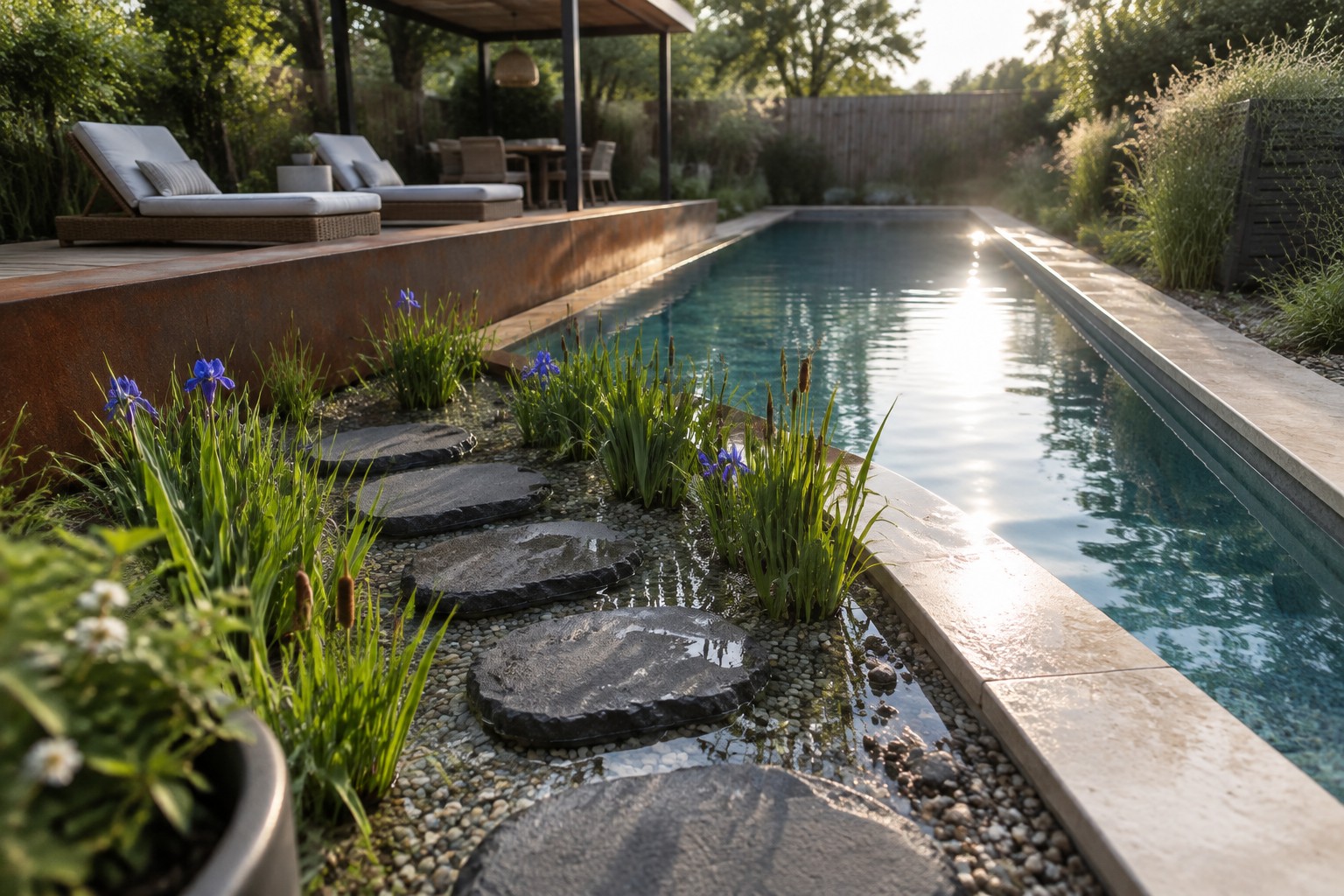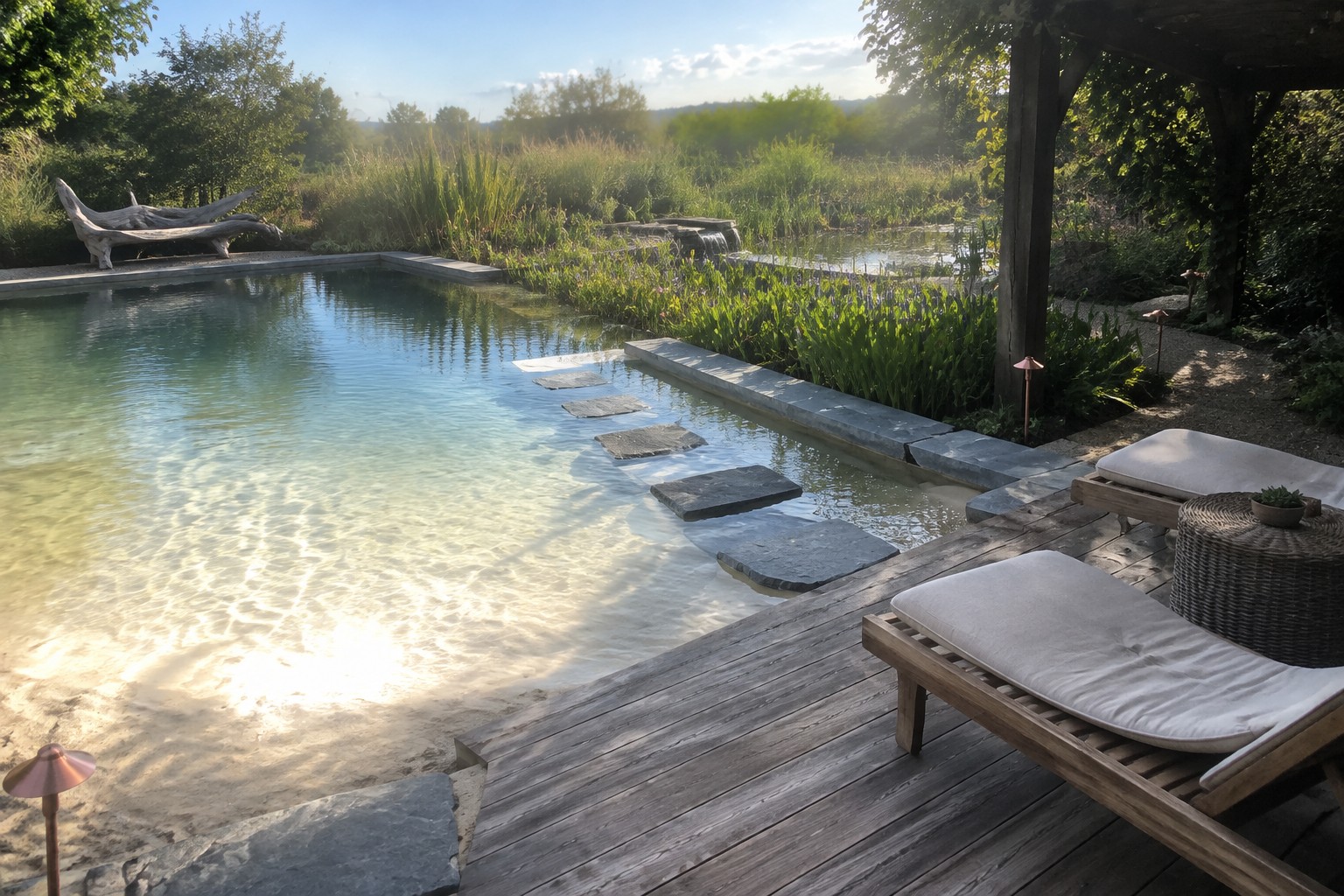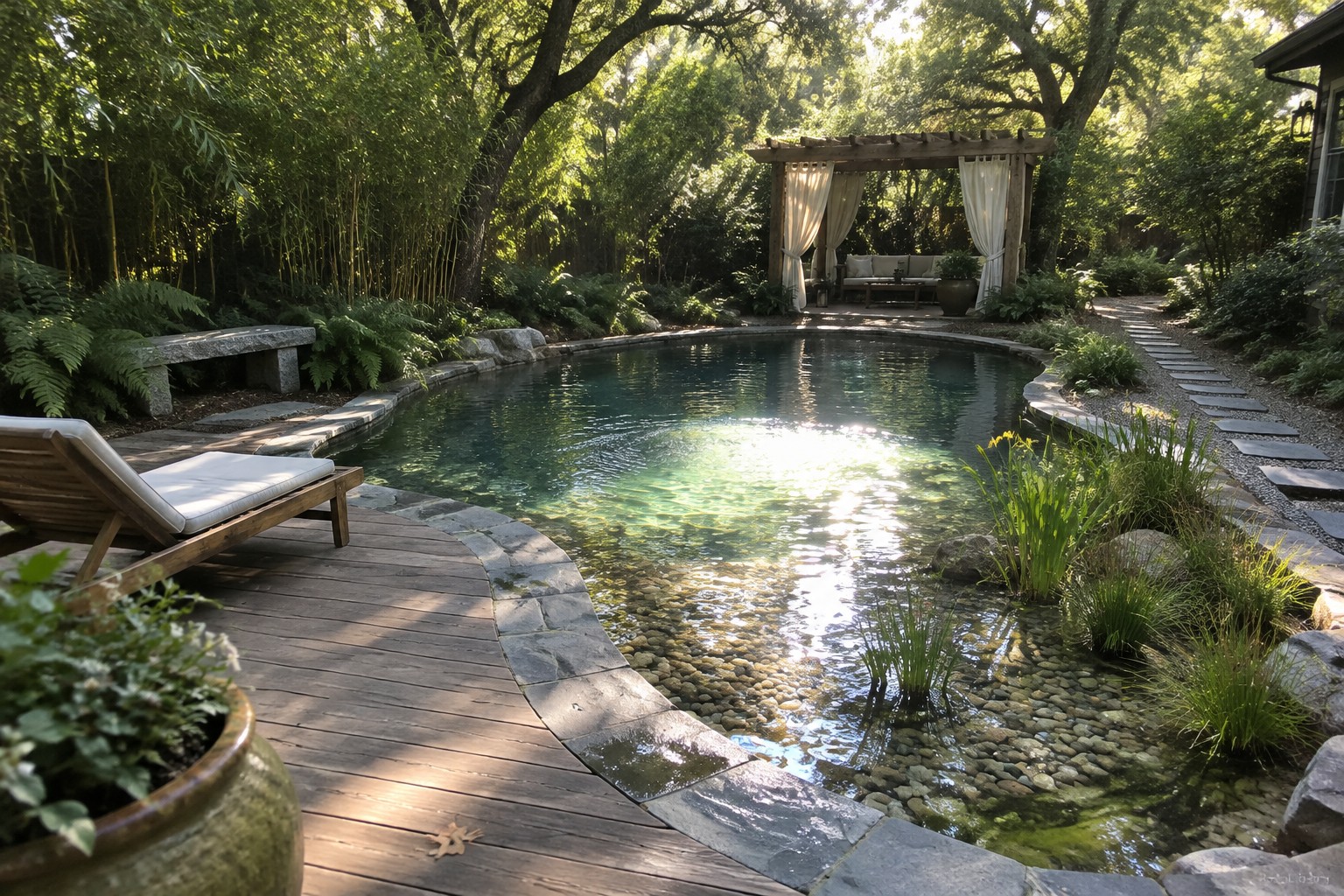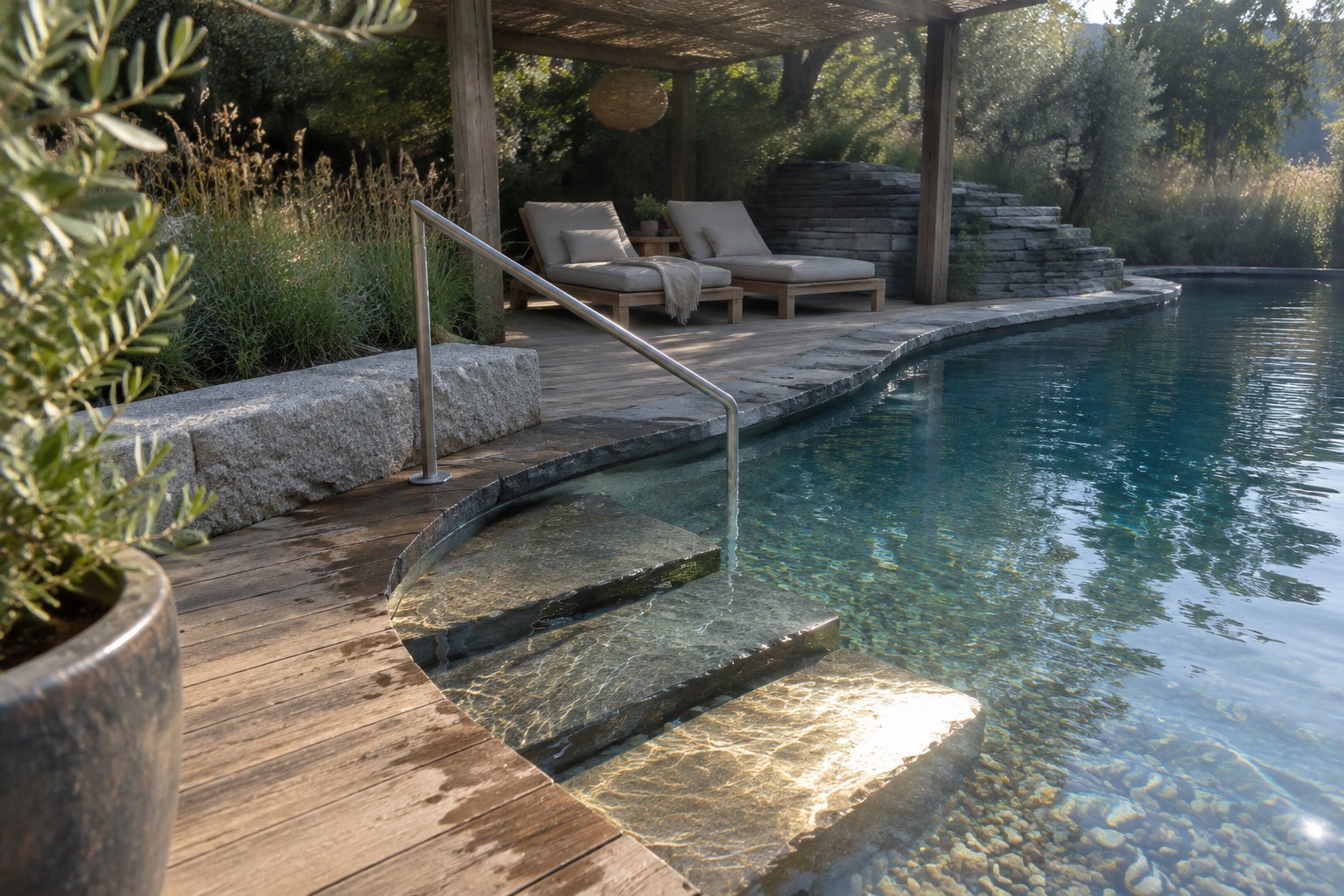
A rectangular natural pool can bring a welcome sense of order to a garden, but its straight edges need planting to keep the setting from feeling too stark.
I find the best layouts balance clear lines with softer layers of grasses, shrubs, and flowers that can grow into the space over time.
Paths and edging matter too, since they shape how you approach the water and how easily you move around it.
Some planting schemes create a quiet, simple frame, while others bring more shade, texture, and privacy.
I’d save the ideas that suit your yard’s light and size, then adapt the spacing and plant choices to what will thrive there.
Add a Waterfall To A Rectangular Pool

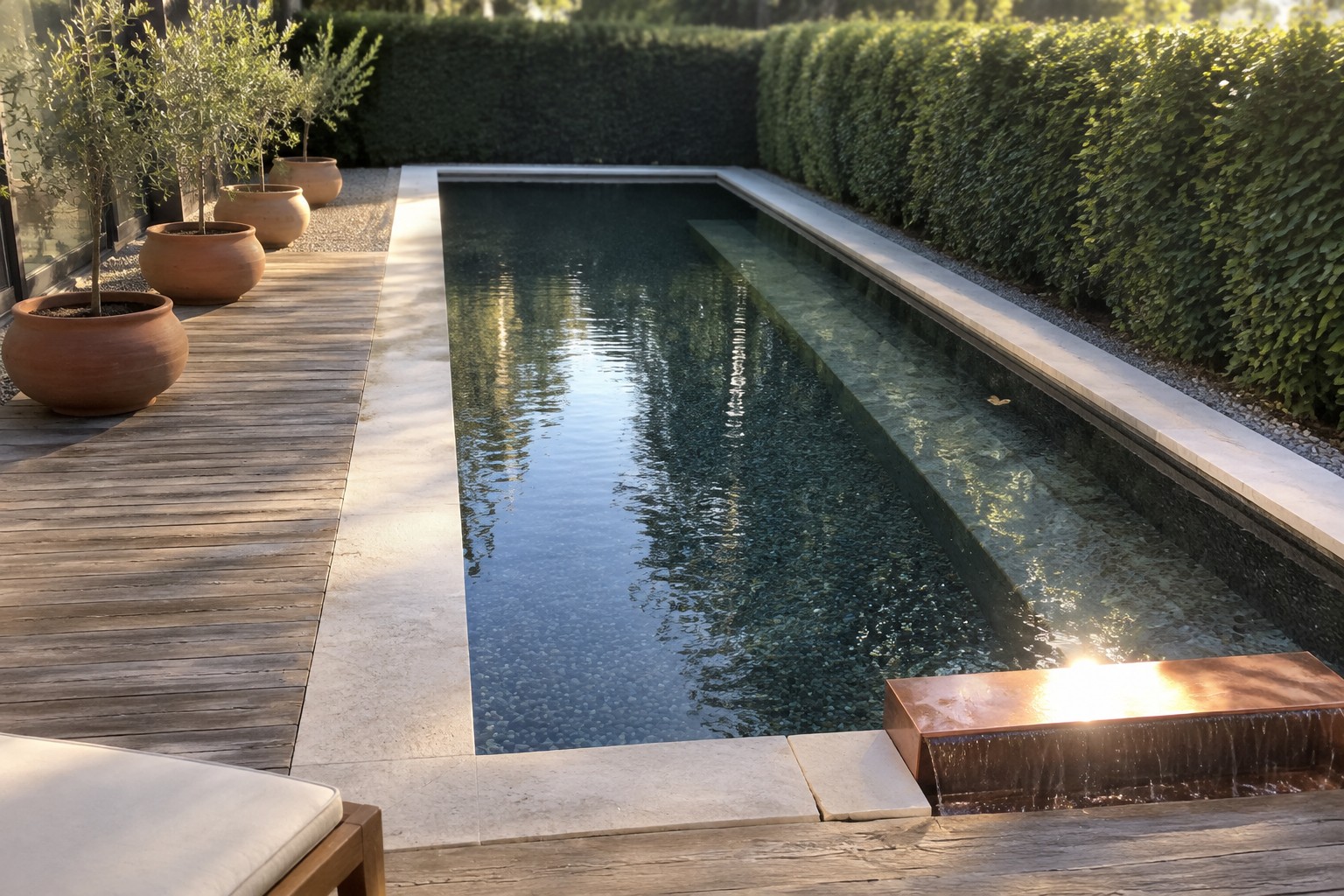
A simple waterfall at one end of a rectangular pool gives the water a clear focal point without changing the clean shape of the pool. A copper-toned spillway is one option, and the steady sheet of water adds a gentle sound to the patio.
Place the feature where it can be seen from nearby seating, and keep its size in proportion to the pool. A restrained design suits a narrow garden especially well, where extra decoration could make the space feel crowded.
Keep a Rectangular Pool Narrow

A long, narrow pool can fit neatly alongside a house, leaving room for a walkway and planting beds without taking over the yard. Its straight edges also give the garden a clear shape, while grasses and clipped shrubs bring some softness along the sides.
This layout works well in a courtyard or a narrow side yard. Keep the planting low near the water so it does not crowd the pool, and use taller plants farther back for privacy. A simple stone edge helps keep the lines tidy.
Keep a Rectangular Pool Simple

A long, narrow pool can fit neatly into a compact courtyard and still feel like a useful place to relax. Its straight edges make the layout easy to plan, while garden planting along the side gives the pool a clear boundary without taking up much room.
For a similar setup, leave enough space along one edge for a comfortable walking path, then use a slim planting bed to soften the hardscape. Lavender and other compact plants suit this arrangement, but keep them trimmed so they do not spill into the pool or walkway.
Keep a Natural Pool Simple and Rectangular

A rectangular pool gives a garden a clear, easy-to-use shape without asking the planting to feel formal. Natural stone along the edge helps it sit comfortably among greenery, while still keeping the water area neat.
This layout works well in a narrow garden or beside a small deck. Keep the pool edges straight, then let plants soften the surrounding beds. Leave enough clear space around the water for safe access and routine cleaning.
Use Garden Planting to Shape the Pool Area

A simple rectangular pool can feel at home in a garden when planting runs close to its edges. Lush greenery makes the straight stone border feel less stark, while the clear pool shape keeps the garden from looking untidy.
Use larger leafy plants along the sides, but leave enough room to walk and maintain the pool. A narrow timber deck beside the water can provide a practical place for loungers without interrupting the pool’s clean outline.
Set Up a Rectangular Pool as Part of the Patio

A pool works well when it feels connected to the area around it, rather than set apart from the rest of the yard. Here, the pale stone paving runs right up to the pool, making a clear, usable space for lounging.
For a similar layout, leave enough room along the pool edge for chairs and walking, and use planting beyond the paving to mark the transition to the garden. This approach suits patios where people want to swim and relax without crowding the pool.
Create a Stone-Edged Pool Seating Area

A natural pool can work as the center of an outdoor sitting area, rather than feeling separate from it. A low stone edge makes room for built-in seating close to the water, so the space is easy to use for a quiet break or a small gathering.
This layout suits a garden where there is room to curve the seating around one side of the pool. Keep the sitting surface broad enough for cushions, and leave a clear path to the water so people can move through without squeezing past the seats.
Add a Fire Pit at the End of the Pool
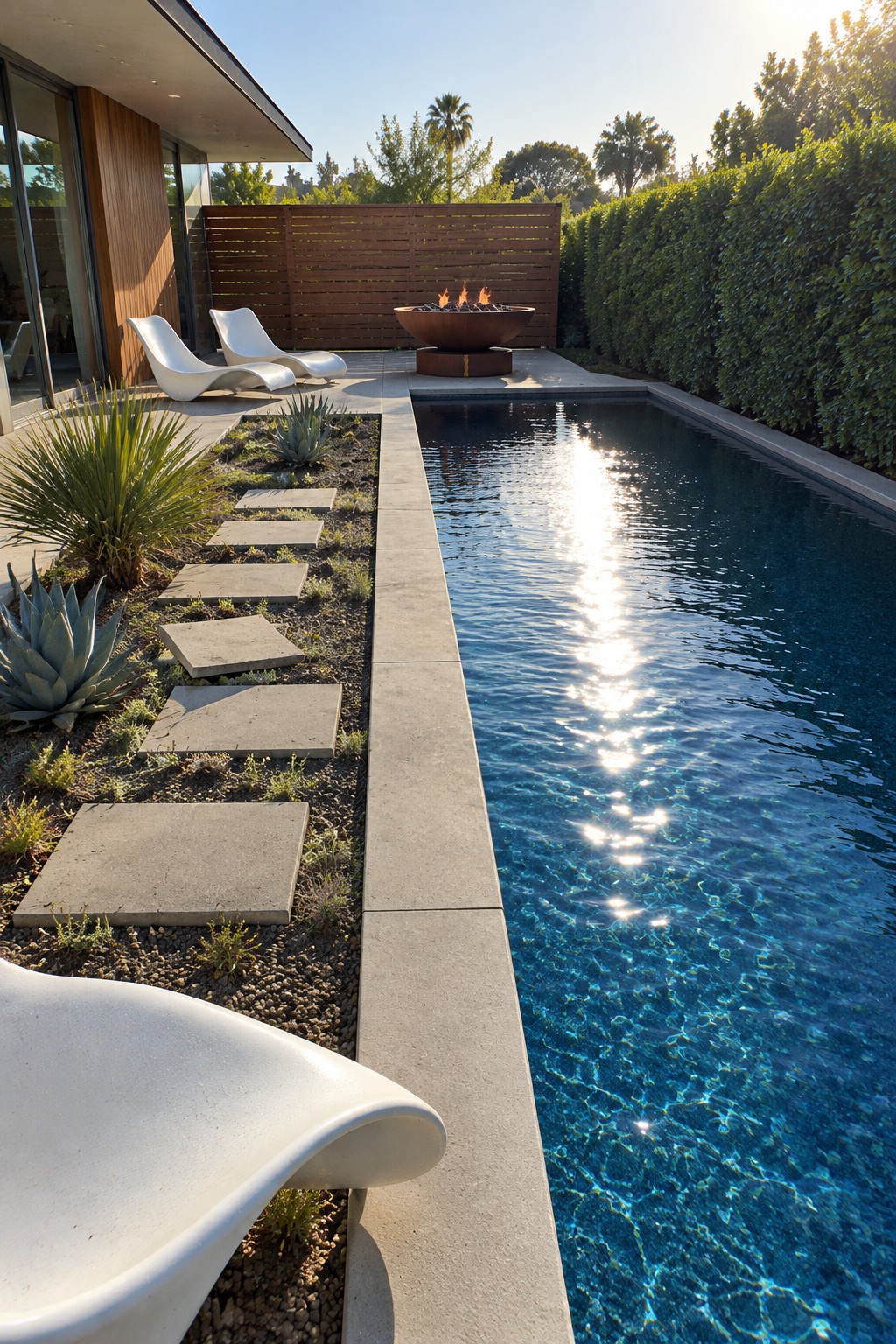
A fire pit at one end of a rectangular pool gives the outdoor space a useful spot for relaxing when no one is swimming. It also makes the pool feel connected to the seating area rather than like a feature on its own.
Keep the fire pit on a firm, non-slip surface and leave enough room around it for chairs and safe movement. This layout suits a long, narrow yard, but check local fire rules and keep flames well away from hedges and other planting.
Use a Reflecting Pool as a Garden Path
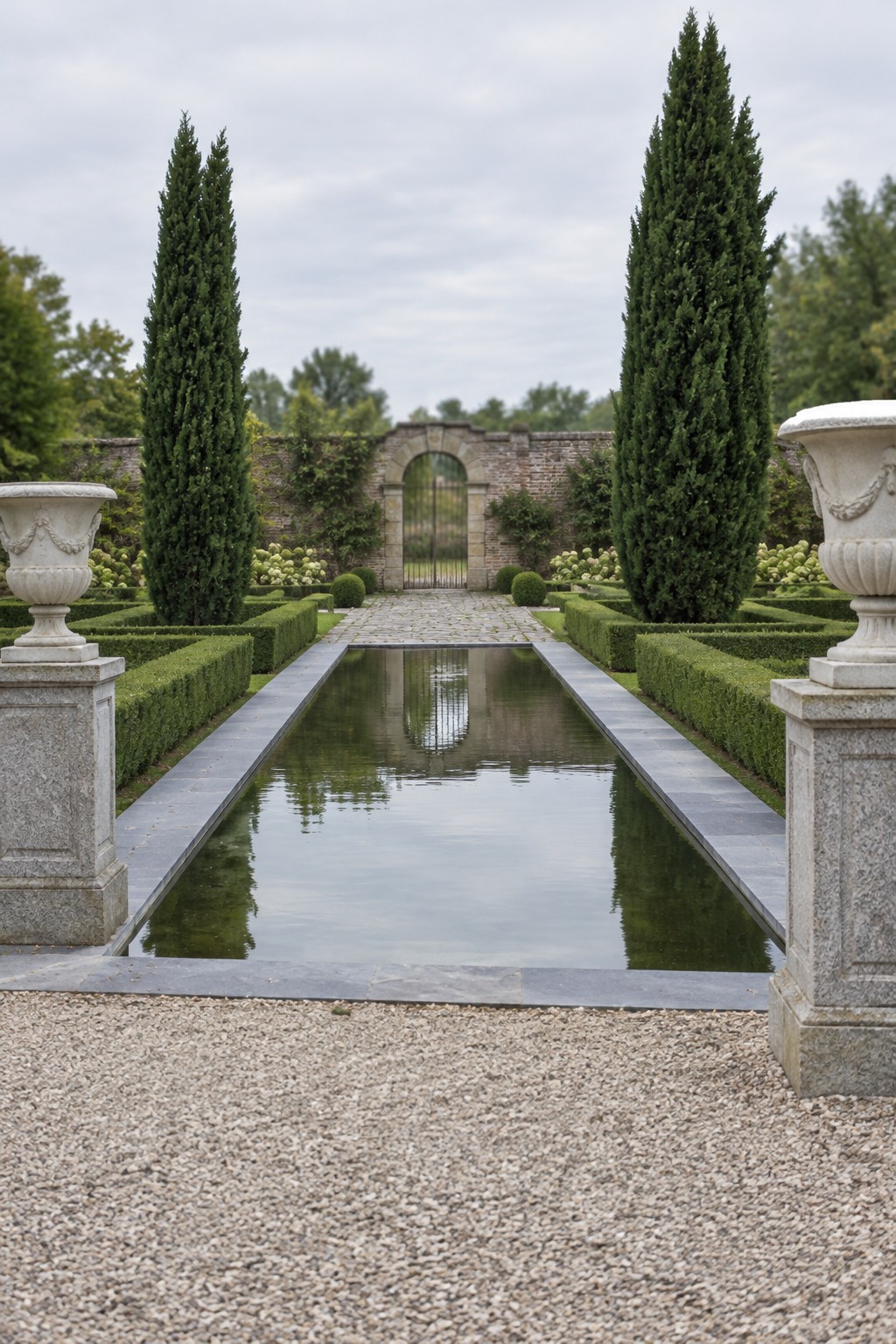
A long, narrow pool can give a formal garden a clear center line. Its straight edges echo the clipped hedges, while the water adds a quiet focal point without taking over the planting.
This layout works well in a courtyard or a garden with a defined axis. Keep the pool narrow enough to leave room for paths along its sides, and use simple stone edging to make upkeep easier.
Add a Garden Path Beside the Pool

A simple stepping-stone path makes it easier to move through a planted pool area without cutting across flower beds. It also gives the garden a clear route while letting the plants stay loose around the edges.
Use broad, stable stones and leave enough room between them for comfortable steps. This works especially well beside a narrow pool, where a path can follow the water without taking up much space.
Use a Gabion Wall to Define the Pool

A low gabion wall gives the pool area a clear edge while keeping the hardscape in step with a natural garden. Its stone fill brings a rough, practical finish, and trailing plants help the wall feel at home among the desert planting.
This approach works well beside a rectangular pool where a change in level needs a sturdy border. Choose stones that suit the surrounding gravel, and make sure the structure is built to handle soil pressure and drainage.
Add a Narrow Lawn Beside the Pool

A slim strip of lawn running alongside a rectangular pool gives the space a softer edge without taking up much room. It also leaves a clear path for walking and makes the pool area feel connected to the garden.
This layout works well in a compact, enclosed yard. Keep the grass strip wide enough to maintain, and use gravel along the outer edge if you need a practical path or want to reduce muddy spots.
Use a Long Pool to Make the Most of a Terrace

A narrow rectangular pool can fit a terrace without taking over the whole space. Its straight shape also leaves room for a clear walkway and a small seating area, so the pool feels like part of the outdoor layout rather than an obstacle.
This approach suits rooftops and compact patios where every bit of floor space matters. Keep the pool long enough to swim or cool off, but leave a safe, comfortable strip around the edge for walking.
Add a Pergola for Poolside Shade

A pergola can make a poolside seating area more comfortable without enclosing it. Here, the timber roof shades a built-in sofa and fire pit, giving people a place to sit near the water when the sun is strong.
This works well on a patio where you want shade over the seating, not the whole pool. Use sturdy posts and leave enough open space around the pool edge for easy movement.
Use a Stone Wall to Shape the Pool Edge

A low stone wall can give a rectangular natural pool a clear edge without making it feel separate from the garden. Here, the wall also supports a small spout, so water can flow directly back into the pool.
This approach works well where a pool needs a defined boundary or a change in height. Use sturdy stone that suits the garden, and keep the wall low enough that it does not block views of the water or nearby planting.
Use Raised Planters for Poolside Privacy

Raised planters along a pool fence bring greenery close to the water while making a narrow space feel more private. Ferns and trailing plants fill the long beds without taking up much of the walkway.
This approach suits a slim side yard where a tall hedge would feel too bulky. Choose plants that suit the available light, and leave enough room to reach the pool for cleaning and maintenance.
Use Stone Coping Along the Pool Edge

A broad stone edge gives a natural pool a clear boundary and a practical place to sit. Here, the coping follows the pool’s long side, making the water feel connected to the stone patio without adding a bulky border.
Choose durable, textured stone that suits the surrounding paving, and keep the coping wide enough to be comfortable underfoot. This approach works well when a pool sits beside a patio, but leave a clear walking route so the edge does not pinch the space.
Add an Outdoor Kitchen Beside the Pool
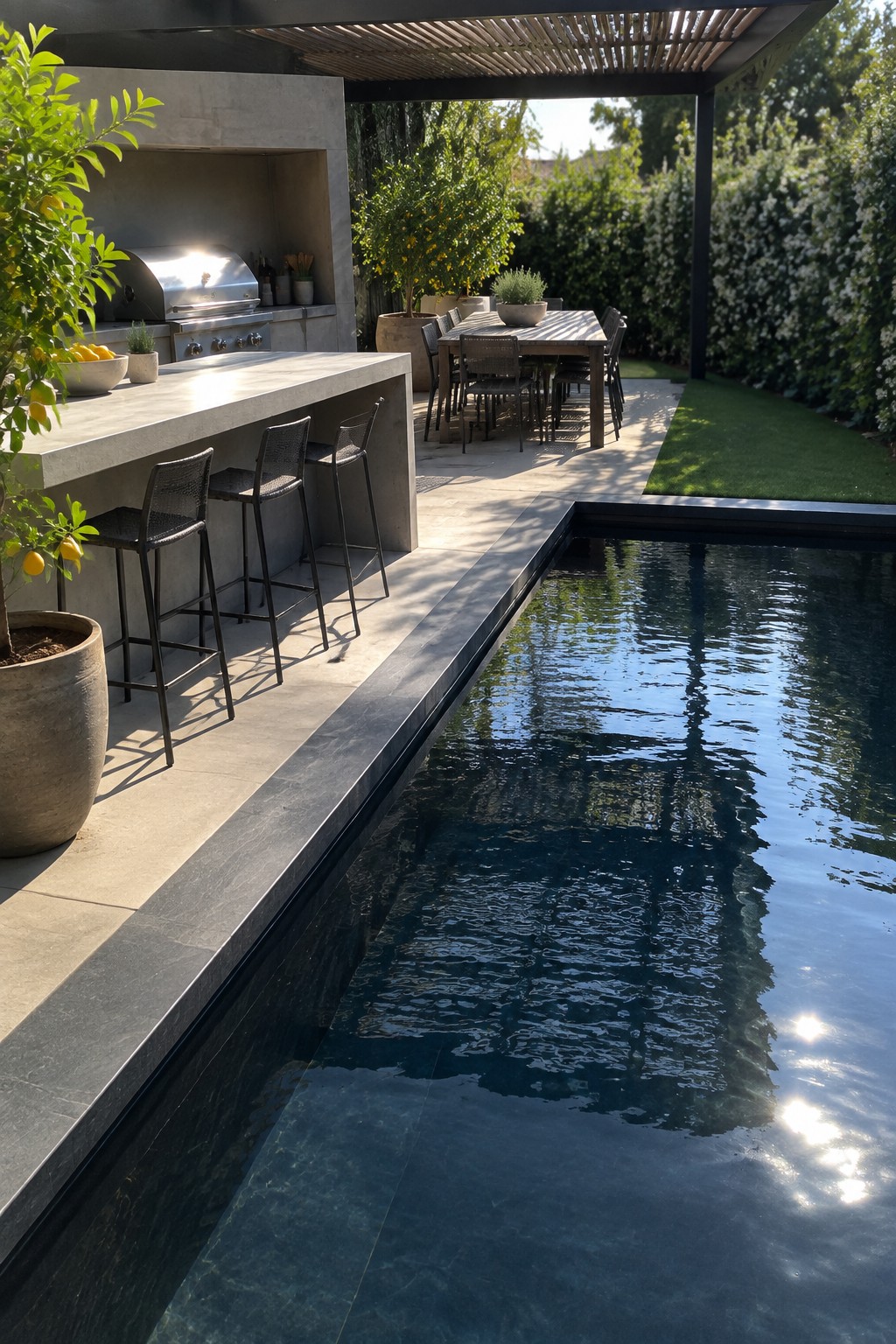
An outdoor kitchen can make a poolside patio more useful for everyday meals and gatherings. Here, the long stone counter sits close to the pool, so serving food does not mean leaving the outdoor living area.
For a similar setup, keep the cooking and serving space along one side of the pool and leave a clear path between the counter and water. A built-in grill and a few counter stools may be enough; just choose weather-ready materials and allow room to move around safely.
Use Oversized Planters to Structure a Pool Area
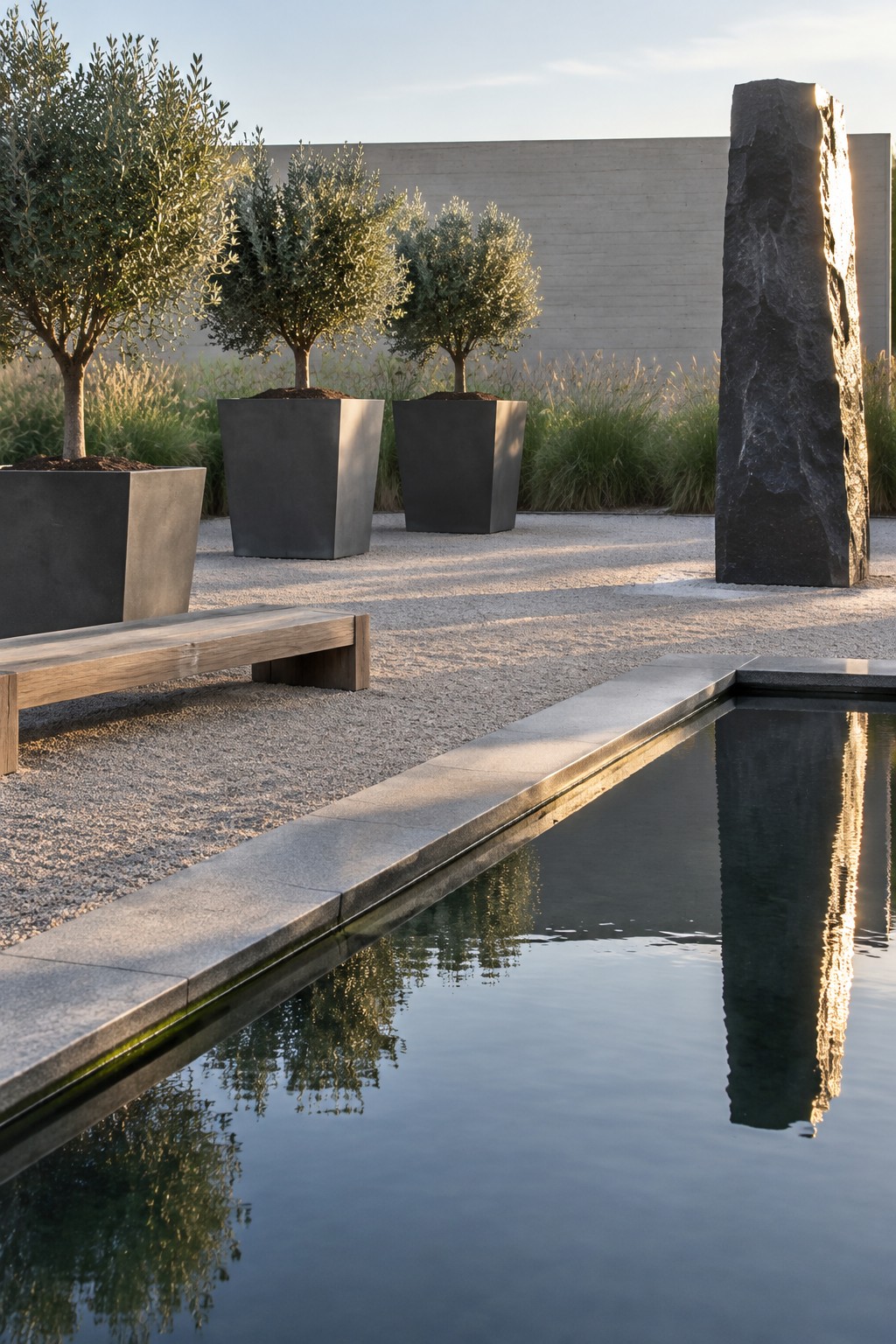
Large planters can give a pool garden a clear shape without adding permanent planting beds. Here, potted trees mark the edge of the gravel area and bring greenery close to the water.
Try this approach where you want defined planting but need flexibility for maintenance or seasonal changes. Choose planters large enough to suit the trees, and leave plenty of clear space around the pool.
Use Birch Trees to Create Poolside Privacy

A row of slender trees can give a rectangular pool a more sheltered feel without closing off the garden. Birch trunks let light and views pass through, so the pool area stays open while gaining a little separation from the rest of the yard.
Plant trees along one side of the pool where they have room for their roots and mature canopy. Leave enough space from the coping for easy maintenance, and check that falling leaves will not become a constant chore.
Frequently Asked Questions
Q: Do rectangular natural pools need a planted filter area?
A: Not always. Some use a separate planted regeneration zone, while others rely on compact biological filters and keep planting around the pool’s edges. Check how the system works before choosing a design, since the planting affects both the layout and maintenance.
Q: What plants work well around a sleek rectangular pool?
A: Choose plants that suit your climate and won’t drop lots of leaves or flowers into the water. Grasses, low shrubs, and a few taller accents can soften the straight edges without making the pool feel overgrown.
Q: Will garden planting make a natural pool harder to maintain?
A: A little, especially if plants grow over paths or shed debris into the water. Leave enough space to reach the pool edge, trim plants regularly, and keep messy trees at a distance.
Q: Can a natural pool still look crisp and modern?
A: Yes. Pair its clean rectangular shape with simple paving and restrained planting, then let one or two lush garden borders soften the lines.